



Abstract
This review explores the mental health benefits of human-nature interactions in urban areas. Considering increasing mental health concerns in cities, nature offers a widely available intervention to enhance well-being across diverse populations. We conceptualize nature interactions as behavior that occurs in/relates to a natural environment within a certain time frame, and examine associated mental health effects. Utilizing a structured literature search across multiple databases, we included English-language papers on working-age urban adults (n = 223). Our findings reveal gaps in the types of nature interactions studied, with research concentrated on limited behaviors while many culturally important activities remain underexplored. Despite overall positive effects on mental health, the diversity of methodological approaches makes it challenging to formulate specific recommendations. This review underscores the complexity of prescribing nature doses and calls for more inclusive research that considers broader populations and cultural contexts to support mental health outcomes for all urban dwellers.
Plain Language Summary
As cities grow and life becomes more stressful, people are facing increased mental health challenges. Being in nature can provide a simple, low-cost way to help improve mental well-being for many different groups of people. This review looks at different ways people can interact with nature in cities and how these interactions can benefit mental health. We explored research studies that focused on people aged 18-65 living in urban areas, specifically looking at how different types of nature interactions affect mental health. These interactions can include activities like walking in a park, sitting under a tree, or even looking at nature through a window. We used a wide range of studies published in English and found that there are many different ways people can connect with nature. Our review found that some types of interactions with nature are more studied than others. For example, walking or exercising in a park has been shown to improve mood and reduce stress, while other activities, like gardening or sitting quietly in a natural setting, are less studied but may also have important benefits. We also found that the best way to benefit from nature might vary depending on individual needs, cultural backgrounds, and access to green spaces. We concluded that there is no one-size-fits-all answer to how much time people should spend in nature or what type of nature experience is best. Instead, it is important to consider each person's unique circumstances and preferences. Future research should focus on understanding the barriers that prevent people from accessing nature in cities and finding ways to make these benefits available to everyone. By better understanding how different ways of interacting with nature can improve mental health, city planners, healthcare providers, and policymakers can create more inclusive and supportive environments that promote well-being for all urban residents.
Keywords
Introduction
In times of rapid urbanization and in the aftermath of the COVID-19 pandemic, mental health concerns in cities have increased dramatically (Campion et al., 2020; Ventriglio et al., 2021). Social isolation, disparities and insecurity, economic pressures, and lack of effective coping mechanisms have worsened mental health problems and overall well-being (Ventriglio et al., 2021), raising the profile of mental health and well-being in public discourse (Campion et al., 2020). Responding to these challenges, nature can provide interventions that are low-cost for users and that can be applied across population groups to benefit many. We define nature in the broadest sense as encompassing all “elements of Earth’s lands, waters, and biodiversity, across spatial scales and degrees of human influence, from a potted plant or a small urban creek or park to expansive, ‘pristine’ wilderness” (Bratman et al., 2019, p. 2). Limited contact with nature can contribute to the mental struggles of urban dwellers, while access to natural settings can restore depleted attention and alleviate stress through sensory engagement and emotional regulation as described in the Attention Restoration Theory (ART; R. Kaplan & Kaplan, 1989; S. Kaplan, 1995) and Stress Recovery Theory (SRT; Ulrich, 1979; Ulrich et al., 1991). ART describes how different components of restorative environments—being away, extent, fascination, and compatibility—can help restore an individual's depleted cognitive functions, particularly their ability to focus and concentrate. Complementing this, SRT emphasizes the innate human connection to nature and nature’s intrinsic properties to support visual stimulation, sensory engagement, and psychological distancing and thus to relieve stress. Providing nature in and around cities therefore presents an opportunity to relieve the burdens of city life (Amano et al., 2018), while providing additional co-benefits such as protection against climate change impacts (Kabisch et al., 2023).
A robust body of evidence finds that exposure to nature in one’s city or neighbourhood supports general health (Jimenez et al., 2021). However, the mere existence of natural spaces might not be sufficient to support mental health—instead, we may have to experience, use, and interact with nature to receive these benefits (Bratman et al., 2019; Jennings et al., 2016; K. Park, 2017). We prefer the term nature interactions in this review, as it is less extractive than nature use (Cocks & Shackleton, 2021) and is increasingly used in the literature. According to Soga and Gaston’s typology (2020), human-nature interactions vary in their degree of immediateness, consciousness, intentionality and degree of human mediation, as well as the direction of outcomes for humans and nature (Soga and Gaston, 2020). We understand that nature interactions can be perceived through different sensual modalities (Franco et al., 2017) and include virtual experiences as a potentially more accessible and safe option for some (Bratman et al., 2019; H. Li et al., 2021). We conceptualize nature interactions to be behaviours that take place in or relate to a natural environment or element (e.g., garden, tree) within a certain time frame, sometimes referred to as “nature dose” (Shanahan et al., 2016). There is little consensus on the definition of behaviour, so we loosely define it here as an action or engagement the organism does that can be observed, including by itself (e.g., walking, viewing, hearing) (Henriques & Michalski, 2020).
There is an increasing demand for recommendations on how to interact with nature for better health (Astell-Burt et al., 2023), and for adding nature interactions to the collection of health-promoting behaviours in addition to physical activity, nutrition, alcohol and tobacco avoidance, and sleep (Conner & Norman, 2017; Sundermann et al., 2023). These recommendations have manifested in programs such as the Canadian PaRx, an evidence-based program through which medical professionals can prescribe time in nature (BC Parks Foundation, 2024) that can help overcome barriers to nature interactions such as lacking awareness of their benefits (Astell-Burt et al., 2023). However, the concept of prescribing a nature dose is contested. As Bell et al. (2019) point out, prescribing a certain type of nature, duration, and activity might not be feasible for many people, especially in cities. It also excludes those who benefit from nature interactions that fall outside the majority population’s patterns, missing for example cultural activities that carry meaning for a small group of people but that are crucial, especially to their mental health (Bell et al., 2019; Lagunes Gasca & Merçon, 2021). These concerns are supported by evidence showing that the variability in people’s time resources, access to nature, safety needs, experiences, and motivations determines which nature interactions are available or appealing to them (A. C. K. Lee & Maheswaran, 2011; Rigolon et al., 2021; Rishbeth et al., 2018).
Previous reviews have focused on nature interactions and psychopathologies (Y. Wang et al., 2024), urban nature exposure and mental health (Gascon et al., 2015; Rugel, 2015), or have been limited to quantitative studies of real-life nature exposure (Barnes et al., 2019; Bettmann et al., 2024). To our knowledge, no review has been conducted on mental health outcomes of urban adults’ nature interaction behaviours across a variety of study settings and disciplines.
To address these gaps, we undertook a literature review oriented around the question: Which forms of human-nature interactions have been studied in urban adults, and what evidence exists regarding interactions’ mental health effects? Our objectives were to 1) Summarise the different types of behaviours, nature types, and doses that have been studied to date; 2) Assess the evidence for mental health effects of different nature interactions based on research design; and 3) Identify gaps in current literature pertaining to which interactions have been examined in which settings.
Methods
Identifying Research Evidence
We considered peer-reviewed articles from four databases: Web of Science, PsychInfo, Medline, and CABDirect. The search terms included urban-related terms, nature-related terms, behaviour-related terms, and mental health-related terms (see Appendix A); we searched within title, abstract and author keywords/text words. We restricted our search to the English language and all published literature until September 23, 2022 and oriented our search along the PICO framework (Richardson et al., 1995), which is often used to determine eligibility of clinical studies, and includes the four components of population, intervention (here: context), comparator, and outcomes.
Population
The target population was working-age adults aged 18 to 65 years and we included studies that represented parts of or extended beyond this range (e.g., 15–25 years, 18–80 years). Working-age adults typically face fewer barriers than other population groups in terms of mobility and access, yet a high percentage of them struggle with high sedentarism and time constraints due to work and family responsibilities (Home et al., 2012; Reinecke et al., 2017), rendering nature interactions a promising path towards better mental health in this group. We excluded population groups such as children, the elderly, and people with physical disabilities due to the complexity of their everyday lives in which dependence and accessibility have a major impact on their nature use (Kabisch et al., 2017; Lachowycz & Jones, 2013); studying these groups warrants separate investigations with sensitivity to their particular needs. We also excluded patient groups such as veterans with PTSD, pregnant women or other clinically significant populations. Further, we focused on research on people residing in urban areas, including suburban and rural geographies only if the study also included urban contexts. This was justified by the significant impact of limited nature interactions on the mental health of individuals living in urban environments (Ventriglio et al., 2021). We relied on the authors' classifications of study settings (e.g., urban, rural, suburban) as reported in the original studies.
Contexts and Comparison
The “contexts” of interest were nature interactions. Interactions could occur as standalone activities or as by-products of a broader program or study (Keniger et al., 2013). We searched for a range of behaviors through search terms around interaction, experience, behaviour, activity, use, contact as well as different senses and descriptions for indoor or virtual experiences (Russell et al., 2013). We included various urban nature settings, including parks, street trees, gardens, indoor plants, urban woodlands, and virtual experiences (e.g., nature in pictures, movies or virtual reality) (see full list of search terms in Appendix A). Comparisons across the studies included different behaviours, comparing behaviours to a control group, and descriptive studies.
Outcomes and Associations
The primary outcomes or associations of interest were related to mental health, understood here as a state of well-being in which a person recognizes their abilities, handles everyday stresses, works productively, and contributes to their community (WHO, 2018). Therefore, we included quality of life, emotional well-being, psychological and mental well-being. We also considered brain reactivity as an outcome whenever it was associated with mental health indicators (Bratman et al., 2019; WHO, 2018).
Study Designs
We included the following study designs: Randomized controlled trials (RCTs), quasi-experimental, longitudinal, cross-sectional analytical, quantitative descriptive, and qualitative studies.
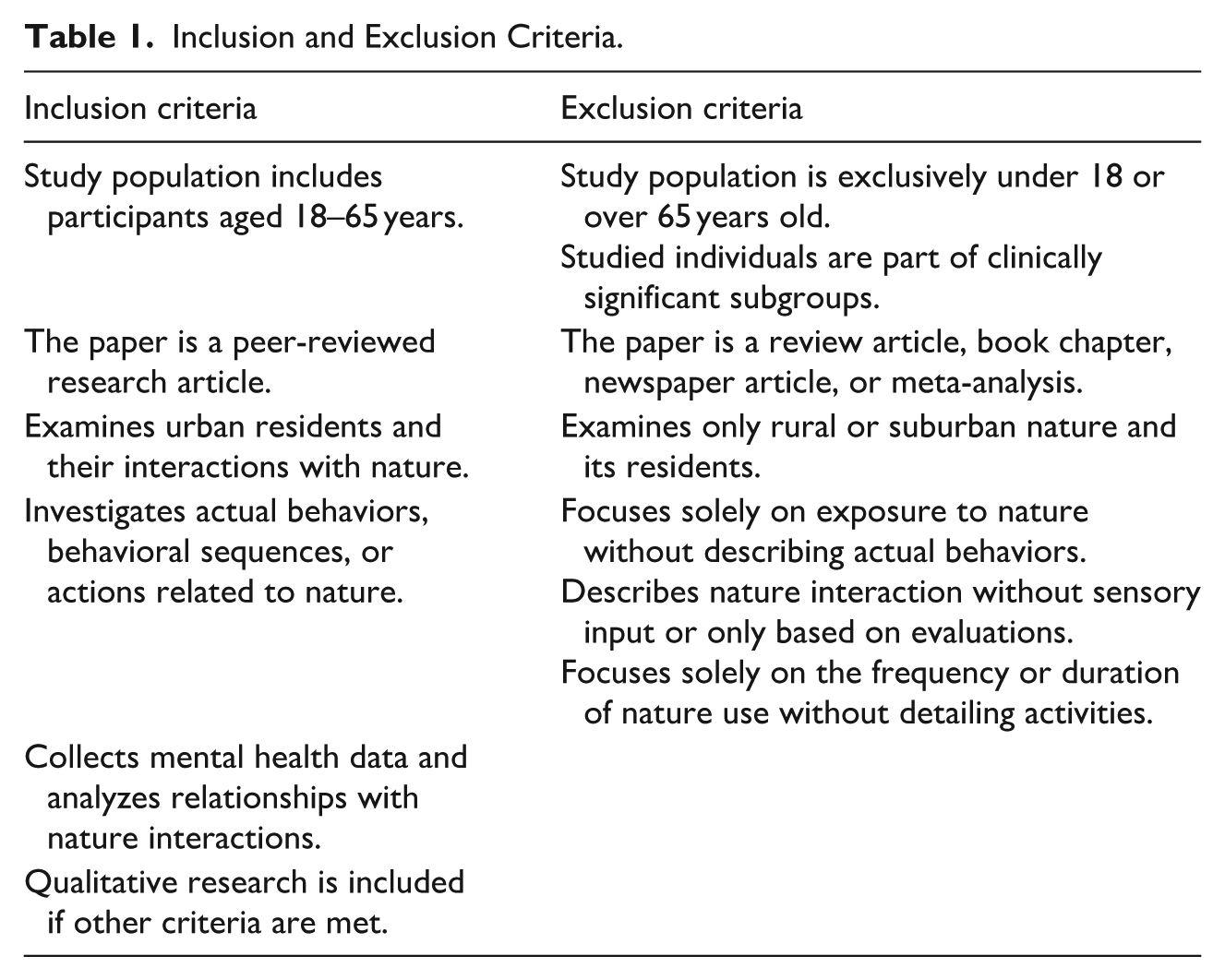
All inclusion and exclusion criteria are listed in Table 1.
Inclusion and Exclusion Criteria.
Study Selection
The PRISMA-based study selection process (Figure 1) involved screening in Covidence, a web-based collaboration software platform that streamlines the production of systematic and other literature reviews (Veritas Health Innovation, 2023). First, duplicates were removed, then titles and abstracts were assessed. Each paper was evaluated by two reviewers based on the inclusion criteria. Inter-rater reliability for title and abstract screening showed moderate agreement between reviewers (Cohen’s kappa κ = .49, .55, .77). This variability highlights initial challenges in applying inclusion criteria. Discrepancies were resolved through full-team discussions. The full text of all included studies was assessed by one primary reviewer, with 10% randomly selected and double-checked by co-authors, a threshold used in other published reviews (e.g., Alvarez et al., 2025). We observed substantial agreement in this subset (Cohen’s kappa κ = .8).
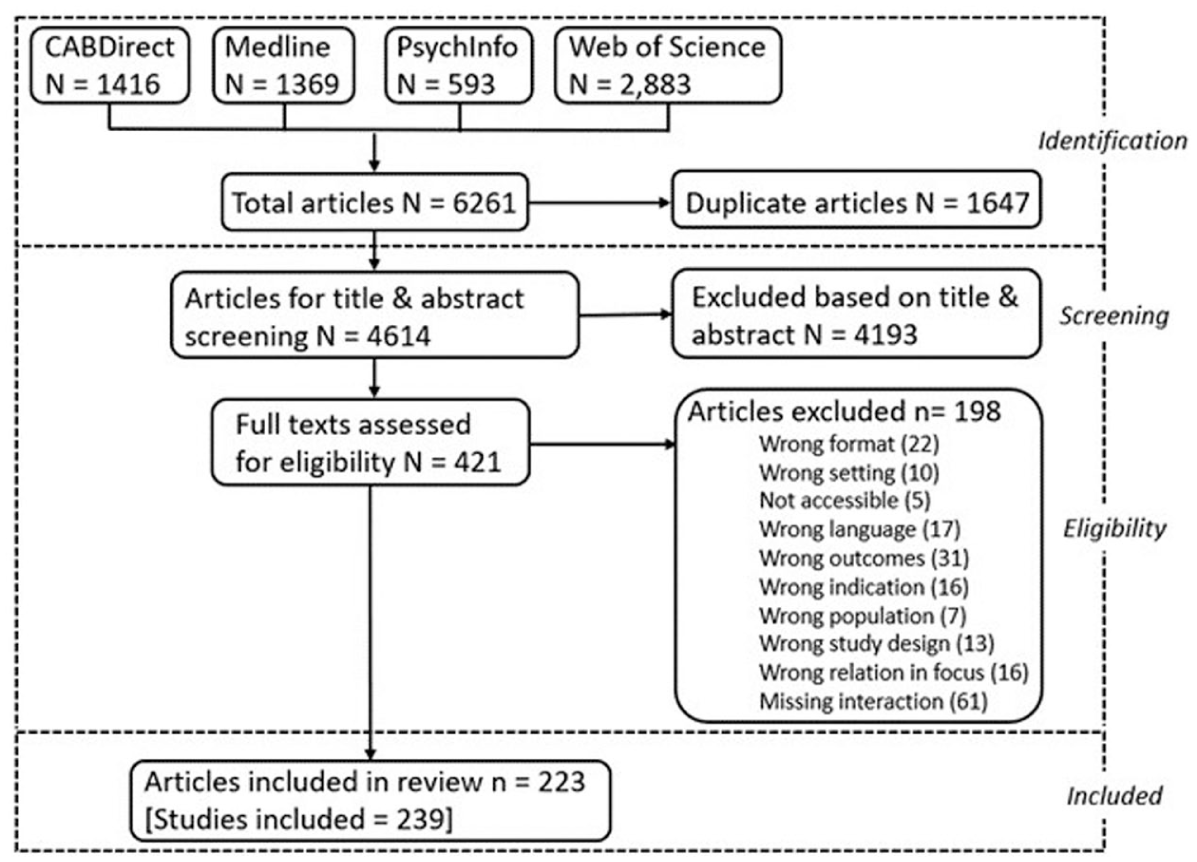
Flow diagram illustrating the process of identifying, screening, and including studies in the review according to PRISMA guidelines.
Data Extraction and Synthesis
Data were collected and categorized across studies using a form created in Microsoft Excel (see simplified version Appendix B) including general study details (including publication year, journal name, countries of the studied areas, sample sizes and ages), study design, nature interaction characteristics (nature type, behaviour, duration of interaction), mental health outcomes, and results. Data extraction was done by the first author, and 10% were cross-checked by the second author (similar to Rinne et al., 2022). Discrepancies were discussed and addressed, and further data synthesis was continually deliberated within the author team.
Given the diversity of studies included in this review, information on the main components of nature interactions (behaviours, nature types, doses) was collected in a more descriptive format. Prior to analysis, these data were categorized inductively, that is, similar entries were clustered together and then named accordingly (e.g., mindful walk and 1-hr walking clustered together and named “Walking”). To respond to the first research objective, we described each of these categories, highlighting commonly and less-commonly examined nature interactions and the mental health metrics with which they were set in relation. For the second objective, we extracted the results of the different studies to find out which behaviours have shown to be beneficial for mental health. We grouped studies and prioritized groups based on their strength of evidence and research design. In this hierarchy, experimental studies that compared different behaviours were considered most informative, followed by studies that did not use an experimental set-up but still specifically compared behaviours, and then experimental designs that investigated behaviours compared to a control group or in a before-and-after design.
Results
Studies Overview
A simplified extraction table summarizing all included studies is Appendix B. Out of the total 223 papers (reporting 239 studies) included in the final dataset, four were published before 2010, with a continuous increase and especially high numbers (34 to 46 per year) after 2019 (Figure 2). Most papers were published in 2021 (21.1%) and 2022 (19.3%). The most common journals were the International Journal of Environmental Research and Public Health (15.7%), Urban Forestry & Urban Greening (9.0%), Landscape and Urban Planning (6.3%), Frontiers in Psychology (5.4%), and the Journal of Environmental Psychology (4.5%). The reviewed papers were published across 102 different journals, demonstrating the interdisciplinary nature of the research.
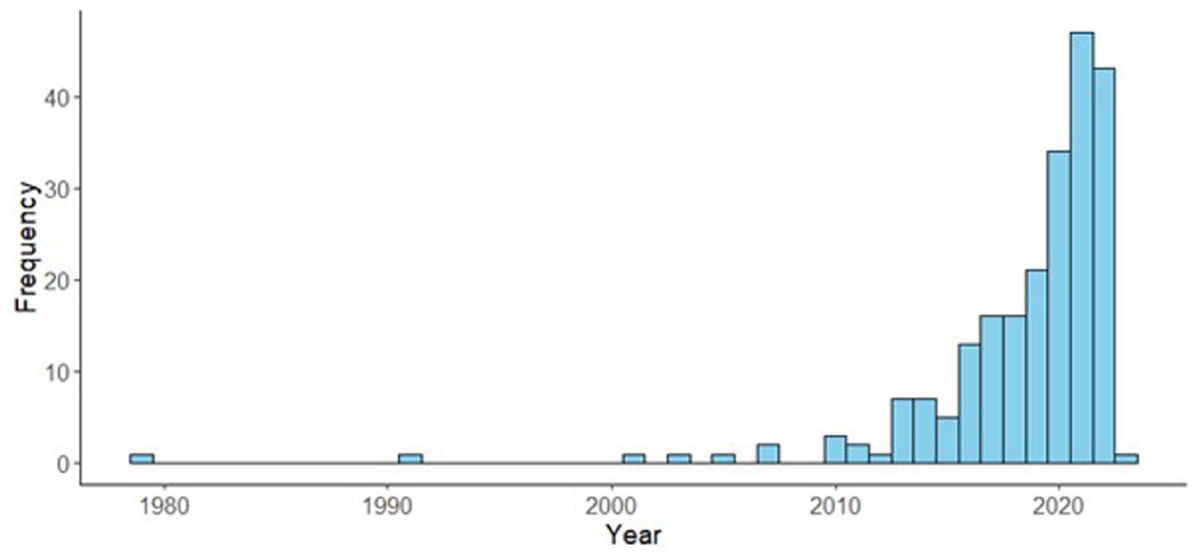
Histogram of published papers on nature interactions and mental health by year.
Most studies were conducted in Asia and Europe (37.4% each), followed by North America (17.3%), then Oceania (4.2%), South America (2.8%), and lastly Africa (0.9%). Most studies were situated in the United States (14.2%), China (13.4%) and the United Kingdom (13.4%; Figure 3). Eight studies were conducted in more than one country.
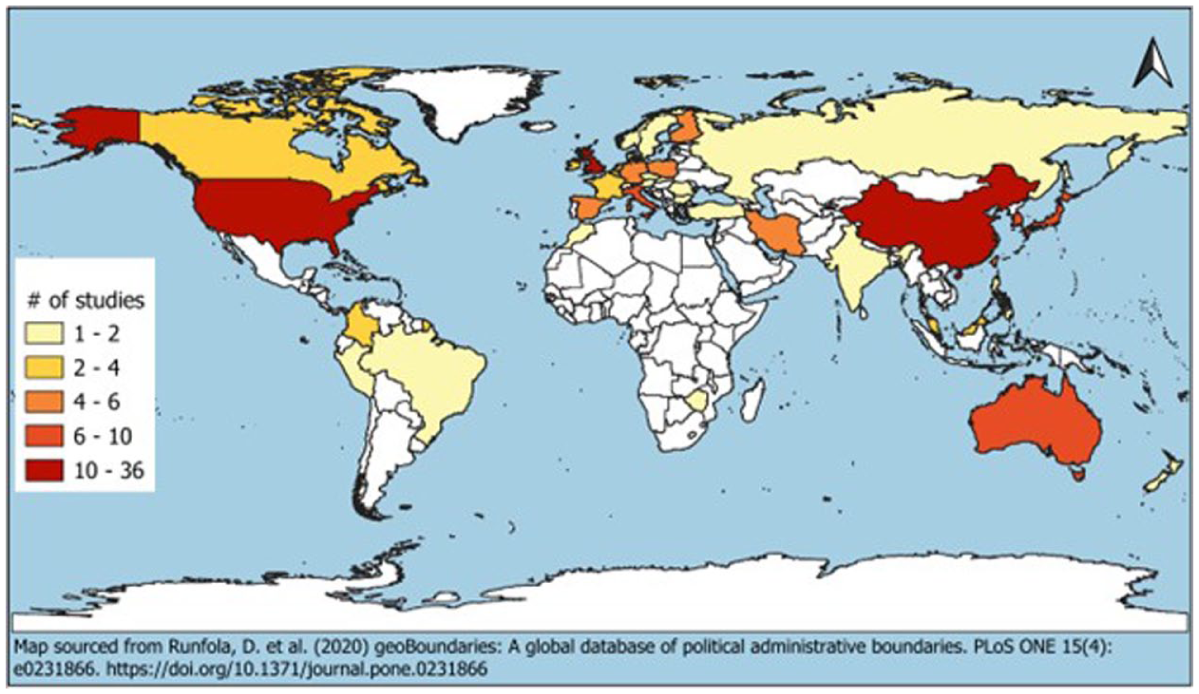
Geographic distribution of research on nature interactions and mental health.
Included studies applied different research designs, which we grouped in four categories (adapted from Grimes & Schulz, 2002): (1) Fully experimental designs (34.9%) including crossover (15.3%), pretest-post-test (15.3%), and longitudinal experiments (4.3%), tested the effect of an intervention on participants randomly assigned to conditions; (2) Analytical and not fully experimental designs (21.3%) including post-test experiments (7.2%), cross-sectional quantitative analytical designs (6.0%), longitudinal before and after designs (5.5%), and quasi-experiments (2.6%) compared groups/time points without random assignment; (3) Descriptive designs (37.0%), including cross-sectional quantitative descriptive (26.4%) and cross-sectional qualitative designs (10.6%) had no comparison group; and (4) Time-series designs (6.9%) including short time series (4.3%) and longitudinal ecological momentary assessments (2.6%), although these differed considerably regarding their duration.
The most common data collection method were surveys on their own (64.7%), which were used across all four types of study designs. Some studies also used interviews (12.8%), workshop formats (3.8%), or psychophysiological measures alone (2.6%), while others used a combination of different methods, mainly surveys and psychophysiological measures combined (11.9%).
The studied sample populations of working-age adults without specific health concerns ranged in size from 7 to 21,947, with a mean size of 727 people and a median of 120 people. The youngest sample was on average 19.2 years old (Ibes & Forestell, 2022) and the oldest sample was on average 70 years old (Harada et al., 2021). The mean was 33.1 years, the median 30.1 years across all studies that provided an average age.
Summaries of Different Nature Types, Behaviours, Doses and Mental Health Descriptions
The following section is an in-depth description of the investigated settings, behaviours and behavioural combinations, time frames for interactions as well as mental health outcomes.
Which Types of Nature Were Investigated?
Nature types varied widely across studies, including real-world and virtual settings, as did the ways in which they were described (e.g., including geographic coordinates of the sites as well as climate zone, information on vegetation types or simply one-sentence descriptions) (Table 2). We identified 16 different nature types, the most common being living environment (15.9%), forest environment (14.2%), and vague/different scenes (10.7%) while the least common were specific natural elements (2.6%) and the indoor home environment (1.3%).
Nature Types: Descriptions, Prevalence, and Study Setting.
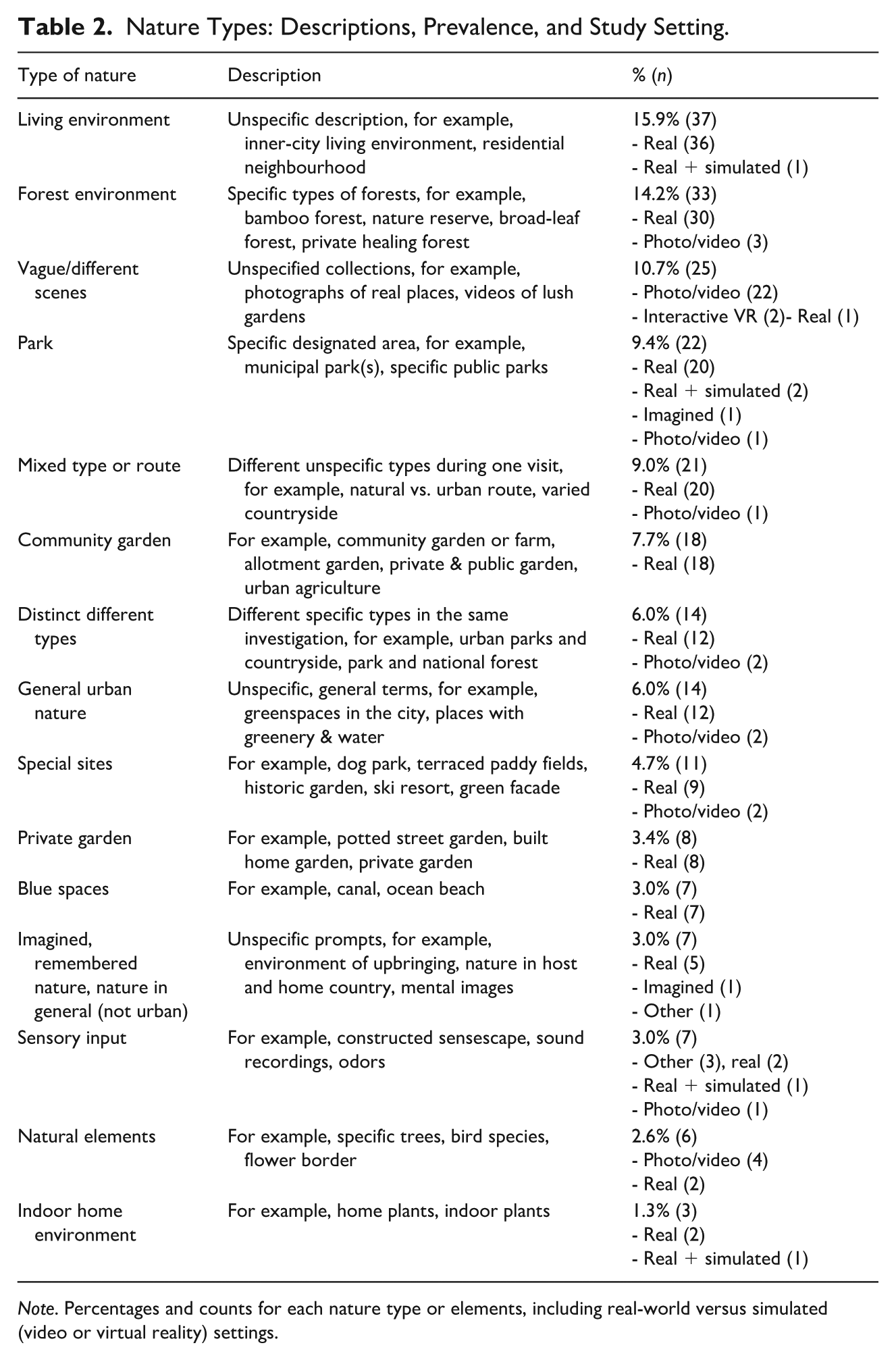
Note. Percentages and counts for each nature type or elements, including real-world versus simulated (video or virtual reality) settings.
Which Human Behaviours Were Investigated?
Table 3 presents a description of the 11 distinct behaviours examined across studies, their frequency, and the combinations in which they occurred. The most common behaviours were walking (17.4%) and viewing (17.0%), followed by unspecific visits (15.7%) and gardening (12.3%). The least common behaviours were listening (2.6%) and smelling (0.4%).
Nature interaction behaviors: Descriptions, prevalence, and behaviour combinations.
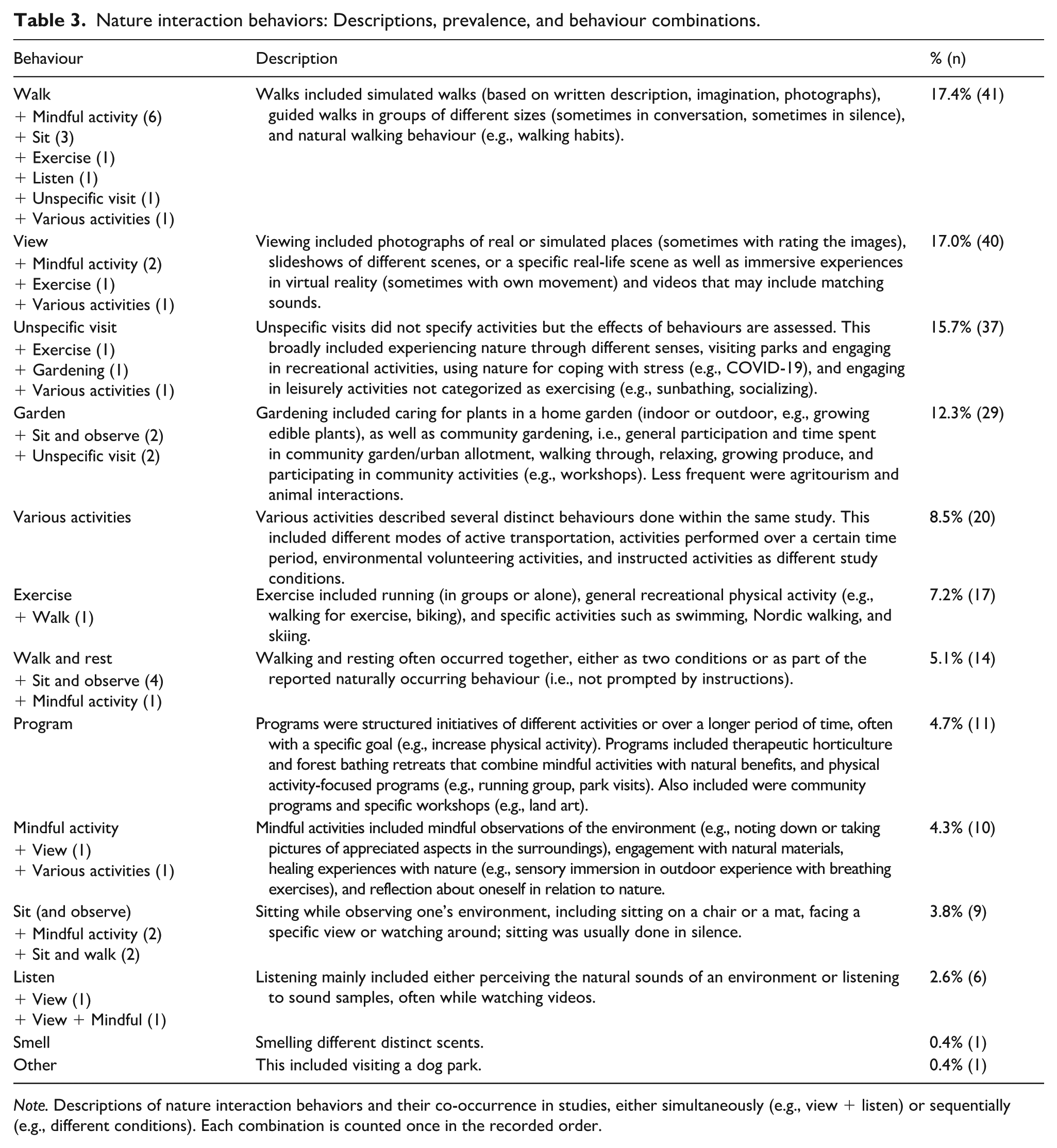
Note. Descriptions of nature interaction behaviors and their co-occurrence in studies, either simultaneously (e.g., view + listen) or sequentially (e.g., different conditions). Each combination is counted once in the recorded order.
Which Patterns Were Observed for Behaviours, Nature Types, and Time Dose Together?
For each of the above-described behaviours, we aimed to determine in which nature type they were most frequently investigated, and the dose, that is, time spent in the interaction (Figure 4). Where available, we extracted the explicitly stated duration of the activity (43.5% of studies), or, if this information was not provided, noted the total time frame in which the interaction(s) took place (44.8% of studies). A few studies (11.7%) did not provide any or very vague information. Particularly those studies focusing on unspecific visits or various activities, did not specify the duration needed for one interaction. Similarly, exercise- and walk-and-rest-focused studies were often vague about the dose of nature, describing it as one visit, during COVID-19, or in general. For programs, it was difficult to determine the duration of a single interaction as the described duration was usually that of the entire program (e.g., months). While these descriptions lack specificity, they reflect current reporting practices and how nature engagement is often experienced in daily life. The next paragraph summarizes the most common interaction circumstances for each behaviour.
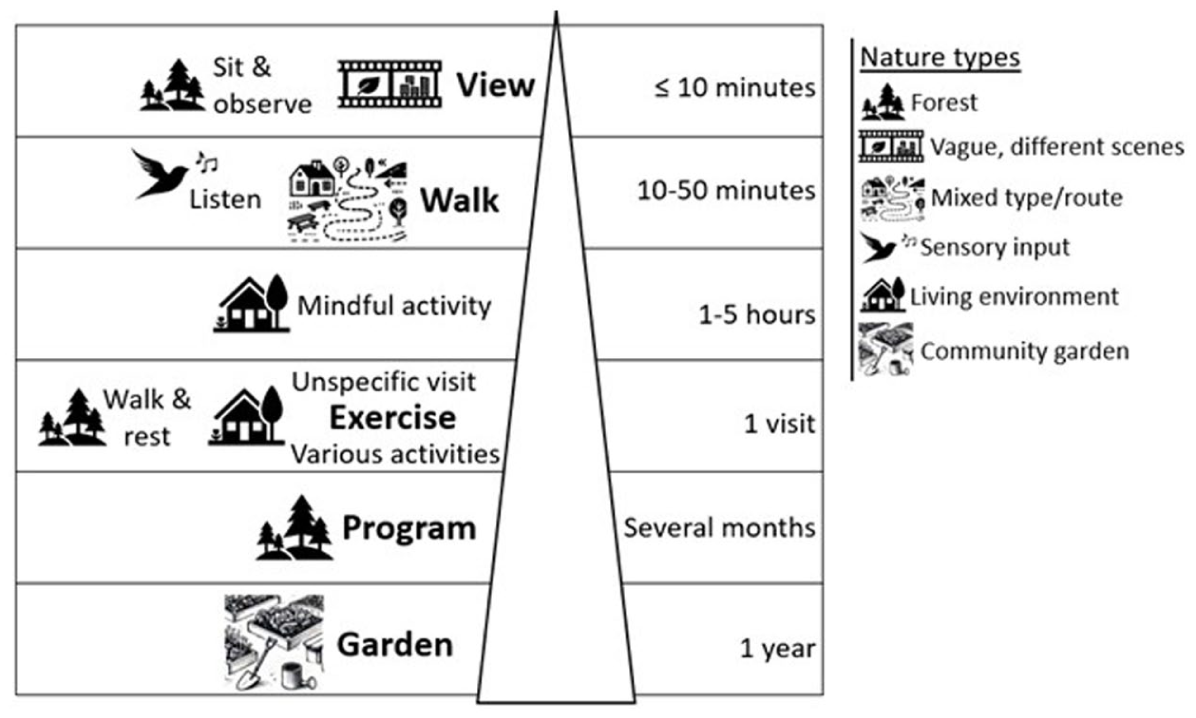
Interaction behaviours and nature types in relation to most frequent time dose.
Walking was mainly examined in mixed nature types or routes (15 out of 41 studies) but also in forest environments (7 studies). The most common nature dose was 10 to 50 min (11 studies), while half of the studies had a nature dose between a few minutes and a few hours (22 studies). Thirty-four of the 41 walking studies took place in real environments, mostly as field interventions (plus survey). In contrast, the majority of studies that focused on viewing used photo or video representations of nature (29 out of 40 studies) and took place as lab or online interventions. These studies used mainly vaguely described/different scenes (19 studies) and natural elements (4 studies) in their nature representations. The nature dose of these interactions was generally shorter – under one hour in most cases (25 studies). Listening-focused nature interactions were similar to viewing interventions in that they were usually lab interventions (4 out of 7 studies) that took under 1 hr.
The nature interactions with more vaguely described doses, particularly those with unspecific visits and various activities as main behaviours, were examined mostly through online studies inquiring about the use of the living environment (8 studies out of 37 and 6 out of 20 respectively), followed by parks for unspecific visits (7 studies) and general urban nature for different activities (4 studies). Exercising was examined in very similar ways. Gardening in real environments was also investigated, mainly either through online surveys (8 out of 29 studies) or in-person surveys/interviews (7 studies). Gardening studies were conducted in community gardens (16 studies) and in a smaller number of studies in private gardens (8 studies). Gardening interaction doses were less specific as studies often included the time period of the past year (9 studies) or even life in general (6 studies).
The other four behaviour categories were all mostly investigated via field interventions and thus in real (not virtual) environments. Walk and rest studies often took place in forest environments (8 out of 14 studies) and they included one visit (5 studies) or the time during COVID-19 (3 studies). Also often situated in forest environments were examinations of nature programs (4 out of 11 studies) and sit and observe studies (4 out of 9 studies) whereby the latter usually spanned only a few minutes. Lastly, studies on mindful activities often inquired about the use of the living environment across very different and vague time periods – from several hours to several days, without specifying the duration of time in nature.
We also examined differences in research design between the studies (Figure 5). Experiments were most frequently used to examine viewing and walking (24 and 23 studies), walk and rest (10 studies), programs (7 studies), and sit and observe (7 studies). A descriptive design was most common for unspecific visits (28 studies), then gardening which was often examined in qualitative settings (19 studies) and exercising (15 studies). Analytical, not experimental designs were used to investigate different behaviours such as viewing (11 studies) and walking (9 studies) but also gardening (8 studies) and unspecific visits (6 studies). Lastly, viewing was also examined in time series designs (4 studies).
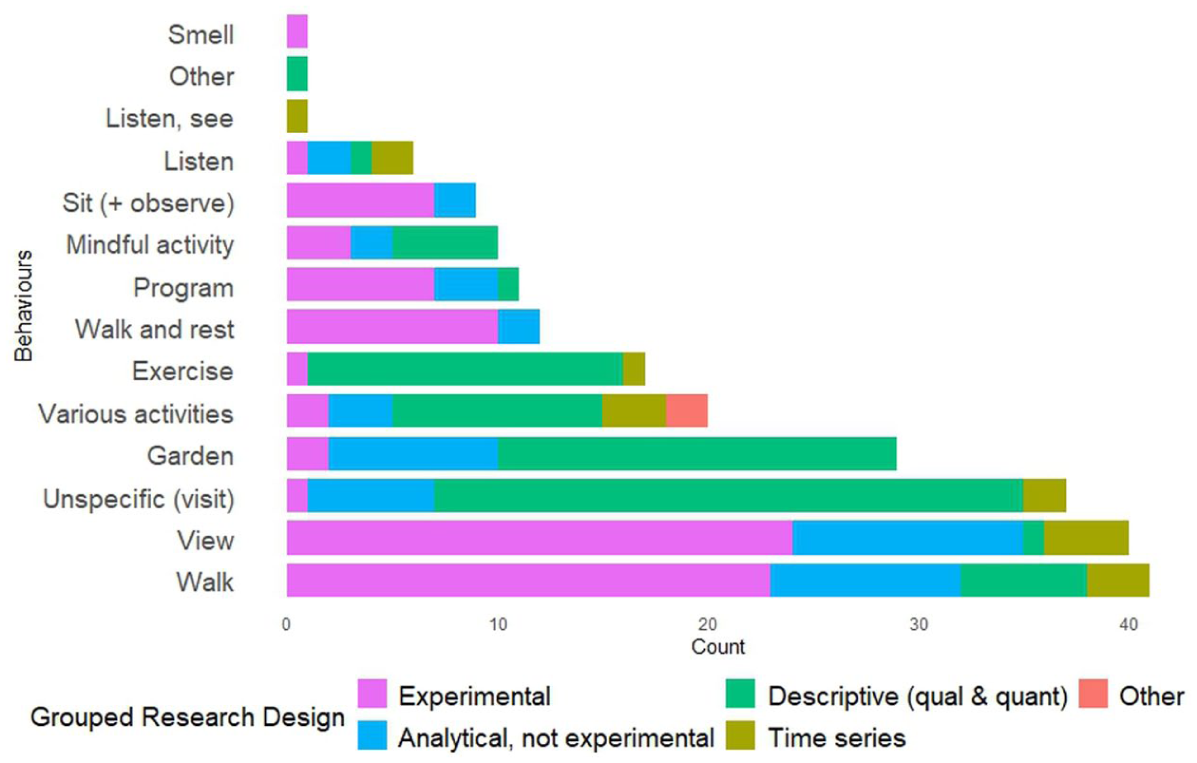
Categorization of nature interaction behaviours by research design.
Which Mental Health Outcomes Were Investigated?
Mental health was assessed a total of 596 times, via 109 different metrics. We grouped them into categories, which are described in Table 4. Most metrics assessed emotional well-being (25.5%) and general well-being (21.0%), followed by stress and restoration measures (15.1%). Least common were mindfulness, personality and sleep (each 0.7%) and rumination (0.5%). In over 88% of the cases, mental health metrics were considered an outcome variable. Nine percent were considered as mediators, while three percent explicitly used mental health as a predictor of behaviours.
Mental Health Categories: Example Scales and Prevalence.
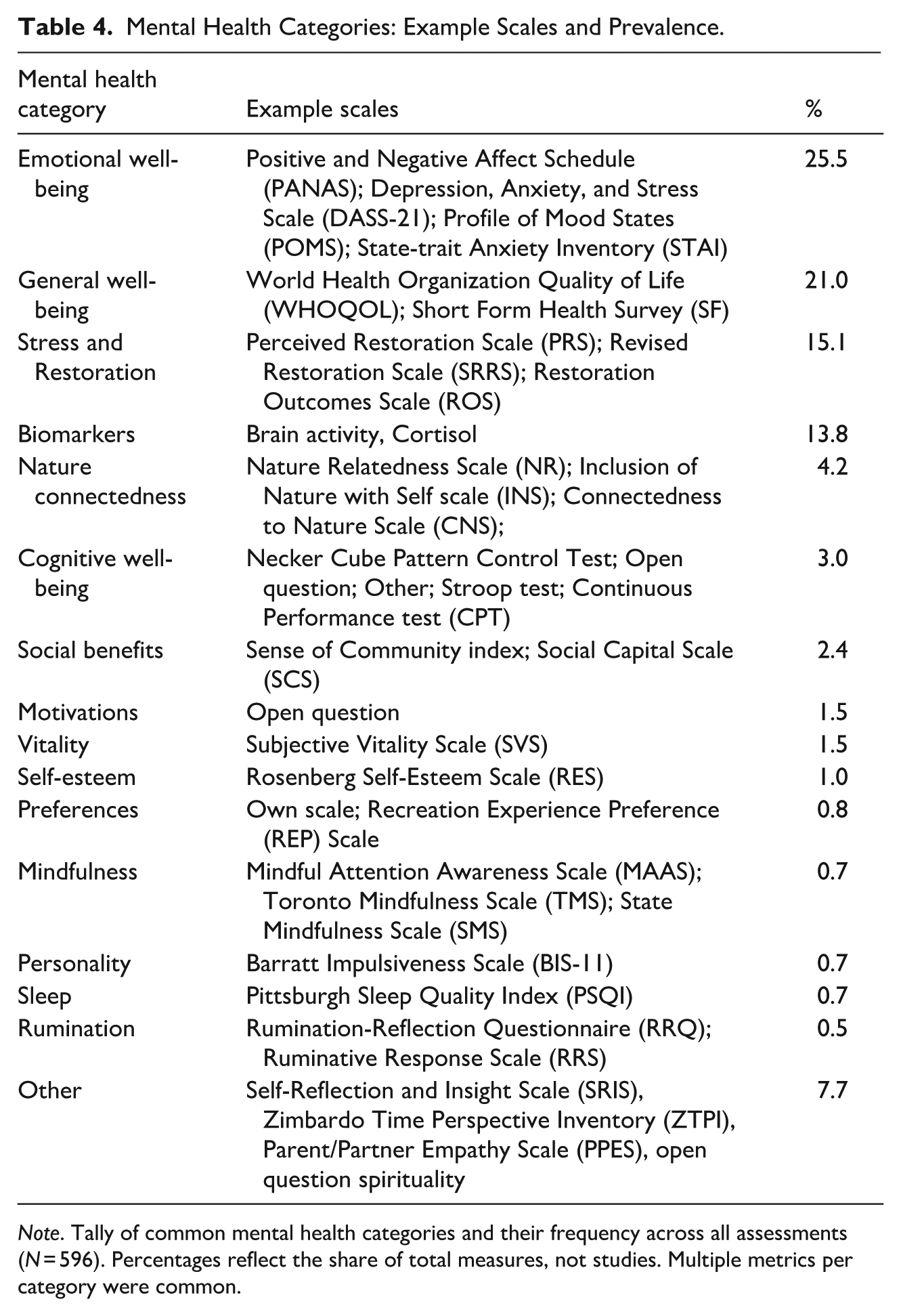
Note. Tally of common mental health categories and their frequency across all assessments (N = 596). Percentages reflect the share of total measures, not studies. Multiple metrics per category were common.
Assessment of the Evidence for Mental Health Effects of Different Nature Interactions
Overall, most studies reported mixed positive-null results across the various mental health scales, which were often applied within the same study. Papers reporting negative effects were scarce. A few qualitative studies described sources of distress outside, including bad weather, disarray and danger or changed infrastructure (J. Dobson et al., 2021; M. C. Dobson et al., 2020; Linz et al., 2022). Additionally, one analytical study unexpectedly found increased stress after six and twelve months of community gardening (Korn et al., 2018), and another study reported an urban scenario to be more beneficial for anxiety than virtual reality fishing (Z. Wang et al., 2022). In both studies, other mental health indicators were positively associated with nature interactions. In the following sections, we group studies by strength of evidence, as described in the Methods section (Data extraction and synthesis), starting with experimental studies directly comparing behaviours, followed by analytical studies and those comparing behaviours to a control group or baseline.
Experimental Comparisons of Different Behaviours
The seven studies reviewed in this section focused on a limited set of behaviours—mainly walking, some sitting, and one set of more complex VR activities—but examined a wide range of mental health outcomes across diverse environmental contexts, making synthesis challenging. Three of these studies compared walking to sitting. One study found that walking had more positive effects on brain activity than sitting and that walking in less crowded natural areas as well as sitting in more crowded areas were related to better mood (Lin et al., 2019). However, cognitive function and autonomous biomarkers did not differ between behaviours (Lin et al., 2019). In the second relevant paper, Lin et al. (2020) observed that walking in a mixed environment/route was related to more favourable activity in brain areas indicating valence and meditation while sitting was related to better focus; engagement, frustration, and excitement did not differ between activities. Kinnafick and Thogersen-Ntoumani (2014) add to these findings by showing that walking in a weather-controlled environment (lab) increased psychological well-being, including increased positive affect and energy, and reduced tiredness compared to sitting. In the corresponding field experiment in a real forest environment, they found that weather can override the effects on affect but not on activation and energy, with walking, especially in nature, being more beneficial than sitting (Kinnafick & Thogersen-Ntoumani, 2014). In contrast, another study found no difference in emotional well-being between walking in and passively viewing bamboo environments (Lyu et al., 2019).
Three studies compared different types of walks in forest environments, showing that a walk with educational signs in contrast to a self-guided walk or one with a forest educator led to better vigour and a greater decrease in negative emotions (Korcz et al., 2021) and that walking while engaging in a task with relaxation in the end was better for sustained attention (Pasanen et al., 2018) compared to a walk with no task or a task that induces relaxation in the beginning. However, the other mental health indicators used in these studies show no differences between the types of walks. Clearer are the results of Shin et al. (2013), who found a meditative walk (categorized as walk and rest) to be more positive for emotional well-being and self-esteem than an athletic walk.
A set of studies conducted by Wang et al. (2022) used a virtual reality setting to compare differentially complex behaviours and two environments. They found that watering plants in VR relieved anxiety more than just viewing the natural environment, and that it also produced more favourable brain activity than being in a park or fishing scenario. However, there was no difference between activities for depression or EMG activity, and one study found no difference in anxiety or restoration either. Further, they were surprised to find that viewing the urban scenario was associated with lower anxiety than the nature scenario or fishing activity.
Overall, these experimental studies suggest that walking generally benefits psychological well-being more than sitting, though factors like environment, weather, and task engagement influence outcomes. Meditative and structured walks appear particularly beneficial, while findings on passive viewing and virtual interactions are more mixed, highlighting the role of engagement in nature-based experiences.
Analytical Comparisons of Different Behaviours and Pre-Post/Control Group Experiments
Non-experimental, analytical studies that compared different behaviours had mixed results. Researchers found that active uses (with company) of urban parks are more beneficial for general well-being (Camargo et al., 2017), and more activities in parks (Frash et al., 2016) and intense walks in distinct different environments (Marselle et al., 2015) for emotional well-being. In contrast, there was evidence for less active uses being beneficial, such as active lingering over active walking (D. Li et al., 2019) and low over high exertion (walk vs. rest) nature experiences for biomarker cortisol (Hunter et al., 2019). For some mental health indicators, no difference between activities was observed. For example, no differences were observed for walking vs. resting on amylase, an enzyme associated with stress and anxiety, nor different forms of environmental engagement (e.g., group walk, citizen science, and conservation activities; Coventry et al., 2019) and activities (e.g., gardening, biking, and walking; Ambrose et al., 2020) on emotional well-being. Descriptive studies show a similar pattern: No difference between strenuous and non-strenuous uses (Honold et al., 2016) or between different activities (Gómez & Hill, 2016) was found on various mental health indicators while some behaviours were described as particularly beneficial for general well-being mainly, such as on-land physical activity (Pasanen et al., 2019), outdoor exercise for leisure (Tao et al., 2022), relaxing and gardening (de Bell et al., 2020), walking as active transportation (Dushkova et al., 2022; Pasanen et al., 2019; Ranjbarnia et al., 2022) or leisurely walking instead of brisk (Wood et al., 2010). Social uses are also described (Foo, 2016; van Dinter et al., 2022).
A few experimental studies used control group designs and before-after designs to determine which behaviours influence mental health. The former encompass more structured programmes, including Korn et al. (2018) who compared a group participating in a workshop and constructing a garden to those who only did the workshop, finding improvements in general well-being, stress and restoration, and social health in the experimental group. Additionally, Dobson et al. (2021) asked people to note positive things in either the natural environment or the built environment, with the result that routine or incidental encounters with nature in the city improve well-being and people’s outlook on life. Conversely, Muller-Riemenschneider et al. (2020), found that undertaking a park use program made no difference to general well-being compared to the control group. Before-and-after studies that compared participants’ status before and after a nature interaction, found positive changes after structured programs such as therapeutic horticulture (Buru et al., 2021), forest therapy (B.-J. Park et al., 2020), park intervention (Petrunoff et al., 2021), and a physical activity program (Toselli et al., 2022) as well as after exercising (Pretty et al., 2005), walking (Brancato et al., 2022; Ma et al., 2022; Martens et al., 2011; McEwan et al., 2021; U. Stigsdotter et al., 2017), but not after gardening (Tharrey et al., 2020).
Taken together non-experimental analytical studies, along with a few experimental studies using control-group or before–after designs, highlight the complexity of behavioural comparisons in nature interactions. While some patterns emerge—such as the benefits of both active and passive engagement—results remain mixed, and not all behaviours produce consistent mental health improvements.
Beyond Comparisons of Different Behaviours
In addition to or instead of focusing on comparing behaviours, the majority of studies examined the difference between natural and urban contexts. Experimental studies found that natural environments often evoke more positive mental health than urban environments. This was found for walking (e.g., Bratman et al., 2015; Nicolosi et al., 2021; Song et al., 2019; Sudimac et al., 2022), viewing (Chen et al., 2016; J. Lee, 2017; Song et al., 2019; Stewart & Haaga, 2018; Ulrich, 1979), listening (Z. Li et al., 2020), walking and resting (Bielinis et al., 2019; Staats et al., 2016; U. K. Stigsdotter et al., 2017; Takayama et al., 2014; Zeng et al., 2020) as well as for sitting and observing (Kinnafick & Thogersen-Ntoumani, 2014; J. Lee et al., 2011, 2015; Tsunetsugu et al., 2013). However, other studies found no difference in urban versus nature for running as a form of exercise (Bodin & Hartig, 2003), for viewing (Scopelliti et al., 2019) and for walking (Ma et al., 2022) as well as for mindful activities that in these examples were conducted while walking (McEwan et al., 2019, 2021). In the above-mentioned studies, different mental health indicators usually showed the same effect or lack thereof within the same study.
Some studies focused on different nature types, pointing towards an advantage of walking in high-prospect high-refuge environments (Gatersleben & Andrews, 2013), in tended rather than wild spaces (Martens et al., 2011), and in a cottage-style garden (Hoyle, 2021), and viewing forest interior over edges/exterior (Chiang et al., 2017) and forests rather than parks (King & Lee, 2022). Conversely, there were no differences between visiting a green versus a blue setting (Subiza-Perez et al., 2020) and Foo (2016) found that the preference for a more versus less natural environment depends on the activities done in said environment. Smaller numbers of studies examined nature provisions (e.g., different densities), nature dose in a more descriptive way (e.g., times per week visiting nature), or specific natural elements (e.g., hearing mechanical versus natural sounds (Dzhambov et al., 2021), viewing different animals (Zhao & Gong, 2022), or different vegetation elements (Zhao & Wang, 2022). In sum, studies support the mental health benefits of natural environments over urban ones, particularly for walking, viewing, and resting, though some activities show no difference. Research also highlights variation based on nature type, with factors like vegetation, landscape design, and environmental features influencing outcomes.
Overall, we found a general pattern that connects metrics and study design with the mental health outcomes. Studies with more rigorous experimental designs often chose specific mental health indicators related to existing theories (ART, SRT), and they found very mixed results for emotional well-being, brain activity and biomarkers. Specifically, activation, vigour, and positive emotions tended to improve with nature interactions while other affective states showed no effect. Similarly, some brain regions’ activity patterns changed during or after being in contact with nature, as did cortisol levels but other brain regions and biomarker indicators of autonomic nervous system activity remained the same. In contrast to these observations on experimental designs, control group/before-after studies and analytical studies (e.g., those focusing on structured programs) mainly found positive effects on general well-being.
Discussion
This literature review provides a comprehensive overview of (1) the types of nature interactions of adult populations that have been examined in urban areas and (2) the evidence on the mental health benefits of such interactions. We reviewed the existing English-language academic literature on nature interactions and mental health and found overall positive effects of nature interactions on mental health. However, we observed discrepancies between what people do in daily life, what has been studied, and what can be formulated into recommendations. We also found that the breadth of different mental health measures applied in this area of research adds to the conclusion that there is insufficient evidence to establish relationships between most nature interactions and specific mental health outcomes. In the following paragraphs, we discuss our main findings, finishing with a list of recommendations for future research.
Research Patterns Shape the Nature–Health Evidence Base
Our findings on the research designs in which nature interactions have been examined show methodological divergence in the literature: Specific behaviours such as walking and viewing were most often examined using experimental designs with short, specified durations. In contrast, unspecific visits, gardening, exercising, and mindfulness activities were more frequently examined using descriptive designs with more vague time doses (i.e., a time frame of interest was described, for example the past month, but not the duration of a specific interaction). The latter makes it particularly difficult to interpret and compare dose–response relationships. While we acknowledge that not every behaviour or interaction can be examined across all environments, time doses, and research designs, we find that several method-interaction combinations that are feasible and could substantially broaden the knowledge base on nature interactions have been underexplored. We echo the call for increasing qualitative and mixed methods in mental health research to gain more in-depth insights into personal experiences, contextual factors, and mechanisms (Demkowicz et al., 2025; Iqbal & Mansell, 2021). For instance, more descriptive and open explorations of the subjective experience while looking at nature scenes have the potential to further understanding of the interwoven mechanisms behind the restorative effects observed in viewing experiments.
At the same time, different types of workouts or mindfulness exercises in nature, activities which are frequently prescribed by healthcare providers (Migl et al., 2024), could be more thoroughly examined in experimental settings with a manipulation of the duration, adding to efforts to determine optimal doses for different population groups (Kondo et al., 2020). Such specific guidance on which activities and durations are likely to be most effective is particularly important for people with limited time resources and difficulty accessing natural areas to use their resources efficiently. Moreover, the scarcity of comparative studies that would support specific recommendations for one type of nature interaction over another is problematic and can be misleading (Coventry et al., 2021). While walking or mindful walking in forest environments has consistently been shown to improve emotional well-being in this review, and sitting appears to affect focus and cortisol, there is no evidence that these behaviours are more beneficial than many other behaviours (e.g., cycling, swimming, reading in nature)—they are simply the ones examined using experimental designs that compare different behaviours.
This is especially problematic, when considering that we found a limited number of behaviours have been studied under “nature interactions,” despite our searching across multiple databases and with broad search terms. Current literature on the mental health associations of human interactions with urban nature lacks investigations of many culturally important behaviours such as celebrating and dancing in nature, or behaviours related to food production outside of community gardens, such as foraging or fishing—valued and practiced behaviours, especially in the Global South (Cocks & Shackleton, 2021). This gap may partly reflect our restriction to English-language publications or missing search terms relating to such activities and traditions. Fundamentally, however, it underscores the geographic skew in the literature—most studies were conducted in Europe, North America, and China—and the predominant exclusion of Black, Indigenous, and People of Color, immigrants, ethnic minorities and individuals of lower income from academic research (George et al., 2014). These limitations must be considered before generalizing findings and formulating recommendations for diverse groups and settings.
A related concern of this nature interaction catalogue is that we found most behaviours (except viewing, which is frequently examined virtually) required natural areas of reasonably good quality, for example, forests that are at least safe enough to reflect in, walkable neighbourhoods, and community gardens with available plots. While we did not set out to compare the actual provisions of nature as other authors have (Barnes et al., 2019), current research shows that the distribution of green spaces and access to high quality natural areas is often inequitable across geographical areas and within cities, putting people in more precarious economic situations, as well as people that have been racialized or otherwise marginalized at a disadvantage (Nesbitt et al., 2019; Rutt & Gulsrud, 2016). This suggests that some of the nature interactions investigated may not reflect everyone’s lived reality and can therefore be difficult to realize. While working toward improving access for all is crucial, research on nature interactions for mental health should also include options for people with different financial, physical, infrastructural, and time resources, for example online interactions, at-home gardening, working in nature or passing through informal nature spaces (Browning et al., 2020; Franco et al., 2017; Rupprecht et al., 2015). Greater inclusivity will require time, flexibility, and commitment from both researchers and equity-denied individuals/communities (Eaton, 2022; Nesbitt et al., 2018). Successful advances in this area will not only contribute to more equitable and inclusive research but may also help alleviate the urban mental health crisis which disproportionally affects historically marginalized groups (Mitchell et al., 2015).
Variation in Mental Health Metrics and Theoretical Integration
The breadth of mental health metrics used in relation to nature interactions was striking. Not only did different researcher groups vary in their methodological choices, making for a wide range of measures, but the use of multiple metrics within the same study setting was also very common. This is not a new observation (Bratman et al., 2019), given that the concept of mental health is so multifaceted (Gautam et al., 2024), but the resulting heterogeneity of mental health effects of the same nature interaction made it difficult to summarize results beyond a mainly positive effect. Most consistent effects for mental health improvements were found in self-reports (survey measures) of stress and restoration (Chang & Netzer, 2019; Jiang et al., 2016; Kajosaari & Pasanen, 2021; Pasanen et al., 2018), underlining the claims of SRT and ART. However, cognitive indicators (e.g., directed attention; Gao et al., 2019; Lin et al., 2019; Ohly et al., 2016) and biomarkers (e.g., amylase; Hunter et al., 2019) indicating the same outcomes were less conclusive.
This breadth of mental health metrics may be due to the absence of a larger theories or frameworks that integrate diverse nature interactions with specific positive and negative mental health outcomes (Lachowycz & Jones, 2013; Tomasso & Chen, 2022). Especially beyond stress and restoration, theoretical integration is scarce, for example for other frequently used mental health measures such as emotional well-being, social benefits, nature connectedness and vitality. It seems that some mental health measures are easy to apply (e.g., survey measures) but that less attention is paid to which construct is examined in a given context. What is more, various studies that claim to focus on mental well-being ultimately use general well-being metrics, which blur theoretical distinctions further, reduce consistency across studies, and may overlook specific cognitive and emotional mechanisms.
Further hindering the advancement of comprehensive frameworks and specific recommendations is the limited experimental evidence on negative effects of nature interactions. While encouraging at first glance, it may more likely reflect limitations in study designs and outcome measures than a true absence of adverse effects (Soga & Gaston, 2022). In this review, most evidence for negative outcomes came from qualitative or analytical studies. This may partly be due to quantitative studies frequently relying on structured, closed-ended measures designed to test predefined hypotheses—leaving little room for detecting unexpected or nuanced negative experiences. Studies reporting that environments were perceived as unpleasant or threatening, that gardening became stressful over time, or that urban areas were seen as more restorative than nature-based activities, echo theories of biophobia (Kellert & Wilson, 1993) and ecosystem disservices (Lyytimäki et al., 2008), which suggest that nature can induce fear, discomfort, or psychological burden due to environmental risks. Additionally, as previously mentioned, the reviewed research under-represents certain geographies and population groups for which negative experiences might be more likely (Patuano, 2020; Yin et al., 2022). To promote nature interactions that are beneficial for many, these omissions must be addressed to avoid reinforcing universalist or overly positive assumptions (Bratman et al., 2019; Shrestha et al., 2025).
Against this backdrop, emerging integrative frameworks such as the nature-based biopsychosocial resilience (NBRT) framework by White et al. (2023) represent a promising step toward bringing coherence to evidence. In addition to framing nature-based solutions as adding to a person’s adaptive resources that can assist in stressor prevention, response, and recovery, NBRT provides selected empirical evidence for detailed mechanisms that influence certain bodily systems and functions (e.g., cognitive resilience through improved threat appraisal after nature contact). As our review findings highlight the importance of weather conditions or thought processes while being in nature—echoing other authors’ calls for further exploration of seasonal influences (Jakstis & Fischer, 2024; Zhou et al., 2022) and the role of reflective mindsets in nature (Joye & Dewitte, 2018)—the identification of key mechanisms that connect nature engagement and mental health, and that can be empirically examined, comes into focus (e.g., cognitive reflection S. Kaplan & Berman, 2010). Identifying and testing such mechanisms empirically will be crucial for connecting theory and measurement and for developing detailed frameworks.
Limitations
This review was limited to English-language academic articles, which may have reduced the number of contributions from non-English-speaking geographies and particularly the Global South. Excluding informal reports or personal accounts about interacting with nature may also have reduced the catalogue of nature interactions. Even within the English-speaking academic realm there are relevant papers that did not appear in our searched databases (e.g., White et al., 2013), which may be due to the scope of our database and search terms selection. For example, we did not specifically include search terms for behaviours such as jogging, diving, and hiking, or natural areas such as informal spaces or deserts. Further, while the exclusion of certain groups (e.g., seniors, patients) was based on methodological considerations aimed at ensuring a sensitive approach to their distinct experiences, it may have unintentionally led to the exclusion of individuals with intersecting identities, such as those experiencing both low socioeconomic status and mental illness.
Summarizing findings across different study designs, sample sizes, nature interaction characteristics (nature types, behaviours, durations) and mental health outcomes was challenging and the approach that we chose for categorizing nature interaction elements is subjective. Had another group of researchers categorized our notes, they might have found different categories. To address researcher bias, we focused on transparently describing our method and established definitions, and on discussing larger trends. Statements regarding study outcomes should be interpreted with caution, as this review is not a meta-analysis. While we considered study designs, including the presence of experimental control groups, we did not account for sample sizes, which limits the strength of comparative conclusions.
Recommendations for Future Studies
Based on our assessment of both study designs and study outcomes, we identified four main challenges in the literature—from which our own review is not entirely exempt: (1) Insufficient research base on which to formulate specific recommendations, (2) limited number of behaviours studied, (3) limited theoretical grounding of mental health mechanisms, and (4) uneven representation across geographical contexts and social groups. To address these gaps, we recommend broadening the scope of the research in the following directions:
1) Quantitative studies, in particular, comparisons of different behaviours and different doses of nature, are required to make more specific recommendations and thus support busy urban dwellers in using their limited nature time as efficiently as possible. Researchers should make an effort to consider how low cost, low effort, low “skill,” or high reward nature interactions could be operationalized as an important step towards better representation in our natural environments. A general increase in the variety of research designs used to examine each nature interaction is imperative. In this regard, we particularly recommend time series studies such as diary studies that combine a structured observation of behaviours with an account of variations across days of the week. Assuming that the type of nature interactions we need to feel better changes daily or even within a day, helpful recommendations will require a more substantial research base, including for example the influence of weather and seasons on nature interactions and mental health.
2) Qualitative work that explores individuals’ relationships with nature in different contexts (i.e., common contexts, such as in community gardens, and less common contexts, such as while commuting or watching a documentary) would likely generate a larger catalogue of meaningful nature interactions (including negative experiences) to be studied further. Additionally, it could provide further terminology to adapt future literature searches to be more inclusive than the present review.
3) We recommend a more mindful approach to applying mental health measures. This might require a deeper dive into existing theories (NBRT) and cross-disciplinary work to connect nature experts with mental health professionals. Qualitative studies can help in this context to explore the subjective experience while quantitative studies might be used to explore mediators and moderators in a more structured and controlled way to learn about the mechanisms underlying associations of nature interactions and mental health outcomes and the heterogeneity of findings across populations (Lachowycz & Jones, 2013; LoTemplio et al., 2023).
4) Lastly, repeating this review work in different languages (e.g., Spanish) would be a good first step to increase representation. Expanding research to include different climate zones and living conditions would likely add new nature types, behaviours, routines, traditions, and safety concerns (Smart et al., 2020). Further, including non-academic sources and experience reports (e.g., community knowledge, artistic expressions, media articles) in this type of review could help identify a larger variety of nature interaction behaviours and may be more inclusive of other ways of knowing and of knowledge generation (Fredericks et al., 2019; Macdonald et al., 2023). Additionally, future work should focus on the specific needs and experiences of groups excluded from this review, as well as on how intersecting identities shape nature interactions and mental health outcomes. For example, future reviews could explicitly extract data on sample composition, subgroup analyses, and reported disparities as well as include search terms on key socio-demographics (e.g., socio-economic status, ethnicity, gender, age, migration background).
Conclusion
As the term nature interactions gains traction in research and practice, this review synthesized the types of interactions currently studied, the mental health outcomes they are linked to, and where important gaps remain. We found overall positive effects of nature interactions on mental health, but limited comparisons across behaviours and doses, substantial heterogeneity in outcomes, and underrepresentation of diverse behaviours and settings. These gaps complicate the formulation of clear, evidence-based recommendations for practice. Future research should increase quantitative comparisons of behaviours and doses across different study designs to support practical recommendations for diverse urban populations. It should further broaden its scope to include diverse populations, behaviours, and methodologies, potentially based on qualitative explorations as well as non-academic sources and experiences to capture a wider range of nature interactions. By doing so, we can develop a more inclusive and mechanism-oriented understanding of how nature benefits mental health across different contexts and communities.
Supplemental Material
sj-docx-1-eab-10.1177_00139165251401858 – Supplemental material for Literature review of human interactions with urban nature and their mental health associations
Supplemental material, sj-docx-1-eab-10.1177_00139165251401858 for Literature review of human interactions with urban nature and their mental health associations by Johanna Leoni Bock, Lorien Nesbitt, Suzanne Mavoa and Ingrid Jarvis in Environment and Behavior
Footnotes
Author Contributions
Johanna Leoni Bock: Conceptualization, Methodology, Formal analysis, Writing – Original Draft, Visualization, Project administration. Lorien Nesbitt: Validation, Writing – Review & Editing, Supervision. Suzanne Mavoa: Methodology, Validation, Writing – Review & Editing. Ingrid Jarvis: Validation, Writing – Review & Editing.
Declaration of Conflicting Interests
The authors declared no potential conflicts of interest with respect to the research, authorship, and/or publication of this article.
Funding
The authors disclosed receipt of the following financial support for the research, authorship, and/or publication of this article: SM is a GenV Fellow and also supported by a FAIR Fellowship 2024 Award administered by veski for the Victorian Health and Medical Research Workforce Action Plan on behalf of the Victorian Government. Funding for the Award has been provided by the Victorian Department of Jobs, Skills, Industry and Regions. Research at the Murdoch Children’s Research Institute is supported by the Victorian Government’s Operational Infrastructure Program

Supplemental Material
Supplemental material for this article is available online.
Author Biographies
References
Supplementary Material
Please find the following supplemental material available below.
For Open Access articles published under a Creative Commons License, all supplemental material carries the same license as the article it is associated with.
For non-Open Access articles published, all supplemental material carries a non-exclusive license, and permission requests for re-use of supplemental material or any part of supplemental material shall be sent directly to the copyright owner as specified in the copyright notice associated with the article.
