




Abstract
The effect of energy-efficient technology is frequently diminished by so-called rebound effects. Experimental vignette methodology (EVM) is introduced as an experimental research methodology for controlled testing of psychological interventions to reduce such rebound effects after the rebound has been induced. The potential of EVM is validated in two studies. In Study 1 (N = 735), EVM is validated by an experimental test of four empirically well-supported intervention techniques: information provision, self-commitment with goal setting, comparative feedback, and comparative feedback augmented by injunctive norms. As expected, information provision had no effect, self-commitment with goal setting increased energy-saving intention, while comparative feedback had the strongest effect. Study 2 (N = 121) demonstrates the potential of EVM for analyzing mediating mechanisms, in this case how social norm and personal norm mediate the impact of comparative feedback. The findings underscore the value of the EVM as a methodology for systematic, controlled testing of causal intervention effects.
Keywords
Introduction
In 2020, private households comprised about 27.4% of energy consumption in Europe, and about 62.8% of private household energy consumption was for heating (Eurostats, 2022), thus having a significant carbon impact. In view of the Paris Agreement, in which 197 nations have committed to efforts to limit the temperature increase to 1.5°C above pre-industrial levels in order to counter the anticipated devastating effects of climate change, significantly reducing energy consumption for heating is of central importance. The central political strategy in this domain is the use of efficient technology to generate heat and insulate houses. Unfortunately, however, it has been shown that an increase in energy efficiency must not necessarily go hand in hand with a corresponding decrease in absolute energy demand: Increasing technological energy efficiency can lead to reduced energy demand per production or service unit, but at the same time the demand for these services can increase—which runs counter to the goal of saving energy. Such an increase in the demand for energy services, enabled by increased energy efficiency, is termed “rebound effect” (Polimenti et al., 2009; Sorrell, 2007). Rebound effects can nullify part of the potential savings that come from energy-efficient technologies and policy measures or (in extreme cases) may even drive energy demand above the level that existed before the efficiency improvements (“backfire”).
The Rebound Concept in Economics and Psychology
Within the context of energy consumption, economic research defines the rebound phenomenon as the tendency to use energy-efficient appliances in private households more intensively or to purchase appliances that are more energy-efficient but also more powerful, leading an increase in energy consumption in absolute terms. This phenomenon is defined as direct rebound (Sorrell et al., 2009). From an economic perspective, rebound effects are driven by changes in the monetary framework; that is, they are based on income and substitution effects triggered by the use of more energy-efficient technology. The psychological perspective on the rebound phenomenon focuses more on individuals’ motivational changes as underlying rebound effects (e.g., Peters & Dütschke, 2016; Santarius & Soland, 2016). The psychological perspective views not so much the new technology itself as a trigger for behavioral change, but rather the subjective representation of the changed situation. To better understand the psychological dimensions of rebound effects and reduce them through theory-driven interventions, some authors have referred to social psychological models and the associated psychological predictors of pro-environmental or sufficiency behavior. By referring to the Theory of Planned Behavior (Ajzen, 1991) and the Norm Activation Model (Schwartz, 1977), Peters and Dütschke (2016) identified four relevant psychological constructs that are thought to be associated with the rebound effect: attitudes (i.e., the expectation that a certain energy behavior is associated with specific consequences and the evaluation of these consequences), personal norms (associated with the feeling of a moral obligation to engage in a certain behavior, independent of the expectations of other people), social norms (the perceived expectations of relevant others), and finally, response efficacy (the subjective belief that one’s behavior can reduce perceived ecological problems). Seebauer (2018) analyzed the impact of, among others, personal norms, pro-environmental values, social norms, frugality, and habits on indirect and direct rebound effects in the context of e-mobility and building insulation. While also considering the highly context-specific effectiveness of psychological factors, Seebauer’s findings support the potential importance of personal norms and pro-environmental values for the reduction of direct rebound. However, as long as there is no valid instrument to experimentally test the mechanisms and effectiveness of isolated intervention techniques, the reference to theoretical models remains plausible and comprehensible but does not provide an explicit test of the underlying assumptions.
How to Analyze Measures That Aim to Tackle Rebound Effects?
The insight that rebound effects can reduce the energy saving potential of technological solutions (which are oftentimes the preferred strategy) has raised concern among policy makers. They expect science to propose suitable measures for avoiding this undesirable rebound effect. However, to develop measures that are demonstrably causally effective, experimental or at least quasi-experimental field studies are required. There are currently only a handful of such field studies in the literature (e.g., Heesen & Madlener, 2018; Suffolk & Poortinga, 2016). The reason for this is probably the very costly and time-consuming nature of experimental or at least quasi-experimental field studies, which causes them to be frequently confronted with demanding logistical challenges.
The Present Paper
This paper wants to introduce and empirically validate the laboratory-based Experimental Vignette Method (EVM), which could serve as a research methodology for controlled testing of the behavior change potential of psychological intervention techniques. The study does not aim to confirm the fundamental effectiveness of interventions that have already been successfully implemented in many cases. Rather, the focus is on the systematic validation of the EVM as a test bed for the implementation of interventions to counter rebound effects, so that the effectiveness of these measures and their mediating psychological factors can be analyzed more systematically in the future. Study 1 applies EVM for testing four behavioral intervention techniques to reduce rebound effects, after first using EVM to trigger the rebound by introducing the energetic renovation of a flat. Study 2 demonstrates the potential of EVM to analyze theoretically postulated causally mediating psychological mechanisms. (see Figure 1 for an overview).
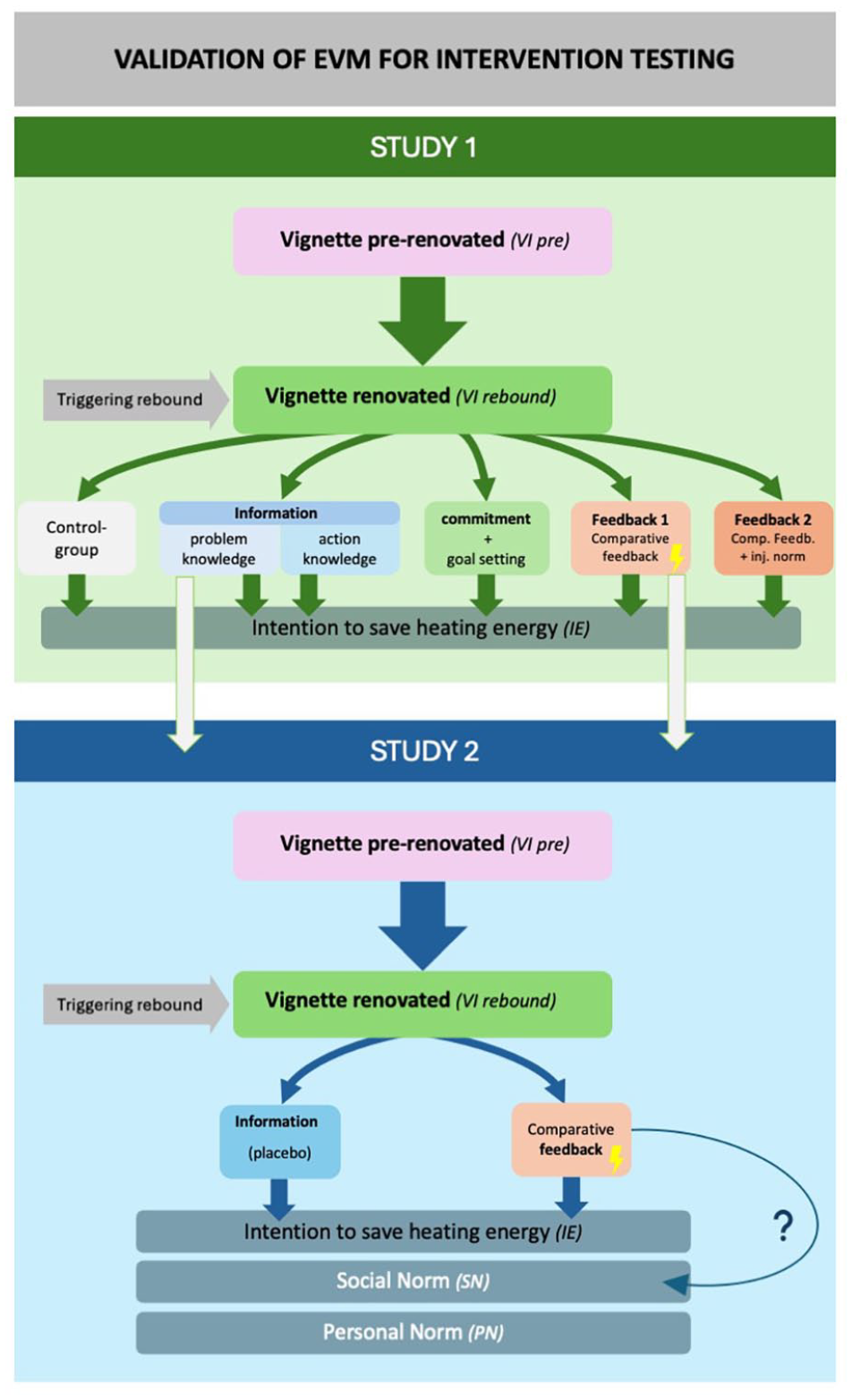
Validation of EVM for intervention testing (overview).
The paper is structured in the following way: The next section introduces EVM. The following paragraphs present the intervention techniques whose rebound reduction potential is evaluated with the help of the EVM, to prove the potential of the methodology as a test bed. For this purpose, we selected one intervention technique (pure information provision), which based on available empirical evidence is viewed by most researchers as an ineffective behavioral change intervention. For the other two intervention techniques (commitment with goal setting and comparative feedback), however, there exists strong empirical evidence of their behavioral change potential. The combination of one presumably ineffective intervention technique and two presumably effective intervention techniques is based on the rationale that if EVM is a reliable and valid method, its use should replicate these findings. After the presentation of the samples and statistical power, the study design and the implementation of the three interventions are reported. The following section presents the results of the statistical hypothesis tests. The final section summarizes the results, discusses their practical implications and requirements for future research.
Experimental Vignette Methodology
The core idea behind EVM is to present participants with a scenario that is as realistic as possible. Participants are asked to put themselves in the scenario and to make a decision under the given contextual conditions (Maddux & Rogers, 1983). Introduced by Rossi (Rossi et al., 1974), vignettes have been developed further and applied to different scientific fields. Atzmüller and Steiner (2010) described two constitutive characteristics of vignettes: (a) experimental aspects, which are systematically manipulated, and (b) controlled aspects. They also offered an additional, optional characteristic: (c) contextual aspects, which may enrich the scenario without impacting the dependent variable. Commonly, vignette studies are used to realize different levels of an independent variable as different experimental conditions.
Triggering Rebound
The study at hand is not aimed at realizing an experimental design by systematically varying the vignettes. Rather, a vignette scenario is used to trigger a rebound situation in order to test the rebound-reducing effectiveness of intervention techniques in this simulated situation. Regarding the construct validity of vignettes, it should be noted that vignettes are not designed to offer a realistic re-enactment of situations (Wallander, 2012). It is not so much a question of whether the world created by the vignette is true to reality, but rather whether the activation of mental and behavioral processes is comparable to real life (Schmidt et al., 2022). Previous studies have suggested that participants respond similarly to hypothetical and real-world scenarios (e.g., Langley et al., 1991; Peabody et al., 2004; Shah et al., 2007; Veloski et al., 2005). A few studies have already used vignettes to examine pro-environmental behavior, in particular pro-environmental decision-making (e.g., Hoffmann et al., 2024; Kim et al., 2024), but there is no validation of EVM as a method for systematically analyzing intervention techniques and their associated theoretical assumptions about underlying psychological mechanisms. Schmidt et al. (2022) already validated the rebound-triggering potential of different vignettes, thus underscoring the potential of this method for the experimental analysis of rebound effects.
External Validity of EVM
However, this raises the question of the external validity of this methodological procedure: Can findings generated by vignettes be transferred to real-world settings? An indicator could be the comparative effectiveness of well-studied intervention techniques: Interventions that have been shown to be effective for everyday behaviors in intervention research should also be explored to confirm their effectiveness in vignette studies. Interventions that have been shown to be less effective should also be less effective in vignette studies. If so, then vignette-based studies might offer a promising methodological approach that can be applied to gain deeper insights into the psychological mechanisms of interventions in rebound settings—or, to state this a little bit more cautiously—after the implementation of energy-efficient technologies.
Empirical Evidence for the Impact of Three Commonly Tested Intervention Techniques
In the empirical part, we will evaluate the effect of the following psychological intervention techniques using the EVM: (a) pure information provision, (b) self-commitment with goal setting, and (c) two variants of a comparative feedback intervention. We have specifically selected these four intervention techniques because numerous studies have already examined whether and how they affect the promotion of pro-environmental behaviors (e.g., Abrahamse et al., 2005; Abrahamse & Steg, 2013; Andor & Fels, 2018; Bergquist et al., 2019; Carrus et al., 2020; Delmas et al., 2013; Karlin et al., 2015). In the following, we provide a short summary of the central findings obtained from this literature.
Information Provision
Information/knowledge provision is a strategy that is commonly used to promote energy conservation or other pro-environmental behaviors. The approaches to transferring knowledge range from providing rather general information about the problem of climate change, sometimes combined with communicating rather general approaches to solutions and maps, to communicating very tangible tips about how to change behavior as well as tips that can be used in everyday life (e.g., on how to save energy in the household). Information is provided in various ways, such as mass media campaigns, info sheets and brochures, or tailored information (Abrahamse et al., 2005). However, information is usually not provided in isolation (Carrus et al., 2020). Some studies combine energy-saving tips with goal setting (e.g., Ghesla et al., 2020), whereas others provide information combined with feedback and commitment (e.g., Lokhorst et al., 2013; Mack et al., 2019). The meta-analysis by Delmas et al. (2013) did not show a significant impact of energy-saving tips on energy conservation. Even if people are sufficiently informed about the ecological problems caused by their own behavior and about energy-saving strategies, they are not necessarily motivated or able to transform this knowledge into appropriate behavior.
Self-Commitment With Goal Setting
Commitment is a verbal or written promise to change a specific behavior, and can be linked to a specific target (e.g., to save a certain amount of energy in a defined period of time). The commitment can be a promise to oneself (self-commitment) or can be made public (public commitment). Commitment strategies have already been frequently implemented and tested in the context of energy conservation and were shown to be somewhat effective (e.g., Loock et al., 2013; Pallak & Cummings, 1976; van der Werff et al., 2019). Pallak and Cummings (1976) implemented self-commitment and public commitment strategies in the area of residential energy conservation. They were able to demonstrate that public commitment in particular had a significant impact on energy-saving behavior. van der Werff et al. (2019) were able to demonstrate the significant influence of private self-commitment on energy-saving behavior, but interestingly only when participants considered the behavior to be effortful. The authors accounted for this result by explaining that a strengthened personal norm led to a stronger feeling of moral obligation. In other words, self-commitment is seen as a morally grounded method that can activate a personal norm, that is, a sense of moral obligation based on one’s own personal ecological values, independent of the expectations of others. Activating the personal ecological norm would thus address a psychological variable that has already been shown to be a strong predictor of behavioral intention in the domain of energy consumption (e.g., Abrahamse & Steg, 2009; van der Werff & Steg, 2015; Wolske et al., 2017).
The meta-analyses by Abrahamse and Steg (2013) and Lokhorst et al. (2013) also both indicated that commitment indeed has a positive effect on pro-environmental behavior. Abrahamse and Steg (2013) assumed a medium-sized effect for commitment and indicated a slightly better effectiveness for public commitment.
Comparative Feedback
In contrast to the antecedent strategies described above, feedback interventions belong to the category of consequence strategies. Feedback consists of providing individuals or households with information about their environment-related behavior, such as their energy savings. This intervention technique can be used to influence behavior, as households can detect how certain results (e.g., actual energy consumption) are correlated with their own behavior (Abrahamse et al., 2005). In their meta-analysis, Karlin et al. (2015) showed that feedback is an effective intervention technique for supporting energy conservation behaviors. According to their findings, feedback is particularly effective when combined with other intervention techniques, a finding that, as already shown, applies in principle to all interventions. Bergquist et al. (2019) conducted a meta-analysis on pro-environmental behaviors and were able to show that financial and individual feedback both seem to be less influential than feedback based on social norms (Schultz et al., 2015, 2016). One feedback technique based on social norms is comparative feedback. Through comparative feedback, a feeling of social comparison can be made salient, or social pressure can be induced (Abrahamse et al., 2005). The explicit comparison with a peer group reinforces the extent to which social norms are embedded in the technique of comparative feedback. In some studies, the technique is then framed overall as an intervention through social (descriptive) norms rather than as feedback. In these cases, the focus is on providing people with feedback on their own behavior which is directly compared to that of others. Thus, not only are social norms made salient, but a direct social comparison (Festinger, 1954) with one’s own behavior is stimulated. The descriptive social norms that are made salient here thus communicate the usual, prevailing behavior of a (preferably relevant) comparison group.
Cialdini et al. (1990, 1991) argue that it is important to distinguish between these descriptive social norms and injunctive social norms. Injunctive norms also provide information about how a specific behavior is perceived by the community and are therefore more strongly associated to the perceived expectation of (relevant) others. In a field experiment in the context of energy conservation behavior, Schultz et al. (2007) added an injunctive norm, thereby strengthening the effect or eliminating a rebound effect for participants whose consumption was already below the neighborhood average.
Overall Research Aims and Research Hypotheses
To validate the potential of the vignette methodology, we conducted two lab-based experiments. The aim of Study 1 was to validate the effectiveness of various intervention techniques in a vignette environment, that is, to test whether the vignette design is not only suitable for triggering a rebound effect (i.e., the prerequisite for systematic testing), but also whether the interventions lead to comparable effects to those in the field. Study 2 aims to analyze the mechanisms of intervention in more detail in order to ensure additional validation of the vignette.
In Study 1, we examined the effectiveness of selected intervention techniques for vignette-triggered rebound settings. In doing so, we aim to form the basis for future systematic testing of mediating psychological variables (Study 2). More precisely, we tested the following hypotheses:
H1: The vignette design reliably produces a significant decrease in the intention to adopt additional energy saving behaviors.
H2: The intervention technique “information alone” is not effective, that is, the intention of the experimental group “information alone” to engage in additional energy saving behavior does not statistically differ from the intention reported by the control group (without any intervention).
H3: The intervention technique “self-commitment/goal setting” is effective, that is, the intention of the experimental group “self-commitment/goal setting” to engage in additional energy saving behavior is significantly higher than the intention reported by the control group.
H4: The intervention technique “comparative feedback” is effective, that is, the intention of the experimental group “comparative feedback” to engage in additional energy saving behavior is significantly higher than the intention of the control group.
Based on the results from Study 1, we conducted a follow-up study (Study 2). Study 2 demonstrates how EVM could be used for testing mediating causal mechanisms, in our case the mediating role of the social norm on the intention to engage in additional energy saving behaviors. Therefore, we used the intervention technique “comparative feedback,” that is, we conducted a replication to test whether the EVM again supports the effectiveness of this intervention technique. More precisely, we expect the following:
H5. The intention of the experimental group (“comparative feedback”) to engage in additional energy saving behavior is significantly higher than that reported by the control group (this corresponds to the replication of H4).
H6. The impact of the intervention technique on the reported intention to engage in additional energy saving behaviors is in part or totally mediated by the construct social norm. As the intervention technique “comparative feedback” focusses on making the social norm more salient, we do not expect the personal norm to mediate the relation between the intervention technique and the experimental group’s reported intention to engage in additional energy saving behaviors.
Study 1
Method
We conducted an experimental study with four experimental groups and one control group (see Table 1). The study was conducted in April and May 2020 online with German participants. The study was designed and conducted following APA guidelines on the ethical conduct of research. According to German Law, no ethical approval is required for surveys if anonymity is secured, and no sensitive contents are assessed. The company Bilendi was commissioned to recruit a stratified sample. The prerequisite for participation was living in rented apartments, and equal gender distribution was controlled.
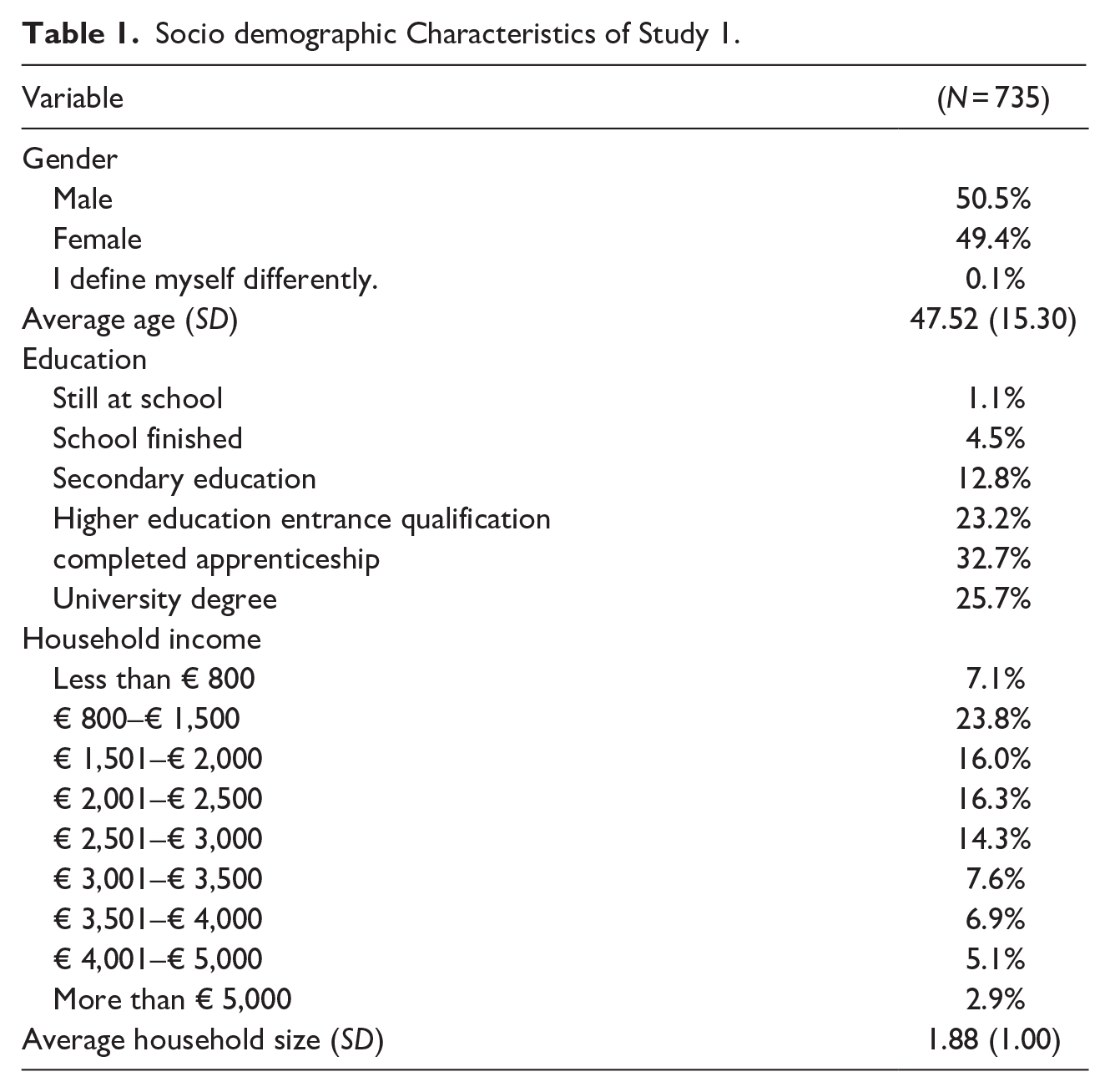
Socio demographic Characteristics of Study 1.
Sample
The experimental procedure—including the vignettes and survey instruments used—was identical across all experimental groups. After deleting incomplete and unreliable cases (based on attention checking questions), N = 735 people were left in Study 1. Study 1 consisted of 363 female (49.4%) and 371 male (50.5%) participants, with 1 (0.1%) participant who indicted their gender as diverse. The average age was M = 47.5 (SD = 15.3; see Table 1 for an overview). 1
Post-hoc power analyses (G*Power, Faul et al., 2009) conducted after the participants were recruited show that an ANCOVA with N = 735 participants (five groups 2 ) would be sensitive to effects of f = 0.145 with 95% power (α = .05, two-tailed).
Procedure and Measures
To validate the potential of the vignette methodology, we implemented four different intervention techniques: “information alone” (N = 153), “self-commitment/goal setting” (N = 74), “comparative feedback” (N = 79), and “comparative feedback augmented with injunctive norms” (N = 81). The control group received no intervention (N = 342). Table 2 provides the experimental design for Study 1.
Design Study 1.
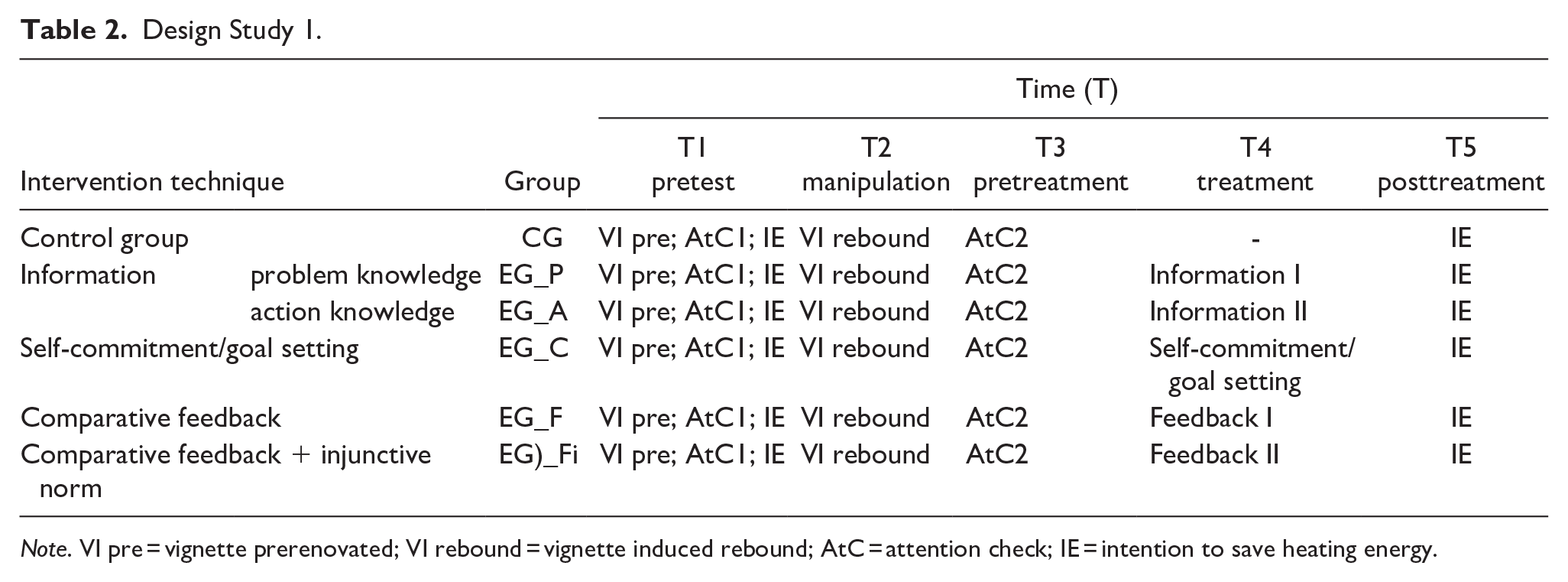
Note. VI pre = vignette prerenovated; VI rebound = vignette induced rebound; AtC = attention check; IE = intention to save heating energy.
Implementing a Double-Vignette Design
To test the intervention effects of the four intervention techniques, we simulated a rebound-triggering living situation by employing a double-vignette design. This double-vignette approach was taken from Schmidt et al. (2022), who were able to confirm the rebound-triggering potential of diverse variants of vignettes with a series of nine studies. Following the assumptions of Prospect Theory (Kahneman & Tversky, 1979), which postulates that people refer to gains and losses relative to a reference point rather than an absolute outcome, we used the double-vignette from Schmidt et al. (2022) to set a reference: In the first step, the participants read the vignette of the unrenovated apartment, in the second step, all participants also read the vignette of the energy-efficiently renovated apartment. In this design, the unrenovated vignette thus acted as a reference point for the renovated vignette presented later. Based on the systematic study by Schmidt et al. (2022), we could thus expect to create a rebound effect that would provide the crucial basis for the experimental testing of the intervention techniques.
First Step Vignette: Pre-rebound
Following a short welcome-page, our surveys started with the presentation of an unrenovated apartment vignette. This vignette set the reference point for the second vignette, which was administered later.
First, please imagine yourself in the following living situation: You live alone in an approximately 50 square meter apartment in an old building (consisting of a living room, kitchen, bedroom, and bathroom), and you’re currently not planning to move. However, there’s one downside to the apartment: The high heating expenses – almost € 900
3
every winter! The costs are this high because • the heating system is technically outdated, • the outer walls are not insulated, and • the windows are not heat-insulated.
Following the presentation of this unrenovated apartment vignette, we conducted a first attention check (AtC1) in order to make sure that all participants read the unrenovated vignette description sufficiently: “Now that you’ve imagined yourself in the described living situation, we would like to ask you one simple question concerning the living situation described: Now in winter, where does energy get lost in your described flat?.” All participants had to answer this first attention check-question by choosing one (or more) of five options (“In the heating system,” “At the outer walls,” “At the windows,” “In the fridge,” or “I don’t know”). If a participant chose “In the fridge” or “I don’t know,” he/ she was later excluded from data analyses.
Afterward, we measured the intention to engage in additional energy saving behavior referring to the unrenovated apartment vignette, introduced by: “With regard to the described living conditions, how strong is your intention [. . .].” Following this introduction, participants reported their intention to perform nine specific heating energy-saving behaviors, for example, “. . . to invest approx. €30 in an electronically controlled thermostat that automatically adjusts the temperature in an energy-efficient way?,” which were integrated into an overall energy-saving intention scale showing good reliability (see Table A1 in Appendix for an overview of all items/ scales used). All items were assessed on a 7-step Likert scale (1 = “very weak intention”; 7 = “very strong intention”).
Second Step Vignette: Rebound
In a next step, all participants read a second vignette that described an energy-efficient, renovated apartment.
Now please imagine yourself in the following, new living situation: You live alone in an approximately 50 square meter apartment in an old building (consisting of a living room, kitchen, bedroom, and bathroom). Until now, there was one downside to the apartment: The high heating expenses – almost € 900 every winter! The costs were that high because the flat had not been renovated. However, this summer your flat has been extensively renovated for energy efficiency. Thereby, your flat now has: • a modern, energy-efficient heating system, • insulated outer walls,\ • and triple glazed windows were installed! After the renovation, your rent increased only slightly. That’s great for you: Your yearly heating expenses are now less than half as high as before. You’re now saving almost € 500 a year.
As with the presentation of the unrenovated apartment vignette, the presentation of the energy-efficient renovated apartment vignette was followed by an attention check (AtC2) in order to make sure that all participants had read the vignette carefully. Those who answered the attention check incorrectly were excluded from further data analyses.
Intervention Implementation
Afterward, all participants were randomly assigned to an experimental (EG) or control group (CG). For the experimental group, the survey then continued with the intervention implementation, while the control group received no intervention.
Information Only
EG_P received a problem-knowledge information intervention, while EG_A received an action-knowledge information intervention. Thereby, both EGs were told they received an information letter from their landlord, which contained the provided problem-/action-knowledge information 4 (see Figure 2 for the problem-knowledge information and Figure 3 for the action-knowledge information).

Problem-knowledge information in Study 1.
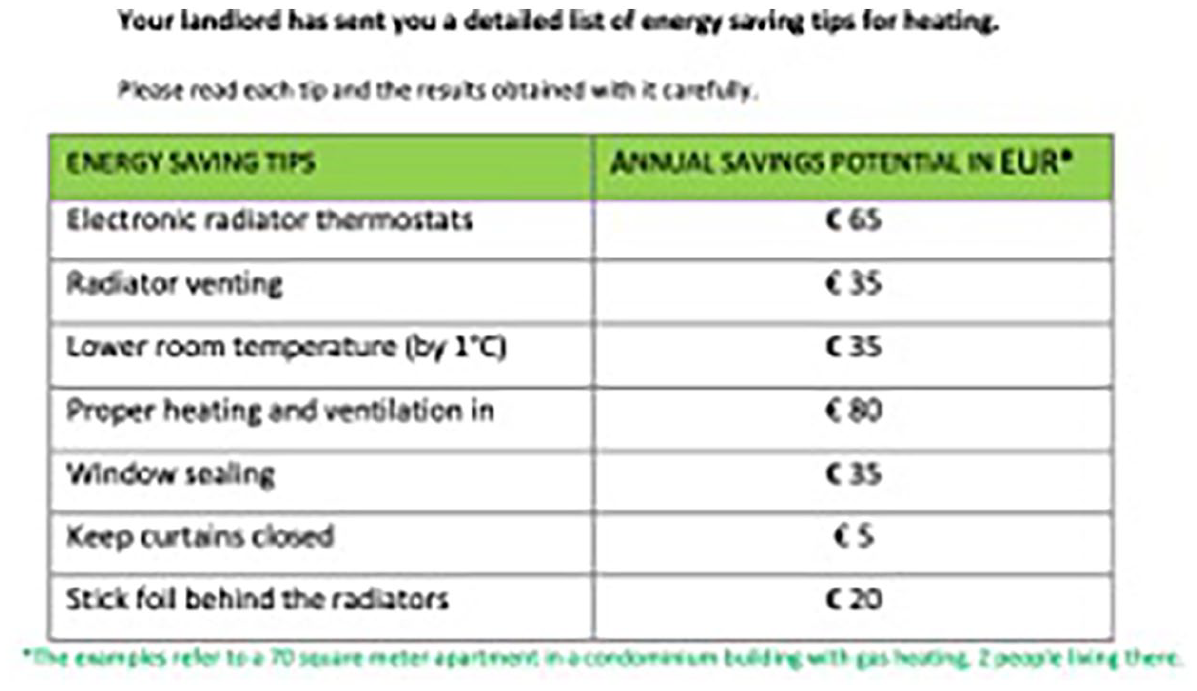
Action-knowledge information in Study 1.
Self-Commitment Combined With Goal Setting
EG_C got a short addition of the hypothetical scenario at the end of the second step vignette: Here’s now an addition to the living situation described: After the extensive energetic renovation of your flat, you receive a letter from the consumer center of your federal state that informs you about the possibility to participate in an energy-saving project in your neighborhood. The project’s goal is to actively contribute to climate protection via saving heating energy in private households and thereby reducing greenhouse gas emissions. A prepaid reply postcard is enclosed with the letter. On the postcard, you are asked to set yourself a goal for the percentage of heating energy you would like to actively save as your personal contribution to climate protection in the heating period to come. You are asked to return the postcard with your answer to the sender without providing your address. Furthermore, you are asked to hang up a copy of the postcard in your household at a place easily visible for all inhabitants.
After this introduction, EG_C was presented with an example of the postcard mentioned above (see Figure 4). They were instructed to indicate the amount of heating energy they want to save during the next heating period in the hypothetical scenario:
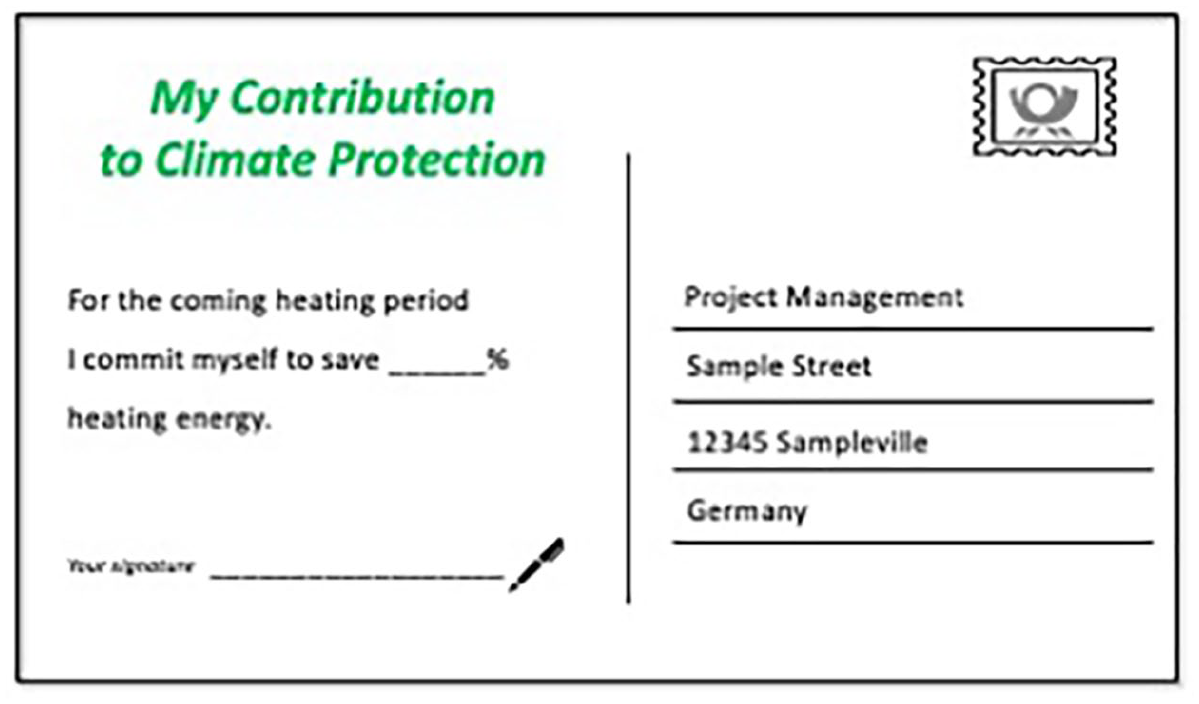
Illustration of the mentioned postcard used for the self-commitment combined with goal setting intervention in Study 1.
Please put yourself in the described living situation (after the energetic renovation) and state the answer you would write on the postcard: For the following heating period, I’m committing to saving . . .% of heating energy in my flat.
The indicated energy-saving-aims ranged from 0% to 70% with a mean value of M = 26.96 (SD = 17.92). Since intervention effects were expected only for EG_C-participants who indicated at least small energy-saving goals, those who reported 0% energy-saving goals (n = 4) were excluded from all further analyses.
Comparative Feedback Intervention
EG_F also got an addition of the hypothetical scenario at the end of the second step vignette: Here’s now an addition to the described living situation: After the extensive energetic renovation of your flat, you receive a letter from the consumer center of your federal state that informs you about the possibility to participate in an energy-saving project in your neighborhood. The project’s goal is to actively contribute to climate protection via saving heating energy in private households and thereby reducing greenhouse gas emissions. To this end, all citizens are first asked about their previous heating behavior. Approximately 4 weeks later, all participants will be informed in writing of the results of this survey. You receive the following result.
Following this introduction, EG_F received an illustration of the received feedback-message containing the following feedback: “You have about 10% higher heating energy consumption than neighbors with comparable living conditions (e.g., number of people in the household, length of stay of household members in the household, etc.).” (see Figure 5).
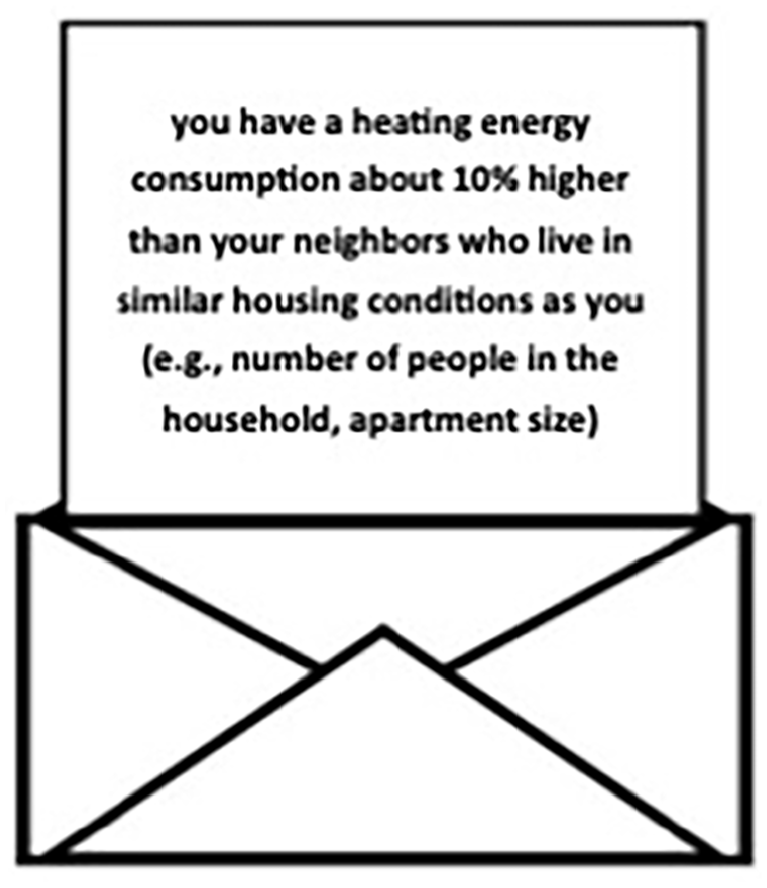
Comparative feedback-intervention in Study 1.
Comparative Feedback Intervention/Injunctive Norm
EG_Fi received the same intervention as the comparative feedback in EG_F, but also received an embedded injunctive norm-icon in their comparative feedback intervention (see Figure 6).
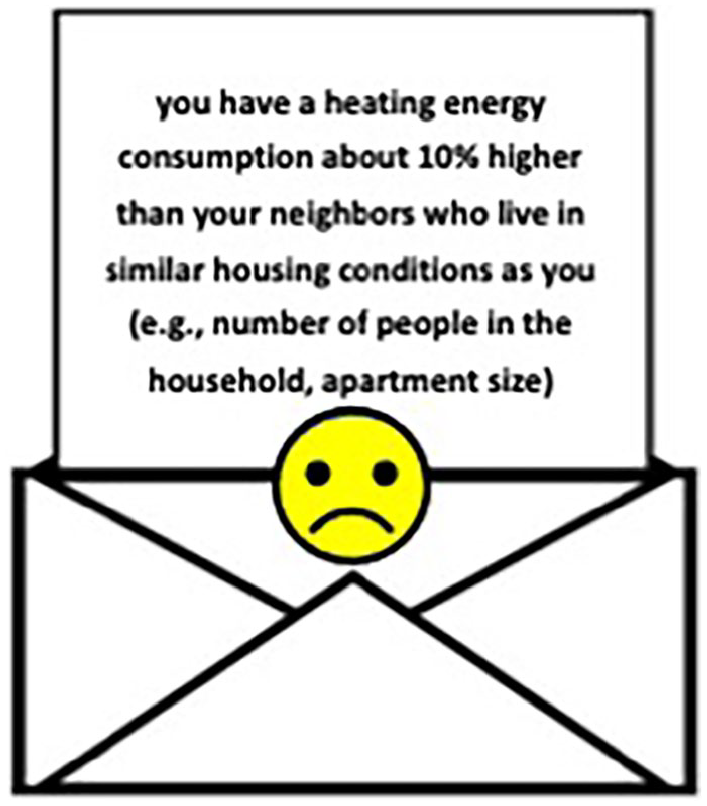
Comparative feedback-intervention with an embedded injunctive norm-icon in Study 1.
Afterward, the survey continued with the measurement of all participants’ intention to save heating energy referring to the energy-efficient renovated apartment vignette. We used the same items that were already used in intention-measurement referring to the unrenovated vignette (see above and Table A1 in Appendix 1 for details). Finally, the survey closed with several items capturing participants’ sociodemographic characteristics.
Results
To validate the rebound-inducing effect of the used double vignette design (H1), a t-test was conducted for the CG’s intention to save heating energy for the unrenovated (pre-rebound) and the renovated vignette (rebound). As expected, data analysis proved a significant difference for the CG, thus the intention to save heating energy is lower in the renovated vignette condition: t(341) = 6.372, p = .001. The rebound-inducing effect of the double vignette design could thereby be confirmed (H1). 5
For evaluating the interventions’ effects, an ANCOVA was conducted using the EGs’ and CG’s intentions to save heating energy (referring to the renovated vignette) as dependent variables and considering the intentions referring to the unrenovated apartment vignette as a covariate. Results of the analysis are summarized in Table 3 and depicted in Figure 7.
Descriptive Statistics and Results of the Post Hoc Tests (LSD) of the Conducted ANCOVA for Evaluating the Interventions in Study 1.
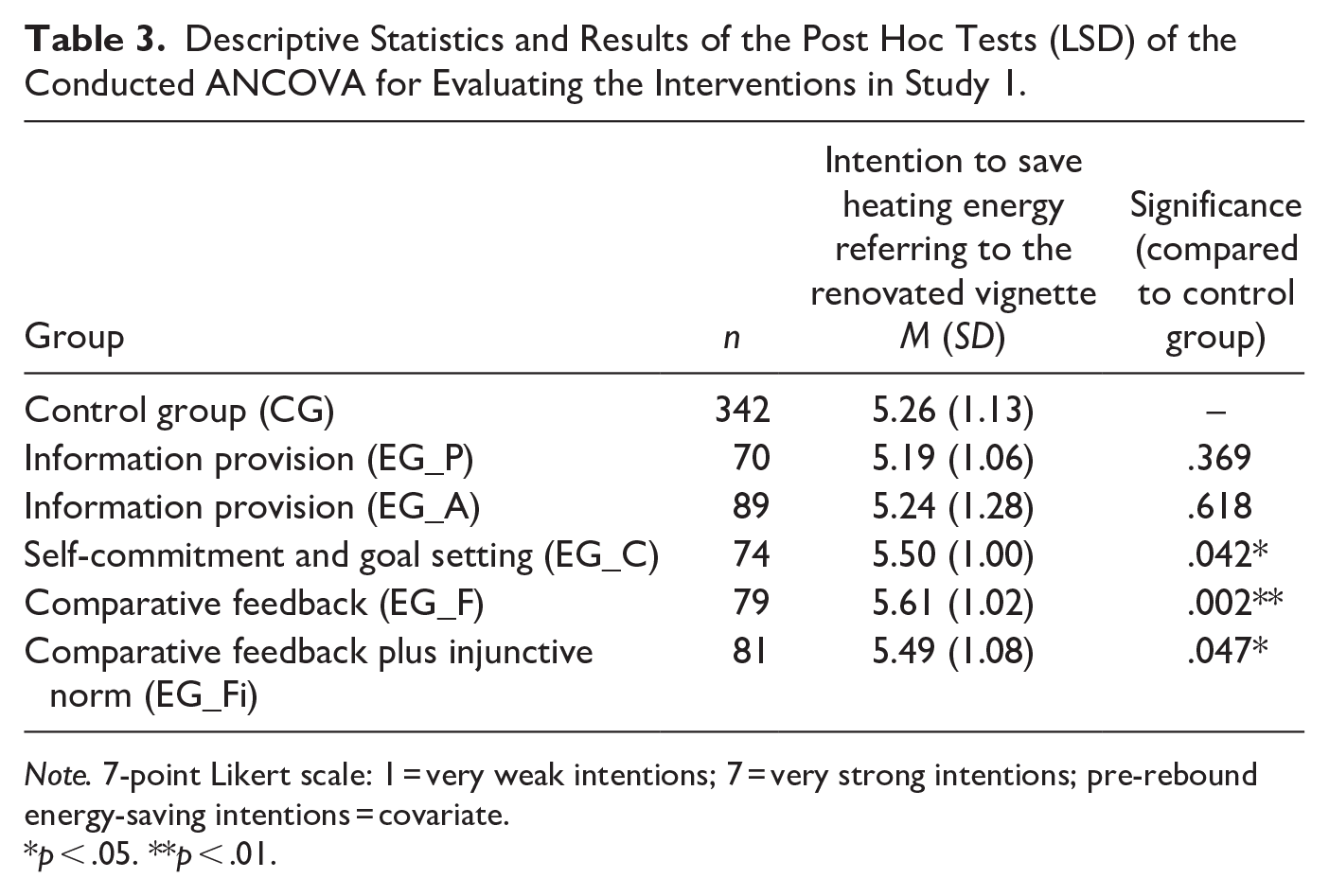
Note. 7-point Likert scale: 1 = very weak intentions; 7 = very strong intentions; pre-rebound energy-saving intentions = covariate.
p < .05. **p < .01.
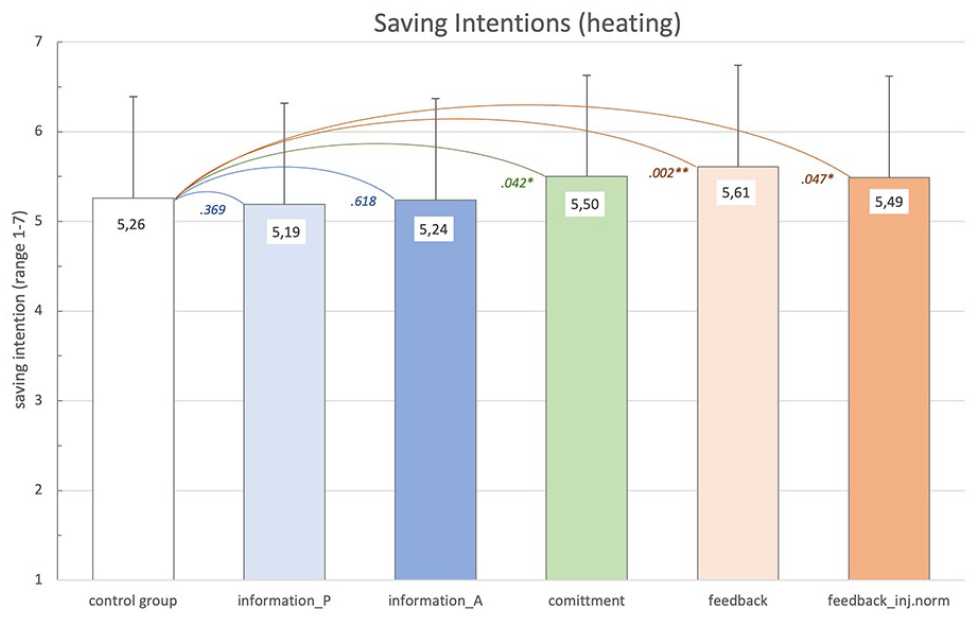
Intervention effects (ANCOVA, controlled for saving intentions pre-rebound).
In addition to the expectable significant effect of the covariate (F(1) = 734.891, p < .001; η2 = .502), the ANCOVA revealed a significant overall effect of the interventions (F(5) = 3.795, p = .002; η2 = .025). Following Cohen (1988), the effect size of this overall intervention effect is to be categorized as small.
When examining additionally conducted post hoc tests (LSD) comparing CG intention to save heating energy referring to the renovated vignette with each EG intention, we were able to recognize a more differentiated effect pattern: As expected (hypothesis H2), the post hoc test did not imply an intervention effect for information provision (no matter which type of information was provided) since we did not find a significant difference (pP = .618; pA = .369) between EGs’ intentions to save heating energy referring to the renovated vignette (MEG_P = 5.19, SDEG_P = 1.06; MEG_A = 5.24, SDEG_A = 1.28) and CG’s intention (MCG = 5.26, SDCG = 1.13). In contrast, we found significant group differences for all other types of examined intervention techniques: post hoc tests revealed a significant effect (pC = .042) of the conducted self-commitment and goal setting intervention for EG_c (MEG_C = 5.50, SDEG_C = 1.00), reporting significant higher (F(1;414) = 3.539; p = .06; η2 = .008) heating energy-saving intentions referring to the renovated apartment vignette compared with the control group (MCG = 5.26, SDCG = 1.13). We interpret these findings as confirmation of our hypothesis H3.
Furthermore, the conducted post hoc tests revealed significant effects of the comparative feedback interventions: EG_F showed highly significant higher heating energy saving intentions (pF = 0.002) than the CG (MEG_F = 5.61, SDEG_F = 1.02; MCG = 5.26, SDCG = 1.13), while an also significant effect (pFi = 0.047) was found for EG_Fi (MEG_Fi = 5.49, SDEG_Fi = 1.08). We interpret these findings as confirmation of our hypothesis H4.
Study 2
Method
Study 2 (N = 121) was conducted with German participants (convenient sample) from June to July in 2021. The online questionnaire used and the basic design of the study were essentially the same as in Study 1. Only the number of intervention techniques was reduced, and this time the constructs personal norm (PN) and social norm (SN) were measured before and after the intervention.
Sample
Email distribution lists, a call for participation in social media (e.g., SurveyCircle) and an online advertisement were used to recruit the sample. In addition, a competition (voucher raffle) was introduced as an incentive to participate. N = 224 people participated in the survey. After deleting incomplete 6 and unreliable cases (based on attention checking questions), N = 121 people were left. N1 = 62 people were left in the control group, which received only general information as a placebo (CGP), and N2 = 59 were left in the experimental group, which received comparative feedback (see Table 5 for an overview). The control group (information only) consisted of 50 female (80.6%) and 11 male (17.7%) participants, with 1 (1.6%) participant indicating their gender as diverse. The average age was M = 28.1 (SD = 8.3). The experimental group (comparative feedback) consisted of 46 female (78.0%) and 12 male (20.3%) participants, with 1 (1.7%) participant indicating their gender as diverse. The average age was M = 29.2 (SD = 10.9). The sample was much younger than the sample of Study 1, had a higher level of education, and women were considerably overrepresented (see Table 4).
Sociodemographic Characteristics of Study 2.
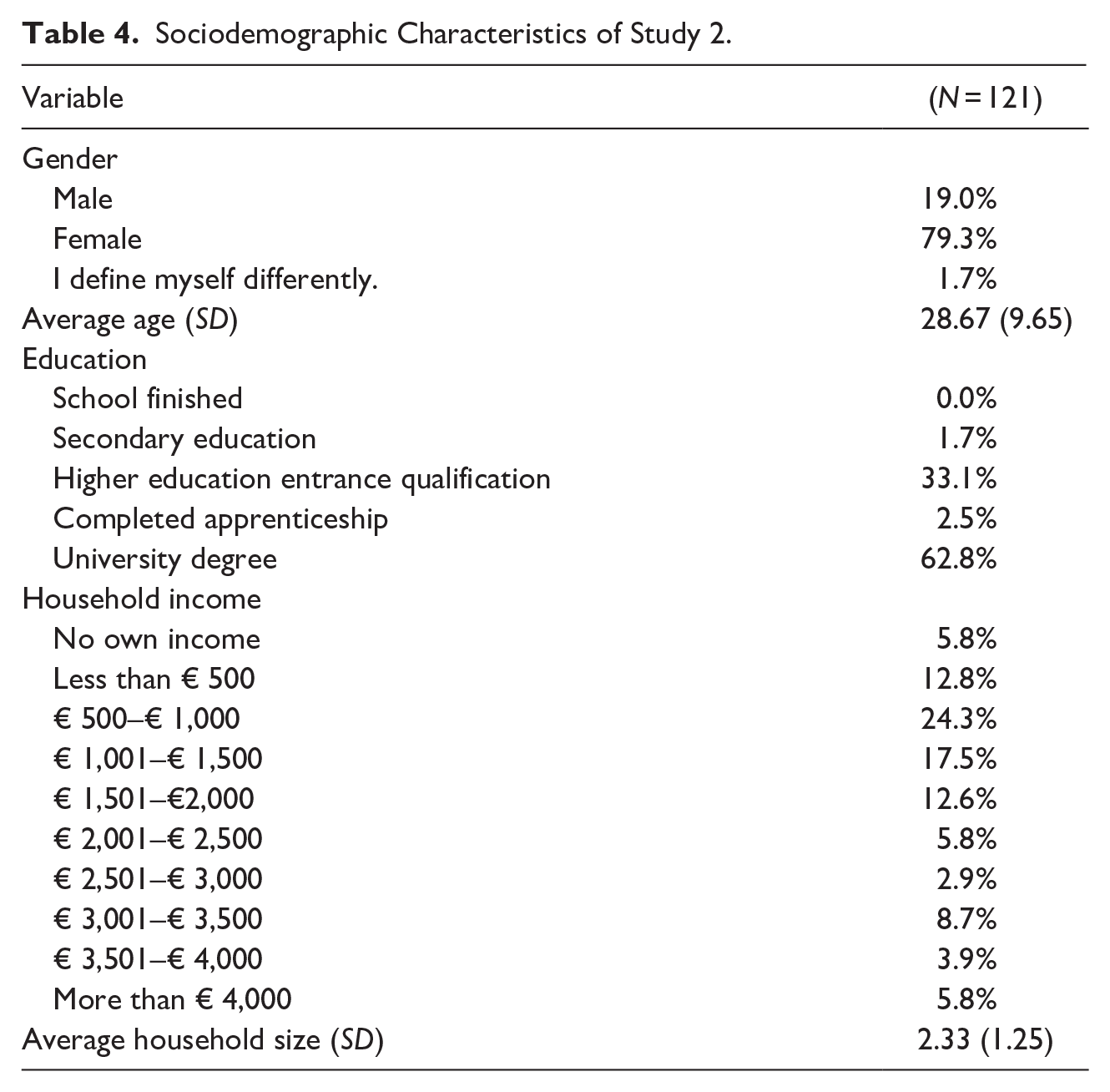
A post-hoc power analysis (G*Power, Faul et al., 2009), conducted after the participants were recruited, shows that an ANCOVA with N = 121 participants would be sensitive to effects of f = 0.25 with 78% power (α = .05, two-tailed).
Procedure and Measures
The Procedure was conducted in parallel with the procedure in Study 1 (see above). Study 2 aims to use EVM not only for testing the impact of an intervention on the psychological constructs social norm, personal norm and behavioral intention, but also to test whether the changes observed in the social and personal norm construct after the intervention mediate the impact of the intervention technique on intention. Because of this focus, we decided to use only one intervention technique in Study 2 that was shown to be effective in Study 1. Therefore, “comparative feedback” was implemented as an effective intervention strategy, and information provision as an ineffective placebo intervention technique (control group). Table 5 depicts the design of Study 2.
Design Study 2.
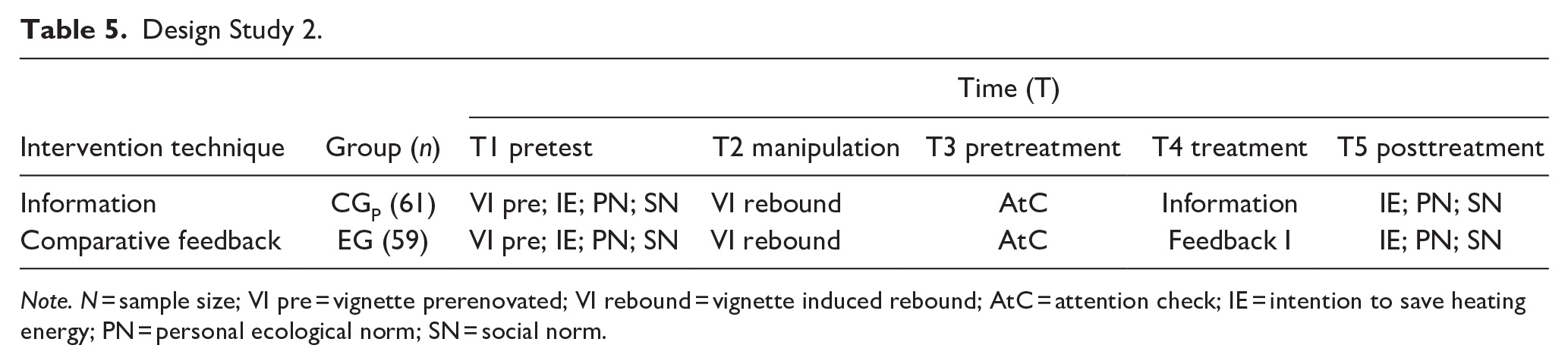
Note. N = sample size; VI pre = vignette prerenovated; VI rebound = vignette induced rebound; AtC = attention check; IE = intention to save heating energy; PN = personal ecological norm; SN = social norm.
In addition to the pre- and post-intentions to save heating energy (IE, 9 items scale, α = .70), a pre- and post-measurement of the personal norm (PN, 3 item scale, α = .88) and the social norm 7 (SN, 3 item scale, α = .83) were conducted (see Table A1 in Appendix for all items/scales used). All items were assessed on a 7-step Likert scale (1 = “completely disagree”; 7 = “completely agree”).
Implementing a Double Vignette Design
As in Study 1 (see above), the double-vignette was used to simulate a rebound-triggering living situation. Again, the presentation of the energy-efficient renovated apartment vignette was followed by an attention check (AtC) to ensure that all participants have read the given information.
Intervention Implementation
In Study 2, participants were randomly assigned to the two groups: The control group (CGP) received the problem-knowledge information intervention as a placebo (see Figure 2), the EG received a comparative feedback intervention (see Figure 5). The intervention was performed in exactly the same way as in Study 1 (see above).
Results
To replicate the results of Study 1 (hypothesis H4), an ANCOVA was conducted evaluating the intervention effect of “comparative feedback,” using EG and CG intentions to save heating energy referring to the renovated vignette as dependent variables and considering intentions referring to the unrenovated apartment vignette as a covariate.
In line with Study 1, we found significant group differences (F(1;121) = 13.200; p = .001; η2 = .101 8 ) for “comparative feedback” and “information provision” (placebo) with EG (MEG = 5.38, SDEG = 0.78) reporting significant higher heating energy-saving intentions referring to the renovated apartment vignette compared to the CG (MCG = 4.86, SDCG = 0.84; see Table 6). Evidently, the intervention also proved to be effective in Study 2, thereby replicating the results found in Study 1 (hypothesis H5).
Study 2: Effect of the Comparative Feedback Intervention Technique on Energy Saving Intention (ANCOVA Results).
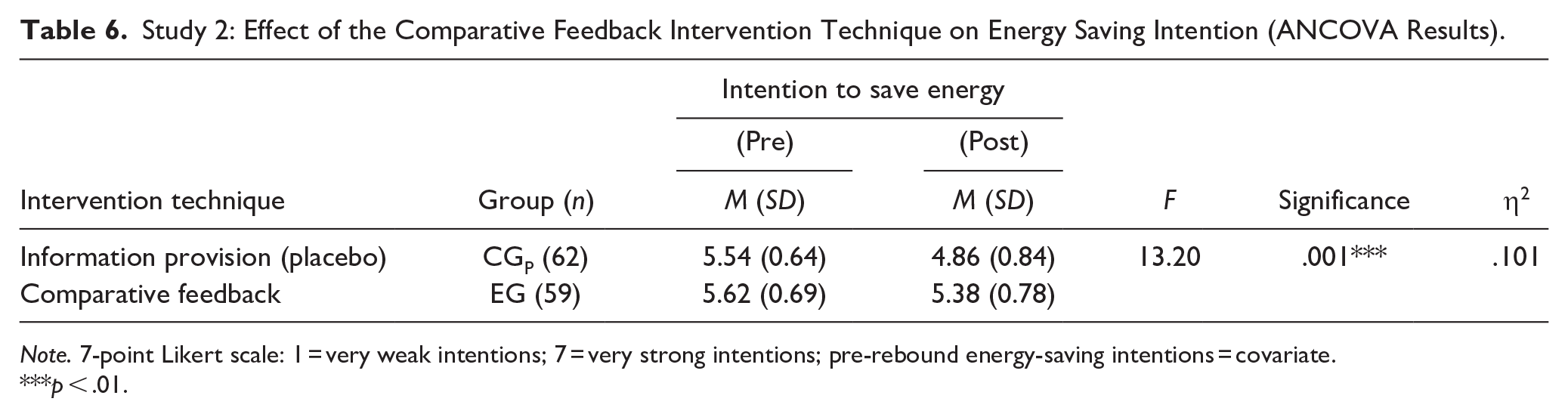
Note. 7-point Likert scale: 1 = very weak intentions; 7 = very strong intentions; pre-rebound energy-saving intentions = covariate.
***p < .01.
As reported in Table 7, the intervention “comparative feedback” also causes a significant post-intervention increase in the perceived social norm, that is the perceived expectation of important other people to save energy (F(1;121) = 8.840; p = .004; η2
Study 2: Effect of the Comparative Feedback Intervention Technique on the Mediator Constructs Social Norm and Personal Norm (ANCOVA Results).
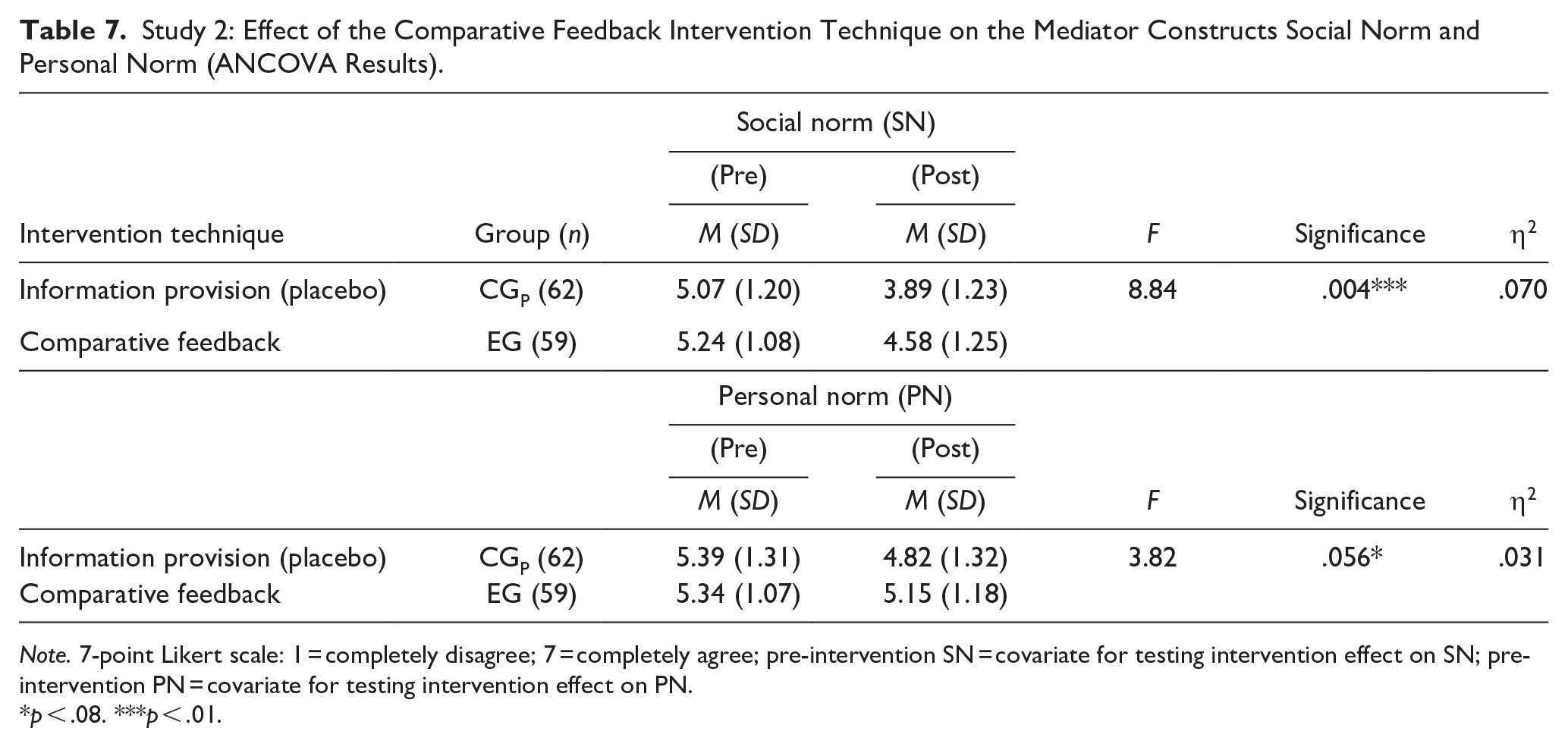
Note. 7-point Likert scale: 1 = completely disagree; 7 = completely agree; pre-intervention SN = covariate for testing intervention effect on SN; pre-intervention PN = covariate for testing intervention effect on PN.
p < .08. ***p < .01.
To estimate the confidence intervals (CI) of the parameters and account for the non-normal distribution of the indirect effects in a mediation analysis, we computed the 95% bootstrap percentile CI (number of bootstrap samples = 5,000). Figure 8 graphically presents the results of the PROCESS model.

Results of the PROCESS parallel mediation model.
Path a2 (B = 0.694, p = .003) confirms the significant effect of the intervention on social norm, while a1 (B = 0.289, p = .201) shows no significant effect of the intervention on personal norm. After controlling for these effects, the direct intervention effect on the energy saving intention (path c′) remains significant (B = 0.324, p = .008). Social norm (B = 0.120, p = .024) and personal norm (B = 0.188, p = .005) themselves are statistically associated with the energy saving intention (b1 and b2).
We found that the relation of the intervention technique “comparative feedback” and energy saving intention is partially mediated by the social norm, indirect effect B = 0.083, 95% CI [0.008, 0.179]. In contrast, the relation between the intervention technique “comparative feedback” and the energy saving intention does not seem to be mediated by the personal norm, indirect effect B = 0.054, 95% CI [−0.027, 0.159]. These findings support hypothesis H6, as the intervention technique “comparative feedback” aims to make the social norm more salient and does not focus on the personal norm.
Discussion
The main objective of this paper was to empirically evaluate the validity of the laboratory-based Experimental Vignette Method (EVM) with regard to two aspects: Firstly, it was examined whether EVM is suitable for systematically testing the effectiveness of different intervention techniques for pro-environmental behavior, and secondly, whether the method is also suitable for analyzing the underlying mechanisms of psychological intervention techniques in more detail, thus making an important contribution to intervention research. While Study 1 focused on testing the effectiveness of well-researched intervention techniques for behavior change in EVM conditions, Study 2 was a first step to test whether EVM is also suitable for analyzing the psychological mechanisms of intervention techniques. The results of Study 1 not only confirm the rebound-inducing effect of the double vignette design (H1), which serves as the prerequisite for the experimental testing of the interventions, but also demonstrate the potential of EVM for testing intervention techniques:
The results indicate that the information-provision intervention did not have a significant effect on intentions to save heating energy, while the self-commitment and goal setting intervention had a significant effect, with EG participants reporting higher intentions to save heating energy compared to the CG. The comparative feedback intervention showed highly significant effects. These findings confirm hypothesis H4, which suggests that interventions involving self-commitment and goal setting, as well as comparative feedback, may be effective in influencing intentions to save heating energy. However, the addition of the injunctive norm (“comparative feedback plus injunctive norm”) did not amplify the effect of the comparative feedback. Although the extended intervention remained statistically significant, it was not substantially more effective than the version with comparative feedback alone. Perhaps the additional reinforcement of the comparative feedback by an injunctive norm (provided by the emoji) led to reactance instead of reinforcing the intervention effect as intended; however, this cannot be answered based on the given data. It could also be suggested that this particular form of amplification of comparative feedback is more likely to lead to reactance under EVM conditions than under real conditions; here it would be worthwhile to analyze this specific aspect in future studies. However, there were no contradictory results, the intervention effect of the comparative feedback with the injunctive norm was just not as strong as expected. All in all, we consider the findings to be a clear confirmation of the potential of EVM for future research on the effectiveness of different intervention techniques, while also demonstrating the possibility of identifying the underlying mechanisms of psychological interventions more precisely.
Theoretical Implications
Results presented here correspond to the findings from intervention research: There is a case for using vignette methods in the future for deeper analyses of intervention techniques and rebound effects. However, if research in environmental psychology aims not only to test the effects of interventions but also to clarify how exactly these interventions work, then it is necessary to also systematically test theoretically expected mediating effects. We would like to put forward for discussion the idea that the theoretical assumptions underlying so-called theory-driven interventions have not yet been sufficiently tested experimentally. In other words: While we know quite well that various intervention techniques, (or bundles of measures) are more effective than others, we may still know relatively little about the impact of isolated intervention techniques and about the psychological processes and mechanisms underlying these techniques. It is precisely here that we see great potential for EVM, because these processes can be analyzed experimentally with relative ease: Study 2 has already made first initial contributions here. Testing the intervention effect of “comparative feedback” on the intention to save heating energy referring to the renovated vignette, we had a closer look at the psychological constructs personal norm and social norm. Following the conclusions of the meta-analysis of Bergquist et al. (2019), and the descriptions of Abrahamse et al. (2005), comparative feedback is an intervention technique that is based on social norms, making a feeling of social comparison salient. Consequently, the intervention should impact the behavioral intention indirectly, mediated by the social norm. Based on the assumptions of the norm-activation model (Schwartz, 1977; Schwartz & Howard, 1981), one would expect an impact of the personal norm on the behavioral intention, but the personal norm—which is explicitly defined as independent of the expectations of others—should not be affected by the intervention “comparative feedback.” The findings of Study 2 confirm these assumptions, the relation of the intervention technique “comparative feedback” between the energy saving intention is partially mediated by the social norm, and not mediated by the personal norm. Due to the relatively small, non-representative sample, Study 2 has the character of a first preliminary study but shows the great potential of EVM for future development and testing of theory-based intervention techniques as well as further testing of action models.
The study at hand aimed to validate EVM, which we consider to have been successful. We see this as a prerequisite for controlled testing of the effectiveness of interventions and the underlying psychological constructs, as they are postulated in theories like the Theory of Planned Behavior, or the Norm Activation Model. On the basis of these findings, future interventions—both entirely new approaches and refinements of existing ones—can be directly derived from these theories, rather than merely justified by plausible assumptions that appear to align with them.
Practical Implications
The systematic testing of intervention techniques using EVM not only has theoretical significance, but also offers advantages for practical application. Especially for the development of interventions, it is not practicable in the field to test the isolated effectiveness of intervention techniques. Furthermore, on-site interventions are usually very time-consuming and costly. It is ethically difficult to limit interventions that are likely to be very effective in promoting environmentally friendly behavior to certain groups. Therefore, it is hardly possible to systematically evaluate interventions in practice, which also makes it difficult to optimize them for future implementations.
Here, EVM provides the opportunity to not only systematically and easily evaluate various intervention techniques, but also to pre-test and optimize variations of intervention techniques in a very differentiated way and to optimize them for different contexts and target groups before they are implemented in the field.
Limitations
Study 1 was conducted in 2020 during the Corona period. It is possible that during this time there was an increased sensitivity to the context of one’s own home and living area. However, since we implemented a randomized control group design, we do not see any threat to validity here.
Study 2 was conducted with a convenient sample, which could be considered a limitation. However, in the present study, the focus is on internal validity issues, which we do not consider to be compromised here. We therefore interpret the results of Study 2 as evidence of the potential of EVM. The fact that both the rebound effect and the effectiveness of the interventions from Study 1 could be replicated supports this evidence from Study 2, in our opinion.
As Study 1 focused on the analysis of the effectiveness of intervention techniques for behavior change in EVM conditions, we have not systematically recorded the possibly relevant psychological constructs here. Future research here should investigate even more different variations of intervention techniques, while at the same time formulating theory-driven assumptions and including the corresponding psychological constructs to provide deeper insights into the psychological processes behind intervention techniques.
Furthermore, we limited ourselves to a few well-researched interventions when validating EVM. From our perspective, we have thus adopted a targeted experimental approach and, in particular, effectively addressed the rebound context. No statements can be made here regarding the effectiveness of other, innovative interventions. Future experiments could focus on testing theoretical assumptions about the effectiveness of different norm-based, cost-reducing, or innovative feedback strategies.
Conclusions
In summary, EVM was successfully validated for the controlled testing of interventions. As expected, there were no effects of pure information provision on the intention to save energy, but there were significant effects for commitment with goal setting and highly significant effects of comparative feedback. In Study 2, the validity of EVM was also demonstrated for controlled testing of psychological processes in the context of interventions. There is a strong case for using vignette methods for more in-depth analyses of interventions and rebound effects in the future. If research in environmental psychology aims not only to test the effects of interventions, but also to clarify how exactly these interventions work, then it is also necessary to systematically test the theoretically expected mediation effects. The EVM method thus provides a means to not only test the isolated effectiveness of interventions and understand their impact, but also to better understand the psychological processes underlying the rebound phenomenon.
Footnotes
Appendix
Overview on Items/ Scales Used in Study 1and Study 2 in Order to Measure Dependent and Independent Variables for Data Analyses.
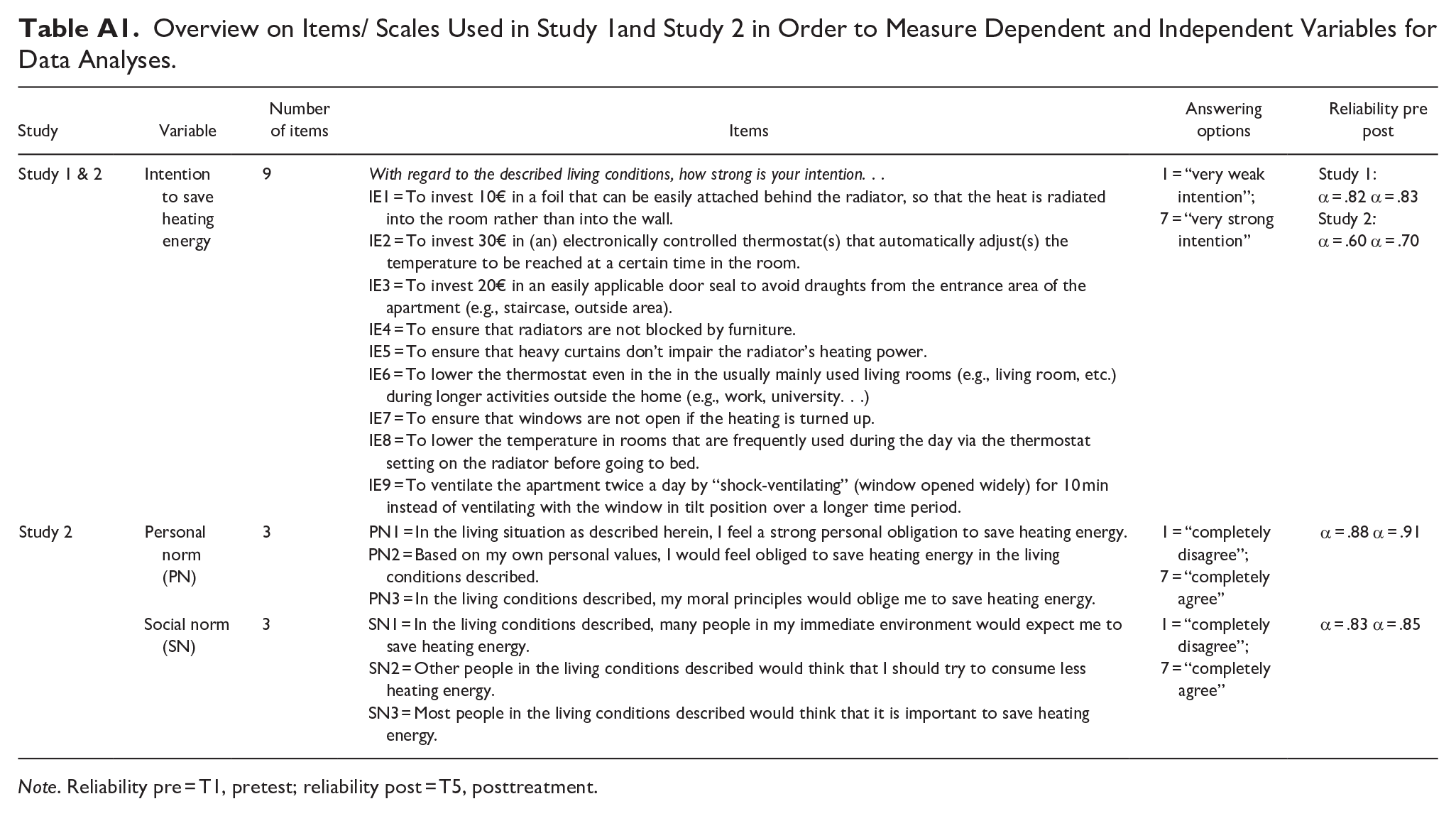
| Study | Variable | Number of items | Items | Answering options | Reliability pre post |
|---|---|---|---|---|---|
| Study 1 & 2 | Intention to save heating energy | 9 | With regard to the described living conditions, how strong is your intention. . .
IE1 = To invest 10€ in a foil that can be easily attached behind the radiator, so that the heat is radiated into the room rather than into the wall. IE2 = To invest 30€ in (an) electronically controlled thermostat(s) that automatically adjust(s) the temperature to be reached at a certain time in the room. IE3 = To invest 20€ in an easily applicable door seal to avoid draughts from the entrance area of the apartment (e.g., staircase, outside area). IE4 = To ensure that radiators are not blocked by furniture. IE5 = To ensure that heavy curtains don’t impair the radiator’s heating power. IE6 = To lower the thermostat even in the in the usually mainly used living rooms (e.g., living room, etc.) during longer activities outside the home (e.g., work, university. . .) IE7 = To ensure that windows are not open if the heating is turned up. IE8 = To lower the temperature in rooms that are frequently used during the day via the thermostat setting on the radiator before going to bed. IE9 = To ventilate the apartment twice a day by “shock-ventilating” (window opened widely) for 10 min instead of ventilating with the window in tilt position over a longer time period. |
1 = “very weak intention”; 7 = “very strong intention” |
Study 1: α = .82 α = .83 Study 2: α = .60 α = .70 |
| Study 2 | Personal norm (PN) | 3 | PN1 = In the living situation as described herein, I feel a strong personal obligation to save heating energy. PN2 = Based on my own personal values, I would feel obliged to save heating energy in the living conditions described. PN3 = In the living conditions described, my moral principles would oblige me to save heating energy. |
1 = “completely disagree”; 7 = “completely agree” |
α = .88 α = .91 |
| Social norm (SN) | 3 | SN1 = In the living conditions described, many people in my immediate environment would expect me to save heating energy. SN2 = Other people in the living conditions described would think that I should try to consume less heating energy. SN3 = Most people in the living conditions described would think that it is important to save heating energy. |
1 = “completely disagree”; 7 = “completely agree” |
α = .83 α = .85 |
Note. Reliability pre = T1, pretest; reliability post = T5, posttreatment.
Acknowledgements
We would like to thank all those who scientifically or practically supported our project. Special thanks go to Fabian Zais, who collected the data for Study 2 as part of his master’s thesis, which was supervised by the first author.
Data Availability Statement
The data that support the findings of this study are available from the corresponding author, Anke Blöbaum (
Declaration of Conflicting Interests
The author(s) declared no potential conflicts of interest with respect to the research, authorship, and/or publication of this article.
Funding
The author(s) disclosed receipt of the following financial support for the research, authorship, and/or publication of this article: This work was conducted as part of the interdisciplinary Project EnviRon, funded by the Federal Ministry of Research, Technology and Space.
