



Abstract
Traffic noise is a significant risk factor for adverse health outcomes. Despite burgeoning interest in reducing the harmful health effects of traffic noise, research on the influence of physical and psychoacoustic attributes has been sparse. Consequently, this study examines the impacts of various acoustic attributes on mitigating stress response to traffic noise using dependent variables derived from electrodermal activity. The results indicate that: (a) mixing water sound (noise) at a low signal-to-noise ratio effectively mitigated stress response to traffic noise (signal), whereas mixing white noise with high fractal complexity (noise) significantly induced stress; and (b) sound pressure and acoustic sharpness significantly reduced stress response to traffic noise. Conversely, attributes such as high fractal complexity, moderate and high signal-to-noise ratios, acoustic loudness, and mean frequency significantly increased stress. This research offers a viable blueprint for creating evidence-based noise mitigation strategies that focus on intervention sound attributes.
Keywords
Highlights
The study was conducted with a repeated-measures approach using seven soundscapes.
Individual physiological stress response to traffic noise was evaluated.
Mixing traffic noise (signal) with water sound (noise) at a low signal-to-noise ratio mitigated stress.
Mixing traffic noise (signal) with high-complexity white noise (noise) at a medium signal-to-noise ratio increased stress.
This study suggests intervention sound attributes for mitigating stress responses to traffic noise.
Urban noise exposure is widely recognized as a significant risk factor for various adverse health outcomes (World Health Organization & Brown, 2011). Chronic exposure to detrimental noise over a prolonged period has been linked to a series of stress-related disorders, including annoyance (Miedema & Groothuis-Oudshoorn, 2001; Okokon et al., 2015), sleep disturbances (Halperin, 2014; Muzet, 2007), cardiovascular diseases (Babisch, 2011; Münzel et al., 2021; Sørensen et al., 2012), cognitive deficits (Stansfeld & Matheson, 2003), and impaired learning due to decreased memory and attention (Foraster et al., 2022). Additionally, noise exposure is associated with increased mortality risks among individuals with severe clinical presentations. Institutions near busy roads, such as schools and hospitals, are particularly vulnerable to noise pollution, including traffic noise and ambulance sirens (Dundurs & Janssen, 2020; Khaiwal et al., 2016; Kundu & Mondal, 2022). While Rahman et al. (2006) suggested relocating such institutions to 60 meters away from the roadside to reduce their exposure to traffic noise to the recommended level, urban constraints often render this mitigation strategy impractical.
Studies have well-documented the impacts of environmental noise on physical health (Babisch, 2011; Kempen & Babisch, 2012; Munzel et al., 2014, 2016). Yet, few have explored the effect of noise exposure on mental health via the activation of “direct” or “indirect” stress responses, as one of the primary pathways mediated by noise annoyance (Jensen et al., 2018; Kempen & Babisch, 2012). Individuals exposed to urban traffic noise generally experience slower stress recovery compared to those in environments with natural elements such as streams and greenery (Ulrich et al., 1991). There is an urgent need to develop effective stress-response mitigation strategies, particularly in areas where vulnerable populations are exposed to traffic noise with intermittent siren sounds. Unfortunately, few conventional noise control approaches, such as noise mapping, noise zoning, and noise monitoring and abatement, have worked effectively, most likely because they lack attention to the psychophysiological influences of sound attributes (Raimbault & Dubois, 2005). Moreover, prevalent noise mitigation practices have primarily focused on removing or reducing the acoustic energy of unwanted sound as a waste (World Health Organization & Brown, 2011).
In contrast to noise control through noise reduction, urban planners suggested mixing noises with other intervention sounds to develop desirable soundscapes (Raimbault & Dubois, 2005). The integration of soundscapes into urban design and planning offers an effective and practical way to generate a better acoustic environment, thus promoting human health and well-being (De Coensel et al., 2011; Guastavino, 2006). Schafer (1969) first defined the soundscape as a framework for understanding urban noise and its impact on human perception; he mentioned that “soundscape” is an objective vision of “noise” in cities that elicits subjective human responses. Compared to reduction or elimination of noise, exposure to positive natural soundscapes was found to (a) benefit our mood states (Jiang et al., 2021); (b) mitigate physiological stress and arousal (Kang et al., 2016); (c) increase parasympathetic activity and physiological relaxation (Gould van Praag et al., 2017); (d) reduce sympathetic nervous activity (Jo et al., 2019); and (e) decrease social stress (Annerstedt et al., 2013). Nature-derived visual stimuli, when combined with nature-derived soundscapes, not only elicit greater sensory input but also foster a heightened sense of immersive environmental experience than solely relying on visual stimuli (Ratcliffe, 2021). Furthermore, pleasant natural sounds have been found effective in masking traffic or machinery sounds, thereby improving acoustic comfort, reducing the perceived loudness of urban noise (J. Y. Hong et al., 2020), facilitating recovery from stress-related mental stress (Cerwén, 2016), and enhancing mood and cognitive function (Abbott et al., 2016; Jo et al., 2019; Taff, 2014).
Literature Review
Although previous studies have explored the role of water sounds in mitigating negative moods and stress responses to traffic noise, they primarily focused on subjective measures from self-reported moods, valence, emotions, and stress (Jensen et al., 2018; Jiang et al., 2021; Leung et al., 2017; Medvedev et al., 2015; Rådsten-Ekman et al., 2013). Other studies that utilized objective stress measures did not specifically investigate the mitigating effects of water sounds on traffic noise as an ongoing source of stressors (Michels & Hamers, 2023). Instead, they typically compared different sound interventions. For example, some research indicated that exposure to bird sounds and water sounds may accelerate stress recovery, as evidenced by quicker reductions in Skin Conductance Level (SCL), than exposure to traffic noise alone (Alvarsson et al., 2010; Medvedev et al., 2015). However, the findings have not been universally observed. Conflicting results rose in studies comparing bird songs with traffic noise; one such study reported no significant changes in individuals’ physiological stress (i.e., SCL) when exposed to environments featuring bird songs, traffic noise, or a combination of the two (Hedblom et al., 2019). Considering these inconsistent findings and insufficient research on the specific effects of water sounds on stress mitigation, this study seeks to enrich the field by utilizing objective stress measures to determine how water sounds may mitigate the stress response induced by traffic noise.
Fractal Theory and its Stress-Mitigating Effects
The diversity and complexity of nature-derived soundscapes have been proven significant restorative attributes (Deng et al., 2020). However, not all water sounds contribute to stress reduction. Water sounds from waterfalls and jets often produce acoustic aversion, while the harmonics of gently flowing streams or babbling creeks are associated with profound and lasting relaxation (Patón et al., 2020). Mandelbrot first proposed Fractal Theory in 1983, which was further developed in 1989 to suggest that sounds with self-similar patterns across various timescales can be calming and reduce the perception of noise (Scholz & Mandelbrot, 1989). This theory explains why fractal sounds, like those of running water, with consistent waveforms regardless of the timescale, often evoke feelings of relaxation and calm (Geffen et al., 2011; Patón et al., 2020).
There has been a growing interest in studying the relationship between fractal complexity (FC) and stress reduction. Research on computer graphics suggested that visual fractal stimuli of medium to low complexity can effectively reduce stress (Taylor et al., 2018), implying relevance for both tactile and auditory fractal applications (Taylor & Spehar, 2016). Recent findings demonstrate a synchronicity between the fractal dimensions (complexity level) of human brain and heart activity and auditory fractal stimuli (Kumarasinghe et al., 2021), suggesting that complex fractal sounds—whether natural, like water sounds, or artificial, like white noise—may influence physiological responses in ways that affect stress adaptation (Ruiz-Padial & Ibáñez-Molina, 2018). For instance, fractal music has been shown to promote relaxation and decrease stress in individuals with tinnitus and hearing loss, in the absence of traffic noise (Shabana et al., 2018). Despite the use of computer-generated colored noises with various FCs (or relative power in the low-frequency ranges) to simulate the sound of running water for stress relief, the relationship between FC and stress reduction remains inconclusive (Tian et al., 2020). Consequently, it is essential to further investigate the stress-mitigating effects of artificial fractal sounds of varying complexity that simulate water sounds.
Stress Reduction Theory and its Stress-Mitigating Effects
The stress-mitigating effects of the babbling creek water sound may be attributed not only to its fractal dimension (complexity level), but also to its natural property associated with stress reduction (Shinn-Cunningham, 2013). The Biophilia Hypothesis, proposed by Wilson (1984), states that humans have an instinctual affection towards natural stimuli. Subsequently, the concept was expanded upon by Ulrich et al. (1991) through the Stress Reduction Theory, revealing that nature possesses stress-reducing properties that influence people’s emotional and physiological health. It has been consistently observed that sounds from natural sources, like babbling creeks, universally promote relaxation and reduce stress (Deng et al., 2020). Previous studies exploring the stress-mitigating effect of water sounds on traffic noise have primarily focused on how water sounds mask traffic noise, assessing the effects of different signal-to-noise ratios (SNRs) on auditory perception (De Coensel et al., 2011; Galbrun & Ali, 2013; Jeon et al., 2010). Findings indicate that water sounds at medium SNR are most effective in masking traffic noise (signal), leading to enhanced acoustic satisfaction, reduced perceived disturbance, and improved work performance (Y. Zhang et al., 2021). Therefore, it is critical to compare the stress-mitigating effects of varying SNRs between disruptive noises, such as traffic noise (signal), and pleasant natural sounds, such as the babbling creek water sound (noise), to better understand how stress reduction theory informs the effectiveness of intervention sounds aimed at mitigating the stress induced by traffic noise.
Acoustic Attributes of Water Sound (Noise) and Their Stress-Mitigating Effects
In addition to FC and SNR, human soundscape perception can be also affected by acoustic attributes, such as (a) A-weighted Sound Pressure Level (SPL) on Perceived Loudness of Noise (PLN) and (b) Overall Soundscape Quality (OSQ). Studies have shown that mixing urban noise with natural sounds can lead to a decreased PLN and an increased OSQ, while a lower SNR was more desirable in enhancing soundscape quality when there was a higher SPL (J. Y. Hong et al., 2021). Additionally, acoustic attributes such as loudness, sharpness, and acoustic similarity have been identified as significant contributors to personal complex soundscape perception (Dreier & Vorlaender, 2021; Fallow et al., 2011; Galbrun & Ali, 2013), but they have remained relatively understudied in the context of mitigating stress induced by traffic noise.
Study Objectives and Hypotheses
To address the aforementioned literature gaps, this study conducted ambulatory experiments utilizing seven soundtracks to explore the impact of various acoustic attributes on individuals’ individuals’ stress responses to traffic noise, as measured by electrodermal activity (EDA). Specifically, this study sought to investigate how fractal theory and stress reduction theory can inform strategies for mitigating stress response to traffic noise with intermittent siren sounds using recordings of babbling creek water sounds and artificial fractal sounds like colored noises to mask traffic noise, while accounting for the effects of potentially significant acoustic attributes, including SNR, SPL, PLN, sharpness, and acoustic similarity. The primary objective of this study was to provide effective stress-mitigating interventions for traffic noise in areas where rights-of-way lack sufficient space to accommodate actual babbling creeks. The specific hypotheses are as follows:
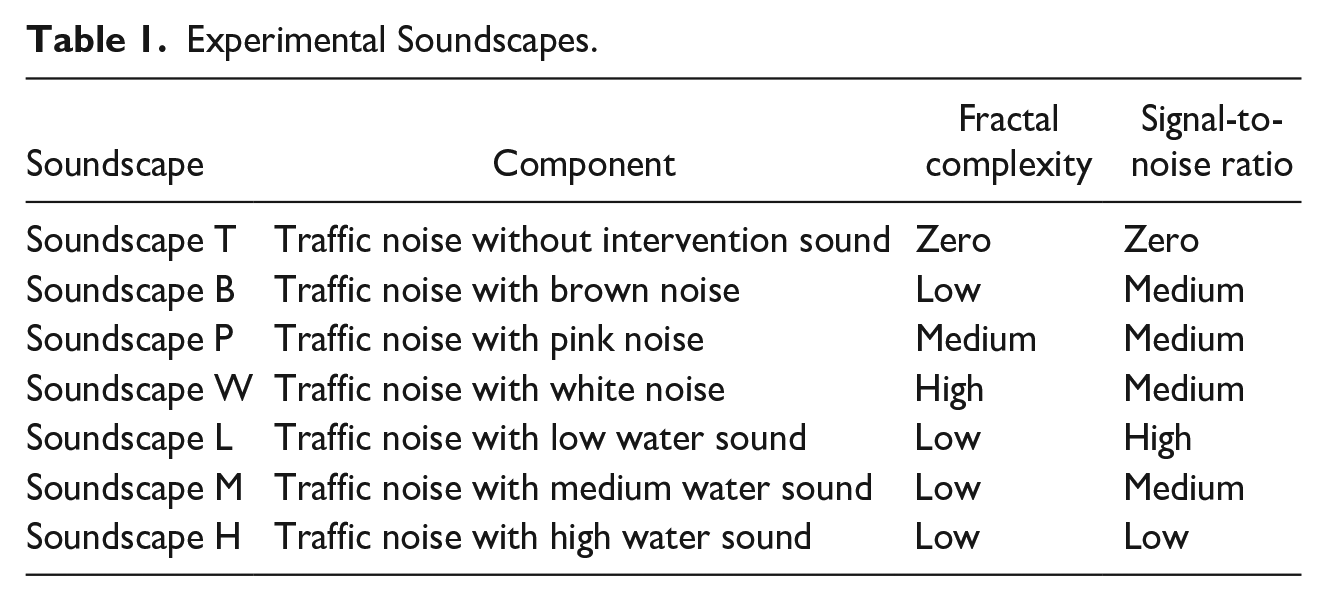
1) Hypothesis One in support of Fractal Theory: Low- and mid-complexity fractal sounds are more effective in mitigating stress response to traffic noise than those of high-complexity (see Table 1 for details).
2) Hypothesis Two in support of Stress Reduction Theory: The stress-mitigating effects of water sounds from water channels with small jumps increase as the SNRs decrease (that reflects decreasing traffic noise with intermittent siren sound (signal) and increasing babbling creek water sounds (noise)) (see Table 1 for details).
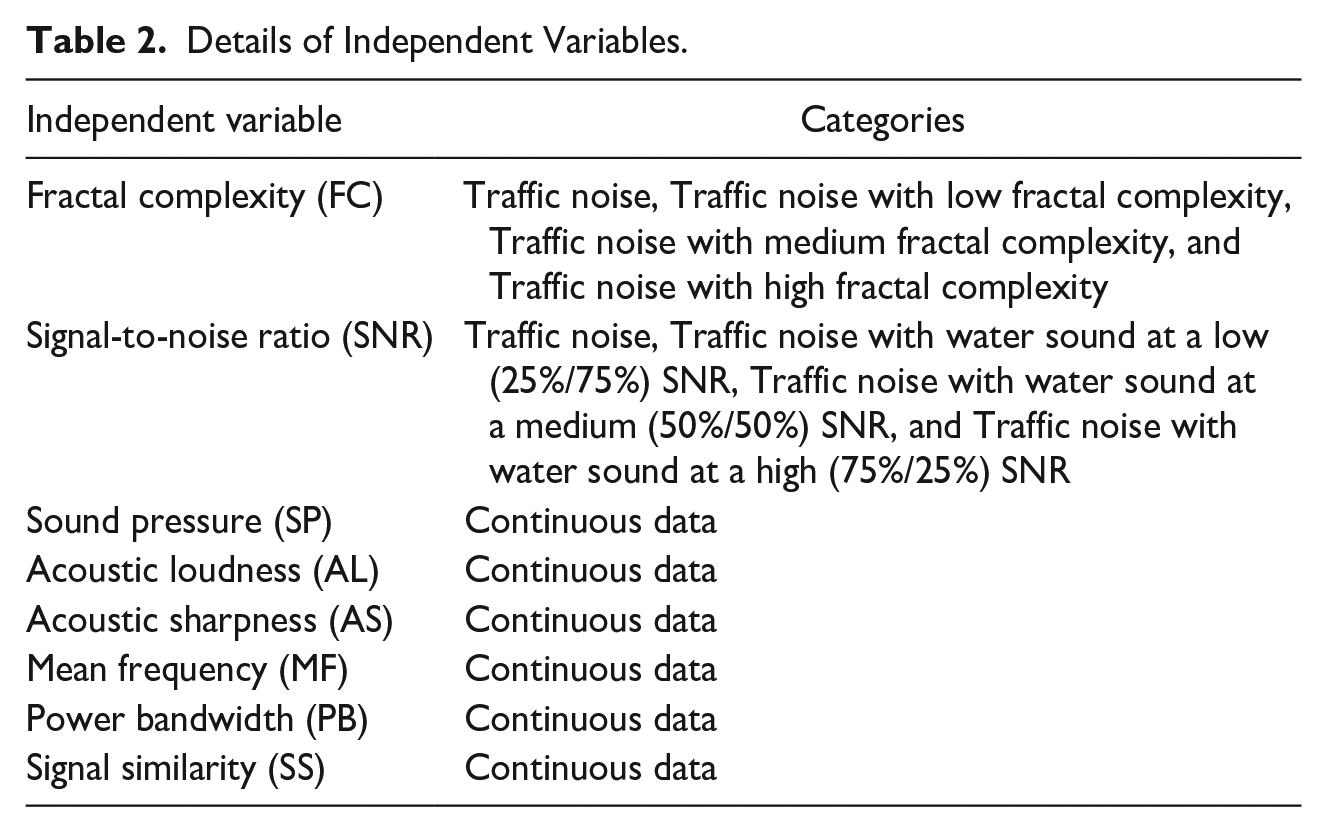
3) Hypothesis Three: Specific acoustic attributes can effectively mask traffic noise and reduce stress (see Table 2 for details).
Experimental Soundscapes.
Details of Independent Variables.
Materials and Methods
Participants
This study recruited 33 healthy adult participants (16 males and 17 females) with the following characteristics: (a) between 18 and 35 years old; (b) without physical or mental illness; and (c) not taking any drugs. They were instructed to avoid smoking, alcohol consumption, and vigorous physical activity throughout the study. According to the results of power analysis with F tests (ANOVA: repeated measurements, within factors) using G*Power 3.1, a sample of 24 participants could achieve a statistical power of .90 with an effect size of .25 and an alpha error probability value of .05. Given this, the present study, with a larger sample size, confidently ensures adequate statistical power to produce accurate analytical results for an exploratory study.
Soundscape Design
As shown in Table 1, this study used seven soundtracks to investigate the mitigating effects of natural and simulated water sounds on stress response to baseline traffic noise recording. We used computer-generated brown, pink, and white noises as intervention sounds (noise) to simulate water sounds with low, medium, and high fractal complexity (as low, medium, and high relative power in the low-frequency ranges) (Soundirarajan et al., 2022). For testing Hypothesis One, these colored noises (noise) were mixed with the baseline traffic noise recording (that contained both constant traffic sound and intermittent siren sound) (signal) at a medium (50%/50%) SNR to generate Soundscapes B, P, and W. Additionally, to test Hypothesis Two, Soundscapes L, M, and H were created by mixing the baseline traffic noise recording (signal) with the recording of a babbling-creek-like water runnel sounds with small bumps (noise) at high (75%/25%), medium (50%/50%), and low (25%/75%) SNRs. Notably, the experimental water sound was recorded from a water runnel located between a street and a sidewalk in Salt Lake City, United States.
Experimental Procedure
To prevent the participants from external disturbances, the experiments were performed in a quiet, non-air-conditioned, and well-ventilated office setting with a steady temperature of 72°F and a relative humidity of 50%. In addition, all investigators were uniformly trained to adhere to a standardized experimental protocol, minimizing research error (Figure 1). Afterward, they were randomly assigned to assist participants in completing the experiment. Before the experiment, individuals received detailed information about the study instructions and rules as well as written informed consent.
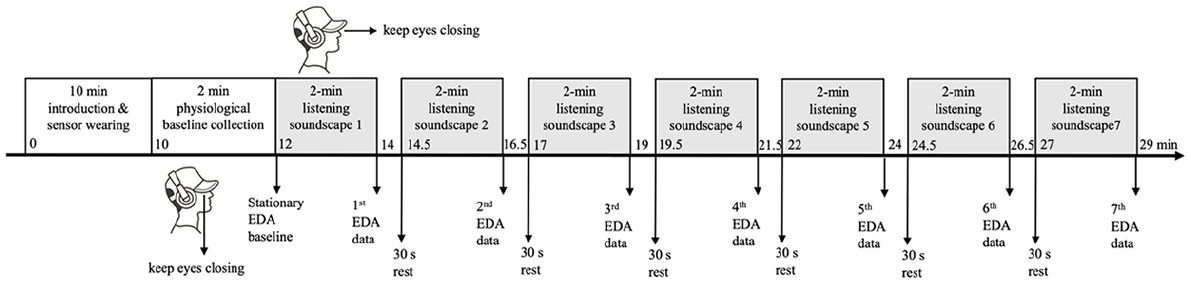
Experimental procedure.
This study employed a repeated-measures experimental design to examine the effects of different soundscapes on mitigating human stress response to traffic noise. Thirty-three participants were exposed to seven recordings as experimental conditions with eyes closed, using objective measures of physiological stress. Each participant, wearing noise-canceling headphones, was randomly assigned to listen to seven soundtracks (between 50 and 60 dB) for two minutes in either normal or reverse order to counterbalance the order effects. Following each soundscape, participants would rest 30-seconds before experiencing the next soundscape for 2 minutes. Individuals’ stress responses were continuously monitored using a wrist-mounted EDA sensor throughout the entire experiment, including seven soundscape conditions and six transition periods between soundscape conditions. The experimental protocol was consistent throughout all soundscape conditions.
Measurements
This study used spectral features of EDA to evaluate the activity of parasympathetic (PNS) and sympathetic nervous system (SNS). The analysis included both the phasic component, known as the Skin Conductance Response (SCR), and the tonic component, the Skin Conductance Level (SCL), to thoroughly assess the sustained and sudden physiological and emotional responses of the participants. One-minute measurement epochs were utilized based on findings by Li and Kang (2019), who reported the strongest physiological impacts, including changes in SCL, Heart Rate Variability (HRV), and Electroencephalogram (EEG), as well as perceived restorative benefits, within this timeframe.
Dependent Variables
Physiological Data Collection
EDA was recorded from participants using the E4 Empatica sensor and the sampling rates were 4 Hz. This wearable wireless device allows for real-time computerized biofeedback and data collection, enabling the extrapolation of lab-based research findings to real-world settings (Milstein & Gordon, 2020; Schuurmans et al., 2020).
Signal Processing for Generating EDA Indicators of Stress
Motion artifacts and noise were filtered from the raw EDA signals using the Stationary Wavelet Transform (SWT) algorithm, which maintains the original signal length and effectively denoises non-stationary EDA (Chen et al., 2015; Shukla et al., 2018). The db3 mother wavelet was selected for its SWT compatibility in EDA signal modeling (Shukla et al., 2018). The signal underwent decomposition to level 7 to cover the EDA’s typical frequency range of .015 to .25 Hz. Subsequently, the cleaned EDA signal was separated into tonic (SCL) and phasic (SCR) components using the Ledalab package in MATLAB with deconvolution (Benedek & Kaernbach, 2010) (see Supplemental Appendix A for more details).
Segmentation, Standardization, and Normalization
Following EDA data preprocessing, we recorded start and stop times for two-minute intervals. These time stamps were used to segment SCL, SCR, and IBI into: (a) seven 2-minute epochs corresponding to seven experimental soundscapes and (b) six 30-second transitional epochs for rest without soundtracks. For standardization, SCL and SCR data were normalized; SCR was scaled from zero to a participant’s maximal response to a startling stimulus and standardized results were calculated by dividing individuals’ SCR values by their maximum SCR, while SCL employed a range-corrected scores method, calculating standardized scores based on the formula: (SCL − SCLmin)/(SCLmax − SCLmin) (Dawson et al., 2016). To address kurtosis in EDA data, we followed normalization procedures outlined by Boucsein (2012) and Dawson et al. (2016), applying a log transformation to the amplitude of SCL and SCR.
For statistical analysis, frequency band powers from SCL and SCR were calculated, including Very Low Frequency (VLF < .045 Hz), Low Frequency (LF, .045–.25 Hz), High Frequency (HF, .25–.40 Hz), and Very High Frequency (VHF, .40–.50 Hz) bands, with the mean power within each soundscape segment averaged for participants (Lima et al., 2020). Ultimately, the normalized LF power of SCL (LF of SCL) and the normalized LF power of SCR (LF of SCR), both known for their sensitivity to cognitive, postural, and physical stress, were selected as dependent variables to evaluate the effects of various soundscape conditions on stress responses to traffic noise (Alvarsson et al., 2010; Greco et al., 2016; Pfeiffer et al., 2019; Posada-Quintero et al., 2016).
Measuring Stress Response to Traffic Noise
Considerable research has utilized biomedical sensors to measure physiological stress, using either mean values (Alvarsson et al., 2010; Cvijanović et al., 2017; Svetlov et al., 2019) or change values (Jiang et al., 2014; Kim et al., 2021). A comprehensive suite of models incorporating various parameters as dependent variables was tested to determine the optimal method for measuring physiological stress for this study (see Supplemental Appendix B for more details). We ultimately chose the model that uses the mean values of LF of SCL or LF of SCR as dependent variables and controls for the Physiological Baseline due to its superior performance as indicated by the lowest Akaike Information Criterion (AIC) and more significant predictors compared to alternative models (Cavanaugh & Neath, 2019; Vrieze, 2012).
Independent Variables
Soundscape Processing for Generating Acoustic Attributes
The soundscapes were processed using MATLAB’s built-in functions to extract time-domain and frequency-domain features. Time-domain analysis included measures of acoustic loudness, reflecting sound wave amplitude and frequency, and acoustic sharpness, indicative of roughness or tonality (Dreier & Vorlaender, 2021). For statistical analysis, acoustic loudness and sharpness were calculated at every frame within the soundscape and aggregated using the mean and sum, respectively (Swift, 2023). Frequency-domain analysis involved band power and mean frequency to analyze the frequency bandwidth of signal power (Stoica & Moses, 2005) and the mean normalized frequency of the power spectrum (Phinyomark et al., 2012). Additionally, the SPL was measured in decibels (dB) (Beranek & Mellow, 2019). The signal similarity between baseline traffic noise and each of the six intervention sounds was also calculated (Adrián-Martínez et al., 2015), with higher values indicating greater similarity between the signals before and after interventions (see Supplemental Appendix C for more details).
Definition of Independent Variables
As shown in Table 2, eight independent variables were considered to provide a comprehensive measurement of the physical and psychoacoustic attributes of a soundscape, shedding light on the complexity of auditory environment analysis. Specifically, this study included two categorical variables related to fractal sounds: (a) Fractal Complexity (FC), distinguished by four categories—traffic noise, traffic noise mixed with low, medium, and high fractal complexity and (b) Signal-to-Noise Ratio (SNR), identified by four categories—traffic noise, traffic noise mixed with water sound at low (25%/75%), medium (50%/50%), and high (75%/25%) SNRs. Additionally, six continuous variables were quantified: Sound Pressure (SP), Acoustic Loudness (AL), Acoustic Sharpness (AS), Mean Frequency (MF), Power Bandwidth (PB), and Signal Similarity (SS) to Traffic Noise, each representing a specific acoustic attribute of the soundscape.
Control Variables
Generating Baselines for Individual Physiological Stress
Participants’ physiological stress baselines were generated by averaging the LF of SCL and LF of SCR data from the transitional epochs between seven soundscape conditions.
Data Analysis
Data for each participant was segmented according to the seven soundtracks listened to, generating seven observations nested under each participant ID. As participant ID has a hierarchical effect on their physiological data across the soundtracks, this study ran mixed-effects models with SPSS 28.0 (SPSS Inc., Chicago, IL, USA). The models examined the fixed-effects of individual Physiological Baseline and acoustic attributes including FC, SNR, SP, AL, AS, MF, and PB on dependent variables of LF of SCL and LF of SCR, while controlling for the random-effects of participant ID and the order of participants’ soundscape experiences (the sequence in which each participant listened to seven sound recordings). As shown in Table 3, additive and subtractive stepwise procedures were utilized to identify the optimal models for each hypothesis, each model with a random subject-specific and sequence-specific intercept: (a) the Complexity Model with the main effects of FC, SP, and Physiological Baseline, (b) the Signal-to-noise Ratio Model with the main effects of SNR, SP, and Physiological Baseline, and (c) the Acoustic Attributes Model with the main effects of SP, AL, AS, MF, PB, SS, and Physiological Baseline.
Summary of Mixed-Effect Models.
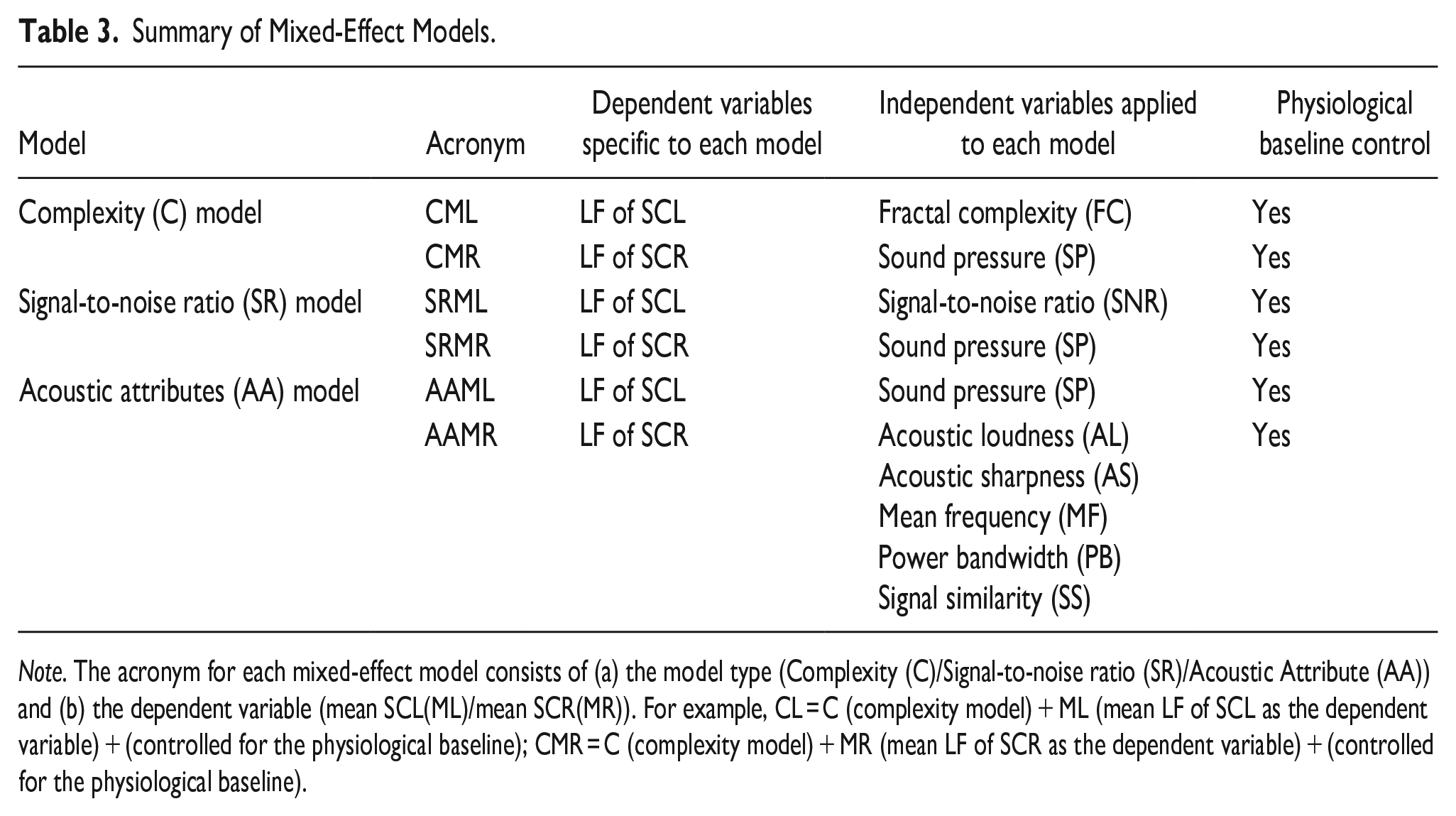
Note. The acronym for each mixed-effect model consists of (a) the model type (Complexity (C)/Signal-to-noise ratio (SR)/Acoustic Attribute (AA)) and (b) the dependent variable (mean SCL(ML)/mean SCR(MR)). For example, CL = C (complexity model) + ML (mean LF of SCL as the dependent variable) + (controlled for the physiological baseline); CMR = C (complexity model) + MR (mean LF of SCR as the dependent variable) + (controlled for the physiological baseline).
Before running the mixed-effect modeling, we tested the normality of residuals for LF of SCL and LF of SCR. The results showed that the LF of SCL (Kolmogorov-Smirnov z = .14 and p < .01) and LF of SCR (Kolmogorov-Smirnov z = .07 and p < .05) violated the normality distributional assumption for residuals. Unlike other multivariate analysis methods of variance on repeated measures data, violations of the normality distributional assumptions had little effect on mixed-effects models because of their robustness to the non-normality distribution of residuals (Bagiella et al., 2000).
Results
Calculating the Change in Each Stress Indicator and Effect Size
Changes in stress levels were calculated by the difference between the mean stress levels at the 30-second rest interval (T1 baseline) and those during the two-minute soundscape experience (T2 intervention), with positive values indicating an increase in stress and negative values indicating a decrease. The effect size of these changes in stress levels was measured using the standardized mean-change statistic (d), which has been widely used for repeated measures data (Dickerson & Kemeny, 2004; Jiang et al., 2014). Effect sizes are categorized as small (.2–.5), moderate (.5–.8), and large (.8 and above) (Dickerson & Kemeny, 2004). In this study, the d value for LF of SCL and LF of SCR were calculated as follows:

Table 4 provides the mean, Standard Deviation (SD), and d of ΔLF of SCL for each of the seven soundscape stimuli: Soundscape W had the largest effect size and the highest mean score (d = .06, M = .02 ± .10), followed by Soundscape P (d = .05, M = .01 ± .11), while Soundscape H (d = −.15, M = −.04 ± .14) had the smallest effect size and lowest mean score, followed by Soundscape L (d = −.05, M = −.01 ± .14) as the second lowest. A positive score of effect size d and ΔLF of SCL means that participants’ stress levels increased after the completion of the soundtrack listening. Therefore, the results suggest that Soundscapes W (mixing traffic sound with white noise) and P (mixing traffic sound with pink noise) may slightly elevate stress levels, while Soundscapes H (mixing traffic sound with high water sound) and L (mixing traffic sound with low water sound) appear to have a slight stress-reducing effect.
Descriptive Statistics of Measures of Physiological Stress (N = 33).
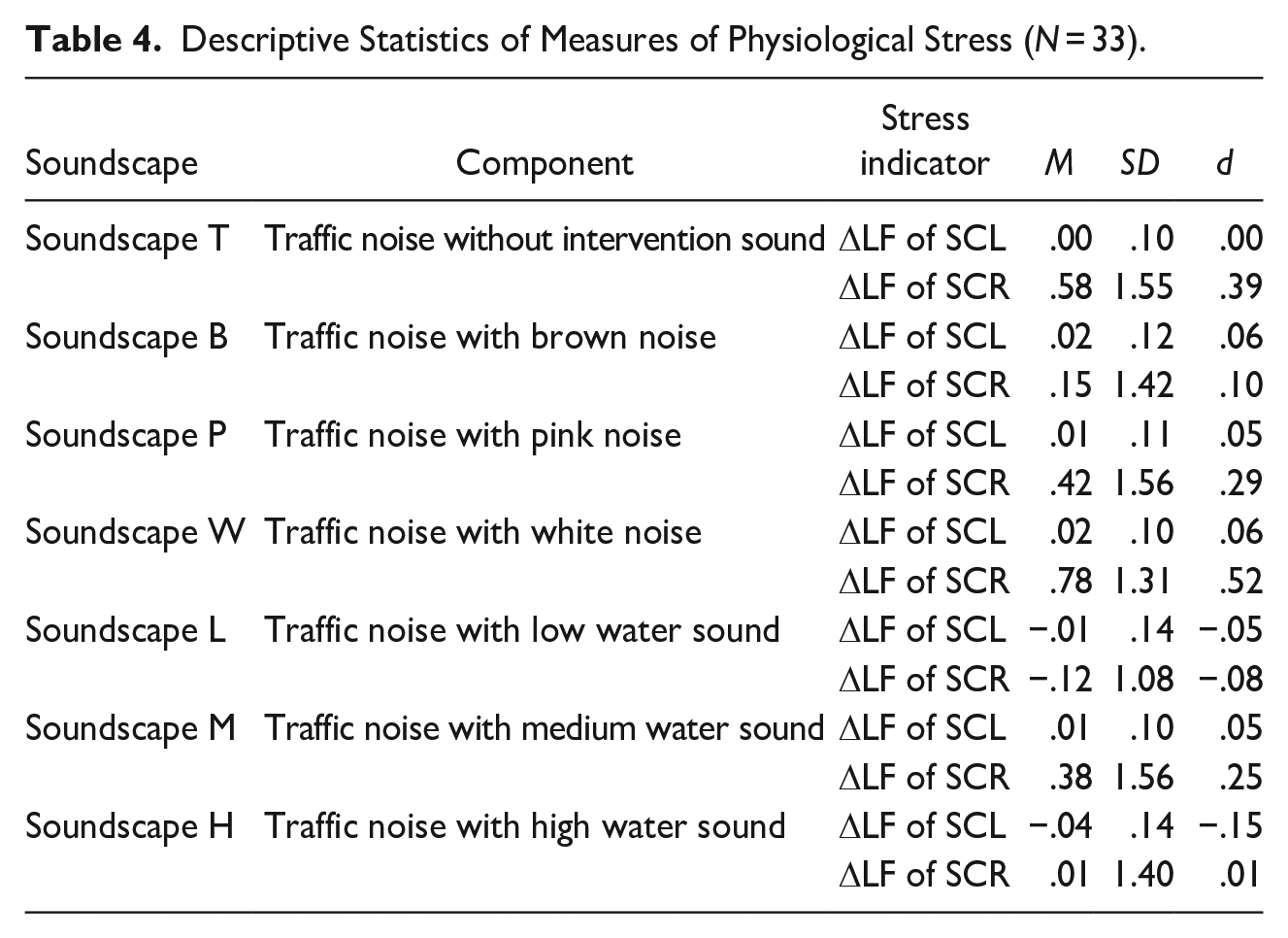
Similarly, this study provides mean, SD, and d of ΔLF of SCR for each of the seven soundscape stimuli: Soundscape W had the largest effect size and the highest mean score (d = .52, M = .78 ± 1.31), followed by Soundscape T (d = .39, M = .58 ± 1.55) and Soundscape P (d = .29, M = .42 ± 1.56), while Soundscape L (d = −.08, M = −.12 ± 1.08) had the lowest effect size and mean score. The results suggest that Soundscapes W, T, and P can be stress-inducing, with Soundscape W (mixing traffic noise with white noise) moderately increasing stress levels and Soundscapes T (traffic noise) and P (traffic noise with pink noise) slightly increasing stress levels, while Soundscape L (traffic noise with low water sound) is stress-relieving and helps lower stress levels. The descriptive statistics reveal that all recordings, except for the one mixed traffic noise with white noise, demonstrated a lower average score for ΔLF of SCR than that of the baseline traffic noise. This suggests that the incorporation of white noise within the soundscape might potentially increase individuals’ stress responses to traffic noise.
Correlations Between Independent Variables Indicating Acoustic Attributes
A correlation analysis was performed to assess potential multicollinearity among six continuous acoustic attribute variables. Significant multicollinearity is indicated when two or more predictors in a model have pairwise correlation coefficients (r) above .30 (Mukaka, 2012). As shown in Table 5, SS (p < .01) and SP (p < .01) both exhibited significant multicollinearity with all other acoustic attributes, while multicollinearity was unlikely to be significant among AL, MF, and PB. Consequently, SS was eliminated from the model to reduce multicollinearity, given its high correlation with remaining acoustic attributes.
Pearson Correlation Coefficients for Independent Variables (N = 231).
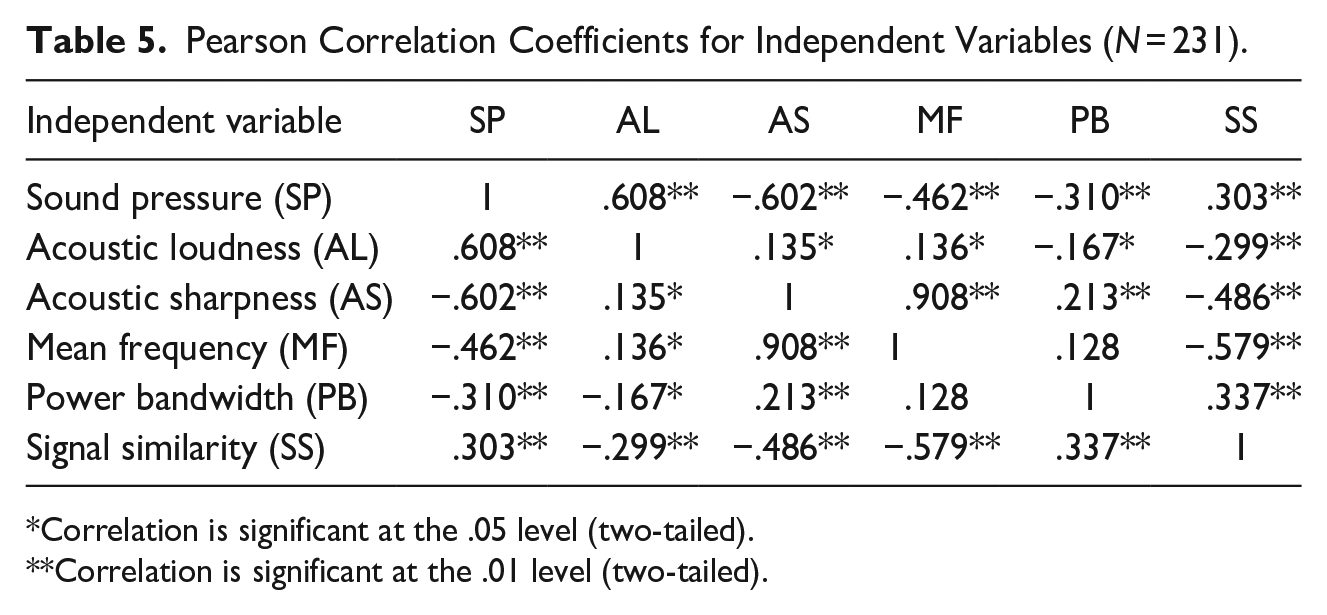
Correlation is significant at the .05 level (two-tailed).
Correlation is significant at the .01 level (two-tailed).
Mixed-Effect Model Results
Complexity Model
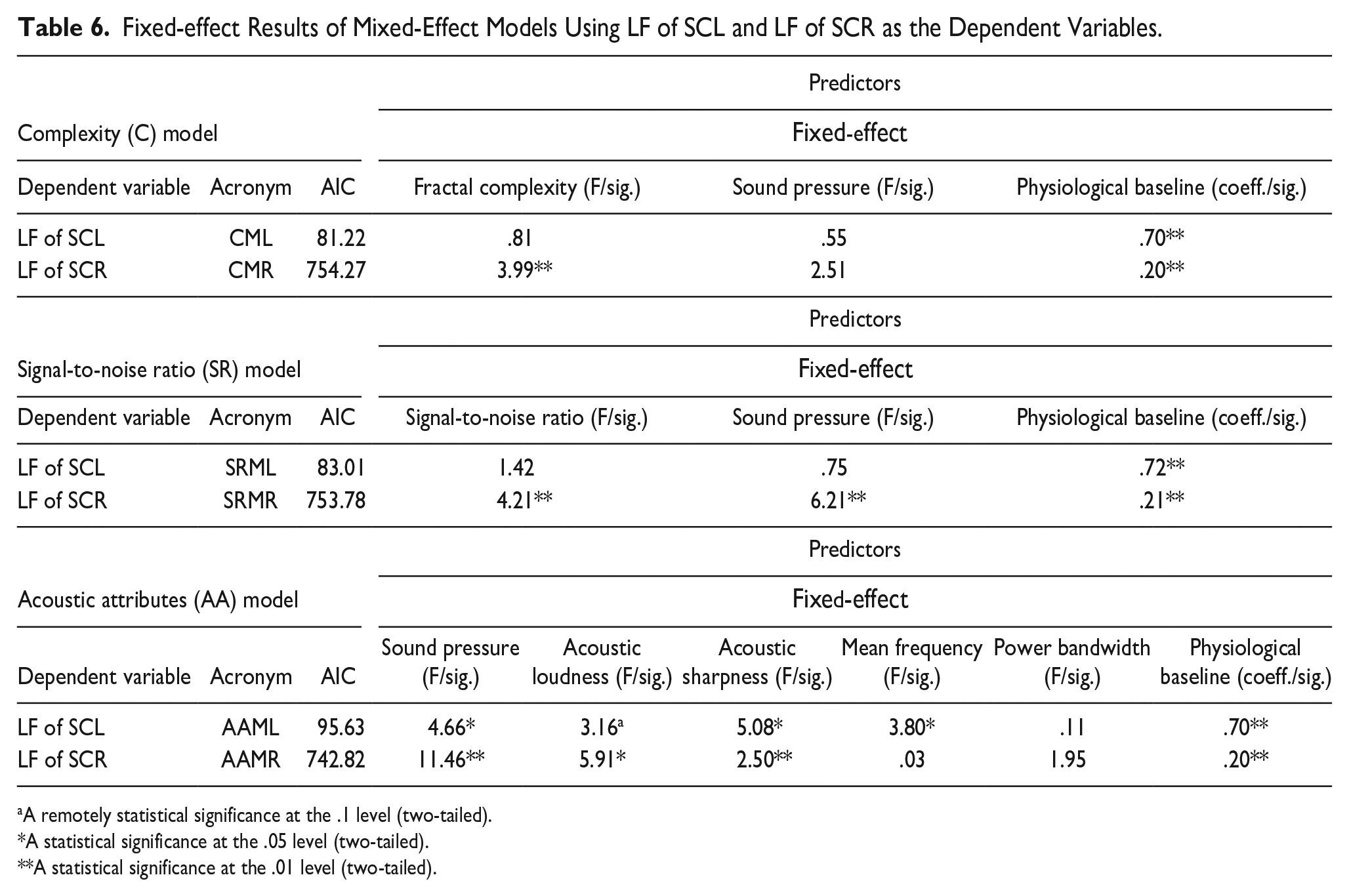
As shown in Table 6, the results of the CML model (AIC = 81.22) based on the LF of SCL as the dependent variable showed that LF of SCL baseline was a significant fixed-effect variable (p < .01). This suggested that participants had significantly different physiological baseline conditions before the experiment, which may potentially influence their stress responses to traffic noise. The higher an individual’s physiological stress baseline, the higher his/her stress response to traffic noise.
Fixed-effect Results of Mixed-Effect Models Using LF of SCL and LF of SCR as the Dependent Variables.
A remotely statistical significance at the .1 level (two-tailed).
A statistical significance at the .05 level (two-tailed).
A statistical significance at the .01 level (two-tailed).
Relatedly, the results of the CMR model (AIC = 754.27) based on LF of SCR as the dependent variable indicated that FC (p < .01) and LF of SCR baseline (p < .01) were significant predictors for individual stress response to traffic noise. Specifically, the high complexity in white noise was found to significantly increase stress (as indicated by a significant positive fixed-effect on the LF of SCR). This result supports Hypothesis One, which aligns with the Fractal Theory, indicating that fractal sounds of high complexity can increase physiological stress compared to low- and mid-complexity. In addition, the significant fixed-effect of LF of SCR baseline indicated that participants’ physiological stress baselines could significantly influence their stress response to traffic noise, with higher baseline levels correlating with greater stress responses.
Signal-to-Noise Ratio Model
As shown in Table 6, the results of the SRML model (AIC = 83.01) based on LF of SCL as the dependent variable showed that LF of SCL baseline was a significant fix-effect variable (p < .01). This indicated that participants’ physiological stress baselines could significantly influence their stress response to traffic noise, with higher physiological baselines associating with greater stress responses.
The results of the SRMR model (AIC = 753.78) based on LF of SCR as the dependent variable showed that SNR (p < .01), SP (p < .01) and LF of SCR baseline (p < .01) were significant predictors for participants’ stress response to traffic noise. Specifically, a low SNR (25%/75%) significantly decreased stress responses (as indicated by a significant negative fixed-effect on LF of SCR), while a higher SPL significantly decreased stress with less SNS activation (as indicated by a significant negative fixed-effect on LF of SCR). The results support Hypothesis Two, in line with the Stress Reduction Theory, suggesting that the stress-mitigating effect of the water sound increases when the SNR decreases. Meanwhile, the results also validate Hypothesis Three, indicating that SP is a beneficial acoustic attribute for reducing stress. Moreover, the significant fixed-effect of LF of SCR baseline highlighted the importance of individual physiological baselines in regulating stress response to traffic noise; higher stress baselines correlate with stronger responses to traffic noise.
Acoustic Attributes Model
As shown in Table 6, the results of the AAML model (AIC = 95.63) based on LF of SCL as the dependent variable showed that SP (p < .05), AL (p < .1), AS (p < .05), MF (p < .05), and LF of SCL baseline (p < .01) were significant fixed-effect predictors for individual stress response to traffic noise. Specifically, elevated SP and AS were associated with a reduction in stress with less SNS activation (as indicated by a significant negative fixed effect on LF of SCL). This indicated that soundscapes with higher levels of SP or AS are more effective in relieving stress. Conversely, increased AL and MF correlated with heightened stress with more SNS activation (as indicated by a significant positive fixed-effect on LF of SCL), suggesting that soundscapes with greater AL and higher MF may increase stress levels. These findings support Hypothesis Three, indicating that certain acoustic attributes have the potential to mitigate or exacerbate stress response to traffic noise. Furthermore, the significant fixed-effects of the LF of SCL baseline indicate that an individual’s inherent physiological stress status could significantly affect his/her stress response to traffic noise, with higher physiological baseline levels correlating with greater stress responses.
The results of the AAMR model (AIC = 742.82) based on LF of SCR as the dependent variable showed that SP (p < .01), AL (p < .05), AS (p < .01), and LF of SCR baseline (p < .01) were significant fixed-effect predictors for participant’s stress response to traffic noise. Specifically, higher levels of SP and AS correlated with decreased stress with less SNS activation (as indicated by a significant negative fixed effect on LF of SCR). This indicated that soundscapes with elevated SP or AS effectively reduce stress to traffic noise. Conversely, heightened AL was associated with an increased stress response to traffic noise with more SNS activation (as indicated by a significant positive fixed-effect on LF of SCR), suggesting that louder soundscapes could increase stress. These findings support Hypothesis Three, indicating that certain acoustic attributes have the potential to mitigate or exacerbate stress response to traffic noise. In addition, the significant fixed-effects of the LF of SCR baseline indicated that an individual’s inherent physiological stress level could significantly affect his/her stress response to traffic noise, with higher physiological baseline levels being associated with greater stress responses.
Discussion
Fractal Theory, Stress Reduction Theory, and Stress Response to Traffic Noise
This study explored the mitigating effects of intervention sounds (noise) on the stress response to baseline traffic noise containing constant traffic and intermittent siren sounds (signal) through measuring the stress response associated with listening to six soundscapes with a baseline traffic noise (signal) mixed with two groups of three intervention sounds (noise): (a) fractal sounds of low (brown noise), medium (pink noise), and high complexity (white noise) at a medium (50%/50%) SNR and (b) mid-complexity babbling-creek water sounds at low (25%/75%), medium (50%/50%), and high (75%/25%) SNRs. The results from the descriptive statistical analysis revealed that the babbling creek water sound effectively reduced the stress response to traffic noise with intermittent siren sounds. In particular, the soundscape mixing baseline traffic noise with a mid-complexity water sound recording at a low (25%/75%) SNR was identified as the most stress-mitigating intervention sound. Conversely, the soundscape composed of baseline traffic noise with high-complexity fractal sound (white noise) increased the stress response.
The result from mixed-effect modeling were in line with Hypotheses One and Two, supporting the Fractal Theory by testing the effects of FCs and supporting the Stress Reduction Theory by testing the effects of SNRs. The results indicate that a low SNR (25%/75%) had a positive impact on stress reduction, while a high FC and SNR (75%/25%) contributed to an increased stress response to traffic noise. This evidence aligns with prior descriptive analyses of seven soundscapes, suggesting that it is advisable to maintain SNRs below 25%/75% to mitigate stress responses to traffic noise and to avoid soundscapes with high FC when attempting to mask traffic noise. Notably, the significant main effects of FC and SNRs were only observed in LF of SCR. This may be attributed to the phasic and even-related nature of LF of SCR, referring to the quick physiological arousal in response to sudden stimuli like intermittent siren sounds in this study. In contrast, SCL is a tonic component, reflecting slow changes over a period (Tsai et al., 2015; Yoshida et al., 2014).
Acoustic Attributes and Stress Response to Traffic Noise
It is widely accepted that physical parameters and psychoacoustic properties are important factors that determine sound evaluations and affect individual acoustic experience (Zeitler & Zeller, 2006). This study validated Hypothesis Three using mixed-effect model analysis, revealing that specific acoustic attributes significantly impact individual stress response to traffic noise. Specifically, SP and AS were found to have significant positive effects on reducing stress levels, while AL and MF had significant negative impacts.
This study suggests that elevated SP of a soundscape can effectively mitigate physiological stress, which is in accord with previous studies suggesting that a higher SPL of natural sounds was preferred at higher background traffic noise due to enhanced soundscape quality and acoustic experiences (J. Y. Hong et al., 2020, 2021). While higher SPL can be advantageous, it remains imperative to maintain a safe sound threshold of 60 to 70 dB, as recommended by the U.S. Environmental Protection Agency and the World Health Organization. In addition, the study found higher AS was associated with lower activation of the SNS and consequent reduced stress. This finding somewhat challenges prevailing notions of sharpness in personal auditory perception, as previous studies have found that the high-frequency aspect of sound was associated with sensations of discomfort and unpleasantness (Di et al., 2018; Dreier & Vorlaender, 2021). Such a paradox might be because the nature of the experimental sounds used in this study are fractal sounds in the low-frequency ranges with minimal sharpness or annoyance and generate harmonious and soft loudness soundtracks when mixed with traffic noise, thus fostering an environment conducive to stress recovery for participants.
Conversely, AL and MF were found to be detrimental to stress reduction in the context of traffic noise. It appears that soundscapes with greater AL and elevated MF are likely to trigger the SNS, thereby increasing stress response to traffic noise. This finding aligns with classic acoustic research which posits that the perceived loudness of complex sounds has a significant impact on annoyance and adverse emotions (Berglund et al., 1990). Moreover, contemporary studies have shown that high-frequency information in sound is closely correlated with sensations of pleasantness and eventfulness (X.-C. Hong et al., 2021). The present research corroborates the finding that the frequency of a sound is a crucial factor in shaping individual soundscape perception and managing stress in response to traffic noise, with higher frequencies being associated with increased stress responses.
Individual Psychological Stress Baseline and Stress Response to Traffic Noise
The study demonstrated that individuals’ physiological stress baselines have a significant influence on their responses to environmental noise, a consistent finding throughout all mixed-effect models. This highlights the need for future investigation into how demographic and socioeconomic factors may shape an individual’s physiological stress response. If the experiment were to be replicated, participants with varying psychophysiological baselines would likely be recruited in future studies. Additionally, this study highlights the significance of positive soundscape interventions in facilitating individuals with higher stress levels to recover from stress, especially considering their heightened vulnerability to traffic noise. This insight holds important implications for future research and soundscape practice, providing potential low-cost strategies, such as incorporating babbling-creek water sounds or computer-generated water sound simulations to effectively mitigate stress in areas prone to traffic noise with intermittent siren sounds. Such strategies are particularly relevant for the outdoor and indoor settings of hospitals and their nearby schools and residences, which often house vulnerable populations who are routinely exposed to noise pollution with intermittent siren sounds and have inherent high stress baselines.
Limitations and Future Study
This study highlights the importance of investigating the impact of widespread automobile transportation and traffic noise on human health and well-being. Children under the age of 14 and adults over 50 years old were excluded from this research due to the disproportionately adverse health outcomes of traffic noise in these vulnerable groups (Belojevic & Evans, 2012; Cohen et al., 1980; Sørensen et al., 2011). The stress-mitigating soundscapes identified in this study offer valuable insights for subsequent studies focusing on these populations. Future research could aim to mitigate the detrimental impact of noise pollution on these vulnerable groups. To further validate the reliability and validity of the findings, larger sample sizes of participants from different socioeconomic backgrounds are needed. Moreover, the frequency content of sounds, including sound power bandwidth and fractal sounds at different frequencies, is an important aspect that requires further investigation. While this study only focused on the stress-mitigating effects of soundscape stimuli, future studies should broaden their scope to consider the effects of multi-sensory experiences.
Conclusions
While urban planners typically prioritize visual stimuli when designing cities (Alyari, 2018), acknowledging the multisensory qualities of environments is equally critical (Deng et al., 2020; T. Zhang et al., 2019). Soundscape design, as an important aspect of healthy urban planning, has been recognized as an effective approach to mitigating negative urban noise and enhancing human health and well-being (Radicchi & Grant, 2021; Rehan, 2016; Schulte-Fortkamp et al., 2023). This study explored how various fractal sounds influence individuals’ stress response to traffic noise. Findings reveal that mixing baseline traffic noise with water sound at a low SNR significantly reduced stress, whereas mixing with the white noise of a high FC increased stress. This discovery highlights the varying stress-mitigating effects of distinct fractal sounds on traffic noise and advocates for the application of water sound with a low SNR and low FC as an effective criterion for urban noise mitigation strategies.
The study also identified that certain acoustic attributes significantly influence soundscape perception, with SP and AS contributing positively to mitigating stress response to traffic noise, while AL and MF are detrimental, increasing the stress response. From a practical perspective, this study marks an instrumental advance in establishing evidence-based sound interventions to counteract the adverse health effects of traffic noise. It provides practical guidance for urban planners and acoustical researchers in designing soundscapes, emphasizing the importance of considering a reasonable and balanced configuration of physical and psychoacoustic attributes that affect human soundscape perception and physiological stress. From an academic perspective, this study bridges an existing gap in the application of acoustic sounds to lessen the burden of traffic noise on physiological stress. Furthermore, it provides a uniform methodology for measuring physiological stress that can be employed by future researchers.
Overall, this study highlights the significance and promise of a framework for generating evidence-based traffic noise mitigation guidelines centered on the attributes of intervention sounds. The next phase of research will focus on conducting longitudinal studies and developing long-term mitigation strategies.
Supplemental Material
sj-docx-1-eab-10.1177_00139165241245829 – Supplemental material for The Mitigating Effects of Water Sound Attributes on Stress Responses to Traffic Noise
Supplemental material, sj-docx-1-eab-10.1177_00139165241245829 for The Mitigating Effects of Water Sound Attributes on Stress Responses to Traffic Noise by Li Deng, Hope Hui Rising, Chao Gu and Anju Bimal in Environment and Behavior
Footnotes
Declaration of Conflicting Interests
The author(s) declared no potential conflicts of interest with respect to the research, authorship, and/or publication of this article.
Funding
The author(s) received no financial support for the research, authorship, and/or publication of this article.

Supplemental Material
Supplemental material for this article is available online.
Author Biographies
References
Supplementary Material
Please find the following supplemental material available below.
For Open Access articles published under a Creative Commons License, all supplemental material carries the same license as the article it is associated with.
For non-Open Access articles published, all supplemental material carries a non-exclusive license, and permission requests for re-use of supplemental material or any part of supplemental material shall be sent directly to the copyright owner as specified in the copyright notice associated with the article.
