



Abstract
This study draws on 214 in-depth interviews with frontline Israeli workers providing services in the public sector to investigate whether organizational embeddedness helps individuals living in poverty accumulate resources from public organizations in times of reduced government support. Findings show that public sector workers provide clients with informal, personal resources that allow better coping with poverty. Beyond local, short-term assistance, these personal resources are provided in the hopes of strengthening trust among low-income populations, thereby achieving long-term improved well-being and social inclusion. Findings expose new dimensions in the relations between organizations and their low-income clients, as well as the importance of organizational embeddedness in coping with poverty.
Introduction
How do people who live in poverty succeed in accumulating resources for economic survival? As poverty is one of the fundamental problems of our time, ample research has addressed this question from various fields (Atkinson, 2019; Goldblum and Shaddox, 2021). In the era before welfare reforms, reliance on state support was considered central for economic survival (Edin and Lein, 1997). However, welfare reforms during and after the 1990s which have championed personal responsibility and self-reliance have profoundly altered the ability of people living in poverty to rely on this support as a stable or sufficient path to survival (Shaefer et al., 2019). In the United States, as well as in Israel and many other Western countries, public resources have been reduced and very minimal, often means-tested, time-limited support is provided (Hacker, 2018; Halpern-Meekin et al., 2015).
Other opportunities for accumulating resources for economic survival have also diminished over the last few decades. The labor market rarely allows sufficient breadwinning for those located at its bottom rung (Collins and Mayer, 2010; Kalleberg and Vallas, 2018). Similarly, reliance on personal social networks to accumulate resources for survival has become problematic (Lavee and Offer, 2012; Smith, 2007), as the networks of low-income individuals tend to be similarly impoverished (Mazelis, 2017; Offer, 2021; Raudenbush, 2016).
In this environment, extensive literature has demonstrated that the resources received from organizations are crucial for assisting individuals and families to cope with economic hardship (Small and Gose, 2020; Stretesky et al., 2020). In this study, we draw on Allard and Small’s (2013) definition of organizations as formally recognized sets of people and practices whose activities are oriented toward an overarching purpose. Examples include schools, welfare agencies, employment centers, churches and childcare centers (Allard and Small, 2013: 9). Such organizational assistance is generally of three types. The first is direct provision of specific resources (e.g. by providing food packages; Kissane, 2012). The second is by acting as ‘resource brokers’, whereby the organization or its employees serve as intermediaries between their low-income clients and external organizations that provide various types of services (e.g. childcare centers connect their clients with organizations who provide free medical examination; Small, 2006). The third type of organizational support, which has been widely studied, is by increasing social capital, mainly by creating opportunities for formal or informal networking between clients (e.g. Colistra et al., 2017, 2019; Desmond, 2012; Mazelis, 2017, 2020; Small and Gose, 2020; Watkins-Hayes, 2019).
Drawing on the above, two general assumptions can be made: first, with budget reductions, low-income individuals can rarely rely on government support to accumulate sufficient resources for economic survival; second, organizational support is vital for people living in poverty to accumulate resources. Based on Bourdieu’s (1985) definition of capital as a concept that includes different kinds of resources, enabling individuals to gain advantages and power, we argue that without this ‘organizational embeddedness’ (Small, 2006, 2009), gaining such advantages would be strongly compromised.
Can we deduce from these assumptions that when the literature maintains that organizational embeddedness is crucial for coping with poverty, it excludes public sector organizations? The sociological literature fails to provide a clear answer to this question. Most studies in the field of organizational support describe the resources provided by organizations to clients without differentiating between sectors (Mazelis, 2020), even if several sectors were examined, including private, public and third sectors (e.g. Desmond, 2012; Small, 2006, 2009; Small and Gose, 2020). To fill this lacuna, our first research question is whether and in what ways clients succeed in accumulating resources through public organizations in an era of decreased government spending.
Since, in most cases, organizational resources are provided by frontline workers who interact with clients (Lipsky, 2010), to address the research question, we focused on resources provided by frontline public sector workers in Israel. The workers were employed in public organizations from three domains suffering particularly from cuts in government funds: welfare, education, and health (Cohen et al., 2016). Analyzing data yielded from 214 in-depth interviews, we noticed that, in addition to formal organizational resources, the workers reported providing informal resources (hereafter IFRs) to their clients. These are personal resources which go above and beyond the official requirements of their role, and are provided by utilizing the workers’ own capital. Based on these findings, which we will expand upon below, we argue that, even in times of reduced government budgets, public organizations constitute a main provider of resource accumulation among low-income populations: not only by providing formal organizational resources but also due to the contribution of personal capital by individual workers.
Indeed, the accumulation of any resource is important for those who have few available assets. Can we assume, however, that every resource will improve an individual’s well-being? Moreover, can we assume that workers who provide both formal and informal resources to clients do so in the belief that these will allow them to cope better with poverty? While existing literature describes the resources provided and the provision mechanisms (mainly by various aspects of brokerage), we still lack a nuanced explanation of the relations between organizational embeddedness and clients’ well-being, as well as the crucial role of workers within these relations. To address this analytical challenge, we examine workers’ perceptions of the influence of IFRs on clients’ well-being and ask whether and in what ways frontline workers believe that the personal resources they provide to clients assist them in coping with poverty.
The article begins by providing a theoretical background, in which we establish the foundation for the research questions, focusing on the literature on organizational embeddedness, trust, and coping with poverty. We then introduce the Israeli context and provide details about the methodology employed in this study. This is followed by a presentation of our findings. We conclude by discussing the meaning of the findings and their contribution to the literature.
Theoretical background
Organizational embeddedness and coping with poverty
In the wake of the above mentioned narrowing opportunities for resource accumulation, the crucial role of organizations has emerged (Dominguez and Watkins, 2003). Allard and Small (2013), who focused on US trends, argued that the fewer the resources to which people have access, the more their circumstances will depend on the organizations in which they participate. Particularly in the absence of public safety nets, Boost et al. (2020) maintained that, also in the European context, organizational support is crucial for the resilience of low-income families. Small and Gose (2020) highlighted the important role of routine organizations in the process of resource accumulation. These organizations include workplaces, restaurants, childcare centers, community centers, and more, and may vary in scope, mission, funding source, orientation, and many other characteristics. The crucial role of the routine organizations lies within their potential to be a main provider of resources to their clients. A resource, according to this approach, may be defined as any symbolic or material benefit to an individual (Small, 2006). This may include economic or social capital, information, credentials, goods, or services, among other things (Bourdieu, 1985; Coleman, 1988).
Extensive literature has demonstrated a broad range of advantages to organizational embeddedness. More than a provision of a particular resource, studies emphasized social capital in its various manifestations as the most important asset an organization can provide to its clients (Mazelis, 2020). Increased social capital in this context is mainly created by establishing connections between clients, resulting in expanded social networks (Colistra et al., 2017; Desmond, 2012). The creation of social networks via formal or informal practices of organizations is especially important for clients of lower socioeconomic status. For example, Mazelis (2017, 2020) found that the networks facilitated by poor people’s participation in a Philadelphia welfare rights organization significantly enhanced their ability to accumulate material resources for survival. In other cases, social networks enabled by organizational embeddedness were found to assist in additional important ways. Similarly, Watkins-Hayes (2019) demonstrated how social networks developed between participants in Chicago-based organizations supporting HIV-positive women provided emotional support, advice, and an important sense of shared experiences.
The brief overview above portrays a clear picture of how routine organizations facilitate people’s ability to accumulate resources, and therefore to cope with poverty, in numerous ways. But what about public sector organizations? Government agencies that provide public services are also routine organizations. However, whereas routine organizations are presented as filling in for the ‘hollow state’ (Allard, 2008), public sector organizations are part of the hollow state. Extensive literature has shown that welfare reforms have profoundly changed the ability of people living in poverty to rely on state support for their economic survival. As mentioned above, public organizations in most Western countries have experienced drastic fund cuts and reduction in manpower despite a growing need for aid (Hupe and Buffat, 2014). Consequently, the formal support received from public service organizations is very limited. Can we deduce from the above that the support received from public sector organizations differs from the support provided by routine organizations, as described in the literature? To address this, we formulated our first research question as to whether, and in what ways, clients of public organizations succeed in accumulating resources via these organizations in an era of decreased government budgets.
Rather than examining the formal services and support given to clients, we focused on the informal personal resources that workers in organizations provide from their own capital. These resources differ from informal organizational ones (as mentioned in Small, 2006 study on daycare centers in New York). While informal organizational practices draw on the organization’s resources, informal personal resources are given from the worker’s own capital. For example, Stretesky et al. (2020) found that workers at holiday clubs in Britain (most of whom were temporarily employed or volunteered for a short period) sometimes brought members of their personal and professional networks to the club and leveraged them to assist clients in coping with various life hardships, although the formal goal was to provide food and aid to low-income families. Thus, these workers offered their own personal resources to clients.
Our study examines the possibility that frontline workers in public organizations, specifically those providing services to poor populations, may provide personal resources to clients in the absence of formal resources. However, whereas the practices of providing personal resources described in previous studies were part of the organization’s formal operation, we define the provision of informal personal resources as going above and beyond the formal role of workers. It includes assistance provided by employees after hours, during their private time, constituting a divergence from the organization’s formal or informal practices. By highlighting the below-the-surface resource provision, we have attempted to give a new understanding of how public sector organizations may constitute a path for resource accumulation by the poor, even in an era of welfare restructuring and scarcity of formal assistance.
The crucial role of trust
Based on the assumption that organizational embeddedness is a path to resource accumulation, and to provide a nuanced explanation of how assistance by frontline workers might facilitate clients’ ability to cope with poverty, we suggest that the provision of personal resources might have a more far-reaching effect on poverty reduction than the immediate value of the resources themselves. We draw on the contemporary understanding that, more than social capital, trust is a major factor blocking or alternatively expediting opportunities to accumulate resources among those living in poverty (Smith, 2005, 2007).
Fukuyama (1999) understanding of trust as a ‘lubricant’ for action clearly explains why trust is an important force governing human behavior. Trust is perceived as an essential element in social integration (Putnam, 1993, 2000). However, scholars have maintained that, on the whole, levels of income strongly and positively predict trust, as lower income accounts for a lower level of trust (Gereke et al., 2018). The circumstances of people living in poverty and the precarious nature of their lives do not promote trust (e.g. Edin and Kefalas, 2011; Mazelis, 2017; Raudenbush, 2016; Roschelle, 1997). Often such individuals hold subordinate and disrespected positions, leading them to suspect others and perceive them as untrustworthy (Smith and Young, 2017). Drawing on a comprehensive ethnography of low-income mothers in the United States, Levine (2013) maintained that the distrust characterizing these women’s lives blocked their opportunities to accumulate resources from three main sources: public agencies (mainly welfare offices), the labor market, and partners (mainly romantic relationships). Based on empirical analysis of surveys conducted in the Danish context, researchers found the share of single-parent households (usually associated with lower income levels) to be negatively associated with social trust (Dinesen and Sønderskov, 2012).
Hardin (1993) argued that trust and distrust are learned through experience, that is, via interactions with others. Experiences of people living in poverty lead them to perceive others as dangerous and to feel themselves victims of a pervasive poverty stigma (Mazelis, 2017). Particularly in the context of the relationships between public workers and clients, extensive literature has demonstrated how encounters with government agencies – mainly caseworkers in welfare offices – induce negative feelings of shame, neglect, and oppression (Lavee, 2016; Levine, 2013). It is important to note that these public workers provide services under conditions of a shortage in organizational resources. This scarcity in resources might reduce their ability to provide adequate services that could enhance trust among clients.
The described experiences of clients with workers keep them from trusting and reaping the rewards of trust in future encounters (Hardin, 1993, 2002). Szreter and Woolcock (2004) emphasized the importance of trust between people living in poverty and those who deliver essential public services. According to them, feelings of distrust and disrespect seriously compromise the capacity of the poor to benefit from health-enhancing material goods. They concluded that distrust in public institutions might have far-reaching negative consequences in terms of clients’ health, welfare, and well-being. However, as argues by Taylor-Gooby (1999), some people, mostly those with fewer resources, have little option but to trust service providers, as they have no alternatives.
Drawing on the above, it is clear that establishment of trust may have important implications for overall life chances mainly in populations characterized by distrust. In the context of organizational embeddedness, the literature provides some evidence that, beyond the provision of specific resources, organizations can foster trust between people (Small, 2009). Specifically, relationships with workers can create trust between clients and organizations (Colistra et al., 2017, 2019). However, despite the importance of gaining trust as a crucial resource in improving the overall life chances of low-income populations, almost no evidence has yet been provided about this aspect of trust within the relationship between organizations and their clients. In this study, the element of trust inductively emerged as a key factor during the analysis, which focused on understanding frontline workers’ perceptions of how their provision of personal resources to clients assists the latter in coping with poverty.
Context and method
The study was conducted in the Israeli context, which we found to be an ideal case for examining our research questions. The Israeli public sector has undergone massive changes over the last few decades. Its overall welfare ideology has been influenced by the US welfare reform, championing values of individualism and self-reliance and resulting in substantial reductions in social spending, restructuring of welfare programs, and cuts in various public services (Maman and Rosenhek, 2011). These trends have challenged the relationship between the state and its citizens in ways that reflect the gradual withdrawal of the state from its responsibility for citizens, and the erosion of the public safety net (Lavee et al., 2018). Moreover, the limited government intervention and comparatively low investment in the social security system has resulted in elevated poverty. Israel is currently ranked second among Organization for Economic Cooperation and Development (OECD) countries in terms of poverty rates (OECD, 2023).
Alongside these reforms, the government bureaucracy has adopted new managerialism as the dominant approach to providing public services. As a result, the work environment of public frontline workers has undergone a dramatic shift (Cohen et al., 2016). Numerous media articles and policy reports maintain that workers in all areas of public services, and particularly the domains examined in this study (see below) are experiencing a high workload, a shortage in manpower, and a scarcity of resources required to do their jobs (e.g. Konor-Atias and Svirski, 2023; Linder, 2018).
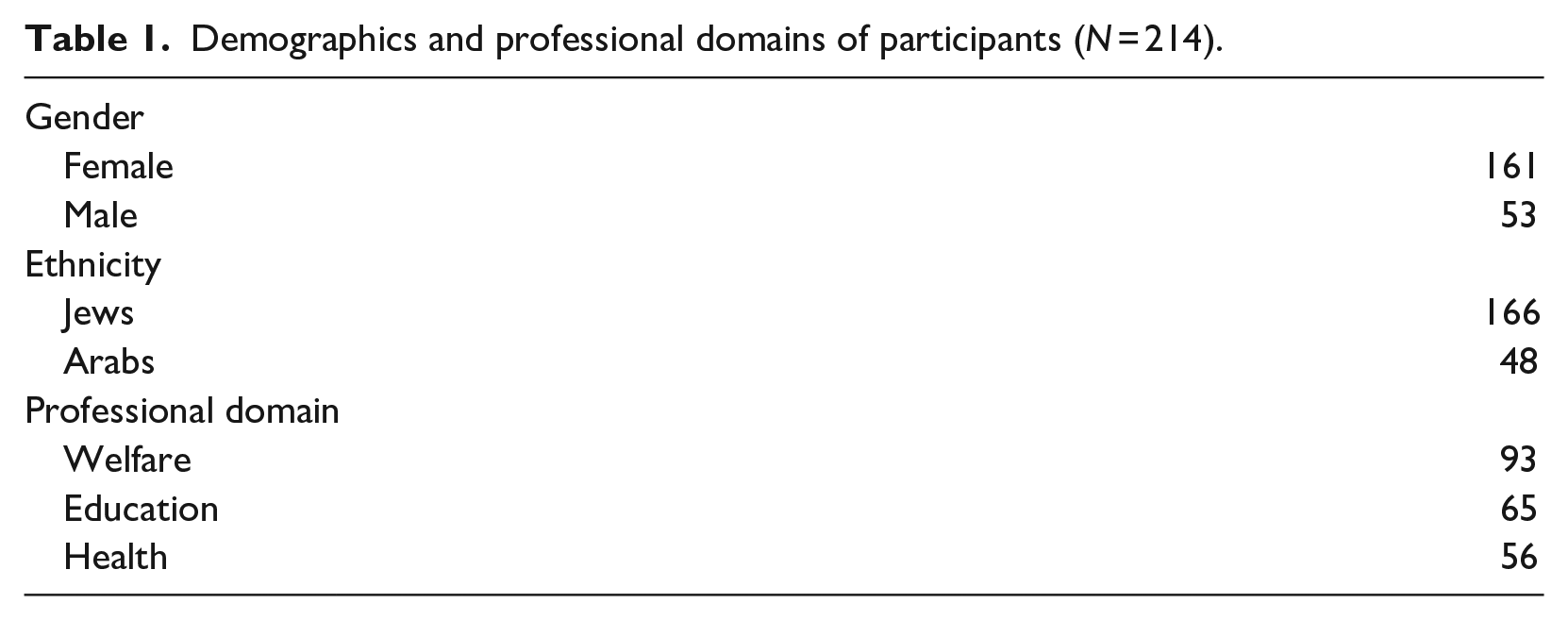
The study is based on a qualitative method and draws on in-depth semi-structured interviews conducted in 2016–2019 with 214 frontline workers employed in public sector organizations in Israel in the domains of welfare, education, and health. Most participants were professionals in their fields (i.e. social workers, nurses, doctors, and teachers), but some were nonprofessionals (e.g. administrative staff and medical assistants). The sample was highly gendered, as the vast majority were women. This is typical of ‘caring professions’, wherein women constitute the majority of the labor force. Moreover, most participants were Jewish, while the rest were Arab-Israeli, mostly Muslim. See Table 1 for participants’ demographics and professional distribution.
Demographics and professional domains of participants (N = 214).
The author and trained research assistants recruited the participants and conducted the interviews. To be eligible for inclusion in the study, individuals had to work in the public services in one of the three examined domains and to have direct daily interactions with clients. Participants were recruited from diverse organizations, mostly located in northern and central Israel, in both big and small cities. By utilizing data from multiple organizations located in multiple geographical and social locations, we gained insights into key patterns of workers’ practices that transcend a specific local context.
Initially, we recruited key individuals referred to us by personal and professional contacts (i.e. individuals with whom the researcher and the research assistants had a personal or professional acquaintance). Subsequently, we asked these individuals to refer us to additional candidates who met our inclusion criteria. For the most part, initial contact with potential interviewees was made by phone. Other candidates were contacted by email or by messages on a social network web platform.
Interviews lasted 30 to 90 min (1 h on average). All were conducted in person, and participants gave verbal consent to take part in the study. The interview protocol was designed to provide comprehensive evidence of the everyday experience of frontline public service provision, with a specific emphasis on the resources that workers provided to low-income clients. Each interview began by asking participants to describe a regular workday routine in terms of their interactions with clients, as we sought to discover the services they were supposed to provide. The interviewees were then asked to describe the formal resources supplied by the state or organization that they provide to clients. The next part of the interview focused on informal resources. After the interviewer clarified the distinction between formal and informal resources, participants were asked if they provide the latter to clients. The questions that followed examined the types of informal resources they gave to clients. The participants were asked if and in what ways they believed that the IFRs they provided had an impact on clients’ well-being and their ability to cope with poverty or manage economic hardship.
All interviews were digitally recorded and transcribed verbatim. The research was approved by the IRB of the University of Haifa. To protect the confidentiality of participants, all identifying details were anonymized and names were replaced with pseudonyms.
Analysis procedure
Atlas.ti software was used to transcribe and analyze the qualitative data. The researcher and two research assistants conducted the analysis and coding. Both deductive and inductive techniques were used to address the research questions. First, an inductive coding process was conducted according to the principles of grounded theory (Charmaz, 2014; Strauss and Corbin, 1990). Using an open coding technique, the analysis identified the general phenomenon of ‘workers’ provision of personal resources to clients’. Further sorting of the data allowed us to divide the IFRs into several main categories (see ‘Findings’ for elaboration). After achieving a solid understanding of the manifestations, extent, and types of IFRs, as well as factors influencing their provision, the next step was a deductive analysis. In this analysis we aimed to explore participants’ perceptions of the rationalities for providing IFRs, as well as their beliefs about the impact of IFR provision on clients. Within this analysis, we identified several common perceptions about the ways in which personal resources help clients cope with poverty. By combining deductive and inductive analyses, we were able to extract a coherent storyline that described the influential relationship between workers’ provision of their personal resources and low-income clients’ general well-being and ability to cope with poverty. It should be noted that no substantial differences were found between interviewees from different socio-demographic locations or professional domains.
Findings
Process of resources accumulation
Our first research question asked whether and in what ways clients were able to obtain assistance through public organizations in an era of decreased government spending. To address this question, we asked the frontline workers in public organizations to describe the services and resources they provide to their clients. Analysis revealed that aside from formal organizational resources, which the majority described as extremely ‘scarce’, participants provided personal resources to clients. These were informal resources in the sense that they were not part of their formal responsibilities, as well as formal resources they provided in informal ways after regular hours or when off duty. The majority of workers, across all professions and organizations, reported providing a broad range of IFRs to their clients on a routine basis. IFR provision was highly common not only in the sense that almost all workers provided these resources but also in the sense that individual workers often did so on a daily basis. Moreover, in the few narratives of workers who maintained that they strongly oppose such practices, deeper analysis revealed that even these exceptions were engaged in providing IFRs to clients.
For analytical clarity, we divided the resources into three types (despite a possible overlap): emotional, instrumental, and material. In many cases, participants reported providing personal resources of more than one type, depending on the specific case and needs of the client. Over half the participants (53%) stated that they were accessible to clients in informal ways, including staying with them beyond regular work hours, compensating for extra time devoted to clients during the workday by staying late, and conducting home visits beyond their official responsibilities. More than one third (35%) of participants reported the provision of emotional resources to clients, which included psychological support, inviting clients to the worker’s home (for Friday night and holiday dinners), and giving out their personal phone number. Moreover, about one quarter of participants reported providing informal instrumental resources. These included assisting with bureaucracy (such as filling out forms), providing training and consulting in areas unrelated to the worker’s official role, and assisting with the translation of documents (usually for immigrants). Finally, almost a fifth of participants reported that they provide material resources to clients, which included cash, rides in the worker’s car, various home necessities, food, and medicine.
The key process enabling the accumulation of all the various types of capital described was the workers’ provision of personal resources directly to clients. This process differs from that of resource accumulation related to organizational embeddedness demonstrated in previous literature, which was either through brokerage mechanisms connecting clients to external organizations (Small, 2006, 2009), or by increasing opportunities to build social networks (Colistra et al., 2017; Mazelis, 2017).
The processes detailed by the participants diverged from those previously described, also by demonstrating a different relationship between organizations and their workers. Often, existing studies assume an analogy between the organization and its individual workers as actors, as summarized by Small and Gose (2020). However, in our case, the individual workers operated in ways which diverge from the organization’s formal goals. This is true not only for workers from the health and education domains, whose formal aims are to provide health and education services, but also for workers from the welfare domain, whose formal purpose is to assist with specific, well-defined welfare issues. Moreover, often resources were provided outside the formal context: in the organizational sphere but after formal work hours, or outside the organization in the private sphere, during the workers’ personal time. It should be noted that such informal practices did not conflict with official rules and regulations.
Our findings shed new light on the relationships of public sector workers with their clients and demonstrate that, even in times of reduced government spending, clients’ embeddedness in public organizations may constitute an important path for resource accumulation. They underscore the central role of individual workers, independent of their organizations, in this process.
Influence of IFRs on clients’ well-being
Our next step was to examine frontline workers’ perceptions of the influence of IFRs on their clients’ well-being. The analysis revealed two mechanisms through which IFR provision helped clients cope with poverty. The first was direct influence, which was less commonly described. In these cases, the resources were perceived as having an immediate effect on a particular hardship, but the impact was usually local and short-term. The second was indirect influence, which was described broadly across all professions and domains and was perceived to have a long-term effect on poverty reduction and successful social integration. This occurred mainly by enhancing clients’ trust. The effect of the mechanisms is illustrated in Figure 1. We elaborate on these mechanisms below.
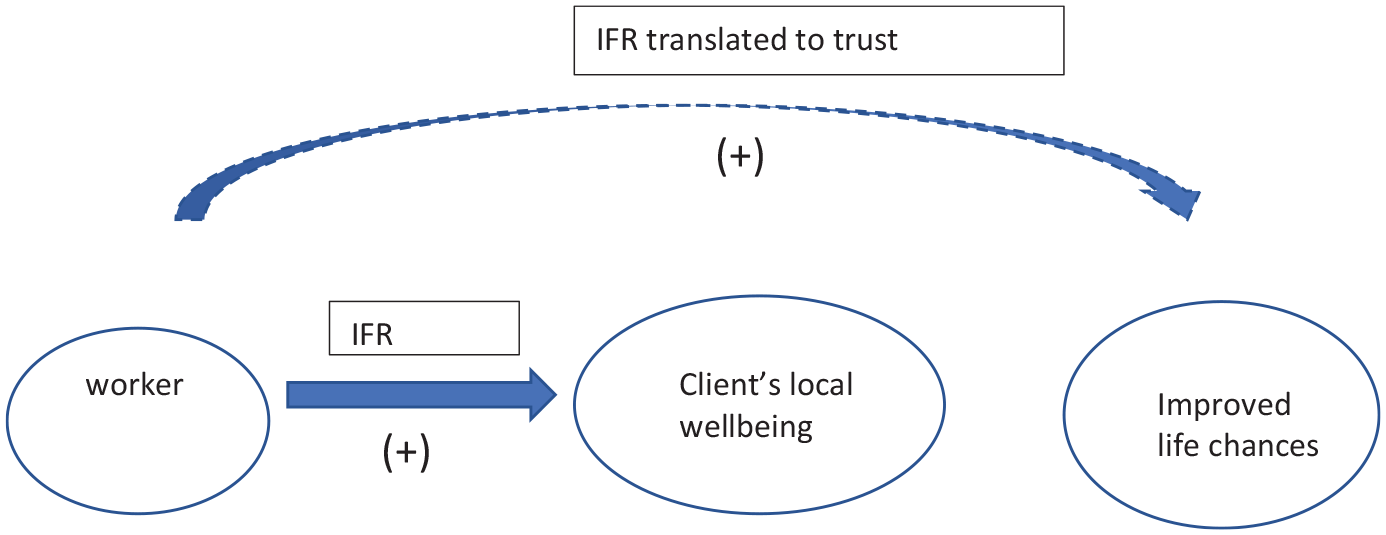
Workers’ perceptions of the influence of IFRs on clients’ coping ability.
Direct influence: ‘like a drop in the ocean’
The vast majority of workers provided a wide range of personal resources to their clients. When asked if and in what ways they believed that these resources could increase clients’ well-being, only a few participants described a direct effect on a client after receiving a specific resource. For example, one teacher explained the result of buying school uniforms for students: Sometimes there are students who don’t have the money to buy a school uniform, and walk around with old or small ones. When I buy them a new outfit, they feel equal in front of their friends, don’t feel inferior. (Teacher, 157)
The above story points to a direct link between the resource (money to buy school uniforms) and the well-being of students (do not feel inferior, perceived by friends as economically sound). Similarly, another teacher related that she, as well as many of her colleagues, provides free private lessons to disadvantaged students after school hours. The provision of this resource directly influences the students’ well-being by enhancing their academic achievements: Of course, the investment of my personal resources helps to reduce the gaps in a most direct way. These are students from disadvantaged populations who, without the private lessons given for free and at the expense of our personal time only – mine and my colleagues’ – their chances of succeeding in school would be much lower, if at all. (Teacher, 83)
A social worker also described the direct influence of a personal resource on a client’s ability to cope with poverty: Sometimes if I know that one of my clients doesn’t have any food at home, I buy some or give them cash, at least for the next meal. Once I brought someone a stove, once I brought an oven – I bought them with my own money, second hand. (Social worker, 62)
However, even among the minority of participants describing a direct influence of the IFRs on the well-being of their clients, many felt the support was too limited: ‘This assistance is very spotty, so I cannot say that it really improves their situation’ (Social worker, 2). A teacher summed up: ‘After all, the resources I have provided alone are like a drop in the ocean compared to the needs of the weaker populations’ (Teacher, 84).
In light of the finding that the great majority of workers spent immense amounts of time and energy providing clients with their personal resources, it is particularly surprising that only a few of the workers believed the IFRs had a direct influence on clients’ well-being and, even then, considered the effect to be like a ‘drop in the ocean’. If not intended to directly improve clients’ ability to cope with poverty, what is the purpose of providing the resources? The next section addresses this query.
Indirect influence of resource provision: trust in institutions and the possibility of better social integration
When requested to evaluate the effects of IFR provision, the vast majority of interviewees estimated that the investment of their personal resources not only increased clients’ abilities to cope with poverty, but could also influence their overall well-being. Rather than a direct effect, the interviewees explained that the personal resources had a far-reaching indirect influence on their clients’ life chances, and even on social inequality as a whole. The data analysis strongly pointed to a common belief that more than having a local or immediate influence, the IFRs – regardless of amount or type – established a bridge between the clients and the larger society. From this point of view, the personal resources were not the end, but only the means, creating the groundwork for better future social integration.
The study participants had daily experience with clients whose outlook on life was characterized by distrust (Levine, 2013; Raudenbush, 2016). They were also aware that such distrust is often rooted in previous experience with institutions, whether their own experience or that of others, and that negative feelings of shame and oppression are likely to decrease cooperation. Participants described the enhancement of positive feelings among clients as a major effect of IFR provision. A social worker explained: Providing my personal resources reduces barriers between these people and others, in that it often gives these specific people the feeling that there is someone who cares about them, even if it does not come from the state or organizations. (Social worker, 42)
The above interviewee clearly realized the importance of feeling that ‘someone cares’. More importantly, her words express the belief that the feelings created by IFR provision could have reduced barriers between the recipient and ‘others’. Positive feelings may counteract feelings of exclusion, which often lead to withdrawal from interpersonal social networks (Offer, 2012) and from connections with social institutions. The consequence of such withdrawal is further isolation, and eventually, greater economic distress. Thus, the goal of providing a specific IFR had the additional aim of influencing the clients’ overall relationships. One interviewee expressed her perception that improved interpersonal relationships might even result in reduced social inequality: Once they know they can always turn to me, and I will always be available for them, it improves the communication between us, there is more understanding. As a consequence, they also communicate better with others; society reacts differently to them, embraces them more. So I believe that in the end it reduces inequality. (Social worker, 47)
The IFR provided by the above social worker is her constant availability. Such 24/7 availability to clients was often mentioned by frontline welfare and education workers and, to a lesser extent but still frequently, by health workers. They made themselves available not only by giving their personal phone numbers to clients, but by responding to their calls at all hours, including nights and holidays, at the expense of time with their own families. This practice was designed to improve communication and mutual understanding, as the interviewee above explained.
The interviewees’ provision of IFRs had the ultimate goal of achieving the improved ability of their clients to function well and be integrated in society. Participants’ narratives strongly emphasized personal relationships as a central factor in this process, spotlighting the fundamental importance of trust. One of the nurses described in detail how she provided clients with various personal resources, such as assistance with translating documents, Internet searches to find treatment for a child, and cash to pay for medicine. When asked if she believed these resources helped her clients cope with poverty, she replied: I think these resources definitely assist my clients. Because they have this place where they really see that someone thinks of them, or tries to make them feel better. The very fact that they see that I make efforts for them warms their hearts. When they come here they are happy to come, and know that they can trust me. (Nurse, 74)
Scholars who have studied the everyday lives of low-income people maintain that the distrust they exhibit is rooted in a long history of life experiences which have cemented their belief that they will never be treated fairly by those in power (Levine, 2013). This distrust blocks their opportunities to benefit from any kind of relationship, whether with institutions or individuals. By providing the IFRs, the frontline workers can ‘prove’ to suspicious clients that they value them and are eager to make efforts in their behalf. As Hardin (2002) has written, these practices provide evidence that the workers and clients have a shared interest; both sides are concerned with improving the client’s life. From this point of view, and against a background of scarce formal resources that prevent workers from adequately meeting clients’ needs, the workers (who often represent the neglectful and oppressive state) can only build trust by going the extra mile: Indeed, these [IFRs] are not resources on a large scale, they are smaller things that mostly concern their personal feelings. But I can say that these ‘extras’ help them to open up and see that it is possible to build trust with someone. (Social worker, 49)
Indeed, trust is an important factor enabling workers’ to do their formal job. For example, trust between a teacher and a student is essential for effective learning. However, the analysis revealed that interviewees believed building interpersonal trust not only improved the outcome of their official work but had a more profound positive impact on the lives of their clients. The participants clearly emphasized in their remarks that the ‘extra’ help they gave not only facilitated trust between them and individual clients, but conveyed the message to these clients that it would be safe to lower the walls of distrust in other contexts.
To establish such levels of trust, formal service provision is not enough. It is the informal, personal resources that create the bridge between the client, the worker, and the broader society. An interviewee explained: I believe that the personal, close relationships that I create with students, and the long hours of private lessons that I provide them on my own time, create a bridge between the students and me. It promotes their studies of course, but mainly helps them in the future, in all areas of life. It is a bridge for them to believe that they are a part of society. This trust cannot be built during formal classes, how can you do that when you have 30 kids in your class? It must be on my private time. (Teacher, 84)
Although all interviewees were public sector workers, employed in underfunded organizations, under conditions of a hectic daily routine and heavy workload, their stories revealed that they understood their role as not merely fulfilling a formal job but also as agents of change. A main element in achieving this change, which is strongly linked to the necessity of establishing trust, is the commitment that workers demonstrate to their clients. Interestingly, ‘commitment’, or the will to teach a positive ‘lesson for life’, resembles the terminology used within relationships with kin, mainly in close family relationships, such as between parents and children. Therefore, less surprisingly, the personal resources that workers provided to clients often resembled resources given in intimate family relationships. The kin-like intimate relationships permitted the building of trust, essential for opening up opportunities to enhance well-being and the ability to cope with economic hardship, beyond the short term. An employment consultant explained: My phone is open all the time, not because finding a job is an emergency. Because it helps me to establish personal relationships with applicants and to build trust. If there is no trust, there will be nothing. Even if I cannot help them find a job right now, because they know they can trust – they could find employment in the future or trust in others on issues unrelated to me. (Employment coordinator, 203)
Finding a job, and participating in the labor market, is considered to be the main path to exiting poverty. However, many important studies conducted in the past few decades demonstrated that the labor market-related experiences of low-income individuals were characterized by distrust (Levine, 2013), hesitation to mobilize resources from social networks (Smith, 2007), and an attitude of ‘staying by themselves’ (Raudenbush, 2016), which often blocked employment opportunities. In the context of this study, even when the worker’s formal role was to help clients find a specific job, the provision of IFRs had a more ambitious goal. The creation of trust relations was perceived not only as improving the ability to find employment in the future, but as having a far-reaching effect on people’s well-being.
Discussion
The goal of this study was to understand whether and in what ways the embeddedness in public sector organizations, whose formal resources are being constantly reduced in an era of welfare restructuring, could constitute a path for coping with poverty and achieving enhanced well-being. Drawing on interviews with 214 public sector frontline workers, our research provided two main insights: first, workers provide informal, personal resources to clients on a routine basis; second, although these resources are highly limited and local, workers perceive the IFRs as pivotal for clients’ well-being and even as diminishing social inequality more generally. Following these findings, two main arguments can be made. First, public sector organizations are indeed a valid path for accumulating important resources required for coping with poverty. This is due more to the provision of workers’ personal resources than the scarce formal organizational assistance provided via embeddedness in these organizations. Second, since trust in institutions is fundamental for full participation in society, the ‘meta’ goal of IFR provision is a translation of the immediate resource into overall well-being by facilitating better social integration.
The study contributes to the sociological literature by offering a new perspective to understand the relationship between organizations and their low-income clients. This perspective demonstrates that the resources provided in such relationships are operating in different ways than those previously demonstrated in the literature. This study underscores the profound role frontline workers’ personal resources might have in creating the opportunity for far-reaching improvements in client well-being. Although they are embedded in relations with others (the workers), these resources are neither disposable (Desmond, 2012) nor sustainable (Mazelis, 2017), and their influence goes beyond facilitating the crucial social ties required for survival in poverty (Lubbers et al., 2020). The informal relationships between workers and clients, manifested through the provision of personal resources, facilitate the development of trust between them. As trust is a basic element in blocking or opening opportunities for increased well-being (Levine, 2013), but is also scarce among low-income populations (Raudenbush, 2016), the establishment of trust may have a far-reaching impact on all areas of life. Mainly, it has the ability to be translated into better social integration and consequently reduced overall poverty of clients in the future. This insight is in one line with Bourdieu’s (1985) conceptualization of capital as allowing advantages that go beyond financial resources and allowing broader competencies in social life.
A further study contribution is to contemporary understanding of the implications of encounters between public organizations, as state agencies, and low-income citizens. Beyond the benefits of general organizational embeddedness, the relationships created with workers in public organizations have broader implications for individuals, communities, and the larger society. As many of current Western societies today are characterized by increased inequality (Grusky and MacLean, 2016), there is also a rise in general dispositions of suspicion and distrust, particularly among those with lower social status. Szreter and Woolcock (2004) maintained that, in such societies, power relations and distrust between providers and recipients of public services shape welfare and well-being, especially in poor communities, in a way that compromises public health. Moreover, as trust in government institutions is a key element in the operation of the overall democratic system (Mizrahi et al., 2021), trust is more than an individual or local issue, but rather what makes ‘democracy work’ and essential for a wealthy society (Putnam, 1993). Therefore, the informal practices through which public workers demonstrate their commitment to clients serve to establish relationships more respectful and egalitarian than formal hierarchical practices based on institutional rules and limited resources. The trust relations they enable have the potential to alter some of the vast negative consequences of a growing inequality.
Focusing on workers’ perceptions of the consequences of their interactions with clients, we suggest that when studying relations between organizations and clients, and the ability to cope with poverty linked to organizational embeddedness, the broader context must be taken into consideration. In the Israeli case studied here, the workers believed that the current conditions of diminishing public support caused by welfare restructuring might result in the withdrawal of low-income citizens from any contact with the state and its institutions. This eventually might cause greater hardship for those who belong to poor populations. The workers, as public representatives (Lavee, 2022), acted in ways they felt could strengthen trust in state institutions. As the state reduced its responsibility for citizens, the workers shouldered it further. Consequently, as we demonstrated, citizens’ well-being is assumed to be enhanced, but at the expense of the personal resources of workers. As our sample included a majority of women workers, these findings join recent literature (Baines and Armstrong, 2019; Glinsner et al., 2019) in exemplifying the gendered consequences of contemporary service provision, in which workers (mostly women) provide various types of unpaid work.
The study is not without limitations. First, the findings are drawn from a specific time and place. It is possible that in other locations, particularly those with a different degree of social inequality, or social and welfare policies, the consequences of organizational embeddedness may be different. However, given the increased inequality in Western societies in general (Cohen and Ladaique, 2018; Grusky and Hill, 2018), it may be possible to generalize the centrality of establishing trust relations for overall health and well-being through workers’ provision of resources to clients. Second, this study focused on experiences and perceptions of frontline workers in their interactions with clients. It is possible that the examination of clients’ perceptions might yield different insights regarding the ability of workers’ personal resources to influence their well-being and ability to cope with economic hardship. Another possibility is that the provision of personal resources, due to its random and unsystematic nature, might cause negative feelings of discrimination among some clients and even worsen feelings of distrust. Future efforts should thus address the phenomenon of IFR provision from the point of view of clients as well.
Further research might also examine how the provision of personal resources affects workers’ willingness to accept employment in the public sector. On one hand, these practices were reported as individual and voluntary. On the other hand, since the phenomenon is so widespread, it can be concluded that this is an organizational norm, even if informal. Thus, the personal resources of public sector workers are being diminished, and, as a result, public service may suffer from a reduction in the number of people willing to enter these professions.
Footnotes
Funding
The author received no financial support for the research, authorship, and/or publication of this article.
