




Abstract
This study examines whether individual propensity to commit crime and family environment interact in their association with child-to-parent violence (CPV). We assume that individual propensity will be more strongly associated with CPV among those adolescents who are less attached to and controlled by their parents. The study has a cross-sectional design of 4,930 adolescents (age 16 years on average) in southern Sweden. The results support the hypothesis that the association between individual propensity (operationalized as levels of moral values and self-control) and CPV is considerably stronger in family environments that are weak in terms of social cohesion and control. The study shows the importance of moving toward the use of an integrated criminological theoretical model, in the understanding of CPV.
Keywords
Introduction
Child-to-parent violence (hereafter CPV) is aggressive or abusive behavior by children and adolescents toward their parents. Over the past 15 years, the number of empirical studies of violence committed by children and adolescents against their parents has increased (e.g., Calvete, 2023; Peck et al., 2021). Child-to-parent violence is often defined as “repeated acts of physical, psychological (verbal or non-verbal), or economic violence perpetrated by children against their parents or parental figures” (Pereira et al., 2017).
Thus far, theoretical explanations of CPV have mainly fallen within the domain of psychology (Arias-Rivera & Hidalgo Garcia, 2020). The different theories that have been discussed include cognitive-behavioral theories (such as social learning theory and coercive theory), psychodynamic theories (such as attachment theory), and psychosocial theories (such as group socialization theory and power relation theory) (Arias-Rivera & Hidalgo Garcia, 2020; Simmons et al., 2018).
Recent reviews of CPV research have stressed that many empirical studies have focused on ontogenetic factors, that is, individual factors such as impulsivity, aggressiveness, low frustration tolerance, and attitudes toward aggression (Arias-Rivera & Hidalgo Garcia, 2020; Junco-Guerrero et al., 2025; Simmons et al., 2018). A number of studies have found such individual factors to exhibit a strong positive association with CPV (Calvete et al., 2014; Contreras & Cano, 2017; Ibabe et al., 2013, 2014; Margolin & Baucom, 2014). Many studies have also focused on microsystem factors, that is, factors related to parenting and the family environment, such as dysfunctional family relationships, authoritarian and permissive parenting styles, low family cohesion, and low affection (Arias-Rivera et al., 2022; Arias-Rivera & Hidalgo Garcia, 2020; Junco-Guerrero et al., 2025; Simmons et al., 2018). A number of studies have also found these different family factors to exhibit a strong positive association with CPV (e.g., Calvete et al., 2014; Cano-Lozano et al., 2020; Contreras & Cano, 2014; Ibabe & Bentler, 2016; Maranon & Ibabe, 2024; Orue et al., 2021; Suárez-Relinque et al., 2020). It has further been noted that the most important predictors of CPV have been found to be those within the family, and that this is because the violence occurs within the family (Simmons et al., 2018). However, we know relatively little about whether different kinds of family environment counteract or promote CPV among individuals with different individual characteristics.
Furthermore, one of the limitations of previous CPV research has been that it has often focused on either the individual or the environment. Scholars have argued that the research needs to move from a description of the phenomenon to a more explanatory discussion, focusing on “why” some young people commit these acts, and under what circumstances. To this end, it is important to focus on hypotheses about the mechanisms that are in play and how they operate in different contexts, and whether different individual and environmental factors might interact in the association with CPV (Simmons et al., 2018). This also means that it is important to test integrated approaches that focus on how individuals, depending on their characteristics, behave in different ways depending on levels of family cohesion, affection, and control.
As CPV falls within the domain of norm-breaking behavior, theories that have been developed to explain norm-breaking and criminal behavior may be helpful in developing a more nuanced understanding of the way different factors may be associated with or interact in promoting CPV. Theories from the field of criminology have not explicitly been used in CPV research, which may be a consequence of the strong emphasis on psychological theories. In this study, however, we will investigate whether Situational Action Theory (SAT) can help us to understand and explain variations in CPV among Swedish adolescents (Wikström et al., 2012, 2024). SAT is a well-known theory in the field of criminology. It was developed to explain why some people commit crime by focusing on the interaction between the individual and the environment. We therefore argue that SAT may be suited to analyzing CPV and to addressing some of the theoretical shortcomings that have been discussed in the CPV literature.
More specifically, we will examine whether individual factors such as self-control and moral values interact with family environment factors such as family cohesion and family control in the association with CPV. Within the field of criminology, self-control is an umbrella measure that covers a number of different concepts such as impulsivity, risk-taking, and aggression (Gottfredson & Hirschi, 1990. For a discussion see also Moffitt et al., 2011). In addition, within the field of CPV, self-control, often measured in terms of impulsivity, has often been discussed as an important predictor in relation to CPV. On the other hand, many criminological studies have shown that moral values are associated with crime (e.g., Antonaccio & Tittle, 2008; Chapple et al., 2005; Stams et al., 2006; Svensson et al., 2010, 2013; Wikström et al., 2012). In addition, as far as we know, CPV research has rarely examined the relationship between young people’s moral values and CPV.
Theoretical Framework: Situational Action Theory
Situational action theory is a general, dynamic, mechanism-based theory about the causes of crime. The theory argues that a criminal act is ultimately a consequence of the interaction between the individual and the environment (Wikström et al., 2012, 2024). In essence, SAT argues that human action and offending are the result of the way individuals perceive their action alternatives and make choices when confronted with different types of environments. This perception-choice process is seen as the situational mechanism that links individuals and environments to crime.
The theory suggests that perception is more important than choice: if an individual does not see crime as an action alternative, he or she does not need to make a decision about whether or not to commit a crime (Wikström et al., 2024). Whether individuals who perceive a criminal offense as an action alternative decide to choose this alternative will depend on their propensity for crime and their exposure to different environments. Morality (moral values and moral emotions) and the ability to exercise self-control are the two key elements that influence the individual propensity to commit crime (Wikström & Treiber, 2007).
According to SAT, the characteristics of the environment are what an individual is able to experience with his or her senses. Whether an environment is criminogenic essentially depends on the degree to which the environment is more or less accepting of criminal behavior. According to SAT, individuals behave differently in different environments depending on their individual characteristics. Overall, the theory states that the stronger an individual’s moral values and self-control, the less he or she will be influenced by criminogenic environments. This also means that an individual can spend time in these environments without being affected by them. On the other hand, when moral values and self-control are weaker, individuals are more vulnerable and susceptible to various criminogenic environments, and the likelihood of offending increases.
Several empirical studies have investigated the extent to which there is an interaction between the individual and the environment in relation to crime (for reviews see Hardie & Rose, 2025; Pauwels et al., 2018). Regardless of the contextual unit used, the same conclusion tends to be reached, namely that the environment and the individual interact in the association with crime. For example, some studies have examined the extent to which neighborhood, school, peer relationships, and lifestyle have different effects on offending for people with different individual characteristics (Eklund & Fritzell, 2014; Hirtenlehner et al., 2015; Lynam et al., 2000; Svensson & Pauwels, 2010; Wright et al., 2001).
A wide range of measures of crime have been used to examine the empirical support for SAT, including theft, violence, vandalism, terrorism, organized crime, speeding, cheating at school, economic crime, cybercrime, and cyberbullying (Craig, 2019; Hu et al., 2024; Pauwels et al., 2018; Rose, 2023; Song & Lee, 2020; Trivedi-Bateman, 2021; Wikström & Bouhana, 2016). In addition, the theory has been used to explore the extent of family violence, particularly intimate partner violence (Barton-Crosby, 2018). However, as far as we know, no previous studies have focused on CPV. In order to examine the individual propensity for crime, a large number of previous studies have used a combined measure of morality and self-control (e.g., Gerstner & Oberwittler, 2018; Svensson & Pauwels, 2010; Wikström et al., 2018), whereas some studies have employed distinct measures of moral values and self-control (Pauwels et al., 2018). Most studies have utilized well-known measures of self-control, such as the scale developed by Grasmick et al. (1993; e.g., Pauwels et al., 2018).
The Current Study
The current study builds on previous research that has found support for the association between individual factors, environmental factors, and CPV. The study aims to examine whether these two types of factors interact in their association with CPV. In line with SAT, we hypothesize that the individual propensity for crime, measured as moral values and self-control, interacts with the family social environment, measured as family collective efficacy, in its association with CPV. More specifically, and in line with SAT, we hypothesize that individual propensity will be significantly more strongly associated with CPV for those living in families where the family social environment is weaker (in terms of cohesion and control), and significantly less strongly associated with CPV for those living in families where the family social environment is stronger.
Since individual propensity is based on the concepts of moral values and self-control, we argue that it is important to examine how the two factors interact with family context, both independently and in the form of a joint concept of individual propensity. This is consistent with the theoretical argument examined in this study.
Since it is essential to use questions on moral values that are linked to the outcome of interest, we will specifically use measures of moral values that are linked to CPV, together with a well-established measure of self-control. Since the place that constitutes our main focus is the family, we have decided to be specific about the environment, focusing on the dimensions of both family cohesion and family control using a measure of family collective efficacy. Accordingly, this study constitutes a specific empirical test of SAT and explores the interplay between the individual and the environment in relation to CPV. As such, this study makes a theoretical contribution to both the field of CPV research and the field of criminology.
Data and Method
Participants
The study is cross-sectional and is based on an anonymous online self-report survey among school-aged adolescents and young adults, aged 13 to 20 years (M = 16.2, SD = 1.55—years 8 to 9 in compulsory school and years 1 to 3 in upper secondary school). The sample was obtained using a stratified sampling of municipalities and schools, with the purpose of recruiting a broad selection of participants from diverse social backgrounds. The data were collected by researchers or trained project assistants who visited each school and class during the periods March to June and August to October 2022. For a detailed description of the sampling process, stratification, and data collection, see Andersson et al. (2025).
In total, 305 classes from 35 schools in 12 municipalities in the south of Sweden participated. The classes comprised a total of 6,965 students, of whom 5,780 were present on the day of the survey. The relatively high rate of non-attendance, 17.0%, was due to pandemic guidelines that required students to stay at home if they were exhibiting symptoms of respiratory infection. Of the students who were present, 5,352 completed the survey, resulting in a total response rate of 92.6%. The total loss of data due to unreliable survey completion was 42 responses, leaving 5,310 responses which constitute the study’s data set. Following listwise deletion of missing values, the analyses below are based on 4,931 respondents (of whom 46.7% were male, 83.3% born in Sweden, 4.3% born in other European countries, and 12.3% born in countries outside Europe).
Prior to data collection, the study underwent ethical review at the Swedish Ethical Review Authority (reference number 2021-05901-01). The authority deemed that the study would not handle personal data in a way that makes it possible to link these data to identified individuals, and that the study therefore did not fall within the scope of the Swedish Ethical Review Act (SFS 2003:460). The authority gave an advisory opinion which we have followed.
Measures
Dependent Variable
Child-to-parent violence was assessed using the Swedish version of the self-report instrument Abusive Behavior by Children-Indices (ABC-I), originally developed in Australia (ABC-I, Simmons et al., 2019). For a discussion of the validity of the ABC-I, see Ibabe (2020). The ABC-I consists of nine items divided into three subscales that measure verbal aggression, coercive behavior, and physical violence. A validation of the Swedish version confirmed the three-component structure of the ABC-I. The instrument exhibited sound psychometric properties, including acceptable measurement invariance across age and sex (Andersson et al., 2025).
Participants were asked to indicate whether they had behaved in a particular way toward a parent during the past 12 months. The verbal aggression subscale consists of two behaviors: (1) shouted or swore at, and (2) insulted or humiliated. The coercive behavior subscale consists of four behaviors: (3), attempted to intimidate, (4) threatened to hurt self or others if [a parent] did not do as you wanted, (5) broke, smashed objects in the house, or threatened to do so, and (6) stole money or possessions from [a parent]. The physical violence subscale consists of three behaviors: (7) kept [a parent] from seeking help or medical care, (8) threatened [a parent] with an object, and (9) acted physically aggressively toward [a parent] (e.g., pushed, grabbed, punched, kicked, burned, strangled, used a weapon against, etc.). Responses are given separately for each parent with the following alternatives: never/one time/a few times/every month/every week/daily.
The ABC-I can be used with a scoring procedure that allows for a differentiation between abusive behaviors and behaviors that are merely difficult or disrespectful, that is, normative behavior, based on the frequency of the behaviors in the subscales (Andersson et al., 2025; Simmons et al., 2019). The main analyses for this article are performed using a measure of abusive behavior that combines the three subscales of the ABC-I. Cronbach’s alpha for the scale is .72. As sensitivity analyses, we also use a scale of total (normative) CPV behavior, which combines the subscales coercive behavior and physical violence. Since a large proportion of young people, 60%, have been verbally aggressive toward their parents at some point during the last year we decided to exclude verbal aggression from this scale. Cronbach’s alpha for this scale is .88. Finally, we also perform some analyses focused only on physical violence. Cronbach’s alpha for this scale is .80. The different CPV measures were all categorized into no = 0/yes = 1. A score of 1 indicates that the respondent had engaged in one or more of the relevant acts against his/her mother/father.
Independent Variables
Morality
Low moral values is an additive index comprising items developed specifically for the outcome of interest, that is, CPV. The items used are based on questions regarding potential wrongdoing developed from the PADS+ study (Wikström et al., 2012). Participants were asked how wrong they think it is for someone of their own age to behave in certain ways: (1) Saying mean things to your mother or father if they do things you don’t like, (2) Taking money from your mother or father without asking, (3) Threatening your mother or father if they say something bad to you, and (4) Hitting your mother or father if they do things you don’t like. Response alternatives were: very wrong/wrong/a little wrong/not wrong at all. Cronbach’s alpha for the scale is .78. High scores indicate a low level of moral values.
Self-Control
Low self-control is an additive index based on five items regarding an individual’s level of self-control, based on a limited and modified version of the Grasmick et al. (1993) scale: (1) I often do things without thinking about it, (2) I always try to avoid difficult things in school, (3) I easily get angry, (4) I take risks because it is exciting, and (5) I find it exciting to do things for which I might get in trouble. Response alternatives were: strongly disagree/mostly disagree/mostly agree/strongly agree. Cronbach’s alpha for the scale is .82. High scores indicate a low level of self-control.
Individual Propensity
Individual propensity is an additive index of moral values and self-control reflecting an individual’s propensity to commit crime (Wikström et al., 2012). High scores indicate a high level of individual propensity to commit crime.
Social and Moral Family Cohesion and Control
Low family collective efficacy (family CE) is an additive index based on eight items reflecting the level of social and moral cohesion and control within an individual’s family. The items were developed within the PADS+ project (Wikström et al., 2012): (1) In my family we always help each other out if needed, (2) In my family we respect and get along well with each other, (3) All members of my family can be trusted, (4) In my family we share the same values (think alike) about important things. Response alternatives: strongly agree/agree/neither agree nor disagree/disagree/strongly disagree; (5) If you were skipping school, how likely is it that your parents would try to do something about it?, (6) If your parents were told that you had sprayed graffiti on the wall of a building, how likely is it that they would tell you off or punish you?, (7) If your parents were told that you had been beating up or threatening someone in school, how likely is it that they would tell you off or punish you?, and (8) If you showed disrespect to either of your parents, how likely is it that they would tell you off or punish you? Response alternatives: very likely/likely/neither likely nor unlikely/unlikely/very unlikely. Cronbach’s alpha for the scale is .80. High scores indicate a low level of family CE.
Control Variables
Two control variables are included. Sex is coded as 0 for females and 1 for males. Parental violence is measured with a single item reflecting whether the parents have been aggressive toward their children: Has either of your parents ever pushed, hit, or used other violence against you or a sibling? Response alternatives: no/yes, against me/yes, against sibling(s)/yes, against, both me and my sibling(s). For the analyses presented in the article, the variable is dummy coded as: no = 0/yes, against me; yes, against sibling(s); yes against, both me and my sibling(s) = 1. The inclusion of parental violence as a control variable is due to previous research having found parental violence to be strongly associated with and one of the more important predictors of CPV (e.g., Beckmann, 2020; 2021; Izaguirre & Calvete, 2017; Lyons et al., 2015; Margolin & Baucom, 2014; Pagani et al., 2009).
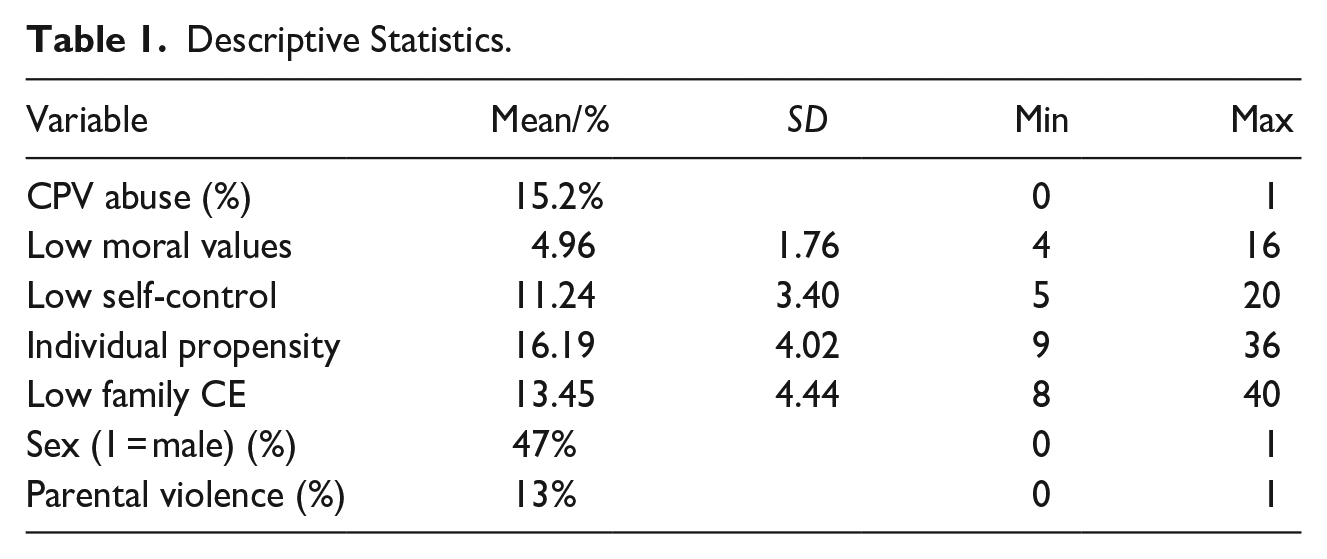
For a description of the measures used see Table 1.
Descriptive Statistics.
Analytical Strategy
First, we compared mean scores for moral values, self-control, individual propensity, and family collective efficacy by CPV using the independent samples t-test. We also calculated Cohen’s d as a measure of effect size. Third, we estimated several linear probability models (LPM) with robust standard errors to examine our hypotheses. The LPM estimates are comparable across groups (Mood, 2010) and are preferable to non-linear models when analyzing interactions (e.g., Gomila, 2021). The LPM estimates are interpreted as the percentage point change in the probability of the outcome given a one unit increase in the independent variable (Wooldridge, 2016). Three LPM regression models were estimated.
In the first model, we examined whether moral values and family collective efficacy interact in the association with CPV. In the second model, we examined whether self-control and family collective efficacy interact in the association with CPV. In the third model, we examined whether individual propensity and family collective efficacy interact in the association with CPV. In all the regression models we adjust for sex and parental violence. Multicollinearity was not a problem in our analysis, where the highest Variance Inflation Factor score was 1.24, well below critical levels. In addition, the correlations between the individual factors and family collective efficacy were all positive and significant (.23 for moral values, .24 for self-control, and .31 for individual propensity).
To illustrate the interactions, we divided the family collective efficacy measure into two groups—below mean (−1SD) and above mean (+1SD) and performed the regressions for moral values, self-control, and individual propensity separately for each group. To examine whether the three measures of individual factors are differently associated with CPV for the family collective efficacy groups, we performed a cross-model test using the suest command in Stata (Clogg et al., 1995; Mize et al., 2019; Weesie, 1999). All scale measures were standardized before being entered into the regression models. All statistical analyses have been conducted in Stata version 17.
Results
Table 2 presents differences between adolescents who did not report CPV and those who reported CPV in relation to moral values, self-control, and family collective efficacy. The results shows that those reporting CPV report significantly lower levels of moral values (t = −17.14, p ≤ .001), self-control (t = −20.16, p ≤ .001), and of the overall measure of individual propensity (t = −24.76, p ≤ .001). They also report significantly lower levels of family collective efficacy (t = −22.25, p ≤ .001). The effect sizes reflected by Cohen’s d range from −.67 for moral values to −.98 for the individual propensity score.
Moral Values, Self-control, and Family Collective Efficacy by CPV (Abuse), Independent t-test and Effect Sizes (Cohen’s d).
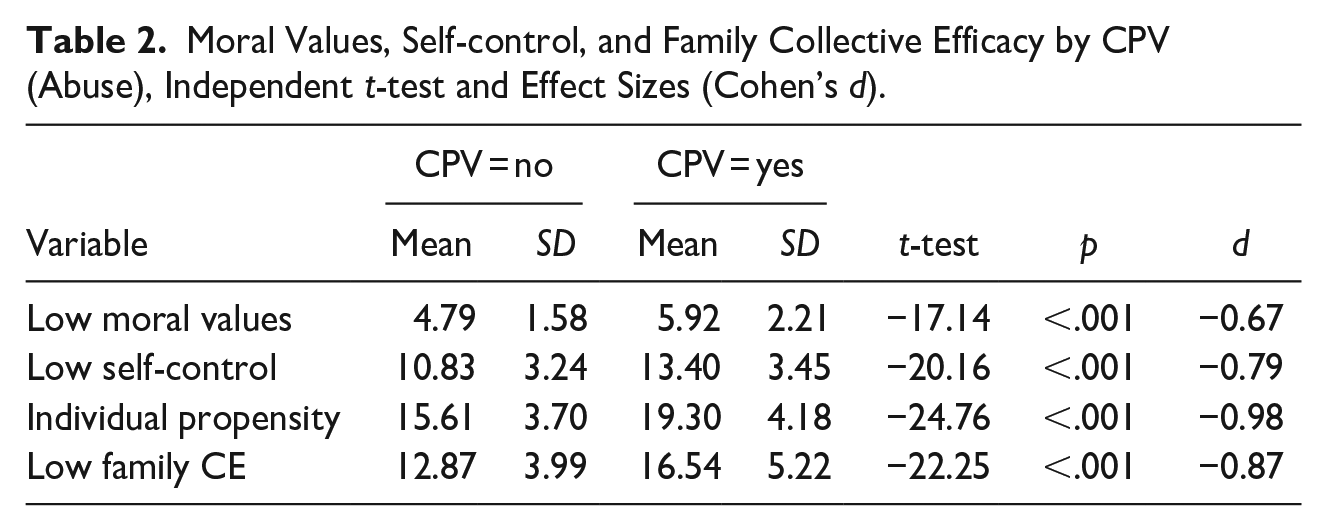
Table 3 presents results from the three linear probability models. Model 1 shows that both moral values and family CE are significantly associated with CPV. The main finding of this analysis is that the interaction term between moral values and family CE is significantly associated with CPV. In the second model, the interaction term between self-control and family CE is also significantly associated with CPV. Finally, the results show that the combined measure of moral values and self-control, that is, individual propensity, also interacts with family CE in the association with CPV. Looking to the three individual measures, the model that included individual propensity explained the highest level of variance (R2) of the three examined: .201 in relation to .161 (for moral values) and .181 (self-control). These findings provide support for our hypothesis that individual factors in the form of moral values and self-control interact with the family social environment in the association with CPV.
The Association Between Child-to-parent Violence (Abuse) and Low Moral Values, Low Self-control, Individual Propensity, and Low Family Collective Efficacy.
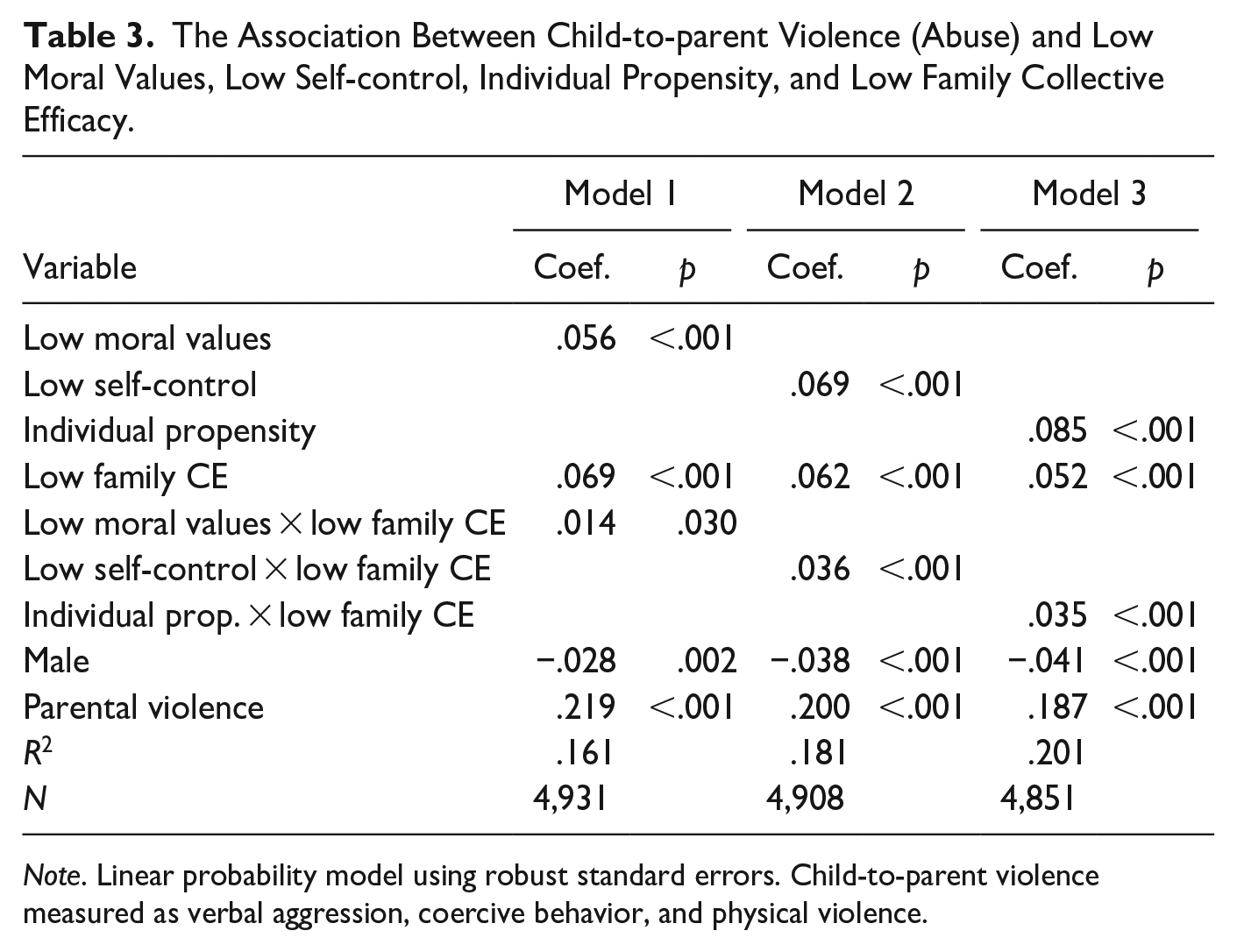
Note. Linear probability model using robust standard errors. Child-to-parent violence measured as verbal aggression, coercive behavior, and physical violence.
Both sex and parental violence were significantly associated with CPV in all of the models. Sex is negatively associated with CPV, which means that boys report lower levels of CPV, adjusting for the other predictors. Parental violence is instead positively associated with CPV, which means that young people living in a family with violent parents report higher levels CPV.
To examine the nature of this interaction, we performed regression models for those one standard deviation above and below the mean on the family CE measure. Two regression analyses were estimated separately for high and low family CE to examine whether the association between moral values, self-control, individual propensity, and CPV were significantly different across the two groups. Table 4 presents the results, which show that the association between moral values, self-control, individual propensity, and CPV is significantly greater for those individuals with lower levels of family CE. These findings clearly show that the individual and the environment in combination play an important role for our understanding of CPV behavior.
The Association Between Child-to-Parent Violence (Abuse) and Moral Values, Self-control, and Individual Propensity at Different Levels of Family Collective Efficacy.
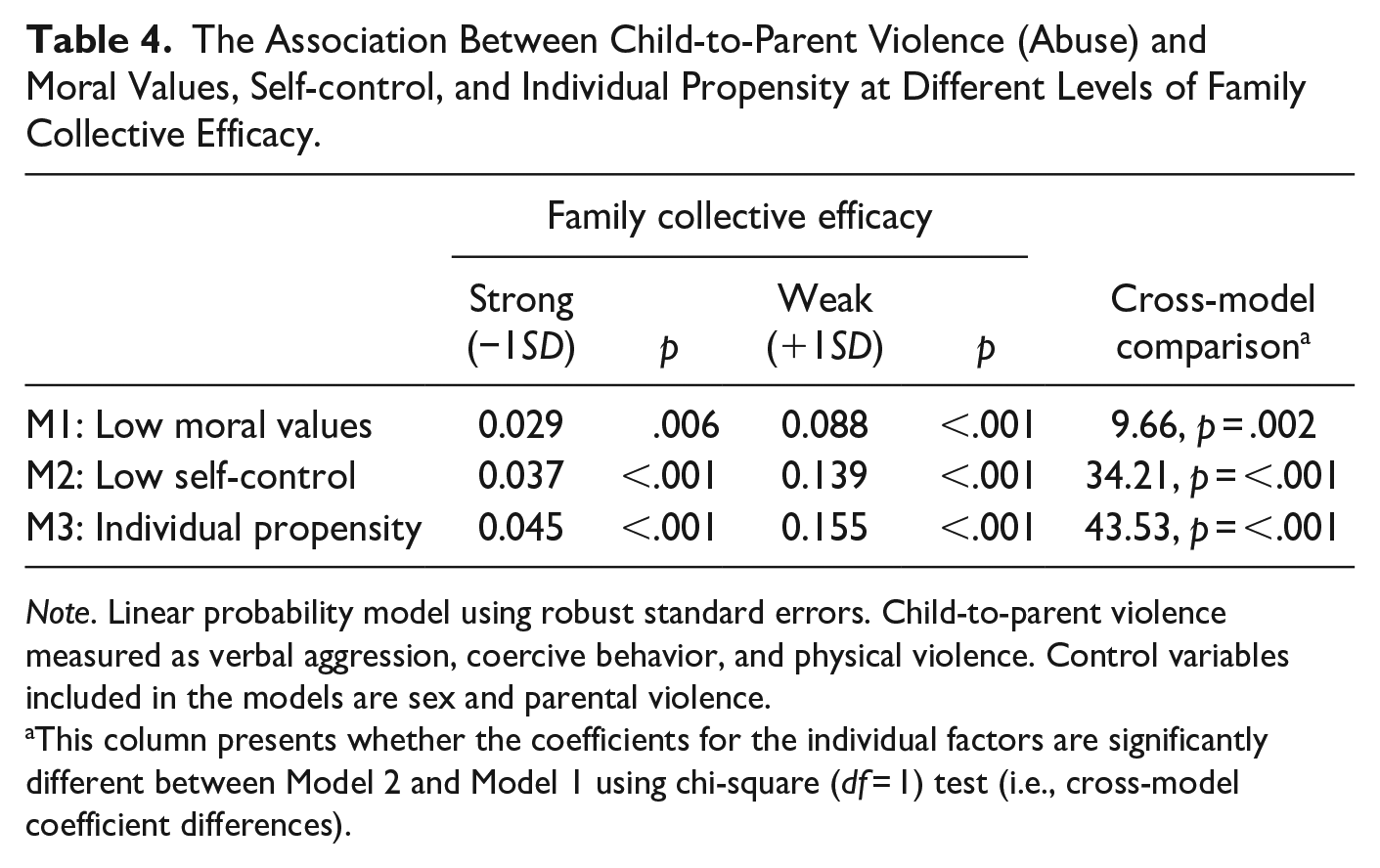
Note. Linear probability model using robust standard errors. Child-to-parent violence measured as verbal aggression, coercive behavior, and physical violence. Control variables included in the models are sex and parental violence.
This column presents whether the coefficients for the individual factors are significantly different between Model 2 and Model 1 using chi-square (df = 1) test (i.e., cross-model coefficient differences).
Sensitivity Analysis
As a robustness check, we also performed the analyses using logistic regression, presenting average marginal effects (AME) for the overall measure of CPV (abuse). The results followed the same pattern as the regression using the linear probability model to predict abusive behavior (see Appendix Figure A1). In addition, we performed the regression analysis using the LPM strategy to test the hypothesis comparing the association between our individual factors for those with high and low family CE and our measure of normative CPV, with the results being stable across moral values, self-control, and individual propensity (Table A1 in Appendix). In addition, we also ran the LPM regression models to examine the interaction between individual propensity and family CE in the association with physical violence CPV (not presented). The results were very similar, that is, the association between individual propensity and physical violence CPV is significantly stronger in families with low levels of family CE.
Discussion and Conclusion
It has been stressed that researchers need to test hypotheses about the mechanisms underlying CPV in different contexts (Simmons et al., 2018). In addition, Simmons et al. (2018) have argued that one of the key limitations of CPV research is the lack of theoretical understanding and empirical tests of how different factors interact in relation to our understanding of CPV. This study has explored how and in what way individual factors such as moral values and self-control interact with the family environment in the association with CPV. To our knowledge, this is something that has never previously been examined. Much of the research on CPV to date has found that either different measures of individual characteristics, such as impulsivity and attitudes toward violence, or different constructs of the family environment, are strongly associated with CPV (e.g., Arias-Rivera et al., 2022; Arias-Rivera & Hidalgo Garcia, 2020; Junco-Guerrero et al., 2025; Simmons et al., 2018; Suárez-Relinque et al., 2020). To explore the interaction between individual characteristics and the family environment, we used self-report data from a large sample of approximately 4,900 Swedish adolescents.
As a theoretical framework, the criminological SAT theory has been used to examine this interaction. Our starting point has been that crime is always a consequence of the relationship between the characteristics of the individual (i.e., morality and self-control) and the environment (i.e., family relationships). This suggests that young people with low levels of moral values and self-control would more often commit CPV in families where family relationships are weaker in terms of cohesion and control.
The results provide empirical support for the theoretical arguments of SAT, showing that the individual propensity to engage in CPV is more strongly associated with CPV among those living in families in which the family social environment is weaker (in terms of cohesion and control), and is less strongly associated with CPV for those living in families in which the family social environment is stronger. The results presented in this study are in line with those found in previous studies focusing on other types of crime (e.g., Wikström et al., 2018. See also Pauwels et al., 2018). This suggests that different environments affect different people in different ways, depending on their individual characteristics. Individuals who are more likely to commit a violent act against their parents due to low levels of moral values and low self-control are more susceptible to a risky environment, while those who report higher levels of moral values and self-control are more immune to a risky environment.
Our results have important policy implications, showing that it is important to take both individual factors and environmental factors, such as family relations, into account in the development of preventive strategies. The aim of such strategies should be both to reduce young people’s propensity to commit this type of crime and to strengthen their contextual family environment. The findings point to the importance of early crime prevention measures, that is, family and school prevention and strengthening the emotional bond within the family, to reduce the risk of young people committing this type of crime (e.g., Farrington et al., 2017; Piquero et al., 2016; Welsh & Zane, 2018).
To conclude, most of the theoretical explanations used within the field of CPV have focused on psychological theories, such as cognitive-behavioral theories (i.e., social learning theory, coercive cycles—for a discussion see Arias-Riviera & Hidalgo Garcia, 2020). This study shows that it may be useful for future research to extend its focus to other theoretical fields, such as criminology, in order to better understand CPV behavior, and in particular, as in this study, to look to integrated theoretical frameworks. Finally, one of the most important limitations of this study is that it is cross-sectional, which means that no causal conclusions can be drawn. We are therefore unable to draw any conclusion about directionality between individual factors, environmental factors, and CPV behavior. In the future, it would be desirable to conduct studies that also examine this interaction using longitudinal or experimental designs, in order to make more precise statements about its stability.
Footnotes
Appendix
The Association Between Child-to-Parent Violence (Normative) and Moral Values, Self-control, and Individual Propensity at Different Levels of Family Collective Efficacy.
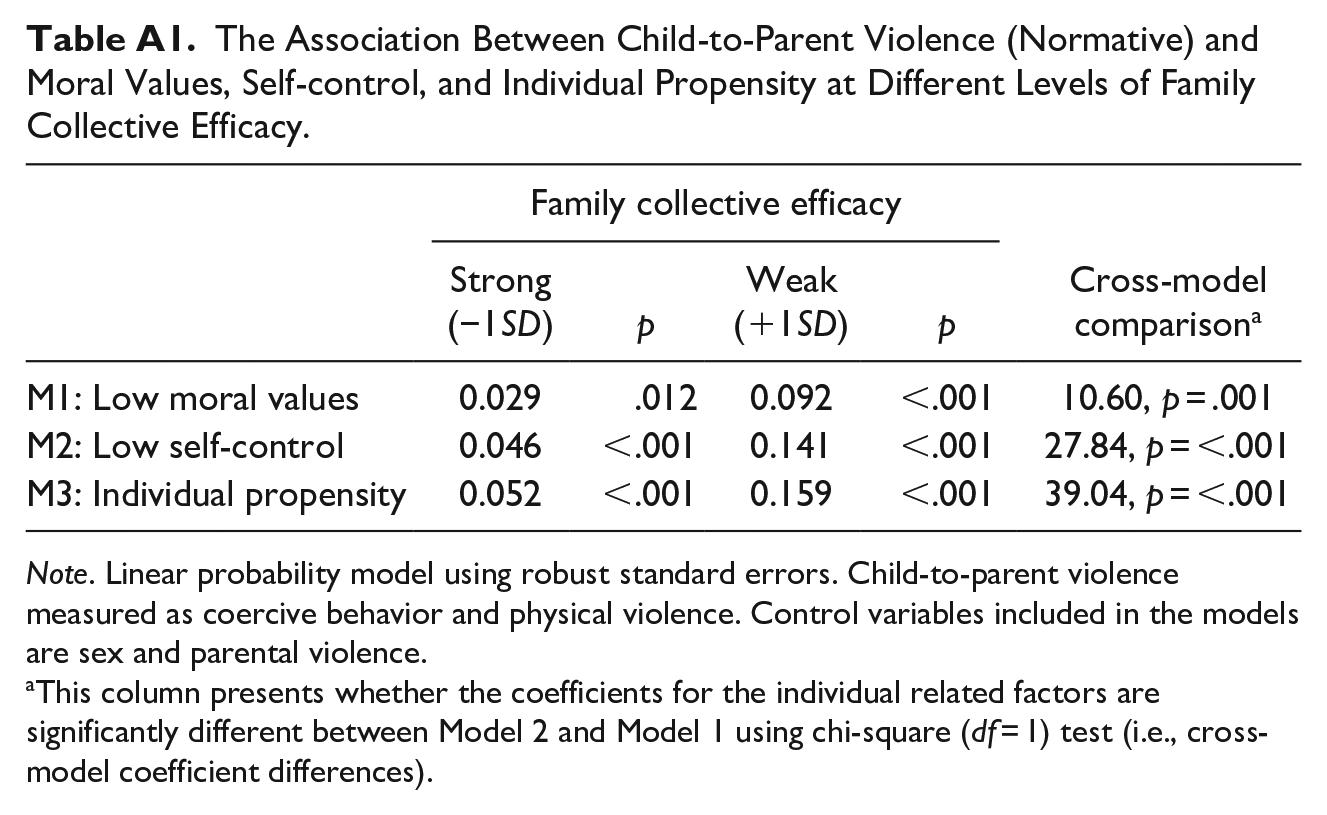
| Family collective efficacy | Cross-model comparison a | ||||
|---|---|---|---|---|---|
| Strong (−1SD) | p | Weak (+1SD) | p | ||
| M1: Low moral values | 0.029 | .012 | 0.092 | <.001 | 10.60, p = .001 |
| M2: Low self-control | 0.046 | <.001 | 0.141 | <.001 | 27.84, p = <.001 |
| M3: Individual propensity | 0.052 | <.001 | 0.159 | <.001 | 39.04, p = <.001 |
Note. Linear probability model using robust standard errors. Child-to-parent violence measured as coercive behavior and physical violence. Control variables included in the models are sex and parental violence.
This column presents whether the coefficients for the individual related factors are significantly different between Model 2 and Model 1 using chi-square (df = 1) test (i.e., cross-model coefficient differences).
Declaration of Conflicting Interests
The author(s) declared no potential conflicts of interest with respect to the research, authorship, and/or publication of this article.
Funding
The author(s) disclosed receipt of the following financial support for the research, authorship, and/or publication of this article: This work was supported by the Swedish Research Council for Health, Working Life and Welfare (FORTE; No. 2020-00213).
