




Abstract
Scholars and policymakers widely view identity as a key driver of African citizens’ political engagement. In doing so, however, they have emphasized ethnicity and largely sidelined other identities, including gender, local origin, shared residency, and partisanship. In this paper, we explore which identities drive political engagement and why they do so. We employ an original survey experiment that includes various identities and other incentives that may drive citizens’ participation around Zambia’s 2021 national elections. We find that partisanship most influences individuals’ stated willingness to campaign for a candidate or meet with an MP, while ethnicity and social incentives play less significant roles. Finally, we explore the mechanisms underpinning these results and find that citizens anticipate sanctions if they fail to support a co-partisan but not a co-ethnic candidate. These findings have important implications for understanding political engagement and democratic development throughout the region.
Introduction
Students of African politics often view ethnic identity as the primary driver of citizens’ electoral participation, paying a great deal of attention to what explains co-ethnic voting (Carlson, 2015; Habyarimana et al., 2007) and the conditions under which it is most salient (e.g., Ichino & Nathan, 2013). Yet, ethnicity is not the only identity that can influence electoral participation; the wider literature finds that a range of shared identities, including co-ethnicity, co-locality, co-gender, and co-partisanship, as well as both monetary and social incentives, can drive political engagement. These have not been tested against one another in relation to campaign-related participation in Africa, however, and the ethnic frame remains dominant. We argue that rather than to presume ethnicity is the key electoral influence, we need to let go of the ethnic handrail, acknowledge the complexity of the electoral landscape, and explore the relative influence and underlying mechanisms of multiple drivers. 1 Thus, we ask: How does ethnicity compare with local identities, gender, partisanship, and other incentives to drive electoral engagement, and what explains these factors’ relative influence?
To explore these questions, we employ an original survey experiment in Zambia. 2 The survey experiment was fielded in the lead-up to the 2021 national elections and varies the identity relationships between the respondent and candidate, including co-ethnicity, co-locality, co-gender, and co-partisanship, and the distribution of social and material benefits. The experiment also randomizes the form of election activity: campaigning and attending a meeting with a candidate. We focus on these two activities because they are relatively common across the continent, making them particularly important to understand, and yet they have been largely overlooked in the literature. We also choose these activities because we want to be able to randomize expectations of material reward in our empirical analysis. Randomizing such expectations is easier to do for activities like campaigning and attending meetings, where the provision of incentives is a less common occurrence, than for activities such as voting or attending electoral rallies, where citizens are more likely to presume that these incentives are given.
Our findings challenge the conventional ethnic frame. We find that partisanship is the strongest predictor of electoral participation, while co-ethnicity and social incentives play important but less significant roles. Moreover, sanctioning and enjoyment of the activity (i.e., social benefits) are strongly associated with co-partisan candidates, more so than with co-ethnicity and social incentives.
These findings make three key contributions to our understanding of citizen participation in Africa. First, they extend our understanding of electoral participation. We go beyond well-explored issues of voting and participation in election rallies and study, instead, individuals’ willingness to campaign on behalf of a candidate or attend a community meeting, expressing concerns to the candidate. In doing so, we shed light on non-voting campaign activities that are common 3 but less well understood in the African context 4 and that are arguably important activities for increasing the accountability of politicians, encouraging civic skills and virtues, improving policy development, and enhancing the legitimacy of both the electoral process and outcomes (Michels & De Graaf, 2010; Dalton, 2008). Second, we show that partisanship plays a more important role in political participation in Africa than previously thought. This finding suggests that scholars should pay more attention to the role and activities of political parties across the continent, setting co-ethnicity and regionalism in perspective. Third, and relatedly, the paper demonstrates the importance of distinguishing among partisanship, ethnicity, and regionalism/localism. Even where these factors appear closely related, they may have distinct effects on individuals’ actions.
Shared Identity as a Key Driver of Citizen Participation
Why do everyday people take costly actions—such as campaigning or attending a meeting with a candidate—on behalf of political elites? The literature suggests that shared characteristics between candidates and citizens are potentially crucial in this regard (Barreto, 2007; Bobo & Gilliam, 1990; Just, 2022). In the US and South Africa, for example, sharing a racial identity with a candidate has been shown to significantly increase the likelihood of voting (see, e.g., Bobo & Gilliam, 1990; Dawson, 1994; Ferree, 2011), while shared ethnicity has been found to increase electoral participation in settings ranging from Africa (Carlson, 2015) to the Middle East (Shockley & Gengler, 2020) and North America (Barreto, 2010). To a lesser extent, co-gender (Badas & Stauffer, 2019; R. Campbell & Heath, 2017), co-locality (Ichino & Nathan, 2013), and co-partisanship (Kuenzi & Lambright, 2011), similarly, have all been found to affect participation in a range of different settings and contexts.
Shared identities are believed to encourage citizen participation in four key ways. First, they provide information indicating shared preferences, which is particularly useful in the sort of low-information political environments common across Africa. As Johnston et al. (1992) argue, “the more an agent resembles oneself, the more he or she might be expected reflexively to understand and act on one’s own interests.” This helps citizens to make inferences about the preferences of candidates (Chandra, 2004; Conroy-Krutz, 2013; Corstange, 2008), increases the likelihood that candidates will know what goods and policies their supporters want, and makes it more likely that they will share those interests (Barreto, 2010). All of these, in turn, increase the level of engagement among citizens, providing them a powerful motivation to support candidates and to act in ways to try and advance their campaigns (Dahl, 1961; Parenti, 1967; Tate, 2003).
Second, shared identity provides information as to the likely delivery of clientelist goods. This instrumentalist theory argues that voters support candidates with shared identities because they expect these candidates to favor them if elected, and thus see the success of such candidates as their best chance for getting access to resources, public goods, and desired policy changes (Atwell, 2022; Carlson, 2015). There is significant empirical evidence to suggest that African voters expect to be favored by politicians with a shared identity (Okalany, 1996; Silah & Markakis, 1998; Young, 1976) and that they participate in ways that are hard to explain in the absence of these sorts of instrumental explanations (Ferree, 2006; Ichino & Nathan, 2013; Posner, 2005). Indeed, Carlson (2015) goes so far as to call this instrumentalist argument “a foundational assumption of much of the current literature on African political behavior” (p. 355).
Third, shared identities provide networks which can be used to share credible information about candidates, as well as to mobilize and sanction participants at the individual level. Shared identities are often marked by “highly developed systems of social networks that allow for cheap and rapid transmission of information about individuals,” increasing the ability of citizens to learn about potential candidates (Fearon & Laitin, 1996, p.718). The repeated interactions that take place within identity communities also provide multiple opportunities for reputations to develop, making it easier for voters to identify “good types” (Fearon, 1999; Fearon & Laitin, 1996), while the deep social networks provide a useful way to mitigate the credibility problem facing many candidates (Carlson, 2015; Fearon & Laitin, 1996). This makes promises of post-election provisions more credible and gives citizens increased confidence in their ability to hold candidates accountable once in office (Dunning & Harrison, 2010; Keefer & Vlaicu, 2008). Moreover, at the citizen level, shared social networks increase the ability of groups to utilize social incentives such as esteem and shame to mobilize their members, as well as providing them with an increased ability to identify and sanction non-participants (Gerber et al., 2010; Klandermans, 2004; McClendon, 2014).
And finally, social identity theory (Tajfel, 1978) suggests that shared identity encourages participation and support as a result of the social and psychological rewards it provides (see Huddy, 2001 for a review). That is, citizens are believed to feel a social-psychological affinity for candidates that resemble them, separate from any instrumental factors, and desire to participate in and support their campaigns as a result (Greene, 2004; Shockley & Gengler, 2020).
Types of Shared Identity
In the African context, co-ethnicity has long been seen as the dominant shared identity motivating political participation, and it is believed to have a number of particular advantages as a cleavage (Bates, 1983; Carlson, 2015; Ferree, 2011). However, ethnicity is not the only identity that exists on the continent, and newer works have begun to challenge its dominant position in the literature. For example, a number of recent studies have argued that shared location, rather than shared ethnicity, may well be the key determining factor of electoral behavior (Basedau & Stroh, 2011; Ichino & Nathan, 2013; Posner, 2004b). Another strand of the literature finds that co-gender substantially increases women’s political engagement in the region, in line with older findings from Europe and North America (Barnes & Burchard, 2013; Cook, 1994; Mansbridge, 1986).
Somewhat surprisingly, however, the role of co-partisanship in mobilizing participation remains largely understudied in the African context, despite substantial literature from the Global North showing that parties are often key players in organizing supporters, encouraging people to vote, and involving individuals in campaign work more broadly (Kitschelt, 1994; Norris, 2004; Ware, 1996). Scholars of Africa have traditionally seen partisanship as a less important driver of behavior on the continent, with parties presumed to have low levels of support and a limited capacity to engage with or mobilize citizens (Krönke et al., 2022; Rakner & Van de Walle, 2009; Storm, 2013). Indeed, many claim that partisanship, in terms of the classic definition of Campbell et al. (1960), 5 does not exist across much of Africa. Instead, they view party affinity as a proxy for other social identities such as ethnicity or locality (Bratton et al., 2012; Cho & Bratton, 2006; Mattes & Krönke, 2020).
A nascent literature has started to push back on this view, however, arguing that partisanship in Africa does not simply reflect ethnic or regional affinities (Basedau & Stroh, 2011; Mattes & Krönke, 2020; Michelitch, 2015; Young, 2009). Rather, they argue partisanship is a distinct identity and an independent social cleavage with potentially significant mobilizing power (Atwell, 2022). It may be shaped in part by factors such as ethnicity, community, and family (a fact also recognized in the classic definitions of partisanship in the US [see, e.g., Key, 1966]), but it is also affected by factors such as party platforms, politician behavior, psychological affinity, material incentives, and judgements around party effectiveness (Basedau & Stroh, 2011; Kim, 2017; Mattes & Krönke, 2020; Michelitch, 2015; Young, 2009). In this view, partisanship is a theoretically distinct concept and one which exerts its own influence on participation.
Moreover, there is growing evidence that partisanship in Africa may be more powerful than generally assumed. Proponents of partisanship argue that scholars have underestimated how quickly citizens attach to parties in new democracies (Brader & Tucker, 2001; Harding & Michelitch, 2021), that partisanship in Africa is actually higher than in many other regions, and that parties across the continent have a greater mobilizational capacity than previously assumed (Atwell, 2022; Harding & Michelitch, 2021; Krönke et al., 2022). All of these provide a good reason to think that co-partisanship might play a more important role in mobilizing participation than previously assumed, making it important to test alongside the more dominant arguments of ethnicity, locality, and gender.
Material and Social Incentives
In addition to shared identities, the literature on voting and social movements suggests that the availability and provision of material and social incentives, both positive and negative, have an important mobilizing effect (Klandermans, 2004; Lockwood, 2022; Olson, 1965). Incentives can include the provision (or withholding) of material goods (Olson, 1965) and social rewards, such as participating alongside friends (Klandermans, 2004) or strengthened friendships, enacted through systems of monitoring and sanctioning (Olson, 1965; White et al., 2014).
Of course, as the discussion on shared characteristics above has shown, many of these incentives are believed to underlie and interact with the impact of shared identities. For example, expectations around the provision and targeting of material goods (material incentives), the ability to participate alongside friends (social incentives), and the ability of ethnic groups to monitor and sanction behavior (negative incentives) are all suggested as key reasons why people support and mobilize for co-ethnic candidates (Carlson, 2015; Fearon & Laitin, 1996). Similar arguments have been made about locality, gender, and political parties.
In this paper, therefore, while we explore the impacts of incentives alongside those of shared characteristics, we recognize that the provision and use of incentives are often intertwined with these characteristics in important ways. They do not have to be, however. As we will discuss shortly, one of the advantages of our experiment is that we are able to tease apart these different factors to some extent, allowing us to understand the differential impacts they may have.
Hypotheses
Our reading of the literature leads us to advance three sets of hypotheses, aimed at exploring the relative importance of various identities, other incentives, and the underlying mechanisms explaining their salience. 6
We explore five hypotheses regarding identity. Overall, we expect:
Identity or shared characteristics between the respondent and the MP candidate should increase the willingness of respondents to participate. That is, respondents will be more likely to report being willing to participate in non-voting, campaign-related activities when they:
share an ethnicity with the MP candidate (co-ethnicity),
are members of the same party (co-partisan),
come from the same place (co-origin/co-locality),
live in the same place (co-residence/co-locality), and
share the same gender (co-gender). The broader literature on Africa suggests that ethnicity is likely to be the dominant identity characteristic, with identities such as co-locality and co-partisanship registering weaker or even negligible effects. However, we did not have a strong prior regarding which of these characteristics will have the strongest effect and thus did not register any identity to be dominant. We also consider two sets of incentives that may shape respondents’ stated willingness to participate in activities, independent of identity. Specifically:
Incentives should also increase the respondents’ willingness to participate. These may be material or social:
Respondents are more likely to participate when they are told they will be compensated financially.
Respondents are more likely to participate when they are told that they will participate alongside their friends. Finally, we explore potential mechanisms explaining why respondents should be more likely to participate when they are asked to support a candidate who shares their identity or when they receive material and social incentives. Specifically, we consider whether citizens expect sanctions from others in the community or their local leader and whether they believe that they will be more likely to enjoy the activity. We believe that these mechanisms could apply independent of the drivers of participation that we find to be most important.
Respondents will be more likely to report being willing to participate when they share the identity of the MP candidate (i.e., co-ethnic, co-origin, co-resident, co-gender, and co-partisan) or when they receive material or social benefits because:
They think that others will sanction them if they do not participate.
They think that their local leader will sanction them if they do not participate.
They believe that they will enjoy the activity.
Context of the Study
We examine the drivers of electoral participation in Zambia. The country is one of several to have experienced multiple democratic transfers of power in Africa, following the return to multiparty democracy in 1991. It is a case in which identity factors and incentives are expected to be salient, and one with a history of vibrant political participation that goes beyond voting on election day. Thus, it is a useful case to test the competing explanations for campaign-related participation. Moreover, Zambia is not unique in these respects. Cross-national studies show Zambia to be very similar to other African countries with regards to our key dependent and independent variables, which lends confidence in the generalizability of our findings. Since our sample is drawn from three provinces in Zambia (for more details, see Data and Measurement section), we illustrate how our sample fits within the broader African context by presenting data on our key variables both at the country and province level in comparative perspective below.
Starting with our dependent variable, we observe that Zambians’ political participation is significant but not unusual for the continent. In 2020, about half of Zambians said that they attended a community meeting (55%), while many also frequently engaged with key political actors such as MPs and local party officials
7
(Afrobarometer, 2022). Similarly, when asked about different forms of political participation during the 2016 election period, 15% claimed that they worked for a party or candidate.
8
These levels of participation are very similar to those of citizens in other African countries (see Figure 1).
9
Worked for party/candidate in last election | Panel (a) split by country (N = 34) | Panel (b) split by province (N = 458), dotted line = mean for Lusaka, Eastern, and Muchinga Province; solid line = sample median. Note: Afrobarometer Round 8 (2020); percentage of respondents who said “yes” to the question, “Did you work for a candidate or party in the last election?”.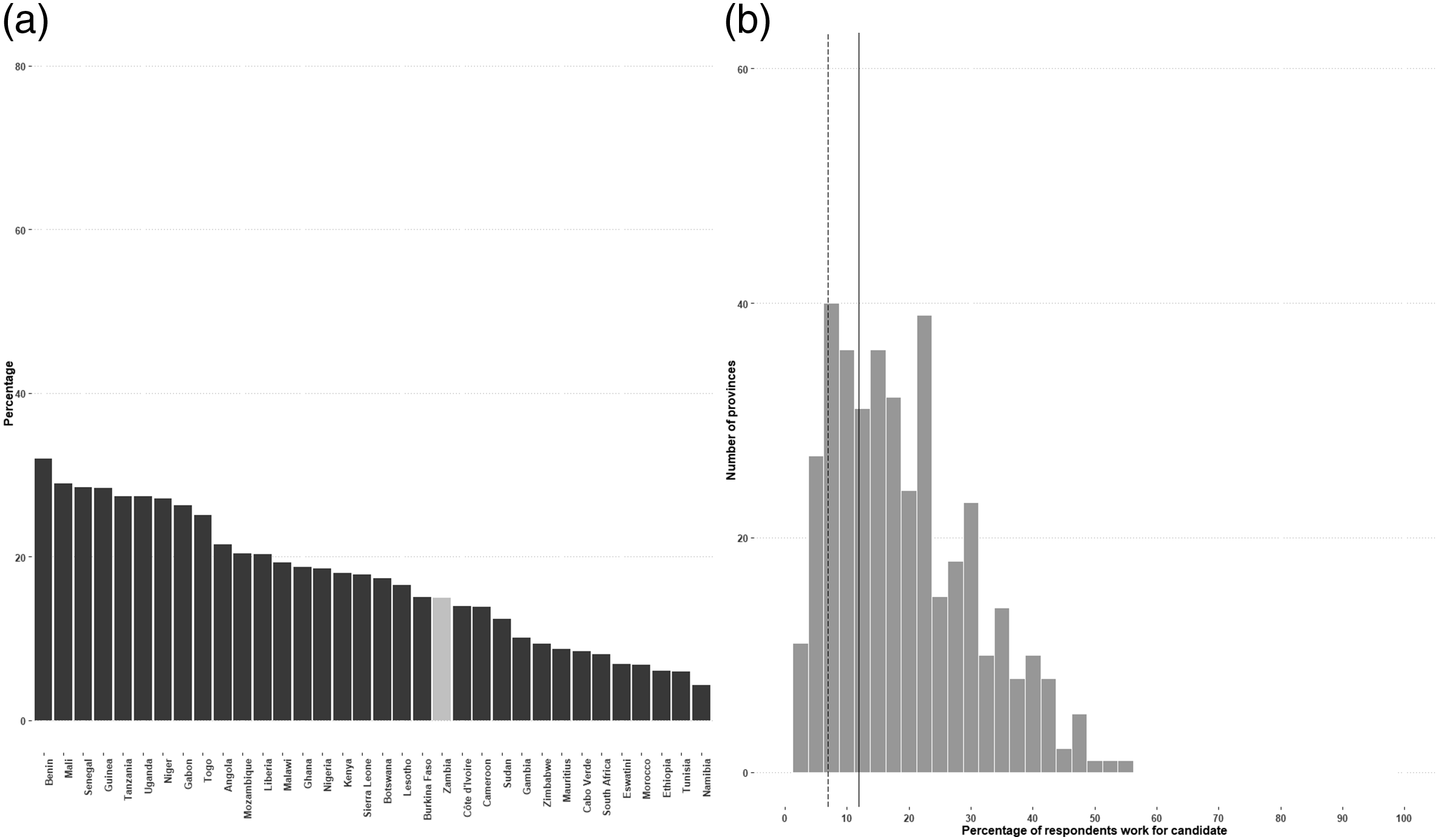
Participation remained significant in the campaign period for the 12 August 2021 general elections, the context of our study. The campaigns, which officially started on 15 May 2021, took place in a more repressive political environment than Zambia’s previous elections. A decade of democratic backsliding under President Lungu had seen government efforts to dismantle the opposition party (UPND), independent media outlets, and civil society organizations (Resnick, 2022), and the playing field remained uneven in the final months prior to the election. Yet, despite this challenging campaign environment, many Zambians still participated in campaign-related activities (42%), 10 and they turned out in large numbers on election day (71%).
Turning to the different explanations, the existing literature suggests that ethnicity is an important and politically relevant fault line in Zambian politics (Posner, 2004a, 2004b). Although the latest wave of the Afrobarometer survey finds that Zambians are less likely to identify in ethnic (rather than national) terms compared to their peers elsewhere on the continent (Figure 2), scholars have long argued that Zambian politicians employ ethnicity, particularly as centered around the four major linguistic groups, as a tool to mobilize electoral support. In the context of our study here, several commentators complained that ethnicity was particularly salient in the 2021 elections, pointing to heightened ethnic rhetoric and the potential for conflict (Mwansa, 9 August 2021). Zambia in comparative perspective | Respondent feels close to ethnic group | Panel (a) split by country (N = 32) | Panel (b) split by province (N = 458), dotted line = mean for Lusaka, Eastern, and Muchinga Province; solid line = sample median. Note: Afrobarometer Round 8 (2020); percentage of respondents who identify more with their ethnic group than country (dark gray) or identify with their ethnic group and the country equally (white) when asked, “Let us suppose that you had to choose between being a (national identity) and being a (respondent’s ethnic group), which of the following best expresses your feelings?”.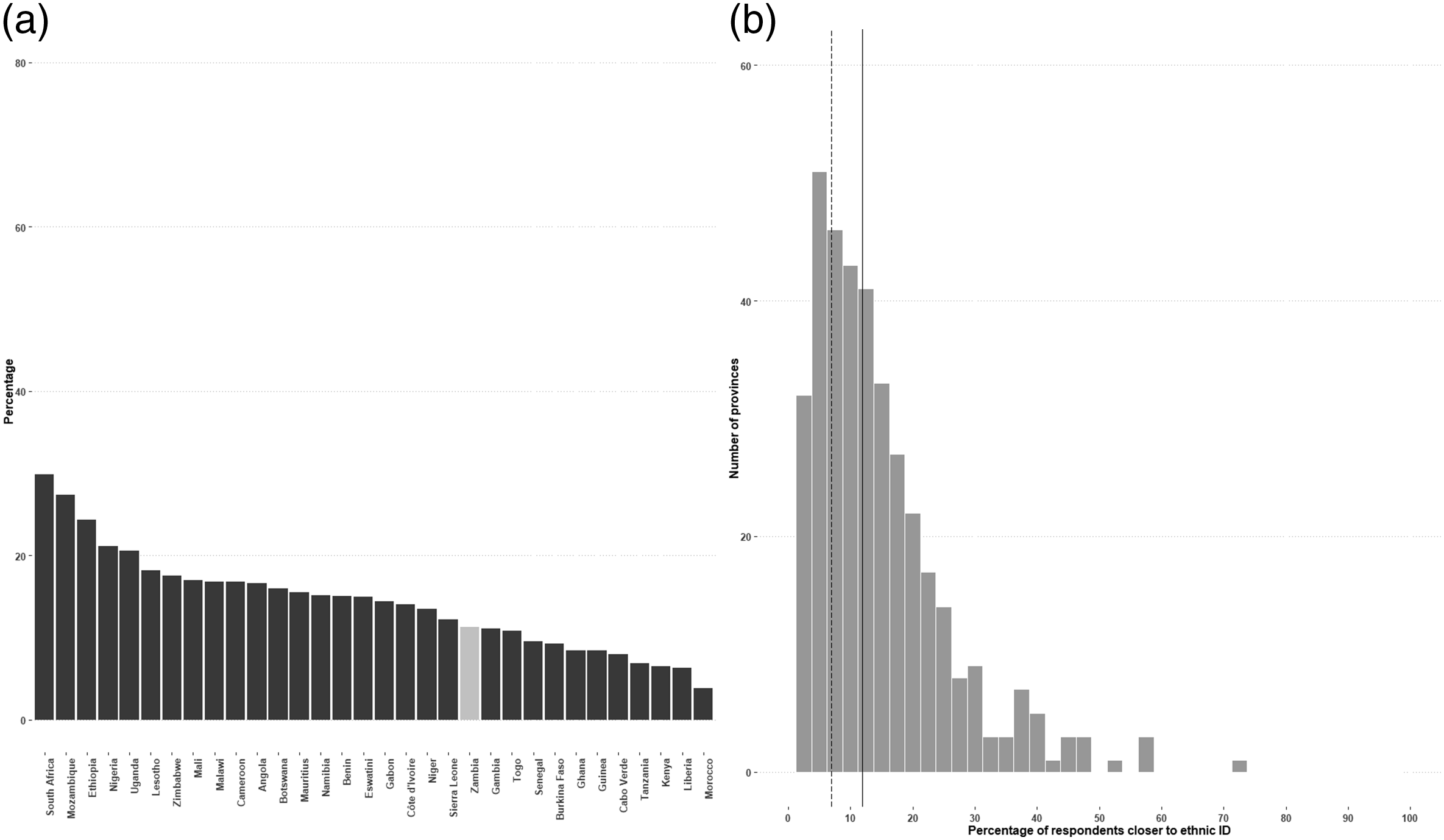
Partisanship is also salient in Zambia. The first 15 years of multiparty democracy saw a great deal of party system instability, but the constellation of the major parties is now relatively stable (Arriola et al., 2022). Following the victory of the Patriotic Front (PF) in 2011, the Movement for Multiparty Democracy (MMD) effectively disintegrated, leaving Zambia with a two-party system (PF and United Party for National Development [UPND]) by 2016. Since we argue that co-partisanship increases political participation through a feeling of shared identity, as well as by being connected to a network or organizational structure, we highlight the relevance of both in Zambia. A 2021 public opinion survey finds that 43% of Zambians identify with a party—reflecting the country mean in a 33-country sample (Afrobarometer, 2022) (see Figure 3). Moreover, our data also show that these partisan attachments do not appear to be feeble—39% of respondents feel a strong attachment to the PF (scored at least 8 on a like–dislike scale of 0–10), while 32% of respondents scored 8 or higher for the UPND, representing cleavages that are not exclusively captured by ethnicity (Boone et al., 2022; Kim, 2017). Zambia in comparative perspective | Feels close to political party | Panel (a) split by country (N = 33) | Panel (b) split by province (N = 458), dotted line = mean for Lusaka, Eastern, and Muchinga Province; solid line = sample median. Note: Afrobarometer Round 8 (2020); percentage of respondents who said “yes” to, “Do you feel close to any particular political party?”.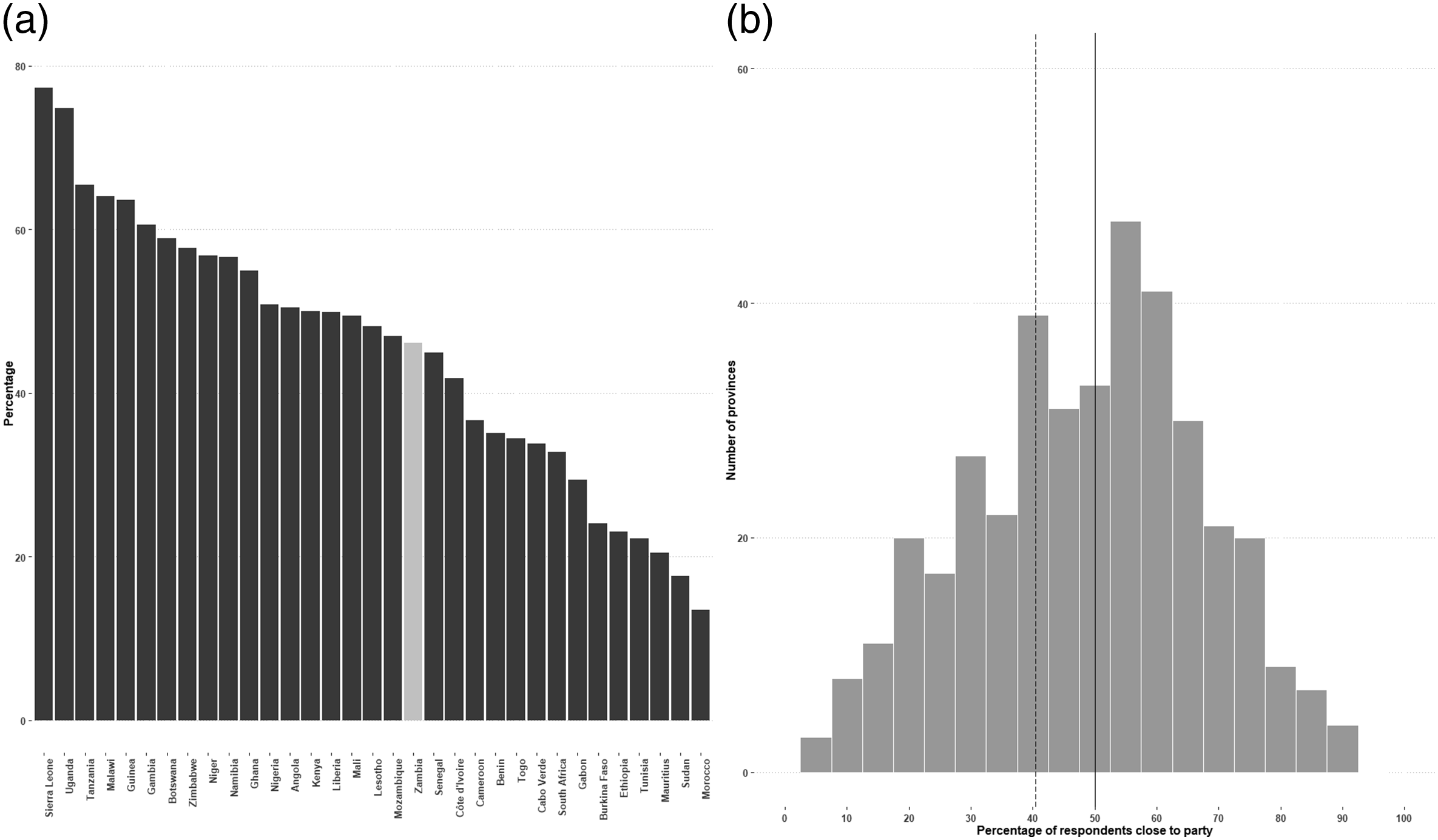
Second, although the country’s parties are often characterized by clear regional strongholds, the consolidation of the party system also coincided with an expansion of the PF and UPND local presence across most parts of the country (Beardsworth, 2020; Krönke et al., 2022; Resnick, 2022). Most respondents in our sample report that they personally know PF or UPND party activists who live in their communities, and more than 40% of respondents report that they personally know party activists from both major parties. Co-partisanship is thus a plausible explanation for campaign-related mobilization.
Diffuse Effects of Co-Ethnicity, Co-Locality, Co-Partisanship, and Co-Gender Preferences.
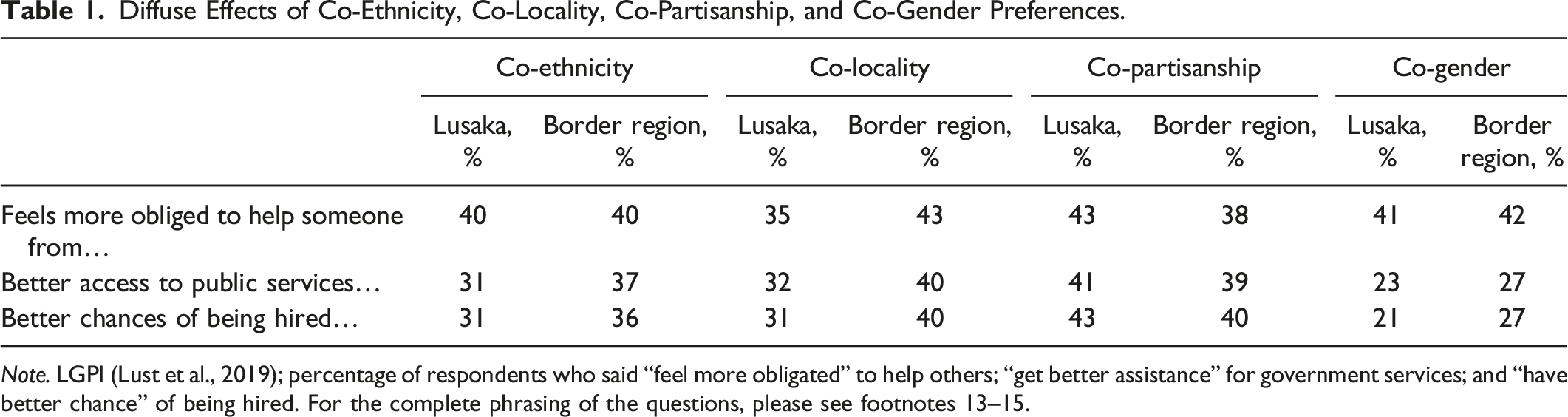
Note. LGPI (Lust et al., 2019); percentage of respondents who said “feel more obligated” to help others; “get better assistance” for government services; and “have better chance” of being hired. For the complete phrasing of the questions, please see footnotes 13–15.
The fourth explanation we test, the effect of co-gender, has attracted comparatively less scholarly attention in Zambia. However, data from the LGPI survey allows us to probe the salience of gender as citizens engage with other people. Analyzing the same set of questions as with co-locality above, we find that co-gender matters. Whether citizens feel a differential sense of obligation to help someone, or whether they estimate their chances of accessing government services or getting hired for a job, respondents perceive real differences along gender lines. This is also in line with our expectations that respondents will be more likely to report a willingness to participate in non-voting campaign-related activities when they share the gender of the MP.
Lastly, material and social incentives are also commonplace in Zambia. The Round 8 (2019/2021) Afrobarometer survey (2022) revealed that one-fifth (19%) of Zambians were offered food, a gift, or money for their vote, a frequency in line with the 33-country average. 14 Zambians are also frequently exposed to social incentives that are related to various forms of political participation. Living in communities with relatively dense social ties, unelected local elites can have an important influence on citizens’ decision to participate in politics and community activities, whether by acting as development brokers (Baldwin, 2013) or through community sanctioning and bandwagoning (Jöst & Lust, 2022a).
To sum up, the data presented here suggest that all four types of social identity (ethnicity, locality, partisanship, and gender), as well as the social and material incentives, are sufficiently salient in Zambians’ day-to-day interactions to plausibly form part of the reasons why they participate in politics during the election campaign.
Data and Measurement
The data used here is drawn from the second wave of a three-wave Zambian Election Panel Survey, ZEPS (Lust et al., 2021). The survey was implemented by phone just prior to the 12 August 2021 election (15 July–10 August).
15
The respondents (n = 1536) were primarily located either in the urban and peri-urban areas of Lusaka or small towns and rural areas in the Eastern and Muchinga provinces, along the border with Malawi (Figure 4). Our sample is not representative for Zambia as a whole, but we believe the findings from our experiment provide meaningful insights into political mobilization beyond the immediate context under investigation. First, our sample includes constituencies that have historically been PF or UPND strongholds, as well as swing districts (Beardsworth, 2020; Krönke et al., 2022).
16
We thus include districts that should have distinct mobilization patterns, as Brierley and Kramon (2020) have shown in the case of Ghana. Second, the sample includes approximately 32% urban, 29% peri-urban, and 39% rural respondents. This is in line with the distribution on the continent more broadly
17
and allows us to test whether mobilization patterns differ across this salient geographic divide in African politics (e.g., see Wahman and Boone, 2018; Koter, 2013; Letsa, 2019).
18
Third, our sample regions do not represent extreme cases for our key variables of interest (see Figures 1, 2, and 3), making the results instructive for other contexts on the continent. Respondents of ZEPS Round 2 Survey | by location.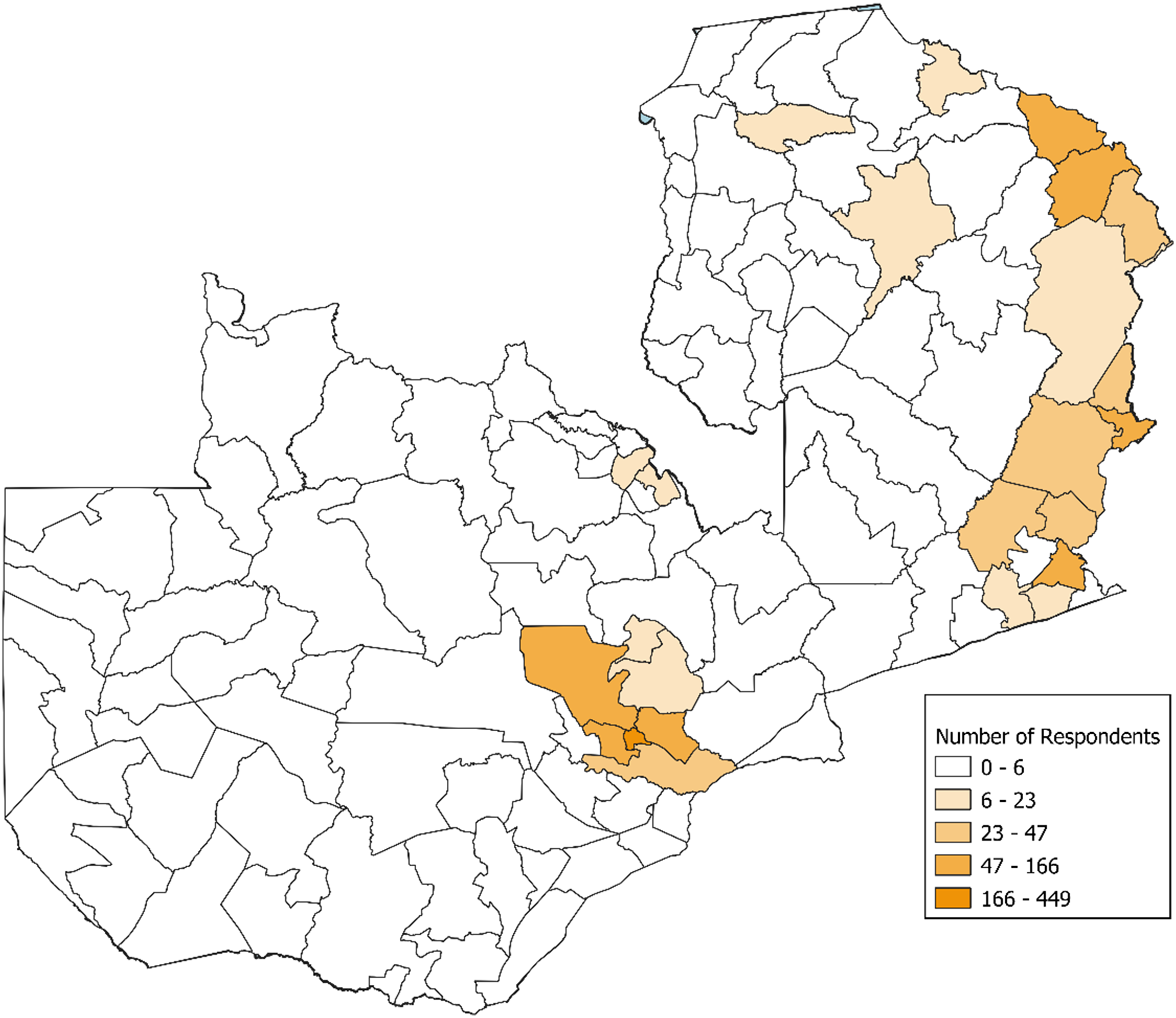
Survey Experiment
The second wave of the survey included a vignette survey experiment that was designed to explore the drivers of campaign-related participation. The vignette experiment asks respondents to imagine a hypothetical situation in which their local leader asks them either to attend a community meeting or to campaign for a parliamentary candidate.
19
By fielding the survey experiment just prior to Zambia’s general election, we hope to add to the realism of the scenario we put to respondents. The experiment starts with the following prompt: We realize that campaigns are in session, but for right now, I’d like you to consider a hypothetical situation.
The interviewer next reads a short vignette. The vignette contains a set of experimental treatments that are designed to test hypotheses regarding how and why identity, incentives, and the nature of authority affect participation.
20
All experimental attributes were randomized with equal probability (see Table 2 for a list of these attributes). In the vignette below, we denote experimental attributes with square brackets and place items that were assigned based on the randomly chosen attributes in curly braces. I’d like you to imagine that [your neighbor/your local chief or neighborhood leader /your local councilor] is urging you to [help campaign for a candidate for Member of Parliament/attend a community meeting, expressing local concerns to the MP candidate]. The candidate is a [Co-ethnic (respondent’s ethnicity piped-in)/Not co-ethnic (randomly chosen, non-coethnic with respondent piped-in)] [man/woman] running for parliament as the [co-party (respondent’s preferred party piped-in)/randomly chosen other party, non-co-party] candidate. {He/she} was [born here/born in a different region] {and/but} [currently lives in a village or neighborhood nearby/currently lives in a village/neighborhood on the other side of the district]. Your [local religious leader/local chief or neighborhood leader/local councilor] is keen on you {helping campaign for a parliamentary candidate/ attending a community meeting, expressing local concerns to the MP candidate}, [but is not keeping track of whether or not you do/and will be keeping track of whether or not you do.] [No one else in the community is/Many others in the community are] keeping track of whether or not you {campaign for the candidate/attend the meeting}. [Many/None] of your friends have already agreed to {join in the campaign/attend the meeting} and [you will be compensated for your efforts/you will not be compensated for your efforts]. Summary of Attributes in the Survey Experiment.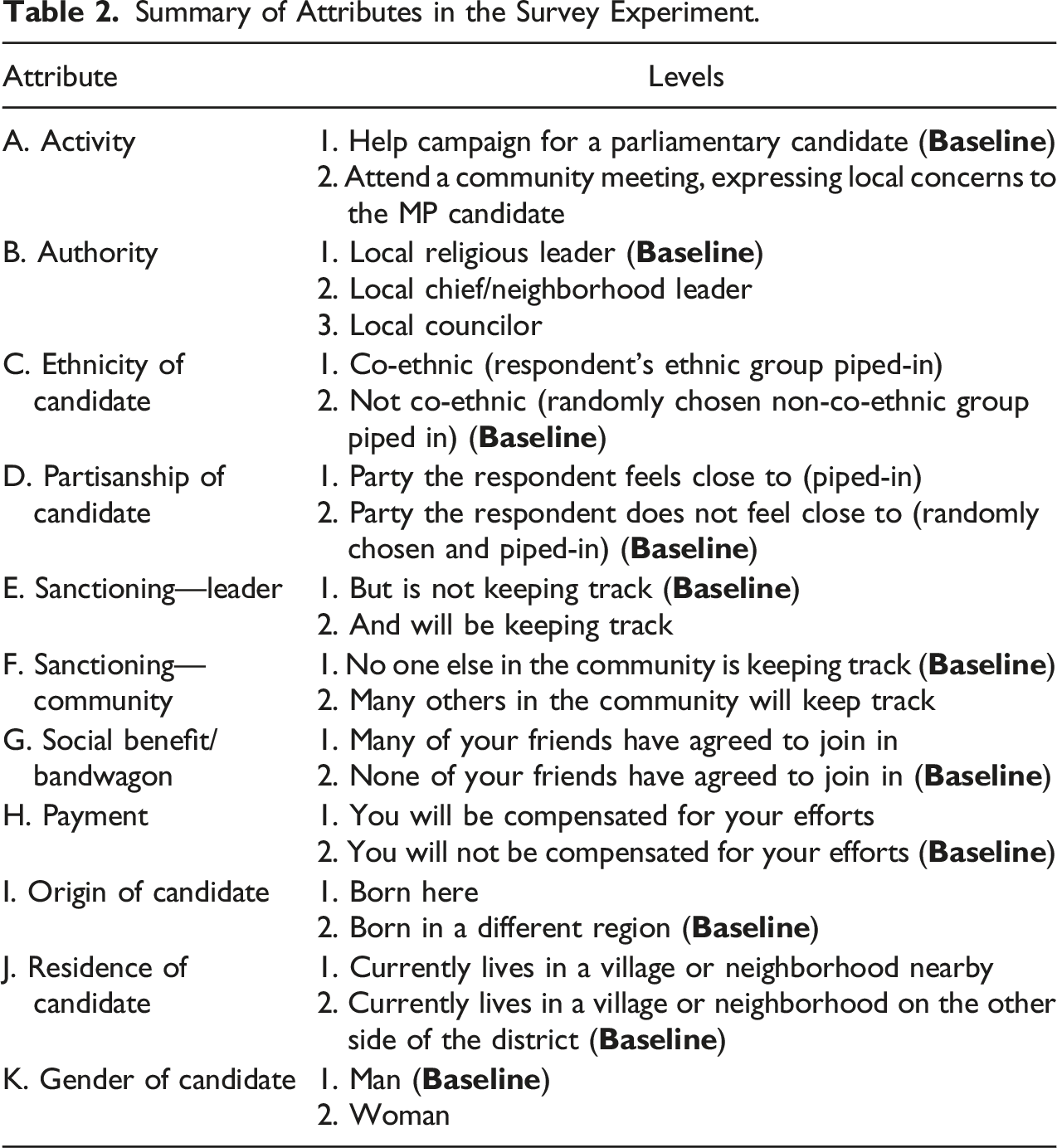
The randomized attributes map on to the potential drivers of non-electoral participation that we consider in this paper. For each attribute, we randomly assign one option. To test the impact of identity, we rely on assigned experimental attributes for ethnicity (co-/non-co-ethnic), localism (co-/non-co-resident and co-/non-co-origin), and partisanship (co-partisan/non-co-partisan). We also assigned the gender of the candidate, which we later recode to capture whether the candidate is a co-/non-co-gender. To consider both monetary and social incentives as steering participation in non-electoral political participation, we assign whether the respondent will be paid to participate and whether she can expect many of her friends to join. We note that these incentives are associated with different time horizons: material incentives are short-term, immediate rewards while social enjoyment is also associated with maintaining social networks and enjoying longer term social rewards. However, these incentives reflect real-world rewards. Finally, we randomized whether respondents were asked to 1) attend a community meeting to raise concerns to the MP and 2) campaign for a political candidate.
Follow-Up Questions to the Experiment (Dependent Variables).
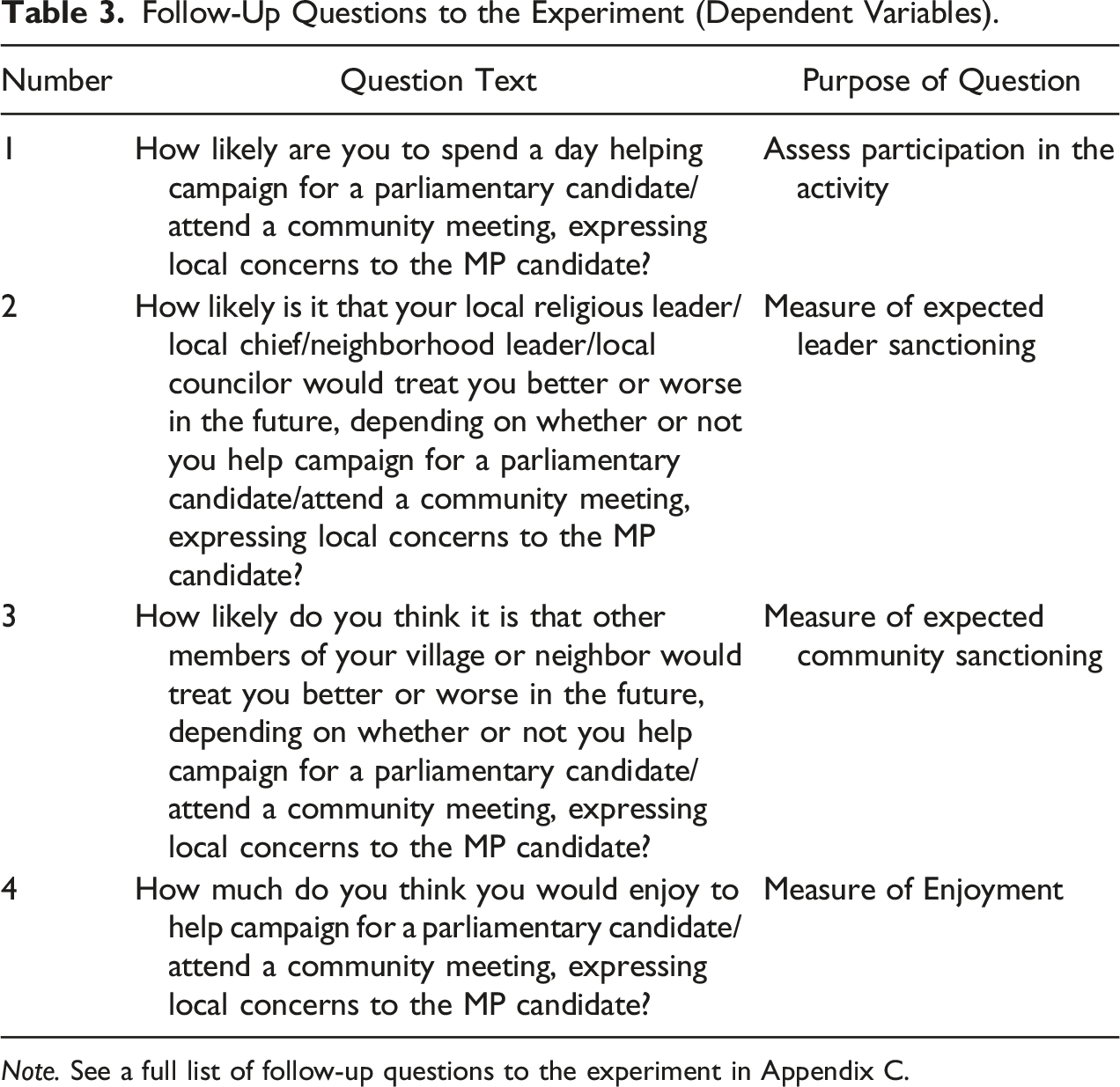
Note. See a full list of follow-up questions to the experiment in Appendix C.
Analysis and Results
Statistical Model
We first rescale our dependent variables, initially measured on a 4-point Likert scale, to values between 0 and 1. We then estimate the average marginal component effects (AMCEs) for each experimental attribute using Ordinary Least Squares (OLS) regression (Hainmueller et al., 2014), and we also run robustness checks using ordered logistic regression with all dependent variables on the initial 4-point scale (we report the results in Table D3 in the appendix).
We explore the AMCEs of each attribute value on the likelihood that respondents will participate in a political meeting or campaign for a political candidate. In the model specification, yik represents our dependent variable (for a list of the outcome questions, see Table 2). AMCEs report the change in stated likelihood to participate while comparing the attribute to its baseline. As we have previously rescaled all our dependent variables from a 4-point Likert scale to a 0 to 1 scale, we can interpret the coefficients as the expected change in the likelihood to participate when a given characteristic is compared to its baseline, as presented in Table 1.
Specifically, we test whether shared identity—including co-ethnicity, co-origin and co-residency, co-gender, and co-partisanship—of candidate and respondent and/or material and social incentives are stronger predictors of a respondent’s willingness to participate. The model is specified as follows:
M1 Average Marginal Component Effects Model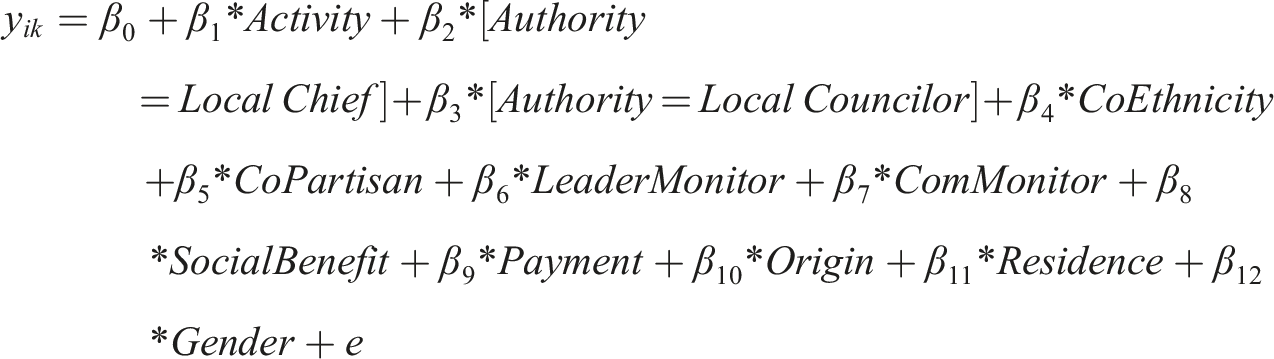
Analysis of the Drivers of Participation
In the analysis, we weigh different explanations for why citizens participate against each other. We explore how sharing the social identity of the candidate and whether the respondent can expect social and monetary benefits or social sanctions by the community and the leader affects her willingness to participate in a campaign or community meeting. We show our findings in Figure 5 and present the regression tables in Table D1 in the appendix. Average Marginal Effects Model with participation as DV. Note: The dependent variable shows the expected likelihood to participate and was rescaled on a 0 to 1 scale. We included all experimental attributes in the model (see regression table in the Appendix). The figure is drawn from the regression results presented in Table 2. Bars represent 95% confidence intervals.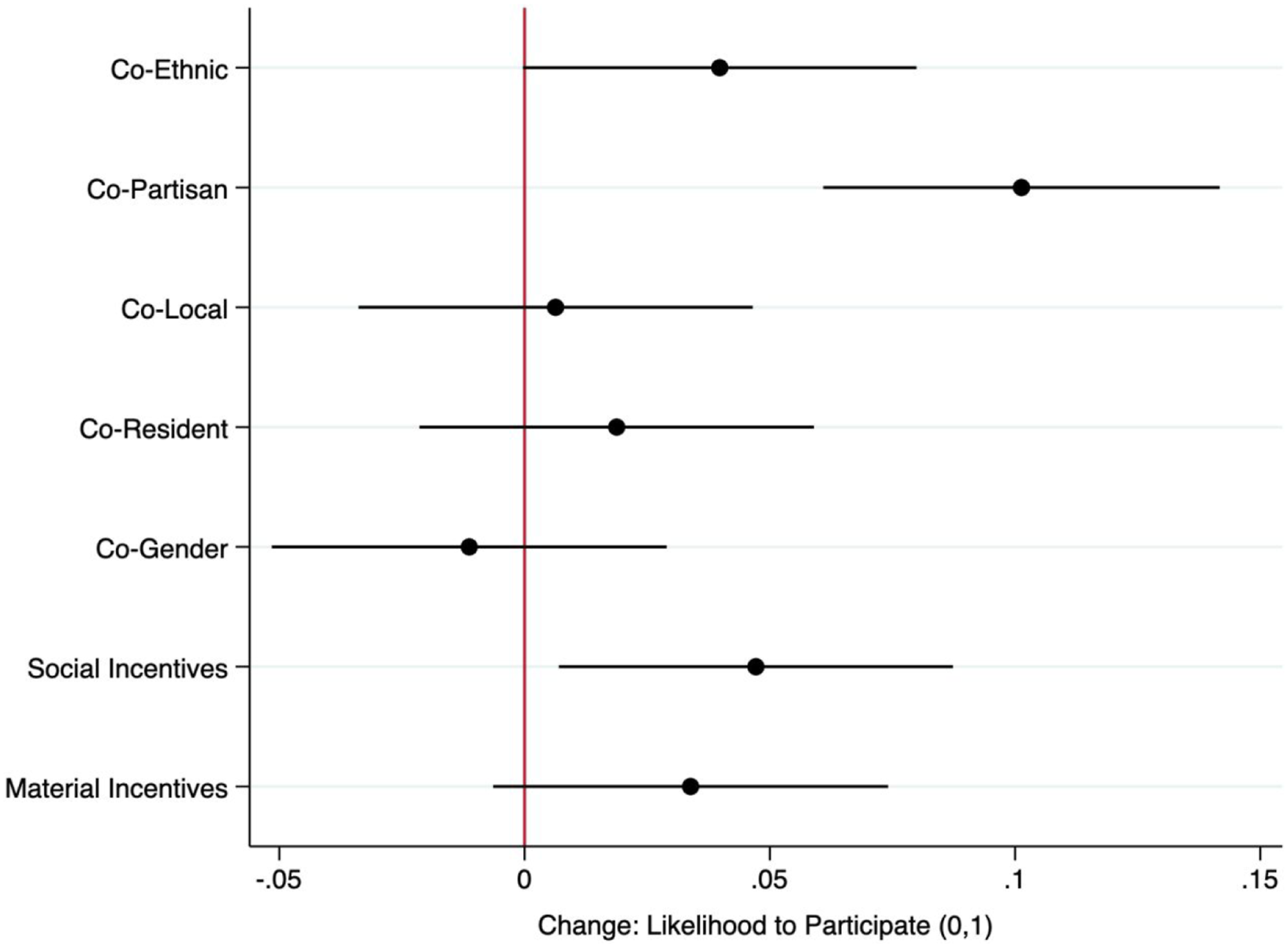
Our analysis of the AMCEs shows that both co-ethnicity and co-partisanship of the candidate and respondent appear to increase the likelihood of the respondent’s willingness to participate, but being of the same gender, co-resident, or originally from the same village does not result in a statistically significant increase in the willingness to participate in the activity. The effect is strongest for co-partisanship, which increases participation by .1 (SE = .02, p < .001) on the 0 to 1 scale. Ethnicity has a much smaller impact on the reported willingness to participate and is significant on the 90 percent level only (.04, SE = .02, p < .10).
Moreover, we find some evidence that respondents are more likely to participate when they can expect their friends to do the same. Citizens’ stated willingness to participate increases by 5 percentage points when they expect their friends to join them (SE = .02, p < .05). However, whether the respondents will get compensated for the activity does not seem to significantly increase their willingness to join.
Robustness Checks
Before concluding that partisanship was the major factor driving willingness to participate in campaign activities, at least among our respondents, we consider several alternative explanations. First, we test whether co-partisanship is moderated by the co-ethnicity of the candidate. We do not find evidence of an interaction effect between co-partisanship and co-ethnicity in our model, and we report the findings in Table E8 in the appendix. Second, we test whether our treatments similarly increase the willingness to participate among those respondents who are less politically engaged. Second, we explore whether results reflect the power of the incumbent party, particularly in the highly repressive context of Zambia’s 2021 elections. Third, we test how far these findings are driven by contextual effects focusing on rural–urban divides and whether the respondents live in party strongholds. Finally, we also consider the extent to which our findings may reflect the opinions of those for whom this was not a realistic scenario, exploring the plausibility of the experiment. 21
The survey experiment was read to all respondents who participated in the second wave of the survey, independent of whether the respondents reported that they would vote in the upcoming election. Thus, as a robustness check, we drop respondents who reported that they vote independent or they do not vote, or who did not answer a survey question that asked: “If the parliamentary elections were held tomorrow, which party’s candidate would you vote for?” Our findings are robust. Indeed, co-partisanship (.089, SE = .025) becomes a highly significant (p = .000) predictor of participation in the model, while both co-ethnicity and whether the respondent can expect her friends to join are statistically insignificant (see Table D4 in the appendix). Moreover, we test whether our findings hold when we restrict our analysis to those respondents who report being less engaged in political activities. We find that our results are robust to excluding more engaged voters from the analysis (n = 887). The effect of co-partisanship stays highly significant in the model (.087, SE = .027, p = .001), while co-ethnicity stays significant at the 90 percent level. Social benefits increase in significance, (.08, SE = .027, p = .003), and material benefits become significant at the 90 percent level in our model (see Table D5 in the appendix).
Next, we examine potential differences between incumbent MP candidates and those who are from one of the oppositional parties. We use responses to the survey question: “If the parliamentary elections were held tomorrow, which party’s candidate would you vote for?” to code the party the respondent feels close to as 1 for the incumbent party (PF) and 0 for any other political party. Respondents who reported that they do not vote or do not feel close to any political party were removed from the analysis. In the experiment, the respondent was provided with information on whether the MP candidate is from a political party that the respondent feels close to or not. We then run our model including an interaction between our binary measure of incumbent support and the experimental attribute on co-partisanship to test for the heterogeneous treatment effect.
We find that whether the respondent supports the incumbent party moderates the effect of co-partisanship on the willingness to participate. The interaction coefficient for incumbent party support when the MP candidate is a co-partisan is significant at the 90 percent level. From this finding, it appears that the effect of sharing the party affiliation with the MP candidate is stronger when the MP candidate is from the incumbent party (see Table E5 in the appendix).
To investigate whether our results are driven by two geographic features—party strongholds and urban/rural location—that are common political cleavages in African politics, we rerun the main analysis using two sets of sub-samples. First, we analyze our sample by urban, peri-urban, and rural communities (see Table E7 in the appendix). Co-partisanship significantly increases respondents’ willingness to participate in all three samples. In urban communities, the willingness increases by .12 on a 0 to 1 scale (p < .001, SE = .036, n = 481), while in our rural sample, it increases their willingness to respond by .09 (p < .01, SE = .033, n = 605). For the peri-urban sample, co-partisanship is significant only at the 90 percent level. However, our n in this analysis drops to 433 respondents, and we are likely underpowered to detect a significant difference. By contrast, co-ethnicity stays significant only in our rural sample (.087, p < .01, SE = .033), and whether respondents can expect their friends to join increases participation only in the peri-urban sample (.108, p < .01, SE = .039).
Moreover, we investigate the likelihood that our results are driven by respondents who live in party strongholds. Our sample constituencies do not fall into the core support areas as identified by Beardsworth (2020), but several of them still experienced a dominance of the two major parties. Thus, we re-ran the analysis on three sub-samples: 1) constituencies in which a PF MP won in both 2016 and 2021; 2) constituencies in which a UPND MP won in both 2016 and 2021; and 3) constituencies in which a turnover occurred (either to another party or an independent candidate).22 We report the findings in Table D6 in the appendix. While our n drops for all three samples making this analysis slightly underpowered, we interpret the results as suggestive evidence in line with our expectations. The effect of co-partisanship is significant on the 95% level for the PF strongholds (n = 413), and it drops in significance for the UPND strongholds (n = 237) and swing constituencies (n = 595). However, both co-partisanship in UPND strongholds and swing constituencies only barely miss the 95% threshold (p = .056). This gives us some confidence that our results are not driven by preferences of voters in the PF strongholds.
Finally, we also address concerns that being asked to campaign for the given MP candidate or join a community meeting may not present a realistic scenario. We find evidence that the three leaders have asked the respondents to participate in community meetings or campaign for a political candidate in the past. Twenty-two percent report that they have been asked to campaign for a political candidate by one of these leaders, and thirty-seven percent have been asked to attend a community meeting (see Figure E1 in the appendix). We also show the frequencies for the answers to the follow-up question: “Do you think your {Authority} would support an MP candidate such as the one described here?” (see Table E1 in the appendix). We rerun the analysis for our main model shown in Figure 4 and in Table E4 in the appendix with only those respondents who responded in the affirmative.
Figure 6 shows findings after excluding those respondents who reported that they do not think that their local leader would support the MP candidate that was given in the experiment. We find the effect of co-partisanship to be robust (.09, SE = .024, p = .000). The effects of both co-ethnicity and whether the respondents can expect their friends to join become insignificant in the model. Average Marginal Effects Model with only respondents who reported this to be a realistic scenario and participation as DV. Note: We dropped those respondents who reported that they do not think that their local leader would support the MP candidate that was shown in the experiment. We also drop respondents who reported that they do not know or refused to answer whether their leader would support the candidate.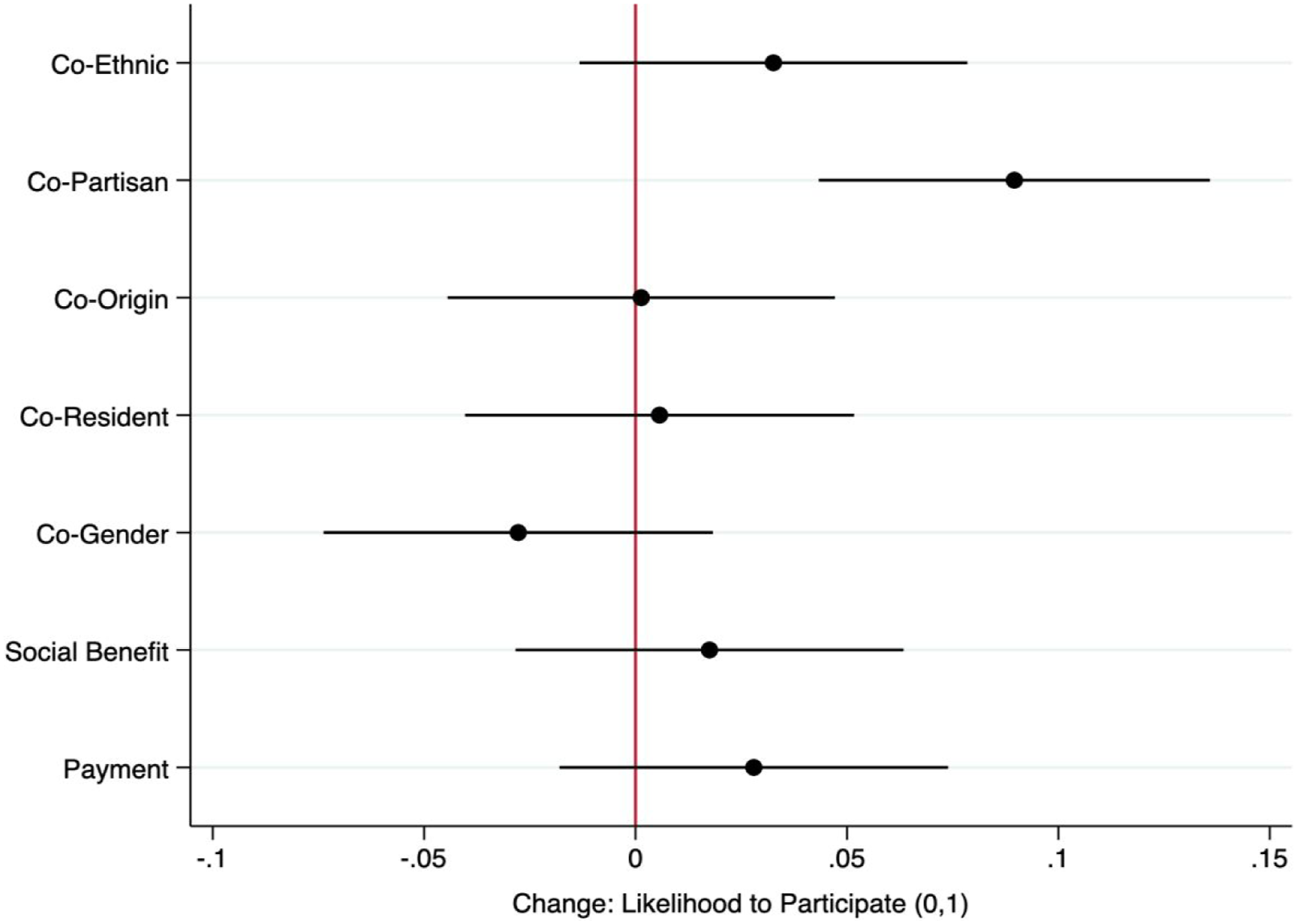
Thus, we find robust evidence that co-partisanship is the strongest predictor of participation in our models. This finding is surprising considering the large literature that has highlighted the importance of shared ethnicity between candidates and respondents when it comes to voting (e.g., Carlson, 2015; Ferree, 2011), while partly neglecting the role of co-partisanship in Africa (Krönke et al., 2022; Rakner & Van de Walle, 2009). Thus, in the next step, we aim to investigate, more specifically, what explains the increased willingness to participate when the respondents feel close to the same political party, share the same ethnicity, or when the respondents can expect many of their friends to join.
Mechanisms
We explore three potential mechanisms that we believe should hold independent of which types of shared identity or incentives are driving participation. We consider whether community sanctioning, leader sanctioning, and the respondents’ beliefs that they would enjoy the activity explain our results. To do so, we include these potential mechanisms as dependent variables in our average marginal effects model.
In Figure 7, we report the effect of co-partisanship, co-ethnicity, and whether the respondents can expect their friends to join on their willingness to participate and their expectations of community sanctioning, leader sanctioning, and enjoyment. We report the effects of all potential drivers of participation (i.e., co-identity measures and the social and material benefits) in Table D1 in the appendix. The effects of partisanship, ethnicity, and social benefits on different DVs. Note: The dependent variable shows the expected likelihood to participate, being sanctioned by the leader and the community, and enjoy the activity on the y-axis. DVs were rescaled on a 0 to 1 scale. We display the effect of partisanship, ethnicity, and social benefit on the different DVs. The figure is drawn from the regression results presented in Table D1 in the appendix. Bars represent 95% confidence intervals.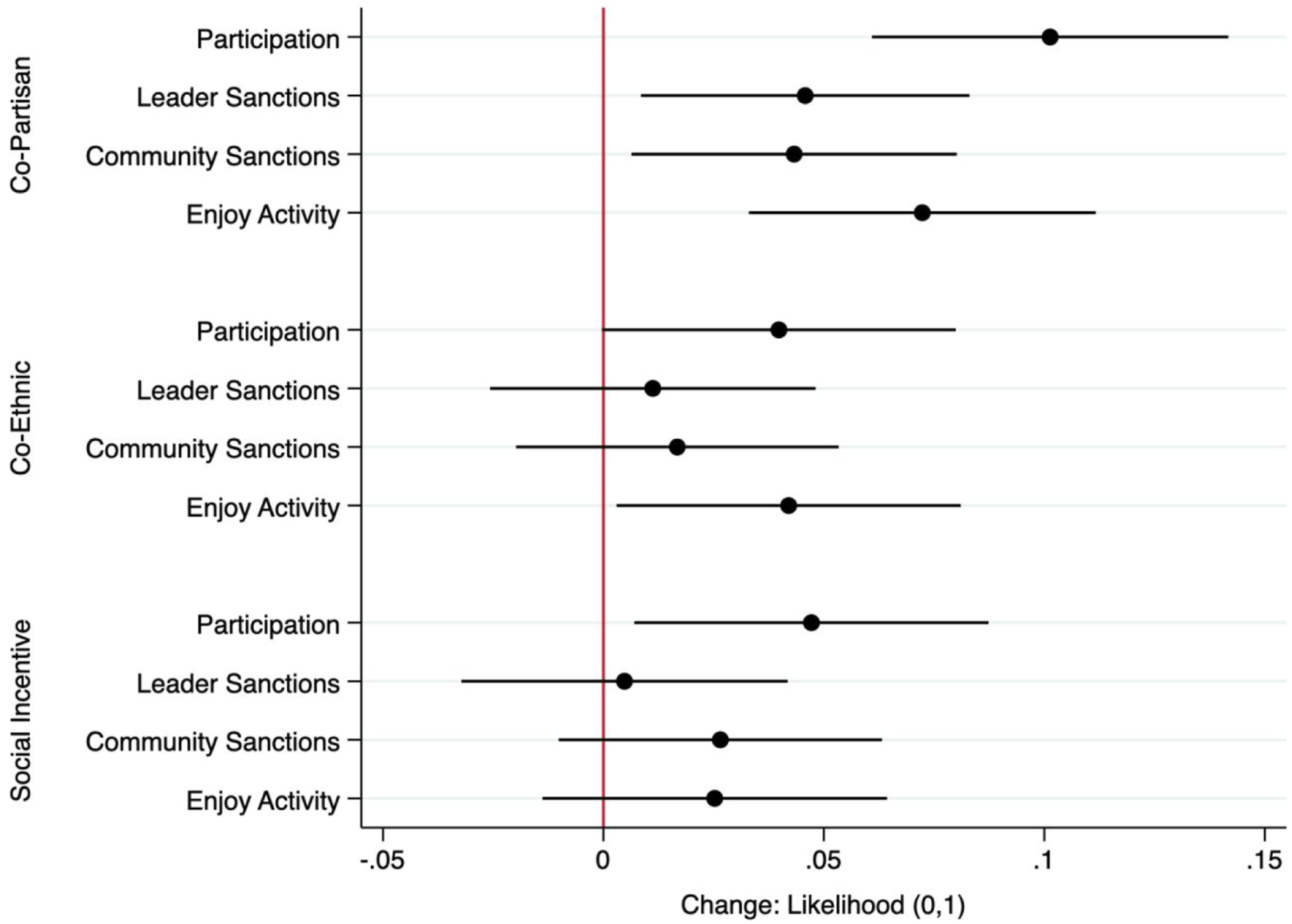
We find the strongest evidence that expectations over sanctioning and social benefits underpin the relationship between co-partisanship and willingness to participate. Respondents are roughly 5 percentage points more likely to believe that a leader will sanction non-compliance when the MP candidate is a co-partisan. They are also 4 percentage points more likely to believe that the community would sanction non-compliance with a co-partisan candidate. Co-partisanship with the candidate also has a highly significant (p < .001) impact on whether the respondent believes that he or she would enjoy the activity, increasing this expectation by about 7 percentage points.
Regarding co-ethnicity, we find weaker evidence that sanctioning or social benefits underlie the relationship between the co-ethnicity of the candidate and the respondent and the respondent´s willingness to participate. Co-ethnicity is a less strong but still significant predictor of the willingness to participate in our models. However, it is not associated with an expectation that the leader or community would sanction non-participation. Moreover, individuals presented with a co-ethnic candidate are about 4 percentage points more likely to believe that they will enjoy the activity (p < .05), yet the effect is less substantively and statistically significant than that associated with co-partisanship.
We find even less evidence that sanctions or social benefits explain the relationship between having one’s friends participate in the activity and expected sanctioning or social benefits. This is somewhat surprising as respondents who got our social incentives treatment (i.e., that they expect many of their friends to join) believed they would enjoy the activity to a higher degree than their counterparts in the control condition. It is perhaps less surprising that they do not believe sanctioning by the community or leader is associated with their friends’ participation.
Discussion and Conclusion
Evidence from our survey experiment, conducted during the campaigns leading up to Zambia’s 2021 elections, provides important insights into electoral participation. The study sheds light on the drivers of previously overlooked forms of political participation in elections—attending community meetings and campaigning on behalf of a candidate, thus going beyond relatively well-studied voting and participation in election rallies. Even more importantly, the results highlight the role of partisanship, which has been overshadowed by studies of ethnicity and regionalism in studies of African elections. We find that co-partisanship is a stronger predictor of expressed willingness to participate in community meetings or to campaign on behalf of a candidate than ethnicity, locality, gender, or material and social incentives, and that the influence of partisanship is likely driven by both fear of sanctions and social benefits.
Although we rely on a geographically limited sample, the variation within our data allows us to provide new insights on political mobilization in Africa that go beyond the immediate context under investigation. Specifically, our results add to a growing literature which emphasizes that parties across the continent have a greater mobilizational capacity than previously assumed (Harding & Michelitch, 2021; Krönke et al., 2022). They also contribute to the literature describing subnational variation in local party presence (Beardsworth, 2020; Krönke et al., 2022) and vote choice (Boone et al., 2022), as well as how parties can build local structures (e.g., Paget, 2022). Partisanship not only plays an important role in mobilizing party members but also appears important for those who are party-leaning. Moreover, it does so by providing both material rewards and social enjoyment. This suggests that the parties’ role extends beyond an understanding of “machine politics,” as parties appear to form and represent communities of politically like-minded citizens. Further, partisanship is independent of regionalism and ethnicity, even in Zambia, where ethnicity, regionalism, and partisanship are intertwined, and each is a salient political cleavage.
One may nevertheless question the extent to which partisanship is taking hold in the African context and where it might be most salient. Zambia is not an outlier in terms of the salience of these social identities, so the results have the potential to be widely applicable on the continent. Yet, partisanship may also be more salient in incumbent strongholds than in opposition or swing districts. Particularly in Zambia, incumbents enjoy increasing access to mineral rents, which may foster the incumbent parties’ ability to maintain support. Our finding that incumbent supporters are stronger than those for the opposition supporters raises important questions: Does partisanship play a primary role in resource distribution and structuring the incumbent-opposition divide, or does it also signal ideological perspectives and policy positions? We expect that partisanship plays an increasingly important role elsewhere on the continent as well but suggest the need for research that further interrogates subnational variation in the role partisanship plays, given the nature of parties and districts.
Partisanship may also have greater influence at some points in time than in others. In a cross-national study of 86 countries, Michelitch and Utych (2018) find that partisanship is more salient as elections near, particularly in countries where parties are weaker or socioeconomic conditions worse. Partisanship thus may not be as influential at other points in the electoral cycle. The same, however, holds true for ethnicity (Eifart, Miguel & Posner, 2010). Consequently, we have strong evidence that partisan identity is a stronger driver of campaign behavior than ethnicity as elections near, at least in our sample in Zambia. Questions remain, however, regarding the relative influence of ethnicity and partisanship as the time to election increases.
Our findings also call for further studies employing behavioral outcomes. One may question the extent to which findings on individuals’ stated willingness to comply, employed here, relate to actual participation. Understanding stated willingness to comply with authorities is important, as people often decide to run in elections or support candidates based on expectations of individuals’ behavior. Moreover, stated willingness has been found to be highly correlated with actions (Hainmueller et al., 2015). That said, however, we encourage further behavioral studies on the drivers of participation.
Further research may also fruitfully explore other activities. For instance, the visibility of different activities may shape which factors influence participation. Both campaigning for a candidate and attending a community meeting are highly visible activities, and they are equally visible to the co-ethnics, co-locals, and co-partisans. Thus, we do not think the visibility affects our study’s conclusions. Yet, other activities, such as attending a party meeting, joining an ethnic gathering, or contributing to a local activist, may be more visible to some communities than others. So, too, some incentives may have longer time horizons than others. For instance, in this study we focus on immediate and selective material incentives and do not fully examine the impact of longer term selective incentives or club goods. Future work may profitably address this limitation, exploring the implications of various incentives on diverse activities.
Finally, we also encourage studies that interrogate these dynamics beyond our sample in Zambia. One can question the extent to which results from Zambia’s 2021 election—and indeed, our geographically limited sample of citizens during this electoral period—generalize to other contexts. As described above, Zambia’s 2021 election campaigns occurred in a highly repressive, polarized context. One might argue that partisanship played a particularly important role in these circumstances, although we note that it is still significant that polarization was largely viewed around partisan lines rather than ethnic or regional ones. Alternatively, partisanship may be starting to eclipse ethnicity and regionalism, as party systems become consolidated and more nationally present.
Indeed, we do not interpret our results as suggesting that the outsized role of ethnicity and regionalism uncovered in earlier studies was wrong. Rather, we view this as evidence that the nature of politics shifts over time, in response to changes in technology, urbanization, and other social and political developments, and it does so in ways that raise the importance of some factors while diminishing others. Scholars and policymakers cannot afford to have a stagnant view of politics.
Supplemental Material
Supplemental Material - Drivers of Political Participation: The Role of Partisanship, Identity, and Incentives in Mobilizing Zambian Citizens
Supplemental Material for Drivers of Political Participation: The Role of Partisanship, Identity, and Incentives in Mobilizing Zambian Citizens by Prisca Jöst, Matthias Krönke, Sarah J. Lockwood, and Ellen Lust in Comparative Political Studies.
Footnotes
Acknowledgments
The authors would like to thank Rachel Riedl, the participants of the American Political Science Annual Conference 2022 and the African Studies Association Annual Conference 2022, and the three anonymous reviewers for their helpful comments and suggestions. We thank Ubuntu Research and Rural Development Company Ltd. for implementing the survey; Erica Ann Metheney, and Kirk Ammerman for data collection support; and Rose Shaber-Twedt, Dalila Sabanic, and Julie Nadler Visser for administrative support.
Declaration of Conflicting Interests
The author declared no potential conflicts of interest with respect to the research, authorship, and/or publication of this article.
Funding
The author disclosed receipt of the following financial support for the research, authorship, and/or publication of this article: This study was generously supported by the Swedish Research Council (Recruitment Grant, E0003801, PI: Pam Fredman), the Institute for Democracy, Citizenship, and Public Policy in Africa at the University of Cape Town (PI: Jeremy Seekings), and the Cluster of Excellence “The Politics of Inequality” at the University of Konstanz (DFG Grant, EXC-2035/1 – 390681379).
Data Availability Statement
The authors worked with a vignette experiment and original survey data from the Zambian Election Panel Study (ZEPS) (Lust et al., 2021) and official Zambian election results from the Electoral Commission in Zambia. The replication data, codebooks, and Stata do-files are available at the Harvard dataverse: Jöst, Prisca; Krönke, Matthias; J. Lockwood, Sarah; Lust, Ellen, 2023, “Replication Data for: Drivers of Political Participation: The Role of Partisanship, Identity and Incentives in Mobilizing Zambian Citizens,”  , Harvard Dataverse, V1, UNF:6:ocSC4M+W8nJdOXWAYHhv8A== [fileUNF].
Supplemental Material
Supplemental material for this article is available online.
Notes
Author Biographies
References
Supplementary Material
Please find the following supplemental material available below.
For Open Access articles published under a Creative Commons License, all supplemental material carries the same license as the article it is associated with.
For non-Open Access articles published, all supplemental material carries a non-exclusive license, and permission requests for re-use of supplemental material or any part of supplemental material shall be sent directly to the copyright owner as specified in the copyright notice associated with the article.
