



Abstract
This article examines whether citizens’ political preferences toward radical right parties (RRPs) change after right-wing extremist violent attacks. It investigates this question in two ways. First, it presents a time-series study on public support for the RRP Alternative for Germany (AfD) between 2013 and 2019. Second, the article employs a quasi-experimental research design to examine the effect of a right-wing terrorist attack on citizens’ attitudes toward immigrants. Both studies indicate that public support for the AfD and its programmatic core positions increased after right-wing extremist attacks. Subsequent analyses suggest that former voters of the mainstream right, in particular, drive this effect. These findings shed light on the determinants of radical right party support, contributing to the long-standing debate on the consequences of political violence.
How does right-wing extremist (RWE) violence affect the attitudes of voters toward radical right parties (RRPs)? In the face of mounting fatal attacks committed by members of far-right movements around the globe, this question has become increasingly crucial to examine. Tragic examples of such violence include the terrorist attacks in Oslo and Utøya (2011), Florence (2011), Charleston (2015), Munich (2016), Charlottesville (2017), Pittsburgh (2018), Macerata (2019), Christchurch (2019), El Paso (2019), Halle (2019), Hanau (2020), Buffalo (2022), Paris (2022), or Bratislava (2022). Furthermore, between 2014 and 2019, EUROPOL documented the arrests of 142 right-wing terrorists in the European Union—more than triple the arrests from 2008 to 2013. 1 According to numbers published in the 2020 Global Terrorism Index, the number of far-right attacks in North America, Western Europe, and Oceania increased by 250% since 2014 (Institute for Economics & Peace, 2020). However, the consequences of RWE violence for RRPs’ electoral support are unclear.
One perspective holds that such attacks might increase sympathy for immigrants and reduce RRP support (Allern & Karlsen, 2014; Jakobsson & Blom, 2014). Especially, populist RRPs have gained electoral ground by presenting themselves as “true” democrats. Their policy programs are more moderate than those of less successful extreme right parties; they also abstain from openly advocating the use of violence to achieve their political goals (e.g., Art, 2011; Carter, 2005; Minkenberg, 2000; Mudde, 2007, 2019; van der Brug et al., 2005). Therefore, if voters associate these RRPs with RWEs, it is expected that their support will decline.
However, another concerning view posits that, as election trends suggest, RRPs have not suffered electorally despite increasing levels of RWE violence. As put by Ohlemacher (1994, p. 234), violent right-wing attacks can act as the starting point of a “spiral of speaking out” and thus increase anti-immigrant sentiment in the population. In this vein, right-wing violence can increase the salience of RRPs’ core issues, such as immigration and cultural protectionism, in the public debate. In addition, right-wing attacks frequently trigger increasing elite polarization over the causes and implications of these attacks. In particular, RRPs use immigration as an “omnibus issue” (Williams, 2006, pp. 54–63) and frame it as the alleged “root cause” of right-wing violence. Both these factors—issue salience and elite polarization—can mobilize voters prone to anti-immigrant views in favor of RRPs.
The relationship between RWE violence and RRP support is tested by focusing on the case of Germany between 2013 and 2019. Since the beginning of the 21st century, Germany has experienced an increasing number of high-profile deadly right-wing attacks (e.g., the National Socialist Underground murders, the murder of Walter Lübcke, or the attacks of Halle, Hanau, and Munich). Moreover, the increased influx of migrants since 2015 has been associated with numerous stabbings, shootings, and arson attacks against refugees, their accommodations, religious buildings, and pro-migrant and left-wing politicians. Several characteristics, such as the frequency of violent incidents, the historical legacy of right-wing extremism, or the increasing immigration numbers, make Germany, to some extent, an exceptional case to investigate the political consequences of RWE attacks (see Section A1 for a detailed discussion of the case selection). That said, looking at Germany has crucial implications for understanding right-wing violence beyond the case under study. If the hypothesis that RRP support rises after RWE attacks is not supported in Germany, we have reason to assume that right-wing violence will not have a mobilizing effect on RRPs in other countries.
The analysis proceeds in two parts. First, we utilize a data set that combines weekly survey estimates with information on incidents of RWE violence. By employing time-series models and Granger “causality” 2 tests, we analyze the impact of increasing right-wing violence on public support for the RRP Alternative for Germany (AfD) between 2013 and 2019. This approach accounts for possible dynamics that run counter to the expected relationship, that is, that public support for RRPs influences the number of violent RWE incidents. Second, a quasi-experimental setup is used. The German fieldwork period of the Eurobarometer survey 91.5 covered the arrest after a major right-wing terror attack: the politician Walter Lübcke’s assassination. Lübcke, a member of the center-right German Christian Democratic Union (CDU), was murdered for his affirmative stance on welcoming refugees to Germany. This setting allows for estimating the treatment effect of the right-wing terrorist’s apprehension comparing respondents’ attitudes toward immigration prior to and subsequent to the arrest. Moreover, the combination of the time-sensitive estimation technique of the first study with the quasi-experimental design of the second helps to isolate the effect of RWE violence on public opinion. Combining both will reduce the risk that biases due to omitted variables or problems related to potential endogeneity will interfere with interpreting the results.
The empirical results indicate that anti-immigrant sentiment and RRP support have increased after RWE attacks. Although the identified effects are moderate in magnitude, this article’s findings suggest that right-wing violence can be a driver rather than a consequence of the rise of the radical right. Hence, increasing RWE violence does not necessarily contradict public approval of RRPs. Supplementary analyses indicate that former voters of the mainstream right drive these shifts in public opinion. This finding contributes to the growing literature on right-wing violence, which has mostly treated it as a dependent variable (e.g., Ravndal, 2018). The study is also a significant contribution to existing scholarship on the consequences of terrorist and violent events (e.g., Abrahms, 2006, 2012; Gould & Klor, 2010; Helbling & Meierrieks, 2022; Thomas, 2014) by extending current discussions to the increasingly widespread form of right-wing extremism.
This article’s findings shed important light on the determinants of RRP support that matter for scholars and practitioners concerned with the rise of the far right and its implications for democracy. Much work examines the individual-level determinants of RRP success (Golder, 2016; Muis & Immerzeel, 2017). Our study instead focuses on less-considered contextual factors; accordingly, the analysis does not concentrate on which attitudes favor RRP support but on how radical right preferences are activated. This article thus contributes to an enhanced understanding of the emergence and consolidation of RRPs in liberal democracies.
Political Violence and Its Impact on Public Opinion: Previous Research
Political violence and its consequences have garnered substantial public and scholarly attention (e.g., Bueno de Mesquita & Dickson, 2007; Crenshaw, 2000; Kydd & Walter, 2006). Although violent attackers may state various objectives—such as recruitment, increasing funding, or government concessions—their actions are intended to affect a broader audience beyond the immediate victims (e.g., Krause, 2013; Webber et al., 2020). Relevant to this idea, research has demonstrated that voters adjust their political attitudes following high-profile violent incidents (e.g., Berrebi & Klor, 2008; Kibris, 2011; Robbins et al., 2013). Especially Islamist-inspired terrorist attacks have been found to correlate with increased willingness to trade off civil liberties for greater personal safety and security (Davis & Silver, 2004), right-wing party support (Getmansky & Zeitzoff, 2014; Kydd & Walter, 2002), the erosion of democratic core values (Peffley et al., 2015), and negative attitudes toward immigrants (Ferrín et al., 2020). 3 The underlying rationale is that extreme political violence perpetrated by out-group members elicits feelings of insecurity and fear among the public. These reactions, in turn, can benefit right-wing political elites.
Research has also indicated mixed findings that other forms of violence impact individuals’ political attitudes. For instance, Enos et al. (2019) posit that rioting can elicit public support for protesters’ goals. Conversely, Wasow (2020) presents evidence suggesting that political violence on the part of protesters has the opposite effect and Chenoweth and Stephan (2011) argue that violent protests are half as effective as nonviolent protests. 4 Likewise, Farrer and Klein (2022) claim that environmental sabotage negatively influences Green party candidate support; however, this effect is restricted to areas where the Greens have achieved electoral success. Nevertheless, the notion that violent attackers may elicit support among parts of the public is a frequently discussed topic in the literature (e.g., Bueno de Mesquita & Dickson, 2007; Kydd & Walter, 2006; Malthaner & Waldmann, 2014; Schmid, 2005; Waldmann, 2005). 5
In the case of RWE violence, perpetrators consider themselves part of societal in-groups—they claim to defend society against out-groups, such as asylum seekers, minorities, and their sympathizers. In addition, right-wing attackers are often linked to broader reactionary political movements. RWEs and RRPs thus share a set of ideological core beliefs centered around alleged societal grievances surrounding immigration and the supposed decline of traditional values (Matsunaga, 2022; Piazza, 2017; Ravndal, 2018). These beliefs aim to establish an exclusive and ethnically homogeneous society. Some recent articles find that right-wing terrorism can prompt the public to shift away from right-wing positions (Jakobsson & Blom, 2014; Pickard et al., 2023; Solheim, 2020; Wollebæk et al., 2012), but this evidence is limited to two countries and focuses on single terrorist events. Therefore, we lack systematic knowledge regarding the impact of right-wing violence and terrorism on citizens’ political preferences and attitudes (Godefroidt, 2023).
Right-Wing Violence and Radical Right Party Support
Our approach starts with the assumption that RWE violence can serve as a situational trigger that generates extensive debates about the background and causes of such attacks (Koopmans & Olzak, 2004; Thränhardt, 1995). Even citizens who sympathize with RRPs might draw a direct link between the violent incidents and RRPs’ previous actions and rhetoric. If these individuals perceive violence as countering their values and orientations, these acts should be considered illegitimate, resulting in declining support for RRPs (Jakobsson & Blom, 2014; Pickard et al., 2023).
Contrary to this expectation, RWE violence and subsequent public debates may also provide a platform for RRPs to convey political messages that aim to provoke “media scandals […] and then dominate the agenda, forcing all other important topics into the background” (Wodak, 2015, p. 24). On the one hand, RWE violence might lead to increased media exposure of RRPs, which correlates with subsequent electoral support for these parties (Boomgaarden & Vliegenthart, 2007; Hobolt & de Vries, 2015; Murphy & Devine, 2020; Vliegenthart et al., 2012). Relatedly, substantial correlations have been found between the salience of immigration in public debates and the polling of RRPs (Dennison, 2020; Dennison & Geddes, 2019). On the other hand, far-right attacks frequently trigger public debates where RRPs portray immigration as the alleged “root cause” of RWE violence and demand stricter immigration and integration policies. Indeed, what sets the radical right apart from other political parties is their use of immigration as an “omnibus issue” (Williams, 2006), that is, they use it to attribute most social problems in their societies to foreigners. In this sense, RRPs frequently frame RWE attacks in ways that starkly contrast with other parties’ framings. 6
Several instances illustrate this phenomenon of framing attacks within a narrative of alleged societal grievances originating in rising immigration. In 2011, the then-leader of France’s radical right Front National, Jean-Marie Le Pen, commented in the wake of the Oslo and Utøya attacks in Norway that the “most serious responsibility […] [lies with] the Norwegian government and society […] which has not taken into account the global danger of massive immigration which is the main reason in this deadly crazy man’s thinking.” 7 Björn Höcke, leader of the far-right faction within the AfD, stated in 2015 that “we import social dynamite” 8 after a RWE attempted to stab the Cologne mayoral candidate Henriette Reker over her immigration policies. In Italy, Matteo Salvini, leader of the far-right party Lega, similarly contextualized the 2019 Macerata shooting in which six African migrants were wounded: “It is clear and obvious that out-of-control immigration, an invasion like the one organized, promoted and financed in recent years, leads to social conflict.” 9 These statements can be interpreted as explicit appeals to voters who fear societal turmoil due to immigration. 10
Thus, even in light of violent anti-immigrant attacks, RRPs present immigration as the most significant threat to the social fabric and public security, ultimately leading to—in their view—social unrest. In this regard, scholars have noted that high levels of elite polarization can alter citizens’ political preferences, motivating them to support more extreme positions on contested issues. For example, Druckman et al. (2013, p. 57) states that “polarization intensifies the impact of party endorsements on opinions, decreases the impact of substantive information and, perhaps ironically, stimulates greater confidence in those—less substantively grounded—opinions” among voters. Elite-level polarization induced by RRPs has also been identified as a driver of increasing polarization at the voter level (Bischof & Wagner, 2019).
Perceived threats to the social fabric can activate right-wing stances and anti-immigrant attitudes among citizens in general (Lavine et al., 2002; Stenner, 2005). Past research has also shown that these threat perceptions can do more than galvanize hostility among citizens already holding authoritarian stances (Merolla & Zechmeister, 2009) but also among individuals with less pronounced authoritarian and anti-immigrant sentiments (Hetherington & Suhay, 2011; Sniderman et al., 2004). Consequently, public attention in the aftermath of RWE attacks potentially amplifies preexisting opposition to immigration among those susceptible to anti-immigrant rhetoric. 11
Empirical Strategy
Examining the relationship between right-wing violence and public opinion is challenging for three reasons. First, we must consider the possibility that the effects of RWE attacks evolve and do not immediately affect individuals’ political attitudes. For instance, the work of the police, the judiciary, and the media likely condition extremist violence’s impacts. Second, the following analysis must rule out the effect of confounding factors driving public opinion independent of violent events. Finally, a third obstacle is potential reverse causality. That is, rising levels of right-wing violence might not only impact RRP support but RRP support itself might also affect the number of right-wing attacks. Therefore, the causal relationship could run in either direction.
The following approach managed these challenges by combining a time-sensitive regression study with a quasi-experimental research design. Both studies focused on Germany, which saw a considerable increase in violent right-wing incidents since the so-called refugee “crisis” in 2015. These included arson attacks, bombings, mass shootings targeting refugees and their shelters, and pro-migrant and left-wing politicians. In addition, during the same period, Germany experienced the rise of a new RRP: the Alternative for Germany. Although the AfD, founded in 2013, was initially considered a Eurosceptic party (Arzheimer, 2015), it quickly promoted a radically anti-immigrant stance, visible even before the increased influx of immigrants in 2015 (Schmitt-Beck, 2014). Since 2015, the AfD’s electoral support among nativist voters has grown substantially, and the party has become a prototypical radical right party (e.g., Arzheimer & Berning, 2019). After failing to enter the German parliament in 2013 and gaining 4.7% of the national vote, the party gathered 12.6% of votes in 2017, making it the third-largest party in the German parliament. Section A1 provides more detailed information on the case selection and the implications of this study beyond Germany’s context.
AfD members regularly used discursive strategies, such as victim–perpetrator reversal or trivialization, after high-profile right-wing attacks and rising anti-immigrant violence. We discuss these strategies together with various examples in Section A2. The party frequently downplayed the seriousness of right-wing attacks by referring to left-wing political violence and Islamist terrorism as the supposedly more severe threats to the country. When public debates drew connections between the AfD and right-wing violence, its members often accused other parties of turning the AfD into scapegoats. In many cases, AfD politicians attempted to re-direct public attention to immigration as the alleged reason for RWE and anti-immigrant violence. For example, after the murder of the CDU politician Walter Lübcke by a RWE, an AfD member of the German Parliament released the following statement: “Had it not been for the illegal opening of the borders by Chancellor Angela Merkel […] with the uncontrolled mass influx of migrants that continues to this day, Walter Lübcke would still be alive.” 12 Similar statements by AfD politicians were noticeable in the media after other right-wing attacks (see Section A2). The party thus placed itself in fundamental opposition to all other relevant parties in the German party system. It sought to focus on the alleged “root cause” of these attacks: immigration.
Time-Series Study
The first study relies on weekly data on RRP support and corresponding counts of RWE attacks against refugees, politicians, and activists in Germany. The RTV data set (Ravndal, 2020) provides information on such attacks in Western Europe since 1990. It covers the “most severe types” (C-REX, 2022, p. 1) of RWE incidents using two inclusion criteria. First, the target of an attack must have been premised on a form of right-wing belief associated with far-right ideology, 13 and, second, the attack must have been severe enough to have a fatal, near fatal, or potentially fatal outcome. 14 Relevant for studying the rise of the radical right AfD, the data reports RWE incidents between 2013—when the party was founded—and 2019. 15 It distinguishes between four attack types: (1) premeditated attacks (N = 161), (2) spontaneous attacks (N = 201), (3) attack plots (N = 9), and (4) preparation for armed struggle (N = 11). The subsequent analyses focus on categories (1) and (2), 16 but Section A3.4.6 reports results for alternative incident counts. For instance, we considered only category (1) or all categories. These analyses offered substantially similar results. 17
The RTV coding is based on a systematic review of newspaper databases. We, therefore, focus on attacks reported in the media that are likely to be noticed by the public. Employing Boolean search strings and human expertise, the RTV lists 616 RWE incidents in Germany and 1882 in all of Western Europe since 1990. We consider this data superior to alternative data sources such as official crime statistics. On the one hand, official crime statistics do not differentiate between severe and less severe attacks, so the broader public might not have recognized many events. On the other hand, the German police are often suspected of undercounting the number of victims of right-wing extremism (e.g., Alizade et al., 2022; Decker, 2022). Nevertheless, Section A3.4.9 discusses alternative sources of RWE attacks, such as data provided by the federal government and by German civil-society organizations. Furthermore, it reports corresponding regression results, which confirm the conclusions of the following analysis.
Figure 1 displays the spatial distribution of the 362 RWE attacks, wherein 562 persons were wounded, and 17 were killed. The main target group was asylum seekers, foreigners, refugees, and immigrants (N = 282), followed by political opponents (N = 36). In addition, 69 cases were arson or firebomb attacks, and 12 involved firearms. Spatial distribution of RWE attacks, Germany, April 2013–December 2019. Notes: The grey dots reflect the total number of attacks per municipality.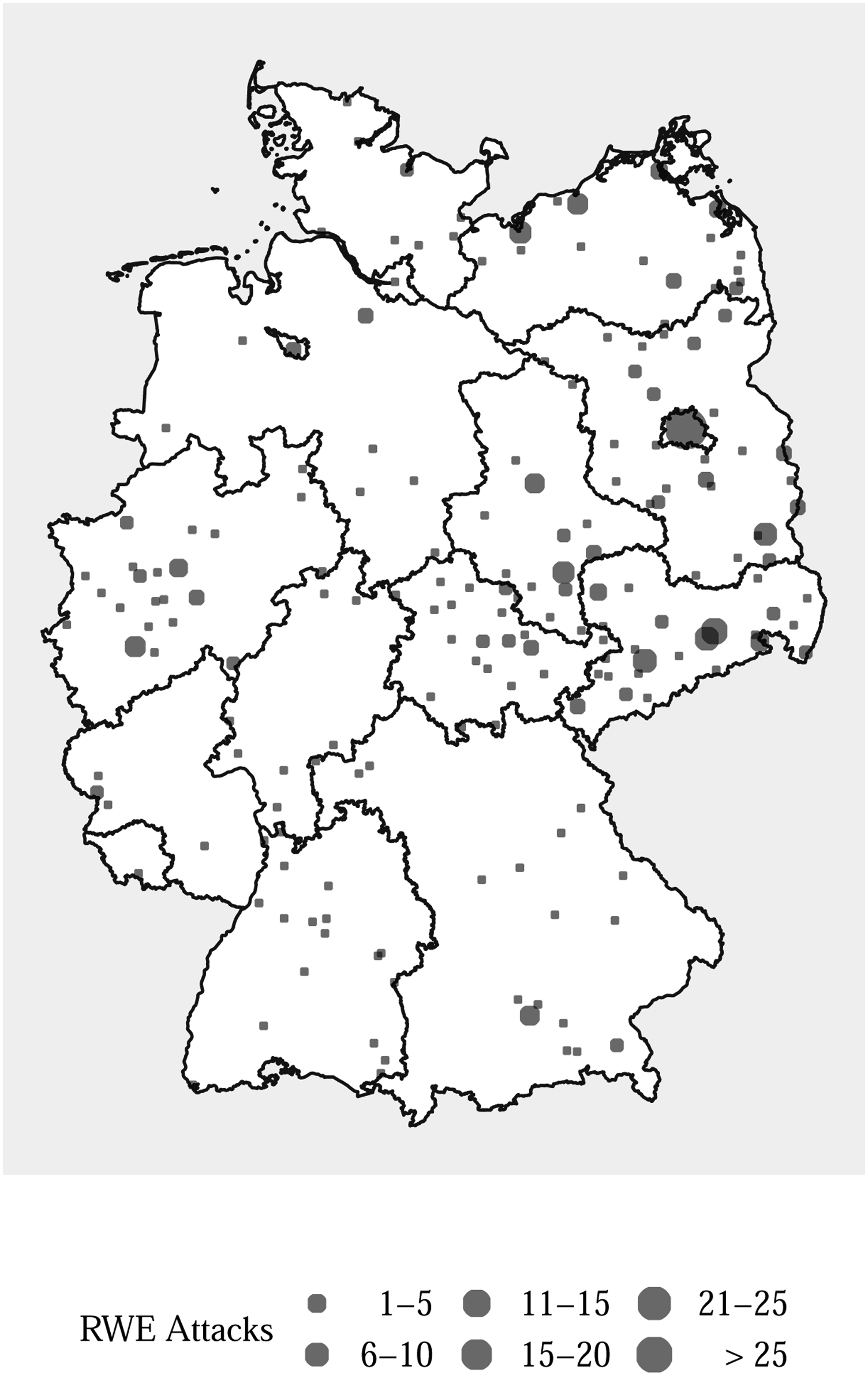
We combined these data with weekly survey data on RRP support provided by three German polling institutes: Forsa, Kantar/Emnid, and INSA. 18 These institutes surveyed a representative sample of German citizens on their vote intentions (average sample size 2000; see Figure A1). We calculated the weekly RRP support using the average of the published poll numbers for the AfD across the three polling institutes. 19
Figure 2 shows the evolution of both variables of interest. Until August 2015, the support for the AfD fluctuated around 5% with some moderate deviations. Subsequently, this figure increased steadily over the following 9 months and reached its first high of 14.3% in September 2016. RRP support declined until mid-2017 and increased again until September 2018 (16.9%). The right panel shows the number of right-wing incidents. Although these attacks were less frequent until mid-2015, this number rose and peaked at the beginning of 2016. In the following months, the number of violent incidents decreased but occurred more frequently than at the beginning of the observation period.
20
Given these dynamics, we need to ensure that the following results are not solely due to specific time windows at the end of 2015 and the beginning of 2016. Weekly dynamics of RRP support and RWE attacks, Germany, April 2013–December 2019.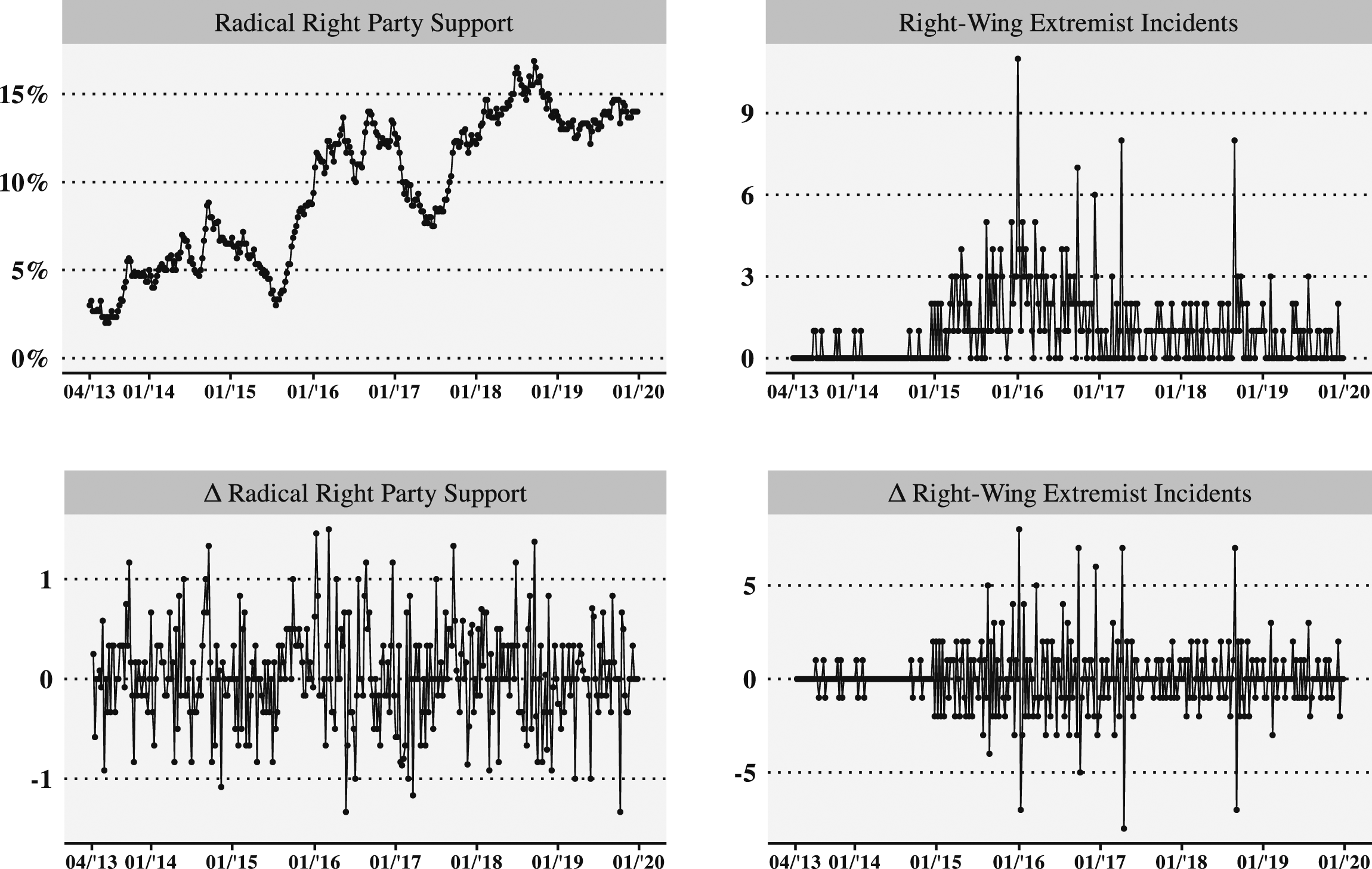
We inspected the time series for stationarity, following recent advances (Philips, 2018; Webb et al., 2019, 2020), to guide the choice of the appropriate regression model. First, we obtained inconclusive results from unit root and stationarity tests.
21
Thus, we continued with estimating generalized error correction models (GECM), as these models are applicable without prior knowledge of whether the time series are I (0), I (1), I (d), or cointegrated. Using a bounds-testing approach proposed by Webb et al. (2020), these models provided inconclusive evidence regarding a long-run relationship between the variables of interest. Accordingly, we ultimately estimated models in first differences of the following form (Section A3.3 gives more detailed information on the modeling strategy):

Z is a vector of potentially confounding variables that might drive both the outcome variable, RRP support, and the predictor, RWE attacks. First, public mobilizations against refugees may cause both variables of interest to increase. For that reason, we added a weekly count of anti-refugee demonstrations and rallies documented by the German police. Second, we aimed to control for the societal problem load of the immigration issue within society. More concretely, increased media coverage of the immigration issue might confound the relationship of interest. For that purpose, we scraped all news headlines broadcasted in Germany’s most-seen news program, the Tagesschau, 23 and identified all headlines related to immigration, refugees, or asylum seekers in Germany. Both variables are incorporated as lagged predictors, reflecting their weekly changes. Lastly, we also controlled for the number of asylum applications from outside the EU-28 (Eurostat, 2020). 24 Note that this data was only available at the monthly level. Therefore, we added the change in the number of asylum applicants from the previous month to the regression equation. Section A3.1 gives a detailed description of the data sources, the data collection, and the operationalization of the variables.
Furthermore, we included a set of dichotomous variables to capture the impact of events that might have triggered both RWE attacks and RRP support. One addressed the potential effect of the so-called refugee “crisis” between July 2015 and March 2016 25 , in which support for the AfD constantly rose. Another variable captured the New Year’s Eve of 2015/16 (the first week of January 2016), during which public debates concerning the influx of foreign population were rampant (e.g., Frey, 2020). We also added a binary variable for weeks with fatal Islamist attacks. 26 Additionally, the regression equation was augmented with binary variables representing the 26 European, national, and federate state elections during the investigation period. We controlled for election weeks and the corresponding weeks preceding and following them. In this way, we ensured our results were not due to periods of increased political contestation (Aksoy, 2014; Nemeth & Hansen, 2022). The regression also included a dichotomous variable to distinguish between AfD pre- and post-entry into the German parliament in 2017. In doing so, we controlled for any systematic differences between these two periods.
Finally, we complemented these analyses with Granger “causality” tests to examine the overall impact of right-wing violence on RRP support and to ensure that dynamics do not run counter to the hypothesized effect, that is, that RRP support triggers increased levels of violence.
Time-Series Study: Results
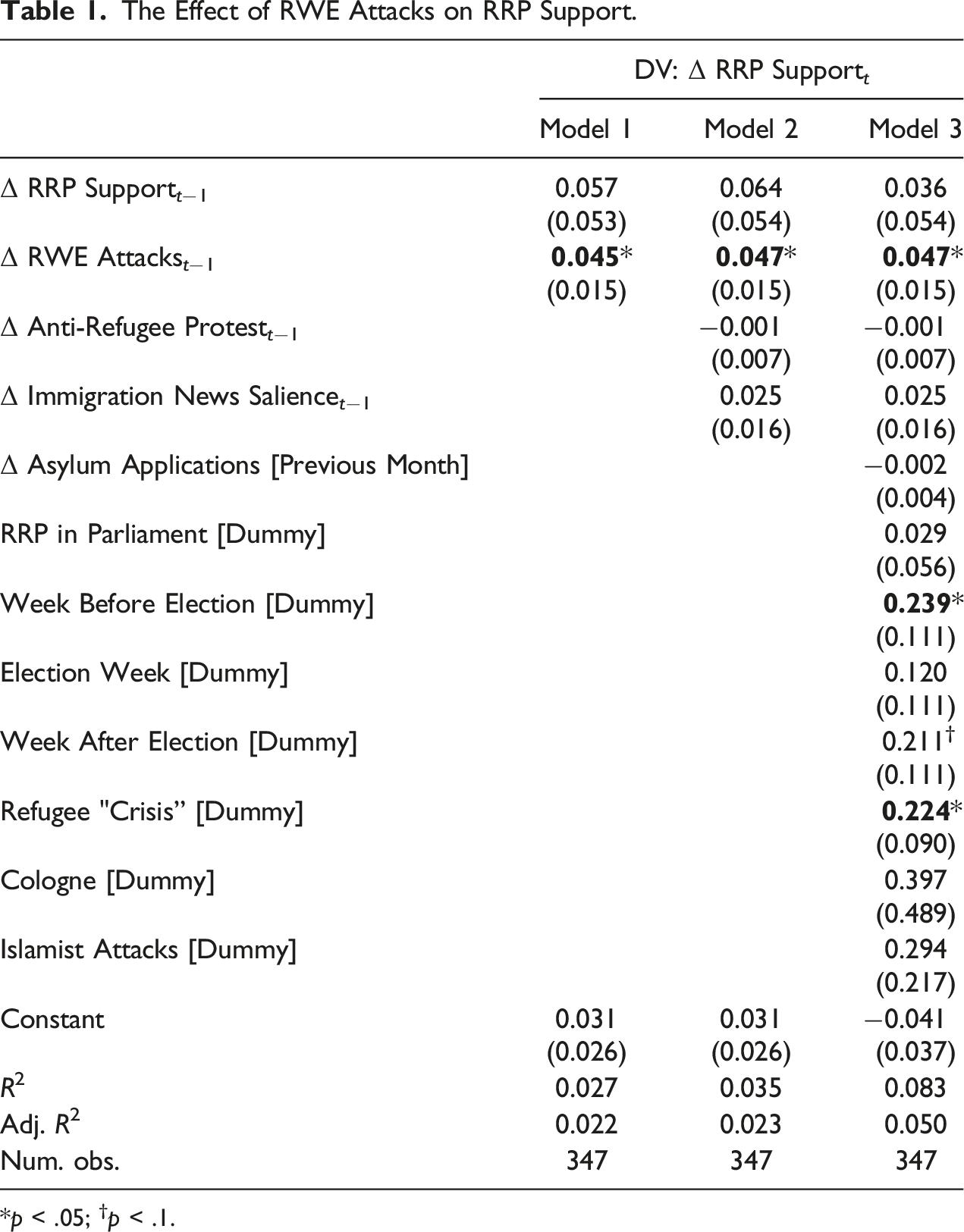
The Effect of RWE Attacks on RRP Support.
*p < .05; †p < .1.
The results show that increasing numbers of RWE attacks at t − 1 were associated with higher shares of RRP support in the following week. In all three model specifications, the coefficient of Δ RWE attackt−1 is statistically significant. In substantial terms, a one standard deviation increase in the change of the weekly number of RWE attacks led to a 0.1-unit increase in RRP support, equaling a change of roughly 0.2 standard deviations of the dependent variable. While this effect is moderate in size, many weeks in the data experienced more than a single attack. For example, in seven weeks, the change in RWE attacks is five or higher, corresponding to an increase of approximately 0.5 standard deviations in AfD vote intentions.
We conducted the additional analyses below to inspect whether modeling decisions drive the results.
First, we restricted the data to the period after 2014, split the data on March 18, 2016—the day the EU–Turkey refugee return agreement was announced—and dropped the period from July 2015 to June 2016 (Section A3.4.4). Then, we conducted sensitivity checks in which we excluded observations at the week-, month-, and year-level to alleviate concerns regarding the influence of outliers (see Section A3.4.5). Importantly, we found statistically significant effects in all these analyses, supporting that the identified effect is not restricted to a specific period, such as the so-called refugee “crisis.”
Second, Section A3.4.9 discusses two alternative data sources of RWE attacks: information provided by the federal government and a chronicle by German civil-society organizations. These data sets document RWE incidents irrespective of their severity or media coverage. Although both data sets thus potentially overestimate the number of RWE attacks relevant to the effect under study, the corresponding GECM models support conclusions similar to those presented in Table 1. In addition, Section A3.4.1 and Section A3.4.2 show results for alternative ways of operationalizing immigration-related media salience.
Third, we inspected whether the results change if we alter the operationalization of RWE attacks by excluding the category “spontaneous attacks,” including cases classified as “attack plots” or “preparations for armed struggles,” and considering only attacks, in which persons were wounded or killed (Section A3.4.6). Then, we estimated weekly values of RRP support based on the mid of the corresponding fieldwork periods (Section A3.4.7). These additional analyses confirmed the presented findings.
Granger "Causality” Tests.
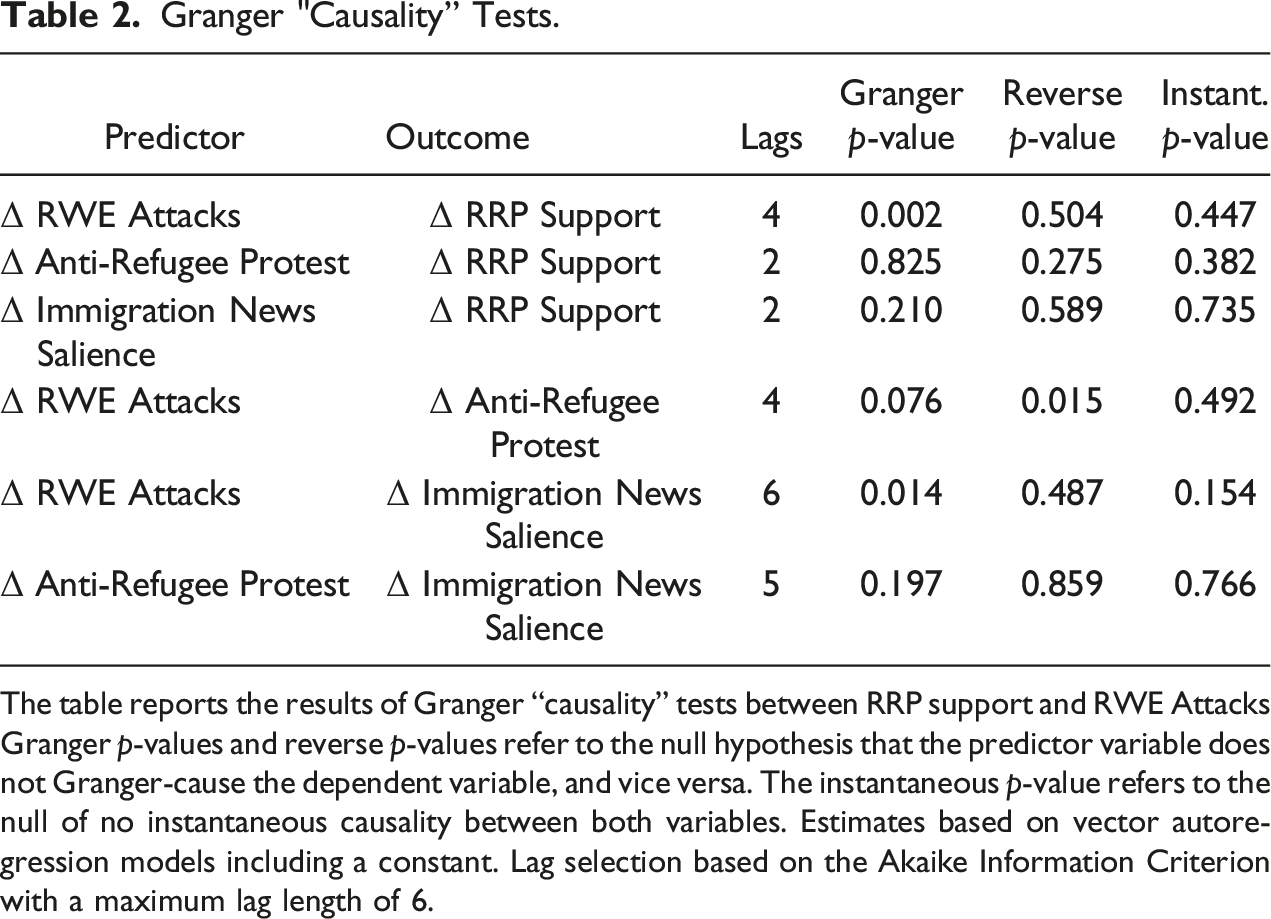
The table reports the results of Granger “causality” tests between RRP support and RWE Attacks Granger p-values and reverse p-values refer to the null hypothesis that the predictor variable does not Granger-cause the dependent variable, and vice versa. The instantaneous p-value refers to the null of no instantaneous causality between both variables. Estimates based on vector autoregression models including a constant. Lag selection based on the Akaike Information Criterion with a maximum lag length of 6.
Consistent with Table 1, RWE attacks Granger-caused RRP support but not the other way around. We also find no evidence that anti-refugee protests or immigration media coverage affected the future values of RRP support. Furthermore, the results indicate bi-directional relationships between the number of RWE attacks and the number of anti-refugee protests. Notably, we also find a statistically significant effect of RWE attacks on the news coverage variable, suggesting that right-wing violence is indeed followed by increased media coverage of immigration-related topics. Section A3.5.2 reports the results of robustness checks such as those discussed for Table 1. All these tests confirmed the discussed finding.
Figure 3 shows the (cumulative) impulse response functions derived from the corresponding vector autoregression model for RWE attacks and RRP support. We considered orthogonalized shocks. The x-axis shows periods (in weeks) after an initial impulse of one variable, and the y-axis reflects the expected changes in the second variable. The related chart (left panel) shows that right-wing attacks affected subsequent values of RRP support with a delay of 1 week. After 2 weeks, support reverted to zero. The effect corresponds to 0.1 units. In contrast to this, the right panel shows no significant impact of RRP support on RWE attacks. (Cumulative) impulse response function based on vector autoregression models. Notes: Light areas show 95% confidence intervals.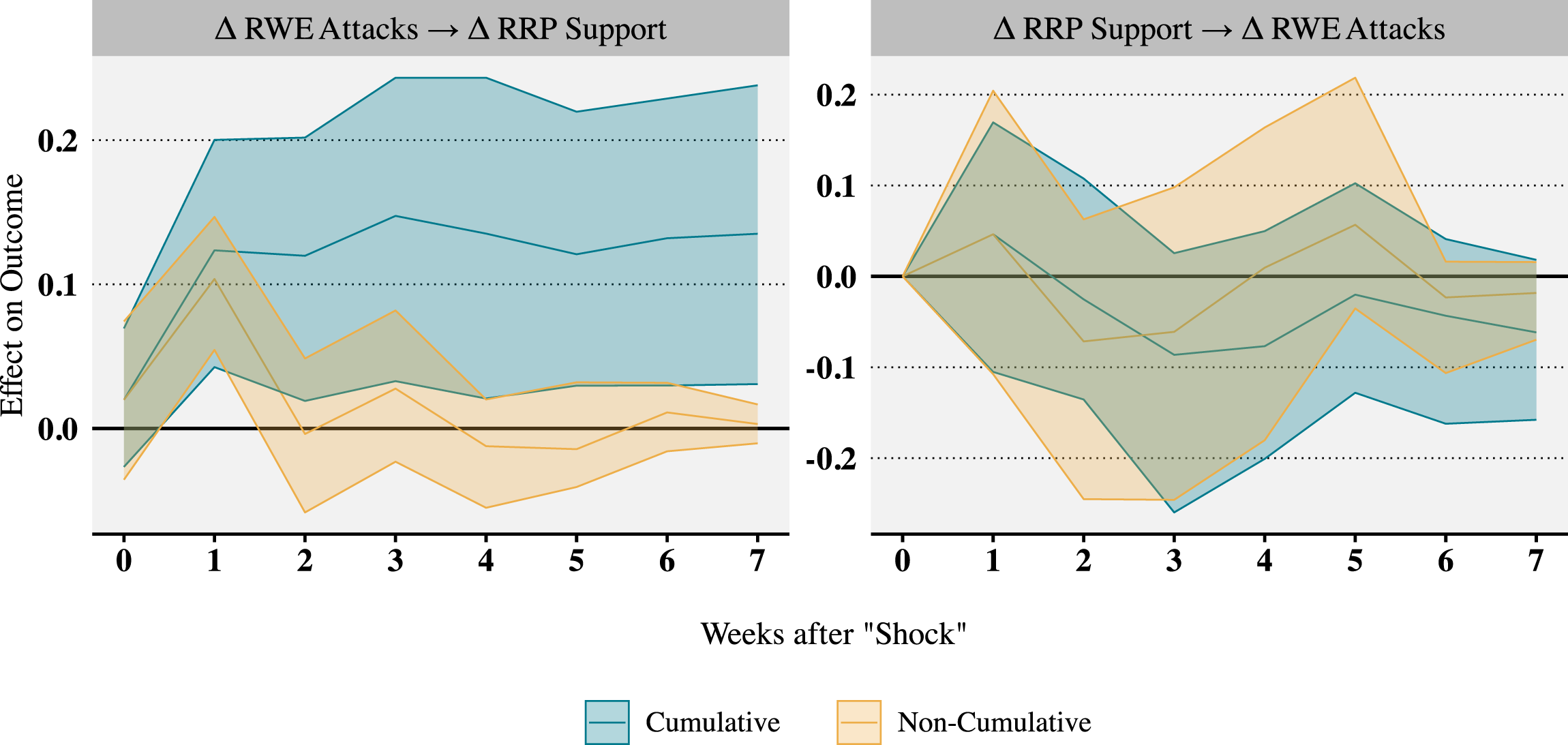
Overall, the presented results coincide with the expectation that RRP support increased after RWE attacks but not the reverse. Simultaneously, they provide no support for potentially confounding effects of the immigration media salience, anti-refugee protests, the number of asylum applications, or related events such as Islamist terrorist attacks.
Event Study
Drawing on a quasi-experimental research design, we examined the effect of the assassination of Walter Lübcke in 2019 on German citizens’ attitudes toward immigration. Lübcke led the regional administration in the Kassel region (Hesse) and was a member of the center-right CDU. Since the beginning of the so-called refugee “crisis,” Lübcke had advocated for admitting refugees and against anti-immigrant rallies in Kassel. On June 2, 2019, he was shot in front of his home. Two weeks after the assassination, on June 16, the German police publicly announced that they had arrested a RWE based on DNA traces found on Lübcke’s clothing. The perpetrator was already known for far-right views and had links to several far-right organizations. At the same time, the German fieldwork period of the Eurobarometer survey 91.5 (European Commission and European Parliament, 2019) started on June 11, 2019, and lasted until June 25, 2019.
The murder attracted widespread public attention. Speculations regarding a potential right-wing inclination of the perpetrator circulated in media reports. However, the perpetrator’s identity and underlying motive was not known to the public in the attack’s immediate aftermath: Figures 4 and Figure 5 support this notion. Media coverage. Notes: Median number of articles mentioning Walter Lübcke in the headline or the lead sentences across six news outlets (Die Tageszeitung, Süddeutsche Zeitung, Spiegel Online, Frankfurter Allgemeine Zeitung, Welt Online, BILD). The gray area shows the fieldwork period of the Eurobarometer survey 91.5. Twitter posts. Notes: Absolute frequency of the hashtag "#Lübcke” on Twitter. The gray area shows the fieldwork period of the Eurobarometer survey 91.5.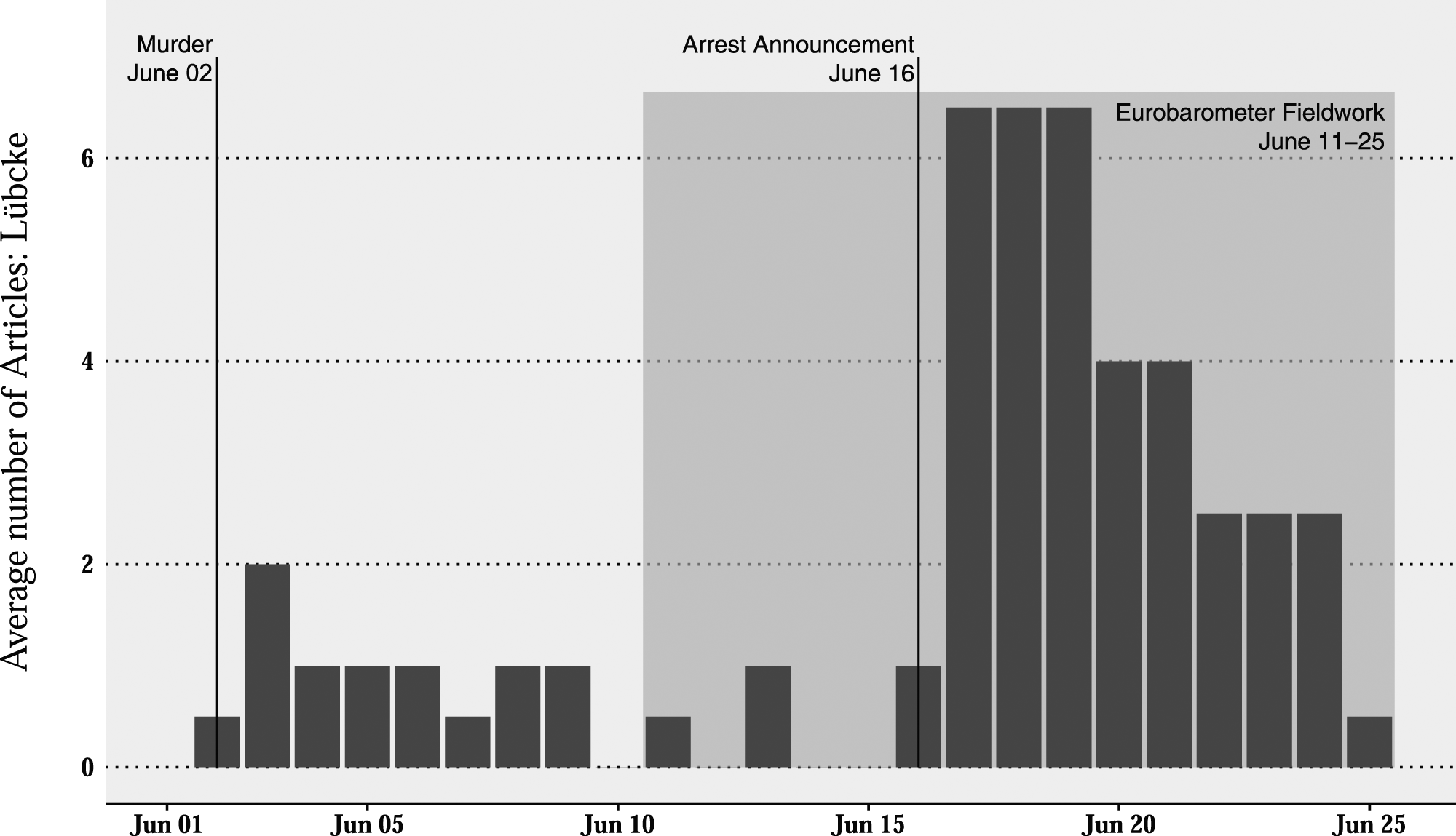
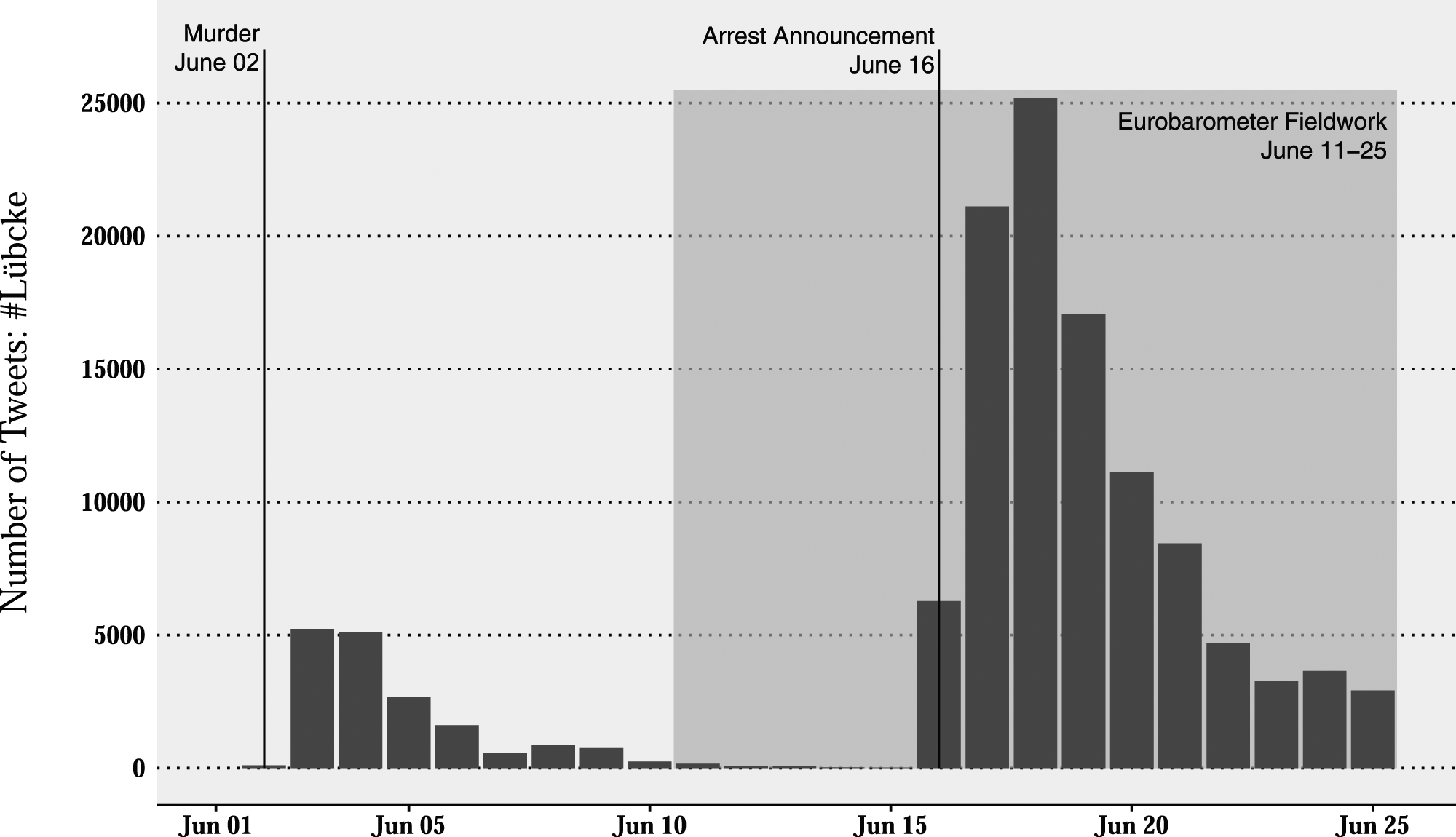
Figure 4 shows the daily number of news articles mentioning Lübcke in the headlines or the lead sentences in June 2019 across six major German news outlets. Although reports about the murder were published before June 16, this specific coverage focused on reports about the killing itself (June 3), the false arrest of a first aider present at the scene of the murder (June 8/9), and the public memorial service for Lübcke (June 13). Media attention strikingly increased across all media outlets after the arrest of the RWE was made public on the afternoon of June 16. Figure 5 shows the usage frequency of the hashtag “#Lübcke” on Twitter. The time trend aligns with the news media coverage. While the murder on the night of June 2 attracted short-term attention, the hashtag’s usage spiked significantly after the perpetrator’s arrest. Section A4.1 discusses the events surrounding the murder in detail.
Figures 4 and 5 also show that, since the Eurobarometer survey’s fieldwork period began on June 11, no significant coverage was present on social media or in the news outlets. This lends further credibility to the validity of the following research design, which treats the timing of the arrest of the assassin as an exogenous, unexpected event.
Following the arrest, center-right and left-wing politicians placed responsibility on the AfD for creating a climate conducive to the murder. 27 The AfD, in turn, accused the other parties of instrumentalizing the murder to “discredit political rivals.” 28 Meanwhile, AfD parliamentarians publicly ridiculed the murder 29 and pointed to Islamist terrorism and left-wing violence as the supposedly more severe dangers to public security. For instance, AfD member Wolfgang Gedeon stated that “compared to Islamist terror and also compared to left-wing extremist terror, right-wing extremist terror is a bird’s nest in Germany.” 30 Repeatedly, AfD Bundestag members pointed to immigration as the alleged cause of the murder. For example, Gottfried Curio stated in a parliamentary debate at the end of June that “a misunderstood cosmopolitanism can be the precursor to a reign of injustice” and “a reign of injustice can be the precursor for countless acts of violence in the whole country” (German Bundestag, 2019, p. 13168). 31
We compared citizens’ attitudes immediately before and after the arrest of the RWE using the following regression formula
D i is the treatment variable denoting whether the interview was conducted before or after the arrest. Although the arrest occurred on June 15, it was made public one day later in the afternoon (first press reports at 3:40 p.m.). Because the survey data only includes information on the start of the interviews in time blocks, we excluded all respondents whose questioning began between 1 and 5 p.m.
To ensure that treatment assignment is as good as random and minimize the likelihood that alternative events affect the measurement, we considered respondents interviewed within a short window around the arrest. Smaller time windows help reduce potential biases related to the survey roll-out, which could violate the temporal stability assumption. Corresponding power analyses (Figure A10) indicated that a 5-day window reaches power values of at least 0.8. 32 The resulting sample totaled 1112 observations (480 observations before and 632 after the arrest). Section A4.2 provides additional information on the survey mode and discusses potential problems related to reachability or attrition as unobserved confounders. Overall, these considerations give no room for concern about the validity of the design in terms of causal identification. 33
We conducted covariate imbalance tests for various sociodemographic variables that can reasonably be assumed to be unaffected by the treatment (Section A4.3.2). As East Germans were over-represented in the survey, all analyses used weights to adjust the East and West German samples to their respective proportions. The t-tests indicated no imbalances in education, age, gender, community size, residency in East or West Germany, or possession of durables. However, we observed significant imbalances in respondents’ occupational status (p-value
Figure 6 shows a first impression of the development of AfD support after the arrest of the right-wing terrorist. The chart shows the average support for the AfD between February and October 2019 across the three polling institutes, Kantar/Emnid, Forsa, and INSA. All values were centered on the institute-specific mean values to account for systematic differences between the institutes. By and large, the trend corresponds to the findings from the time-series study: While AfD support was relatively stable between February and May 2019 (a period without major right-wing violent incidents), it showed a steady increase after the arrest. Three months later, the average AfD support had increased by roughly 1.2 percentage points. AfD support between February and September 2019—public opinion polling estimates. Notes: The circles denote AfD support estimates provided by the following public opinion survey institutes: Kantar/Emnid, Forsa, and INSA. Locally weighted running line smoother. The shaded area shows 95% confidence intervals.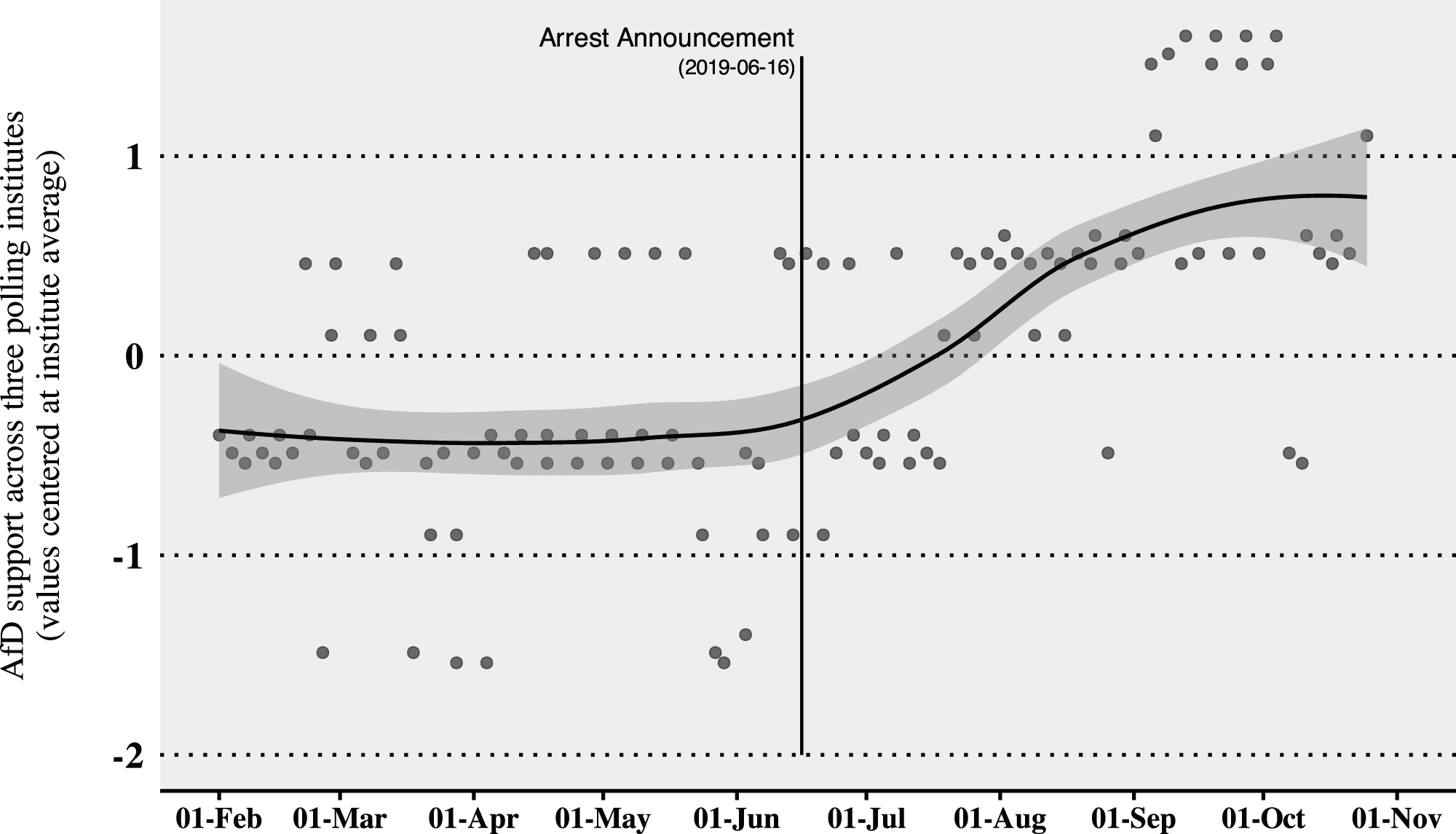
Event Study: Results
Event Study: Results.
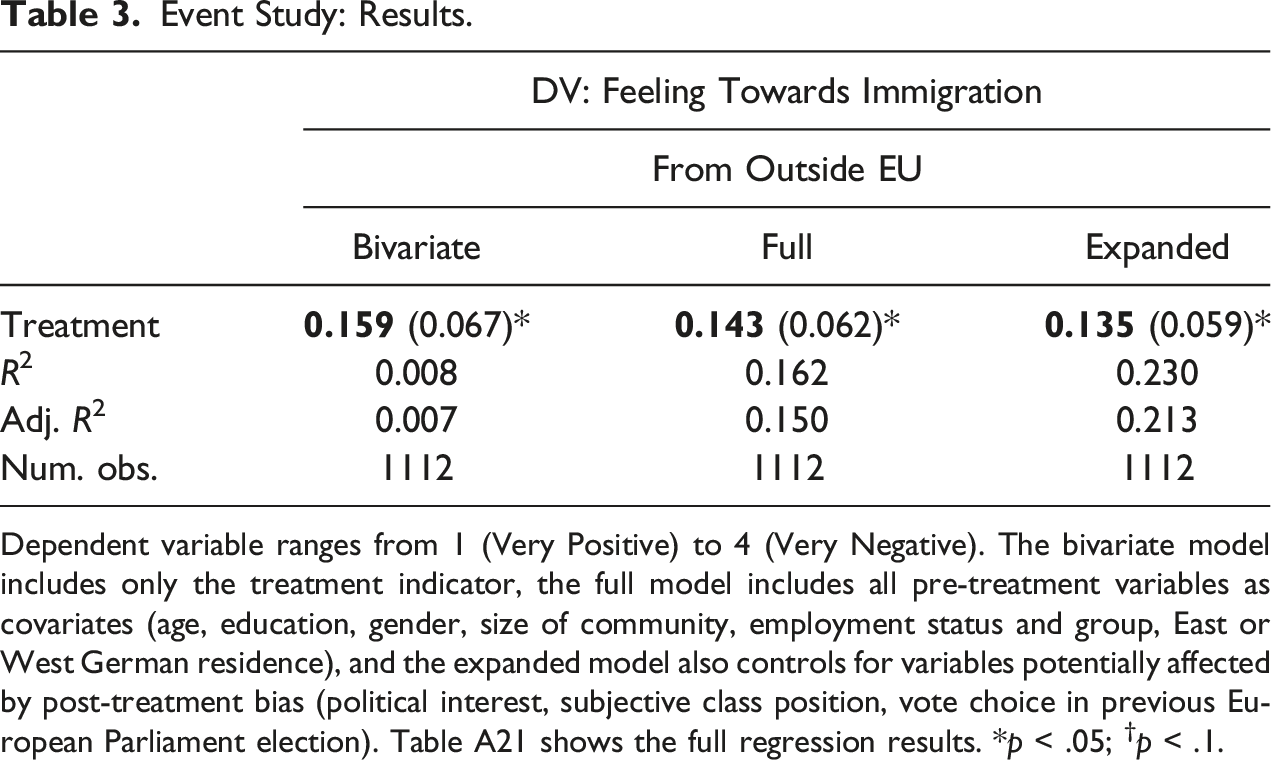
Dependent variable ranges from 1 (Very Positive) to 4 (Very Negative). The bivariate model includes only the treatment indicator, the full model includes all pre-treatment variables as covariates (age, education, gender, size of community, employment status and group, East or West German residence), and the expanded model also controls for variables potentially affected by post-treatment bias (political interest, subjective class position, vote choice in previous European Parliament election). Table A21 shows the full regression results. *p < .05; †p < .1.
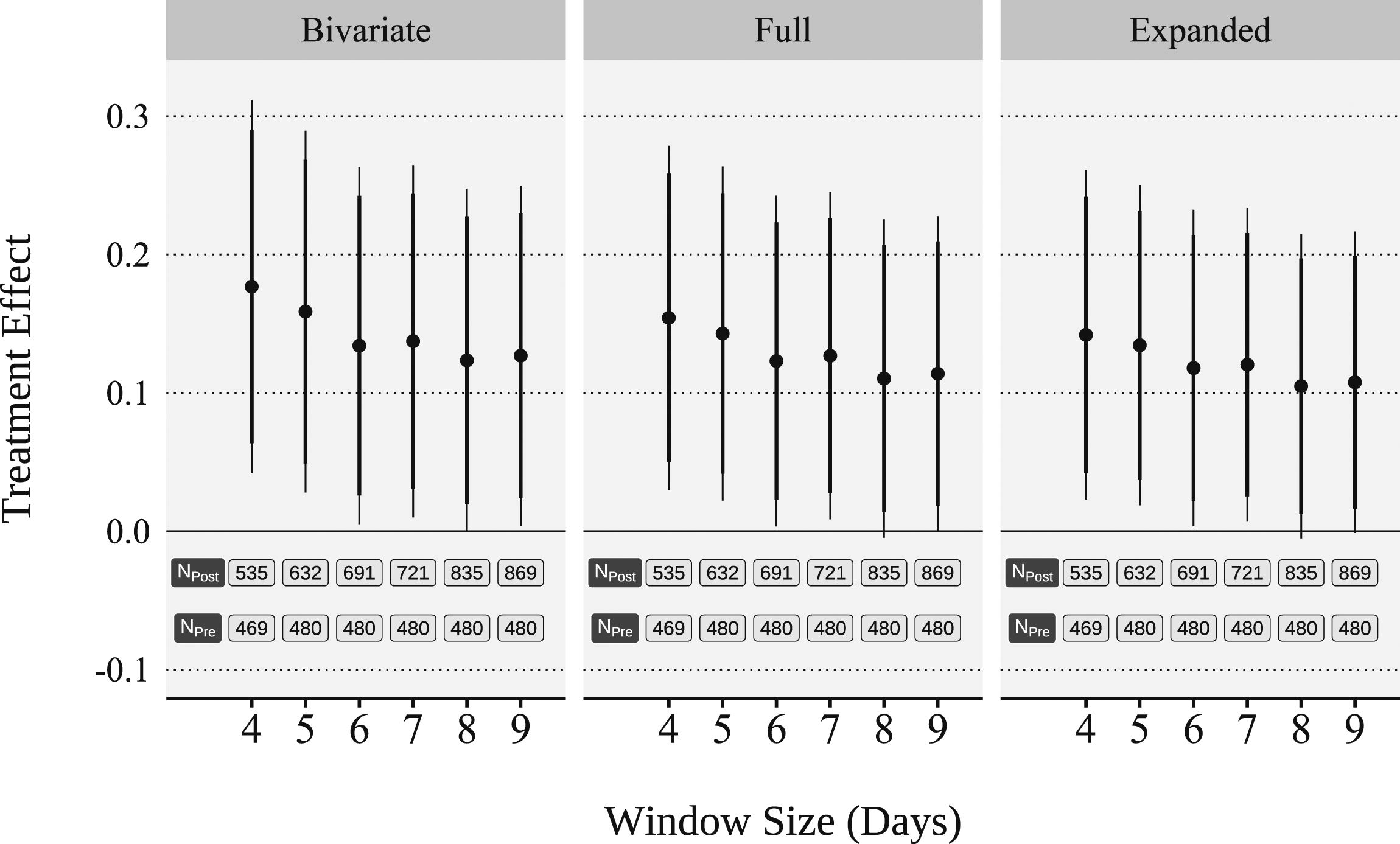
Results with varying window sizes. Notes: Error bars show 95% (thin) and 90% (thick) confidence intervals.
We performed several supplementary analyses to address potential violations of the core assumptions facilitating causal identification. These checks included dropping the day of the arrest, excluding former AfD voters, and adding different region variables to the regression equation. We also tested for effects at a placebo date and in other countries. Previous research has indicated that terrorist events can affect individuals’ attitudes in other countries (e.g., Finseraas et al., 2011). However, we assumed that the international coverage of the attack and the arrest were too limited to trigger widespread reactions beyond Germany. Section A4 discusses these checks in detail. Overall, none of the results casts doubt on the validity of the analysis.
Furthermore, we tested whether treatment effects are also present for related variables. We found a similar but weaker impact on respondents’ attitudes toward Germany’s duty to help refugees. In contrast, we observed no effect on respondents’ attitudes toward immigration from EU member states or the statement that immigrants “contribute much to the country”. Hence, respondents in the treatment group were not generally more skeptical of any type of immigration, but especially of refugees from non-EU countries. This finding is consistent with the expectation that the arrest of the RWE affected particularly attitudes related to the AfD’s main campaign issue: immigration from non-European countries.
Mechanism
An important question from the previous analyses is which voters turned to the radical right after RWE attacks. Above, we hypothesized that far-right attacks trigger immigration concerns and that voters predisposed to anti-immigrant views will most likely respond. In the following, we present additional analyses to offer further insights into the link between RWE violence and voters’ attitudinal changes.
Immigration versus Law and Order Concerns
RRPs do not only focus on immigration but also present themselves as law-and-order saviors (e.g., Muis & Immerzeel, 2017; Wheatley et al., 2020). Therefore, citizens may support RRPs because they expect them to be most likely to maintain public safety. We empirically examined these competing explanations by inspecting citizens’ perceptions of the most critical problem Germany faces. The polling institute Forschungsgruppe Wahlen (2022) provides this data, which are collected monthly with approximately 1000 respondents per survey (about 1.5 surveys per month). To account for the time-series structure, we aggregated the data by estimating the share of respondents indicating that the issues “immigration” or “law and order” constituted the most important issue the country faced. 34 We also examined the share of respondents answering that right-wing radicalism was the most pressing problem. To account for the non-stationary character of the time series, we again estimated models in first differences (see Section A5.1.1 for corresponding unit root tests and further descriptive statistics). However, as the data were monthly not weekly, we included all predictor variables at time t in the regression and examined the contemporaneous effect of Δ RWE attacks. 35 We added all covariates included in the time-series study above. 36 Section A5.1 presents additional information on the survey, the variables’ operationalization, the model specification, and robustness checks.
The Effect of RWE Attacks on Most Important Problem Perceptions.
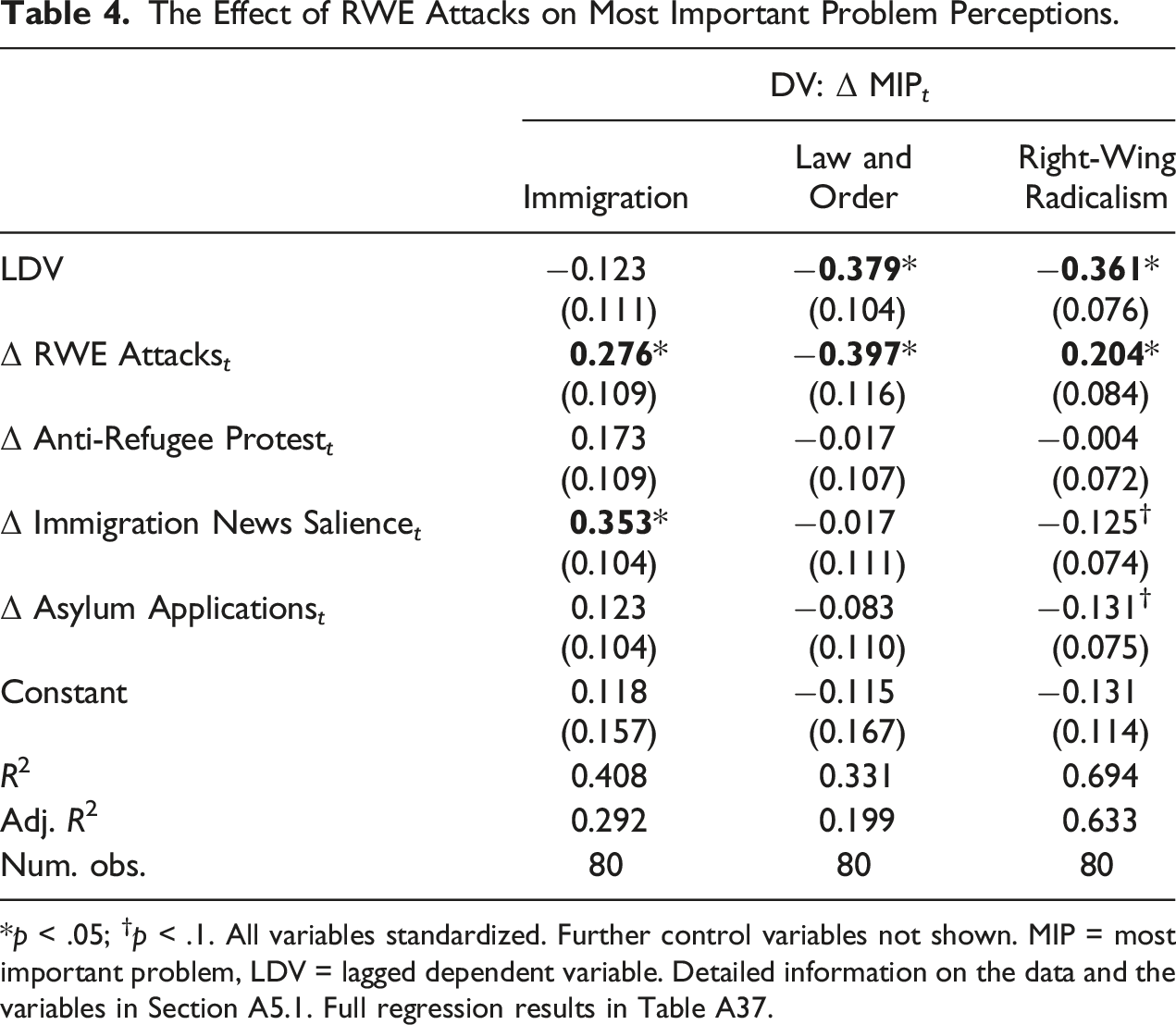
*p < .05; †p < .1. All variables standardized. Further control variables not shown. MIP = most important problem, LDV = lagged dependent variable. Detailed information on the data and the variables in Section A5.1. Full regression results in Table A37.
Who Switches to the Radical Right?
The presented argument implies that those voters predisposed to anti-immigrant views are mobilized in favor of the radical right. Accordingly, voters of center-rights parties, who tend to hold more authoritarian positions (Jylhä et al., 2022; Van Hiel et al., 2020; Velez & Lavine, 2017) and are more likely to prefer “coercive conflict strategies” (De Zavala et al., 2010), should be more likely to switch to the AfD after rising RWE violence. We examined this expectation using survey data provided by the polling institute Forsa (2013–2019), which includes information on respondents’ prospective vote intentions (if there were an election next Sunday) and their vote choice in the previous general election. With this data, we created monthly time series for each major German party, voters of “other parties,” and non-voters. We calculated the change in each voter group’s monthly share of respondents who defected to the AfD and ran separate regressions based on these time series. As in the previous regression models, we estimated models in first differences—including the complete set of control variables—and focused on the effect of RWE attacks t on the share of AfD defectors. Section A5.2 provides detailed information on the data, the model specification, and robustness checks.
Effect of Right-Wing Extremist Attacks on AfD Vote Intentions by Past Vote Choice.
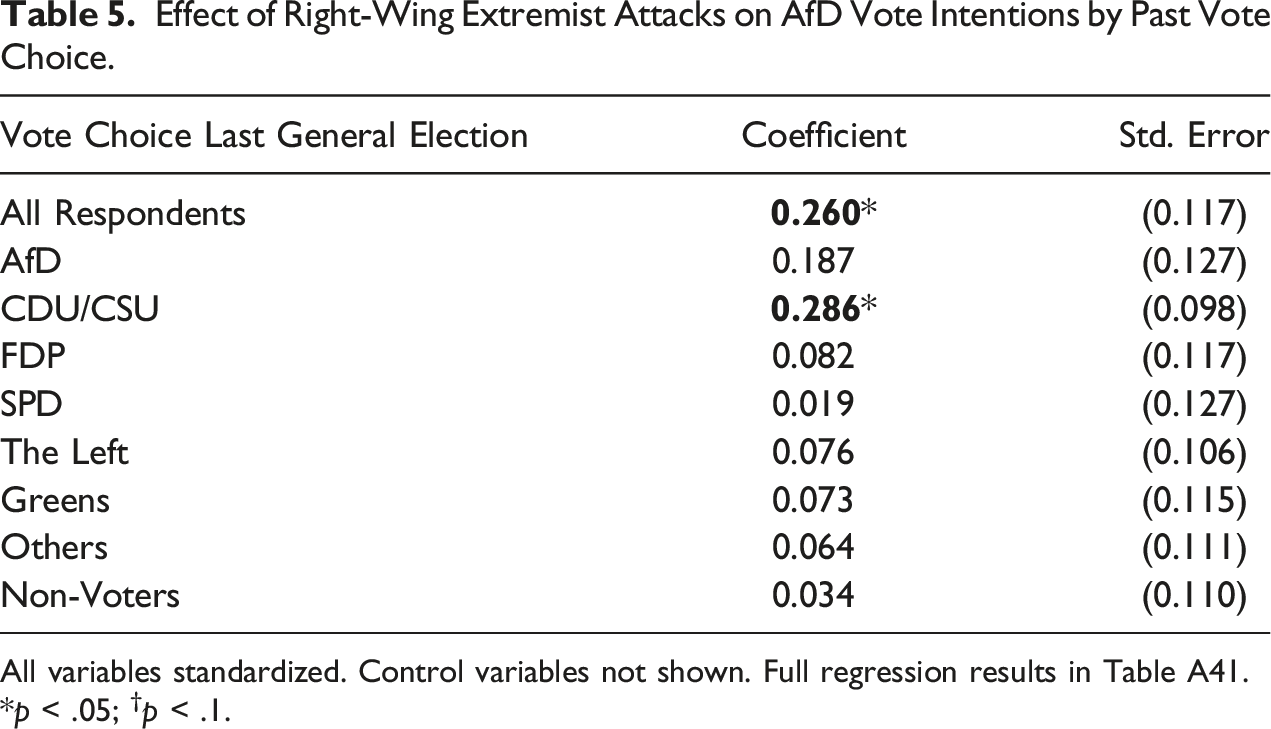
All variables standardized. Control variables not shown. Full regression results in Table A41.
*p < .05; †p < .1.
Conclusion
A time-series analysis and a quasi-experimental study have shown that voters did not shy away from expressing support for RRPs after RWE violent attacks. On the contrary, the presented analyses indicate that public support for RRPs and anti-immigrant policy stances has increased after RWE attacks in Germany. At the same time, the empirical results also show that the effect of RWE attacks is small to moderate in size. Hence, only a portion of the German electorate tended to switch their vote intention to the far-right. Still, previous research has suggested that political violence can be a critical obstacle to gaining broad(er) electoral ground for many far-right parties (e.g., Art, 2011). This article’s empirical analyses, however, show that right-wing violence and growing electoral support for the radical right do not necessarily contradict each other.
These are unsettling results that unpack crucial questions for future research relating to the mechanism that drives attitudinal responses to RWE attacks.
It is likely that it is not the attacks themselves but the subsequent public debates that are decisive for the identified effect. We argued that right-wing attacks can create discursive opportunities for RRPs; they can increase the salience of and polarization on RRPs’ core issue—immigration—in public and media debates. Such increased elite polarization can prompt voters to take more pronounced positions on critical policy issues. Here, the role of elite and media debates as a link between RWE attacks and RRP support deserves special attention in future research. For instance, Bjånesøy et al. (2023) suggest that Western European citizens only use a narrow definition of right-wing extremism when asked whether they oppose far-right organizations. Relatedly, D’Orazio and Salehyan (2018) have shown that perpetrators from societal in-groups are less likely to be labeled as “terrorists” by the public. It could be that certain groups of voters discount ideological or organizational links between RRPs and violent RWEs, sympathizing with RRPs despite increasing RWE violence. If so, how do elite and media discourses influence these perceptions? Several studies have found that racial and religious biases influence news stories about violent crimes. 38 In this regard, asking to which extent media reports about immigration change after RWE incidents is worthwhile. Additionally, survey experiments could further substantiate the causal claim of the study at hand. Vignettes could help understand which discursive framings influence the support of different political parties after RWE attacks. Future well-powered experimental studies could also consider to what extent individual-level characteristics, such as left–right extremism or political apathy, moderate individuals’ responses to right-wing political violence.
The study at hand focused on the nationwide effects of right-wing violence. An important future step would be to investigate the consequences of right-wing attacks at the regional and local levels. For example, in the US, RWE attacks have been found to be more common in areas where “‘playing the ethnic card’ makes strategic sense for elites looking to shift electoral outcomes” (Nemeth & Hansen, 2022). This pattern raises the question of whether right-wing violence has particularly strong or weak effects in polarized or electorally contested municipalities. Similarly, research has not yet investigated the extent to which electoral strength or incumbency status of RRPs conditions citizens’ responses at the (sub-)national level.
From a comparative perspective, cases in other countries also indicate that RRPs have not suffered electorally after right-wing attacks. For instance, the radical right Lega became the most popular party in the center-right coalition in the March 2018 parliamentary election—one month after a racist shooting in Macerata. Before the 2022 general election in Sweden, media reports were released stating that the then-leader of the Center Party, Annie Lööf, was the suspected target of a knife attack by a RWE. Approximately two weeks later, the far-right Sweden Democrats came second in the national election, making it the strongest political force among Sweden’s right-wing parties. Nevertheless, counterexamples exist. The most extensively studied case in this regard is the 2011 Oslo/Utøya attack, after which the Norwegian Progress Party experienced drastic electoral defeats (e.g., Jakobsson & Blom, 2014; Wollebæk et al., 2012). Several differences exist between the Norwegian and the German case, which could help understanding the heterogeneous consequences of right-wing violence.
The Norwegian attack stands out as one of the deadliest and most cruel incidents in European post-World War II history. Notably, a significant portion of its victims were primarily comprised of members belonging to the youth wing of the Norwegian Labour Party. Therefore, it is relevant to examine whether the consequences of right-wing violence are conditional on the victims of the attacks (e.g., Huff & Kertzer, 2018; Knupfer & Matthes, 2021). Further research is needed to understand whether the consequences of right-wing attacks vary depending on the target group, such as refugees, Muslims, LGBTQIA+ individuals, or politicians and activists.
In cases where German law enforcers identified perpetrators of RWE attacks, close organizational ties to the AfD were seldom established. In this regard, the example of Golden Dawn in Greece illustrates that far-right parties can suffer electorally once state authorities draw a direct link between a party and RWE violence. Following the arrest and charging of leading members of the party for their involvement in various violent incidents, the party lost substantial public support and ultimately failed to enter the national parliament in the 2019 general election (Ellinas, 2021).
Lastly, the German AfD has been a party in the making, which might have profited from the additional media coverage created in the wake of RWE attacks. The Norwegian Progress Party, on the other hand, had been an established part of the Norwegian party system when the attack took place in 2011. Other factors worth examining include the different historical legacies of right-wing extremism in each country and the role of immigration and refugee influx. Further investigation of these factors could form a critical component of future research agendas to better understand the political consequences of RWE attacks.
Supplemental Material
Supplemental Material - Does Right-Wing Violence Affect Public Support for Radical Right Parties? Evidence from Germany
Supplemental Material for Does Right-Wing Violence Affect Public Support for Radical Right Parties? Evidence from Germany by Werner Krause and Miku Matsunaga in Comparative Political Studies
Footnotes
Acknowledgments
For helpful feedback, the authors want to thank Juan Haidar, Thomas M. Meyer, Enzo Nussio, Brian Phillips, Jim Piazza, Yuliy Sannikov, Regine Schwab, Thomas Winzen, and attendees at the ECR Workshop Series, the panel “Populism and the radical right” at the 2022 EPSA annual conference, and the research colloquium of the department “Democracy & Democratization” at the WZB Berlin Social Science Center. The authors also thank the editors and three anonymous reviewers for providing constructive comments. We thank Franziska Windisch for valuable assistance with data collection. Replication materials and code can be found at  .
.
Declaration of Conflicting Interests
The author(s) declared no potential conflicts of interest with respect to the research, authorship, and/or publication of this article.
Funding
The author(s) disclosed receipt of the following financial support for the research, authorship, and/or publication of this article: Werner Krause acknowledges financial support by the University of Vienna for preparing the final version of the manuscript.
Supplemental Material
Supplemental material for this article is available online.
Notes
Author Biographies
References
Supplementary Material
Please find the following supplemental material available below.
For Open Access articles published under a Creative Commons License, all supplemental material carries the same license as the article it is associated with.
For non-Open Access articles published, all supplemental material carries a non-exclusive license, and permission requests for re-use of supplemental material or any part of supplemental material shall be sent directly to the copyright owner as specified in the copyright notice associated with the article.
