




Abstract
This study advances the decline of Parent-Relative Subjective Social Status (PRSSS) as a reconciling factor among radical right and radical left supporters. While self-employed workers, men and rural residents perceive socioeconomic decline relative to their parents and support the radical right, the well-educated, urbanites and low-income individuals are likely to feel similar decline given the rising levels of unemployment and social inequality. These structural changes may push the latter to support a party which stresses income inequality, a catchcry of the radical left. Using a 2017 Eurobarometer Survey, logistic regressions show positive associations between low PRSSS (versus equal or high PRSSS) and support for right- and left-wing radicalism in 28 European countries. The traditional attitudes of each group magnify the PRSSS effects on radical support: these are reinforced by anti-immigrant support for the radical right and by preference for redistribution for the radical left.
Introduction
The rapid rise of radical right and radical left parties has led to a wave of public and scholarly interest in recent decades. While there has been a wealth of research studies on the electoral fortunes of radical right parties (Ivarsflaten, 2008), few analyses focus on the growth of radical left parties. Yet, the Left Bloc in the governing coalition in Portugal (until 2022), Syriza in Greece, and the breakthrough of Jean-Luc Mélenchon in France, to name a few, are all signs of radical left emergence.
The studies that compare the radical right and radical left together often place them in opposition. The radical right ideologies 1 embrace nativism, rejecting non-native individuals who pose a threat to the nation (Mudde, 2007), whereas the radical left ideologies focus on the egalitarian interests of the common working man against the interests of the business elite (March, 2011). The rare articles that align radical left and radical right together have looked at their common characteristics. These parties share Eurosceptic (De Vries and Edwards, 2008), nationalist (Burgoon, 2013), anti-elitist (Mudde, 2007) and populist traits in which they represent the ‘virtuous and unified population’ against the corrupt political establishment (Mudde, 2007).
Meanwhile, the literature on the radical right has largely devoted its attention to debating the economic versus cultural drivers behind its electoral success. The economic anxiety thesis advances that globalisation and technological change have created economic losers who later express their economic fear by casting a radical right ballot (Malhotra et al., 2013). The cultural backlash argument posits that the recent and rapid surge of immigration has threatened the alleged homogeneity of the nation and its cultural heritage which is eventually translated into radical right support (Hainmueller and Hiscox, 2010).
While no consensus over these determinants has been found, a growing literature is now turning to the psychological phenomenon of subjective social decline to overcome the dilemma (Gest et al., 2018; Gidron and Hall, 2017; Kurer, 2020; Engler and Weisstanner, 2021). It states that absolute material hardship does not matter as much as the relative deprivation of the current status individuals is entitled to. This fear of status decline is characterised by the perceived shift of the once-dominant white working class and the self-employed, the radical right supporters, to the periphery of the social order in comparison to the emerging ethnic groups. It is eventually translated into anti-immigrant attitudes and radical right voting support. Yet, this subjective sense of social decline can also be felt among another voting group. Individuals with low income may perceive status anxiety since the present economic and social circumstances are not as favourable as past ones. Rising levels of unemployment, social inequality and declining income may eventually push this group to turn their back on the mainstream left and support a party that embodies such concerns: the radical left.
Reconciling the radical left and radical right into a unifying theoretical framework that goes beyond the ‘economic versus cultural’ dichotomy, this paper draws on the under-studied psychological factor of status anxiety that is commonly shared by radical leftists and radical rightists. My theory builds on and incorporates existing approaches from political psychology and social hierarchies to formulate an individual-level theory of perceived relative deprivation to explain radical left and radical right support. I argue that individuals who experience status decline relative to their parents feel that they have been disadvantaged by comparison to their most relevant reference group, i.e. their parents, and this disappointment is translated into radical right and radical left support. Using a 2017 Eurobarometer Survey, I run logistic regressions to show that having a lower social status relative to one’s parents (versus having an equal or higher status) is associated with supporting radical left and radical ideologies in 28 European countries. The radical right sympathisers tend to be older, men, living in rural areas and self-employed whereas the radical left supporters are mainly highly educated, urbanites, and those who come from the poorest strata of society. Moreover, traditional attitudinal determinants of each voting group – anti-immigrant attitudes for the radical right, and pro-redistribution attitudes for the radical left – reinforce the effect of declining subjective social status for each radical ideology. My results are unique to these radical ideologies and robust to a variety of alternative specifications (using support for radical right and radical left parties, social placement in general, or comparing between Eastern and Western Europe) and modelling choices (OLS and multinomial models).
The contribution of this paper is threefold. Firstly, it sheds light on a rarely studied concept, i.e. status anxiety. While the concept has been explored in qualitative ethnographic studies (Walsh, 2012; Hochschild, 2016), evidence of its use in comparative politics, and especially in relation to parents’ status, is still scarce. This cross-sectional study uses an original measure to broaden the scope and understanding of the impact of relative social deprivation to a large set of Western and Central European countries. Secondly, I show the strong sociodemographic characteristics of each radical ideology. While there has been an abundance of studies on men who live in more marginalised areas as important sympathisers for the rise of the radical right, the political affiliation of the well-educated individuals to the radical left has been understudied (exceptions include Ramiro, 2016 or Gomez et al., 2016). Finally, by incorporating the nascent literature on subjective social status into an analysis of radical left support, I show similarities between the radical right and radical left supporter bases. The structural effects of de-industrialisation, globalisation and automation can also lead to subjective social decline among the well-educated, urbanites, and those with lower income. As the source of radical support is common, solutions to limit its ever-growing appeal may require similar policy and social reforms.
The paper is structured as follows. After reviewing the literature on status anxiety, radical right and radical left support, I outline the hypotheses and present the data, models and variables. I then comment on the estimation tables and finally draw conclusions.
Similarities: Status anxiety, radical right and radical left support
Cultural and economic changes have produced uneven development trajectories within European states. Despite the wide range of studies on their political consequences for the rise of radical right voting, there is still an ongoing debate about the radical right’s electoral success. The lack of consistent evidence in favour of economic explanations and the dominance of seemingly cultural drivers in experimental analyses have led some to claim that ‘it’s not the economy stupid’ (Mudde, 2007). However, more recent studies called for a reconceptualisation of economic factors with a closer look into the regional and local dynamics of trade and ethnic competition (Bolet, 2020; Colantone and Stanig, 2018). Economy and culture cannot simply be regarded as independent and competing explanations of radical right voting since individuals use intertwined frames of economic and cultural explanations to interpret the social world which surrounds them (Walsh, 2012; Hochschild, 2016).
A growing literature is suggesting an approach that goes beyond the debate between economic and cultural factors, and instead focuses on anxiety about social status (Engler and Weisstanner, 2021; Gest et al., 2018; Gidron and Hall, 2017; Kurer, 2020). Drawing on the psychology and social status literature, this understudied concept refers to the subjective positioning of a person within the social hierarchy. Individuals subjectively rank their level of social esteem or respect that society is according to them. Subjective social status is a relational variable because it measures where people stand in comparison to the full social order. Status comparisons are closely linked to the relative deprivation construct (invented by Stouffer et al. (1949) and later developed by Runciman (1966), amongst others), which is defined as people’s sense of frustration from feeling disadvantaged by comparison to a relevant referent.
Initially advanced by Lipset (1981) and relayed by Gest et al. (2018) and Gidron and Hall (2017), ‘social status anxiety’ forms the conceptual basis for a compelling theoretical argument to explain support for radical right parties. There are two main reasons why ‘social status anxiety’ is linked to radical right support. The first is instrumental. Individuals who feel that their social status has suffered along with their material circumstances are more inclined to support the radical right. Working-class workers and small business owners who experienced some economic downturns are more likely to feel relative status decline vis-à- vis other socioeconomic groups (e.g. socio-cultural professionals, immigrants) who appear to have made economic gains. And because these individuals desire an alternative to the parties that have altered their socioeconomic conditions, the anti-establishment appeals that radical right leaders make may be especially attractive to these voters (Gidron and Hall, 2017). The second reason why ‘social status anxiety’ boosts radical right support is emotional. Since threats to an individual’s social status evoke feelings of hostility to outgroups, individuals who feel that their social status is threatened may be sensitive to the anti-immigrant discourse of radical right parties. Appeals that evoke threats to the status of men for more gender or racial equality may have parallel power. Hence, working-class men and the self-employed who perceive a loss of social status are especially drawn to the radical right (Gidron and Hall, 2017; Gest et al., 2018; Bolet, 2021).
Gest et al. (2018) demonstrate that greater perceived threat of relative deprivation, which they call ‘nostalgic deprivation’, explains radical right voting better than absolute economic deprivation. They qualify nostalgic deprivation as ‘the discrepancy between individuals’ understandings of their current status and their perceptions about their past’. Individuals’ status comparisons could be made in relation to their past economic circumstances, their glorified view of the past, but also in relation to the reference group that best represents their past, that is, their parents. Individuals are known to evaluate their own achievements according to their parents’ socioeconomic attainments (Hill and Duncan, 1987). They see their parents as the most salient reference group when forming ideas about socioeconomic positions and status expectations and are eventually expected to surpass the social standing of their parents. That is why I specifically focus on parent-relative subjective social status. Individuals who experience status decline relative to parents would perceive that they have been denied the opportunity to get the status they had come to expect, and would then translate this disappointment into radical voting.
I explore the relevance of status anxiety relative to parents to radical right and radical left supporters. Radical right supporters are nostalgic about a unified and ethnically homogeneous heartland that their parents experienced. They are attracted by the radical right discourse which promotes the values of an idealised past where blue-collar workers, small business owners and the self-employed used to be valued as crucial pillars of society. Yet, there is no theoretical reason to uniquely associate nostalgic deprivation to the radical right. Mudde and Rovira Kaltwasser (2018) argue that almost all political parties, and especially populists, use nostalgic rhetoric to sell their political ideas. Their discourses often construct a cherished and mystified heartland where uncomplicated and non-troublesome politics cohabit. Radical left supporters could also be nostalgic of a socialist past with larger welfare spending and economic equality. Some studies have already linked left-wing radical voting with greater support of economic equality (Akkerman et al., 2017). European countries have experienced increased levels of unemployment, precarity, economic inequality and declining income in recent years. These kinds of trends may contribute to the sense of relative deprivation among left-wing radical supporters in relation to the previous generation. The identification of these trends in the rhetoric of radical left parties across Europe, moreover, may attract individuals who perceive their subjective status declining alongside their economic situation. This leads to my first hypothesis:
Dissimilarities: Two different voting groups
Despite sharing status anxiety in relation to the previous generation, radical right and radical left supporters belong to different sociodemographic groups. Although the radical right is traditionally known to attract low-skilled workers and those who are more vulnerable to the rise of unemployment, its electoral base also includes middle class groups. The majority of studies usually defend the perception that typical radical right sympathisers are the most marginalised individuals in economic and social terms who are most vulnerable to de-industralisation and globalisation processes (Arzheimer, 2009).
However, radical right parties have also attracted other segments of the population who are part of the middle class (Halikiopoulou and Vlandas, 2016). The electorate is now considered a conglomerate of voters with diverse socioeconomic backgrounds such as the ‘petite bourgeoisie’, that is, the small employers, business owners and the self-employed, who have a higher median income and are situated a few rungs higher up (Halikiopoulou and Vlandas, 2016; Bolet, 2020). This wider coalition of radical right supporters can be explained as a consequence of economic and cultural developments. While the transformation of the economy has contributed to the gradual increase of highly skilled employees with higher education at the expense of low-skilled jobs in manufacturing sectors (Gidron and Hall, 2017), small business owners have also suffered from outsourcing, cheap labour and low-priced products that come into Europe from the US, China or Africa (Ivarsflaten, 2005). In the meantime, demographic changes from successive and rapid waves of immigration have fuelled a sense that both the working class and the self-employed must compete with immigrants over scarce economic and welfare resources (Bolet, 2020; Lancee and Pardos-Prado, 2013). Technological change and global economic competition have relegated manual and small business workers to the fringes of the social order.
Both the working class and the ‘petite bourgeoisie’ are likely to experience relative decline in their status compared to the previous generation. Loss of status inspires a diffuse cultural resentment against those perceived to have displaced them in the social hierarchy. This resentment is channelled into a radical right support, since the working class and the self-employed are responsive to the nationalistic and protectionist radical right rhetoric which scapegoats immigrants and takes their side.
Concerning the sociodemographic characteristics of the radical left electorate across European countries, there is a growing consensus that those who are urban, highly educated and with low disposable income are more sensitive to the radical left discourse in Southern Europe (Vezzoni and Mancosu, 2016 in Italy; Orriols and Cordero, 2016 in Spain). This study will include Eastern and Northern European countries to assess whether this hypothesis is tenable across a larger number of European countries. The aftermath of the economic crisis has created higher levels of unemployment and declining incomes which have mainly affected those in vulnerable economic situation (March and Mudde, 2005). It has pushed them to endorse riskier career trajectories with self-employment jobs and short contracts (e.g. bartenders, Deliveroo bikers, etc.). Their precarious situation has led them to feel worse off than their parents’ generation whose lives were synonymous with economic mobility, the rise of the middle class, and a wave of political cohesiveness in the second half of the 20th century. As a result, radical left parties appeal to individuals in the most disadvantaged labour-market positions because they focus on problems of social inequality and welfare cuts while providing anti-neo-liberal economic policies (March and Mudde, 2005). These parties campaigned on anti-austerity policies, like expanded welfare and public spending, which were ignored or triangulated away by the centre left or the Greens. By contrast, workers a few steps up the economic ladder would prefer the radical right, especially if their jobs seem threatened by outsourcing or automation (Engler and Weisstaner, 2021).
Additionally, radical left parties are attractive to highly educated urbanites who are less prone to blame immigrants for the decline in their social status, unlike radical right supporters. A study has shown that high education has socialised the values of equality and democracy to students and has contributed to the cosmopolitan embrace of egalitarian treatment of immigrants (Cavaillé and Marshall, 2018). Highly educated individuals might also feel less economic threat with foreign workers because technological advances have increased demand for highly skilled jobs in advanced economies while reducing the demand for low-skilled jobs.
Finally, one particular sociodemographic feature that radical right and radical left supporters share is that men are more likely to vote for radical parties than women (Mayer, 1995). Gidron and Hall linked status anxiety and gender by arguing that the rise of women’s status in society and in the workplace contributed to the declining subjective social status of men, which is eventually translated into radical right support (Gidron and Hall, 2017). One explanation that could justify the predominantly male radical right and radical left electorate relates to a gendered nature of radical support. Mudde (2007) has argued that the radical or even extreme image of the parties may explain the gender gap in radical right and radical left parties. Since women often have lower levels of political efficacy and lower levels of political interest, they are more likely to support ‘established parties’.
Additive attitudinal effects on status anxiety
Attitudinal determinants that are traditional characteristics of each radical ideology (party) should be expected to reinforce the effects of declining social status. While the radical right and radical left share economic vulnerabilities, they are expected to express the sentiments associated with their respective mainstream counterparts with respect to (non)-egalitarian and (non)-altruistic values (Rooduijn et al., 2017). Anti-immigrant attitudes are usually associated with radical right support (Ivarsflaten, 2008; Arzheimer, 2009) whereas preferences towards redistribution are linked to radical left support (March and Mudde, 2005). Such socio-political attitudes are known to strongly determine ideological preferences and different sociodemographic composition for the radical right and radical left (Rooduijn et al., 2017).
As a result, I posit that:
Data
Parent–relative subjective social status as a measure of status anxiety
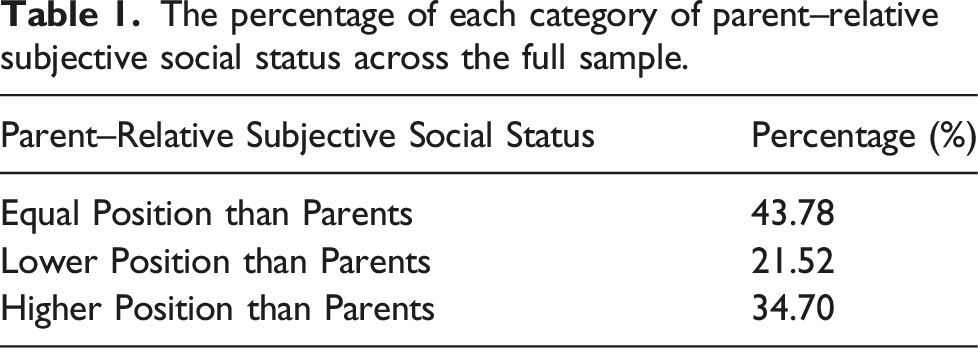
The theoretical understanding of subjective social status is operationalised by constructing a measure of status anxiety from the Eurobarometer Survey. This survey, entitled the 2017 Fairness, Inequality and Inter-Generational Mobility Survey, includes a question on social status: individuals’ social position relative to their parents in their country (‘Where would you place your parents on this ladder in comparison to you in your country?’) 2 . This measure, which I call Parent-Relative Subjective Social Status (PRSSS), tests how people are doing compared to the standard of living of their parents’ generation for radical right and radical left support. Three options are offered to respondents: they can say that they consider themselves to be in a lower, an equal or a higher position than their parents. I hypothesise that individuals who assign themselves a low social status in comparison to their parents, as opposed to those who position in an equal position to their parents, will be more susceptible to support radical right or radical left ideologies and parties. In Table 3.7 of Appendix C, I replace the PRSSS variable into a binary variable where those who rank themselves in a lower position than their parents are coded as 1 and the rest is coded as 0 (which includes those who are in an equal or higher position than their parents) to test whether those with low PRSSS are more likely to support radical right or radical left ideologies, by comparison to others. This PRSSS measure offers more cross-national comparability and greater independence from political context than alternate measures that ask respondents to identify as part of the working or middle class.
The percentage of each category of parent–relative subjective social status across the full sample.
Predictors of parent–relative subjective social status measure.
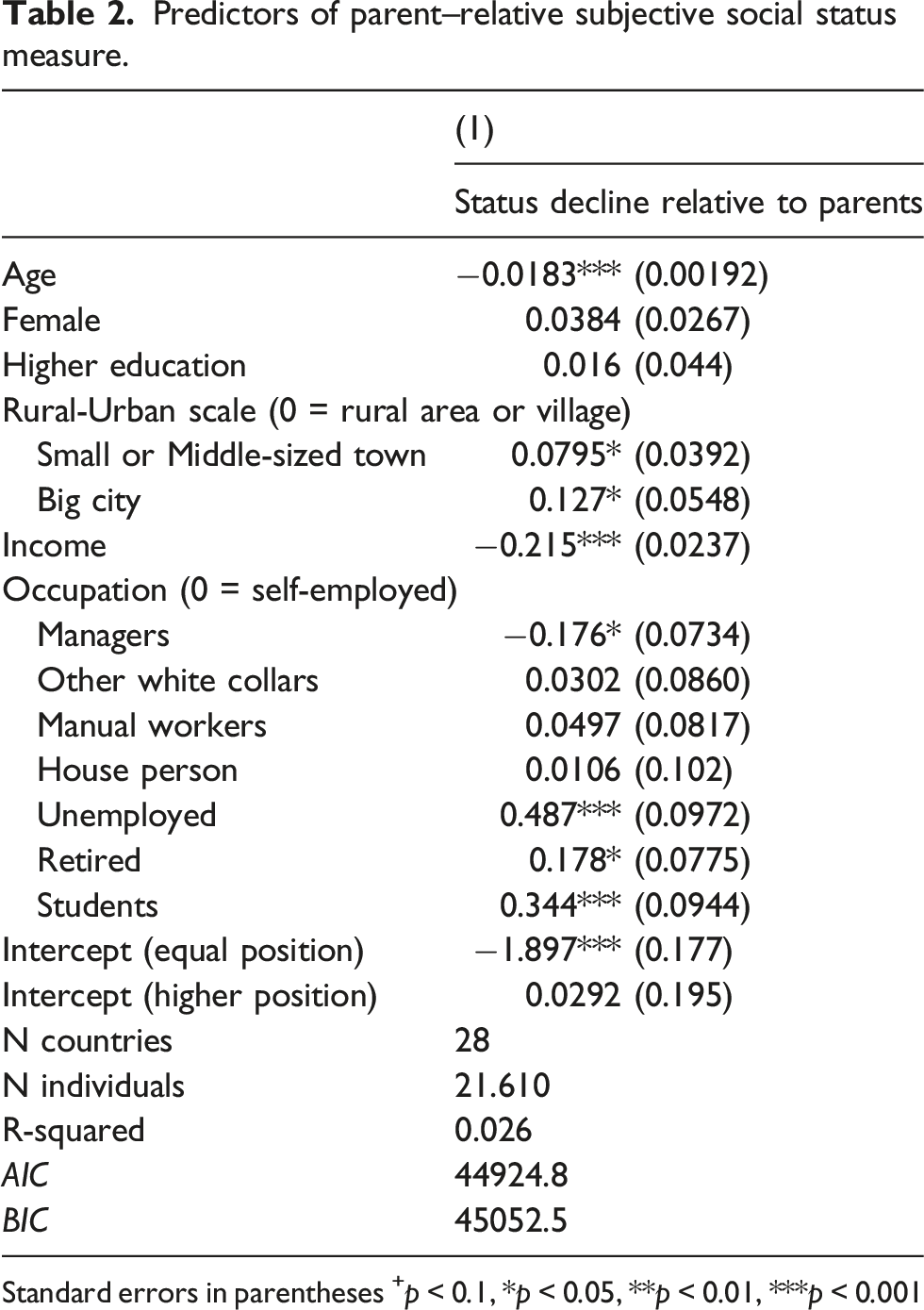
Standard errors in parentheses +p < 0.1, *p < 0.05, **p < 0.01, ***p < 0.001
Dependent variable
Given the absence of a behavioural question on party support in the Eurobarometer Survey, the dependent variable is based on the ideological left-right self-placement (on a scale of 1 to 10). I combine scores from 7 to 10 to represent respondents who place themselves on the radical right of the political spectrum and scores from 1 to 3 to capture respondents who place themselves on the radical left. This categorisation follows the identification of radical right parties by Mudde (2007) and radical left parties by March (2011)3,4. Based on the Eurobarometer Survey, 19.83% of respondents regard themselves as radical leftists compared to 25.25% of respondents who place themselves on the radical right.
Although other dimensions have been advanced to describe political ideology (e.g. the authoritarian-libertarian dimension (Middendorp, 1991)), left-right self-placement is considered an appropriate measure of political choice (Huber, 1989). There is strong empirical evidence of a very close relationship between left-right placement and party choice in the literature (Knutsen, 1997; Van der Brug and Fennema, 2007). Nonetheless, I test the validity of our results by replacing the left-right self-placement with an outcome variable that measures party choice in the robustness section. Combining individual-level survey data from the eighth and ninth rounds of the European Social Survey (2016–2018) with data on individuals’ PRSSS provided by the Eurobarometer Survey, I test whether PRSSS predicts respondents’ support for radical right or radical left parties and find similar results (see the analysis in Appendix D).
Other variables
Classic sociodemographic variables from the Eurobarometer Survey need to be added in my analysis as they are liable to influence individuals’ subjective social status. Age is included since the social comparison relative to parents is likely to be affected by age. I also control for gender since I expect a larger support of men for the radical right and radical left, as explained previously, (Mudde, 2007; Gidron and Hall, 2017) despite the recent decline of the gender gap. Objective measures of social status like education, professional status and income confer certain positions within a social hierarchy (Gidron and Hall, 2017). Lower levels of educational attainment, lower incomes and people with routine jobs usually convey a lower level of ‘objective’ status within society. Finally, I include a categorical variable that captures whether people live in rural areas, small towns or cities since rural inhabitants are more likely to have lower levels of subjective status than urban residents (Jennings and Stoker, 2019) 5
Attitudinal determinants are also strongly linked with radical right or radical left support. There is consensus in the literature that anti-immigrant attitudes are associated with radical right support (Ivarsflaten, 2008; Arzheimer, 2009) whereas redistribution and social equality are associated with radical left support (March and Mudde, 2005). The binary predictor of radical right support that measures anti-immigration attitudes in the Eurobarometer Survey asks whether respondents think immigration into their country is a good thing (coded as 0) or not (coded as 1). The best attitudinal predictor of radical left support is respondents’ opinions on redistribution. It asks whether the government should take measures to reduce income differences (coded as 1) or not (coded as 0). Those in favour of redistribution are likely to lean more to the radical left. I therefore use these two variables as proxies for the main attitudinal determinants of each respective radical ideology and party.
When appropriate weights are applied, each survey provides a representative sample of the adult population, usually based on around 1200 respondents for each country, but the sample size varies from 502 to 1592 respondents. 28 countries from Western and East Central Europe available in the Eurobarometer Survey are included in my analysis (see more information on the variables, summary statistics and countries in Appendix A).
Empirical strategy
I use the Eurobarometer Survey to test whether individuals’ Parent-Relative Subjective Social Status (PRSSS) is linked to radical right or radical left support. I estimate a series of logistic regressions with country fixed effects. My baseline specification is
I then move on to detect whether social decline relative to parents and attitudinal determinants of each respective ideology (party) are linked to support for each radical ideology (party). My second and third hypotheses are tested with the following equation
Results
Status anxiety, radical right and radical left ideology.
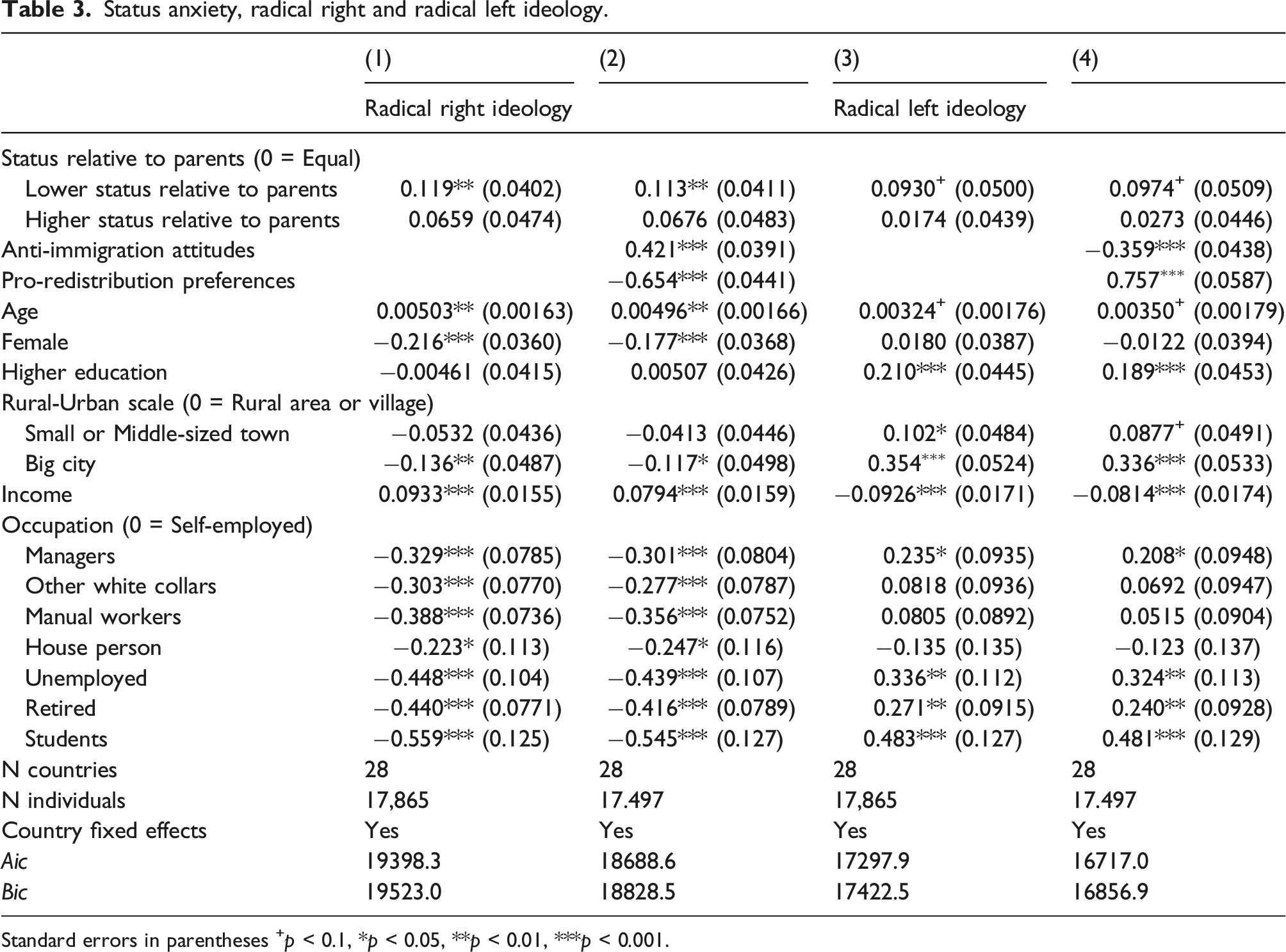
Standard errors in parentheses +p < 0.1, *p < 0.05, **p < 0.01, ***p < 0.001.
Figure 1 corroborates the hypothesis by showing increasing predictive values of radical right and radical left ideological support for those with a lower PRSSS as opposed to an equal or higher PRSSS. The probability of embracing a radical right ideology increases by around three percentage points for those with a lower subjective social status than their parents as opposed to those with an equal or higher status relative to their parents. The probability of adopting a radical left ideology increases by around two percentage points for those who have a lower social status relative to their parents as opposed to those with an equal or higher status relative to their parents. As in all models, the effect is bigger for radical right support. Predicted values of social distance relative to parents on support for radical right and radical left ideologies.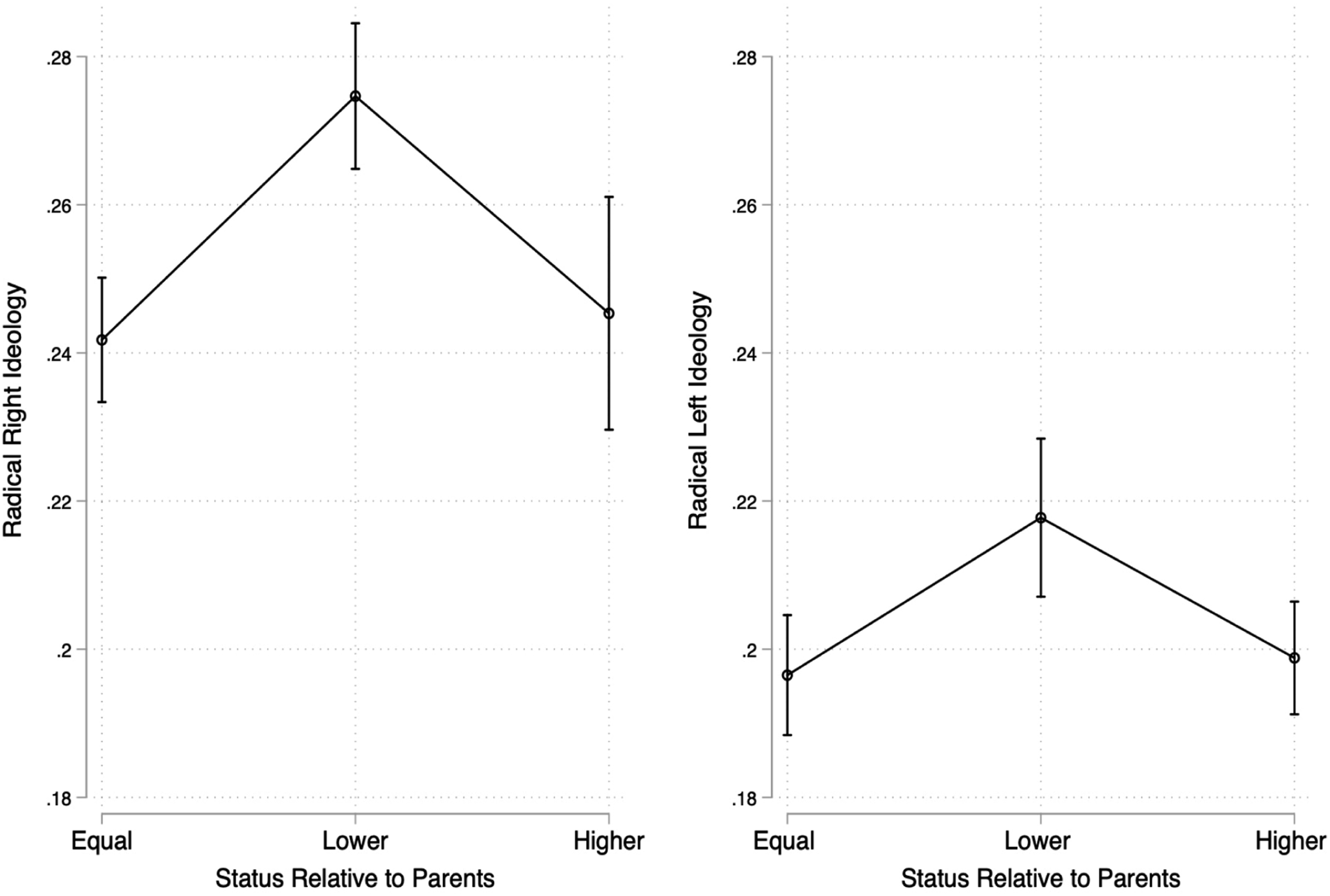
Table 3.6 (see Appendix C) demonstrates that higher levels of social status with no reference point to parents are negatively associated with support for radical left and radical right ideologies. This is further evidence that subjective social decline is related to radical right and radical left support, which is in line with previous findings (Gidron and Hall, 2017; Gest et al., 2018).
The results also hold (and are even stronger) when I exclude Eastern European countries, which have more extreme right parties than radical right parties 7 , or when I exclude the Scandinavian countries, which are likely to have more generous welfare systems (see Tables 3.8 and 3.9 of Appendix C).
Despite similar levels of status anxiety in relation to their parents, some socioeconomic features differentiate radical right and radical left sympathisers. Table 3 confirms that radical right supporters are more likely to be men, older, or from rural areas or villages than big cities, as evidenced in previous studies (Rooduijn et al., 2017). Interestingly, self-employed workers are more inclined to embrace radical right ideologies than any other workers, and income is positively correlated with support for radical right ideologies. This result can appear surprising given that working class voters are known to be typical radical right supporters (Bolet, 2021) and there is a strong relationship between low income and radical right support in the literature (Engler and Weisstanner, 2021) 8 . However, as mentioned earlier, the ’petite bourgeoisie’, that is, self-employed workers, is as much of a core constituency of radical right parties as the working class (Mayer, 1995), and this group has a higher median income than working class individuals. Self-employed workers showed a high economic risk and loss of social status due to their exposure to market forces and vulnerability to economic shocks (Ivarsflaten, 2005). Their appeal to anti-immigrant radical right ideologies can be explained by the fact that they have more status to defend from groups that are considered socially subordinate, for example, immigrants. They have more status to lose than those who are located at the bottom of the socioeconomic ladder, especially as they do not enjoy institutional safety nets that people employed in large organisations enjoy.
Concerning the sociological profile of the radical left supporters, men, urban and those with a higher education are more inclined to be leaning to the radical left. Being older only seems to marginally affect the support for radical left ideologies. Students or unemployed as opposed to self-employed workers, as well as those with lower income are also more likely to support radical left ideologies. These findings go in line with the sociodemographic traits of radical left sympathisers from earlier studies (Vezzoni and Mancosu, 2016 in Italy; Orriols and Cordero, 2016 in Spain). Radical left supporters are facing the most difficult economic circumstances whereas the radical right supporters enjoy slightly better economic conditions.
Table 3 also shows the divergent ideological attitudes of radical right and radical left supporters. While anti-immigrant attitudes are strongly associated with a radical right ideology, support for a more egalitarian system largely predicts radical left support. Both effects are large and statistically significant. Radical left support is negatively associated with anti-immigrant attitudes, as found in previous studies (March, 2011; Rooduijn et al., 2017). However, anti-redistribution preferences are also linked to radical right support. This can be justified on the grounds that the radical right electorate of our study, the ’petite bourgeoisie’, is known to be anti-state and supportive of laissez-faire policies that oppose redistribution, taxation, and welfare expenditures (Kitschelt, 1995) 9 .
These findings corroborate previous studies which have shown that status position, attitude and economic situation condition whether people turn to the radical right or the radical left (Engler and Weisstaner, 2021). The sociodemographic and attitudinal profile of radical right supporters may explain why their subjective sense of declining status is translated into radical right support. Their position as self-employed men, or from rural areas makes them more sensitive to the racialised discourses of radical right parties who construct this category of ‘losers of globalisation’ in opposition to the emerging ethnic diversity of their society. The myth of the long-lost golden age of sovereign nation-state with cultural and racial homogeneity from past generations resonates with members of this class with some status to defend, making them more likely to cast a radical right ballot as a result.
By the same token, the sociological and attitudinal portrayal of the radical left supporters may explain how the subjective sense of declining status relative to previous generation is eventually expressed through a radical left vote. Highly educated urbanites with low income and egalitarian attitudes who feel a decline in their social status are more responsive towards the radical left political rhetoric of rising social and income inequality and a shrinking welfare state.
Interaction effects.
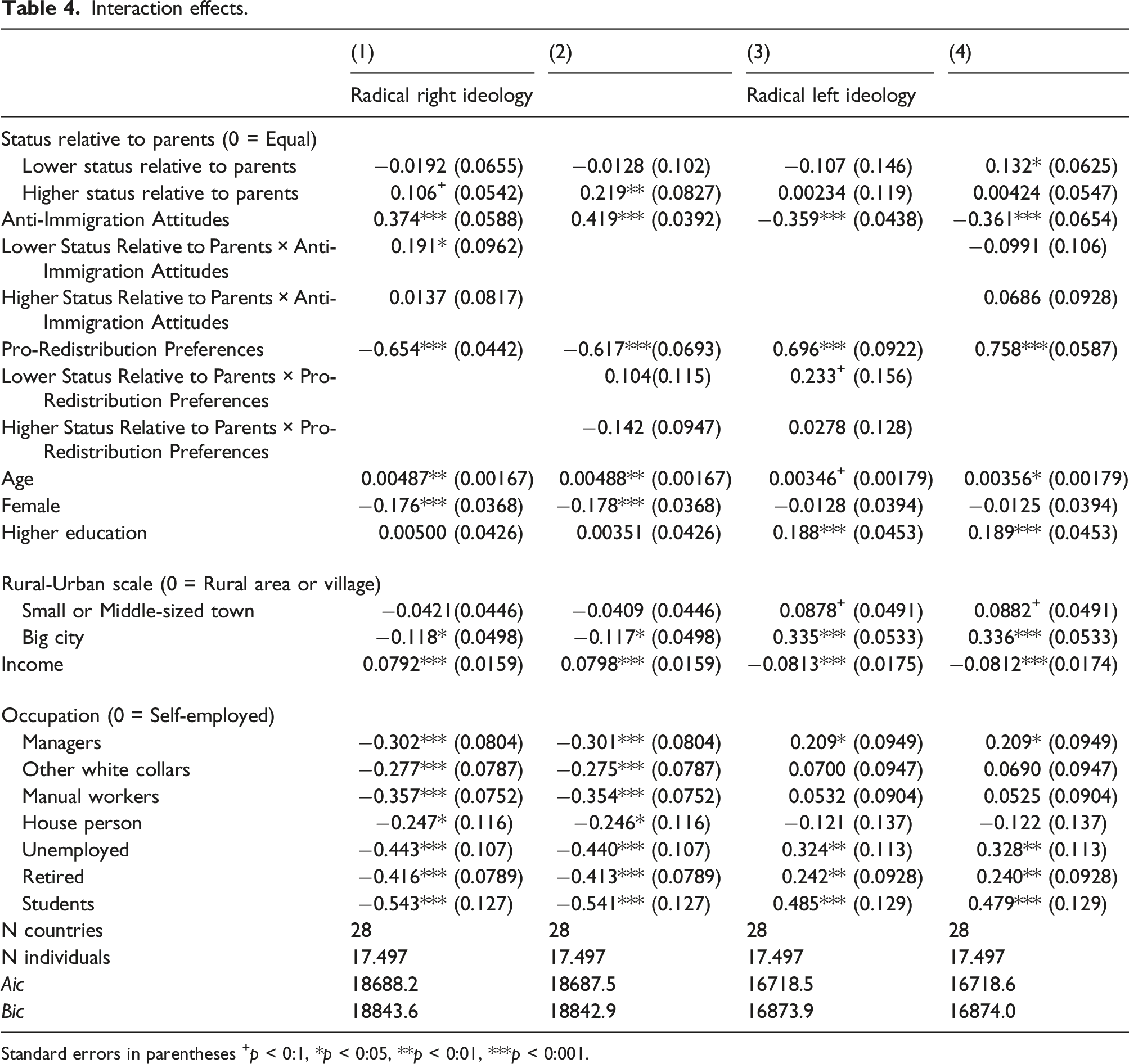
Standard errors in parentheses +p < 0:1, *p < 0:05, **p < 0:01, ***p < 0:001.
The plots, shown in Figure 2, demonstrate the significant effects of traditional attitudinal determinants for each radical ideology and social decline on support for each radical ideology. The size of the effects is strong and similar for both party ideologies. Holding anti-immigrant attitudes and experiencing social decline relative to parents increases the individual’s probability to support a radical right ideology from 0.36 to 0.48 as opposed to those with similar social decline but who support immigration. Experiencing social decline while having pro-redistribution preferences increases the individual’s probability to support a radical left ideology from 0.50 to 0.68, by comparison to those who also experience social decline but oppose redistribution. Interestingly, there are no differences in radical support between those who hold similar PRSSS positions (equal or higher PRSSS) but divergent attitudes of respective ideologies, except for those who have high PRSSS but opposing views on redistribution. This means that the attitudinal determinants (almost) only influence support for each radical ideology among those with subjective decline relative to their parents
10
. Interaction effects of attitudinal factors and social placement on support for radical right and radical left ideology.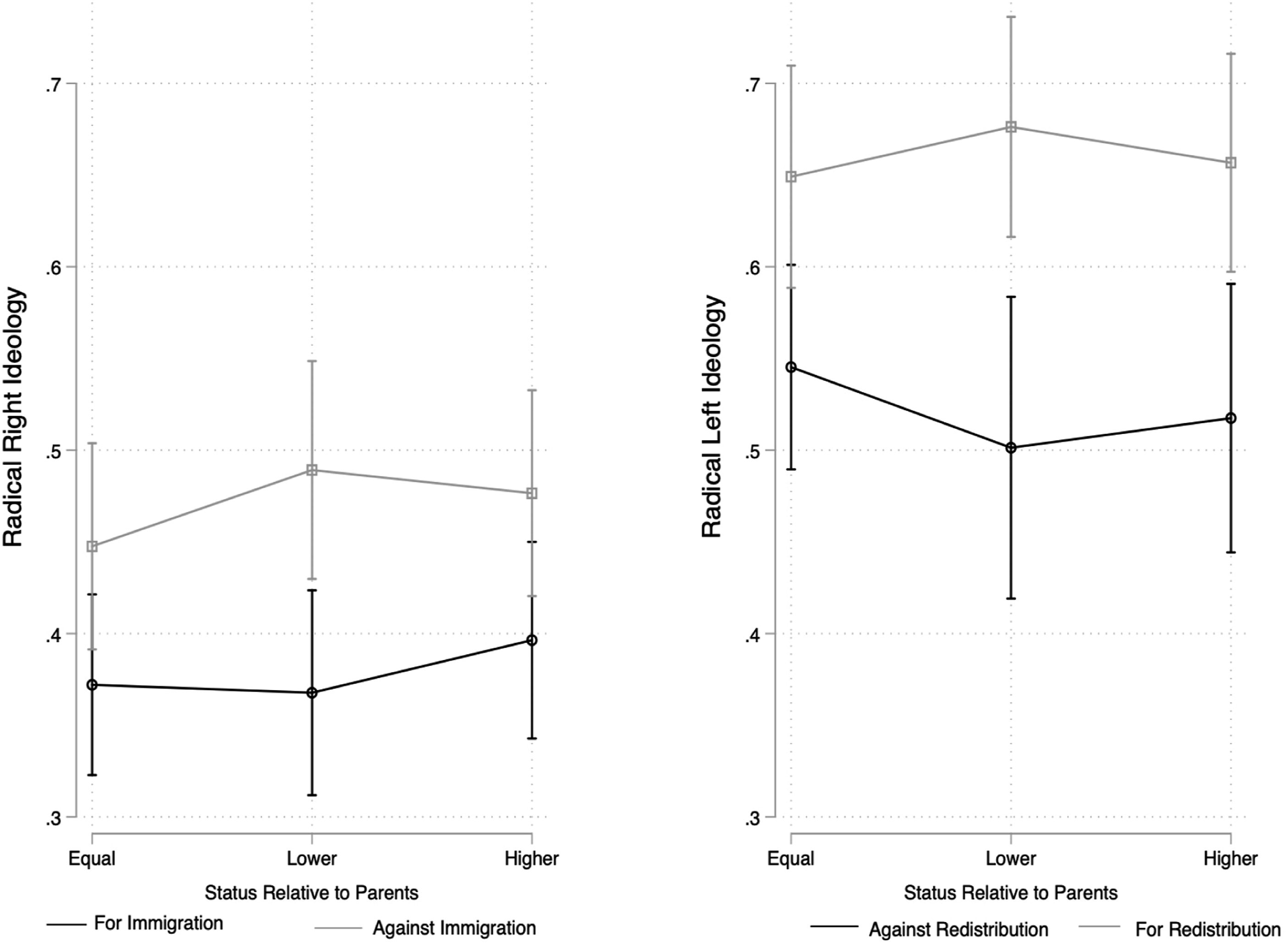
Placebo tests, shown in columns 2 and 4 of Table 4 and Figure 3, demonstrate that status decline and traditional attitudes of the opposite radical party are not attributable to more radical right and radical left support. They even show that the traditional attitudinal determinant of the radical left ideology decreases the overall support for radical right party. While anti-immigration attitudes and status decline have no effect on radical left support, pro-redistribution attitudes and status decline decrease support for a radical right ideology. This declining trend, which holds regardless of status position, is explained by the fact that I find strong anti-redistribution preferences among radical right supporters. Nevertheless, these placebo tests further provide evidence that the effect of social decline on radical right or radical left support is only amplified under the traditional attitudinal determinants of each radical party. Placebo tests.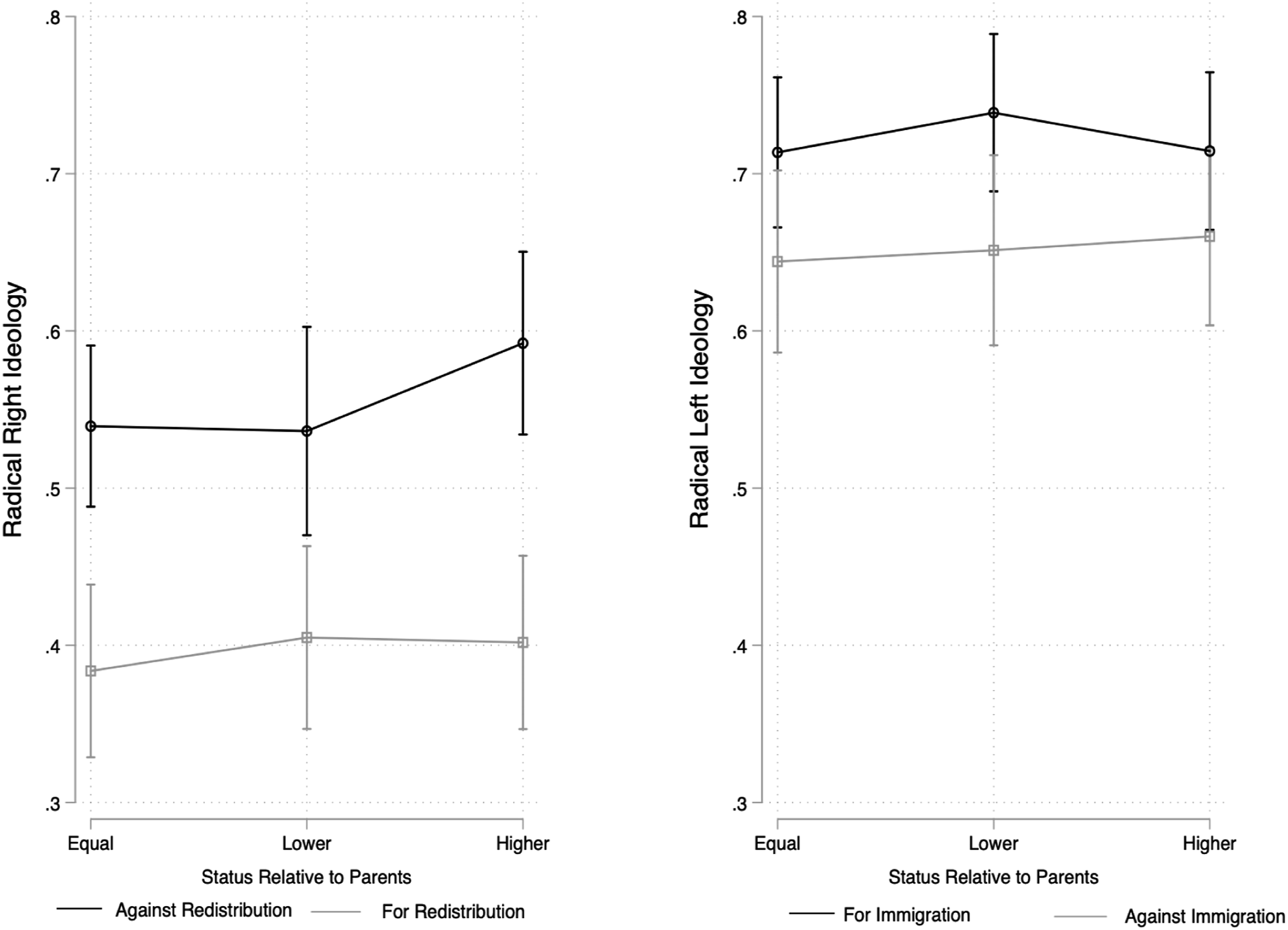
Conclusion
This paper shows the importance of considering individuals’ psychological experience of declining social status compared with their parents as a common feature among the radical right and radical left. By systematically examining the effect of declining social status in 28 Western and Central European countries, I demonstrate that having lower levels of subjective social status (as opposed to having equal levels of status) is associated with support for radical right and radical left ideologies. I also show that sociodemographic attributes differentiate radical right and radical left supporters. The former are more likely to be self-employed workers, men and rural residents, as defended in the literature. The latter are more inclined to be highly educated, urban, men and with lower income. Finally, attitudinal determinants that are traditional to each respective radical party (and its core supporters) reinforce the effect of social decline. While anti-immigrant attitudes increase the effect of status anxiety on support for a radical right ideology, status anxiety boosts radical left support when it is combined with pro-redistribution attitudes. My findings do not hinge on the exact specification of the dependent or independent variable and are robust to various model specifications.
This paper has important implications for scholars, policy-makers and pundits alike. It complements and enriches demand-side explanations behind radical support by investigating the subjective social effect, perceived economic and cultural threat in 28 European countries. Status anxiety is a powerful measure with the potential to bridge the seemingly large differences between supporters of radical right and radical left ideologies and parties. Since some of the roots of radicalism prove to be similar at both ends of the political spectrum, patterns to counteract them might require similar policy and societal responses.
Supplemental Material
Supplemental Material - The janus-faced nature of radical voting: Subjective social decline at the roots of radical right and radical left support
Supplemental material for The janus-faced nature of radical voting: Subjective social decline at the roots of radical right and radical left support by Diane Bolet in Party Politics.
Footnotes
Acknowledgements
I would like to thank Sara Hobolt, Simon Hix, Elisabeth Ivarsflaten, Chris Anderson, Jae-Jae Spoon, Werner Krause, Fergus Green and the anonymous reviewers for their valuable comments and suggestions.
Declaration of Conflicting Interests
The author(s) declared no potential conflicts of interest with respect to the research, authorship, and/or publication of this article.
Funding
The author(s) disclosed receipt of the following financial support for the research, authorship, and/or publication of this article: This work was supported by the Economic and Social Research Council.

Supplemental Material
Supplemental material for this article is available online.
Notes
Autho Biography
References
Supplementary Material
Please find the following supplemental material available below.
For Open Access articles published under a Creative Commons License, all supplemental material carries the same license as the article it is associated with.
For non-Open Access articles published, all supplemental material carries a non-exclusive license, and permission requests for re-use of supplemental material or any part of supplemental material shall be sent directly to the copyright owner as specified in the copyright notice associated with the article.
