




Abstract
After many decades and billions of dollars spent, the effects of foreign democracy promotion interventions remain poorly understood, particularly in authoritarian contexts. Do these external interventions contribute to the building blocks of democratization and democratic consolidation under autocracy? Do these potential contributions come at the cost of bolstering autocrats’ credibility? This article presents a randomized study of a democracy promotion program undertaken by a prominent international non-governmental organization (INGO) in rural Cambodia, in which elected parliamentarians from multiple political parties interacted with constituents. The intervention had relatively large effects on individuals’ knowledge about politics and self-reported political engagement but, crucially, did not give citizens increased confidence in Cambodia’s “democracy,” suggesting a role for democracy promotion without whitewashing the authoritarian nature of Cambodian politics. Overall, the results suggest that democracy promotion under authoritarianism can foster a more engaged and informed citizenry without lending undue credibility to an authoritarian system.
Keywords
Introduction
As a prominent component of foreign policy, democracy promotion attracts billions of dollars in foreign aid and substantial rhetorical attention from many world leaders. Most foreign aid for democracy promotion supports non-partisan programming (also called democracy assistance or democracy support) which is carried out in more than 100 countries by non-governmental and intergovernmental organizations (Bush, 2015; Carothers, 2004; Donno, 2013; Escribà-Folch & Wright, 2015; Youngs, 2010). In new and emerging democracies, many of these programs, including civic education initiatives, community dialogues, and civil society support, are aimed at encouraging citizens to participate in politics and empowering them to demand accountability from their governments (Lawson & Epstein, 2019). These programs are premised on the idea, supported by academic research, that democracy thrives where associational life is strong and where the citizenry is engaged with politics (Almond & Verba, 1963; Diamond, 1999; Gaventa & Barrett, 2012; Gibson, 2001; Putnam, 1993). In new and emerging democracies, this type of engagement can therefore lay the groundwork for democratic consolidation.
A substantial portion of funding for democracy promotion, however, is directed at more entrenched authoritarian countries, particularly electoral autocracies, where similar programming faces unique challenges (Bush, 2015; Grimm & Leininger, 2012; Scott & Carter, 2020). In these contexts, organizations must balance the goal of supporting democratization against the reality of working under governments that may be threatened by direct democracy promotion. As Sarah Bush documents, democracy-promoting organizations often have strong incentives to find programs that are “regime compatible,” which avoid direct challenges to authoritarian rule (Bush, 2015). These are practical decisions: few international non-governmental organizations (INGOs) want to jeopardize the safety of their staff or risk expulsion from a host country. But they also have implications for democracy promotion’s effectiveness in these contexts. Such programming runs the risk of bolstering autocratic governments and undermining public demand for genuine democratization.
Given these realities, what impact do these efforts have in practice? First, can interventions in electoral autocracies actually contribute to a more aware and engaged citizenry, in line with intentions and with evidence from more democratic settings? Second, when democracy promotion is subject to oversight by an autocratic regime, can it still increase bottom-up demand for more democratic governance? Or, by empowering citizens with knowledge about the procedurally democratic aspects of the political process in their countries and improving the responsiveness of state officials, are democracy assistance practitioners unwittingly improving perceptions of electoral authoritarian regimes, or giving a false impression of functioning democracy?
To answer these questions, this article examines a democracy promotion intervention carried out in Cambodia in 2011 and 2012. At the time, Cambodia constituted an archetypal electoral authoritarian regime. Prime Minister Hun Sen and his Cambodian People’s Party (CPP), in power for decades, consistently harassed and stifled opposition. Nevertheless, government officials often pointed to the trappings of procedural democracy in order to bolster the regime’s credibility both at home and abroad (Karbaum, 2011; McCargo, 2005; Morgenbesser, 2016; Un, 2005). In this context, we studied the effects of a program aimed at fostering dialogue between Members of the National Assembly (MNAs) and their rural constituents. The program organized village-level constituency meetings, where citizens were able to engage with MNAs from multiple political parties. The study aimed to introduce a field experiment into the ongoing INGO-led and foreign-funded program while being minimally disruptive to the existing program architecture.
The intervention studied is a reasonably common type of “indirect” democracy assistance (Grimm & Leininger, 2012) aimed at improving the responsiveness of elected officials with a combination of civic education, exposure to multiple political parties, and an opportunity to voice concerns directly to parliamentarians. 1 This article thus contributes to a growing body of research on democracy and governance that relies on field experimental methods, 2 and builds on previous work to evaluate an INGO-implemented democracy promotion intervention in an electoral authoritarian context, where a unique set of underlying conditions and concerns arise.
Based on randomization of the treatment within village pairs in rural Cambodia, we found that the intervention had relatively large effects on individuals’ knowledge about politics and their self-reported willingness to take a variety of political and civic actions. Crucially, however, the intervention did not give citizens increased confidence in the political process, which in an electoral authoritarian country would be misleading absent more fundamental reforms.
This is a somewhat hopeful finding for democracy promotion under electoral authoritarianism: this program enabled citizens to learn about civic action that could be useful or necessary in the context of future political liberalization. But citizens did not interpret this interaction with their MNAs as a sign that Cambodia was a functioning democracy. The effects also went beyond self-reported attitudes, including noticeable but unanticipated changes in voting behavior more than a year after the study’s final meeting. Thus, there is evidence suggestive of longer-term behavioral changes within treated villages, although with some remaining ambiguity and need for further study.
Although this article evaluates one specific type of democracy promotion intervention within a much broader toolkit, the findings have potentially important implications for democracy promotion in authoritarian contexts. In these settings, democracy promotion—even when it does not directly challenge the regime—can still have meaningful micro-level benefits. Furthermore, its ability to foster a more engaged and informed citizenry does not necessarily come at the expense of a public blind to the autocratic nature of its government. This is true even among citizens with little prior political awareness or democratic experience.
The remainder of this article discusses previous observational and experimental work assessing the efficacy of democracy promotion and how our study advances these conversations. It then identifies testable theoretical propositions, provides details about the Cambodian context, describes the intervention and field experimental design, and presents the results, including pre- and post-test survey data and the change in election results from 2008 to 2013. It concludes with a discussion of the implications for understanding democracy promotion’s effects in authoritarian contexts.
Micro-Level Tensions in Democracy Promotion
Democracy promotion efforts are supported by most wealthy democracies and undertaken by NGOs around the world. 3 Aid agencies and institutions like the U.S.-based National Endowment for Democracy, the European Union, and German political party foundations annually fund democracy promotion activities conducted by hundreds of organizations (Bush, 2015, p. 116). Although most Western policymakers agree that democracy promotion is a good idea for normative and strategic reasons, there is less consensus as to the efficacy of these efforts. Scholars and practitioners still possess a relatively limited understanding of the mechanisms through which democracy promotion is expected to operate in varying contexts and under circumstances frequently defined by conflicting foreign objectives. 4
Many existing studies of democracy promotion rely on cross-national evidence (e.g., Bush, 2015; Donno, 2013; Escribà-Folch & Wright, 2015; Finkel et al., 2007, 2020; Heinrich & Loftis, 2019; Risse & Babayan, 2015; Savage, 2017; Schraeder, 2003; Shyrokykh, 2017; Steele et al., 2021; Ziaja, 2019). A key limitation of such analyses, however, is their inability to confront thorny problems of causal inference. Recognizing this limitation, more recent work has employed field experimental methods to study the micro-level effects of democracy promotion programming and similar initiatives (e.g., Buntaine et al., 2018; Chong et al., 2015; Fearon et al., 2009; Finkel & Lim, 2021; Fujiwara & Wantchekon, 2013; Giné & Mansuri, 2018; Gottlieb, 2016a; Malesky et al., 2012; Moehler, 2010; Mvukiyehe & Samii, 2017; Paluck et al., 2010). The randomized nature of these studies has helped shed light on the degree to which individual interventions have produced specific outcomes and changes in multiple countries.
Rather than triggering democratic transitions directly, democracy promotion is generally thought to operate through intermediary channels, engendering changes in specific conditions that might be associated with a higher likelihood of democratization or democratic consolidation (Grimm & Leininger, 2012; Steele et al., 2021; Wolff & Wurm, 2011). There is not yet consensus on a theoretical model of how specific democracy promotion efforts connect to theories of democratization, but these initiatives and their goals are loosely guided by theoretical expectations about the ingredients or conditions that foster democratic outcomes (Steele et al., 2021, 507; Finkel et al., 2007, 410). On a practical level, then, democracy-promoting organizations often take aim at individual-level outcomes as a path toward bolstering democracy.
For instance, a number of programs work to support the building blocks of a robust democratic citizenry. Democracy benefits from an engaged public and vibrant civic life, which can contribute to social capital and demands for responsiveness (Almond & Verba, 1963; Diamond, 1999; Fukuyama, 2001; Gaventa & Barrett, 2012; Gibson, 2001; Milner, 2002; Putnam, 1993). By cultivating public awareness, interest, and engagement in politics, democracy promotion initiatives can therefore help foster the conditions that enable societies to take advantage of democratic openings when they emerge. Training citizens in democratic practices, their rights, and the opportunities available to them to contact their elected officials could also facilitate higher levels of political efficacy among citizens (Bowler & Donovan, 2002; Finkel, 1985).
Experimental studies enable scholars to examine whether individual-level outcomes such as these are, indeed, affected by democracy promotion programming and similar interventions. Although this type of programming takes place in countries across the spectrum of regime type, much of the scholarly work examining its effectiveness has so far been carried out in countries that have already achieved some level of democracy. This includes studies in consolidated democracies (e.g., Chong et al., 2015; Fujiwara & Wantchekon, 2013; Gottlieb, 2016a), “fragile” emerging democracies (e.g., Collier & Vicente, 2014; Driscoll & Hidalgo, 2014; Finkel & Lim, 2021), and post-conflict settings (e.g., Bidwell et al., 2020; Mvukiyehe & Samii, 2017; Paluck et al., 2010). In these contexts, experimental evaluations have furnished evidence that democracy promotion initiatives can produce normatively desirable micro-level effects, particularly with respect to citizen engagement and accountability.
Gottlieb’s field experiment in Mali, for example, demonstrated how a civic education initiative increased voter expectations of the performance of their elected officials and the likelihood that citizens sanction poor performers (Gottlieb, 2016a), although it also widened the gender gap in civic participation there (Gottlieb, 2016b). A randomized trial of a town hall program in post-conflict Liberia improved enthusiasm for electoral participation and willingness to report on electoral manipulation (Mvukiyehe & Samii, 2017). An evaluation of a series of community civic education workshops in the Democratic Republic of the Congo found strong positive effects on non-electoral participation and political efficacy (Finkel & Lim, 2021). Other experiments not associated with formal INGO-led and foreign funded democracy promotion, such as a town hall program carried out in Benin in collaboration with presidential candidates (Fujiwara & Wantchekon, 2013) and a series of candidate debates in Sierra Leone (Bidwell et al., 2020), demonstrated that these types of interventions can equip voters with political knowledge and affect voting behavior, reducing the effects of clientelism and rewarding better performing candidates. Although these and similar interventions did not produce uniformly positive results (see, for example, Chong et al., 2015), they did confirm that, in democratic contexts, pathways exist through which initiatives led by democracy-promoting organizations can strengthen citizens’ capacities to hold government officials accountable, particularly when they have sufficient information and awareness.
But a significant portion of aid for democracy promotion globally goes to programming in non-democracies (Scott & Carter, 2020), where these pathways may be distinct. Mechanisms for citizens to hold leaders accountable, in particular, are more limited in autocracies and often do not exist through traditional electoral pathways. Furthermore, evidence from autocratic contexts suggests that, absent the potential for electoral sanctioning, initiatives intended to promote transparency can have perverse consequences (Malesky et al., 2012). 5
Nevertheless, supporting the building blocks of a democratic citizenry is still potentially important under autocracy. Openings for political transitions are often hard to predict, and as such, focusing on shaping attitudes and practices among ordinary citizens, in order to lay the groundwork for positive interactions with a future democratic state apparatus, represents a plausible strategy for democracy promotion to have a positive effect in the long run, even under electoral authoritarianism.
However, particularly in autocracies, democracy promotion often possesses a second, more “direct” aim: strengthening genuine democratic competition and public demands for it. Programs geared toward bolstering the capacity of opposition parties, supporting independent media and critical civil society, and encouraging committed democrats to run for political office are designed to improve the democratic nature of the system itself. Such initiatives also benefit from the presence of genuine demand from the public for democratic and accountable governance and are therefore often paired with programming aimed at cultivating such attitudes and encouraging public scrutiny of elected officials.
These two goals are complementary in theory. For democratic consolidation to take place, countries require both a citizenry capable of interacting productively with state institutions and the existence of genuine democratic institutions and processes. But, in some cases—particularly where entrenched autocrats are skeptical of the intentions of foreign democracy assistance practitioners—these goals might come into conflict (Grimm & Leininger, 2012). Established autocrats might have the capacity and incentive to limit efforts that seek to promote genuine competition. Such conditions push democracy-promoting organizations toward “tamer” programming (Bush, 2015). Many of these programs hew more toward the “indirect” goal of cultivating citizen awareness in the purported interest of laying long-term groundwork for positive engagement with state institutions, and are often paired with efforts to strengthen responsiveness among officials and improve overall governance.
But in doing so, these initiatives might also inadvertently stifle public demand for genuine democratic governance and thereby undermine the goal of improving the democratic nature of the system itself. If citizens are aware of the existence of multiple parties and channels for voicing grievances, for example, they may view the prevailing authoritarian state apparatus as relatively democratic and responsive. This effect might, in turn, limit bottom-up demand for genuine democratic change, thereby removing a potential pressure point on the regime and further co-opting public engagement for the regime’s benefit (Bjornlund, 2001; Bush, 2015; Carothers & Ottaway, 2005). This represents a particular concern in light of findings from research into the strategic use of democratic institutions by authoritarian leaders, as well as debates about the role of electoral politics in the stability of authoritarianism (e.g., Gandhi, 2010; Gandhi & Lust-Okar, 2009; Malesky & Schuler, 2010; Morgenbesser, 2017a; Schedler, 2006; Svolik, 2012; Truex, 2016, 2017). If regimes can instrumentalize citizens’ feelings of efficacy and belief that the prevailing system is democratic in nature, then democracy promotion may be contributing to the first goal, while undermining the second.
Cambodian Political Context
In Cambodia’s electoral authoritarian context, concerns about both the overall efficacy of democracy promotion and the potentially counterproductive effects of working within a restrictive framework are especially potent. Although Cambodia faces a number of ongoing development challenges, promoting democracy has been among the top priorities of Western donors since the 1990s (Peou, 2004). After nearly two decades marked by genocide and civil war, multiparty elections were conducted in 1993 with support from a major UN peacekeeping force, and a commitment to democracy was enshrined in the post-war peace agreement, as well as in Cambodia’s new constitution. In the subsequent years, many in the international community, particularly Western donors, invested significant resources in Cambodia’s democratic rebirth (Ear, 2012; Sullivan, 2016).
Many of these efforts focused on basic civic awareness and improving government responsiveness. Cambodia is one of the poorest countries in Southeast Asia, and average levels of literacy and education are low, particularly in the rural areas targeted by this study’s intervention. 6 These citizens had relatively limited political awareness, despite high voter turnout. For example, although most respondents had been voting since 1993, almost 75% had never heard any of the terms used to describe the National Assembly or could not guess anything that the National Assembly does in an open-ended question.
Cambodia has had a history of thin, one-way relations between state and society, which creates challenges for the emergence of democratic engagement and accountability (Hughes, 2001). Citizens have few opportunities to engage with their elected representatives. National politicians in Cambodia, as in many electoral authoritarian regimes, typically spend little time in their districts, especially outside of campaign periods, and are often perceived as out of touch and unresponsive. This is the case even as these legislators generally possess some ability to channel government resources to their districts and push local authorities to improve service provision (Lust-Okar, 2009; Malesky et al., 2011; Malesky & Schuler, 2010; Miller, 2015; Truex, 2016, 2017; Tsai, 2007; Williamson & Magaloni, 2020). In this context, efforts to strengthen public engagement and government responsiveness appear sorely needed, and democracy promotion—if it works as intended—serves as a potentially important vehicle for doing so.
But Cambodia’s repressive electoral authoritarian regime also presented challenges for democracy promotion (Ear, 2012; Human Rights Watch, 2010; McCargo, 2005; Schedler, 2013). Despite lofty commitments to democracy established in the 1990s, the subsequent years saw the ruling Cambodian People’s Party (CPP) consolidate its power. Prime Minister Hun Sen, who leads the party, used the threat of violence to secure a power-sharing arrangement after the CPP placed second in the 1993 vote and then staged a coup in 1997 to oust his coalition partner and assume full control (Strangio, 2014). Since then, the CPP has engaged in numerous tactics intended to intimidate, weaken, or eliminate electoral competition (Brown, 1998; Ear, 2012; Hughes, 2007; Peou, 2004; Sullivan, 2016).
Although Cambodia is a post-conflict country, it is distinct from other such contexts where experimental evaluations of civic education initiatives have been undertaken previously (e.g., Finkel & Lim, 2021; Mvukiyehe & Samii, 2017). At the time of this study, the CPP had firmly consolidated control over politics at all levels. The government tolerated but periodically challenged or undermined democracy promotion programs. Opposition parties were allowed few opportunities for voice. Many citizens were afraid to share opinions perceived as counter to the ruling party’s position, detentions of citizens by police were routine, and surveillance was more or less expected during political events (see Human Rights Watch, 2012). As a multiparty authoritarian regime at the time of our study, Cambodia therefore represented the most common type of autocracy where democracy promotion is carried out (Scott & Carter, 2020), making it an instructive case.
Conditions have deteriorated further in recent years. Since this study concluded fieldwork, prominent INGOs working on democracy and human rights were expelled from the country (ICNL Research Center, 2019). This expulsion came in the context of a crackdown, which culminated in the dissolution of Cambodia’s largest opposition party in 2017 and the emergence of a National Assembly populated by a single party, the CPP (Loughlin, 2021; Morgenbesser, 2019).
Nevertheless, at the time of the intervention, Cambodia’s government worked to maintain an image of being committed to democratic processes and governance. The regime frequently highlighted the presence of nominally independent legislative and judicial institutions and touted periodic elections as evidence of its democratic credentials (McCargo, 2005; Un, 2011). Leaders also pointed to the presence of INGOs engaging in democracy assistance to bolster this claim and leaned heavily on evidence of increasing responsiveness among elected officials. These justifications were targeted both at international donors invested in a democratic Cambodia, as well as at the domestic population. These outward claims of democratic credentials by the CPP, combined with the steady deterioration of political conditions on the ground, have led some to question the efficacy of democracy promotion in Cambodia and even to claim that these efforts have been a failure, wasting aid and potentially legitimizing an authoritarian regime with a veneer of democracy (Dunst, 2019; Ear, 2012; Hughes, 2007; Karbaum, 2011; Ponniah, 2018).
Although the specific role that the regime’s claims to democracy play in its domestic legitimation strategy remains opaque, genuine public demand for democracy in Cambodia does exist and has intensified in recent years (Morgenbesser, 2017b), including during the time period under study. The theory of democratization by elections suggests that rising expectations among citizens about the potential for genuine, democratic political change might help to build a self-fulfilling prophecy and contribute to public mobilization (Lindberg, 2009). Although neopatrimonialism has arguably blunted the potential for democratization by elections to proceed in Cambodia (Morgenbesser, 2017b), the threat posed by these heightened expectations remained potent at the time of this study, as evidenced by protests in the aftermath of the 2013 parliamentary elections. Furthermore, despite the extent to which common patrimonial and neopatrimonial practices, such as gift-giving, have buttressed the CPP’s power historically, negative citizen perceptions of these activities may undermine their capacity to serve as the foundation of a long-run legitimation strategy (Norén-Nilsson, 2016). For these reasons, the Cambodian regime had some imperative to cast itself in a democratic light and attempt to build and reinforce public perceptions that democratic responsiveness existed in the country.
The Cambodian case thus highlights the potentially stark tradeoffs that engaging in democracy promotion in authoritarian contexts entails. On one hand, if foreign democracy-promoting interventions can, indeed, empower citizens with the tools to engage their elected officials and demand better governance, as analogous programs do in more democratic contexts (Pruitt & Thomas, 2007), then they would provide a valuable contribution to Cambodia’s political development and a helpful foundation for promoting democratic consolidation in the event of a future democratic opening. But these potential benefits may also come at the expense of promoting a false perception among citizens of their own political efficacy within the prevailing autocratic system, which could fulfill public expectations and temper bottom-up pressure for genuine democratization.
Multiparty Rural Constituency Meetings
This study examines both possible outcomes—that a democracy promotion intervention can empower citizens to engage with politics and that it may promote false confidence. There are many other forms of democracy support or assistance, and the intervention studied is one of a number of possible interventions that organizations use to improve citizen knowledge and engagement (Bush, 2015). 7
As part of its democracy assistance programming in Cambodia, beginning in 2004, the INGO invited Cambodian political parties to participate in constituency engagement. Recognizing that once elected, individual MNAs in Cambodia were not regularly visiting their constituencies or reporting on their activities and programs, this democracy support intervention sought to increase accountability by creating opportunities for two-way dialogue between elected MNAs and a subset of their rural (and therefore even more neglected) constituents. The stated objectives of the program included improving citizen awareness of how multiparty democracy should work and increasing the ability of citizens to make demands from their elected officials. Few opportunities existed in Cambodia for constituents to interact with their elected representatives, particularly those from opposition parties, and it was rare for opposition members to appear on equal footing with representatives from the ruling CPP. For most participants, these interactions were the first time that they had seen representatives of multiple parties interact with one another and the only time their legislators had visited their village.
Events were generally well attended, including between 300 and 1000 community members. Meetings began with remarks by a representative of the INGO, who explained the event’s purpose. Each introduction included a statement that Cambodia has democratic institutions and that participants had elected their representatives and had a right to share their concerns. 8 INGO staff also explained that elected representatives were charged with forming policies and exercising government oversight, but not providing gifts or personal favors. They also reminded participants that everyone in attendance had the right to speak and be heard, as well as to criticize and disagree with positions expressed by the MNAs.
Participating MNAs offered brief opening remarks to the audience, and then constituents could voice concerns, raise questions, and request that actions be taken to resolve problems. During their allocated response time, MNAs could update citizens on their activities and provide other relevant information. The events encouraged unscripted communication, allowing for sometimes challenging questions and demands from citizens. 9 Citizens who attended the meetings were given water and bread, but no other incentives for participation.
Representatives from five parties in the National Assembly participated in the program: the CPP, the Sam Rainsy Party (SRP), FUNCINPEC (Front Uni National pour un Cambodge Indépendant, Neutre, Pacifique, et Coopératif), the Human Rights Party (HRP), and the Norodom Ranariddh Party (NRP). Within each province, all parties with one or more elected MNAs were invited, with three or four that typically attended each event. 10 Because it required multiparty participation and because of resistance from the CPP, the INGO did not run this program in the half of provinces that were represented exclusively by the CPP. 11
Empirical Expectations
What were the consequences of the constituency meetings? The hypotheses below, developed in collaboration with the INGO, were motivated in part by experiences in other contexts, as well as expectations among expert practitioners about the program’s effects. The overall goal of the intervention was to increase citizen capacity to demand accountability and responsiveness from their elected officials. The theory of change articulated by the INGO in designing the program was that providing citizens with opportunities to interact with their MNAs would lead them to be more aware, informed, and engaged in the political process, thus contributing to accountability outside the campaign period. 12
Outcome measures were drawn primarily from a survey, based on a template that the partner INGO adapted to the Cambodian context in consultation with local staff and a Cambodian survey firm. The survey contained six families of questions, and the hypotheses match the pre-specified sections of the survey. The first five hypotheses address the core questions at issue in this article, namely, what impact this democracy promotion program had on the attitudes and behaviors of citizens toward political institutions and processes. There are two additional exploratory hypotheses with respect to a key downstream behavioral measure: voting in national elections.
First, we expected that the intervention would increase participant knowledge of the roles and responsibilities of MNAs. Baseline levels of political knowledge and awareness among rural constituents were low, so exposure to basic information about the political process provided at the meeting seemed likely to increase political knowledge. Similarly, open debate between CPP and opposition party representatives was expected to make respondents more familiar with politics and more willing to talk about politics.
(
( We also expected that the events would increase participants’ civic engagement. The concluding remarks from the moderator urged attendees to continue communicating with their representatives. Often, MNAs also encouraged participants to contact them about their concerns after the event. Thus, we expected that participants would increase their reported interest and activity in a variety of political actions, including signing a petition, protesting, and contacting their MNA. This hypothesis was also rooted in the idea that knowledge of and exposure to politics can help promote political engagement.
( We also expected the meetings to improve perceptions of basic MNA responsiveness. Survey questions asked about whether MNAs communicated with constituents or engaged in activities on behalf of communities—a relatively low bar in terms of responsiveness, though still an important one. Since the meetings themselves provided an opportunity for constituents to interact directly with their MNAs, these questions also functioned as manipulation checks. Exposure to the constituency meeting should have, at minimum, increased citizen perceptions of the responsiveness of their own MNAs.
( The events were expected to increase citizen confidence in the political process, including changes in participant attitudes toward their own role in politics and toward opposition political parties. Direct interaction with elected representatives from multiple parties was also expected to increase participants’ confidence in the efficacy of representative democracy as a system. Baseline levels of confidence in the political system were middling, so there was room for the intervention to strengthen such confidence. Although strengthening political efficacy was viewed as beneficial by the INGO and therefore prioritized, as discussed above, the downside risk is the creation of false confidence in a system unlikely to yield true democratic accountability.
( In designing this study, we had hoped to also measure behavioral change resulting from the intervention, but ideas were judged too risky or too artificial for the INGO to implement in the Cambodian context. Thus, for the purposes of this article, after implementation, we added downstream hypotheses about potential effects of the intervention on voting behavior in the election that occurred in 2013, more than a year after the final constituency meeting. In part because the program was explicitly prohibited by the CPP during campaign periods, the program was not designed to affect election results. As such, INGO staff were initially reluctant to specify exactly how this program would have influenced electoral outcomes and were uncertain about whether they expected the effects to last until the next national election. Nevertheless, given that the program provided a unique opportunity for opposition parties to reach constituents and appear on equal footing with the CPP, we expected that the treatment might increase support for opposition parties and decrease support for the CPP. In addition, given the expectations about political knowledge and engagement outlined in the previous hypotheses, we also expected that it might increase voter turnout. Both of these hypotheses should be considered exploratory.
(
(
Design Details
The existing village selection process for this program relied on the expertise of hyper-local NGOs active in the selected districts. These NGOs assessed whether a constituency meeting could realistically be held, including requirements for low levels of political tension, relative accessibility, and reasonably cooperative local officials. The INGO determined that this local expertise was a necessary component of the program and therefore ruled out a very centralized random assignment of the treatment. Because criteria like political tension and cooperative local officials can change quickly, the village selection process was completed by Cambodian NGO partners about 1 month before each constituency meeting, and the study therefore required a rolling randomization procedure that incorporated the localized village selection process over a nine-month period.
The local partner NGOs were asked to choose two candidate villages for each potential meeting within each target district, using their normal criteria to select villages that would be otherwise equal candidates, and to ensure that the two villages they selected were sufficiently far apart as to make travel between them on the day of the event (and therefore spillover) unlikely. After the two village names were forwarded to the INGO’s offices in Phnom Penh, a field staff member, with a staff witness(es), flipped a coin to determine which village would be treated.
All analysis incorporates the village-pair randomization. 13 Six pairs were chosen in this manner, each containing one treatment village and one control village, and received pre-treatment and follow-up surveys. An additional three pairs were randomized to treatment or control, but this final set did not receive the survey and are excluded from the survey analysis for reasons unrelated to treatment or outcomes. 14 All 18 villages (nine treatment and nine control) received qualitative, follow-up monitoring and are included in the election results analysis.
Survey Data Collection, Attrition, and Balance Tests
Within the six pairs of surveyed villages, a total of 1440 baseline surveys were administered across three provinces. 15 Half were administered in six treatment villages, and half in six control villages (120 per village). In treatment villages, respondents were given written and verbal invitations to the constituency meeting and encouraged by the survey enumerator to attend. The baseline survey was conducted approximately 1 week prior to the event. The survey team created village maps and, after selecting a random starting point, chose every other household for a pre-test survey of one adult. If there were too few households in the designated village, households in the commune were selected using the same procedure until the target of 120 respondents was reached. 16 Once a house had been selected, survey enumerators used a coin flip to determine whether a male or female household member would be interviewed in order to ensure a gender-balanced sample. 17
Approximately 1 week after the meeting was held, researchers resurveyed baseline participants in treatment and control villages. The post-test survey was conducted relatively quickly after the intervention to avoid attrition due to agriculture-related travel. Although one may be concerned that 1 week is not long enough to test for more durable effects, this is much longer than analogous intervals between treatment and outcome measurement in most survey experiments (Gaines et al., 2007). Furthermore, while few political science studies account for the duration of treatment effects, in one study of political TV ads, significant short-term effects had disappeared a week after treatment, suggesting that 1 week is a plausible amount of time to test for more durable changes while minimizing concerns about attrition (Gerber et al., 2011).
Some studies experience differential attrition between treatment and control groups, which can create challenges for analysis. In this study, however, 92 percent and 91 percent of pre-test survey respondents in treatment and control villages, respectively, completed the follow-up survey (see Online Appendix Table 1 and Appendix Figure 1 for the CONSORT diagram).
With a large survey, pre-treatment covariate balance tests are somewhat challenging to present in an efficient manner that accounts for the likelihood that some variables will show statistically significant differences by chance. We utilize Hanson and Bowers’s method to calculate an omnibus balance test in a stratified, clustered sample (Hansen & Bowers, 2008). This test indicates that the treatment and control villages are not balanced on some baseline covariates. 18 Closer inspection of individual tests indicates a number of small differences that are not substantively meaningful, including an age difference of about 2 years and some differences in the Engagement with the Political Process survey section. Nevertheless, given the timing of village selection and the randomization procedure, we cannot come up with an obvious reason to explain the imbalances other than chance, and the inclusion of pre-treatment baseline measures of all dependent variables mitigates concerns about covariate imbalance for the purposes of our analysis.
Analysis and Results
Results for the survey analysis are presented from the following model

y it represents each outcome variable of interest for individual i at time t. Time t indicates the follow-up survey, and time t − 1 the baseline survey. T it represents treatment status equal to 1 if individual i lived in a village that received the treatment. The variables μ1 through μ5 indicate village-pair dummies and ϵ i is the error term. All models include village-pair fixed effects so that outcomes are compared within village pairs. Because this study focuses on individual-level changes in attitudes, we include individual responses but cluster the standard errors at the level of the commune, an administrative unit which includes the selected villages and neighboring houses that were part of the survey universe and potential invite pool for the event. 19 For binary outcome variables, results are presented as linear probability models. For ordinal outcome variables, the results are presented as linear models (OLS). 20 For efficiency of interpretation, some of the Likert scales have been converted to binary agree/disagree (or similar) variables, as specified in tables. To summarize the results from the survey in a manner corresponding to the hypotheses, we created simple additive indices of the questions in each section that a respondent answered positively or correctly, with directionality of the question inverted as noted in the tables for consistency. All tables also include the baseline mean for each dependent variable.
The Appendix includes an alternative specification following Lin’s recommendation for covariate adjustment in experiments, which includes an additional set of baseline covariates and a full set of treatment*covariate interactions (Blair et al., 2019; Lin, 2013). Results in the Appendix with covariate adjustment also use CR2 standard errors and generally show the same point estimates with smaller standard errors (Blair et al., 2019).
The main tables below include the unadjusted p-values. Multiple comparisons adjustments were run for each of the five families of survey questions. The adjusted p-values for the false discovery rate in each family of questions followed the method outlined by Benjamini–Hochberg.
21
The same test is run on the full set of indices presented in Figure 1, treating the indices separately as an additional “family” of tests. These adjustments do not change any of the substantive interpretations of the main results. Any marginal changes to statistical significance are noted. Summary treatment effects by survey section.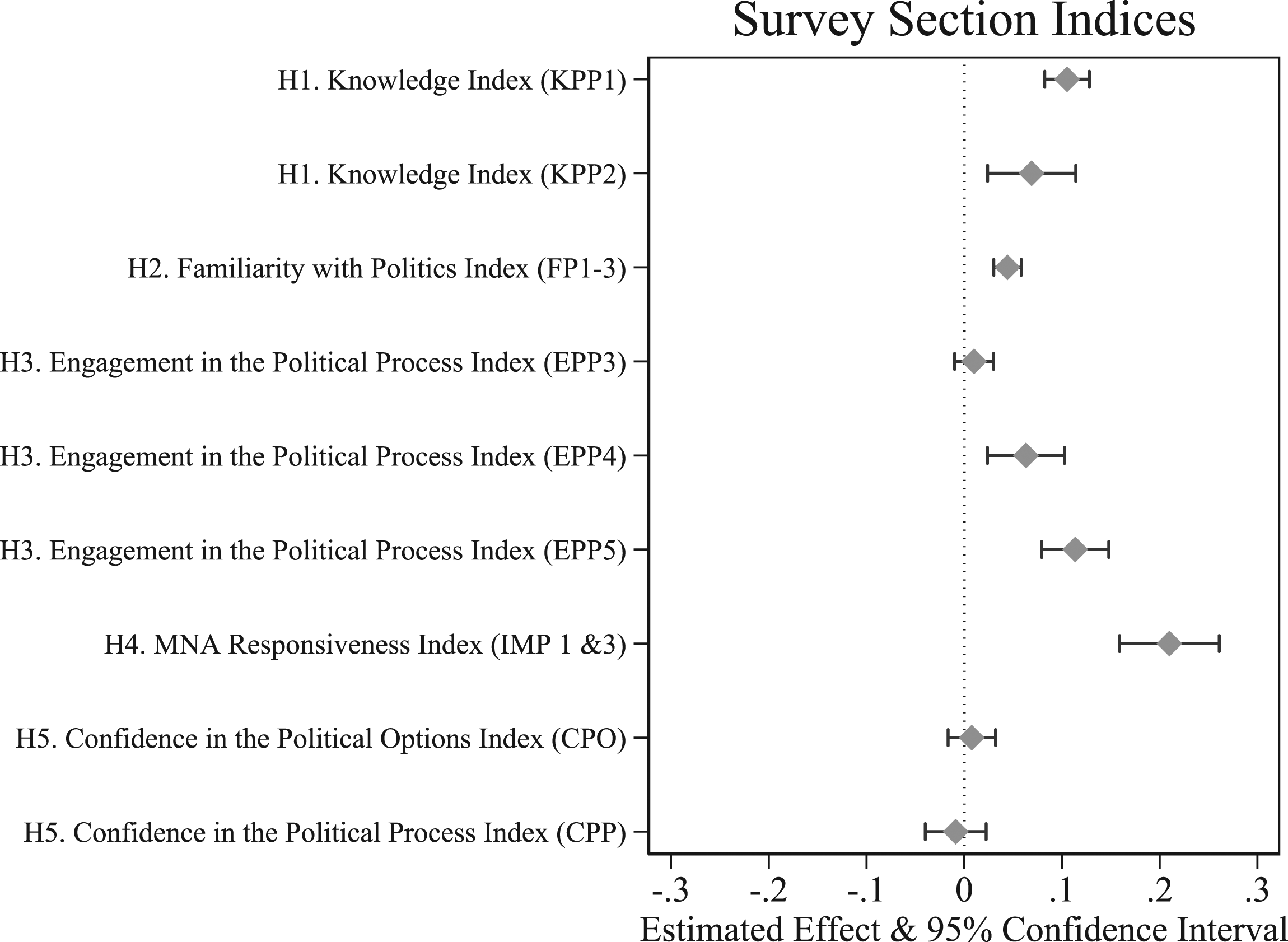
The coefficients on baseline measures (β2) are omitted from the tables. Note that the baseline surveys reveal very low levels of existing political knowledge and participation, potentially creating a best-case-scenario for civic education, as discussed above. On other variables, such as confidence in the political process, the baseline results are middling, leaving significant room for improvement.
All reported effects of the constituency meetings are “intent to treat” estimates. Because not all survey respondents actually attended the meetings, these are likely underestimates of the effect that would have been measured if all had attended. However, we also expect potential spillover within villages since respondents who did not attend may have heard about the events from family or neighbors. Across all six treatment villages, about 56 percent reported that they had attended a constituency meeting in the follow-up survey. Zero respondents in the control villages reported having attended.
Survey Results
Knowledge of the Political Process.
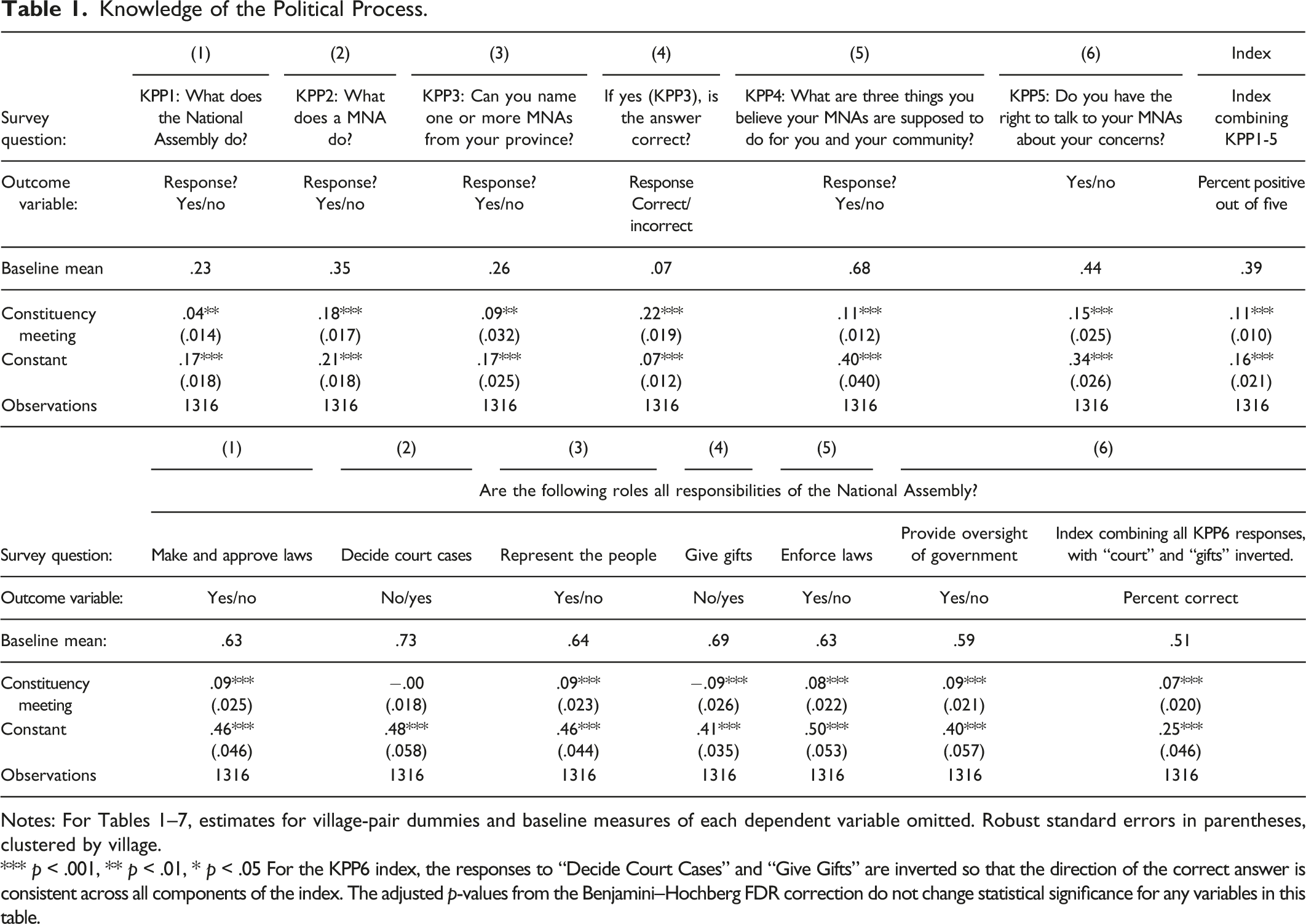
Notes: For Tables 1–7, estimates for village-pair dummies and baseline measures of each dependent variable omitted. Robust standard errors in parentheses, clustered by village.
*** p < .001, ** p < .01, * p < .05 For the KPP6 index, the responses to “Decide Court Cases” and “Give Gifts” are inverted so that the direction of the correct answer is consistent across all components of the index. The adjusted p-values from the Benjamini–Hochberg FDR correction do not change statistical significance for any variables in this table.
Familiarity with Politics.
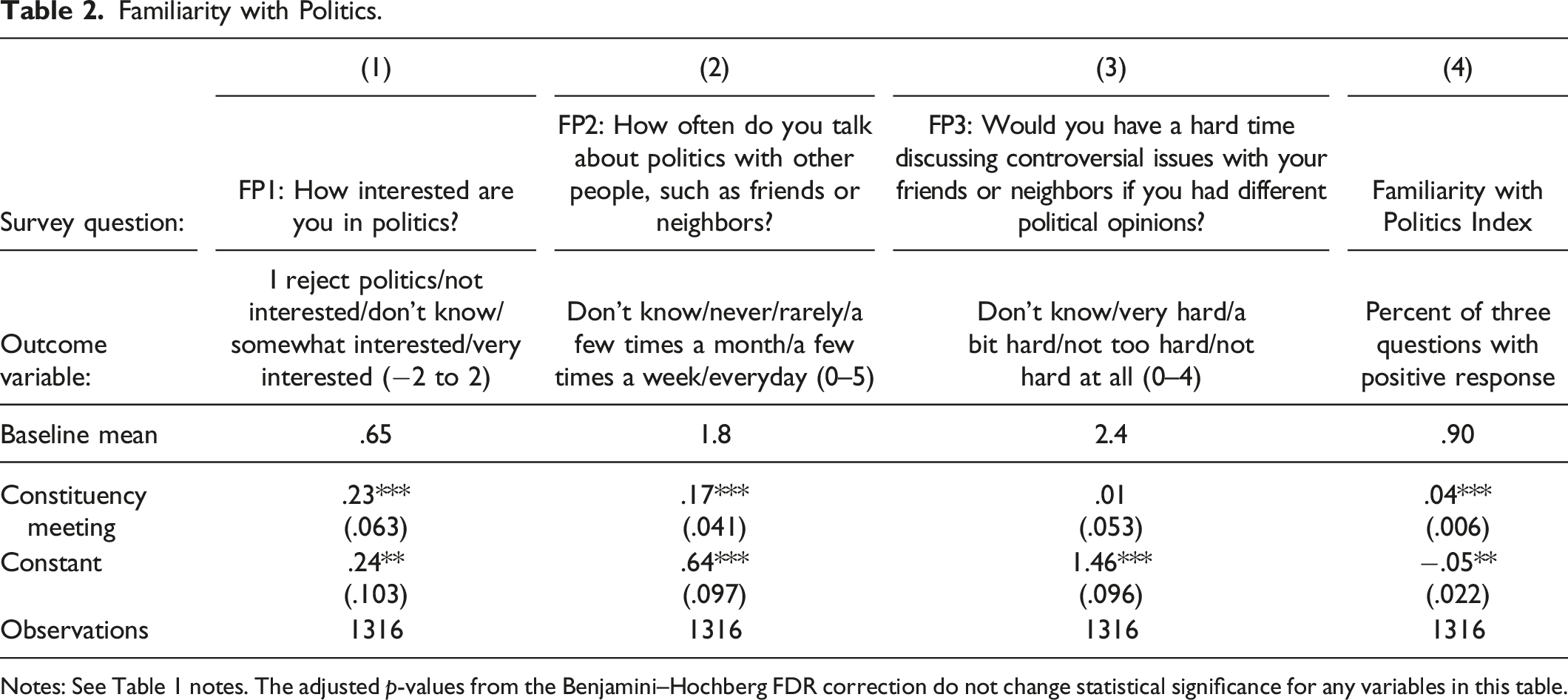
Notes: See Table 1 notes. The adjusted p-values from the Benjamini–Hochberg FDR correction do not change statistical significance for any variables in this table.
Engagement in the Political Process.
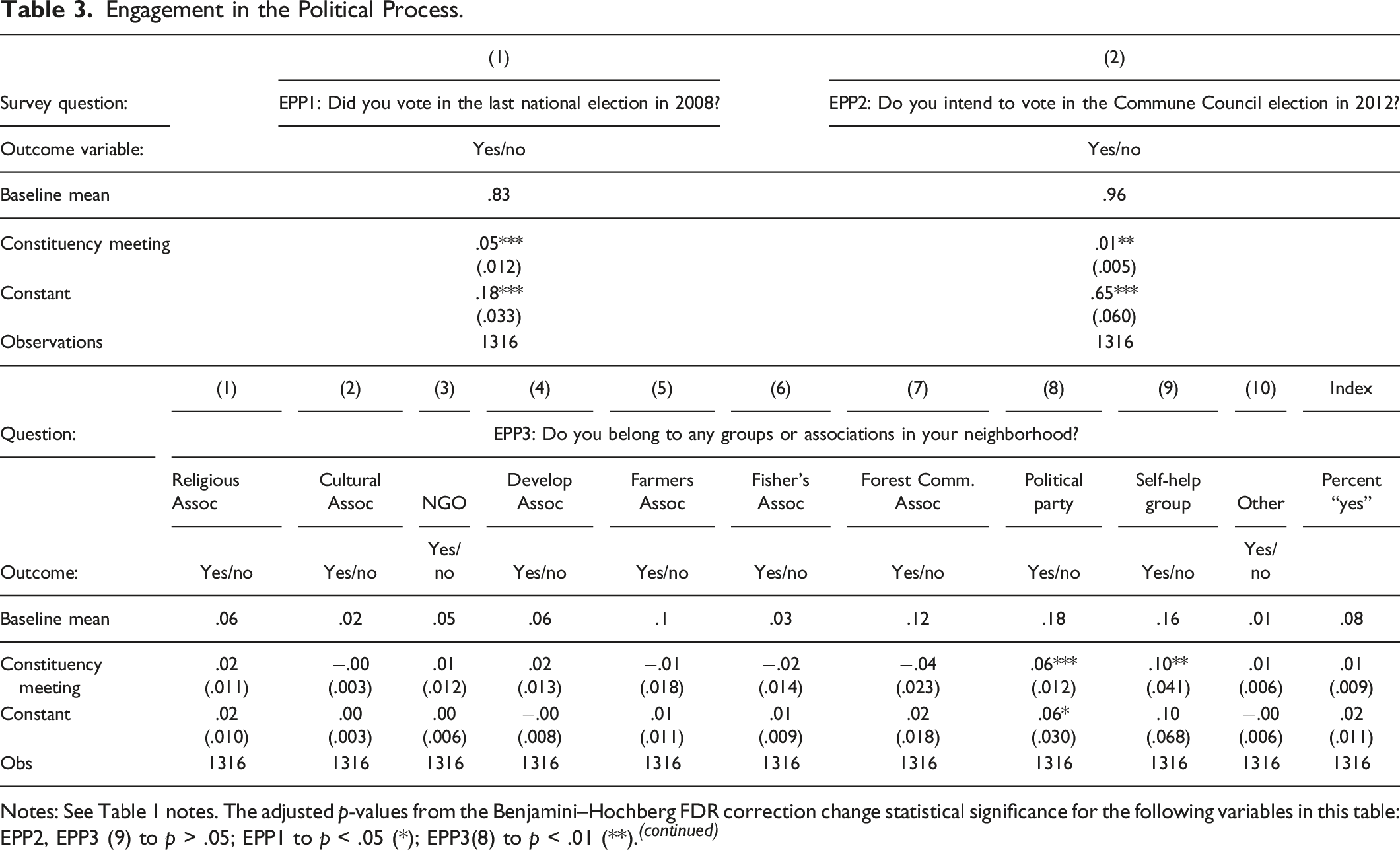
Notes: See Table 1 notes. The adjusted p-values from the Benjamini–Hochberg FDR correction change statistical significance for the following variables in this table: EPP2, EPP3 (9) to p > .05; EPP1 to p < .05 (*); EPP3(8) to p < .01 (**).
Engagement in the Political Process.
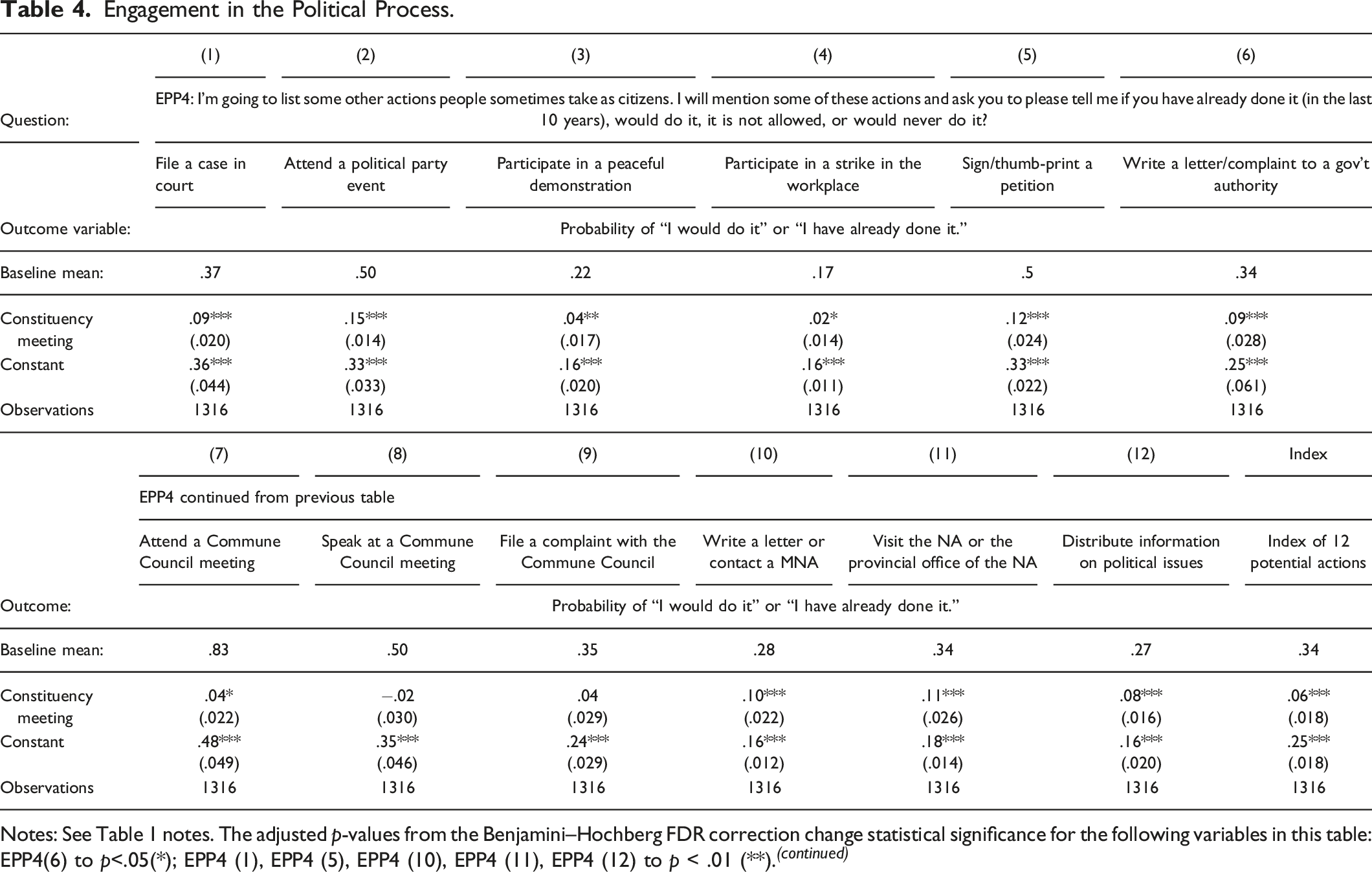
Notes: See Table 1 notes. The adjusted p-values from the Benjamini–Hochberg FDR correction change statistical significance for the following variables in this table: EPP4(6) to p<.05(*); EPP4 (1), EPP4 (5), EPP4 (10), EPP4 (11), EPP4 (12) to p < .01 (**).
Engagement in the Political Process.
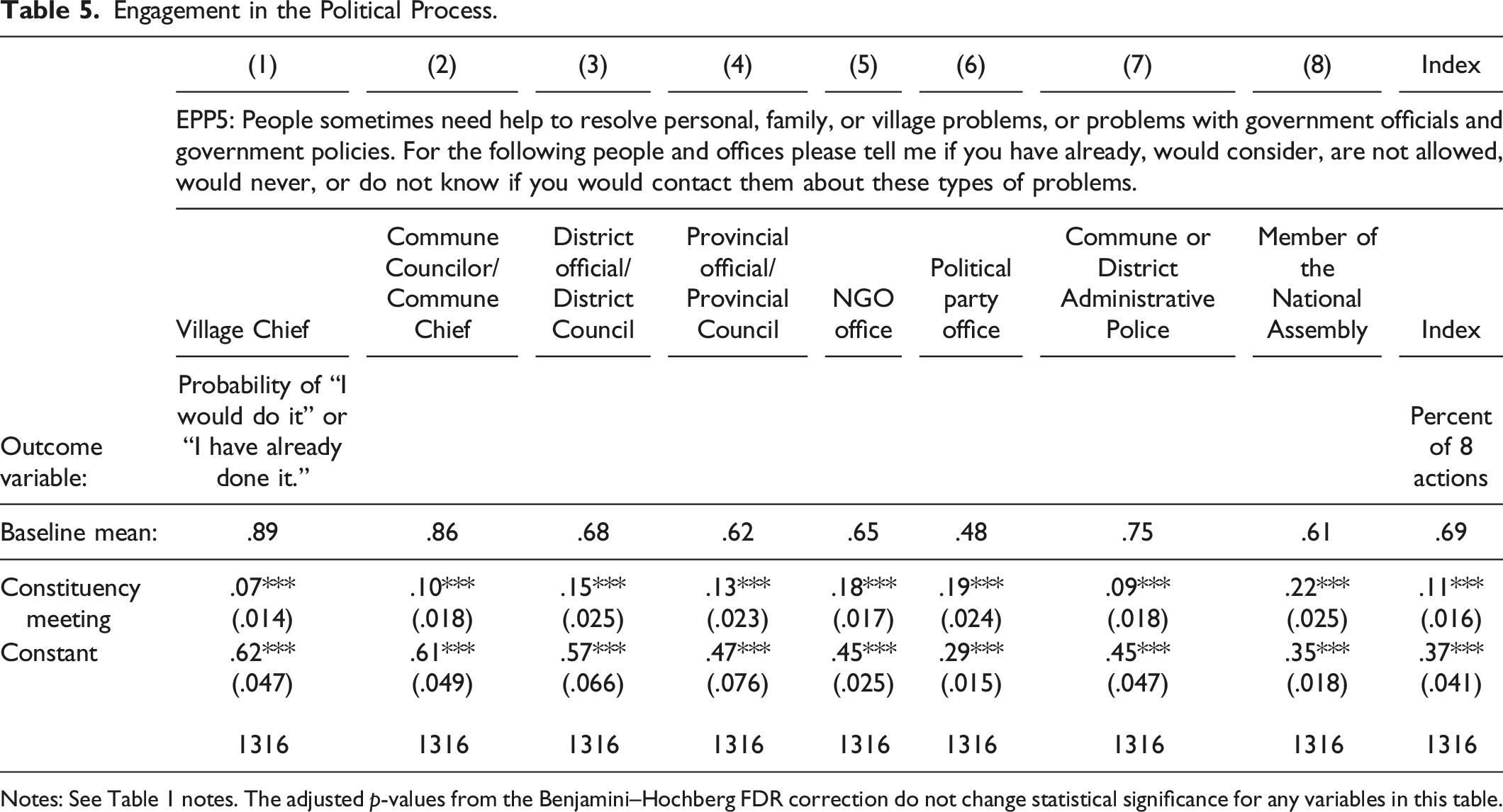
Notes: See Table 1 notes. The adjusted p-values from the Benjamini–Hochberg FDR correction do not change statistical significance for any variables in this table.
The five survey sections are organized into nine indices and summarized in Figure 1. Exposure to a constituency meeting caused consistent and statistically significant changes in responses to most sections of the survey, suggesting that the treatment had detectable effects on knowledge and attitudes, consistent with expectations. Respondents in treated villages were 11 percentage points more likely to respond correctly to questions in one knowledge index, and 7 percentage points more likely to answer correctly on another, which included factual questions about the roles of MNAs. The treatment also had statistically significant and substantively large effects on other core sections of the survey, including a 4 percentage point increase on an index measuring familiarity with politics, 6 and 11 percentage point increases in two indices about engagement with the political process, and a 21 percentage point increase on an index covering perceptions of MNA responsiveness. The notable exception was on questions about confidence in the political process, which were not consistently affected by the treatment.
In greater detail, as shown in Table 1, exposure to the treatment caused statistically significant increases political knowledge. Respondents in treatment villages became 22 percentage points more likely to be able to correctly name one or more of their elected representatives. Treated respondents became more likely to correctly identify four responsibilities of the National Assembly and less likely to say that MNAs should “give gifts.” Treated respondents also became 13 percentage points more likely to say they have a right to talk to their MNAs about their concerns. The only question in either knowledge index that was not significantly affected by the treatment asked whether part of the National Assembly’s role is to “decide court cases” (it is not).
The section on familiarity with politics focused on respondents’ willingness to talk about politics, the frequency with which they talk about it, and the perceived difficulty of talking about it. Results are summarized in Table 2. For two of the three questions, exposure to the treatment led to significant improvements, with respondents saying they are more “interested in politics” and “talk about politics with other people” more frequently. But there was no change in their own evaluation of whether they would “have a hard time discussing controversial issues with your friends or neighbors if you had different political opinions,” a finding which aligns with other null findings related to confidence in the political process, discussed below, and one which may be influenced by awareness of Cambodia’s repressive environment.
The section on engagement with the political process included questions about respondents’ self-reported political behavior and their willingness to engage in a variety of activities. Results are summarized in Table 3, Table 4, and Table 5. Overall, there were consistent and significant increases in reported engagement or planned engagement caused by the treatment in line with expectations. The treatment caused a 12 percentage point increase in the willingness to sign a petition (i.e., the probability that a respondent “would” or “has already” signed a petition), 9 percentage point increase in willingness to write a letter to a government authority, and a 15 percentage point increase in willingness to attend a political party event. The only exceptions came in the third set of questions, which asked about involvement in different groups or associations. Although exposure to the treatment made citizens more likely to report belonging to a political party (perhaps because parties recruited at constituency meetings) or a self-help group, treated respondents were not more likely to report participation in any other groups. In retrospect, this is not surprising, given that the constituency meetings did not relate to groups like religious or cultural associations, and the expectations with respect to these groups should have been more clearly specified in advance.
A small but surprising result is that exposure to the treatment caused a four percentage point increase in the likelihood that respondents said they had voted in the last elections from the 84 percent baseline, even though no election occurred between the pre- and post-test surveys. Misreporting one’s own voting behavior is a well-known problem in survey data (Traugott & Katosh, 1979). This may be interpreted as evidence that respondents in the treatment villages were more likely to give their perception of the “right” answer about their prior electoral participation. Although this type of social desirability bias is a frequent problem for survey-based studies, in this particular case, the result may actually bolster conclusions about the constituency meetings’ effectiveness since it reflects citizens more attuned to and eager to engage in the political process.
MNA Responsiveness.
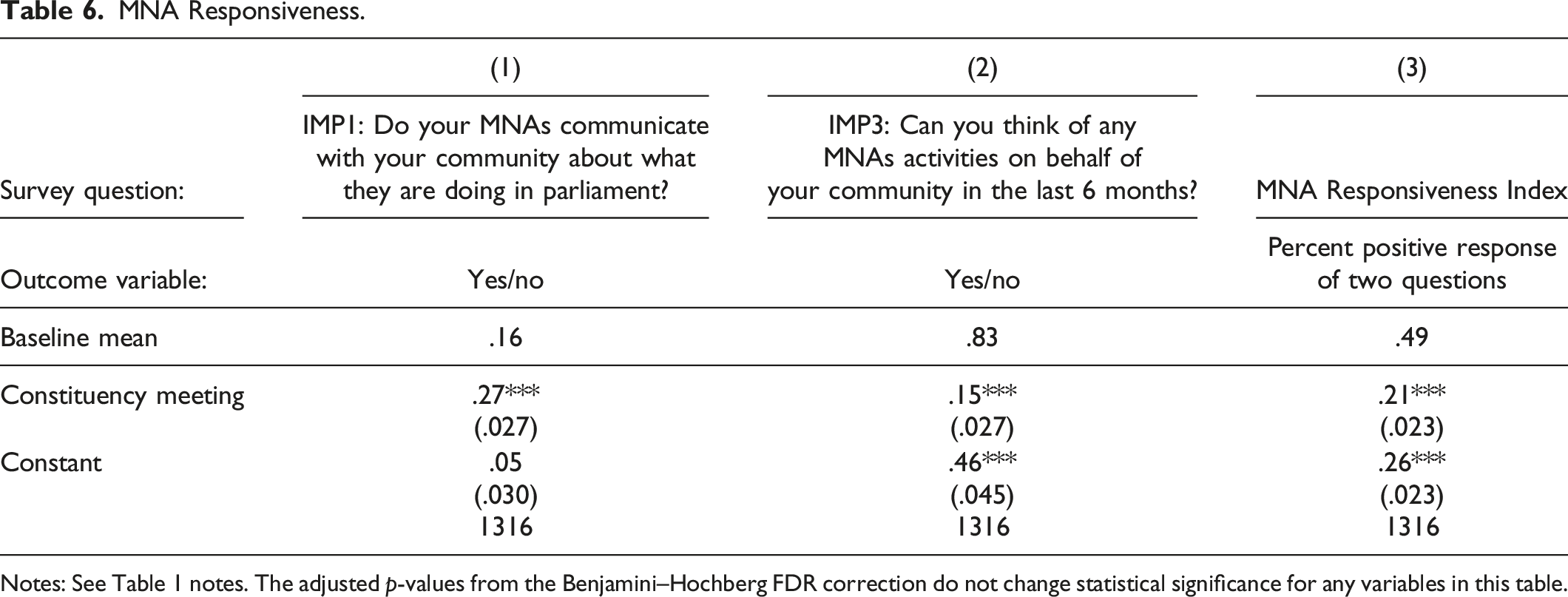
Notes: See Table 1 notes. The adjusted p-values from the Benjamini–Hochberg FDR correction do not change statistical significance for any variables in this table.
In contrast to these other sections, in which the effect of the treatment was largely positive and statistically significant, there is little evidence that exposure to the constituency meetings increased confidence in the political process. The treatment had no effect on agreement or disagreement with statements like “I have a role to play in solving problems in my country.” Respondents did not become more likely to say that they can vote for another party if they disagree with government or to agree with the statement that “I can choose who represents me in government.”
Confidence in the Political Process.
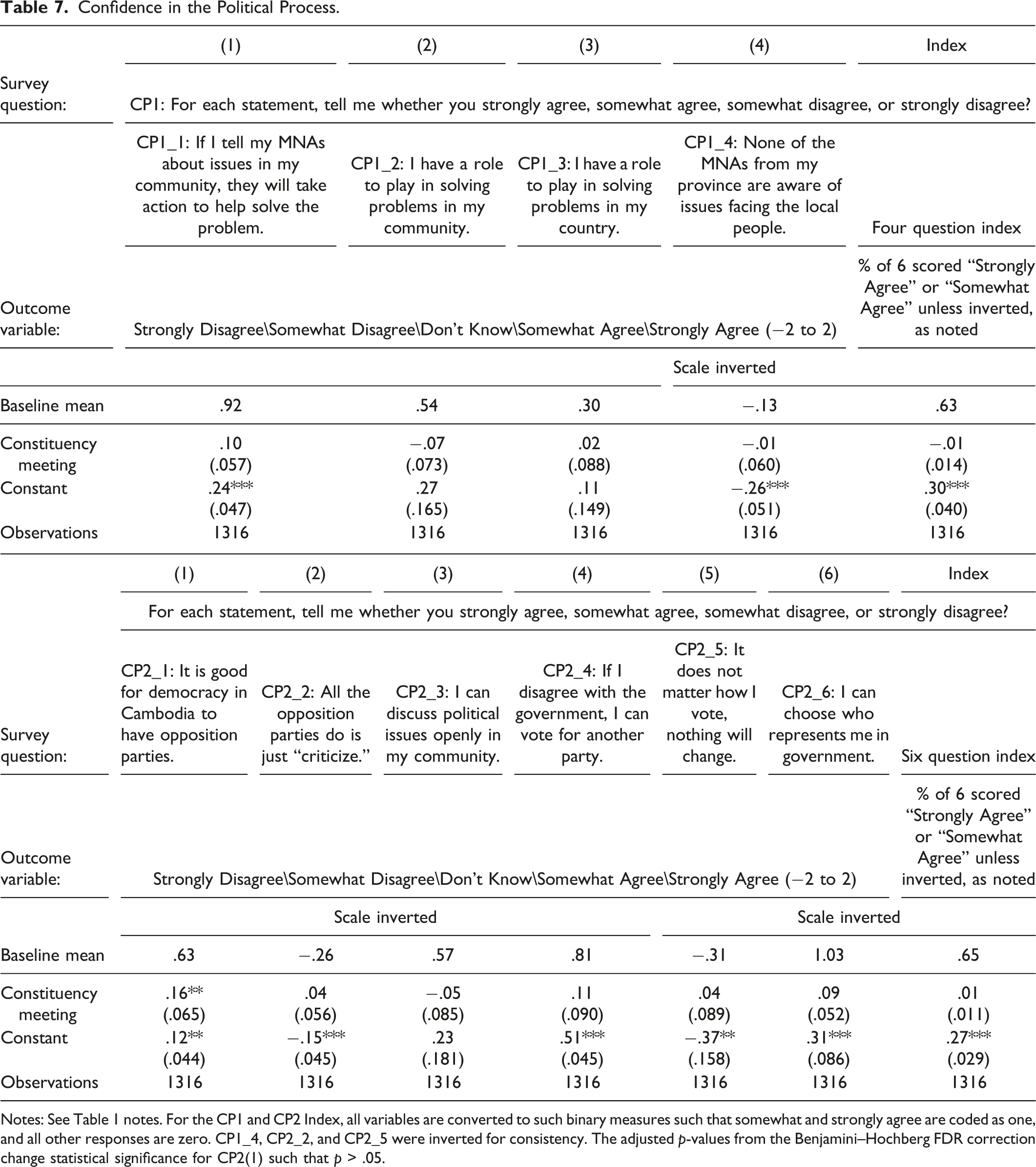
This is inconsistent with expectations in H5, but it represents an important finding for two reasons. First, it mitigates concerns about social desirability bias caused by the treatment, as well as about the potential biasing effects of fear. The results for this set of questions suggest that respondents were not answering in a way that was intended to please the democracy support practitioners overseeing the survey. If social desirability bias were affecting these results, then we would expect statistically significant increases among treatment villages. Respondents were also not consistently answering in a way that would indicate that fear of government reprisals was influencing their responses. If they were trying to answer positively, due to fear of potential repercussions for doing otherwise, then we would expect this outcome to have been high on the pre-treatment surveys. Instead, the baseline levels of expressed confidence are middling, and the treatment had no discernible impact.
Second, and perhaps more importantly, these null results for H5 may mean that citizens were not falsely persuaded by interactions with their elected representatives that Cambodia is a functioning democracy. The results are consistent with citizens who do not think the country’s institutions function democratically and are aware of the limited influence they have in the governance of their country and community.
Downstream 2013 Election Analysis and Results
The final analyses focus on a behavioral indicator. More than a year after the study’s final constituency meeting, Cambodia held national parliamentary elections. This is not an ideal indicator for this study, as discussed above. At the time of the study, it was unclear that these data would be made available by the government. After much effort, we ultimately collected commune-level election results for the 18 communes in the study in 2008 and 2013. The constituency meetings were explicitly organized outside of the campaign season, and the INGO did not have strong expectations about the duration of meetings’ effects. Any differences in election results could result from the treatment or the treatment plus subsequent behavioral changes on the part of elected officials and villagers.
Because there are only nine village pairs and 18 observations in this portion of the analysis, these results should be considered exploratory. Figure 2 shows all 18 observations and compares the change in vote share from 2008 to 2013 for the CPP and for the opposition parties’ aggregate vote share. The data in the top panel of Figure 2 suggest a global improvement in opposition party performance in five treatment and seven control villages (consistent with national level election results) but do not show uniform support for H6. The difference between treatment and control villages in terms of the 2008 to 2013 change in party vote share is not statistically significant. A Wilcoxon signed-rank test of whether the population means in the paired comparisons are not equal failed to reject the null hypothesis (z = .178; p = .859) (Wilcoxon, 1945), indicating that one party did not perform systematically better as a result of the treatment. Change in vote share from 2008 to 2013.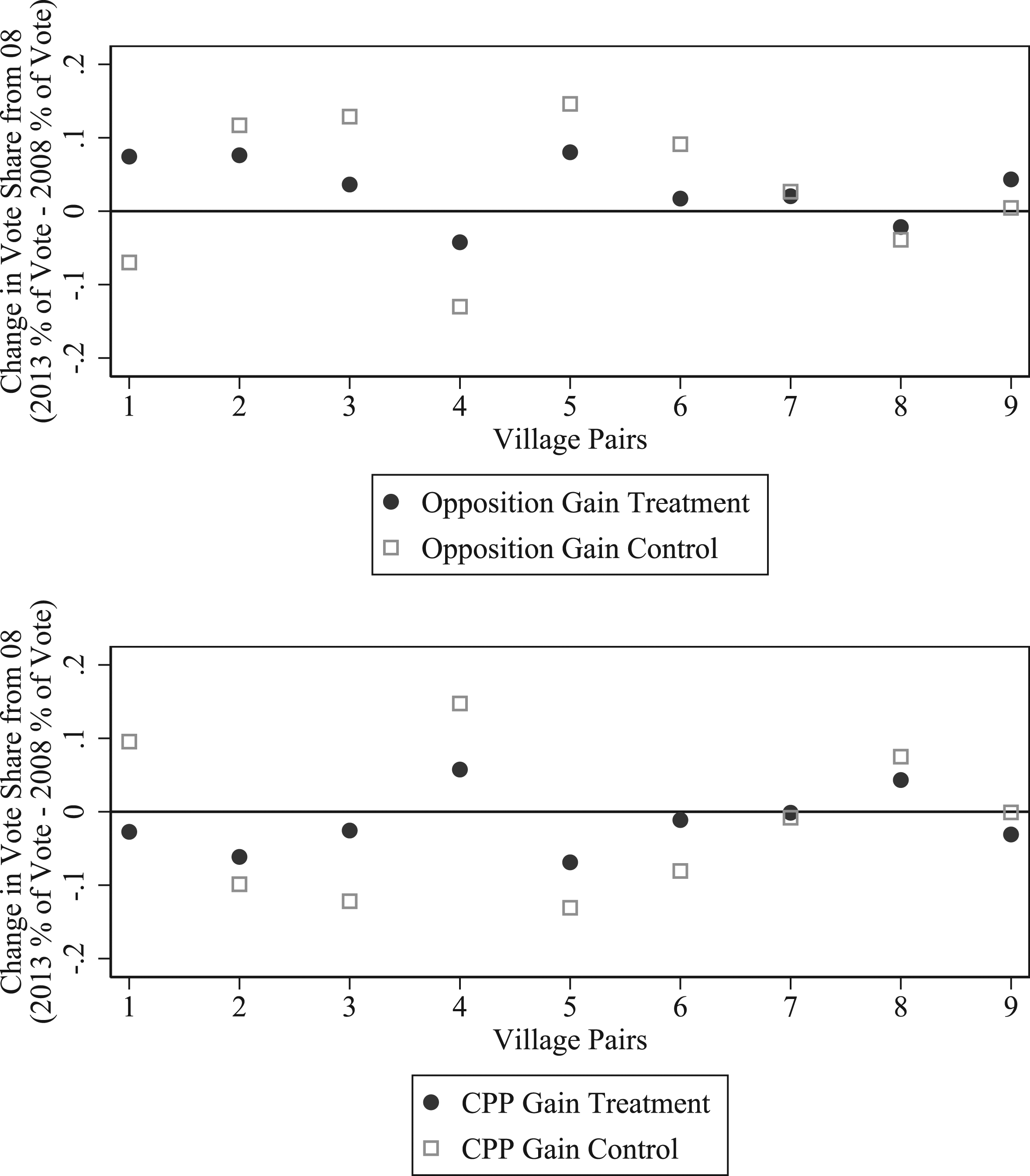
Although Figure 2 does not suggest the pattern anticipated, it does suggest an observable pattern: treatment villages cluster closer to zero (little change from 2008 results), whereas control villages experienced larger changes from 2008—both gains and losses—in seven of the nine village pairs. For the unexpected pattern of treatment villages experiencing relatively less change, the absolute value of the change in vote share from 2008 is significant in the same test for both the CPP (z = −2.073; p = .038) and opposition parties (z = −2.43; p = .015). It suggests heterogenous differences in the long-term effects of the constituency meetings on voting behavior between treatment and control villages, perhaps due to inconsistent levels of effort by the MNAs and their political parties following the events. The reasons for this difference are unclear, and longer-run follow-up on this question became more difficult after the 2013 elections, post-election protests, and the repressive crackdown that followed (ICNL Research Center, 2019; Sullivan, 2016). For H7, change in turnout between treatment and control villages was not significantly different from zero, perhaps in part because of ceiling effects from already high turnout.
Discussion and Conclusion
This article examined the efficacy of a democracy promotion intervention aimed at increasing citizen engagement with elected officials within an electoral authoritarian context. It posed two overarching questions about the intervention, drawing on insights from existing theoretical and empirical work.
First, we assessed whether democracy promotion initiatives such as the one studied actually deliver the intended individual-level benefits under electoral authoritarianism. Can democracy promotion increase citizen awareness and engagement, for example, and contribute to the type of citizenry that could help facilitate democratization in the long run? The evidence from this field experiment suggests that this effort to promote democracy by increasing citizen interactions with elected representatives had positive effects on individual-level knowledge, attitudes, and self-reported behaviors. After participating in a constituency meeting, survey respondents were significantly more likely to know more about what their elected representatives are supposed to do, more willing to take a variety of political actions, and somewhat more willing to discuss politics. They were also more likely to believe in the value of opposition parties in a democracy. These results bolster positive findings from field experimental studies in other countries, particularly post-conflict contexts and fragile democracies, and suggest that similar lessons might apply for democracy promotion practitioners operating under authoritarian constraints. We also found evidence suggestive of longer-term behavioral change between elections held before and after the intervention, although the substantive interpretation of these results remains ambiguous.
Second, the study also considered the possibility that democracy promotion may have negative repercussions in autocratic contexts, where regimes can, in theory, use citizen engagement and the appearance of procedural democracy to strengthen a democratic façade and potentially stifle bottom-up demand for democratization. Others have highlighted this concern regarding other forms of democracy assistance (Bjornlund, 2001, p. 18; Bush, 2015, p. 5; Carothers & Ottaway, 2005, p. 195; European Commission, 2000, p. 5). Nevertheless, we found that such concerns, at least in this case and based on the evidence available, were less pronounced. Critically, survey questions that related to confidence in the political process and belief in the democratic nature of the system did not show statistically significant increases after exposure to the treatment. Even after meeting directly with elected officials and witnessing multiparty interactions, citizens maintained a realistic skepticism about the degree to which Cambodia’s political institutions function democratically.
Overall, for advocates of democracy promotion, this represents a hopeful set of findings for this type of intervention in electoral authoritarian contexts. Our results lend support to the notion that interventions can help lay the foundations for a more informed citizenry capable of utilizing existing institutions for greater accountability, without unduly strengthening autocratic regimes or falsely increasing their democratic credentials. Citizens who experienced this program were more likely to be aware of how democracy should function and of their rights and responsibilities as citizens, and more likely to report taking individual civic action, even if they did not become more optimistic about their ability to influence politics through existing institutions.
Although it is important to systematically examine whether democracy promotion ultimately brings about full democratization in authoritarian contexts, theorizing and testing the micro-level contributions of specific interventions are also critical. It is not clear how long it should take to see the long-term, macro-level fruits of these efforts in an entrenched electoral authoritarian context like Cambodia. Therefore, particularly under constraints imposed by such regimes, increasing political knowledge and willingness to take individual actions like signing petitions and contacting elected officials may be more realistic targets for these initiatives, and can contribute to demand for more responsive and accountable elected officials.
As the broader global crisis of democracy deepened in the late-2010s, Cambodia also became more overtly autocratic. These realities speak to the complex world in which democracy promotion operates and the challenges posed to these efforts by democratic backsliding and authoritarian retrenchment. The intervention studied in this article—and potentially others like it—can empower individuals to remain politically aware and engaged, strengthening a possible bulwark against long-term demobilization. Openings for political liberalization are often idiosyncratic and difficult to predict. But citizens who are more informed may be better equipped to hold their leaders accountable and demand more responsiveness from elected officials as a result of efforts like this intervention. Meanwhile, concerns about pro-democracy interventions creating the false impression of functioning democracy may not be as significant of a concern as initially anticipated. Evidence like this—including about which interventions do not work as intended—can ideally be used to inform more sophisticated and evidence-based theories of foreign democracy assistance.
Supplemental Material
Supplemental Material - Promoting Democracy Under Electoral Authoritarianism: Evidence From Cambodia
Supplemental Material for Promoting Democracy Under Electoral Authoritarianism: Evidence From Cambodia by Susan D. Hyde, Emily Lamb, and Oren Samet in Comparative Political Studies
Footnotes
Acknowledgments
The name of the INGO is omitted as part of the initial agreement for reasons related to ongoing hostility toward democracy promotion organizations in many countries around the world, including Cambodia. For comments, we thank participants in seminars at Yale; Princeton; University of Texas, Austin; Columbia; University of Pennsylvania; University of Delaware; University of Wisconsin, Madison; University of Rochester; University of Zurich; Université Laval; UCLA; University of California, Berkeley; Stanford; Rutgers; George Washington; University of Colorado, Boulder; and LSE, as well as many colleagues who have provided detailed feedback. We also thank Gareth Nellis’ replication course students at UCSD, especially Lucas de Abreu Maia and Kathryn Baragwanath-Vogel. For research assistance, we thank Molly Watts and Alex Stephenson.
Declaration of Conflicting Interests
The author(s) declared no potential conflicts of interest with respect to the research, authorship, and/or publication of this article.
Funding
The author(s) received no financial support for the research, authorship, and/or publication of this article.
Author Contributions
Names are in alphabetical order. The first author served as the pro-bono principal investigator during the implementation of the study in exchange for access to the data. The second author served as a field researcher during implementation and contributed to the initial draft. The third author was instrumental in subsequent revisions. For collaboration and support of this project, we thank everyone at the INGO, especially LS, CC, AM, and LT, KS, and JN.

Supplemental Material
Notes
Author Biographies
References
Supplementary Material
Please find the following supplemental material available below.
For Open Access articles published under a Creative Commons License, all supplemental material carries the same license as the article it is associated with.
For non-Open Access articles published, all supplemental material carries a non-exclusive license, and permission requests for re-use of supplemental material or any part of supplemental material shall be sent directly to the copyright owner as specified in the copyright notice associated with the article.
