



Abstract
Summary
Public organizations are embracing open innovation (OI) to better serve their societal mission. This study presents a “Strategy Perimeter Framework,” developed and validated at the European Space Agency, to integrate OI into their strategy development. The framework helps manage stakeholder engagement within the strategy perimeter, thereby fostering collaborative innovation. It enables the alignment of stakeholder engagement with a public organization’s adoption of OI, ensuring innovation aligns with societal objectives.
Public organizations can benefit from OI as it enables them to explore uncharted territories. By engaging external stakeholders with complementary expertise that is not yet available within the organization, new services can be developed outside the boundaries of the current operations of the organization. 4 For instance, via platforms such as the NASA Tournament Lab and the Center of Excellence for Collaborative Innovation, 5 NASA sourced ideas globally and found solutions to complex technical challenges such as designing space habitats. By building on a global network of innovators, they could access a diverse range of expertise, accelerate innovation processes, and reduce costs. 6
However, despite the potential of OI to serve societal needs effectively and the clear benefits of OI practices, the adoption of OI poses challenges for public organizations. These challenges arise from the institutional context and stakeholder expectations, 7 which often emphasize adherence to established organizational boundaries and bureaucratic procedures. Accordingly, traditional practices of stakeholder engagement tend to prioritize procedural rigidity and risk aversion, 8 hindering open collaboration and experimentation that is central to OI. 9 Consequently, public organizations may find it difficult to address the dynamic and complex challenges of our time, which demand more collaborative and iterative approaches to engage stakeholders and create societal value. 10 Amidst these challenges, public organizations must adapt their practices to embrace OI, which is beneficial for addressing contemporary societal demands and innovating for the greater good. 11
Given the growing importance of OI for public organizations in navigating societal challenges, it is thus imperative to understand its adoption and application in this context. 12 This article addresses the question: How can public organizations effectively incorporate OI practices into their strategy development? We delve into this through the lens of stakeholder engagement, considering the institutional context of public organizations.
We introduce the “Strategy Perimeter Framework,” validated across three strategy development initiatives at the European Space Agency (ESA). The strategy perimeter refers to the designated area within which the organization actively engages stakeholders in (co-)shaping and advancing its strategy goals. This framework consists of two configuration steps defining the strategy perimeter and three co-navigation principles guiding collaboration within this perimeter.
When applied together, these components address the challenge of fostering OI within the public organization’s unique institutional context. The framework offers a systematic approach for public organization managers to adopt OI practices into their strategy development, emphasizing that OI in public organizations operates within specified boundaries. Engaging stakeholders within these boundaries allows for a purposeful orchestration of openness. This ensures stakeholder engagement aligns with the organization’s goals, thereby enhancing the impact of OI in public organizations.
OI in Public Organizations
OI, a collaborative paradigm encouraging knowledge exchange, is gaining significance in public organizations as they strive to navigate complex societal challenges. 13 This evolution, fueled by the rapid advancement of technology, necessitates that public organizations remain innovative and open to diverse stakeholder perspectives. By opening up stakeholder involvement beyond their traditional organizational boundaries and incorporating OI, public organizations access a broad range of benefits. They can leverage a wider pool of ideas and expertise, fostering creativity and problem-solving. This can lead to more effective solutions for societal challenges such as climate change, migration, and healthcare. 14
In the public sector, OI involves leveraging resources and knowledge from government departments, citizens, and private entities to address public issues, enhance public service innovation, and generate societal value. 15 Unlike private firms, where OI often aims at profit maximization, its adoption in public organizations is linked to their fundamental responsibility to serve the public interest and meet societal needs, prioritizing value creation for the public over individual shareholder gains. 16 Motivated by their societal mission, these organizations engage in inter-governmental collaborations to achieve their objectives and contribute to the common good, contrasting with the profit-driven goals of private firms.
However, the adoption of OI presents a challenge for public organizations, as they operate within a complex institutional environment shaped by legal mandates, regulatory compliance, and resource limitations. This environment influences their strategic decisions, and despite the acknowledged importance of OI, very little is known about how these organizations navigate such challenges. 17
Legal mandates, often creating rigid boundaries, restrict the participation of public organizations in innovative activities beyond their predefined roles. 18 These mandates create conditions that may hinder the exploration of partnerships with external actors or collaborative endeavors outside the traditional scope of their responsibilities. Such initiatives may be seen as endangering the interests of public organizations. 19 Regulatory compliance and resource constraints further determine the types of collaborations a public organization can undertake or the methods it can employ. This regulatory compliance often imposes bureaucratic requirements 20 and sets criteria potentially impeding the agility and speed required for OI initiatives. 21 Moreover, resource constraints, encompassing financial, human, and technological factors, play a crucial role in shaping the landscape of OI for public organizations. 22 The availability of these resources, which the organizations rely on for the development of new strategies, becomes a decisive factor influencing the types of collaborations they can effectively undertake and the period within which these can be realized.
In essence, this complex institutional landscape necessitates public organizations to operate within defined boundaries, thereby hindering the scope, nature, and speed of OI endeavors.
Stakeholder Engagement and Strategy Development in Public Organizations
Public organizations, encompassing a diverse array of stakeholders such as citizens, employees, and partners, often face a conflict between stakeholder expectations and OI. Some stakeholders may advocate for a more innovative role for the public organization, one that effectively addresses societal challenges in collaboration with other public and private partners. Conversely, others may insist on strict adherence to the organization’s conventional role as a provider of traditional public services, such as healthcare and transport, funded by taxpayers’ money. 23 This divergence in expectations can reinforce a risk-averse logic within public organizations, constraining them within traditional confines and limiting their flexibility to explore innovative methods or engage external contributors.
In response to this, public organizations are required to meticulously engage all stakeholders impacted by their activities, including those mandated by law. They must balance diverse interests and expectations while simultaneously pursuing innovative strategies that push existing boundaries. However, stakeholder engagement can become quite tricky due to the disadvantages it brings with it. 24 Too much participation and openness in the engagement of stakeholders might eventually lead to more closeness during strategy development due to the risks of promoting divergent interests. 25 Hence, it is crucial for public organizations to strike the right balance between stakeholder engagement and strategy development. This balance allows them to set boundaries for involving stakeholders while considering the potential drawbacks of OI during their strategy development.
Traditionally, given their institutional context, public organizations’ approach to strategy development is characterized by linear stakeholder engagement practices. 26 This approach is structured, following well-established boundaries and predetermined activities such as strategic planning. 27 Strategic planning, a key component of this approach, is a systematic tool. It involves defining goals, developing strategies, and outlining specific actions to achieve these goals. The aim is to align the organization with stakeholder expectations by providing detailed specifications and commitments to predetermined outcomes. 28 The engagement of stakeholders in this context follows a linear path. Interactions are guided by the pre-established framework of strategic plans. 29 This reflects a conventional and structured way of involving stakeholders in the strategy development process. The underlying assumption of this approach is that well-defined plans and commitments contribute to organizational stability and predictability. 30 Despite being time-consuming, this conventional approach aligns with and is, to some extent, expected due to the institutional requirements of legal mandates, regulatory compliance, and resource constraints. 31
The conventional approach to strategy development, characterized by systematic stakeholder engagement practices, can sometimes lead to strategies that are not aligned with societal needs. In contrast, OI offers a more inclusive and dynamic model of engagement, emphasizing ongoing dialogue with external stakeholders. 32 Open innovation practices, such as open ideation and co-creation, actively involve external contributors, fostering collaboration and creativity. OI acknowledges that innovative solutions often arise from the collective input of diverse participants, both within and outside the organization. 33 This approach not only enhances the responsiveness of strategies to societal needs, but also leverages a wider pool of knowledge and creativity, leading to more robust and innovative outcomes. Recent literature on strategy innovation aligns well with OI practices. It advocates for stakeholder engagement that goes beyond traditional methods, integrating the interests of multiple stakeholders in dynamic and unconventional ways during strategy development. 34 This perspective aligns with scholarly views suggesting that strategies cannot always be meticulously planned in advance; instead, they often emerge through “messy processes of informal learning.” 35 In such instances, the focus shifts from goal-driven actions to means-driven actions, with stakeholders’ commitments shaping the course of action in the absence of pre-established goals. 36 This integrated approach underscores the synergy between OI and stakeholder engagement, fostering adaptability and responsiveness in strategy development. It represents a shift from traditional, linear models toward more flexible and inclusive practices that can better address societal needs and expectations.
Against this background, the challenge for public organizations lies in integrating OI practices within the boundaries set by their institutional context. This intricate interplay between innovative practices and traditional expectations necessitates effective stakeholder engagement during strategy development. By addressing this challenge, public organizations can harness the benefits of OI while remaining compliant with their institutional context and meeting societal needs.
Method
Research Design
To create an answer to our research question—how can public organizations effectively incorporate OI practices into their strategy development—we adopted design science methodology. This method, consistent with earlier work that developed practical prototypes, 37 enabled us to construct a strategy framework. Our design process encompassed several stages.
First, we identified the problem and outlined the solution requirements. 38 Here, we drew on insights from a representative case of a public organization—the European Space Agency. When we embarked on the design process, ESA was initiating the development of innovative strategic initiatives that required the adoption of OI during strategy development. However, the institutional context in which ESA operates presented significant challenges to its managers seeking to adopt OI. In response to this problem, we designed a two-step approach based on the identified requirements at ESA and insights from relevant literature. This solution was designed to guide strategists in public organizations in setting the direction of the strategy while ensuring stakeholder involvement and commitment in line with its institutional context. We developed and tested initial concepts of the two-step approach solution through iterative design cycles involving key informants within the organization. These informants, primarily ESA strategists, served dual roles as strategists and co-designers in this process. The solution design was developed and validated across three strategic initiatives within ESA, resulting in a final design.
In the end, we found that our design essentially configured and navigated what we refer to as the Strategy Perimeter Framework.
Empirical Setting: The European Space Agency
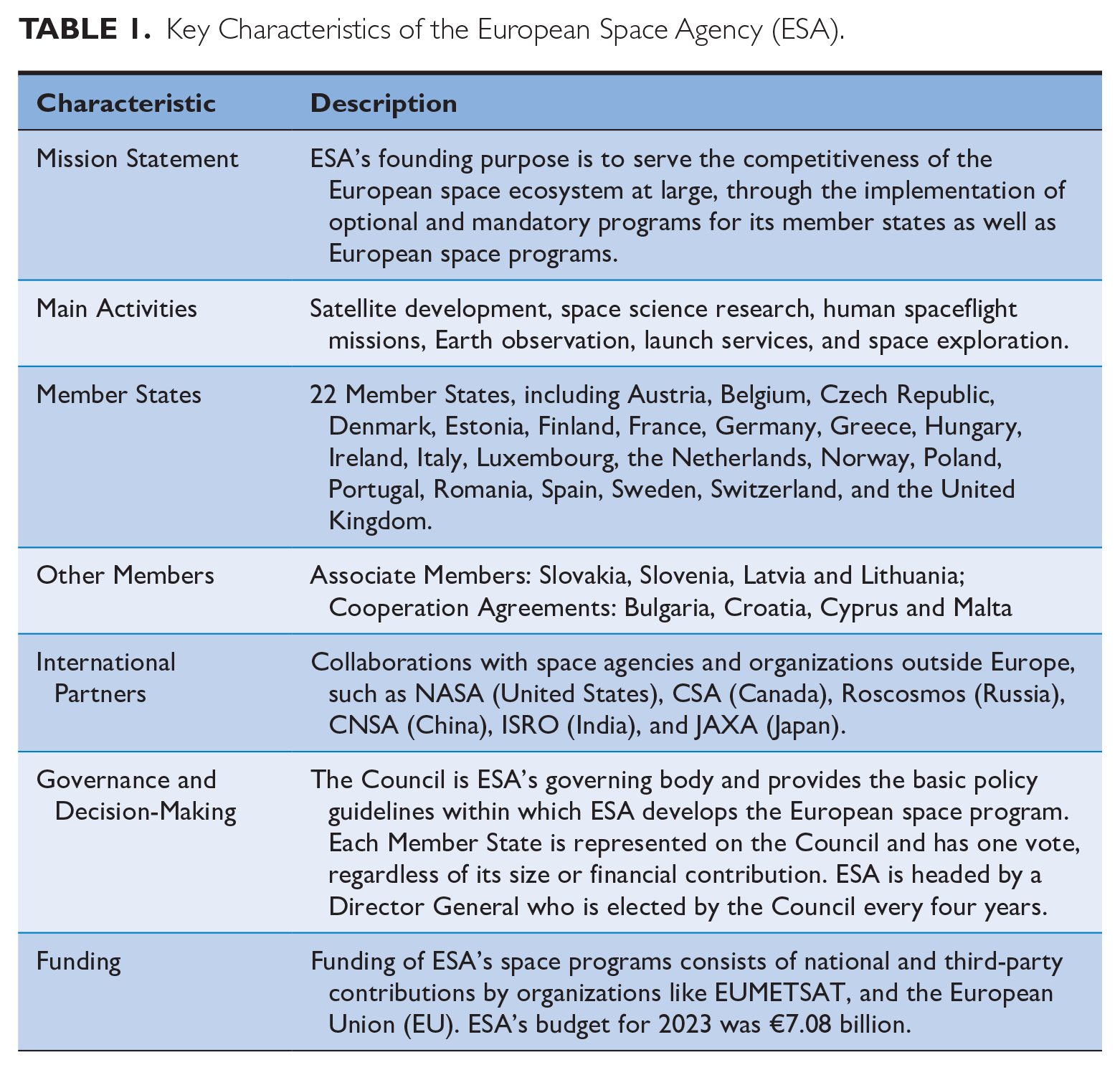
We opted for a case setting involving the real-life endeavors of a public organization that is actively seeking to embrace OI during new strategic initiatives yet is facing challenges due to its institutional context. This setting offers opportunities to design and experiment with novel approaches to new strategic initiatives. Accordingly, we selected the European Space Agency, a prominent public intergovernmental organization in the European space sector with 60 years of experience, technical expertise, and strong partnership projects at both regional and international levels. Table 1 provides a comprehensive overview of ESA’s key characteristics. Although ESA is quite a unique setting, studying a public organization in this sector can yield insights applicable to other large organizations with similar organizational structures and strategic concerns. However, differences in institutional context and objectives necessitate careful adaptation for effective implementation in the private sector.
Key Characteristics of the European Space Agency (ESA).
ESA possesses extensive experience in the development and execution of European space programs. However, it is presently contending with various challenges, notably the transformation of the space industry, projected to exceed 1 trillion euros by 2040. 39 The New Space era has seen a surge in private entities such as SpaceX and Blue Origin, reducing entry barriers and fundamentally reshaping the landscape of space activities, encompassing both civilian and military domains. In addition, the emergence of cutting-edge technologies, including space-enabled secure connectivity, earth observation, and navigation systems connecting numerous devices, has further transformed the space industry. These trends have not only altered the nature of space endeavors but also significantly impacted the expectations of internal stakeholders, such as ESA’s Member States, as well as external stakeholders, such as national authorities and European Union agencies (Figure 1).
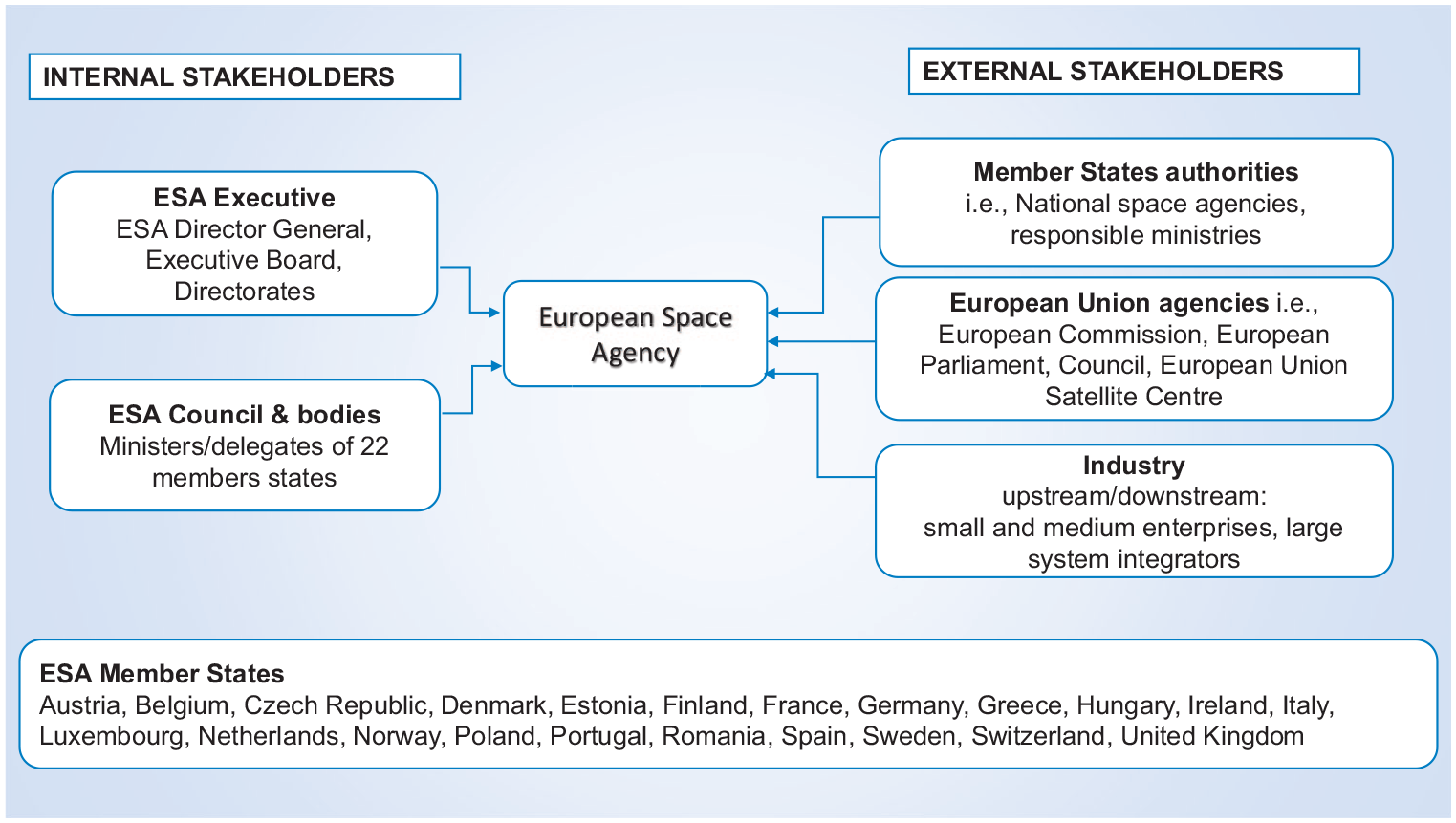
ESA’s stakeholder map.
Therefore, ESA is under pressure to keep up with the rapid pace of innovation. This requires ESA to evolve its strategy continuously, ensuring alignment with the shifting boundary conditions and potentially expanding its mandate in response to the constantly evolving global landscape. However, ESA’s institutional context—along with its reliance on stakeholder contributions for the development of innovative programs and activities—poses constraints on the expansion of its mandate. Stakeholders wield significant influence over ESA’s mandate in developing new activities and programs, further limiting the ability of ESA to embark on innovative strategic initiatives. In this regard, new initiatives must be shaped through collaboration with stakeholders representing diverse interests and perspectives on innovation. Consequently, ESA’s main challenge lies in pursuing a bolder innovation agenda that maximizes societal value for the European space sector, all while upholding its mandate and aligning with the varied and shifting expectations of stakeholders.
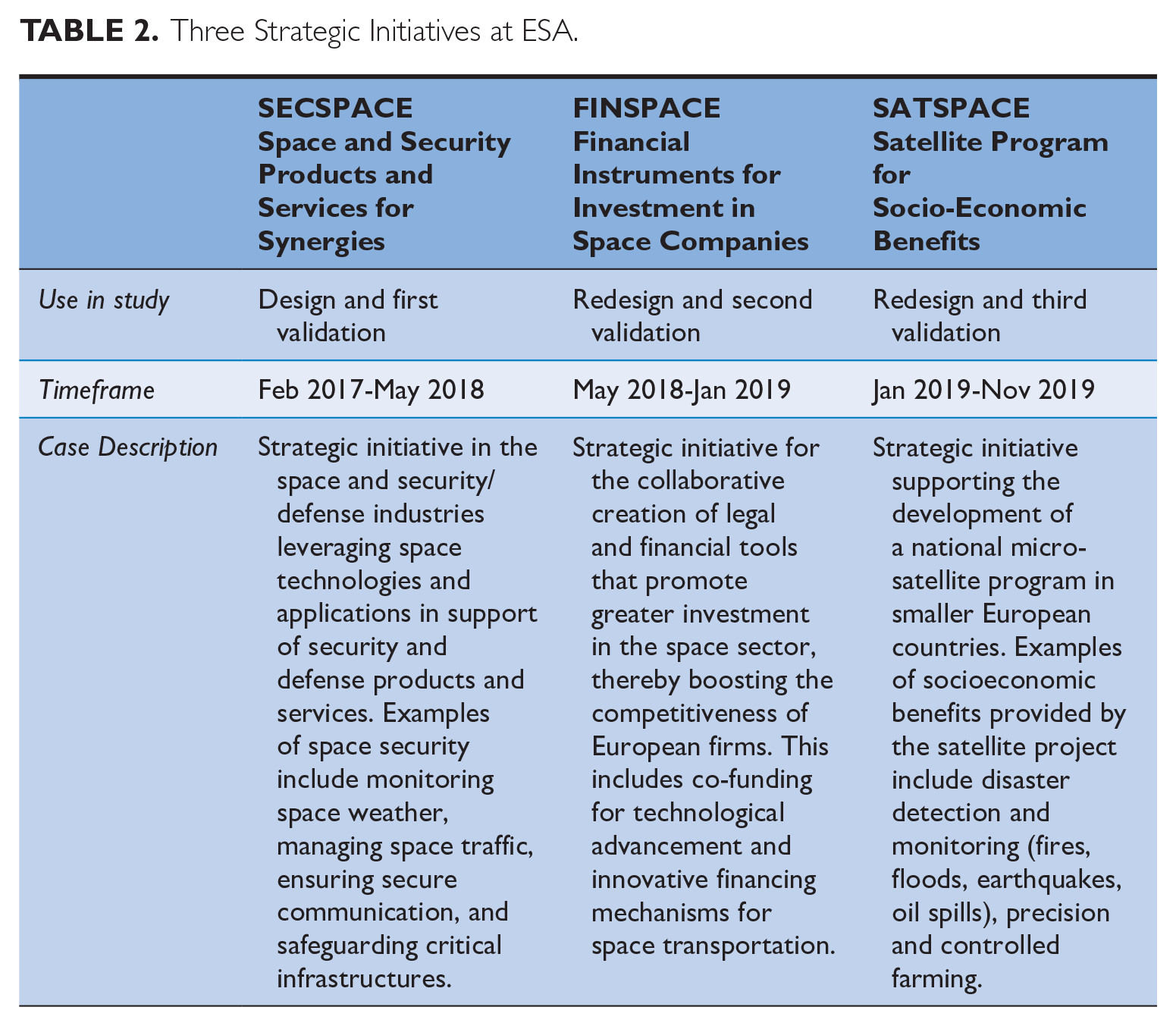
In this context, we selected three innovative strategic initiatives involving various stakeholders within ESA. These initiatives are “SECSPACE,” “FINSPACE,” and “SATSPACE.” A comprehensive description of each case, along with their application in design and validation, is provided in Table 2.
Three Strategic Initiatives at ESA.
Data Collection and Data Analysis
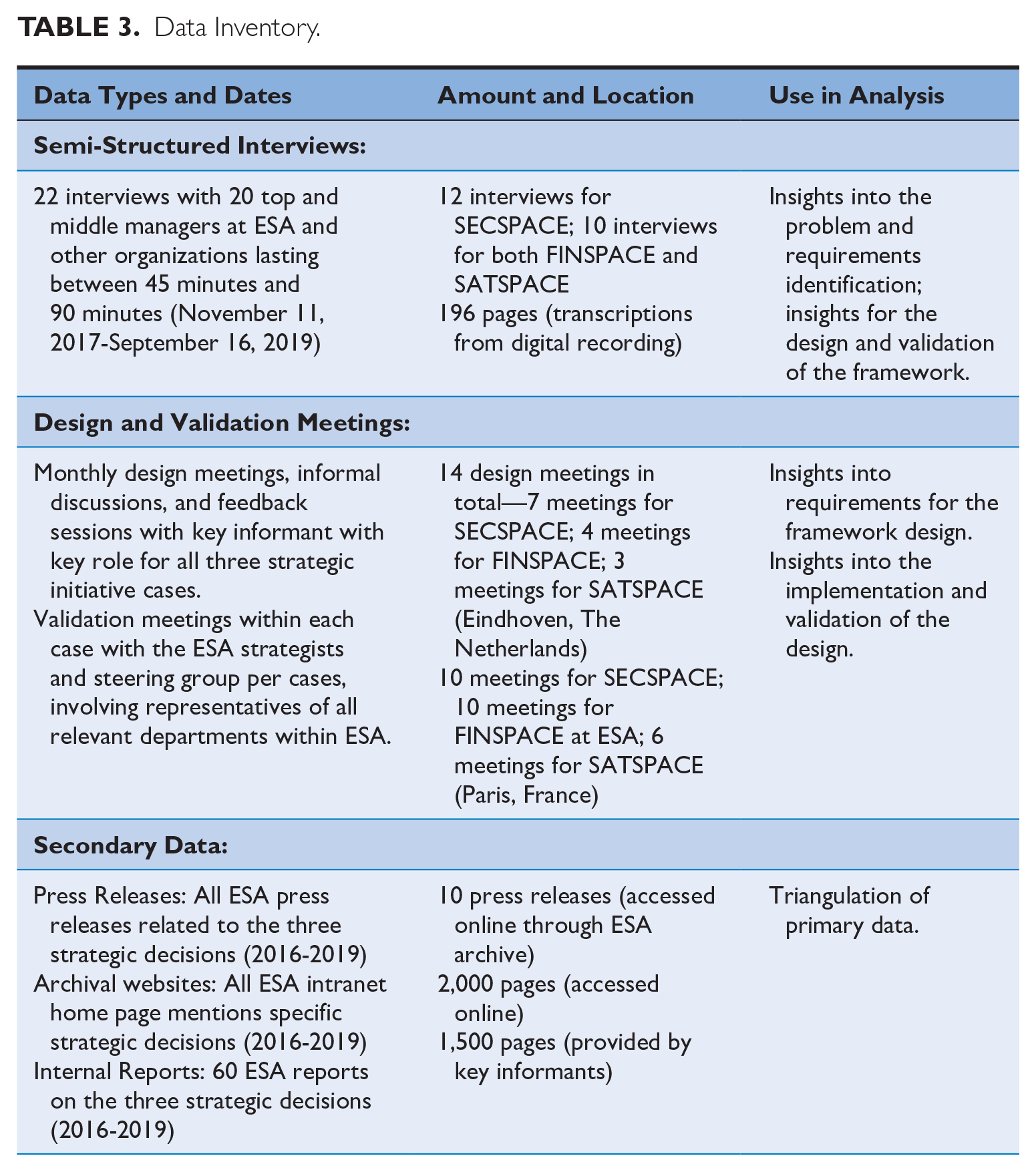
The primary data consists of a series of 22 semi-structured interviews with executives and managers from ESA’s strategy department and related units, during the period 2016 to 2019, and a series of 24 design and validation meetings, including 14 design meetings with the key informants and ten validation meetings with executives and managers at ESA. We began our interviews by inquiring about challenges to stakeholder engagement during strategy development. We purposefully sampled the interviewees to obtain multiple perspectives on the problem and solution requirements across the three cases. This approach allowed us to ask questions developed a priori and questions that emerged during framework development in one of the strategic initiatives. Throughout the data analysis process, we iteratively coded our primary and secondary data to derive key insights to inform the design process. By triangulating interview statements with direct observations and secondary data, we were likely to offset any bias at the level of individual informants and ensure validity and reliability throughout the design process. 40 See Table 3 for a more detailed overview of the data collected.
Data Inventory.
Design Process
Identifying the Problem and Requirements
We began by using interview data to define the problem of incorporating OI practices within the specific context of a public organization initiating new strategic initiatives. The problem we identified is important in the context of ESA, which, similar to other public organizations, faces a complex challenge: integrating OI with more traditional stakeholder engagement practices dictated by the organization’s institutional environment. To address this problem and analyze its causes and context following the approach of design science (as per Van Aken et al.), 41 we drew on insights from our in-depth interviews. These insights highlighted the needs and challenges ESA faces in its endeavor to integrate OI in its pursuit of new strategic initiatives. We considered the complexities of incorporating open and collaborative methods of innovation into their strategy development, given ESA’s identity within a multifaceted institutional context. This includes dealing with legal restrictions set by their foundational document, the ESA Convention, which prescribes very specific mandates for the types of space programs and activities the Agency can undertake. It also includes the challenges of expanding the Agency’s responsibilities and becoming more innovative amidst differing expectations of various stakeholders, with some advocating for expansion and others for adherence to conventional boundaries established by the Convention.
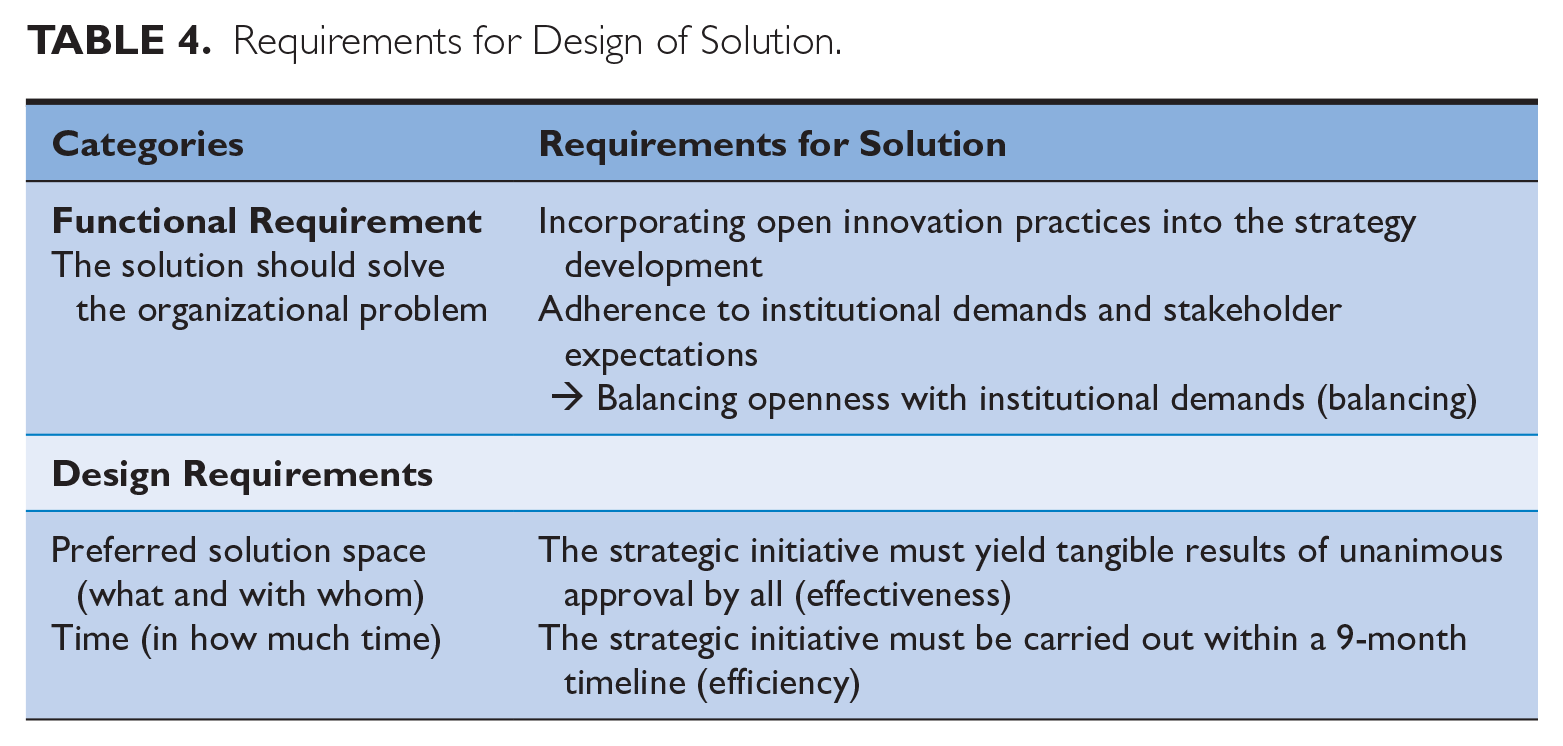
In response to the identified problem and its causes, managers and executives at ESA’s strategy department defined key solution requirements. Solution requirements encompass all characteristics—among others, functional and design requirements—that the design team is expected to fulfill through the eventual design. 42 They guide and shape the decisions and activities that lead to the final solution to ensure that the design solution aligns with the desired outcomes. The main functional requirement was to design a solution that combines openness (OI)—broadening ESA’s mandate and stakeholder engagement to enhance its societal mission through OI—with adherence to the institutional demands and stakeholder expectations (functional requirement: balancing openness with institutional demands). Furthermore, the solution needed to be both accessible and applicable to the strategists’ team of three managers who oversaw the steering group. This steering group of 23 managers involved representatives from all directorates at ESA. The solution was required to yield tangible results, leading to a strategic initiative that gained unanimous approval from all stakeholders (design requirement: effectiveness). This result was expected to be accomplished within a strict 9-month period, aligning with the ESA Council’s schedule, which meets at least twice a year to prepare specialized programs and activities and engage in consultations with its stakeholders (design requirement: efficiency). To structure and categorize the requirements that emerged, we followed Van Aken’s design specification approach. 43 The complete set of requirements can be found in Table 4.
Requirements for Design of Solution.
Designing and Validating the Framework
Building upon the identified requirements and drawing on theoretical insights, we then designed an approach that integrates OI practices throughout the strategy development process. The design of this approach was highly iterative, involving extensive feedback from two key informants within ESA’s strategy department. One of the authors was part of the executive team at ESA and served as an insider-researcher throughout this design process, contributing to a comprehensive understanding of the organization’s dynamics, requirements, and institutional context. The insider-researcher worked in close collaboration with the key informants of this study, providing valuable formal and informal feedback for refining the framework. In 2017, we conducted fourteen design meetings with the insider-researcher, followed by a reflection and feedback session after each meeting to further fine-tune the design in line with the solution requirements. As part of every design meeting, the emergent key points related to the design were validated by the insider-researcher. This insider-researcher input complemented the authors’ outsider perspective to facilitate sensemaking processes and ensure the practical validity of interpretations informed by theoretical insights. 44
The design was first implemented in the SECSPACE case. Here, implementation enabled the SECSPACE managers to iteratively and gradually secure commitments; our design opened up the shaping of the strategy goals to a wide variety of internal and external stakeholders (i.e., defining and collaborating within the strategy perimeter). Before implementing this approach, stakeholder involvement was restricted and approached cautiously due to the sensitive nature of the topic and anticipated stakeholder resistance. However, by following a structured approach with key milestones, ESA managers took charge of the strategy development process while allowing stakeholders to reach common ground in defining the space security strategy’s content along the way. The flexibility inherent in the framework allowed ESA managers to make adjustments and revisit assumptions, facilitating the expansion of the strategy perimeter while ensuring stakeholder buy-in and circumventing bottlenecks. Following the successful implementation of the framework in SECSPACE by ESA, we made some adjustments to refine the degree of openness in relation to the more rigid boundaries stipulated by the mandate, thereby achieving a better balance between openness and institutional demands as well as varied stakeholder expectations.
Next, the revised design was implemented in the FINSPACE case. During the implementation, we made more adjustments, particularly by carefully evaluating the openness needed. ESA strategists realized that opening up the space finance strategy perimeter required the involvement of external stakeholders through pilot projects, particularly when the strategy goals did not fully align with the institutional demands. Hence, more openness was created by also having the possibility to allow pilot projects. In the FINSPACE case, the implementation of the design facilitated the successful transition of the organization toward offering new services required to meet the investment needs of small space companies and SMEs in Europe. Finally, the adapted design was successfully applied to the third strategic initiative, SATSPACE. After its successful implementation, we conducted a final evaluation and determined that no further alterations were needed, as illustrated in Figure 2.
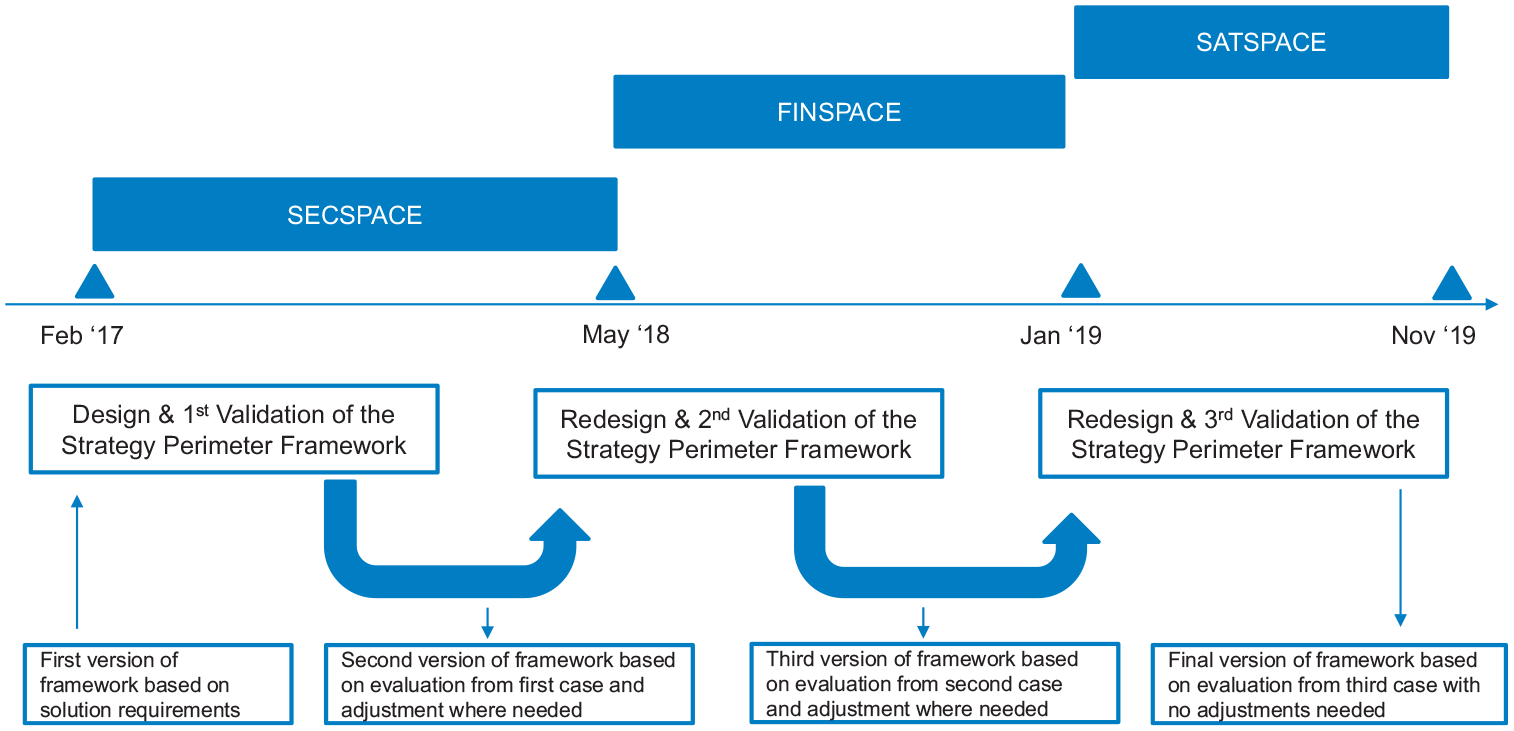
Design process of the strategy perimeter framework.
Upon completion of this iterative design and validation process, the Strategy Perimeter Framework was established, meeting the solution requirements. The three initiatives—“SECSPACE,” “FINSPACE,” and “SATSPACE”—successfully gained approval from all stakeholders (design requirement: effectiveness), completed implementation in less than nine months (design requirement: efficiency), and achieved a balance between openness with adherence to institutional demands and stakeholder expectations (functional requirement: balancing)
The Strategy Perimeter Framework
The Strategy Perimeter Framework, designed for strategists and managers in public organizations, provides a systematic approach to weave OI into strategy development. It helps define and navigate the strategy perimeter—the designated scope within which the organization actively engages stakeholders in co-shaping and advancing its strategy goals. The strategy perimeter is the “playing field” where the organization and its stakeholders come together during strategy development. The strategy perimeter helps to solve the problem of integrating OI with more traditional stakeholder engagement practices influenced by the organization’s institutional context.
The Strategy Perimeter Framework, as illustrated in Figure 3, is organized into two main components (A and B). The first component includes two configuration steps that outline the strategy perimeter and determine the level of engagement and openness. The second component introduces three co-navigation principles that steer collaboration within the defined strategy perimeter. These principles emphasize the importance of co-creating a solution space with stakeholders, thus fostering a collaborative environment during strategy development. Both components are executed by the strategy team in collaboration with the relevant stakeholders. In essence, the framework serves as a roadmap, enabling strategists to effectively engage stakeholders in shaping the organization’s strategy, promoting innovation, and facilitating collaborative problem-solving within the defined strategy perimeter.
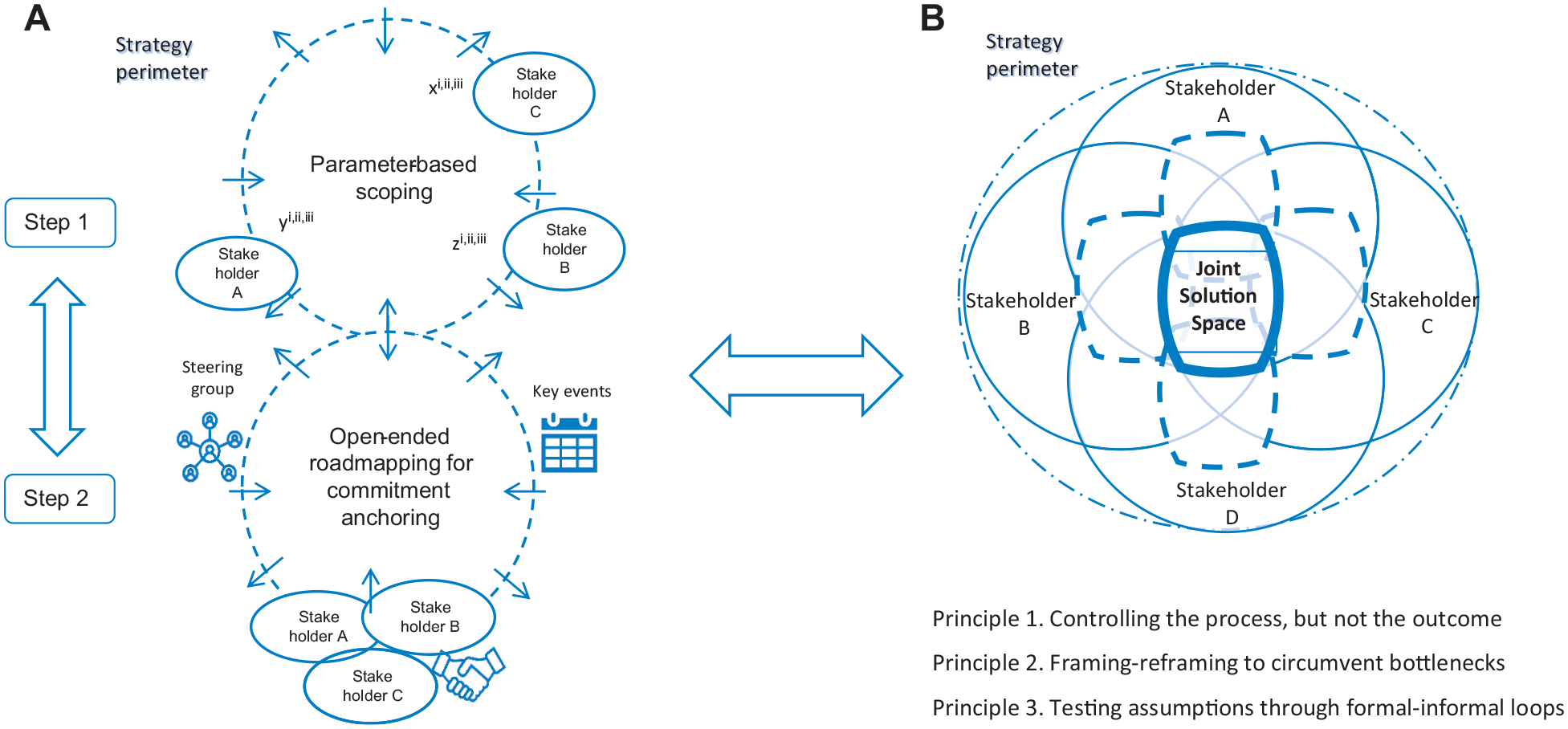
The strategy perimeter framework.
Configuring the Strategy Perimeter
The first component of the Strategy Perimeter Framework consists of two steps designed to configure the strategy perimeter: parameter-based scoping; and open-ended roadmapping for commitment anchoring. Taken together, these steps help define the boundaries of the strategy perimeter and create a flexible roadmap that determines the degree of engagement and openness, thereby enabling the strategy to adapt and evolve within the delineated strategy perimeter. These steps can be executed iteratively and may overlap during strategy development. Figure 4 offers a summary of these steps.
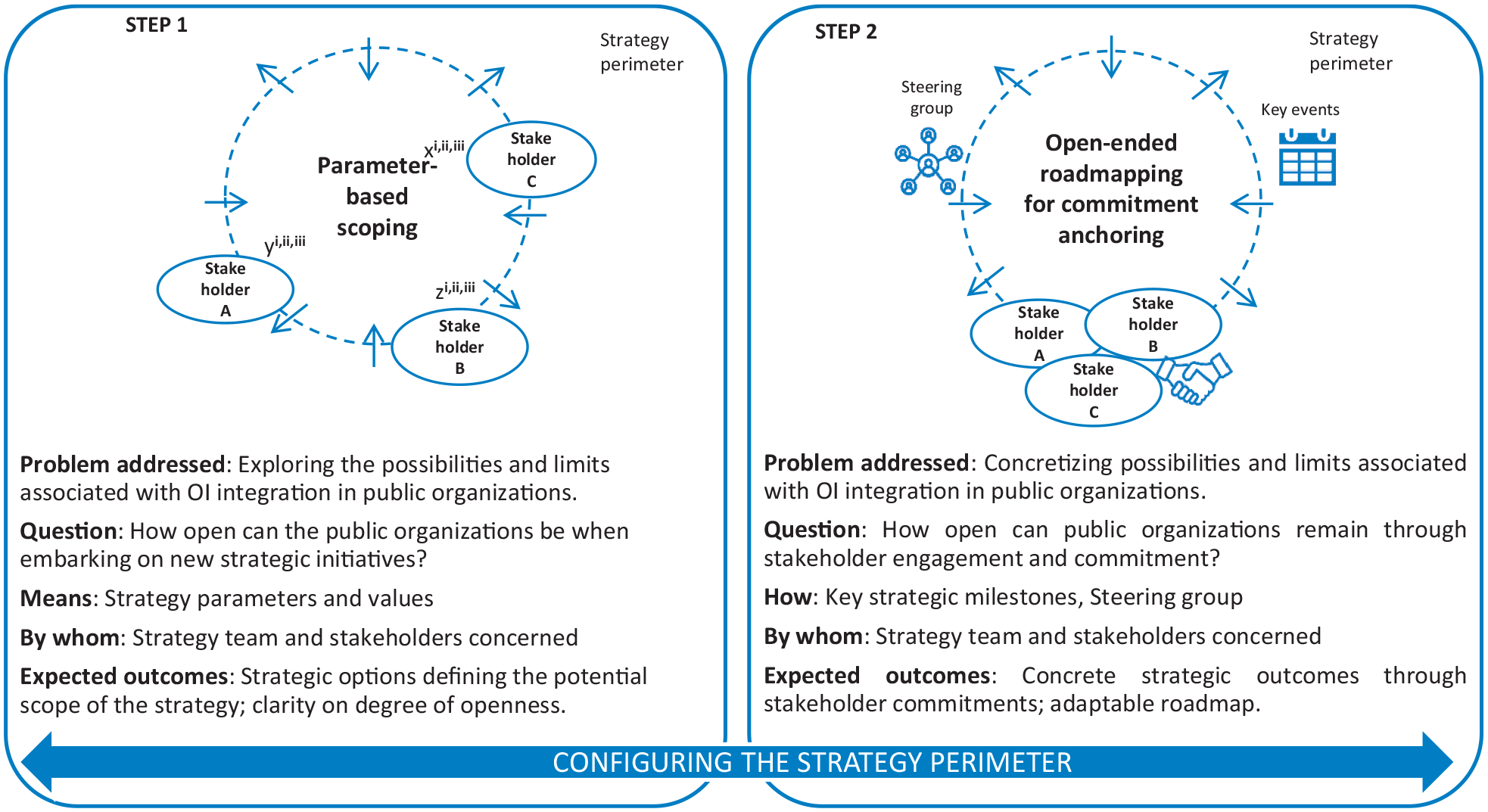
Summary of the two-step configuration of the strategy perimeter.
Step 1: Parameter-Based Scoping
The first step in setting up the strategy perimeter is called parameter-based scoping. This step is important because it helps define the intended scope of the strategy, direction, and expectations for the organization and its stakeholders. In the context of public organizations trying to integrate OI practices with traditional stakeholder engagement, this step allows for an exploration of the possibilities and boundaries of openness. It addresses the question: “How open can public organizations be when embarking on new strategic initiatives?” By identifying and delineating key aspects of the strategy, the organization can ascertain a realistic level of openness to aim for during strategy development, while adhering to the confines of the institutional context and stakeholder expectations.
The parameter-based scoping step is guided by strategy parameters. These are similar to design parameters—the adjustable design elements that allow the organization and stakeholders to transform current situations into preferred ones. 45 By identifying these parameters, we naturally define the strategy perimeter. Figure 3 illustrates the strategy parameters (represented as x, y, and z), each with distinct values (i, ii, and iii) spanning a broad spectrum of strategic options. These strategic options enable the organization and stakeholders to collaboratively explore the optimal value for each parameter and the possibilities or limits to opening the boundaries of the strategy perimeter. An application of this step is illustrated in the SECSPACE case.
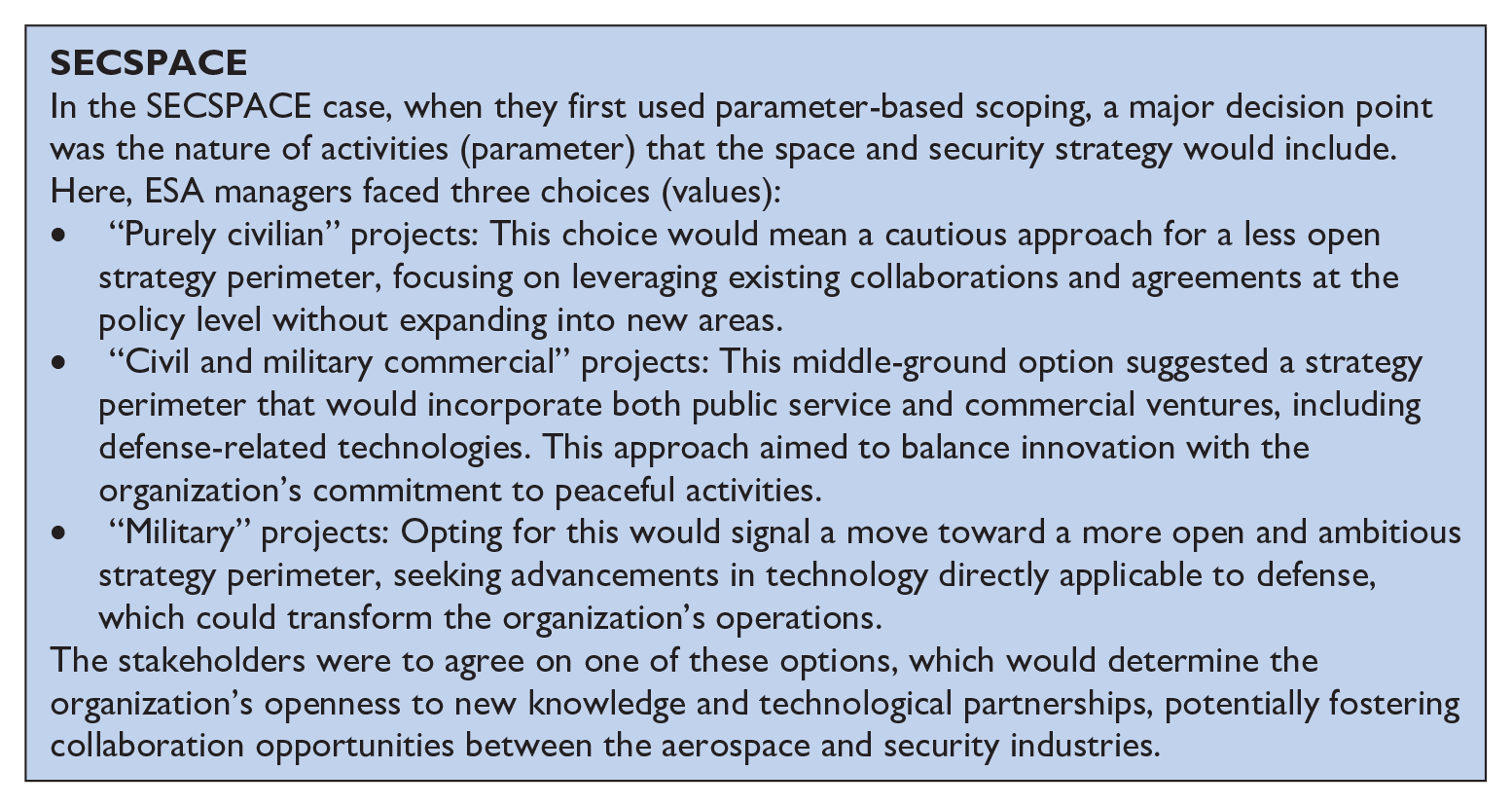
Identifying the strategy parameters offered ESA managers a clear map of possible outcomes and limits for the new space and security strategy, as well as actionable strategic choices within the strategy perimeter to realize these outcomes. Expanding the range of parameters naturally leads to more opportunities, thus increasing the strategy’s openness. The significance of this for the organization is further detailed in the FINSPACE case.
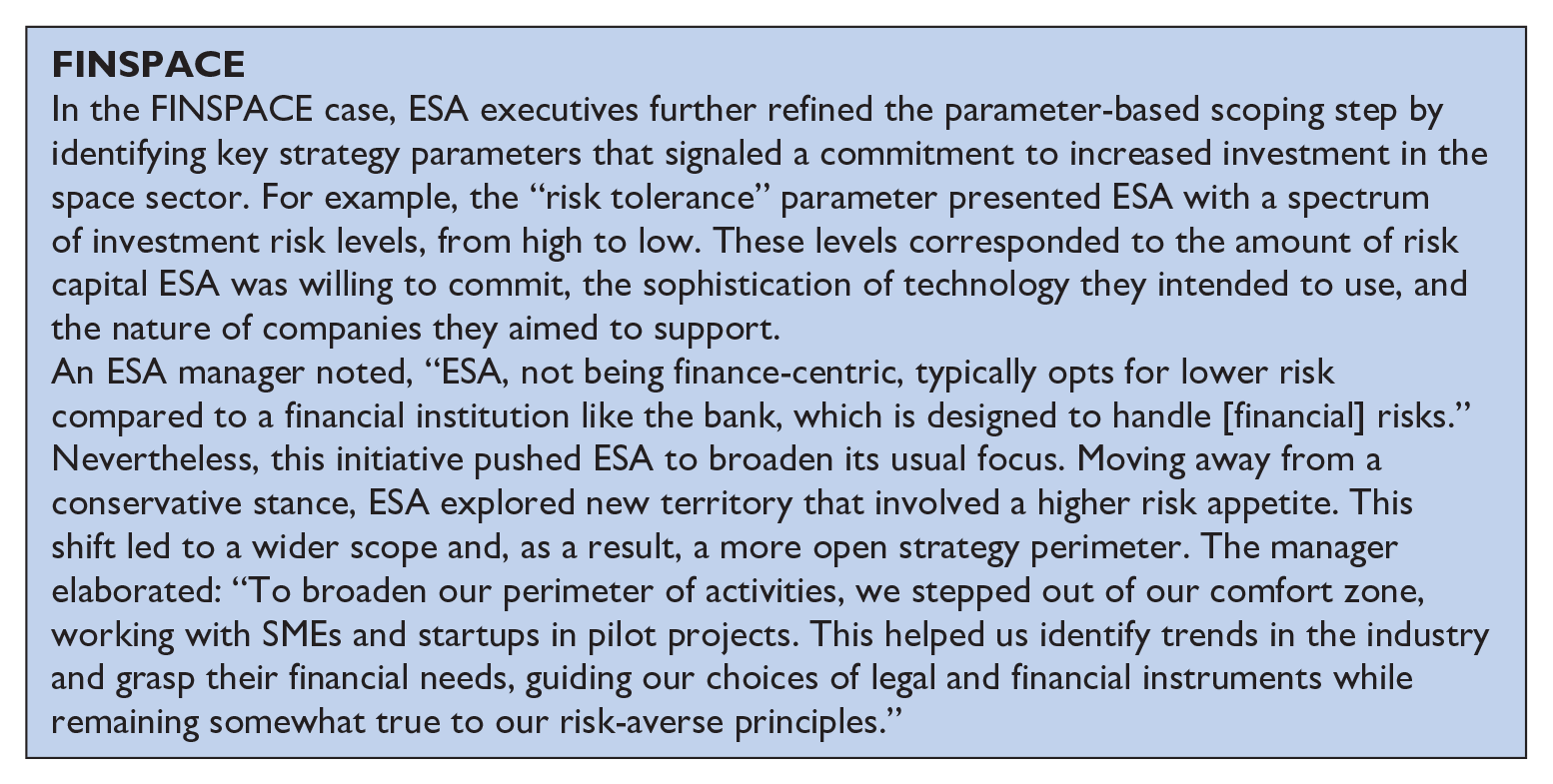
Therefore, the step of defining the strategy parameters is crucial for shaping the strategy perimeter and deciding on its level of openness, guided by the selected parameter values. As seen in the FINSPACE example, organizations aiming to broaden their strategy perimeter may need to look outside their conventional boundaries. This could mean taking on more risk than usual. Hence, this step is pivotal in establishing how open the strategy perimeter will be and in steering the overall trajectory of the strategy.
Step 2: Open-Ended Roadmapping for Commitment Anchoring
Following the exploration of the possibilities through the strategic options and the degree of openness of the strategy perimeter, the next step involves open-ended roadmapping for commitment anchoring. This step is dedicated to anchoring one of the strategic options and addresses the question: “How can public organizations stay open while also ensuring that stakeholders are actively engaged and committed?” This involves identifying key milestones, such as developing policy documents and agreements requiring commitment from all stakeholders. A steering group and a roadmap are created to guide these commitments.
This step is vital as it moves from the initial exploration of openness to a practical roadmap for commitment, thereby determining the degree of engagement. It not only aims at producing a tangible outcome aligned with the intended strategy, but also helps organizations create an adaptable roadmap so that they remain open while engaging with stakeholders within the given institutional context. This flexible roadmap jointly determines key milestones and their corresponding commitments, while engaging strategists and stakeholders as co-creators in shaping the strategy’s trajectory. 46
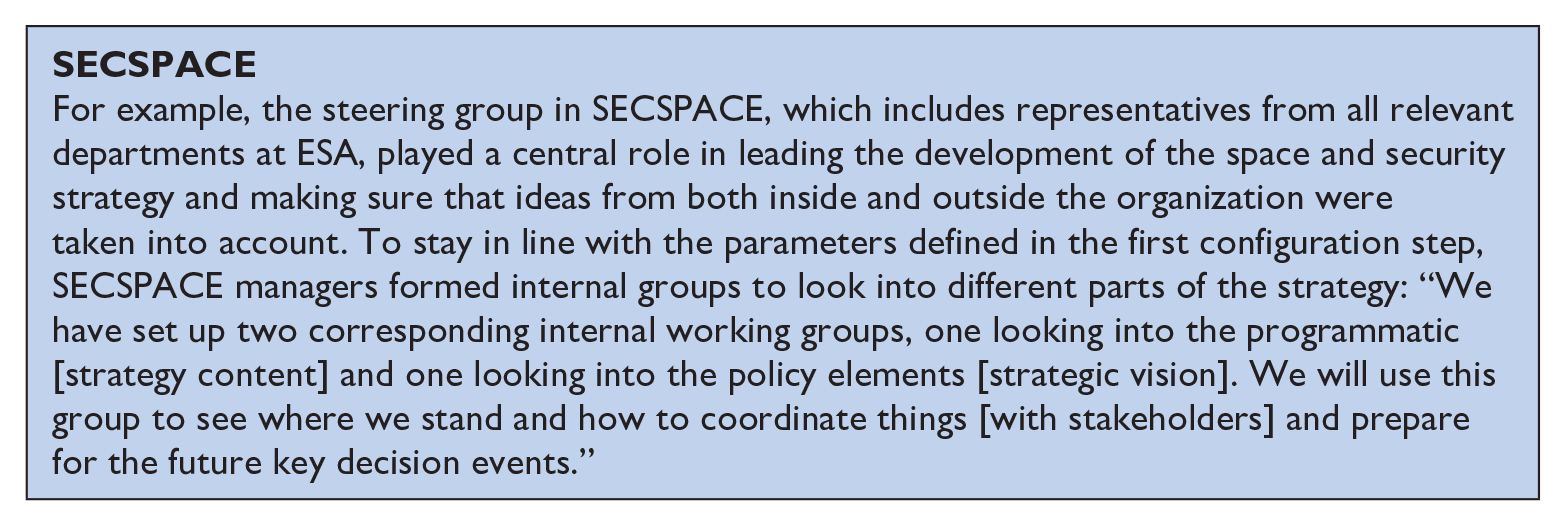
The involvement of a dedicated steering group ensures that everyone is working together, that different views are aligned, and that all contributions are involved in the preliminary strategy roadmap with provisional milestones and adaptable commitments.
In public organizations, commitments are typically made official through reports, policy and legal documents, or agreements between multiple parties designed to secure commitments. These anchors help to narrow down possible solutions and provide a provisional solution for working together. 47 Commitments are often articulated in broad terms, which allows them to change as the strategy develops. This flexibility is important because strategies often have goals that evolve over time. 48
The identification of key milestones to secure commitments was key for refining the solution direction in all three cases. As seen in the example below, ESA managers welcomed the flexible and open-ended nature of this step.
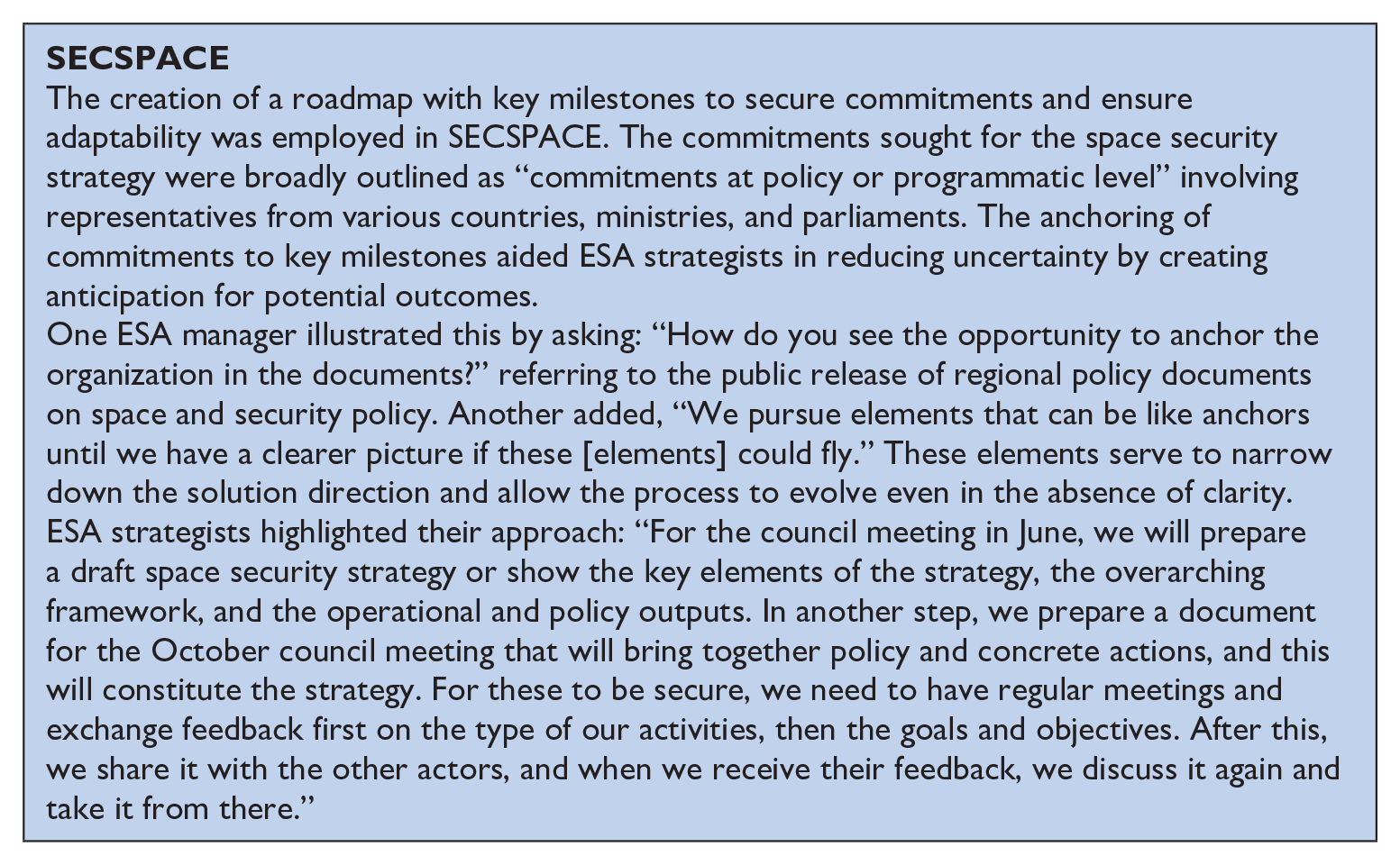
In essence, the second step involves creating a flexible roadmap with key milestones, securing commitments from stakeholders, and continuing to adapt the strategy based on feedback and evolving circumstances. This step is crucial for transforming the potential OI integration within the strategy perimeter, as defined in Step 1, into a concrete plan of action. It emphasizes that the strategy is not a static plan but, instead, a flexible roadmap that evolves based on feedback and changing circumstances.
Co-Navigating the Strategy Perimeter
The second component of the Strategy Perimeter Framework contains three co-navigation principles designed to shape a joint solution space: controlling the process, but not the outcome; framing-reframing to circumvent bottlenecks; and revisiting assumptions through formal-informal loops. Together, these principles help the organization and its stakeholders in finding and aligning with a joint solution space.
While the extent of openness and the level of stakeholder engagement within the strategy perimeter is set during the two configuration steps, these three co-navigation principles support organizations in incorporating OI practices into their strategy development. They do so by merging conventional stakeholder engagement practices with open stakeholder engagement practices. This integrated approach ensures that strategy development remains dynamic and adaptable to the evolving needs and expectations of stakeholders.
Principle 1: Controlling the Process, but Not the Outcome
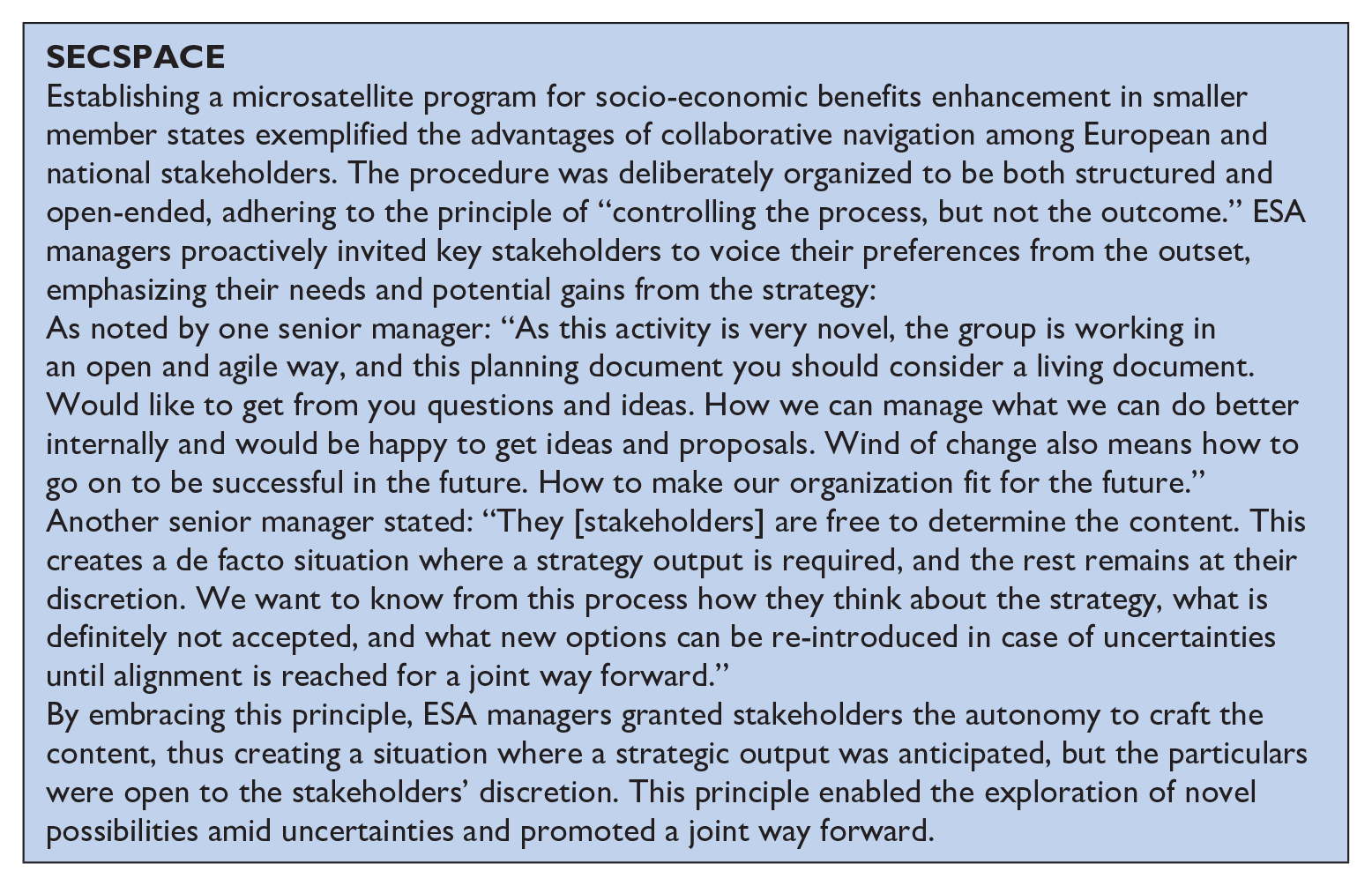
In navigating the configured strategy perimeter, ESA strategists focused on achieving a careful balance. They sought to retain control over the process while enabling stakeholders to influence the evolving strategy, without fixing every detail from the start. This approach aligns with the principle of “controlling the process, but not the outcome.”
ESA senior managers highlighted the importance of this principle: “What matters in this decision is that we keep controlling the process, while the content of the decision needs to include the feedback received from all partners.” Regular, organized meetings and feedback sessions were vital in this controlled yet adaptable process. An ESA manager remarked, “We need to have regular meetings and first discuss the scope of our activities, then the goals and objectives as they are influenced [by current developments].”
The iterative nature of the strategy development process, facilitated by the dedicated steering group set up in configuration Step 2, was crucial in effectively navigating the strategy perimeter. It allowed for flexibility to test and refine various parameter values, as outlined in the first configuration step, before settling on the final choice embodied in the second configuration step. As a result, stakeholders in the process were given the opportunity to evolve from passive participants to active co-designers of the strategy. Their early involvement enabled them to pose critical questions, set goals, and propose feasible solutions. This transition underscored the need for a well-defined yet flexible and open strategy perimeter—a key factor in securing stakeholder support. The success of all three strategic initiatives was attributed not just to their substance, but also to the collaborative journey that shaped them. The SATSPACE initiative serves as a prime example of this principle in action.
Principle 2: Framing-Reframing to Circumvent Bottlenecks
Navigating the strategy perimeter can pose unique challenges to public organizations, especially when there’s disagreement among key participants or when the future is uncertain. To tackle these issues effectively, it is helpful to adopt a proactive approach, which is embedded in the principle of framing-reframing to circumvent bottlenecks. This principle involves rethinking important aspects, such as the language used, how meetings are run, and potential solution directions. ESA managers found this approach useful in defining and guiding the strategy’s direction and scope.
Take, for example, the SECSPACE initiative. Here, deciding how to present the strategy or else how to frame it—whether as entirely civilian, a mix of civilian and commercial military use, or fully military—was an important choice. This decision, which involved selecting parameters as set in configuration Step 1, had an impact on how open the strategy perimeter would be.
Choosing how to present the strategy by framing and reframing as needed was strategic, necessitating a delicate balance of the different needs and preferences of the stakeholders from 22 countries. The choice of the terminology used (such as “security”) implied a wide-ranging and open strategy perimeter, one going beyond traditional boundaries in space and security-related matters. This decision was made with careful consideration of the organization’s mandate and preferences of stakeholders, as emphasized by a senior executive: In the end, ESA will do what the member states will tell. I used the term military [frame 1] and not security [to signify an open perimeter] to make the distinction [and infer what stakeholders want and what not]. They [certain countries] made it clear ESA will not be an organization doing military/non-peaceful activities [sticking to conventional boundaries]. [Then] I took the broad term of security [frame 2], as it is compatible [with everyone’s preferences for this strategy.] If they [other countries] disagree, we change the term [frame] again.
ESA managers proactively involved stakeholders to steer the course of the strategy, offering them the opportunity to support the initial proposal or to jointly adjust until a consensus on the strategic direction was achieved. This principle highlighted ESA’s dedication to flexibly navigating the strategy perimeter while valuing stakeholder insights and embodying the second configuration step.
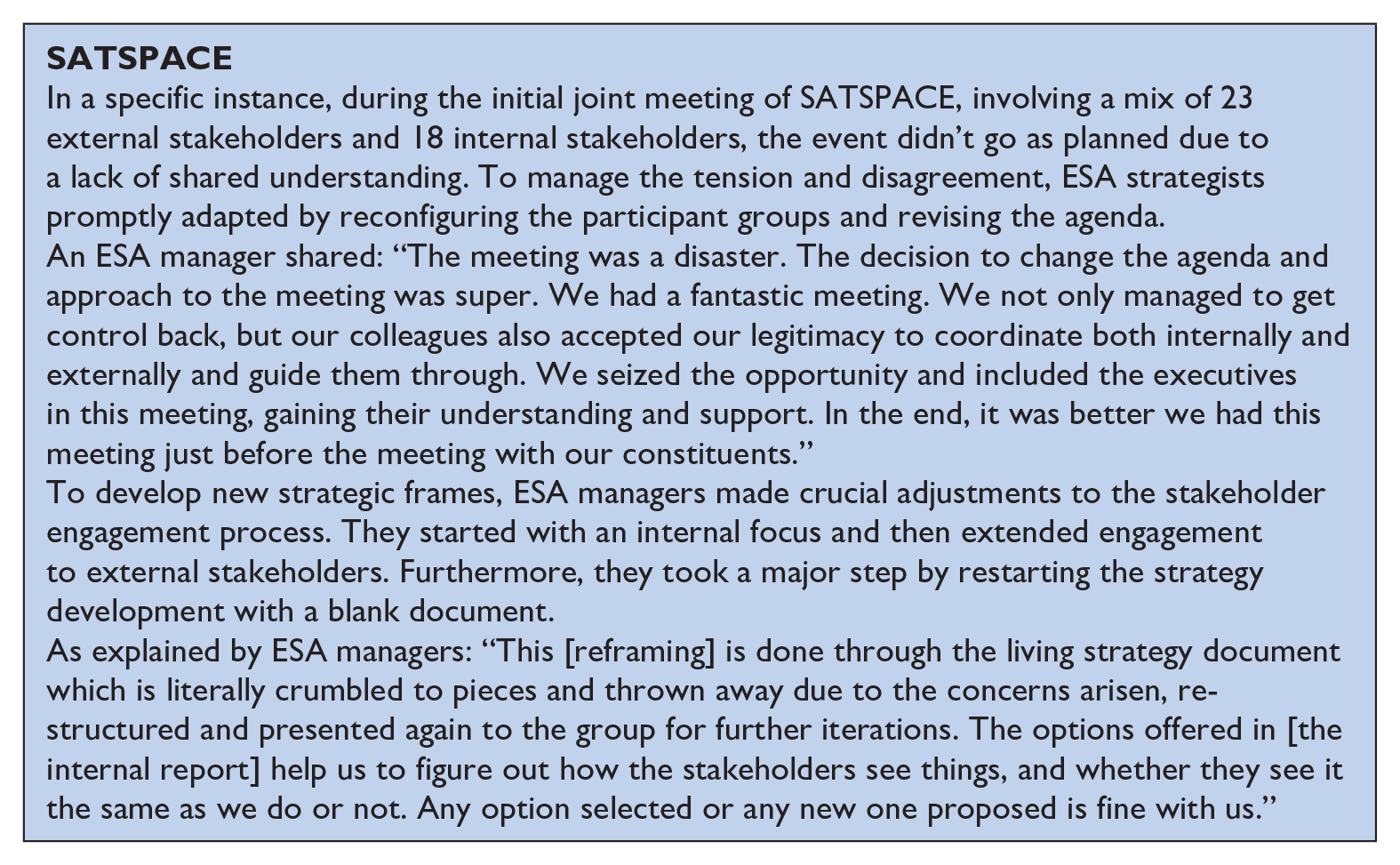
The SATSPACE example demonstrates how ESA managers adeptly modified the strategy perimeter through the principle of framing-reframing. This ensured that stakeholder preferences were respected while maintaining the organizational mandate. By reevaluating and potentially modifying the strategy’s trajectory, stakeholders are encouraged to consider new viewpoints, thereby fostering innovative ideas for the strategy’s progress. This principle, characterized by its adaptability and progressive nature, involves stakeholders to collaborate in forging a shared path forward. The resultant joint solution space emerges as a balanced compromise, reflecting the values and interests of all stakeholders to a reasonable degree.
Principle 3: Revisiting Assumptions through Formal-Informal Loops
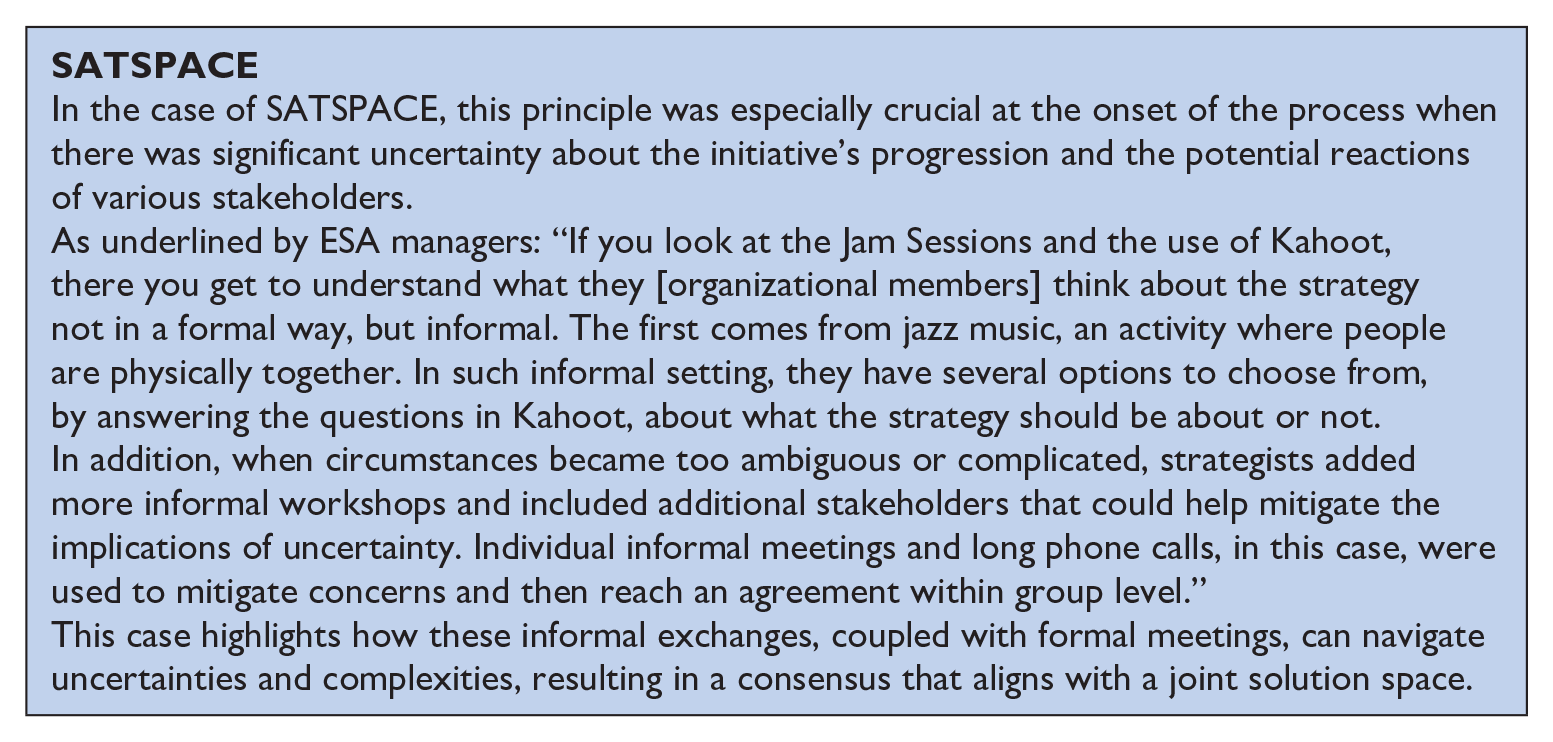
While the framing-reframing principle enabled ESA strategists to explore different strategic options and maintain control in the process, these two principles were further reinforced by the third principle: revisiting assumptions through formal-informal loops. This approach allowed strategists to engage with stakeholders throughout strategy development, utilizing both formal group meetings and informal conversations.
Formal group meetings coordinated by the steering group were often complemented by informal exchanges. These informal interactions, conducted through face-to-face meetings and phone calls, aimed to address any potential concerns and ensure stakeholder buy-in before moving on to the next formal phase of the strategy development. As highlighted by ESA managers in FINSPACE, “We would typically call each stakeholder individually to see what they want and what they plan to do as next steps, especially in the beginning of the strategy development. These calls, made before and after the meetings, were crucial.”
The goal of alternating between formal and informal loops was to distinguish between group dynamics and those of individual stakeholders, enabling strategists to quickly identify potential issues. This principle also served to prevent issues during formal meetings. When stakeholders had reservations, informal channels were used to revisit assumptions and reach a consensus before formal meetings. As explained by ESA managers, “The objectives have indeed evolved and probably will continue to do so until we have the buy-in. We are bound to have several iterations before we are ready. Informal discussions with the council delegates have been overall very supportive of our work and provide us with elements.”
These informal exchanges not only facilitated understanding but also contributed to a more inclusive and adaptable strategy perimeter. Hence, using fewer formal gatherings ahead of key decision events allowed strategists to proactively identify obstacles and remain ready to adjust the course of the strategy development, thus maintaining control of the process. The informality proved valuable for exploring and improving new solution directions, and allowing for elaborate validation in more formal contexts until a collective understanding among stakeholders was achieved.
Conclusion
In this study, we explored how public organizations can integrate OI practices into their strategy development. The Strategy Perimeter Framework addresses institutional context challenges that public organizations face, by combining traditional and open stakeholder engagement practices. This framework is not just theoretical; it is grounded in practical application as well, evidenced by its central concept of the strategy perimeter—a designated area within which the organization actively engages stakeholders in co-shaping and advancing its strategy goals.
Public organizations are increasingly turning to OI to fulfill their societal missions. OI allows public entities to venture into new territories, leveraging external expertise to develop services beyond their current operations. However, the shift toward OI presents challenges, as institutional demands and stakeholder expectations often prioritize conventional methods over collaborative approaches. Our framework—with its individual components, the configuration and co-navigation of the strategy perimeter—aims to navigate these challenges.
The Strategy Perimeter Framework provides a practical approach designed to facilitate the integration of OI practices into the strategy development of public organizations. It contributes to the OI body of work in this sector 49 by providing a structured methodology that breaks down the integration of OI into manageable, actionable steps. Parameter-based scoping helps define the scope of the strategy and the level of openness, while open-ended roadmapping for commitment anchoring outlines a flexible roadmap for stakeholder engagement. This framework contributes to OI research by responding to the need for more clarity on the concept of openness and guiding public organizations toward more open collaboration. 50
Moreover, the framework addresses the challenge of aligning OI with traditional practices through a structured yet adaptable methodology. This methodology is underpinned by three co-navigation principles: controlling the process, but not the outcome; framing-reframing to circumvent bottlenecks; and revisiting assumptions through formal-informal loops. These principles are instrumental in effectively combining conventional and open stakeholder engagement practices, demonstrating that integration is not just advantageous, but necessary for public organizations to manage their openness within their specific institutional context and meeting stakeholder expectations.
The framework also emphasizes strategic orchestration of openness to prevent the pitfalls of excessive openness that could conflict with institutional demands and be detrimental to new strategic initiatives. 51 It builds on existing OI research, highlighting the need for organizations to tailor their innovation processes to their unique environments. 52 The strategy parameters and a flexible roadmap are central to this, enabling public organizations to explore various strategic options and achieve the optimal level of openness. By operationalizing the degree of openness and engagement with a wide array of stakeholders, our framework deepens the understanding of ecosystem design and management 53 in a public organization context. In addition, our findings shed light on the application of OI in the context of public organizations—a topic we do not know much about. 54 In particular, it adds to existing work on OI at the inter-governmental level 55 and addresses the demand for further research in this area. 56
The framework contributes to the stakeholder engagement literature by translating theoretical constructs into a practical model designed to address real-life problems with tangible outcomes. 57 It equips public organizations with a structured methodology to collaboratively create and advance strategic goals with stakeholders. The framework guides organizations in determining the scope of their strategy and the degree of openness through a methodical approach to stakeholder engagement that is adaptable to the organization’s unique context and constraints.
Our research highlights the importance of combining traditional stakeholder engagement methods with open and collaborative practices. While these methods are essential for large public organizations like ESA, relying solely on them may hinder innovation. Conversely, excessive openness can lead to chaos and hinder consensus. The key challenge lies in finding the right balance between structured engagement and collaborative openness during strategy development. Organizations considering our framework should carefully evaluate the benefits of increased stakeholder involvement, using it as a guide. Our approach is designed to be adaptable and flexible, acknowledging that integrating OI is not a one-size-fits-all process. This flexibility allows organizations to tailor the approach to their specific needs and constraints.
Footnotes
Notes
Author Biographies
Ntorina Antoni is a Postdoctoral Researcher in Innovation Ecosystems at the (ITEM) group at the Eindhoven University of Technology, Netherlands, as well as a Space Law and Policy Expert (email:
Sharon Dolmans is an Associate Professor of Collaborative Technology Commercialization and Societal Impact at the Innovation, Technology Entrepreneurship & Marketing (ITEM) group at the Eindhoven University of Technology, Netherlands (email:
Christina Giannopapa is a visiting university researcher at Eindhoven University of Technology (TU/e), Netherlands, and has been working for 15 years in the European Space Agency (ESA) and currently in the European Union Agency for the Space Programme (EUSPA) (email:
Isabelle Reymen is a Full Professor of Design of Innovation Ecosystems at Eindhoven University of Technology (TU/e), School of Industrial Engineering, Netherlands, and Scientific Director and General Manager of TU/e Innovation Space (email: