




Abstract
This article explores the effects of open innovation on innovation performance in military bureaucracies. While the understanding of how bureaucratic organizations can benefit from open innovation is still limited, this study discovered that open innovation can have a negative effect on innovation performance. However, leveraging an innovative culture can lead to improved innovation performance in organizations characterized by high levels of structure and hierarchy, especially those where secrecy and security are of vital importance.
Organizations increasingly seek to complement their internal research and development activities with inter-organizational collaboration, as part of an open innovation strategy, in order to increase their innovation performance. Open innovation—defined as “the use of purposive inflows and outflows of knowledge to accelerate internal innovation, and expand the markets for external use of innovation, respectively” 1 —is widely implemented in organizations and has generally been found to enhance the innovation performance of firms. 2 Most of these studies have been carried out in the context of organizations that are already receptive to openness 3 ; this leaves room for a more nuanced understanding of open innovation in other types of organizations that are inherently less prone to opening up. Recently, crucial advancements have been made in understanding open innovation strategies and implementation drivers in the context of less-researched governmental and military sectors. 4 Still there is less known about the innovation performance effects of open innovation in governmental organizations characterized as bureaucracies (such as military organizations). The existing literature that explores open innovation in these types of organizations specifically highlights the adaptational mechanisms when opening up for innovation, but it does not explicitly focus on the performance implications of this transition, and how managers cope with these implications. 5
Military organizations in peacetime are particularly interesting because they rely heavily on the core characteristics of bureaucracy: hierarchies of authority, specialized functions, and formalized processes and compliance. 6 Compared with civil bureaucracies, military bureaucracies must adhere to stricter (military) rules, jurisdictions, and hierarchies because national security is at stake. 7 In addition, such large organizations are especially prone to path dependency, inertia, and complacency and they often fail to change. However, an inability to use new practices such as open innovation can have serious consequences for their survival. Nevertheless, empirical research on the performance implications of open innovation in military bureaucracies remains thin. 8
In this study, we focus on the military as a case of a large, old, internally oriented, compliance bureaucracy. 9 History is rife with examples of how the military’s inability to organizationally exploit the benefits of technological advances can lead to defeat and the subsequent collapse of power. 10 Today, confronted with a range of disruptive technologies such as robotics, artificial intelligence, and quantum computing, military organizations are forced to follow a cross-sectoral approach with more open forms of innovation. This has prompted the Netherlands Defence organization to adopt the philosophy of open innovation and to seek innovation performance benefits from it. 11
While earlier studies have stressed the benefits of open innovation, 12 we highlight the tensions between open innovation and the characteristics of bureaucracy. To implement open innovation, military bureaucracies such as the Netherlands Defence organization need to become more of a learning bureaucracy when they open up their innovation process. 13 This transition poses serious challenges. Certain aspects of a compliant bureaucracy simply do not fit with the open nature of the practice and may therefore constrain processes of desired change. 14 If organizational design is not adjusted to accommodate open innovation, or if support mechanisms for value capture are not in place, the effects of external search activities organized by managers striving for increased innovation performance could turn out to be insignificant or even harmful. 15 Furthermore, being more open to innovation poses serious challenges related to secrecy and security, which are especially significant characteristics of military bureaucracies. 16 We respond to Monteiro and Adler 17 by studying the effects of more openness in innovation in a military bureaucracy transitioning from a dysfunctional to a more flexible paradigm.
To better understand if and how military bureaucracies can benefit from open innovation, we conducted an in-depth, empirical exploration of the effects of open innovation in the Netherlands Defence organization. We found that open innovation has a negative effect on innovation performance in the context of a military bureaucracy. However, when an innovative culture is present in units that adopt open innovation practices, positive innovation performance is harnessed. These findings have important implications for governmental bureaucratic organizations characterized by high levels of formalization, standardization, and centralization. Prior studies 18 have investigated the process that facilitates (or hinders) the adoption of open innovation practices, or the outcomes of specific open innovation instruments, such as hackathons or living labs in governmental organizations. 19 With this study, we take a broader perspective on open innovation by exploring the performance implications in military bureaucracies.
Literature Review
Misfit of Open Innovation in Military Bureaucracies
Despite recent advancements, the literature is inconclusive in suggesting that open innovation activities will lead to increased innovation performance in military bureaucracies. Military organizations face an increased need to source disruptive technologies through open innovation, due to their limitations in internal R&D capabilities and reduced internal innovation speed (as compared with external developments). 20 In this study, we take an outside-in perspective on open innovation, with military organizations aiming to spin in useful knowledge and technologies for assuring operational readiness, improved combat power, and tactical advantage. However, military bureaucracies are not well-equipped to capture the benefits of an open innovation approach due to their strong focus on secrecy and security, which challenges their ability to access and absorb external knowledge.
To understand the challenges of harnessing the results of open innovation, we draw on the concept of “misfit” and apply it to the context of the military. 21 Moreover, we draw on the literature of military bureaucracies to better understand how the political, cultural, and technical characteristics of open innovation conflict with the organizational characteristics of a compliance bureaucracy. 22
We first consider political misfit. Prior studies have emphasized that the transition to open innovation can be seen as a radical initiative for military bureaucracies, since its implementation requires fundamental changes in the activities of the organization and the constellation of power, and it represents a clear departure from existing practices. 23 Rigidities are expected to be found in the hierarchy, strategy, and centralized power structure that do not favor this transition. 24 In a large, old, and established bureaucratic organization like the military, management systems can be characterized as mechanistic, with clear hierarchical relationships and a deep-seated resistance to structural change. This political characteristic can have serious consequences for an organization’s survival when it faces a great deal of pressure to adopt an open innovation philosophy but is unable to flexibly change its hierarchical structure and constellation of power, leading to a political misfit. 25
Moreover, an open innovation approach requires the partial distribution of power to external parties. That can elicit questions surrounding co-determination of the governance choice between open and bureaucratic innovation efforts. 26 This can be difficult for military bureaucracies in which rules, orders, jurisdictions, and hierarchies are stricter than in civil bureaucracies because national security and human lives are at stake.
To illustrate, a senior military innovation manager explained how current management systems constrain open innovation practices: “The procurement processes do not fit the needs of units and innovators anymore. Those processes take too long, and it also has to do with our requests to the industry: we are only used to a traditional buyer-supplier relationship. In addition, our own R&D is terrible, we do not describe the effects we want properly, and we really have to learn this.”
If organizations are overly committed to their own technologies, opening up might be more challenging. 27 This is particularly problematic for the military, where retaining strategic autonomy and being in charge of their own weapon systems, for instance, is of the utmost importance to ensure operational readiness and competitive advantage against adversaries on the battlefield. This diffusion of power can therefore also lead to a political misfit of open innovation.
Next, we identify cultural misfit. A lack of alignment and commitment might seriously constrain a successful implementation of the open innovation approach. 28 The mindset of people in the military and the shared conservative norms and values encourage exploitative activities, thereby hampering the exploration of entirely new management activities. 29 An open innovation approach takes considerable time to implement, as deeply ingrained organizational mindsets and the fear of losing control over proprietary technology need to be addressed. 30 The “not-invented-here” syndrome has the potential to thwart open innovation efforts. We expect this cultural trait to be present in a military bureaucracy, 31 leading to a cultural misfit.
A senior innovation manager from the Dutch Army explained his concerns regarding military culture: “Our conservative Defence organization is underrepresented in the “new world.” The top management of our organization cannot imagine the current possibilities. Our organization is characterized by people who work here on a long-term basis, and they do not understand external developments well enough. That is our pitfall, so apart from ambition, it is a bare necessity to push innovation through and beat our enemies.”
The head of the innovation unit of the Army explained that cultural change is needed:
My role is to catalyze a cultural change. And from the perspective that we don’t do this alone, but we do this together with industry. The extraction of the power of industry is still underdeveloped. Fieldlab Smartbase is a real chance to ignite the cultural change, of which it is clear and outspoken that we need one!
An open innovation consultant explained the importance of Fieldlab Smartbase for cultural change: “Fieldlab Smartbase is a phenomenal, awesome experiment to interact more with the outside world! It is an incredible success, which has been celebrated too little. A lot has been accomplished on such short notice in a large organization with a conservative culture. It has become a great perspective to build on for the future!”
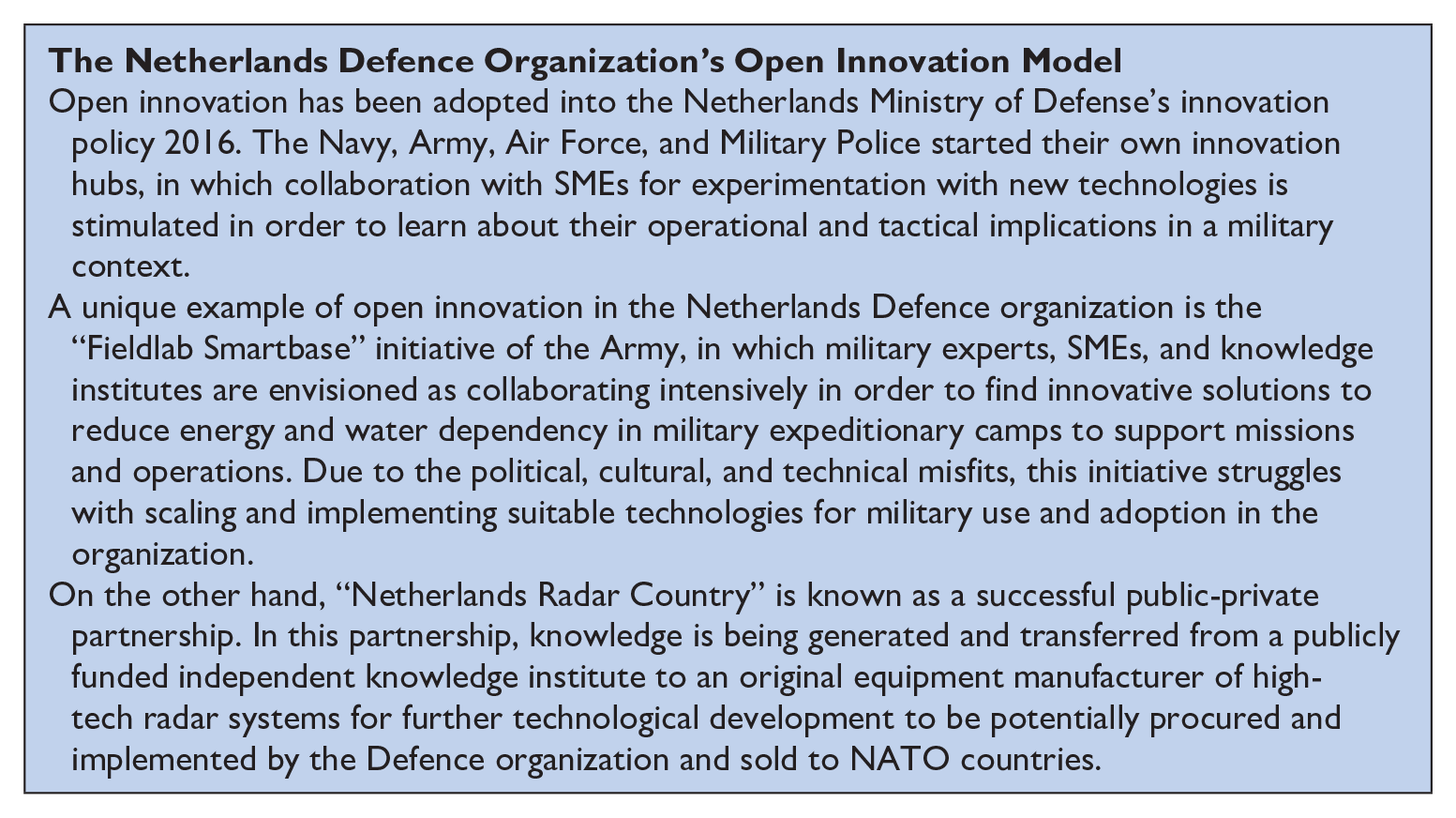
Third, we identify sources of technical misfit, driven by the risk of losing control by leaks of critical knowledge about the organization’s innovation efforts to potential enemies. For example, the open innovation literature shows that if the legal department plays a leading role in the implementation process, as is the case in bureaucratic and traditional organizations like militaries, a firm might overemphasize the appropriation of technology developed in an open innovation setting. This can negatively affect prospects for external collaboration, leading to a technical misfit between open innovation practices and the military organization. 32
An external consultant of the Netherlands Defence organization explained how the management of intellectual property was problematic in experiments with open innovation:
At the start, the innovation unit presented the condition that during the open innovation experiments, no intellectual property would be created. This turned out to raise questions with the SMEs about how their investments would yield revenues. The innovation unit could not give any guarantees due to the legal tender regulations that exist in the government.
In addition, open innovation may present serious challenges to the organization once implemented. One major problem associated with accessing external sources of knowledge relates to the fact that, in order to obtain knowledge, organizations have to reveal some parts of their own knowledge to externals; we refer to this problem as the “paradox of openness.” 33 This openness to external organizations creates risk, the most extreme form of which is outright theft. 34 In general, firms fear “involuntary outgoing spill-over” or leakage of critical knowledge about the firm’s innovation efforts to its competitors. 35 More specifically, this poses a substantial risk for military bureaucracies that need to protect secret knowledge related to core military capabilities and export-controlled technology. Weapon system technology, for instance, needs to be developed in a closed manner, and its intellectual property can only be exploited in a closed defence industrial ecosystem. Due to this technical gap, open innovation can negatively impact long-term innovation success and potentially lead to a loss of both control and core competences. 36
Military bureaucracies can be compelled to intensify external collaboration to insource disruptive technological innovations (e.g. robotics, artificial intelligence, quantum computing) because of limitations related to internal R&D capacity and the need to accelerate innovation processes. 37 However, the organization is not yet accustomed to supporting open innovation due to a misfit between the characteristics of open innovation and those inherent to a compliant military bureaucracy. The bureaucratic paradigm might as well be dysfunctional, potentially leading to negative consequences for innovation performance. 38 In this study, we empirically explored the effects of open innovation on the innovation performance in the Netherlands Defence organization, and we seek to find answers as to how compliant military bureaucracies can transition to a learning bureaucracy with a flexible paradigm when trying to benefit from open innovation.
Data and Methods
Research Setting
We conducted our empirical research at the Netherlands Defence organization. We chose this organization because empirical data from military bureaucracies that implement and try to benefit from open innovation is scarce, despite recent advancements. The need to better understand if (and how) these types of organizations can benefit from open innovation has intensified, as the implementation of open innovation in military bureaucracies has become more prevalent. Furthermore, military organizations experience significant pressure to experiment with and adopt relevant new technologies, which leads them to seek intensive collaboration with external partners to provide the military with the right knowledge. However, the consequences of broader and deeper external interaction for innovation performance in military bureaucracies are still not well understood.
The Netherlands Defence organization presently finds itself in a transition to more open and closer collaboration with new types of partners. This transition from a closed to an open innovation model can be seen as radical because it represents a clear departure from existing innovation practices and military culture. Management systems such as procurement and financial regulations need to support the value capture from open innovation. 39 As such, our study focuses on an outlier case of open innovation.
At the time of study in 2020, the Netherlands Defence organization had a yearly budget of approximately 11.0 billion Euros. More recently however (2022), the Dutch government decided to significantly increase the defence budget, growing to the North Atlantic Treaty Organization (NATO) norm of 2.0% gross domestic product (GDP) in 2025 for defence spending, a decision strongly driven by the war in Ukraine. As a derivative of that total budget, R&D spending, innovation, and ecosystem development for defence increased significantly as well. This budget is divided across finance for missions and operations, the apparatus of the core department and supporting services, training, and preparation of operational commands of the Navy, Army, Air Force, and Military Police, and investments in new material, IT, and infrastructure. Although relatively small, the Armed Forces of the Netherlands are among the most advanced armed forces in the world and contribute to peace and stability in the Kingdom of the Netherlands and throughout the world. To retain its position as one of the most advanced armed forces in the world, R&D and (open) innovation are crucial for the Netherlands Defence organization.
Data and Sample
We developed and administered a randomly distributed survey to 4,500 military and civilian personnel. They ranged from senior noncommissioned officers up to the highest officer ranks (or civilian equivalents), at all operational commands and supporting services of the Netherlands Defence organization. The Navy is the oldest department of the Armed Forces, dating back to 1488, and the Military Police is the smallest operational department, with approximately 6,000 military and civilian personnel. The Netherlands Army, founded in 1814, is the largest department with approximately 22,000 military and civilian personnel. The Defence Material Organization, Support Command, and the Policy Department of the Ministry of Defence are responsible for nonoperational support in terms of the products and services, procurement and new material investments, logistics, HR, and policy implementation necessary for operational functioning and Armed Forces capability development. In total, the Ministry of Defence has a population of approximately 66,000 military and civilian personnel, of which 40,000 are military, 20,000 civilian, and 6,000 military reserve personnel. Organizational units of these departments operate in environments that are subject to varying levels of dynamism and operational or nonoperational challenges.
Survey invitations were sent out digitally via an email link, and the software program Lime Survey on the secure Defence computer system, in the period between July 2020 and September 2020. Of the 4,500 survey invitations that were sent, a total of 1,574 surveys were fully completed and included in our analysis. The survey consciously targeted those individuals who were the prime source of creativity and were involved in innovation-producing encounters. 40 Based on this personal engagement in open innovation, these individuals were asked to judge the innovation performance of their respective organizational unit, assuming that they were in the position to judge the innovation performance of their respective unit.
Empirical Strategy
To collect the relevant data, this study relies on existing scales from the literature, which were adjusted based on conversations with experts from the Netherlands Defence Academy, the Faculty of Military Sciences, the innovation department of the commander of the armed forces, and the policy directorate. We also conducted a pre-test with academics and military field experts to further improve the survey questions. Based on these steps, we were able to develop scales with questions related to the context and everyday work of the respondents (see the separate online appendix to this article). Most of the constructs were measured with 5-point Likert scales ranging from 1 (strongly disagree) to 5 (strongly agree). An exception was the scale for external orientation (external search breadth and depth), which was measured with five categories representing the intensity of interaction of individuals with 10 different types of external partners, 41 (coalition partners within the EU and NATO); SMEs; large incumbent organizations; consultants; governmental institutions; regional development agencies; knowledge institutes; universities; innovation hubs and incubators; and umbrella organizations such as employers organizations and the Netherlands Industries for Defence and Security.
Based on the responses from each of these partner organizations, we calculated three variables to capture open innovation adoption. Search breadth identifies the number of external partners that respondents interacted with; whereas search depth counts the number of partners with whom respondents interacted 13 times or more during 2019. To capture open innovation, we multiplied the external search breadth and external search depth variables. 42 Because we are interested in the effect of open innovation on innovation performance, we performed a series of hierarchical regression analyses, using radical and incremental innovation performance as our dependent variables. 43 (Descriptive statistics and correlations can be found in the separate online appendix to this article.)
Findings
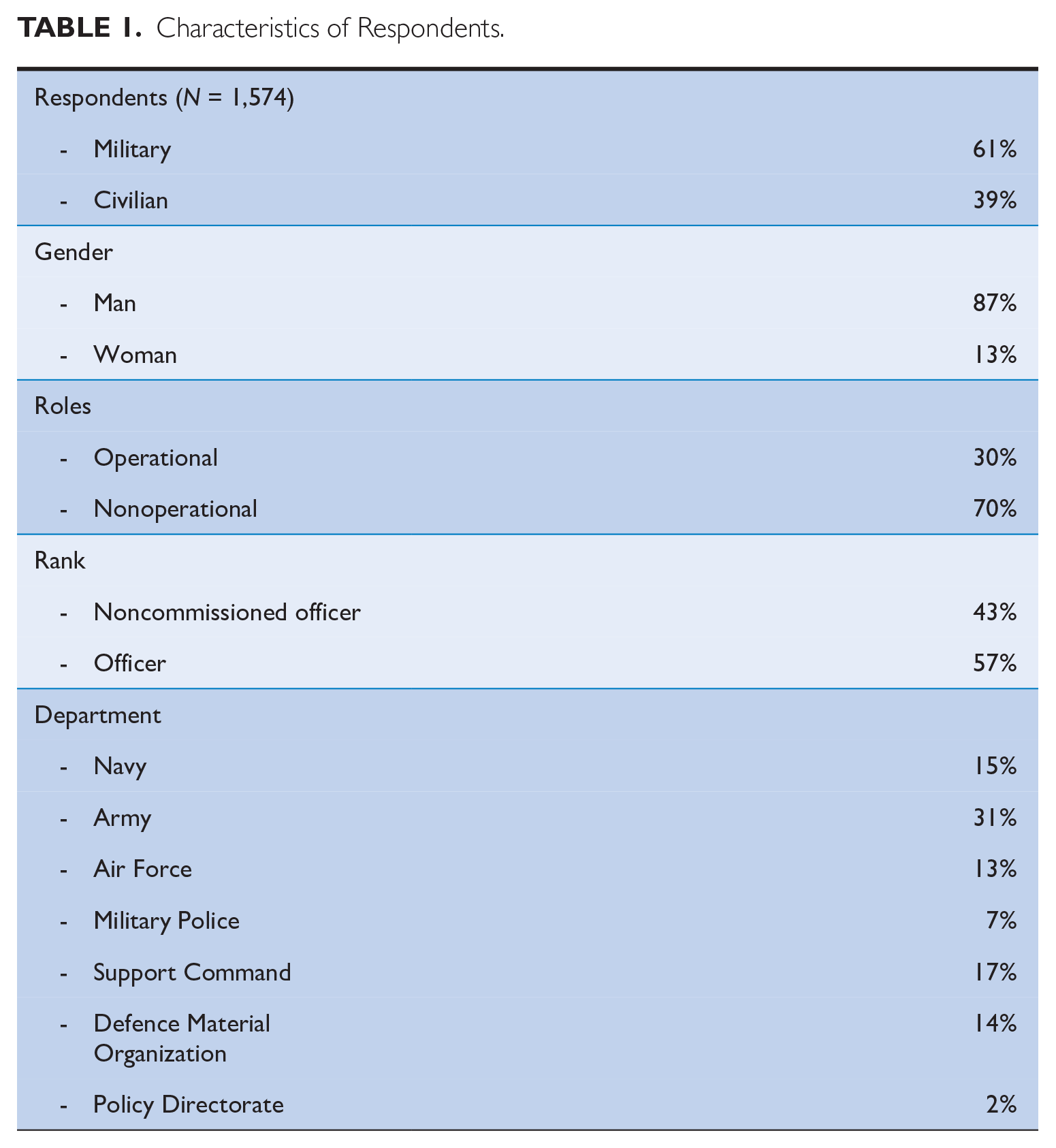
Table 1 shows a breakdown of the respondents across various descriptive characteristics, whereas Table 2 provides an overview of the interaction with external partners in 2019.
Characteristics of Respondents.
Use of External Sources in 2019 (%).
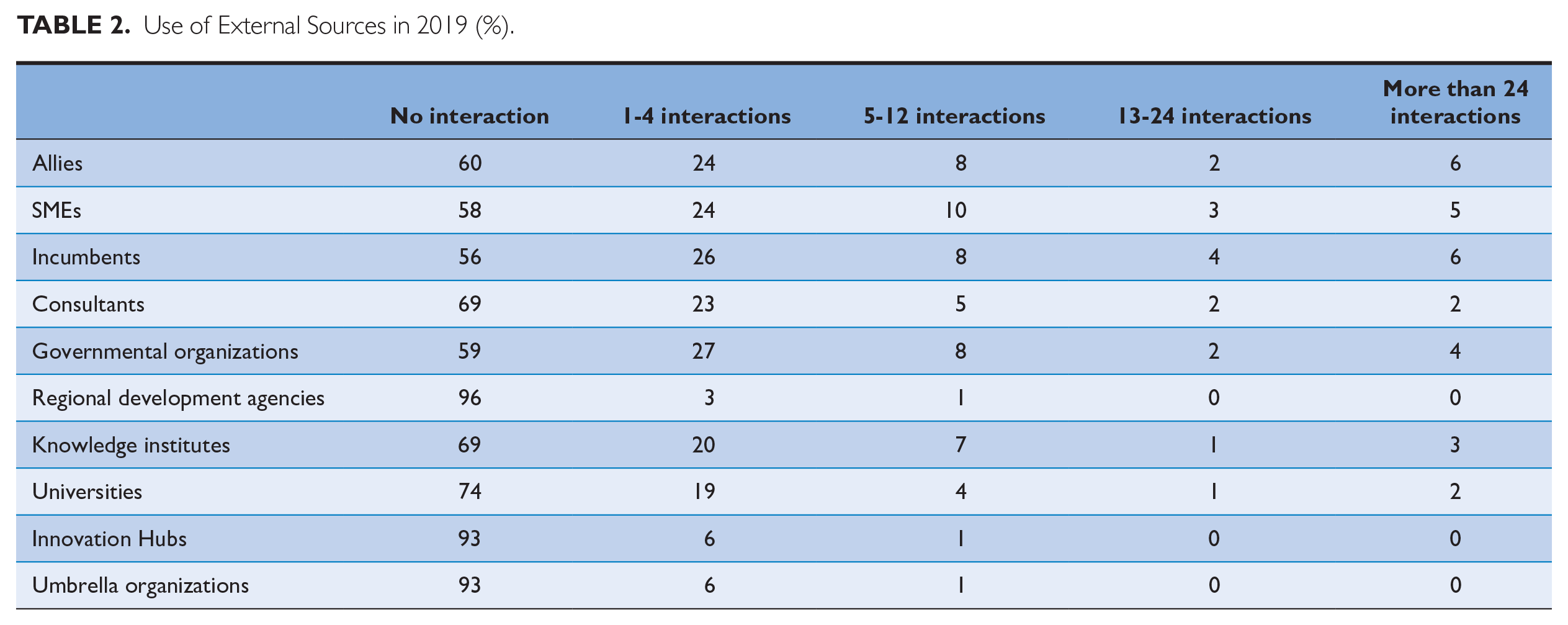
Regarding open innovation, respondents reported collaboration with less than three types of external partners on average, the most prevalent being large organizations (44% of respondents reported at least one interaction with incumbent firms), small and medium-sized enterprises (SMEs) (reported by 42%), and interactions with governmental organizations (41%). Furthermore, most respondents (1,177; 75%) did not interact intensively (less than 13 times a year) with partners in the year 2019. However, 219 respondents (14%) confirmed that they interacted intensively (13 or more times per year) with one partner, and 100 respondents (6%) confirmed that they interacted intensively with two partners.
In Figure 1, we have plotted the search strategies of the different departments within the Netherlands Defence organization. Interestingly, there appears to be quite some difference in the search strategies employed by the different departments, with the Ministry of Defence searching far more broadly (4.5 sources on average) than the Royal Military Police Department with two types of external partners on average. Similarly, the Ministry of Defence appears to engage more deeply with its innovation partners than the Royal Army, for example. These insights underscore the heterogeneity of open innovation adoption in the Netherlands Defence organization.
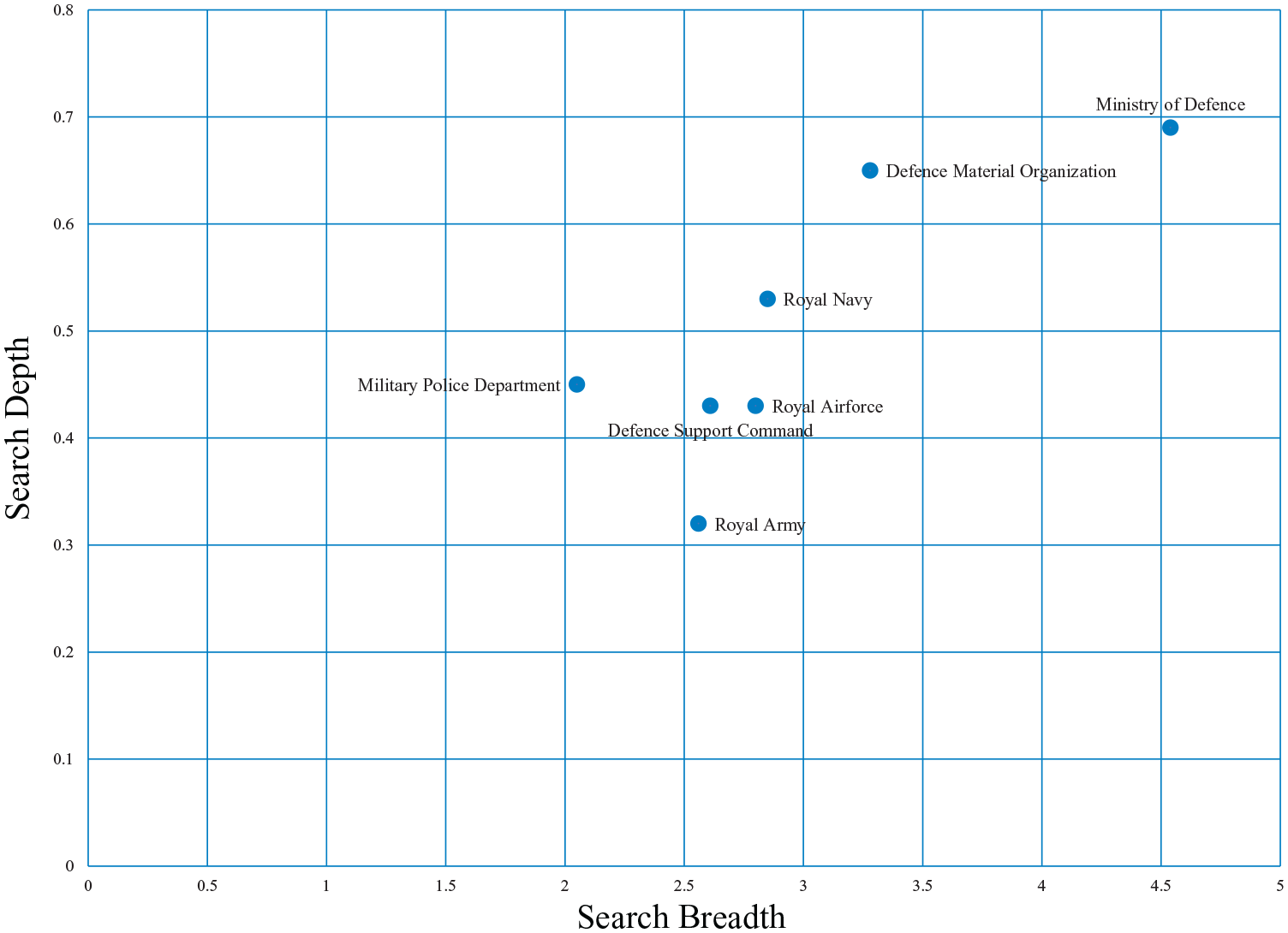
Search Breadth and Depth across Defence Departments
What Is the Effect of Open Innovation on Innovation Performance in Military Bureaucracies?
We found that open innovation has a nonsignificant negative effect on incremental innovation and a significant negative effect on radical innovation performance. For military bureaucracies like the Netherlands Defence organization, investing in open innovation activities does not improve their innovation performance. Instead, open innovation does not influence the creation of incremental innovation outputs and even reduces the creation of radical innovation outputs. This means that open innovation activities (i.e. diverse and intensive external interactions of the Defence organization), do not contribute to the improvement of operational military systems or improved military concepts of operation in use (incremental innovation performance). In addition, open innovation activities seem to harm the implementation of new military systems or the integration of new military concepts of operation (radical innovation performance).
This negative effect is primarily driven by search breadth—that is, the greater the diversity of the sources the organization is tapping into, the lesser the incremental and radical innovation performance. In fact, search depth enhances incremental innovation outputs. For military bureaucracies, it appears that tapping into a broad range of external innovation partners is harmful rather than helpful, while they could benefit from deeper engagement with external actors to improve their incremental innovation performance.
How Can the (Potentially) Negative Effects of Open Innovation on Innovation Performance in Military Bureaucracies Be Mitigated?
To answer our second research question, we further explored how the negative effects of open innovation on innovation performance might be mitigated. Based on prior literature, we added organizational design and response variables—such as slack resources, formalization, and innovative culture—as contingencies to better understand the relationship between open innovation and innovation performance.
First, we included slack resources, which are defined as the degree to which adequate resources are available to accomplish the task of innovation. 44 The availability of resources has previously been theorized as being critical to innovation. 45 Therefore, we assumed that in the context of open innovation in a military bureaucracy, slack resources would contribute to the ability to learn and to be more flexible to capture value from open innovation. We suspected that there might be a positive innovation performance effect when resources for open innovation were seen as adequate. Although we discovered that the variable slack resources were significant and positive in all models, we did not find a moderation effect of slack resources on the relationship between open innovation and innovation performance.
Second, we included formalization, which is defined as the degree to which rules, procedures, instructions, and communications within the organization are documented. 46 Formalization constrains exploration efforts and is generally established to respond to environmental phenomena in a known way. 47 We anticipated that formalization is more in line with the characteristics of a compliant bureaucracy or a dysfunctional paradigm. Therefore, we assumed that formalization would hamper the innovation performance effects of open innovation, as open innovation requires the exploration of new phenomena in the external environment. However, we could not confirm this by our analysis.
Finally, we considered innovative culture. A culture that is strongly supportive of innovation significantly and positively affects innovative capacity by increasing the organization’s ability to successfully implement new ideas, processes, and technology. 48 As such, we assumed that an innovative culture is more in line with the characteristics of a learning bureaucracy and flexible paradigm. Therefore, an innovative culture has a positive effect on the relationship between open innovation and innovation performance.
An innovative culture fully mitigates the negative performance implications of open innovation on incremental innovation, while strongly reducing the negative effects of open innovation on radical innovation performance. More specifically, an innovative culture weakens the negative effect of search breadth on radical innovation performance, whereas having an innovative culture fully mitigates the negative performance effects of search depth—if an innovative culture is present, military bureaucracies can benefit from deep engagement with external partners to implement new military systems or integrate new military concepts of operation (see online appendix for more information).
These results suggest that in terms of closing the innovation performance gap, the significant negative effects of open innovation on both incremental and radical innovation performance can be mitigated by implementing an innovative culture, leading to positive innovation performance in military bureaucracies. This means that an innovative culture can be seen as a necessary condition for open innovation to flourish when military bureaucracies are in the process of establishing an open innovation model for boosting innovation performance.
Discussion
Although existing research suggests that external sourcing activities have a positive effect on innovation performance, scholars have only just begun to explore how these types of innovation activities influence innovation performance in military bureaucracies. 49 Our study contributes to understanding how these organizations can mitigate the negative innovation performance effects of open innovation. Without paying attention to the misfit of open innovation in a compliant bureaucracy and enhancing value capture by stimulating an innovative culture, open innovation may turn out to be harmful.
Scholarly Implications
We have diverged from the findings of earlier studies that highlighted open innovation in organizational contexts that are already receptive to openness. 50 Previous studies have not yet empirically identified the innovation performance effects of carrying out open innovation in military bureaucracies. The findings of our study emphasize the importance of thinking about how to make open innovation work in a traditionally closed organizational context. Surprisingly, we found that in the context of military bureaucracies, the effect of more diverse and more intense external interaction can be harmful: it does not contribute to the achievement of incremental innovations, and it even harms the realization of radical innovations if not matched with an innovative culture.
We draw special attention to the paradoxical situation in which bureaucratic organizations are forced to implement open innovation by their environment and simultaneously aim to increase innovation performance. 51 Institutional theory suggests that organizations seek conformity with other organizations because they depend on external support and legitimacy. 52 Following this notion of conformity, organizations strive to resemble other organizations in their environment that set institutional norms. 53 If open innovation is a popular practice in an institutional field, organizational design is adjusted accordingly, leading to the widespread adoption of open innovation practices. In our specific case, the military also seeks to benefit from insourcing new technologies and increasing innovation speed in an open innovation setting. However, the military bureaucracy is not yet accustomed internally to such radical innovation practices. While at first glance this situation seems intractable, we show that an innovative culture can assuage problems related to this paradox. Innovation performance can even be further stimulated by making use of slack resources when an innovative culture is already in place in the organization.
Our study also supports earlier findings, 54 by showing that new innovation practices may be adopted despite being harmful to organizations because these organizations seek to comply with institutional norms. The prospect of enhanced legitimacy might thus be a more important argument for the adoption of new innovation practices than the absence of evidence of enhanced innovation performance; this imposes a risk for the capacity to fully exploit its benefits. It is therefore advised that, when there is a tendency to adopt popular innovation practices for reasons of legitimacy, a deliberate and thorough strategic assessment is done to determine if the implementation is likely to increase innovation performance.
Open innovation is by nature very different from a compliant military bureaucracy, leading to dysfunctionality. Based on the premise that there is a misfit between the new innovation practice and the characteristics of a military bureaucracy, cultural, technical, and political constraints need to be overcome during the implementation process. Incorporating external collaboration in an open innovation setting on a regular basis therefore seems unnatural. This increases the necessity to adopt more of a learning bureaucratic mentality to facilitate the implementation process in order to become more innovative.
Large bureaucratic organizations in general—be they governmental, for-profit, or not-for-profit—can take advantage of the findings based on this unique open innovation case—in particular, because traditional military bureaucratic characteristics seem to be at odds with the qualities needed for open innovation. The closed and inward-focused nature of military organizations can also be found in other bureaucracies, for instance in the security sector. As such, the Netherlands Defence organization is a useful case of an extreme open innovation model that may serve as an example for similar organizations. 55
A culture that is strongly supportive of innovation significantly and positively affects innovative capacity as well as the organization’s ability to successfully implement new ideas, processes, and technology, that is, its innovation performance. Scholars have found that a distinction can be made between the degree of radicalness of innovation and the importance of an innovative culture within the organization. For radical innovation projects, a culture of innovation is a primary key to achieving success in setting up new service projects, for instance. For incremental new service projects, however, an innovation culture is found to be of secondary importance, though it still has a significant positive effect on innovation performance. These findings are in line with the results of our study, corroborating the idea that an innovative culture is even more important in improving radical innovation performance than in stimulating incremental innovation performance. In addition, these findings are especially relevant when a military bureaucracy has not yet adapted to the character of learning and flexibility associated with an open innovation paradigm, and striving for radical innovation performance with open innovation imposes the highest risk.
From a management innovation perspective, it is assumed that successful implementation of open innovation requires alignment with the organization’s cultural characteristics. An externally oriented focus is consistent with an open innovation philosophy and refers to organizations that are actively engaged in partnerships with knowledge institutes, industry, and governmental organizations. This philosophy requires that certain organizational characteristics in military bureaucracies must be considered when adopting the concept, such as how to cope with rigidly sticking to procedures. 56
The motivation to adopt open innovation is followed by a phase of experimentation in which the organization determines how to incorporate new open innovation practices. 57 It is to be expected that, in this phase, an open innovation strategy is not yet fully in place, nor is it aligned with the organization’s bureaucratic innovation strategy. This misalignment may severely limit opportunities to successfully develop and exploit technology or be successful in open innovation. 58
A tolerance for ambiguity allows the organization to be partially misaligned, which helps to overcome tensions between the nature of the new practice and the organization itself. This is even more important when the new practice represents a significant departure from existing practice and is systemic or radical in nature, such as open innovation and its impacts on a military bureaucracy. 59
Managerial Implications
Open innovation as an innovation practice is, by nature, very different from the closed context of a military bureaucracy. Earlier studies highlighted open innovation in organizational contexts that are already receptive to openness. 60 This study is innovative because it highlights the effects of open innovation in a closed context. It is therefore unique and relevant for managers aiming to implement open innovation in organizations that are less receptive to openness.
Investments clearly take precedence over the potential gains associated with more openness, and implementing open innovation in military bureaucracies is very difficult for the managers who are responsible for this task. These processes might also be expensive because implementing open innovation strongly impacts the way innovation is being done and requires organizational changes which also consumes scarce resources that managers need to prioritize. Policy makers should therefore be conscious of the fact that, to make open innovation work effectively in these types of organizations, substantial changes in organizational culture and administrative support systems are needed. It should be noted that these aspects might not be aligned with the characteristics of a compliant bureaucracy, such as hierarchical and centralized power structures and a “stove pipe” organization in fields of expertise. 61 Also, implementing open innovation in military bureaucracies requires the support of top management, long-term effort, and a significant amount of resources in order to be validated as a new way of doing innovation.
We echo the findings of Keupp and Gassmann, 62 who highlight the high transaction costs of interpersonal coordination in open innovation. What is surprising is that an innovative culture is necessary for positive innovation performance results. The cultural misfit between the practice and the organization therefore seems to be the most important gap to bridge through leadership intervention in this context. It is however strongly recommended to reduce the technological and political gaps as well. Administrative support systems should be developed, enabling individuals in units to interact directly with external partners, complemented with the required mandates to be effective in these endeavors. Also, senior leadership should empower these decentralized units and their actors. They should be able to make decisions on their level about the appropriateness of collaboration with certain partners, and the technological and operational solutions they can potentially provide.
It is important to look specifically at the role of innovative culture in the context of military bureaucracies because, as Witzeman et al. 63 explain, it is not only technological systems that need to change when transitioning to open innovation. The more external innovation is sourced by the firm, the greater the need to transform systems, processes, values, and culture. We responded to this call because knowledge about systemic change in the context of open innovation, as a form of management innovation in military bureaucracies, is limited. 64
Based on the findings in this study, we show that open innovation activities have a negative effect on innovation performance in bureaucratic organizations, but this can however be mitigated by an innovative culture. In practice, a negative effect on innovation performance means that open innovation efforts, which can take the form of individuals interacting with external actors, collaboration with SMEs, and experimentation with new technology for instance, will not lead to improved operational concepts or new military capabilities. Our findings provide a better understanding of the disadvantages of open innovation in the preliminary phases, in which managers in military bureaucracies question how to implement related practices most effectively. 65
An innovative culture is crucial to diminishing the negative effects of open innovation in military bureaucracies. Intervention programs that focus on increasing the innovativeness of organizational culture might therefore be very helpful. This could for instance be accomplished by allowing deviation from bureaucratic hierarchies, rules, or procedures when it is necessary to attain goals in open innovation and cultivate a more flexible bureaucratic paradigm. 66 And if leadership promotes the introduction of innovative ideas and experimentation as a way of working, the innovativeness of the organization’s culture can be enhanced as well. Results show that when an innovative culture is present in a subunit that performs open innovation activities, slack resources for innovation can further enhance the positive benefits on innovation performance. However, when an innovative culture is not present, providing more resources for open innovation will not be sufficient to instate a positive effect from open innovation on innovation performance in a military bureaucracy. This is an important managerial implication because it points to the necessity to address the cultural gap first, before allocating extra resources.
We find that the effect of an innovative culture on incremental innovation performance is strong enough to compensate for the negative effects of open innovation. Radical innovation performance suffers stronger negative effects from open innovation as compared with incremental innovation performance. However, a positive radical innovation performance result can be realized by employing intense interaction with specific partners instead of a broad range of partners. This implies that striving for strong, long-term relationships with external partners is crucial to realizing radical innovation performance in open innovation. In the context of the military, incremental innovation performance is the degree to which existing capabilities are improved with upgrades of military systems in use. Radical innovation performance, however, is the successful implementation of entirely new systems.
From a management point of view, the risk associated with seeking radical innovation is greater than seeking incremental innovation in the absence of an innovative culture. It is assumed that the reasons for this reside in the fact that for the organization to successfully implement new capabilities, significant internal reform is required to support such an implementation. For instance, new knowledge needs to be acquired and absorbed, training and education programs need to be developed, logistic support must be organized, and new concepts of operation need to be integrated.
An innovative culture that has room for experimentation and the stimulation of the introduction of new ideas by leadership can provide the flexibility to integrate these aspects more easily. Building on the insight that open innovation has a positive effect on innovation performance, 67 we provide a more nuanced view and advise bureaucracies to exploit open innovation only in those subunits with an innovative culture that have adopted aspects of a learning bureaucracy. 68
Conclusion
In the transition to an open innovation model and a more functional bureaucratic paradigm, not all essential characteristics are present in a military bureaucracy and they need to be developed during implementation. A military bureaucracy with an innovative culture is better equipped to bridge this gap.
Supplemental Material
sj-jpg-4-cmr-10.1177_00081256241242166 – Supplemental material for Closing the Innovation Performance Gap: Open Innovation in Military Bureaucracies
Supplemental material, sj-jpg-4-cmr-10.1177_00081256241242166 for Closing the Innovation Performance Gap: Open Innovation in Military Bureaucracies by Jasper Heeren, Vareska van de Vrande, Henk Volberda and Erik de Waard in California Management Review
Supplemental Material
sj-jpg-5-cmr-10.1177_00081256241242166 – Supplemental material for Closing the Innovation Performance Gap: Open Innovation in Military Bureaucracies
Supplemental material, sj-jpg-5-cmr-10.1177_00081256241242166 for Closing the Innovation Performance Gap: Open Innovation in Military Bureaucracies by Jasper Heeren, Vareska van de Vrande, Henk Volberda and Erik de Waard in California Management Review
Supplemental Material
sj-jpg-6-cmr-10.1177_00081256241242166 – Supplemental material for Closing the Innovation Performance Gap: Open Innovation in Military Bureaucracies
Supplemental material, sj-jpg-6-cmr-10.1177_00081256241242166 for Closing the Innovation Performance Gap: Open Innovation in Military Bureaucracies by Jasper Heeren, Vareska van de Vrande, Henk Volberda and Erik de Waard in California Management Review
Supplemental Material
sj-jpg-7-cmr-10.1177_00081256241242166 – Supplemental material for Closing the Innovation Performance Gap: Open Innovation in Military Bureaucracies
Supplemental material, sj-jpg-7-cmr-10.1177_00081256241242166 for Closing the Innovation Performance Gap: Open Innovation in Military Bureaucracies by Jasper Heeren, Vareska van de Vrande, Henk Volberda and Erik de Waard in California Management Review
Supplemental Material
sj-pdf-1-cmr-10.1177_00081256241242166 – Supplemental material for Closing the Innovation Performance Gap: Open Innovation in Military Bureaucracies
Supplemental material, sj-pdf-1-cmr-10.1177_00081256241242166 for Closing the Innovation Performance Gap: Open Innovation in Military Bureaucracies by Jasper Heeren, Vareska van de Vrande, Henk Volberda and Erik de Waard in California Management Review
Supplemental Material
sj-pdf-2-cmr-10.1177_00081256241242166 – Supplemental material for Closing the Innovation Performance Gap: Open Innovation in Military Bureaucracies
Supplemental material, sj-pdf-2-cmr-10.1177_00081256241242166 for Closing the Innovation Performance Gap: Open Innovation in Military Bureaucracies by Jasper Heeren, Vareska van de Vrande, Henk Volberda and Erik de Waard in California Management Review
Supplemental Material
sj-pdf-3-cmr-10.1177_00081256241242166 – Supplemental material for Closing the Innovation Performance Gap: Open Innovation in Military Bureaucracies
Supplemental material, sj-pdf-3-cmr-10.1177_00081256241242166 for Closing the Innovation Performance Gap: Open Innovation in Military Bureaucracies by Jasper Heeren, Vareska van de Vrande, Henk Volberda and Erik de Waard in California Management Review
Footnotes
Supplemental Material
Supplemental material for this article is available online.
Notes
Author Biographies
Jasper W. J. Heeren is a business and innovation consultant at TNO, Defence, Safety and Security and holds a Ph.D. in management innovation from the Rotterdam School of Management, Erasmus University. (
Vareska van de Vrande is Professor of Collaborative Innovation and Business Venturing at the Rotterdam School of Management, Erasmus University (
Henk W. Volberda is Professor of Strategy and Innovation at the Amsterdam Business School, University of Amsterdam, and Director of the Amsterdam Center for Business Innovation. He is a member of the Scientific Advisory Council of the Netherlands Defence Academy (
Erik J. de Waard is an Associate Professor at the Netherlands Defence Academy specializing in strategic management and organization of the military (
Supplementary Material
Please find the following supplemental material available below.
For Open Access articles published under a Creative Commons License, all supplemental material carries the same license as the article it is associated with.
For non-Open Access articles published, all supplemental material carries a non-exclusive license, and permission requests for re-use of supplemental material or any part of supplemental material shall be sent directly to the copyright owner as specified in the copyright notice associated with the article.


