




Abstract
Social media platforms are powerful tools for empowering marginalized communities. How such platforms shape the way societies construct, interpret, and document the histories of marginalized communities is attracting more scholarly attention as abuse against marginalized communities proliferates online. Through the lens of mélange history—the selective combination of digitized records to construct historical accounts—this paper examines the experiences of “lower caste” Dalit social media users in constructing their histories online. Through a narrative analysis, derived from interviews with social media users, focus groups, participant observation, and document analysis, our findings present three exclusionary narratives of structural invisibility (“unseen”), procedural exclusion (“unheard”), and participatory withdrawal (“unspoken”). While these narratives reveal “context concealment” of Dalit histories by social media algorithms, policies, and other users, we also find evidence of “context recovery” as Dalits reclaim their truths through alternative archiving, counter-public formation, and digital activism. Our findings identify the limits and possibilities of mélange history for marginalized communities, particularly those experiencing caste-based abuse, and contribute to a growing body of research on caste and inequality in organizational contexts.
Introduction
We see voices being silenced on Twitter every day. We’ve been working to counteract this for the past 2 years . . . Today we saw voices silencing themselves and voices speaking out because we’re *still* not doing enough.
Online hate—the posting and sharing of hateful and prejudiced content against an individual, group, or community (Stop Hate UK, n.d.) is escalating. Amidst an active roll-back of content moderation policies designed to protect users from the “very worst of humanity” (Gillespie, 2020; Roberts, 2019) at the world’s largest social media platforms, it is marginalized groups in society that face the most extreme forms of online hate and abuse related to their race, ethnicity, gender, sexuality, disability, socioeconomic status, or caste (Bhardwaj et al., 2021; Duggan, 2017; Vogels, 2021).
Caste—an institutionalized form of social stratification perpetuating socioeconomic inequalities for over 3,000 years (Ambedkar, 1989; Bapuji et al., 2024)—is increasingly being recognized as a protected characteristic 1 in online hate speech and harassment policies (Mehrotra, 2020). Yet users from the very lowest stratum of castes in India, such as Dalits (often treated as “untouchables” or “outcasts”), still lack adequate mechanisms to report and remedy the discrimination they face online (Kain et al., 2021). This is largely because caste represents much more than a social category, but a hierarchical system deeply and historically entrenched in centuries of religious, cultural, and institutional power (Bapuji et al., 2024), shaping how Dalits live and work (Ambedkar, 1989). In addition, caste is both omnipresent and systematically denied or downplayed, particularly by dominant-caste groups, meaning that caste-based abuse is insidious and often normalized or dismissed as not “real” discrimination (Social & Media Matters, 2024).
Against this backdrop, this empirical paper examines the structural and socio-technological challenges faced by Dalit social media users in attempting to own, control, and construct their narratives online. Through combining literatures on social media and “mélange history”—the construction of historical narratives through vast digitized resources (Whelan, 2021)—and structural inequalities (Bapuji et al., 2024; Ray, 2019) we engage in a narrative analysis (Czarniawska, 1997; Maitlis, 2012) of 20 interviews with Dalit social media users, two focus groups with 10 additional Dalit social media users, non-participant observation in Dalit communities and document analysis of relevant caste-based online hate, anti-discrimination policies of social media companies, and local laws regulating online hate in India. In doing so, we outline three Dalit narratives of structural invisibility (a feeling of being “unseen” by social media algorithms), procedural exclusion (a feeling of being “unheard” by social media policies), and participatory withdrawal (a feeling of repressing voice and being “unspoken” in response to social media users). In doing so, we elucidate the “context concealment” of Dalit histories alongside “context recovery” as Dalits work to reclaim their truths and resist their exclusion through alternative archiving, counter-public formation, and digital activism.
The contributions of this paper are two-fold. First, while research has examined the role of social media governance policies and processes in exacerbating and reducing inequalities faced by marginalized communities (Bohorquez-Lopez, 2022; van den Hoven, 2017), to date, we have had little insight into how social media enables the concealment of marginalized histories. We contribute to the growing literature on organizational inequality, particularly caste-based inequality (Amis et al., 2021; Bapuji et al., 2020, 2024), through empirically revealing how algorithmic stratification creates invisible yet pervasive forms of exclusion that platform organizations often neither recognize nor intend. Our three exclusionary narratives reveal how this stratification operates simultaneously across technological, governance, and social dimensions of platform organizations, contributing to discussions around visibility in and around platform organizing (Boyd, 2011; Treem & Leonardi, 2013) through the lens of caste.
Secondly, we empirically extend conceptual insight into the emerging concept of mélange history (Whelan, 2021) and its focal pillar of “context.” While mélange history has democratizing potential in facilitating a “buffet” of digitalized resources upon which to build historical context, for marginalized communities such as Dalits, structural inequalities related to caste prevail (Shanmugavelan, 2021), leading to a “concealment” of context and privileging of certain accounts over others. Consequently, Dalits must reclaim their histories (and futures); a phenomenon we introduce as “context recovery.” Understanding these contradictions not only reveals the darker side of the emancipatory potential of digital technologies for marginalized communities (Etter & Albu, 2020; Martin, 2022) but also provides insight into how mélange history (Whelan, 2021) may (or may not) be able to overcome structural inequalities and aid marginalized communities within digital contexts.
This paper is organized as follows. First, we provide a theoretical background on structural inequality and social media and mélange history. Second, we discuss our methodology before presenting our findings, discussion, and conclusion.
Theoretical Background
Caste-Based Structural Inequalities and Their Digital Penetration
Structural inequalities refer to systemic and long-standing disparities in power, resources, and opportunities that exist in societies and are often perpetuated by social, economic, and political structures (Ray, 2019). Caste-based structural inequalities find their roots in historical events, colonial legacies, conquests, cultural norms, and discriminatory policies that have shaped the social order over generations (Bapuji et al., 2024; Narula, 1999; Srinivas, 1957). Caste perpetuates a juxtaposition of “polluting” (e.g., “lower” castes, such as Dalits) and “pure” (e.g., “higher” castes such as Brahmins) members of society 2 (Bapuji et al., 2024), and such assumptions continue to be reflected in daily social interactions and everyday language (Ambedkar, 1989). This means that these inequalities are firmly embedded in the policies, laws, and norms of communities (Adams & Luiz, 2022; Bhaskar & Modi, 2021; Felice, 1977; Thorat et al., 2023). Consequently, they result in unequal access to essential resources, opportunities, and social goods, such as education, healthcare, housing, and employment (Das, 2010; Thorat & Newman, 2007). As societal norms, beliefs, and institutional practices continue to shape interactions and decision-making processes, they may further entrench the advantages of dominant groups while marginalizing and limiting the opportunities for historically disadvantaged communities. While caste originated in South Asian societies, caste abuse of Dalits in workplaces is now observed worldwide due to migration (Attri et al., 2021; Metcalf & Rolfe, 2010).
These real-world characteristics of structural inequalities extend into the “digital” realm (Duggan, 2017; Reyman & Sparby, 2019; Schoenebeck & Blackwel, 2021). It is now well-acknowledged that abuse on social media is not experienced uniformly, and some communities are more likely to face abuse on social media than others (Lapidot-Lefler & Barak, 2012; Reyman & Sparby, 2019). This is because social media amplifies inequalities, given the heightened salience of language and images online. For instance, in the case of caste, online hate utilizing derogatory hashtags, abusive abbreviations, and images/videos flourishes on social media, which further institutionalizes the historical stratification of caste (Jane et al., 2022; Vijay & Nair, 2021). Platform governance mechanisms, while appearing procedurally neutral, instantiate structural asymmetries through what Hunt et al. (2024) identify as multiple simultaneous “faces of power” (p. 275)—coercion (compelling action through resource control), manipulation (shaping agendas through algorithmic curation), domination (embedding ideological values into platform architecture), and subjectification (disciplining identity construction through surveillance). These layered mechanisms of control operate not through explicit hierarchical authority but through the architectural affordances of digital infrastructures that determine which historical contexts are rendered intelligible within platform spaces and which remain systematically excluded from collective memory formation (Hunt et al., 2024).
As social media platforms thrive on user engagement and develop algorithms that promote content that elicits the most reaction from users (Rauf, 2020), hate often prevails, particularly as marginalized groups often lack adequate voice and resources to develop counter-narratives (Duggan, 2017; Fiske & Rai, 2015; Guru, 2020; Lumsden & Harmer, 2019). When marginalized groups do resist, they often inadvertently provoke dominant groups, leading to a surge in abuse and hate speech (Tyler et al., 2021). The compounding of disadvantages for marginalized groups on digital platforms stems from what Hunt et al. (2024) theorize as asymmetric resource dependencies, wherein the degree of platform dependency gives dominant groups disproportionate power to reshape relational ties, extract value, and constrain the emancipatory possibilities that platforms offer. This means that many marginalized voices get “crowded out” of online spaces. Given the prevalence of abuse online, particularly against marginalized groups, online hate is now seen as an inherent “feature” of digital life that will only worsen in the coming years (Duggan, 2017). Furthermore, as social media platforms utilize a complex myriad of human and machine-based surveillance systems to identify content that violates community guidelines (Tyler et al., 2021), such systems are often criticized for inadequately addressing online hate and further obfuscating channels of accountability (Jane et al., 2022).
Scholars have referred to such organizations, which have a huge influence, as “megacorporations”—globally influential, technology-driven entities that transcend traditional corporate boundaries, leveraging vast data ecosystems, algorithmic control, and networked power to reshape societal structures, historical narratives, and individual agency (Whelan, 2021). These megacorporations play a significant role in constructing and destroying knowledge around structural inequalities such as caste.
Social Media Platforms and Mélange History
It has been argued that platform organizations, such as social media, are not just shaping social history but defining it (Khanal et al., 2025; Lindman et al., 2023; Whelan, 2021). These organizations, which are often megacorporations, shape history by influencing how societies construct, interpret, and remember their pasts and futures. This may occur through actions including preserving records, controlling narratives, and using technology to redefine historical and present understanding of events (Whelan, 2021). Search engines and social media platforms use algorithms that prioritize certain content over others, affecting the visibility of historical narratives (Sadiya, 2025). Furthermore, while personalized algorithms filter content based on users’ past behavior to enhance user experience, they create echo chambers where individuals are exposed to narrower perspectives/histories (Cinelli et al., 2021; Gillani et al., 2018). Content from marginalized communities, which might not generate high engagement due to systemic underrepresentation, can be pushed further down the list, which skews public attention, making it harder for alternative historical narratives to gain traction (Christian et al., 2020).
Scholars have only recently started to question the accelerating socio-political power of platform organizations such as social media in constructing historical narratives (Flyverbom et al., 2019; Whelan, 2019) due to their “persistent” nature (Boyd, 2008). It is for this reason that Whelan (2021) presents the concept of “mélange history” to elucidate that past, present, and future narratives are intertwined with digital technologies. Mélange is a French word meaning “mixture” or “blend.” Rather than framing cultural or historical formations as static, homogenized, or oppositional, mélange underscores hybridity, interpenetration, and transformation. In this sense, history itself is increasingly viewed as dynamic—shaped by lived experience, shifting explanations, and contestation (Haapala, 2025). Critiquing the ideological underpinnings of conventional histories, which often linearize or “purify” the past, mélange history instead emphasizes mixing, hybridity, and cross-influence over clear separations or linear trajectories. According to Whelan (2021), mélange history involves the selective combination of diverse information and (digitized) media to construct and transform historical narratives.
Mélange history is associated with a contextual worldview, in contrast to “massive” history, which offers an objective worldview (Whelan, 2021). Whelan (2021) outlines four defining features of mélange history. The first pertains to a selective and appropriate use of data. When faced with a growing mass of digitized social records, records are treated like “a buffet” (p. 106); all data are fragmented and incomplete and must be appropriately constructed. The second focuses on a contextual “world view” (p. 108) and recognizes that data or materials are conditioned by the place and time in which they are utilized. This contextual worldview can be seen as empowering by enabling individuals and communities to construct historical self-knowledge and redirect their futures rather than simply looking back to extrapolate the future. The third focuses on what Whelan (2021) terms “remix” culture (p. 109); the appropriation and combination of existing media to create something new via particular tools and techniques. As remixing technologies become more accessible, an increasing number of actors can now reconstruct social pasts, resulting in a multiplicity of possible histories.
Finally, Whelan (2021) outlines that a possible motivation for adopting a mélange approach is social change or development (p. 111). Unlike “massive” historians who focus on describing and explaining history, mélange historians focus on using the past to direct the future, aiming to change, and not just interpret, the world. It is also important to note that while the four elements of mélange history combine to make it progressive, a shift in any one of these—such as reorienting the goals from “development” to “stability,” “protection,” or “hierarchy maintenance”—can transform it into a mechanism that reinforces existing hierarchies rather than fostering emancipation.
By situating the analysis on the lived experiences of Dalit social media users, this paper further develops our understanding of the emancipatory (i.e., overcoming entrenched caste-related structural inequalities) and developmental potential that mélange history can offer. The role of context is particularly pertinent for the study at hand. This is because while digital spaces offer new opportunities to narrate and reclaim marginalized histories, these narratives are frequently constrained by underlying architectures of social media platforms, which often reflect and reinforce existing structural inequalities.
Methodology
Context: Caste-Based Abuse and Social Media
India’s caste system is complex and dates back at least 3,000 years. There are six broad categories of caste. 3 The top three categories make up “upper” castes (population of around 15–20%), and Shudras, Dalits, and Adivasis make up “lower” castes (population of approximately 80–85%) (Piketty, 2020). Drawing on Medina’s (2013) argument that marginalized groups have a unique sensitivity to insensitivity, we believe that examining the experiences of Dalit employees on social media can provide valuable insights to understand the challenges marginalized groups face in constructing their histories and structural inequalities on social media. Traditionally, caste-specific jobs were assigned to lower caste individuals and given legitimacy through various religious texts, historically prescribing social, economic, and religious limitations on lower castes. The higher the individual on the caste hierarchy, the more the individual’s privileges. In comparison, lower castes were assigned “dirty work,” such as street cleaning and sanitary work. Even “Sanskritization,” that is, Dalits adopting cultural markers of upper castes to raise their hierarchical position, such as adopting upper castes’ surnames or avoiding meat, has not helped Dalits to overcome the stigma of being lower caste (Srinivas, 1957). This is because upper castes devise new ways to configure caste, such as subtle redefinitions of social boundaries through language, behavior, and attire (e.g., there are different styles in which different caste women wear the Sari; Ambedkar, 1989; Arie, 2021).
Discrimination of Dalits also prevails in social media (Mehra et al., 2004; Shanmugavelan, 2021). For example, it is well documented that when Mayawati, a lower caste woman who was four-times chief minister of one of India’s biggest states and a former member of parliament, joined X, she received a significant amount of online hate and abuse (Mandal, 2019). Despite holding three bachelor’s degrees (in arts, law, and education), which placed her on par with most women Chief Ministers, her skin color was mocked, her intelligence questioned, and she was ridiculed for writing in English.
Caste discrimination such as this is commonplace in social media. Before it was banned in India in June 2020, the social media platform TikTok reportedly removed 36,365 videos that violated its rules on hate speech and religion (Christopher, 2019). However, the removal of caste-based abuse is not always rapid or indeed acted upon; a 2019 report from Equality Labs found that 93% of all hate speech posts reported to Facebook remain on Facebook (Soundararajan et al., 2019). It is for such reasons that the United Nations has issued an urgent call for more accountability from social media platforms to curb online abuse (United Nations, 2023) and develop greater contextual and cultural specificity to protect marginalized and vulnerable communities.
Data Collection
The methodological goals of this study are guided by a conceptual framing that foregrounds both the experiences of marginalized groups in creating their history and the mechanisms through which caste inequality is reproduced and navigated. In this sense, our approach is both descriptive—documenting structural and cultural patterns within caste and social media contexts—and emancipatory, in that it seeks to illuminate pathways through which Dalits exercise agency, challenge exclusions, and participate in reshaping historical and contemporary narratives. By explicitly linking our methodological choices to these conceptual goals, we aim to provide a richer understanding of how structural inequalities are reproduced and navigated (Oliver, 1997).
We adopted a qualitative methodology and collected data in three phases. Phase 1 involved semi-structured interviews to dig deeper (McCracken, 1988) into the lived experiences of Dalits. Based on reputation and prominence among Dalit social media users, we approached social media users through the following public Facebook and X handles during July 2020: “Dr B R Ambedkar’s Caravan” (about 80,000 followers on Twitter and 270,000 on Facebook), “Velivada” (about 11,000 followers on Twitter and 5,000 on Facebook), “Round Table India” (about 1,200 followers on Twitter and 25,000 on Facebook), and “Social Revolution of India” (about 1,000 followers on Facebook), and a few private accounts. 4 Collectively, these groups/handles have a followership of over 400,000 users on social media. These handles were approached because they had a good reputation among Dalits and were active on social media. We secured 45 Dalit social media users to participate in interviews through these networks.
To protect participant anonymity, all names used in the findings are pseudonyms. We then used the following selection criteria to filter our participants, our selection criteria included: social media users who were open about their social identities online (e.g., those who self-identify as Dalits), had used social media for minimum 3 years (e.g., on average, our participants had used social media for 9 years), and spent a significant number of hours on social media every day (e.g., on average, our participants spend 2 hr on Facebook and/or X each day). We included users from different states in India to better understand their cultural experiences, and they used social media in different languages. Out of 45 participants who were willing to participate, 32 met our selection criteria. We specifically focused on Facebook and X, as both are quite popular among our communities of interest, with over 370 million users in 2024, and ranked among the top 5 social media platforms for number of monthly visits (Statista, 2024). Finally, we conducted 20 semi-structured interviews (60–75 min) with Dalit users on Facebook and X between September 2020 and March 2021. Out of 20 participants, 12 were men, and 8 were women (see Supplemental Appendix I).
Given the geographic dispersion of participants—we recruited interviewees from multiple states of India—interviews were conducted virtually using Zoom video communications software. We developed a semi-structured interview guide and conducted a pilot study with five participants (different from the participants included in the study) before conducting the main interviews. We refined our guide and interview techniques based on the pilot study’s responses. Consistent with qualitative research practice, we continued interviewing until no substantively new themes emerged. By the time we completed the 20 interviews, we observed thematic saturation in the form of repetition of core ideas (Corbin & Strauss, 2015). We recorded most interviews (14 of 20 interviews), although some participants were reluctant to permit us to record their interviews due to concerns about anonymity. Here, we took the help of a research assistant to take notes during the interviews. 5 Immediately after each interview, the interviewer and the assistant compared the notes and documented them appropriately.
We also triangulated the data by conducting two focus groups with five participants (who met the selection criteria) in each group in phase 2 (Patton, 2005). Focus groups were incorporated to capture the collective dimensions of history-making, group-level discourses, and cultural silences. These participants were different from those we had interviewed and chosen from the participants who had previously consented to participate in interviews, as well as those who showed interest in participating while sharing their posts. One focus group consisted of five Dalit women and the other five Dalit men, and each focus group lasted 100 to 120 min. We held separate focus groups for women and men because of the topic’s sensitive nature, and discussion around abusive content would have created uncomfortable situations for participants (Karpowitz et al., 2012). These focus groups were conducted online using Zoom. We took informed verbal consent for using anonymized findings in academic publications during each interview and focus group.
Finally, in phase 3, we triangulated the primary data with documents from various secondary sources to help build a broader picture of experiences of discrimination and role of social media platforms in that. We asked our followers on personal social media accounts to submit any posts that they had encountered that included caste-based abuse and collected 115 posts and comments. 6 These posts were submitted by 21 individuals, including 3 who had also participated in either interviews or focus groups. Each participant was contacted privately through email and briefed about the research, with consent obtained to use their exhibits for research purposes. Although these posts were provided by participants in our study, we removed identifying information and anonymized posts in accordance with the highest standards of digital research ethics (Whiting & Pritchard, 2017). We also participated as observers in three online meetings on caste and resistance organized by civil society collectives and Dalit-led digital advocacy groups; meetings that we were invited to via connections we made in phases 1 and 2. These online meetings were also accessible to wider audiences interested in caste, technology, and social justice. While anonymized in our analysis, these forums played a crucial role in shaping our understanding of how Dalit users articulate collective concerns. In the first event, there were 12 participants (all men); in the second, there were 7 (2 women, 5 men), and 4 (2 men, 2 women) in the third. Some members had been involved in our interviews or focus groups, allowing us to triangulate data across various sources (McCarthy & Glozer, 2022).
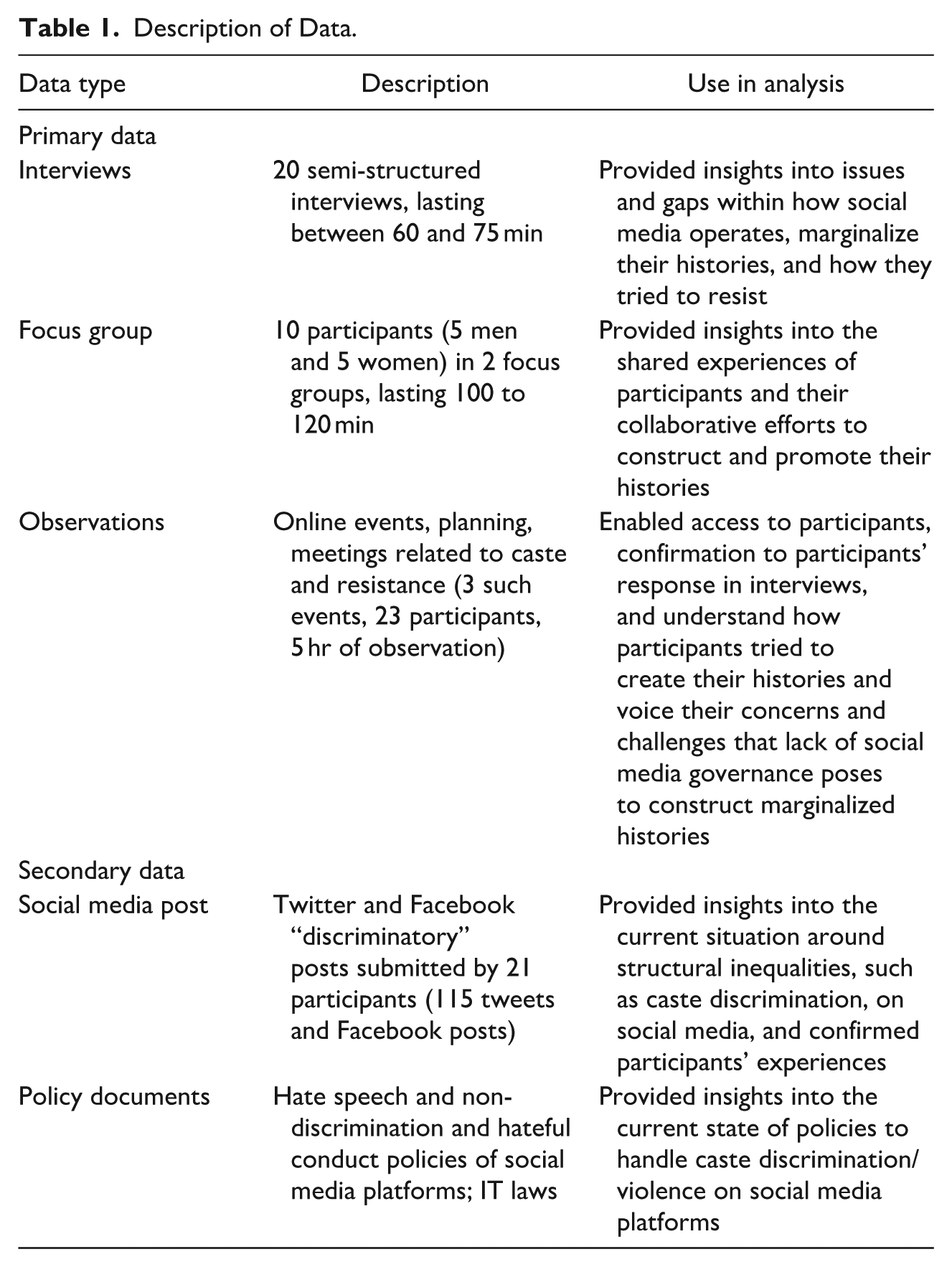
We also engaged in document analysis in two tranches of work. First, to deepen our insight into experiences of caste-based abuse, we systematically searched two prominent websites among Dalits—“Velivada” and “Round Table India” (RTI)—for articles on the intersection of caste and social media. 7 Second, we sought to explore the historical context surrounding caste abuse in social media. Herein, we examined social media platforms’ policies on hate speech, discrimination, and marginalization, particularly policies governing their platforms in India (Facebook, X, Instagram, Reddit, TikTok, and YouTube). We also studied recent documentation, reports, and databases of case law related to digital rights in India (Barros et al., 2023; Srinivasan & Khandhadai, 2020) to inform our institutional knowledge and allow us to understand the broader social forces at play. A description of the full dataset is presented in Table 1. Our dataset integrates interviews, focus groups, online observations, discriminatory social-media posts, and platform policy documents. Interviews and focus groups offer experiential depth; observations provide contextual grounding; social-media content provides evidence of structural harms; and policies reveal governance logics. Collectively, these complementary sources enable a comprehensive analysis of caste, inequality, and resistance on social media.
Description of Data.
Data Analysis
We adopted a narrative analysis that is well-attuned to exploring how individuals make sense of, and construct, social realities (Gergen, 1999). We treat narratives as meaning-making devices that aid our understanding of Dalit experiences of caste-based abuse online. Specifically, we utilized a thematic approach to narrative analysis, identifying common themes across the various datasets (Maitlis, 2012); datasets that offered useful triangulation across “online” and “offline” sources (McCarthy & Glozer, 2022). The narratives are not mutually exclusive, nor representative of the view of one individual, but more “composite” accounts that are derived from a variety of accounts (Trittin-Ulbrich & Glozer, 2024).
In line with our abductive approach to theorizing (Strauss & Corbin, 1998), we moved between data and theory over several phases (Maitlis, 2012). First, the two lead authors selected key quotations from the interview transcripts and focus groups that spoke to lived experiences of invisibility and inferiority associated with Dalit identities and activities online. Second, we developed composite narratives around these direct quotations, interweaving “fragments” (Vaara et al., 2016) of data from our fieldnotes, legal and organizational documents, completing these with social media posts to provide key examples (as illustrated by the figures in the Findings). From this iterative process, three narratives emerged that provided rich interpretations of Dalits’ experiences of caste-based abuse on social media. Narratives were structured around both the concealment of the Dalit context and how Dalits worked to recover context and reclaim their histories.
To improve the trustworthiness of our findings, we engaged with participants over an extended period, building relationships through WhatsApp and participating in Dalit-led social media groups and events to sense-check our emerging interpretations. Additionally, the authors conducted multiple data reviews, discussed the findings collectively, and arrived at conceptual themes through regular meetings (Braun & Clarke, 2006). Reflexivity also played a key role (Lincoln & Guba, 1985), with the authors reflecting on their own social media experiences to recognize and manage bias. One of the authors had been active on social media platforms and involved in Dalit issues for almost 2 decades, amassing many followers on social media. This rapport also helped to provide rich and detailed accounts from respondents and understand nuances, as participants were open to disclosing sensitive details. We were cautious not to influence or privilege our standpoint over that of our respondents. To avoid misunderstandings and not lose the participants’ intended meaning, wherever participants spoke in Hindi (a local language in India)—to which the interviewer and assistant were native—we analyzed these interactions along with our translation. In the next section, we present our findings.
Findings: Recovering Dalit Histories: The Unseen, Unheard, and Unspoken
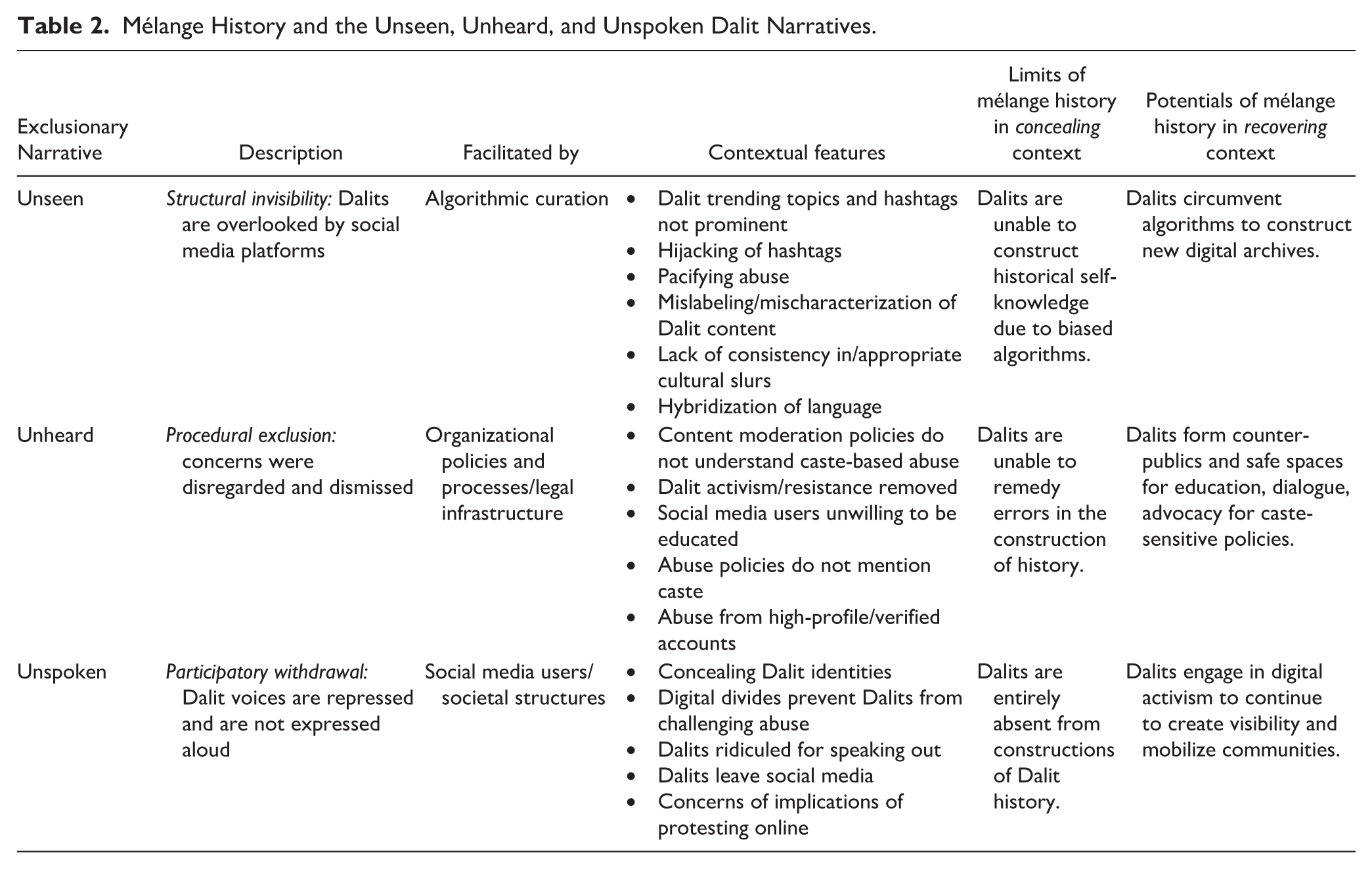
Our findings explore the potential of “mélange history” (Whelan, 2021) to redress structural inequalities, focusing specifically on the ways in which social media platforms encourage and limit such possibilities. We present three exclusionary narratives of structural invisibility (a feeling of being “unseen” by social media algorithms), procedural exclusion (a feeling of being “unheard” by social media policies), and participatory withdrawal (a feeling of repressing voice and being “unspoken” in response to social media users). Through these three narratives—which are not mutually exclusive—we elucidate how Dalits experience a concealment of context online and work to resist this through context recovery, reclaiming their histories, and resisting exclusion. The narratives are summarized in Table 2.
Mélange History and the Unseen, Unheard, and Unspoken Dalit Narratives.
Structural Invisibility: “Unseen”
Concealment of Context
The first narrative pertains to a common feeling among the Dalits we interviewed and observed as being “unseen”; a sense of insignificance brought about by being overlooked by social media platform architectures. Dalits felt that they were unable to construct historical self-knowledge due to an inherent lack of caste-based context among the algorithms that curate and control social media content. Dalits regularly considered how platforms privileged dominant castes, sharing examples whereby hashtags promoting Dalit culture and Dalit history (e.g., #DalitHistory #DalitHistoryMonth) were either removed or failed to appear in trending topics on social media platforms. In contrast, hashtags associated with dominant castes, such as the celebration of popular Hindu festivals like Diwali (#diwali) and lord Ganesh festival (#ganpatibappa), were visible and highly engaged with. Dalits felt that many of these festivals had historical connotations that were inherently “discriminatory against lower castes,” (Suman), but this historical context was largely overlooked. While Dalit history was acknowledged through posts that commemorated important figures in the community (i.e., B.R. Ambedkar on his birth anniversary), such recognition was transient, with many feelings that “discrimination was practiced for the rest of the year” (Pawan), meaning that attempts to celebrate Dalit history remained “unseen.” This is the essence of “context concealment.”
Hashtags used by Dalits, such as #AmbedkarJayanti (#AmbedkarBirthday), were regularly hijacked, being taken over by trolls and those with “Hindutva” ideology; deep-rooted ideologies that promote distorted accounts of Ambedkar to offend Dalits. Our participant, Suman, felt crowded out in social media: “[dominant caste members] quickly take over any discussion and shift the narrative, and then you are again invisible.” Caste discrimination occurred frequently, but subtly, whereby trolls employed indirect or milder terms to avoid detection by platforms, pacifying caste-based discrimination as “cultural differences.” This led Ashok to comment, “Caste is untouchable . . . it is too harsh or blunt, but they do not like to call it caste . . . and will never accept that caste-based discrimination is the real evil.” Caste, and individuals experiencing caste-based marginalization, were “unseen.”
Dalits were aware that the complex nature of the caste system, characterized by numerous subcastes, hierarchies, and regional/community-specific practices and norms, posed challenges for algorithms to identify caste-based abuse. In many ways, the concealment of their context was somewhat expected. Yet many recounted examples where Dalit views had been “mislabeled” or “mischaracterized” by social media platforms. Naveen recounted how the reporting of the disruption of a Dalit’s marriage procession was incorrectly tagged as “fashion” on Twitter (Figure 1). Similarly, another post on Facebook (Figure 2), designed to educate dominant castes on language that may be offensive to lower castes, was flagged as “inappropriate” by social media algorithms, not only limiting its reach but conveying a painful message to Dalits that resistance was futile, making them invisible.
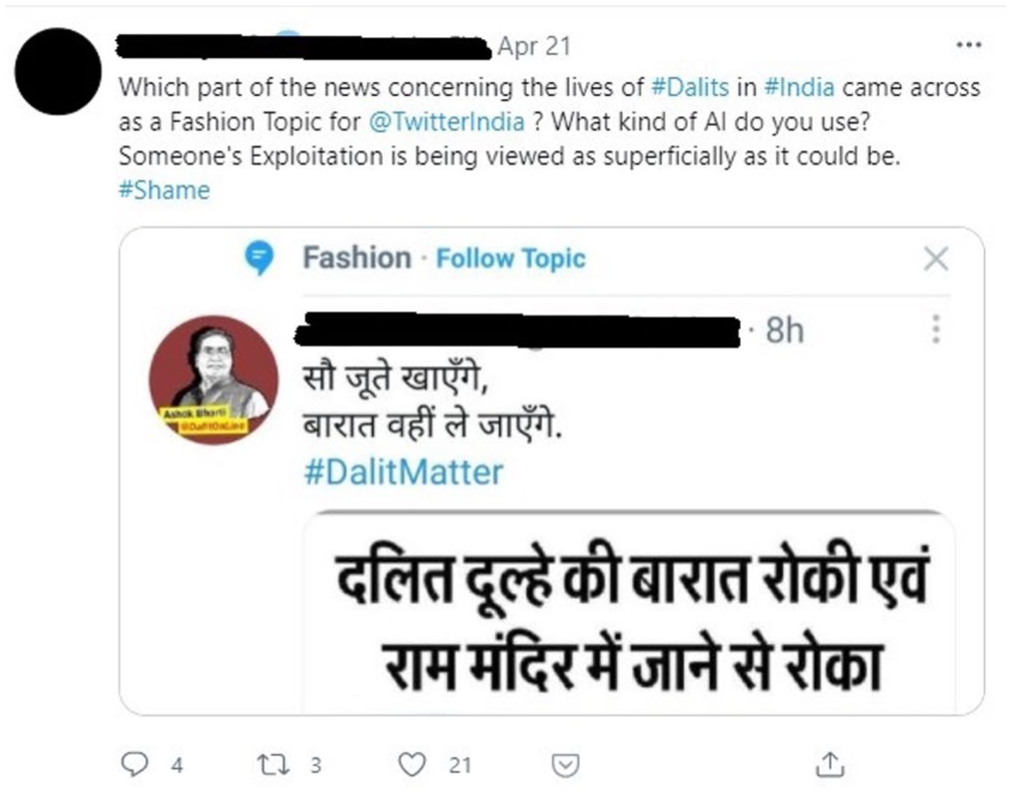
Atrocities on Dalits Mislabeled by Social Media Platform.
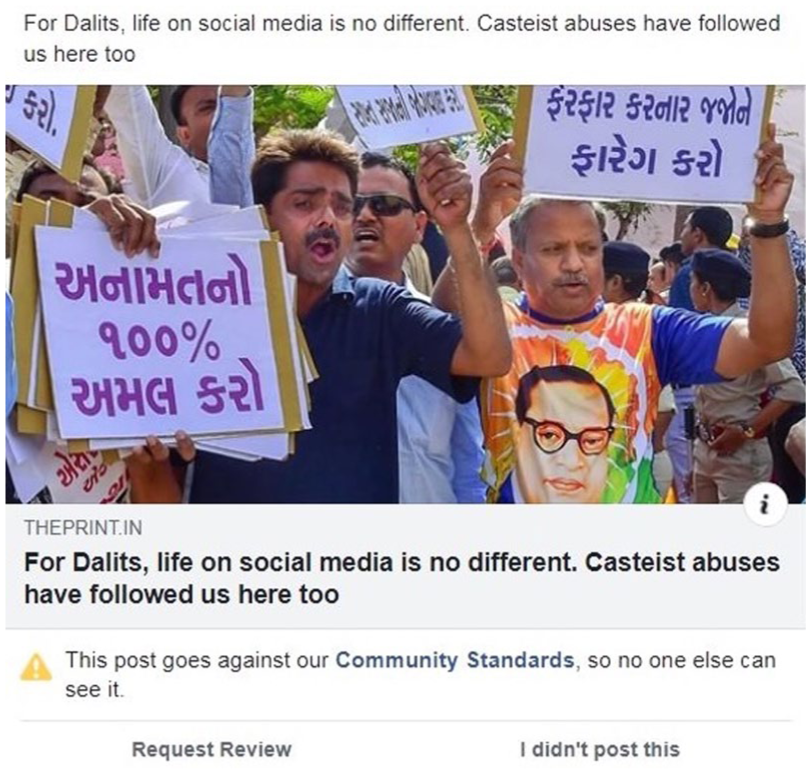
Dalit Voice Flagged as “Inappropriate” by Social Media Algorithms.
Trolls regularly evaded algorithmic detection, further intensifying the exclusionary potential of social media spaces for Dalits. Abuse failed to be identified and acted upon by social media platforms through utilizing “code” words, such as Dolit or D@lit instead of Dalit, abbreviations such as “R people” to convey Dalit who avail reservation (affirmative actions) or BRA (an undergarment) to shorten Bhim Rao Ambedkar’s name, or disguised language such as “Hinglish” (a hybrid language of Hindi and English commonly used by Hindi-speaking individuals in northern India). “Hinglish” is evolving rapidly, numerous Dalits recounted, as more and more Hindi native speakers learn and practice English. They felt that such language use, facilitated through social media, showed dominance over those who do not speak English and was a strategic way to mask marginalization. For instance, “Bhimte”—a slur word used against followers of Bhim Rao Ambedkar—that has risen in popularity in recent years and is often associated with a call to violence against Dalits. Calling someone a “Bhimte” belittles Ambedkar’s legacy and mocks the pride Dalits take in Ambedkar’s contributions for human rights, reducing a movement for equality to a slur. 8 Figure 3 provides a post shared with us using the phrase “Bhimte,” designed to deride Dalits of their educational abilities and to insinuate that they are incapable of success without reservation policies. Such posts were neither labeled as being problematic nor taken down by social media platforms, further fueling feelings of being “unseen.”
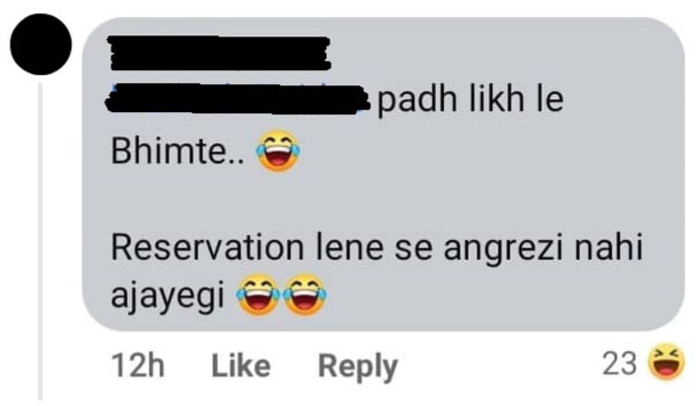
“Bhimte” Used as Abuse on Social Media.
Intersectional dimensions further complicated the ability of algorithms to detect abuse. Dalit women, such as Radhika and Maya, shared how they faced discrimination online based on both caste and gender, as well as discrimination within the Dalit community itself, as Dalit women lie at the bottom of the caste hierarchy and patriarchy. Many Dalit women confided in us their experiences of sexualized caste-based abuse, such as Figure 4; a post employing the term “Bhangi”—Balmiki, derogatorily known as bhangi, is a Dalit caste group that traditionally was restricted to manual scavenging jobs—a pejorative term used to demean lower castes and pertaining to harmful stereotypes that Dalits do not pay taxes. The post also refers to Dalit women’s bodies, invoking the painful history of the “breast tax” imposed on Dalit women until the early 1900s if they wished to cover the upper part of their bodies. The post also includes messages from the sender, such as “yeh dekh bhangi” (see this, manual scavenger) and “hijde” (transgender). These phrases are deeply embedded in India’s caste norms and heteronormative social orders and are attempts to reduce Dalits’ identity to a stigmatized caste-ascribed role. The term “hijde,” when weaponized in caste-based trolling, reflects intersectional oppression where transphobia becomes a tool to police lower caste self-expression, where gender nonconformity becomes a site of humiliation. In allowing such posts to prevail, algorithms invalidated the pain of Dalit users, further exacerbating the feeling of being “unseen.”
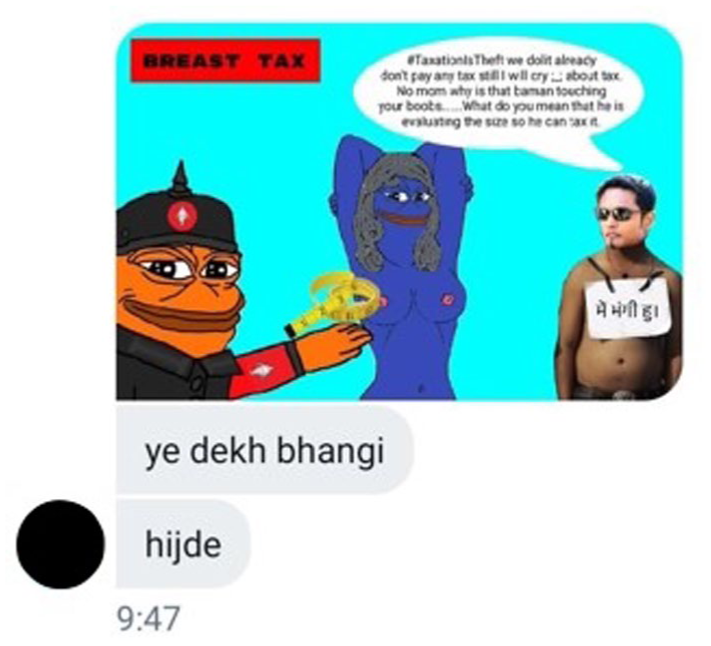
“Bhangi” Used as a Slur on Social Media.
Context Recovery
To counter these feelings, Dalits acknowledged the limitations with platform design and began circumventing social media entirely to cultivate their own digital archives. “Context recovery” involved bypassing mainstream platforms’ exclusionary algorithms through initiatives such as RTI (roundtableindia.co.in; founded in 2011), Velivada (velivada.com; founded in 2017), Equality Labs (equalitylabs.org; founded in 2015), BAWS (baws.in; founded in 2022), The Mooknayak (themooknayak.com; founded in 2022), and The Ambedkarian Chronicle (theambedkarianchronicle.in; founded in 2024). Here, Dalits felt “free” to document scholarly critique, oral histories, protests, and cultural practices, preserving Dalit experiences outside of hostile digital environments. As Manoj noted, “on these sites, our words do not get deleted or hidden, and [we] can write without being judged.” These caste-aware content repositories housed rich Dalit narratives—especially those that documented trauma or challenged dominant historiography—ensuring long-term access to Dalit historical and current struggles. These platforms have also been influential, with thousands of followers on social media, and have been able to impact policy decisions, such as in 2023, Equality Labs’ report on “Caste in the United States” was used by the California State Senate to pass a bill banning Caste-based discrimination (Outlook India, 2024), and Velivada and RTI websites provided space to hundreds of Dalits to contribute by writing articles. Anand compared these websites to libraries, “these are our digital libraries, built by us, for us.” While limited funding and technical expertise restricted scalability, Dalits remained committed to nurturing tangible resources that recovered—and protected—their historical context.
In sum, the narrative of unseen captures the pervasive sense among Dalit users of being rendered invisible by social media platforms. This invisibility was not accidental but rooted in the structural design of platforms that actively concealed historical context. Dalit voices were deprioritized in content visibility, often bypassed by algorithms, and neglected in moderation processes, reflecting how platform structures reinforce dominant-caste norms. Context recovery involved Dalits circumventing mainstream platforms to construct their own digital archives.
Procedural Exclusion: “Unheard”
Concealment of Context
The second narrative demonstrates how Dalits felt “unheard” in social media spaces; a feeling of isolation where their concerns were disregarded and dismissed. Dalits felt that they were unable to rectify errors in the construction of their history online, or seek remedy, due to lack of contextual insight within the social media platform policies and processes. This further led to a concealing of the Dalit context. Raising concerns about inappropriate content with platforms was felt to be unnecessarily complex, and many spoke of feeling “exhausted” (Meena) and “defeated” (Ashok) by the constant battle they faced with social media platforms, and particularly their content moderation policies. As Kalpana expressed, “I utilize the block and report options on social media, but I am unable to find an option to report posts related to caste abuse or caste harassment.” Even if complaints did reach content moderators, most Dalits felt that a lack of cultural understanding of caste-based abuse prevented any form of recourse. Many Dalits recounted unsatisfactory responses they had received from content moderators, claiming that reported posts or profiles “did not violate platform policies” despite Dalits explaining why the content caused offense. As Pawan shared, I reported that fake profile to Twitter [X] a couple of times, highlighting the tweets [messages on X] that were simply copy-paste of my tweets with altered meanings and opposite to the message that I was conveying . . . [but] Twitter replied that such messages and profiles do not violate their policies. I could not do anything much at that time.
For Dalits, policies to protect against hate speech were “empty words; these platforms’ promises to protect us do not match the reality” (Rajeev). Praveen felt like, “it is like they are just pretending to care,” and for Radhika, “their consistent silence [on caste abuse on social media] feels like an endorsement of casteism.” Those who had studied social media anti-discrimination policies felt that they downplayed the significance of caste discrimination due to an inherent lack of context, with major social media platforms in India having no mention of caste in their anti-discrimination policies at all.
Undeterred, Dalits continue to be visible online, and in doing so actively recover their historical context. However, they found that content moderation processes were swift to remove their attempts to engage in caste-based resistance. Many users recalled where their accounts had been disabled or blocked. In one instance, Praveen was banned on Facebook after dominant castes objected en masse to his posts. His post that attracted backlash was about highlighting discriminatory quotes from religious scriptures, leading Praveen to lose access to his Facebook account. Some even felt that the rise in atrocities against Dalits was directly linked to their activism online. When Dalits attempted to reappropriate terms used against them, such as “Chamar”—a stigmatized caste group among Dalits in northern India who traditionally were involved in skinning dead animals and tanning leather—they were met with inconsistency. As Meena recounted, “sometimes those posts were kept hidden or marked as sensitive and sometimes not,” and Savita reminded us, “context matters.” Savita’s remark that “context matters” referred to the inconsistent ways platforms read and classify caste-related content, where identical phrases could be treated differently depending on accompanying text, images, or user histories.
In the absence of support from platforms, Dalits took matters into their own hands and attempted to educate other social media users on the intricacies of Dalit history and to provide more context as to why certain content was offensive. Pawan recounted how they “tried to give [trolls] the reasons, argue and try to have a sensible disagreement that why calling someone ‘bhangi’ (manual scavenger) is not cool.” This left them feeling “tired” and “demoralized”; “I do not think it makes much difference for them . . . they continue to behave in the same fashion” (Sunil). Many Dalits commented on the fear of physical abuse and violence prompted such interactions demonstrating the risk associated with context recovery: “Once you have been attacked by the army of dedicated trolls, they will make sure your life is miserable” (Radhika). Here, Dalits recalled feeling “scared” and “stressed” for their and their family’s safety at the hands of “abuse” and “death threats.” What made these instances even more distressing was that sometimes the perpetrators were high-profile individuals or groups who had a well-established social media presence, a substantial number of followers, and even verified accounts. For example, Jyoti recounted a time when Hindutva actors publicly encouraged followers to demand the lynching of Dalits and Muslims. In 2020, a video went viral in which Hindutva followers were seen inciting violence not only against Muslims but also against Dalits during the Delhi riots (Lalwani, 2020). Such abuse allowed high-profile and influential social figures to “shape the narrative” of Dalit history online, resulting in Dalit counter-narratives being “unheard” in social media platforms.
Platform policies intersect with the legal protections for Dalits, such as the “Scheduled Castes and the Scheduled Tribes (Prevention of Atrocities) Act 1989” (also known as the SC/ST Act). Yet Dalits rarely registered complaints for their belief that a lack of context on caste-based abuse prevailed, and conviction rates were low. Radhika commented, “our confidence goes down in the abilities of social media and legal systems to handle our issues.” This led many Dalits to believe that the legal system was “eyewash” and “just talk with no action” (Focus Group 2), fueling feelings of being “unheard.” As Jyoti recalled, “I reported to the platform about the abusive posts, but I was blocked for some time . . . I wanted to take legal action . . . but then I realized it is not worth it when . . . courts are biased … they will not take it seriously and not understand.”
Context Recovery
An important part of context recovery involved Dalits forming digital counterpublics to create safe spaces for education, dialogue, and resistance. Platforms like Dalit Human Rights Defenders Network (dhrdnet.org) and International Dalit Solidarity Network (idsn.org) foster community-driven spaces where users share experiences and advocate for caste-sensitive policies, and ultimately, to be heard. As Maya explained, “these networks give us the courage to speak without fear of being silenced.” IDSN, in particular, operates internationally to coordinate advocacy, raise awareness, and influence UN and government bodies on Dalit rights issues, and has given “chance to Dalits to participate in policy development at international level” (Maya). Additionally, Dalit-Bahujan scholars and activists, who possess some form of social capital, utilize digital platforms for network-building and epistemic assertion. For example, the offline and online debates surrounding Arundhati Rao’s introduction to Ambedkar’s Annihilation of Caste illustrate that digital engagement also reflects negotiations, contestations, and, at times, conservative or reactionary turns (Mane, 2015). During the debates, Dalits argued that Roy misrepresented Ambedkar’s views on Adivasis, compared Ambedkar to Gandhi (both ideological rivals), and that the original book, Annihilation of Caste, first published in 1936, did not need an introduction, as it dilutes the book’s importance. Through these, Dalits construct “Ambedkarite public culture,” which is a mental and physical space that cultivates the autonomous Dalit assertive self and emancipatory world view (Guru & Sarukkai, 2012, p. 8284, cited from Gaikwad, 2021). Furthermore, Ambedkarite public culture, long expressed through commemorations, songs, and symbols around Ambedkar, now flourishes on social media, where digital art and livestreamed events globalize its reach. As Prakash described, “sharing Ambedkar’s words online feels like lighting a lamp that others can see, no matter where they are.” Social media platforms amplify Dalit counterpublics, enabling everyday assertion of dignity and rights while transforming local practices into transnational solidarities that challenge caste hegemony.
In sum, Dalits expressed feeling unheard on social media, where their concerns were routinely dismissed. Many felt they lacked access to effective redress mechanisms, particularly when trying to challenge dominant narratives or to recover accurate historical context. This silence was not just interpersonal but structural, shaped by platform policies that lacked contextual sensitivity to caste. It is for this reason that Dalits sought contextual recovery via the formation of counter-publics and safe spaces.
Participatory Withdrawal: “Unspoken”
Concealment of Context
Our final narrative of “unspoken” captures how Dalits engaged in self-censorship; their voices, thoughts, and feelings were repressed and not expressed aloud within social media platforms. Dalits often gave into the concealment of their historical context due to confusion and fear. For instance, expressing their identities, using social media in their mother tongue, or sharing personal pictures were activities fraught with danger. One disabled Dalit bravely shared their caste and disability struggles on social media as an act of inclusion. A barrage of hurtful comments ensued, with their disability mocked and the term “langda” (slang for crippled; someone with leg-related problems unable to walk) employed. This term is highly offensive to Dalit communities that face higher rates of disability (Pal, 2010) and are seen as less than human. It also carries a distinct caste-based meaning in India, where bodily disability is historically and symbolically intertwined with caste status and social devaluation, untouchability and impurity, and “ability” is intertwined with high castes.
As the Dalits we spoke to recounted, examples such as there were not merely attacks on bodily difference but codified caste insults, deeply entangled with how Dalit bodies are rendered abject and unworthy in dominant public imaginaries (Pal, 2010). Unlike generic abuse, these insults also draw on cultural memory rooted in religious scriptures, myths, and everyday discrimination, where caste “pollution” designates social inferiority and is rationalized through notions of karmic retribution, which refers to the belief that Dalits’ lower social status or perceived impurity is the result of past actions or sins, framing caste oppression as a moral or cosmic inevitability rather than a socially constructed injustice. When this language enters social media through trolling, it is not merely a form of Dalit hate speech; it is the re-inscription of caste ideology through digital tools. Witnessing such hate led Dalits, “avoiding unnecessary troubles” (Rajeev) by changing their surnames to fictitious upper caste names, concealing their profile pictures, or even creating false personas, contributing to true Dalit identities—and caste-based context—becoming “unspoken.”
Most Dalits were painfully aware of the digital divides they experienced, such as limited (high-speed) Internet access, computer/laptop access and lower digital literacy levels. Such features meant that even if they wanted to “speak” online, they often remained “unspoken” due to very practical challenges. Most Dalits involved in our study lived in rural areas and primarily accessed social media via mobile phones, without access to video and image creation software. We learned from Manoj and Kalpana that Government and NGO-funded digital literacy programs in India, such as the Digital India initiative, often failed to reach rural Dalit communities. This left Dalits reliant on their own personal resources to educate one another and mobilize. Many Dalits were simply unaware of how to handle abusive comments beyond reporting abusers. As Kalpana commented, “I am quick to block and report those who misbehave and create problems . . . what else is there to do?”
It was, for many, not surprising that Dalit communities were often depicted through “photos of visits to Dalit slums” (Rajeev) or the glorification of the broom as a symbol of dedication to work. In social media narratives, worshipping the broom is presented as an extension of the general Indian principle of respecting one’s tools, as they are the means by which a livelihood is earned. However, this narrative conceals the historical caste oppression in which broom work was assigned to Dalits, recasting structural oppression as cultural pride. Most Dalits were impacted by the narrative of “if you are not successful, it implies you are not working hard enough” (Prakash); narratives that suggested that Dalits were not successful due to their lack of effort, as opposed to structural inequality. Such images—virally shared in social media—and narratives were a constant reminder of longstanding, historical caste divisions in wealth and education; images that Dalits were keen to rally against, yet were rarely successful. Dalit perspectives were often labeled as “unverified” when they did speak out, with comments questioning the “divisive” nature of perspectives and the “validity of posts” in ways not applied to dominant-caste users (Suresh). Even when Dalits shared their life experiences, those appeared exaggerated and agenda-driven to others. Dalit views were regularly ridiculed and undermined (Vikas; see also Majumdar, 2022), further concealing their context. One Dalit shared how they had, on a few occasions, attempted to “tag” the United Nations on Twitter with posts highlighting caste-based discrimination, but they received opposition, with comments suggesting that the participant was “an agent of external forces, trying to ruin the reputation of India” (Praveen). Further, Praveen recounted how TikTok became known as “Shudra of the Internet”—signifying its association with lower caste users, who were believed to be low-status and culturally inferior within the online hierarchy—in India, because lower castes were using it more to amplify their voices online.
It is for these reasons that many Dalits lost faith in social media platforms or, at worst, completely abandoned social media to “detox the mind” (Maya), further fueling Dalit “unspokenness.” Dalits even recounted experiences of being arrested for protesting online (The Hindu, 2022); “the chances that you get into trouble remain high if you try to challenge religious scriptures that promote caste . . . that is a no-go area” (Praveen). When Dalits expressed their support for reservation policies, for instance, they were ridiculed. Abusive posts included comments such as, “reservation is the reason that talented engineers and doctors are moving out of India” (Anand), and “you belong to gutters, not Facebook or Twitter” (Anita). For example, in his posts, a cricketer turned politician, Gautam Gambhir, mocked only those who use the caste-based reservation and received hundreds of reshares (Figures 5 and 6). This episode not only reflected a persistent anti-reservation sentiment in India’s upper-caste public discourse but also revealed how digital publics were curated, shaped, and rendered meaningful in alignment with the values of the dominant castes, leaving Dalits unspoken. Indeed, caste-privilege, demonstrated by actors such as Gambhir, became more than just personal opinion; it entered mélange history as a meme-able, shareable, “truth,” shaping the digital historical record in a way that marginalizes the very groups affirmative action is meant to support.
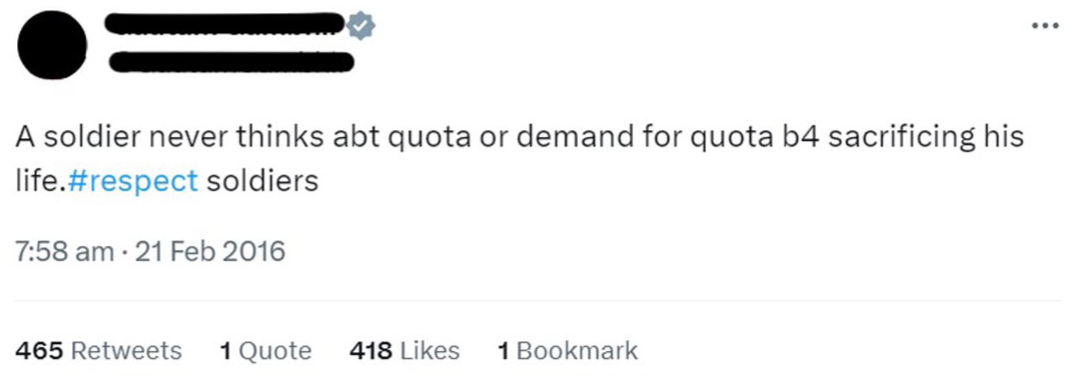
Mocking Affirmative Action Policies on Social Media.
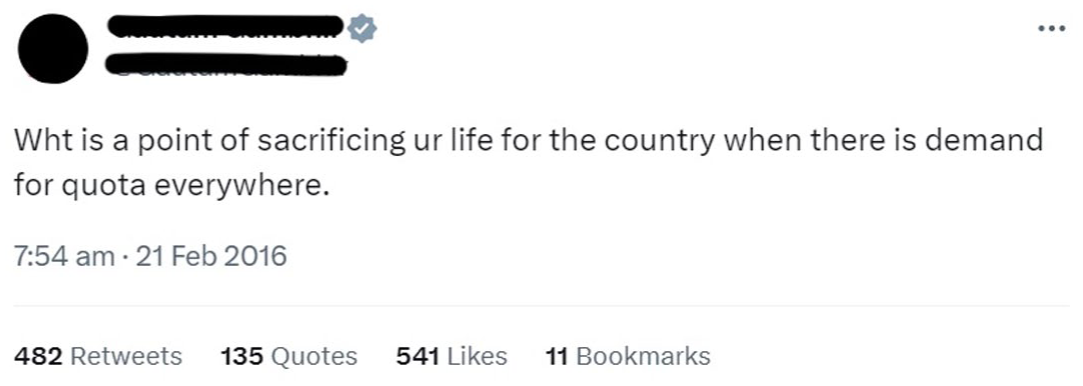
Ridiculing the Constitutional Provisions That Support Dalits.
Context Recovery
Finally, to protect and recover their context from the shadows of social media, Dalits engaged in digital activism using hashtags such as #DalitLivesMatter and #SmashBrahminicalPatriarchy and ran campaigns to foster historical self-knowledge. For instance, the #DalitWomenFight campaign empowered Dalit feminists to address caste-gender intersections, building solidarities that challenged mainstream digital discourses. While many Dalit hashtags were canceled, these particular hashtags became successful because of timely responses to caste-based atrocities, the strategic use of prominent figures to amplify marginalized voices, and the creation of compelling visual content that resonated with a broad audience. For instance, #DalitLivesMatter, first used around 2014, gained substantial momentum in 2020 following the #BlackLivesMatter movement and the 2020 Hathras case in India, where a Dalit teenage girl was gang-raped and murdered. Similarly, #SmashBrahminicalPatriarchy gained attention after Twitter CEO Jack Dorsey was photographed, along with Dalit women, holding the slogan during his 2018 visit to India, a moment that strategically leveraged celebrity visibility to amplify the campaign’s reach. Even if these hashtags faced opposition, Dalits felt they enjoyed sharing stories of resistance and identifying new alliances across the Internet. Pawan reflected on it as, “posting with these hashtags made me feel like part of something bigger.” These hashtags enabled Dalits to work against feelings of being unspoken, often considering and if and how to associate themselves with other castes.
In sum, the narrative of unspoken highlights how Dalits often engaged in self-censorship on social media, silencing their own voices out of fear, uncertainty, and emotional fatigue. Faced with the persistent misrecognition of caste-based abuse and the absence of a caste-sensitive context among users and platform operators, many Dalits withdrew from social media. As a result, their thoughts and experiences were concealed. Attempts to recover the Dalit context through digital activism provided a temporary respite, although no panacea.
Discussion and Implications
In this research, we set out to empirically investigate the structural and socio-technological barriers encountered by Dalit social media users as they seek to own, control, and construct their narratives within digital spaces. Below we explain in detail through two sections (a) how we extend the growing body of research on organizational inequality—particularly caste-based inequality (Amis et al., 2021; Bapuji et al., 2020, 2024)—by uncovering how algorithmic stratification generates subtle yet enduring forms of exclusion that platform organizations neither explicitly design nor consciously perpetuate and (b) how we deepen conceptual understanding of mélange history (Whelan, 2021) by empirically illuminating its foundational pillar of context and examining how it may—or may not—serve as a mechanism for marginalized communities to challenge and transcend structural inequalities in digital spaces.
Social Media: Concealing Caste-Based Context
Research on the reproduction of inequalities is growing (Amis et al., 2021; Bapuji et al., 2024), particularly in relation to the role of social media governance policies and processes in reducing inequalities faced by marginalized communities (Bohorquez-Lopez, 2022; van den Hoven, 2017). However, research is yet to elucidate how the digital world contributes to the concealment of the histories of the marginalized. Our identification of three exclusionary narratives, based on the life experiences of Dalits, reveals the pervasive nature of algorithms, platform policies, and social media users in concealing the historical Dalit context. Specifically, we find that Dalit context is concealed via structural invisibility (“unseen”), procedural exclusion (“unheard”), and participatory withdrawal (“unspoken”). These mechanisms extend existing scholarship on caste as a performative practice by demonstrating how digital infrastructures become sites where caste hierarchies are actively reconstructed through algorithmic mediation, not merely reflected. Traditional hierarchies make inequality visible, but algorithmic stratification obscures it, creating diffuse, often unnoticed exclusions that platform organizations neither acknowledge nor control. Our study, thus, demonstrates new forms of invisibility for marginalized communities online (Boyd, 2011; Treem & Leonardi, 2013).
Our contribution is important in demonstrating how platform dynamics—particularly algorithmic ranking—can reproduce social hierarchies by amplifying dominant narratives. For these individuals and groups, social media still offers emancipatory potential (Mehra et al., 2004; Wang & Tracey, 2024); however, false narratives about marginalized communities can lead to further stigmatization, a reinforcement of existing inequalities (Neville et al., 2018), and crucially, a “crowding out” of Dalit voices. For instance, we show how the persistent cycle of caste inequalities fosters silence among Dalits and ultimately shuns them out of social media, leading to the maintenance and reproduction of social inequalities. A system of exclusion and inequity is hard to maintain, so such exclusion systems are “reinforced and accompanied by whole strata of practices” (Foucault, 1971, p.11). As social media algorithms are designed to maximize user engagement and dominant groups have a significant presence on social media, they can amplify content that reinforces existing beliefs and biases, such as stereotypes and discriminatory narratives.
In this sense, the marginalized are erased from the collective memory, preventing true recognition of the experiences of caste-based abuse (Mahalingam et al., 2019). This erasure represents a digital extension of what Ambedkar (1989) termed “graded inequality,” where the caste institution survives by continuously adapting its methods of subordination—here, through the strategic deployment of visibility and invisibility that prevents counter-hegemonic Dalit historiography from entering mainstream discourse (Anand et al., 2025). For instance, we find specific examples where Dalits struggle to gain visibility around pertinent topics, whereas abuse against them quickly gains traction and visibility. Such “speech” does not “merely reflect a relation of social domination; [but] enacts domination, becoming the vehicle through which that social structure is reinstated” (Butler, 1997, p. 18). It is here that our findings intersect with studies of ethical violence (Butler, 2009; Fiske & Rai, 2015), demonstrating how social media platforms, while allowing space for free expression, also create “ungrievable” lives by concealing crucial context tied to marginalized communities and diminishing their experiences. Our analysis thus contributes to caste scholarship by illustrating how the digital concealment of atrocities simultaneously performs two institutional functions: it denies Dalits epistemic authority over their own experiences while protecting dominant castes from accountability—thereby ensuring caste’s reproduction through systematized forgetting (Rawat & Satyanarayana, 2016). Moreover, as caste has no physical marker, marginalized groups must prove their disadvantaged status to be recognized as legitimate contributors to constructions of their own historical self-knowledge and narratives, and in doing so, experience further scrutiny and marginalization.
Furthermore, we find that dominant castes on social media use euphemistic language to, “make harmful conduct respectable and to reduce personal responsibility for it” (Bandura 1999, p. 195) that adds to a concealment of Dalit context, particularly when users become “unspoken”; exiting from social media entirely to protect themselves emotionally and physically (McCarthy & Glozer, 2022). While silence is seen as complicity to the status quo and sustaining unequal power relations, strategic silence through ignoring what others say, blocking and moving away, and censoring participation is a form of resistance against oppression (Jamjoom & Mills, 2023).
The Limits and Possibilities of Mélange History
Mélange history, as articulated by Whelan (2021), theoretically democratizes historical storytelling. In stark comparison, we find that the construction of mélange history may be exclusionary for marginalized communities in social media contexts. Our findings show how the mélange history framework’s assumption of equal access to historical assemblage breaks down when applied to caste contexts. This is because while a mélange may offer a “buffet” of digitalized resources upon which to build historical narratives, structural inequalities prevail in social media platforms (e.g., weak redressal mechanisms, digital divides), privileging certain accounts over others. This speaks to a concealment of one of the fundamental pillars of the mélange; context. Yet, while our findings demonstrate that, in the context of caste, Dalits feel “unseen,” “unheard,” and “unspoken,” we also find valuable ways in which Dalits work to recover their historical context and reclaim their agency against platform algorithms, platforms, and users. These recovery practices represent attempts to actively participate in mélange history construction, yet they disclose a critical limitation: marginalized groups must expend disproportionate labor to establish contextual legitimacy before their historical narratives can even be considered as valid components of the mélange (Whelan, 2021). The concealment of context thus becomes a substantive barrier that prevents Dalit narratives from being understood in relation to the structural caste conditions that shape them, risking a reproduction of the very exclusions that mélange history seeks to overcome. Herein, our study illustrates the limits and possibilities of mélange history (Whelan, 2021) for marginalized caste-based communities, such as Dalits.
We reveal that digital platforms do not simply provide neutral tools for historical construction but actively shape which histories can be told, by whom, and in what form. This challenges the democratizing narrative often associated with digital technologies in management literature (Ma, 2020), showing instead how platform organizations serve as historical arbiters, determining which stakeholder narratives gain visibility and legitimacy by amplifying or suppressing them algorithmically. Furthermore, these same inequalities become magnified and disseminated on these platforms via caste-based abuse, which becomes the dominant and hegemonic framing, causing disproportionate harm to vulnerable groups (Attri & Bapuji, 2021; Jane et al., 2022).
This means that neutral organizational policies fail to function effectively for marginalized communities. It is for this reason that researchers across disciplines recommend the adoption of governance mechanisms that are more context-specific (Kumar & Gupta, 2023). Our study reveals a fundamental limitation in how platform organizations conceptualize governance itself. We demonstrate that seemingly neutral organizational policies create systematically biased outcomes due to their inability to recognize and accommodate diverse stakeholder contexts, leading to the erasure of marginalized voices from digital spaces. Moreover, while much attention is directed toward algorithms when addressing marginalization (Arora et al., 2023), fixes in algorithms can only go so far as long as structural inequalities continue to shape who has access, whose data is represented, and whose voices are amplified or silenced within digital spaces. Our study highlights the need for a more complex understanding of the dynamics of visibility and invisibility and the ways in which marginalized individuals can navigate these complexities to challenge power imbalances and achieve greater equity.
Our research advocates for a strengthening of not only organizational processes and institutional support but also empowering individuals and communities to protect marginalized groups on social media platforms. This is because while the marginalized may attempt to “recover” their context—and their histories therein—the more they encounter hate speech and become deterred from interacting online; they become invisibilized (Albu & Flyverbom, 2019; Hafermalz, 2021). As a result, digital presence does not translate into epistemic authority or legitimacy but instead reinforces existing hierarchies. This pattern highlights a paradox within the mélange history framework: marginalized communities must simultaneously participate in historical assemblage to assert their narratives while their very participation exposes them to exclusionary violence that drives them from the spaces where such assemblage occurs. What appears to be “voice” risks becoming a form of digital erasure, whereby Dalit struggles are overshadowed, co-opted, or rendered unintelligible within the dominant grammar of online platforms.
The (un)successful use of mélange history (Whelan, 2021) to transform social pasts and futures is thus shaped by an interplay of enabling and constraining factors. On one hand, mélange history provides opportunities for acknowledgment and restoration. By bringing together fragmented narratives, it can create coalitions across communities, surface neglected voices, and generate symbolic resources for reimagining more equal futures. For marginalized groups, especially Dalits, such practices can be mobilized to open discursive spaces that unsettle Brahmanical telling of India’s social history. On the other hand, mélange history is also vulnerable to distortion as its very openness often enables dominant-caste actors to appropriate subaltern struggles, selectively narrate histories of oppression, and repackage them into sanitized accounts of progress. This appropriation represents a particular threat to mélange history’s transformative potential that dominant groups can selectively extract Dalit narratives from their contextual moorings, incorporating sanitized fragments into the mélange while excluding the structural critique that gives those narratives meaning. This can result in the erasure of Dalit voices and the reproduction of epistemic hierarchies under the guise of inclusivity, that is, the mélange capacities of the marginalized remain limited (e.g., algorithmically) and the mélange capacities of dominant actors concerned to maintain the hierarchy—being realized (enabled by algorithms, social norms, etc.).
Moreover, institutional settings—such as state archives, social media platforms, and cultural industries—often privilege dominant voices, hindering marginalized groups’ ability to shape collective memory. Thus, while mélange history holds potential for social transformation, its success depends on whether power asymmetries are confronted rather than concealed in the process of assembling plural pasts. From what we find, this is working in an insidious and unspoken way. It is for this reason that empirical studies such as ours are so important to cast a light on caste-based marginalization as we work toward a fairer and more equitable society for all. In empirically elucidating experiences of context within mélange history, we advocate for further exploration of the role of mélange history (Whelan, 2021) in shaping narratives for other marginalized communities.
Social and Policy Implications
Our research presents challenges marginalized groups face in constructing their histories online alongside ways in which they work to “recover” their historical context. Our analysis gives rise to insights for practitioners and policymakers in developing regulations and policies for social media platforms and their features. Successfully leveraging mélange history (Whelan, 2021) requires robust interventions—equitable algorithms, protective mechanisms, and regulatory frameworks—to overcome barriers that our study has highlighted, ensuring social pasts are reimagined for a just future. In order to combat the reproduction of structural inequalities (e.g., algorithmic bias, content moderation bias) on social media, platform designers should focus on creating more inclusive practices. The composition of corporate boards and committees plays a significant role in promoting equality (Endrikat et al., 2021), so social media platforms can diversify their boards to handle these. Addressing social media platforms’ failures necessitates a deeper understanding of how structural inequalities—such as the appropriation of Dalit histories, digital divides in access, and weak redressal mechanisms—intersect with and affect digital platforms. We believe institutions can bring literacy training to sensitize all the users and employees regarding the harms and consequences of any hate speech/abuse targeted at marginalized individuals. They can also mandate social media platforms to adapt them into their advertising strategies, for example, WhatsApp introduced advertisements to educate users regarding fake news. Such awareness training has the scope to start a healthy conversation regarding the vocabulary, tone, and approach toward the marginalized in the digital world. In alignment with Reyman and Sparby (2019), we also believe that platform designers and developers, community leaders, community members, moderators, and all the different kinds of users must be aware of their personality, positionality, and self in the digital space, along with the consequences of their words and actions.
Furthermore, the theoretical significance of our research extends beyond caste-based inequality to a broader challenge of contemporary organizing: building inclusivity in an era where algorithms and digital platforms mediate organizational activity. As organizations increasingly depend on digital platforms, the concealment of context poses risks of stakeholder alienation, regulatory scrutiny, and reputational harm. Our study highlights new forms of organizational power and responsibility that surpass traditional notions of corporate social responsibility: when platforms shape how stakeholder groups narrate their own histories, they exercise a form of influence unaccounted for in management theory. This underscores the need for organizational leaders to treat recognition and preservation of contextual differences as a core competency. For organizations undergoing digital transformation, the challenge is not only technological or operational but also social—ensuring that platform-mediated changes do not inadvertently exclude or disadvantage certain groups in ways that escape conventional monitoring and feedback systems.
Limitations and Future Research
Although we present an in-depth and comprehensive assessment of structural inequalities marginalized groups face on social media, we recognize some limitations of our study. First, as with research on the marginalized, we believe the caste abuse faced by Dalits might be greater than what we found, as stigma and shame attached to caste might have led to some participants censoring their experiences. Second, we feel a sense of urgency and obligation to disrupt the narratives and depiction of the marginalized on social media platforms, so our intellectual desires cannot be ignored (Jamjoom & Mills, 2023). However, to overcome bias, we have provided multiple quotes from participants for readers to make their own interpretations and offered additional support from other sources.
Research on challenges marginalized groups face in constructing their histories online opens various avenues for research, for example, what are the short-term and long-term consequences of excluding marginalized groups on digital platforms? What can social media platforms and regulatory bodies do to reduce inequalities and promote belongingness on their platforms? Our findings indicate that Dalit women experience disproportionate levels of moral violence, abuse, and discrimination on social media, which drains their emotional energy. Further research can also focus on such intersectional aspects, particularly around the notion of context “recovery.” Although our research was not focused on the consequences of caste inequalities on social media, participants frequently mentioned depression, anxiety, self-questioning about whether they are good enough, and other psychological issues arising from the situations they found themselves in. Further research could also investigate the consequences. Finally, we see the lens of mélange history (Whelan, 2021) offering much opportunity for further investigation of the participation of marginalized groups in historical constructions, both on and offline.
Concluding Remarks
This paper demonstrates how social media platforms, while celebrated for their democratizing potential, can reinforce caste-based exclusions through the selective concealment of mélange history (Whelan, 2021) and the reproduction of inequalities. By centering Dalit experiences and voices, we reveal how digital participation does not necessarily translate into epistemic agency. Instead, our narratives of being “unseen,” “unheard,” and “unspoken” illustrate how the architectures of social media render Dalit histories marginal or even disposable. Despite the promises of inclusion, platforms amplify dominant caste logics, curating histories that exclude or distort Dalit contributions. Our research challenges the assumption that greater digital visibility leads to empowerment; in fact, Dalit users often find themselves caught in a paradox where increased presence leads to heightened abuse, trolling, and erasure. To address this paradox, Dalits work to “recover” their context, drawing on alternative archives, counter-publics, and digital activism. Yet there is more that platform designers and policymakers can do to implement robust anti-caste discrimination measures and create safer digital spaces that amplify Dalit voices and histories without exposing them to harm. Herein, our insights elucidate the limits and possibilities of mélange history for marginalized communities such as Dalits and contribute to a growing body of research committed to better understanding caste and inequality in organizational contexts for a fairer and more equitable society for all.
Supplemental Material
sj-docx-1-bas-10.1177_00076503261415776 – Supplemental material for “You Belong to Gutters, Not Facebook or Twitter”: Recovering Dalit Histories From the Shadows of Social Media
Supplemental material, sj-docx-1-bas-10.1177_00076503261415776 for “You Belong to Gutters, Not Facebook or Twitter”: Recovering Dalit Histories From the Shadows of Social Media by Pardeep Singh Attri, S. M. Ramya, Sarah Glozer and Vivek Soundararajan in Business & Society
Footnotes
Acknowledgements
We extend our sincere gratitude to the study participants who generously shared their time, experiences, and insights with us. Without their voices, this research would not have been possible. We extend our sincere gratitude to the anonymous reviewers and the Guest Editors of the Special Issue, particularly Thomas Roulet and Hari Bapuji, for their support and guidance. We are also grateful to Arun Kumar, Vaibhav Surwade, and Sumeet Mhaskar for thoughtful discussions on the caste research.
Declaration of Conflicting Interests
The authors declared no potential conflicts of interest with respect to the research, authorship, and/or publication of this article.
Funding
The authors received no financial support for the research, authorship, and/or publication of this article.

Supplemental Material
Supplemental material for this article is available online.