




Abstract
Green human resource management (HRM) leverages the workforce to advance environmental sustainability. While prior research predominantly examined green HRM’s impact on employees’ environmental dedication, this study takes a more comprehensive approach by investigating employees’ broader commitment to the organization and examining a potential boundary condition. We posit that employees’ perceptions of green HRM, along with their beliefs in its authenticity, interact and relate to both pro-environmental behavior and affective organizational commitment. Results from a vignette experiment indicate that these effects are stronger when green HRM is perceived as authentic rather than inauthentic. A subsequent time-lagged field survey study extends these findings, suggesting that green HRM fosters pro-environmental behavior, which in turn spills over into affective organizational commitment. This indirect relationship is more pronounced among employees with stronger authenticity beliefs. These results offer novel insights into green HRM’s role in promoting commitment to both the environment and the organization, highlighting the importance of adopting this role authentically.
Introduction
The growing societal emphasis on environmentalism has led various industries to take proactive measures for ecological preservation (Hartman & Vachon, 2018). Consequently, employers are increasingly establishing environmental objectives (Wiernik et al., 2013) and aligning their human resource management (HRM) practices accordingly (Jackson et al., 2012). This shift has given rise to the field of green HRM, which advocates for a range of practices aimed at fostering favorable environmental outcomes (Kramar, 2014).
Green HRM has attracted extensive research attention (Bahuguna et al., 2023), suggesting that by pursuing environmentally friendly goals, it contributes to ecological performance (Chang & Kuo, 2008), enhances cost efficiency (Muisyo et al., 2021), and boosts organizations’ attractiveness and social responsibility (Adjei-Bamfo et al., 2019; Muisyo et al., 2022; Pham & Paillé, 2019). These benefits presumably originate from setting environmental criteria at the management level (Portocarrero et al., 2023), which then cascade down to influence employees’ environmental awareness and actions (Tang et al., 2018). However, a lack of research from employees’ perspective (Paulet et al., 2021) leaves uncertainties regarding the extension of these responses to non-environmental attitudes and the boundary conditions of desirable green HRM outcomes (Ren et al., 2018).
Recognizing these gaps, this study examines the relationships between green HRM and employees’ commitment to environmental conduct and the organization, while considering the role of employees’ authenticity beliefs, referring to their judgments about the sincerity (Beckman et al., 2009) of green HRM. Recent studies have demonstrated that green HRM not only encourages compliance with environmental policies (Paillé & Francoeur, 2022) but also motivates employees to actively engage in pro-environmental behavior (Amrutha & Geetha, 2020). This behavior includes attitudes and actions aimed at minimizing environmental harm (Kollmuss & Agyeman, 2002), making pro-environmental behavior a key indicator of green HRM’s effectiveness (Ansari et al., 2021). To deepen our understanding of employee responses to green HRM, we also investigate green HRM’s potential to foster employees’ commitment to the organization. Affective organizational commitment denotes an individuals’ emotional connection and involvement with their organization (Meyer et al., 1993), signifying the integration of the organization’s values into their identity and a strong desire to maintain their employment. Given the competitiveness of contemporary work environments and increasing turnover rates, this form of commitment holds significant practical relevance (Mercurio, 2015).
Employees often harbor skepticism regarding the motives behind HRM initiatives (Nishii et al., 2008), particularly those directed toward society (Lange & Washburn, 2012). The main purpose of this study is to explore the role of employees’ authenticity beliefs in the context of green HRM. These beliefs may play a crucial role in fostering commitment to both green behavior and the organization as a whole. This is important, as it is generally assumed that employees’ interpretations of environmental programs align with their motivation to engage (Allen, 2023), despite inconclusive empirical evidence. Some studies suggest that only authentic green values effectively encourage employee compliance with green policies (Dumont et al., 2017), while others observe that leveraging green HRM for economic growth yields similar results (Gim et al., 2022), indicating a need for further research.
We conducted two complementary studies. A vignette experiment first explores the links between green HRM authenticity beliefs and pro-environmental behavior and affective organizational commitment. Additionally, a time-lagged field survey investigates whether perceptions of green HRM interact with authenticity beliefs in predicting these outcomes.
Theoretical Framework and Hypotheses Development
HRM aims to direct the workforce’s attention toward the organization’s values (Bowen & Ostroff, 2004). In the context of green HRM, these values are aligned with strategies to “enhance positive environmental outcomes” (Kramar, 2014, p. 1075), while simultaneously bolstering economic prosperity (Zibarras & Coan, 2015). The essence of green HRM, therefore, lies in adapting conventional HRM practices to ensure that they are geared toward achieving environmentally friendly outcomes (Renwick et al., 2013). Green values can permeate various HRM processes, including recruitment and selection (Pham & Paillé, 2019), training and development (Stefanelli et al., 2019), performance management, and employee involvement programs (Pham et al., 2019). To effectively instill the targeted values in employees, HRM must be perceived as green by them, justifying our focus on green HRM perceptions.
Social identity theory (Tajfel & Turner, 1979) and its application within organizational contexts (Ashforth & Mael, 1989; Hogg & Terry, 2014) are particularly appropriate for examining the predicted relationships central to our research (see Figure 1). According to this theory, individuals categorize themselves based on their social group affiliations, striving for positive self-identification. Among these affiliations, organizational membership holds significant prominence. The treatment employees receive, through HRM, for example, furnishes them with cues relevant to their identity, fostering collective identity experiences and efforts to affirm their belonging within the organization (DeRue & Ashford, 2010). Building upon these premises, authentic green HRM may shape employees’ environmental inclinations and increase their identification with the organization, as reflected in pro-environmental behavior and affective organizational commitment.
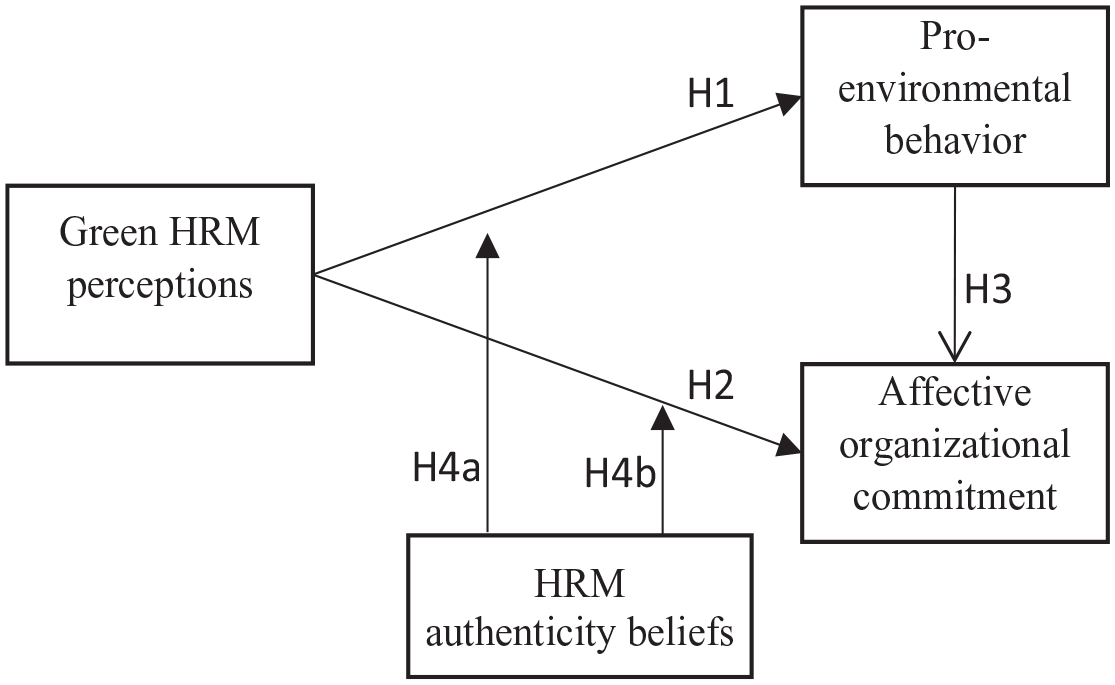
Research Model.
Green HRM, Pro-Environmental Behavior, and Affective Organizational Commitment
A substantial body of research indicates a positive association between green HRM and pro-environmental behavior (Amrutha & Geetha, 2020; Paulet et al., 2021; Ren et al., 2018). Renwick (2020) explains this through the mechanisms inherent to the ability–motivation–opportunity (AMO) framework (Appelbaum et al., 2000). According to this framework, green HRM encourages pro-environmental behavior in three key ways. First, it enhances employees’ ability to adopt environmentally conscious practices by recruiting individuals with a strong inclination toward sustainability and providing targeted training to develop their environmental competencies. Second, green HRM motivates environmentally friendly behavior through feedback and reward systems. Finally, it creates conducive conditions and opportunities within the workplace for employees to actively engage in pro-environmental behaviors, such as by implementing corporate recycling strategies.
Pro-environmental behaviors can vary in terms of their discretionary value. On the one hand, these behaviors can be voluntary (Kim et al., 2017). On the other hand, pro-environmental behaviors are often incentivized (Paillé & Francoeur, 2022) or the result of adhering to HRM’s compliance standards (Norton et al., 2015). Voluntary or not, pro-environmental behaviors fundamentally have a prosocial nature (Ramus & Killmer, 2007) and indicate that employees’ put effort in matching their behavior with the environmental values targeted by HRM (Dumont et al., 2017). Moreover, research suggests that employees exhibit pro-environmental behaviors as part of their ecological self-identity, which can be developed through experiencing the organization (van der Werff et al., 2021), or HRM department (Ahmad et al., 2022), as oriented toward benefiting the environment. Therefore, we hypothesize as follows:
Hypothesis 1. Perceptions of green HRM relate positively to pro-environmental behavior.
Affective organizational commitment refers to employees’ enjoyment of their membership in the organization and their willingness to stay with it, encompassing both an emotional bond and identification with the organization (Meyer et al., 1993). HRM can facilitate this by demonstrating appreciation, respect, and care for employees, thus going beyond prioritizing economic objectives and targeting broader sustainability outcomes (Shen & Benson, 2016). In turn, this is manifested in affective organizational commitment (Almarzooqi et al., 2019), reflecting the notion that when individuals feel part of a social group with an appealing image, they derive a sense of self-worth and pride, enhancing their identification with it (Tajfel & Turner, 1979). Similarly, green HRM research reveals that when management shows their engagement to environmental sustainability, employees report more positive cognitive work evaluations (Dhanesh, 2014; Parida et al., 2021), including higher levels of affective organizational commitment (Erdogan et al., 2015; Kim et al., 2019). Accordingly, we hypothesize as follows:
Hypothesis 2. Perceptions of green HRM relate positively to affective organizational commitment.
Commitment to an organization is grounded in the alignment with its values and the dedication to pursuing and investing effort toward its goals (Porter et al., 1974). Pro-environmental behavior embodies these principles, suggesting that engaging in such behavior can enhance employees’ commitment to the organization. Venhoeven et al. (2013) show that green HRM, by promoting pro-environmental behavior, can reinforce this commitment through the cultivation of pride in employees’ association with the organization. This notion is further supported by social identity theory, which asserts that employees seek social validation by adopting attitudes and behaviors that align closely with organizational norms (Ashforth & Schinoff, 2016). Consequently, pro-environmental behavior can be viewed as a form of identity expression, where employees bolster their self-image and, in turn, deepen their sense of belonging within an organization that champions these values (Gond et al., 2017). Based on these insights, we hypothesize as follows:
Hypothesis 3. Pro-environmental behaviors mediate the relationship between green HRM perceptions and affective organizational commitment.
Green HRM Authenticity Beliefs as a Boundary Condition
Authenticity, as understood in the corporate social responsibility (CSR) literature (Wang et al., 2020), pertains to the genuine and sincere expression of an organization’s commitment to society, surpassing mere legal obligations (Alhouti et al., 2016). In parallel with this, green HRM authenticity beliefs can be conceptualized as employees’ convictions regarding their HRM department’s sincere dedication to promoting green values, driven by a genuine concern for the environment, rather than merely seeking competitive advantage or projecting an attractive image to the outside world. Given individuals’ preference to associate themselves with authorities that enhance their self-image (Tajfel & Turner, 1979), it becomes imperative for organizations to uphold a high reputation and social standing. Moreover, purely symbolic sustainability initiatives (e.g. greenwashing) may damage organizations’ reputations (Donia & Tetrault Sirsly, 2016) and are linked to adverse employee attitudes toward their environmental efforts (Westerman et al., 2022).
Organizations can adopt green HRM for various reasons (Jerónimo et al., 2020), influenced by a range of social, economic, political, and ethical considerations (Carollo & Guerci, 2018). As employees remain privy to these motives, they may develop differing judgments about the authenticity of green HRM. This complexity underscores the relevance of considering attribution theories that explain the dynamics between individuals’ assumptions about events and their subsequent reactions (Heider, 1958). In the field of HRM, research has established that employees within a single organization can attribute opposing motives to HRM, spanning from negative to positive (e.g. exploitation and well-being support), with these attributions shaping their work attitudes and behaviors (Hewett et al., 2018). Concerning the intentions of sustainable HRM, employees seem to find value in judging their organization’s motives as credible (Vlachos et al., 2013) and ecological-oriented (Tosti-Kharas et al., 2017), as it fosters their intrinsic engagement to contribute to these organizational goals. Moreover, Dumont et al. (2017) indicate that employees perceiving a credible commitment to the environment in their workplace display more green behaviors, both within and outside their designated work roles.
Following the theoretical understanding of organizational identification as a result of employees’ social identity aligning with the values endorsed by the organization, and employees positively appraising their own reputation in comparison with it (Hogg & Terry, 2014), the responses to green HRM perceptions may be contingent upon the degree to which employees perceive it as authentic. As such, authentic green HRM should be more effective to foster the workforce’s commitment to the intended values and, by extension, the organization itself. Accordingly, we hypothesize as follows:
Hypothesis 4. Green HRM authenticity beliefs moderate the positive relationships between green HRM perceptions and pro-environmental behaviors (Hypothesis 4a) and affective organizational commitment (Hypothesis 4b), such that more (vs. less) believed authenticity strengthens (vs. weakens) this relationship.
To advance this argument further, we formulate a moderated-mediation hypothesis that integrates the above and acknowledges CSR studies demonstrating that pro-societal activities enhance employees’ affective commitment to the organization, but only when employees consider its legitimacy as authentic (Lee & Yoon, 2018). Our final and overarching hypothesis is as follows:
Hypothesis 5. The indirect and positive relationship between perceptions of green HRM and affective organizational commitment via pro-environmental behavior (Hypothesis 3) is moderated by green HRM authenticity beliefs such that more (vs. less) believed authenticity strengthens (vs. weakens) this relationship.
The Present Research
We employed a multimethod approach to test our hypotheses. This allowed us to use different analytical techniques that complement each other, enhancing the robustness of our findings by replicating them (Tsang & Kwan, 1999). Upon receiving our university’s ethical committee approval, we drew separate samples from diverse organizational settings, promising more breadth and depth of understanding the topic (Etikan et al., 2016). To mitigate a potential influence of nation-specific environmental policies and ensure participants’ familiarity with HRM, the target population exclusively comprised Dutch employees. Recruitment was conducted as part of thesis projects on sustainable HRM by five students who were pursuing their Master’s degrees while working full-time in professional roles. These students tapped into their professional networks to enlist employees with at least 1 year of work experience for either Study 1 or Study 2. Meta-analytical evidence suggests that student-recruited samples are demographically comparable to those recruited by non-students and yield similar practical research conclusions (Wheeler et al., 2014). Furthermore, this sampling method is widely used to facilitate survey participation based on topic interest (Keusch, 2015), which was deemed important given that participation was not incentivized. The studies were hosted online (Limesurvey), ensuring complete anonymity and offering other advantages, including increased efficiency, convenience, and minimized measurement errors (De’ et al., 2020).
Study 1 aimed to establish the effects of strong versus weak green HRM authenticity beliefs on pro-environmental behavior and affective organizational commitment. We used a randomized vignette experiment, which offers causal insights into relationships difficult to control in real field situations (Sanders et al., 2014). This methodology has demonstrated practical usefulness in previous research examining the impact of green HRM (Chaudhary, 2018) and HRM intentions (Sanders et al., 2021). Study 2 was designed to replicate and expand upon Study 1’s findings in the field using a time-lagged survey study. All data are available upon reasonable request.
Study 1
Method
Procedure and Sample
After determining the required sample size, we contacted 201 employees via email using the contact information provided by our students. Following Brysbaert’s (2019) recommendations, we assumed medium effect sizes of the manipulation and adhered to the conventional 80% threshold for well-powered studies, requiring two groups of 100 participants. In line with Aguinis and Bradley’s (2014) guidelines, we randomly assigned one out of two scenarios (strong vs. weak green HRM authenticity beliefs) to them. On average, the participants’ age was 33.48 years (SD = 12.55) and organizational tenure was 7.58 years (SD = 9.09). Around 56% were male, and approximately 48% held Bachelor’s degrees and another 33% Master’s degrees. The majority (71%) had indefinite employment contracts, and 77% were engaged in full-time positions. They were employed across various sectors: 48% in the service industry, 28% in manufacturing, and 22% in the knowledge-based sector.
The Manipulation of Green HRM Authenticity Beliefs
To enhance realism and encourage participants to immerse themselves in the vignette texts, we provided contextual information about a fictitious organization, named “Todit International.” It was described as operating in the consultancy industry, the largest industry in the Netherlands (CBS, 2022). As can be seen in Appendix A, we explained that Todit International had recently heightened its commitment to environmental sustainability through the implementation of green HRM practices. The detailed description of green HRM drew from Dumont et al.’s (2017)Vlachos et a measure, providing concrete examples of how green values can be integrated into common HRM practices and policies. Following this introduction, we aimed to induce opposite green HRM authenticity beliefs (strong vs. weak) by presenting different rationales behind the described HRM polices. As outlined in Table 1, we contrasted genuine environmental concern with the two most common strategic or business-oriented motives, namely competitiveness and attractiveness (Pham & Paillé, 2019).
Overview of the Manipulation.
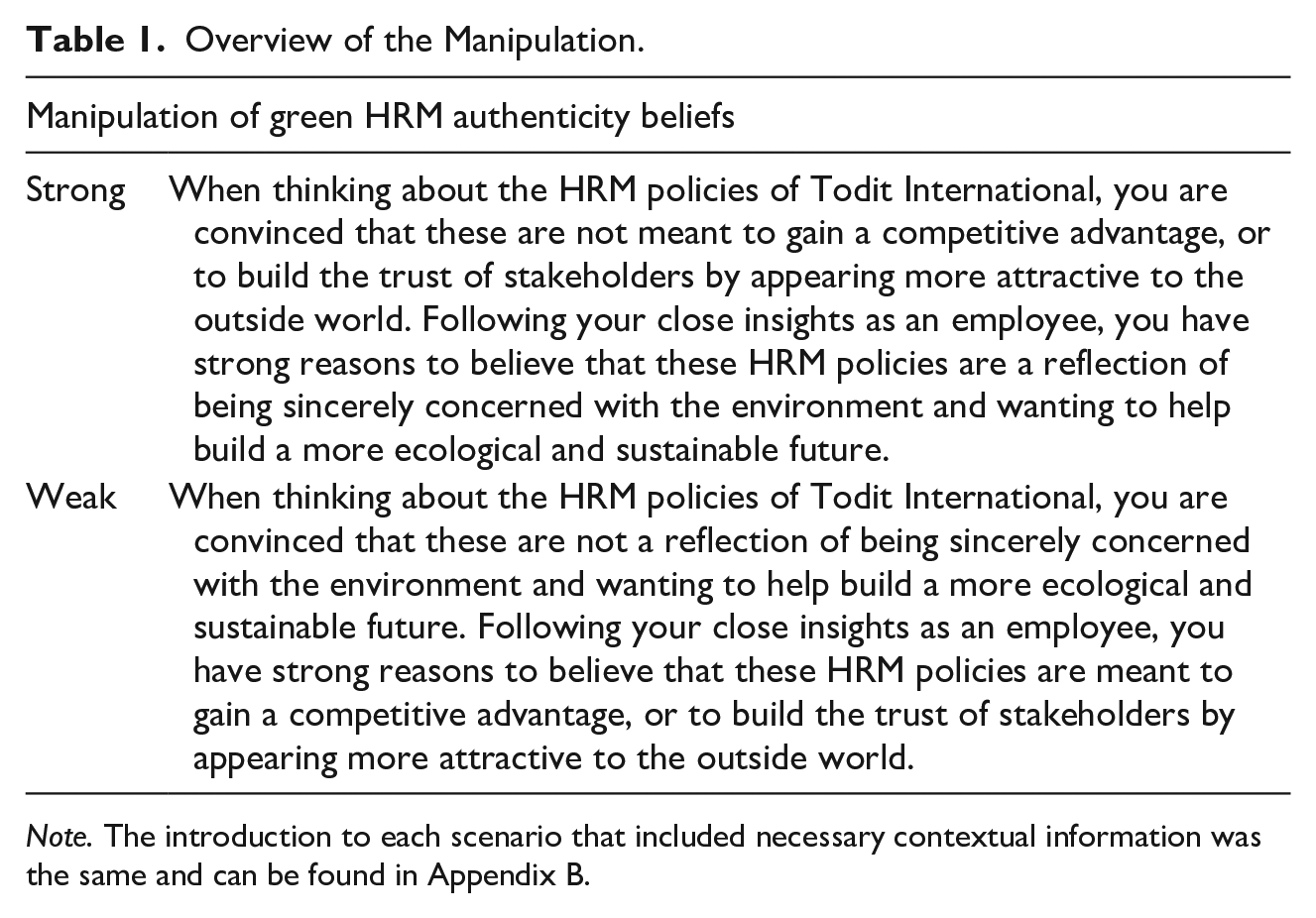
Note. The introduction to each scenario that included necessary contextual information was the same and can be found in Appendix B.
Measures
All measures were sourced from existing literature and selected based on their established psychometric properties. To assess participants’ hypothetical reactions, we slightly altered the items (Appendix B) to use modal verbs (by adding “would”) and explicitly referencing “Todit International.”
Pro-environmental behavior was assessed using a three-item scale developed by Bissing-Olson et al. (2013). This scale intends to capture the environmentally supportive tendencies of employees as a form of extra-role behavior. A sample item is: “I would take initiative to act in environmentally friendly ways at Todit International.” Responses had to be made on a five-point Likert scale, from 1 = not at all to 5 = very much. The Cronbach’s alpha was .94.
Affective Organizational Commitment was measured using Meyer et al.’s (1993) six-item scale, renowned for its reliability and validity (Meyer et al., 2002). A sample item is: “Todit International would have a great deal of personal meaning for me.” Responses had to be made on a five-point Likert scale, from 1 = strongly disagree to 5 = strongly agree. The Cronbach’s alpha was .91.
Despite the random assignment minimizing the role of confounding variables (Field & Hole, 2003), we considered participants’ ecological worldviews, which could influence their interpretations. To gauge this, we employed Dunlap et al.’s (2000) six-item “new ecological paradigm” scale, widely acknowledged as a valid instrument (Hawcroft & Milfont, 2010). A sample item is: “The balance of nature is very delicate and easily upset by human activities.” Responses had to be made on a five-point Likert scale, from 1 = strongly disagree to 5 = strongly agree. The Cronbach’s alpha was .80.
Additionally, we evaluated the experimental setup in two ways. First, immediately after presenting the contextual information, we measured participants’ perceptions of Todit International as an organization implementing green HRM. We used Dumont et al.’s (2017) six-item scale, consistent with recent research on green HRM perceptions (Islam et al., 2021; Luu, 2019). This scale measures the extent employees perceive that HRM incorporates green values in various practices, including the training and development, performance appraisal, incentive compensation, and promotion opportunities of employees, hence covering the most common HRM practices (Boon et al., 2019). A sample item is: “Todit International provides employees with green training to promote green values.” Responses had to be made on a five-point Likert scale, from 1 = not at all to 5 = very much. The Cronbach’s alpha was .82. Second, we assessed the effectiveness of our manipulation. For this purpose, we adapted Vlachos et al.’s (2013) three-item measure of “CSR-induced intrinsic attributions” by making it specific to beliefs about the HRM department’s intentions in promoting green initiatives. A sample item is: “Todit International’s HRM department is genuinely concerned about being green.” Responses had to be made on a five-point Likert scale, from 1 = strongly disagree to 5 = strongly agree. The Cronbach’s alpha was .95.
Analytical Strategy
We conducted an analysis of covariance (ANCOVA) to discern whether observed differences in pro-environmental behavior and affective organizational commitment means between the two groups were attributable to the manipulation while controlling for covariates. For estimating effect sizes, we utilized the partial Eta Squared value. Additionally, we present estimated marginal means (adjusted means) with Bonferroni correction. Prior to this, we ruled out that a single method factor was accountable for variance in the data (Chang et al., 2020) and performed other preliminary checks of the data. To assess the homogeneity of variance assumption, we conducted Levene’s test of equality of error variances.
Results
Preliminary Checks
A total of 99 participants were assigned to the authentic green HRM scenario, and 102 to the inauthentic one. Their demographics profile was statistically identical, affirming the success of the random allocation. As anticipated, participants generally experienced a strong presence of green HRM (M = 4.08, SD = 0.56), with no differences between the two groups (F(1,199) = 0.13, p = .72), suggesting that the contextual information effectively conveyed a green HRM setting. Furthermore, participants exposed to the vignette aimed at inducing authentic green HRM beliefs reported substantially higher authenticity beliefs (M = 4.15, SD = 0.57) compared to the other group (M = 2.09, SD = 0.69), F(1,999) = 524.58, p < .001), attesting to the success of the manipulation.
Descriptive Analyses
The summary statistics (Table 2) indicate positive associations between ecological worldview and perceived green HRM (r = .22, p < .01), pro-environmental behavior (r = .35, p < .001), and affective organizational commitment (r = .21, p < .01). The correlations between green HRM authenticity beliefs, pro-environmental behavior, and affective organizational commitment were all high and significant (p < .001), ranging between .64 and .68.
Means, Standard Deviations, Correlations, and Cronbach’s Alphas (Study 1).
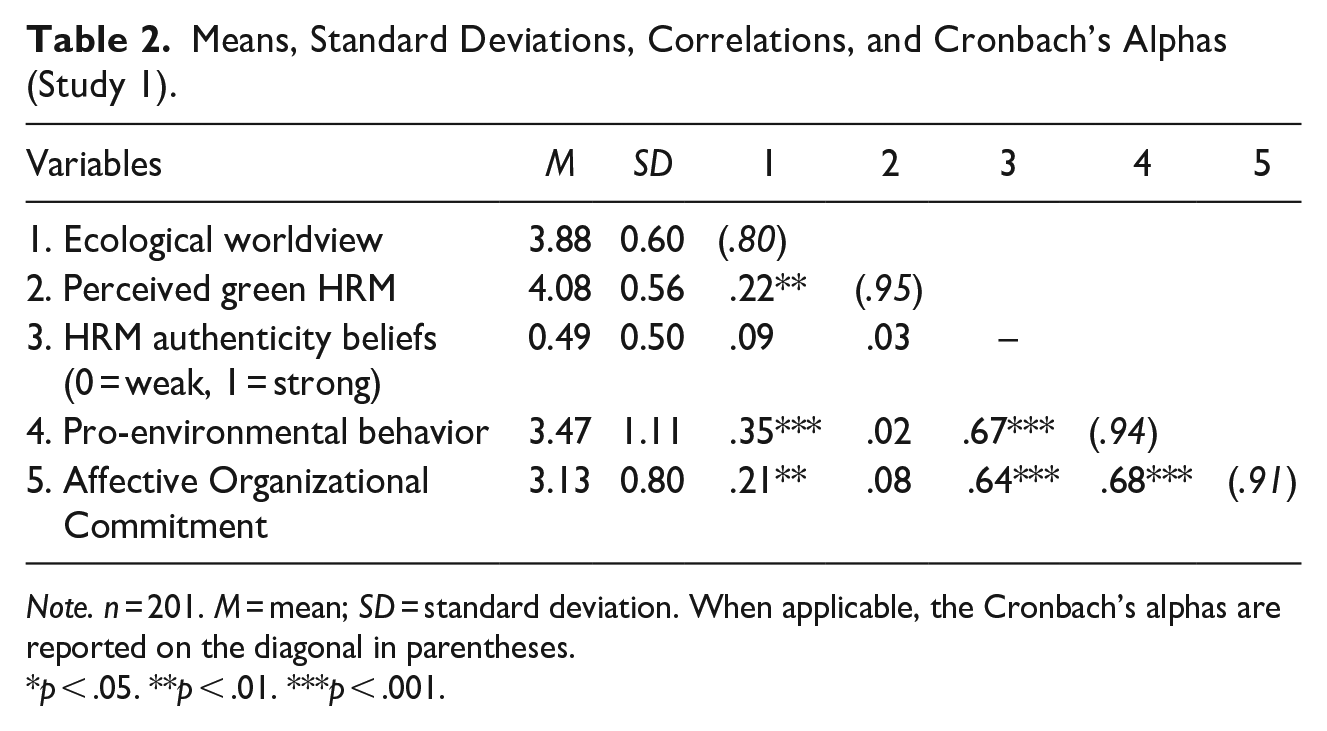
Note. n = 201. M = mean; SD = standard deviation. When applicable, the Cronbach’s alphas are reported on the diagonal in parentheses.
p < .05. **p < .01. ***p < .001.
Test of the Hypotheses
Figure 2 depicts the mean scores of pro-environmental behavior and affective organizational commitment. Green HRM authenticity beliefs had a near large effect on pro-environmental behavior (effect size = .47), as supported by the ANCOVA analysis (F(1,198) = 178.31, p < .001). The estimated marginal means indicate that participants with strong green HRM authenticity beliefs exhibited a higher inclination to engage in pro-environmental behaviors (M = 4.20, SE = 0.08, 95% confidence interval [CI] = [4.05, 4.35]) than those with weak beliefs (M = 2.77, SE = 0.07, 95% CI = [2.62, 2.92]), taking into account participants’ ecological worldview. The latter’s effect was also significant (F(1,198) = 37.61, p < .001), with an effect size of .16. Given that Levene’s test indicated a violation of the assumption of homogeneity of variance (F(1,199) = 44.33, p < .05), we conducted the Mann–Whitney test, which confirmed that the scores of pro-environmental behavior significantly differed across the two groups (U = 8938, p < .001).
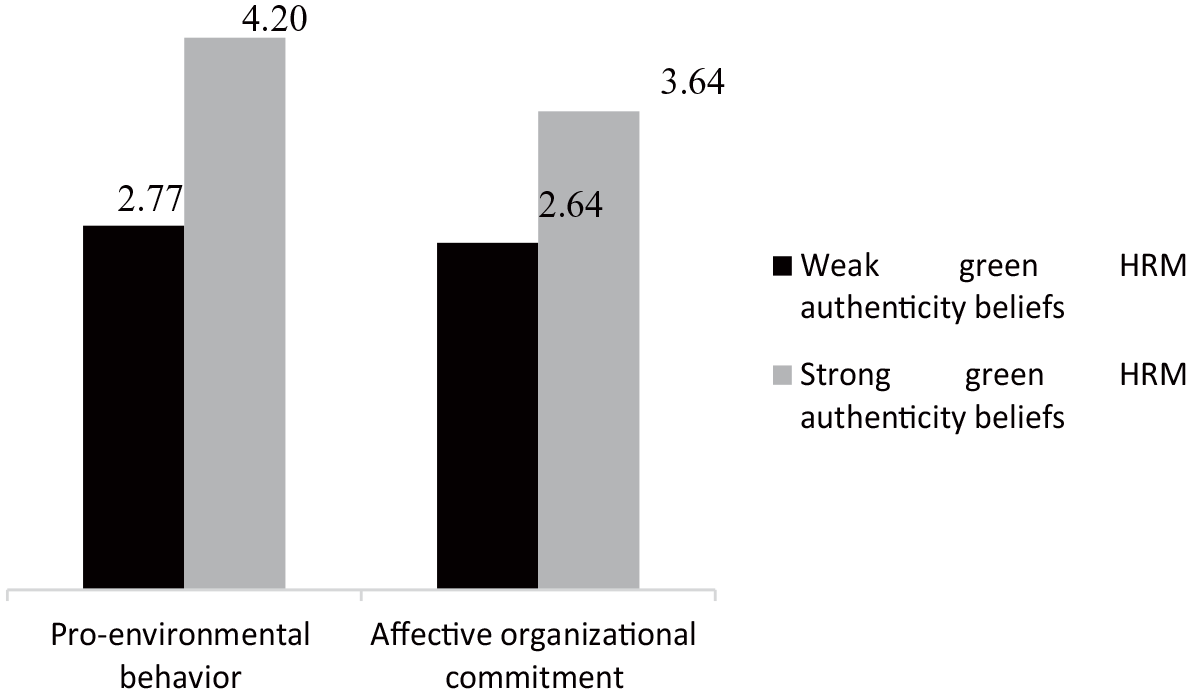
The Effects of Green HRM Authenticity Beliefs (Study 1).
On affective organizational commitment, both the manipulation (F(1,198) = 137.57, p < .001, effect size = .41) and participants’ ecological worldview (F(1,198) = 8.61, p < .01, effect size = .04) yielded significant effects. Participants in the strong green HRM authenticity beliefs condition demonstrated higher levels of affective organizational commitment (M = 3.64, SE = 0.06, 95% CI = [3.52, 3.76]) than those in the weak beliefs condition (M = 2.64, SE = 0.06, 95% CI = [2.52, 2.76]). Levene’s test further endorsed that these differences were significant (F(1,199) = 0.89, p = .35).
Study 2
Method
Procedure and Sample
A total of 399 potential respondents, recruited by our students, were invited to participate in a two-stage survey via email. Only those who completed the Time 1 measures were eligible to participate in a follow-up survey, 6 weeks later. This relatively short interval aimed to minimize potential method bias while avoiding excessively long delays that could obscure actual relationships or lead to severe attrition effects (Podsakoff et al., 2012). We initially received 225 responses (response rate: 56%). More than half came from female employees (57%). The average age of the sample was 38.95 years (SD = 11.57) and their organizational tenure amounted to an average of 7.57 years (SD = 8.54). The respondents were highly educated, with 39% indicating that they had obtained a Bachelor degree and an additional 33% a Master’s or equivalent. The vast majority held a contract of indefinite duration (83%). The sample was further split with 51% full-time and 49% part-time employees. They predominantly worked for larger organizations that employed at least 1,000 employees (47%) and that were active in the knowledge-based sector (60%). The remaining respondents were spread across organizations of varying sizes (34% classified as small and medium-sized enterprises, 19% as enterprises with 250–999 employees) and sectors (raw materials: 2%, manufacturing: 12%, services: 26%). At Time 2, 155 respondents remained (drop-out rate: 31%), reflecting a final response rate of 38%. A series of independent-samples t-tests revealed no significant differences between the samples’ characteristics across Time 1 and Time 2, suggesting that attrition did not introduce substantial bias into the study.
Measures
Except for affective organizational commitment, all variables were measured at Time 1. We used the same scales as in Study 1, without any modifications (see Appendix B). The Cronbach’s alphas are reported in Table 3 on the diagonal and provide support for the internal consistencies of the scales. In addition to ecological worldview, we controlled for gender (0 = male, 1 = female), organizational tenure (in years), and working time (0 = part-time, 1 = full-time) as differences in these areas have been suggested to affect pro-environmental behavior and affective organizational commitment. For example, Zelezny (2000) reported that women foster stronger environmental tendencies, while Wright and Bonett (2002) showed that continued and more intensive employment are both positively associated with affective organizational commitment.
Means, Standard Deviations, Correlations, and Cronbach’s Alphas (Study 2).
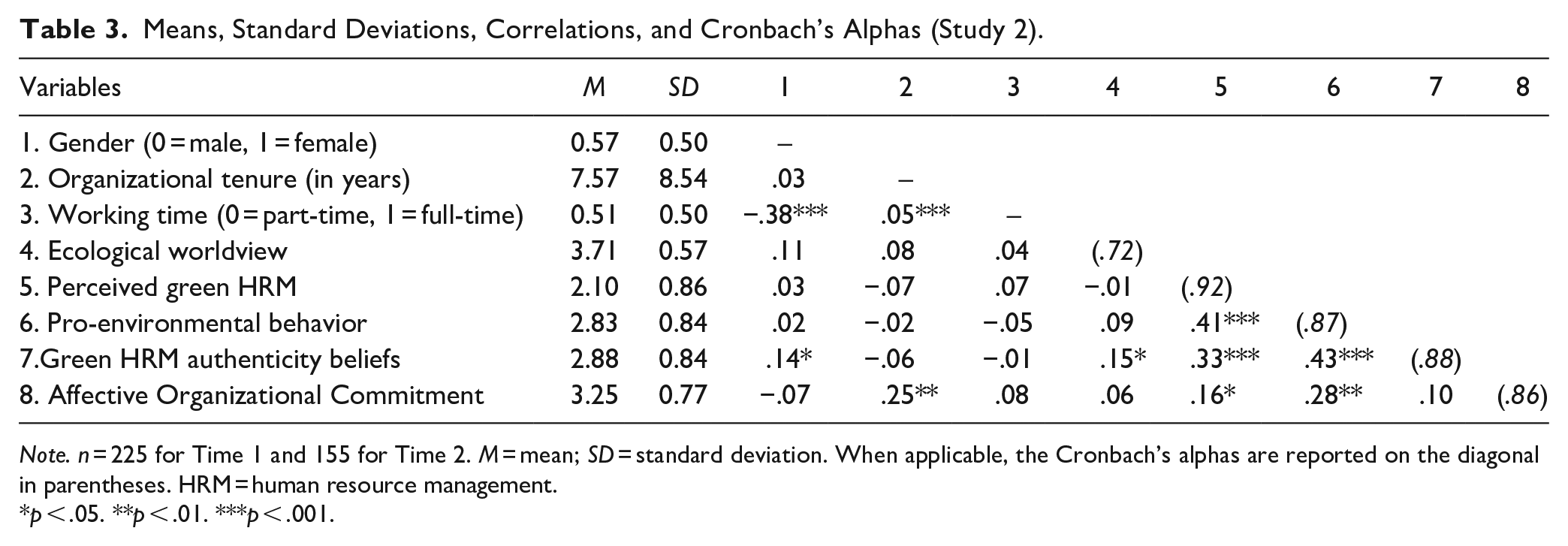
Note. n = 225 for Time 1 and 155 for Time 2. M = mean; SD = standard deviation. When applicable, the Cronbach’s alphas are reported on the diagonal in parentheses. HRM = human resource management.
p < .05. **p < .01. ***p < .001.
Analytical Strategy
After calculating summary statistics, we utilized multiple regression analysis to examine the relationship between green HRM perceptions and the outcomes. Subsequently, we employed Hayes’s (2013) PROCESS macro to estimate the indirect and conditional effects predicted by Hypotheses 3 to 5. We set the number of bootstrap samples to 10,000 and calculated the 95% CI, aligning with the recommended method for assessing mediation and moderation (Hayes, 2018).
Results
Descriptive Analyses
Table 3 presents the summary statistics. At first glance, the correlations are consistent with the hypotheses. Green HRM perceptions correlated positively with pro-environmental behavior (r = .41, p < .001) and affective organizational commitment (r = .16, p < .05), and there was a positive association between these two outcomes (r = .28, p < .001). Green HRM authenticity beliefs correlated positively with green HRM perceptions (r = .33, p < .001) and pro-environmental behavior (r = .43, p < .001), but not with affective organizational commitment. The correlations further suggest that female respondents held stronger green HRM authenticity beliefs. Ecological worldview was also associated with these beliefs, while organizational tenure correlated positively with affective organizational commitment.
Test of the Hypotheses
Table 4 presents the results of two multiple regression analyses that demonstrate that green HRM perceptions significantly predicted pro-environmental behavior and affective organizational commitment (F = 9.82, 3.26; p < .001, p < .01). The models, after adjustment and without considering the role of green HRM authenticity beliefs, explained around 16.5% and 6.8% of their variances, respectively. Providing support for Hypotheses 1 and 2, the standardized coefficients (β) indicate that green HRM perceptions are positively related to pro-environmental behavior (β = .42, p < .001) and affective organizational commitment (β = .16, p < .05).
Results of the Multiple Regression Analyses (Study 2).
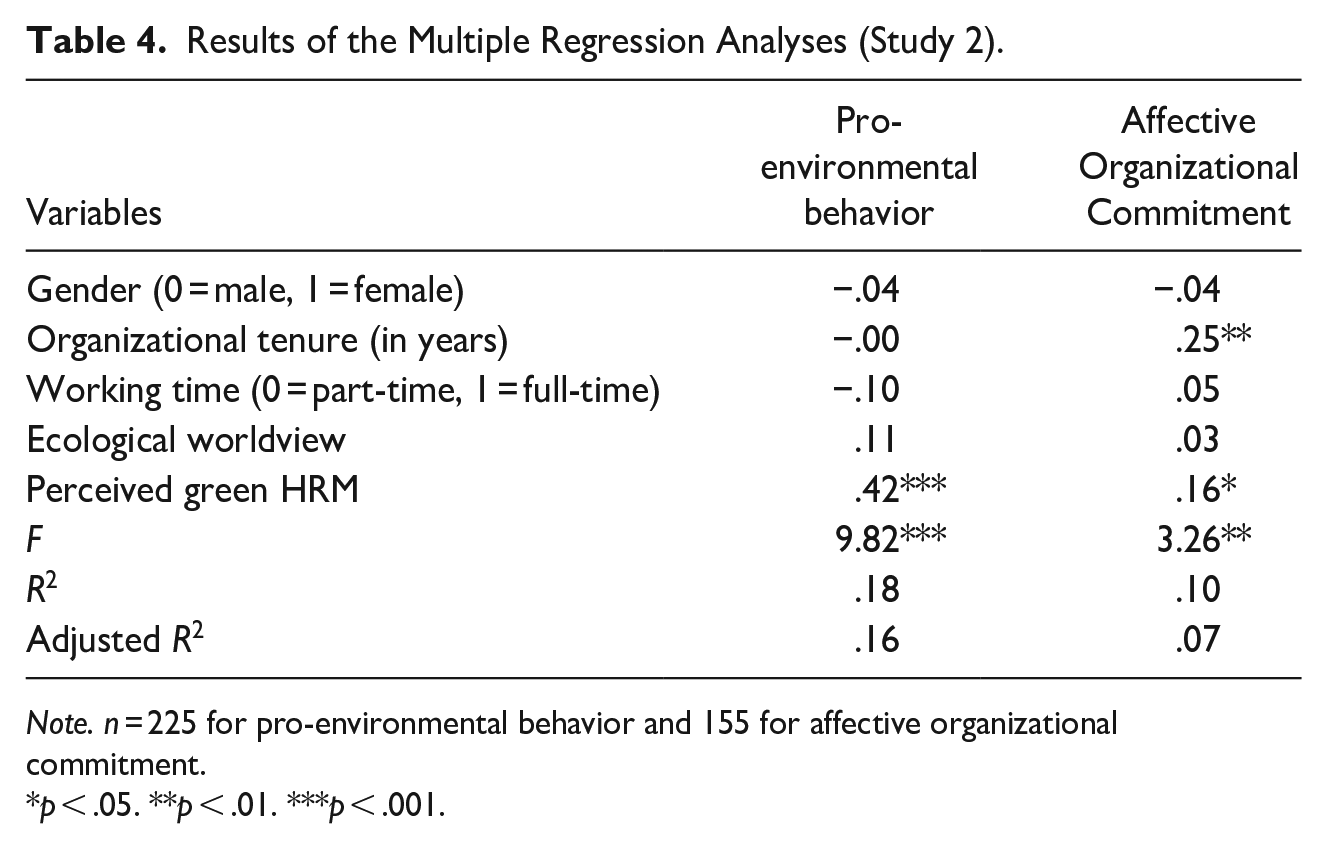
Note. n = 225 for pro-environmental behavior and 155 for affective organizational commitment.
p < .05. **p < .01. ***p < .001.
Proceeding with Hayes’ (2013) regression-based bootstrapping approach, we first inspected the mediation effect. The standardized solution of the mediation model, with all control variables added as covariates, is presented in Table 5. Consistent with Hypothesis 3, the results support the significance of an indirect effect of green HRM perceptions on affective organizational commitment through pro-environmental behavior (β = .13, Bootstrapped 95% CI = [0.04, 0.24]).
Results of the Mediation Analysis (Study 2).
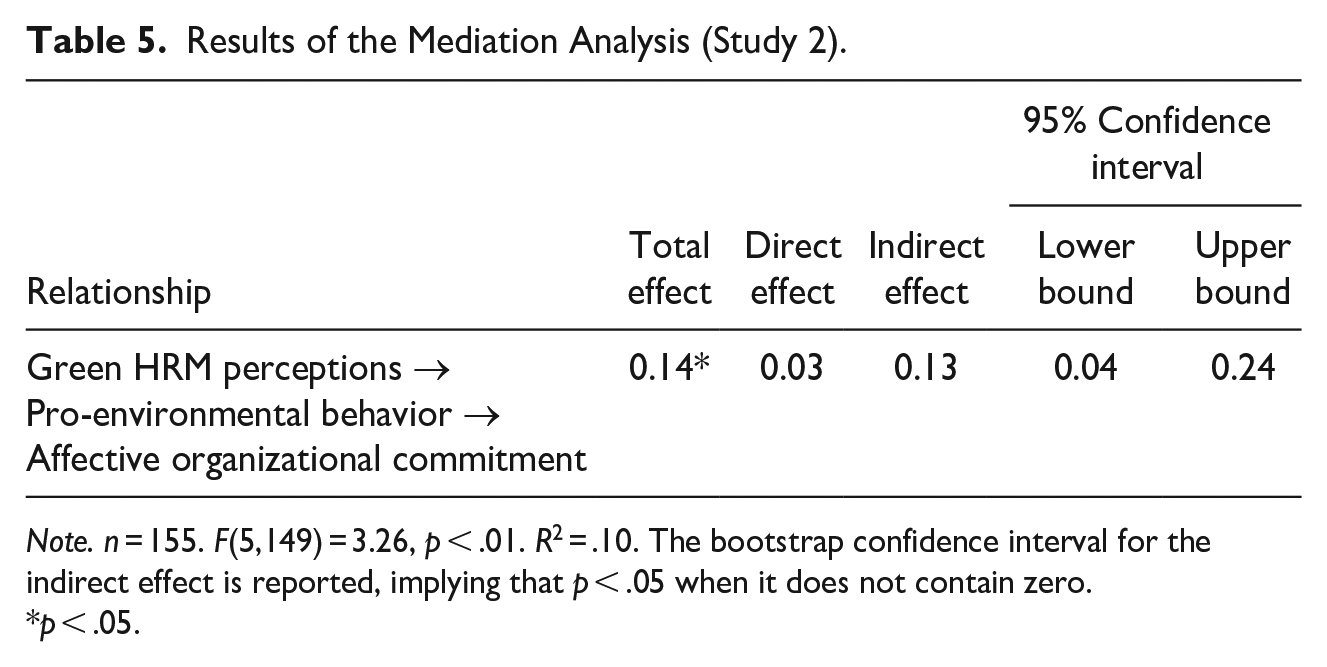
Note. n = 155. F(5,149) = 3.26, p < .01. R2 = .10. The bootstrap confidence interval for the indirect effect is reported, implying that p < .05 when it does not contain zero.
p < .05.
Next, we included green HRM authenticity beliefs as a potential moderator of both pro-environmental behavior and affective organizational commitment. Given that a bootstrap CI cannot accurately represent standardized effects (Hayes, 2013), Table 6 displays the unstandardized coefficients (B) and their standard errors (SE). The model predicting pro-environmental behavior was significant (F = 11.34, p < .001) and explained a substantial amount of the variance in its scores (R2 = 35%). Lending further support for Hypothesis 1, green HRM perceptions were positively related to pro-environmental behavior (B = 0.39, SE = 0.07, p < .001). Green HRM authenticity beliefs were directly related to this outcome (B = 0.25, SE = 0.07, p < .001) and interacted with green HRM perceptions (p < .05). The interaction accounted for a notable proportion of the variance in pro-environmental behavior (ΔR2 = 2.69%, F = 6.09, p < .05). In line with Hypothesis 4a, the effects of green HRM perceptions for different values of the moderator revealed that green HRM perceptions related less strongly to pro-environmental behavior for respondents who held low green HRM authenticity beliefs (B = 0.24, SE = 0.09, p < .01) and the strongest for those holding strong beliefs (B = 0.55, SE = 0.10, p < .001).
Unstandardized Estimates for Direct and Conditional Effects on Pro-environmental Behavior (Time 1) and Affective Organizational Commitment (Time 2).
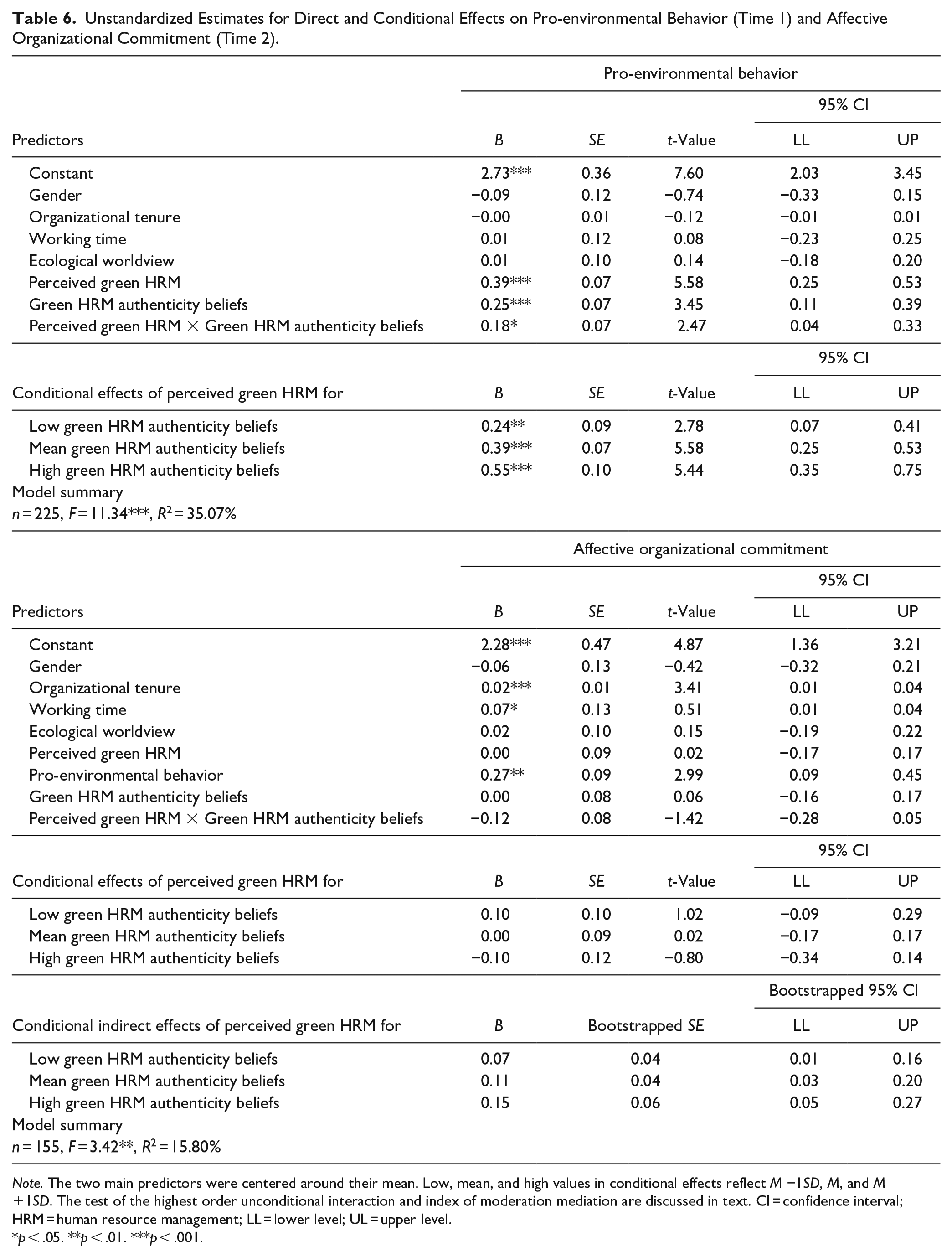
Note. The two main predictors were centered around their mean. Low, mean, and high values in conditional effects reflect M −1SD, M, and M +1SD. The test of the highest order unconditional interaction and index of moderation mediation are discussed in text. CI = confidence interval; HRM = human resource management; LL = lower level; UL = upper level.
p < .05. **p < .01. ***p < .001.
The model that predicted affective organizational commitment was also significant, F = 3.42, p < .01, explaining a fair amount of its variance (R2 = 16%). The effect of pro-environmental behavior in presence of green HRM perceptions was significant and consistent with the direction predicted by Hypothesis 3 (B = 0.27, SE = 0.09, p < .01). The interaction effect, however, was not supported, indicating that green HRM authenticity beliefs did not moderate the direct effect of green HRM perceptions on affective organizational commitment, opposed to Hypothesis 4b’s prediction. However, the results suggest that this variable plays a more complex role by influencing affective organizational commitment indirectly. More specifically, the conditional indirect effects show that the magnitude of the positive association between green HRM perceptions and affective organizational commitment that operates through pro-environmental behavior is contingent upon respondents’ green HRM authenticity beliefs (index of moderated mediation = 0.05, Bootstrapped SE = 0.03, Bootstrapped 95% CI = [>0.00, 0.11]). In line with Hypothesis 5’s proposal, the indirect effect was found to be stronger (vs. weaker) when more (vs. less) HRM authenticity beliefs were reported.
Discussion
Our research highlights that the functionality of green HRM may go beyond stimulating employees’ environmental commitment, emphasizing the importance of green HRM authenticity. The findings derived from two separate studies provide novel insights that are pertinent for both theory and practice.
Theoretical Implications
The presence of green HRM seems positively related to pro-environmental behaviors within the workforce, an observation that is consistent with previous studies on green HRM (Amrutha & Geetha, 2020; Paulet et al., 2021; Ren et al., 2018). Additionally, our results carry two main implications that merit discussion, particularly in light of recent calls (e.g. Paulet et al., 2021) to deepen the understanding of the underlying processes and contextual factors influencing employees’ responses to green HRM.
First, our research indicates that the prevailing explanations of green HRM outcomes, primarily guided by the AMO theory (Renwick, 2020), can be expanded. We found that green HRM is not only associated with employees’ commitment to the environment but also with their commitment to the organization. While earlier research hinted at this possibility (Dhanesh, 2014; Parida et al., 2021), there has been limited exploration of green HRM’s connection with non-ecological employee outcomes. Our findings resonate with recent studies suggesting that when HRM focuses on creating sustainable outcomes (Almarzooqi et al., 2019), particularly a positive ecological footprint for the organization (Erdogan et al., 2015; Kim et al., 2019), employees value this approach, heightening their sense of organizational belonging. Furthermore, by controlling for employees’ ecological worldview, we provide a compelling argument that affective organizational commitment may arise from the environmental policies and practices advocated by green HRM, rather than solely stemming from employees’ ecological values. This suggests that green HRM, or at least its perceived presence, contributes to employees’ identification with the organization, indicating that social identity theory is a useful framework for exploring green HRM outcomes. Through this lens, pro-environmental behavior can be viewed as an identity marker (Ashforth & Schinoff, 2016) that confirms employees’ willingness to align themselves with an organization endorsing green values through HRM practices. Moreover, being explicitly encouraged to demonstrate such values may spill over to a broader appreciation of the organization as a whole. This interpretation corresponds with previous empirical findings (Venhoeven et al., 2013), as well as with the theoretical foundations of CSR outcomes (Gond et al., 2017), that consider pro-environmental behavior as a form of identity enactment, allowing employees to deeper integrate within the organization and consequently, strengthening their commitment to it.
Second, while green HRM may act as the catalyst in this aforementioned process, we identified employees’ beliefs in the authenticity of green HRM as a potential boundary condition. By studying the role of these beliefs, we addressed the call to account for organization’s motives for implementing green HRM (Ren et al., 2018) and add nuance to the green HRM literature. As expected, Study 1 indicates that employees would hypothetically exhibit more pro-environmental behaviors and display greater affective commitment to an organization with authentic green HRM policies, in comparison with inauthentic ones. After establishing this basis, Study 2 corroborated this idea in the field, revealing a direct positive relationship between employees’ beliefs in the authenticity of green HRM and their pro-environmental behavior. Furthermore, an interaction effect emerged between employees’ perceptions of green HRM and authenticity beliefs. Our data suggests that when employees believe that HRM’s commitment to green values is authentic, the role of green HRM to stimulate pro-environmental behaviors may be more effective. Although we were unable to establish if low green HRM authenticity beliefs are a boundary condition of employees’ affective organizational commitment, presumably due to the influence of various work-related factors on this outcome (Eby et al., 1999), our findings do suggest that it can indirectly hinder the development of this form of commitment. Taken together, our observations are consistent with Tajfel and Turner’s (1979) social identity theory premise, which posits that individuals prefer to associate themselves with authorities that enhance their self-image by pursuing credible and favorable goals. This implies that employees’ authentic green HRM beliefs may strengthen their identification with the organization, for example, by investing more effort in helping to accomplish green objectives. Conversely, inauthentic green HRM beliefs can be expected to have the opposite effects.
Practical Implications
In today’s heightened awareness of ecological concerns (Hartman & Vachon, 2018), it is crucial for practitioners to understand the potential returns on investment associated with green HRM (Marquis et al., 2015). Similar to the work by Renwick et al. (2013), our analysis reinforces the notion that integrating green values into HRM fosters pro-environmental behavior. It is likely that, in turn, endorsing green values also benefits the workforce’s affective organizational commitment, thereby supporting the assumption that green HRM serves both business and society at large.
Our results suggest that the effectiveness of green HRM can be leveraged by acting authentically. Ideally, this should be achieved by sincerely bridging green values into HRM practices and policies, but perhaps less evidentially, also by communicating genuine HRM intentions properly throughout the organization. Based on Bowen and Ostroff’s (2004) landmark study on this topic, we propose that HRM practitioners (including line managers) who embrace the tenets of green HRM should be consistent, seek consensus with other HRM functionaries, and be distinctive in expressing the green attitudes the organization expects, values, and rewards. By communicating in such a way, it can be expected that a climate emerges that enables employees to draw the right inferences about HRM’s intentions and to act accordingly.
Limitations and Directions for Future Research
There are several limitations connected to our examination. First, while our two studies provide consistent support for our hypotheses and may balance each other’s weaknesses, they share several overarching methodological limitations. Both studies employed similar data collection methods, which could introduce common-method bias (Spector, 2019). In Study 2, we attempted to address this by incorporating a time lag, measuring affective organizational commitment at a later point. However, this does not fully eliminate concerns regarding reversed causality or the influence of confounding variables. For example, the relationship between pro-environmental behavior and affective organizational commitment might differ from our hypothesized direction, and overlooked factors could have influenced both variables. Furthermore, both studies relied on a non-probability sampling technique, which limits the generalizability of our findings. The use of convenience sampling may have also introduced response bias and, for example, cause participants to over-report their pro-environmental behaviors and commitment to present themselves more favorably. We recommend that future research replicates and extends our work using a purposive or stratified sampling technique to collect multisource data (e.g. supervisors, coworkers, or clients) and alternative research methodologies, such as longitudinal studies, field experiments, or intervention studies.
Second, while the power estimates of our studies suggest that there remains ample scope to identify other predictors of pro-environmental behavior and affective organizational commitment, it is equally important to explore additional outcomes of green HRM. Echoing Paulet et al. (2021), a first avenue to advance the field is by mapping the more distal implications of green HRM for employees (e.g. productivity), as well as for businesses (e.g. economic benefits), and society (e.g. reduced greenwashing). Additionally, future research could also take a next step by exploring the negative responses to green HRM to complement the prevailing optimistic perspective. Building on this study’s insights into the role of green HRM authenticity, it would be informative to draw on research on consumers’ green skepticism (Leonidou & Skarmeas, 2017) and to test whether and how, within the context of employees, employees’ reluctance to engage in pro-environmental behavior can develop as a result of factors such as the organization’s history and their perceived norms. Additionally, this exploration could provide a deeper understanding of the complexities surrounding green HRM authenticity and its implications by delving into the role of line managers. Line managers may find the pursuit of ecological and productivity-oriented objectives conflicting (Bush, 2020), thereby possibly challenging successful implementation and subsequently affecting employees’ HRM beliefs.
Conclusion
This study suggests that green HRM promotes pro-environmental behavior and, through this, the workforce’s affective organizational commitment. Nevertheless, the extent of these favorable outcomes appears to be constrained by employees’ beliefs regarding the authenticity of green HRM. Without such beliefs, green HRM may be destined to remain less effective in inspiring employees to dedicate themselves to environmentally relevant objectives, and, consequently, to their organization.
Footnotes
Appendix A
Todit International is a consultancy company, specialized in providing advice on strategic management improvements. Over the years, Todit International became a respected player in the field. They currently offer their professional services to corporations and governments at a global level. As a result, it is important that Todit International can continue to rely on a sufficient workforce. To that end, they continuously invest in attracting, retaining, and developing their employees via implementing various HRM policies and practices.
Recently, the board of directors has decided to deliver more efforts for the natural climate. Consistent with ISO 14001, an international agreed standard that sets out the requirements for an environmental management system, they have made several changes throughout the organization with the ultimate aim of limiting their ecological footprint. To help improve the environmental performance, the HRM department is expected to ensure that employees also efficiently use resources and reduces waste to the extent possible. In practice, the HRM department has, therefore, developed and implemented the following policies:
Appendix B
Perceived Green HRM
Note. Adapted from Dumont et al. (2017). The items began with “Todit International” for Study 1 and “My company” for Study 2.
Pro-environmental Behavior
Note. Adapted from Bissing-Olson et al. (2013). “would” was only added in Study 1.
Green HRM Authenticity Beliefs
Note. Adapted from Vlachos et al.’s (2013). The reference to Todit International was exclusively made in Study 1.
Affective Organizational Commitment
Note. Adapted from Meyer et al. (1993). “Would” and references to “Todit International” were only added in Study 1.
Ecological Worldview
Note. Derived from Dunlap et al.’s (2000).
Author Note
All data are available upon reasonable request from the corresponding author.
Declaration of Conflicting Interests
The author(s) declared no potential conflicts of interest with respect to the research, authorship, and/or publication of this article.
Funding
The author(s) received no financial support for the research, authorship, and/or publication of this article.
