




Abstract
Base-of-the-pyramid (BOP) business models aim to achieve profitability and poverty reduction by including poor people into corporate value chains. This goal duality creates tensions. Actors’ responses to these tensions are influenced by their cognitive frames of the phenomena building the tension. Applying a cognitive perspective, I investigate how corporate actors with different frames of poverty respond proactively or defensively to the poverty–profitability tension by adapting business model elements. I find that proactive and defensive responses differ for actors holding different cognitive frames of poverty. The responses have consequences for the poverty impact potential of BOP business models.
Poverty alleviation will become a business development task.
The term base- or bottom-of-the-pyramid (BOP) refers to the lowest segment of the global income pyramid. It was coined by the management scholars C.K. Prahalad and Stewart Hart (Prahalad, 2005; Prahalad & Hart, 2002), who suggested that the global poor and corporations alike can benefit from approaching the BOP with new business models. The BOP business models include poor people from the BOP in corporate value chains and strive to combine profitability with poverty reduction (Kolk et al., 2014). This goal duality can create tensions.
Tensions that surface when organizations pursue varied and conflicting goals (Smith et al., 2013; Smith & Lewis, 2011) are of special relevance for companies that want to reach sustainability-related goals through corporate activities (Hahn et al., 2015; Smith et al., 2013). Tensions present actors with strategic choices; that is, managers must find ways to respond to tensions (Haffar & Searcy, 2019). Scholars define a repertoire of responses, usually grouped into (a) defensive, avoidance-based responses and (b) proactive responses (Jarzabkowski & Lê, 2017; Jarzabkowski et al., 2013; Lewis, 2000; Smith & Lewis, 2011). These more generic categories of tension handling were recently applied to business model logics (i.e., to understand what tensions actors that develop and implement business models for sustainability experience and how they respond to these tensions through adaptations of business model elements; Davies & Chambers, 2018; Davies & Doherty, 2019; Stubbs, 2019; van Bommel, 2018).
People’s responses to tensions in complex settings are influenced by their cognitive frames of the phenomena building the tension (Hahn et al., 2014). Cognitive frames are the underlying structures of beliefs, perceptions, and appreciations through which managers filter and interpret information (Gilbert, 2006; Grewatsch & Kleindienst, 2018; Walsh, 1995). Some empirical studies reveal a relationship between more complex cognitive frames of sustainability and better social performance of firms compared with less complex cognitive frames of sustainability that have a clear economic focus (Crilly & Sloan, 2012; Gröschl et al., 2019; Haffar & Searcy, 2019; Hockerts, 2015). In contrast, Hahn et al. (2014) conceptually submit that managers with simpler business case frames of sustainability adopt a pragmatic stance on sustainability issues that allows for the development of large-scale solutions with high impact on the firms’ social performance. In light of these contradictory arguments, we should intensify research on the relationship among the cognitive frames of phenomena that build tensions that managers in hybrid settings experience, the responses they find to these tensions, and the societal impact of their responses.
In the BOP context, the tensions acknowledged by practitioners and the responses are potentially influenced by their cognitive frames of poverty. The concept of poverty as one pole of the inherent goal duality is complex and ambiguous (Alkire et al., 2015; Laderchi et al., 2003). Thus, cognitive frames of poverty might differ among practitioners and influence the perception of and responses to tensions that occur during BOP business model implementation. In the context of poverty policies of public actors, it is already shown that the conceptualization of poverty and the poor can influence the design and implementation of poverty alleviation measures on an organizational level (Bradshaw, 2007; Green, 2006; Laderchi et al., 2003). Nevertheless, the cognitive frames of poverty and their influence on tension handling are underexplored in the corporate context of implementing BOP business models.
Therefore, I propose the following research question:
I answer this question by drawing on a qualitative semi-structured interview study based on a sample of European- and African-based BOP ventures. As an upfront finding, I identify two pairs of cognitive frames of poverty that differ in content and structure. Building on this, I identify a variety of responses to tensions through adaptations to business model elements. The responses vary between proactive and defensive responses depending on the actors’ cognitive frames of poverty and have different consequences for the potential poverty impact.
The identification of cognitive frames of poverty and the analysis of tension handling during business model implementation contributes to two different literature streams. First, it enlarges the literature on tensions and responses to tensions resulting from hybrid settings in corporate sustainability (Battilana & Lee, 2014; Hahn et al., 2015). As asked by Hahn et al. (2018), it adds new descriptive aspects by concretizing responses to tensions as adaptations of business model elements. It also adds instrumental aspects by showing that several adaptations of business model elements act as defensive responses to poverty–profitability tensions and decrease the potential impact on poverty. Second, it contributes to the cognitive perspective in corporate sustainability by challenging the supposed positive relationship between more complex frames of sustainability and firms’ better social performance. Third, the specification of cognitive frames of poverty has implications for practitioners in the BOP context.
The article is structured as follows: Next, I discuss the literature on tensions, responses to tensions, and cognitive frames in the context of sustainability and the BOP. The section “Method” presents my research design, data collection, and data analysis. The section “Findings” presents the cognitive frames of poverty as an upfront finding and then how corporate actors in the BOP context respond to poverty–profitability tensions by adapting business model elements. I then discuss the findings building on existing literature. Then, I conclude and show avenues for further research.
Tensions and Responses to Tensions in the Context of Sustainability and the Base of the Pyramid (BOP)
Tensions are dualities between elements that seem logical individually but become inconsistent when juxtaposed (Smith & Lewis, 2011, p. 384). Managers are confronted with tensions in different settings, for example, the tension between exploration and exploitation (Andriopoulos et al., 2018), collaboration and control (Sundaramurthy & Lewis, 2003), and the flexibility and stability of digital infrastructure (Woodard et al., 2013). The tensions that arise from aiming for corporate sustainability (i.e., balancing social, environmental, and economic goals) have received special attention (Hahn et al., 2015; van der Byl & Slawinski, 2015). Contributing to a more sustainable society while maintaining economic success as an organization is a complex task with several tensions for managers. This goal duality is characterized as a form of hybridity (Battilana & Lee, 2014; Smith et al., 2013). Smith and Lewis (2011) and Smith et al. (2013) categorize tensions of hybrid organizations as (a) performing tensions that surface as organizations attempt varied and conflicting goals and address inconsistent demands across multiple stakeholders; (b) organizing tensions that emerge through commitments to contradictory organizational structures, cultures, or practices (e.g., human resources); (c) belonging tensions that involve questions of identity; and (d) learning tensions that emerge from the juxtaposition of multiple time horizons, specifically long-term and short-term.
BOP businesses that aim to achieve economic success and poverty alleviation might be confronted with all of these tensions of hybridity to a different extent while implementing and adapting their business models. However, research on tensions of hybridity has mainly focused on social enterprises, predominantly in western settings such as work integrating social enterprises (Battilana et al., 2015; Pache & Santos, 2012). Many BOP scholars implicitly assume that the tension between profitability and poverty reduction automatically dissolves into win-win situations once economic success is reached (e.g., Schuster & Holtbrügge, 2014; Seelos & Mair, 2007; or from a review perspective, Dembek et al., 2020). In contrast, critical scholars emphasize severe trade-offs between poverty reduction and profitability (Arnold & Valentin, 2013; Arora & Romijn, 2011; Bonsu & Polsa, 2011; Karnani, 2005; Peredo et al., 2018; Schwittay, 2011). However, the empirical investigation of how practitioners perceive poverty–profitability tensions while implementing BOP business models is underdeveloped (an exception with a focus on time horizons is Sharma & Jaiswal, 2018).
Scholars define a repertoire of responses to tensions, usually grouped into (a) defensive, avoidance-based responses, which provide short-term relief from tensions but do not provide new ways to work with the tensions, and (b) proactive responses, which try to deal with these tensions on a long-term basis and reconceptualizes the actors’ experiences of the tensions (Jarzabkowski & Lê, 2017; Jarzabkowski et al., 2013; Lewis, 2000; Smith & Lewis, 2011). Table 1 presents a collection of potential responses to tensions.
Responses to Tensions From Literature.
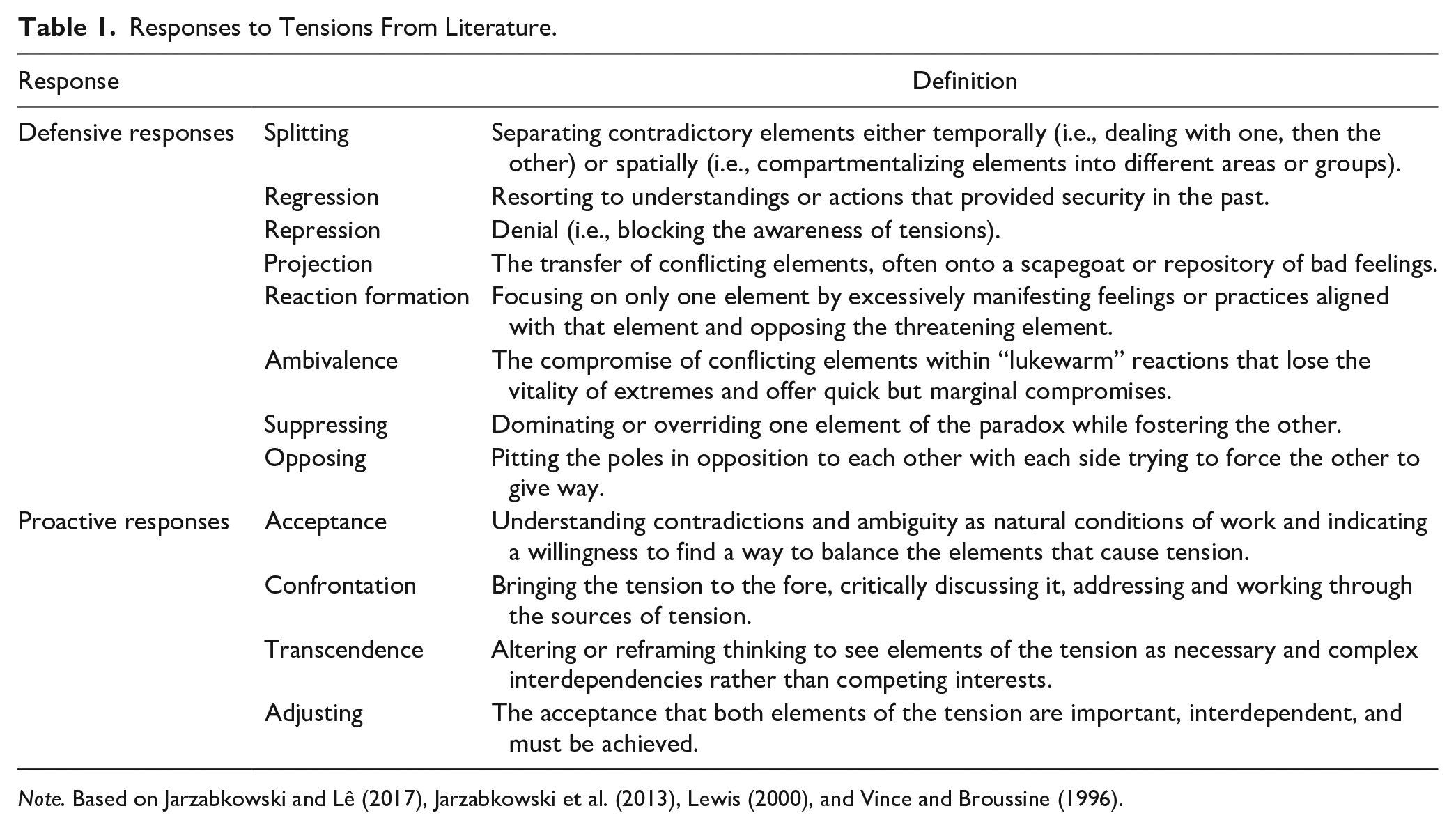
Note. Based on Jarzabkowski and Lê (2017), Jarzabkowski et al. (2013), Lewis (2000), and Vince and Broussine (1996).
Defensive, avoidance-based responses to tensions are considered to weaken the potential for positive corporate influence on a more sustainable society through mechanisms of decision-making paralysis, mission shift, or internal anxiety (Ismail & Johnson, 2019). In contrast, managers are expected to bring out innovative and creative synergies, turn conflict into productive outcomes, and achieve long-term sustainability for organizations if they find proactive responses to tensions.
In addition to the generic categories of defensive or proactive responses to tensions, scholars have defined concretizations in different fields of managerial action (e.g., specific aspects of human resources management such as workforce composition and hiring policies; Battilana & Dorado, 2010; Battilana & Lee, 2014). The conception and adaptation of business models is an emerging field for the concretization of responses to tensions that result from seeking corporate sustainability (Davies & Chambers, 2018; Davies & Doherty, 2019; van Bommel, 2018) and are especially relevant to this research. Business models can be understood as a holistic explanation of how a firm realizes a specific business venture (Zott et al., 2011).
A business model is usually described as composed of different elements (Osterwalder et al., 2005; Shafer et al., 2005; Teece, 2010). At a minimum, these elements include a value proposition, value creation and delivery, and value capture (Bocken et al., 2014; Schaltegger et al., 2016). The value capture is related to cost structure and revenue streams and is, therefore, understood as economic value capture. Managers of BOP business models confronted with tensions from the goal duality of poverty reduction and profitability respond by designing and adapting business model elements. Therefore, the business model perspective is helpful in structuring the analysis of tensions and responses to tensions found by corporate actors in hybrid contexts (Tykkyläinen & Ritala, 2021). The design and adaptation of business model elements as a response to tensions affect the poverty reduction potential of the BOP business model. Specific consideration of this potential impact is important to answer the call for a better consideration of the poverty pole in the poverty–profitability tension inherent in BOP business models (Dembek et al., 2020; Kolk et al., 2014).
Cognitive Frames in the Context of Sustainability and BOP
How a corporate actor perceives and acts on tensions is influenced by the actor’s cognitive frames about the elements in which the tensions exist (Hahn et al., 2014). The cognitive perspective concentrates on the mental processes involved when a person makes decisions in and for organizations. It is stimulated by the early work of Simon (1955) and has developed into an important research strand, especially in the field of strategic management (e.g., Kaplan, 2011; Narayanan et al., 2010; Walsh, 1995). According to the managerial cognition perspective, managers are assumed to be “information workers” who are scanning, processing, and spreading information in highly complex situations (Walsh, 1995, p. 280). To make relatively efficient decisions, managers employ knowledge structures instead of evaluating every situation from scratch. Drawing from insights of social psychology, Walsh (1995) defines a knowledge structure as “a mental template that individuals impose on an information environment to give it form and meaning” (p. 281).
In the cognition literature, these knowledge structures are referred to by different terms, such as cognitive schemes, models, or frames (Hahn et al., 2014; Kaplan, 2011). I use the term cognitive frame, which represents the underlying structures of beliefs, perceptions, and appreciations through which managers filter and interpret information (Gilbert, 2006; Grewatsch & Kleindienst, 2018). Cognitive frames enable efficient information processing, interpretation, and action. However, cognitive frames also carry the risk of selective perception, creation of blind spots, stereotypic thinking, underestimation of fundamental changes in the environment, and inhibition of creative problem-solving or innovation (Walsh, 1995).
Scholars have studied the specific content (i.e., the attributes a specific actor associates with a specific issue) and structure (i.e., the degree of differentiation or the number of attributes within a cognitive frame, and the degree of integration or the degree of interconnectedness among the content attributes of the frames) of managers’ cognitive frames (Walsh, 1995). Together, content and structure influence managers as they scan and interpret information and respond to their interpretations (Hahn et al., 2014). Scholars often refer to a simpler and a more complex frame of sustainability of corporate actors (Hahn et al., 2014; Hockerts, 2015; Olsen & Boxenbaum, 2009). The simpler “business case frame” has fewer content attributes and is characterized by an alignment logic focusing on economic attributes and clear means–ends relationships (Hahn et al., 2014, p. 467). The more complex “paradoxical frame” is characterized by the inclusion of a wider variety of attributes and expresses different reinforcing, neutral, and conflicting connections between and among those attributes, thus lacking a clear focus or alignment logic (Hahn et al., 2014, p. 468).
A few studies empirically analyze how different cognitive frames of sustainability influence the handling of sustainability-related tensions and, as a result, are related to higher or lower sustainability performance. The more complex frames are associated with a higher societal performance of firms (Crilly & Sloan, 2012; Gröschl et al., 2019; Hockerts, 2015). Hahn et al. (2014) conceptually derive a contrasting argument in which a simpler business case frame encourages a manager to take a pragmatic stance on sustainability issues. This stance, defined as a decision maker’s attitude toward an issue that predisposes the person to act in certain ways, favors feasible solutions that can potentially achieve large-scale change, though probably of limited scope and newness. On the contrary, managers with a more complex paradoxical frame take a prudent stance on sustainability issues. They are more likely to consider unusual and more radical responses to sustainability issues, yet they are hampered in their ability to implement workable solutions because of their ambivalence and greater awareness of risks and tensions. Thus, the predisposition to act hesitantly might negatively influence an organization’s societal performance. Overall, we do not know enough regarding the relationship among frames, responses to tensions, and the potential impact on a societal level.
Furthermore, most researchers who consider cognitive frames in the context of corporate sustainability focus on cognitive frames of sustainability in general (Hahn et al., 2014; Hockerts, 2015; Sharma & Jaiswal, 2018; van der Byl & Slawinski, 2015). However, BOP business models are clearly defined as business models that contribute to poverty reduction, resulting in specific poverty–profitability tension. The concept of poverty is highly complex and ambiguous and not universally defined (Alkire et al., 2015; Laderchi et al., 2003). In the international academic and policy debate, unidimensional understandings of poverty as a lack of income or consumption (Chen & Ravallion, 2010) are challenged by multidimensional understandings of poverty that consider a broader set of deprived capabilities (Alkire et al., 2015; Sen, 1999; World Bank, 2018). Bradshaw (2007) claims that “competing theories of poverty shape anti-poverty strategies” (p. 7).
In the context of the poverty policies of public actors, the conceptualization of poverty and the poor can influence the design and implementation of poverty alleviation measures on an organizational level (Bradshaw, 2007; Green, 2006; Laderchi et al., 2003). Specifically, personal beliefs about why people suffer from poverty influence the design of measures against poverty and the attitude toward the poor (Hastie, 2010). Bradley et al. (2012, p. 688) refer to different explanations for poverty, specifying “poverty based in personal deficiency” (e.g., bad decision-making, work attitudes, and motivation), “poverty based in cultural deficiency” (i.e., enduring beliefs and values that result in a disenfranchised subset of society or “under-class” with a culture of poverty that impedes people from deviating from accepted norms of behavior), “poverty based in structural failing” (i.e., structural barriers in the economic, social, and political systems beyond the influence of the individual), and “poverty based in capacity or opportunity deficiency” (i.e., uncertainty and a lack of capital limiting possibilities).
The importance of the conceptualization of poverty and the poor is reflected in the BOP debate by authors claiming a clear and specific definition of poverty beyond income levels (Dembek et al., 2020; Hart et al., 2016; Kolk et al., 2014). The request to make poverty conceptions in the BOP research explicit currently only refers to debate within research and academic settings. We know little about how managerial actors and initiators of BOP business models understand poverty and how their cognitive frames of poverty and the poor influence their handling of the poverty–profitability tensions. The present study aims to provide insight into corporate actors’ cognitive frames of poverty, their responses to tensions, and how their responses might influence the poverty potential of their BOP business models.
Method
I used a microlevel approach to learn about the cognitive frames of corporate actors in BOP businesses and their responses to poverty–profitability tensions. Personal interviews that inductively detect the content and structure of cognitive frames without restricting to preselected items are an appropriate approach to detect a person’s cognitive frames (Hockerts, 2015; Sharma & Bansal, 2017; Sharma & Jaiswal, 2018). A qualitative approach is most adequate when “the meanings people bring into” the field of interest are highly relevant (Denzin & Lincoln, 2011, p. 3), which is the case when focusing on cognitive frames and their role for the perception of and responses to tensions. Thus, I adopted a qualitative approach based on semi-structured interviews.
Data Collection
Following a purposeful sampling strategy, I selected businesses that innately declare that they follow a BOP approach (i.e., including people from the BOP to corporate value chains with the aim to contribute to corporate success and poverty reduction). Another term that is often used by academics and practitioners for such businesses is “inclusive business” (Halme et al., 2012). As such, the Inclusive Business Accelerator (IBA), a platform that connects inclusive business ventures with potential investors, was helpful for sampling. 1
I created a sample with full coverage of the European companies (plus Israel). To restrict the western perspective bias of which the BOP discussion is accused (Landrum, 2007), I also included companies based in different African countries. Because of language restrictions, I focused on anglophone countries. After eliminating the companies whose homepages were no longer available, the sample size included 42 companies. In total, 18 people from the sample agreed to conduct an interview; two additional interviews were generated through recommendations from previous interviewees. In total, 20 interviews were conducted between March and June 2018. In total, 15 interviewees were founders of the BOP businesses, and five made important strategic decisions (e.g., business developer, international program manager, and CEO). This is an important characteristic that makes it possible to examine the microlevel cognitions directly relevant at the organizational level. All the organizations were smaller companies, with management teams between three and 12 employees, and had existed between 3 and 8 years when the interviews were conducted.
The interviews lasted between 30 and 90 min, with an average of 50 min. In total, 17 interviews were recorded and transcribed, and three were memorized in memory minutes. Table 2 offers an overview of the interview partners and presents a short description of the respective BOP ventures of the organizations.
Overview of the Interview Partners.
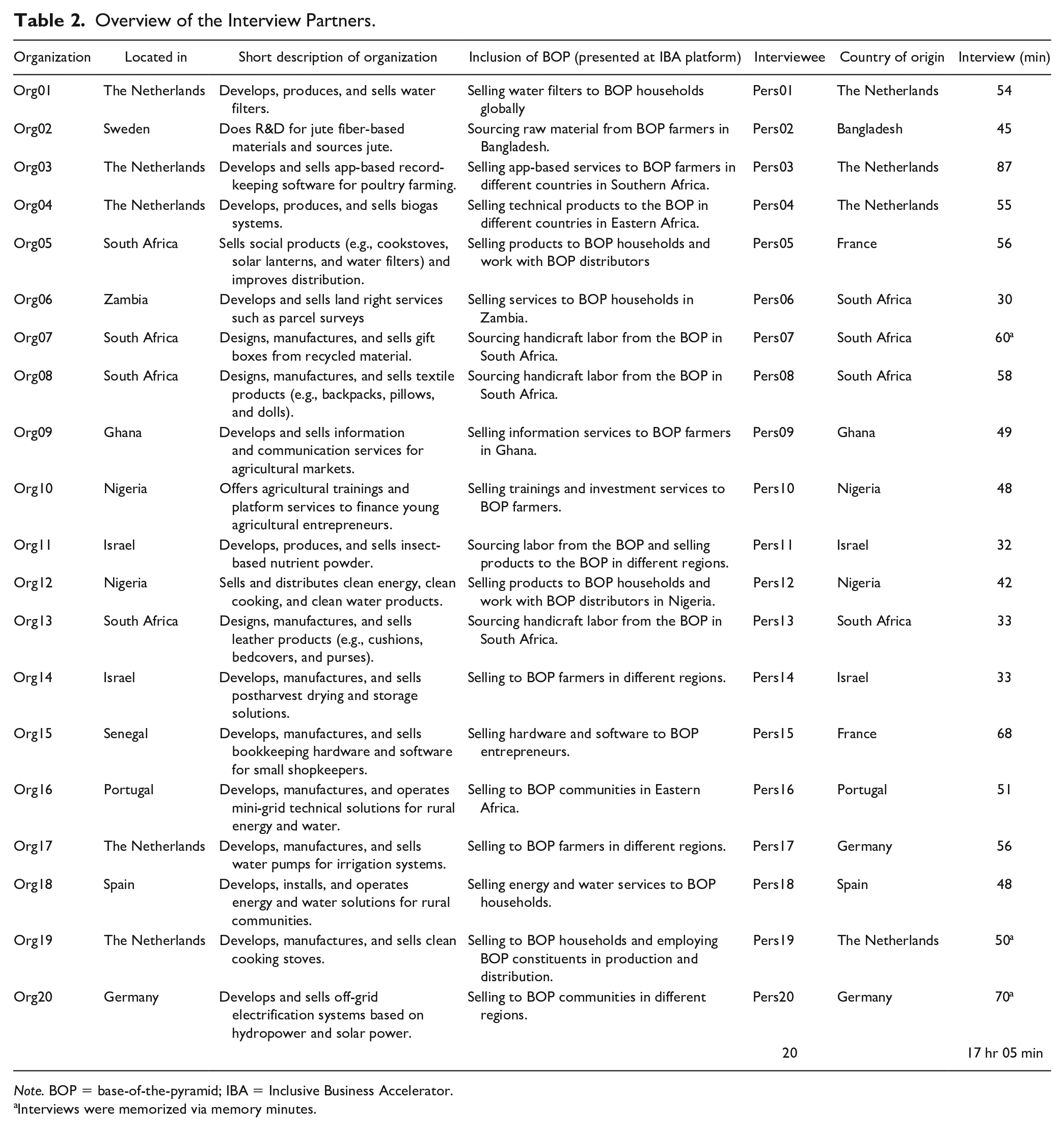
Note. BOP = base-of-the-pyramid; IBA = Inclusive Business Accelerator.
Interviews were memorized via memory minutes.
The interviewer used a semi-structured interview guide (Online Appendix A), focusing on open questions about the interviewees’ understanding of poverty and poverty reduction, the description of the BOP business model, and the perceived link between poverty and their business model. The interviewer asked broad and open questions to encourage the interviewees to talk freely about their opinions and experiences, thereby obtaining rich data for the analysis of cognitive frames and how the actors responded to tensions between profitability and poverty while implementing the BOP business models.
Responding to the call for a poverty-focused research perspective in the BOP debate (Dembek et al., 2020; Halme et al., 2012; Kolk et al., 2014; Paton & Halme, 2007), I focus questions and analysis on the poverty pole representing the goal duality in the BOP business models. To get unbiased responses about if and how tensions are perceived and responded to, I did not impose any definition of tensions on the respondents. I asked open-ended questions about how their business model worked and how it related to poverty reduction. This information was supplemented with information from organizations’ homepages and publicly available press articles to gain additional contextual insights on how the business models worked and what poverty-related aspects were emphasized.
Data Analysis
The data analysis went through several overlapping stages. I describe this as a linear procedure. However, the analysis was an iterative process of identifying surprises in the data and making meaning based on the literature. To address the research question about how corporate actors with different cognitive frames of poverty respond to tensions while implementing BOP business models, I first identified cognitive frames of poverty and, thereafter, grouped the respondents into categories. Second, I analyzed the perceived tensions between poverty and profitability for each category, how actors responded to these tensions in the form of adaptations of their business models and what consequences these responses had for the poverty impact of the respective BOP business models.
To identify cognitive frames of poverty, I developed cognitive maps. Cognitive maps represent a picture or visual aid in comprehending particular elements of a person’s thoughts (Eden, 1992, p. 262) or cognitive frames. Transcriptions of the interviews were prepared and studied based on the overarching themes that structured the interview guide (i.e., “poverty” and “poverty reduction”). As is the nature of inductive studies, the relevance of the perceptions of why poverty persists emerged from the data. As such, I added an overarching theme, “explanations for poverty.”
The code development was an iterative process of identifying remarkable content in the data and making meaning of those aspects based on an intensive literature review (Gioia et al., 2013), especially regarding different conceptions of poverty and explanations for poverty (Alkire et al., 2015; Chen & Ravallion, 2010; Feagin, 1972; Sen, 1999). The codes and codings related to each overarching theme were used as the elements to build cognitive maps for each interviewee (Hockerts, 2015; Ojastu et al., 2011). The cognitive maps contain content elements (What do the interviewees express to be relevant attributes associated with poverty?) and structural elements (Which kind of relationships do the interviewees implicitly or explicitly express among the content attributes?; Sharma & Jaiswal, 2018).
I compared the similarities and differences of individual maps to integrate them into collective maps; this method is used in other studies (e.g., Hockerts, 2015; Meyer et al., 2016). Thus, as an upfront finding, I developed two pairs of cognitive maps of poverty that differ in content and structure. The cognitive frames were compared with the literature again and largely corresponded with the different conceptualization of poverty presented by Bradshaw (2007) and Bradley et al. (2012).
Based on the upfront finding of four different cognitive frames of poverty, I analyzed the poverty alleviation aspects of the business models in the interview data and additional archival data. Some of the organizations revealed a certain degree of disconnection from the poor in their ongoing business models, though their initial business models—as presented at the IBA platform—were clearly formulated to address poverty. As such, the interview data were inductively coded with a focus on business model elements that connect or disconnect with poverty and contradictions the interviewees expressed. The organizations’ homepages served as an additional source to understand the organizations’ business models.
Next, I included more abductive elements (Mantere & Ketokivi, 2013) by drawing from the literature on tensions and responses to tensions, especially in the context of sustainability (Haffar & Searcy, 2019; Hahn et al., 2015; Jarzabkowski & Lê, 2017; Jarzabkowski et al., 2013). I coded the interview material specifically on the basis of which tensions between poverty and profitability were implicitly or explicitly mentioned, and which responses were found in form of the adaptation of different business model elements (value proposition, value creation and value delivery, value capture). Although I aimed to be specific regarding the tensions, I also assigned more generic categories regarding the type of tension and the type of proactive or defensive responses, as presented in Table 1 (Jarzabkowski & Lê, 2017; Smith & Lewis, 2011). Finally, I analyzed the consequences these responses had on the poverty impact of the business models.
The analysis of tensions and responses to tensions concentrated on four different groups of respondents (i.e., cognitive frame Types Ia, Ib, IIa, and IIb). I concentrated on homogeneities and differences among the groups to explore how different cognitive frames of poverty might shape the responses to poverty–profitability tensions. Interview questions and the first-order codes were not based on tension categories. This ensured that tensions that surfaced in the interviews were not inadvertently introduced by the questions asked. However, tensions and responses to tensions provided the second-order coding framework.
Findings
The findings of this study are twofold, corresponding to one upfront finding necessary to answer the research question and findings from the final analysis. First, I identify four different cognitive frames of poverty among corporate actors in the BOP context. Second, I analyze which tensions (i.e., based on the underlying tension between poverty reduction and profitability) are acknowledged during business model implementation, the proactive and defensive responses these tensions generate, and the consequences these responses have for the poverty reduction potential of the BOP business model. I focus on homogeneities and differences in the four groups of cognitive frames.
The Four Cognitive Frames of Poverty
The analysis of the individual statements on poverty and the creation of individual cognitive maps of poverty led to two pairs of cognitive frames: one pair with an understanding of poverty as a deprivation of capabilities (i.e., Types Ia and Ib) based on a more system-centric, macro-level approach to poverty that highlights the deficiencies of the environment; the second pair with an understanding of poverty as a mind-set (i.e., Types IIa and IIb) based on a person-centric, microlevel approach to poverty that highlights individual deficiencies. Each pair shares relevant content items, but their frames’ structures vary (i.e., the degree of differentiation and integration). One frame in each pair is more complex than the other. Online Appendix B summarizes the content, dominance, and structure of all the frames and offers representative quotes from which the frames are built.
Type Ia: Poverty as multidimensional capability deprivation
Type Ia cognitive frame of poverty shows similarities with the Bradley et al. (2012) conceptualization of “poverty as structural failing.” The frame represents a multidimensional conception of poverty. The frame’s content is not characterized by an economic alignment logic. It is not dominated by a specific dimension of poverty but refers to different capability deprivations, though it gives special attention to human capabilities in the form of basic needs (Organization for Economic Co-operation and Development [OECD], 2001; Streeten & Burki, 1978, p. 413). The content items relate to the economic, political, and social systems that cause people to have limited opportunities (Bradshaw, 2007).
The representatives of Type Ia do not solely consider market-based approaches as central for poverty reduction (with companies at the forefront) but advocate for a combination of measures and approaches with a variety of actors, including governments and NGOs. The Type Ia frame has more content elements and is characterized by a received high interdependence of the different dimensions of poverty and a plurality of potential relationships among them. It is compatible with the conceptualization of poverty as a complex, multidimensional construct that is prevalent among international organizations and academic debate (Alkire et al., 2015; United Nations, 2019; World Bank, 2018).
Type Ib: Poverty as economic capability deprivation
Type Ib cognitive frame of poverty shows similarities with the Bradley et al.’s (2012) conceptualization of “poverty as [economic] opportunity deficiency.” Types Ia and Ib both conceptualize poverty as the deprivation of capabilities. However, Type Ib presents the economic dimension as the dominant content element. The frame focuses on the depressed capabilities of the impoverished to earn an income, consume, and have assets (OECD, 2001).
Type Ib uses structural explanations to explain why a person suffers from economic capability deprivation (Bradshaw, 2007; Feagin, 1972). The explanations refer to income and asset-based aspects (e.g., the structure of earnings, the lack of resources for investments). Representatives of the Type Ib frame stress that it is not individual characteristics but the lack of economic resources that prevent the poor from changing circumstances. The improvement of economic capabilities is considered the most important means to overcome poverty. Representatives of the Type Ib frame call for market-based measures (e.g., facilitating higher income generation opportunities based on entrepreneurial activities and work). This stance reflects a less complex cognitive structure with fewer content attributes characterized by a clear alignment logic, which puts economic attributes first (Hahn et al., 2014, p. 466) and connects content elements with relatively clear means–ends relationships.
Type IIa: Poverty as a cultural mind-set
Types IIa and IIb are characterized by an emphasis on the individual characteristics of poor people as important content elements of poverty. Type IIa shows similarities with the Bradley et al. (2012) concept of “poverty based in cultural deficiency.” Representatives of the Type IIa frame describe the poor as having a “nature” or “culture” that is different from themselves (e.g., less intellectual, lower self-esteem, few ideas about how to change their situation). Type IIa mirrors some aspects of the so-called “culture of poverty paradigm,” which describes the poor as a more or less homogeneous group with similar values, beliefs, and attitudes that are socially generated (i.e., in poor communities over generations) but individually held (Bradshaw, 2007). There is no reliable empirical evidence to support this paradigm (Gorski, 2008). Representatives of this frame refer to the lack of imagination and courage of poor people to grasp income-generating activities as an explanation for why people are and stay poor.
Type IIa relates individual attributes to sociocultural capability deprivations through gender or class-related aspects (OECD, 2001). For example, this might be the difficult situation of underprivileged Black women in South Africa influenced by patriarchal cultural systems. Measures related to economic capability improvements such as labor-relevant skills acquisitions and earning an income are considered a vehicle for improving the self-worth of the poor, thereby changing the poverty mind-set. The microlevel, person-centered aspect of poverty as an important content dimension makes this frame significantly different from the system-centered, macro-level frames that focus on capability deprivation (i.e., Types Ia and Ib). Type IIa has a high degree of content elements with many connections among them, resulting in a frame of greater complexity.
Type IIb: Poverty as an individual mind-set
Type IIb cognitive frame of poverty shows similarities with the Bradley et al.’s (2012) concept of “poverty based in individual deficiency.” Types IIa and IIb share relevant content attributes. They both describe poverty as a specific mind-set shared by poor people. Type IIb includes content attributes such as passiveness, ignorance, and a lack of will. The respondents believe that poverty persists because of weaknesses of character and will and that most poor people could change their situation through hard work and smarter decisions.
In contrast to Type IIa, Type IIb does not include any structural or systemic explanations related to the ascribed individual deficiencies. Respondents prioritize two ways to reduce poverty: (a) market-based approaches such as hard work or entrepreneurial activity, which emphasize a person’s responsibility to contribute to the improvement of their situation; and (b) exposure to knowledge, which should direct the course of a person’s aspirations and initiate a change of mind-set. However, the ascription of negative individual characteristics of the poor is so dominant that representatives of this frame simultaneously doubt the efficacy of potential measures. The degree of differentiation and integration are low in the Type IIb frame, resulting in a simple frame of poverty as a mind-set.
Figure 1 outlines the relationship among the four different frames. Types Ia and Ib share relevant content attributes (i.e., poverty as capability deprivation), as do Types IIa and IIb (i.e., poverty as a mind-set). However, due to a higher degree of differentiation and integration, Types Ia and IIa are more complex compared with Types Ib and IIb, which are less complex and show clearer alignment logic. An overview of the interviewees and their respective affiliation to the identified collective poverty frames are in Online Appendix C.
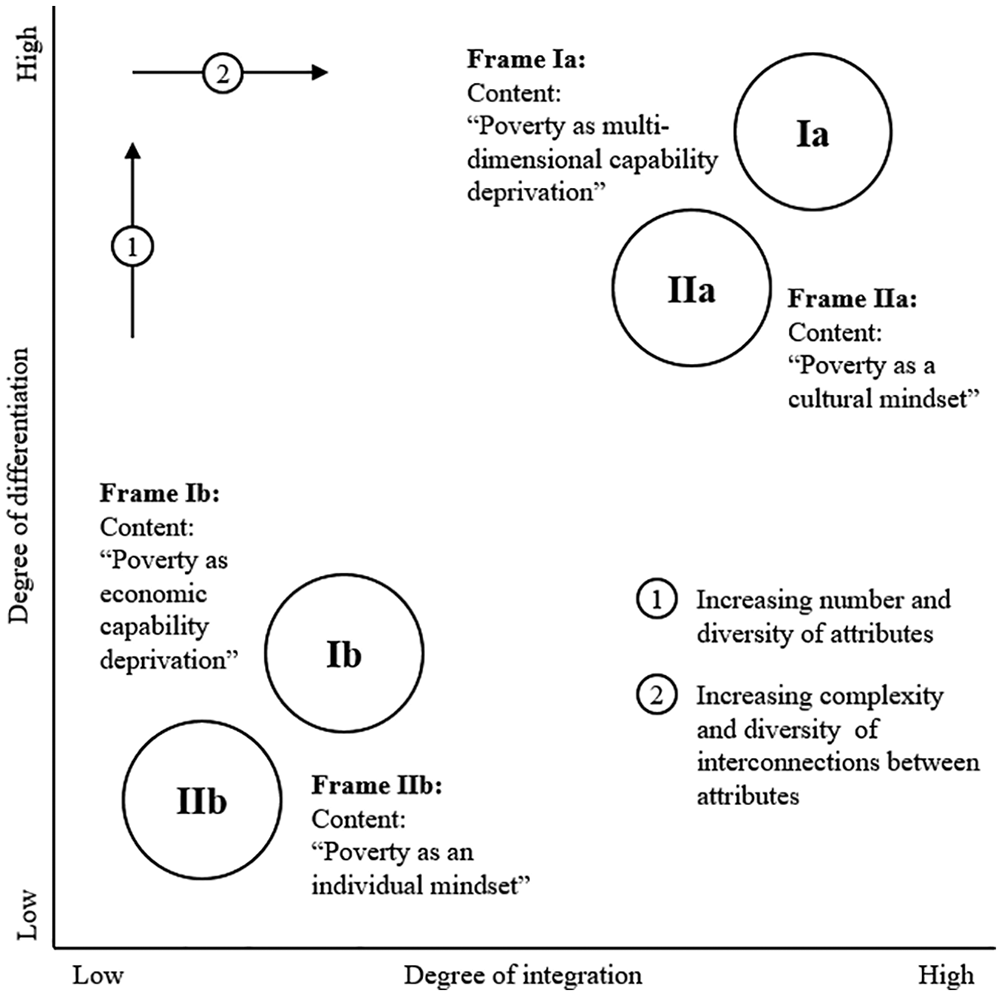
Relationship between different cognitive frames of poverty.
Responses to Tensions in form of BOP Business Model Adaptations
I present how corporate actors respond to tensions and how these responses affect the poverty reduction potential of their business models. I refer to the proactive and defensive responses to tensions presented in Table 1 and concretize responses taken as adaptations in business model elements. To better structure the responses to tensions, I refer to value proposition, value creation and delivery, and value capture elements of the business models. I focus on homogeneities and differences in the four different groups of cognitive frames.
Type Ia cognitive frame and responses to tensions
Conventional business approaches from mature markets seem inadequate to address the poor as clients or suppliers. By bringing the tension between conventional business solutions and poverty alleviation to the fore and critically discussing it, corporate actors found proactive responses in the form of new initial value propositions of the BOP business models. The developed value propositions of the respondents categorized as having a frame Type Ia “poverty as multidimensional capability deprivation” have the potential to reduce poverty by enhancing economic or human capabilities. Examples include products that directly influence the satisfaction of basic needs such as water filters or clean cooking solutions for improved health (Org01, Org04, Org05), fortified food for improved nutrition (Org11), products or services that enhance the productivity of the rural poor by connecting to the electricity supply (Org18, Org20), and increasing the productivity of smallholder farmers or fishers (Org09, Org14, Org15), who are in many countries poor in a multidimensional sense. Some also planned to include poor BOP constituents in value creation or value delivery parts of the business model to create new income opportunities (Org04, Org05, and Org11). The relationship between tensions acknowledged, the responses to tensions, and the potential impact on poverty of these responses are shown in Table 3.
Tensions, Responses to Tensions, and Consequences With a Cognitive Frame Type Ia.
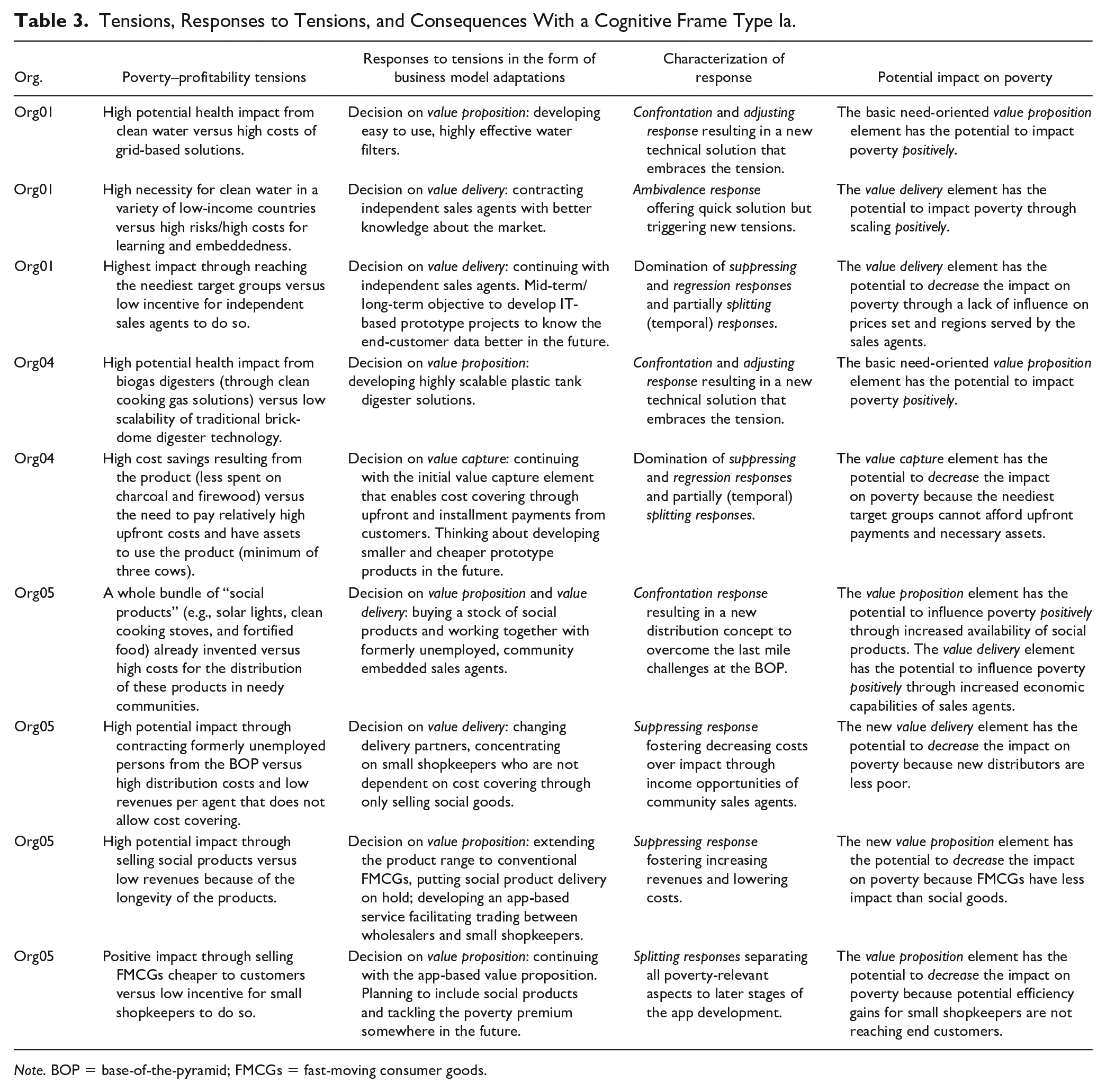
Note. BOP = base-of-the-pyramid; FMCGs = fast-moving consumer goods.
New tensions evolved when corporate actors defined and implemented further elements of the business model, that is, value creation, value delivery, and value capture elements. Many defensive, avoidance-based responses were reported by the group with a Type Ia cognitive frame. These defensive responses often implicated consequences that negatively affected the poverty reduction potential of the business model (see Table 3).
During business model implementation, respondents acknowledged the tension between having a potentially high impact by reaching many with the initial value proposition and the high costs and risks of shaping the value delivery element to selling directly to many clients in different markets. As Pers01 stated, “we realize we don’t know the market,” and Pers14 stated, “we thought that we’re going to sell units to farmers [. . .] And then we realized it, [. . .], we will not get too far.” In both organizations, ambivalent responses resulted in quick solutions but triggered new tensions. Org01 and Org14 both adapted the value delivery element of their business models and cooperated with independent profit-oriented sales agents. This response had the potential to positively affect poverty because local sales agents with better local knowledge and embeddedness can reach many customers in different markets. However, both interviewees mentioned that they did not receive much information about the end customers reached by the agents and only stayed in contact with a few of them. Pers14 outlines that his idea was for the middlemen who buys the small-sized drying and storage entities to provide services first to the poor, small-scale farmers. However, there is no information to verify if the middlemen do this. Similarly, Pers01 states as follows: That also comes with a few challenges to be honest because, once you start working with agents and distributers, you can’t force them for a certain price, really. And so we see quite some differences in countries, like what kind of price and what kind of target groups they hit and availability. (Pers01)
To know or assume that the independent sales agents are likely not fully reaching the target group for which the value proposition could have the biggest impact creates new tensions. Representatives of this group show avoidance-based responses to this tension, especially suppressing, repression, and/or splitting responses. They do not proactively adapt further business model elements. Org01 and Org14 continue with the value delivery system based on independent sales agents, thus fostering the profitability element of the tension. Pers01 prefers to consider the issue again at an undefined future time (i.e., temporal splitting): We do have a project where we have all the data from the customers available, So that is what—kind of where we want to move to. And we are looking into IT solutions right now, we’ve even—an app or something to set up—or whatever to get more insight. But we don’t have right now. We want to, but we’re not there yet. (Pers01)
Other respondents categorized as having a Type Ia frame also responded defensively to tensions that result from the fact that the value proposition would have the highest impact on specifically poor target groups but other customer groups create lower costs or risks for value delivery or are less problematic for value capture elements that invoke high upfront payments.
Org15, which invented a software-based bookkeeping solution knows that approaching the smallest and poorest traders in Senegal (e.g., fishmongers) would have the highest poverty impact because professionalized bookkeeping would result in efficiency and productivity gains and growth options based on facilitated access to credit with accounts in order. However, the customers who use the value proposition (i.e., bookkeeping kits composed of tactile stands for tablets, mini printers, and bookkeeping software combined with e-payment possibilities) are shopkeepers who do not belong to the poorest trading segment: So just in that sense, the business owners that we work with are not in the situation of poverty. (Pers15)
Pers15 expresses ambivalence and splitting responses to this tension. He mentions the plan to change the value proposition at some point in the future (i.e., to make the app applicable for several devices rather than specific tablets). Pers15 anticipates that when the download rates for the app increase in the future (temporal splitting), some of those downloads will be made by very small traders. Thus, poorer people would benefit from the product even without the need for Org15 to invest high amounts in customer care and delivery for this economically difficult segment (marginal compromise). However, the potential poverty impact of these defensive responses is not significantly high.
Furthermore, Pers04 states that Org04 aims to be affordable for poor people, but the actual customers reached do not belong to the poorest segment: Affordability is always one of our highest criteria. But we also know that with our digesters, with the price they have, it’s not possible to reach really poor people. So most—yeah, you have to have some cows, so you’re not really, really poor if you have a few cows. So that’s always also a bit difficult with the bottom of the pyramid. I don’t know. (Pers04)
Similar to Pers15, Pers04 finds splitting responses to these tensions. Org04 continues with the initial value proposition and with the same value capture element but consider addressing this tension more proactively in the future (splitting response): But I think, yeah, in the end, if you ask me personally, “Are we really reducing poverty with this product,” I think not yet. But the mission of the company is to improve lives of as many people as possible. So I can also imagine that we will in the future—actually, we already begun developing another type of biogas digester that can be sold at a cheaper price. So we can—that this design becomes available for less. We have people with less money than we have now. Yeah. (Pers04)
Org11 also does not reach the BOP segment for whom the value proposition was initially developed: I actually started by trying to explain to them that grasshoppers are in demand all over Africa, and we can help locals build their farms, and make a lot of money just doing that. However, just operating in Africa means risk to many investors. So eventually, we had to change—although this is the vision of the company, feeding the world and providing jobs and so on, we realized that in order to do the first step, we’d have to plan a less risky business. So what we did is actually plan a business where we develop and grow the grasshoppers initially in Israel, and sell them to the US market as an alternative protein. This enabled us to raise funds from investors. (Pers11)
Thus, Pers11 acknowledges the tension between the potential high impact on poverty from the value proposition element (i.e., protein intense insects for nutrition) and the value creation element (i.e., growing the insects with poor African farmers), with the high risks for investors. Pers11 decided to change the initially developed business model elements of the value proposition for the BOP and value creation by the BOP to consumption and production for and by people in high-income countries. This decision can be interpreted as a suppressing and splitting response, fostering the profitability pole for the moment and temporally postponing the problem of ensuring a positive poverty impact to a vague point in the future: We continue developing the new idea or the—let’s call it a developed-world idea. But this provides us enough funds and knowledge to continue developing the basic idea and eventually getting into Africa and providing the opportunities I mentioned. So it’s actually on our road map, but a later stage of development. (Pers11)
Pers05 initially founded a BOP business with a value proposition that aimed to improve the availability of social products (e.g., solar lamps, clean cooking stoves, and fortified food samples) for poor consumers while positively affecting poverty by working with formerly jobless young community members to distribute these products. It was difficult for Org05 and the distributors to cover costs and make an income because of the high cost of transporting stocks to the distributors and the longevity of the products that provoke no constantly recurring demand.
The responses from Pers05 to these poverty–profitability tensions were defensive. He changed the value proposition and value delivery elements extensively. He decided, first, to improve not only the distribution of social products but all kind of fast-moving consumer goods (FMCGs) and, second, to rely on an existing distribution network (i.e., informal convenience shops in townships known as “spaza-shops”) instead of working with formerly jobless people. This response fosters profitability over poverty tension (suppressing response). Pers05 thinks that the improved logistics for spaza-shop owners (i.e., facilitated comparison of wholesaler prices through an app-based service of Org05) could have long-term effects on the poorer township dwellers through decreased prices at the shops (i.e., a decrease of the poverty premium). However, the developed technical app-service does not currently foster such behavior. The social products are completely removed from the business model design, and the more impact-driven elements are postponed to the future (splitting response): So for the moment, we have absolutely no ways to try to drive the price down at the shop level. We are just driving down for the shop owners. And we basically kindly ask them to lower their cost, but I’m pretty sure none of them do it. [. . .] And let’s say in two, three years we want to be in 50,000 Spaza shops and have access to 140 wholesalers. [. . .] That’s not a social aspect of it, but once we cover these stores, we can actually start distributing the social products that are needed and that’s where we have a real social impact. (Pers05)
Instead, Org05 plans to benefit financially from the data generated at the spaza-shops because big FMCG companies are interested in learning more about their market shares in townships. Thus, over time, the poor slum dwellers developed from being the targeted consumers to part of the value proposition of Org05. This implies unclear and potentially negative consequences regarding the poverty impact depending on how the companies that buy the data make use of them.
In sum, in the group of frame Type Ia, the tensions that occurred after the development of the initial value proposition triggered a variety of defensive, avoidance-based responses that emerged as (re-)designed business model elements that have negative consequences for the poverty impact.
Type Ib cognitive frame and responses to tensions
Similar to the respondents from the group having a Type Ia cognitive frame of poverty, the respondents with the less complex Type Ib frame “poverty as economic capability deprivation” also showed proactive confrontation and adjusting responses while developing the initial value proposition of their respective business models. The value propositions all have the potential to reduce poverty. For example, the water pumps functioning on hydropower (Org17) have the potential to increase income and food security of smallholder farmers; the mini-grid solutions based on solar power, including water filtering technology, can increase human capabilities (i.e., health through water) and economic capabilities (i.e., through use of electric energy) for rural communities (Org16); the clean cooking stove developed by Org19 can increase human capabilities (e.g., reducing health issues from fire cooking) and economic capabilities through increased income by decreasing expenses on charcoal and firewood. Org02 wants to increase the economic capabilities of smallholder farmers through increasing sales possibilities of jute fibers (Table 4).
Tensions, Responses to Tensions, and Consequences With a Cognitive Frame Type Ib.
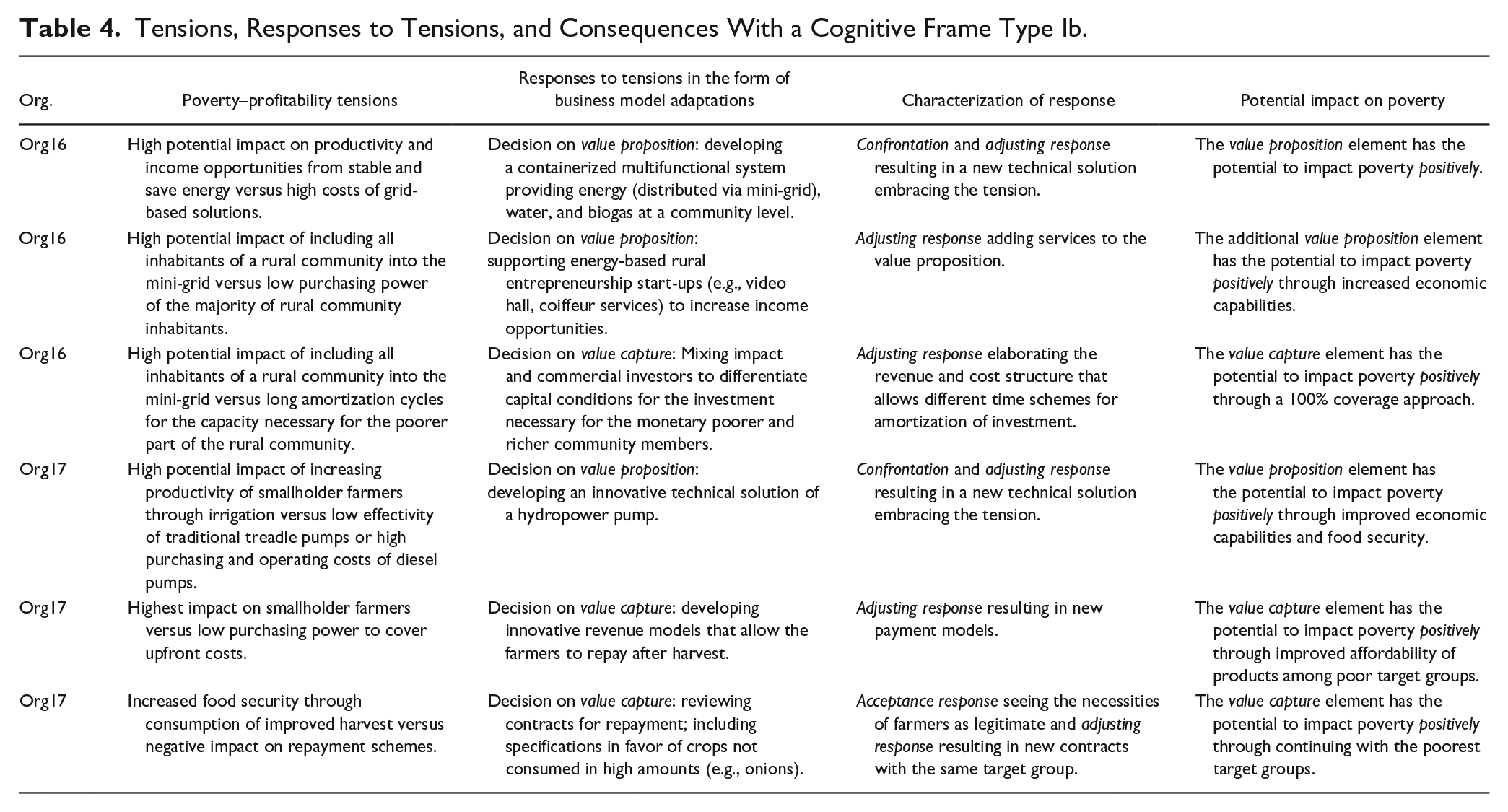
Proceeding from a value proposition for a BOP business model, new tensions evolved when implementing the business model. However, several proactive responses were found in the group with Type Ib frames to handle the upcoming tensions.
For Org16, the value proposition of installing an integrated clean energy and water solution for a whole rural community, thereby connecting everyone in a village to the mini-grid, was at odds with the very low income of most inhabitants: Fifty-five percent of the community is what we call low-income households, right? [. . .] The low-income customers really complicate it. [. . .] The easiest thing to do is say, “Hey, we’re going to do smaller systems, focus on the mid- and high-income customers. And some time in the future, the low-income customers may have more money we’ll connect with.” And our focus is absolutely not that. It’s about connecting 100 percent of the customers. (Pers16)
Pers16 found proactive responses to handle this tension instead of suppressing the poverty pole or splitting it temporally to a non-defined future. Pers16 did two things that can be interpreted as adjusting responses. First, Org16 combined the value proposition of connecting the community to electricity with initiating new income-generating business activities for the community based on existing electricity (e.g., haircutting services, a video hall). Thereby, Org16 tried to increase the economic capabilities of the whole community to increase the chances of satisfying payback schemes. Second, Org16 approached both impact investors and commercial investors to enable a differentiated value capture element. Org16 tried to use commercial funding to achieve the electrical capacity necessary to satisfy high-income and mid-income customers and long-term impact investors to finance the capacity for low-income customers. The extended value proposition and the balanced value capture element, which can be interpreted as proactive adjusting responses, make it possible to stay connected to the initially envisaged target group.
Org17 developed a hydropower-based pump, which enables land irrigation of smallholder farmers alongside rivers and canals without operating costs. Pers17 acknowledged the tension between the potentially high impact of the product on smallholder farmers with low purchasing power and the need to cover the relatively high unit cost per pump. Although Org17 initially cooperated with some commercially oriented independent sales agents, Pers17 soon realized that these actors did not address affordability. As a proactive adjusting response, Org17 developed new value capture elements, which enabled farmers to receive the pump without any upfront costs, instead repaying Org17 through a defined share of the following harvests (approximately 10%–20% of revenues). This new value capture element was combined with an enhanced value proposition that provided the farmer with qualitatively better seeds and fertilizers to ensure relevant increases in their yields. This proactive response enables Org17 to stick with poorer target groups and thereby maintaining the potential poverty impact of the product.
Nevertheless, Pers17 experienced new tensions. Amortization calculations for the new payment scheme were based on an assumed increase in crop yield and resulting revenues from the market sales of vegetables. The crop yield did increase as calculated; however, the resulting cash generation was far lower because the involved farmers ate relevant parts of the harvest to satisfy the basic needs of their families. Pers17 experienced this as a strong tension between ethically supporting basic needs satisfaction (i.e., hunger as a severe form of poverty) and the need to justify investment commercially. Org17 proactively responded, recognizing that both poles are important, and contradictions are a natural condition of work. Instead of departing from the target group to avoid tension, they discussed new ways to design the agreement: Well, we found out after the first run that there are other plants that are not—that are not so largely consumed, namely onions. And they were sold at considerably higher prices at the local market. And that it makes much more sense for the people to sell these products than to consume them themselves. And then there will be a win-win situation for both sides. (Pers17)
Org19, which developed a clean cooking stove based on a solar-biomass hybrid technique that enabled healthier and less cost-intensive cooking activities, showed proactive tension handling as well. Pers19 acknowledged the tension between lowering risks and investment in value delivery elements, for example, by cooperating with independent sales agents, and the conviction that such middlemen had a high interest in increasing their personal margins through skipping the poorest and most rural target groups and that these agents often cannot offer credit options. Unwilling to dominate or override poverty or profitability poles of this tension, Org19 invested in adapted value delivery and value capture elements of the business model by employing a sales force and installing in-house credit schemes for the end customers. Price and repayment quotes are calculated on costs saved for coal, paraffin, or firewood. Furthermore, the stove itself worked with commercial biomass pellets and collected materials (e.g., manure, rests of corn cobs). Thus, operating the product does not require any assets (in contrast to the product of Org04) and enables the integration of poor rural customers. Pers19 found many proactive responses to handle different tensions and was not willing to split or suppress any of the poles that provoked tensions.
In sum, in respondents categorized as having a Type Ib frame, I observed that the respondents gave multiple proactive responses for tensions that occurred during business model implementation. The respondents showed a strong willingness to continue with the initial target group. Thus, the potential of the business model to positively affect poverty was maintained. It remains to be seen if proactive tension handling will result in profitability as well.
Type IIa cognitive frame and responses to tensions
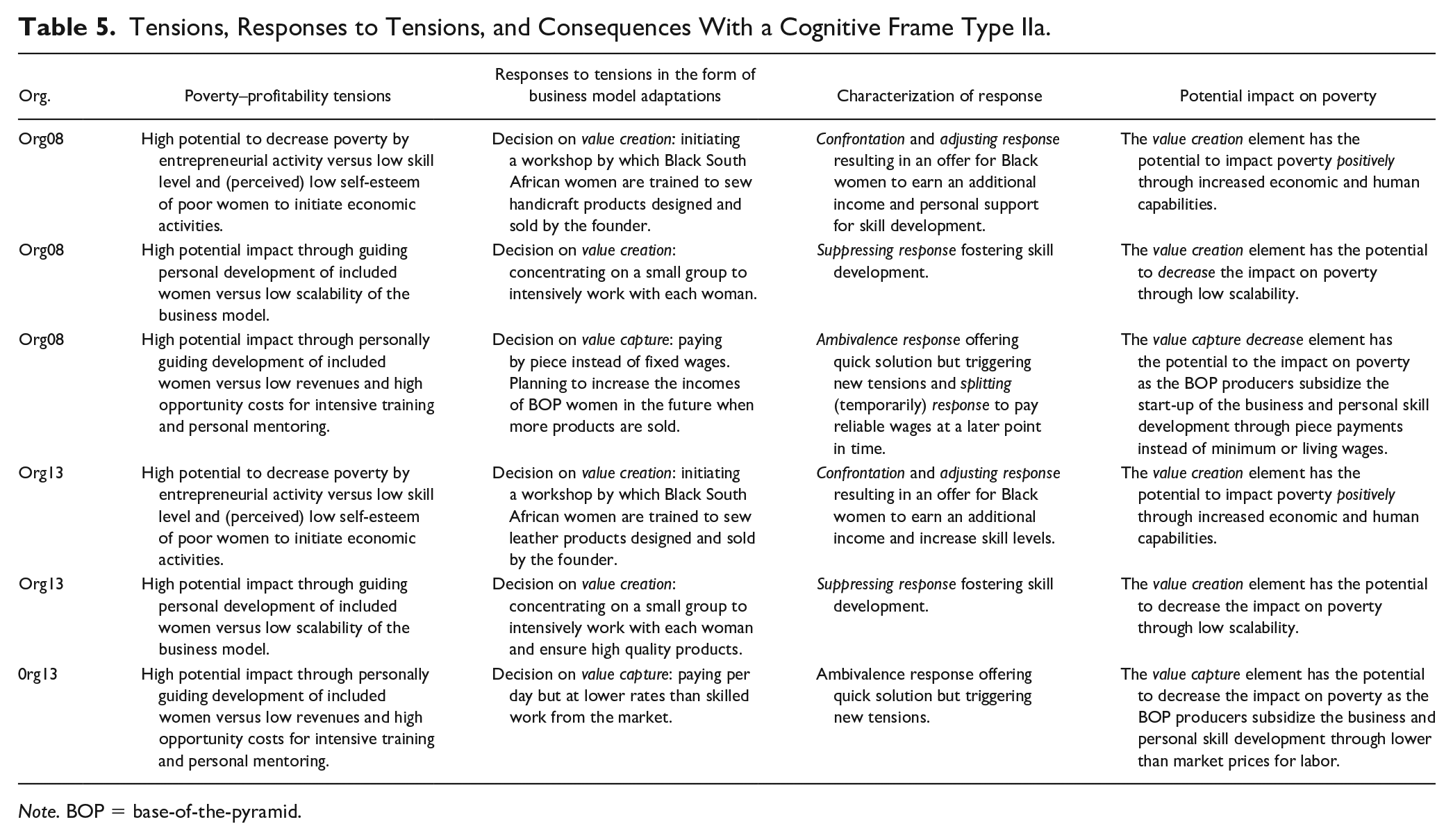
All respondents with a Type IIa cognitive frame of “poverty as a cultural mind-set” developed a business model that combined training of the BOP constituents with using their labor for profitability. For example, Org7, Org8, and Org13 train poor women in handicraft labor and sell their outputs; Org10 trains young people in farming techniques and gains by brokering investors with the farmers (Table 5). The training element is meant to affect the human and sociocultural capabilities of the poor because the respondents perceive the poor as having low self-esteem, low imagination to envision possibilities, and a low skill level. The labor element is thought to increase the economic capabilities of the poor. The development of this value creation element can be interpreted as a proactive response to the tension between poverty and profitability.
Tensions, Responses to Tensions, and Consequences With a Cognitive Frame Type IIa.
Note. BOP = base-of-the-pyramid.
Focusing on the individual development of poor people as part of the business model induces further tensions for Type IIa respondents. For example, respondents acknowledged a tension between the impact of intensively training people with technical skills and encouraging them to take responsibility and advance their skill levels, and the ability to reach many trainees. For example, Org7, Org8, and Org13 have a dozen or fewer poor women to produce the products sold. Pers07, Pers08, and Pers13 promoted the continuation of working intensively with that small group, thereby fostering a secure quality and tight assistance but overriding growth potential (suppressing response).
Another tension that the business model revealed was the tension between the need to cover the costs that occurred through intensive mentoring and training of the laborers included in the project (e.g., opportunity costs of the time invested by the founder) and the potential to affect poverty through fixed and reliable wages. The tension between the level and predictability of wages paid and the profitability of the business model was defensively handled through capping the payment of labor. None of the businesses employed the women who produced handicraft items as fixed wage employees. Instead, the women were self-employed and paid piece rates or a day wage: It’s not a salary. It is a stipend, if you want to call it that. So we’re working toward we would be able to afford to give them a cyclical amount per month, automatically. Look if they’ve been sick and they couldn’t work, then I have been paying them. That’s what I call a sympathy stipend. [. . .] So long term, it would be to create enough income for them to be able to get a set stipend and to start looking at their additional needs, like they are all housed, but I want to look at a pension fund maybe. (Pers08) I want to make money as well, but for me, it’s empowering people. And we can’t—if I have to appoint somebody from outside, I won’t be able to afford it. So the objective for me is to get people trained because I have a problem. I don’t have skilled workers. So I train them exactly the way I want them to do my work. That is also one of my main objectives. (Pers13)
The tension was repressed (i.e., blocking the awareness of the tension), split (i.e., to an undefined future time), or handled ambivalently, referring to a marginal compromise because any income would improve the economic capabilities of the poor, independent of its relationship to minimum or living wages.
In addition, in Org10, I observed a tension between the impact through the additional income of the poor and the amount of income as a cost factor or foregone income of the BOP business. Org10 trains young jobless graduates in agricultural techniques, pools them in virtual production clusters, and connects these clusters to commercial investors who prefinance assets for one season. The funds facilitate additional income for formerly unemployed youth and increase the productivity of already producing smallholder farmers, thereby increasing the economic capabilities of the BOP constituents. However, the value creation element of the Org10 business model defines that, when the crop of the cluster is sold after the season, the investors get 50% of the profits, Org10 gets 25%, and the farmers receive the remaining 25%. The share the farmers get determines the poverty impact, and it seems that the ascribed 25% is not high. However, Pers10 was blocking this tension because the distribution aspect in the value capture element was not given prominence, only that the absolute income could increase for the target group.
In sum, in the group of frame Type IIa, proactive tension handling led to the initial business model of combining training and labor, which has the potential to affect poverty positively. However, corporate actors responded defensively regarding the tensions between the impact per person and scaling. The domination of individual training during value creation can decrease the potential impact because few people are benefiting. Furthermore, people in this group responded defensively (e.g., repression, splitting, and ambivalence) to the tension of determining the costs part of the value capture element of the business model. Conditions for paying labor at the same time define the extent of increased economic capabilities of the poor and the costs to be covered from revenue streams. Thus, the distributional aspect of the value capture element is crucial but not proactively addressed by the respondents.
Type IIb cognitive frame and responses to tensions
Respondents with the simpler Type IIb frame “poverty as an individual mind-set” ascribed individual characteristics to the poor, similar to Type IIa. However, the business models of the representatives of the more complex Type IIa frame aimed to compensate for structural conditions, which they believed were responsible for the decreased sociocultural capabilities of their target group. In contrast, respondents of Type IIb believed a main source for poverty was a lack of personal effort and discipline or deficient decision-making.
Org03 developed a mobile app that enabled improved data management of poultry farmers to detect cost-saving opportunities for farmers in Southern Africa. Org10 aims to establish a better distribution system for renewable energy products (e.g., solar lights, solar home systems, and cooking stoves) in rural regions of Nigeria with the help of female micro-entrepreneurs (Table 6). The initial value propositions have the potential to decrease poverty (i.e., through improved economic capabilities of app users and distributors and increased capabilities of energy product users) and emphasize the entrepreneurial activities of poor agents. It can be interpreted as a proactive response to the overarching tension between poverty and profitability.
Tensions, Responses to Tensions, and Consequences With a Cognitive Frame Type IIb.
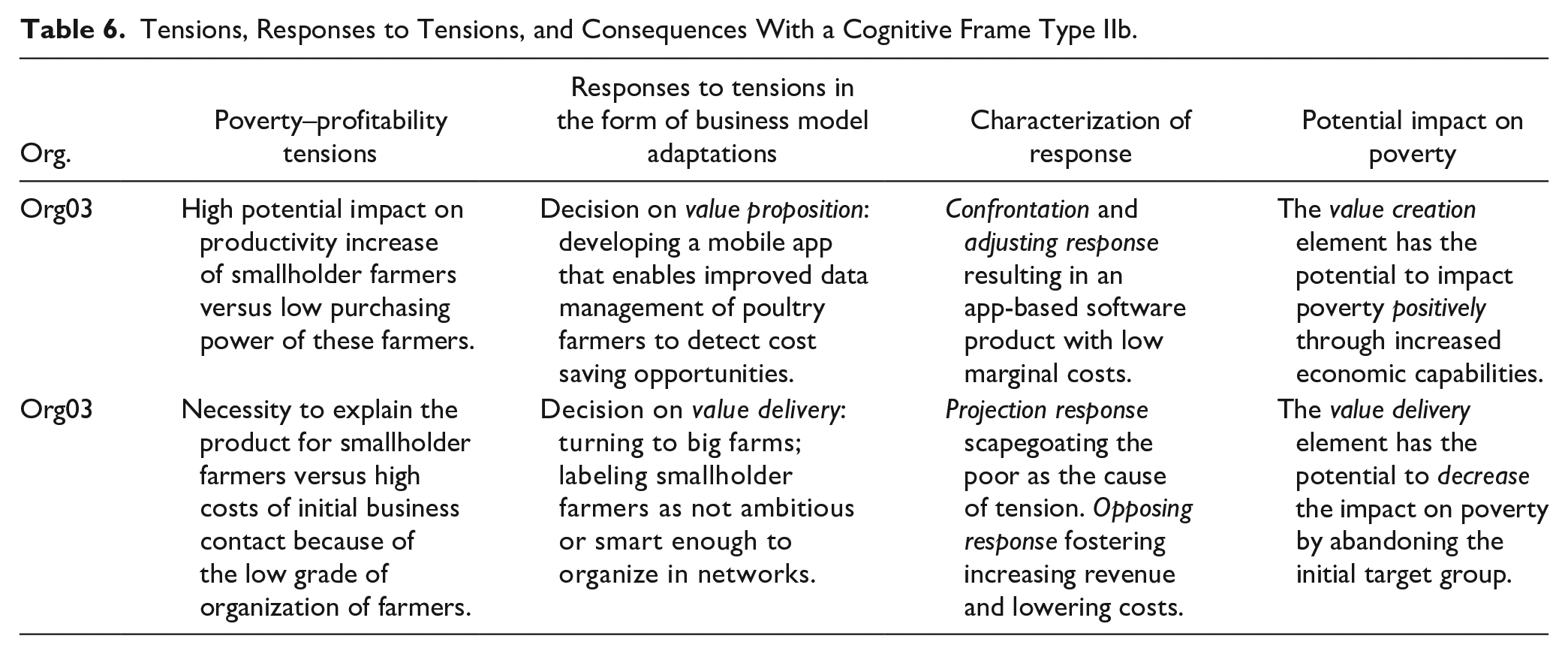
Regarding the tensions that evolved during business model implementation, Org03 stands out. Org03 experienced tensions between a need to explain the function and advantages of the developed product that justify the subscription model and the target group to which the product could have the most impact: I’ve sat down with a [small holder] couple [. . .] and I showed them, and let’s say in half an hour we can put in a month’s worth of data. So if you do it every day, then it might take you five minutes a day, [. . .] If you’re not willing to invest five or 10 minutes a day in your primary business, then you should think of doing something else. So—but the African mentality is a bit, is funny, in the sense that if it is not delivering mountains of gold tomorrow, you run a very big risk of them stopping using your product. (Pers03)
Pers03 showed strong projection responses, transferring the tension acknowledged to the reputed deficient character of the poor as a scapegoat. According to Pers03, the poor “should start arithmetics,” they should stop telling “bullshit-stories” about the difficulties of organizing in cooperatives, they should “shape up their business” instead of feeding five chickens “as a hobby.” He concludes as follows: But if people don’t want to be helped, I’m not going to change the world. [. . .] I’m not going to sit on my horse like Don Quixote and hope that things change. (Pers03)
Assuming that the poor will not change their behavior, Pers03 adapted the value delivery element. He completely abandons the initial target group and exclusively focuses on big businesses. This behavior can be interpreted as an opposing response that only addresses profitability to the exclusion of the needs of the poor: Actually I’m talking now to bigger partners. I’m trying to organize more or less the same thing, but through working together with feed companies . . . because they have a vested interest in these things going well as well. So in that respect we’re a bit more on the same side. [. . .] So that is more my way of going ahead because there will never be enough time to let’s say visit all the individual farmers, so we’re not going to bother. (Pers03)
In sum, I only observed a strong defensive projection and opposing response in the group with Type IIb frames. One respondent showed a strong penchant for scapegoating. Pers03 transferred many conflicting elements as the responsibility of the poor themselves. Pers03 did not even consider temporally splitting the tension and somehow reconnecting to the poor in the future. Even if these responses were not observed at Org12, I interpret these strongly defensive responses as specific to Type IIb because these responses are facilitated through the cognitive frame that is dominated by the weak and negative characteristics of the poor.
Figure 2 synthesizes the findings of this study. Corporate actors in BOP businesses are confronted with poverty–profitability tensions. They respond to these tensions by adapting business model elements. Some tension responses can be interpreted as proactive with a positive influence on the potential poverty impact of the BOP business models. Other tension responses can be interpreted as defensive and avoidance-based, which decreases the potential positive impact on poverty.
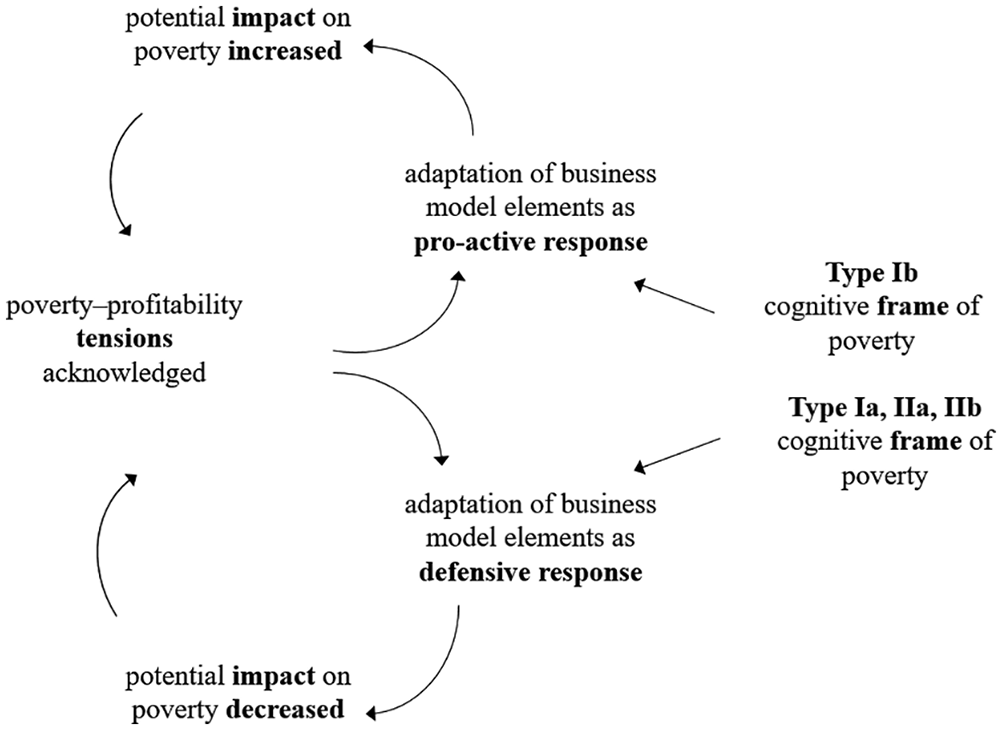
Tension handling in BOP businesses.
Many of the respondents with the more complex cognitive frame of poverty as multidimensional capability deprivation (Type Ia) show defensive responses that resulted in a decreased effect on poverty because of a divergence from the initial target group. The group of respondents with the simpler cognitive frame of poverty as economic capability deprivation with a clear dominance of economic attributes (Type Ib) showed more proactive responses to poverty–profitability tensions. Their adaptations to business model elements aimed to retain business relations with the poor. The group of respondents with a cognitive frame of poverty as a cultural mind-set (Type IIa) proceeded with the initial target group of value creators but limited the potential impact on poverty through decisions on scaling and loan payments. A cognitive frame of poverty as a personal mind-set (Type IIb) encouraged avoidance-based responses that scapegoated the poor and limited the potential impact on poverty.
Discussion
The findings of this study have theoretical and practical implications. First, this study contributes to the literature on tensions and responses to tensions in the broader context of corporate sustainability. Second, it contributes to the literature on managerial cognitive frames and their effect on society. Third, it has implications for practitioners in the BOP setting.
Theoretical Implications
First, this study contributes to the growing literature on tensions and responses to tensions resulting from hybrid settings in corporate sustainability (Battilana & Lee, 2014; Hahn et al., 2015, 2018; Joseph et al., 2020). Hahn et al. (2018) identified a need for research about the descriptive aspects of how firms respond to tensions in sustainability, the instrumental aspects that address the consequences of tension handling, and the normative aspects that emphasize tensions in sustainability instead of win-win scenarios. This research contributes to all three aspects.
In the specific context of BOP ventures, I descriptively specify poverty–profitability tensions that occur during business model implementation and the proactive and defensive responses taken by corporate actors. I confirm the usefulness of the generic categories of proactive and defensive tension handling and the specification of different responses in each category presented by other researchers (Jarzabkowski & Lê, 2017; Jarzabkowski et al., 2013; Lewis, 2000; Smith & Lewis, 2011). I also concretize responses to tensions as adaptations of business model elements. Thus, this study contributes to the emerging literature that combines the perspective of tensions in hybrid settings with a business model logic (Davies & Chambers, 2018; Davies & Doherty, 2019; van Bommel, 2018).
Regarding the instrumental perspective, the study highlights that corporate actors take many defensive, avoidance-based responses over time that decrease the potential poverty impact of BOP business models. This happens notwithstanding the clear initial goal duality of contributing to poverty reduction and securing profitability with innovative, original value propositions that have a potential positive poverty impact. The adaptations of business model elements that can be interpreted as defensive or avoidance-based responses—which decrease the potential poverty impact of BOP business models—are (a) value delivery elements that rely on independent sales agents who do not have high incentives to serve the poorest target groups, (b) value capture elements that include high upfront payments, and (c) value creation elements that combine the skill development of poor laborers with low and unsecure loan payments.
Regarding the normative aspects of research on tensions and responses to tensions, this study contributes by focusing on the poverty pole constituting the poverty–profitability tension inherent in BOP ventures. According to Hahn et al. (2018), research on tensions creates leeway for the full consideration of the intrinsic value of multiple sustainability issues beyond simple business cases and offers a platform for the normative debate of the role of business for sustainable development. The variety of responses by corporate actors in BOP ventures that decrease the potential impact on poverty emphasizes the difficulties of finding profitable solutions to the many challenges of poverty.
This indicates that companies are far from replacing conventional actors aiming at poverty reduction, such as NGOs and public entities. This study supports critical views on businesses improving poverty at the BOP on a large scale and scope (Blowfield & Dolan, 2014; Chatterjee, 2014; Dolan & Rajak, 2018; Karnani, 2017). The focus on tensions and responses to tensions further contribute to a poverty-focused research perspective in the BOP claimed by several authors (Dembek et al., 2020; Halme et al., 2012; Kolk et al., 2014).
Second, this study contributes to the cognitive perspective in corporate sustainability. This study challenges the findings of several empirical studies that indicate a positive relationship between more complex cognitive frames of sustainability and a greater social impact of organizations (Crilly & Sloan, 2012; Gröschl et al., 2019; Haffar & Searcy, 2019; Hockerts, 2015; Wong et al., 2011). These scarce empirical results might have implied that a complex frame of poverty as multidimensional capability deprivation, aligned with the status quo of the international development debate, encourages embracing upcoming tensions and recognizing poverty alleviation as equally important to profitability during the whole process of business model design and implementation.
In contrast, corporate actors with the most complex frame of poverty, Type Ia, made several defensive responses that suppressed the poverty pole of BOP inherent tensions and decreased the potential impact on poverty. Furthermore, corporate actors with a simpler, economically aligned frame of poverty, Type Ib, responded proactively by adapting business model elements several times, enabling them to stay connected with the poor. If only taking Types Ia and Ib into account, our study seems to support the conceptional proposition developed by Hahn et al. (2014). It suggests that corporate actors with a frame of simple structure and a clear economic content focus are more likely to adopt a pragmatic stance on sustainability issues that enable impactful, working solutions (Hahn et al., 2014, p. 477).
However, this study’s findings stress that a dichotomy of one simpler and one more complex managerial frame of sustainability does not adequately explore the consequences of cognitive frames on societal impact. The discovered two pairs of cognitive frames of poverty elucidate this circumstance. In the case of the macro-oriented perspective on poverty as capability deprivation (Types Ia and Ib), the simpler frame with a clear economic alignment focus builds a better condition for making decisions that have a positive impact on poverty. In contrast, in the case of a micro-oriented perspective on poverty as a mind-set (Types IIa and IIb), the more complex frame that partially includes contextual factors build a better condition for impactful decision-making. This finding highlights that not only the structure of cognitive frames expressed in the dichotomy of the “business case frame” and the “paradoxical frame” is important but also that the content of the frames matter, especially for complex and controversially discussed aspects of sustainable development, such as poverty.
Implications for Policy and Practice
The findings of this study have implications for actors in the BOP context. First, it should be critically emphasized that several of the participants in this study hold a cognitive frame of poverty as a mind-set, which is not congruent with the scientific debate about poverty (Alkire et al., 2015; World Bank, 2018). A “culture of poverty paradigm” is not backed by empirical evidence (Gorski, 2008). It might be true that poor people sometimes make short-term decisions. However, this behavior is explainable through circumstances of living rather than character (Banerjee & Duflo, 2012). The strong focus on ascribed weak characteristics of the poor as a more or less homogeneous group is a gateway for paternalistic approaches, or even for racist reflections, as has been recognized with respondents categorized as Type IIb. Reficco and Gutiérrez (2016) found that the attribution of negative characteristics to “the poor” as a mainly homogeneous group can impede a successful implementation process of BOP business models. Thus, from a normative and an instrumental viewpoint, support programs for BOP businesses should include formats to discuss different conceptions of poverty and sensitization-building formats for the living conditions of poor people.
Second, although the findings of this study indicate that the development of a new product or service (i.e., a new value proposition) with a potentially positive impact on poverty is necessary but no sufficient condition for realizing a positive impact on poverty. Many of the described tensions did not occur until the factual implementation of the BOP business models. The business model logic with its components of value proposition, value creation and delivery, and value capture (Teece, 2010) can help confront corporate actors with potential poverty–profitability tensions, even before they occur, and discussing potential proactive responses.
Third, the findings suggest that a strong focus on the economic dimension of poverty might be beneficial to find proactive responses to tensions. However, it is important to emphasize that the exclusively one-dimensional consideration of poverty does not comprehensively portray the life situation of poor people. It will always illuminate only particular aspects, perhaps those that are more adequate for business-led approaches. Thus, even though this research suggests that a complex cognitive perspective on poverty might not be an assurance for finding proactive responses to poverty–profitability tensions, this should not be interpreted as a subordination of a multidimensional and complex interpretation of poverty in general. Instead, it indicates that business-led approaches can only be one approach to poverty reduction. Further actors, such as governments or NGOs, are challenged to tackle poverty in all its forms.
Conclusion and Outlook
This article offers new insights about the cognitive frames of poverty held by corporate actors in BOP businesses and how corporate actors with different cognitive frames of poverty respond to tensions while implementing BOP business models. Regarding the limited scale and scope of this study’s data and potential interpretation bias from the single author, future research should verify the four cognitive frames and their implications for tension handling in BOP business models. In addition to that, the results point to various directions for future research. This study showed that adapting business model elements in response to tensions triggered new tensions that required further responses. Future research might extend these insights with a methodological approach that takes a process perspective (Langley et al., 2013; Langley & Tsoukas, 2016).
The observed differences and similarities in responses to poverty–profitability tensions in the four groups of respondents were interpreted in light of the cognitive frames of poverty hold. These interpretations are backed by the argument of Hahn et al. (2014, p. 476), who reason that different cognitive frames will lead managers to adopt different decision-making stances. This predisposition is relevant to the sample’s focus on founders and strategic decision-makers in small BOP businesses. However, when interpreting responses to tensions, context also matters. The interrelationship between a person’s cognitive capacity and the social and physical environment in which a person acknowledges and responds to tensions might be of interest for further research, especially in larger companies.
The four concrete frames of poverty observed in the sample are an important contribution to concretize the cognitive perspective in the BOP context. Further research in the realm of cognitive perspectives and BOP should apply these concrete cognitive frames, beyond the dichotomy of the business case and paradoxical frames, because the poverty–profitability tension is decisive for the BOP approach. Furthermore, there are other partial aspects of sustainable development that are controversially discussed and not consistently defined, such as diversity or equity. Future research might precisely observe the cognitive frames of these phenomena. Antecedents for building a specific frame and a dynamic perspective on how these frames might change and its consequences for tension handling were beyond the reach of this study. However, these aspects could be the focus of future research.
Supplemental Material
sj-pdf-1-bas-10.1177_0007650320975184 – Supplemental material for Cognitive Frames of Poverty and Tension Handling in Base-of-the-Pyramid Business Models
Supplemental material, sj-pdf-1-bas-10.1177_0007650320975184 for Cognitive Frames of Poverty and Tension Handling in Base-of-the-Pyramid Business Models by Jordis Grimm in Business & Society
Footnotes
Acknowledgements
The author thanks the special issue editors and the four anonymous reviewers for their constructive feedback and guidance, from which this article greatly benefited. The author is also indebted to all the interviewees who invested their time and shared their insights.
Declaration of Conflicting Interests
The author declared no potential conflicts of interest with respect to the research, authorship, and/or publication of this article.
Funding
The author received no financial support for the research, authorship, and/or publication of this article.

Supplemental Material
Supplemental material for this article is available online.
Notes
Author Biography
References
Supplementary Material
Please find the following supplemental material available below.
For Open Access articles published under a Creative Commons License, all supplemental material carries the same license as the article it is associated with.
For non-Open Access articles published, all supplemental material carries a non-exclusive license, and permission requests for re-use of supplemental material or any part of supplemental material shall be sent directly to the copyright owner as specified in the copyright notice associated with the article.
