



Abstract
Galleries and museums increasingly value participatory learning for its ability to foster deeper audience engagement, yet many lack clear frameworks to implement it effectively. The National Gallery of Australia and the University of Canberra undertook a 15-month collaboration to develop a participatory learning framework tailored to the National Gallery’s unique context. This research demonstrates that practice-based inquiry and participatory approaches can generate inclusive, context-specific models of education and professional learning within cultural institutions. Central to the project was a series of six full-day workshops that combined qualitative inquiry, participatory action research, and practice-based methods of co-creation. The workshops engaged the Gallery’s interdisciplinary Learning Team to build pedagogical capacity, strengthen collaboration, and articulate a shared set of teaching values. Participants were positioned as co-researchers, contributing insights through reflective practice and practice-based activities. The resulting framework outlines pedagogical principles and aligned teaching strategies to support participatory learning across the Gallery’s programs.
Keywords
Introduction
Education in museums, galleries, and cultural institutions has shifted from transmission to participation and from explanation to experience. In this evolving landscape, the National Gallery of Australia (NGA) partnered with the University of Canberra (UC) to co-create a new pedagogical framework for learning. Over 15 months (2024–2025), researchers from the Faculty of Education at UC and the National Gallery’s Learning Team, which includes the Artist Educators who deliver all the programs, worked together, to build an approach that reflects Australia’s unique cultural context and supports inclusive, creative, and relational ways of learning with art. This article outlines why the project was necessary and the methodologies it adopted, focussing on the practice-led approach through a series of workshops, which will be further explored in the discussion.
The project arose from a shared recognition that traditional models of museum education, inherited from European systems, cannot fully respond to Australia’s distinct cultural and historical context. The Gallery’s existing education practice had developed in ad hoc ways and in response to varied influences and leaders over several decades. An initial survey of existing practices underscored the need for a context-specific, intentional approach to education at the Gallery. The Gallery’s mission, as articulated in the NGA Corporate Plan 2024–2025 (National Gallery of Australia, 2024), affirms its commitment to engaging the public with the National Collection in impactful ways and to demonstrating leadership through the adoption of innovative, research-informed learning strategies.
The project originated through a dialogue between the UC Researchers and senior members of the Learning Team, exploring how to develop a cohesive and contextually relevant approach to learning that draws upon current scholarship in museums. Each year, the Gallery welcomes approximately 50,000 students onsite and engages a further 10,000 through online programming. The new pedagogical framework needed to be flexible enough to accommodate the demands of such large-scale participation, while still offering depth, relevance, and innovation in the educational experiences provided.
The development of this framework was built on, and needed to align with, existing initiatives already embedded within the Gallery’s education practice. Art Through Culture was developed by First Nations educators for the Gallery (National Gallery of Australia, 2025). This framework provided an essential foundation for working respectfully with First Nations knowledge and art. Grounded in cultural protocols and a commitment to amplifying artists’ voices, the approach has been central in countering cultural appropriation and embedding ethical engagement with First Nations peoples and culture across the Gallery’s onsite, offsite, and online programs.
Central to this research project was a series of workshops employing creative and participatory methodologies to identify pedagogical principles and corresponding teaching strategies. The workshops used practice-based and participatory action research processes, ensuring active involvement of the entire Learning Team in shaping pedagogical frameworks and programmatic responses. This iterative, dialogic process centred the voices of educators at all levels and positioned the Gallery as an active partner in the generation of knowledge. Together, the UC Researchers and the Gallery's Learning Team have created a visual and text guide capturing the work and outcomes (Zouwer & Hamilton, 2026). Designed as both a reflective and practical resource, the guide supports the continued evolution of education at the Gallery and can offer a valuable reference point for other institutions seeking to undertake similar pedagogical transformations.
This project used practice-based methods to co-create, define, and articulate a new approach to art education. Through engaging these methods, it demonstrates that collaborative, creative inquiry can develop a context-specific pedagogical framework. Both the methods and the outcomes position the National Gallery of Australia as a site for inclusive and participatory learning.
Education in Cultural Institutions
Museums have long held an ambiguous relationship to teaching and learning. As not-for-profit, permanent and public institutions with other roles and obligations, their education strategies are often inconsistently defined or articulated. Luis Camnitzer observes that “while schools’ notions of education are imposed by official curricula, museums rarely define what “educational” means for them and are not accountable in this regard” (2023, p. 38). By explicitly engaging with education, museums can develop and communicate their evolution from their historical origins as colonial and elitist conservers of culture to playing a key role in contemporary culture and learning.
Pedagogical approaches in art museums and galleries, both nationally and internationally, are undergoing significant transformation (Pringle, 2020; Rowson Love & Randolph, 2024). Historically, museums relied on didactic, transmission-based models of education, often centred on exhibitions interpreted through expert-led narratives. Contemporary museum education increasingly embraces participatory, hands-on, and learner-centred approaches (Hein, 2002; Hooper-Greenhill, 1994; Hubard, 2007; Kai-Kee et al., 2020; Penfold, 2016; Wood, 2023). Art museums are also concerned with positioning themselves as agents of social and cultural change. Through exhibitions and learning programs that address politically, ethically, and socially charged topics, institutions are expanding their role as critical public spaces (Desai & Hamlin, 2017). Learning initiatives now aim to promote lifelong learning, inclusivity, and community engagement, supported by tools such as creative workshops, digital technology, and socially responsive programming (Anderson, 1999; Falk & Dierking, 2016; Isa & Forrest, 2011). These shifts further illustrate the move away from passive reception of knowledge toward learning as a shared, relational, and responsive process.
This broader reorientation has prompted many museums globally to develop tailored educational strategies that align with institutional values while also responding to the needs and experiences of increasingly diverse audiences. As Wendy Woon, former Director of Education at the Museum of Modern Art, notes, “Respectfully learning with and from people from the community remains vital to the relevance of the museum” (Torres Vega and Woon, 2024, p. 260). With growing awareness of the importance of accessibility, educators have increasingly adopted inclusive strategies that reflect different ways of learning, lived experiences, and diverse community contexts. Technological tools, such as virtual tours and interactive exhibits, have further expanded access, allowing museums to reach and engage broader publics (Coleman, 2011).
Several key texts have informed the design and approach of this project. An Introductory Guide to Qualitative Research in Art Museums, edited by Rowson Love and Randolf (2024) compiles international perspectives on qualitative methodologies, providing a critical overview of how research is being reconceptualised within museum contexts. A New Role for Museum Educators: Purpose, Approach, and Mindset, edited by Elizabeth Wood (2023), was similarly instrumental. Wood’s introduction traces the evolution of museum educators as facilitators in participatory learning. Nathan Prottas’ chapter, Teaching in the Art Museum; A Classic Reframed, in the volume edited by Wood (2023), offers valuable insights into the ongoing shift from didactic modes of instruction to dialogic, inquiry-based models that prioritise shared meaning-making between educators and audiences.
Rethinking Research in the Art Museum by Emily Pringle examines how research in the art museum can align with the ambitions of 21st century cultural organisation to be more democratic, collaborative and dialogic (2020). This project draws on Pringle’s conception of practice as research, which she defines as cross-disciplinary, “drawing on ideas and methods from art practice, education and elsewhere” and as thriving on “collaboration with participants, colleagues and partners within academia, providing the relationship is one of genuine, non-hierarchical co-production, where the needs and expertise of practitioners and participants are ascribed equal value” (p. 93). Pringle notes that research centred on art museum practice involves a combination of both practice-based and practice-led approaches which underscores the reciprocal relationship between creative and investigative processes.
In Practice as Research: Approaches to Creative Arts Enquiry, Estelle Barrett and Barbara Bolt (2007) explore the distinctive possibilities of practice-led research in creative arts. As leading scholars in the field of creative arts research, Barrett and Bolt foreground the importance of practical invention and material exploration and aim to demonstrate practice-led research can enable discoveries that are inaccessible through other methodologies. In the introduction to the volume, Barrett describes how “the innovative and critical potential of practice-based research lies in its capacity to generate personally situated knowledge and new ways of modelling and externalising such knowledge while at the same time, revealing philosophical, social, and cultural contexts for the critical intervention and application of knowledge outcomes” (Barrett, 2007, p. 2).
In line with these ideas, Paul Carter proposes that the process of generating ideas through making allows concepts to take tangible forms through the act of making (2004). He terms this “material thinking” and suggests that this way of thinking enables a deeper understanding of the human condition, revealing its complexity and highlighting the role of art in the ethical project of becoming oneself, both individually and collectively, within a specific place (Carter, 2004, p. 12).
This background supported the overall design and structure of the project. Both the UC Research Team and the National Gallery’s Learning Team had creative arts expertise including their own art practices, and material explorations were central to the methods, so a practice-led mode of enquiry was therefore a logical and productive approach for this project.
Methods
Broad structure of the participatory learning framework project
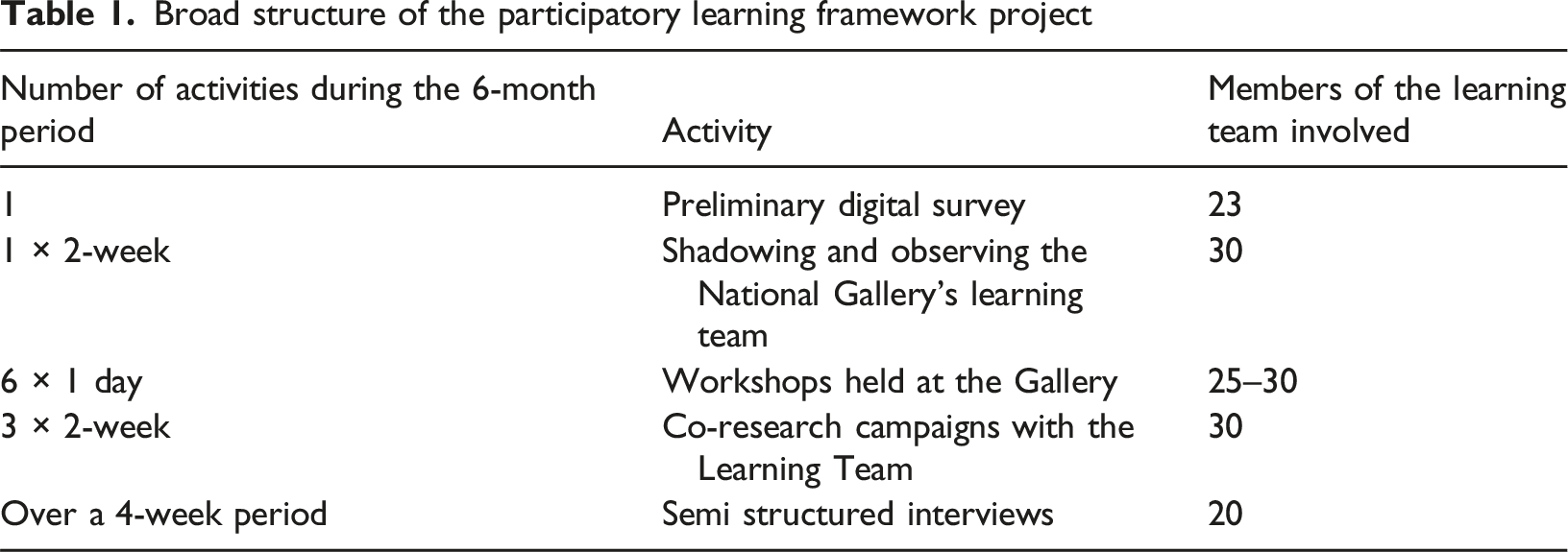
In the preparatory phase, the UC Researchers conducted shadowing observations of educators and programs, documenting practices through field notes, sketches, and photographs and distributed a survey to the Learning Team. The survey answers were thematically analysed and coded manually and using ATLAS.ti software. The information captured the Learning Teams’ existing practices, perspectives on current teaching practices and identified areas for development. These initial insights informed both the design of the workshop series and a baseline understanding of existing pedagogical approaches.
The development of evidence based pedagogy was supported by identifying relevant practitioners and texts. In preparation for each workshop, participants received curated pre-readings that included academic texts to build background knowledge and support engagement with contemporary educational theory. Over time, the range of materials was expanded to include select podcasts and other accessible media in response to the group’s diverse professional experience and learning preferences. Workshops also featured guest experts who led discussions, delivered presentations, or facilitated practical activities, thereby further grounding each workshop theme in current educational practices.
All workshops were held onsite and used participatory, practice-based methods. Practice-based learning was chosen not only for its inclusivity and capacity to promote active engagement but also, as Pringle notes, “Practice as research supports personal and situated knowledge production whilst locating; individual practice within a wider context”. She goes on explain that “it enables professionals to interrogate questions relevant to them that enrich their understanding of their practice and themselves, bring about professional and personal development” (Pringle, 2020, p. 92). The practice-based learning model aligned with the expertise of the UC Research Team as artist-researchers with a practice-based approach and reflected the project’s pedagogical values.
Each session combined collaborative activities, art making, critical discussions, and reflective tasks structured around a central theme. Reflection is a core component of both artistic practice and educational work, and it was central to the project’s structure. Unlike school educators who are accustomed to structured reflections, Artist Educators are from diverse professional backgrounds and do not necessarily have prior experience with embedded and formal reflective practice. They benefited from explicit framing and techniques that used Brookfield’s reflective lenses (Brookfield, 2017).
As the project progressed, all 30 members of the Gallery’s Learning Team engaged in a reflective, practice-based inquiry process. The Learning Team is responsible for designing and delivering programs for learners from early childhood through to tertiary education, both on-site and remotely. It comprises a diverse, intergenerational group of professionals with varied backgrounds in education, the arts, and related fields, including artists, teachers, university students, poets, and musicians. Participants drew on their own creative practices and used an individualised combination of drawing, photography, and field notes to document their experiences during a series of 2-week research “campaigns”, each focused on a pedagogical theme that emerged from the workshops. These campaigns allowed the Gallery Learning Team to trial ideas in practice and reflect on their relevance and impact.
Data collection occurred throughout the project. Methods included observation, surveys, and semi-structured interviews, embedding the research process within the day-to-day activities of the Learning Team at the Gallery. The UC Research Team conducted a comprehensive analysis of all qualitative data gathered from interviews and surveys with the Learning Team using Reflexive Thematic Analysis (RTA) processes (Braun & Clarke, 2019). RTA is suited to the constructivist lens of this project (Guba & Lincoln, 1994; Villeneuve, 2024) and the emergent and responsive structure overall. Constructivism understands meaning as socially constructed and actively incorporates the researcher’s subjectivity. RTA is iterative and flexible and builds upon existing understanding through reflection and interaction with others and the world around them rather than passive consumers of information. The participants’ perspectives, experiences, and expertise were recognised and valued in the overall design of the project and in each workshop.
The UC Researchers used the qualitive data analysis to identify what the educators were thinking, what was important to them, what they already knew, and where gaps, misunderstandings, or divergences existed. This enabled the UC Researchers to identify themes and key focus areas that informed the development and focus of the workshops. Ongoing cycles of analysis occurred throughout the project, allowing the design to be adjusted as issues were identified, thereby strengthening the value of the learning gained through the project.
Underpinning every aspect of the project design and delivery was the practice-based research approach that positioned creative practice as the primary mode of knowledge production. Adopting a co-creative model deliberately shifted away from traditional top-down educational development, offering a more inclusive and context-responsive framework for participatory learning in the Gallery. The workshops, associated activities, and follow-up enquiries were also designed to build trust, foster shared ownership thereby supporting long-term commitment to the resulting framework.
These combined methods supported engagement by the Artist Educators, fostered collective construction of meaning, and modelled how art can function as both educational content and method, reinforcing the project’s relevance within the institutional context of the Gallery. This methodology affirms the reciprocal relationship between making and learning as central within the gallery context and for the Artist Educators, recognising that knowledge is both generated and communicated through the creative process itself.
Workshop Descriptions
Central to the project was a series of six hands-on workshops designed and co-facilitated by the Researchers from UC and members of the Gallery’s Learning Team. The themes of the workshops were carefully selected through a combination of early observational research, preliminary discussions with staff, and insights that emerged during the workshops themselves and through semi-structured interviews. This responsive approach ensured the workshops addressed both identified pedagogical gaps and evolving priorities within the Learning Team’s practice.
Co-designing the National Gallery of Australia’s participatory learning workshops
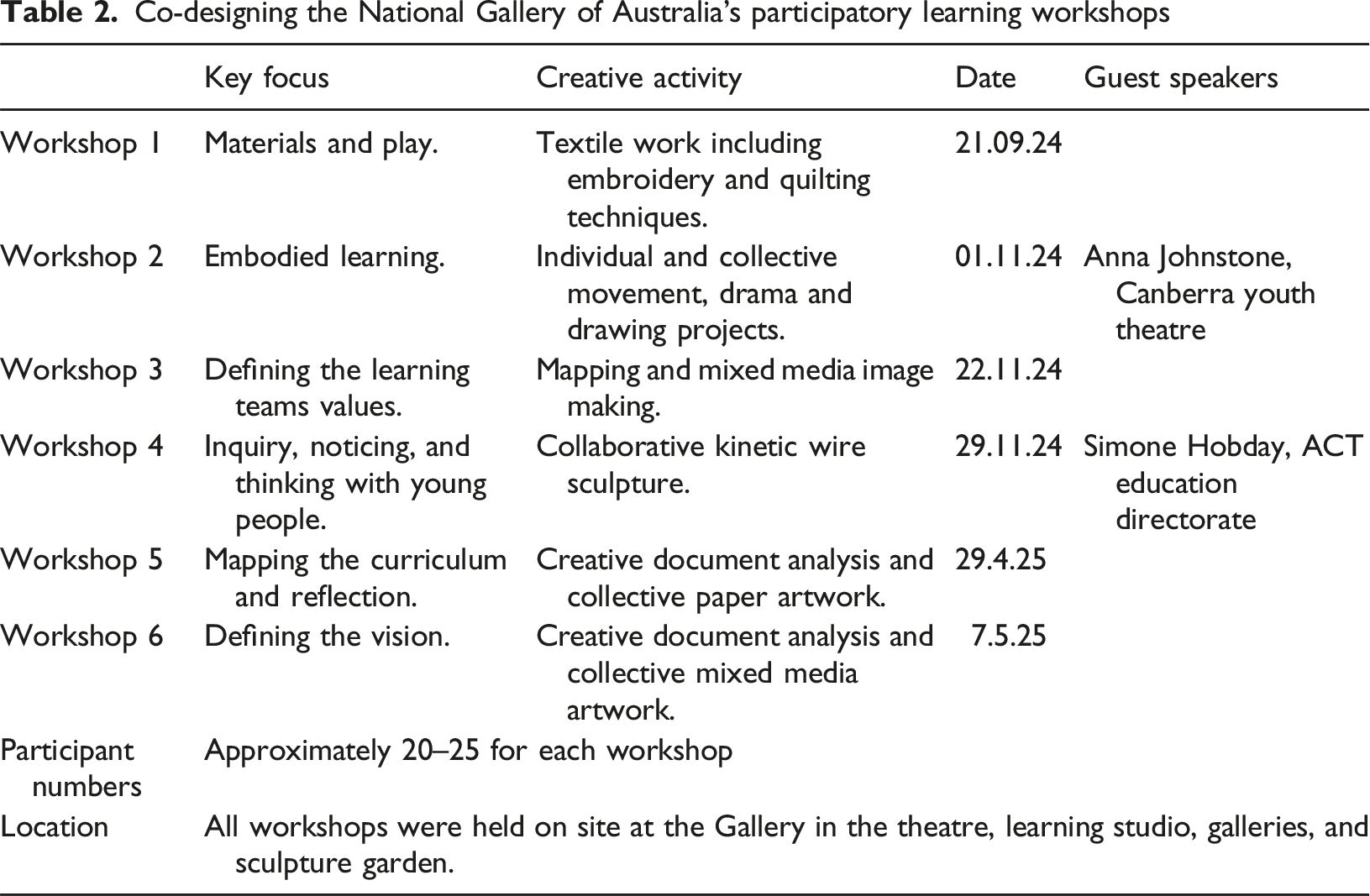
Workshop 1: Materials and Play
Workshop 1 introduced the project and UC Researchers to the wider Learning Team, fostering relationships and positioning the Artist Educators as co-researchers. It was crucial that the first Workshop set the tone for the project by developing relationships between the UC Researchers, Senior Learning Team members, and Artist Educators who deliver all the programs.
The first workshop focused on the role of play and materials in the practice of artists and how they can be integrated into the Gallery’s educational programs. A key aim was to extend the Learning Team’s kit of learning strategies to include activities beyond drawing. In the initial observational stage, it became clear that many in the Learning Team were limited to analysing works of art through the elements and principles of art and directing drawing activities, rather than thinking about the concepts of the work and how they might interrogate those ideas with other materials.
The Learning Team was asked to review Louisa Penfold’s article “Material Matters in Children’s Creative Learning” (2016), as a way of framing the workshop’s ambitions. The activities and discussions introduced participants to “learning through play”, a concept that early years’ educators are comfortable with, but is not frequently used with students in the more senior years of school despite remaining an effective learning tool. The participants were encouraged to think about how they might use materials in creative and playful ways to engage students.
The workshop began with an exercise in active listening to establish an environment of empathy, openness, and intercultural understanding. Following this, a Senior Learning Team member led a session titled “What is the Role of the Artist Educator?” The Learning Team were given fabric and sewing supplies and asked to embroider a word in response to that same question (see Figure 1). The words the participants embroidered included “Bridge”, “Cultural Representatives”, “Creative Collaborators”, amongst others. The results were sewn into a textile artwork that served as a model for utilising different mediums and techniques to explore ideas more playfully. Embroidered response to question ‘‘What is the role of an Artist Educator?” – generous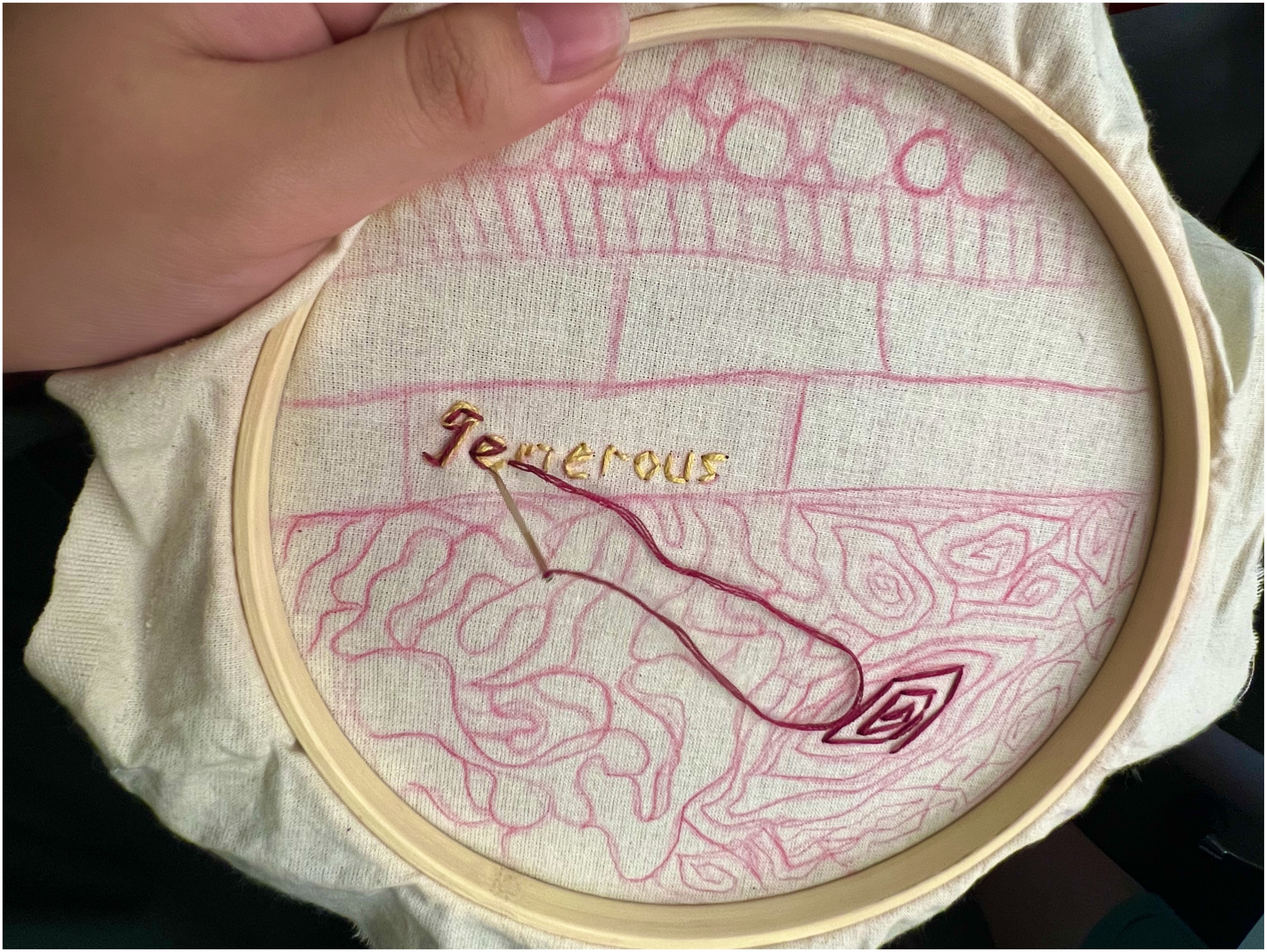
Workshop 2: Embodied Learning
Workshop 2 focused on embodied learning, extending the theme of play introduced in the previous session. The aim was to help the Learning Team explore physical and creative strategies to enhance student engagement with artworks. Facilitated by Anna Johnstone from Canberra Youth Theatre, the full-day session introduced drama-based techniques as tools for immersive and participatory learning. Claire Bown’s Thinking Museum podcast episode How to Lead Playful Programmes (March 2, 2023) was distributed for further exploration.
Throughout the day, participants engaged in interactive activities that demonstrated how drama strategies can support both learning and group management in gallery settings. These included games to capture attention, movement-based transitions between artworks, and embodied exercises that fostered empathy and deeper emotional connection. The Learning Team was encouraged to consider their programs as holistic, participatory experiences where learning begins with arrival and continues through every interaction. Activities progressed from word association to full-body responses, prompting discussion on how embodied approaches can enrich understanding and make learning more memorable. Next, participants were invited to consider how movement shapes perception through engaging with a creative activity. This involved undertaking a walking and drawing exercise designed to highlight how individuals observe and respond differently to the same environment, a valuable insight when designing programs for diverse student groups. Overall, participants reported the workshop reinforced the value of experiential learning and demonstrated to them how drama and movement can be integrated into gallery education.
Workshop 3: Defining the Learning Teams Values
Workshop 3 aimed to encourage participants to operate more collaboratively and as a team. The participants used brainstorming and mind-mapping to filter their ideas into a list of five values that could collectively inform the approaches of all the Artist Educators. Following the activity, a group discussion took place about the reading that had been circulated earlier, A New Role for Museum Educators, Introduction by Elizabeth Wood (2023). Workshop 3 concluded with a creative activity that utilised frottage techniques with string, paper, and crayons (see Figure 2). Participants reported that sharing back was important for reflecting, consolidating their insights, and coming together as a group. Frottage activity during Workshop 3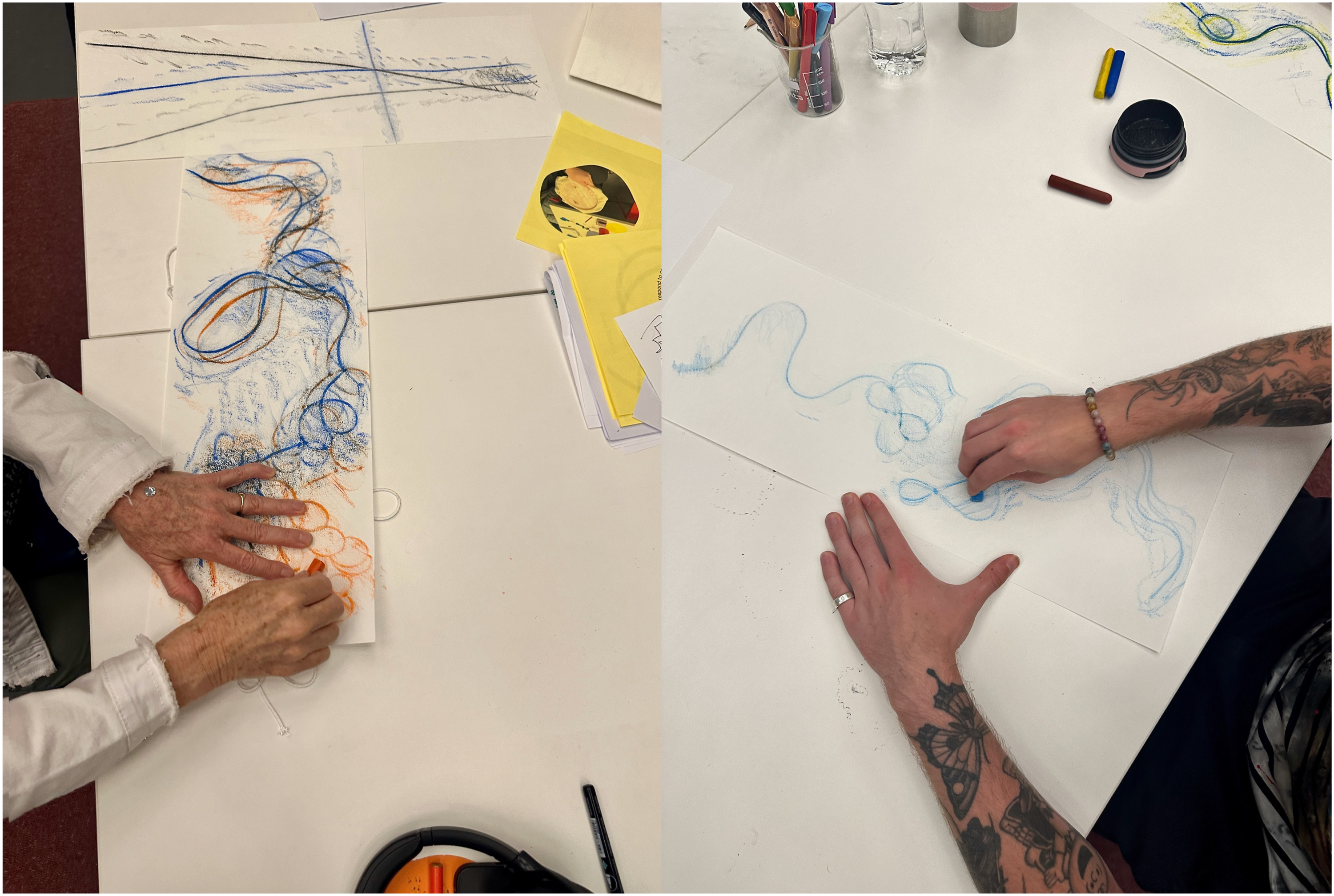
Workshop 4: Inquiry, Noticing, and Thinking with Young People
Workshop 4 focused on deepening the Learning Team’s understanding of inquiry-based learning approaches. The workshop was designed to explore how reflective practice and responsive, inquiry-driven teaching can be embedded in the Gallery’s education programs. Emphasis was placed on the act of noticing – that is, observing and responding to students’ interests in the moment – and on following those interests to make learning more relevant and meaningful within the limited time of a standard 60-minute session. Together, inquiry and noticing serve as foundational tools for participatory learning, helping shift away from didactic, lecture-style delivery toward collaborative knowledge-building between Artist Educators and students.
The workshop began with a session led by Simone Hobday, a specialist in inquiry learning and early childhood pedagogy. Simone introduced the principles of the Reggio Emilia approach, the role of inquiry in early learning, and the practice of noticing children’s thinking. Working with these ideas theoretically and experientially allowed participants to engage with the material. A poet from the Learning Team read the poem The Hundred Languages by Loris Malaguzzi. The performance sparked a discussion on verbal and nonverbal communication, the importance of the child’s voice, and how children interact with materials and engage in play.
In the afternoon, a member of the Learning Team led the group in a brief, guided meditation, once again demonstrating the value of drawing on the varied knowledge and practices within the team. This activity was followed by a discussion of Kath Murdoch’s inquiry model (2015), which the group used as a basis for generating questions related to their own teaching practice. The responses were then written down and suspended from wire sculptures, creating a collaborative and kinetic mobile that visually captured the team’s collective inquiry (see Figure 3). The workshop concluded with a discussion on shared challenges and aspirations in their pedagogical work. Wire sculptures with questions: ‘‘How can I keep prompts & instructions open enough to leave space for curiosity & creativity?” (LH); “How do we validate students” curiosity when they diverge from the artists’ voices and stories?” (RH)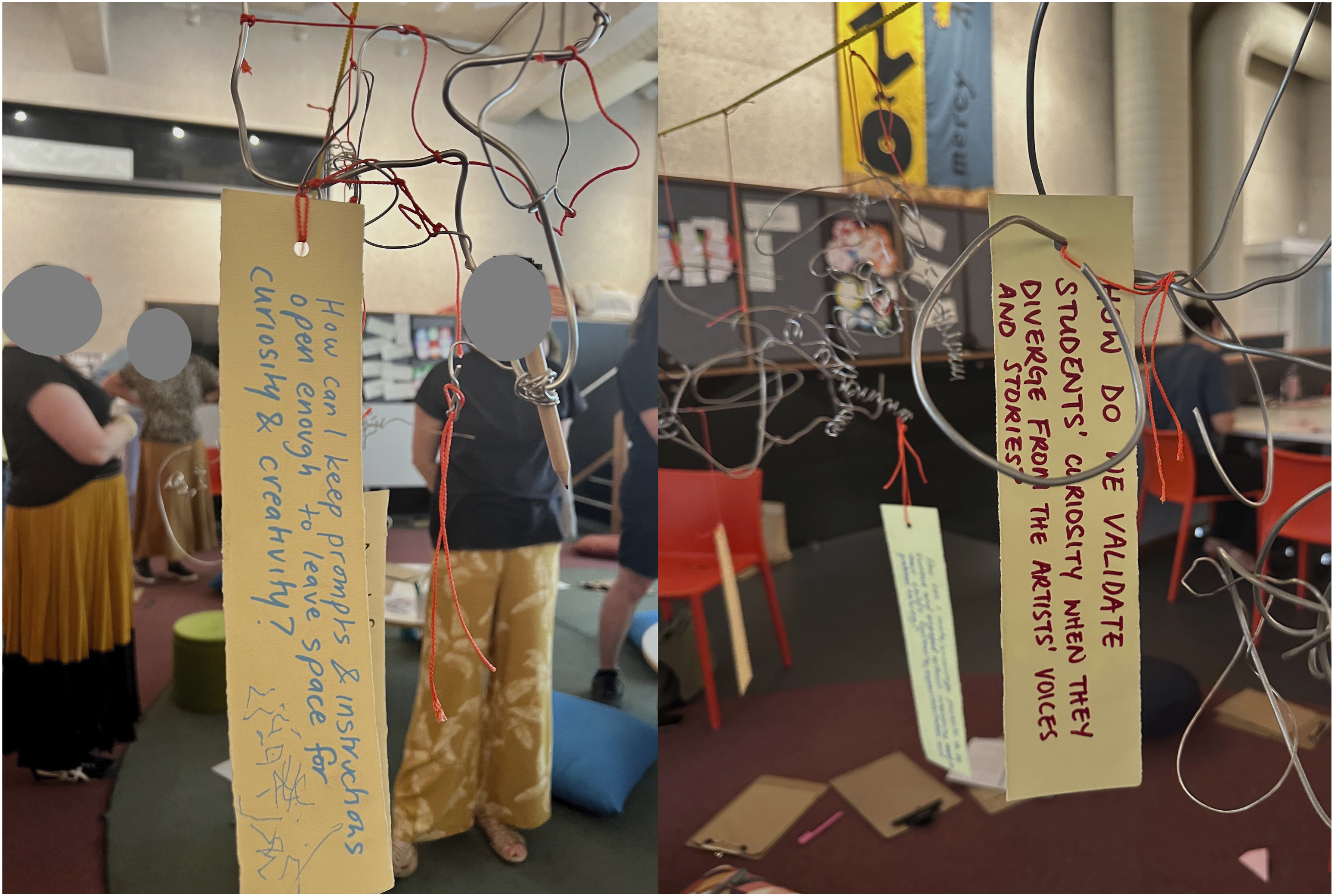
Workshop 5: Mapping the Curriculum and Reflection
Workshop 5 emphasised the importance of curriculum alignment and reflection in shaping responsive and meaningful learning experiences. It focused on two key areas: aligning the education programs with the Australian National Curriculum and deepening reflective practice within the Gallery’s education programs and the Teams. The Gallery Learning Team first examined how existing school programs on the Gallery floor were already engaging with curriculum content, though actively identifying existing connections (see Figure 4). The Australian curriculum as a paper link sculpture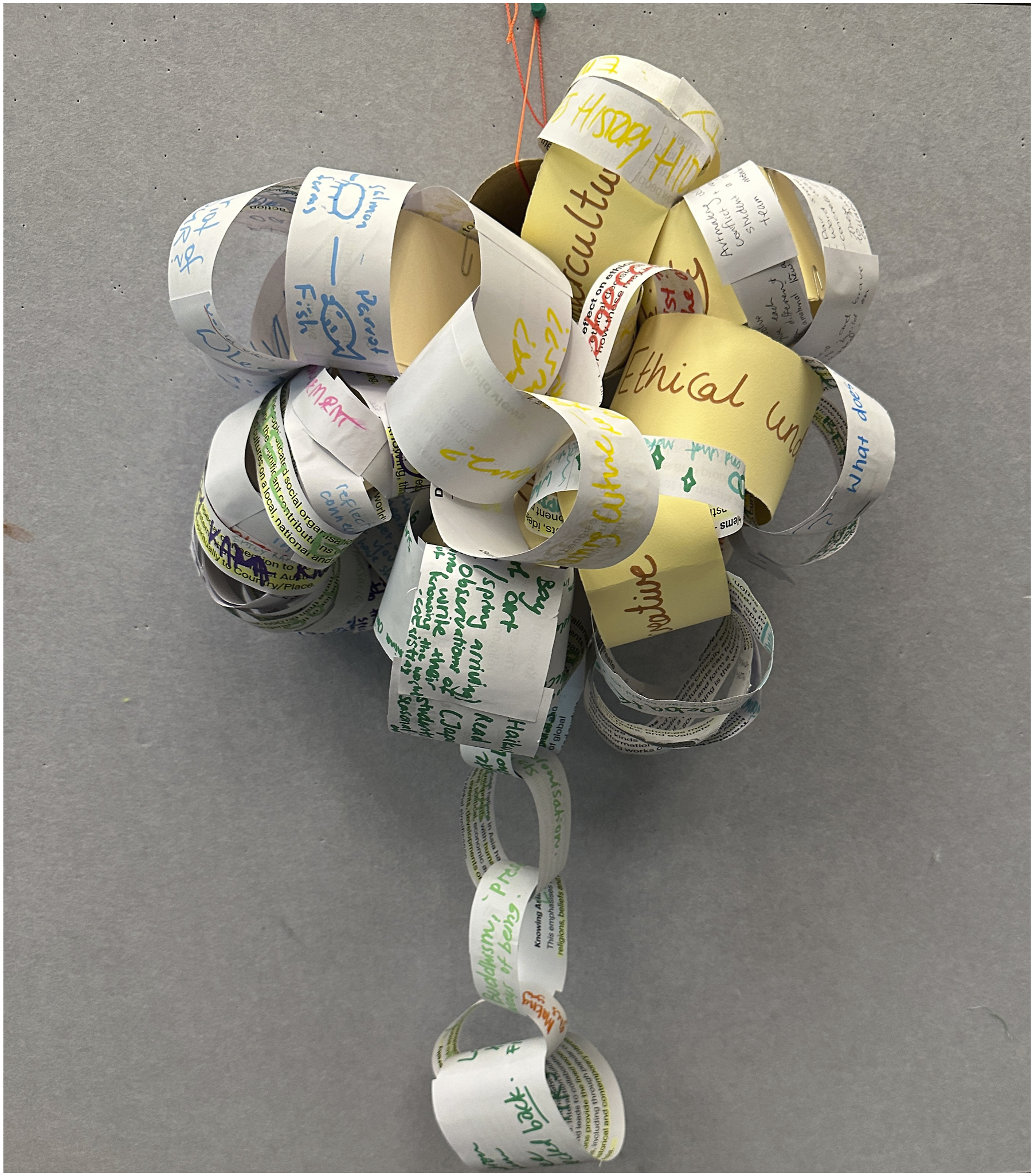
The second focus of the workshop was on reflection, as a pedagogical tool and as a core component of the artist educator’s practice. Reflection plays a vital role not only in programs with young people but also in the professional development of the Learning Team members. Brookfield’s four reflective lenses (Brookfield, 2017) provided a clear structure for reflective practice in this context. The group used these lenses to explore strategies and opportunities to integrate reflection into daily routines.
Concluding each workshop with a semi-structured group discussion developed participants’ abilities to reflect and the growing insights over the sequential sessions demonstrated the value of a reflective practice. For the UC Researchers, the reflections in each workshop helped shape the content of subsequent workshops. Participants also reported stronger team connections and a growing appreciation for peer learning as a means of strengthening their practice.
Workshop 6: Defining the Vision
In the final workshop, participants used creative and collaborative methods to engage with key documents, including the National Cultural Policy (Australian Government, 2023), the Alice Springs (Mparntwe) Education Declaration (Education Council, 2019), the NGA Corporate Plan 2024–2025 (National Gallery of Australia, 2024), and the Art Through Culture (National Gallery of Australia, 2025) framework. The aim was to align the emerging vision with national educational priorities, institutional values, and First Nations protocols.
Working in groups, participants extracted key words and themes from these documents, recording them on coloured paper circles and assembling them into three-dimensional paper sculptures (see Figure 5). Connections between these sculptures were then mapped using string, visually representing the relationships between shared values and ideas. This process and outcome reinforced alignment across the Gallery’s strategic documents and affirmed its commitment to inclusive, creative, and culturally grounded learning environments. Finding keywords and making paper sculptures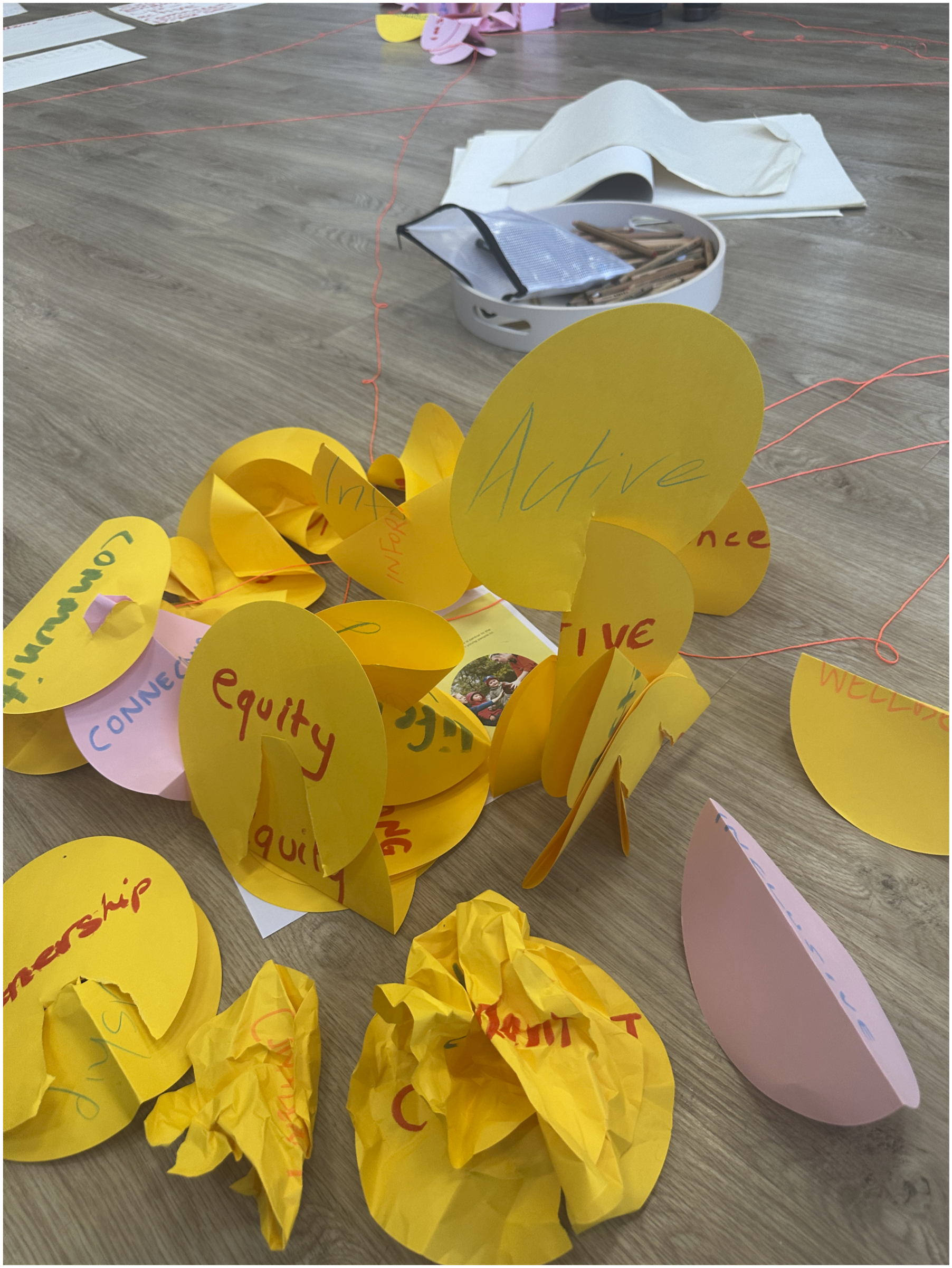
Facilitating Co-Research
An important phase of the project involved introducing a series of 10 short, practice-based “campaigns” in which the Learning Team trialled pedagogical strategies developed during the workshop series. These campaigns expanded the role of participants from contributing to the framework’s design to actively testing and reflecting on its application in the field. To support this phase, a participant-led fieldwork model was introduced after Workshop 4. The Learning Team recorded their experiences over the three 2-week long campaigns through written notes, sketches, photographs, and video. This approach was deemed valuable, particularly in the Gallery context, as Pringle explains: Co-research thus has significant implications for an expanded construction of research in the art museum. For [..] those organisations that can negotiate the shared generation of knowledge and work in equal partnership with university academics and non-academics, including young people, for instance (who are the experts of their own lives and experience amongst other things), demonstrate a more democratic and inclusive conception of research. Such organisations promote the practitioner researchers working within them and operate dynamically and openly. (2020, p. 97).
Each campaign focused on a specific strategy, such as using embodied learning or using materials to engage students with works of art. The Artist Educators worked with students and public audiences to understand the relevance and adaptability of these strategies. The campaigns reinforced the role of the Learning Team as co-researchers, ensuring that the final framework was grounded in lived experience and informed by those delivering education in the Gallery.
Discussion
This project examines the benefits of collaborative and multi-part processes in facilitating meaningful pedagogical change within the context of a national cultural institution. The collaborative process demonstrated how practice-based and participatory research methods can move beyond consultation to generate genuine co-creation of knowledge (Pringle, 2020; Rowson Love & Randall, 2024;). The process aligned with the professional identities of the Learning Team as artists and educators, drawing upon their collective expertise in creative facilitation. These approaches encourage participants to surface tacit knowledge that might otherwise remain unarticulated, bringing forward the subtle and situated forms of understanding that arise through artistic and pedagogical practice (Carter, 2004).
The workshops enabled participants to think with and through materials to explore pedagogical questions. Hubard (2007) notes that authentic learning arises when individuals are producers rather than passive recipients of knowledge. The alignment between method and outcome modelled the same inquiry-based and participatory values that the final framework seeks to embed in gallery education practice. Participants articulated how the process itself became a form of professional learning, demonstrating the value of reciprocal knowledge-building where theory and practice evolve together. Positioning the Learning Team as co-researchers recognised their expertise as practitioners and distributed authorship across the group (Pringle, 2020). It also mirrored the pedagogical principle of co-constructing knowledge with learners, reinforcing the ethos of participation at every level of the project.
Collaborations between universities and cultural institutions inevitably raise challenges related to differing timelines, expectations, and vocabularies (Pringle, 2020). The project revealed the need to balance academic rigour with operational realities, particularly within high-volume public programs such as those at the National Gallery. Despite these constraints, the partnership demonstrated how shared inquiry can yield academically robust outcomes that are also practically applicable. Future work should examine the impact on learners, particularly across diverse age groups and community contexts. The sustainability of reflective and collaborative practice-led research projects also depends on institutional support, time allocation, and recognition of professional learning as core work rather than an optional addition.
Conclusion
This project offers a model that could be adapted by other institutions, not as a set of prescribed activities but as a process for developing context-specific pedagogy. Its strength lies in its ability to balance structure and flexibility, and in recognising that educational change emerges from sustained dialogue, experimentation, and reflection. The project demonstrates that practice-based research can serve as a catalyst for institutional transformation, creating spaces for shared inquiry and innovation.
More broadly, the project demonstrates the value of collaborative, practice-based inquiry in addressing complex educational challenges within cultural institutions. Through co-creation and creative practice, it produced a pedagogical framework uniquely responsive to the Gallery’s context and national role. In doing so, this research project contributes to international discourse on art museum education, offering a model for how cultural institutions can foster participatory, reflective, and ethically grounded learning environments.
Footnotes
Acknowledgements
This research project was made possible through the support and leadership of the National Gallery of Australia Learning & Digital Patron Tim Fairfax AC. We sincerely thank the Gallery Learning Team for their participation and willingness to share their perspectives and insights.

Ethical Considerations
Ethics for this project was approved Canberra University #13845.
Funding
The author(s) disclosed receipt of the following financial support for the research, authorship, and/or publication of this article: This study was supported by the Tim Fairfax AC, Learning and Digital patron and the National Gallery of Australia.
Declaration of Conflicting Interests
The author(s) declared the following potential conflicts of interest with respect to the research, authorship, and/or publication of this article: The authors declare that the research was conducted in the absence of any commercial or financial relationships that could be construed as a potential conflict of interest.