




Abstract
Changing initial teacher education and lifelong learning experiences has become a real challenge for education as we strive to cultivate 21st-century skills in our students to ready them to become new cosmopolitan learners and knowledge professionals. The concepts inherent to transformative education and reflexive pedagogies, even though they are evolving concepts, have posed some serious concerns for the structure and experiences of preservice teacher education. This article presents a reflexive account of 207 preservice teachers attending a regional city university in Greece. In this study, the prospective teachers adopted the Learning by Design pedagogical framework during their Practicum experience. Their focus was to engage in learning design in a meaningful and collaborative way. A participatory action research methodology was adopted. Major findings revealed ‘reflexive deliberations’ on planning learning repertoires and making pedagogical choices.
Introduction
Shifting the paradigm of professional learning in the context of transformative education implies a new epistemology of professional knowing and action. Modern teachers are required to act as change agents. This requires being more reflexive of their own practice and adopting a vision for transformative education. Prospective and in-service teachers learn more effectively when they are involved in participatory action research and school-based training. Communication with colleagues, shared experiences and reflection create a shared responsibility and a sense of belonging to a collective learning process. In a community of practice (Wenger, 1998), the teacher learns to function as a member of a professional collegiality, developing a collective intelligence (Kalantzis and Cope, 2012) with clear educational goals and a vision that benefits from the cultural diversity of the school learning community.
In this context, reflexive pedagogy offers an overarching framework to engage with diversity and to explain the emerging intermediate professional spaces of learning design and teaching practices. Learning by Design (LbD) (Kalantzis and Cope, 2005) shifts the teachers’ training paradigm away from a traditional professional development perspective, which considers learning as an individual case of self-improvement. LbD is an epistemological framework of professional learning where teachers design, document, publish and exchange their pedagogical repertoires. They also make use of social networking technologies and participatory action research methodologies. Synergies are built with colleagues and through ongoing dialogue, reflection and feedback on the issues raised in their everyday practices (Department of Education and Training of Victoria (DETV), 2005; Little, 1999; McRae et al., 2001; Van Haren, 2007). Teachers emerge as knowledge designers and learners, leveraging transformative learning and pedagogy and engaging with diversity and multimodality. Diversified learning design and scaffolding are important pillars in their reflexive practice, which engages knowledge processes such as experiencing, theorizing, analysing and implementing (Kalantzis and Cope, 2012).
This article presents a reflexive account of an action research and professional learning project implemented during the practicum of prospective teachers and as part of their undergraduate courses. During the Practicum, the preservice teachers used the LbD pedagogical framework over a period of one academic year. Participatory action research methodology was adopted (Arvanitis and Vitsilaki, 2015) to investigate the work being done. Overall, 207 students reflected on their views on the usefulness of LbD in their initial education program.
Transformative education and reflexivity
The mission of education is the transformation of self and society in a realistic and emancipatory way (Kalantzis and Cope, 2012). Namely, it seeks, first, to empower students to achieve their best possible outcomes under existing social conditions and, second, to create a better world. It is based on the awareness of contemporary, diverse and multinational workplaces and communities. It also seeks to offer intangible assets, or new skills and knowledge, that young people need to become productive workers in the knowledge economy, active citizens in a globalized and cosmopolitan context and, finally, balanced personalities, in a world with endless possibilities, ambiguity and risks (Kalantzis and Cope, 2012). Beyond the old ‘basic skills’ of numeracy and literacy, new essentials are in demand such as creativity and imagination, critical and entrepreneurial thinking, solving complex, multidisciplinary and open-ended problem solving and ‘communicating and collaborating with teams of people across cultural, geographic and language boundaries’ (Partnership for 21st Century Skills, 2008: 10). Finally, according to Fullan (2013), citizenship skills and character education 1 complete the new 21st-century skills list.
Transformative education, as an emerging concept, holds a strong ethical position. It seeks to build a personality that is characterized by a deep knowledge and capability to find its way in an environment of constant change and intense diversity. Students are perceived as lifelong learners who are able to solve problems, be flexible, creative and able to work innovatively with diverse group of people. Transformative education (Kalantzis and Cope, 2012) enables cosmopolitan learners who are able to take risks outside their comfort zone and engage in new intermediate spaces of contact and intercultural learning. The social lives of cosmopolitan learners are closely intertwined with the lives of diverse people in a context of continuous dialogue, synaesthetic meaning making and reflective action. Additionally, as Fullan (2013) noted, educational systems should acquire a ‘new entrepreneurial spirit’ to enhance not only economic innovations but also most importantly an inclusive and collaborative social building agenda (p. 9). This new entrepreneurialism and innovation in education brings more agency to learners and ensures their desire and ability to act based on their character values and mastery of skills.
Thus, transformative education rethinks agency as the ‘[R]elations between expert knowledge sources (teachers and authoritative texts) and novices (learners) are reconfigured’ (Kalantzis and Cope, 2012: 273). Diverse agents such as learners and teachers, peers, parents, experts and critical friends reposition themselves and engage in a process of dynamic dialogue, reflexive stance and intermediation in a context of their learning community. In this context, sequencing learning repertoires in an explicit way makes teachers more reflexive in their role as designers, knowledge producers and learners. Teachers become reflexive practitioners who take into account diverse teaching traditions (traditional or didactic, progressive or authentic and transformative) and develop a new synthesis of learning/teaching repertoires. The latter involves scaffolded activities, which, moving between conceptual, experiential, analytical and transformative modes of knowing (Cope and Kalantzis, 2015: 16). Cope and Kalantzis (2015), define teachers’ reflexivity on the basis of reciprocity. Teachers move back and forth between academic learning and ‘grounded, real-world practical experiences and applications’ (p. 16). Also, being a reflexive teacher means rethinking and altering one’s own professional practice based on the mixing of different and complementary modes of knowing (such as the Knowledge Processes). Finally, reflexive teachers are always vigilant as to how to differentiate their pedagogical practice and choose appropriate techniques to match students’ diversity as well as to respond to different phases of the learning process. Modern teachers are engaged in a reflexive pedagogy seeking ‘a more varied and open-ended process of knowledge making, moving backwards and forwards between different ways of making knowledge, or knowledge processes’ (Kalantzis and Cope, 2012: 273).
The adoption of reflexivity offers ‘a multidimensional portrayal of pedagogical thinking’ that goes beyond the recall of teaching actions, namely, reflective practice 2 (Joseph, 2014: 5). Teachers, for instance, become reflective practitioners 3 when they are more self-aware and critical towards their own teaching responses and assumptions (Boud et al., 1985; Jarvis, 1992; Mezirow, 1981). The concept of reflexivity, however, enriches reflective practice with the idea of critical self-reflection. Here, teachers reflect ‘critically on the impact of their own background, assumptions, positioning, feelings, behavior while also attending to the impact of the wider organizational, discursive, ideological and political context’ (Finlay, 2008: 6). Finlay and Gough (2003: ix) put reflection, critical reflection and reflexivity in a continuum. Reflection is defined as thinking on-action. Critical reflection inquires thoroughly the social context and it aims to transform social action. Reflexivity is a more dynamic process and involves continuing self-awareness or ‘being mindful of self’ as Johns (2013: 2) puts it. Thus, reflexivity refers to a process of self-awareness of one’s own practice and how personal attributes influence the process of meaning making. It is an ongoing and continuous process of being intellectually and socially conscious. It requires the management and questioning of own assumptions, ontological beliefs and ideologies and how these influence one’s pedagogic know-how interpretations and responses.
In this context, reflexive pedagogy explores competing traditions and makes explicit the disciplinary concepts and frameworks associated with them as well as the power embedded in these. Archer (2007) refers to reflexive deliberation to explain how teachers, as active agents, ‘mediate their subjective concerns and considerations (values, priorities, knowledge and capabilities) and their objective circumstances (e.g. curriculum and assessment standardization, accountability) to act in certain ways’ (Joseph, 2014: 6). Teachers can transform both their own thinking about teaching and learning (subjective knowledge about disciplinary context and teaching practice) and the objective circumstances as a result of reflexive deliberations, namely, after engaging in internal dialogue/deliberation, which ‘compares and contrasts reflective, retrospective and prospective considerations’ (Joseph, 2014: 7). Of course teachers may choose to reproduce structural frameworks and adopt a morphostatic approach in Archer’s words (2007) instead of a morphogenetic one. In this case, they do not articulate their internal deliberations and seem unable to become aware of ‘the socially constructed schemas that mediate the knowledge production process’ (Joseph, 2014: 10).
Moreover, reflexive pedagogy refers to an intermediate space 4 of learning, or a space of contestation (Joseph, 2014: 7). Pedagogy creates a relational space of learning where meaning is created by the dynamic relationship, dialogue and mediation with the ‘others’. In this space, teachers and learners often bring contrasting views and diverse lifeworld experiences, which are associated with broader cultural narratives. Reflexive pedagogue understands symbolic differences, material conditions and corporeal attributes (Kalantzis and Cope, 2012) and the way diversity affects the educative process, practice and philosophy. She/he makes room for boundary-crossing, reflexive dialogue and empathy allowing diverse learning narratives to be heard. According to Kalantzis and Cope (2012: 273–276), reflexive pedagogy has some main characteristics. More specifically, it challenges learners to develop increasingly sophisticated and deeply perceptive conceptual schemas, and it prompts them to make their thinking or knowledge processes more explicit. For reflexive pedagogy, the learner becomes the knowledge creator and undertakes activities that are meaningful and realistically complex. In addition, reflexive pedagogy deploys ‘a variety of knowledge media, representing knowledge in many ways’ or it ‘uses synaesthesia – or mode shifting – as a pedagogical device’ (p. 274), and encourages dialogue and group collaboration. It offers a broad range of task options to cater to the diversity of learners as well as it creates a learning environment that gives learners continuous and multiple forms of feedback on their learning. Finally, it offers a mix of activities that represent different knowledge processes.
Overall, reflexive pedagogy is highly transformative in two ways: First, educators become learners of their students’ diverse lifeworlds (e.g. their cultural metaphors, languages, learning styles) and ‘recognize them as resources and co-creators for/of learning’ (Joseph, 2014: 11). Second, they (re)create their own professional narratives and theoretical foundations. And they ‘revisit their own experiences as learners and gain greater understanding of the cultural assumptions they bring to their learners by crafting collaborative, reflective, and iterative narratives about themselves, the society and their times’ (Joseph, 2014: 11).
Methodology
The LbD action research project involved a total of 207 preservice early childhood educators who were studying in a Department of Early Childhood Education at a regional university in Greece. In the study, preservice teachers became action researchers, namely, active partners/participants acquiring more agency in instructional design as part of their Practicum. The action research process is a recursive, cyclical process unfolding in four stages (Mertler and Charles, 2011), namely, (a) the planning stage, where students planned their teaching scenarios (Learning Elements) in a collaborative manner; (b) the acting stage, where students taught their learning elements in pairs in local kindergartens; (c) the developing stage, where students observed the application of their designs during their Practicum and redrafted their works when necessary; and, finally, (d) the reflecting stage, where students reflected upon actual issues arising from their teaching and their overall professional learning experience.
The collaborative action research (working in pairs) was adopted to enable preservice teachers to become more reflexive about authentic instructional design, improve their professional skills and judgment in applying differentiating teaching/planning and be more accountable by ascertaining whether desirable educational outcomes have been achieved. Research data (Johnson, 2012; Mertler and Charles, 2011) assure us that collaborative action research contributes immensely to professional growth, improves school life and educational practice, connects between theory and practice and empowers teachers as decision makers. In addition, collaborative action research unfolds in a constructive way classroom complexities, especially for preservice teachers. In particular, as Johnson (2012) has noted, it can help preservice teachers to enrich their limited real classroom knowledge by helping them understand class environment and enrich their decision-making. In this case, professional learning during Practicum was considered as a unique opportunity to engage all preservice and in-service teachers (in corresponding schools) together with university faculty members in a meaningful and systematic peer learning process. Thus, two faculty members and two doctoral students provided specialist training, mentoring and feedback during the Practicum. The feedback process and professional sharing were organized around focus group discussions on a weekly basis during the planning phase.
In general, preservice teachers followed the LbD action research methodology applied in Greece (Arvanitis and Vitsilaki, 2015) and explicitly documented their instructional design against national curriculum standards (Greek Pedagogical Institute, 2011). They designed more than 100 teaching plans, which were published on a sharable database (http://cglearner.com/). As part of their action research methodology, participants were asked to reflect on their LbD experience. Their views were recorded with specially adapted questionnaires in two distinct phases of action research on one year: in January, after the design of their learning elements (planning phase) and in June, after teaching/redrafting their designs (final phase). The survey findings were triangulated with personal reflective diaries and comments collected during their Practicum.
The scope of the survey given to students was to investigate the usefulness of the LbD approach as a collaborative and peer learning framework. More specifically, the researchers were interested to ascertain (a) how peer learning and collaboration are encouraged during the design and implementation phase in Practicum and (b) how the role of the preservice teacher as designer of pedagogical repertoires is embedded in the scaffolding and weaving of activities. Data collected in this survey were analysed based on descriptive statistics and comparison of mean rates in both phases (Mean I /planning phase and Mean II/ final phase 5 ). Statistical analysis was performed using SPSS (version 21). Finally, directed content analysis (Hsieh and Shannon, 2005) was performed on participants’ qualitative comments where coding was based on existing research framing on LbD.
Research findings
All 207 prospective teachers were in their vast majority female (97%) and all used LbD as their planning framework. Participants in the survey had the opportunity to reflect upon their collaborative design experience during the planning phase and at the end of their action research project. This section will describe, first, student teachers’ ‘postmortem’ reflection, the so-called reflection-on-action (Schön, 1983), which involves more systematic reflection on planning, learning outcomes, pedagogical alternatives and own roles. This reflection occurred after or before planning /teaching and involves reflexive deliberation. And, second, this section will detail the students’ reflection-for-action (Grushka et al., 2005; Reid, 2004) based on their forward planning and preceding reflection through collaborative peer feedback.
The collection, interpretation and analysis of data intertwined with preservice teachers’ reflexive accounts during planning and the final phase is a common action research technique (Mills, 2011). Student teachers used LbD as an epistemic framework for instructional design based on a formalized typology of knowledge actions or ‘things you do to know’ through experiencing, conceptualizing, analysing and applying (Cope and Kalantzis, 2015: 23). Preservice teachers’ collaborative, design, teaching and reflexive experience was revolved around this epistemology. Survey findings revealed five main themes in preservice teachers’ reflection including a general understanding of their role as teachers, satisfaction and performance in a collaborative context of professional learning, pedagogical reasoning and reflexive deliberation of the teacher as pedagogue and designer, initial explorations on the use of synaesthesia and pedagogical devices for planning in new intermediate spaces and, finally, an increased appreciation of and focus on children’s learning.
Teacher’s role: being mindful of self
Repositioning the role of teachers in the context of transformative education to increase self-awareness is an important parameter for reflexive pedagogy. According to participants, important qualities for a good teacher include willingness to be active, a cooperative attitude, an awareness of problem solving, reliability, critical thinking, compassion and protectiveness towards children (Figure 1).
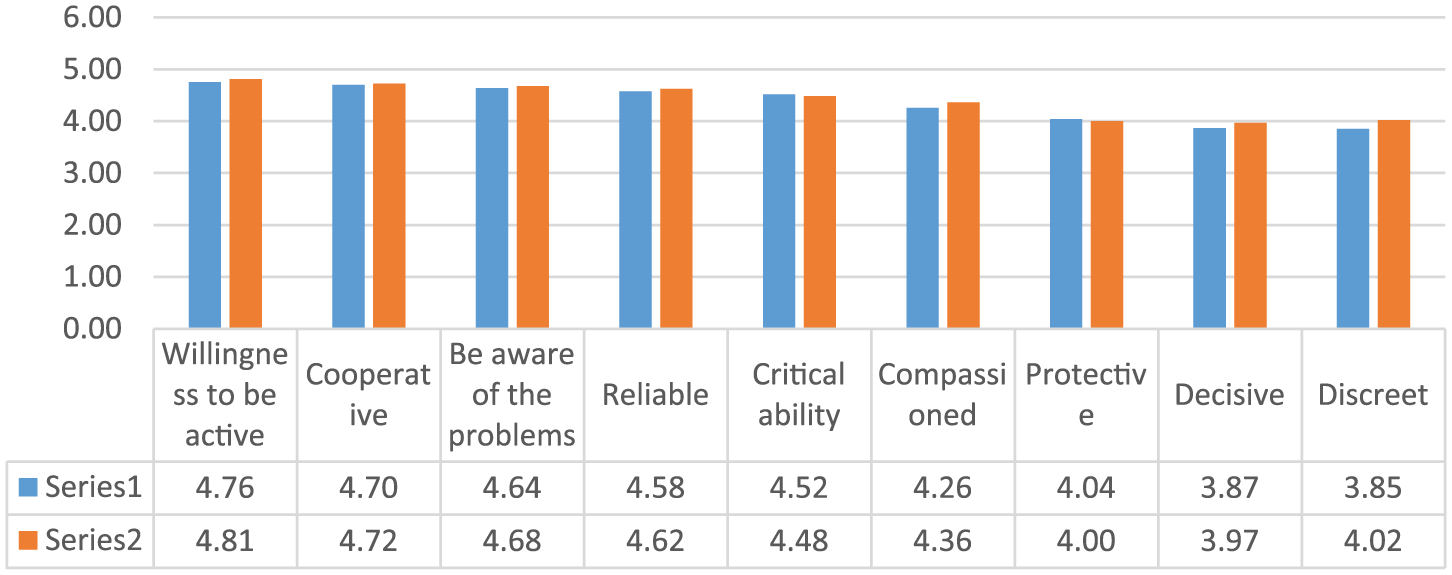
Teacher qualities.
The mean scores (more than 4 out of 5) were high for these qualities before (Series 1) and, particularly, after (Series 2) the planning phase, whereas decisiveness and discretion were rated lower on the scale. All these attributes described an ethical aspect of the teaching role well associated with the traditional status of Greek teachers. In addition, preservice teachers declared ‘creativeness’ (Mean I = 2.15 out of 3 and Mean II = 1.97) and ‘openness/flexibility’ (Mean I = 1.07 out of 3 and Mean II = 1.04) as important characteristics, which contribute to their professional development as modern teachers. Other characteristics included ‘independent and critical thinking’ and ‘taking initiatives towards pedagogically sensitive approaches’, but these received less attention by this cohort. These findings show a lack of deeper understanding of teaching as a knowledge profession and the skills associated with it. Student teachers seemed unaware of current discussions about reflexive pedagogy, which reposition the role of the teacher as the knowledge professional, as well as the need for rigorous pedagogical reasoning that has the potential to transform teaching practice. This could be partly explained by the status the teaching professionals possess in Greece and their strict association to the bureaucratic profile of public servants.
Preservice teachers also characterized the teacher’s role as being ‘multidimensional’ and ‘flexible’, revealing a generic view of their profession. The future teacher would seem to be perceived mainly as one who needs to differentiate instruction to meet students’ diversity and needs (Mean I = 1.59 out of 3 and Mean II = 1.67). Other characteristics such as the teachers’ ability to provide joint learning projects via collaborative work, to perform peer evaluation or to develop a professional ethos of mutual support and culture of exchange attracted less attention. In other words, preservice teachers were not in a position to explicitly stress the value of professional sharing, or to highlight the teacher as the one who assumes greater responsibility as a designer/researcher. Also, it seems to ignore the dynamic role of modern teachers to build synergies that promote children’s lateral knowledge or to assume greater control of their own working life by designing and assessing learning experiences for learners and aligning them to the general objectives of the Kindergarten curriculum. All mean scores both before (Mean I) and after (Mean II) the planning phase were low.
Collaborative peer learning
Powerful professional learning occurs when it is peer focused and collective (Carroll et al., 2010; Department of Education and Training of Victoria, 2005; Wei et al., 2009). This group of participants engaged, for first time, in a rigorous process of collaborative planning and teaching based on dialogue in their learning teams. The vast majority (88.3%) of participants had chosen their teammates compared to a small group (11.2%), which incidentally was placed in pairs. Preservice teachers declared no real difficulties in collaborating with their partners (Mean I = 1.58 out of 3 and Mean II = 1.72), as many of them had worked with their pairs in a number of other common projects during the course of their studies. Some difficulties sprang from time restrictions (Mean I = 1.37 out of 3 and Mean II = 1.38) associated with managing workload and finding common times for planning due to students’ diverse timetables and obligations. Participants identified some effective practices which contributed towards their positive collaborative experience. These included a sense of equal and active participation in the learning team, together with join selection and documentation of their learning scenarios, as well as the ability to solve any problem that arose during/after their planning and during the implementation phase. Problems identified were due to competition, role distribution and switching; general time management and feedback from supervisors were reported to be extremely limited. As no serious collaboration issues emerged, it became evident that participants were mainly focused on their planning being able to work independently in their learning teams. Overall, good communication and cooperation (Mean I = 2.07 out of 3 Mean II = 1.83), the exchange of ideas/good practices (Mean I = 1.6 out of 3 Mean II = 1.34), and a culture of mutual trust and help (Mean I = 1.14 out of 3 Mean II = 1.23) were the most obvious factors of enforcing team dynamics according to participants. Other factors such as the interest of achieving common action and goals sense, the development of common professional language and having continuous feedback from fellow students attracted limited attention. This finding would seem to indicate participants’ lack of deeper reflection and understanding of group dynamics and of their function as members of a community of practice or professional collegiality.
In addition, more than three-quarters of participants were equally satisfied about their collaboration with their team partners during (76.1%) and after (76.3%) the planning phase (Figure 2).
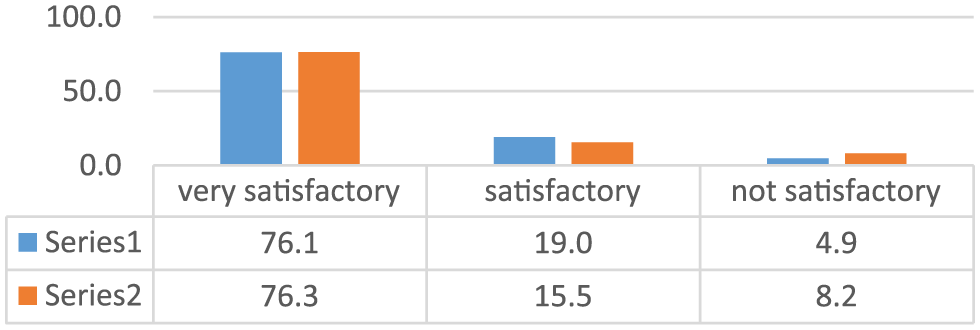
Satisfaction with learning team partners.
Another 19% declared a satisfactory experience in their learning teams during planning, with this percentage falling to 15.5% after teaching. A small group of participants said they had unsatisfactory or insufficient experience (especially after the implementation phase).
This satisfaction seemed to emanate from participants’ perceived personal benefits, gained thought peer learning. Their responses produced some 558 comments. A quarter of these comments referred to students’ perception that peer learning broadened their perspectives about learning. The sense of belonging in their learning group (21%) was another important personal gain followed by self-confidence (17%), interaction and sense of security (11%), and the ability to exchange ideas and acquisition of planning skills (Figure 3).
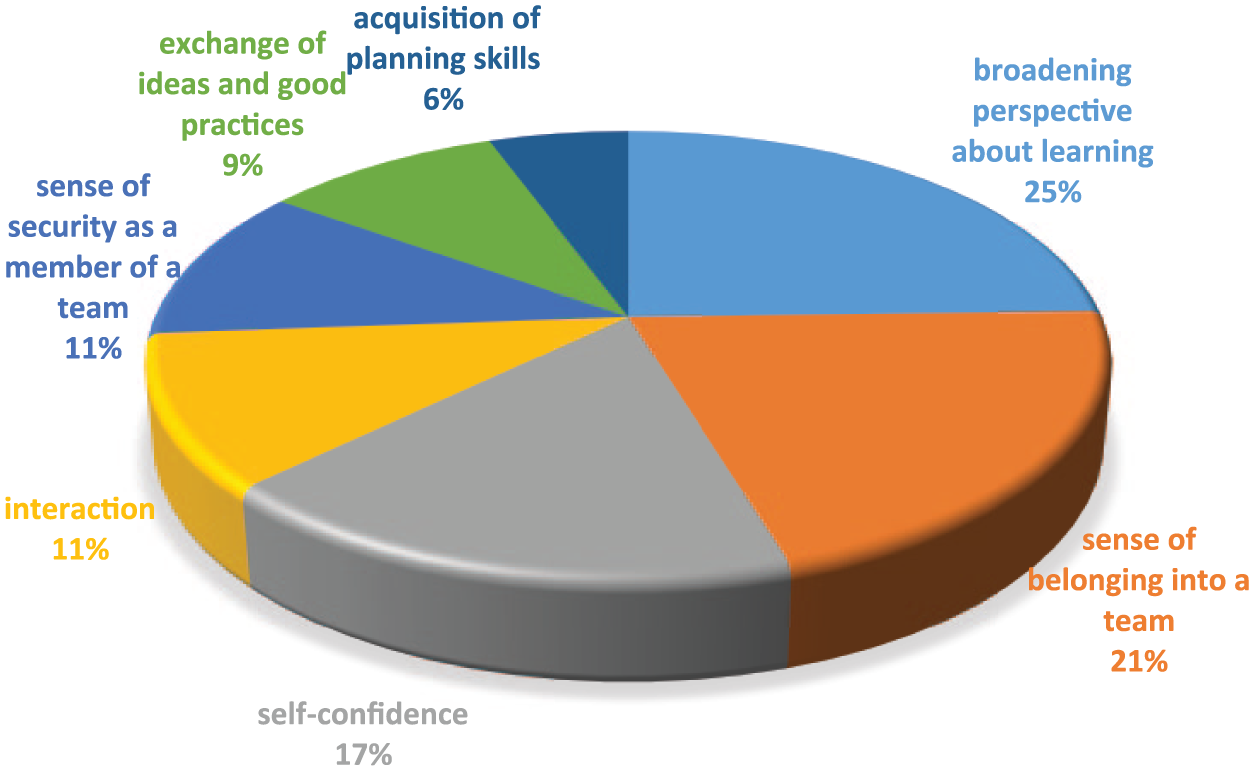
Personal benefits gained through peer learning.
The prospective teacher’s collaborative learning was reported as being satisfactory (all mean scores were higher than 4 out of 5). This was centred on the core of teaching profession, namely instructional design. During the planning phase (Mean I), participants focused on identifying the disciplinary area and the topic for their planning according to curriculum standards. Making decisions about planning methodology, creative learning choices and the scaffolding of knowledge processes, along with having an overview of their learning repertoires and solving problems (Figure 4), were also important. These points of reflection attracted less attention during the final stage of the action research project (Mean II), except from the last two. The latter would seem to indicate that participants were in a better position to have a ‘postmortem’ overview of their teaching repertoires and to address the problems that arose during teaching.
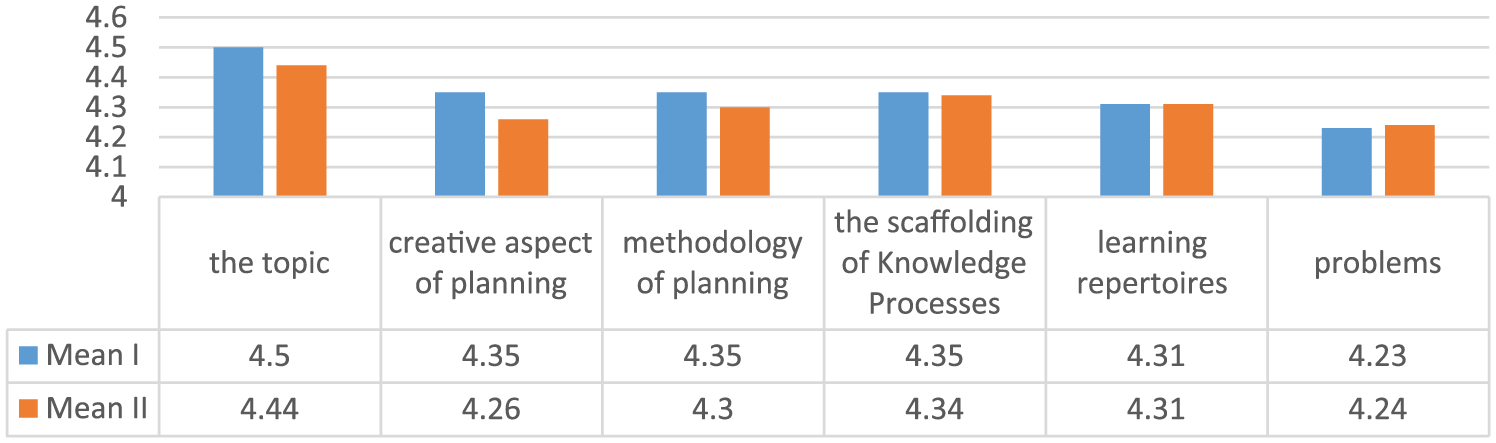
Preservice teachers’ decision making during collaborative planning.
At the end, preservice teachers in their majority (66.3%) were able to ascertain that the final product of their design (learning scenarios) was ‘very much’ due to their group work. Their satisfaction increased at the final phase of their action research project for almost three-quarters (71%) of them. Nevertheless, one group of participants felt that collaborative learning had little (close to one quarter) or no effect on their final lesson plans. This final point indicates that closer attention needs to be given during the course of Practicum to mentor and support collaborative learning.
Preservice teacher as a knowledge designer: a reflexive deliberation
The main task for the participants in their learning teams was to be involved in a process of instructional design using the epistemological framework of pedagogies as Knowledge Processes. In other words, they were required to create learning modules, or repertoires, based on experiential, conceptual, analytical and application activities. These knowledge processes were experienced by teachers as ‘externalizations of thought in action’ and at the same time they shaped pedagogical ‘thought through action’ in an intense, focused, self-conscious and reflexive way (Cope and Kalantzis, 2015: 23).
During the initial/planning phase, preservice teachers focused more heavily on the design of application and experiential activities to capture students’ interest and motivate them to learn. This tendency was reinforced after the implementation/redrafting phase as shown in Figure 5.
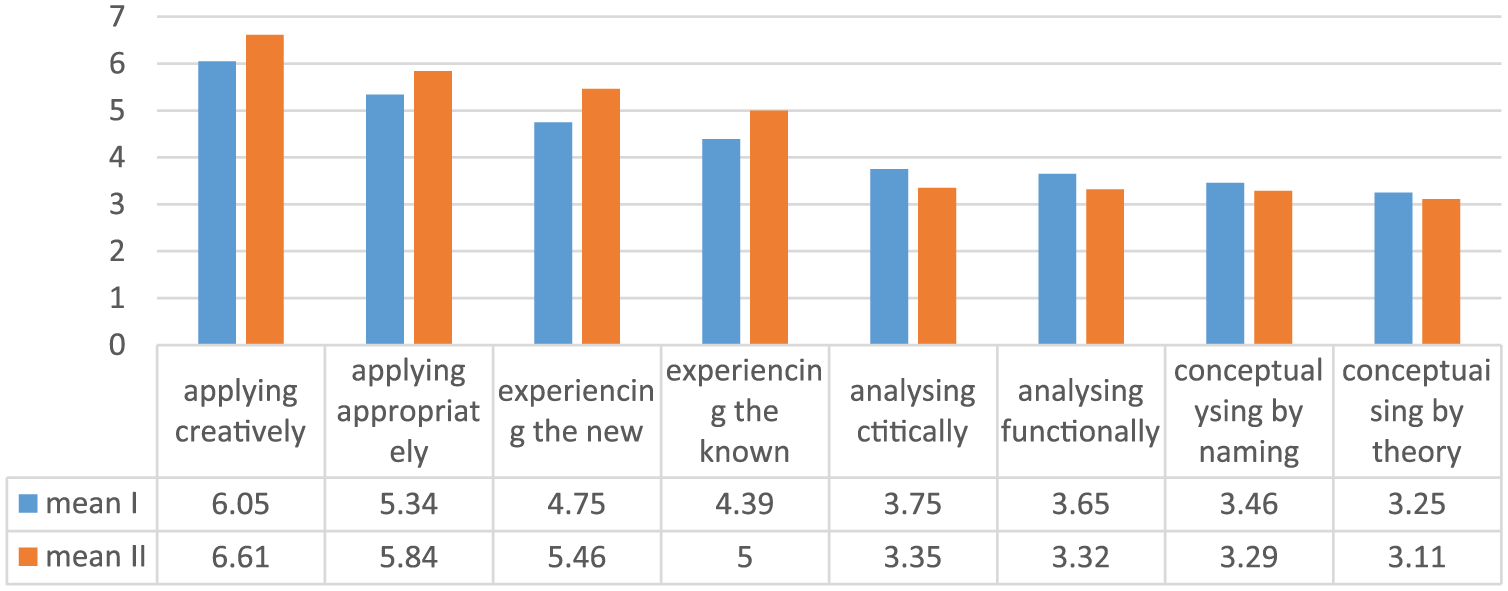
Knowledge processes used in instructional design- Scaffolding.
Preservice teachers’ reflective comments highlighted the pedagogical reasoning behind this choice. Their first priority was to choose activities that they deemed to be good examples of creative and innovative applications of knowledge. These activities involved the construction of hybrid and multimodal texts, the transfer of knowledge or text types in totally new and diverse settings, allowing learner interests, experiences and aspirations to be uniquely voiced. Preservice teachers showed a clear preference to design activities of creative application of knowledge as they considered them ‘interesting, funny, creative, innovative and more efficient’ in promoting learning. At the same time, they realized how important these activities were in promoting children’s skills such as ‘freedom of expression, self-acting, creativity, critical thinking, self-confidence and imagination’. Teachers candidates observed that their students were more ‘interested, relaxed, satisfied and happy’ when applying knowledge in a creative way. In this way, learning occurred as a natural process for children, and this enhanced their lateral thinking and problem-solving skills (by posing hypotheses/questions and dealing with complex situations). Teachers candidates noted that they felt the children’s world was reinterpreted through fresh forms of action and perception. Children also assumed greater freedom and agency, and they were more involved with learning. It was reported that in many cases students took up a leading role when applying knowledge in new settings.
In addition, appropriate application of the acquired knowledge in predictable or ‘correct’ ways was important for this group of preservice teachers. In this set of activities, children were asked to report on the acquired knowledge and place it into practical situations of application. Children were asked to narrate and communicate concepts and themes in a way that showed they have mastered the acquired knowledge in realistic settings. Preservice teachers reflected very positively on the use of such activities by saying that these were a valuable form of assessment that they were able to use to evaluate students’ understanding of concepts explored during the lessons. Also participants were able to use different activities since it was easy to differentiate them based on children’s needs and, thus, enhance their learning. At the same time, appropriate application activities were highly appreciated by students themselves as they felt being at the epicentre of the learning process. Children, according to preservice teachers, were able to ascertain by themselves what was learned and to experiment in an active, creative and collaborative way.
Furthermore, experiential learning activities (experiencing – the known and the new) were the second most commonly used activities. Preservice teachers engaged the learners’ own life experiences, and they allowed them to bring into the classroom familiar knowledge. They reflected on their pedagogical choice by saying, for example, ‘it was important to start where their learners were at’. For preservice teachers, experiencing the known involved the explicit articulation of each student’s prior knowledge and this facilitated the introduction and exploration of selected topics. They believed these activities were enjoyable for the children and allowed them to freely express, exchange and reflect on their experiences in a collaborative way. They asked children to bring artefacts, everyday stories, experiences, symbols and cultural practices, which represent their unique identities to the class. In this way, children were involved in a unique self-reflection about their own interests, representations of their own world and identity narratives. They became able to compare and share their prior learning with their classmates. In addition, experiencing the new activities involved immersion in new and unfamiliar situations, ideas, knowledge and multimodal texts outside of children’s everyday experiences.
On the other hand, it also became apparent that analytical and conceptual knowledge was restricted during and after the planning phase. More specifically, analytical knowledge activities were less used by preservice teachers as they indicated that they found it difficult to construct them and hence embedded them into their instructional design. They also indicated that they found it hard to elaborate on activities involving reasoning, making deductive conclusions and articulating cause and effect relations in an attractive and meaningful way for children. This would seem to indicate that reasoning and knowledge patterns explanations, critical reflections and interpretations of the social and cultural contexts were largely overlooked. Similarly, conceptual activities occupied a very small portion in participants’ instructional design. Preservice teachers had not realized the importance of developing children’s conceptual thinking through the meaningful use of symbols, terminology, early-concepts, generalizations, conceptual understandings and representations, as well as through different modes of meaning making (use of words, diagrams, objects and spaces).
Overall, the participants’ use of scaffolding highlighted their epistemological assumptions. For example, they perceived experiential (situated practice) and practical learning (transformed practice) to be more suitable for kindergarten students in the emergent stages of learning. They were, to a large extent, unable to see learning as a process of ‘weaving backwards and forwards across and between different pedagogical moves’ (Luke et al., 2004 in Cope and Kalantzis, 2015: 4). Thus, in the post-teaching phase, when redrafting their lesson plans, they simply increased the frequency of practical and experiential activities. They were not able to integrate other forms of learning such as critical or conceptual framing. In fact, these preservice teachers used less conceptual and analytical activities than they had anticipated in the initial phase. This raises some concerns about preservice teachers’ initial education courses and the minimal exposure they have on creating learning contexts that exemplify Multiliteracies and the cultivation of 21st-century skills.
Using synaesthesia as a pedagogical device for learning and planning
The deployment of a variety of knowledge forms and digital media can be viewed as a useful pedagogical ‘move’ for both diverse knowledge representation and engagement in new spaces of learning and acting. The use of multimodality (Cope and Kalantzis, 2015; Kress, 2009) in instructional design and teaching together with the new media can facilitate learning. This group of participants focused only on specific modes of meaning making. The most commonly used modes were oral language and visual representation. Other modes (e.g. audio, written text, gesture, tactile and spatial representations) were largely overlooked or used casually (Figure 6).
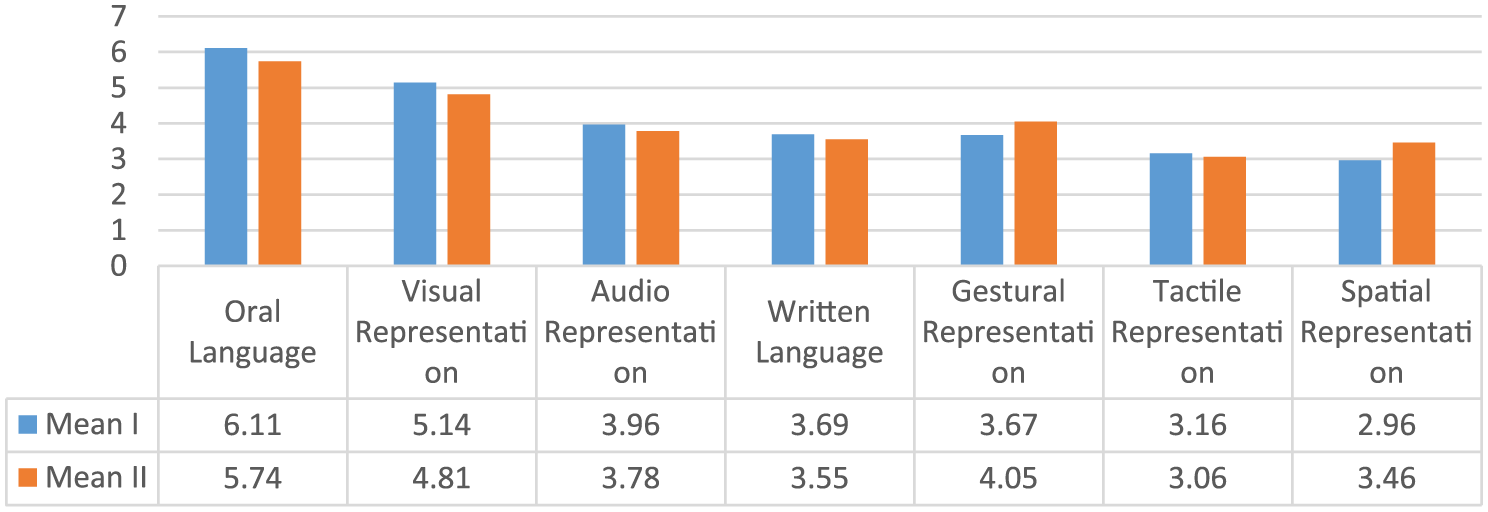
The use of multimodality in instructional design.
This means that the preservice teachers were unable to recognize the complex interweaving between different modes. This is important since our modern communication milieu is highly multimodal, incorporating oral and visual patterns of meaning making interfaced with written-linguistic, gestural, audio, tactile and spatial modes. It suggests that preservice teachers could make their pedagogy more relevant and engaging by broadening their repertoires with the use of multimodal texts and new digital media into their classroom. Such a focus would enable them to change their epistemological assumptions and consider learning as an outcome of synaesthesia (the interweaving of different meaning modes and representations) (Kalantzis and Cope, 2012).
On the other hand, participants viewed digital media as one factor in promoting profesional practice mainly through securing easy access to learning without temporal or spatial limitations (Mean I = 1.62 out of 3 and Mean II = 1.68). This impression became stronger after using the LbD design platform (cglearner) as a new professional learning space. In general terms, it seemed unclear to the preservice teachers how digital media might transform professional learning spaces. For instance, they felt that new media design spaces enhanced the sharing of professional knowledge and expertise (Mean I = 2.31 out of 3 and Mean II = 2.27). But, beyond these generic assertions, there was no real use of LbD affordances in terms of sharing and reusing published teaching plans as the basis of new professional learning or actively participating in the LbD community of practice or appreciating the innovative use of technology in fostering teachers’ self-confidence (even though attracted higher score in the final phase). This revealed a superficial understanding of using new media in their own profession and/or limited usage in their own teaching practice. Other important aspects associated with social media, such as the accessibility by both teachers and parents, their ease of use and their low cost were highly neglected. An explanation of this maybe the ‘average’ (41%) or low (3%) computer skills and exposure that the preservice teachers declared. Only 56% of participants declared a ‘very good knowledge’. LbD implementation slightly increased 6 participants’ exposure and usage of digital media, which shows that university students need more differentiated and multimodal forms of learning as well as to be exposed into a more hands-on approach during their initial education.
However, they also reported that they felt that LbD was a suitable pedagogical framework, which guided and supported their practicum experience (Figure 7).
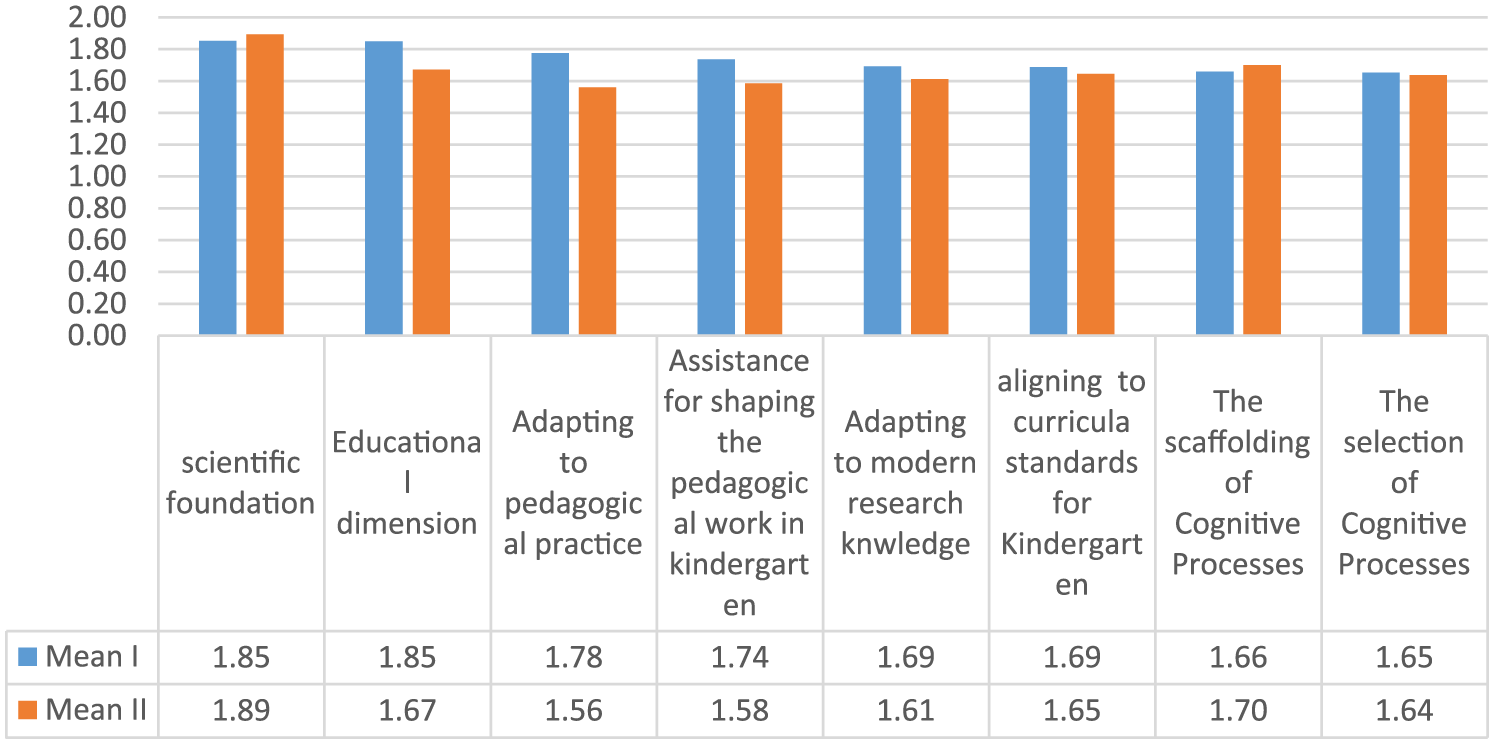
The usefulness of LbD in instructional design.
The participants reported that LbD had a strong scientific and educational foundation for developing pedagogical repertoires and aligning them with pedagogical practices and contemporary research findings. It also helped participants to align their repertoires with curriculum standards and select/scaffold their activities. After the teaching phase, the students were more confident with their new ‘scientific knowledge’ and the selection/scaffolding of activities, even though this shift was small. Finally, the LbD design blueprint was highly rated especially during the post-teaching phase, revealing participants’ familiarity with the ‘Learning Element’ (Figure 8).
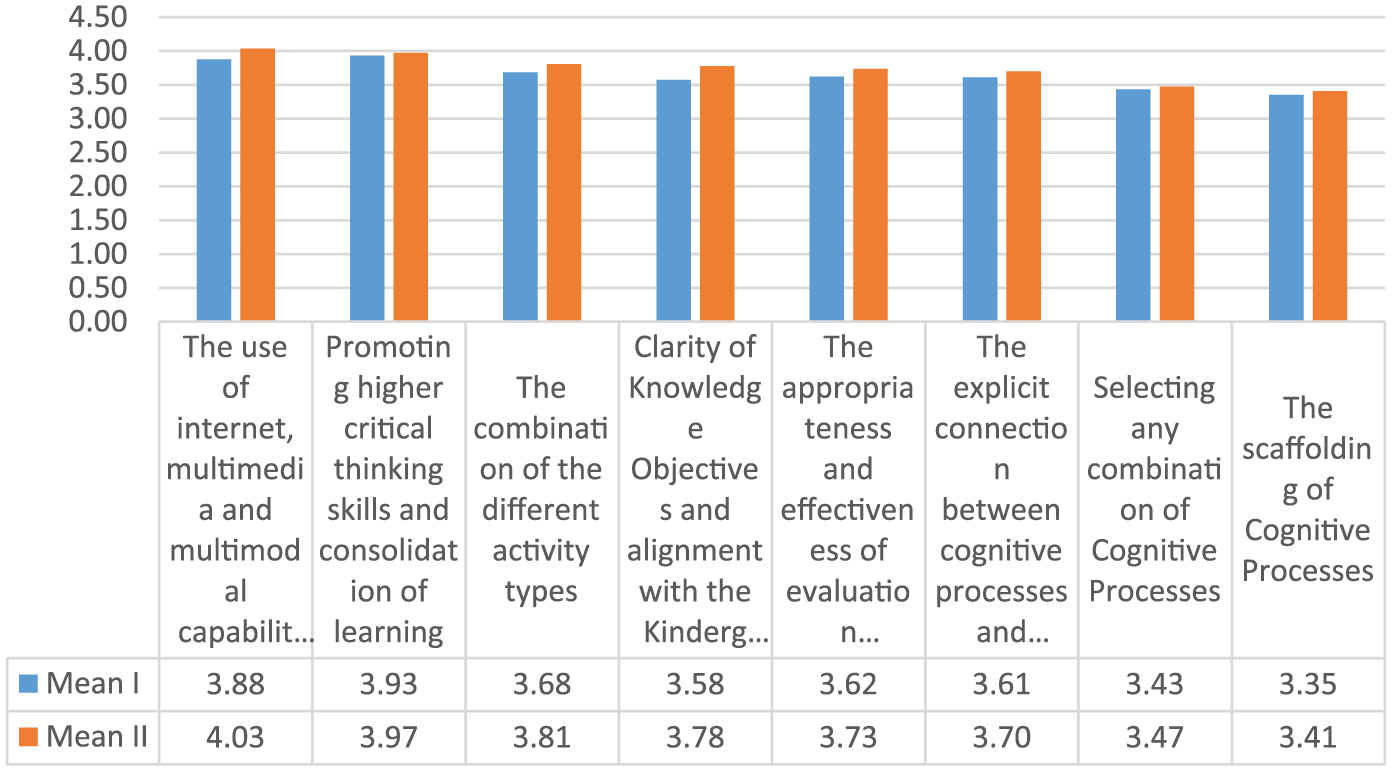
The usefulness/effectiveness of LbD as a pedagogical device.
Finally, participants felt that the design instrument (learning module/element) enhanced their ability to use digital media, multimodality and their critical thinking skills by consolidating their learning. Other affordances noted were their ability to combine activities and clarifying/aligning learning goals to curriculum, and also to evaluate appropriateness and effectiveness of student outcomes and to explicitly categorize/scaffold their activities according to the knowledge processes.
Being thoughtful about students’ learning
According to the participants, the LbD implementation during their Practicum proved to be useful to differentiate teaching planning based on learner needs (Mean I = 2.08 out of 3 and Mean II = 2.01). Another aspect was its usefulness to motivate and engage learners based on the explicit documentation and scaffolding of teaching. A small but considerable differentiation occurred between the mean scores of the initial (Mean I = 1.17 out of 3) and final (Mean II = 1.75 out of 3) phases, indicating participants’ greater interest on this point. Overall, preservice teachers evaluated LbD very positively in promoting the transformative learning of kindergarten students (almost all mean scores were higher than 4 out of 5). This became obvious especially after the teaching phase when they were able to observe tangible student/learning outcomes. Preservice teachers were enabled to focus more onto students’ learning and took satisfaction from this. Almost all mean scores of the final phase were higher, showing considerable improvement and satisfaction on the part of teachers (Figure 9).
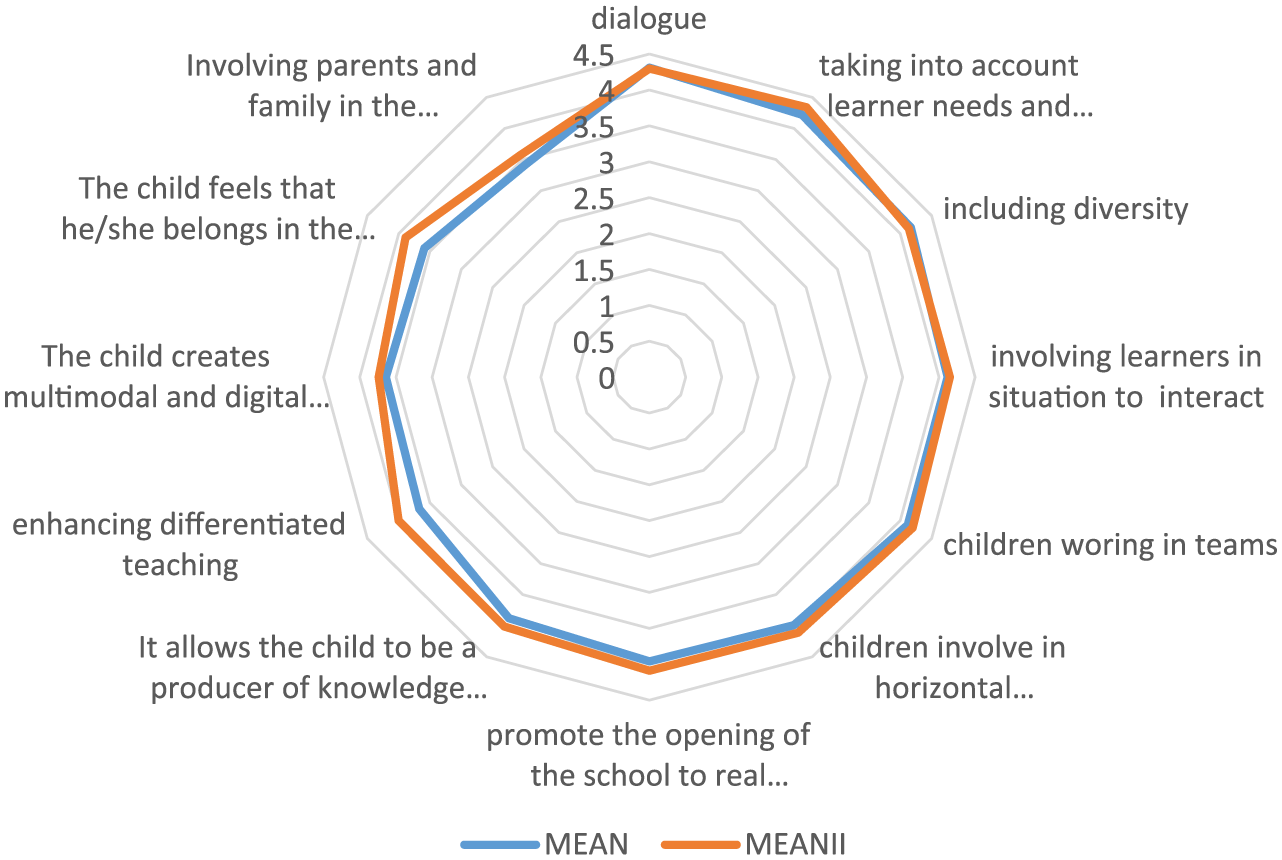
Aspects of students’ transformative learning promoted by LbD.
More specifically, according to the participants, a major LbD affordance that promoted students’ transformative learning was the enhancement of dialogue, and the fact that the approach encouraged the teacher/designer to take into account learner needs and interests. Other LbD affordances noted were as follows: the inclusive approach to diversity and the involvement of learners in situations where they were required to interact and work in teams, children’s involvement in horizontal communication and collaborative learning, the opening of the school to real world and outside class learning, the changing role of children as producers of knowledge within a framework of autonomy and self-control and, finally, the enhancement of differentiated teaching. However, less obvious was the ability to engage children in the creation of multimodal and digital knowledge spaces or to build a sense of belonging in the learning process or to involve parents and family in the educational process. Finally, LbD, according to preservice teachers, triggered children’s participation in learning mainly through inquiry-based learning (Mean I = 1.39 out of 3 and Mean II = 1.20 and group dynamics (Mean I = 1.20 out of 3 and Mean II = 1.15). Collaboration with parents and family environment, the development of a dynamic learning milieu and differentiated pedagogy became more obvious after the implementation phase, but nevertheless attracted very limited attention by this group of participants.
Concluding remarks
Changing teachers’ initial education and lifelong learning trajectories has become a real challenge for education systems as we strive to cultivate 21st-century skills for new cosmopolitan learners. Transformative education and pedagogies, even though they are evolving concepts, reframe preservice teacher education in two ways: by sustaining reflexive practices (self-directed learning and ongoing reflexivity) and through collaborative professional learning, occurring in a community setting. Both emerge as the bedrock of teachers’ professional identity. As Larrivee (2000) stated, ‘[U]nless teachers develop the practice of critical reflection, they stay trapped in unexamined judgments, interpretations, assumptions, and expectations. Approaching teaching as a reflective practitioner involves fusing personal beliefs and values into a professional identity’ (p. 293).
Reflexivity and transformative action have become a professional imperative for teacher education. Participants in this study were formally engaged in a collaborative action research practicum, where reflexivity was made possible only through explicit pedagogical suggestion, namely, the epistemic framework of LbD. Central in participants’ efforts was our desire to improve current practices particularly during the planning phase. Thus, preservice teachers were in a position to critically explore their learning assumptions, their actions/decisions and the effect they had in the learning process. They embarked on thoughtful consideration of educational theory and the LbD epistemology via the analysis of practical/personal experiences and their lesson’s effect on student learning. Teaching became more reflexive as preservice teachers associated and explicitly documented lesson planning with their student learning achievements and were able to identify points of improvement. They also developed positive professional dispositions (Mills, 2011) becoming learners in their own classrooms.
However, it was also apparent that reflexivity was not an end in itself. Reflection is fluid process and in many instances was inculcated through explicit articulation of instructional design steps or tangible learning outcomes by students or teachers. Despite initial difficulties, the preservice teachers became more self-aware about their professional qualities regarding teaching design and collaborative learning. Their role was reframed only when they had to adopt a thinking approach (introspectively and collaboratively) during their Practicum and based on an explicit pedagogical framework. Reflection came as retrospection of a situation, self-evaluation of actions and reorientation (change own practice) in Quinn’s terms (2000: 82). Student teachers, during their weekly group discussions, their team work and their contact with experts and class teachers were able to be involved in deeper thinking about effective instructional design. The depth of their critical and reflexive approach, though, lies beyond the scope of this study and demands further examination.
Footnotes
Acknowledgements
I am grateful to Professor Maria Sakellariou for her valuable support in this research.
Funding
The author(s) received no financial support for the research, authorship and/or publication of this article.