



Abstract
This article discusses findings from a recent survey (n = 297) of teachers’ views of both their own and their students’ experiences during the 2021 enforced emergency remote schooling period occurring in New South Wales Australia, due to the COVID-19 pandemic. The quantitative analysis reported here explores teachers’ views regarding teaching and learning during this challenging period. It identifies three latent constructs, learning, assessment, and interaction, and then uses structural equation modelling to identify the perceived impact of these constructs on student and teacher wellbeing. The remote schooling period had a significant negative impact for teachers and their students across a range of elements of teaching and learning, as well as wellbeing. Student learning experiences and their peer interactions were found to be strong predictors of students’ wellbeing outcomes. Assessment design and teachers’ feedback to students were significant in predicting levels of teacher wellbeing. Future research directions are also provided.
Keywords
Introduction
During 2020 and 2021, the world experienced a complete disruption of schooling due to the COVID-19 pandemic and the consequent lockdowns and quarantine periods that prevented students from physically attending school campuses. The alternative schooling during lockdown periods took place through what was known in Australia and elsewhere (Bond et al., 2021; Bozkurt & Sharma, 2020) as ‘emergency remote schooling’. Numerous studies have examined the remote schooling experience during the pandemic, both from the teachers’ perspectives and through examining learning outcomes of students (e.g., An et al., 2021; Bond et al., 2021; Ewing & Cooper, 2021). However, few studies have fully explored the impact of the remote schooling period on student and teacher wellbeing. This quantitative study adopted a survey method to explore primary and secondary teachers’ experiences of the emergency remote schooling period that occurred in New South Wales (NSW), Australia, from June to October 2021. This method enabled the collection of a larger number of participant views than would be available in case study research and provided an opportunity to explore insights derived from statistical analysis. The survey initially examined participants’ perceptions of their students’ learning, assessment, and interactions, before exploring their views of their students’ wellbeing and their own wellbeing during this period.
The study was conducted by surveying a sector of the NSW school education system over November and December 2021, while the lockdown experience from a few months earlier was fresh in participants’ memories. Two-hundred and ninety-seven teachers participated in the study. The research questions for this study are: 1. What were teachers’ perceptions of their students’ experiences during the remote schooling period? 2. What was the impact of these experiences on: a) perceived students’ wellbeing and b) teachers’ own wellbeing?
Background
The literature relevant to this study focuses on learning and teaching experiences during the emergency remote schooling periods caused by the pandemic. Much of this literature focuses on either students’ engagement or students’ wellbeing. The focus of many studies is on the effects of online learning and blended learning approaches during this period.
Students’ Experiences of Remote Schooling During the COVID-19 Pandemic
A number of studies have been conducted to investigate school students’ learning and engagement during the recent remote schooling periods (Ewing & Cooper, 2021; Gore et al., 2021). Both teachers and students had to adjust to new ways of learning and there was much research interest in student engagement with new pedagogies.
In Australia, Ewing and Cooper (2021) conducted 40 interviews with students, teachers, and parents to seek their perspectives of the remote schooling period. Teacher participants prioritised connecting with and engaging their students. However, the students felt that remote learning was less personalised and that they were less engaged with both their teachers and peers. Although both teachers and students affirmed their confidence in using technology for remote learning, its failure to deliver the same engagement as face-to-face learning in the classroom indicated that underlying pedagogies and learning designs needed attention. Longmuir et al. (2021) surveyed 241 final year Australian secondary students about their remote schooling experiences. The students placed a high value on social connections with teachers and peers. Teachers were seen as a source of support and contributed significantly to students’ motivation for learning and wellbeing. Another survey of 527 students, teachers, and parents in eight Australian schools showed that lack of social interaction during the period of remote schooling resulted in loss of engagement and motivation for most students (Maher, 2021). This suggested that more time should be devoted to social engagement in any future remote schooling period.
Internationally, a synthesis of research on secondary school students’ experiences of blended and online learning during the pandemic found that many of the studies explored student engagement (Bond et al., 2021). A common theme was that providing students with opportunities for peer collaboration was vitally important during remote schooling, as peer-to-peer interaction created a sense of social presence and inclusion that was critical for student engagement. Online formative assessments were also found to be useful for ascertaining students’ understanding and engagement. Yates et al. (2021) explored New Zealand senior high school students’ experiences of learning at home during the COVID-19 pandemic. The students most valued their teachers’ provision of supportive pedagogies to enhance their motivation to study. They also valued being able to make academic progress and to sustain their social and emotional wellbeing.
An et al. (2021) used survey and interview methods to explore 107 K-12 teachers’ perspectives on online teaching during the early stages of the COVID-19 pandemic in the Unites States of America (U.S.A.). The researchers found that the major challenges faced by teachers included lack of student participation and engagement and concerns about their students’ physical, mental, and social wellbeing. Wagner (2022) used an online teacher inquiry model with six U.S. K-5 teachers to generate practice-based knowledge about emergency remote schooling. The teachers stressed the importance of community building in online learning, including use of informal social spaces to build relationships with peers and teachers to support student engagement with learning. To investigate how three perceived psychological needs (autonomy, competence, and relatedness) affected student engagement, Chiu (2022) surveyed 1201 Grade 8 and 9 students in Hong Kong before and after they engaged in online learning during the pandemic. Findings indicated that relatedness was the most important of the three needs in student engagement, and that teachers should ensure that supporting relatedness was the primary focus of online learning by building a sense of belonging through social interaction.
From the beginning of the pandemic concern has been expressed about the impact of the COVID-19 crisis on student wellbeing (Brown et al., 2020; Clinton, 2020; Lee, 2020; Ziebell et al., 2020), and literature specific to the wellbeing of students during that time has begun to emerge, including reports of increased mental health issues among students (Schwartz et al., 2021; Zhang et al., 2020).
Evidence from interviews conducted with 12 teachers and 6 school leaders from 13 Australian schools when schools reopened after the first wave of COVID-19 in 2020, indicated that almost all the teachers and school leaders had significant concerns about the wellbeing of students (Fray, Jaremus, Gore, & Harris, 2022). They reported increased stress and anxiety, aggression in the classroom, poor social interaction, and decreased engagement among students. Similarly, a survey of 760 Australian adolescents (aged 12–18) to assess the psychological and lifestyle impact of the pandemic found that three-quarters of the sample experienced worsening mental health, with almost half reporting distress levels indicative of probable mental illness (Li et al., 2022). Over 95% of the adolescents had engaged in remote schooling, and almost two-thirds of those felt that the pandemic had negatively impacted their learning. They identified lack of motivation as the biggest challenge to their learning.
The primary finding from a systematic literature review of the effects of the pandemic on schools in the U.S.A. was the detrimental effect of school closures on students’ social and emotional wellbeing, which affected their engagement in remote schooling across K-12 (Huck & Zhang, 2021). Analysis of the literature led Huck and Zhang to the view that sustained student participation in remote schooling required prioritisation of communication, interactive, synchronous instruction, and differentiated learning practices. Ryan (2021) reported on students’ perceptions of 12 weeks of fully synchronous online learning during a U.S. school’s closure due to COVID-19. Analysis of a series of focus groups with 21 students from grades 6–12 (three from each grade) identified that the students would have preferred a hybrid approach utilising synchronous and asynchronous modes. Students reported that being online for long periods of time had a large physical, emotional, and psychological toll on them. They felt that teachers were unaware of the many stresses that impacted their learning. Ryan (2021) concluded that content learned should be secondary to the socioemotional needs of students during a crisis such as an emergency remote schooling period, agreeing with findings from Bozkurt and Sharma (2020) and UNESCO (2020).
Teacher Wellbeing During the Pandemic
A number of studies on teacher wellbeing during the pandemic are discussed in this section. In Australia, a mixed-methods study utilised a comparison of survey data collected prior to the pandemic in 2019, with data collected after the first 8-week school closure in 2020 (n = 362) as well as interviews with 18 teachers and school leaders (Fray, Jaremus, Gore, Miller, & Harris, 2022). The results showed a significant decline in teacher morale and efficacy, despite the relatively short period of closure. Teachers reported that the pressure to adapt to remote schooling had challenged their confidence in their teaching and they felt dispensable and unappreciated. Van Bergen and Daniel (2022) used an online survey to map Australian K-12 teachers’ positive and negative experiences during remote schooling due to COVID-19. The majority (88.6%) of the 210 teacher respondents reported negative experiences, including excessive workload, missing their students, challenges in meeting students’ wellbeing needs, and tracking students’ progress online. Findings from a quantitative survey of 534 teachers around Australia revealed that during the COVID-19 pandemic, teachers experienced high levels of stress, low levels of positive emotions, and often felt unsafe at work (Billett et al., 2022). This negatively impacted their wellbeing and self-efficacy. In a large-scale national survey of Australian K-12 teachers to investigate the impact of COVID-19 on education, teachers raised concerns about their personal health and wellbeing during school closures, citing feelings of isolation and stress (Ziebell et al., 2020). They reported exhaustion due to the additional workload created by remote schooling. Some of the teachers were teaching both on-site and remotely at the same time. A study based on data collected from 325 Australian teachers during the first wave of COVID-19 found that teachers were much more stressed if they were teaching both remotely and in school than if they were teaching remotely only (Collie, 2021). The results also showed that school leadership that encouraged teacher agency was associated with lower stress related to change and lower levels of emotional exhaustion.
There is also international evidence that teachers experienced high levels of stress during the pandemic (MacIntyre et al., 2020; Silva et al., 2021). A study of 1633 teachers in Spain found that a high percentage of the teachers showed anxiety, depression, and stress symptoms when schools reopened after closures due to the pandemic (Ozamiz-Etxebarria et al., 2021). A mixed-methods study involving 151 elementary teachers in the U.S. found that during remote schooling, the majority of teachers in the sample experienced elevated stress and reported feeling emotionally exhausted due to increased workload and perceived ambiguity in their duties (Chan et al., 2021). The findings identified a need to support teacher mental health by providing more workplace emotional support, autonomy and flexibility, and facilitating perceived teaching competency. A quantitative study of more than 7000 teachers in the U.S. reported that the move to remote schooling caused a significant decline in the teachers’ sense of success (Kraft et al., 2021). Teachers who experienced supportive working conditions, including strong communication, fair expectations, recognition of effort, meaningful collaboration with colleagues, and targeted professional development were least likely to experience a drop in their sense of success. Kim et al. (2022) reported on interviews with 24 state school teachers in England across three time points during the pandemic (April, July, and November 2020) about their mental health and wellbeing experiences. Results showed that teachers’ mental health and wellbeing declined. Factors that contributed negatively were uncertainty, increased workload, negative perception of the teaching profession, concern for others’ wellbeing, health problems, and juggling multiple roles. Factors that contributed positively were social support, work autonomy, and personal coping strategies, including exercise.
In summary, most studies conducted during the pandemic show that for students, social interaction and community building were important for engagement. Students found teacher support, hybrid modes of learning, and progress in their learning positively affected their wellbeing. Teachers reported challenges to their wellbeing occurred in terms of workload, time management and managing their students’ motivation and wellbeing.
This study seeks to identify and interrogate the major pedagogical constructs that teachers perceived as central to students’ experiences during the 2021 remote schooling period. It then explores the relationship between these constructs and teacher and student wellbeing.
Methodology
An online survey was developed consisting of several types of questions. The first half of the survey, the focus of the current article, included 12 Likert scale items to quantify perceptions and experiences during the remote schooling period of 2021 consistent with the research questions. The second half of the survey included several open-ended items about teaching practices during the 2020 and 2021 school lockdowns, and intentions beyond these remote schooling periods. The data collected from the first half of the survey was used in two ways: first using exploratory and confirmatory factor analysis, we examined whether the perceived experiences relating to learning, assessment, and interactions could be used to identify underlying latent constructs representing different aspects of these experiences. The second part of the analysis proceeded to use these latent constructs and other independent variables to examine the extent to which each explained variation in teacher and student wellbeing using a structural equation model. Full details of how the analysis proceeded in these two stages are provided in the next section.
With reference to the specific survey questions and response scale used, the first part of the survey asked teachers about their perceptions of their students’ experience in nine questions relating to students’ learning, assessment and feedback, and interactions among peers. The full list of measurement items used is presented in the first column of Table 2 (located in Results section). Teachers were asked to score each survey item using a five-point Likert scale. The scale points consisted of two negative options (negatively affected, slightly negative affected), one neutral option (no effect at all), and two positive options (slightly positive affected, positively affected).
The multi-item measures were developed by the authors to investigate the study’s research questions. The design of these items aimed to provide reflective measures relating to outcomes of student learning, assessment and feedback, as well as interactions among peers. To provide a reliable measure of each underlying construct, each was associated with a minimum of two measurement items (Diamantopoulos & Siguaw, 2006). The items were piloted on two schools in the remote schooling period of 2020 and, based on that feedback, were amended for this survey of the 2021 emergency remote schooling period. An evaluation of their reliability and validity as proposed measures of remote schooling experiences (Hair et al., 2021) is undertaken in the next section.
The questions relating to the dependent variables focused on evaluating the remote schooling experience in relation to student and teacher wellbeing. Teachers were also asked to report on how the remote schooling period affected their own interactions with colleagues and students. Again, each respondent was to nominate the level by which their experiences had been affected using a five-point Likert scale ranging from negatively affected to positively affected.
Owing to the pandemic context at the time of the survey, the high workload requirements for respondents at that time, and the desire of the research sponsor to reduce demands on busy teacher participants, the usual range of socio-demographic measures describing teachers and their teaching environment (e.g. school size) were not included in the survey instrument to meet the sponsor’s requirement for the survey to be brief. Only variables relating to school level (primary and/or secondary) and the geographic location of the respondent were collected, which were used as control variables below.
Sampling Approach and Profile
Teacher respondents were recruited to the online survey via emails sent to them by the funding sector’s own database of teachers working across 502 schools in NSW, Australia. A total of 297 usable responses were obtained.
Geographic distribution of sample.
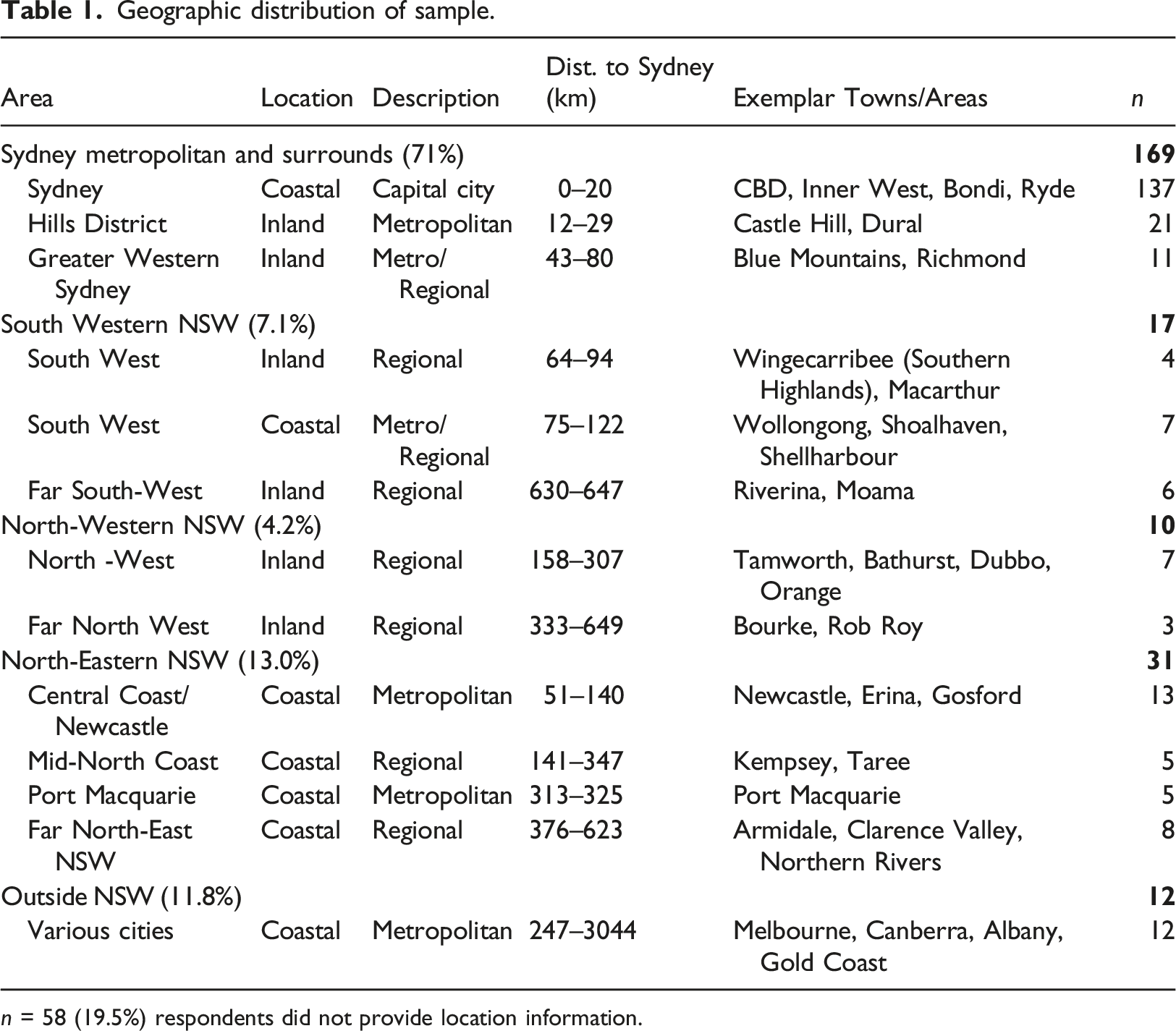
n = 58 (19.5%) respondents did not provide location information.
Analysis
The analysis consisted of two stages, consistent with appropriate approaches to understanding the relationship between multi-item reflective measures of independent constructs and related dependent variables (Bagozzi & Yi, 1988; Ullman, 2006). First, an exploratory factor analysis (EFA) and subsequent confirmatory factor analysis (CFA) were estimated using Mplus Version 8.2 (Muthén & Muthén, 2017) to identify underlying correlations in the data. The objective of these two approaches was to identify whether the observed ratings for multiple measurement items were representative of several underlying latent constructs relating to the experiences of the remote schooling period in 2021. Second, these underlying latent constructs were then used as independent variables to address our second research question, which was to understand and quantify how each impacted outcomes relating to teachers’ perceptions of changes to their students’ and their own wellbeing over the pandemic period. To do so, a structural equation model (SEM) was estimated again using Mplus, with the two measures of wellbeing acting as the dependent variable in the analysis. In addition to the latent constructs identified, additional variables relating to geographic location and school setting (primary, secondary) were also used as independent variables in the estimation of the SEM to control for differences across settings. The significance of the parameter estimates from the SEM were then examined to make conclusions about whether a latent factor or any of the independent variables are significant in explaining changes in teachers’ perceived levels of (student and teacher) wellbeing over the pandemic teaching period.
As aforementioned, in the first stage of analysis, EFA followed by CFA was undertaken. Factor analysis seeks to identify which variables are correlated such that they can be used as reliable, but observable measures, of a latent construct. For example, a respondent indicating that students’ opportunities to consolidate knowledge were adversely affected by the remote schooling period may similarly report that their students’ opportunities to consolidate practice skills and to learn new concepts were also negatively affected. A different teacher may indicate that these three aspects of students’ learning experiences may be positively affected. On the other hand, the manner in which a teacher responds to these three items may be entirely uncorrelated with measurement items pertaining to their reported perceptions of student relationships in terms of opportunities to interact and how peer-to-peer relationships have been affected. EFA approaches the data by being flexible about the number of factors and the nature of which items group together as reflective measures of an underlying construct. CFA is then used to confirm each of the identified measurement items as reliable reflective measures of one construct, whilst not being used as a reflective measure of any other latent construct. That is, in CFA the number, meaning, associations, and patterns in the factor loading matrix are specified a priori before analysis of the data (Bollen, 2002) and, as such, EFA is used here as an important pre-cursor to CFA to inform how to specify the measurement model (Cudeck & MacCallum, 2007).
The second stage of the analysis examines whether the underlying latent constructs emerging from the EFA and CFA stage of analysis are predictive of changes that teachers perceived in a) their own wellbeing and/or b) their students’ wellbeing. To do so, a structural equation model (SEM) was used as the methodology to make this evaluation (Bagozzi & Yi, 1988; Ullman, 2006). The SEM provides estimates of path coefficients that show the impact of changes in the latent constructs on the two dependent variables of wellbeing along with accounting for differences in settings by which the teacher conducts their interactions with students (e.g. primary school setting).
Results
In the first half of the results reported below, we address the first research question to outline teachers’ perceptions of their students’ experiences during the remote schooling period. These results emerge from examining the distribution of responses to the various measurement items and the descriptive statistics of the latent constructs emerging from the EFA and CFA, which indicated which measurement items could be considered together as reliable and valid reflective measures of these underlying constructs.
Descriptive statistics and factor loadings.
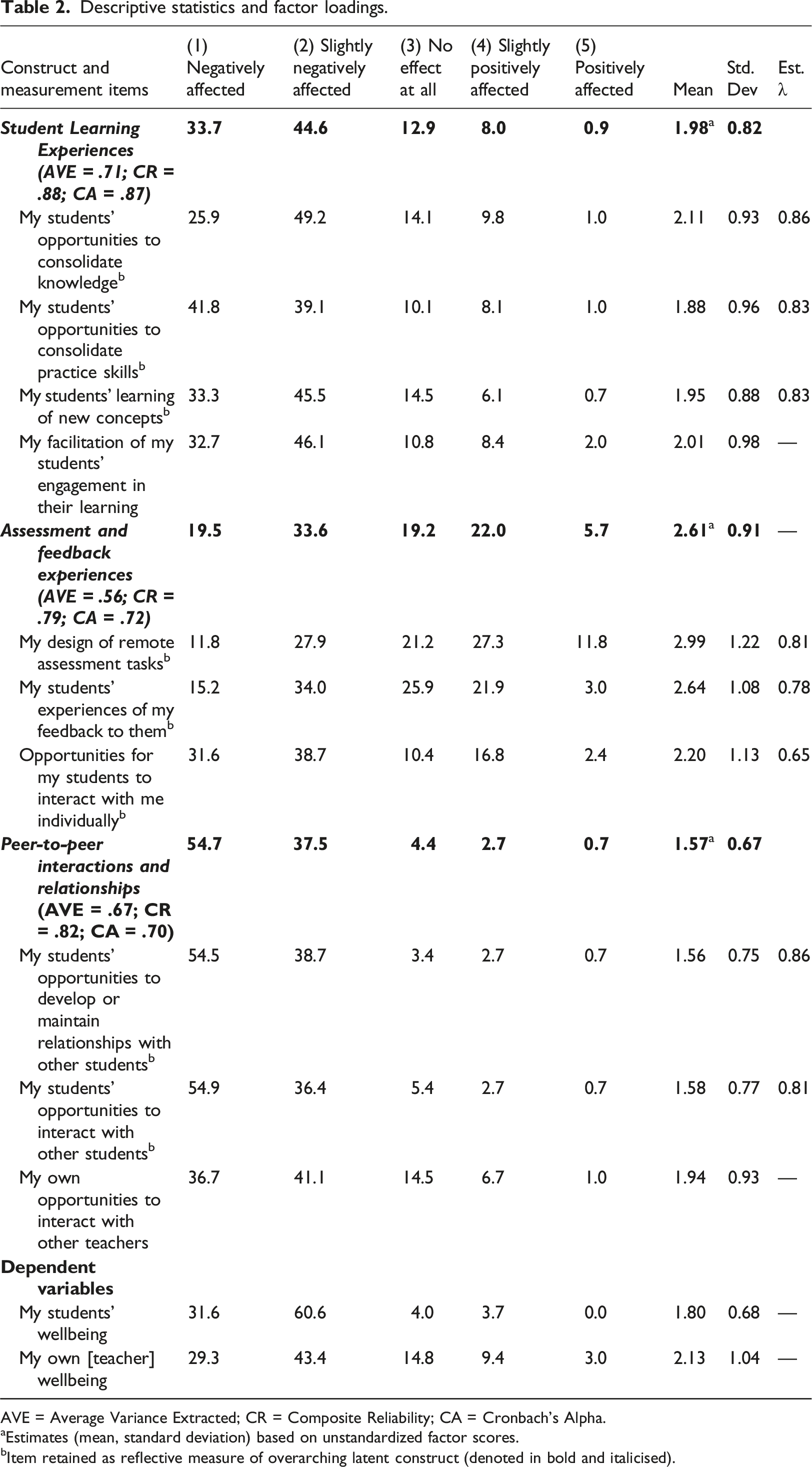
AVE = Average Variance Extracted; CR = Composite Reliability; CA = Cronbach’s Alpha.
aEstimates (mean, standard deviation) based on unstandardized factor scores.
bItem retained as reflective measure of overarching latent construct (denoted in bold and italicised).
The reliability and validity of the remaining eight measures were analysed and reported in Table 2 for each construct. The average variance extracted (AVE) for all items was above the required benchmark of 0.5 to establish convergent validity (Bagozzi & Yi, 1988). The composite reliability and Cronbach Alpha’s derived for each construct were above 0.7 in all three cases, indicating that the chosen measures were reliable reflective measures of the corresponding constructs (Fornell & Larcker, 1981). Discriminant validity was also confirmed by determining that the squared correlation between any two constructs was less than either of their respective AVEs (Fornell & Larcker, 1981). Each of the emerging constructs and underlying reflective measures are now reviewed in more detail.
Student Learning Experiences
Teachers were asked about their students’ learning experiences over the remote schooling period in relation to three measures: 1) students’ opportunities to consolidate knowledge, 2) students’ opportunities to consolidate practice skills, and 3) students’ learning of new concepts. The results pertaining to these perceptions are reported for the three items in Table 2 under Student Learning Experiences. Specifically, close to eight in ten teachers (79%) reported that their students’ learning of new concepts was negatively affected by the remote schooling period. Three-quarters of teachers (75.1%) indicated that their students’ opportunities to consolidate knowledge were negatively impacted, and more teachers (81%) reported that students’ opportunities to consolidate practice skills were also negatively affected. The EFA and CFA indicated that teachers’ responses to these three questions were reliable reflective measures of the same underlying latent construct, which we label Student Learning Experiences (see Table 2 for the factor scores and measurement properties). Examining the unstandardized factor scores for this construct, the mean overall impact of student learning was estimated to be 1.98 out of 5, equating to a slightly negative effect overall.
Interactions and Relationships
The area of experiences during the remote schooling period that was most severely affected was that of interactions and relationships, particularly among students, as noted in the list of items pertaining to Peer-to-Peer Interactions and Relationships listed in Table 2. Specifically, more than nine out of ten teachers (91%) reported that their students’ opportunities to interact with their peers had been negatively affected by the COVID-19 school lockdown. A similar number of teachers (93%) reported that their students’ abilities to develop or maintain relationships with their peers had been negatively affected over this period. The EFA and CFA indicated that these two items were suitable reflective measures of a single latent construct we label Peer-to-Peer Interactions and Relationships (see Table 2). Using the unstandardized factor scores for this latent construct, it is determined that, overall, an average of 1.6 out of 5 on a scale of impact, indicated that the perceived impact of the remote schooling period on students is that peer-to-peer interactions and relationships for the vast majority of students had been negatively or slightly negatively affected.
Teachers were also asked to report on their own relationships with their colleagues. As noted in Table 2, the construct representing variation in student relationships over the pandemic differs to the variation reported by teachers about their relationships with colleagues over the same period. When asked about the impact of the remote schooling period on their opportunities to interact with other teachers, close to four out of five teachers (78%) indicated that teacher-with-teacher interactions had been negatively affected. Whilst the results suggest that the remote schooling period was more damaging to students’ peer interactions, it is clear that the remote schooling period also negatively affected teachers’ own relationships. As reported in the next section, the remote period also affected teachers’ relationships with students, with the opportunities for teachers to interact with individual students reduced.
Assessment and Feedback
Part of the survey aimed to gauge how the remote schooling period affected teachers' design of appropriate assessment tasks (the specific questions asked are listed under Assessment and Feedback, column 1, Table 2). Teachers’ perceptions about students’ experience of feedback provided by their teacher were also investigated. The survey also considered whether the opportunities for students to interact with their teachers on a one-on-one basis had been positively or negatively affected. The results indicate that Assessment and Feedback was the construct that was least impacted by the remote schooling period.
The design of remote assessment tasks was perceived as the most positive aspect of the remote schooling period indicated by the survey results. Nevertheless, while roughly two in five teachers responded that the remote period had provided a positive effect on assessment design, the same number of teachers had reported a negative outcome on the same dimension.
Teachers’ provision of adequate feedback to students was slightly negatively affected by the remote schooling period. Around half of the participants perceived that students’ experiences of teacher feedback had been negatively impacted over the remote schooling period. Around one in four reported no change, whilst a similar number of teachers reported positive outcomes with respect to students’ experiences of teacher feedback.
The dimension of Assessment and Feedback that was most negatively affected by the remote schooling period, was opportunities for teachers to interact with their students on an individual basis. Seven out of ten teachers reported that their opportunities to do so had been negatively affected. Interestingly, one in five teachers had positive outcomes with respect to teacher-student interactions over the remote schooling period.
Overall, based on the unstandardized latent factor scores for this construct (see Table 2), the combined impact of the remote schooling period on student assessment and feedback, including opportunities for students to interact with their teachers, had been close to neutral, but somewhat negative. The underlying latent score associated with the three items resulted in an average of 2.6 out of 5 on the scale of impact, which is between slightly negatively affected and no change at all.
Teacher and Student Wellbeing
Teachers were asked to indicate how the period of remote schooling during 2021 affected themselves and their students. The survey first asked teachers to consider the question of ‘How did the period of remote schooling in 2021 affect each of the following in relation to you and your teaching experience?’. Teachers were then asked specifically about two aspects of wellbeing: i) their own wellbeing and ii) student wellbeing. Teachers reported on their perceptions using a five-point Likert scale with response options: (1) Negatively affected, (2) Slightly negatively affected, (3) No effect at all, (4) Slightly positively affected, or (5) Positively affected.
Examining the distribution of responses to the first item, the impact of the pandemic on teacher wellbeing, the majority of teachers reported that their experiences were largely negative (see Table 2). Specifically, close to three out of four teachers (73%) reported that their own wellbeing had been negatively impacted during the remote schooling period. This equates to an average of 2.13 out of 5; hence, on average, the impact on teacher wellbeing was slightly negatively affected (2 out of 5). On the other hand, more than one in ten teachers (13%) reported that their wellbeing had positively improved during the remote schooling period, and 14% reported no change in their own wellbeing across the same period.
Teachers were also asked to report on their overall perceptions of their students’ wellbeing during the remote schooling period of 2021. More than 9 out of 10 teachers (92%) reported that their students’ wellbeing had been negatively affected by the lockdown period; only 4% indicated their students’ wellbeing had been slightly positively affected (i.e. a rating of ‘4’ out of ‘5’) and no respondents indicated that their students’ wellbeing had been positively affected (i.e. a rating of ‘5’). Similarly, 4% indicated no change in student wellbeing over the lockdown period. In this regard, teachers appear to have judged the remote schooling period as having a more adverse effect on their students’ wellbeing than their own.
Drivers of Wellbeing
The second stage of the analysis was to determine whether the underlying latent constructs were predictive of changes that teachers perceived in a) their own wellbeing and/or b) their students’ wellbeing. This speaks to our second research question which aimed to report on the impact of teachers’ perceived experiences relating to assessment, learning and relationships on students’ and teachers’ wellbeing. A structural equation model (SEM) was used as the methodology to make this evaluation (Ullman, 2006; Bagozzi & Yi, 1988).
As presented in Figure 1, the SEM simultaneously estimates the extent to which each of the latent constructs relating to the independent variables (Student Learning Experiences, Assessment and Feedback Experiences, Student Interactions and Relationships) are reliably measured by eight reflective items. The model then shows how each of these latent constructs significantly drives two outcomes: perceived student wellbeing and teacher wellbeing. The model also includes the single-item measure relating to teacher interactions used to predict changes in teacher wellbeing, which was found to be uncorrelated with the latent construct pertaining to peer-to-peer student interactions and relationships. In addition, the SEM model included several control variables accounting for variation in wellbeing across settings relating to school level (primary or secondary), as well as geographic location (e.g. capital city vs. inland regional location). Finally, the model indicates correlation between student and teacher wellbeing. Structural model of wellbeing.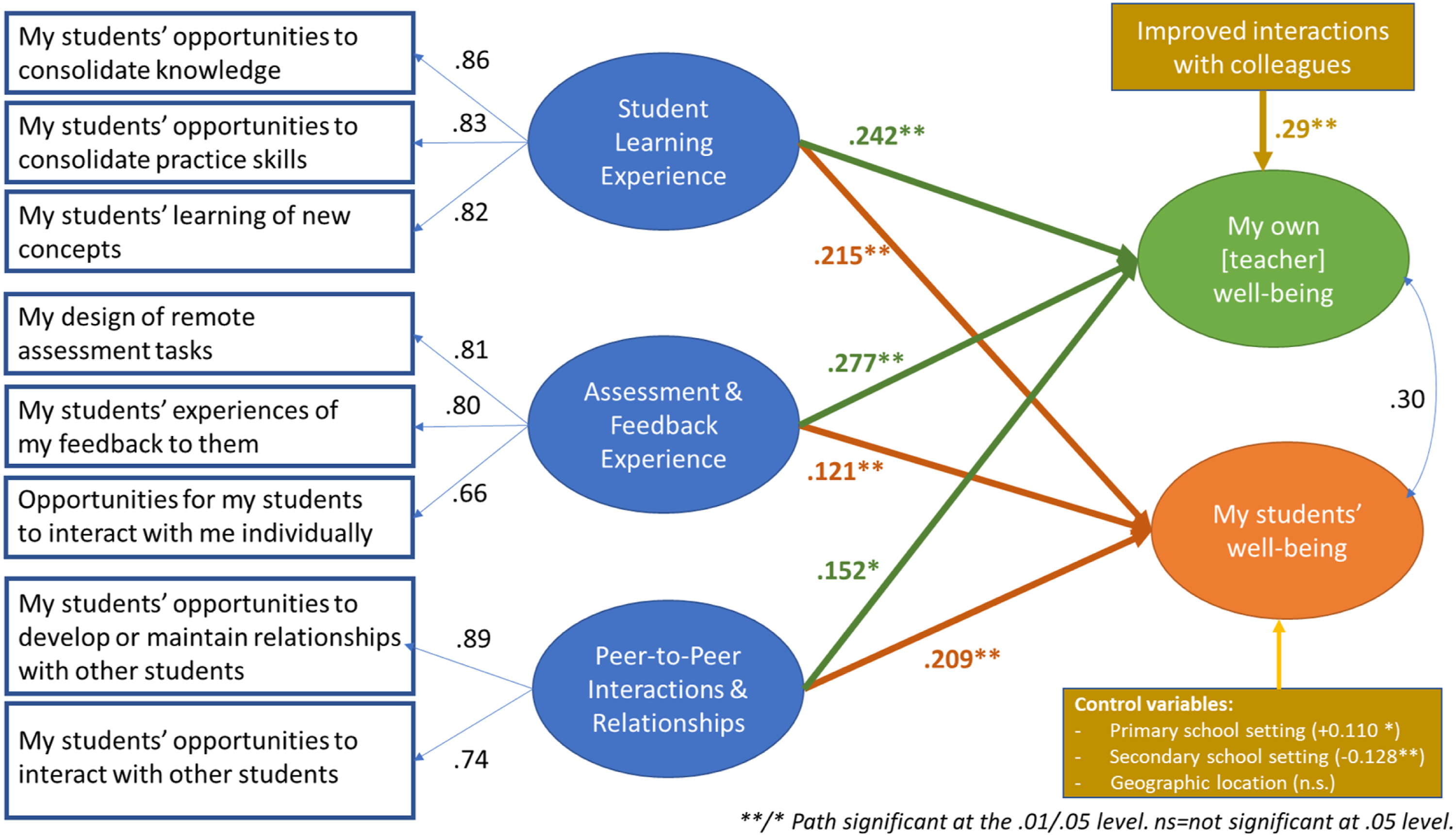
SEM model parameter estimates of path coefficients (Teachers’ Perceptions of Wellbeing).
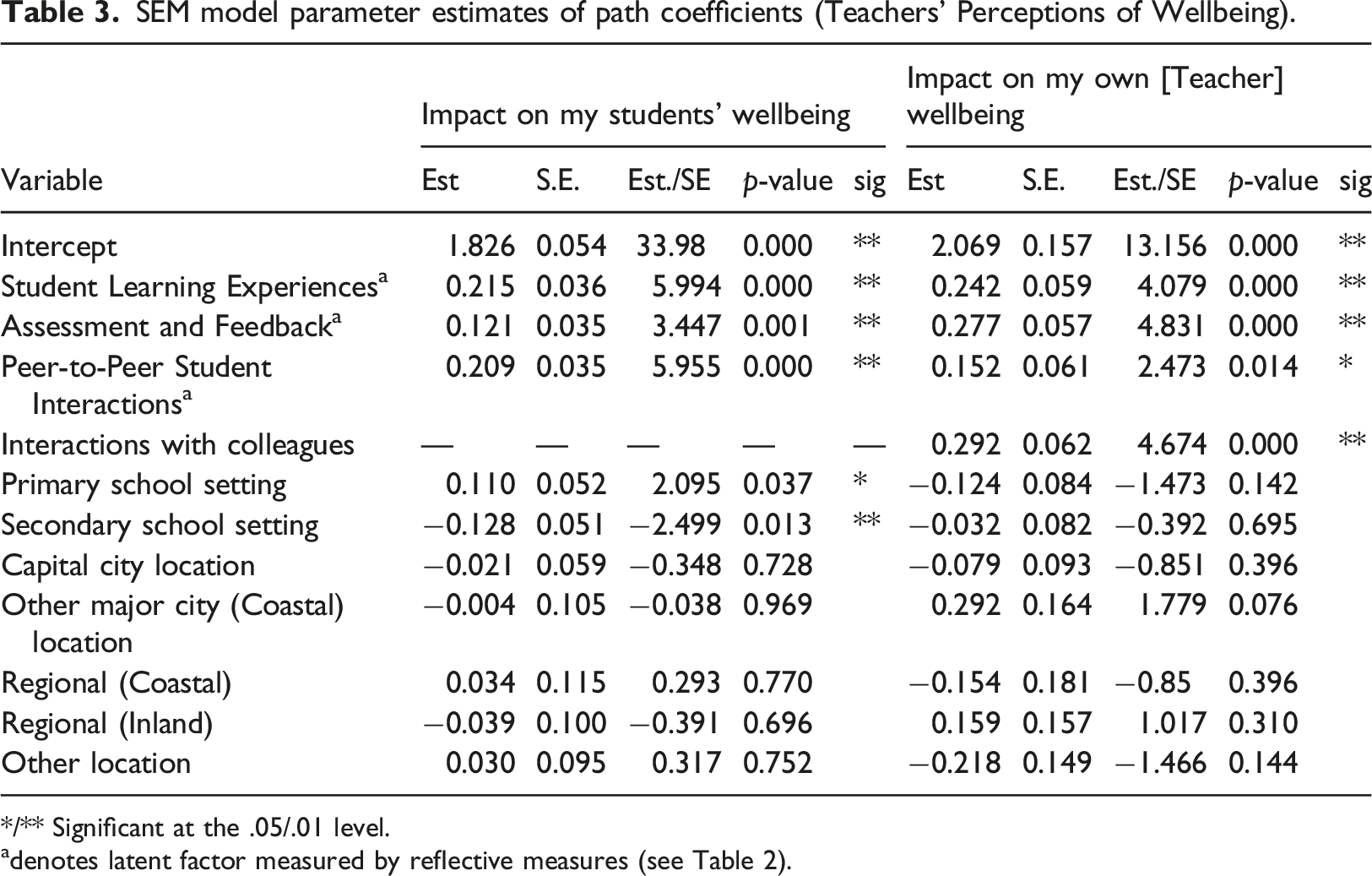
*/** Significant at the .05/.01 level.
adenotes latent factor measured by reflective measures (see Table 2).
Teacher wellbeing over the remote schooling experience was also significantly affected by all three latent constructs included in the model. Of these three latent constructs, the biggest predictor of teacher wellbeing was teachers’ effective assessment and feedback during the remote period (β = .277; t = 4.831; p < .001). Teacher wellbeing was then predicted to be improved by improvements to the student learning experience (β = .242; t = 4.079; p < .001), followed by increased occurrences of peer-to-peer student interactions (β = .152; t = 2.473; p < .05). Finally, increased opportunities for teachers to interact with their colleagues over the pandemic period was found to be a positive and significant predictor of teacher wellbeing outcomes (β = .292; t = 4.674; p < .001).
A visual representation of the focal independent variables (latent constructs) and their predicted impact on the two wellbeing outcomes are illustrated in Figure 2 based on the mean parameter estimates of the path coefficients reported from the SEM. This illustrates that variation in teachers’ perception of student wellbeing during the remote schooling period was better explained by students’ learning experiences and students’ interactions and relationships with their peers. In contrast, variation in a teacher’s own wellbeing was more significantly related to variation in the teacher’s remote assessment task design and feedback. The interaction among students themselves bore less impact in explaining a teacher’s own wellbeing relative to the two other factors examined concerning learning and assessment experiences. Drivers of wellbeing: Comparison of parameter estimates.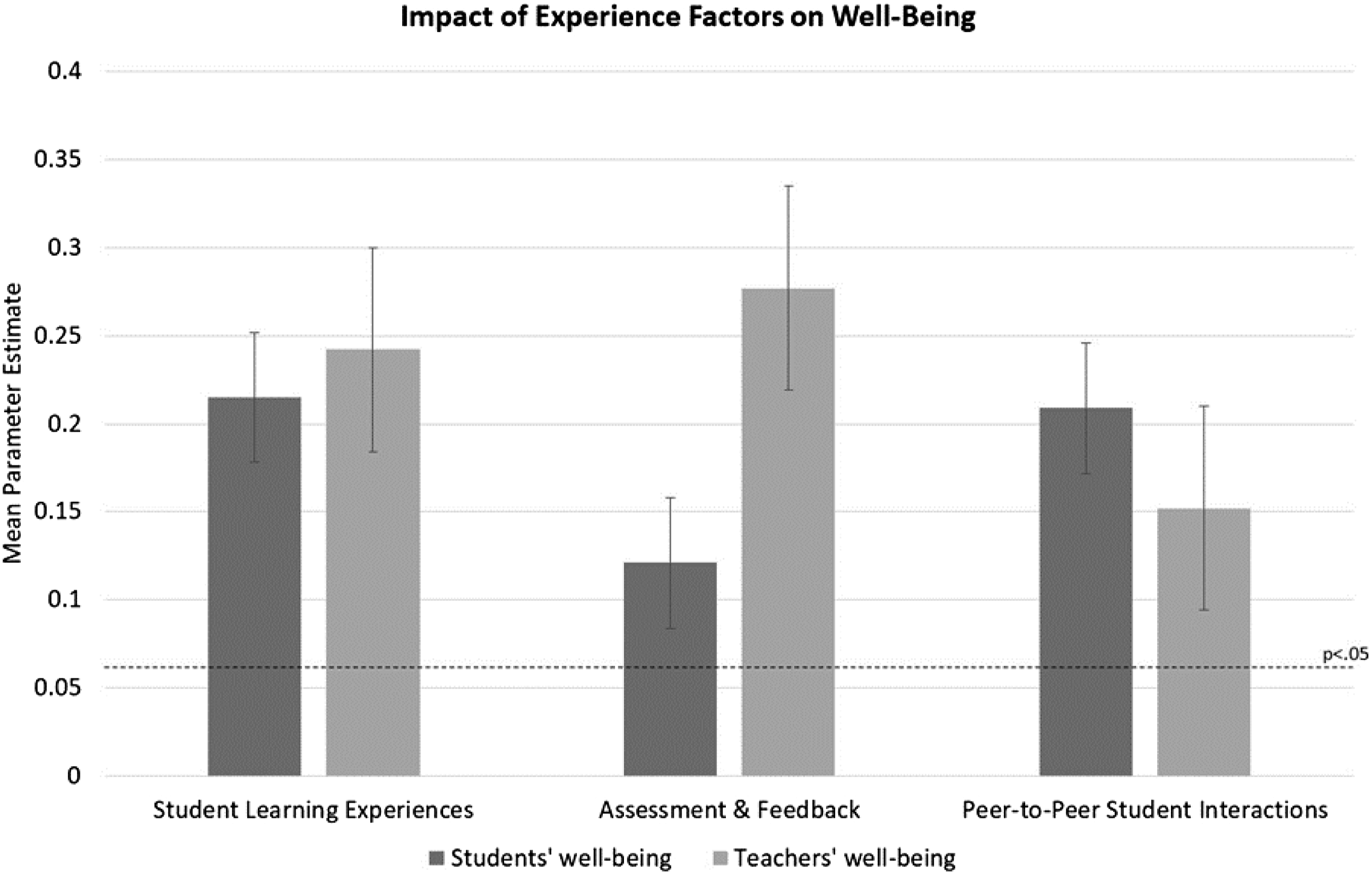
Finally, several control variables were used to examine whether the results of predicted changes in teacher and/or student wellbeing over the pandemic period differed significantly across various settings. First, predicted levels of changes in student and teacher wellbeing did not differ across different geographic settings, with no parameter estimates significant at the .05 level. Second, the educational setting in terms of a teacher being located at a primary and/or secondary school, did not account for variation in teachers’ wellbeing at the .05 level. However, with respect to student wellbeing, whilst all teachers reported a negative fall in student wellbeing over the pandemic period, the model estimates show that these negative changes in student wellbeing is predicted to be significantly more pronounced among secondary students relative to primary school students. Specifically, relative to the predicted average student wellbeing levels, wellbeing of students reported by teachers of primary school students is significant higher (β = .110; t = 2.095; p < .05), but significantly lower among teachers reporting on the wellbeing of their secondary school students over the pandemic period (β = −.128; t = −2.499; p < .01).
Discussion
The survey results presented in this article reveal that respondents’ experience of the 2021 remote schooling period during the COVID-19 pandemic was largely negative in terms of the manner in which it affected students and teachers alike. The impact of remote schooling in this study included negative outcomes relating to reduced opportunities for student learning experiences, difficulty in designing appropriate assessment tasks and providing effective assessment feedback (including one-on-one interactions between teachers and individual students). The area of students’ peer-to-peer interactions was most negatively affected by the remote schooling period. More than 90% of teachers reported that students’ opportunities to develop or maintain relationships with other students, and students’ opportunities to interact with other students, had been negatively affected to some extent over the period. Wellbeing was also adversely affected. Overall, these findings are aligned with existing literature investigating teacher and student experiences during the pandemic (e.g. An et al., 2021; Bond et al., 2021; Wagner, 2022), suggesting that the remote schooling period had a considerable negative impact for teachers and their students across all elements of teaching and learning, as well as individual wellbeing.
The significance of the study’s outcomes, in relation to learning, assessment, and peer-to-peer relationships during emergency remote schooling, is that these factors were all found to be significant predictors of either student wellbeing (as perceived by teachers) or teacher wellbeing. Further studies should investigate how the latent constructs identified in this study influence teacher and student wellbeing in schools post-lockdown.
The reduced opportunities for quality student learning experiences during the lockdown period were found to be the biggest predictor of negative outcomes relating to perceived student wellbeing, as reported by teachers. This evidence-based association with student wellbeing affirms the critical role of remote pedagogies in supporting quality student learning during school lockdowns and speaks to a need to further scrutinise effective teaching approaches during such challenging times. Further research is needed to investigate the nuances of these remote teaching approaches, including the extent to which strategies could be classified as innovative (Burden et al., 2019), and how they have influenced or perhaps disrupted face-to-face pedagogies post-lockdown.
The reduction in students’ peer interactions was also a strong predictor of students’ negative wellbeing outcomes during school lockdowns. This evidence-based relationship adds to the growing literature base supporting the importance of peer learning in enforced remote schooling periods (Bond et al., 2021), highlighting a need to explore specific strategies that support peer interactions and collaboration. Whilst significant, the quality of assessment and feedback were less predictive of student wellbeing.
For teachers, concerns about quality assessment design and about students’ experiences of teacher feedback were very significant in predicting reduced levels of their own teacher wellbeing. This result suggests that professional learning support to aid effective design of assessment and facilitation of remote feedback in online teaching and learning is essential. In terms of peer interactions for teachers, more than three in four teachers reported reduced opportunities to interact with other teachers during the remote schooling period; a decline in these types of interactions were found to be associated with a significant decline in teachers’ wellbeing.
The study suggests that to improve student wellbeing during remote schooling periods, clear and effective teaching and learning experiences are needed, coupled with frequent opportunities for students to interact with each other online. For teachers, an emphasis on effective assessment approaches supports their wellbeing in remote schooling periods, as do opportunities for meaningful interactions with colleagues.
It would be valuable for other stakeholders, such as students, parents, and school leaders, to participate in any future studies about teaching and wellbeing during remote schooling periods. Eliciting and listening to students’ views (Burke et al., 2022), and triangulating them with teachers’ views, for example, is also key to this agenda.
Conclusion
While we hope that significant emergency remote schooling periods are not going to be a feature of schooling in the future, this study has provided a clear indication of where resources should be allocated to ensure the wellbeing of students and teachers, should such remote periods be necessary in the future.
Given the extraordinary context of the emergency remote schooling periods caused by the pandemic, it is incumbent on educational researchers to investigate, record, and document the significant impact of such periods on teachers and students. This study provides helpful insights into the remote schooling phenomenon. It reveals useful understandings of teachers’ perceptions of student experiences with respect to learning, assessment, and peer interactions during times of crisis. In particular, teacher and student wellbeing are central to the educational endeavour and findings from this study are important for both exceptional and ordinary times.
Footnotes
Declaration of conflicting interests
The author(s) declared no potential conflicts of interest with respect to the research, authorship, and/or publication of this article.
Funding
The author(s) received no financial support for the research, authorship, and/or publication of this article.
