



Abstract
Student violence directed at school educators appears to be increasing, thus it is important to identify practical strategies that educators use to prevent and cope with occupational violence. This observational study surveyed 369 government primary school staff in the Australian Capital Territory. Sixty per cent of respondents reported abusive language, 42% physical aggression, and 43% experienced other threatening behaviour from students at least weekly. More than one-third of respondents rated the impact of these experiences as moderate or higher. The most effective prevention strategies, according to respondents, were the educator’s response to the threat, focusing on the student’s needs, working collaboratively, and using antecedent control. The most effective coping strategies were debriefing, self-care, and work support. The most helpful sources of support were workplace colleagues, partners, school leaders, and friends. This study offers a solution-focused perspective about what works in preventing and coping with occupational violence from educators’ points of view.
Introduction
School educators support the learning of all students, including those with complex challenging behaviours, which can lead to physically and psychologically dangerous situations. Globally, there has been an increase in student-perpetrated violence against educators, with this violence having a negative impact on educators’ physical and mental wellbeing (Espelage et al., 2013; Longobardi et al., 2018; Reddy et al., 2018). Occupational violence (OV) is any action, incident, or behaviour that diverges from acceptable conduct in which an individual is attacked, threatened, hurt, or wounded during, or as a direct result of, their work (International Labour Organization, 2003). Exposure to OV can increase educators’ stress and contribute to other negative consequences including burnout and leaving the profession (Buchanan et al., 2013; Burns et al., 2020).
Prevalence
Estimates of the prevalence of teacher-directed violence vary greatly; however, it appears to be escalating around the world (Espelage et al., 2013; Longobardi et al., 2018; McMahon et al., 2017). A systematic review of 37 studies found that educators experience violence from students in all school settings and grade levels (Reddy et al., 2018). A meta-analysis of 24 studies concluded that half of all teachers reported experiencing at least one form of violence from students in the preceding two years (Longobardi et al., 2018).
A longitudinal study of Australian school leaders found that the reported prevalence of physical violence directed at teachers by students rose from 27% in 2011 to 42% in 2018 (Riley, 2019). In 2018, school principals were 9.3 times more likely to experience violence compared to other Australian professions. This was even higher in government schools, at 10.5 times the rates experienced in other Australian professions (Riley, 2019).
Another Australian study found that, in the 12 months prior to completing the survey, 560 teachers surveyed reported being bullied or harassed by a student, with 10% being punched or hit (Billett et al., 2019). In Western Australia, 68% of educators reported experiencing OV at least once in the past two years (Lowe et al., 2020). Finally, a survey of 1145 teachers in the Australian Capital Territory (ACT) found that five per cent of teachers reported experiencing extreme violence from students every day, and an additional six per cent reported this level of violence at least once or twice a week (Shaddock et al., 2015).
Exposure to violence from students may have a range of negative physical, psychological, and professional impacts, including physical injury (McMahon et al., 2019), emotional distress (Moon & McCluskey, 2020), burnout (Bass et al., 2016; Wei et al., 2013), impaired job performance (Moon & McCluskey, 2020), and leaving the profession (Buchanan et al., 2013; Galand et al., 2007). Unfortunately, there tends to be a cultural acceptance that OV is a normal part of education (Shaddock et al., 2015), particularly in special education settings (Schofield et al., 2019). Educators working in disability education are four times more likely to experience physical violence from students compared to mainstream settings (Wei et al., 2013).
Socio-ecological theory
There is a lack of research-based knowledge about what works on the ground in terms of preventing and dealing with potential harm caused by OV from the perspective of educators. A systems perspective explains that individual attitudes and behaviours are shaped by interactions between personal and environmental factors (Espelage et al., 2013; Shaddock et al., 2015). Social-ecological theory provides a framework for preventing violence based on intervening at multiple levels which include the individual student, educator staff, classroom environment, school culture, and wider community, as well as the intersections between these levels such as student–staff relationships (Espelage et al., 2013; see Figure 1). The social-ecological model adapted to a school environment.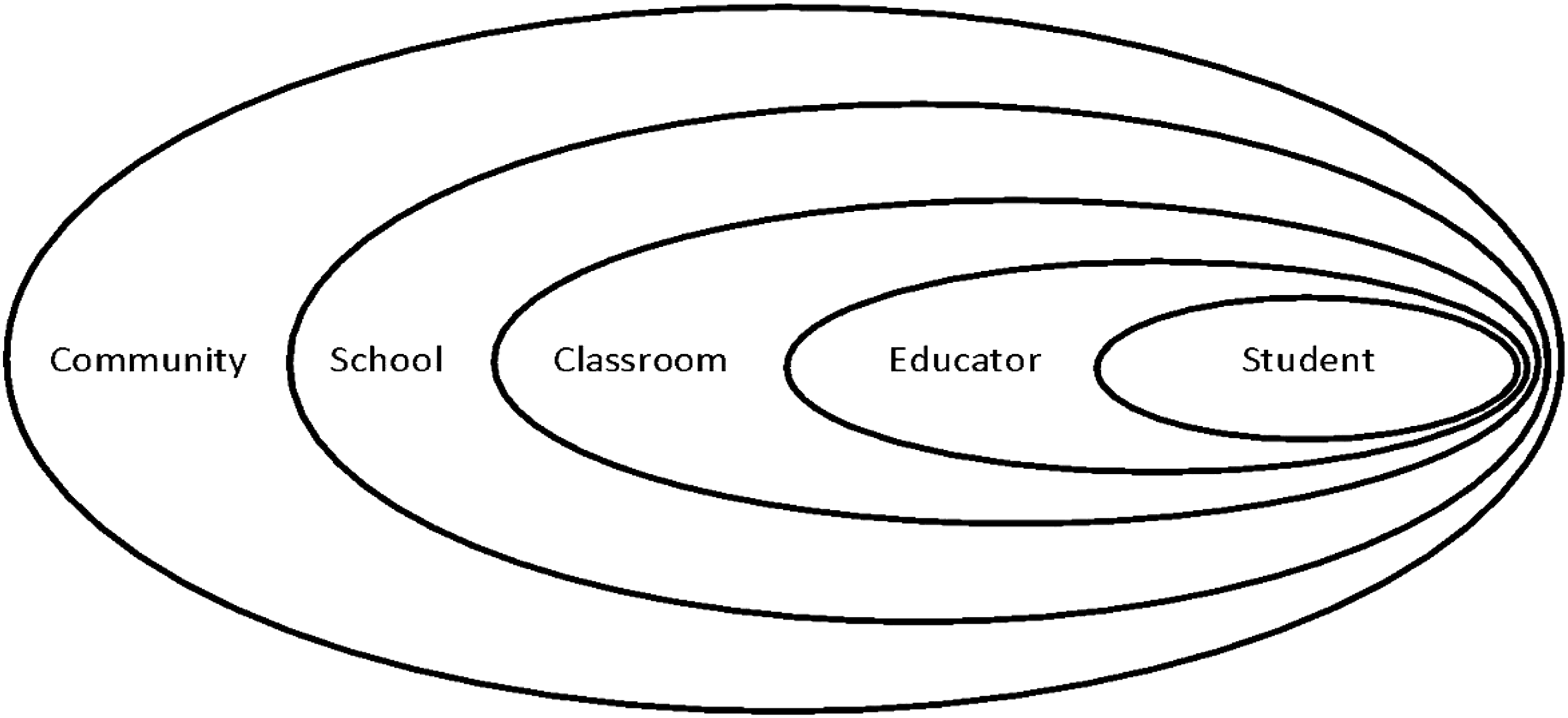
Preventing occupational violence
Occupational violence prevention strategies can operate at specific or multiple levels. For example, at the student level, early intervention (Silver et al., 2005) and improving students’ social and emotional literacy (Espelage et al., 2013) can lower student aggression. For student–educator interactions, creating and maintaining positive relationships with students is highly effective in reducing OV (De Cordova et al., 2019; Silver et al., 2005), especially during transition periods and when students and educators first meet (Silver et al., 2005).
Strategies at the classroom and school level work best when they are consistent (Espelage et al., 2013; Kapa & Gimbert, 2018). Clear school-wide expectations (Prpić, 2019; Sheldon & Epstein, 2002) and strong leadership, along with support from administration, is effective in reducing student violence (Martinez et al., 2015). It is also beneficial to involve the student’s family and engage the wider community (Sheldon & Epstein, 2002).
Coping with occupational violence
While there are many potential prevention strategies, this study sought to explore strategies that educators use and consider to be effective, as well as to understand how educators cope with OV. As it seems unlikely that OV from students can be eliminated, it is important to also understand how educators cope, as coping strategies are highly individualised (Dzuka & Dalbert, 2007). Better understanding of effective coping strategies may also avert some of the negative consequences of long-term exposure to OV including decreasing motivation, lower job satisfaction (Kapa & Gimbert, 2018), increased burnout (Wei et al., 2013), and detrimental effects on staff mental and physical health (Moon et al., 2019). Feeling more confident in managing and handling OV improves work satisfaction and helps to minimise harm, which in turn helps to retain experienced staff (Kapa & Gimbert, 2018).
The most effective coping strategy may be to avoid student perpetrators or leave the workplace or profession entirely (Anderman et al., 2018). However, this may not be practicable or fair. Other effective coping strategies include debriefing (ACT Education Directorate, 2017), improving resilience (Jennings et al., 2017), physical exercise, meditation (Austin et al., 2005), and seeking support from colleagues, supervisors, and/or family (McMahon et al., 2017). The most common sources of support are colleagues and partners (Bounds & Jenkins, 2016), although they are not always perceived as helpful (McMahon et al., 2017). Whilst there are a range of adaptive coping strategies, there is also the potential for maladaptive responses such as excessive alcohol consumption (Deguchi et al., 2018). Further research is needed to identify strategies that work from the perspective of educators.
Current study
The current study seeks to describe the frequency and impact of school-based OV directed at educators by students and to identify what educators and workplaces do to prevent and cope with OV. The focus of the current study is on government primary school staff from the ACT. These schools educate 66% of primary students in the ACT, with the other third attending non-government schools (ACT Education Directorate, 2020).
The ACT Education Directorate’s Managing Occupational Violence Policy sets out its commitment to ensuring that the risk of OV to staff is eliminated so far as is reasonably practicable, to minimise the impact of any exposure, and to provide rapid response and appropriate support following any incident (ACT Education Directorate, 2017). This commitment has been strengthened following an Enforceable Undertaking initiated by WorkSafe ACT (2018) which found that staff were sustaining an unacceptable amount of physical and psychological injury from students. The Directorate is obligated to address these incidents and improve health and safety standards to minimise harm caused to staff.
The current study aims to address the following research questions: 1. What is the frequency of OV from students? 2. What is the impact on educators of OV from students? 3. How do educators prevent OV from students? 4. What strategies do educators use to cope with OV? 5. What sources of support do educators use and perceive as the most helpful?
Method
Participants
A convenience sample of 369 ACT government primary school staff was obtained. Fifty-one other responses were not used, mostly because they only completed the demographic questions or had completed less than half the survey items. To protect confidentiality, no staff or school names were collected. Eighty-six per cent of respondents identified as female (85.9%) and 14.1% as male (no participants identified as other), which is reasonably consistent with the high proportion of female staff (81.9%) in Australian primary schools (Australian Bureau of Statistics, 2020).
Participants reported an average of 13.9 years of experience working in education, ranging from 1 to 50 (SD = 8.8)years. Job roles included 206 classroom teachers (55.8%), 48 executive teachers (13%), 43 learning support assistants (11.7%), 25 principals (6.8%), 20 deputy principals (5.4%), eight administration assistants (2.2%), and 19 other school staff (5.2%), including youth workers, business managers, specialist teachers, and pastoral care staff. Three hundred and fifteen staff (85.4%) worked in mainstream primary school settings, 83 in preschool (22.5%), 51 in learning support units (13.8%), and 25 at specialist schools (6.8%).
Materials
A self-report questionnaire was developed for the current study. The time frame for the questions was identified as “prior to 2020” because at the time the study was conducted teachers were working remotely and delivering online lessons due to a COVID-19 related lockdown in the ACT. Educators’ experiences of the frequency of five types of OV (adapted from the OV reporting system used by ACT Education Directorate; abusive language, physical aggression, other threatening behaviour, bullying/harassment, overall) was measured using a six-point frequency scale (never, once every 6 months, once a month, once a week, a few times per week, daily). The impact of these types of OV was rated on a five-point severity scale (insignificant, minor, moderate, major, severe, not applicable).
Each level of impact on the severity scale was defined in the survey consistent with incident reporting by the Directorate: insignificant – no perceived impact on psychological or physical wellbeing; minor – pain inflicted at site, but no first aid required and/or some initial psychological distress that decreased over the day; moderate – injury requiring first aid and/or psychological distress that persisted past 24 hours; major – injury requiring medical assistance and/or psychological distress that persisted more than one week; severe – injury requiring hospital admission and/or psychological distress resulting in ongoing psychological condition such as anxiety/depression/PTSD.
Two open-ended questions asked educators to describe effective strategies used by the respondent and their respective workplace to prevent OV. Two further open-ended questions asked educators to describe the personal wellbeing strategies they usually used, and to identify the most effective strategies to cope with OV. Finally, participants rated how often they used each of 14 sources for support for coping with OV from students (adapted from Riley, 2019), on a five-point frequency scale (never, rarely, sometimes, often, always) and how helpful each of these sources of support was on a five-point Likert scale (extremely unhelpful, unhelpful, neutral, helpful, extremely helpful). A copy of the questionnaire is provided in Supplemental Appendix C.
Procedure
The University of Canberra Human Research Committee (#20204486) and ACT Education Directorate (RES-2015) granted approval for this study. All 64 ACT government primary school principals were provided information about the study via email and asked to send invitations to their staff in Week 1 of Term 3 and a reminder in Week 3. A separate email was sent to principals by the director of the Directorate’s Occupational Violence and Complex Case Management Team endorsing and encouraging participation. Reminder emails were sent to principals in Week 3 and Week 5 to advise of the closing of the survey at the end of Week 6. All data were collected over a 6-week period, from 17 July to 28 August 2020. To provide an incentive to complete the survey, participants could enter a draw to win one of two A$50 shopping vouchers.
Codebooks were developed to interpret responses to the open-ended questions. There were 114 codes for the most effective OV prevention strategies (see Supplemental Appendix A) and 126 codes for the most effective OV coping strategies (see Supplemental Appendix B). Each response was coded by the lead author, with 10% of the coding independently checked by the last author, leading to an agreement rate of 89% and expansion of the descriptions for some codes.
Results
Frequency of occupational violence
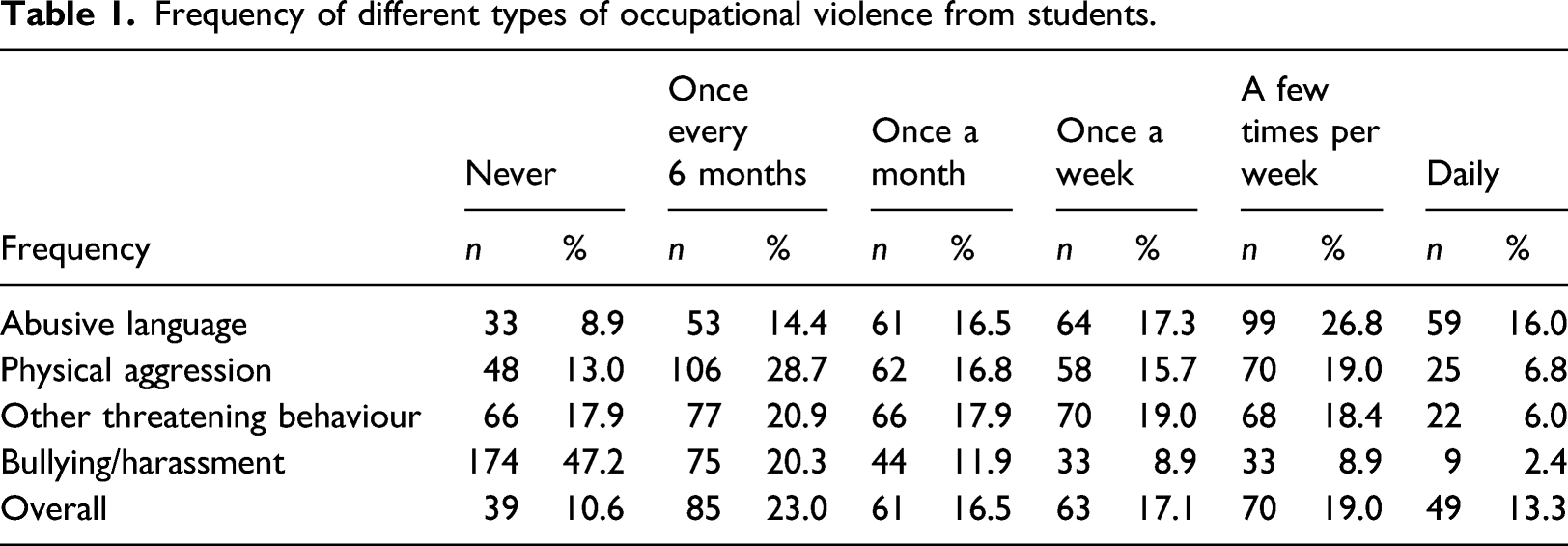
Frequency of different types of occupational violence from students.
Impact of occupational violence
Impact of different types of occupational violence from students.
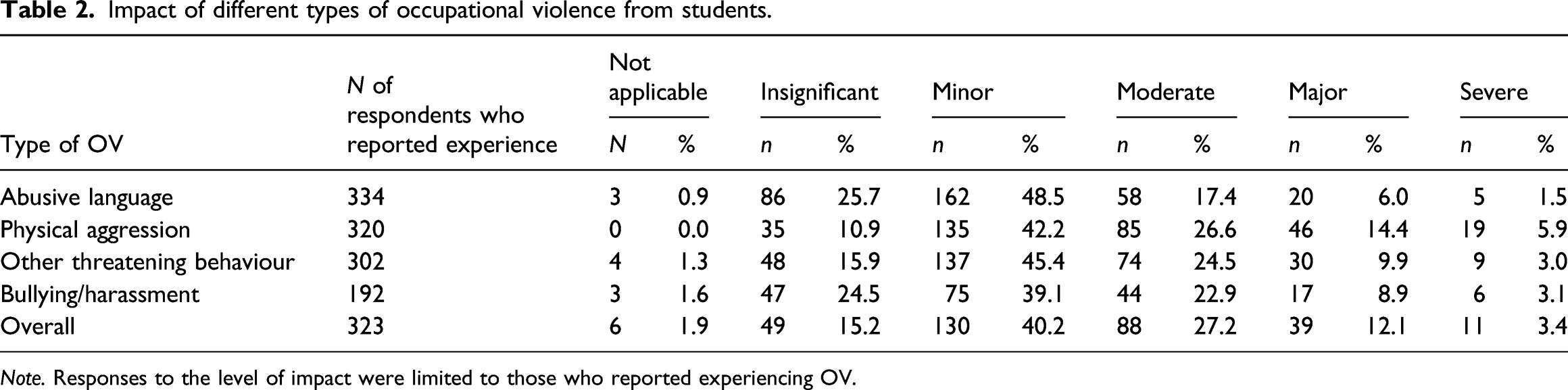
Note. Responses to the level of impact were limited to those who reported experiencing OV.
Strategies for preventing occupational violence
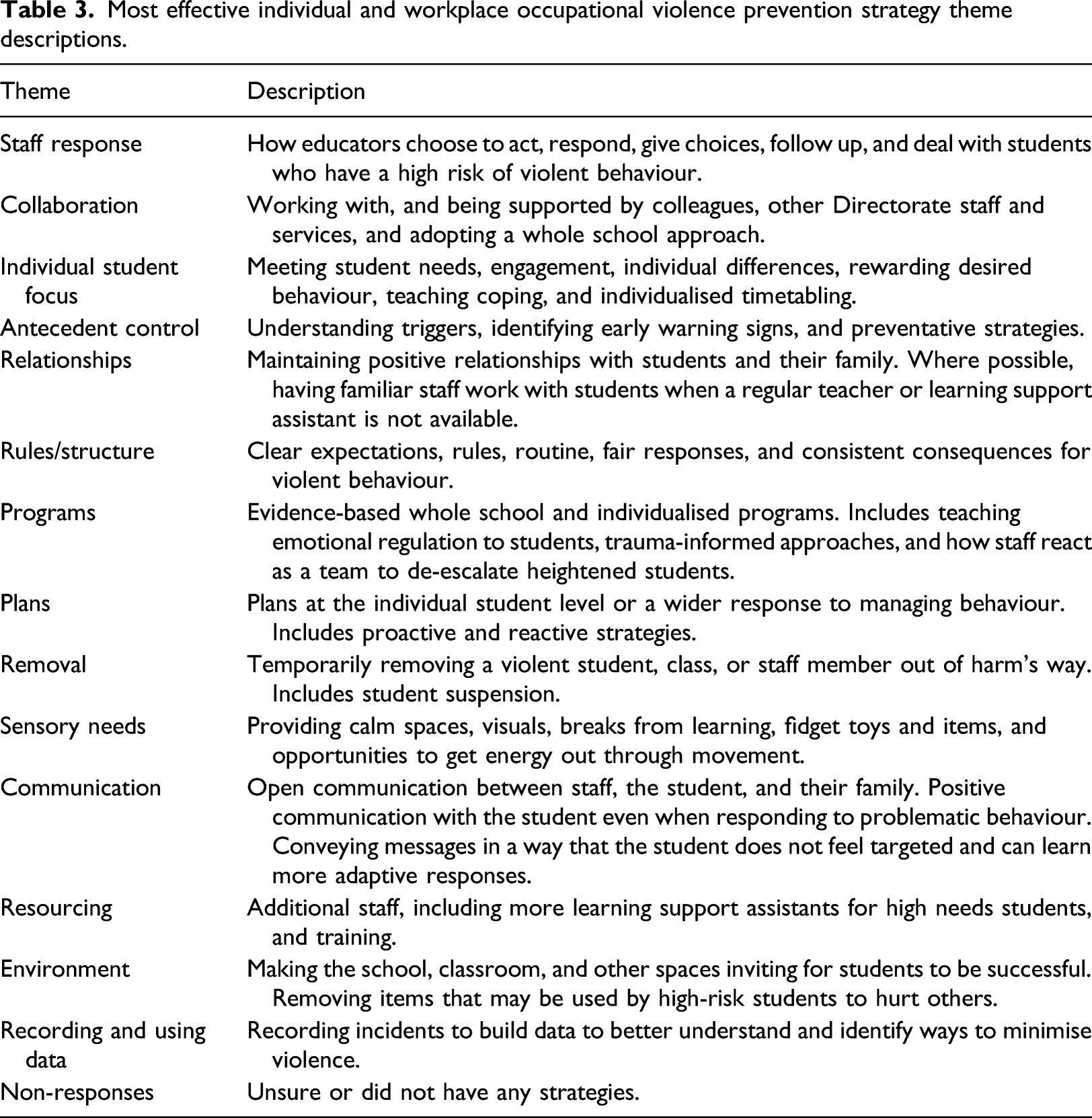
Most effective individual and workplace occupational violence prevention strategy theme descriptions.
Most effective individual and workplace occupational violence prevention strategy theme responses.
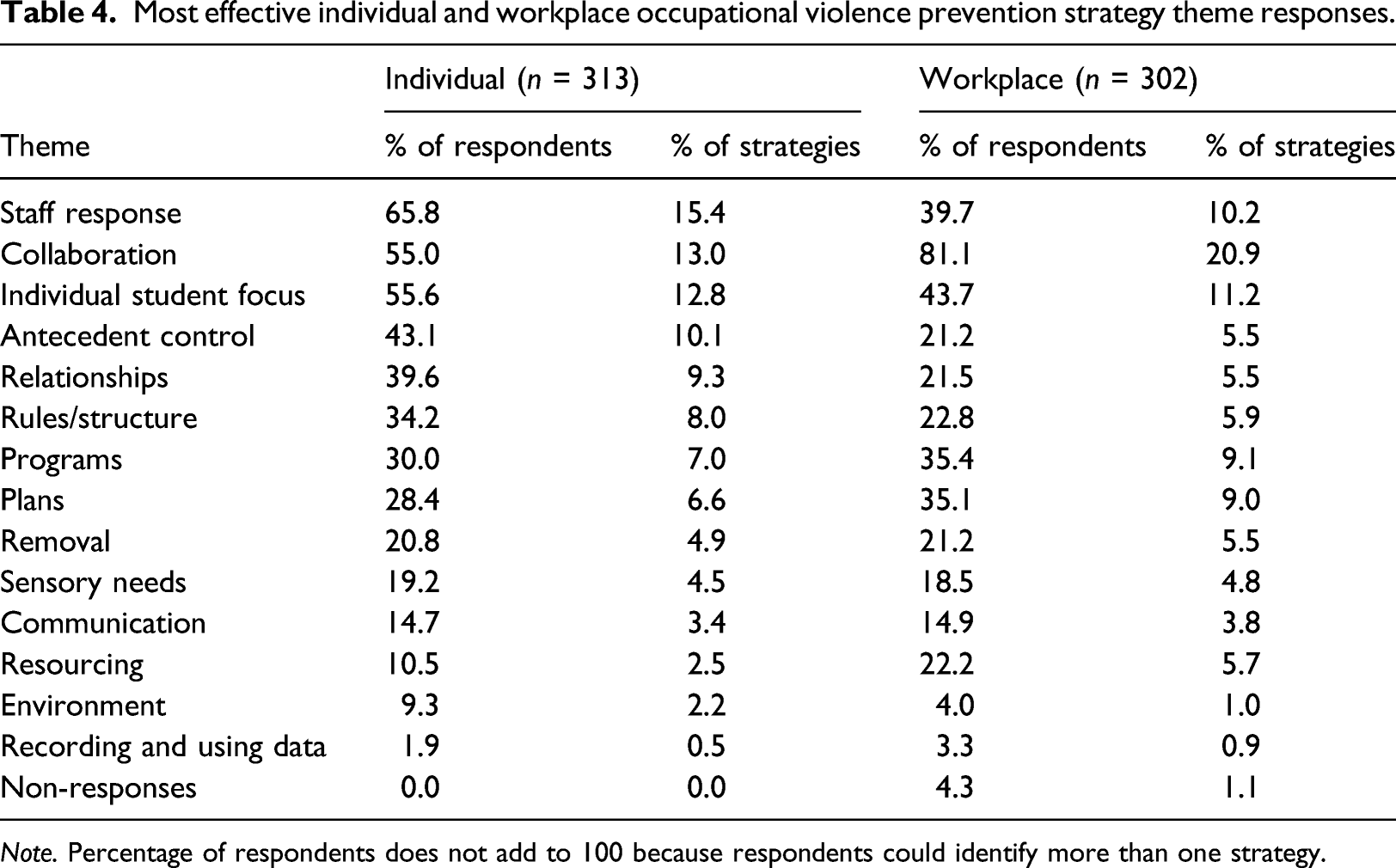
Note. Percentage of respondents does not add to 100 because respondents could identify more than one strategy.
Three hundred and two respondents (81.8%) identified one or more effective strategies the workplace used to prevent OV from students. A total of 1175 strategies (M = 3.9 strategies per respondent) were allocated to one of the prevention codes and themes described previously (see Table 3). A multiple response analysis identified a similar pattern of results to the staff member prevention strategies, with the following notable variations. The most common strategy, mentioned by over 80% of respondents, was collaboration. Other effective workplace prevention themes that were emphasised more often than individual staff strategies were the use of school-wide evidence-based programs and educator-level plans, increased resourcing, and recording and using OV data (see Table 4).
Strategies for coping with occupational violence
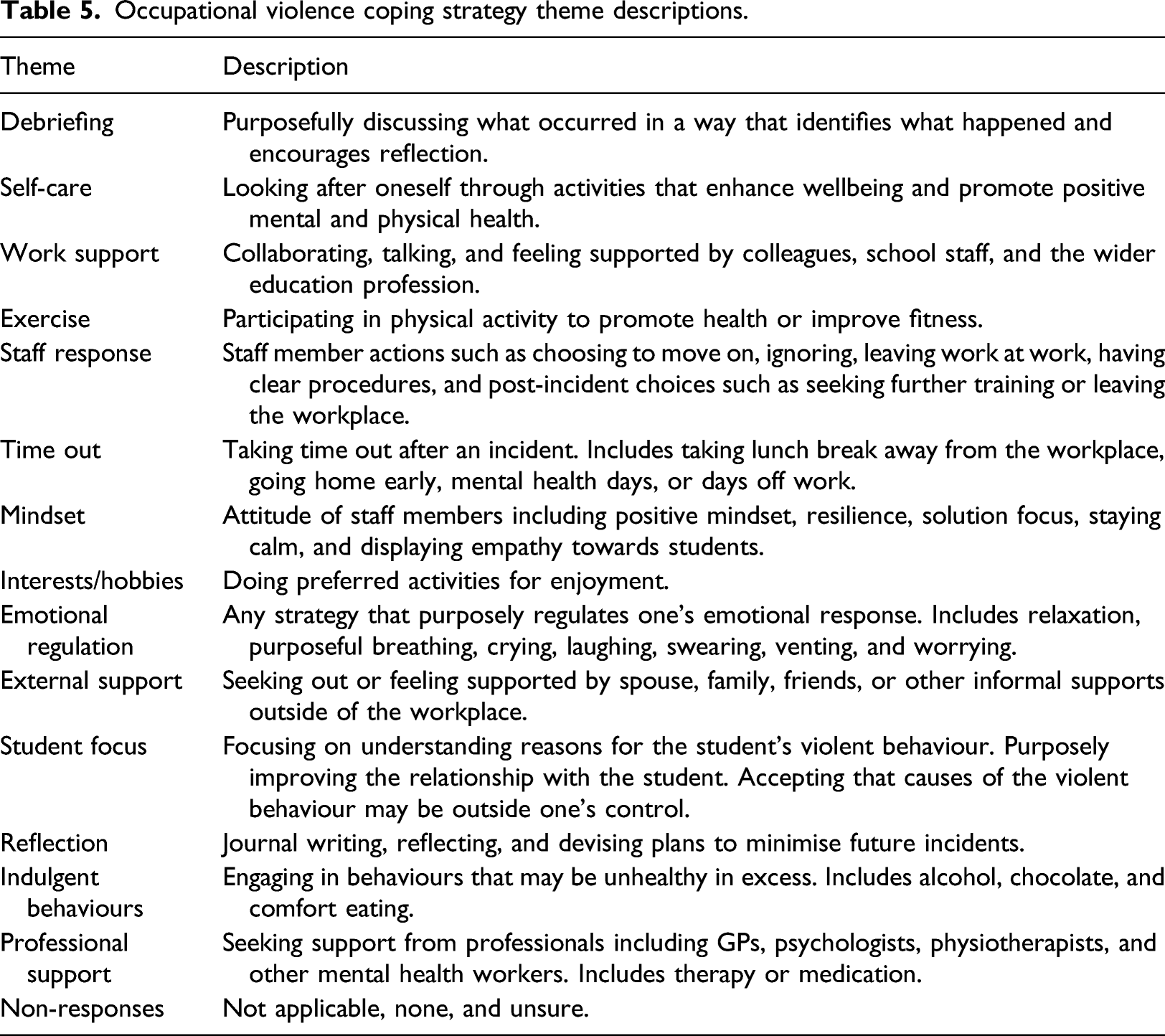
Occupational violence coping strategy theme descriptions.
Occupational violence coping strategy theme responses.
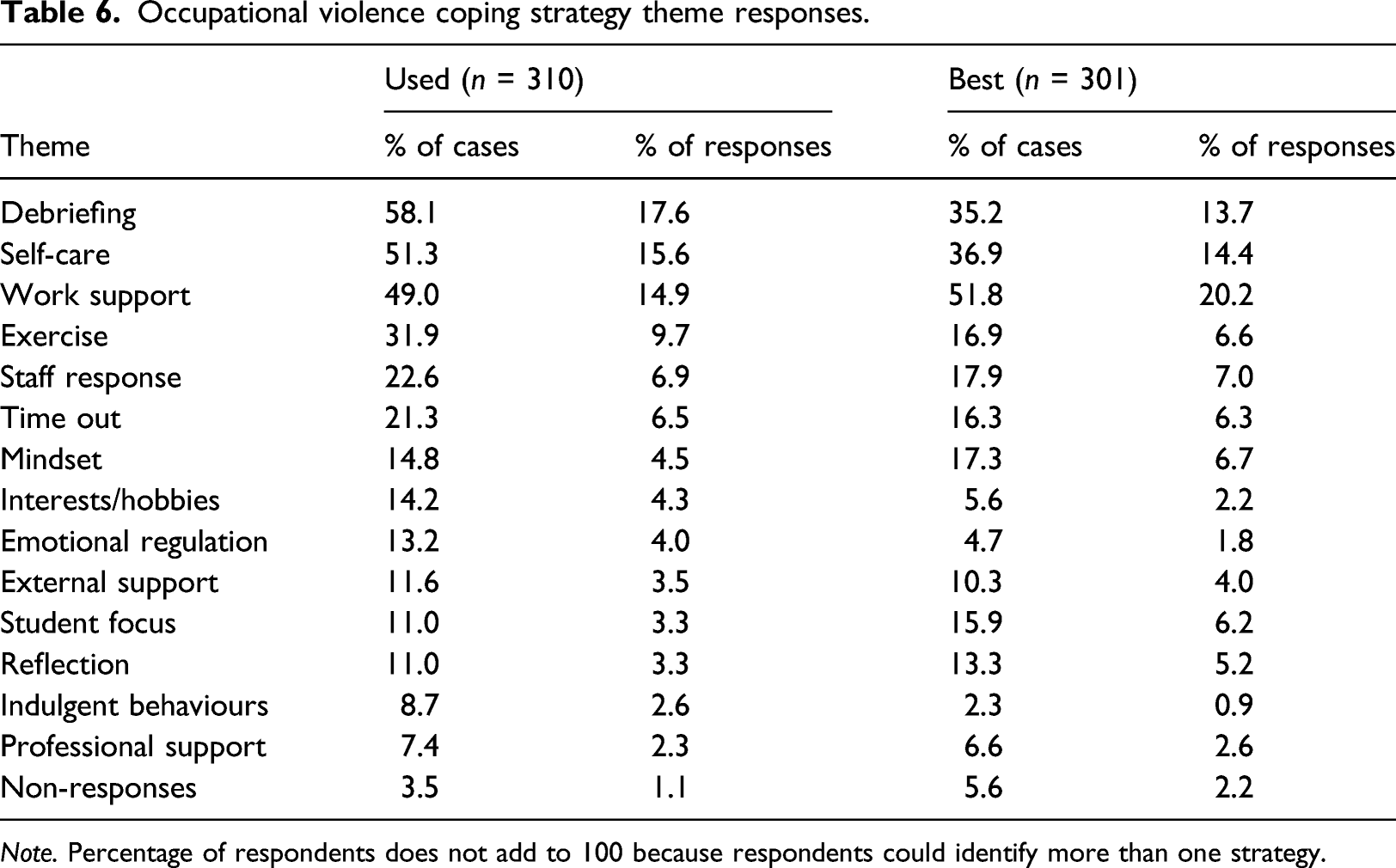
Note. Percentage of respondents does not add to 100 because respondents could identify more than one strategy.
Three hundred and one respondents (81.6%) identified one or more personal wellbeing strategies that they believed were most effective in coping with OV from students. A total of 773 strategies (M = 2.6 strategies per respondent) were allocated to one of the codes and themes described previously (see Table 5). An analysis of the most frequently occurring responses showed that educators believed that work support, self-care, and debriefing were the most effective personal wellbeing strategies (see Table 6).
Sources of support
Extent of use and helpfulness of supports in coping with occupational violence from students.
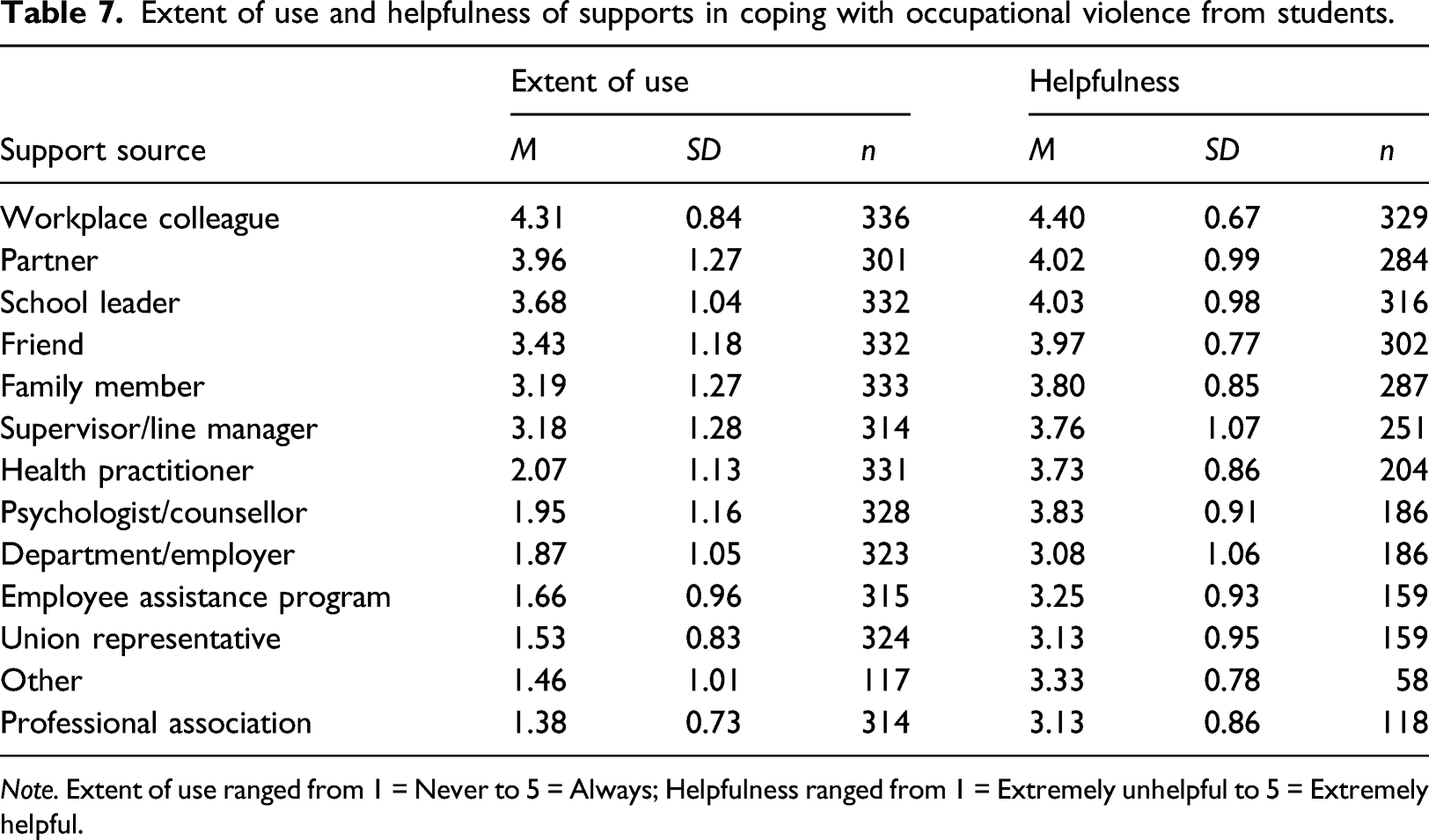
Note. Extent of use ranged from 1 = Never to 5 = Always; Helpfulness ranged from 1 = Extremely unhelpful to 5 = Extremely helpful.
Work colleagues were clearly rated as the most helpful support source (on average, between ‘helpful’ and ‘extremely helpful’, see Table 7). Partners, school leaders, and friends were the next most helpful sources of support, rated as ‘helpful’, on average. The average rating for Employee Assistance Programs, union representatives, and department/employers was less positive, closer to ‘neutral’. The most underutilised sources of support, based on the relatively low frequency of use yet relatively high helpfulness, were psychologist/counsellor and health practitioner.
Discussion
Student violence towards educators is an under-recognised, worldwide problem. The current study investigated the frequency and impact of OV directed towards staff by students in ACT government primary schools and explored strategies that staff reported as most effective in preventing and coping with OV, including key sources of support. Respondents reported spending over half of their working days managing students with complex behaviour which is consistent with Shaddock et al.’s (2015) research on ACT schools. With significant time spent managing challenging behaviours, it follows that staff are at risk of negative impacts, especially from aggressive behaviour.
Frequency and impact of occupational violence
Half of the respondents reported OV from students at least weekly, with only 11% never experiencing OV. More than 80% of staff experiencing overall OV reported that the impacts were more than insignificant. For more than 42.7% of staff experiencing overall OV, the impacts were rated as at least moderate (i.e. requiring first aid and/or involving distress lasting more than 24 hours), and for 15.5% the impacts were rated as major (i.e. injury requiring medical assistance and/or psychological distress that persisted more than 1 week) or worse.
Physical aggression is arguably the form of OV of greatest concern in terms of potential harm. Experiencing physical aggression was reported by 87% of respondents, with 41.5% subject to such behaviour on at least a weekly basis, similar to rates reported by Riley (2019), although comparisons are complicated by use of different definitions across studies. Physical aggression also had the most serious impact, with nearly half (46.9%) reporting the impacts to be at least moderate.
Abusive language was the most commonly reported form of OV, experienced by 60% of staff at least weekly. Whilst abusive language may be considered less harmful than other forms of OV, the impact was far from trivial, with 73.4% of respondents exposed to abusive language reporting that the impacts were at least minor (i.e., some initial psychological distress that decreased over the day). The high frequency and cumulative impact of exposure to abusive language may wear down staff resilience and increase the likelihood of burnout.
Bullying/harassment had the lowest occurrence, although a high impact, experienced by more than half (53%) of the respondents, with 20% of staff experiencing this form of OV on at least a weekly basis. The lower occurrence is likely to be due, at least in part, to the current study’s focus on primary school settings which involve mostly pre-adolescent students. For staff who experienced bullying/harassment, three quarters of staff (74%) reported at least minor impacts.
Preventing occupational violence
Participants provided an extensive list of their most effective strategies for preventing OV from students. The top theme involved individual staff member responses to students, including being consistent, calming the student, not rewarding negative behaviour, and avoiding conflict. In terms of the social-ecological model (Espelage et al., 2013), staff have the most control over their own actions. As these actions influence student behaviour, they represent the most proximal level of intervention. The next most effective staff strategy was collaborating with colleagues, the whole school, and Directorate staff and services to develop a team approach to preventing OV. These types of collaboration can be understood within the school and community levels of the social-ecological model. Adopting an individual student focus (rather than class focus) was also highly endorsed. This approach included teaching individualised coping skills, rewarding specific behaviours, and individualised timetabling. Another popular student level theme was using antecedent control. This involves upstream identification and avoidance of factors that can trigger student OV and acting on early warning signs (Espelage et al., 2013; Kapa & Gimbert, 2018; McMahon et al., 2019). Cultivating and maintaining a good, trusting relationship with students was also strongly endorsed. Warm, trusting, cooperative relationships between teachers and students are well recognised as important contributors to educational and behavioural outcomes (De Cordova et al., 2019; Gregory & Ripski, 2008; Silver et al., 2005).
The most effective workplace prevention strategies identified by participants were similar to the individual prevention strategies, with some notable variations. Collaboration was clearly the most recommended approach. Programs at the school-wide level and plans at the educator level were also emphasised more as workplace strategies than individual strategies, as was increased resourcing in the form of staffing and training and use of data about OV incidents.
Coping with occupational violence
Participants reported using a wide range of strategies to cope with OV. In general, the most used strategies were also the most effective. Debriefing with colleagues, both formally and informally, was the most common approach. Work support was the most effective strategy. Feeling supported by one’s workplace is a known protective factor for minimising harm post OV (McMahon et al., 2017). Debriefing could be considered as a form of workplace support but seemed to warrant its own theme because it was specifically mentioned by over half of the respondents. Self-care was the second most mentioned and effective coping theme. It included a wide variety of wellbeing strategies including taking time to address basic needs such as healthy eating, drinking water, and getting adequate sleep, as well as personally preferred relaxation activities (Dzuka & Dalbert, 2007).
Sources of support
In line with previous findings (Bounds & Jenkins, 2016), workplace colleagues were the most frequently used source of support in coping with OV and were also perceived as the most helpful source of support. The educator’s partner and friends were also frequently used and helpful. Although school leaders tended to be less used, they were at least as helpful as partners. These results are similar to the sources of support that Australian principals have reported using to cope with OV (Riley, 2019). However, respondents did not report accessing the more formal sources of support that are often officially recommended after incidents of OV. This may be because some staff prefer informal, individualised strategies but may also be because they do not perceive that the OV had sufficient impact to warrant external professional support. For those who did seek formal support, psychologists/counsellors and health practitioners were rated as reasonably helpful.
Strengths and limitations
This exploratory study builds on Shaddock et al. (2015) to provide further insight into the experience of OV among ACT government primary school staff. Analysis of responses to open-ended questions elicited real-world prevention and coping strategies. The study sought to be inclusive by inviting all school staff, not just teachers or principals, to participate.
However, there were several limitations that must be acknowledged. Although all ACT government primary school principals were invited to distribute the survey to their staff, there was no way of knowing how many principals did so. Furthermore, the convenience sampling may have led to a self-selection bias by staff who have experienced more OV and/or who were more interested in the topic. There was also an attrition rate of one in eight who started but did not complete the survey. Finally, due to the COVID-19 pandemic, survey questions referred to experiences prior to 2020 which may have made participants’ recollections and responses less accurate.
Implications and recommendations
This study offers insight about how educators seek to prevent, cope with, and access support when confronted with OV from students. The design could be extended to obtain a more representative sample and to include secondary school staff, non-government schools, and/or other states or countries. The frequency and impact survey questions could be adapted for internal monitoring of progress towards minimising OV from students towards school staff. More in depth inquiry about the prevention and coping themes, such as through interviews or focus groups, could lead to richer examples about how to reduce OV and its impact on school staff. According to respondents in this study, professional support services appeared to be underutilised, despite psychologists/counsellors and other health practitioners being rated as reasonably helpful – this warrants further investigation. New survey questions could be developed about the identified prevention and coping strategies so that potential mediating relationships between exposure to OV and outcomes such as staff burnout, work satisfaction, wellbeing, and turnover intention could be tested.
Conclusion
Most surveyed staff reported frequent (daily or weekly) experiences of OV from students with notable negative impacts. Key prevention strategies include focusing on how staff respond to individual students; collaborating with colleagues; seeking to understand and address individual student needs; developing and maintaining positive relationships with students; implementing structured, evidence-based aggression-reducing programs; and having clear plans and structured responses to OV incidents. This highlights the importance of the study’s main goals which were to provide collective feedback from school staff about what works to prevent, or at least minimise, the occurrence and impact of OV. In seeking to cope with OV from students, educators primarily value the support of their work colleagues through debriefing. What staff do to cope outside of the workplace was also important, particularly in adopting a positive, self-care mindset and receiving support from a partner.
Supplemental Material
Supplemental Material – How do preschool to year 6 educators prevent and cope with occupational violence from students?
Supplemental Material for how do preschool to year 6 educators prevent and cope with occupational violence from students? by David J Stevenson, James T Neill, Kayla Ball, Rebecca Smith and Melena C Shores in Australian Journal of Education
Footnotes
Acknowledgements
We would like to thank all participants who contributed data to this study.
Authors’ Note
This article is based on the Bachelor of Science in Psychology (Honours) thesis completed by Stevenson (2020).
Declaration of conflicting interest
The author(s) declared the following potential conflicts of interest with respect to the research, authorship, and/or publication of this article: The University of Canberra affiliated authors have no conflicts of interest to disclose. The ACT Government Education Directorate affiliated authors declare a potential conflict of interest as employees of the organisation being studied.
Funding
The author(s) received no financial support for the research, authorship, and/or publication of this article.

Supplemental Material
Supplemental Material for this article is available online.
References
Supplementary Material
Please find the following supplemental material available below.
For Open Access articles published under a Creative Commons License, all supplemental material carries the same license as the article it is associated with.
For non-Open Access articles published, all supplemental material carries a non-exclusive license, and permission requests for re-use of supplemental material or any part of supplemental material shall be sent directly to the copyright owner as specified in the copyright notice associated with the article.
