




Abstract
Staffing rural and regional schools remains an intractable problem. This study identifies effective incentives for attracting teachers to difficult-to-staff rural and remote schools in New South Wales (NSW), Australia. Compared to their urban counterparts, students in these schools are disadvantaged by teacher staff shortages, inexperience and attrition. The research investigated the ability for existing incentives of the NSW Department of Education, other education systems and other professions to attract professionals to rural and remote appointments using a discrete choice experiment methodology. The findings identify ways of attracting teachers of differing levels of experience and commitment to work in such areas.
Keywords
Introduction
Like much of Australia, parts of New South Wales (NSW) are characterised by sparse population and isolation. This can lead to educational disadvantage in several ways, including difficulty in attracting and retaining teaching staff (Hudson & Hudson, 2019; White, 2019). This study set out to identify incentives that are most effective in attracting teachers to rural/remote schools. This paper sets out to answer the questions: (i) which incentives are most attractive to questionnaire respondents? and (ii) which incentives appeal to different sub-groups of teachers? The research evaluated the relative value of existing incentives used by the NSW Department of Education (DoE), other education systems and other professions to attract professionals to rural/remote appointments using the discrete choice experiment (DCE) methodology (Aubusson et al., 2014; Burke et al., 2010).
Literature review
The provision of equitable educational opportunities has been prioritised by education systems in Australia for decades (Roberts & Green, 2013; Sharplin, 2009; Yarrow et al., 1999). Whilst teacher shortages in rural and remote locations occur internationally (Cuervo, 2020; Goldhaber et al., 2020), the situation is more pronounced in Australia than in Canada or New Zealand (Sullivan et al., 2018). Various Australian jurisdictions have established programmes to increase the uptake of teaching in rural/remote locations (e.g. NSW Department of Education, 2021a, 2021b, n.d. a; NSW Government, 2018; Queensland Department of Education, 2018). Nevertheless, the problems persist in Australia (Downes et al., 2021). In their review of the literature in Australia, Downes and Roberts (2018) identify among the foremost of these issues are: difficulty in attracting and retaining staff; teacher inexperience; and teaching out of field (see also Weldon, 2016). Problems are yet more acute in certain subject areas, such as mathematics and science (Lonsdale & Ingvarson, 2003). At the same time, poorer educational outcomes persist for students in rural and regional areas (Centre for Education Statistics and Evaluation, 2020; Smith et al., 2018). Policies and structures can play a critical role in ‘ameliorating or exacerbating rural educational disadvantage’ (Sullivan et al., 2018, p. 1). A key question for policymakers is how to attract teachers to rural/remote locations by recognising ‘alterable and inalterable factors’ (McEwan, 1999, p. 854) associated with such schools: alterable factors are those controllable by the education authorities, and inalterable factors are those determined by a school’s location. Similar questions have also arisen about attracting professionals in other sectors (e.g. healthcare) to such regions in Australia (Buykx et al., 2010) and internationally (Buchan et al., 2013; Mbemba et al., 2013).
The literature not only identifies potential incentives attracting teachers to rural/remote schools, but also offers advice that offerings should be bundled and be flexible to meet the career and personal needs of individuals and their contexts (Haslam McKenzie, 2007; Humphreys et al., 2009; Lehmann et al., 2008), rather than a one size fits all approach (Honda & Vio, 2015). For example, in NSW, incentive bundles can be tailored to suit individual and/or location needs up to a specified total value, according to the position and/or location (NSW Department of Premier and Cabinet, 2010).
Engagement with and support for pre-service teachers in rural environments appears to engender positive attitudes in graduates towards accepting rural appointments (Kline et al., 2013). Such teachers will inevitably fill the void created by retiring baby boomers and others – supporting and nurturing pre-service teachers may pay dividends. Hence, preparing pre-service teachers for the circumstances they will encounter in rural schools appears beneficial. This can occur through core capstone units of study covering topics such as multi-grade teaching, isolation and engagement with parents and the community (Jenkins & Cornish, 2015). Similarly, pre-service teachers undertaking a professional experience (PE) in a rural school develop a greater appreciation of rural contexts and are more likely to teach in rural schools (Masinire 2015). Less logistically challenging activities, such as field trips to rural locations, can provide similar opportunities for teachers to gain first-hand experiences. These experiences can address a teachers’ anxiety about the unknown and develop their confidence to apply their skills in a rural or remote teaching context (Sharplin, 2009; Sharplin et al., 2011).
Teachers typically enter the profession for altruistic reasons (Fray & Gore, 2018) and financial incentives alone are insufficient to attract teachers to rural/remote locations (Honda & Vio, 2015). As Roberts and Downes (2020) point out, ‘incentivising the profession solely through external motivations ignores the character of professional practice: the desire to be able to perform the role one trained and prepared for’ (p. 4). Cuervo (2020) notes that the distributive justice approach of allocating more funds and resources to rural schools has also been insufficient to redress urban/rural inequities, and calls for a commensurate distribution of ‘regard’, or respect for rural communities. Kelly and Fogarty (2015) identify incentives focussing on four aspects of rural teachers’ lives: professional development; the distinctiveness of rural teaching; economic burdens; and social isolation. They also indicate that a teachers’ responsiveness to incentives is determined by their personal characteristics, attitudes and knowledge of rural contexts (see also, Durksen & Klassen, 2018). With respect to offering social incentives, schools may seek support from and partnership with the local community in order to offer socially inclusive experiences for teachers (Haslam McKenzie, 2007). However, social incentives are also noted to be less effective in times of constrained economic and employment markets (Haslam McKenzie, 2007).
Methodology
This study was funded by the NSW Department of Education with the aim of investigating which of its existing suite of incentives were effective in attracting teachers to rural/remote regions and to ascertain whether other incentives, not currently offered, might also prove effective. To identify potentially effective incentives, we examined data gathered by the DoE’s Centre for Education Statistics and Evaluation (CESE). We also reviewed the incentives offered by other Australian education systems and non-education services (e.g. health). Relevant scholarly and professional literature was also scanned to understand incentives for attracting teachers and other professionals to rural/remote regions employed internationally. This review informed the selection of the final list of incentives for the DCE (Burke et al., 2010).
Materials
An online survey was developed that included a DCE task in which teachers evaluated chose between schools with differing incentives, attitudinal measures of a teachers’ commitment to the profession and desire to work in rural/remote regions, as well as a range of measures relating to the teacher and the school at which they currently work. The DCE task included several choice sets, with each set containing four hypothetical rural/remote schools for evaluation (see Figure 1 for an example). Each hypothetical school was described in terms of its remoteness using an existing DoE five-level point classification system. Transfer points range from one transfer point for the least difficult schools to staff, up to eight transfer points for the most remote and difficult-to-staff schools (NSW Department of Education, 2021a, n.d. b) and schools may have 1, 2, 4, 6 or 8 transfer points (see NSW Department of Education, 2021c). Whilst the transfer points generally reflect location differences, some schools attract more points because of their difficulty in staffing. Example of a choice task.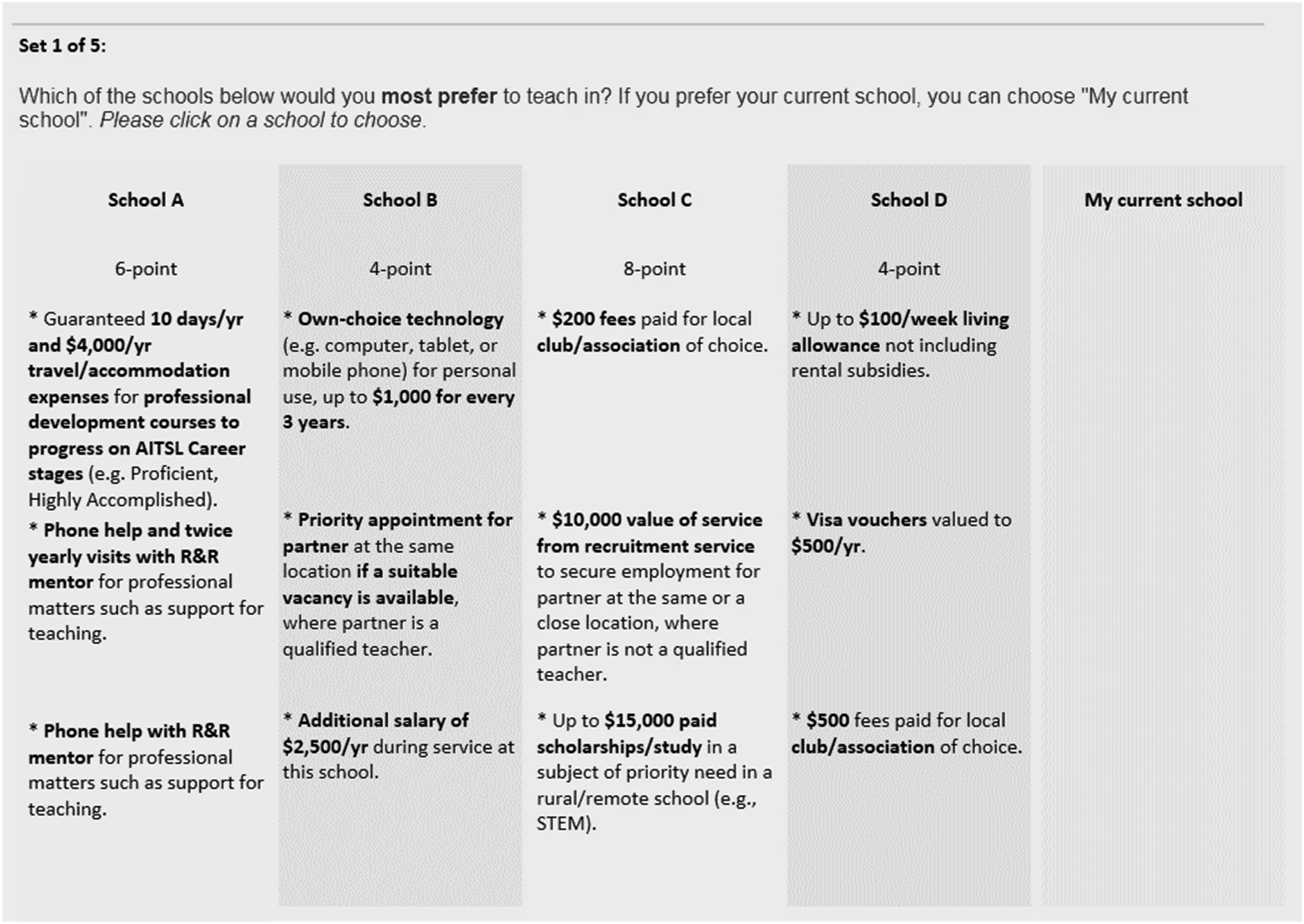
As the DCE examined incentives offerings from rural/remote locations, the levels varied in the DCE to describe the hypothetical schools were 2, 4, 6 or 8 points (i.e. four-levels). Respondents were provided accompanying information to indicate that the descriptions encountered in the DCE were reflective of the rural/remoteness of their location rather than reflective of being difficulty to staff for other reasons, such as socioeconomic disadvantage. Hence, comparable to other classification systems this generally equates to schools ranging from urban coastal locations (2-points), non-urban coastal or inner regional (4-points), outer regional (6-points) and remote locations (8-points).
Final Incentives List.
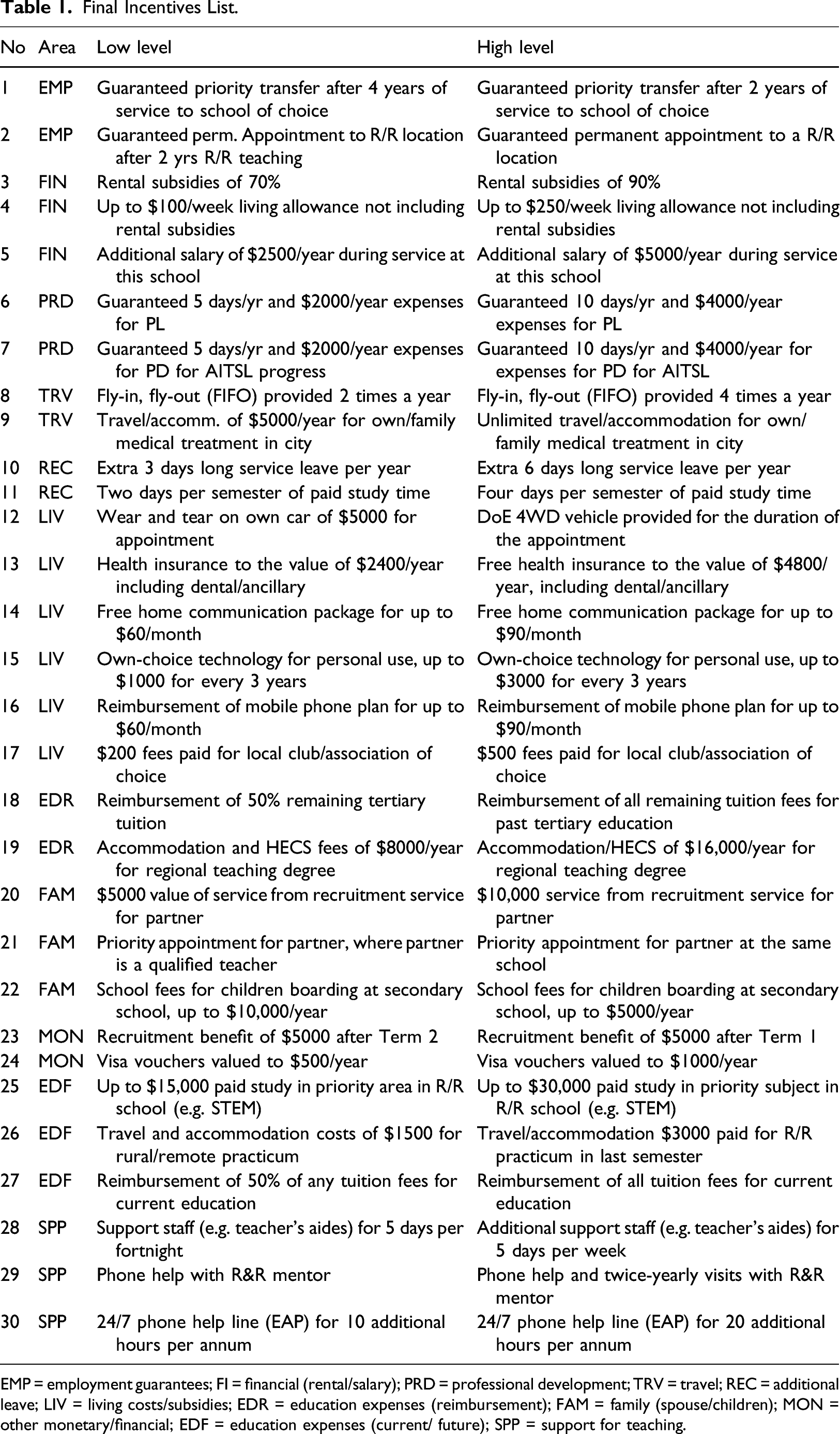
EMP = employment guarantees; FI = financial (rental/salary); PRD = professional development; TRV = travel; REC = additional leave; LIV = living costs/subsidies; EDR = education expenses (reimbursement); FAM = family (spouse/children); MON = other monetary/financial; EDF = education expenses (current/ future); SPP = support for teaching.
Upon viewing each choice set, teachers were asked to nominate the school that they would most prefer to teach in among the four options or to nominate to remain at their current school. After nominating their most preferred option, the chosen option was removed, and respondents were asked to indicate their most preferred school from the remaining four options. This process continued until a full ranking of all five schools in each set was obtained. Respondents were then presented a new choice set with four different hypothetical schools for evaluation, completing five choice sets in total.
Commitment to Profession and Intention for Rural and Remote Employment.
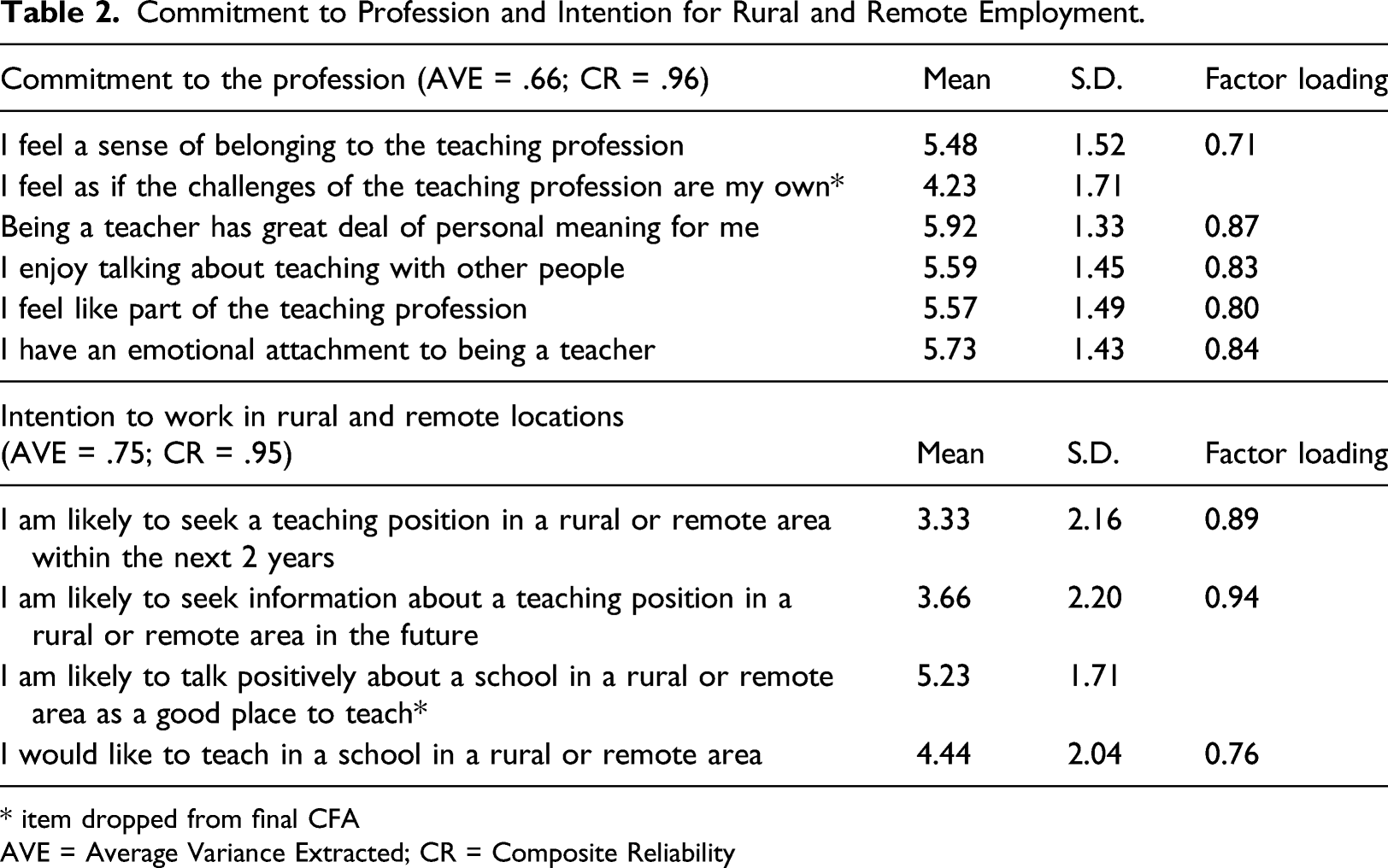
* item dropped from final CFA
AVE = Average Variance Extracted; CR = Composite Reliability
Latent scores for the two latent constructs, commitment to the teaching profession and intention to work in a rural/remote location, were calculated for each respondent and used in the prediction of latent class membership as described below.
The final section of the survey asked respondents about a range of socio-demographic characteristics (e.g. age, income and education), along with characteristics of the school at which they currently worked and the school at which they had completed their practicum. In addition, respondents were asked to indicate what would attract them to teach in a rural/remote area on a range of measures, including their level of agreement that a remote/rural location offers greater job security, an appealing lifestyle and is less stressful than working in a ‘big city’.
These socio-demographic characteristics, individual measures regarding the attractiveness of remote locations, as well as the latent scores capturing commitment to the profession and attitudes to work remotely, were used to predict latent class membership. Members of each latent class are predicted to be teachers that hold similar preferences for the incentives in the same class, but are distinct from the preferences for incentives exhibited by other classes, as reflected in their choice of schools in the DCE task. That is, combining the DCE task data with individual level measures provided a choice model to estimate two sets of effects simultaneously: a set of effects to describe teachers’ preferences for incentives and schools that are distinct for each latent class (i.e. segment), and a set of estimates to capture which teacher characteristics are significant in predicting which latent class a teacher is most likely to belong.
Participants
Sample Characteristics.
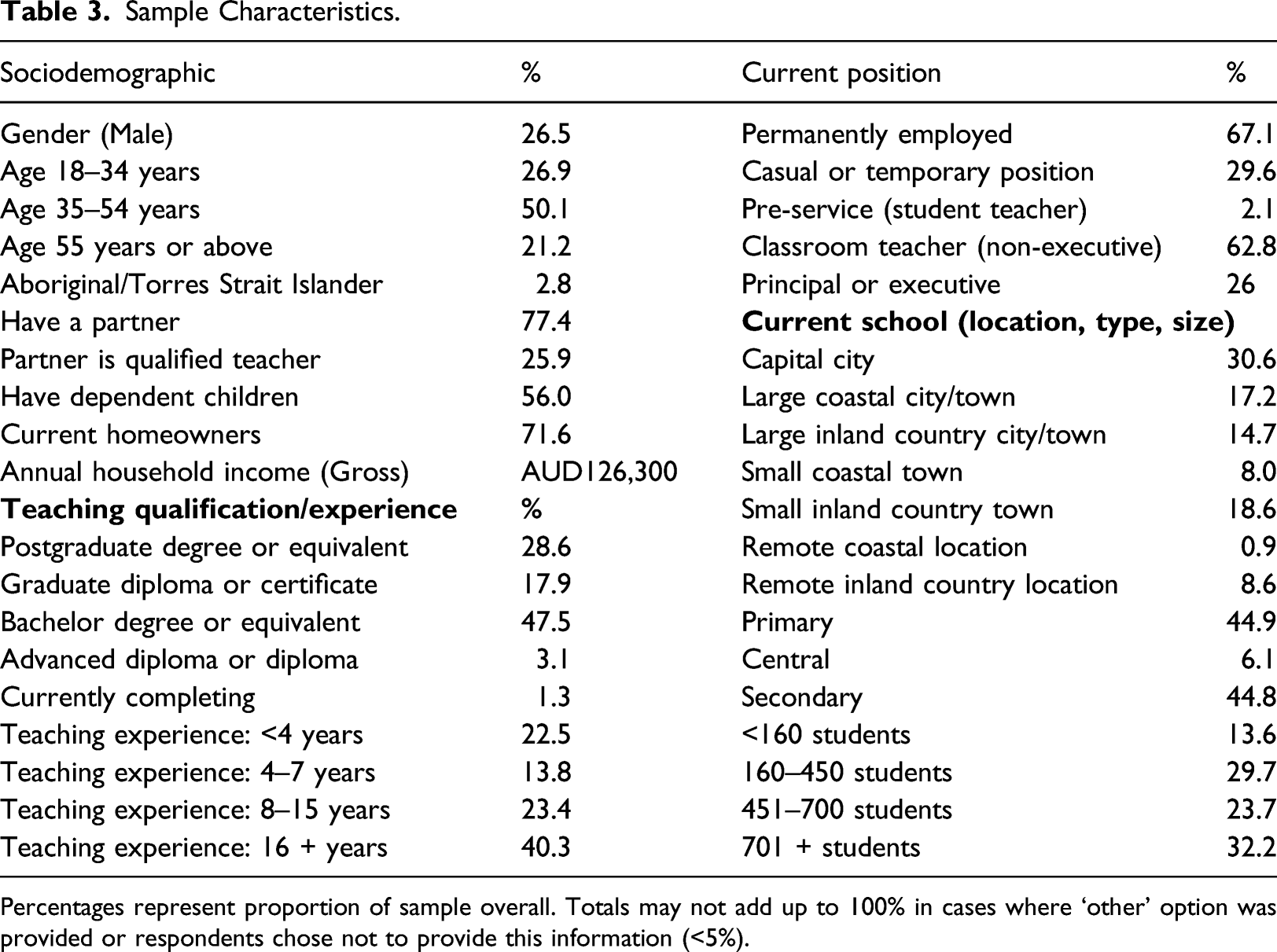
Percentages represent proportion of sample overall. Totals may not add up to 100% in cases where ‘other’ option was provided or respondents chose not to provide this information (<5%).
Analysis
First, using a traditional choice modelling approach the results were considered at the aggregate level, examining preferences among incentives while ignoring individual differences in preferences (i.e. assuming that all teachers held identical preferences for each incentive). Several methods and models have been developed to account for differences in individual preferences (e.g. Burke et al., 2020), but also individual differences in choice variability (e.g. Burke & Reitzig, 2007; Fiebig et al., 2010; Islam et al., 2007; Magidson & Vermunt, 2007; Swait & Louviere, 1993). The current study employed a scale-adjusted latent class choice model (SALCM) first developed by Magidson and Vermunt (2007). Scale-adjusted latent class choice model have been applied in a small, diverse range of other fields, including to forecast the attractiveness of various museum offerings (Burke et al., 2010), programmes to enhance forest biodiversity (Thiene et al., 2012) and pedagogical approaches in education (Burke et al., 2015). In the current study, the SALCM was used to identify latent segments that simultaneously differ: (i) in terms of preferences for a given incentive of interest and (ii) in the variability with which overall employment choices are made. The SALCM was estimated using LatentGold 5.1 (Vermunt & Magidson, 2016).
Results
Valuation of Incentives – discrete choice experiment (DCE) model
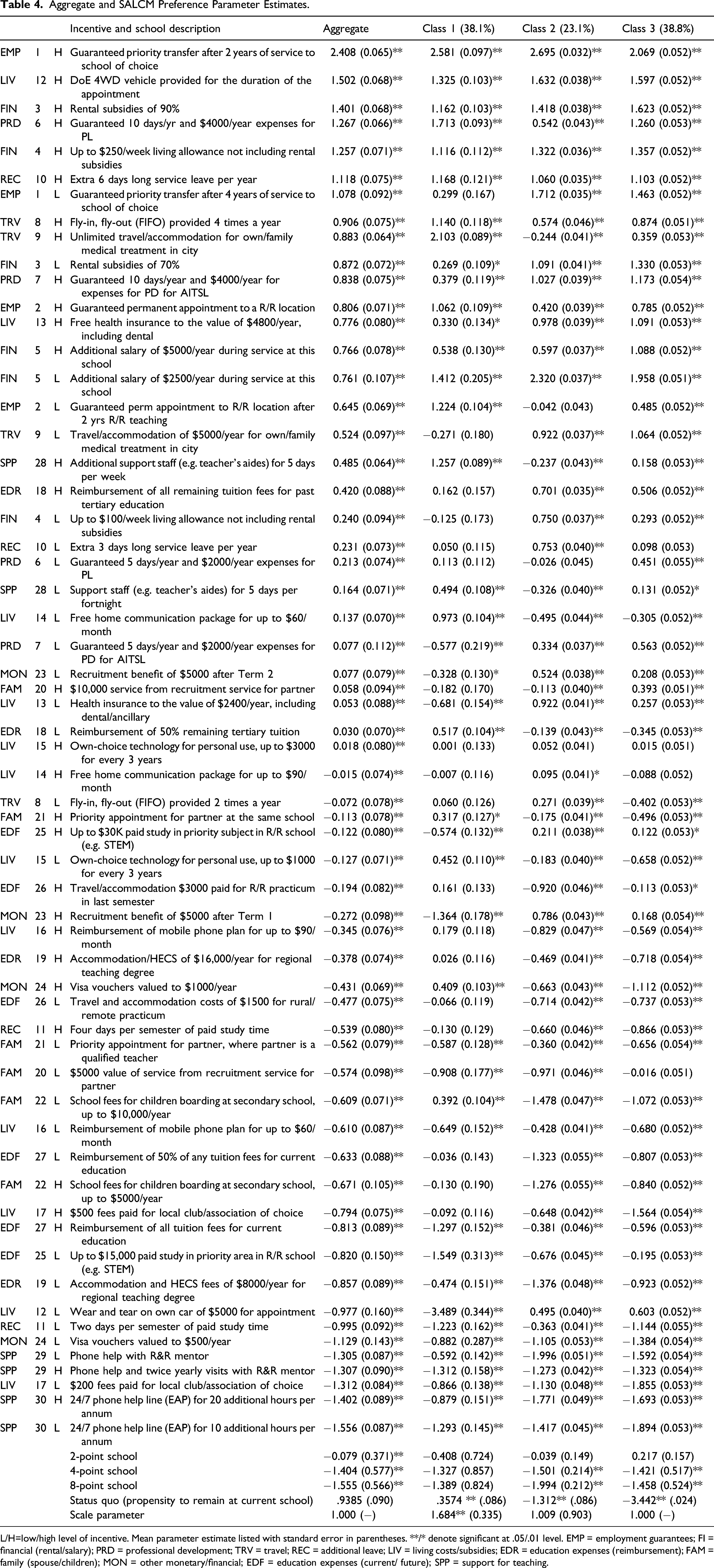
Aggregate and SALCM Preference Parameter Estimates.
L/H=low/high level of incentive. Mean parameter estimate listed with standard error in parentheses. **/* denote significant at .05/.01 level. EMP = employment guarantees; FI = financial (rental/salary); PRD = professional development; TRV = travel; REC = additional leave; LIV = living costs/subsidies; EDR = education expenses (reimbursement); FAM = family (spouse/children); MON = other monetary/financial; EDF = education expenses (current/ future); SPP = support for teaching.
The relative value and statistical significance provide insights into which incentives for rural and remote teaching are most to least valued among teachers. The most valued incentive out of the 60 incentives was that in which teachers were offered a guaranteed priority transfer after 2 years of service at a school to a school of their choice (β=2.408; p < .0001). That is, teachers were significantly more likely to choose to work at a school offering this incentive relative to any other incentive, on average. The least attractive incentive was one in which teachers were offered a 24/7 phone help line for personal use, either with an additional 20 hours (β=−1.4022; p < .0001) or additional 10 hours (β=−1.555; p < .0001) of assistance per year. The negative sign and size of the coefficient indicates that, on average, the incentive was the least preferred relative to all other 60 incentives considered in the study.
Overall, the most attractive incentives that emerged from DCE responses were, in descending order of preference: guaranteed priority transfer after 2 years’ service; AUD5000 additional salary pa; a DoE-provided four-wheel drive vehicle; rental subsidies of 90%; and guaranteed priority transfer after 4 years’ service. Significantly, both the high and low levels of the last factor (i.e. priority transfer) occur in the top five incentives; these two incentives (high/low) concern supporting teachers to leave the rural and remote area, rather than to remain.
The DCE model estimates also revealed the impact that the level of remoteness of a school had on teachers’ employment choices. There was no significant difference between the attractiveness of schools offering employment in terms of whether they were in an urban location (i.e. a 2-point school in the DoE classification) compared to a respondent’s current employment location (β=−.0790; p = .8318). However, teachers were significantly less likely to take up employment offers made by schools that were located in inner regional locations with a 4-point classification (β=−1.404; p < .05) or very remote locations with an 8-point classification (β=−1.555; p < .01). An example of an 8-point school – presented to respondents as background information to the DCE task – is a school located in the fictitious town of Goolangong, a town of 450 people, 795 km from Sydney and 217 km from the nearest town centre of Coonamble. In contrast, an example of a 4-point school is one located in the fictitious town of Dunaden, a town of 4100 people, 270 km from Sydney and 60 km from the large regional town of Bathurst. On average, only a guaranteed priority transfer after 2 years’ employment to a school of a teacher’s choosing would be a sufficient incentive for a teacher to work at a very remote school location (i.e. with an 8-point classification).
Scale adjusted latent class choice models (SALCM)
Three latent classes of respondents were identified. The SALCM model results presented in the latter columns of Table 3 denote the preferences among incentives and attractiveness of a school based on its remoteness (as denoted by its point classification) and against the status quo of a teacher to remain at their current school, among teachers predicted to belong to each of the three latent classes. First, the latent classes can be distinguished by their propensity to remain at their current school in lieu of choosing a possible rural or remote school location. Specifically, those in Class 1 were least likely to change schools, with a significant preference to remain at the current school when compared to other offerings on average (β=.357; p < .001). In contrast, those teachers predicted to hold preferences for incentives and schools consistent with the other two latent classes were more likely to switch schools, particularly for those in Class 3 (β=−3.442; p < .001).
Second, the latent classes can be distinguished by their valuation of the incentives evaluated in the DCE task as attributes of the hypothetical schools. The results in Table 3 indicate that the three latent classes/segments agree upon the incentive that is most attractive (i.e. guaranteed transfer), but preferences for all other incentives varied between the latent classes. For example, members of Class 1 placed significant value on the offering of unlimited travel and accommodation expenses paid for medical treatment in city locations, for themselves and their dependent children (β=2.103; p < .001) more so than Class 3 (β=.359; p < .001) relative to all other incentives on average; on average, Class 2 valued this incentive significantly less so than all other incentives (β=−.244; p < .001).
The earlier DCE modelling identified guaranteed priority transfer after 2 years’ service, AUD5000 additional salary p.a., a DoE-provided four-wheel drive vehicle, rental subsidies of 90% and guaranteed priority transfer after 4 years’ service as being the top five preferred incentives averaged across the entire sample of teachers. The pattern of preference for these five incentives was consistent for respondents in Classes 2 and 3. For Class 1, guaranteed priority transfers was still the most preferred option, but travel and accommodation expenses of AUD5000 per year to seek medical treatment for self and dependents was the second choice. Also attractive to Class 1 teachers was guaranteed travel and accommodation expenses for professional learning activities.
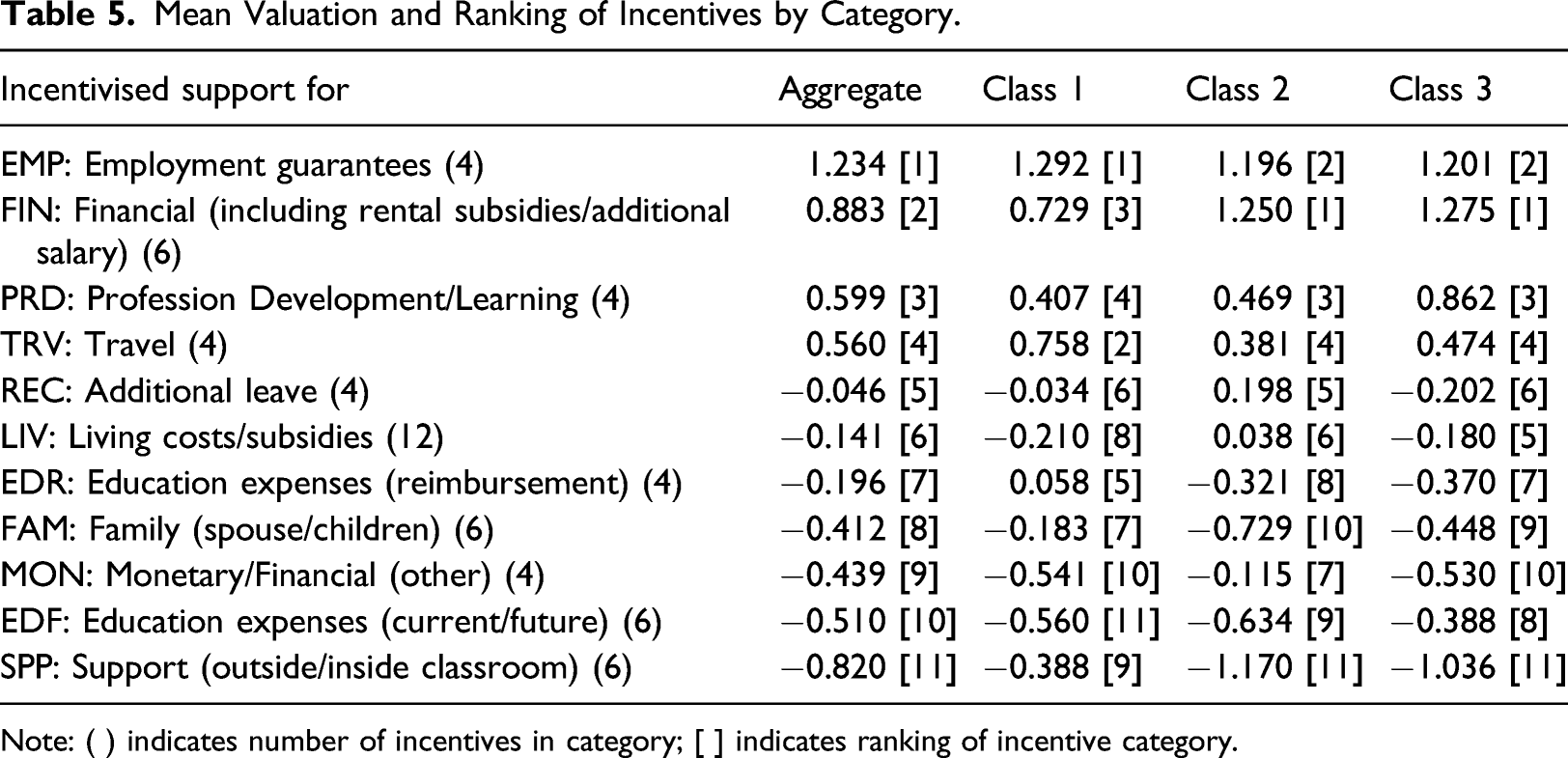
Mean Valuation and Ranking of Incentives by Category.
Note: ( ) indicates number of incentives in category; [ ] indicates ranking of incentive category.
The results can also be considered in terms of the set of incentives that offer relatively less value and appear in the bottom rows of Table 5. The six incentives that focused on offering teachers opportunities to be supported inside or outside their classroom through mentorship or provision of a teachers’ aides (‘SPP28’ through ‘SPP30’) offered the least value to teachers as being attractive enough to choose a position in a rural or remote school relative to other categories of incentives. The results in Table 5 also show that the outcome aggregated for the entire sample is largely driven by the rejection of these incentives by teachers predicted to belong in Classes 2 and 3, as compared to those in Class 1.
The results also show similar differences across the classes in other areas. For example, Class 1 is seen to value incentives that are inclusive of their spouse or children (ranked 7th highest) as compared to those in Class 2 (ranked 10th highest). On the other hand, respondents belonging to Class 2 and 3 instead place relatively greater value on the set of incentives that subsidize living expenses offered for the duration of the appointment, including those relating to a vehicle, health insurance, home technology set-up and mobile communications. Class 3 is also characterised by placing greater value relative to the other two classes (and particularly Class 1) on incentives that support current and future education opportunities, as well as reimbursement of past tertiary fees.
Profile of teacher segments with different incentive preferences
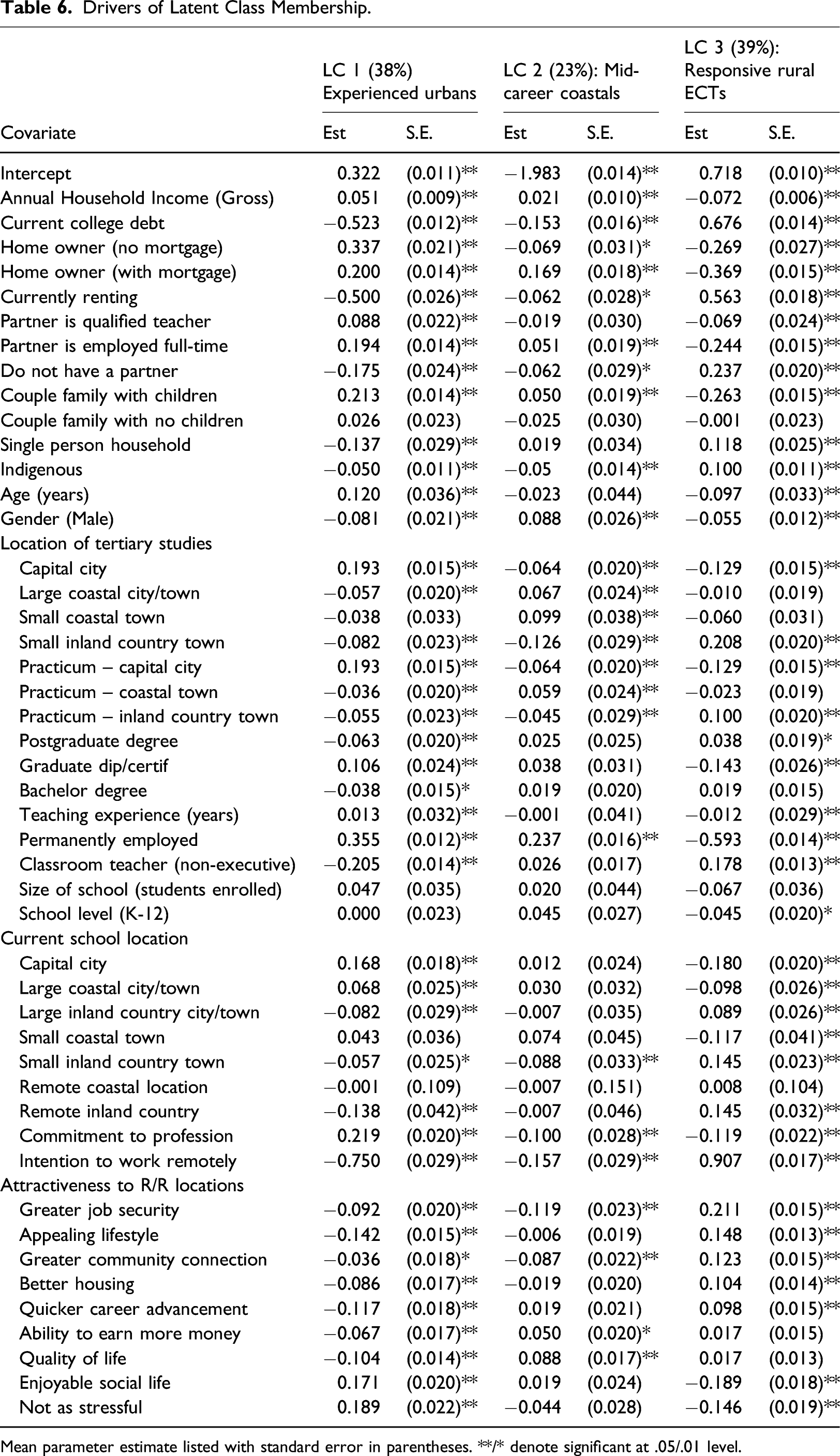
Drivers of Latent Class Membership.
Mean parameter estimate listed with standard error in parentheses. **/* denote significant at .05/.01 level.
Based on the three latent class membership probabilities calculated for each individual teacher in the sample, around 38% of teachers are predicted to hold preferences for incentives and schools that match those of latent Class 1, whilst 23% and 39% of teachers are predicted to belong to latent Class 2 and 3, respectively.
Taken together, the results presented in Table 6 indicate that members of Class 1 as compared to the sample aggregate profile was more likely to be older, have more teaching experience and currently working in a capital or coastal city location in a permanent and/or executive position. Members of this class have the lowest intention to work remotely, but are also those teachers who are more committed to the profession. We label members of Class 1 as ‘Experienced Urbans’.
Class 3, we label ‘Responsive Rural early career teachers (ECTs)’, with members of this class most likely to consist of teachers who are single, younger, who have been teachers for a shorter period, currently working in schools located in inland locations, but in a non-permanent position. In contrast to teachers in Class 1, members of Class 3 have higher intentions to work remotely (i.e. more responsive to such opportunities), but are less committed to the profession.
Class 2 appears to be medial concerning characteristics such as age, experience, income and current school with respect to transfer points. They are also medial regarding interest in teaching in rural/remote schools. They comprise a higher proportion living in a small coastal town and their tertiary studies were more likely undertaken in a coastal location rather than in a capital city or country town. They are similar to Class 1 in terms of being permanently employed, but more aligned with Class 3 in being classroom teachers. They are more likely to be teaching Years 11 or 12. They are slightly older than Class 3, but younger than those in Class 1, as reflected in their experience and tertiary debt levels. They are a mixture of homeowners and renters. Class 2, we label ‘Mid-career Coastals’.
Discussion
The main purpose of this study was to understand the valuation of incentives that can be made to teachers to make offers of employment for work at a rural and remote location more attractive. Several considerations, however, emerge from the research findings that indicate the valuation of incentives is contingent on a number of factors, including the aspect of teaching in a rural or remote location that the incentive addresses and individual differences relating to the teachers’ background including their opportunity for relocation. In the remaining section, we highlight the results in terms of the valuation of incentives that emerge in terms of whether they improve the experience of teaching or living in a rural and remote location, or offer opportunities for furthering a teacher’s career. The valuation of the incentives is discussed in terms of differences arising from the career and life-stage that an individual teacher identifies with, and related attractiveness to considering employment and life in a rural and remote areas.
Incentives to support teaching experiences are less valued
Across the 30 types of incentives (with a total of 60 high and low incentive combinations in total) considered, several directly related to supporting a teachers’ professional experience in teaching at a rural and remote location. However, the findings indicate teachers were overwhelmingly less attracted to employers offering assistance via face-to-face mentoring or help over the phone, versus other incentives. Teachers were more receptive to additional support staff (e.g. Aboriginal teachers’ aides), although this appeared among the median list of ranked incentives. This contrasts with other work that highlights the value in mentoring, particularly for early-career teachers (e.g. Buchanan et al., 2013), but consistent with other studies indicating mixed experiences and challenges for both mentors and mentees (Hobson et al., 2009).
Incentives to support short-term travel are moderately valued
A second area of incentives referred to facilitating the expense and time associated with travelling to and from rural and remote locations. To provide some perspective, our study examined locations that were over 1000 km from any capital city, often requiring multiple modes of transport to access and complicated by the challenging road conditions and/or climate. Incentives that were most popular in this regard appeared to be the provision of an all-terrain/4WD vehicle during their appointment, provision of time off and travel support to attend professional learning, additional long service leave and unlimited travel for medical treatment in city locations. The tyranny of distance is also valuable to overcome for those accepting relocation away from family and friends (Sharplin, 2002). In addition, associated benefits will also accrue to students of these teachers (Harvey and Clark, 2018; Watson et al., 2016).
Incentives for professional development are valued over supporting further education
As with our participants, the literature highlights the importance of supporting professional development, particularly attendance at activities away from the rural/remote school location, and to other incentives around working conditions such as consideration of class sizes and provision of support staff (e.g. Aubusson et al., 2014; Burke et al., 2015). Less prominent in our findings was importance of providing pre-service teachers with PEs in rural and remote areas (Hudson & Hudson, 2008; Kline et al., 2013). Similarly, programmes to incentivise further study in specific areas, such as STEM, appear to offer relatively less value than programmes than reimburse the costs from previous tertiary studies.
Incentives of financial support (including rental subsidies) are more valued, particularly by Early Career Teachers
A fourth area of incentives more valued by teachers relates to improving conditions and living expenses for the duration of their employment in a rural or remote location, such as the offer to improve home or mobile communications. However, we found that teachers were overwhelmingly more attracted to employment opportunities that offered incentives with direct economic benefits, such as salary supplementation, monetary benefits towards living allowances and heavily subsidised rental arrangements. Related to this issue is that most teachers receptive to rural and remote postings were found to be those most likely to be at the beginning of their careers, have lower household incomes and potentially looking to secure their financial position by working in hard-to-staff locations. The value in offering rental subsidies is further supported by the finding that workers most likely to be incentivised and to take up rural and remote positions did not already own their own home and/or were living in shared households.
Incentives offering opportunities beyond the current placement are most valued
The most significant area of offering incentives for teachers to accept employment relates to conditions regarding the service period and point systems. The results indicate that securing permanency and transfer conditions are significant considerations. Of interest to Experienced Urbans (i.e. members of Class 1) is whether incentives are extended to be inclusive of partners if working in rural/remote locations.
These findings, however, also raise concerns about incentivising rural and remote teaching over the longer term, particularly via the accrual of transfer points and guaranteed placements to a school of the teacher’s choosing, possibly at a non-rural or less remote location. These incentives create a challenge for employing bodies in that the same mechanism that attracts teachers to rural/remote schools, also serves to propel them back to more populous and more popular locations (Reid et al., 2010). This means that rural/remote schools are likely to be staffed by the most inexperienced personnel, including executive staff, and who require considerable support (HardwickFranco, 2018; Fray & Gore, 2018). This further exacerbates the complex and chronic problems experienced within such schools and those encountered by their students, including limited opportunity, and lowering of aspirations and expectations.
Like Honda and Vio (2015), Haslam McKenzie (2007) and other research cited above, we found that while both social and financial incentives are significant motivators to attract teachers to rural/remote schools, each in itself offers limited attraction. Moreover, we can confirm that no single suite of incentives will attract everyone, nor on their own are enough to move teachers from their current positions. This indicates that the bundling and tailoring of incentives is required, rather than presuming that one, or a limited number of approaches will be sufficient (Humphreys et al., 2009; Lehmann et al., 2008; NSW Department of Premier and Cabinet, 2010).
The latent class analysis identified three sets of teacher segments, labelled as Experienced Urbans (latent class 1), Mid-Career Coastals (class 2) and Responsive Rural ECTs (class 3). The identification of these teacher groups provides insights into the challenges presented in attracting teachers that are experienced, committed to the profession, but responsive and capable of doing so given their life stage. For example, Experienced Urbans are more likely to be those teachers who are more established in their careers and ‘life stage’ than either of the other classes, indicated by higher levels of income and home ownership, with partners working full-time, living as a couple/family with children. Whilst this group was, on average, the most committed to the profession, they were less likely to be interested in teaching in a rural/remote school and the majority of incentives offered would not be valued enough for them to select employment options for a position at a rural/remote school. At the other extreme, Responsive Rural ECT teachers are described as those teachers early in their careers, and pre-service teachers, and were entirely responsive to the incentives offered, but teachers who expressed lower commitment to the profession. However, they favoured those incentives and use of the transfer-points that allowed them to further their careers. There was some familiarity with rural and remote regions amongst these teachers, including having spent time on internships and/or in their childhood in these regions. These respondents tended to be single and renting, and therefore potentially more open to relocation. Finally, teachers identified as Mid-Career Coastals are more likely to be early to mid-career teachers sitting between the two other classes in terms of their experience, age, home ownership and life stage. Similarly, Mid-Career Coastals appear medial with respect to their level of attraction to work in rural and remote locations and their commitment to the profession relative to teachers belonging to the other segments.
In turn, the latent segment profiles reveal a significant challenge of incentivising teachers to work in rural and remote regions. Whilst the most experienced and most committed teachers may be more valuable to schools and the students of rural and remote locations, they are the least open to these opportunities, and any range of incentives, even those of greater value, appear insufficient to compensate such teachers to start a new life – including for their families – away from their current urban locations. In contrast, it is the least experienced, but less committed teachers who appear most willing to change.
Conclusions and recommendations
It is apparent in the associated profiles of these clusters, that stages in career and stages in life are interrelated factors in determining a teacher’s propensity to seek opportunities in rural/remote locations. This has strong implications in the strategic targeting of particular segments identified in the data. Those teachers more willing to teach in rural/remote areas are typically less experienced and less committed to the teaching profession than others, and less likely to have secured, or pursued, a permanent position. They also appear to have lower levels of teaching qualifications. These two findings appear to be mutually at odds. It is possible that some of those with high non-teaching credentials are career-changers. Many of these more experienced teachers appear to be ‘settled in the city’, with corresponding family and financial (mortgage) commitments holding them there. Teachers with children in senior high school or at university might be concerned about more limited education opportunities rurally, which raises further questions about perceptions of opportunities in rural versus urban education. Such teachers appear to be difficult to entice to the country. The preponderance of science teachers in this group, in the context of a broader shortage of science teachers, no doubt exacerbates attraction problems.
There emerged a loosely inverse relationship between commitment to the profession and to teaching rurally. It may be that age brings with it a greater commitment to the profession. Conversely, it may be that those with less commitment have by then left the profession, raising the mean level of commitment of those remaining. Alternatively, lower professional commitment might be a cultural attribute of younger people, at any point in time, or a trait of the current rising generation. This has broader implications for the teaching profession.
Experienced Urban teachers (Class 1) appear unlikely to be attracted by the same set of incentives as other teacher segments already living in regional areas and/or those with less experience in the profession. Given the higher level of commitment that Class 1 teachers profess to the profession, it would be desirable to consider and explore other strategies for attracting this cohort. One strategy might be to challenge and change perceptions that this group may harbour about lifestyle in rural and remote regions. Marketing strategies highlighting clean air, extra space, accommodation savings, lower stress, reduced commuting time and greater community connections, might be attractive. Additionally, incentives of a more ideological nature, such as the ability to make a difference in students’ lives, could be promoted.
Several other suggestions arising from the research emerge may require consideration. For example, one suggestion is that teachers who are close to retirement, but living in the main cities, might be enticed to share their work experience by spending an additional few years in rural and remote regions. Such teachers may accept such opportunities as their responsibilities to dependent children diminish. A new position of ‘leading teacher (rural)’ or similar, might be created to attract the teachers currently in executive roles. Such a role might entail some teaching responsibilities, along with a leadership role in teaching and administration, and/or be shared by more than one school (Schuck et al., 2016). Indeed, since the release of the report from Schuck and colleagues, instructional leaders in schools have assumed some of these responsibilities in areas, including literacy and numeracy, which are priority areas of focus from 2022 (NSW Government, 2021). Other suggestions include trial periods in which teachers could spend a term in a rural and remote school to gain familiarity with the experience. Also, more opportunities for pre-service teachers to undertake PE in rural/remote settings could be offered to acquaint teachers with such settings and therefore be more aligned with the experiences of responsive rural ECTs (i.e. class 3) who were found to be more responsive to incentives and more attracted to working in a rural/remote school. We offer the recommendation of rural PE cautiously; however, as decisions to teach in such areas are determined by other factors, such whether an individual has grown up in the country (see Gereluk et al., (2020).
The NSW Department of Education (n.d. a) has launched a policy featuring people, practice, participation and partnerships as key areas (p. 7). This resonates with Cuervo’s (2020) call for both material and socio-cultural means to address the problem. White and Downey (2021) refer to ‘place-attentive strategies’ which focus on connections between place, people and power (p. 12). A focus on place (Corbett & Gereluk, 2020) might benefit from being informed by Indigenous connections to Country. While there are no doubt circumstances peculiar to NSW, we believe that some of these incentives might be applicable to other contexts, and are worthy of trial.
Rural and remote students are disadvantaged compared to their urban counterparts (Sullivan et al., 2018). Such disadvantage is exacerbated by staff shortages, inexperience and attrition. More pressingly, we predict that the condition for rural and remote schools is likely to worsen in the near future, with the imminent retirement of many baby boomers from teaching, as well as problems with recruitment (Baker, 2021). COVID-19 has served to hone teachers’ digital skills, but has also highlighted the existing ‘digital divide’ fracturing in part along rural-urban lines (Kormos & Wisdom, 2021). The pandemic has also raised rural home prices, as part of a remote working awakening, nullifying one former advantage of ‘the bush’.
As noted earlier, many teachers enter the profession for altruistic reasons. As suggested by Rice et al. (2017), while some problems exist in staffing schools in low socio-economic contexts in the city, the problem seems greater still in rural locations. For many teachers, it appears that the prospect of rural teaching presents (forgive the Sydney analogy) a bridge too far, as it is further removed from the support of friends and family, alongside perceptions of more limited educational and other professional (e.g. health) services. Redressing associated disadvantages for teachers and learners, particularly by increasing the supply of the former, should be prioritised as a matter of social justice and equity.
Footnotes
Acknowledgements
We would like to acknowledge Professor Sandy Schuck, who led this project, and our colleagues Prof. Peter Aubusson and Dr. Edward Wei.
Declaration of conflicting interests
The author(s) declared no potential conflicts of interest with respect to the research, authorship, and/or publication of this article.
Funding
The author(s) disclosed receipt of the following financial support for the research, authorship, and/or publication of this article: This work was supported by the NSW Department of Education, Australia.
