



Abstract
This literature review of secondary school teachers’ perceptions of student misbehaviour from 1983 to 2013 comprised studies from various countries including Australia, China, Greece, Jordan, Malta, the United Kingdom and the United States. Identified materials enabled international comparisons and the analysis of changes over time. Of the 20 papers included in the final review, most were categorised as looking at perceptions of serious student misbehaviours or high frequency student misbehaviours. The main conclusions were that teacher perceptions of high frequency misbehaviours and serious misbehaviours were largely consistent over time and between countries. Teachers perceived talking out of turn and similar misbehaviours as being most frequent. Teachers consistently perceived stealing and vandalism as serious misbehaviours while more extreme violent or potentially violent behaviours were not reported to occur frequently. The study raises the issue of the lack of a common research methodology in the reviewed materials, including agreed student behaviour descriptors, which impede conclusive recommendations.
Keywords
Research about student misbehaviour in schools has a long history. As early as 1928, research was conducted into teachers’ attitudes towards behaviour problems in children (Wickman, 1928). Ninety years later, at the time of writing this article, student misbehaviour in secondary schools hit the headlines in the United Kingdom (‘Low-level classroom disruption hits learning, Ofsted warns’: BBC, 25th September 2014). The UK’s school inspection body, the Office for Standards in Education, Children’s Services and Skills (OFSTED) concluded from more than 3000 school inspections and surveys of teachers and parents that disruptive behaviour in UK schools was “deeply worrying” and that one in twelve secondary teachers reported that more than ten minutes of learning per hour was lost due to behaviour problems (OFSTED, 2014, p. 11). Six months earlier, the Office of the Auditor General, Western Australia, published its review of behaviour management practices in that state’s government schools. Amongst other findings, 39 per cent of principals and teachers were reported to spend 20 per cent of their time – equivalent to one day per week –on behaviour management (Office of the Auditor General Western Australia, 2014). Although it is important to acknowledge that both reports expressed concern based on a minority of teachers and/or principals – one in twelve and 39 per cent respectively – headlines such as these which grab attention certainly provoke debate.
Reasons for disruptive behaviour in schools being of concern are manifold. In the UK, poor classroom behaviour is seen to impact on the life chances of too many pupils and drives teachers away from the profession. (OFSTED, 2014). In Western Australia poor behaviour “undermines teaching and learning” (Office of the Auditor General Western Australia, 2014, p. 14). Recognition of why poor classroom behaviour is a concern is not a new phenomenon. In the 1980s, it was noted as having effects on teacher well-being as well as interfering with the learning process (Martin, 1984) and as early as 1972, classroom behaviour was described as the biggest problem in US public schools (Martin, 1984). The undermining of teaching and learning and the interference with the learning process appear to result in the same thing: reduced opportunities for students to learn.
A considerable body of research into problem behaviour in schools has been undertaken. For example, in a review of relevant research, Beaman, Wheldall, and Kemp (2007) identified 16 studies of troublesome classroom behaviour between 1994 and 2005. Of these, however, only five were exclusively about the perceptions of secondary school teachers (Borg, 1998; Haroun & O’Hanlon, 1997; Ho & Leung, 2002; Little, 2005; Stuart, 1994). The setting is relevant in that upon transitioning to secondary schools, students experience different teachers for different subjects and have a period-based day (Weiss & Bearman, 2007). In addition, students have new school topics, new teachers with different expectations and new teacher–student relationships (Lohaus, Elben, Ball, & Klein-Hessling, 2004). Moreover, secondary schools tend to be larger, more impersonal and more teacher-centred (McIntosh, Flannery, Sugai, Braun, & Cochrane, 2008). All of these factors may contribute to what Beaman et al. (2007) observed as a tendency for an increasing proportion of students to be troublesome as they moved into secondary settings. Given the differences in structures and student experiences between primary and secondary schools and the increasing proportion of students engaged in troublesome behaviour in secondary settings, it is perhaps surprising that no reviews of literature of this topic in this setting appear to exist.
Student behaviour problems in secondary schools may or may not be perceived to be on the increase. For example, Beaman et al. (2007), summarising Jacob's (2005), work found contradictions whereby teachers reported a significant increase in “difficult students” over a twenty year period while research studies indicated that the proportion of children with difficult behaviours remained approximately the same (Beaman et al., 2007). Of relevance to this topic, Stoutjesdijk, Scholte, and Swaab (2012) noted the move by countries such as the Netherlands, the United Kingdom, and the United States to place children in the least restrictive environment as a consequence of incorporating the Salamanca Statement and Framework for Action on Special Needs Education into policy and legislation (Stoutjesdijk et al., 2012). This may mean that teachers in mainstream education settings are now exposed to student behaviours that would previously have occurred only in segregated settings. With legislation on inclusion occurring in different countries since the early 1990s, for example, the Special Educational Needs and Disability Act (UK, 2001), the Expertise Centers Act (Netherlands, 2003), the Individuals With Disabilities Education Act (US, 1997) and the Disability Discrimination Act (Australia, 1992) it would be interesting to note if changes in teacher perception of behaviour have occurred following the introduction of this legislation.
Two dimensions of behaviour which are commonly reported in the research literature are the frequency of misbehaviours and the seriousness of misbehaviours and these are the focus of this review. In order to explore consistency of teacher views over time, a span of 30 years, from 1983 to 2013 was chosen. The focus of this review was, therefore, how teachers at different times and in different countries perceived the seriousness and frequency of different secondary student misbehaviours. More specifically, the key research questions were:
Which student misbehaviours do secondary school teachers perceive as the most serious? Which student misbehaviours do secondary school teachers perceive as the most frequent? What is the degree of consistency in secondary school teachers’ perception of the most serious student misbehaviours between 1983 and 2013? What is the degree of consistency in secondary school teachers’ perception of the frequency of student misbehaviours between 1983 and 2013? What is the degree of international consistency in secondary school teachers’ perception of the most serious student misbehaviours? What is the degree of international consistency in secondary school teachers’ perception of the frequency of student misbehaviours?
Method
In early July 2014, a literature search was conducted of ERIC, PsycInfo and A+ using the following terms: (perceptions of disruptive behaviour) AND schools; (disruptive behaviour in school) AND (principal OR headteacher) AND secondary; (delinquent behaviour school) AND (principal OR headteacher) AND teacher; (low-level disruptive behaviour) AND teacher AND (perception OR view); (discipline in school) AND perception AND (principal OR headteacher) AND secondary and (school leaders) AND (student behaviour); (high school teacher perceptions) AND behaviour AND student; (secondary school teacher perceptions) AND behaviour AND student.
Titles and abstracts were read to ascertain whether the retrieved materials met the criteria for inclusion. In this initial step, materials were included if they
reported perceptions of school leaders or teachers about student behaviour, dealt with problem student behaviour in secondary schools involved middle school (middle years) data were written in English were peer reviewed journal articles and conference papers – including those with refereed abstracts only.
Although middle schools traditionally include upper primary years, their overlap into secondary schooling means that they were an important source of data for this review.
Initial searches, after applying the inclusion criteria, resulted in 28 retrieved records for Education Research Complete, six records for ERIC, two records for A+ and none from Psycinfo. After removal of duplicates 25 records remained in total.
The author and one other did the initial screening based on the reading of the abstract for each paper and inter-rater reliability for article selection was 90%, calculated by dividing the number of agreements by the number of agreements + disagreements and multiplying by 100. Disagreements were resolved by discussion after reading the complete paper, again with reference to the pre-determined criteria. Initial screening left a total of 13 papers.
A search of the reference lists of the 13 papers led to the identification of a further six papers and a cited by search led to a further six. When the full papers were retrieved for data extraction, studies which examined K-12 education as a whole were only included if the data on secondary schools could be extracted. Materials that were narrative and/or did not contain empirical data were also excluded. The combination of these two characteristics led to the exclusion of five papers. This process resulted in a total of 20 papers included in the review.
As the first step in the review, data were extracted from the studies about the location of the study, the number and type of participants, aims of the study, research questions as well as the results and conclusions. Studies were classified as to whether they reported primarily on the seriousness of problem behaviour or the frequency of problem behaviour. Studies with the aim of discovering which misbehaviours were most frequently encountered were classed as Frequency studies whereas those studies that set out to discover which misbehaviours teachers perceived as most serious were classified as Seriousness studies. Some studies did not use the term “Serious”. Occasionally other terms such as “Disturbing” were used which were interpreted as being synonyms of “serious”. Johnson and Fullwood (2006), for example, examined “disturbing” behaviours. Some studies produced results that could not be classed as either Frequency or Seriousness but did report on another dimension of teacher perception of student misbehaviour. These were classed as Addtional.
In order to explore the nature of problem behaviour, the behaviours reported as high frequency across studies were placed into four types. Type 1 were based on misbehaviours that manifested themselves in unsolicited verbal expressions – for example, “talking out of turn” and “chatting” or “joking”. Type 2 misbehaviours were based on passive off-task behaviour – “lack of focus”, “daydreaming”, “playing with personal stuff”, “lack of motivation” and inattention. Type 3 misbehaviours were based on explicit articulations of general character traits – “idleness” and “laziness”. A further distinction between Type 2 and Type 3 misbehaviours can be thought of in terms of generalisation: Type 2 misbehaviours tend to relate to student approaches to classroom activities whereas Type 3 might be observed in any setting, including the home environment. A final type “Other” included high frequency misbehaviours that did not fit into any of the first three types. This included “hindering others” and “rowdy misbehaviour”.
Results
Summary of studies of teacher perceptions of secondary student misbehaviour.
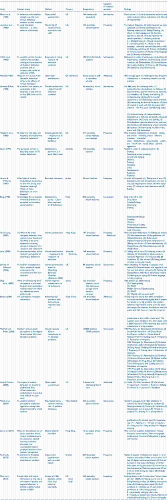
Of the 20 studies included in the final review, nine examined frequency of behaviours, eight examined seriousness, three exclusively examined additional aspects of behaviour and one included additional aspects of behaviour as well as frequency. Of the additional behaviours, two studies investigated the perceptions of teachers as to how student behaviour had changed in general terms (for example “getting worse” (Maxwell, 1987; Brown, 2009) while one study asked teachers which behaviours they found most difficult to handle (Axup & Gersch, 2008). This latter study attempted to elicit how misbehaviour impacts on teachers’ lives. The Ho and Leung (2002) study examined frequency but also looked at ranking certain disruptive behaviours.
Three of the twenty papers looked at specific year groups. Axup and Gersch (2008) examined perceptions of behaviour in Year 8 boys. Kyriacou and Roe (1988) looked at differences between the first and the fifth year – of secondary education – whilst Vidoni et al. (1983) focused on 5th to 8th grade which constitutes the “middle years” as defined by the Australasian Curriculum, Assessment and Certification Authorities (for example see, http://acaca.bos.nsw.edu.au/go/changing-schools/victoria/middle-years-of-schooling-years-5-8). Ding, Li, Li, and Kulm (2008) also differentiated between middle school and high school students within a study of K-12 teachers. All other studies covered the full range of senior school years.
Which student misbehaviours do secondary school teachers perceive as the most serious?
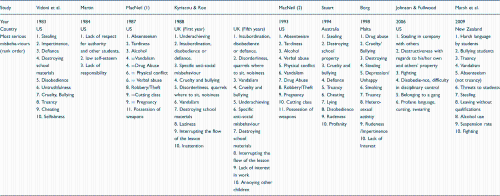
There were eight studies that focused on the ranking of seriousness of student behaviour (Borg, 1998; Johnson & Fullwood, 2006; Kyriacou & Roe, 1988; MacNeil & Prater, 2008; Marsh, Williams, & McGee, 2009; Martin, 1984; Stuart, 1994; Vidoni et al., 1983). Table 2 shows some consistency in the first and second ranked most serious misbehaviours. Stealing was ranked first in three studies (Johnson & Fullwood, 2006; Stuart, 1994; Vidoni et al., 1983) and was rated in the “top 10” in seven studies. Kyriacou and Roe (1988) did not highlight stealing in either the first year or fifth year of secondary education. “Destroying” or “destructiveness” or “Vandalism” was ranked second in two studies (Johnson & Fullwood, 2006; Stuart, 1994) and third by three others (Borg, 1998; Kyriacou & Roe [fifth years], 1988; Vidoni et al., 1983).
Which student misbehaviours do secondary school teachers perceive as the most frequent?
Most serious behaviours – Arranged by year.
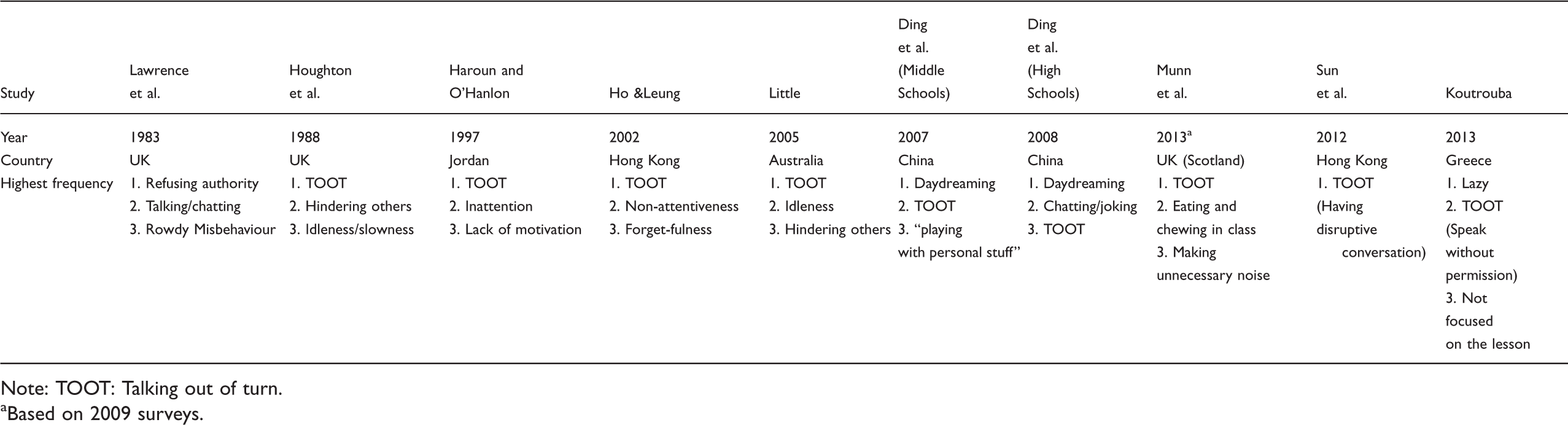
Nine papers reported on the frequency of misbehaviour, namely Ding et al. (2008), Haroun and O’Hanlon (1997), Ho and Leung (2002), Houghton, Wheldall, and Merrett (1988), Koutrouba (2013), Lawrence, Steed, and Young (1983), Little (2005), Munn et al. (2013), and Sun (2012). Ding et al. (2008) subdivided their study into middle schools and high schools.
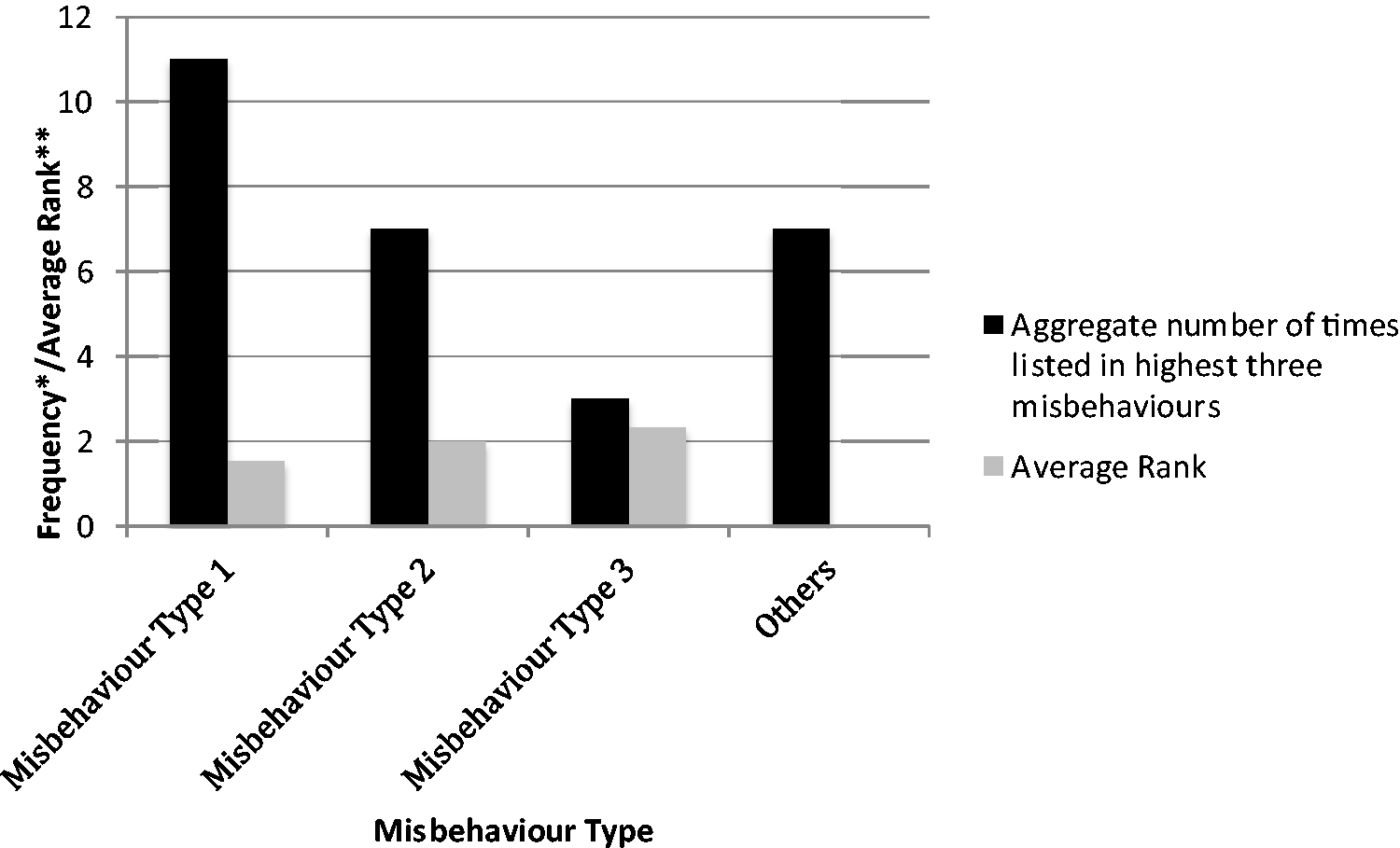
Summaries of the most frequent (i.e. ranked first to third) problem behaviours are shown in Table 3. In addition, Figure 1 illustrates that teachers identified Type 1 misbehaviours as being the most frequent (eleven appearances and an average rank of 1.54), Type 2 misbehaviours had a frequency of seven and an average rank of two whilst Type 3 misbehaviours had a frequency of three and an average rank of 2.33. As one study which had subdivided into middle and high schools was excluded, 10 of the 11 data sets were considered, of which 8 placed talking out of turn (TOOT) in the top three and, of these, 5 placed it first.
What is the degree of consistency in secondary school teachers’ perception of the most serious student misbehaviour between 1983 and 2013?
Most frequent misbehaviours (highest three ranking) – Arranged by year. Note: TOOT: Talking out of turn. Based on 2009 surveys. Which misbehaviours do secondary teachers perceive as the most frequent? *Number of times that the misbehaviour type was ranked in the top three. ** Average rank (1=highest) of each misbehaviour type. Misbehaviour Type 1: Talking out of turn (TOOT)/Talking/Chatting. Misbehaviour Type 2: Inattention/Not focused on the lesson/Lack of motivation/Daydreaming/Playing with personal stuff. Misbehaviour Type 3: Idleness/Laziness. Others: Misbehaviours that do not fall into the Types 1, 2 or 3. Examples include, hindering others, rowdy misbehaviour, eating and chewing in class.
Destructiveness/destroying property/vandalism appeared in every study other than Martin (1984) with the lowest ranking given as sixth (see Table 3). Cruelty and/or bullying was ranked 7th in 1983, 3rd in 1994 and 2nd in 1998 and 2nd in 2013. In 1983, Vidoni’s study ranked selfishness 10th but this is the only reporting of that behaviour.
What is the degree of consistency in secondary school teachers’ perception of the frequency of student misbehaviour between 1983 and 2013?
Talking out of turn (TOOT) and similar Type 1 misbehaviours have been reported as a consistently high frequency problem over the 30-year span of this review. Type 3 misbehaviours in some form or other also appear to be reported as a consistent high frequency misbehaviour. The Houghton et al. (1988) study and its Australian replication in 2005 (Little, 2005) placed idleness third and second respectively. The 2013 study, (based on 2009 responses) by Munn, placed this misbehaviour fifth (see Table 1) whilst the 2013 study (Koutrouba, 2013) placed it first.
What is the degree of international consistency in secondary school teachers’ perception of the most serious student misbehaviour?
The results show considerable consistency between countries in terms of how teachers rank the seriousness of misbehaviours. Of the four countries that are represented US (Johnson & Fullwood, 2006; MacNeil & Prater, 2008; Martin, 1984; Vidoni et al., 1983), Australia (Stuart, 1994), Malta (Borg, 1998) and New Zealand (Marsh et al., 2009), only the Martin study (1984) did not reflect a perception that stealing, physical violence, profanity or verbal abuse and forms of vandalism/destructiveness are serious types of misbehaviour. Absenteeism and/or truancy together with cruelty and/or bullying were rated within the top ten ranked misbehaviours in all countries and in most, but not all, studies. Forms of disobedience and/or impertinence/defiance or rudeness were identified serious misbehaviours in all except New Zealand. Alcohol use was seen as a serious misbehaviour in the United States and New Zealand but not considered so in Australia nor in Malta.
Malta was the only country ranking drug abuse as the most serious misbehaviour as perceived by secondary school teachers.
What is the degree of international consistency in secondary school teachers’ perception of the frequency of student misbehaviour?
TOOT and other Type 1 misbehaviours was the number one concern in all countries – together with Hong Kong – with two notable exceptions. The study of teachers in China (Ding et al., 2008) was the only study which noted that daydreaming was a major concern. In Greece, Koutrouba (2013) noted that “lazy” was the misbehaviour ranked as the most frequent. Separately, it is also worth noting that Ding et al.’s results from Middle Schools mention “playing with personal stuff” as the third most frequent misbehaviour. This is a misbehaviour that is not listed as high frequency in any other country.
Discussion
Serious misbehaviours
Perceptions of serious misbehaviour in secondary schools appear to be relatively constant over time and place. It is possible that this is related to the individual experiences and moral frameworks employed by teachers. The answer to the question: “Which is more serious: stealing, violence or drug abuse?” is likely to be dependent on the respondent and it would seem logical to infer that a number of different responses would be received in any randomly selected sample of the general population. There may, however, be a subset of the general population that shares common values and which is drawn to teaching. Consequently, teachers may share a view of what constitutes “serious misbehaviour” due to the type of person who is drawn to the profession leading to relatively consistent results. A comparison of the perceptions held by the teaching profession compared with those of the wider population could provide a topic for further research.
In terms of international comparisons, although there was some degree of consistency, Malta warrants further discussion. Borg (1998) identified the importance of cultural context as one of the key reasons for drug abuse being ranked first by Maltese teachers. He suggested that this ranking is perhaps “symptomatic” of the shift in thinking away from what was previously seen as “taboo” in Maltese secondary schools to what is now “commonplace”. Drug abuse was among the top ten in only one other study, conducted in the United States (MacNeil & Prater, 2008) where it was ranked 4th (1987) and 7th (1983).
Selfishness as a serious behaviour concern warrants additional consideration. It appeared only once – in 1983. Whether its later absence is because students are perceived as having become more altruistic over the last 30 years or whether selfishness is manifested in other misbehaviours such as vandalism is difficult to say. Another explanation might stem from differences in question wording in the original studies.
The seriousness of student misbehaviour can be located along a continuum that is based on the criminal legal framework. At one end of the continuum, behaviour such as insubordination would not reach a criminal court. At the other end, behaviour that resulted in the tragic murder of a teacher in Leeds, United Kingdom in April 2014 (“Teacher Stabbed to Death at Leeds School” http://www.bbc.com/news/uk-27189461) would be likely to attract a long custodial sentence. High-risk, high-impact violent behaviour in schools such as the murder of a teacher, appear to be mercifully rare in spite of the media attention that it attracts when it does occur. Moreover, teachers in the studies included in this review do not appear to be highly concerned by violent or potentially violent student behaviour. MacNeil and Prater (2008) for example, found that whilst teachers ranked physical conflict fifth (6.5 in 1987), the issue of the possession of weapons was consistently ranked last. Marsh et al. (2009), in a study of physical aggression in New Zealand secondary schools, concluded that physical aggression, fighting and weapon carrying were not perceived by teachers to be major problem behaviours.
High frequency misbehaviours
The results of this study are similar to earlier reviews, in particular Beaman et al. (2007) where one conclusion was that the relatively harmless misbehaviours gave most cause for concern (Beaman et al., 2007).
The ranking of misbehaviours seem to transcend both time and space with similar concerns emerging from this review. It is difficult to pinpoint whether cultural context is the reason why daydreaming was identified as a high frequency behaviour in China (Ding et al., 2008) but not anywhere else. Methodological consistency between studies would help to confirm the significance of such a finding given that it may have been classed as inattention, lack of focus or something similar in other studies. Similar issues arise when trying to isolate cultural context for “playing with personal stuff”.
Methodological issues
Although some degree of consistency emerges over time and place with regard to the perceptions of secondary teachers of serious and frequent misbehaviours, significant issues remain with regards to pinpointing student misbehaviour in an objective way. In some ways, this is due to the different methodologies utilised by researchers.
Although Vidoni replicated the Wickman (1928) study in 1983, further replication in 2014 would likely yield some useful comparison data that would enable researchers to see how perceptions had changed. However, such replication remains a challenge given the terminology used to describe student behaviour. For example it would be interesting if a newly qualified teacher in 2014 would be able to identify in their students: “tattling”, “suggestible” and “enuresis” – all behaviour characteristics used as descriptors in 1928. Similarly, it is arguable that behaviour traits seen as problems in 1928 would be seen as such in 2014. Physical cowardice might be seen, by teachers in 2014, as an effective misbehaviour – rather than a problem misbehaviour – when faced with a physical bully. Finally, the reverse is also true in that disruptive behaviours that occur today could not have occurred in 1928: OFSTED found that the unnecessary use of mobile devices was a disruptive behaviour (OFSTED, 2014). Quite obviously, Wickman never mentioned the use of mobile phones in 1928.
Houghton et al. (1988) prefaced their questionnaire to teachers on troublesome misbehaviour by describing teacher “weariness” (p. 311) and suggesting that some student misbehaviours “annoy upset or distress” (p. 311) teachers. Kyriacou and Roe (1988) differentiated between those misbehaviours that “disturbed teaching” (p. 168) and those that reflected that a child was (psychologically) “disturbed”. Johnson and Fullwood (2006), using Algozinne’s Disturbing Misbehaviour Checklist, asked teachers how disturbing each of 55 specific misbehaviours would be if displayed in a child they taught (p. 32). In these three studies alone, subtle differences are apparent in how researchers elicit teacher perceptions and comparability – that is, whether each study has extracted data on the same dimension on student misbehaviour. Some researchers have utilised behaviour rating scales used in earlier studies (Ho & Leung, 2002; Houghton et al., 1988; Little, 2005; Munn et al., 2013) but there remains considerable variability between studies. It is tempting to view isolated appearances of certain behaviours (for example “Selfishness” (Vidoni et al., 1983)) as being significant and yet the construction of the questionnaire may be the cause of its appearance. For example, a closed questionnaire with selfishness listed as an option may give a different response to a purely open questionnaire
The wording of Martin’s (1984) questions to teachers illustrate a similar difficulty:
What do you think is the most serious behaviour problem of students you have contact with? How do you handle the problem you identified as most serious? How do you think schools could effectively work toward eliminating behaviour problems?
The first question could suggest to the teacher that the identified misbehaviour is something that they have heard that a student they have contact with undertakes. For example, they could be aware that the student was found guilty of shoplifting. However, the second question and, to a lesser extent, the third question, suggest that the respondent should focus on misbehaviours that occur in the classroom. We would need to be certain that the misbehaviours listed in Wickman (1928) and replicated in Stuart (1994) and others are similarly observed in the respondent’s classroom if they are to be comparable with those studies that have explicitly focused on such behaviour.
Even if research methodology is consistent and unambiguous, difficulties remain with studying teachers' perceptions of misbehaviour. Advocates of Applied Behavior Analysis (ABA) have long emphasised the need to clearly describe actual student behaviour. This pinpointing of behaviour, sometimes referred to as an operational definition, helps to overcome ambiguity. In addition, having inter-observer agreement further reduces error due to reliability problems (Alberto & Troutman, 2013). Moreover, the ability to manage antecedents – that is the events that precede misbehaviour – is a function of individual teacher skill. To add to the complexity, the teacher who is managing the antecedents is the same person who is asked to report his or her perceptions of student misbehaviour – which makes these two aspects dependent on each other. These factors, with many others, impact on teacher perception of behaviour problems and lead to difficulties in establishing baselines that ultimately allow the measurement of change. As the Western Australia Auditor General States: “Behaviour management is a difficult area for all education systems. No precise measures exist and there is no single solution” (Office of the Auditor General Western Australia, 2014, p. 5).
Limitations of the present study and further research
As a literature review, this paper was limited by language constraints. Only papers written in English were considered which may have resulted in the some important research evidence being excluded from the review.
This paper has highlighted a number of difficulties in any kind of systematic review that focuses on behaviour. Consistent measurement of actual behaviour remains elusive. International agreement on both the most accurate measure of behaviour and research methodology to enable comparisons over time and across locations might be a way forward. The first step may be to evaluate the employed methodologies to ascertain which behaviours are high frequency and which are most serious. Peer acceptance of the results of such an evaluation may provide a foundation for analysing changes in the perception of behaviour over time and place.
Without specific, unambiguous data on behaviour in secondary schools it is difficult to see how school leaders and teachers can gain an understanding of effective behaviour management strategies. Given that secondary school students tend to experience different teachers for different subjects (Weiss & Bearman, 2007, p. 400), consistent approaches to behaviour management would appear to be critical. Students who exhibit behaviour problems move from a situation in primary school – where they tend to be in contact with fewer teachers – to a situation in secondary school where students tend to be taught by a larger number of specialist teachers. The possible implications are obvious whereby in secondary schools the behaviour management of any one individual may be more varied depending on the individual experience and philosophy of each teacher. Professional development aimed at a single (Primary) class teacher may be more effective than when it is aimed at many (Secondary) teachers and the provision of external assistance is more difficult. At secondary level, a teacher’s behaviour management strategies may be motivated by the short termism of surviving two lessons per week whereas such an option is not as available to a primary teacher.
Some studies have identified differences between the perceptions of school leaders and those of teachers (see for example MacNeil & Prater, 2008; Munn et al., 2013). Further research may clarify whether significant differences do exist – and whether these differences are internationally consistent. Whether identified differences are consistent between primary and secondary schools would also provide valuable research data.
Earlier in this article, it was noted that various jurisdictions had legislated to place students with special needs in the least restrictive environment. Together with attitudinal shifts towards greater inclusivity, it is possible that such legislation resulted in students with more extreme emotional and behavioural disorders being taught by mainstream teachers. Opportunities exist for researchers to explore whether changing societal approaches to inclusivity have coincided with changes in teacher perceptions of problem behaviour.
Footnotes
Declaration of conflicting interests
The author(s) declared no potential conflicts of interest with respect to the research, authorship, and/or publication of this article.
Funding
The author(s) received no financial support for the research, authorship, and/or publication of this article.