



Abstract
While much is known about the factors related to student performance beyond Grade 3 less is known about the factors that are related to student performance in early childhood education and the early years in primary school. As part of the ‘I go to school’ project in South Australia, this study tracked children attending integrated preschool/childcare centres – known as Children’s Centres – as they made their transition to school. Results indicated that children who attended early childhood education programs that were of higher quality – as characterised by higher staff qualifications and a greater range and more engaging children's activities – showed a greater gain in cognitive development than children who attended lower quality programs. Findings also suggested that children who benefitted the most from attendance in these programs were children from backgrounds of greater social disadvantage than children from less disadvantaged backgrounds.
Keywords
Introduction
The aim of the ‘I go to school’ project was to examine the combined impact of exposure (time) and quality of early childhood education as measured by the Early Childhood Environment Rating Scale-Revised (ECERS-R) (Harms, Clifford, & Cryer, 2005) – on closing the gap in development between disadvantaged and other children. The research examined the effects of integrated childcare and preschool programs on the early school outcomes of children aged 4–5 years. The study focused on the extent to which integrated programs improved children’s early school outcomes in relation to the (a) level of exposure to the learning programs, (b) quality of those programs and (c) children’s level of social disadvantage.
Background and context
Evidence is growing that quality early childhood programs can improve ‘school readiness’ among socially disadvantaged children by stimulating their cognitive, socio-emotional and behavioural development (Geoffroy et al., 2010; Love et al., 2012; Odom, Pungello, & Gardner-Neblett, 2012; Prior, Bavin, & Ong, 2011). The ‘I go to school’ research was informed by the extensive literature regarding the potential benefits of high quality, centre-based programs for the developmental trajectories of children experiencing disadvantage (Baxter & Hand, 2013; Coley, McPherran Lombardi, Sims, & Votruba-Drzal, 2013; Edwards, Baxter, Smart, Sanson, & Hayes, 2009; Sylva, Melhuish, Sammons, Siraj-Blatchford, & Taggart, 2011). As Hilferty, Redmond, and Katz (2010, p. 67) stated ‘The link between high-quality childcare and positive child outcomes is especially strong for children from disadvantaged families’. The policy reforms in Australian early childhood care and education over the past decade have been informed by the research evidence regarding the benefits of quality early childhood education and care. Between 2007 and 2013, the Australian Government introduced many reforms that were intended to improve the quality and provision of early childhood programs. These reforms included formalising a partnership between the Federal and State Governments that led to the introduction of a National Quality Framework (NQF). The NQF included standards and – for the first time – a common learning framework, the Early Years Learning Framework (Department of Education Employment and Workplace Relations (DEEWR), 2009) for use in all early childhood programs, including Long Day Care, School Age Care, Family Day Care and Preschool services.
The integration of childcare – particularly Long Day Care – and preschool was also a policy priority. Australian children typically begin school at age 5 and prior to this age are funded for 12 months to attend preschool. Traditionally, these two types of programs were often provided in separate locations, with different staffing arrangements and different hours of operation. Long Day Care centres usually offered childcare between 7.30 am to 6 pm for 50 weeks a year for children between the ages of six weeks to five years. In contrast, preschool programs operated during school terms with a limited number of – funded – hours per day. An important part of the reform agenda included increased funded access to preschool – from 12 to 15 h per week. In 2012, 55% of South Australian children attended a preschool program for 15 h or more per week – (Australian Bureau of Statistics (ABS), 2013). Although many Long Day Care centres offered preschool programs, these were still distinguished from childcare by the ages of the children involved – typically 3–5 years – the number of funded hours offered and, in many Australian States, the qualification levels of the teachers.
The intent of the reforms outlined above was to bring together these two types of programs in order to provide continuity and quality for children’s learning. Although integrated early childhood centres blur the traditional boundaries between childcare and preschool, the extent to which they have been integrated successfully differs in each centre (Barblett, Barratt-Pugh, Kilgallon, & Maloney, 2011; Fails Nelson, 2004). The research presented in this article, therefore, examined some of the effects of these reforms. This research focuses on the preschool programs within integrated centres, specifically the number of hours the children accessed the centres and the quality of those centres.
Integrated early childhood education and care
Research into the role of integrated early childhood programs in addressing social disadvantage is ongoing and evolving (Barblett et al., 2011; Brettig & Sims, 2011; Corter et al., 2007; Hayes, 2010; Organisation of Economic Cooperation and Development (OECD), 2006). Although definitions of ‘integration’ vary considerably, the key features that characterise integrated centres are the colocation of multiple services such as childcare, preschool, health, parenting support programs and ease of access to these services. The centres in the ‘I go to school’ study all offered integrated childcare and preschool and in many cases also offered access to many other services. In South Australia, these integrated services or ‘Children’s Centres’ were established in order to ‘…provide preschool education, playgroups and crèche, occasional care or long day care, health and family support services and information and community activities for all children and families within the local community’ (Department of Education and Child Development (DECD), 2013). Whereas the degree to which each children’s centre offered support services varied, all eight centres in this project offered integrated long day care and preschool programs for four-year-olds. Although this study focused on the four-year-old children in each centre, it still recognised the importance of quality early childhood Birth-3 programs as contributing to long-term learning outcomes.
Quality
Program quality is now viewed as a major feature of contemporary research investigating outcomes of early childhood provision and effectiveness (Dowsett, Huston, Imes, & Gennetian, 2008; Melhuish, 2001). However, the concept of quality continues to be contested on many fronts (Dahlberg, Moss, & Pence, 1999; Lambert et al., 2008; Myers, 2004; National Institute of Child Health and Human Development Early Child Care Research Network, 2002). Amid the debates, the majority of the research into the quality of early childhood programs has relied on some ‘generally accepted understandings (at least in the Western world) as to what constitutes key elements of quality’ (Fenech, 2011, p. 103). The structural indicators of quality such as staff qualifications, staff-child ratios, group size, indoor/outdoor space and attention to health and safety have long been recognised (Myers, 2004). In addition to structural elements, attention to quality usually includes process indicators such as adult/child interaction and responsiveness, parental involvement and the level of stimulation of the programs (National Institute of Child Health and Human Development Early Child Care Research Network, 2002). One of the questions that arise in relation to assessing quality relates to any relationship between the quality of the learning program and the qualifications of staff.
Methods
Sampling and participants
The population of interest was four-year-old children attending integrated childcare and preschool programs in the 14 Children Centres within the metropolitan area of South Australia in 2010 (Department of Education and Children’s Services, 2010). Whereas the research was originally designed as a large-scale study the funding received was quite modest resulting in a smaller number of centres that could be included in the study. The centre selection was based on criteria generated by the researchers. The criteria were that they had been established more than five years ago, had a cohort of at least 30 four-year-old children and that the children would be from a range of locations and social economic conditions. Ten centres were identified by the DECD as meeting these criteria and were invited by the researchers to participate in the study. Eight of the 10 centres agreed.
Two Waves of data collection were undertaken. The first Wave occurred in the integrated childcare/preschool year and the second Wave occurred in the year in which the child started school. Of a possible 336 children in the Wave 1 data collection, responses were received from both parents and early childhood educators for 163 (47.4%) four-year-old children. In Wave 2, 108 responses for the five-year-old children were received from parents, 107 responses from teachers, but complete data were only available for 99 children across both waves. This high attrition rate is in part related to the fact that the children changed settings between Waves 1 and 2 as children in the study moved from preschool into school which made it difficult for them to be tracked. From the eight centres involved in the study, children moved into 30 different schools, namely 13 Catholic and Independent and 17 Government schools. Another complicating factor was that although parents had provided information regarding the school to which they intended to send their child the following year, this intention changed frequently without being documented, making it impossible to track those children.
Data collection: Processes and materials
The tools and processes used to collect data were both quantitative and qualitative in nature. To measure the exposure to a childcare program, information from centre records was extracted regarding the number of hours each child attended a centre during a four-week sample. The four-week sample had been taken at the beginning of the preschool term. Weekly average hours of attendance were then used as a measure of exposure.
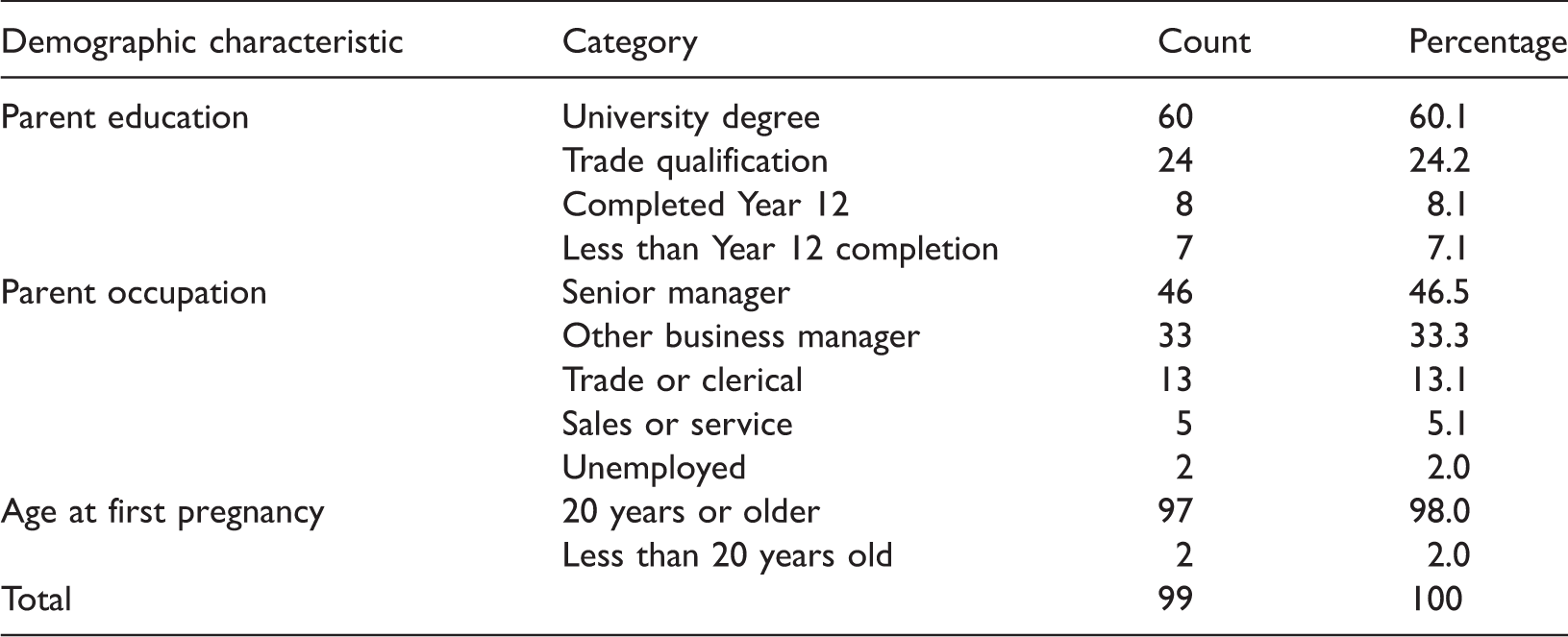
Information about the socio-economic circumstances of the families was obtained from two sources: centre records and a questionnaire sent to parents. This information was then combined to generate a measure of social disadvantage consisting of parent education, parent occupation and age at first pregnancy. Where information was provided for two parents, the higher of the two values for education and occupational status was used. Parental education was grouped into four categories, namely – in order of increasing disadvantage – a university degree, trade qualifications, completion of Year 12 and completion of a year level below Year 12. School-age pregnancy is often associated with the socio-economic disadvantage of the parent (Singh, Darroch, & Frost, 2001) whereby ‘teenage mothers tend to be the most socio-economically disadvantaged’ (Weston, Soriano, & Qu, 2006, p. 56). However, information about this aspect was not available from centre records and was therefore obtained from the parent questionnaire.
The occupation groups listed on the Preschool Enrolment Form version 2.0 EYS (PEF 2.0) (DECD, 2010) were used to categorise this information in the survey. The five categories used were – in order of increasing disadvantage – senior managers, other business managers, trades/clerical, sales/service and unemployed.
Centre quality
Information about centre quality was obtained in a number of ways, including assessors using the ECERS-R rating scale, a questionnaire completed by centre directors and access to centre records.
A single Centre Quality Measure was established by combining an assessment of the process quality with information about the structure of the centre in terms of staffing from centre records. The quality of the processes in the learning programs offered by the participating integrated childcare and preschool centres was measured using the ECERS-R (Harms et al., 2005). The ECERS-R is a rating scale providing extensive descriptive information comprised of seven subscales, namely space and furnishing, personal care routines, language-reasoning activities, interaction, program structure as well as parents and staff. Each subscale also includes a number of indicators. For example, the subscale ‘Space and furnishings’ has the indicators ‘indoor space; furniture; furnishings; room arrangement; space for privacy; child-related displays; space for gross motor play and gross motor equipment.’ Each subscale is scored using a seven point rating scale with 1 representing the lowest rating and 7 being the highest. The ECERS-R yields scores on each subscale and an overall quality rating score. We used the overall score as a measure of centre quality.
Two assessors were employed to undertake the assessment of each centre. One was an experienced preschool director, while the second assessor had worked extensively in both childcare settings and in preschool centres. Prior to the centre visits, the assessors participated in a moderation exercise using the ECERS-R scale to enhance inter-rater reliability. This exercise involved both assessors viewing several videos and using the ECERS-R scale to make their judgments independently, then compare their assessments. During the data collection period, the moderation process was repeated after each observation visit to reach agreement regarding the final rating for each centre. Once the assessment of each centre was completed, both the assessors were interviewed by the Chief Investigator to explore further their impressions of centre quality. A questionnaire was distributed to the centre directors with a range of questions regarding the centre staff and enrolments.
Outcome measures
The change in children’s cognitive skills in literacy and numeracy between the first and second waves is used as a measure of the quality of the outcome from children's attendance in the centres' early childhood education programs. To this end, children's state of cognitive development was measured on two occasions using the Letters and Numbers section of the Child Development Inventory (CDI) (Ireton, 1992). In addition, children's social and emotional development was measured using the Strengths and Difficulties Questionnaire (SDQ) (Goodman, 2005), although the focus in this article was on the children's cognitive development. The process was administered by a research assistant who delivered both parent and teacher questionnaires to each centre. Parents received a pack containing the CDI, SDQ and a family survey via the centre. Preschool staff, teachers and parents answered identical questionnaires on each occasion. However, teachers completed the CDI and SDQ only and did not complete the family survey. The children’s teachers were released from teaching duties to complete the questionnaires. Responses were returned via post.
As previously stated, the children moved from a combined childcare and preschool facility to a primary school during the course of the study. This meant that respondents of the parent questionnaire were the same on the two occasions. However, the assessments of the child’s abilities at preschool and school were conducted by different teachers on the two occasions. In other research (Krieg, Curtis, & Westenberg, 2015), a comparison of the parent and staff judgments of children’s cognitive development shows a high correlation between ratings. Still, since judgments from the same raters were available in both waves from parents, the change in parental rating of cognitive achievement, as measured using the CDI, between the two occasions were used in the current analyses. Responses to the CDI were Rasch-scaled (Rasch, 1960, 1980) in order to generate an interval scale for the cognitive development measure.
Missing data and potential bias
When combined from the different sources – parent questionnaire, teacher questionnaire, centre records – and the two occasions, complete data, including demographic information to estimate disadvantage and CDI ratings, were available for only 99 children.
This led to a concern about selection and attrition bias. Selection bias (i.e. non-response from parents in Wave 1) was examined by comparing the CDI ratings of Centre staff for those children whose parents did respond with staff ratings for children whose parents did not respond. The mean Rasch-scaled CDI score of children with responding parents was −0.29 (n = 165, SD = 2.39) while the mean teacher rating of children with non-responding parents was −0.37 (n = 168, SD = 2.31), the mean difference being 0.08 (t331 = 0.295, p = 0768, CI 95 −0.43 to +0.58), showing no evidence of selection bias in the initial cognitive ratings of children.
Attrition bias was also examined by comparing the mean Rasch-scaled CDI scores by Centre staff for children who were rated by parents in both waves with those who were not rated in Wave 2. The mean teacher rating of children rated by parents in both waves was 0.07 (n = 108, SD = 2.55) while the mean teacher rating for children who had dropped out at Wave 2 was −0.52 (n = 225, SD = 2.22), the mean difference being 0.59 (t331 = 2.17, p = 0.03, CI 95 0.06–1.13). This is evidence of some attrition bias, with lower scoring children being under-represented at Wave 2. This is likely to result in the attenuation of achievement scores at Wave 1 and may lead to attenuation of observed gain scores. If this is the case, it is likely to lead to an under-estimate of the influence of children’s early learning exposure, although whether this differentially affects the influence of quality exposure is unclear.
Despite these limitations, the study can be considered both timely and innovative. It is timely because it follows closely the establishment of the Australian Children’s Education and Care Quality Authority (ACECQA) and its quality standards for early childhood education and care and because the sector is under considerable pressure to remain widely accessible, yet to maintain very low costs under a very restrictive budgetary regime. It is innovative in that it combined structural and process measures of quality in early childhood education with a measure of change in cognitive development over time. Still, it is noted that this aspect of the study pre-dated the availability of quality data on centres from ACECQA.
Results
Exposure
Level of exposure to the program was measured using the children’s recorded attendance (hours per week) at the centres, keeping in mind that the entitlement of four-year-old children in South Australia is for 15 h per week. While children may have been entitled to and enrolled for a specified number of hours, actual attendance records from sign-in and sign-out sheets over a four-week period to get an accurate record of attendance were used. Attendance ranged from 3.3 to 43.0 h per week. The mean exposure was 19.0 h per week (SD = 9.4). Of the 99 children for whom complete data were available, 40 attended for fewer than 15 h and 59 attended for 15 or more hours per week. Weekly exposure was categorised into four groups, namely low exposure (<11 h; 16% of children); low-medium exposure (11–15 h; 24% of children); medium-high exposure (16–22 h; 32% of children); and high exposure (≥23 h; 28% of children).
Demographic characteristics of children’s families
Parent demographic characteristics used to compute an index of disadvantage.
Assessing centre quality
Process quality
Two steps were involved in calculating a single rating for the ECERS-R. First, a single score for each subscale was calculated by taking the average score of the criteria within that subscale, giving each centre a score for each subscale with a possible value between 1 and 7. Second, these subscale scores were then summed for each centre, to derive a total ECERS-R Overall Quality score, with possible values between 7 and 49. The Overall Quality score varied from 28.3 to 44.1, with a mean score of 37.7 and a standard deviation of 1.6.
The greatest variation between the centre scores is evident in the Activities subscale. This subscale included the various indicators, namely fine motor, art, music/movement, blocks, sand/water, dramatic play, nature/science; math/number, use of TV, video and/or computers as well as promoting acceptance of diversity. This result is interesting given that experiences in relation to these indicators have been shown to be a major part of a quality early learning program (Sylva et al., 2007).
Structural quality
Staff qualifications in early childhood education and centre quality ratings by Centre.
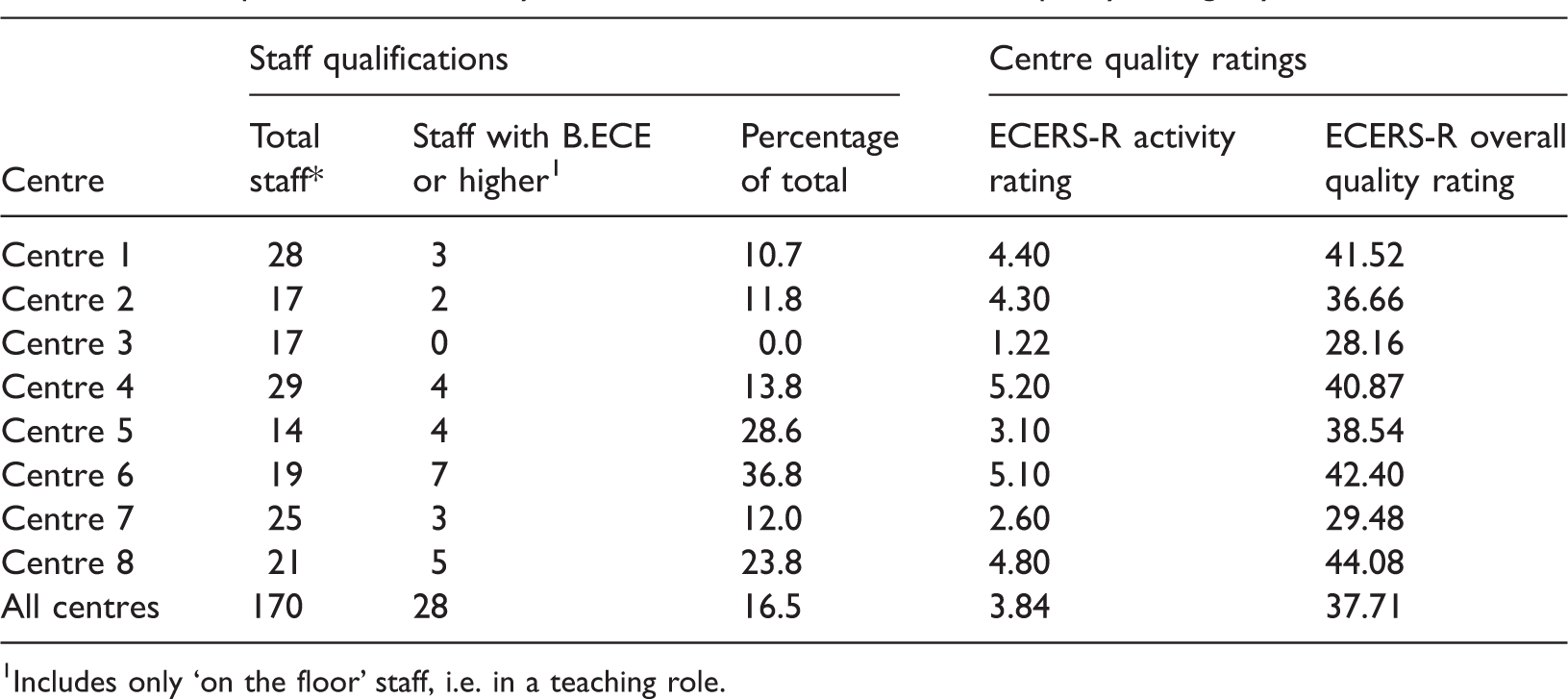
1Includes only ‘on the floor’ staff, i.e. in a teaching role.
Children’s development
Children's total cognitive score, Waves 1 and 2.
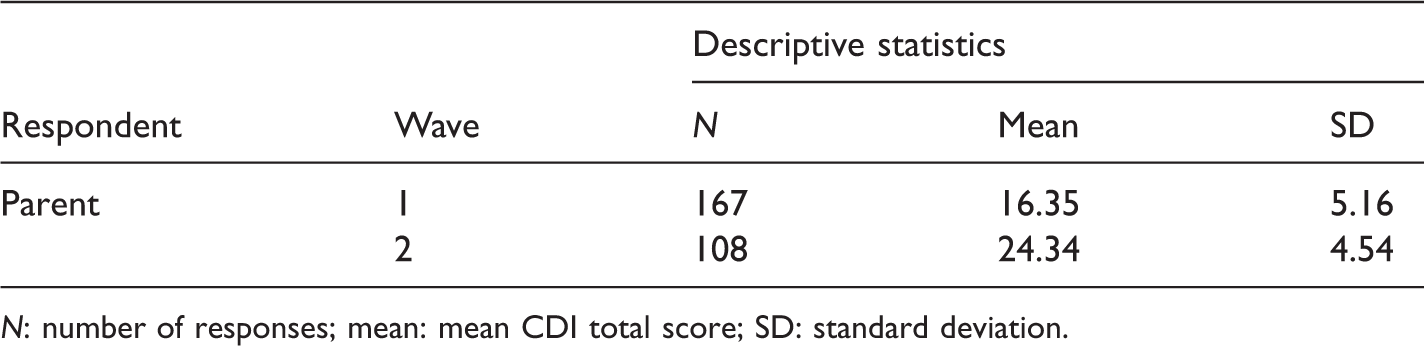
N: number of responses; mean: mean CDI total score; SD: standard deviation.
Change in Child Cognitive Development (parent assessment) by family disadvantage and Quality Exposure index.
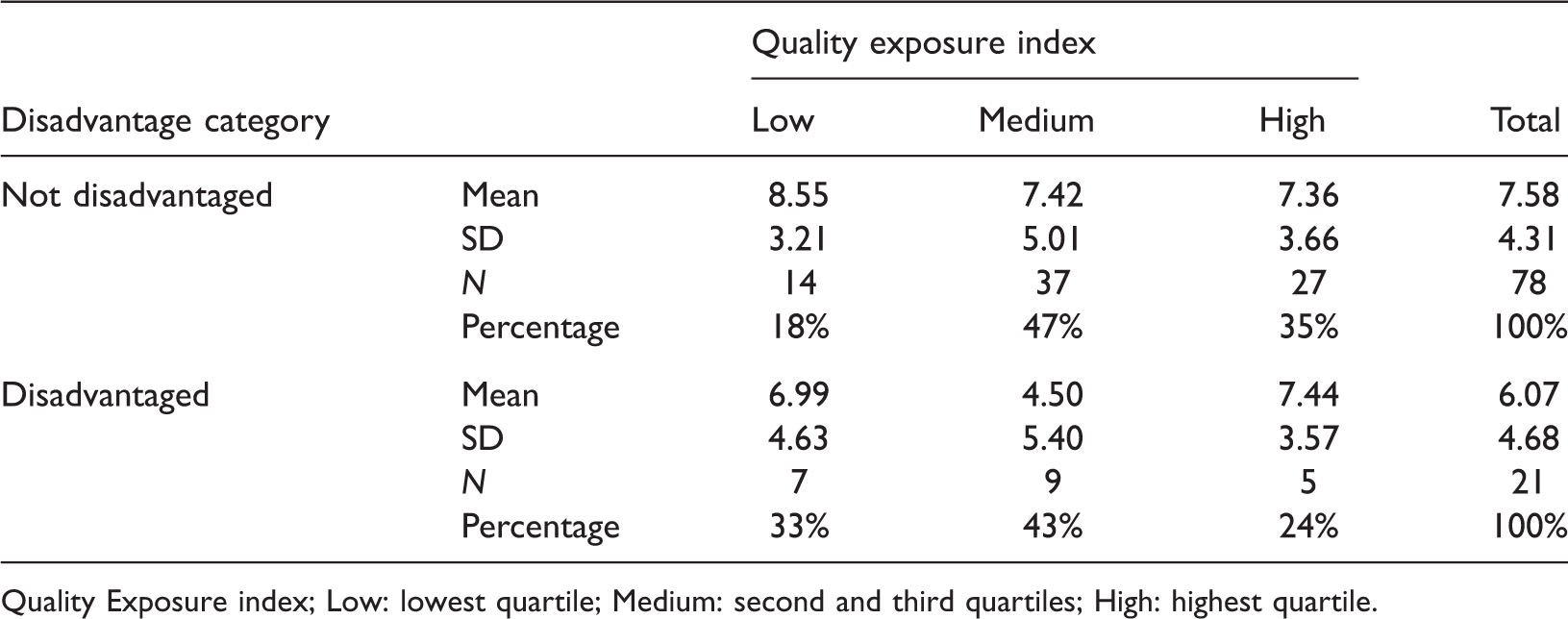
Quality Exposure index; Low: lowest quartile; Medium: second and third quartiles; High: highest quartile.
Before considering the results of this table, some limitations should be noted. First, the sample of children for whom CDI ratings are available in both Waves 1 and 2 from parents was relatively small (n = 99) when compared with the total number of children in the population (n = 336). In addition, evidence of some attrition bias had emerged (see methods section) with lower scoring children being under-represented at Wave 2.
Furthermore, since only eight of the total of 14 childcare centres participated in the study, the ability to generalise conclusions to all centres is limited. Finally, the relatively low proportion of children from disadvantaged backgrounds who participated compared to the proportion in the study's target population reflects a generic methodological challenge whereby parents in more disadvantaged socio-economic situations respond to surveys of this kind in lower numbers than do parents in a less disadvantaged situation. Still, this study enables some indicative observations.
Discussion
The current study is underpinned by the research into the relationship between socio-economic family circumstances and educational outcomes (Parke & Agness, 2002; Prior et al., 2011). It has focused on early childhood education as researchers have found that ‘… children growing up in poverty have very different outcomes than their more advantaged peers, resulting in a large achievement gap, even at the outset of schooling’ (Love et al., 2012; Rouse, Brooks-Gunn, & McLanahan, 2005). The variability in socio-economic background of the children in the current study enabled a closer examination of the factors that could make a difference to educational outcomes after their first year at school.
One of the factors which seemed to make a difference appeared to be the ‘day-to-day’ experiences on offer in their preschool year. This finding of the importance of the quality of one of the processes in early childhood education supports previous research regarding the importance of the everyday experiences on offer in early childhood programs and long-term outcomes, particularly for children experiencing social disadvantage (Schweinhart & Weikart, 1998; Sylva, Melhuish, Sammons, Siraj-Blatchford, & Taggart, 2004).
An aspect of structural quality of early childhood education which emerged as being related to the everyday experiences in this South Australian study concerned the qualifications of the centres' staff. Results indicated that scores on the Activities subscale were higher in centres with a higher proportion of highest qualified staff (Bachelor ECE). This relationship was also emphasised in the interview with the two assessors who highlighted the ‘Activities’ subscale when describing centre quality. One assessor summarised the quality in the following way: … environments that were set up indoor and outdoor, certainly them having access to a wood table, hammering, water play; there was collage, things in the collage that were different than just your day-to-day experiences, extending on those children’s interests so when we looked at the natural environments that they actually had displays set up and books related to that experience and so if they were looking at a life cycle you may actually see pictures and you’ve got visual displays and then you can look at the aquarium and so there were things there, and then people asking questions and then those questions were documented and you could see then open questions – children thinking about it and then going from that … Well Centre x were doing mosaics so they were doing that so then they explored the local community and looked at where they’d done mosaics in the community so they’d taken photos of that, so that was something we could see straight away they were looking at that, they were talking about it, they went on an excursion, they looked at how things were done so you could really … And their actual environment where they had – educators were actually sitting and talking and engaging, you know, so there was the water play and they were talking about washing babies, there were books outside, there was someone actually sitting there, you know, like they’ve got their outdoor environment, they’ve got a bit of a pebble creek so they could … water.
It has been demonstrated (Sylva et al, 2004) that it is the ‘teaching’ and the interactions with qualified educators that differentiate between the quality of the activities and that, together, these interactional aspects form the basis of the ‘learning program’ for young children. The same authors also demonstrated that children’s learning is most effectively supported by a program that ‘combines both teaching’ and providing freely chosen yet potentially instructive play activities’ (Sylva et al., 2004, p. 6).
The assessor comments and the indicators in the ECERS-R Activities subscale reveal differences between centres in the quality of learning programs. It is evident that providing opportunities is important and that opportunities are enhanced by interactions with an adult who is responsive and is able to extend each child’s learning through effective observations and planning. Research has demonstrated that it is this aspect of the learning program that the qualifications of the teachers make a difference (Barnett, Carolan, Fitzgerald, & Squires, 2012). This connection between highly qualified staff and the quality of learning programs was exemplified by Centre 3 – this centre scored the lowest Activity rating and is the only centre not employing any staff with a Bachelor degree in ECE. Such findings further corroborate the existing body of evidence regarding the relationship between learning opportunities for young children and the qualifications of early childhood educators (Warren & Haisken-DeNew, 2013). As Vandenbroeck, Peeters, and Bourvern-DeBie (2013) state ‘… in short, researchers and policy-makers agree that educational disadvantage can be addressed by high quality pre-primary education and that this includes a well-qualified workforce.’ (p. 110).
The analyses in this article provide evidence that children from non-disadvantaged families have greater access to higher quality childcare than their peers experiencing social disadvantage. In this study, 35% of the non-disadvantaged group of children access the highest category of quality exposure compared with only 24% of children from disadvantaged families. Second, the mean change in CDI between preschool and Year 1 for children from non-disadvantaged families (7.58) is greater than that of children from disadvantaged families (6.07). However, for children with high exposure levels, the mean change in CDI rating for children from disadvantaged families (7.44) is approximately equal to that of children from non-disadvantaged families (7.36).
Conclusion
Much of the research into the relationship between social disadvantage and early childhood care and education has emanated from the United States. Writing on this, Aber (2012) states ‘As a nation we are still light-years away from the goal of providing quality infant and toddler care and education to all youngsters regardless of family income’ (p.13). The results of the current study support this statement.
More specifically, the results suggest that disadvantaged children derive less benefit from lower-quality childcare than do other children. The results also suggest that disadvantaged children and less disadvantaged children benefit equally from higher-quality childcare. Finally, the study suggests that quality of childcare tends to be less important for the changes in cognitive development between preschool and Year 1 for children from less disadvantaged backgrounds.
These results on the relationship between centre quality – both in terms of structure and processes – and changes in cognitive development between preschool and Year 1 – have implications for policy. Ensuring that disadvantaged children have access to high-quality childcare offers an important step in addressing the developmental gap between these children and their less disadvantaged peers. Findings from this small-scale study provide evidence that access to early childhood education is very unevenly distributed with disadvantaged children and their families having less access to higher quality programs than other children. Also, findings reiterate the importance of attracting and retaining qualified staff in centres with high levels of family disadvantage in order to enhance the quality of the learning program offered. However implementing change to this effect is proving difficult. Therefore, as Aber (2012) states, ‘the early childhood field is now preparing to embark on a new generation of work that strives to use the best possible developmental and health science to improve the care and education of poor and low-income infants and toddlers’ (p. 13).
The ‘I go to School’ research project offers a South Australian contribution to the existing body of research regarding relationships between family circumstances, early childhood education and educational outcomes. Despite many policy reforms, it appears that disadvantaged children, on the whole, do not have access to high quality early childhood care and education and this situation is resistant to change. The long-term effect of this situation is that the gap between the children who achieve educational success in Australia and those who do not is likely to widen.
Footnotes
Declaration of conflicting interest
None declared.
Funding
This research was supported by a grant from the Channel 7 Children’s Research Foundation.