




Abstract
Early childhood education and care (ECEC) settings faced significant disruption during the COVID-19 pandemic, compromising the continuity, stability and quality of provision. Three years on from the first UK lockdown as pandemic-era preschoolers enter formal schooling, stakeholders are concerned about the impact of the disruption on children’s cognitive and socioemotional development, especially those from socioeconomically disadvantaged backgrounds. Using parent-report data from 171 children aged 5 to 23 months (M = 15 months) in March to June 2020 living in the UK, we investigate whether previously attested positive associations between ECEC attendance and the development of language and executive functions was maintained as early years settings navigated operational challenges over the first full year of the pandemic. In response to concerns about ‘school readiness’, we analyse the relationship between ECEC attendance and children’s communication, problem-solving and personal-social development. ECEC was associated with greater growth in receptive vocabulary over the 12-month period. In children from less advantaged backgrounds, ECEC was also associated with greater growth in expressive vocabulary. Our data suggest a similarly positive association between ECEC attendance and the communication and problem-solving skills of children from less advantaged backgrounds and between ECEC and the personal-social development of all children. Overall, results suggest that ECEC had sustained learning benefits for children growing up during the pandemic despite ongoing disruption to settings, with specific benefits for children from less affluent home environments. As pandemic-era children progress to primary school, we discuss the importance of adapting their learning conditions and adjusting the expectations placed on them.
Keywords
Introduction
High-quality, centre-based childcare during the first 3 years of life benefits children’s cognitive, language and social development at school entry and beyond (Becker, 2011; Côté et al., 2013; Melhuish et al., 2015; Melhuish and Gardiner, 2020; Sylva et al., 2004; van Huizen and Plantenga, 2018). Research also highlights that the benefits of early childhood education and care (ECEC) are greater for children from disadvantaged backgrounds (Connell and Prinz, 2002; Felfe et al., 2015; Geoffroy et al., 2007, 2010; Larose et al., 2021; Melhuish, 2004; Melhuish et al., 2015; Sylva et al., 2004).
What is not yet known is to what extent the benefits of ECEC were maintained during the disruption to education caused by the COVID-19 lockdowns. Following an increase in the number of COVID-19 cases, ECEC settings and schools were asked to close from 20 March 2020 ‘until further notice’ as part of the UK government’s Coronavirus action plan. Between March and June 2020, much of the ECEC sector closed to all but vulnerable children and those of key workers, meaning that only 5%–10% of children who usually attended ECEC in England did so (Hunnikin and Blackburn, 2020). Attendance increased from early July 2020 when approximately half the average number of 3-and 4-year-old children expected in a typical week attended their early years setting. For the remainder of 2020 and into 2021, a period of quarantine measures was imposed leading to intermittent closures of ECEC settings, reduced attendance and other types of disruption (Bowyer-Crane et al., 2020). Although attendance increased incrementally over the first year of the pandemic, the number of children accessing ECEC in formal settings remained substantially below the norm at around 63% in July 2021 (Department for Education [DfE], 2021).
Three years on from the first UK lockdown, as pandemic-era preschoolers enter primary school, we are starting to see the impact of the lockdowns and limited access to ECEC on children from diverse backgrounds. Mounting evidence from practitioner and parental observations (e.g. DfE, 2022; Early Years Alliance, 2021; Hogg and Mayes, 2022; La Valle et al., 2022; Nicholls et al., 2020; Ofsted, 2020; Tracey et al., 2022), as well as from quantitative measures from children, their families and early years settings (Davies, Hendry et al., 2021; González et al., 2022; Green et al., 2021; Hendry et al., 2022), suggests that the lockdowns led to delays in key developmental skills. This potentially affects children’s experience of starting school, also known as school readiness.
School readiness
School readiness is a term used to describe the compatibility between the school environment and the child’s stage of development, ensuring a smooth transition into primary school for children and their families. There is no singular definition of school readiness (Kay, 2022) and it has been conceptualised in a variety of ways. For example, by Williams and Lerner (2019) as three interdependent components, that is, readiness in the child (encompassing physical, cognitive, socioemotional and language skills), schools’ readiness for children (inclusion of cultural sensitivities, parent engagement opportunities; flexible and high-quality provision), and family and community support (e.g. nutrition and exercise, access to preschool education and educational support for parents). Some contexts have disproportionately focused on the child’s abilities, leading to a perception of school readiness as a set of fixed targets that prepares children to meet school requirements at the start of formal education and that are critical for later academic success (Aiona, 2005; Snow, 2006; Whitebread and Bingham, 2012).
English education policy states that school readiness gives children the broad range of knowledge and skills that provide the right foundation for good progress through school and life (DfE, 2023), and (reductively) defines children who are school ready as those who have achieved the ‘expected level of development’ in a range of abilities including communication and language, physical development, personal, social and emotional development, and maths and literacy, as measured using the Early Years Foundation Stage Profile (EYFSP) at the end of the Reception year (aged 4–5 years). In contrast, educators also use the term ‘school ready’ more holistically to refer to the three components summarised above, as well as the full range of academic, socioemotional, and motor developmental measures including turn-taking, communication, concentration and physical coordination, which enable children to access learning as they start school (Davies et al., 2016; Head Start, 2020). In policy and practice, responsibility for school readiness is often characterised as belonging to the child or their family, rather than as a joint venture between home and educational settings.
Developmental concerns in the wake of COVID-19
Practitioner and parental observations reveal widespread concern about preschoolers’ development during COVID-19. The English education regulator Ofsted undertook interim research interviews with 208 registered ECEC providers in Autumn 2020, revealing particular concerns about young children’s communication and language, and their personal, social, emotional and physical development. Almost all providers said that the pandemic had significantly impacted the learning and development of children who had left settings and subsequently returned. They also reported that children who continued to attend settings or who were well supported at home had made good progress in their learning (Ofsted, 2020). Two years later, Hogg and Mayes (2022) conducted an online survey of 555 professionals and volunteers working with babies, young children and their families in health visiting, mental health, maternity, early education and other services. Based on this data, Hogg and Mayes (2022: 4) report that the lack of opportunity for babies and young children to engage in normal activities at home and at formal ECEC settings is ‘likely to have pervasive impacts on health, cognitive, and physical development’. Nearly half of survey respondents reported that ‘many’ babies they work with are impacted by more sedentary behaviour and less stimulation and play. Ninety-five per cent of respondents said that the pandemic had an ongoing negative or very negative impact on the personal and social skills of young children growing up during the pandemic, and 92% said the same for communication, speech and language skills, and emotional development.
Similar concerns emerge from parental and practitioner observations of children starting their reception year during this period. Some of the challenges reported by Nicholls et al. (2020), reinforced by a repeat survey (Kindred, 2023) include a lack of basic number skills, school starters struggling to follow simple instructions, holding a pencil and playing/sharing with others. In a study of 3253 children in reception in 2020–2021 (of whom 95% attended ECEC before the pandemic, dropping to 17% during the first national lockdown with less than half returning afterwards), the proportion reaching the expected levels of development in all areas – communication and language, physical development, literacy, maths and personal, social and emotional development – was 59% in 2021, compared to 72% for the 2019 cohort. Their parents also perceived this disadvantage (Tracey et al., 2022). In a comprehensive review of qualitative and qualitative data from 2020–21, La Valle et al. (2022) report that the greatest concern among both parents and practitioners was that children who have started school since COVID-19 were ‘behind’ compared with pre-pandemic cohorts. For example, that they were not hitting milestones in their communicative development because they had not been able to access the stimulation that ECEC settings can offer. At the end of reception, recent national data (DfE, 2022) show that 65% of children reached a good level of development, though due to EYFS reforms and associated changes to the measure, this figure can not be compared to pre-pandemic data.
A range of reports evidence a disproportionate impact of the pandemic on ECEC access and efficacy by socioeconomically disadvantaged children. They missed more formal early learning than their more advantaged peers and had longer or more frequent absences from ECEC (La Valle et al., 2022), leading to concerns among early years educators about a widening development gap. Practitioners reported challenges in supporting vulnerable children during the pandemic, compounded by the low take-up of places by 2-year-olds in receipt of funded places (Wilson and Wadell, 2020). The Early Years Alliance (2021) surveyed 1300 early educators and found that 47% of respondents considered the attainment gap between the least and most advantaged under-5s had widened since the beginning of the pandemic. In addition to concerns about the learning and development of children living in poverty, ECEC providers were worried about the disproportionate challenge to children with special educational needs and disabilities (SEND) and those with English as an additional language (Ofsted, 2022). These children were observed to be more deeply affected by a lack of support for the transition from nursery to school (Bakopoulou, 2022).
Quantitative measures corroborate practitioner and parental concerns about restricted ECEC attendance and associated levels of cognitive development and school readiness. The positive impact of attending ECEC on aspects of cognitive development during COVID-19 for some groups of children was highlighted in an exploratory study with 189 UK families. (Davies, Hendry et al., 2021) reported associations between time spent in ECEC by 8-to-36-month-olds during the pandemic, family socioeconomic status (SES), and their growth in language and executive functions during the first 6 months of the pandemic. ECEC attendance boosted receptive vocabulary growth such that children who accessed 1 day per week of ECEC understood 24 more new words than their peers during Spring to Winter 2020. 1 ECEC also boosted the growth of children’s cognitive executive functions during the period. Notably, children from lower-SES families demonstrated enhanced language benefits when they continued to access ECEC provision, suggesting that when access to ECEC was disrupted during the pandemic, this disproportionately affected disadvantaged children.
In a large cohort study of Uruguayan 4-to-6-year-olds (González et al., 2022), preschoolers living through the pandemic made less progress than their pre-pandemic peers in standardised, teacher-administered measures of school readiness pertaining to cognitive and motor development, attitudes to learning and internalising behaviours. Losses were more pronounced in children attending low-SES schools. Using observational data from the UK Millennium Cohort Study (Centre for Longitudinal Studies, 2014), Green et al. (2021) estimated that compared to parental care only between the ages of 26 and 31 months, centre and non-centre-based childcare was associated with improvements in school readiness and vocabulary, respectively. Using simulation methods to approximate lockdown restrictions, Green et al. (2021) revealed the power of ECEC to reduce inequalities during COVID-19, suggesting that children from disadvantaged backgrounds (indexed by lower parental education) may benefit more from centre-based care than their more advantaged peers.
Current study
This study investigates the ongoing impacts of ECEC disruption. Our first aim is to investigate whether the attested positive association between ECEC attendance and cognitive development was maintained as early years settings continued to provide education and care alongside extensive disruption to staff, routine, and facilities, and broader operational pressures. These included workforce health and protection (Hardy et al., 2022), workforce stability and recruitment (Bonetti and Cottell, 2021; Haux et al., 2022), the financial sustainability of settings (Early Years Alliance, 2020), and reduced access due to the temporary, partial, and in some cases permanent closures of settings (National Day Nurseries Association, 2021).
Our second aim is to track children’s developmental milestones as they mature through the pandemic towards the time they will prepare to start primary school. In response to concerns about school readiness (holistically defined), we test the relationship between ECEC attendance and children’s communication, problem-solving, and personal-social development. As data converge to show that children from disadvantaged backgrounds were more negatively impacted in this regard (Bakopoulou, 2022; González et al., 2022; La Valle et al., 2022), we also analyse the role of SES.
Method
Participants
Families with 8-to-36-month-old children living in England, Scotland and Wales were recruited in Spring 2020 through Babylab databases and online advertisements via social media to take part in the Social Distancing and Development Study (SDDS). The data reported in this study were collected in Spring 2020 (03/03/20–28/06/20), Winter 2020 (27/11/20–18/12/20) and Spring 2021 (27/04/21–02/06/21) using online questionnaires. Only infants under 37 months (M days = 847.70, SD = 133.78) at the Spring 2021 data collection point, from monolingual English-speaking families, with a gestational age of at least 37 weeks, and no known genetic conditions were included; N = 171 (100 female; 71 male). As the current study extends some of our previous work, the Spring 2020 and Winter 2021 vocabulary scores, EF measures, and similar Early Childhood Education and Care (henceforth ECEC) measures are also reported in Davies, Hendry et al. (2021). ECEC settings included nurseries as well as childminders. Vocabulary scores and a similar measure of ECEC attendance at the Spring 2020 data collection point for most of the sample (N = 113) are also reported in Kartushina et al. (2022), which investigates separate questions on the impact of the home environment on language development. The online questionnaires also included other factors relevant to the wider Social Distancing and Development Study project, such as parental mental health and access to social support systems and informal childcare, which are not reported in this study.
This study received ethical approval from the Oxford Brookes University Research Ethics Committee (ref 20023). All procedures reported in this manuscript are in accordance with the 1964 Helsinki Declaration and its later amendments or comparable ethical standards. All participating home caregivers (e.g. parents or grandparents) provided informed consent at each timepoint for themselves and their child. On completion of each questionnaire, families received £30 (Spring 2020), £5 (Winter 2020) and £10 (Spring 2021) Amazon vouchers.
To mitigate the potential challenges faced by participants when researching COVID-19 effects, such as concerns about child development, child and parental mental health, and personal wellbeing, the questionnaire included information and contact details for five distinct support organisations specialising in family support and mental health. These resources were provided at the beginning and end of the questionnaire to ensure accessibility and to support participants throughout the research process.
Measures
Socioeconomic status
Four indices of socioeconomic status (SES) were used in this study, as described below and summarised in Table 1.
Household Income: Caregivers reported their household income using one of seven categories ranging from £0 to £71k+: (1) £0–20k, (2) £21–30k, (3) £31–40k, (4) £41–50k, (5) £51–60k, (6) £61–70k, (7) £71k or over.
Caregiver education: Caregivers reported their highest level of education from the following categories: (1) Primary school, (2) Secondary school, (3) Sixth form or college, (4) Vocational college, (5) Undergraduate, (6) Postgraduate, (7) MBA, (8) Doctoral degree. For single/widowed caregivers, only their scores were used; otherwise, mean scores were computed based on both caregivers.
Caregivers’ occupational prestige: Caregivers reported their occupation. This was converted into scores based on Hollingshead (1975) ranging from 1 to 9; for example, 1 is for cleaners and farm labourers, 5 is for clerical and sales workers, 7 is for owners of small businesses and managers, and 9 is for engineers or large business owners. For single/widowed caregivers, only their scores were used; otherwise, mean scores were computed based on both caregivers. If one caregiver was a full-time homemaker, the occupation score was based on the other working caregiver/s.
Index of Multiple Deprivation (IMD): Postcode data was used to compute an IMD decile group where 1 is for most deprived and 10 is for least deprived using the English (Noble et al., 2019), Northern Irish (Power and Green, 2017), Scottish (Scottish Government, 2020) or Welsh (Welsh Government, 2019) databases as appropriate.
Socioeconomic status demographic profile for participants.

To reduce the number of comparisons required and to capture the complex and multidimensional nature of SES (Navarro-Carrillo et al., 2020), Principal Components Analysis (PCA) was conducted on the imputed demographic dataset for all participants recruited to the SDDS project. Only one PCA factor had an eigenvalue over Kaiser’s criterion of 1. This factor, which we labelled SES, explained 55% of the variance. The extracted SES factor scores were used in the analyses reported below. Full details can be found in Davies, Hendry et al. (2021).
Language ability
The Oxford Communicative Development Inventory (O-CDI; Hamilton et al., 2000) was used to assess children’s vocabulary development at each timepoint. This UK-based parent-report measure assesses comprehension and production of 416 early English words across 19 categories (e.g. animals, vehicles, food and drink). Home caregivers of children aged 18–36 months completed the extended version of the O-CDI which includes 133 additional items (i.e. a total 549 English words) and four additional categories (i.e. online, adventures, parts of things and parts of animals). Caregivers were told that the Oxford-CDI is a list of words that typically appear in children’s vocabularies. They were also reassured that this list comes from a comprehensive catalogue of words that are used by different children across a wide age range, so not to worry if their child knows only a few of them at the moment. Then they were instructed to report on whether their child ‘understood’ (receptive vocabulary) or ‘understood and said’ (expressive vocabulary) each word by marking the corresponding column, which was used to produce receptive and expressive vocabulary scores for each timepoint.
Executive functions
The Early Executive Functions Questionnaire (EEFQ; Hendry and Holmboe, 2021) was used to assess emergent executive functions at each timepoint (see https://osf.io/fa5eq for details). Caregivers reported on a seven-item Likert scale (‘Never’ to ‘Always’) how often their child exhibited a particular behaviour during the preceding fortnight (28 items) and for uncommon or highly context-dependent behaviours, caregivers were asked to play a short game with their child designed to elicit a particular skill in a semi-standardised way and then report on their performance (three items). In line with Hendry and Holmboe (2021), composite Cognitive Executive Function (CEF) and Regulation scores were computed using the mean of the corresponding items.
Communication, problem-solving, and personal-social skills
The Ages and Stages Questionnaire (ASQ-3; Squires and Bricker, 2009) was used to assess whether children were reaching age-appropriate developmental milestones in three domains: Communication, Problem-Solving and Personal-Social. For example, for caregivers of 23-to-25-month-old children, items included ‘Does your child correctly use at least two words like “me”, “I”, “mine”, and “you”?’ for Communication; ‘After a crumb or Cheerio is dropped into a small, clear bottle, does your child turn the bottle upside down to dump out the crumb or Cheerio?’ for Problem-Solving; and ‘Does your child drink from a cup or glass, putting it down again with little spilling?’ for Personal-Social. Caregivers reported whether their child exhibited six behaviours from the age-appropriate ASQ version for each domain on a three-point scale (10 = ‘yes’, 5 = ‘sometimes’, 0 = ‘not yet’) at the Spring 2021 data collection point. Raw scores were calculated by summing the six items for each domain (range: 0–60). As the cut-off point for developmental targets varies across the age versions, scaled scores were produced using the following formulae:
- for positive scores: (([domain_total]-[domain_cutoff])/(60-[domain_cutoff])) *100
- for negative scores: (([domain_total]-[domain_cutoff])/(0-[domain_cutoff])) *100.
These scaled scores adjusted the range for all age groups to −100 to 100 with 0 representing the cut-off point, such that children with a positive score are performing at or above their expected developmental targets.
Early childhood education and care
Home caregivers reported whether their child received non-parental childcare from a nursery or childcare setting (henceforth ECEC) before the Spring 2020 lockdown, during all three lockdowns (Spring 2020, Winter 2020, Spring 2021), and between these lockdowns. If they attended such settings, caregivers reported the duration (full or half days), frequency (days per week), date resumed (if disrupted due to the Spring 2020 lockdown), and degree of disruption since resuming (weeks prevented from accessing ECEC due to e.g. staff shortages or quarantining of close contacts). From this information, we computed the total number of days that the child accessed ECEC since the start of the Spring 2020 lockdown and then subtracted the number of disrupted days to compute a total days score. This was then divided by the number of weeks since the start of the Spring 2020 lockdown to compute an ECEC score (mean number of days per week).
Statistical analysis
To investigate the individual and combined effects of ECEC, SES and age on language and EFs, multiple linear regression analyses were conducted using vocabulary and EF difference scores as dependent variables. To compute the difference scores, the raw Receptive Vocabulary, Expressive Vocabulary, CEF and Regulation scores at Spring 2020 were subtracted from the raw scores of the same measure at Spring 2021. Multiple linear regression analyses were also conducted using the ASQ scaled scores for Communication, Problem-Solving, and Personal-Social as dependent variables. Difference scores could not be computed for the ASQ measure as this was only collected in Spring 2021.
In each multiple linear regression, the predictor variables were ECEC, SES and age at the Spring 2021 data collection point, and interaction terms for ECEC and age, and ECEC and SES. ECEC and age were centred to prevent issues of multicollinearity due to the inclusion of interaction terms.
To aid interpretation, we present plots showing the regression of language and EF difference scores on ECEC with the data grouped into higher and lower SES using a median split.
Results
Summary descriptive data for predictor and dependent variables are presented in Table 2.
Descriptive data for participants.
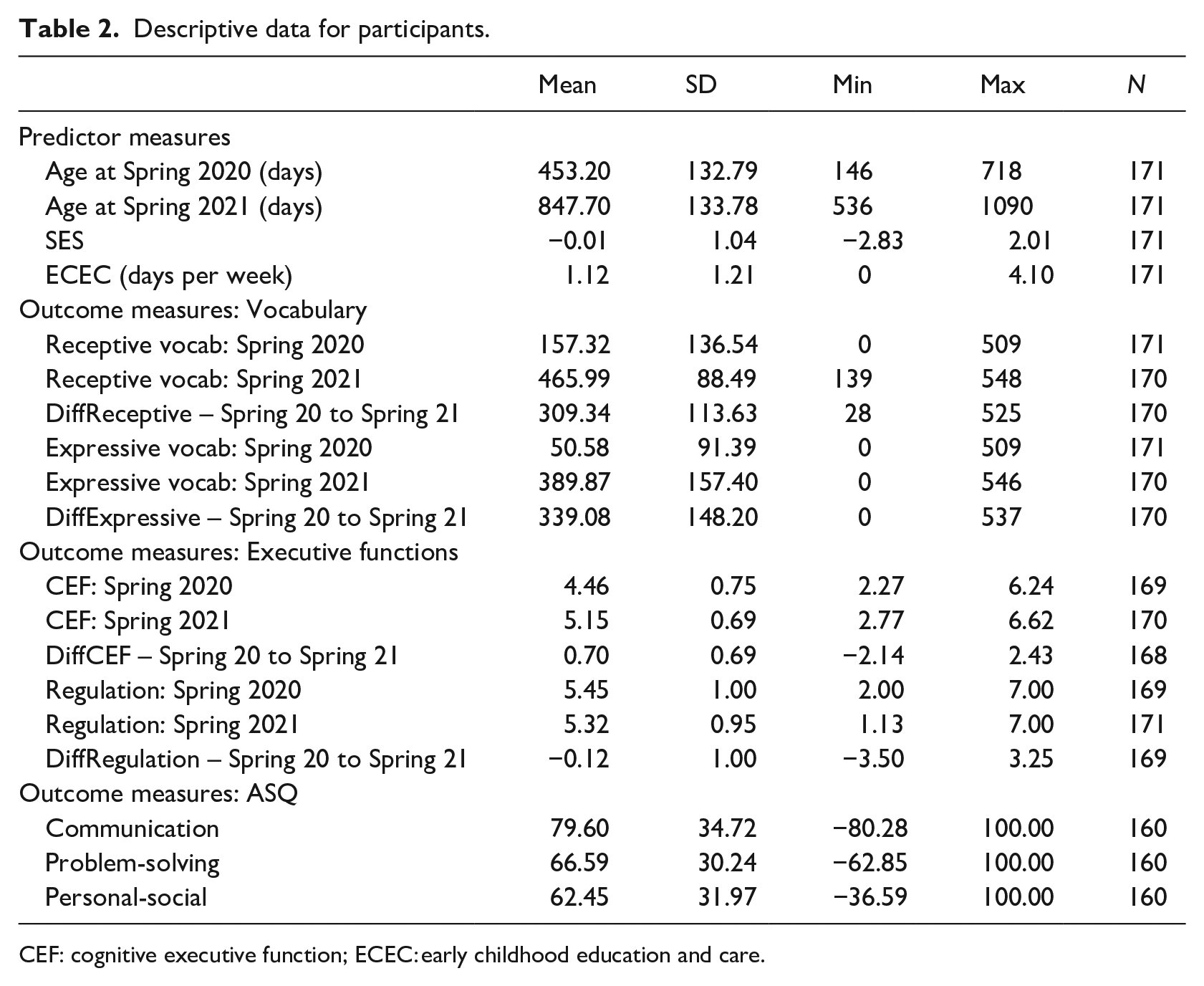
CEF: cognitive executive function; ECEC: early childhood education and care.
Effects of age, early childhood education and care, and socioeconomic status on language growth
As shown in Table 3, increases in receptive vocabulary between Spring 2020 and Spring 2021 were negatively associated with age, meaning that vocabulary growth was more pronounced for younger children compared to older children. Increases in receptive vocabulary were also positively associated with ECEC (Figure 1a), such that for each day spent in ECEC, children could be estimated to understand 16 more new words over this period, compared to their peers who did not attend ECEC. For expressive vocabulary, there was a positive association with age, such that vocabulary growth was more pronounced for older children compared to younger children. There was also a significant interaction between ECEC and SES in predicting expressive vocabulary growth, meaning that the benefits of ECEC on expressive vocabulary growth were more pronounced for children from lower-SES backgrounds (Figure 1b).
Multiple linear regressions of vocabulary growth on ECEC and SES, using difference scores between Spring 2020 to Spring 2021.
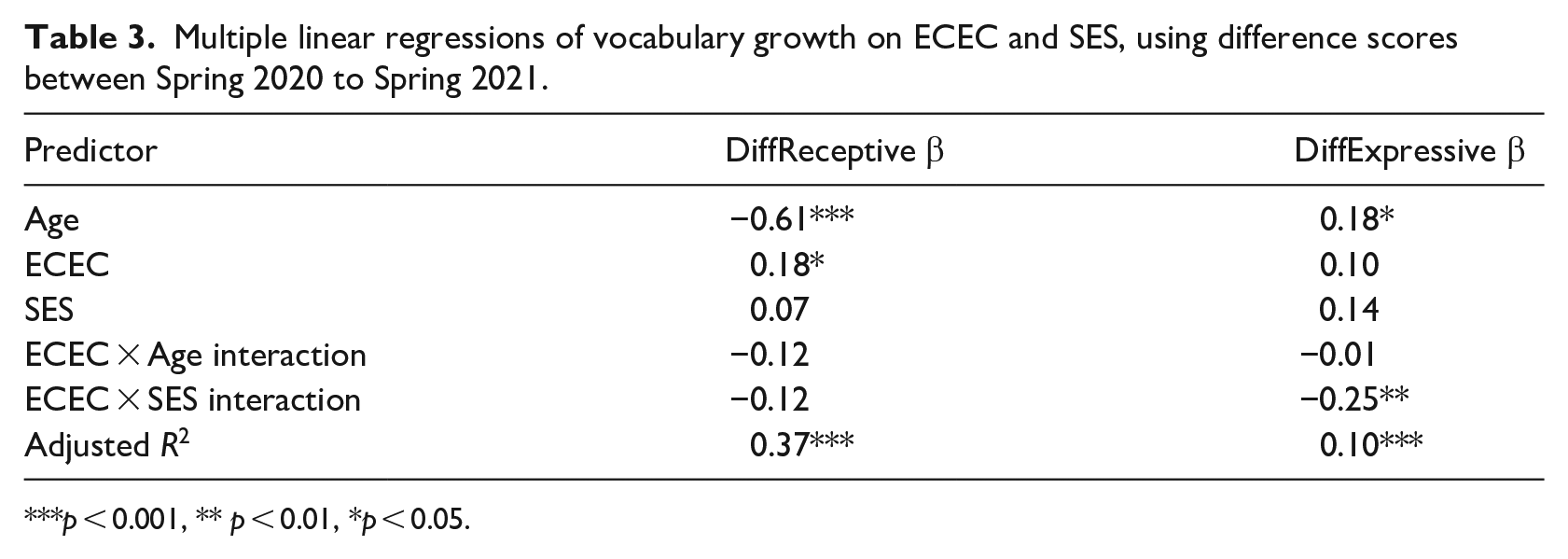
p < 0.001, ** p < 0.01, *p < 0.05.
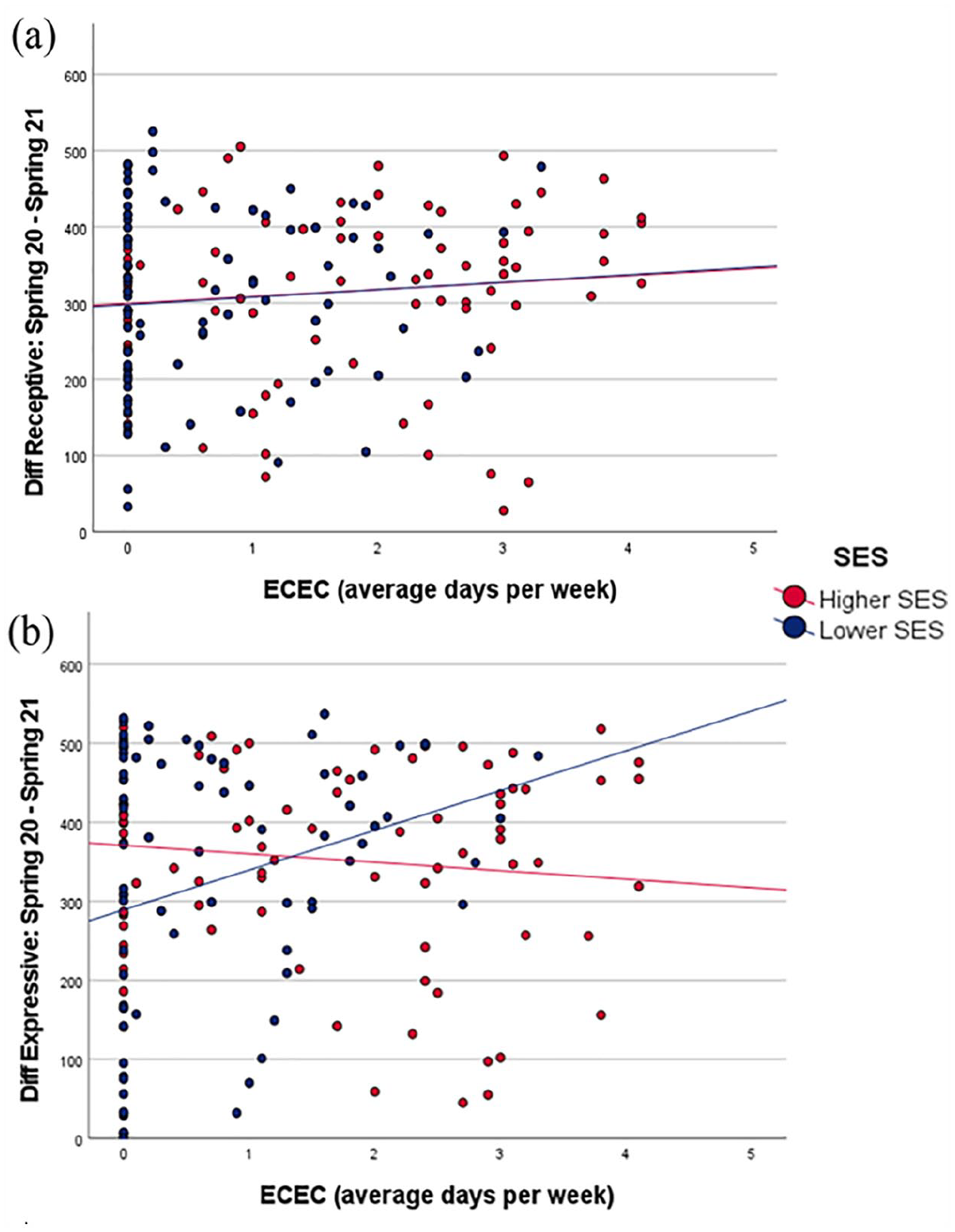
Associations between ECEC and (a) receptive and (b) expressive vocabulary growth for the Spring 2020 to Spring 2021 period, by SES group (median split).
Effects of age, early childhood education and care, and socioeconomic status on executive function growth
As shown in Table 4, increases in cognitive executive function (CEF) between Spring 2020 and Spring 2021 were negatively associated with age, meaning that growth in CEF skills were more pronounced for younger children compared with older children. Meanwhile, increases in Regulation were positively associated with age, meaning that Regulation skill growth was more pronounced for older children compared with younger children. There was no association found between CEF or Regulation difference scores with either SES, ECEC or interaction terms (Figure 2a and b).
Multiple linear regressions of EF growth on ECEC and SES, using difference scores between Spring 2020 to Spring 2021.
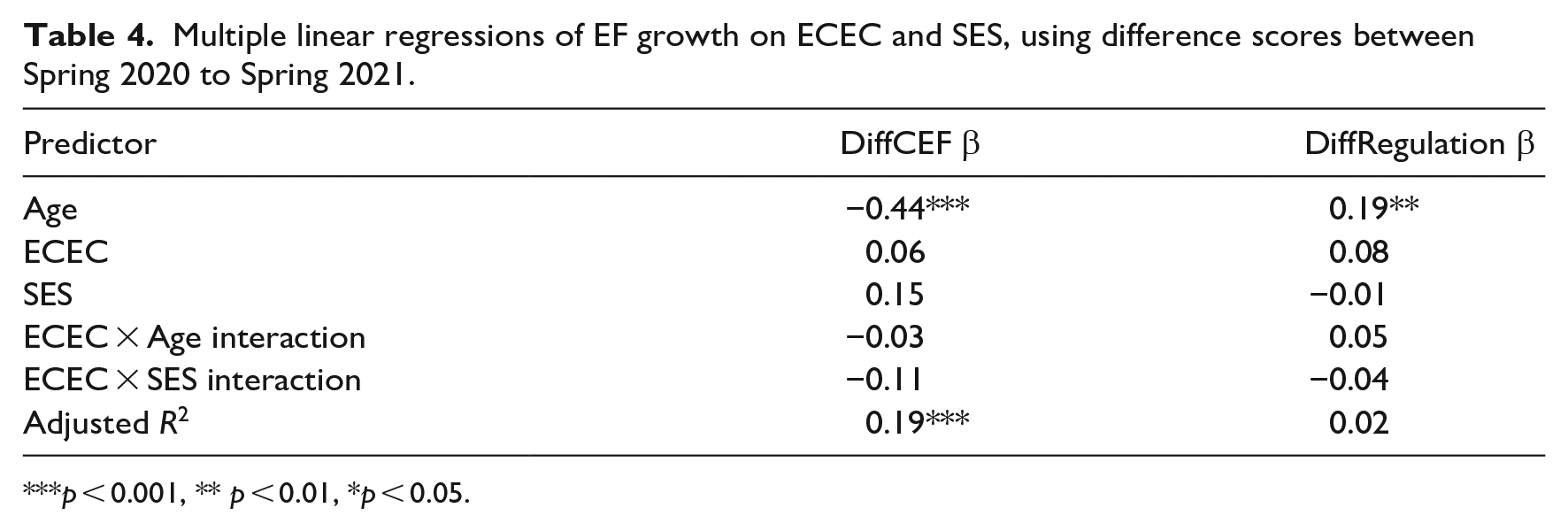
p < 0.001, ** p < 0.01, *p < 0.05.
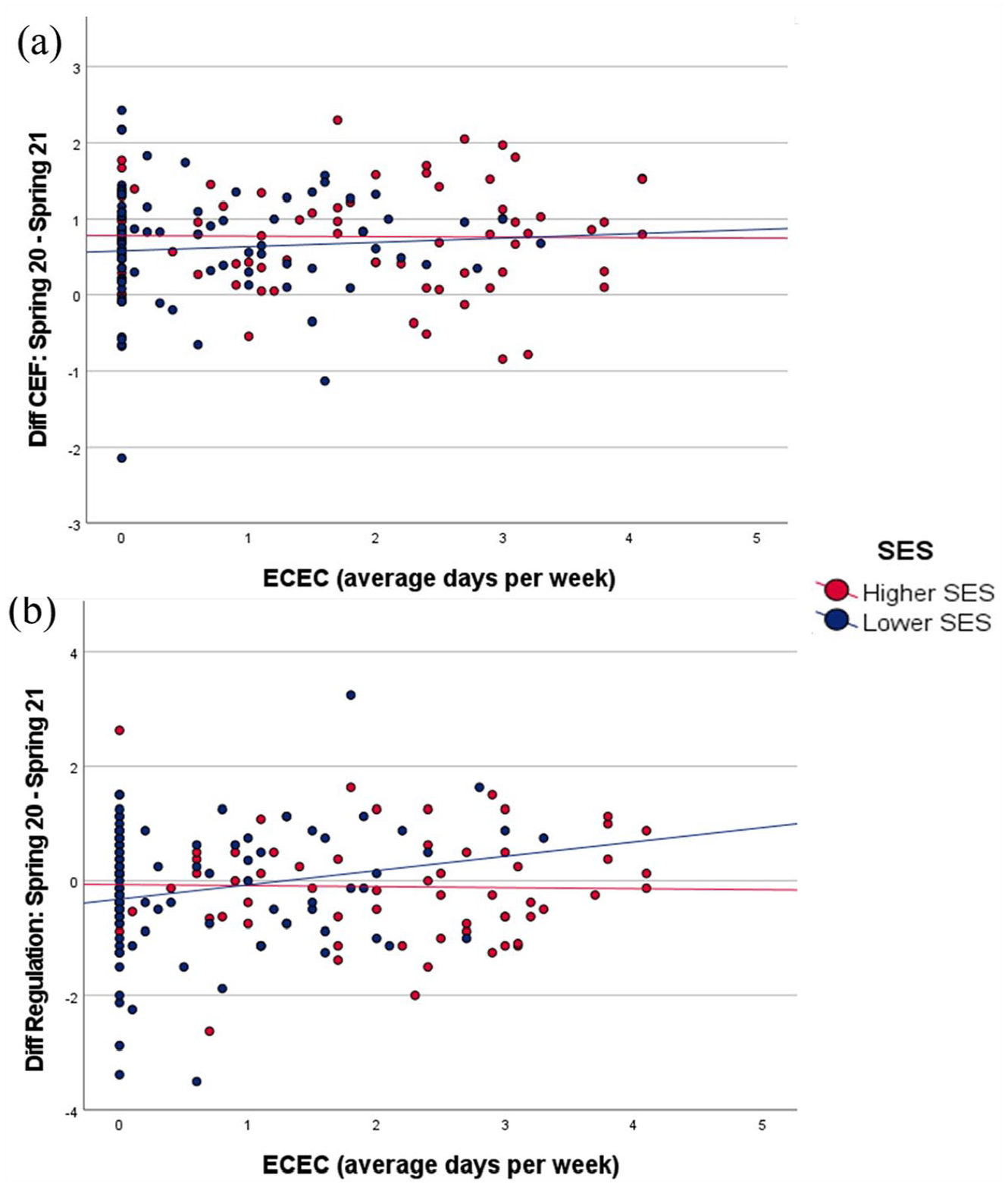
Associations between ECEC and (a) Cognitive Executive Function and (b) Regulation for the Spring 2020 to Spring 2021 period, by SES group (median split).
Effects of age, early childhood education and care, and socioeconomic status on communication, problem-solving and personal-social skills
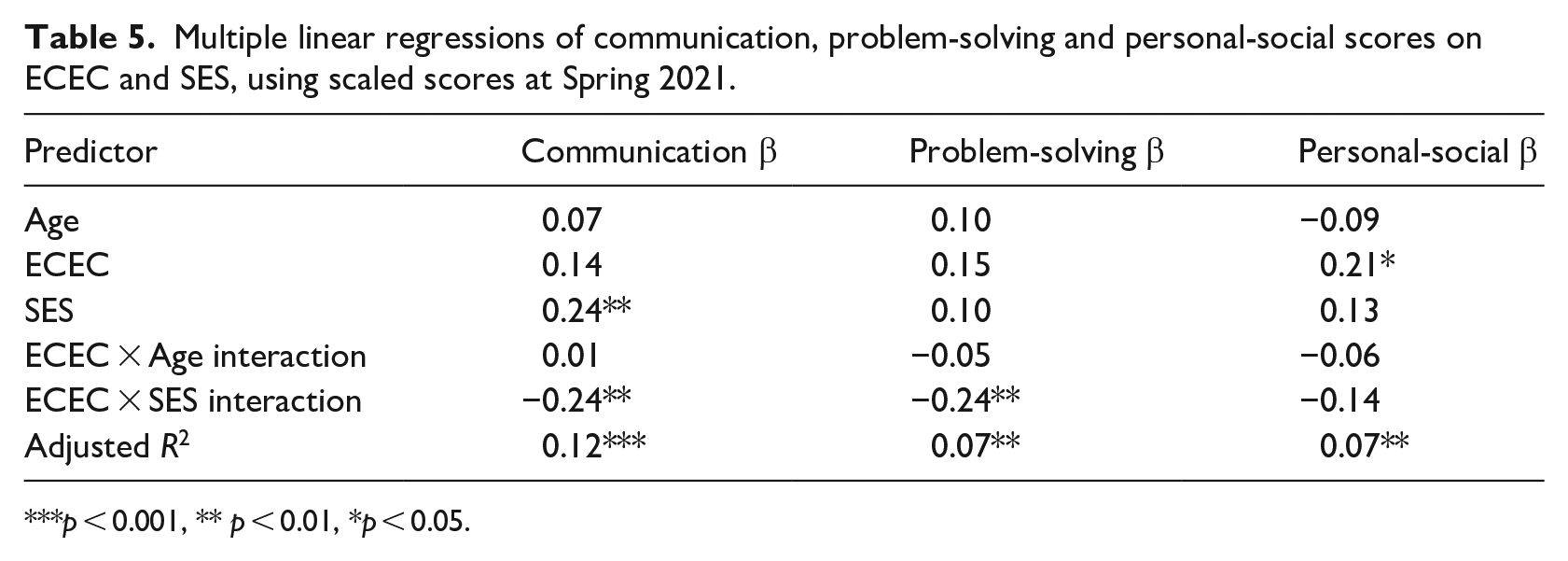
As shown in Table 5, communication scores were positively associated with SES, such that children from higher-SES demonstrated higher communication scores compared to their peers. There was also a significant interaction between SES and ECEC for communication and problem-solving skills, meaning that the benefits of ECEC for communication and problem-solving were more pronounced for children from lower-SES backgrounds (see Figure 3a and b). Personal-social scores were positively associated with ECEC, such that children who attended more ECEC demonstrated higher personal-social scores (Figure 3c). However, there was evidence of a ceiling effect for all the Ages and Stages Questionnaire (ASQ) measures, and the data was not normally distributed for communication (Kolmogorov-Smirnov, p < 0.001) or personal-social (p = 0.019). Subsequently, the results should be taken with caution.
Multiple linear regressions of communication, problem-solving and personal-social scores on ECEC and SES, using scaled scores at Spring 2021.
p < 0.001, ** p < 0.01, *p < 0.05.
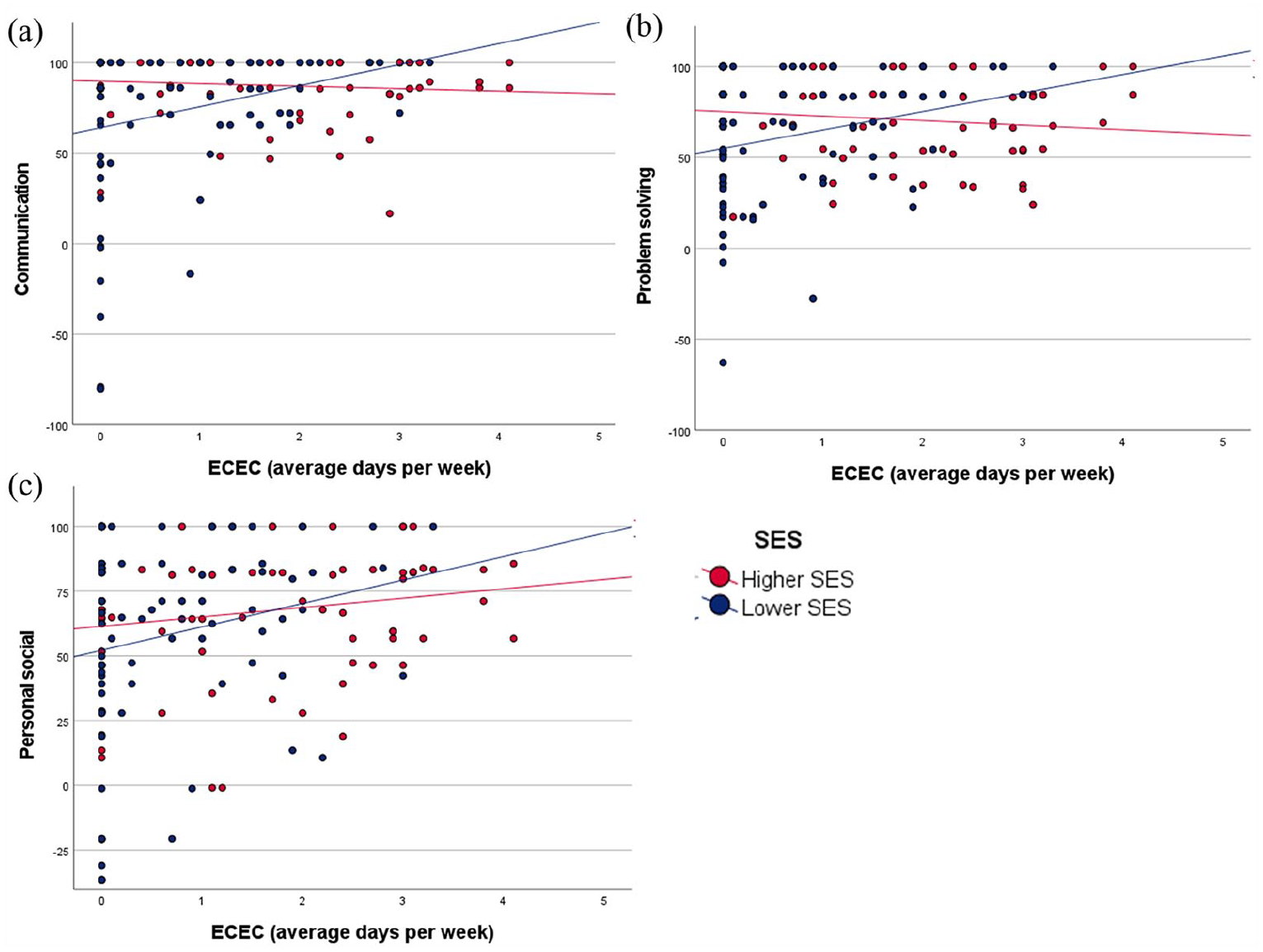
Associations between ECEC and Communication (a), Problem-solving (b) and Personal-Social (c) by SES (median split).
Discussion
Aims and findings
This study analyses associations between the amount of time that young children spent in ECEC during the first year of COVID-19, their socioeconomic background, and their cognitive development, that is, expressive and receptive vocabulary, cognitive executive function (CEF), regulation, and their communication, problem-solving and personal-social skills (as measures of school readiness). Our first aim was to investigate whether the previously attested positive association between ECEC attendance and cognitive development was maintained during the extended disruption. We found that children who attended ECEC for a greater part of the week showed enhanced growth in their receptive vocabulary over the 12-month period, regardless of their socioeconomic background. We also saw enhanced growth in expressive vocabulary in those who spent more time at ECEC, but only amongst children from less advantaged backgrounds. Together, these results suggest that ECEC has sustained language benefits for young children growing up during the pandemic despite ongoing disruption to settings, and also has specific benefits for the language of children from less affluent environments. There was no effect of SES or ECEC attendance on growth of either of our measures of executive function. Our second aim was to track children’s developmental milestones as they matured through the pandemic and prepared to start formal schooling. Our data suggest a similarly positive association between ECEC attendance and the communication and problem-solving skills of children from lower-SES backgrounds, and between ECEC and the personal-social development of all children.
The finding that ECEC attendance boosted language growth during the entire first year of the COVID-19 outbreak in the UK extends our earlier work focusing on the first 6 months of the pandemic for this sample (Davies, Hendry et al., 2021). Over the year-long period, ECEC was found to benefit the receptive vocabulary growth of all children (this was the case only for lower-SES children during the previous 6-month analysis). The longer period revealed for the first time an interaction between ECEC and SES on expressive vocabulary growth, which aligns with our findings on communication scores in the ASQ (suggesting that the questionnaire leans heavily on expressive language). Contrary to our previous results from the initial 6 months of the UK lockdowns, here we see a significant effect of ECEC and SES on expressive vocabulary growth: the more pronounced benefits of ECEC for children from lower-SES backgrounds can be seen clearly in Figure 1b. The language environment of ECEC, providing rich opportunities for expressive language in group- and one-to-one dynamics, may serve as an important protective mechanism against the financial and structural stressors experienced by some families. These inequalities are likely to impact the home language environment, including the amount and diversity of language that children encounter, for example, via conversational turn-taking (Vernon-Feagans et al., 2013; see Schwab and Lew-Williams, 2016 for a review).
Our findings add to the evidence base that ECEC can enrich the language development of children growing up without socioeconomic advantage (Berry et al., 2015; Drange and Havnes, 2019; Geoffroy et al., 2007, 2010; Larose et al., 2021; Vernon-Feagans et al., 2013). Such inequalities have broadened and deepened during the pandemic (Blundell et al., 2022), increasing the importance of buffering factors such as ECEC. The fact that ECEC settings were grappling with disruption into 2021 yet still maintained these protective effects highlights the robustness of its influence on children’s development.
Our 12-month dataset shows no effect of ECEC attendance on growth of executive function. This is somewhat surprising since common features of ECEC (e.g. provision of developmentally appropriate learning materials and high-quality adult-child interactions) have been shown to scaffold learning and promote child EFs (Amso et al., 2019; Clark et al., 2013; DeJoseph et al., 2021; Rosen et al., 2020). These examples of process quality – the proximal interactions that children have with ECEC staff and equipment – may be particularly important in whether ECEC benefits EF development (Melhuish and Gardiner, 2018; Pianta et al., 2005; Sylva et al., 2020). Crucially, process quality is likely to have been particularly impacted by the pandemic. Settings were required to keep children in small groups or bubbles, with implications for interactions with key workers. Staff absence disrupted consistency of care, and some materials were removed from settings due to concerns about viral spread. The null result for EF also contrasts with the positive link we previously found between ECEC and growth in CEF skills during the first 6 months of the pandemic. Speculatively, this contrast may be linked to social changes as the pandemic wore on. During the first summer of the pandemic, access to ECEC may have lessened family strain (see Hendry et al., 2022) showing the association between parental mental health and child EF) and/or provided a nurturing environment for children, boosting EF. Over the extended period, these effects may have been washed out by more pervasive factors like setting quality, parental mental health rebounding, or increased social support as restrictions were loosened.
Recommendations
Our data tentatively suggest that ECEC boosted the communication and problem-solving skills of disadvantaged children and the personal-social skills of all children regardless of background. These skills enable children to more easily access both the academic and social aspects of school, with knock-on effects for later attainment (Davies et al., 2016; Li-Grining et al., 2010; McClelland et al., 2006). Based on our data it is not possible to attribute increased concern about school readiness exclusively to a lack of ECEC during the pandemic, among a variety of other factors such as access to services, loss of social support, and increased family stress, illness and bereavement. Nevertheless, we suggest that increasing access to ECEC is a way of providing post-pandemic opportunities for socialisation, emotional wellbeing, physical development and foundational academic skills, rather than compensating for ‘missing skills’. Increasing these opportunities and nurturing children via responsive support should address concerns about school readiness and help to mitigate socioeconomic attainment gaps (Wilcock and Bazalgette, 2022).
It will also be important for schools to be ready for the specific needs of pandemic-era starters, rather than measuring them against pre-pandemic expectations. In Tracey et al.’s (2022) sample, the proportion of children who achieved a ‘good level of development’ (GLD) was 13% smaller than a comparable pre-pandemic cohort (59% reached a GLD in 2020/21 compared with 72% in 2018/2019). This was coupled with 76% of schools reporting that this cohort would benefit from adjusted curricula to support their learning and development compared to pre-pandemic cohorts. Thus, the benchmarks for school readiness (especially regarding constructs such as literacy, mathematics, personal-social development, and language) should be responsively reviewed to meet children where they are when they enter and progress through school, with special focus on those children who were most disadvantaged during the pandemic (aligning with data and recommendations from Nash et al., 2022). A flexible, collaborative approach between schools, families and children themselves will help all parties to maximise learning opportunities.
All children are ready to learn. However, the cohort of children starting their early education during the pandemic appear to be facing barriers to learning in schools as they currently stand. These barriers may be best addressed through enrichments to boost development, for example, small group work and greater access to 1-to-1 adult-child interactions, and importantly, adaptations to curricula as well as school settings themselves, for example, more outdoor and free play, more movement breaks.
To summarise, our study has evidenced the enduring benefits of ECEC for children’s developing vocabulary and aspects of school readiness, and the specific support it confers to children from disadvantaged backgrounds, even when the standard provision is disrupted. Accessing centre-based education and care before the beginning of formal education provides many opportunities, including for communication, socioemotional development and problem-solving. This provides an important foundation for learning and play, and is likely to have broader effects across curriculum areas as children mature through school.
Our findings yield several policy recommendations. First, sustainable investment in early years education will pay cost-effective dividends for society, as shown by its positive effects even when services were disrupted. Second, support for eligible families to take up their funded entitlement will ensure that the benefits of ECEC are accessible to those who stand to benefit most, mitigating achievement gaps in the early years and beyond. Third, within the Early Years Foundation Stage, a holistic and flexible approach to school readiness will help to support children to achieve a good level of development at school entry. Overall, supporting universal access to early years education, in a form that meets the needs of pandemic children will address the United Nations (2021) Sustainable Development Goal 4 to ensure inclusive and equitable quality education and promote lifelong learning opportunities for all.
Limitations and next steps
Our study has several limitations. Regarding measurement, our use of parent-report (compulsory during social distancing) may have increased the likelihood of error and recall bias, and our measure of school readiness was somewhat limited in its range. Because our ECEC measure did not probe aspects such as activities, facilities or practitioner qualifications, we can not make claims about exactly how ECEC confers developmental advantages. Regarding our sample, we used a self-selecting convenience sample of UK home caregivers, presenting limits on generalisability. We also had relatively low representation from families with extremely low SES, skewing the sample towards more highly educated caregivers (who were more likely to use ECEC).
It will be important to track the enduring effects of the initial deep lockdowns of 2020, and the associated changes to key environmental predictors of development. Although follow-on effects are likely to be highly variable, some evidence points to a degree of catch-up as children mature. Although 56% of parents from a survey of 1105 families had concerns about the socioemotional wellbeing of children starting school in September 2020, 93% felt that their children had settled in well once they had started, and by the end of the Reception year 80% of parents had no concerns about their children coping in school (Tracey et al., 2022). Large-scale data from the National Foundation for Educational Research (NFER) in the UK shows that on average, children who were in Reception in March 2020 are still behind expectations in reading 2 years on, whereas those who were in Year 1 are faring better with regard to pre-pandemic expectations. For the former cohort, the proportion of very low attainers in reading more than tripled to 9.1% in spring 2022, and for pupils who were in Year 1, this proportion more than doubled to 6.5%. The NFER also reports a widening SES attainment gap (Wheater et al., 2022). Continuing to track these children, taking into account the effects of early educational experiences will inform an optimal support system for families. Our next steps are to continue to follow this cohort as our ‘pandemic babies’ start school and advance through their education.
Footnotes
Acknowledgements
We would like to thank all the families who have contributed to this study, and gratefully acknowledge Cecilia Zuniga-Montanez for editorial support.
Credit author statement
Catherine Davies: Conceptualisation, Writing – Original Draft, Writing – Review & Editing. Shannon P. Kong: Investigation, Data curation, Methodology, Formal analysis, Visualisation, Writing – Original Draft, Writing – Review & Editing. Alexandra Hendry: Conceptualisation, Methodology, Formal analysis, Writing – Review & Editing. Nathan Archer: Writing – Original Draft, Writing – Review & Editing. Michelle McGillion: Writing – Review & Editing. Nayeli Gonzalez-Gomez: Conceptualisation, Methodology, Writing – Review & Editing, Supervision, Project administration, Funding acquisition.
Declaration of conflicting interests
The authors declared the following potential conflicts of interest with respect to the research, authorship, and/or publication of this article: Nathan Archer (Assistant Editor for JECR) is a co-author of this submission.
Funding
The authors disclosed receipt of the following financial support for the research, authorship, and/or publication of this article: This research is funded by the Economic and Social Research Council (ESRC) as part of the UK Research and Innovation’s rapid response to COVID-19 (ES/V004085/1). A. Hendry is supported by the Scott Family Junior Research Fellowship at University College, University of Oxford and by a NIHR and Castang Foundation Advanced Fellowship.
