




Abstract
The benefit of recreational book reading is well recognized, however the role of teachers in encouraging recreational reading beyond the primary school years of skill acquisition is not clearly defined. In 2012, the West Australian Study in Adolescent Book Reading was undertaken in 20 schools in Western Australia. As part of the study, students from selected classes in Year 8 and Year 10 reflected on the encouragement of recreational book reading given by their primary school and high school teachers in the past and at present. This provided a direct end-user perspective on perceived teacher attitudes and practices that supported adolescent recreational book reading. The information was analyzed to identify specific mechanisms of encouragement that students deemed effective. Findings indicated that best practice included exhibiting personal enjoyment of recreational book reading; demonstrating willingness to instigate and support student-centered discussion around books; possessing broad knowledge of both young adult texts and youth popular culture; effectively communicating expectations that students will read at school and at home; learning about the interests and aspirations of the students; and using in-class practices that encourage reading for pleasure, such as reading aloud to students and silent reading.
Introduction
Despite the comparative lack of focus on recreational book reading for children beyond the primary years, it is still important for adolescents to read books regularly for recreation. Recreational book reading is positively associated with improving literacy levels, both in the early years, and beyond. Research has linked regular independent reading to cognitive benefit and literacy outcomes (Anderson, Wilson, & Fielding, 1988; Cunningham & Stanovich, 1998; OECD, 2010; Samuels & Wu, 2001; Stanovich, 1986; Thomson et al., 2012). “Time spent reading is related to reading success” (Moore, Bean, Birdyshaw, & Rycik, 1999, p. 102), and regular recreational readers spend more time reading, and are thus more likely to experience these benefits.
Improved literacy outcomes such as comprehension and vocabulary enhancement through regular reading may, in turn, positively impact on high school results (Daggett & Hasselbring, 2007; Marks, McMillan, & Hillman, 2001) and vocational prospects (Kirsch et al., 2002), with recent Australian Bureau of Statistics findings suggesting that competence in literacy is linked to employment (ABS, 2013). Regular recreational book reading can also foster interpersonal connections (Moje, Overby, Tysvaer, & Morris, 2008) and provide a pleasurable escape (Howard, 2011).
While students may read a variety of other materials in their daily lives, including graphic novels, text messages, the internet (Baer, Baldi, Ayotte, & Green, 2007), and comic books (OECD, 2010), these text types have not been found to offer the same level of benefit as book reading. Some evidence suggests that the cognitive processes engaged in reading some text types, such as internet-based sources, are vastly different (Carr, 2010; Liu, 2005; Nicholas, Huntington, Williams, & Dobrowolski, 2003), prompting the assertion that internet-based reading encourages “‘mile wide, inch deep’ thinking” (Giedd, 2012, p. 102), in contrast to the patience and persistence required for book reading.
Although it is apparent that choosing to become a committed recreational book reader offers significant benefits for adolescents, research suggests that Australian adolescents may not be regularly engaged in recreational book reading. PISA data provide insight into adolescent reading frequency, suggesting that while almost half of Australian 15-year-old respondents read up to an hour a day for enjoyment, 37% “do not read for enjoyment” (Thomson, De Bortoli, Nicholas, Hillman, & Buckley, 2011, p. 136). More recent findings indicate that while recreational book reading is deemed relatively socially acceptable for adolescents (Merga, 2014a) only 23% of West Australian girls and 15% of boys in Year 8 and Year 10 are reading books daily (Merga, 2014b), and that nearly a third of Australian adolescents rank reading a book as their “least preferred” leisure activity (Manuel, 2012, p. 20). Rennie and Patterson (2008, p. 55) found that a quarter of 14-year-olds surveyed in the Northern Territory of Australia read novels frequently. Aliteracy, the condition in which students who have the skill to read, choose not to, is a growing issue both in Australia and internationally (Scholastic Inc., 2010).
There are substantial obstacles to secondary English teachers positioning a love of book reading as a priority among the competing demands of the secondary school curriculum. The current focus of literacy in Western Australia is on the early years, with programs such as Better Beginnings (Allen, 2010) without a secondary school counterpart. While current UK education policy seeks to arrest a “decline in reading for enjoyment” as part of its brief for “moving English forward” (Ofsted, 2012) in both primary and secondary schools, Australian education policy does not expound a similar mission. Adapting to technological developments and coping with “constant curricular change at policy level” (Jetnikoff, 2011), in addition to meeting the requirements of high-stakes testing, are pressing demands on teacher time (Polesel, Dulfer, & Turnbull, 2012). Preparation for high-stakes testing such as The National Assessment Program – Literacy and Numeracy (NAPLAN) can lead to teaching to the test at both primary school and secondary school level, at the expense of more far-reaching educational needs (Ofsted, 2012). Research suggests that high-stakes testing leads to a decline in the implementation of in-class strategies and practices designed to increase student will as well as skill in reading, instead, leading to the preferencing of “formal, direct instruction” (DeBenedictis, 2007, p. 29).
It could be assumed that most students have learned the skill of independent reading by secondary school. After this stage, the responsibility of maintaining the “will” to read can be neglected, as parents may presume it is the responsibility of the school to encourage students, whereas teachers may assume it is the responsibility of the parents (Bunbury, 1995). Indeed, it may no longer be perceived to be anyone’s responsibility, other than the students’ themselves.
Theoretical framework
I wanted to explore the manner in which adolescents could be influenced to read more books for recreation, and thus I subsequently designed and undertook the West Australian Study in Adolescent Book Reading, which I will refer to hereafter as the WASABR. The WASABR rests on the premise that social influences can, and do, shape adolescents attitudes and values toward different recreational pursuits. As a former English teacher, I often reflected on the link I observed between regular book reading and in-class performance in English, and I pondered what I could do to increase the occurrence of recreational reading, which by nature, occurred outside the classroom, therefore beyond my scope of immediate influence.
In designing the WASABR, I made a number of theoretical assumptions about mechanisms of influence. While teenagers are characterized as social beings, the current generation, with technological access to increased levels of social networking, is potentially more so than previous generations (Oblinger & Oblinger, 2005). I assumed that reading, like all forms of communication, is a social process (Bloome, 1985), and I adopted a symbolic interactionist approach, such as that constructed by George Herbert Mead. This places an individual’s conduct as a product of meaningful social interactions that shape individual’s attitudes and practices (Mead, 1925; Mead & Morris, 1934).
For the purposes of this article, I narrowed my focus to explore the manner in which English teachers might contribute to adolescent students’ attitudes toward recreational book reading. I assumed that adolescent attitudes might be, to some extent, shaped by exposure to positive practices by English teachers, as influential social agents. I did not assume that this influence would be equal, or more significant, than the influence of other social agents, such as parents, friends, and the peer group. I wished to explore levels and forms of nourishment that students received from their English teachers and how this compared with their experiences in primary school.
Conversely, I contended that students can, and should, influence the practices of both experienced and preservice teachers. They are uniquely situated to assess the success of teacher practices, as not only are they the intended recipient, but they also have a substantial degree of exposure. By the end of schooling a student “will have sat through about 1000 hours of English lessons in secondary school alone,” and “will have closely observed, and judged at least six English teachers” (Murison, 1980, p. 2). This article may contribute to development of a mutuality of influence, by which teachers are invited, through consideration of the observations of their students, to utilize a construct of best practice that is essentially grounded in students’ experiences of teaching in contemporary Western Australia.
Method
While the overall study was mixed method, generally subscribing to an Explanatory Design construct, in which qualitative data are used to build upon quantitative findings (Creswell & Plano Clark, 2007), for the aspect of the research reported here, a qualitative approach was chosen, as the data needed to be shaped by the students’ experiences, rather than the preconceived ideas of the researcher (Schutt, 2012).
The data that form the basis of this article were gathered in term 4 of 2012 as part of a much larger study, the WASABR, in which 20 schools throughout Western Australia participated. These were schools from a wide variety of geographic and socioeconomic backgrounds, and as such, the data obtained from this study provide rich insights into the current status of book reading for fun in West Australian teenagers’ lives. The overall study included 520 students from Year 8 and Year 10 who participated in a survey. In addition, n = 34 in-depth semistructured interviews were undertaken across 17 of the schools. Two students were randomly selected from each of the 17 schools where possible, whereby participants were selected to arrive at an evenly balanced sample in terms of year group and gender.
Demographic data of interview participants.
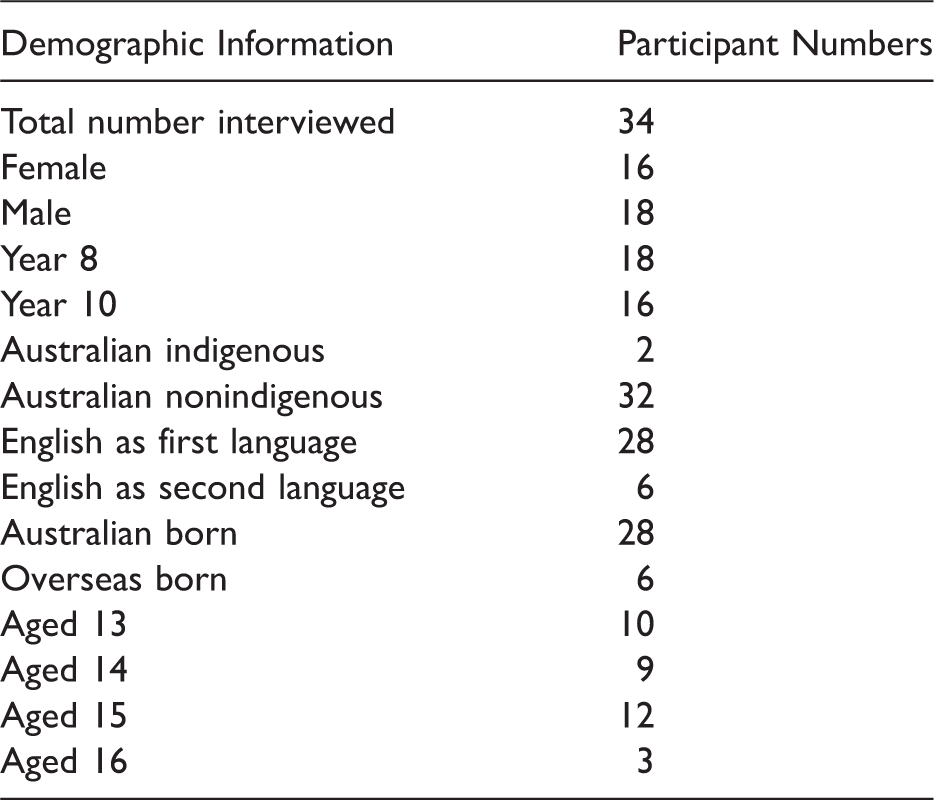
Interviews were dyadic, with only the interviewer and student present. They were digitally recorded, transcribed, and then coded using constant comparative analysis (Boeije, 2002; Kolb, 2012).
Students reflected on the encouragement their primary school and high school teachers supplied in the past and at present, providing a direct end-user perspective on the support they found most beneficial. Student identities were protected by pseudonyms. Key themes emerged from the 34 interview participants, with data being used in this article that highlight these themes, infusing the paper with the authentic voice of the participants where possible.
Two key research questions were considered:
Do adolescent students perceive primary teachers as being more or less encouraging of reading books for pleasure than secondary teachers? Which characteristics and practices of secondary teachers are perceived by adolescent students to convey and promote a positive attitude toward recreational book reading?
Changing levels of encouragement
In order to address the first question, students were asked to compare levels of encouragement to read books for pleasure at primary and secondary schools. Most students did not hesitate to identify a clear difference between high school and primary school. While many high school teachers were encouraging, most were not as encouraging as primary school teachers.
While students believed that their primary school teachers were more encouraging, they generally talked about the impact of one or two primary school teachers that they could discern made exceptional efforts to foster reading for pleasure. For example, Max recalled encouragement from his Year 3 teacher, who read aloud to him, compared with his Year 4 teacher, who did not read to students regularly and was characterized as a “grumpy teacher.” For Max, regularity of reading constituted encouragement. Brooke described feeling encouraged to read by her Year 6 teacher, as “every single day she'd bring in a new book and show us what she’d loved about it.” For Brooke, regularity of reading coupled with enthusiasm was encouraging.
Rex had a similarly positive experience in Year 3, stating that his teacher “got us reading a lot of books and stuff like that, and, used to read them all the time to us and stuff like that, but, she also encouraged a lot of reading at home.” He also noted that “she was probably the only really enthusiastic reading teacher I've ever had.” These insights suggest that even in primary school, not all teachers could be considered as optimally encouraging.
Liana was deeply engaged by her Year 7 teachers reading aloud to the class: Sometimes the teachers actually read to us the books, so we would just sit and listen. I find it really amazing when teachers read. They just have, you know- or when adults read, they have this kind of, you know when they read, they put emotion into it, like the voice and stuff, so, they kind of encouraged me to you know, keep reading, keep listening, and when we finished the book as a class, I decided to- move on to the second one, and then the third one, kept going, so, well, yeah, they were amazing …
Liana is not unique in her enthusiasm for this practice as enjoyment of being read to has been associated with positive attitudes toward recreational book reading in a study by Ivey and Broaddus (2001), which found that 62% of US middle school respondents’ best reading experience involved being read to.
Satish found significantly more encouragement to read at primary school than at secondary school. He reflected on his primary school teachers’ beliefs, stating that “they believe reading would be good at a young age if you start building habits like that, it will be good for you later, later on in life.” At the time of the interview, he was an avid reader, and he felt that this encouragement at primary school had strongly influenced him. In contrast, his reflections on the levels of encouragement received from his high school teachers suggest a much greater level of inconsistency in encouragement, as some of them have been encouraging, some of them have just quite a neutral perspective on it, yeah. They don’t like not recommend us, but they don’t go out of their way to recommend any books to us, or anything like that.
While primary school teachers were generally found to be substantially more encouraging than high school teachers, a few students felt that their high school teachers were more encouraging. Both students who were definite that their high school teacher was more supportive came from Year 10. Dean stated that, “high school’s different, you gotta read more, do more, yeah, put more effort into your work,” and that at high school, “they want you to read more, at home and at school.” Sharna supported this view, as “it’s more serious in high school, and it helps you out a lot more.” In these few instances, reading encouragement was related to meeting the demands of raised academic expectations, rather than reading for enjoyment.
Encouragement was communicated through regular reading aloud to the class, expressing an enthusiasm for books, encouraging home reading, and explicitly stating beliefs linking recreational book reading and future benefits. These emerging themes, and additional characteristics, are explored in more detail in response to the second research question, with the exception of regular reading aloud. This was not explored as no student described their secondary school teacher undertaking this practice.
While none of the students interviewed described their high school teacher reading to them aloud, as with Liana, several students talked about enjoying their primary school teachers doing this, even as late as Year 6 and Year 7. This suggests that a continuance of this practice into high school may be very welcome to adolescent students. Terrance described his Year 3 and Year 6 teacher as particularly effective, as she read to the students aloud, “in the afternoons, after lunch, she would always read books to us.” Jim discovered his “favorite series” when his teacher “read out a little extract from it.” This led to him purchasing and reading every book in the series, The Billionaire’s Curse.
Reading aloud may be underutilized in Australia beyond the primary years, though no research could be found to illuminate this possibility. While research into teacher reading aloud and benefits are usually concerned with young children (Ariail & Albright, 2006), existing research with middle school and high school students in the US suggests that “when teachers read engaging texts aloud, aliterate students – that is students who are able to read but choose not to do so – often become more motivated to read on their own” (2006, p. 70). However, in a study exploring teachers’ use of reading aloud in middle school, Albright and Ariail (2005) concluded that the motivation behind teacher reading aloud often emphasized information acquisition or modeling, rather than fostering pleasure or engagement. Reading aloud appears to be a key difference in approach, and secondary teachers might benefit from increasing their in-class use of this practice, with an emphasis on fostering enjoyment of reading.
Teacher characteristics and practices promoting recreational book reading
When student responses were coded, several key themes recurred that addressed this research question. While these are explored separately, it is clear that most of them are interrelated.
Excitement about books
Teacher excitement about books was viewed as highly encouraging. Stacy described how her English teachers’ excitement about books elevated the social capital of books in her classroom. When asked how her English teacher felt about reading books, she stated that, “I think she gets really excited about it. She seems like a very excited person when it comes to books.” Stacy described how her teacher would get a “big smile on her face” when books were discussed in class and how this attitude was conducive to encouraging discussion of books: … you see some kid mention it, and then someone overhears it, instantly gets excited, like, “Yes, I’ve read that,” then, that person feels excited to read it and, then another person does, so yeah, just …I think it’s really just excitement that gets people. You hear about it, like, “Oh my God that sounds good,” so you decide to do it, ‘cos (if) it makes other people happy, it might make you happy too.
The key feature of Stacy’s description of excitement about books is the discussion around them, by which the excitement is both expressed and transmitted. Research with younger students suggests that students are highly positive about opportunities to talk about books, with Gambrell (1996, p. 22) contending that “the more books that children are exposed to, and know about, the more books they are likely to read.” In their analysis of research on middle and secondary school instruction, Ivey and Broaddus (2001, p. 354) conclude that “a student-responsive culture that honored students’ voices and their need for self-expression” is central to fostering positive experiences of reading in the English classroom. Such a culture also provides an optimal positive context for social influence to encourage reading.
Demonstrated interest in reading
Teachers who demonstrated interest in personal reading for pleasure were more likely to be viewed as both encouraging and knowledgeable. Many students were unable to confirm that their current secondary school English teachers actually liked reading books themselves. When asked how his teacher felt about reading books, Luke stated that, “I’m not sure how he likes reading books, because I’ve never really heard him talk about reading books, other than the ones we read at school, so, I couldn't give you a true opinion on that.” A number of other students also indicated that they were unwilling to endorse a positive position toward reading in their English teacher, due to lack of evidence.
Sharna felt that her English teacher was not a reader, based on her teacher’s perceived preference for gaming, stating, “No – she likes video games” when asked if her teacher enjoyed reading. Sharna explained that her teacher spent time discussing games with the male students in the class. Sharna was a keen reader, heavily influenced by her mother’s reading practices, but as she was not interested in gaming, she had little regard for these discussions. While it may have been once reasonable to assume that all English teachers enjoy reading, Mayher (2012) has noted that in recent times, students committed to creative writing, to film and media studies, and even video games, have found their way to English teacher education programs (2012), suggesting that this unqualified assumption may no longer stand.
Other teachers were able to demonstrate a broad and knowledgeable reading base that elevated them to expert status, with Natalie, a Year 10, deeming her teacher “really knowledgeable about reading books, and stuff like that, so yeah, I trust her opinion on things.”
Tiana could confidently confirm that her teacher enjoyed reading, based on having witnessed her engaged in reading for pleasure during silent reading periods. She felt that her teacher “loves books” as “she reads books quite often”; during the silent reading period, “she will sit in the corner and read one of her own books.” Maintaining regular silent reading in the secondary classroom was also well received by most study participants, and for some, it was the only recreational reading that they claimed to do (Merga, 2013).
Recommendations supported by knowledge of students and youth culture
Beyond talking about books and demonstrating a love for reading, some teachers were comfortable making recommendations for students. For Lisa, this was a clear indication that her teacher viewed reading favorably. She found that “even just the books in class that we read, how she’ll talk about them, and just having conversations with her about other books that are similar and stuff that she's read and liked, and … things like that,” were all indicators that her teacher enjoyed reading.
When asked if she’d ever thought about reading any of the books that were recommended by the teacher, Lisa admitted that she had read and enjoyed a few recommendations. Tiana also indicated that she would be willing to read her teacher’s recommendations, based on the fact that “she’s got good taste in books, like similar taste.”
Recommendations did not always encourage students to read more. The Year 10 student Kev, also found his teacher’s recommendations were “somehow” appealing, however he had a relatively resistant attitude toward book reading, and her recommendations did not lead to him reading more. He said that, “I’m just like, ‘Ahhh,’ [groan] ‘cos she mainly talks about books with movies on them, so I’m just like ‘Yeah, I’ll watch that movie.’ I guess then I’ll know what she’s talking about.” Kev can thus access the story that has piqued his interest through his teachers’ recommendation via his preferred media, subsequently avoiding reading.
When teachers knew their students’ interests, recommendations were well received, especially when a broad knowledge of books was combined with knowledge of individual student interests as well as youth popular culture. In addition, an appropriate environment, such as in-class reading periods, and resources, such as an accessible library or in-class book selection, could best facilitate the implementation of recommendations based on teacher assessment of student interests. Kylie described her teacher’s recommending practices, saying that She shows you what books are really good. And she listens to what interests we have. So she offers me books as well, because she knows what I like, and, yeah, she’s really good. She listens to people so she knows what books they like. When I went to the library, there was a whole table of separate books she told me to go look at, and that was in it. So obviously I think she influenced that on me, helped me pick that, which is good.
Unfortunately, research exploring the familiarity of Australian secondary English teachers with popular young adult texts and how this is reflective of in-class teaching practices is scarce. While UK research suggests that many student teachers’ knowledge of teenage fiction is too limited for them to make recommendations that will enable school students to progress in their reading habits (Hopper, 2005), this finding cannot be directly applied to an Australian context. It is apparent, from the WASABR research, that some teachers are highly knowledgeable of both contemporary youth culture and their students’ personal interests, and that this knowledge may be respected and appreciated by students.
Required reading at home
Teachers who designated required reading at home were often viewed as encouraging reading. Gulseren, a Year 8 who perceived herself as a nonreader, described the positive experience she had in primary school, when she was required to read at home and record this reading in a reading log. Gulseren said that we did have this program, and it was called, ah, I forgot, but what you have to do is, you get this booklet and … you get your parents – you get to read in front of your parents, and they sign it off, and you have to complete days. And after say a month, you get an award, for reading that much. And when you finish the book, you get a prize.
Craig reflected that his teacher last year really encouraged the students because we had this holiday reading challenge thing, and you had – it was compulsory. So you had to read, but, yeah, last year, our teacher was more, like, “You should read, you should read,” more than our teacher this year.
It is interesting that interventions into the home environment, where reading is made mandatory, seem to generally be perceived as welcome and encouraging. Extrinsic motivators are thought to be unsuccessful in encouraging reading (McQuillan, 1997), but this research challenges that perception, as prizes appear to motivate some students, at least in the short term.
Required reading at school
Required reading at school is also viewed as encouraging, as it is often the mechanism for connecting students with engaging books. Gulseren described the book review activity that she undertook in high school as surprisingly effective, as she “actually got interested in the book.” Richard viewed the amount of time his teacher devoted to silent reading in the library as an indicator of his teacher’s love of reading. When asked how his teacher felt about reading books, he stated, “she loves reading. She’s always going on about it. That’s why we go to the library, I don't think any of the other classes do.” Providing an environment conducive to reading, such as a school library, was perceived as encouraging. This finding is explored in further detail in a previous paper from the WASABR study, which suggests that the location of reading “can significantly impact on students’ enjoyment of the experience” (Merga, 2013, p. 238).
This enthusiastic teacher also attached an extrinsic motivator in the form of a grade to the silent reading activity; Richard stated that “we also get marked on our reading; we get a mark out of five. So she wants us to do well, ‘cos obviously that goes toward our grade as well.” Richard saw the in-class reading experience as purposeful, and this was the only reading of self-selected material in which he claimed to engage.
Placing novels on the English curriculum also communicates to students that the teacher is favorably positioned toward book reading. When asked about how her English teacher felt about reading books, Brooke answered, “She likes it a lot. We read three or four books this year.” For Brooke, the presence of multiple books in the curriculum was evidence of her teacher’s positive attitude toward book reading. Books may occupy a marginal position on an English learning program at the secondary level due to the competing demands of other text types, so it is important to consider how students may perceive this marginalization.
When asked about reading at school, Rex explained how his teachers’ crowded curriculum left no time for reading for pleasure: In primary school we did 15 minutes a day or something like that, but I think since there’s [sic] other classes, there’s more important things that our English teacher has to talk about. It’s good but, when it’s trying to – has to get you to you know, talk about subjects he’s doing. Since we’ve done novel study, Cirque de Freak, Reality TV and all the conventions and stuff like that, Storm Breaker, how graphic novels and all that work, and how stereos – how they build the story and stuff like that. And we did a lot on camera angles and how they build stuff off that, so we don’t really have much time to start reading.
Resisting test focus
While it is apparent that some students, such as Richard, were accepting of grade-based accountability as part of the reading program, students were clear that they did not find a purely grades-focused approach to reading encouraging at all. Teachers actively resisting test focus and emphasizing reading for pleasure were perceived as more encouraging. When asked how his teacher felt about reading books, Craig was honest, saying “we have to do that, we get marked on that, so we have to read a few books, you know, if we want to get good marks for that. It’s a part of the grading thing.” Craig viewed his teacher’s perception of reading as something that was obligatory and measured.
Craig had never seen his teacher reading a book for pleasure, and his perception was that she did not encourage students to read for pleasure. He described that there was a “threat” to perform for the purposes of “our grades and stuff.” Craig was in an Academic Extension Program and appeared conscious of the importance of high performance in order to maintain his position. He did not read recreationally often, though he explained that this was due to the high volume of sporting commitments he was engaged in, rather than a dislike of reading.
Diego also found that high school reading was primarily for the purposes of assessment, in contrast with primary school reading, in which pleasure also featured. He said, “they expect you to just read mainly what you have to do for an assessment or something, but in primary school they’d always take us to the library, or get books out that you like.”
Max, who was a keen recreational reader perceived his teacher as failing to provide effective encouragement, as it took the form of having students read books “to write an exam on.” For Max, Diego, and Craig, reading was considered part of the testing regimen in their classrooms and was not associated with pleasure. Craig’s circumstance was illustrative of a learning context that could inhibit enjoyment by focusing on short-term goals and an exclusive skills focus encouraged by the testing and assessment requirements (Sanacore, 2000).
Discussion
Several key insights emerge from the reflections that the students generously provided. Firstly, the research suggests that adolescents, who are more likely to be aliterate than primary school students (Nieuwenhuizen, 2001), may also be receiving comparatively less encouragement to read books for recreation. The possibility that there may be a correlation between decline in encouragement at school, and decline in students’ attitudes toward recreational book reading, is worth future investigation, particularly in light of Luke’s comment that because his teacher doesn’t “really make such a big deal out of it,” recreational book reading is considered to have declined in importance.
If, as this research suggests, primary school teachers are generally more successful in encouraging recreational book reading than high school teachers, what can be learned from their approach? While many of the best practices observed in primary school and secondary school are common to both settings, reading aloud was not raised as a secondary school practice, though it seems likely that it may still be attractive to adolescent students, judging from the attitudes of respondents such as Liana and Rex.
Secondly, students tend to view favorably secondary teachers who clearly project enthusiasm toward reading. It is remarkable that so many students could not identify a demonstrated interest in personal reading for pleasure in their teachers. While there is a paucity of research that examines the recreational reading practices of Australian secondary English teachers, US research suggests that the assumption that because someone is a teacher, they must automatically enjoy reading, is flawed, with only 25% of US trainee elementary teachers surveyed by Applegate and Applegate (2004, pp. 558–559) having “an unqualified enjoyment of reading.” As research suggests that teachers who place the highest value on reading in their own lives are most likely to use literacy practices reflective of best practice (McKool & Gespass, 2009; Morrison, Jacobs, & Swinyard, 1999), the importance of teachers reading for pleasure extends beyond the benefits of the provision of a positive role model for students to emulate.
Thirdly, students tend to positively respond to secondary teachers who are actively encouraging, and who make informed recommendations, with the “informed” component derived from in-depth knowledge of books and popular culture, and the students’ personal interests. Teachers who are aware of their students’ interests and preferences in order to recommend and provide appealing reading materials for their students are positively regarded.
Additionally, required reading at home or at school of self-selected materials does not appear to be negatively regarded, particularly when supported with a positive teacher attitude toward reading. That tasks such as log book keeping, review writing, self-selected reading, and studying novels in class are considered encouraging, and symptomatic of teachers’ love of reading, suggests that students are making connections between what teachers teach and what they value.
Finally, students’ reflections revealed that they valued an emphasis on reading for pleasure rather than on testing. While some grades-based accountability appeared acceptable to students, it needed to be tempered with a very positive attitude toward reading for enjoyment.
Conclusion
According to the students interviewed in the WASABR, teachers who encourage recreational book reading exhibit qualities that distinguish them from other teachers. Students appear to find identifying ‘encouraging’ teachers relatively easy, and they are able to articulate some of the traits that set them apart. Following are the six key nourishing practices and qualities that emerged:
Personal enjoyment of reading is clearly apparent; A willingness to instigate and support student centered discussion around books; A broad knowledge of both young adult texts and youth popular culture; Effectively communicated expectations that students will read at school and at home; A knowledge of the interests and aspirations of the students; and The use of in-class practices that encourage reading for pleasure, such as reading aloud to students and silent reading.
There are limitations to these findings. Firstly, this article is based on qualitative data from a relatively small sample (n = 34). While responses were gathered from a broad sample base in Western Australia that is reflective of practice at 17 schools, they still originated from this specific geographic location, and thus applying findings to Australia as a whole, or other regions, would be inappropriate.
It could be argued that the reason primary school teachers are viewed as more encouraging is due to the fact that students have had a greater exposure to primary school teachers. Thus, while a Year 8 student has generally only experienced one high school English teacher and a Year 10 student only three, these students would have been taught by at least seven primary school teachers.
Three other unrelated aspects also limit the findings. The first aspect relates to student recall, as Year 10 students had to think back over four and more years regarding their primary school experiences. Second, it was difficult to situate aspects of this research within an established context, as no previous study examining students’ comparison between recreational reading encouragement in primary and secondary school could be located. Third, the individual efficacy of each of the best-practice elements was not quantified for comparative purposes.
The difference in approach between primary and secondary school teachers is particularly significant as West Australian public schools are poised to transition their primary school students into secondary school one year earlier from 2015. This gives these students one year less exposure to what may be a more positive culture toward the fostering of recreational book reading.
These findings warrant the consideration of both existing and preservice teachers, as they suggest that despite the high volume of conflicting pressures upon English teachers, they can, and should, have a positive influence on the recreational book reading practices of their students.
Footnotes
Declaration of conflicting interests
None declared.
Funding
This research received no specific grant from any funding agency in the public, commercial, or not-for-profit sectors.