




Abstract
Objective:
The suicide rate in South Korea was the highest among the Organisation for Economic Co-operation and Development (OECD) countries in 2011. Although the suicide rate in adolescents is lower than that of adults and is reported to be decreasing in young males in some countries, it has consistently increased in recent years in South Korea. We aimed to determine the prevalence, pattern, and predictors of suicidal ideation and attempt in the past 12 months.
Methods:
A total sample of 72,623 adolescents aged 12–18 years who responded to a web-based anonymous self-reported survey between September and October 2010 was used for the analysis.
Results:
The suicidal ideation and suicide attempt rates were 19.1% and 4.9%, respectively. Being female, having a poor perceived socioeconomic status and a poor perceived academic performance, subjective feelings of depression, cigarette smoking, alcohol use, perceived general medical health, and experiences of any involvement with sexual intercourse were the contributing factors that predicted elevated risks for suicidal ideation and suicide attempt. In contrast to previous reports in other countries, the suicide attempt rate in Korean female adolescents peaked at age 13 years, and there were no differences in suicidal ideation in females by age. There were no differences in both suicidal ideation and attempt rates in males by age.
Conclusion:
A multidisciplinary approach that takes into consideration the characteristics of Korean adolescents with suicidal ideation or suicide attempt is warranted for developing prevention and treatment programs.
Introduction
The suicide rate has been rising rapidly in South Korea, with up to 31.7 deaths per 100,000 in 2011, which was the highest rate among the OECD (Organisation for Economic Co-operation and Development) countries (Korea National Statistical Office, 2011a). Although the suicide rate in adolescents is lower than that of adults and has been reported to be decreasing in young males in some countries (Bridge et al., 2006), it has been consistently increasing in recent years in South Korea. In South Korea, suicide is the most common cause of death for those under 40 years of age (Korea National Statistical Office, 2011b). The suicide rate in people aged 12–18 years was 5.3 per 100,000 in 2011, which was 1.5 times that of 2001. However, only a few studies have reported on the prevalence and predictors of suicidal behaviors (i.e. suicidal ideation and suicide attempt) among adolescents in South Korea (An et al., 2010; Han et al., 2009). In addition, suicide rates are known to vary region to region and country to country (Hawton and van Heeringen, 2009). It is known that many other factors such as age, sex, ethnicity, and psychiatric problems including depression, alcohol misuse and sexual abuse are associated with suicidal behaviors. For example, in the United States, during the course of 12 months, a total of 4.2% of adolescents aged 13–18 years old reported experiencing suicidal ideation and 1.9% attempted suicide (Husky et al., 2012). Whereas the rate of suicidal ideation was higher in adolescents aged 16–18 than in their younger counterparts, the suicide attempt rate was the reverse of this. On the other hand, the suicide attempt rate (7.8%) in New Zealand adolescent students in the previous 12 months was reported to be much higher than the reported result according to Husky et al. (2012). Another important issue in suicidal behavior is the use of mental health services. Less than one third of suicidal adolescents were reported to have received mental health services during the past 12 months (Borges et al., 2008; Pirkis et al., 2003). However, there is no known data about mental health services, especially about the data after suicide attempts in Korea, despite the impact and seriousness of such suicidal behaviors.
Thus, a comprehensive survey on suicidal behavior among Korean adolescents is urgent and would be helpful to extend our understanding of the problem and for the planning and development of intervention programs for suicidal adolescents. We aimed to examine the rates of adolescent suicidal ideation and suicide attempts and the use of mental health services after a suicide attempt in the past year among a large nationwide sample using a web-based survey.
Methods
Samples
The data are from the Sixth Korea Youth Risk Behavior Web-based Survey conducted in 2010 (Ministry of Education, Ministry of Science and Technology, Ministry of Health and Welfare, Korea Centers for Disease Control and Prevention). Of the total sample of 3,972,764 adolescents aged 12–18 years (5398 middle and high school students), a nationwide representative sample of 75,643 adolescents (900 sample schools) was selected using a cross-sectional, stratified, multistage cluster method according to urbanicity, sex, and school type. A proportional allocation method was used after the population was stratified as 135 strata according to urbanicity and school type. The adolescents responded to a web-based anonymous self-reported survey between September and October 2010 (Korea Centers for Disease Control and Prevention, 2010). After the survey was fully explained, only participants who provided informed consent completed the online self-report questionnaires in a school computer room. Finally, a total of 72,623 samples were used for analysis. Figure 1 shows the CONSORT diagram. The Ethics Committee of the National Evidence-based Healthcare Collaborating Agency (NECA) South Korea approved the survey.
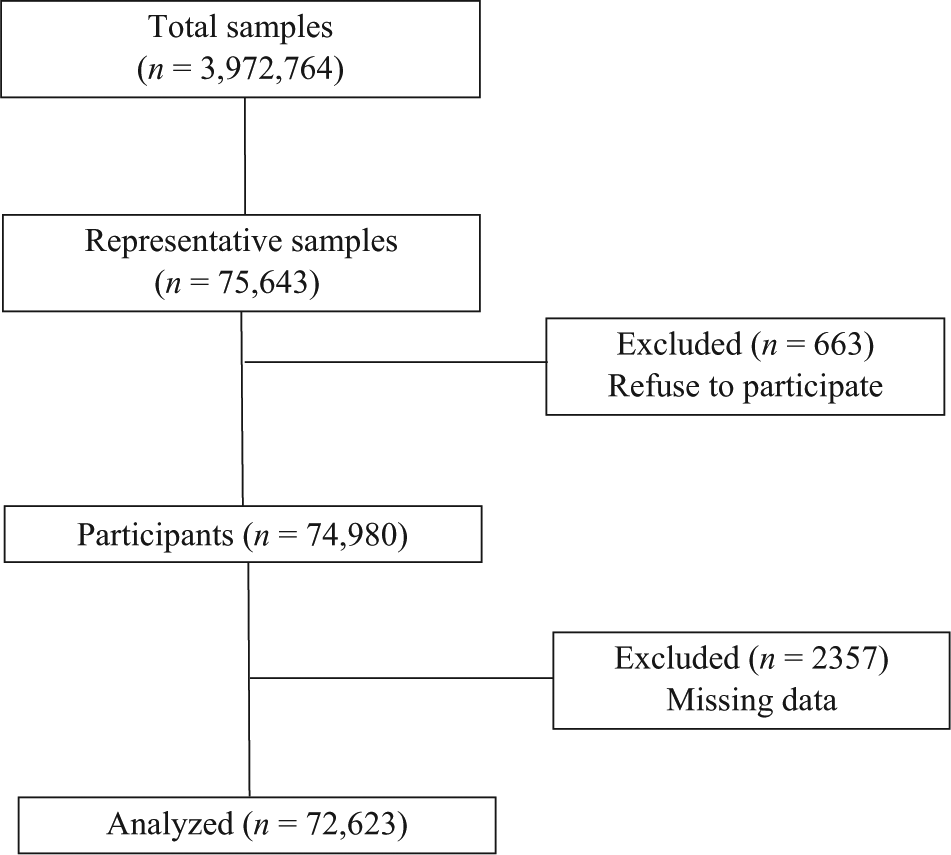
CONSORT diagram for the flow of the present study.
Measures
The sociodemographic factors examined included age, sex, perceived socioeconomic status (SES), and perceived academic performance. Health-related factors were a subjective feeling of depression (‘Have you ever been depressed or down, most of the day, nearly every day, at least for 2 weeks in the past 12 months?’), cigarette smoking, alcohol drinking, perceived general medical condition, and experiences of sexual intercourse. Suicidal ideation was assessed by asking ‘Have you ever seriously thought about committing suicide in the past 12 months?’ and suicide attempt was assessed by asking ‘Have you ever attempted suicide in the past 12 months?’. Suicide attempt was assessed only in respondents who said ‘Yes’ to the suicidal ideation question. Suicide attempters were asked if they had ever used mental health services after the attempt.
Statistical analyses
Simple logistic regressions were employed to determine odds ratios (ORs) and associated confidence intervals (CIs) for suicidal ideation and suicide attempt. Multiple logistic regressions were used to explore the demographic and clinical correlates that independently predict suicidal ideation and suicide attempt. Statistical significance was set at p <0.05 on two-sided tests. All statistical analyses were conducted using SAS version 9.2.
Results
In the past 12 months, 19.1% of adolescents reported experiencing suicidal ideation and the reported suicide attempt rate was 4.9% (Table 1). Female sex was a strong sociodemographic factor predicting suicidal ideation and suicide attempt after controlling for all sociodemographic data. As a total group, adolescents aged 12–15 years were significantly associated with an increased prevalence of suicidal ideation and attempts. However, when examined separately by sex, the age curve showed that there were no significant differences in suicidal ideation according to age (Figure 2A). In addition, the age curve showed that the suicide attempt rate decreased continuously by age in females only, with no age differences in males (Figure 2B). Multiple logistic regression revealed that the prevalence rate for suicide attempt in females started to fall significantly at age 16 (age 16: adjusted OR = 0.66, CI = 0.55−0.80; age 17: adjusted OR = 0.58, CI = 0.47−0.71; age 18: adjusted OR = 0.47, CI = 0.37−0.59; all p’s <0.001). Perceived poor SES was significantly associated with both the highest suicidal ideation and suicide attempt rates (Table 1). Perceived fair or poor academic performance also independently predicted an increased prevalence of suicidal ideation and suicide attempt.
Suicidal ideation and suicide attempt among 72,623 adolescents by sociodemographic characteristics during the past 12 months a .
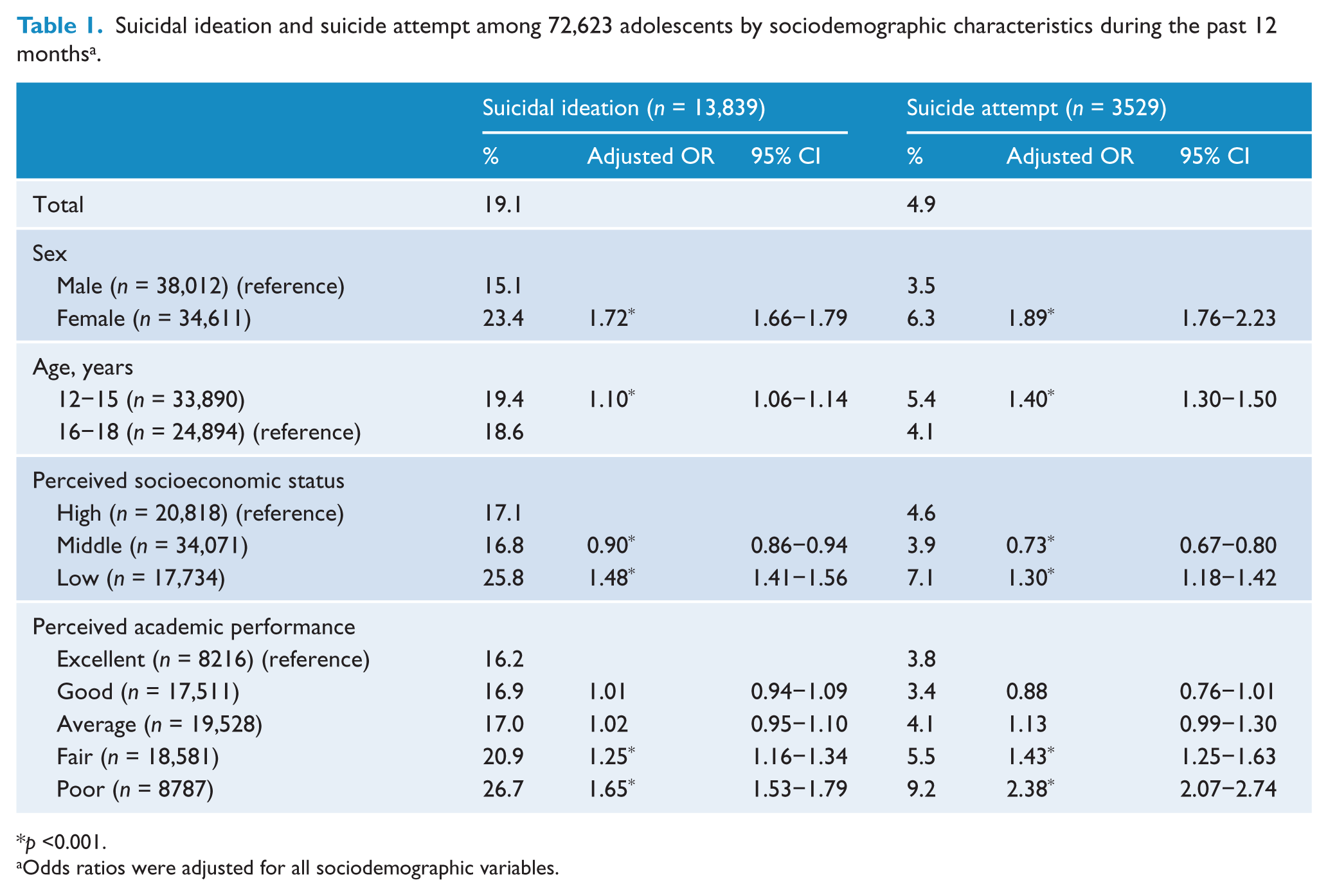
p <0.001.
Odds ratios were adjusted for all sociodemographic variables.
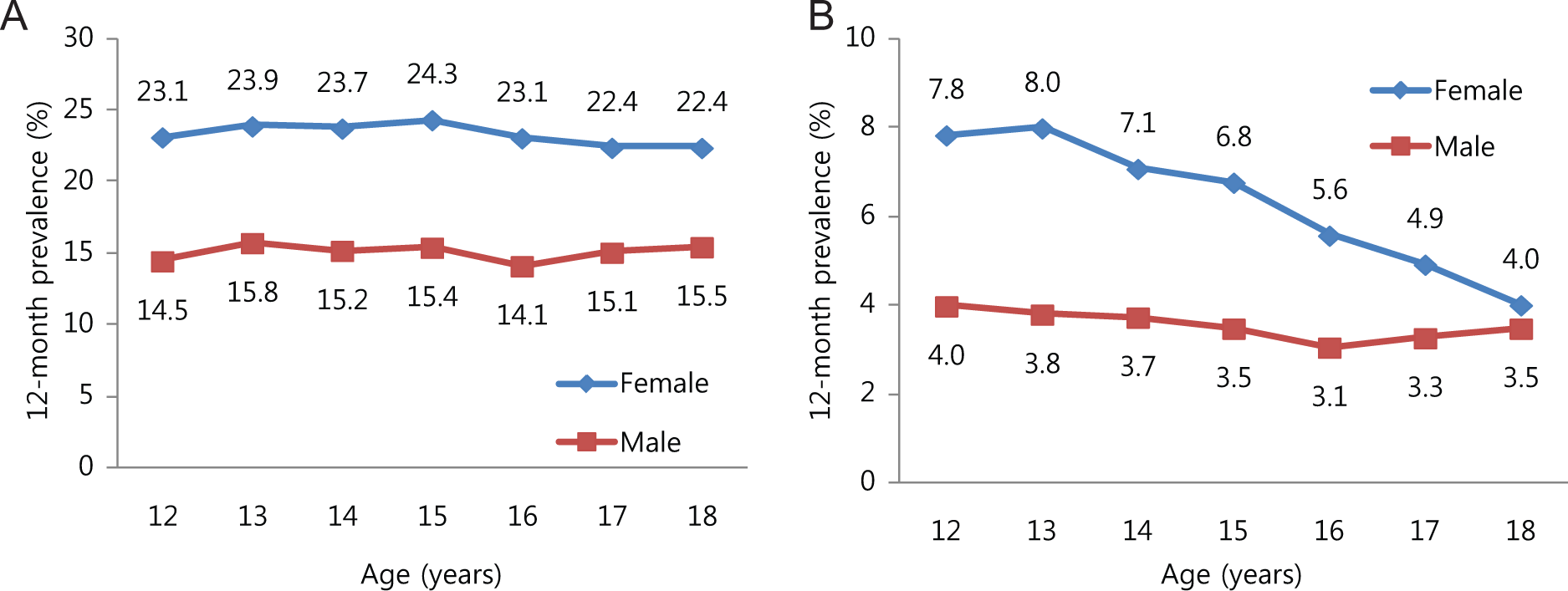
Age curves of suicidal behaviors during the past 12 months according to sex. (A) Suicidal ideation; (B) suicide attempt.
Both suicidal ideation and suicide attempts were strongly associated with a history of subjective feelings of depression (Table 2). Ever-smoker and ever-alcohol user showed higher 12-month prevalence rates in both suicidal ideation and suicide attempt than their respective counterparts. Average or lower perceived overall general medical health was significantly associated with increased rates of suicidal ideation and suicide attempt compared to excellent or good general medical health. Having had sexual intercourse with the opposite or same sex all increased both suicidal ideation and suicide attempt rates.
Suicidal ideation and suicide attempt among 72,623 adolescents by clinical characteristics during the past 12 months a .
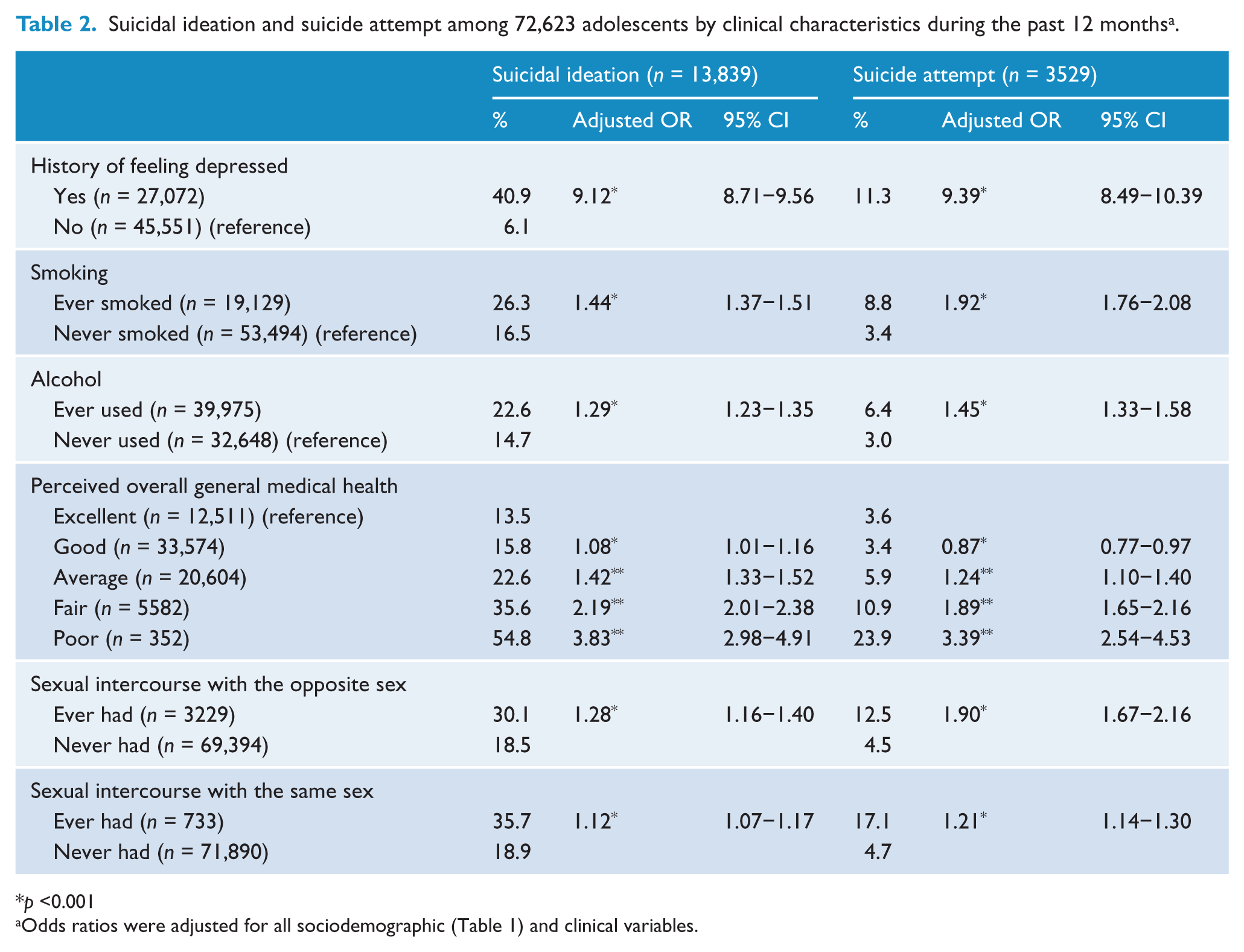
p <0.001
Odds ratios were adjusted for all sociodemographic (Table 1) and clinical variables.
Of the 3529 suicide attempters, 11.6% (n = 410) of adolescents received mental health services after the attempt.
Discussion
Self-reported 12-month prevalences of suicidal ideation and suicide attempt among Korean adolescents were 19.1% and 4.9%, respectively. The rates were much higher than those of other countries (Abell et al., 2012; Dai et al., 2011; Fleming et al., 2007; Husky et al., 2012; Nock et al., 2013). In particular, the prevalence of such suicidal behaviors was much higher in female adolescents (23.4% of suicidal ideation and 6.3% of suicide attempt) than in males. These findings confirm the previous survey finding in 2006 in Korea (Han et al., 2009). Several studies have reported that the peak hazard age of suicidal behaviors is around 15 years (Borges et al., 2008; Fleming et al., 2007; Husky et al., 2012). However, the most striking finding in our study was that the age of peak incidence of suicide attempt in female adolescents was 13 years and the rate continuously decreased with age in contrast to the inverted U-shape of the age curve of suicidal behavior in other studies. Although we did not include children under 12 years old, our data also suggest the possibility of a much higher prevalence of suicidal behaviors in children under 12 compared with other countries. In addition, the suicidal ideation rate in both sexes and suicide attempt rate in male adolescents did not differ according to age. This means that the high rates of suicidal ideation and suicide attempt persist, with little change through the entire period of adolescence in South Korea. This was an unexpected finding, and it is unclear why suicidal behaviors according to age in South Korea show such different patterns compared to other countries. Contributing factors may include the consistently widening gap between the rich and the poor, and socioeconomic deprivation after the financial crisis in 1997, marginalization, and disintegration of the social safety net. However, further extensive studies are warranted to investigate the reason for the distinct pattern of suicidal behaviors among South Korean adolescents.
Perceived low SES was associated with both increased rates of suicidal ideation and suicide attempt. Individuals who perceived their SES as middle reported a decreased frequency of suicidal ideation and suicide attempt compared to those who considered themselves to have a high SES, and the differences in the rates were small. Self-reported levels of academic performance that were fair or poor were associated with an increased prevalence of suicidal behaviors, reflecting the Korean culture of putting enormous importance on academic achievements.
The subjective feeling of depression was the strongest factor that predicted increased odds ratios for both suicidal ideation and suicide attempt. It is well known that mental disorders such as depression are closely related to suicidal behaviors (Hawton and van Heeringen, 2009; Pitman et al., 2012). Although we did not assess the formal diagnosis of major depression, our findings are consistent with previous findings and this suggests the importance of the role of psychiatric disorders in the issue of suicide (Beautrais, 2003; Jeon et al., 2010; Li et al., 2011; Moller-Leimkuhler, 2002). These findings suggest an urgent need for the evaluation and treatment of mental illnesses such as depression to reduce suicidal behaviors in adolescents. A history of smoking or alcohol drinking was also associated with suicidal behaviors, which is consistent with previous reports (Conner and Duberstein, 2004; Malone et al., 2003; Miller et al., 2000). Poorer perceived overall general medical health was associated with suicidal behaviors and this was partly consistent with previous reports (Goodwin and Marusic, 2011; Goodwin and Olfson, 2002; Husky et al., 2012). Individuals who responded as having poor health were at high risk for both suicidal ideation and suicide attempt, with odds ratios of more than 3.0. The underlying mechanisms underpinning the link between perceived general medical health and suicidal behavior are not known. Distorted cognitive styles, negative personality constructs, and decreased quality of life might contribute to the increased risk of suicidal behaviors. A history of sexual intercourse with the opposite or same sex both increased the risk of suicidal behaviors. Homosexual and bisexual orientations are known to be associated with elevated suicidal risks (Korea National Statistical Office, 2011b; Park et al., 2013). However, it is an interesting finding that adolescents who had sexual intercourse with the opposite sex were more likely to show increased odds of 1-year suicidal ideation and suicide attempt than their counterparts. In addition, the odds of suicidal ideation and suicide attempt in this group were larger than those in adolescents who had sexual intercourse with the same sex. Thus, a history of any experience of sexual intercourse should be considered in the evaluation and management of suicidal adolescents.
Quite a small portion of suicide attempters used mental health services. Although the reason is unclear, the stigma of psychiatric treatment in Korea might act as a barrier for such adolescents to receive adequate treatment (Woo et al., 2010). It is also possible that many suicide attempts might have been unrecognized by family members, peers, or teachers.
Several limitations should be mentioned. First, the question about suicide attempt was asked only to adolescents who had reported suicidal ideation. In the present survey, we did not assess self-injurious behaviors in adolescents who denied a history of suicidal ideation. However, several studies have shown that non-suicidal self-injury such as cutting is closely related to suicide attempts (Whitlock and Knox, 2007). Thus, there is a possibility that the rates of suicide attempts in our study were underestimated. Second, because of the self-reporting and cross-sectional design, there is potential for recall bias. Third, we used perceived SES and academic performance only rather than objective ones. Perceived SES is considered to be a kind of identity type akin to gender identity (Ostrove et al., 1999) and has been used to explore health outcomes and health inequalities. Recent studies have repeatedly shown that while perceived SES was influenced by objective SES, perceived SES independently predicted physical or mental health (Demakakos et al., 2008; Goodman et al., 2007). On the other hand, little is known about the effect of perceived SES on suicidal behaviors. Thus, our study might shed light on the exploration of the relationship between them. Further studies comparing the roles of objective and perceived SES on suicidal behaviors are warranted. In terms of academic performance, several studies have reported that perceived academic performance is associated with suicidal behavior in adolescents (Martin et al., 2005; Richardson et al., 2005). In addition, the perception of failure in academic performance has been shown to be an independent indicator of risk of attempted suicide in young adolescents (Richardson et al., 2005). Our results are consistent with the previous reports and suggest that measuring perceived academic performance as well as perceived SES would be an easy and simple way for teachers to assess adolescents in the school context. Fourth, we assessed subjective feelings of depression rather than a formal diagnosis of major depression. Although major depression is a well-known predictor of suicide, subjective feelings of depression are not confined to major depression. However, it would be an amenable and practical way for teachers to assess the suicide risk of their students. Finally, our data on the use of mental health services were limited to suicide attempters who sought mental health services only after the attempts.
The most important implications of our study were that suicide prevention methods in adolescents in South Korea should be different from those of other countries, at least in terms of demographic data including age and sex. First, the most urgent attention should be paid to younger female adolescents in comparison with other countries where adolescents under 15 years show a low prevalence of suicidal behaviors. In addition, suicide prevention should be made for all age ranges of adolescents. Second, our results suggest that a screening and treatment system for mental disorders, including depression, is warranted. Third, it would be possible to educate teachers to assess the suicide risk of their students using several simple questions at school. Finally, the causes of the unique patterns as well as the high prevalences of suicidal behaviors in Korean adolescents are unclear, which suggest that multidisciplinary efforts and studies, including psychiatric, familial and social aspects, are urgently required to solve the problem.
In conclusion, our study confirms that suicide is a complex and multifactorial phenomenon which is related to socioeconomic, cultural, psychiatric, developmental, and sexual factors. The prevention of suicide needs urgent and particular attention in Korea, a nation which is notorious for its highest and consistently increasing suicide rate, and a multidisciplinary approach based on the present data appears to be necessary. Future challenges would include the development of effective prevention and treatment programs.
Footnotes
Funding
This study was funded by the National Evidence-based Healthcare Collaborating Agency (NECA) (project number: NB2012-008).
Declaration of interest
The authors report no conflicts of interest. The authors alone are responsible for the content and writing of the paper.