




Abstract
Objective:
To assess the extent to which ceasing the use of cannabis or other substances reduces the symptoms and social disability associated with psychotic illness.
Methods:
The electronic databases CINAHL, EMBASE, MEDLINE and PsycINFO were searched for peer-reviewed publications in English that report data about the characteristics of current and former substance-using patients diagnosed with psychotic illnesses. The searches yielded 328 articles, of which 23 studies met the inclusion criteria. Four key outcome variables; positive symptoms, negative symptoms, ratings of depression and global function, and five other measures of outcome that were reported in five or more studies were examined using meta-analysis.
Results:
Current substance-using patients were significantly younger than former substance-using patients (standardised mean difference (SMD) = −0.38), but did not differ in age at onset of psychosis, sex, level of education or marital status. Current substance users had higher scores on rating scales of positive symptoms (SMD = 0.29) and depression (SMD = 0.36), and lower scores on global function (SMD = −0.26) when compared with former substance users. There was a significant improvement in the ratings of positive symptoms, mood and global function among patients who stopped using substances during the first episode of psychosis, while improvements in the symptoms of patients with a more established psychotic illness did not reach statistical significance.
Conclusion:
The results suggest that substance use contributes to both the symptoms and the burden of disability experienced by patients with psychosis. Patients in the early stages of psychotic illness should be informed about the benefits of giving up substances earlier, rather than later in the illness. Psychiatric services should regard the treatment of substance use as an integral part of the treatment of psychotic disorders.
Introduction
There is a well-established association between psychosis and substance use. A high prevalence of substance use has been reported in a range of mental health settings (Carra and Johnson, 2009). Patients with schizophrenia are more likely to use substances than members of the wider community (Koskinen et al., 2009a, 2009b), and both mental health surveys (Kavanagh et al., 2004; McMillan et al., 2009; Regier et al., 1990) and prospective cohort studies (Henquet et al., 2005; Moore et al., 2007) have found increased rates of substance use, especially of cannabis, among people with a diagnosis of a psychotic disorder. The adverse effects of substance use by people with a psychotic illness and those in early psychosis have also been widely reported (Korver et al., 2010; Peters et al., 2009). Substance-using patients with schizophrenia are less adherent to medication, are more likely to relapse (Novick et al., 2010; Perkins et al., 2008; Turkington et al., 2009) and are more likely to be violent (Elbogen and Johnson, 2009; Fazel et al., 2009; Yee et al., 2011) when compared with those who do not use substances.
There are many studies comparing substance-using patients with those who have never used substances (Barnes et al., 2006; Hambrecht and Hafner, 1996; Mauri et al., 2006; Pencer and Addington, 2003; Sorbara et al., 2003; Talamo et al., 2006; Wade et al., 2006b; Wade et al., 2007). However, there could be significant pre-existing differences between substance-using patients and those who have never used substances. For example, patients with schizophrenia who use cannabis are reported to have less cognitive impairment than patients who have not used cannabis (Yucel et al., 2010). A comparison of former and current substance users is less likely to be confounded by pre-existing between-group differences.
Ideally, a study of the effect of giving up substance use on the course of psychosis would examine individual patients before and after the cessation of substances, and would compare those patients with the progress of matched control groups of patients who continued to use substances and with non-substance users. To date, there have been no published studies of this kind. However, there are some studies comparing the characteristics of current and former substance-using patients. These studies typically report small numbers of former substance users and they might have missed true improvements because of a lack of statistical power (type II error). Meta-analysis can overcome statistical weakness arising from the small sample sizes of individual studies.
We aimed to use meta-analysis to compare the characteristics of former and current substance-using patients with a psychotic illness. The specific null hypotheses were that groups of former and current substance users with a psychotic illness would not differ in ratings of the key outcomes of: (i) positive symptoms; (ii) negative symptoms; (iii) depressive symptoms; and (iv) global function. We examined a range of demographic and diagnostic differences between current and former substance users with a psychotic illness and other outcomes reported in five or more studies.
Methods
The methods were based on the Preferred Reporting Items for Systematic Reviews and Meta-Analyses (PRISMA) guidelines (Liberati et al., 2009).
Searches
Systematic searches of the electronic databases CINAHL, EMBASE, MEDLINE and PsycINFO were conducted for publications in English comparing the characteristics of patients with a psychotic illness who reported the use of a psychoactive substance (other than tobacco and caffeine) with the characteristics of patients with a psychotic illness who had no history of substance use (Figure 1). These papers were further examined for the subset of papers that compared the characteristics of patients with former and current substance use. We included cross-sectional studies reporting substance-use histories and longitudinal studies reporting cohorts of substance-using and former substance-using patients measured at baseline and re-assessed at a later date. The results of our searches were cross-checked with the reference list of a recent systematic narrative review of substance use and outcome in first-episode psychosis (Wisdom et al., 2011). In addition, the references of the included studies were hand-searched for other relevant studies.
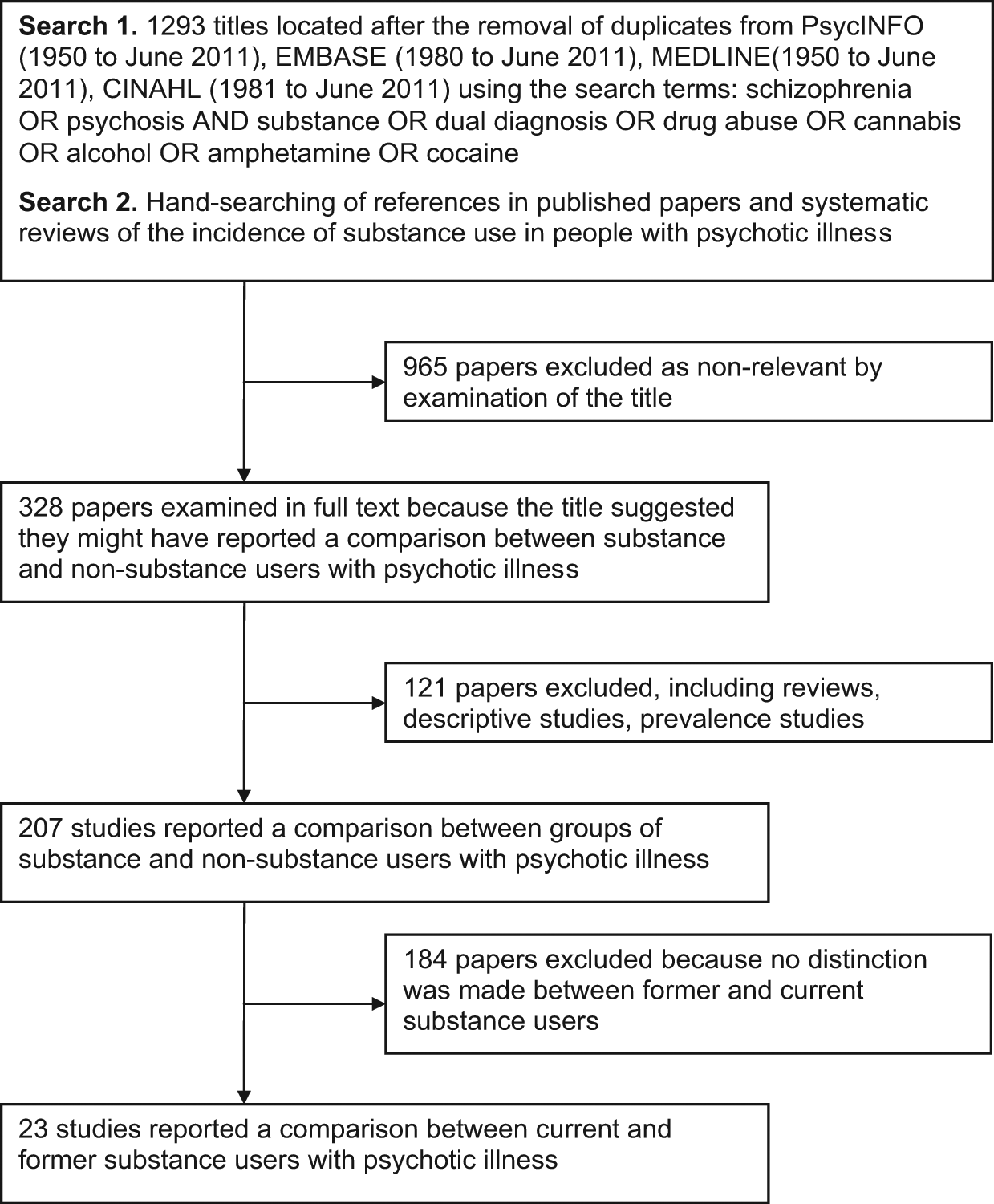
Flow chart of search strategies and results.
Definition of substance use
The studies meeting the inclusion criteria used a range of definitions of substance use. However, in all the studies, the level of substance use was considered to be clinically significant and in many studies the threshold for inclusion was the diagnosis of a substance-use disorder. We included studies that considered the use of all forms of substances, including alcohol, cannabis and other psychoactive drugs, as well as studies that specifically examined cannabis or stimulant use. None of the studies used tobacco smoking or caffeine use as a threshold criterion for substance use.
Data extraction
KM, PG and ML independently extracted the following data:
diagnostic criteria of included patients, the substances examined, and the number of former and current substance-using patients;
demographic details of both groups – age, age at onset of psychosis, sex, level of education and marital status;
measures of the three key symptom outcomes – positive psychotic symptoms, negative symptoms and symptoms of depression;
measures of global function in current and former substance-using groups;
other outcomes – symptoms of general psychopathology and total symptom scores, hospital admissions, self-harm, violent behaviour and other illegal conduct.
Meta-analysis
Variables reported in fewer than five studies were excluded from the meta-analysis in order to ensure that a random effects meta-analysis had adequate statistical power to detect true differences between substance-using and former substance-using groups (to minimise the risk of missed true associations or type II errors) (Borenstein et al., 2009). This approach also reduces the likelihood of chance findings (type I errors) that might result from reporting bias in original studies and allows a more reliable estimate of between-study heterogeneity. The significance of the four key outcome measures (positive symptoms, negative symptoms, symptoms of depression and global function) was examined using a Bonferroni adjustment from p < 0.05 to p < 0.0125 for each test to further limit the possibility of type I errors.
Comprehensive Meta-Analysis (CMA) (Version 2; Biostat, Englewood, NJ, USA) was used to convert all continuous data into a standardised mean difference (SMD) or ‘d’ and was also used to calculate pooled effect sizes, to assess heterogeneity and to assess the possibility of publication bias. Categorical data were analysed using meta-analysis of odds ratios. Between-study heterogeneity was assessed with I-square statistics. Between-study heterogeneity was classified as low if the I-square was below 25, moderate for I-squares between 25 and 50, and high if the I-square was above 75% (Higgins et al., 2003). Between-subgroup heterogeneity in effect sizes was examined using the Q-value statistic and a significance level of 0.05. The possibility of publication bias was examined using funnel plots of the four key outcomes, and by calculation of a classic failsafe N.
A pooled estimate for the effect size for each variable was calculated using a random-effects model. A random effects analysis was chosen on an a priori basis because of likely between-study differences in the inclusion criteria and measures of symptoms and disability.
Substance use and measures of illness severity were expressed as positive scores. A positive effect size indicated worse symptoms or worse function in the group of current substance users when compared to former substance users. For measures of overall or global function, a negative effect size indicated worse outcomes for those with current substance use.
Three subgroup analyses were performed to explore between-study heterogeneity that might have arisen from:
differences in the definition of ‘substance use’; more specifically, any substance use compared to substance use defined by the use of cannabis;
whether the studies were conducted in cohorts of patients with first-episode psychosis;
differences in overall study quality.
Assessment of study quality
Each study was rated for the overall quality of its methods using an eight-point scale (see data supplement, Table DS1). Studies of patients with schizophrenia-related psychosis were regarded as being of greater quality than those examining a mix of patients with affective and non-affective psychoses because differences in the prognosis of the two diagnostic groups might obscure improvements due to cessation of substances. Studies examining consecutive presentations and those with a participation rate of over 50% were also regarded as being of higher quality. Studies with a large sample of former substance users were regarded as being of higher quality because of the reduced probability of chance findings, as were longitudinal studies, where the longer-term benefits of cessation of substances might be more evident. Studies were also accorded a point for quality for using structured and recognized measures of substance use, psychosis and outcome. Studies with a score of six or more were classified as high quality.
Results
Searches, data extraction and selection of variables for meta-analysis
The electronic searches and the hand searches of references identified 328 potentially relevant papers. KM and ML examined all 328 papers in full text because the abstracts proved to be an unreliable guide to the presence of data comparing former and current substance users (Figure 1). Twenty-three papers met the inclusion criteria (Table 1).
Studies reporting the characteristics of current and former substance-using patients with psychosis.
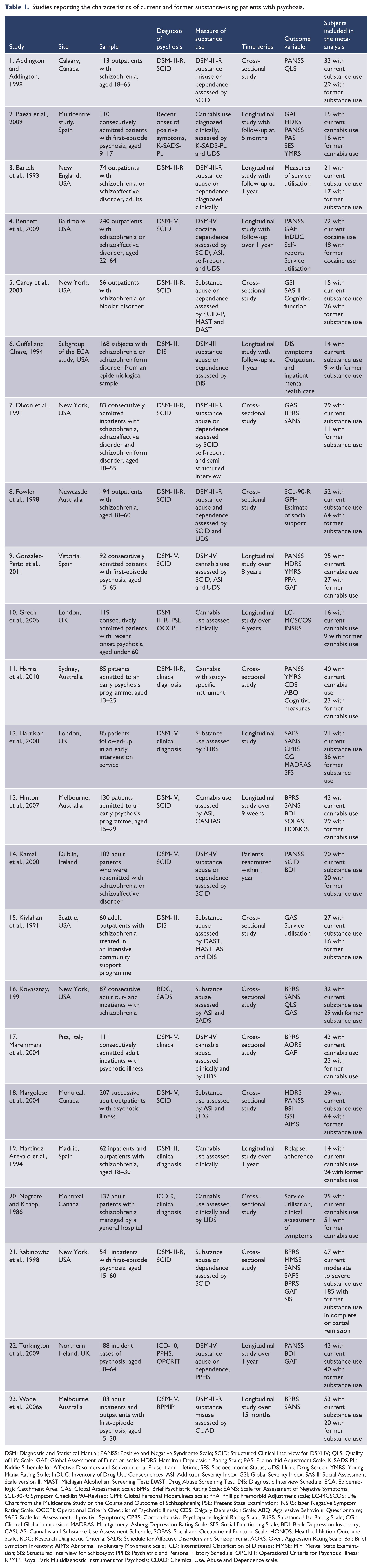
DSM: Diagnostic and Statistical Manual; PANSS: Positive and Negative Syndrome Scale; SCID: Structured Clinical Interview for DSM-IV; QLS: Quality of Life Scale; GAF: Global Assessment of Function scale; HDRS: Hamilton Depression Rating Scale; PAS: Premorbid Adjustment Scale; K-SADS-PL: Kiddie Schedule for Affective Disorders and Schizophrenia, Present and Lifetime; SES: Socioeconomic Status; UDS: Urine Drug Screen; YMRS: Young Mania Rating Scale; InDUC: Inventory of Drug Use Consequences; ASI: Addiction Severity Index; GSI: Global Severity Index; SAS-II: Social Assessment Scale version II; MAST: Michigan Alcoholism Screening Test; DAST: Drug Abuse Screening Test; DIS: Diagnostic Interview Schedule; ECA; Epidemiologic Catchment Area; GAS: Global Assessment Scale; BPRS: Brief Psychiatric Rating Scale; SANS: Scale for Assessment of Negative Symptoms; SCL-90-R: Symptom Checklist 90–Revised; GPH: Global Personal Hopefulness scale; PPA, Phillips Premorbid Adjustment scale; LC-MCSCOS: Life Chart from the Multicentre Study on the Course and Outcome of Schizophrenia; PSE: Present State Examination; INSRS: Iager Negative Symptom Rating Scale; OCCPI: Operational Criteria Checklist of Psychotic Illness; CDS: Calgary Depression Scale; ABQ: Aggressive Behaviour Questionnaire; SAPS: Scale for Assessment of positive Symptoms; CPRS: Comprehensive Psychopathological Rating Scale; SURS: Substance Use Rating Scale; CGI: Clinical Global Impression; MADRAS: Montgomery–Asberg Depression Rating Scale; SFS: Social Functioning Scale; BDI: Beck Depression Inventory; CASUAS: Cannabis and Substance Use Assessment Schedule; SOFAS: Social and Occupational Function Scale; HONOS: Health of Nation Outcome Scale; RDC: Research Diagnostic Criteria; SADS: Schedule for Affective Disorders and Schizophrenia; AORS: Overt Aggression Rating Scale; BSI: Brief Symptom Inventory; AIMS: Abnormal Involuntary Movement Scale; ICD: International Classification of Diseases; MMSE: Mini Mental State Examination; SIS: Structured Interview for Schizotypy; PPHS: Psychiatric and Personal History Schedule; OPCRIT: Operational Criteria for Psychotic Illness; RPMIP: Royal Park Multidiagnostic Instrument for Psychosis; CUAD: Chemical Use, Abuse and Dependence scale.
The 23 studies reported a total of 1565 current and former substance-using patients. This figure comprised 749 (47.9%) patients with current substance use (mean sample size of 32.6 per study, standard deviation (SD) 16.6) and 816 (52.1%) former substance-using patients (mean of 30.5 per study, SD 36.1).
Most studies used well-established measures of illness severity in current and former substance-using groups (Table 1):
nine used the Positive and Negative Syndrome Scale;
five used the Brief Psychiatric Rating Scale;
three used the Scale for the Assessment of Positive Symptoms;
five used the Scale for the Assessment of Negative Symptoms;
three used the Beck Depression Inventory;
two studies used the Hamilton Depression Rating Scale.
Most studies compared current and former substance users at a single point in time. A smaller number provided data at baseline and at follow-up of current and former substance users (Gonzalez-Pinto et al., 2011; Turkington et al., 2009). No study reported repeated measures in substance users before and after the cessation of substance use. Of the studies that reported data measured at more than one point in time, the latest data were used. Hence the meta-analysis included only cross-sectional data.
There were disagreements in 22 of 862 data points (2.5%) extracted independently by KM and PG. ML performed a third independent data extraction, and the remaining discrepancies were resolved by re-examination and consensus between ML and KM.
A total of 15 variables were reported in five or more studies. These included five demographic and a diagnostic variable (age, age at onset of psychosis, sex, marital status, years of education, proportion with a schizophrenia-related psychosis), four key outcome measures (positive symptoms, negative symptoms, depressive symptoms and global function) and five other outcomes (general psychopathology score, total symptom scores, self-harm, episodes of violence or criminal convictions and number of hospital admissions). Details of variables reported in two, three or four studies were excluded from the meta-analysis, but can be found in supplementary materials (see data supplement, Table DS2).
Eight studies reported on current and former cannabis users, 14 used a broader definition of ‘any substance use’ and one study examined use of cocaine. However, many of the cocaine-using subjects in that study used other drugs, and the sample was included in the meta-analysis as ‘any substance use’. Ten studies examined current and former substance users among first-episode psychosis patients. There were insufficient data to examine current and former users of alcohol or stimulants.
Ten studies were rated as being of high quality, with a score of more than six on our quality assessment scale, but every study had at least two features indicating they were of higher quality and no study was excluded from the meta-analysis (see data supplement, Table DS1).
Meta-analysis
The only significant difference between former and current substance users in demographic data was that current substance users were significantly younger than former users (SMD = −0.38), corresponding to a difference in mean ages of approximately 2.2 years. There were no significant differences between former and current substance users with respect to sex, years of education, marital status, or age at onset of psychosis. The two groups did not differ in the proportion of patients with a schizophrenia-related psychosis.
With respect to the four key variables, former substance users had significantly lower scores in measures of positive symptoms and depression after the Bonferroni correction. Former substance users had better global function than current substance users before a Bonferroni correction. There was no significant difference between current and former substance-using groups in negative symptom severity. Former substance users also had significantly lower total symptom scores than current users, but this observation was not considered to be independent of its component positive and negative symptoms scores.
There were no significant differences in other measures of illness severity, including general psychopathology or hospital admissions. There was also no difference in the incidence of violent or illegal conduct (presumably other than illicit drug use) or in the frequency of self-harm (Table 2; further details in data supplement, Table DS2).
Meta-analysis of factors associated with current substance use in psychotic illness when compared to those with previous substance use.
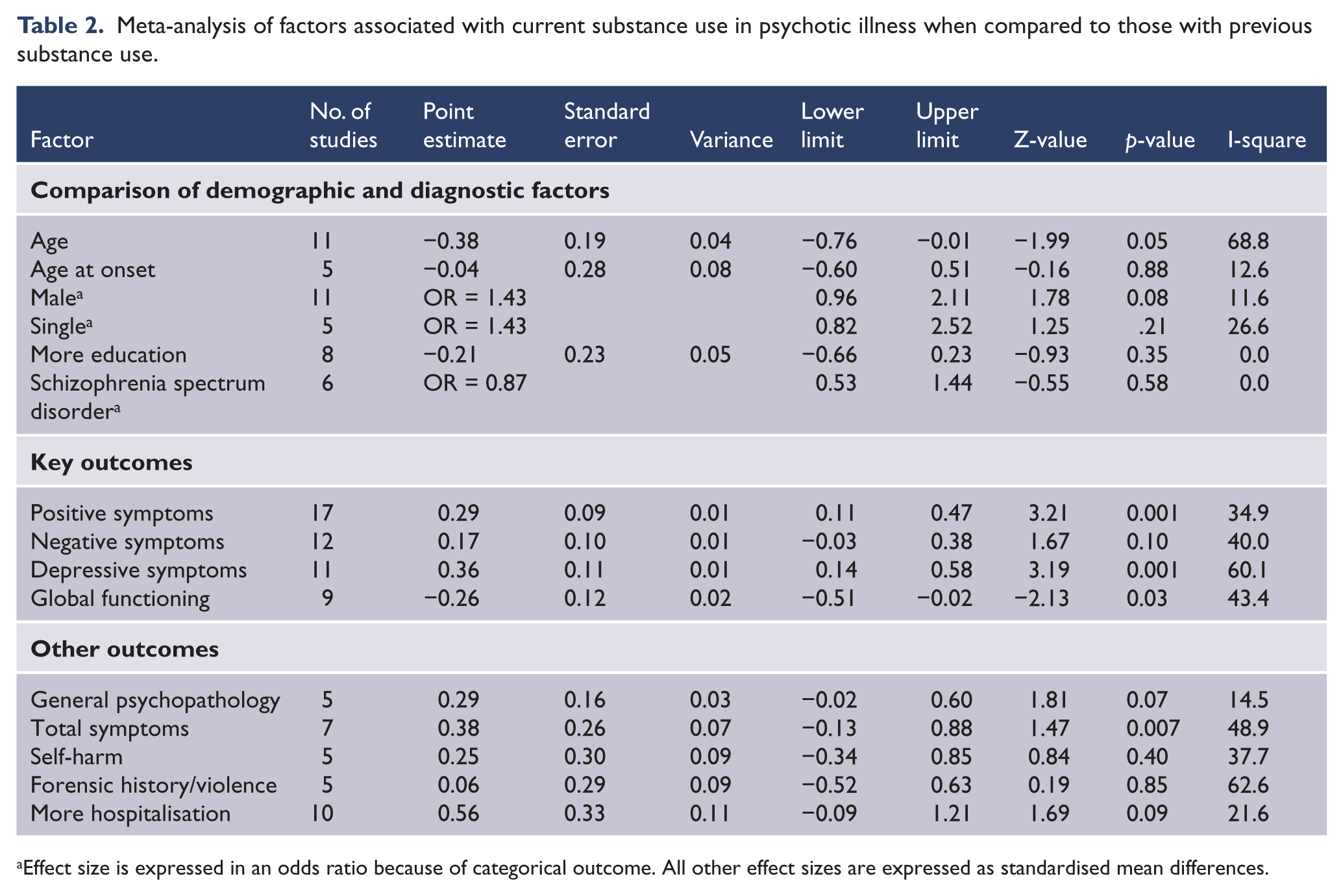
Effect size is expressed in an odds ratio because of categorical outcome. All other effect sizes are expressed as standardised mean differences.
Investigation of between-study heterogeneity
There was moderate between-study heterogeneity for most variables, including positive symptoms, negative symptoms and global function (I-square statistic between 25 and 50). Between-study heterogeneity for depressed mood was high (I-square > 50), indicating large differences in the results between studies. A sensitivity analysis of effect sizes for positive symptoms and global function after an examination of the forest plots found that no individual study, or pair of studies, contributed significantly to between-study heterogeneity. The between-study heterogeneity in symptoms of depression was largely due to a single study (Baeza et al., 2009) and this study was identified as an outlier using a funnel plot of variance and effect size. The recalculated effect size for the remaining 10 studies was SMD = 0.28 (95% CI, 0.12–4.39, Z = 3.38, p = 0.001, I-square = 0.0). No other studies were identified as outliers using funnel plots of variance versus effect size for positive symptoms and global function. The classic failsafe N, indicating the number of hypothetical studies with an effect size of zero needed to return p to > 0.05, was 65 for positive symptoms, 48 for depressive symptoms, and 9 for global function.
Sources of between-study heterogeneity were further examined by the analysis of three subgroups: (i) first-episode versus non-first episode; (ii) cannabis use versus other substance use; and (iii) the high-quality studies compared to the other studies.
First-episode psychosis and non-first episode subgroups
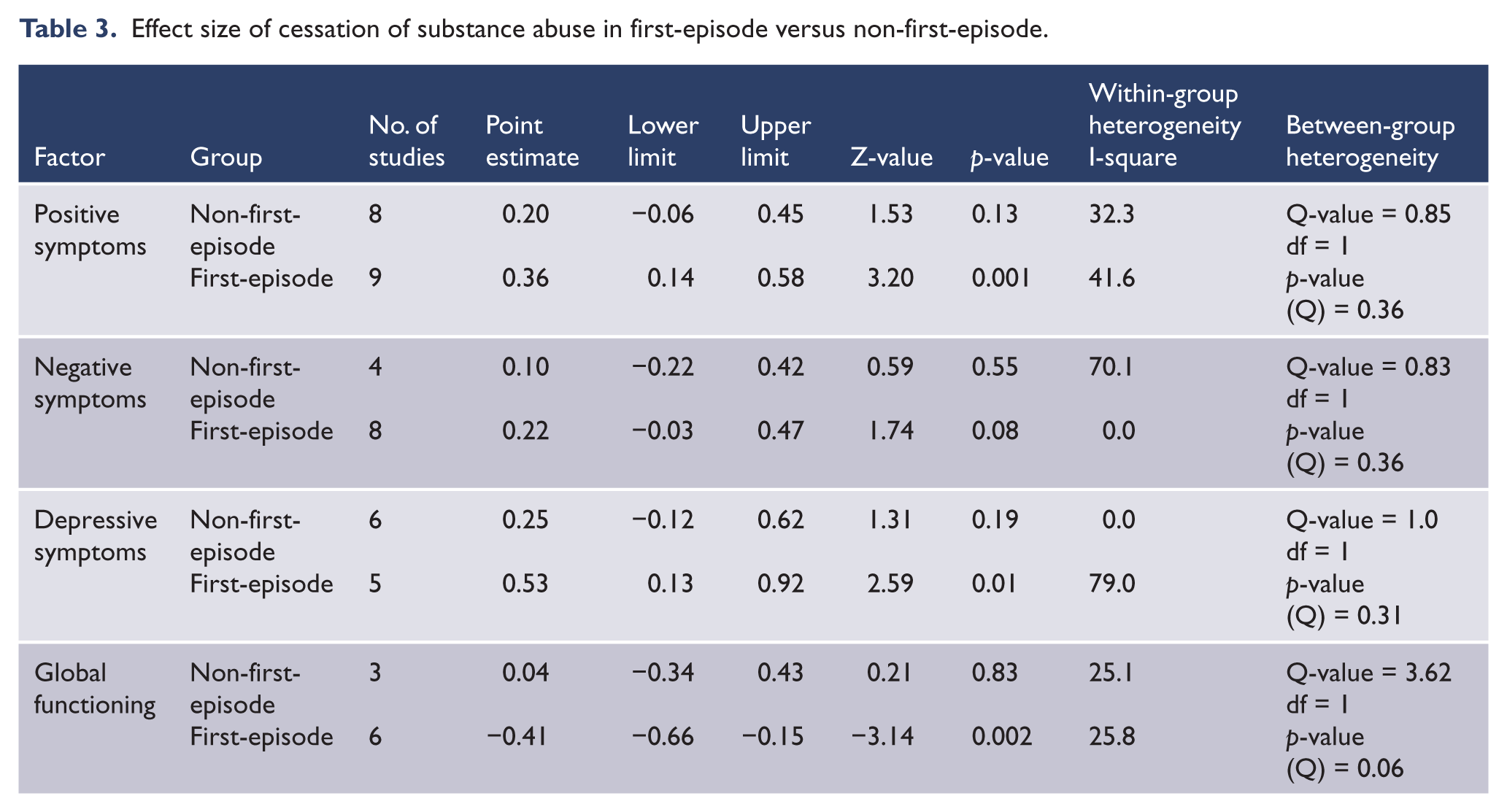
First-episode psychosis, as a subgroup, made no significant contribution to the between-study heterogeneity of the effect size for negative symptoms, positive symptoms, symptoms of depression, or psychosocial disability. However, first-episode psychosis patients who were current substance users had significantly worse positive symptoms, depression and overall function than first-episode patients who had stopped substance use (Table 3). Non-first-episode patients who were current substance users did not differ from former substance users in ratings of positive symptoms, negative symptoms, depressive symptoms or global function.
Effect size of cessation of substance abuse in first-episode versus non-first-episode.
Substance use defined by use of cannabis, or by the use of any substance
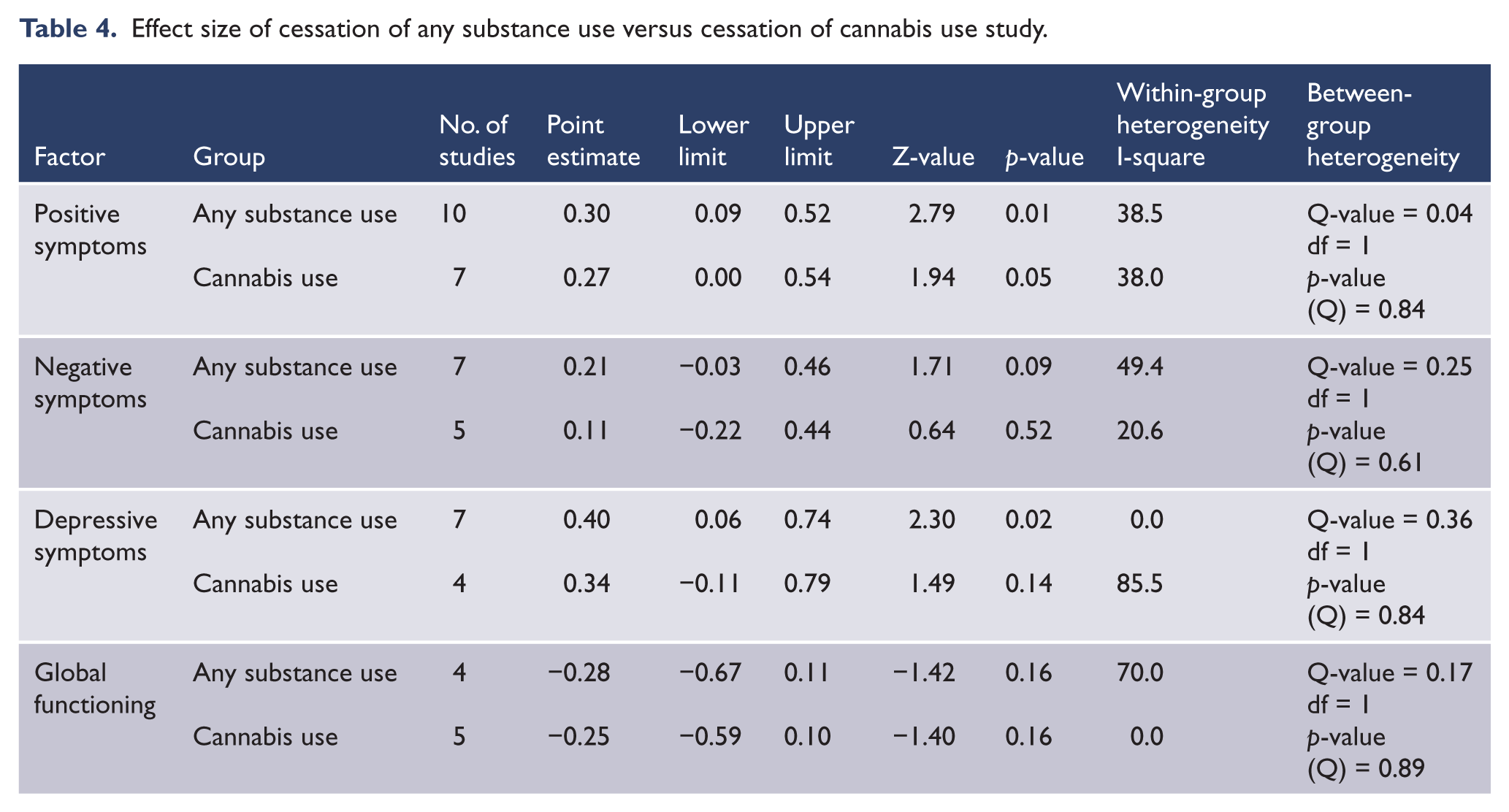
There was a trend towards current cannabis users having more positive symptoms when compared to former cannabis users (Table 4). However, there were no differences between former and current cannabis users in negative symptoms, symptoms of depression and global function. When compared with current users of any substance, former users of any substance had significant improvements in positive symptoms and symptoms of depression, but not in negative symptoms or in global function. Cannabis use as a subgroup did not significantly contribute to between-study heterogeneity in the effect size for positive, negative, or depressive symptoms or for measures of global function.
Effect size of cessation of any substance use versus cessation of cannabis use study.
Higher quality versus other studies
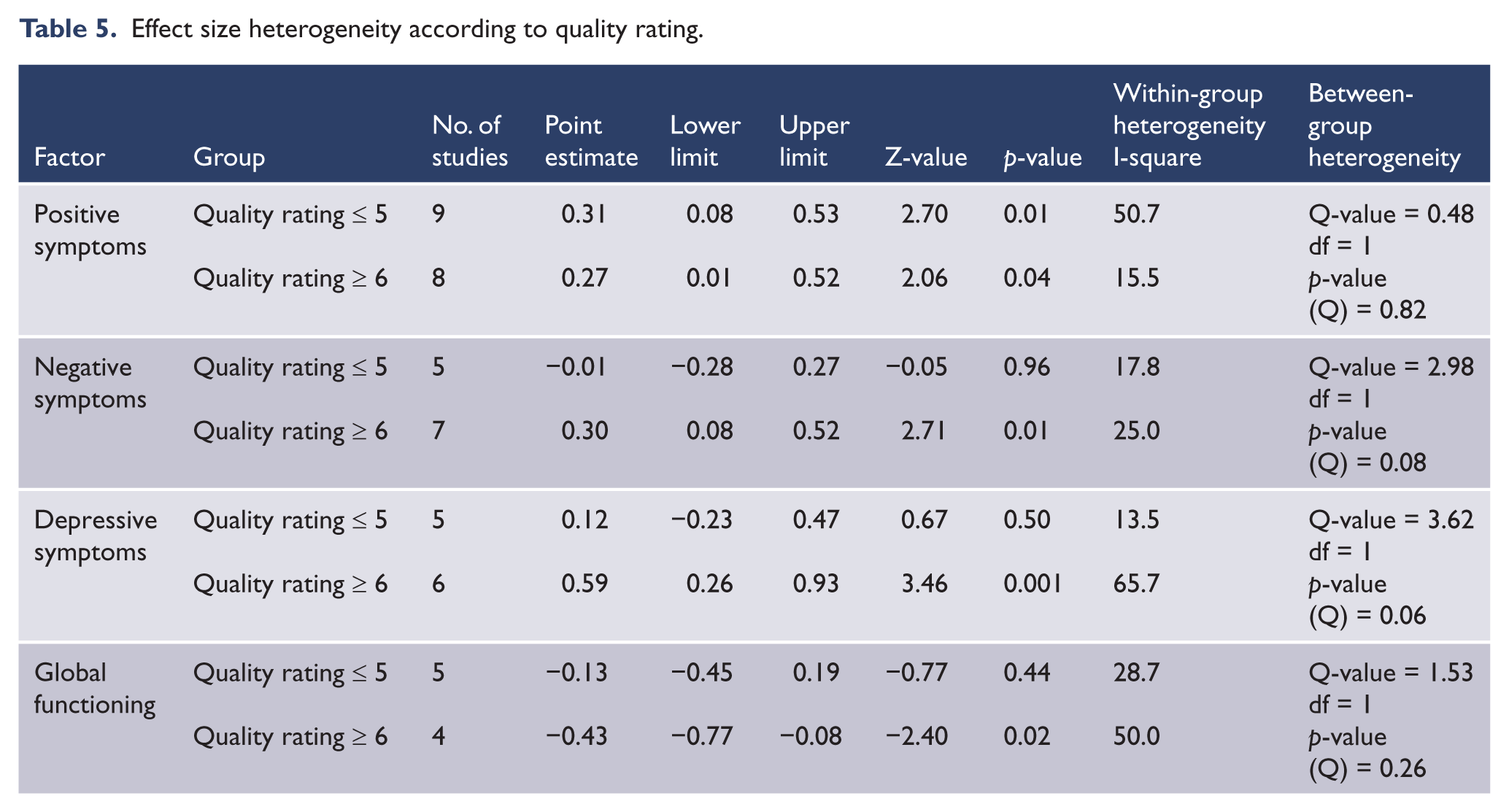
In higher-quality studies, former substance users had significant improvement in positive symptoms, negative symptoms, depressive symptoms and global function when compared to current substance users. In studies not classified as high quality, former substance users had higher positive symptom scores than current substance users (Table 5). Higher-quality studies as a subgroup did not significantly contribute to between-study heterogeneity in the effect size for positive, negative, or depressive symptoms or for levels of global function.
Effect size heterogeneity according to quality rating.
Discussion
Studies that reported current and former substance users with psychotic illness report about the same number of patients in each group, suggesting that many patients can become abstinent. The main finding of this study was that current substance users with psychotic illness had more positive symptoms, more symptoms of depression and lower levels of overall function than former substance users. A subgroup analysis of the high-quality studies suggested more generalized gains associated with the cessation of substance use, with a significant improvement of negative symptoms and a greater degree of improvement in depressed mood and global function in high-quality studies compared to lower-quality studies. The effect sizes of SMD = 0.3–0.5 that we found can be classified as moderate in size (Cooper et al., 2009) and are likely to represent important clinical improvements in former substance users. Our results are generally consistent with those of earlier studies that found that patients with substance use and psychosis have a worse outcome than those with psychosis alone (Barnes et al., 2006; Hambrecht and Hafner, 1996; Mauri et al., 2006; Pencer and Addington, 2003; Sorbara et al., 2003; Talamo et al., 2006; Wade et al., 2006b; Wade et al., 2007). Our results support the suggestion that the worse outcomes experienced by substance users with psychosis are mainly related to substance use, but they do not exclude the possibility that there might be important pre-existing differences between substance-using and non-substance-using patients.
We were unable to conclusively demonstrate a greater improvement in symptoms and function after cessation of substance use among first-episode psychosis patients compared to patients with established psychotic illness. However, there were statistically significant improvements in positive symptoms, depression and global function among first-episode patients who stopped using substances when compared to similar first-episode patients who continued substance use. In contrast, we could not demonstrate significant differences in the symptoms and global function of current and former substance users with more established psychosis. This suggests not only that current substance use contributes to the severity of symptoms, but that the first-episode psychosis is a time when giving up substances might be most beneficial. Substance use by people with psychotic illness, if adopted as a form of ‘self-medication’ to mitigate the effects of illness, is clearly a maladaptive response to symptoms because it is clear that substance use makes symptoms worse. This includes the subjective symptoms of depression. However, the results do not exclude the possibility that some patients may find immediate relief from some symptoms (e.g. anxiety), only to experience more severe symptoms in the medium or longer term, but are unable to see the connection between current substance use and the subsequent exacerbation of symptoms.
Meta-analysis of the available studies did not show a significant reduction in positive symptoms after cessation of substances among patients with established psychosis. A larger effect on positive symptoms after stopping some substances might have emerged if more studies reported the effect of ceasing specific substances, rather than an overall measure of substance use that included substances not strongly associated with positive symptoms, such as alcohol and opiates.
The failure to show significant improvement in former substance users with established illness might also be due to the limitations of cross-sectional methods, because the few studies that did examine changes in symptom patterns over time in current and former substance users showed substantial improvements in the symptoms of patients who gave up substances (Gonzalez-Pinto et al., 2011; Turkington et al., 2009). This meta-analysis was limited by the small number of longitudinal studies and the modest number of studies rated as high quality. However, it is also quite possible that failure to demonstrate differences in symptoms between current and former substance users with an established non-first-episode psychosis is simply because cessation of substances has less effect on symptoms later in the course of psychotic illness.
Another limitation of this meta-analysis stems from differences in the definition of ‘substance use’. It is possible that the heterogeneity in the outcomes was due to differences in the types or amounts of substances used. For example, the non-significant reduction in symptoms among those who stopped using cannabis might have been because some patients continued to use other drugs. It is also unclear whether there is a threshold at which the use of various substances becomes harmful because of their effect on the symptoms of psychotic illness, or whether any use of some drugs is harmful (and is hence sufficient to meet the criteria for a substance abuse disorder).
The study raises the question of the design of future studies of intervention in dual-diagnosis patients. There is little evidence that treatment for substance use in general, and for cannabis use in particular, can bring about sustained abstinence among patients with psychotic disorders (Baker et al., 2010). This seems to be true for patients with first-episode psychotic disorders who might benefit most from substance use cessation. However, studies that measure symptoms before and after cessation might also be able to demonstrate the effect of substance use interventions and the effect of medical advice about substance use. Such studies are feasible because it appears from the studies included in this meta-analysis that about half of substance-using patients with psychosis do stop using substances, often in the early stages of psychosis. The ability of some patients to cease using substances and the disappointing results of interventions aimed at reducing substance use is something of a paradox. It might be that many of the patients who are likely to respond to interventions stop substance use themselves, or on medical advice, before they are considered for recruitment into intervention trials. Hence, trial results are subject to a form of selection bias towards patients with difficulty giving up substance use. Although the natural history of substance use in psychosis might be better than intervention studies suggest, an important proportion of substance users do not stop of their own accord and present significant therapeutic challenges. There is a need for innovation in treatments aimed at reducing substance use in psychosis for these patients. It may be that there are important lessons to be learned about substance-use cessation from those patients who do give up. In any event, traditional clinical approaches and newer interventions to persuade people with psychosis to stop using substances might be most effectively directed towards first-episode psychosis patients and those at high risk (Machielsen et al., 2010; Stain et al., 2010). These are phases of psychotic illness when cessation of substance use seems to have the greatest effect.
The results indicate that first-episode patients will have fewer positive symptoms, will feel better and will function better after ceasing substances, even if there is only a modest improvement in negative symptoms. In the light of evidence that cannabis use is associated with an earlier onset of psychotic illness (Compton et al., 2009; Large et al., 2011), reducing substance use among high-risk groups, as well as in first-episode patients, could have a significant effect on the incidence and course of psychosis. Hence, the treatment of substance use among patients must itself be viewed as a treatment for psychosis rather than just as a treatment of a comorbid condition. Because medications and psychosocial treatments do not bring about a full remission from symptoms in every patient, any treatment that is successful in reducing the use of substances would have an important role in recovery from psychosis.
Finally, this study highlights the need for further high-quality research to examine differences among subgroups of substance-using patients, the effects of specific substances, and to establish which treatments have the greatest effect. Any treatment that is shown to be effective should be provided to patients with chronic psychotic disorders and first-episode patients, and also to those at most risk of developing a psychotic illness.
Footnotes
Acknowledgements
We thank Dr Peter Arnold for his assistance with the manuscript.
Funding
This research received no specific grant from any funding agency in the public, commercial or not-for-profit sectors.
Declaration of interest
The authors report no conflicts of interest. The authors alone are responsible for the content and writing of the paper.
Authors’ contribution
Dr Large has full access to all the data and takes responsibility for the integrity of the data and the accuracy of the data analysis; study concept and design: Large; acquisition of data: Large, Mullin, Gupta, Harris; analysis and interpretation of data: Large, Compton, Nielssen, Harris; drafting of the manuscript: Large, Nielssen, Compton, Mullin, Gupta; critical revision of the manuscript for important intellectual content: Compton, Harris, Nielssen; statistical analysis: Large; administrative, technical, or material: Large; study supervision: Large.
Online supplemental information
Table DS1. Quality assessment of included studies.
Table DS2. Data points reported in two or more studies comparing the characteristics of current and former substance users with psychosis.
References
Supplementary Material
Please find the following supplemental material available below.
For Open Access articles published under a Creative Commons License, all supplemental material carries the same license as the article it is associated with.
For non-Open Access articles published, all supplemental material carries a non-exclusive license, and permission requests for re-use of supplemental material or any part of supplemental material shall be sent directly to the copyright owner as specified in the copyright notice associated with the article.
