




Abstract
Objective
Inflammatory processes that occur in subjects with obstructive sleep apnoea syndrome may contribute to progressive atherosclerosis and increased cardiovascular and cerebrovascular morbidity. Meteorin-like protein, which is also known as subfatin, is transcribed similarly to meteorin protein. Meteorin-like alleviates skeletal muscle inflammation. We aimed to investigate the serum meteorin-like status of obstructive sleep apnoea syndrome subjects and determine the potential link between serum meteorin-like concentration with the presence and severity of obstructive sleep apnoea syndrome.
Methods
The obstructive sleep apnoea syndrome group was composed of 207 obstructive sleep apnoea syndrome subjects diagnosed via polysomnography. A total of 106 healthy volunteers without clinical symptoms of obstructive sleep apnoea syndrome were recruited as the control group. Blood samples were obtained from all subjects to evaluate the serum meteorin-like concentrations via enzyme-linked immunosorbent assay method.
Results
Decreased serum meteorin-like concentration was found in obstructive sleep apnoea syndrome subjects compared with the controls. Serum meteorin-like concentration was associated with a reduced OR for having obstructive sleep apnoea syndrome (OR 0.97, 95% CI 0.961 to 0.98; P < 0.001). Severe obstructive sleep apnoea syndrome subjects showed significantly lower meteorin-like concentration compared with mild and moderate cases. Moderate subjects exhibited decreased serum meteorin-like concentration compared with mild cases. Pearson correlation analysis revealed that serum meteorin-like concentration was negatively correlated with obstructive sleep apnoea syndrome severity. Serum meteorin-like concentration negatively correlated with body mass index, low-density lipoprotein cholesterol, apnoea–hypopnea index, number of arousals, hypopnoea and apnoea in subjects with obstructive sleep apnoea syndrome.
Conclusion
Serum meteorin-like concentration is inversely correlated with the presence and severity of obstructive sleep apnoea syndrome.
Introduction
Obstructive sleep apnoea syndrome (OSAS) is a highly prevalent disease with the characteristic of repetitive upper airway obstruction resulting in intermittent hypoxia. 1 The prevalence of OSAS is approximately 3%–7% in adult men and 2%–5% in adult women. 2 OSAS subjects show an increased risk of cardiovascular and cerebrovascular conditions and events, leading to increased morbidity and mortality.3,4 Inflammatory processes that occur in OSAS subjects may contribute to progressive atherosclerosis and increased cardiovascular and cerebrovascular morbidity. 5 OSAS is associated with elevated levels of various circulating inflammatory markers.
Meteorin-like (Metrnl), which is also known as subfatin, is a novel adipokine that is highly expressed in the subcutaneous white adipose tissue. 6 Metrnl expression increases during exposure to cold and induces thermogenesis-associated genes in beige/brown adipose tissue. 7 Metrnl suppresses the expression of inflammatory markers, including interleukin-6 (IL-6) expression and pro-inflammatory cytokines, such as tumour necrosis factor-α (TNF-α) and monocyte chemotactic protein-1 in skeletal muscles. 8 Inflammation is closely correlated with OSAS. Therefore, Metrnl is speculated to protect against OSAS by inhibiting inflammation.
The relationship of Metrnl with OSAS has not been examined previously. Therefore, the present study is designed to determine the serum Metrnl concentrations in OSAS subjects and its association with OSAS.
Materials and methods
Subjects
The study population consisted of 207 male subjects referred to our hospital with clinical features suggestive of OSAS. They were examined by polysomnography (PSG) and diagnosed with OSAS. Subjects who suffered from psychiatric disorders, cerebrovascular disease, chronic renal failure, chronic obstructive pulmonary disease, asthma, acute or chronic infection, alcohol and drug abuse, corticosteroids or other immunosuppressive drug treatment during the past three months were excluded. A total of 106 healthy volunteers without clinical features of OSAS were recruited in the control group.
The study protocol was approved by the Research Ethics Committee of our hospital, and all subjects provided their informed consent prior to the study.
Sleep study
Overnight PSG was performed in all participants. OSAS was diagnosed according to clinical symptoms such as excessive daytime sleepiness, unexplained daytime fatigue, choking or gasping during sleep and an apnoea–hypopnea index (AHI) of ≥5 events/h on PSG. Subjects with an AHI of <5 were included in the control group. Apnoea was defined as the complete cessation of airflow for at least 10 s. Hypopnea was defined as a clear decrease in airflow of ≥30% persisting for at least 10 s accompanied by ≥3% oxygen desaturation or arousal. AHI was expressed as the average number of apnoea and hypopnea per hour. OSAS subjects were subdivided into three subgroups according to AHI: mild subgroup (5 ≤ AHI < 15 events/h, n = 50), moderate subgroup (15 ≤ AHI < 30 events/h, n = 95) and severe subgroup (AHI ≥ 30 events/h, n = 62) subgroups.
Measurements
Venous blood was collected after a minimum of 10 h of fasting. The blood specimen was centrifuged and stored at −80°C until examination. Serum Metrnl concentration was determined via an enzyme-linked immunosorbent assay (R&D Systems, Minneapolis, USA).
Statistical analysis
Statistical analysis was carried out using the SPSS version 17.0 software (SPSS Inc., Chicago, Illinois). The results were expressed as mean ± standard error or median (interquartile range). Unpaired t-test or Mann-Whitney U test was performed to compare differences in the characteristics between OSAS subjects and healthy controls. Logistic regression analysis was utilized to calculate odds ratio (OR) and 95% confidence intervals (CI) for OSAS. The differences in serum Metrnl concentration among subjects with mild, moderate and severe OSAS were determined using the Kruskal-Wallis test. The correlation between serum Metrnl and OSAS severity was analysed using Pearson correlation analysis. Simple and multiple linear regression analyses were used to determine the correlation between serum Metrnl and other parameters. Statistical significance was established at P < 0.05.
Results
Baseline clinical characteristics
OSAS subjects showed elevated serum triglycerides (TG) and low-density lipoprotein cholesterol (LDL-C) compared with healthy controls (Table 1).
Clinical and biochemical characteristics of OSAS subjects and healthy controls.
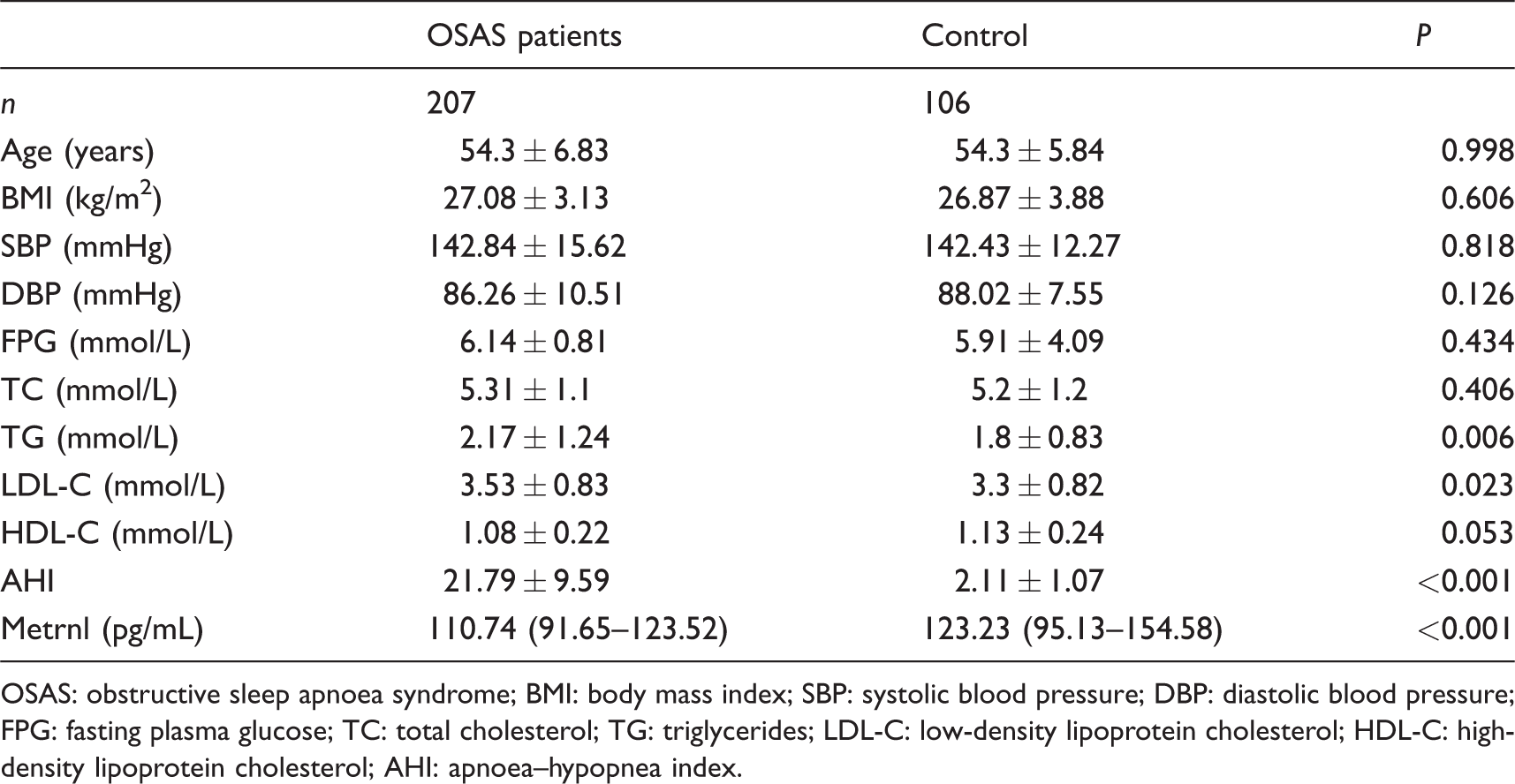
OSAS: obstructive sleep apnoea syndrome; BMI: body mass index; SBP: systolic blood pressure; DBP: diastolic blood pressure; FPG: fasting plasma glucose; TC: total cholesterol; TG: triglycerides; LDL-C: low-density lipoprotein cholesterol; HDL-C: high-density lipoprotein cholesterol; AHI: apnoea–hypopnea index.
Serum Metrnl concentration in OSAS subjects
OSAS subjects showed significantly decreased serum Metrnl concentration compared with healthy controls (P < 0.001, Table 1). Simple logistic regression analysis indicated that TG, LDL-C, high-density lipoprotein cholesterol and serum Metrnl showed a trend toward an association with OSAS (Table 2). All these parameters were used to construct a multivariate logistic regression model. Serum Metrnl concentration remained adversely associated with OSAS (OR 0.974, 95% CI 0.965 to 0.984; P < 0.001, Table 2).
Logistic regression analysis for the presence of OSAS.
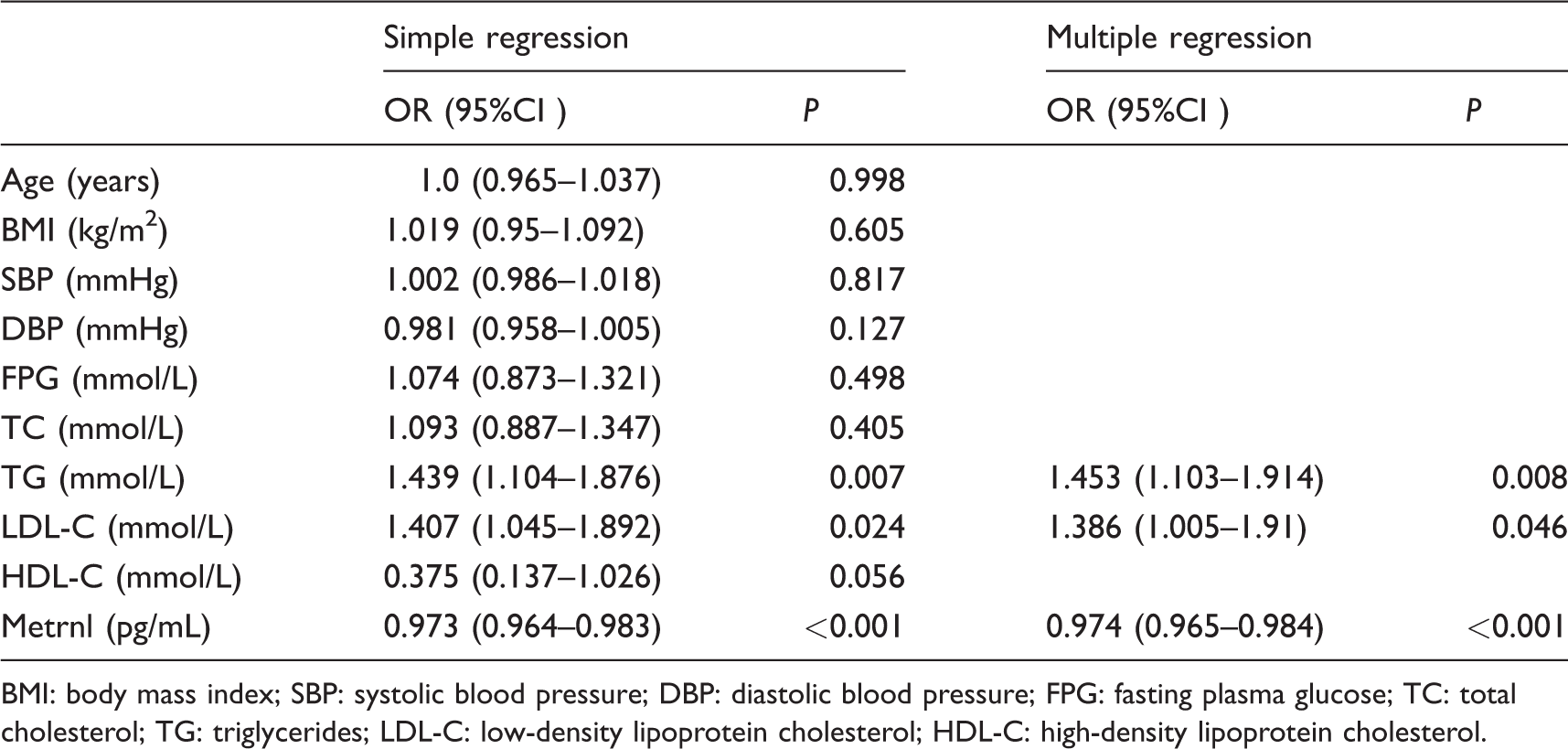
BMI: body mass index; SBP: systolic blood pressure; DBP: diastolic blood pressure; FPG: fasting plasma glucose; TC: total cholesterol; TG: triglycerides; LDL-C: low-density lipoprotein cholesterol; HDL-C: high-density lipoprotein cholesterol.
Correlation of serum Metrnl concentration with OSAS severity
Severe OSAS subjects showed significantly lower serum Metrnl concentration compared with mild and moderate cases (P < 0.001 and P = 0.011, respectively; Figure 1). Furthermore, there were decreased serum Metrnl concentration in moderate subjects compared with mild subjects (P = 0.009, Figure 1). Pearson correlation analysis revealed that serum Metrnl concentration negatively correlated with OSAS severity (r = –0.328, P < 0.001).
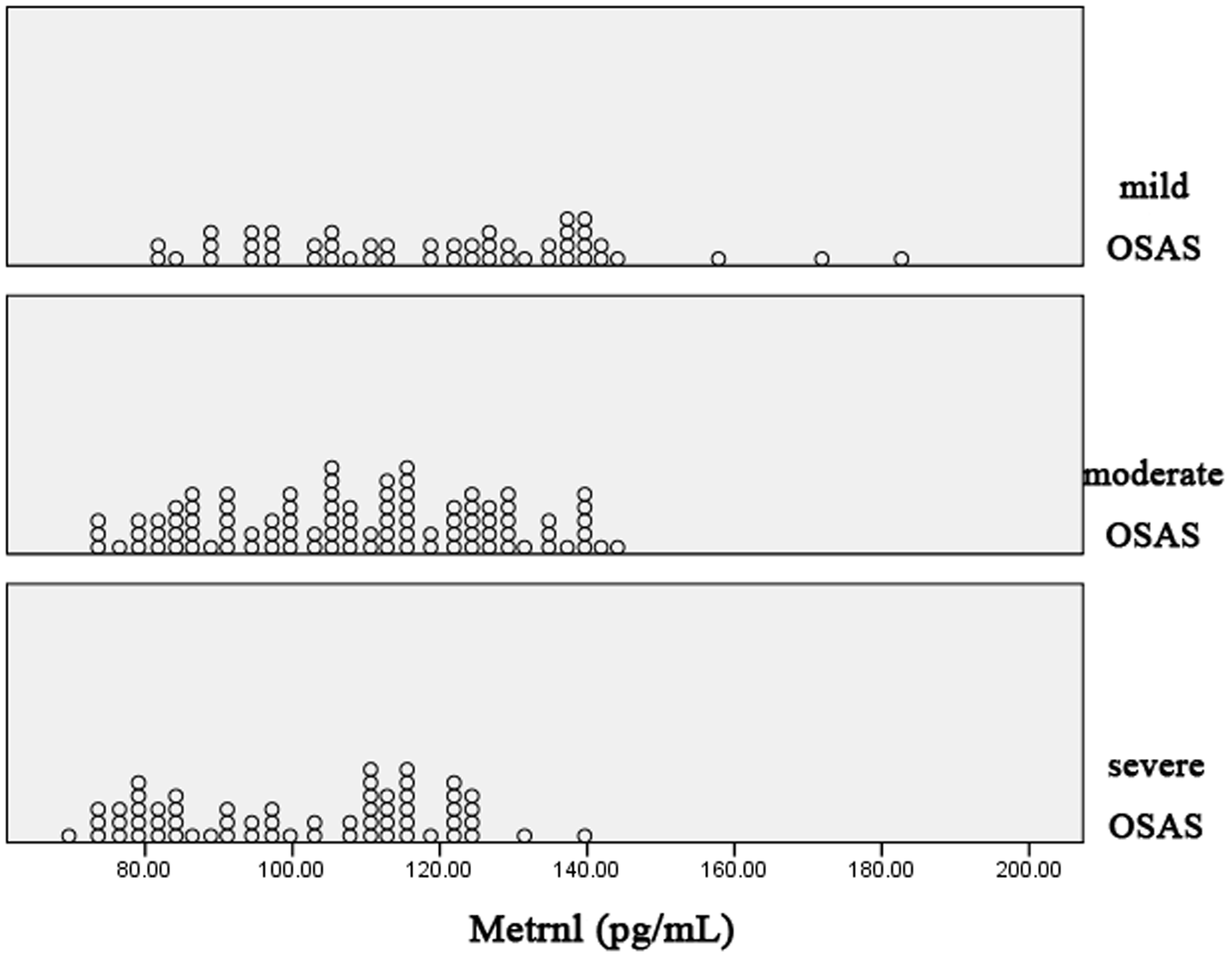
Serum Metrnl concentrations in mild (n = 50), moderate (n = 95) and severe (n = 62) OSAS subjects. Severe OSAS subjects showed significantly lower serum Metrnl concentrations compared with mild and moderate OSAS subjects. Furthermore, there are decreased serum Metrnl concentrations in moderate subjects compared with mild subjects.
Association of serum Metrnl concentration with other clinical characteristics
Simple linear regression analyses showed that serum Metrnl concentrations in OSAS subjects negatively correlated with BMI, LDL-C, AHI, number of arousals, hypopnoea and apnoea (Table 3). The variables including BMI, LDL-C, AHI, number of arousals, hypopnoea, apnoea and the percentage of total sleep time spent with SPO2 < 90% were incorporated into the stepwise linear regression model. Multiple stepwise regression analysis showed that BMI, AHI hypopnoea and apnoea remained to be associated with serum Metrnl.
Linear and multiple regression analyses between serum Metrnl and other clinical parameters.
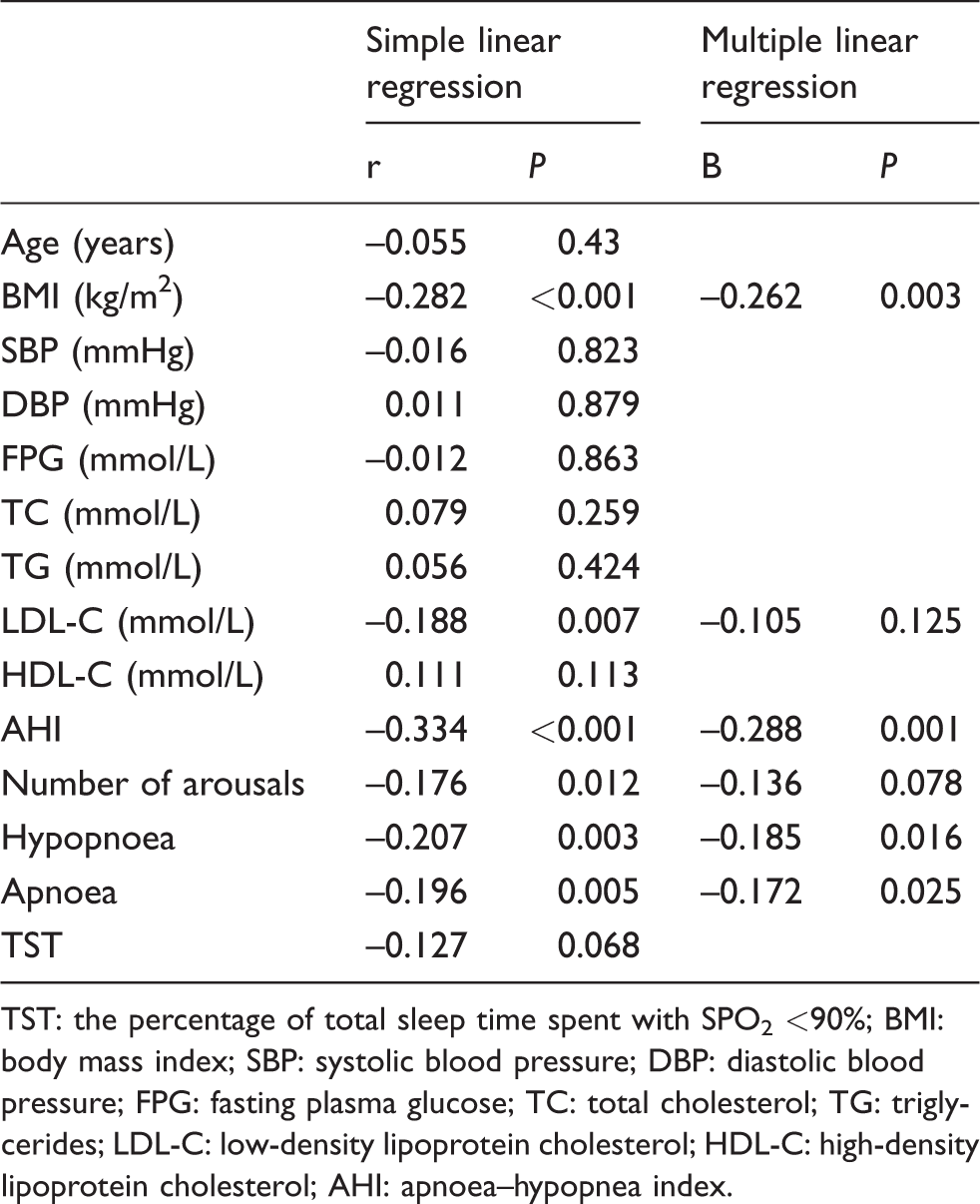
TST: the percentage of total sleep time spent with SPO2 <90%; BMI: body mass index; SBP: systolic blood pressure; DBP: diastolic blood pressure; FPG: fasting plasma glucose; TC: total cholesterol; TG: triglycerides; LDL-C: low-density lipoprotein cholesterol; HDL-C: high-density lipoprotein cholesterol; AHI: apnoea–hypopnea index.
Discussion
This study provides the first report on the negative correlation of serum Metrnl concentration with OSAS. Serum Metrnl concentrations were significantly decreased in OSAS subjects compared with healthy controls. Serum Metrnl concentration negatively correlated with disease severity, which was assessed using AHI.
OSAS is a highly prevalent disorder associated with an increased risk of stroke, diabetes mellitus, metabolic syndrome and cardiovascular disease including coronary artery disease, hypertension, heart failure and arrhythmia. 9 OSAS is currently considered as a major illness that causes significant medical morbidity and mortality to millions of people worldwide. 10 Therefore, the risk of OSAS must be assessed early and strategies to prevent or treat OSAS must be developed. Our results revealed that subjects with OSAS showed significantly decreased serum Metrnl concentration compared with healthy controls. Our results also suggest that serum Metrnl concentration is inversely correlated with AHI. Severe OSAS subjects exhibited significantly lower levels of serum Metrnl concentrations compared with mild and moderate OSAS subjects. This finding indicates that Metrnl is associated with OSAS severity.
Inflammation is closely correlated with OSAS. OSAS is a disease characterized by both local and systemic inflammation. 11 Inflammation promotes the upper airway narrowing and collapsibility, as well as inspiratory pharyngeal muscle dysfunction, leading to OSAS development and progression. 12 Elevated inflammatory cell infiltration is found in upper airway tissues from OSAS subjects. 13 Systemic inflammation is suggested to occur in OSAS. OSAS subjects show increased circulating concentrations of systemic inflammatory mediators including intercellular adhesion molecules, C-reactive protein and TNF-α. 14
Metrnl plays an anti-inflammatory role: C57/BL6 mice were injected with adenoviral vectors expressing Metrnl via tail vein injections. Metrnl was found to promote the expression of anti-inflammatory genes, such as IL-10 and transforming growth factor-β. 6 Metrnl induced a modest decrease in the expression of pro-inflammatory cytokines, such as TNF-α, interferon-γ and IL-1β. 6 Jung et al. reported that Metrnl treatment inhibits the expression of inflammatory markers, including IL-6 expression and pro-inflammatory cytokines, such as TNF-α and monocyte chemotactic protein 1 in the skeletal muscle of mice fed with high-fat diet. 8 Serum Metrnl is negatively correlated with inflammatory markers including IL-6 and TNF-α in subjects with type 2 diabetes and coronary artery disease subjects. 15 These findings indicated the anti-inflammatory role of Metrnl.
The limitations of the present study must be considered. First, the sample size was not sufficiently large to reach definitive conclusions. Second, this study was cross-sectional in design, so our findings must be validated in long-term prospective studies.
In conclusion, serum Metrnl concentrations negatively correlated with the presence and severity of OSAS.
Footnotes
Declaration of conflicting interests
The author(s) declared no potential conflicts of interest with respect to the research, authorship, and/or publication of this article.
Funding
The author(s) received no financial support for the research, authorship, and/or publication of this article.
Ethical approval
The ethics committee of Qilu Hospital of Shandong University (Qingdao) (2018QLHSD0086).
Guarantor
JK.
Contributorship
JK researched literature and conceived the study. HS and YZ were involved in protocol development, gaining ethical approval, patient recruitment and data analysis. JW wrote the first draft of the article. All authors reviewed and edited the article and approved the final version of the article.