




Abstract
Background
Lab Tests Online-UK celebrated its 10th anniversary in 2014 and to mark the occasion the first comprehensive survey of website users was undertaken.
Methods
A pop-up box with a link to Survey Monkey was used to offer website users the chance to participate in the survey, which was live from 4 March 2014 to 11 April 2014.
Results
Six hundred and sixty-one participants started the questionnaire and 338 completed all of the demographic questions. Although the website is designed and aimed at patients and the public, a significant number of respondents were health-care professionals (47%). The majority of survey participants found the Lab Tests Online-UK website via a search engine and were visiting the site for themselves. The majority of participants found what they were looking for on the website and found the information very easy or fairly easy to understand. The patient respondents were keen to see their laboratory test results (87%), but the majority did not have access (60%) at the time of the survey.
Conclusions
This survey provides good evidence that the Lab Tests Online-UK website is a useful resource for patients and health-care professionals alike. It comes at a poignant time as the release of results direct to patients starts with access to their medical records. The Lab Tests Online-UK website has a key role in enabling patients to understand their lab test results, and therefore empowering them to take an interest and engage in their own healthcare.
Introduction
Lab Tests Online-UK (LTO-UK) is a peer-reviewed, non-commercial, patient-centred website (www.labtestsonline.org.uk), which aims to provide patients, carers and the public with accurate, easy to understand information about clinical laboratory tests. The website is written by practising laboratory clinicians and scientists and information is grouped by test or disease. The original LTO website was started in the United States in 2001 by the American Association of Clinical Chemistry (AACC), and in 2004 an agreement between the AACC and the Association of Clinical Biochemistry and Laboratory Medicine (ACB) was made and the UK website was launched, with initial funding from the Health Foundation. In 2014, the LTO-UK website celebrated its 10th anniversary. Funding is currently provided by the ACB, the Institute of Biomedical Science and the Royal College of Pathologists enabling the website to remain non-commercial. LTO-UK continues to attract increasing numbers of visitors averaging 150,000 unique visitors every month. Following its launch in 2013, the mobile app has been downloaded more than 12,506 times.
Health literacy provides the foundation to increase patient understanding and knowledge, empowering patients and promoting ownership of their health, while improving engagement with health-care professionals to share decision-making.1,2 There is evidence that improving patient engagement in this manner can lead to dramatic improvements in the management of long-term conditions, such as diabetes.1–4 It is well recognized that patients need to engage with health-care professionals more to realize the benefits of health education. 5
The 2008 policy brief from the World Health Organisation (WHO), ‘Where are the patients in decision-making about their own care?, 6 recognized that patients are required to make decisions relating to their health and that strategies to support patient education and engagement are a ‘fundamental plank of healthcare policy’. This policy brief acknowledged the importance of global patient education and noted that the responsibility for this is not solely held by the patient’s clinician.
In May 2012, the Department of Health published ‘The Power of Information’. 7 This document highlighted the benefits of providing patients with access to their health-care records and laboratory test results. It included feedback from patients who recognized the benefits of online access to their health-care records, such as ‘being able to manage their own health and care better’. Shared decision-making and patient empowerment were key themes throughout the document which has no doubt helped stimulate the more recent government initiative to provide patients with online access to their health-care records. The general practice contract included a requirement to provide patients with online access to their health-care records, including test results, by April 2015.
The benefits (i.e. improved self-management) of patients having direct access to their laboratory results can only be realized if the patient is able to understand what their results mean. 2 Understanding their test results enables patients to have an informed discussion with their health-care professional and an active role in shared decision-making and management of their own health.2,8,9 Concerns from clinicians regarding patient direct access largely relate to the potential for increased work load and misinterpretation of abnormal results. Providing patients with accurate, patient-focussed information about laboratory tests will help to minimize the potential for misinterpretation. 5 On the other hand, clinicians also recognize that patients may provide an additional safety net if they miss an abnormal test result.9,10
The majority of people in the UK use the internet and do so through multiple devices, one or more of which are mobile. 11 Up to 72% of people who use the internet look for health information and most use a search engine to initiate their search. There is a wealth of information on the internet, which can be overwhelming for some users who cannot find the information they want. 12 The quality of health information available on the internet is variable and lay internet users fail to recognize the importance of quality indicators on the resources they use. 12
LTO-UK already plays a leading role in the provision of information about laboratory tests to patients. The website is well established with a continually increasing repertoire of tests and diseases. The information on the website is written and validated by practising laboratory clinicians and scientists across all of the pathology disciplines. It is non-commercial, access is free to all and the information on the website is regularly reviewed and updated to ensure it is current and valid. However, so far there has been no formal assessment of user experience.
The LTO-UK website has a section where visitors can send comments, but these are not limited to feedback about the site and often encompass a range of queries. To facilitate the continued improvement of the LTO-UK website for its visitors, the LTO-UK board commissioned a survey of the website in the form of an online questionnaire. In addition to finding out what the opinions of visitors to the LTO-UK website were on the content, layout and overall functionality of the website, the survey also included questions to provide information on the demographics of website visitors, their ability to access their own results and any improvements they think could be made to the website.
Methods
The LTO-UK marketing and promotions team based the design and content of the questionnaire on one undertaken (unpublished) by Lab Tests Online Australasia (www.labtestsonline.org.au). The questionnaire was reviewed and tested by the LTO-UK board before going live. Survey Monkey was used to host the questionnaire, and all visitors to the website were offered the opportunity to complete the questionnaire via a pop-up box.
Questions to gain specific feedback about the website itself, reasons for visiting the website and visitor demographics were included in the questionnaire. As part of the initial questioning, participants were classified as either ‘health-care professional (HCP)’ or ‘public’ (PUB), i.e. patients/carers/non-HCP. Questions were designed for either or both groups to answer and respondents were automatically directed to the relevant questions. The questionnaire ended on an open question to allow participants to suggest improvements for the website and to provide a poll rating of the LTO-UK app.
The pop-up box and questionnaire were live for one month, after which the results were electronically collated from Survey Monkey.
Results
Questions from questionnaire and percentage of respondents for each response.
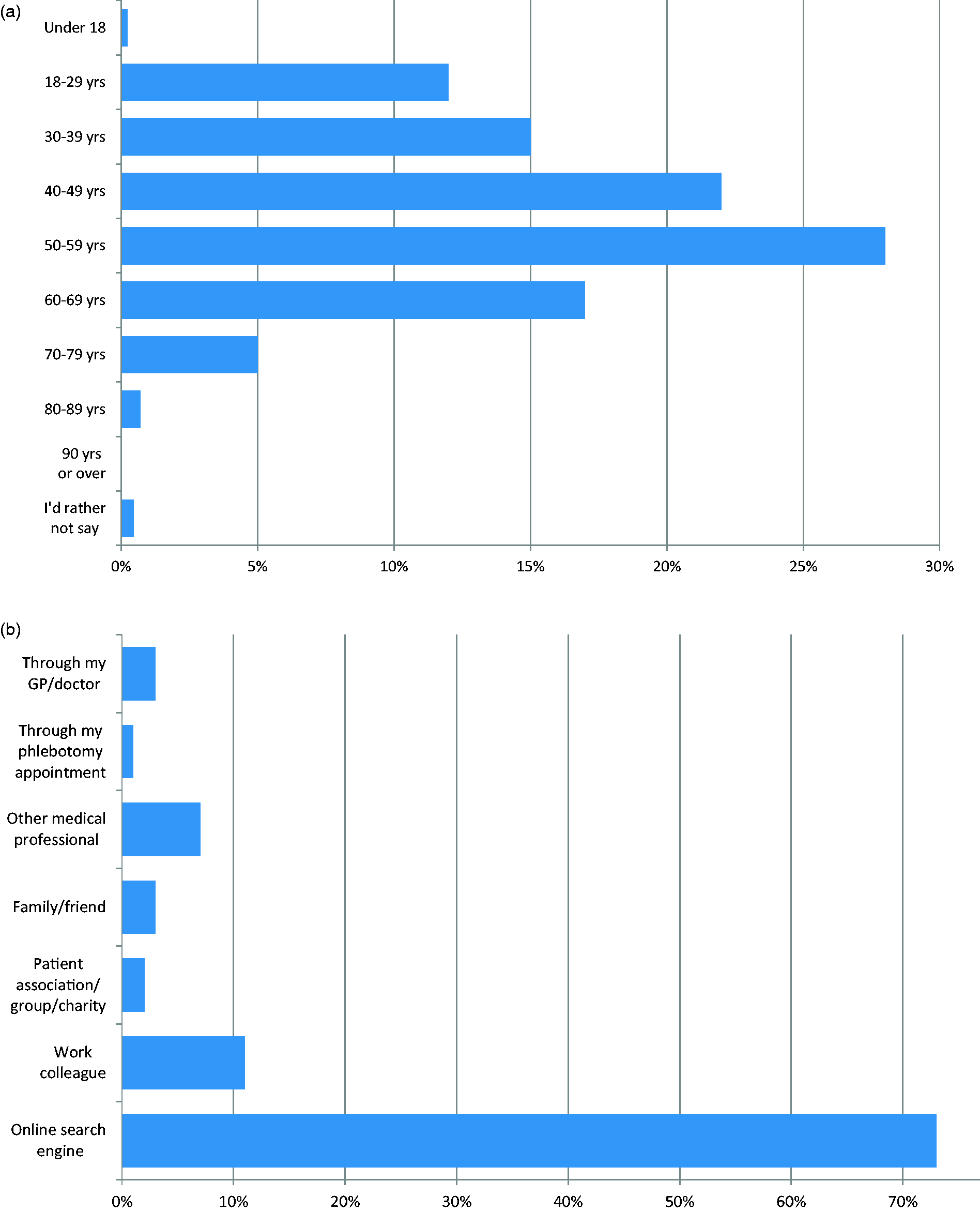
Questions asked to health-care professionals and the public. (a) Which of the following age groups do you belong to? (n=434); (b) How did you first find out about the Lab tests Online-UK website? (n=577); (c) Which of these best describes your reason for visiting the Lab tests Online-UK website? (n=659).
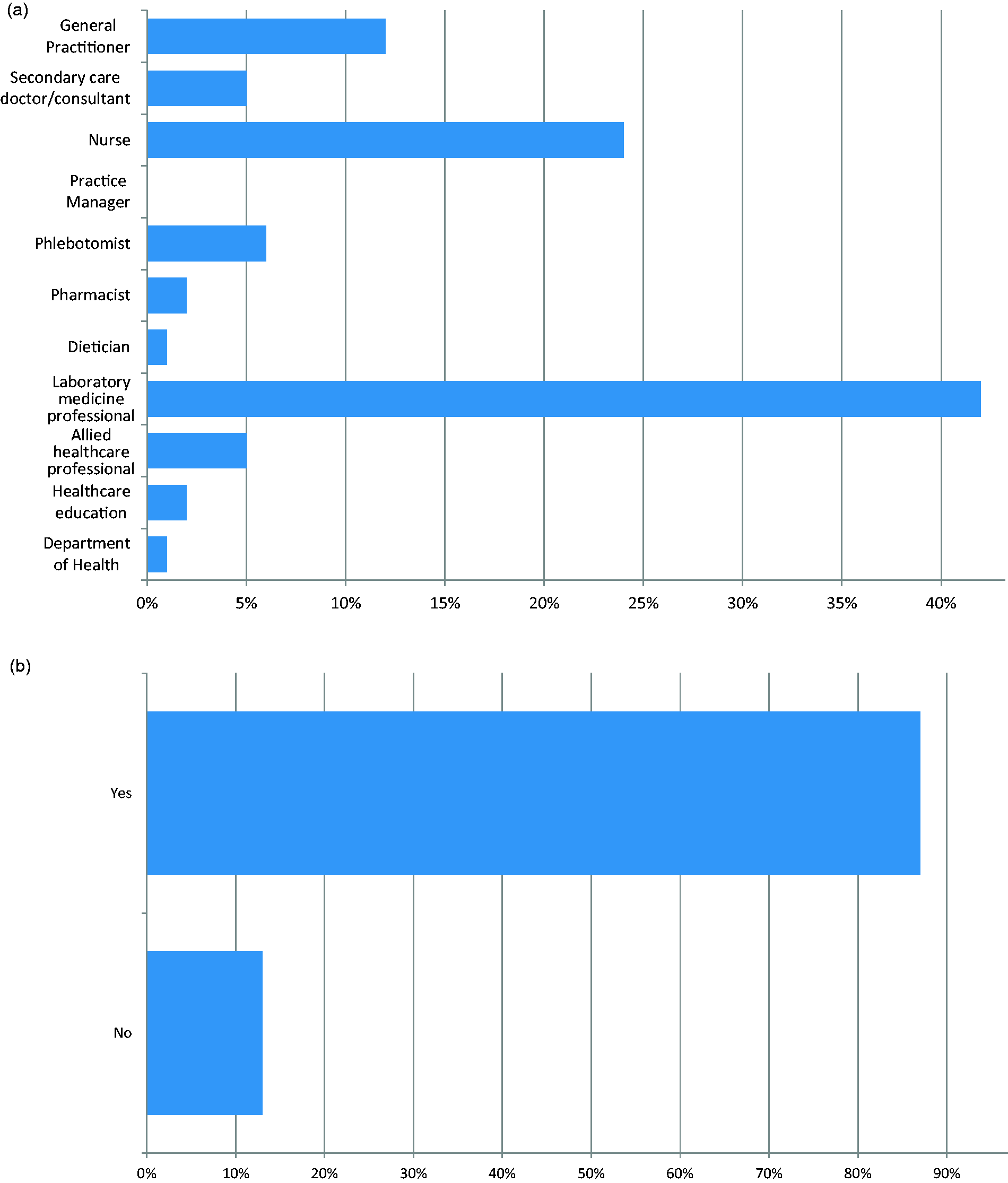
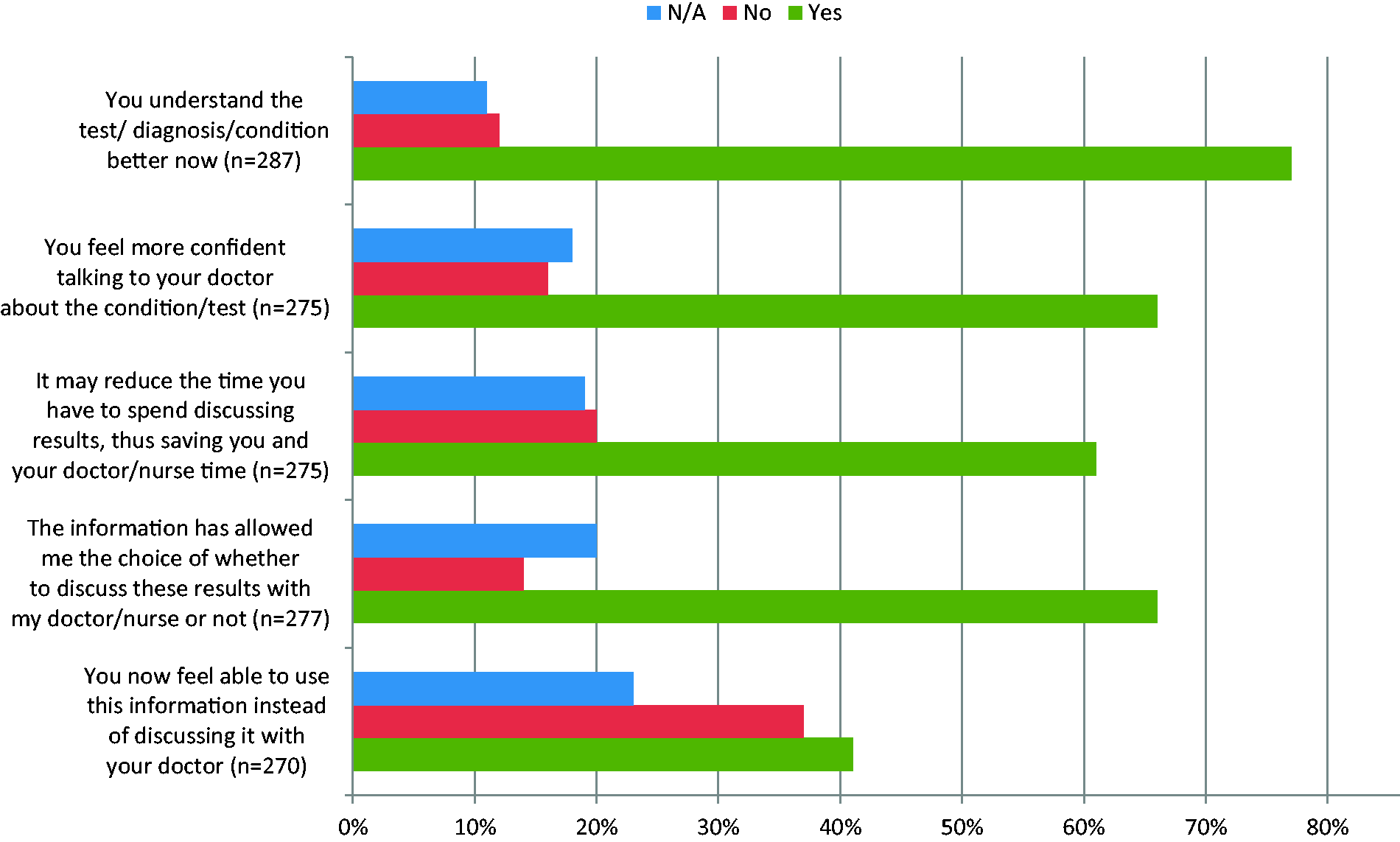
Figures 1 to 4 show graphs summarizing the results from some of the key questions. Figure 1(a) to (c) are responses to questions asked to all respondents, there was a wide range of ages of respondents (Figure 1(a)), the majority of respondents first found the website via a search engine (Figure 1(b)), and most respondents were visiting the website for themselves or for general information (Figure 1(c)). Figure 2(a) to (d), are responses to questions which were asked to both groups (HCP and PUB) individually, they show that the majority of respondents in both groups found what they were looking for and found the information on the website very easy or fairly easy to understand. Figure 3(a) to (c), are responses to some of the questions that were asked to the individual groups, HCP and PUB. They show that there was a variety of roles in the health-care professionals group and that the majority of respondents in the public group would like access to their test results but did not have electronic access at the time of the survey. Figure 4 is the responses from the public respondents and demonstrates that the majority of respondents had positive feelings after having used the website.
Questions asked to both health-care professionals (HCP) and public (PUB) respondents individually. Did you find what you were looking for on the website? (a) HCP (n = 236); (b) PUB (n = 382). How easily did you understand the articles and information on the website? (c) HCP (n = 225); (d) PUB (n = 310). Questions asked to either health-care professionals (HCP) or public (PUB) respondents. (a) Do you currently work in the healthcare industry, if so what is your role? HCP (n=180); (b) Would you like to see (either by electronic access or on paper copy) your laboratory test results, at the same time as your doctor/nurse sees them? PUB (n=311); (c) Do you already have access to your laboratory results? PUB (n=263). Question asked to public respondents. Which of these statements applies to you as a result of using the website?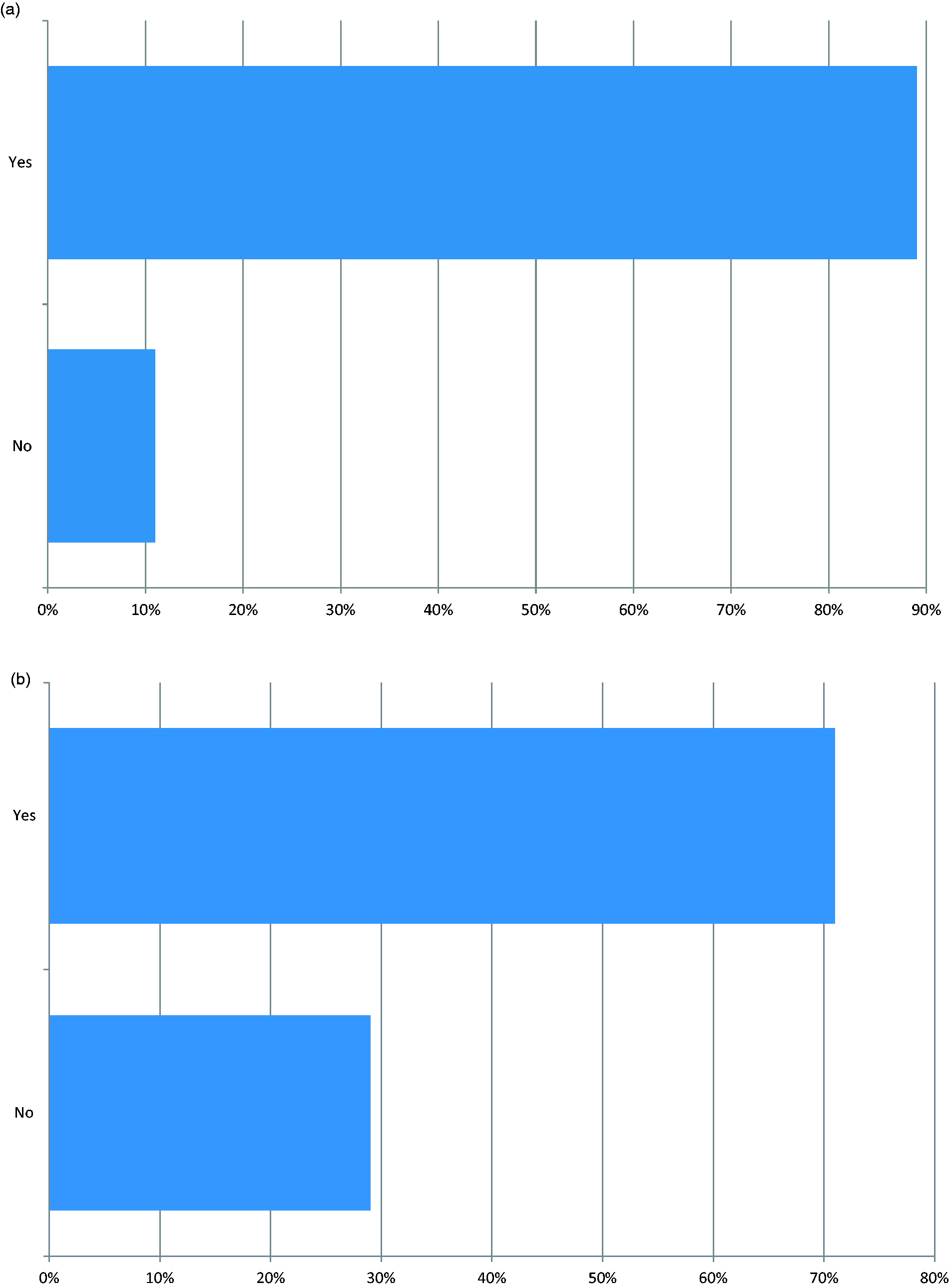
Discussion
Six hundred and sixty-one people responded to the survey, which is a good total response. However, the response rate cannot be calculated as the number of people who were invited to complete the survey is unknown. Comments from respondents suggested that the pop-up box for the survey appeared before they had the chance to use the website, a major limitation of the method of invitation to participate. The applicability of the survey may be limited as it is not known how representative it is of the general LTO-UK user population. Although the focus of the LTO-UK website is to provide information for patients, the survey showed that a significant number of health-care professionals (47%) also use the website. This highlights the importance of the website as a training and professional resource and is a reflection of the quality of information on the site.
A survey in the U.S. 12 in 2013 showed that 77% of internet users seeking health information used a search engine to initiate their search and comparably this survey found 73% of respondent’s found the LTO-UK website via a search engine (Figure 1(b)). These results demonstrate the importance of search engine algorithms and search engine optimization for the LTO-UK website. It is technically challenging and resource intensive to continually improve these but this survey provides good evidence to continue in these efforts in order to introduce new visitors to the website.
The range of demographics of respondents reflects the variety of ages and backgrounds of LTO-UK website visitors (Figure 1(a)). The majority of respondents were first time visitors to the LTO-UK website, which is important for future surveys and the timing of the pop-up box as discussed earlier. However, the survey demonstrated good visitor retention with over a quarter of respondents (26%) visiting the LTO-UK website more than 10 times.
Feedback about the design and layout of the website was largely positive and the majority of respondents did not think any improvements were required, with a small number of respondents suggesting minor changes with comments including, ‘layout could be improved a little but overall an excellent resource’, ‘there is room for improvement with the overall layout, otherwise the website is pretty good’, ‘less information on home screen’, ‘main tests to stand out more’. General positive comments included ‘very good and informative’, ‘excellent doesn’t need improvement’, ‘love it’ and ‘excellent resource – would struggle to find another resource online which is as comprehensive, useful and reliable at the moment’.
A lack of awareness about the non-commercial nature of the website was evident and demonstrates the need to publicize this clearly. It was also not clear to website visitors that the information provided is specifically for UK users. The majority of respondents did not know that there was a free LTO-UK app available to download, but those who had used the app rated it as very good or good, with an average rating of 4.35/5.
The HCP respondents were from a wide variety of health-care professions, the majority being laboratory medicine professionals, nurses and GP’s (Figure 3(a)). Laboratory professionals are likely to be over-represented owing to promotion and awareness of the survey within the profession. The website received excellent feedback from the HCP respondents who use the full range of resources on the website including test and disease-specific information (Figure 2(a) and (c)). Although the website is designed and written for patients, the results from the survey clearly demonstrate that health-care professionals find this a useful resource to help improve the care of their patients.
The PUB respondents were also looking for a range of information akin to the HCP group. The PUB group was spread throughout the patient pathway from those who have not yet seen a health-care professional about their symptoms to those with a chronic illness, in addition to those looking for general information. These results demonstrate the wide appeal and usefulness of the website to a variety of patient groups. Feedback on the content of the website was generally excellent, demonstrating the quality and suitability of the information for the public (Figure 2(b) and (d), and Figure 4). Some respondents did not find what they were looking for and these results will be reviewed by the LTO-UK board and included in future improvements to the site, where relevant. Although the health literacy of respondents was not assessed, the results from the survey suggest that the majority of respondents in the PUB group were able to seek and understand the information they needed (Figure 2(b) and (d), and Figure 4), demonstrating a level of health literacy. 5
The responses from the questionnaire show that LTO-UK fulfils its aim to be a key resource to support the policies proposed by both WHO 6 and the Department of Health. 7 The positive responses to questions about feelings and opinions after having used the website demonstrate the increased confidence that improved understanding of laboratory tests can provide (Figure 4), a well-recognized benefit of patients utilizing health information.2,5 The debate about whether patients can use their test results effectively is on-going in the literature. 8 The results from this survey demonstrate the public’s recognition that increasing their understanding of laboratory tests could reduce the time they need to spend with health-care professionals and empower them to choose if they discuss their results or not (Figure 4). 2
Despite the majority of PUB respondents wanting access to their laboratory results, at the time of the survey in 2014 only a small proportion were able to (Figure 3(b) and (c)), something that may have improved following the April 2015 deadline. Direct access to results can reduce the need for GP and nurse appointments and improve patient satisfaction, but results must be presented in an appropriate manner and sufficient information provided to aid interpretation.7,8,13 Integration of links to the LTO-UK website into patient results portals is a recognized priority for the LTO-UK board. 13 The survey has confirmed that the website is an excellent resource for patients and health-care professionals alike, and the success of the first 10 years will continue to be built on at this monumental time for patients gaining direct access to their results.
More regular surveys are required to ensure the high standard of the website is maintained and to assess any implementations following user feedback. LTO-UK recognizes the role of the website in patient empowerment, which is a key factor moving forward for the delivery of quality and effective healthcare.
Footnotes
Acknowledgements
The authors thank everyone who took part in the survey. The authors also thank Katy Heaney who instigated the survey, Stuart Jones and the ACB office who supported the survey and data collection.
Declaration of conflicting interests
DBF is Chair of the board of Lab Tests Online-UK, a non-commercial professionally peer reviewed website for patients and carers, but receives no remuneration. RL is a member of the board of Lab Tests Online-UK, a non-commercial professionally peer-reviewed website for patients and carers, but receives no remuneration.
Funding
This research received no specific grant from any funding agency in the public, commercial, or not-for-profit sectors.
Ethical approval
Not applicable.
Guarantor
DBF.
Contributorship
Katy Heaney instigated the survey, LTO-UK board approved and tested the survey, Stuart Jones and the ACB office supported the survey and data collection. RL wrote the first draft of the manuscript. RL and DBF reviewed and edited the manuscript and approved the final version of the manuscript.