



Abstract
Recent studies have shown that the coronavirus pandemic not only temporarily increased support for incumbent politicians and trust in experts but also triggered an authoritarian response. Because the pandemic has significantly affected individuals’ goals, needs, and control over their lives, we expect that it has generated emotional reactions. In this article, we study how concerns about COVID-19 relate to institutional trust (trust in political institutions and experts) and a preference for populist right parties—directly and indirectly—via emotions. Our theoretical framework relies on the “rally around the flag” hypothesis, the cultural backlash theory, as well as appraisal theories of emotions. We analyze a novel data set collected as part of the Longitudinal Internet Studies for the Social Sciences Panel Survey for the Netherlands at the beginning of the second wave of the pandemic (October 2020). Our findings reveal that concerns about COVID-19 are positively related to institutional trust but unrelated to preferences for right-wing populism. The relationship between concerns about the coronavirus crisis and trust in political institutions is mediated via fear and sadness; these emotions also explain opposition to right-wing populist parties. We interpret our findings in relation to research on the rally around the flag effect, right-wing populism, and emotions. We discuss the implications of our results in the context of the coronavirus pandemic and other “rally”-inducing events.
Keywords
Introduction
At the beginning of the first wave of the coronavirus pandemic, many advanced economies and emerging markets showed a high increase in governmental approval (Herrera et al., 2020; see also Bol et al., 2021; Cardenal et al., 2021). Simultaneously, scholars warned of anti-democratic or authoritarian tendencies in response to the pandemic, with populations being inclined to relinquish their civil liberties (e.g., Arceneaux et al., 2020; Vasilopoulos et al., 2023). Although the majority of the literature links the increased support and trust in incumbent institutions at the beginning of the pandemic to macro-factors, such as COVID-19 incident rates (Schraff, 2021) and lockdown measures (Herrera et al., 2020), in this article, we are interested in how micro-level factors—concerns about the coronavirus crisis (e.g., Lieberoth et al., 2021) and emotions (e.g., Dietz et al., 2023)—relate to increased trust in political institutions and experts and a preference for right-wing populist parties (cf. e.g., Abadi et al., 2021).
COVID-19 was a large-scale international and dramatic event, and responses to the pandemic have culminated in a “rally around the flag effect” (Mueller, 1970), meaning enhanced support for ruling elites, and potentially other institutions, such as health authorities, scientists, or broader experts, to whom people delegate responsibility for managing and finding redemption from the life-threatening pandemic. Several studies confirmed that, at the onset of the pandemic, populations had more trust in national institutions, such as governments (Herrera et al., 2020; Schraff, 2021), healthcare and educational systems (Reeskens et al., 2021), and science (Battiston et al., 2020). We extend the rally around the flag effect (hereafter: “rally effect”) from typical outcome variables, such as trust in government and parliament, to trust in the healthcare system and science, as these actors have played a crucial role in combatting the spread of COVID-19 and saving lives (e.g., Bicchieri et al., 2021).
In tandem with more support for incumbent leaders, the perceptions of threat and existential insecurity brought about by the pandemic might have caused populations to adopt a conservative or materialist ideology, as suggested by research on threat (e.g., Huddy et al., 2005; Lambert et al., 2010) and cultural backlash theory (Norris & Inglehart, 2019). Some researchers have warned of an anti-democratic reflex to the coronavirus pandemic (Arcenaux et al., 2020; Reeskens et al., 2021) potentially giving rise to right-wing populism (Inglehart, 2020, April 10). In this vein, populism—defined as the opposition between the “virtuous” people and the “vicious” elites and the belief that the will of the people should guide politics (Mudde, 2004)—is often seen as a way of empowering the powerless, allowing people who perceive that they have no resources to improve their disadvantaged situation to hope for change (Magni, 2017; Rico et al., 2020).
Although studies conducted at the beginning of the pandemic demonstrate that incumbents received increased support at the beginning of the pandemic (e.g., Bol et al., 2021; Herrera et al., 2020; Schraff, 2021), there is however less evidence on the impact of COVID-19 on support for the populist right. Inglehart (2020, April 10) expected populist support to increase. Wondreys and Mudde (2022) showed that among 27 European societies from March to June 2020, there was a slight increase of support for right-wing populists in government (but cf. Foa et al., 2022); among electorates, there was almost no change in levels of the preference for right-wing populists in governmental coalitions, whereas the popularity of right-wing populists in opposition showed no uniform pattern. Foa et al. (2022) found that within 2 years of the pandemic, in general, the level of populist attitudes, approval ratings, and electoral support of populist leaders and populist parties decreased. The authors explained the decline of populism foremost by inefficient response by populist governments to the pandemic, declined affective polarization (defined as hostility of representatives of different parties toward each other) hindering populists at mobilizing voters, and reduced support for populists among elderly, less educated, and living in previously economically disadvantaged regions people (Foa et al., 2022).
In this article, which is a part of the Triple Special Issue “The Emotional Side of Populist Support: Key Affective Mechanisms at Test,” we focus on the case of the Netherlands and seek to identify whether people concerned about COVID-19 trust incumbent institutions more (as the “rally effect’’ predicts), or rather trust populist leaders more (as cultural backlash theory suggests). Furthermore, we examine the role of emotions in shaping how concerns about COVID-19 relate to trust in incumbents and a preference for right-wing populism. Existing studies on the “rally effect” have revealed that fear of the pandemic enhanced governmental support (Dietz et al., 2023), and that anxiety about COVID-19 was positively associated with populist attitudes (Abadi et al., 2021), whereas fear of terror attacks decreased support for right-wing populism (Vasilopoulos et al., 2019).
We contribute to the literature in five ways. First, studies on the “rally effect” generally only address trust in political leadership; we suggest that, in the case of the COVID-19 pandemic, studying trust in healthcare and science is important (e.g., Battiston et al., 2020); these experts have participated in decision-making and communicated the reasoning behind important decisions. Second, the “rally effect” is usually studied at the macro level, with limited evidence on its psychological covariates, such as threat perceptions (Kritzinger et al., 2021) and emotions, such as fear (Dietz et al., 2023) and anger (Erhardt et al., 2021). We suggest that institutional trust (trust in political institutions and experts) is explained by concerns about COVID-19 because such concerns appeal to emotions; and emotions are central to how people make sense of the world (Dukes et al., 2021). We assess whether emotional reactions to the pandemic mediate the association between concerns about COVID-19 and institutional trust. Third, when facing an omnipresent and invisible virus, which people could get anywhere, they were likely to seek for help, a sense of safety and empowerment among not only incumbents and experts, but also populists (e.g., Inglehart, 2020, April 10). Support for populists is likely to be driven by other emotions than support for incumbents. We test here whether and which emotions mediate the relationship between COVID-19 concerns and support for right-wing populist parties. Fourth, compared to previous studies on the “rally effect” (Dietz et al., 2023; Erhardt et al., 2021) and majority of papers on populist support (e.g., Rico et al., 2017; but see Verbalyte et al., 2025, in this Special Issue, Part 1), we deploy a larger range of emotions. Although fear and anger have been studied in relation to the pandemic (Abadi et al., 2021; Erhardt et al., 2021; Vasilopoulos et al., 2023) and populism (cf. Rico et al., 2017; Vasilopoulos et al., 2019), we also consider the roles of sadness, disgust, and hope. Fifth, we analyze the novel cross-sectional data collected as part of the Dutch fieldwork of the European Values Study (EVS), which was integrated into the Longitudinal Internet Studies for the Social Sciences Panel (CentERdata, 2020; see Reeskens et al., 2021) and is representative of the Netherlands.
The Netherlands is an interesting case; it initially had a high average number of coronavirus cases (Ritchie et al., 2020) and demonstrated a high increase in governmental trust compared to the pre-pandemic level within a number of communities (Cardenal et al., 2021; Schraff, 2021). Moreover, with its self-proclaimed “intelligent lockdown,” the government provided Dutch residents with some freedoms but also a lot of individual responsibility (De Haas et al., 2020). The fact that not all people supported incumbent politics became apparent during an imposed curfew in January 2021. Riots in the cities of Eindhoven and Den Bosch (among others) on January 23, 2021, demonstrated that some emotional responses toward the pandemic existed as well. In addition, there are two right-wing populist parties in the Dutch political landscape (Otjes, 2021): the Freedom Party (Partij voor de Vrijheid or PVV) and Forum for Democracy (Forum voor Democratie or FvD); thus, a preference for right-wing populist parties could have been a reaction to threat and insecurity within the Dutch political system.
In the second section of this article, we present our theoretical framework by revisiting the “rally effect” in relation to COVID-19 (e.g., Dietz et al., 2023), formulating hypotheses on how concerns about COVID-19 relate to trust in experts and political institutions (cf. Kritzinger et al., 2021; Lieberoth et al., 2021) and addressing the populist threat in the context of the pandemic (e.g., Abadi et al., 2021). Based on appraisal theories of emotions (e.g., Kirby & Smith, 2011), we later explain how specific emotions mediate the relationships between concerns about COVID-19 and trust toward political institutions and experts (cf. Dietz et al., 2023; Erhardt et al., 2021) and right-wing populism (cf., Abadi et al., 2021). In the third section, we describe the data and methodology used to answer our research questions. In Section “Results,” we empirically test our hypotheses using data representative of the Netherlands. Finally, we conclude our paper with the implications of our findings for studies on “rally”-inducing events and research on populism and emotions.
Theoretical Framework
COVID-19, Rally Around the Flag, and Right-Wing Populism
Trust in Political Institutions
At the onset of the pandemic, there was a significant increase in trust in government (Bol et al., 2021; Kritzinger et al., 2021) and parliament (Schraff, 2021), voting intentions for the prime minister or president, satisfaction with democracy (Bol et al., 2021), and support for the actions of the government (Dietz et al., 2023) compared to pre-pandemic levels in a considerable number of countries.
Some studies (Dietz et al., 2023; Herrera et al., 2020; Schraff, 2021) consider the coronavirus pandemic a “rally”-inducing event, a concept that captures increased trust in government and other institutions in the face of a life-threatening situation (e.g., Huddy et al., 2005; Lambert et al., 2010). In its original description, Mueller (1970) defined the rally around the flag effect as a boost in the popularity of a president due to exogenous international events that are dramatic and specific, involve the entire nation, and are of extreme relevance to average people. He considered military interventions; major military, diplomatic, and technological developments; the beginning of presidential terms; and the US–Soviet meetings, which he used to account for higher levels of presidential support in the USA, to be “rally”-inducing events (Mueller, 1970). One of the most prominent and well-researched “rally” effects was triggered by the terrorist attacks on September 11, 2001, in New York and Washington, DC; levels and increases of presidential approval were the highest and the “rally effect” lasted the longest in US history (Hetherington & Nelson, 2003). Compared to other “rally” events, the coronavirus pandemic lacked intentionality, specific targets, and a timeframe (Dietz et al., 2023).
In some countries, the “rally effect” caused by COVID-19 lasted for months and had more than one peak (Dietz et al., 2023), whereas in others, it was short-term or did not happen at all (Herrera et al., 2020; Kritzinger et al., 2021; Van Aelst, 2021; but cf. Foa et al., 2022). Similar to other “rally effects,” in the case of the coronavirus pandemic, support for incumbents varnished over time. This occurred due to an aversion to immediate danger, the return of normal critical assessments of the government by the opposition (Kritzinger et al., 2021), governmental mismanagement of the pandemic (Herrera et al., 2020), retrospective evaluation of governmental handling of the pandemic, and people growing accustomed to the “new normal” and gaining a sense of control over it (Dietz et al., 2023).
Thus far, the “rally effect” has predominantly been studied at the macro level, for example, in approval ratings of presidents, governments, or party identification over time (e.g., Hetherington & Nelson, 2003; Mueller, 1970). In the case of the coronavirus pandemic, scholars explained increased levels of trust in the government by the weekly growth rate of COVID-19 infections (Herrera et al., 2020; Schraff, 2021), lockdowns (Bol et al., 2021), and governmental management of the pandemic (Herrera et al., 2020). However, Dietz et al. (2023) found that infection rates were unrelated to governmental support.
Regarding the micro perspective, the “rally effect” of the coronavirus pandemic has been different from the “rally effect” related to wars or terrorism. Events such as the 9/11 terrorist attacks involved intentionality—terrorism involved agency causing harm on purpose, which resulted in feelings of anger, that drove support for the US president and approval of the war against Iraq (Lambert et al., 2010, Studies 1–3). The coronavirus pandemic, in contrast, lacked intentionality and targets (Dietz et al., 2023); it resulted predominantly in feelings of fear, which enhanced governmental support (Dietz et al., 2023). Therefore, we should consider the differences in the crises causing the “rally effect.” Moreover, in relation to the coronavirus pandemic at the micro level, Kritzinger et al. (2021) revealed that health threat perceptions were significantly and positively related to trust in government in Austria, but unrelated to trust in government in France; economic threat perceptions, in contrast, had no associations with trust in government in both countries. Dietz et al. (2023) suggested that threat appraisal and risk perception can be the main drivers of the “rally effect.” Lieberoth et al. (2021) showed that trust in governmental efforts to prevent the spread of COVID-19 had no associations with concerns about the coronavirus, as the strength of the association varied considerably across different countries. Since we are interested in understanding the psychological dynamics of the “rally effect” (e.g., Lambert et al., 2010; Lieberoth et al., 2021), namely, the micro-level dynamics of this phenomenon, we expect that concerns about the coronavirus crisis are positively associated with trust in political institutions (government and parliament; Hypothesis 1a).
It is worth mentioning that some populist leaders, such as Donald Trump in the USA and Jair Bolsonaro in Brazil, spread misinformation about COVID-19 (Van Der Linden et al., 2020) and downplayed the severity of the pandemic (Van Aelst, 2021). Populations rallied to a lesser extent or not at all around the leaders who did not acknowledge the threat of the pandemic. Support for Trump did not significantly increase when the pandemic began (Van Aelst, 2021; Herrera et al., 2020), whereas support for Bolsonaro decreased (Van Aelst, 2021) or demonstrated a less prominent “rally effect” (Foa et al., 2022).
Denial of the coronavirus had diverse negative effects. Populist President Trump’s downplaying of the pandemic led to the defiance of social distancing among people with faith in the president (Graham et al., 2020); higher trust in Trump had a positive association with acceptance of misinformation about the pandemic (Granados Samayoa et al., 2021). Similarly, misinformation and conspiracy thinking in different countries decreased compliance with health guidelines and readiness for vaccination intake (Van Der Linden et al., 2020).
Trust in Experts
We extend the “rally effect” from political institutions to experts. Previously, some attention has been paid to increased support for institutions other than electoral incumbents (e.g., Reeskens et al., 2021), in particular science and public health authorities (Battiston et al., 2020; Bicchieri et al., 2021), who have played a crucial role in combatting the pandemic. Trust in experts has been found to predict knowledge about the coronavirus, support for COVID-19 containment measures (Battiston et al., 2020), and compliance better than trust in government (Bicchieri et al., 2021).
At the beginning of the pandemic in the Netherlands, trust in experts and the education and healthcare systems increased even more than trust in parliament and government (Reeskens et al., 2021). In Italy, trust in science and experts was also higher at the beginning of the pandemic; people were paying more attention to the coronavirus and sought information from scientists and health authorities. Levels of trust decreased after mid-March 2020. In severely affected areas, people were exposed to the pandemic without direct improvement, despite lockdowns and other unprecedented measures. In areas less affected by the disease, people perceived the threat less but faced strict containment measures (Battiston et al., 2020). Nevertheless, to account for the “rally effect,” we expect to find that concerns about the coronavirus pandemic are positively related to trust in experts (Hypothesis 1b).
In the case of the Netherlands, experts played an important role. The national government relied on the expertise of the Dutch National Institute for Public Health and the Environment to draft coronavirus policies (Pattyn et al., 2021). Together, political institutions and experts have been considered beneficial for preventing the spread of the pandemic, creating a good case with which to study the “rally effect.”
Support for Right-Wing Populism
However, some people may not rally around political elites and experts, but might turn to populist politicians. Anti-democratic tendencies were documented during the first wave of the pandemic (Arceneaux et al., 2020; Reeskens et al., 2021). Perceptions of threat have been found to increase authoritarianism, ingroup solidarity, outgroup derogation, and support for punitive measures aimed at the threatening groups (Huddy et al., 2005). The threat caused by the pandemic fits well into the discourse of authoritarian populists, as populism includes striving for “collective security” against a perceived threat toward an ingroup (Norris & Inglehart, 2019, p. 14), as well “politics of fear, anger and resentment” (Norris & Inglehart, 2019, p. 7). In this vein, modernization theory (Inglehart, 1977) and cultural backlash theory (Norris & Inglehart, 2019) suggest that when confronted with existential insecurity, people turn to values that foster their survival, thwarting self-expression and values that express civil liberties (cf. Maslow, 1943; see also Norris & Inglehart, 2019). Populists offer solutions outside of the existing political system, they re-evaluate disadvantaged or threatening situations by indicating targets to blame and hold responsible for negative outcomes, and promise improvement by removing these targets (Magni, 2017; Rico et al., 2020). Under threat of COVID-19, people also turned to one-dimensional solutions, like populism and conspiracy mentality (Abadi et al., 2021). Following the cultural backlash theory, we hypothesize that concerns about the coronavirus crisis are inversely related to a preference for right-wing populist parties (Hypothesis 1c). However, the key idea is that the relationships between concerns about the coronavirus pandemic and support for right-wing populism and institutional trust are mediated by a particular set of emotional responses (see Lambert et al., 2010).
Emotions, Trust, and Populism
The role of emotions as drivers of the “rally effect” has been suggested by several authors (e.g., Dietz et al., 2023; Schraff, 2021); however, thus far, only the role of fear and anger in relation to trust in political institutions has been studied (Dietz et al., 2023; Erhardt et al., 2021; Vasilopoulos et al., 2023). More evidence can be found in the literature on terrorism threats and emotions (e.g., Lerner et al., 2003; Vasilopoulos, 2018). In contrast, the link between emotions and populist responses has been thoroughly addressed (e.g., Magni, 2017; Rico et al., 2017; Vasilopoulos, 2018; Vasilopoulos et al., 2019, see also, e.g., Filsinger, 2025, in this Special Issue, Part 2; Rico, 2024, in this Special Issue, Part 3).
In this study, we view emotions as “elicited by stimulus events” (Scherer, 2005, p. 700), which implies that an individual evaluates the significance of an internal or external stimulus and then responds to it. Emotions have motivational and adaptive functions (Smith & Kirby, 2011). For the derivation of our hypotheses, we explore them predominantly by relying on appraisal theories of emotions, as, compared with other theories of emotions (cf. Marcus et al., 2000; Vasilopoulos et al., 2019), appraisal theories allow us to explain why particular emotional reactions occur, account for individual differences in emotional elicitation, consider the role of the context (Smith & Kirby, 2011), and help us to understand how people cope with stress and how emotional reactions affect attitudes and behaviors (see also Cervone et al., 2008).
When reflecting on an event, people process information, often unconsciously linking the event with their own situation—personal goals, needs, concerns, capability to adapt to the event, and other criteria. This process is called appraisal (Kappas, 2001). Appraisals answer the questions of whether the appraised event is relevant to one’s wellbeing (primary appraisal) and whether and how individuals can change a situation to be the way they want it to be or, alternatively, adjust to it (secondary appraisal) (Smith & Kirby, 2011).
Applying appraisal theories of emotions (Kirby & Smith, 2011) to the relationship between concerns about the coronavirus pandemic and political preferences, we suggest that the coronavirus pandemic has affected everyone’s well-being and hindered people from fulfilling their needs and achieving goals, thus resulting in stress. We conceptualize concerns about the coronavirus pandemic as a primary appraisal that reflects the importance of the situation for individuals’ goals—if the situation was not of relevance and individuals did not feel they were in trouble, they would not react emotionally. Although Abadi et al. (2021) viewed concerns about the coronavirus as one of the anxiety measures that is reappraised by other emotions, we believe that concerns about the coronavirus crises are a pre-condition for an emotional reaction, as a primary appraisal of the relevance of a situation to a person (Smith & Kirby, 2011).
Another crucial component of appraisal is coping, which implies the possibility of changing an undesired condition in accordance with one’s goals (problem-focused coping potential) or adjusting to it (emotion-focused coping potential). Coping affects individuals’ emotional reactions, attitudes, and behaviors (e.g., Smith & Kirby, 2011). In the case of the coronavirus pandemic and its fallout, we expect that people have felt incapable of changing the negative situation to meet their desires, and we know from appraisal theory that when no immediate solution to a problem is available, problem-focused coping potential is low (e.g., Kappas, 2001).
We argue that coping potential is crucial in predicting emotional reactions to the pandemic and its impact on people’s attitudes. The most common emotional reaction to the COVID-19 threat has been fear (Abadi et al., 2021; Dietz et al., 2023). This parallels Smith and Kirby’s (2011) proposition that a threat, as a situation, is characterized by appraisals of stress and a low possibility to adjust to negative outcomes, thus causing fear. A situation characterized by appraisals of stress and a low possibility of changing negative outcomes is denoted as harm and results in sadness (Smith & Kirby, 2011).
At the same time, concerns about the coronavirus crisis could lead to emotions other than fear and sadness. According to appraisal theory, when people blame others for a stressful situation, they experience anger (Smith & Kirby, 2011), which is characterized by a high level of coping potential (e.g., Scherer, 2001, p. 115). Indeed, blame attributions were rather present in the right-wing populist discourse about the coronavirus pandemic: populists blamed the Chinese, immigrants, and minorities for spreading the virus, governments were blamed for a slow and late response, the EU for imposing measures against the pandemic and questioning national sovereignty, whereas non-populist opposition was blamed for thwarting the governmental response (Wondreys & Mudde, 2022). Additionally, if people were concerned about the pathogen threat, they were likely to have experienced disgust (Koole & Rothermund, 2022). If individuals were optimistic about a personally disadvantaged situation and thought they could improve it, they may have experienced hope (e.g., Smith & Kirby, 2011; Smith et al., 2014).
Before we review in more detail how these emotional reactions operate, we want to clarify why we view emotions as mediators. As mentioned, in accordance with appraisal theory, emotions occur in response to a particular stimulus in a specific situation. People have experienced diverse emotions as they have reacted to different aspects of the pandemic—for example, governmental reactions to the pandemic, hygiene rule violations, or avoiding contamination (Abadi et al., 2021; Koole & Rothermund, 2022). In addition, the same emotion may lead to different outcomes depending on the appraised stimulus, context, and individuals’ characteristics (e.g., Abadi et al., 2021). For instance, fear about the coronavirus has had a positive effect on the support of incumbents (Dietz et al., 2023), whereas anxiety in relation to 9/11 was negatively associated with presidential support (Huddy et al., 2005). We view emotions in relation to concerns about the coronavirus crisis; emotions mediated relationships between concerns about the coronavirus crisis and measures of trust and right-wing populism. Still, since this is a correlational study, we formulated our hypotheses in terms of associations, not causality.
Fear “denotes dread of impending disaster and an intense urge to defend oneself, primarily by getting out of the situation” (Öhman, 2008, p. 710). It is characterized by a very low possibility of influencing a situation or adjusting to its undesired outcomes (Scherer, 2001). Fear has been found to increase trust in the government (Erhardt et al., 2021) and support for the government (Dietz et al., 2023). It has been positively associated with a willingness to sacrifice civil liberties to protect public health, especially among people with low levels of trust in government (Vasilopoulos et al., 2023). In addition, since the experience of fear is related to searching for new information and reconsidering one’s initial opinion in light thereof (Marcus et al., 2000), we expect people who have felt afraid to have been more attentive to the opinions of experts and trust them more. In relation to populism, studies have shown that fear after the Paris attacks of 2015 reduced support for right-wing populism (Vasilopoulos et al., 2019; see also Rico et al. (2017) for an application on populist attitudes and voting for left-wing populists). Therefore, we also expect fear to mediate the relationship between concerns about COVID-19 and trust in political institutions and experts (the mediating effect will be positive) and a preference for right-wing populist parties (the mediating effect will be negative; Hypothesis 2).
Sadness is typical if non-human factors are responsible for a negative situation, as in the case of a natural disaster (Dunn & Schweitzer, 2005). It is characterized by “hopelessness about harm or loss” (Smith & Pope, 1992, p. 43), low coping potential, and negative expectations about the future (Smith & Lazarus, 1993). Sad people are the most likely to seek help or disengage from harmful situations (Smith & Pope, 1992; Smith & Kirby, 2011). Although we lack evidence on how sadness relates to trust in political institutions and experts, sad people have been found to trust other individuals more than angry people (Dunn & Schweitzer, 2005). Existing research has not uncovered any influence of sadness on populist attitudes or voting for populist left parties (Rico et al., 2017). Because studies characterized sadness as a response to the coronavirus threat by passivity and behavioral disengagement and sadness, like fear, is associated with low levels of coping potential, we assume that sadness will mediate the relationship between concerns about COVID-19 and trust in political institutions and experts (with a positive mediating effect) and support for right-wing populist parties (with a negative mediating effect; Hypothesis 3).
Anger, by contrast, is characterized by other-accountability for a situation, causing motivational incongruence (Smith & Lazarus, 1993). In cases of unjustified responses, anger preserves self-esteem (Haidt, 2003). Anger motivates people to seek change (Magni, 2017) and protest (Smith et al., 2008). Studies uncovered anger decreased trust in government due to blame attributions for negative circumstances related to COVID-19 (Erhardt et al., 2021), but anger played a minimal role in shaping citizens’ attitudes toward civil liberty restrictions (Vasilopoulos et al., 2023). Anger is considered the main driver of populism (Rico et al., 2017; see also Vasilopoulos et al., 2019). If people blamed government, outgroups, or people not keeping to contamination rules for diverse negative outcomes, they were likely to feel angry (e.g., Erhardt et al., 2021). Besides, concerns about the coronavirus pandemic could result in different negative emotions, which could be reappraised and result in anger (e.g., Abadi et al., 2021). In these cases, we can expect anger to mediate the relationship between concerns about the coronavirus crisis and trust in political institutions and experts (with a negative mediating effect). Since we hold anger to be crucial for populist support, we expect anger to mediate the relationship between concerns about the coronavirus crisis and a preference for right-wing populist parties (with a positive mediating effect; Hypothesis 4).
Disgust, together with anger, belongs to the “other-condemning” family of emotions. Like anger, it serves to preserve social order from moral violations by other people (Haidt, 2003). Haidt (2003) argued that disgust is generally related to social violations; it helps to distinguish the in-group from the out-group and leads to the condemnation of out-groups. Its function is to preserve a conservative social order, and it implies “a motivation to avoid, expel, or otherwise break off contact with the offending entity” (Haidt, 2003, p. 857). Bakker et al. (2020) found that showing a picture of a leader of an opposing party elicited disgust. Similar to anger, we hypothesize that disgust will mediate the relationship between concerns about COVID-19 and trust in political institutions and experts (with a negative mediating effect) and a preference for right-wing populist parties (with a positive mediating effect; Hypothesis 5).
Hope is a positive stress-related emotion described as “fearing the worst but yearning for better, and believing a favorable outcome is possible” (Lazarus, 2001, p. 64). Being an opportunity-based emotion, it “orients a person toward attaining an as yet unrealized goal” (Smith et al., 2014, p. 21). Hope is related to optimism and expresses an expectation that the goal can be achieved, keeping people committed thereto and thus fostering their functioning and well-being (Smith et al., 2014). In the context of the coronavirus, hope has been found to be unrelated to attitudes toward civil liberty restrictions (Vasilopoulos et al., 2023). Given individuals’ optimism and commitment to attainment in the face of obstacles, we propose that hope will mediate the relationship between concerns about the coronavirus crisis and trust in political institutions and experts (with a positive mediating effect) and a preference for right-wing populist parties (with a negative mediating effect; Hypothesis 6).
Data and Methodology
We used the Dutch part of the EVS (2020) that was conducted in October 2020. In essence, the foundations of this data can be traced to the fifth wave of the EVS, which was collected using a mixed mode strategy in 2017 (Luijkx et al., 2021). As part of a study to monitor stability and changes in values and attitudes (see Reeskens et al., 2021), respondents from the initial computer-assisted web interview data collection were re-approached with a limited questionnaire in May 2020. In a follow-up in October 2020, used for this study, the 1,606 respondents from the May data collection were asked to participate, resulting in a sample of 1,462 respondents. In addition to some core questions that were administered in the initial 2017 and May 2020 surveys, items relevant to this manuscript were added to the questionnaire. We applied post-stratification weights to correct for sampling bias regarding sex, age, education, and region.
Dependent Variables
We used three dependent variables. First, we constructed the index trust in political institutions as an extracted factor score upon confirmatory factor analysis of reversely coded measures of trust in governmental institutions (“How much confidence do you have in the parliament?” and “How much confidence do you have in the government?”). Confidence in government and parliament have been used to measure political trust (e.g., Van der Meer & Hakhverdian, 2017) and trust in political institutions (e.g., Schneider, 2017). Trust in government (Bol et al., 2021) and parliament (Schraff, 2021) have been employed in studies on the “rally effect.” The index ranged from −1.37 to 0.631, with its highest level indicating higher levels of trust in the political elite. Second, trust in experts was an index comprised in the same way of reversely coded items (“How much confidence do you have in the healthcare system?” and “How much confidence do you have in science?”). We treated scientists and healthcare system representatives as experts, as they provided the underlying logic for compliance with containment measures against the spread of COVID-19 (cf. Bicchieri et al., 2021). Individuals sought information from healthcare authorities and scientists at the beginning of the pandemic (Battiston et al., 2020), and these measures were closely aligned (Battiston et al., 2020). The index ranged from −1.816 to 0.805, with its highest level indicating higher levels of trust in experts. Third, a measure of right-wing populism—preference for right-wing populist parties—combined supporters of the PVV and the FvD (Otjes, 2021) and was coded with 1, whereas those favoring other parties were coded with 0. 1
Independent Variable
Concerns about COVID-19 were measured by the item “To what extent are you concerned about the coronavirus crisis in general?” on a 5-point scale, where 1 was “not at all” and 5 was “a great deal.”
Mediating Variables
Emotional reactions to the coronavirus were examined with the question: “Which emotion comes to mind first when you think about the coronavirus?” Individuals could choose one emotion from a list or indicate that they experienced an emotion other than those provided. Here, we analyzed the data for the most often-mentioned emotions: fear, sadness, hope, disgust, and anger. As a robustness check, we included other emotions (if people selected the option “other emotion” or indicated rare emotional reactions [N < 15]) or an absence of emotion (option “no emotion,” which was used as a reference category) in our models.
Control Variables
As controls in the regression analysis, we included age (captured by seven categories from young [1] to elderly [7]) and income, which was measured via categories for imputed net household income (from low [1] to high [10]). These variables are important for research on both the “rally effect” and populism (Hegewald & Schraff, 2024; Inglehart & Norris, 2017). Following Inglehart and Norris (2017), we controlled for gender, distinguishing between women (reference category) and men (coded as 1), and level of education, which was measured with two dummy variables—low education (1: yes, 0: no) and high education (1: yes, 0: no); the middle level served as a reference category. To account for proximity to the infection source, we controlled for whether respondents’ close relations and acquaintances (family, friends, acquaintances, neighbors, and colleagues as separate dummies; coded as 1 for knowing someone ill and 0 for not knowing) had the coronavirus (Abadi et al., 2021).
Methods
To explore the relationship between concerns about COVID-19, emotions experienced in relation to the pandemic, trust in political institutions and experts, and a preference for right-wing populist parties, we ran bivariate correlations followed by multiple ordinary least squares or logistic regressions performed with the statistical program R (version 3.6.1) using listwise deletion for missing data. Mediation analysis was performed using a maximum likelihood estimator and bias-corrected bootstrapping (10,000) with the statistical program MPLUS 8.7. To account for the significance of the associations estimated with logistic regression, we relied on confidence intervals (CIs); if the value of 1 was crossed, the effect was insignificant.
Results
Bivariate Correlations
As Figure 1 shows the most salient emotions regarding the coronavirus pandemic were fear (experienced by 25% of the sample) and sadness (approximately 20%); hope, disgust, and anger were less salient.
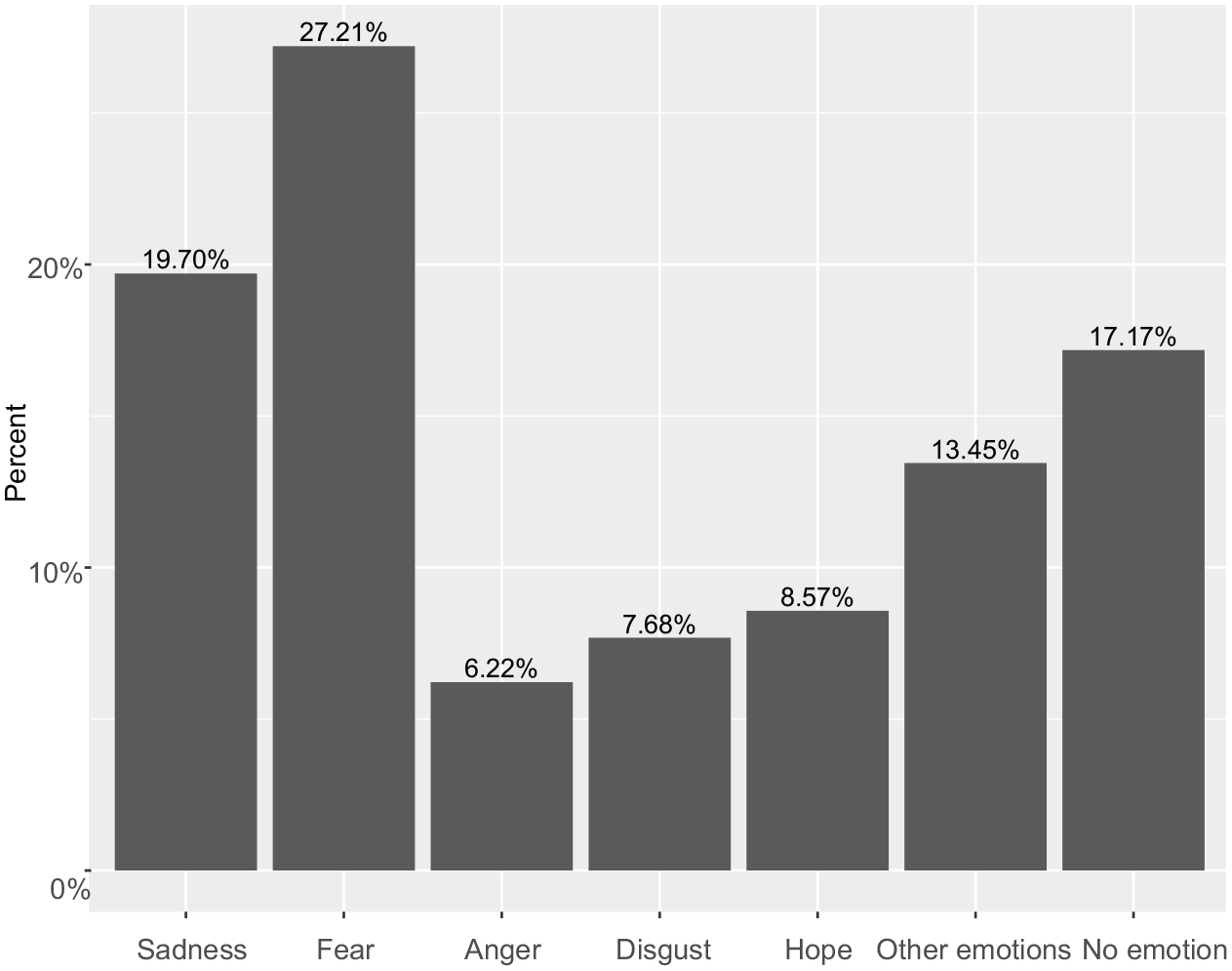
Distribution of emotional reactions salience.
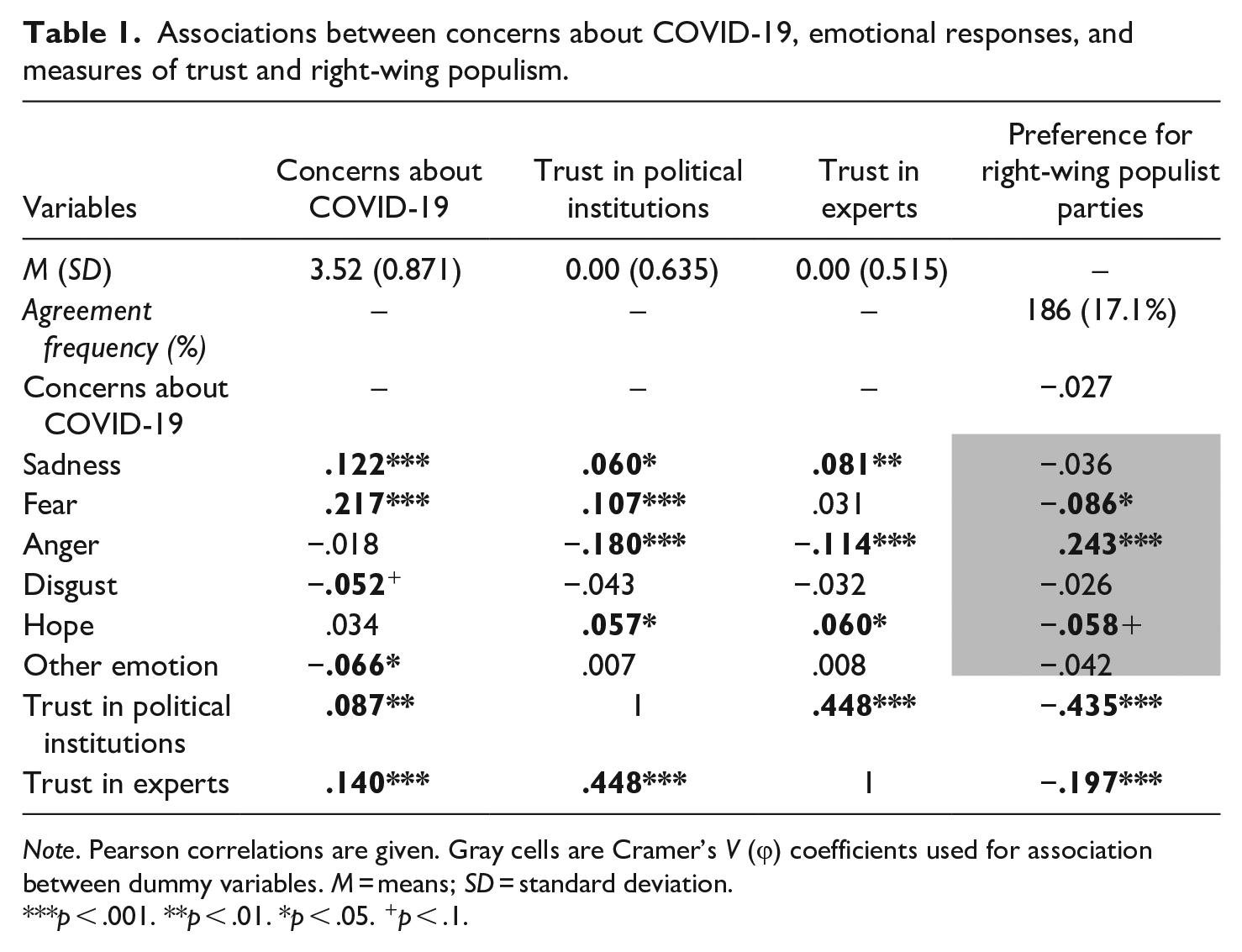
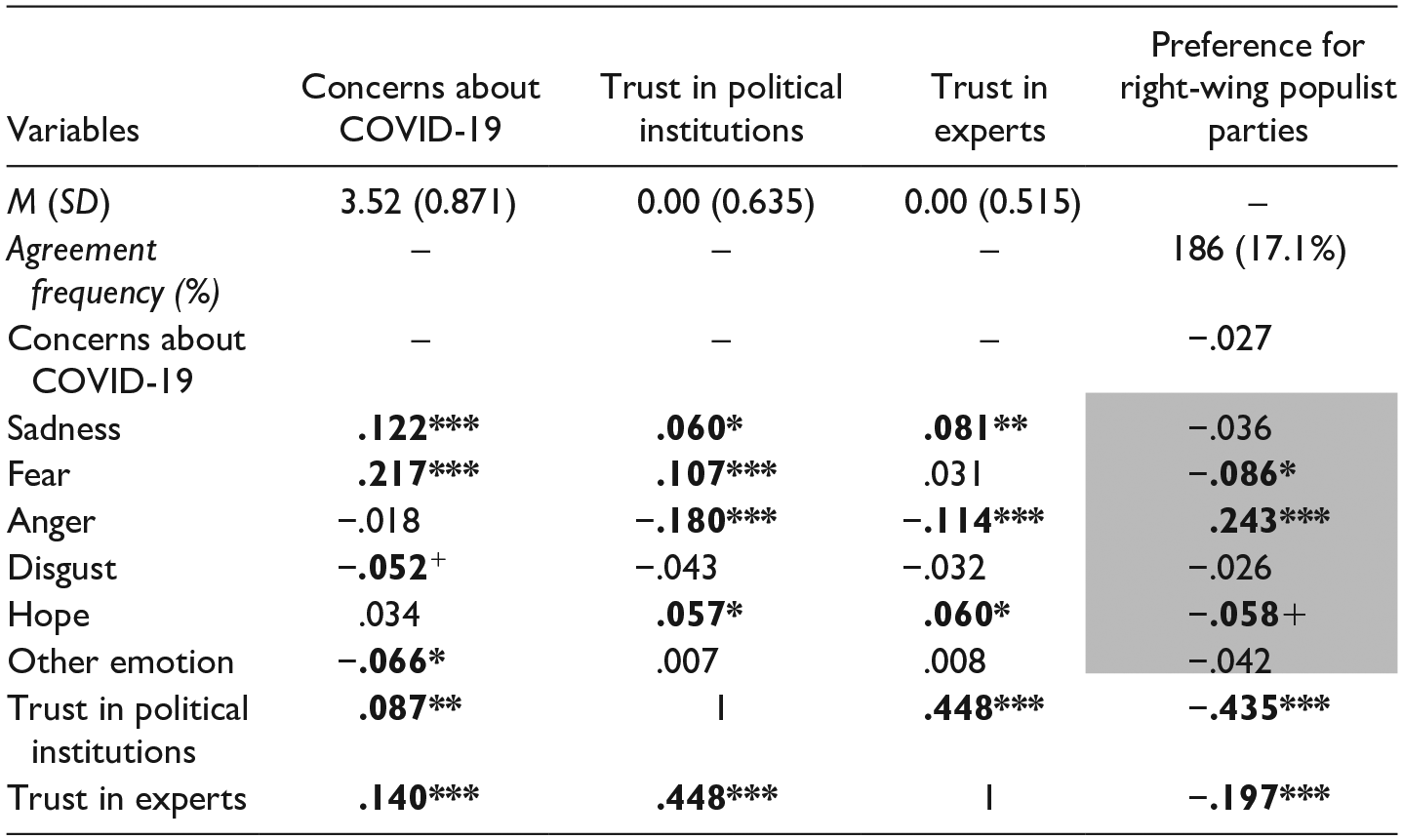
We started our analyses with bivariate associations between the variables of interest to gain a better understanding of the data (see Table 1). Trust in political institutions and experts were positively related but distinct from each other (r = .448), whereas a preference for right-wing populist parties was negatively related to trust in political institutions (r = −.435) and experts (r = −.197). Concerns about the coronavirus crisis were positively related to trust in political institutions (r = .087) and experts (r = .140) and unrelated to right-wing populism. People concerned about the pandemic were more likely to experience sadness (r = .122) and fear (r = .217).
Associations between concerns about COVID-19, emotional responses, and measures of trust and right-wing populism.
Note. Pearson correlations are given. Gray cells are Cramer’s V (ϕ) coefficients used for association between dummy variables. M = means; SD = standard deviation.
p < .001. **p < .01. *p < .05. +p < .1.
Sadness, fear, and hope were positively associated with trust in political institutions (rsadness = .060, rfear = .107, rhope = .057). Sadness and hope were positively related to trust in experts (rsadness = .081, rhope = .060). In contrast, fear and hope, though marginally significant, were negatively associated with a preference for right-wing populist parties (ϕanger = −.086, ϕhope = −.058). Anger had a negative correlation with trust in political institutions (ρ = −.180) and experts (ρ = −.114) and a positive association with a preference for right-wing populist parties (ϕ = .243).
Multivariate Analyses
Turning to multivariate analysis (see Table 2), concerns about COVID-19 were positively related to trust in political institutions (B2 = 0.099, SE = 0.021) and trust in experts (B = 0.082, SE = 0.018) and unrelated to a preference for right-wing populist parties (odds ratio [OR] = 1.098, 95% CI: [0.875–1.383]).
Results of regression analysis with trust in political institutions, experts, and a preference for right-wing populist parties as dependent variables.
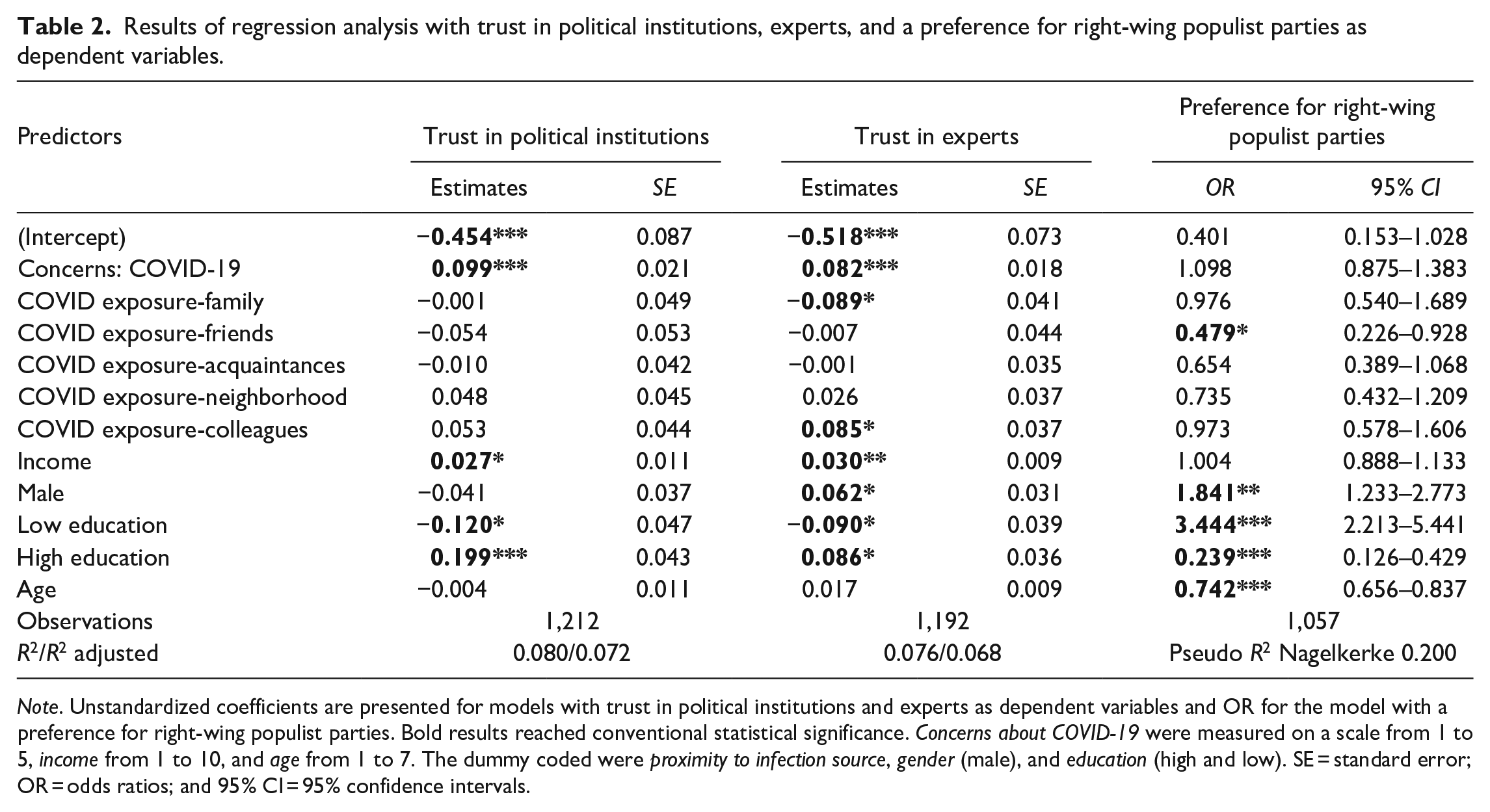
Note. Unstandardized coefficients are presented for models with trust in political institutions and experts as dependent variables and OR for the model with a preference for right-wing populist parties. Bold results reached conventional statistical significance. Concerns about COVID-19 were measured on a scale from 1 to 5, income from 1 to 10, and age from 1 to 7. The dummy coded were proximity to infection source, gender (male), and education (high and low). SE = standard error; OR = odds ratios; and 95% CI = 95% confidence intervals.
Hence, we see some evidence of the “rally effect,” as there was a positive relationship between being concerned about COVID-19 and trust in political institutions and experts, whereas concerns about the coronavirus were unrelated to support for right-wing populism.
Mediation Analysis
We now present three models in which we tested whether emotions mediated relationships between concerns about the coronavirus crisis and trust in political institutions and experts and a preference for right-wing populism. Since emotions were measured as binary variables, logistic regression was used to estimate the relationships between the independent variable and the mediators. In the model with a preference for right-wing populist parties as the dependent variable, which was dummy coded, all paths were estimated with logistic regression.
We first present the direct associations between concerns about the coronavirus crisis and emotions, which were the same for all models. We then present the associations between emotions and each outcome variable of interest, as well as the indirect effects.
To begin (see Figures 2–4), concerns about COVID-19 were positively related to sadness (OR = 1.441, 95% CI: [1.202–1.747]) and fear (OR = 1.844, 95% CI: [1.497–2.266]), negatively related to other emotions (OR = 0.802, 95% CI: [0.647–0.988]), and unrelated to anger, disgust, or hope, compared to the absence of emotional reaction.
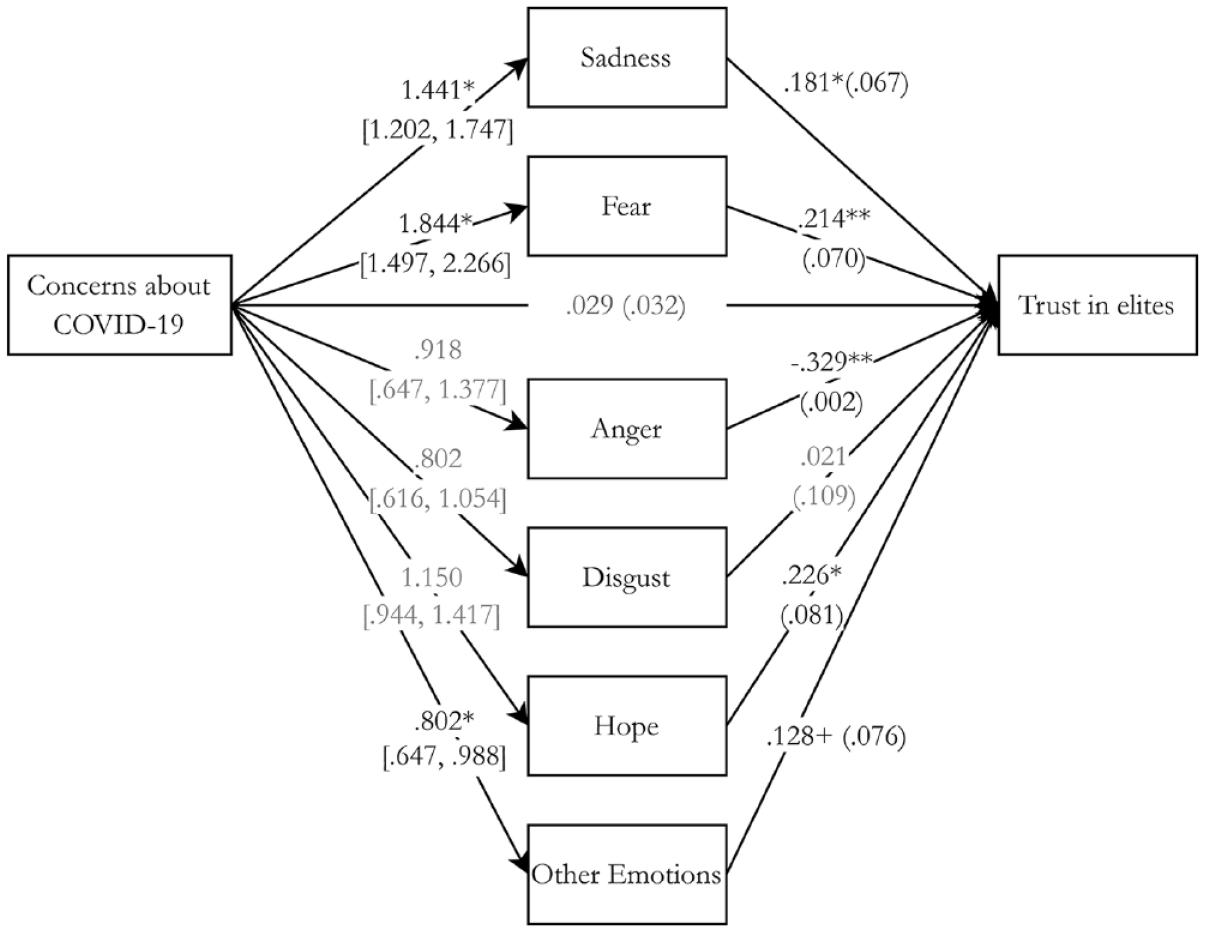
Mediation model with concerns about COVID-19 as the independent variable, emotions as mediators, and trust in political institutions as the dependent variable.
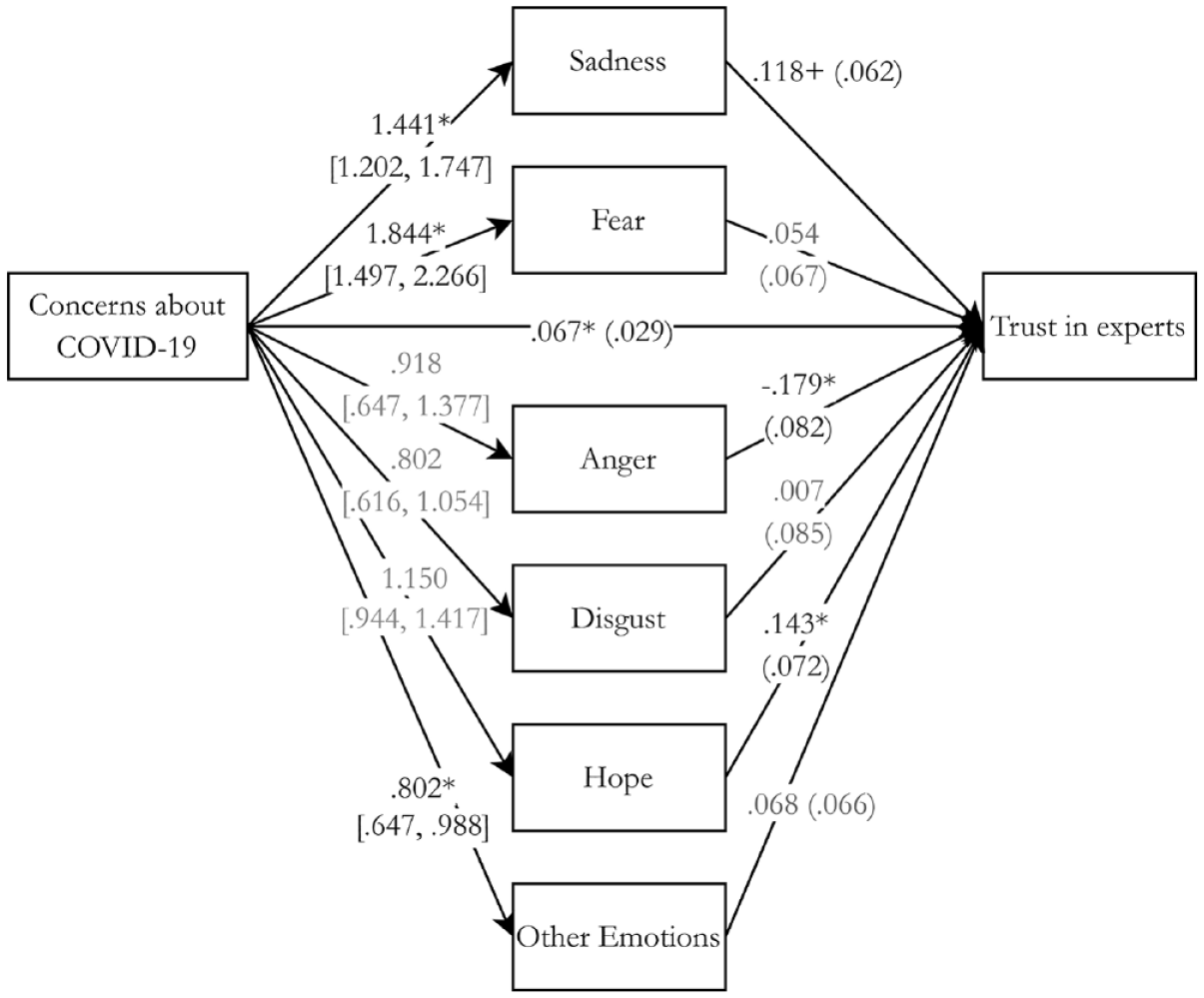
Mediation model with concerns about COVID-19 as the independent variable, emotions as mediators, and trust in experts as the dependent variable.
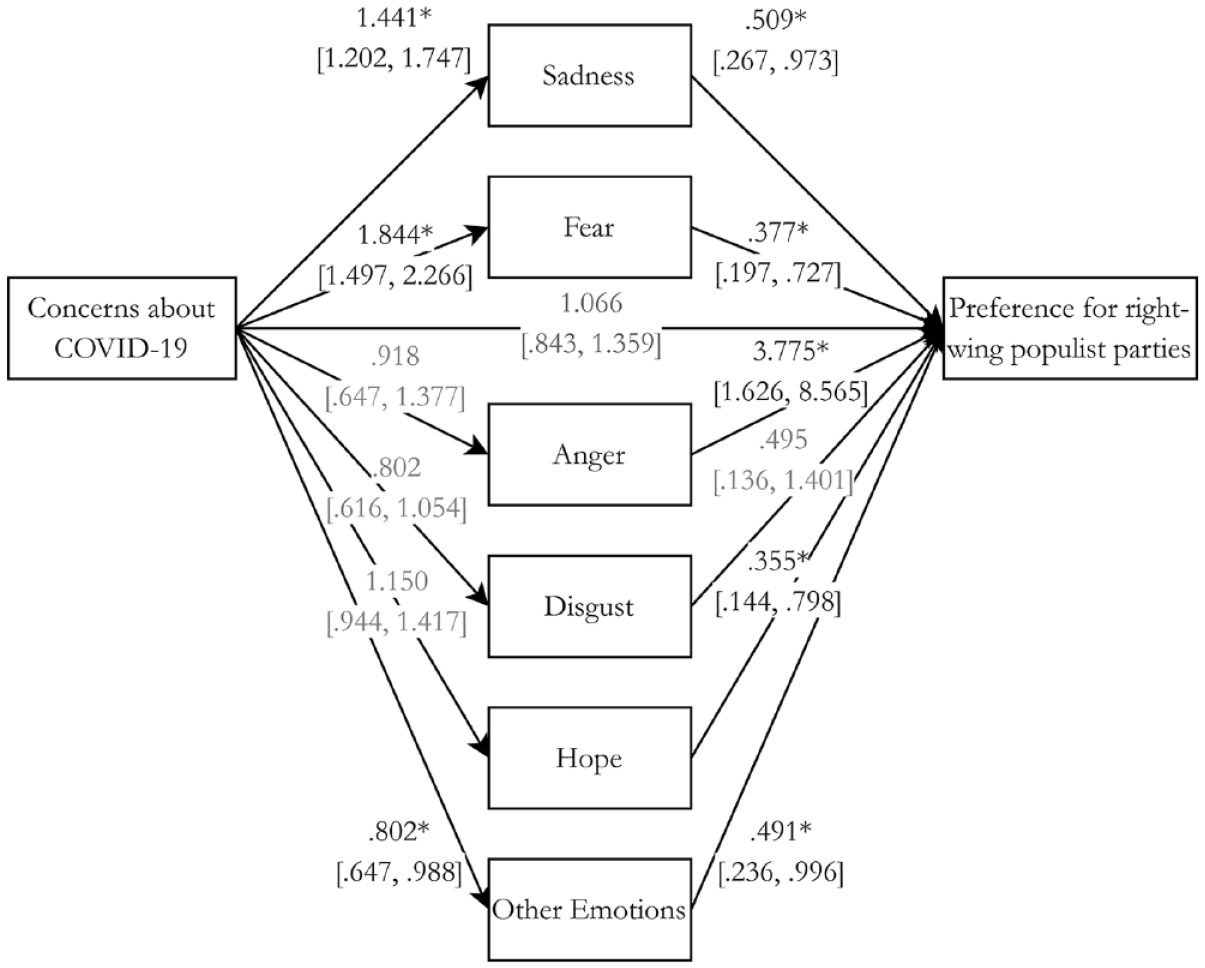
Mediation model with concerns about COVID-19 as the independent variable, emotions as mediators, and a preference for right-wing populist parties as the dependent variable.
Sadness (B = 0.181, SE = 0.067), fear (B = 0.214, SE = 0.070), and hope (B = 0.226, SE = 0.081) were positively related to trust in political institutions, and anger (B = −0.329, SE = 0.002) was negatively related to trust in political institutions (see Figure 2). The relationship between concerns about the coronavirus crisis and trust in political institutions was fully mediated by emotions. Compared to the regression model (see Table 2), the association between concerns about the coronavirus crisis and trust in political institutions became insignificant (B = 0.029, SE = 0.032) when emotions were included. Mediation effects were small, albeit two were of significance— the effects mediated by sadness (B = 0.012, SE = 0.005, p = 0.023, 95% CI: [0.004–0.024]) and fear (B = 0.028, SE = 0.011, p = .011, 95% CI: [0.009–0.052]). This indicates that people concerned about the pandemic felt sadder and more afraid and trusted political institutions more. Therefore, despite the small effects, the findings suggest that affect plays a role in why people rally around political institutions.
In the model with trust in experts as the outcome variable (see Figure 3), anger was inversely (B = −0.179, SE = 0.082), hope (B = 0.143, SE = 0.072), and sadness, though at a marginal significance (B = 0.118, SE = 0.062), positively related to trust in political institutions. Unlike trust in political institutions, fear was unrelated to trust in experts. With the inclusion of emotions, the association between concerns about COVID-19 and trust in experts remained significant (B = 0.067, SE = 0.029). Only sadness showed a negligible positive indirect effect on trust in experts (B = 0.007, SE = 0.004, p = .098, 95% CI: [0.001–0.019]), which did not reach the conventional significance level. This could indicate different explanations for why people show more trust in experts and political institutions when facing life-threatening situations. It is possible that trust in experts results from rational choice and not affect.
Finally, sadness (OR = 0.509, 95% CI: [0.267–0.973]), fear (OR = 0.377, 95% CI: [0.197–0.727]), hope (OR = 0.355, 95% CI: [0.144–0.798]), and other emotions (OR = 0.491, 95% CI: [0.236–0.996]) were negatively related to a preference for right-wing populist parties, while anger (OR = 3.775, 95% CI: [1.626–8.565]) was positively related thereto (see Figure 4). Sadness and fear mediated the relationship between concerns about COVID-19 and a preference for right-wing populist parties with significant negative effects (ORsadness = 0.964, 95% CI: [0.917–0.995], ORfear = 0.891, 95% CI: [0.815–0.956]). In contrast, the experience of other emotions, which had a small but significant and positive indirect effect (OR = 1.022, 95% CI: [1.003–1.051]), suggests that future research could broaden the range of emotions studied. We did not find evidence of the authoritarian reflex, as suggested above. However, the preference for right-wing populist parties was positively related to anger (see Figure 4), but anger was unrelated to concerns about the coronavirus crisis. This implies that anger could be associated with stimuli other than concerns about the coronavirus crisis, such as blame attributions to political elites (e.g., Abadi et al., 2021).
Conclusion
The aim of this study was to empirically test the micro-foundations of the “rally effect,” namely whether concerns about the coronavirus crises were related to support for political institutions and experts or, alternatively, to a preference for right-wing populist parties, as well as whether emotional responses to the pandemic mediated these relationships. We found that concerns about the coronavirus crisis were associated with the “rally effect”: people who felt concerned trusted political institutions and experts more. This implies that the “rally effect” extends to institutions other than incumbent politicians, who, similar to healthcare authorities or scientists, participated in decision-making, communicating, and explaining policies and measures regarding the pandemic. At the same time, we did not find any relationship between concerns about the coronavirus crisis and a preference for right-wing populist parties, which implies that in the Netherlands, right-wing populism is not related to people’s appraisals of the importance of the pandemic for their lives and goals. On the one hand, this finding serves as a counterargument to researchers expecting an increase of populist support due to the pandemic (cf. Abadi et al., 2021; Inglehart, 2020, April 10). On the other hand, our results relate to Wondreys and Mudde (2022), who found that the Netherlands had a most significant decay of populist right support in Europe at the beginning of the pandemic, and to the results of Foa et al. (2022) that populist support declined due to the pandemic.
Next, we found evidence that emotions related, to a small extent, to trust in political institutions and, more strongly, to right-wing populism. In particular, fear and sadness proved to be emotions of obedience—they fully mediated the relationship between concerns about the coronavirus crisis and trust in political institutions, with small but significant positive effects. In addition, sadness and fear mediated the relationship between concerns about the coronavirus crisis and a preference for populist right-wing parties with negative and significant effects. Although fear is known to enhance the “rally effect” (e.g., Dietz et al., 2023; Erhardt et al., 2021) and decrease populist support (Vasilopoulos et al., 2019), we contribute by showing that sadness may play a similar role. It was positively associated with increased trust in political institutions and inversely related to populism (cf. Rico et al., 2017). However, the relationship between sadness and these variables needs to be replicated using causal designs across diverse societies and contexts other than the coronavirus pandemic.
The fact that the relationship between concerns about the coronavirus crisis and trust in experts was negligibly mediated by emotions may indicate that there are different reasons why people trust political institutions and experts (e.g., Lindholm et al., 2025, in this Special Issue, Part 2). Trust in experts may be explained by a non-affective strategy: people decrease stress caused by threats by searching for information among scientists and healthcare authorities. We encourage future studies to test the extent to which and in what contexts the “rally effect” is applicable for institutions unrelated to incumbents, such as scientists or healthcare authorities, in a health-related “rally” event.
Compared to a number of papers on COVID-19 using convenience samples, an important advantage of this study is the use of data from a population-wide survey (i.e., representative of the Netherlands). However, we can draw conclusions only for the Netherlands. Although there are parallels between the Netherlands and other European countries in how the coronavirus crisis has been managed, the particular appeal to individual responsibility, as highlighted by the use of the term “intelligent lockdown,” might limit applicability of our findings to other contexts.
Our findings create room for further contributions in the field. Contrary to our expectations and research on threat and terrorism (Lambert et al., 2010), anger did not mediate the relationship between concerns about the coronavirus crisis, measures of trust, and support for right-wing populist parties. We have indicated the differences between “rally”-inducing events, such as the coronavirus crisis and terrorism. In events with a clearly identifiable target to blame, anger may be a driver of the “rally effect” (Huddy et al., 2005), whereas concerns about the coronavirus do not imply the existence of such a target. However, blaming political institutions or experts for policies related to the pandemic could be negatively related to trust in institutions and positively associated with a preference for right-wing populist parties; in such cases, we would expect anger to mediate the relationship between blame attributions and measures of trust (with a negative mediation effect) and populism (with a positive mediation effect).
Our study lacked refined measures of emotion appraisals, even though we relied on appraisal theories of emotions. Apart from blame attributions, of special interest for a “rally”-event could be appraisals of coping potential and uncertainty (e.g., Abadi et al., 2021). Future research should, as done by Abadi et al. (2021), examine the different aspects of a “rally”-inducing event that individuals react to, such as blaming the government for slowly introduced policies or being worried about close ones not getting COVID-19. It will allow researchers to better account for emotional reactions and how emotions can shape individuals’ attitudes and behaviors. For instance, if people were asked about lockdown measures or individuals breaking hygiene rules preventing the spread of the pandemic, they could react with anger and could be more prone to support the populist right and oppose incumbents. On the contrary, if they thought about the end of the pandemic, they could feel hopeful and show stronger support for incumbents.
Another important implication relates to the role of trust. On the one hand, an increase in trust in political institutions and experts may be beneficial in a situation like the pandemic. If people under threat trust political institutions that issue important legislations and experts who explain why one should maintain various restrictions and precautions against a health-threatening virus, they are more likely to adhere to such policies (e.g., Bicchieri et al., 2021). This can save lives and give individuals a perception of certainty and control, thereby reducing distress. On the other hand, low levels of trust can be advantageous to democracies, as people critically assess institutions run by elites (Inglehart & Welzel, 2005). In the context of the coronavirus pandemic, high levels of trust may have caused non-compliance when trusted agents discouraged compliance, as well as slower policy responses from citizens (Devine et al., 2021). Future research should delve into what level of trust is sufficient for fostering compliance. Moreover, while feelings of fear and sadness may lead to higher levels of trust in political institutions and decreased support for right-wing populist parties, they can also result in disengagement from politics and passive obedience, which can be harmful to democracy.
It is important to mention that the timing of the fieldwork may have influenced the results of our study. The data were collected half a year after the beginning of the COVID-19 pandemic in the Netherlands and amid the start of a new set of lockdown measures (after measures were eased, from June 1, 2020, onward); the rollout of the COVID-19 vaccines happened later and initially had problems in the Netherlands (Schaarf, 2021). It is beneficial to study events such as the coronavirus pandemic at multiple time points (e.g., Dietz et al., 2023), tracing the dynamics for measures of trust and populism and for how different covariates relate thereto.
A significant limitation of our study is the use of cross-sectional data. We cannot make causal claims (cf, e.g., Lytkina, 2023), and our design also allowed for reversed causality. For instance, it was revealed that by following a populist agenda, people were more prone to experiencing particular emotions (e.g., Wirz, 2018). Other research has focused on how trust in political institutions affected concerns about the coronavirus (Lieberoth et al., 2021). Future studies should replicate our findings using longitudinal or experimental designs in different societies and employing contexts other than the coronavirus pandemic.
Other limitations of the data relate to the measures of emotions and trust. Using a single question with one labeled emotion does not render complex emotional states, but it is conventional in the literature (e.g., Capelos & Demertzis, 2018) and helps tackle the problem of endogeneity. In addition, we made generalizations by equating trust in government and parliament to trust in political institutions, and trust in science and the healthcare system to trust in experts. Even though trust in government and in parliament are the core of trust in political institutions (e.g., Van der Meer & Hakhverdian, 2017; Schneider, 2017), different researchers include diverse indicators to capture it: for instance, Hooghe and Kern (2015) used trust in parliament, the legal system, the police, and politicians, Berg and Hjerm (2010)—trust in parliament, the legal system, political parties, and politicians. Similarly, doctors or other social groups could also be viewed as experts, although existing research has focused on the role of science (Battiston et al., 2020; Bicchieri et al., 2021) and healthcare authorities (Battiston et al., 2020). Therefore, although our generalizations made our argumentation more straightforward, they should be treated with caution.
Nevertheless, our study shows that addressing micro-processes, such as concerns about the coronavirus pandemic and emotions, is important for understanding the “rally effect” and whether people would search for help and empowerment among political institutions and other actors involved in solving the crisis (as scientists and healthcare authorities in the case of COVID-19) or unite around populist leadership in the face of a life-threatening crisis.
Supplemental Material
sj-docx-1-abs-10.1177_00027642241240418 – Supplemental material for Rally Around the Government or a Populist Response? How Concerns About COVID-19 and Emotional Responses Relate to Institutional Trust and Support for Right-Wing Populism
Supplemental material, sj-docx-1-abs-10.1177_00027642241240418 for Rally Around the Government or a Populist Response? How Concerns About COVID-19 and Emotional Responses Relate to Institutional Trust and Support for Right-Wing Populism by Ekaterina Lytkina and Tim Reeskens in American Behavioral Scientist
Footnotes
Acknowledgements
We would like to thank the editors, the anonymous reviewers, and Arvid Kappas for their helpful comments on earlier versions of this article.
Declaration of Conflicting Interests
The authors declared no potential conflicts of interest with respect to the research, authorship, and/or publication of this article.
Funding
The authors disclosed receipt of the following financial support for the research, authorship, and/or publication of this article: This study was made possible thanks to the Grant 440.20.005 of the Dutch Research Council (NWO) received by the second author. Many thanks to Centerdata for making the COVID-19 questionnaire possible.

Supplemental Material
Supplemental material for this article is available online.
Notes
Author Biographies
References
Supplementary Material
Please find the following supplemental material available below.
For Open Access articles published under a Creative Commons License, all supplemental material carries the same license as the article it is associated with.
For non-Open Access articles published, all supplemental material carries a non-exclusive license, and permission requests for re-use of supplemental material or any part of supplemental material shall be sent directly to the copyright owner as specified in the copyright notice associated with the article.
