



Abstract
The emotional reactions to interactive advertisements are a relatively new study object, attending the synchronous evolution of the natural interactive platforms. Interactivity has increased thanks to Internet usage, and it can be also attractive for political communication.
In television’s case, it is a growing phenomenon whose main launcher is the implementation of the Hybrid broadcast broadband Television (HbbTV) standard. Key players of the sector (networks, media agencies, and advertisers) try to take profit from the options generated by the interaction with the audience. We have developed an experimental methodology that consists of viewing an advertising block that includes conventional and interactive advertisements in order to observe the emotions that those generate in the audience. The experiment included the view of a nine advertisement block and the analysis of face reactions linked to emotions. It is concluded that surprise emotion via humor does not make it easier to capture attention during the broadcast of a sequence of advertisements and identify the advertisement, and humor increases relatively interest in interactive advertisements.
Theoretical Framework
Political propaganda as a tangible expression of ideology in communication is an exciting field to study the audience’s emotions and perception (Hyzen, 2021). It is well-known that the fundamental role that emotions play in political communications is to win the attention and attract the targeted public on voting, especially during the election campaign period (Kühne et al., 2011; Marmor-Levie & Weiman, 2005; Daignalut et al., 2013). Abelson et al. (1982) and other researchers have demonstrated the cognitive influence of positive and negative emotions to predict the evaluation of political candidates.
Televised electoral advertisements are the primary tool to build candidate image in any election campaign, usually under the candidates’ direct control (Daignault et al., 2013; Kaid, 2004). Several studies have explored emotions in political advertisements using fear, enthusiasm, hope, pride, anger, or anxiety (Glaser & Salovey, 1998; Kühne et al., 2011; Lecheler et al., 2013; Marcus & MacKuen, 1993; Stolwijk et al., 2017). Nevertheless, there is very little work from empirical communication perspective findings exploring how emotions affect the impact of interactive political advertisement campaigns or political speeches.
In the same way the “Daisy” advertisement 1 changed everything about political advertising because of the emotional effects, this article aims to review, in an interactive television environment, how the consumer reacts to an advertisement that generates surprise through the humor of a recognized comic couple.
On one hand, in recent decades and given the advertising saturation suffered by the consumer, the advertising sector industry has evolved and it is betting on interactive media (online, Hybrid broadcast broadband Television [HbbTV], among others) that allows to get the attention of consumers and win effectiveness. On the other hand, speeches with positive emotional messages with the same objective have also increased.
In this article, we will conceptualize three interrelated concepts in this theoretical framework: HbbTV as a growing interactive standard, emotions, and humor usage in the narrative discourse of advertisements to increase the chances of gaining effectiveness in attracting the attention of consumers.
HbbTV is an interactive standard promoted by the leading players in the sector, which allows dialogue with content and television brands over the Internet, using the television screen (Fondevila-Gascón, 2012). It is a technological layer that is applied on top of television channels and to Smart TV (which depends on the manufacturers).
The creation and consolidation of the HbbTV standard are sparking research on how the consumer can be more effectively impacted. The combination of television and advertising content and social media is a derivative that can be combined with advertising inserts typical of programmatic buying. This substantially modifies the relationship between company and client, and it gives the advertising sector innovative options to attract attention and excite the audience, which usually leads into monetization (Botey López et al., 2016; Fondevila-Gascón et al., 2018).
In fact, it is scientifically proven that an improvement in the Click Through Rate index is related to an improvement in the effectiveness of viewer interaction and conversion (Fondevila-Gascón et al., 2017).
The Role of Emotions in Advertising
Besides memory (Ambler & Burne, 1999), emotions play an essential role in the decision-making process and directly affect consumer behavior (Garg et al., 2007) and advertising perception. It has been shown that emotions and feelings, which are the interpretations we make of those emotions that have been quickly generated after the visualization of an advertising (Zajonc, 1980. cf. Texeira et al., 2012), allow the consumer to get more attention and act as automatic catalysts of behavior (Janizewski, 1993) or as a mediator of cognitive and behavioral responses (in the formation of attitudes and judgments) of them toward advertising (Edell & Burke, 1987; Holbrook & Batra, 1987; Kemp et al., 2012). For this reason, emotions play a central role in advertising by increasing the chances of getting communication to achieve the expected results in the consumer’s heart (Kover, 1995; Vakratsas & Ambler, 1999).
Since the 1980s, the role of emotions in advertising has been studied from different angles and their valences (positive and negative). Psychology has made a great effort to explore the effects of negative emotions such as fear and anxiety (Yiend, 2010) and positive ones such as joy and surprise (Fondevila-Gascón et al., 2021; Griskevicius et al., 2010; Texeira et al., 2012). These two have been the most studied for their positive impact when generating a more conducive environment to develop engagement with the consumer (Griskevicius et al., 2010). Texeira et al. (2012) were able to show that surprise improved attention more than joy, and joy improved viewer retention more than surprise, revealing that both routes are an excellent complement to increase the effectiveness of advertisements. The relationship between emotion and attention also occurs in social networks such as Instagram (Fondevila-Gascón et al., 2020).
At this point, it seems necessary to specify what we mean by the concept of “emotion,” because in the academic literature, it has been defined from different perspectives. In this case, we will focus on the definition that Poels and Dewite (2019) comment on with regard to their broad and unifying contribution: Emotion is a complex set of interactions among
Emotion Triggers and How to Monitor Them
Plutchik (1980, 1997) defines emotions as a state of psychological arousal with cognitive aspects derived from the context, each of them with its triggering conditions, related experiences, facial expressions, and behavioral tendencies. Therefore, facial expressions of emotions are spontaneous and involuntary manifestations of an emotional experience shown subconsciously (Kayser, 2017) and serve to communicate emotions both to oneself and to others (Texeira et al., 2012). According to Wang et al. (2020), face processing supports our ability to understand the emotional implications of changes in the muscles of the face, being a highly developed skill in humans.
Neuromarketing is usually the primary tool to discriminate emotional reactions in experimental research (Monge-Benito & Fernández-Guerra, 2012). Specifically, facial coding is usually the most common tool (Lewinski, 2015), previously used in the study of facial expressions (happiness, surprise, and sadness) in YouTube videos (Texeira et al., 2012), and how emotion can influence the perception of YouTubers and in social networks (Kramer et al., 2014).
The somatic marker theory proposed by Antonio Damasio states that emotions appear as a visceral state that precedes the conscious processing of emotion (Damasio, 1996). These sensations are derived from the response of the limbic system. The amygdala is the most involved structure. These states are associated with experiences and create a memory trace, leading to the appearance of markers in similar situations. These approaches demonstrate the inherent connection between the brain and the body and how body states such as facial expressions or physiological responses inform derived emotional states (Morandín-Ahuerma, 2019).
Humor, as a Powerful Tool in Advertising
Humor has been one of the most used techniques in modern advertising (Alden et al., 1993). Since an impulse is attributed to the understanding and acceptance of the message (Alden & Hoyer, 1993), it attracts the attention of the target (Barry & Graça, 2018; Weinberger & Gulas, 1992) or increases the liking for the advertisements and the brand (Eisend, 2011; Weinberger & Gulas, 1992). Others have not empirically demonstrated this last point (Barry & Graça, 2018). Its effect increases when it is linked to the emotion of unexpected surprise that reaches the success of the result if the joke is understood (Yoon, 2018). For this reason, this tool carries some risk.
However, the effectiveness of humor depends on the type of product advertised (Barry & Graça, 2018), the type of humor used, and the gender of the target to be impacted. Ivanov et al. (2019) showed that there were perceptual differences between genders: women react to spontaneous humor more positively than canned humor, while men’s responses are not affected by the type of humor.
Methodology
Research on emotional responses in interactive advertising on HbbTV is experimental. An advertiser (the Conforama brand) and Blanquerna-URL and CECABLE (Center for Cable Studies) took part in the experiment as academic and methodological advisers.
The research was carried out in laboratories in Blanquerna (Barcelona, Spain) and the Universidad Pontificia Bolivariana (Medellín, Colombia) during the 2020–2021 academic year, coinciding with the COVID-19 pandemic and taking the appropriate precautionary measures.
The experiment consisted of viewing a block of nine advertisements. In this block, three Conforama advertisements with interactive HbbTV format were shown. The objective was to determine the emotional response of the spectators and the influence of the use of humor.
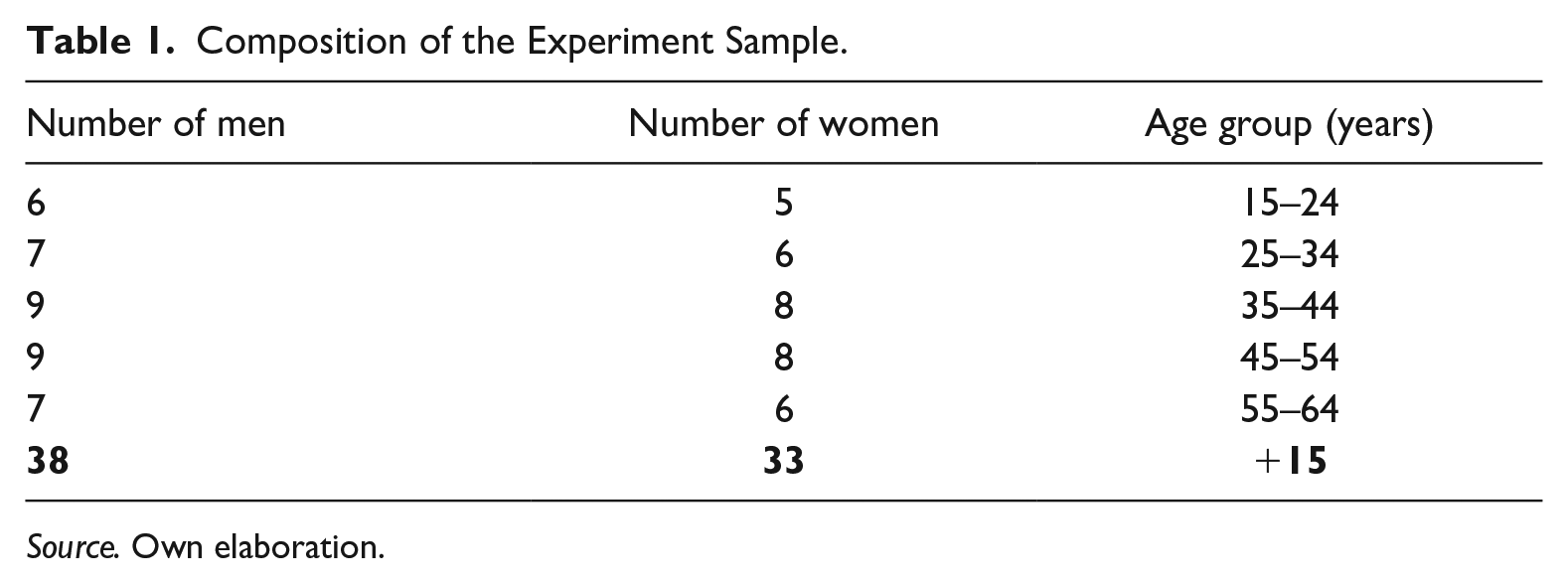
The calculation of the sample considered data from Idescat. A projection was made by gender (female and male) and by age groups (15–24, 25–34, 35–44, 45–54, and 55–64 years) (Table 1). The members of the sample (n = 71) filled out a previous questionnaire. Consecutively and immediately, they underwent the experiment.
Composition of the Experiment Sample.
Source. Own elaboration.
Regarding the previous questionnaire, it was asked about the number of hours of daily television consumption (conventional television and digital platforms such as Netflix or HBO were included, on weekdays, and on weekends), the proportion between conventional television and the rest of the platforms, the device on which most of the content was consumed (TV in the living room, TV in another area of the house, desktop computer, laptop used at home, laptop used outside home, smartphone at home, smartphone away from home), Smart TV availability, opinion about TV advertising, cause of annoyance or liking for advertising, preferred advertisement types, and preferred advertisement format.
In the experiment, a conventional advertisement unit was designed. An interactive one was inserted between them, with three versions (A = piece type L, B = piece type skirt, and C = piece type button to the right) of the Conforama brand (Image 1). Advertisements were chosen from various sectors and at random after a previous neutrality test. The idea was not to condition the reaction of the members of the sample.
To ensure that the advertisement content did not condition the response and minimize possible deviations, the researchers created some combined sequences (ABC, ACB, BAC, BCA, CAB, CBA). Taking the first sequence as a reference, the advertisements corresponded to well-known Spanish companies: Suv Peugeot 2008, Mutua Madrileña, Interactive format A (Conforama), O2 Telefonía, Cola Cao Noir, Interactive format B (Conforama), Somat, Pullmantur Cruises, and Interactive format C (Conforama).
The rotations combined the advertisement units (Figure 1): rotation 1 ABC (1, 2, A, 4, 5, B, 7, 8, C); rotation 2 ACB (1, 2, A, 4, 5, C, 7, 8, B); rotation 3 BAC (1, 2, B, 4, 5, A, 7, 8, C); rotation 4 BCA (1, 2, B, 4, 5, C, 7, 8, A); rotation 5 CAB (1, 2, C, 4, 5, A, 7, 8, B); and rotation 6 CBA (1, 2, C, 4, 5, B, 7, 8, A). The blocks were 3 min long.
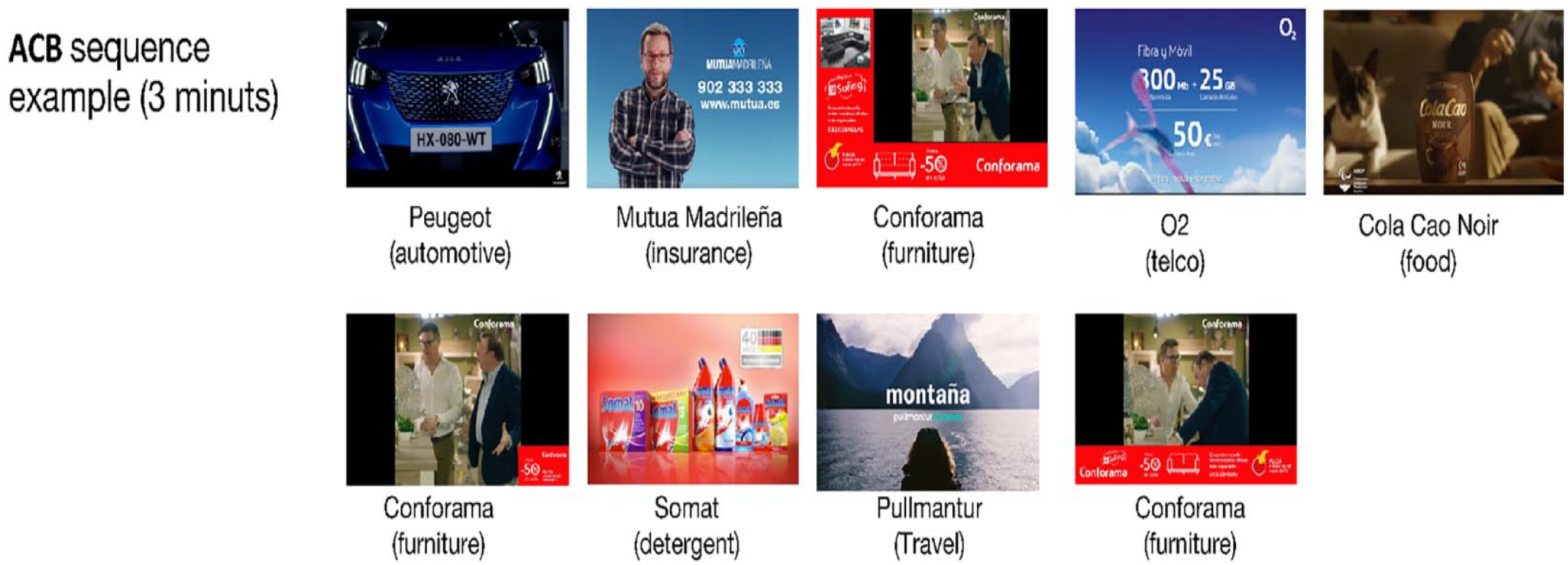
Sequences of advertisements.
The individuals in the sample viewed the corresponding advertisement unit, and the facial images were recorded synchronously to check their reactions. These recordings were digitally processed in Colombia, using a program that allows identifying emotional reactions. It is the FaceReader 8™ software from the Dutch company Noldus, which infers emotions through the measurement of 511 involuntary muscles of the face. This phase was developed in the Laboratory of Neuroscience and Consumer Behavior of the Universidad Pontificia Bolivariana, after 6 hr of purification and 10 hr of graphing with a sample of 71 participants.
FaceReader 8™ is a software manufactured by the Dutch company Noldus IT, Wageningen, the Netherlands, and it is able to analyze facial expression patterns with up to 90% accuracy (Rocha et al., 2019). The aim is to obtain objective responses in real time in relation to the emotional aspect of the attitude toward the presented stimulus (television spots in our experiment). The software recognizes and evaluates facial expressions through movements recorded by a camera and encodes the movement of the muscle in a base of 44 action units identified by the anthropologist Paul Ekman (Stasi et al., 2018). In addition, it reconstructs the face in a three-dimensional X, Y, Z space, based on a 500-point finite element model. This analysis provides a robust measurement of seven facial and emotional reaction patterns: anger, contempt, happiness, disgust, sadness, fright, and surprise. Likewise, it is considered a neutral state that indicates a lack of emotion. The dimensions of valence (positive and negative emotions) and arousal (degree of activation of the emotion) are also measured (Gonzalez Viejo et al., 2018).
After viewing the advertisements, the individuals filled out a second questionnaire, in which they asked themselves about the advertisement they preferred or which attracted more attention, whether something special had been detected on the screen and whether the Conforama advertisement offered interaction on HbbTV, on the most attractive interaction formats (Figure 2). It was also asked whether, in the case of having a remote control, they would have interacted, and what a spot should have so that they would want to interact (offer more information about the product or service, access to a direct draw or prize).
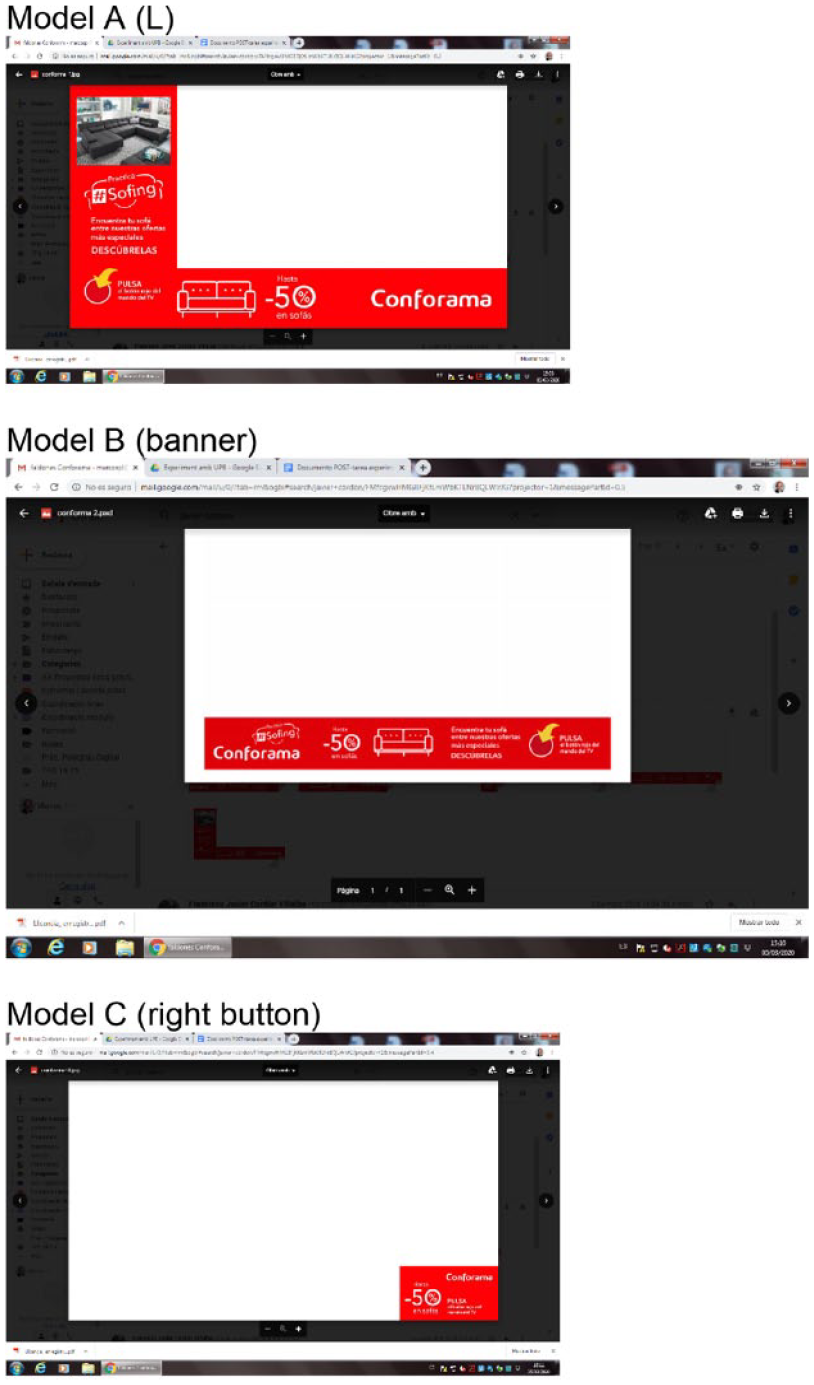
Types of interactive advertisement model used in the experiment.
The idea was to determine emotional reactions when viewing interactive advertisements and understand the role of humor. These reactions are classified like this, adapting (combining anger and contempt in one variable) the indicators of Rocha et al. (2019): happy, sad, angry, surprised, scared, and disgusted. In this way, advertisers are given guidance on the type of interactive advertisements that can be most attractive.
The starting hypotheses were the following, taking into consideration that the actors of the commercial are known by the natural audience for their humor performance:
H1. Surprise emotion via humor makes it easier to capture attention and identify the advertisement.
H2. Humor increases interest in interactive advertisements.
Results
After analyzing the results obtained in the questionnaires, it is observed that the consumption of other platforms beyond conventional TV represents 94% of the responses in the sample. The device most used to consume audiovisual content is television (70%) and in the second place is the laptop (24%), followed by the mobile phone (6%). Finally, it is worth noting that the penetration of Smart TV technology is 76% in the sample, while 21% say they do not have and 3% do not know what it is.
The degree of interaction and use of Smart TV technology is quite widespread without being a significant differentiation between the population segments. Twenty-eight percent indicate that they combine conventional TV and content on demand or on some platform (28%), especially in the age range 15 to 24 and 45 to 54 years; 24% take advantage of it a lot by watching conventional TV and content on demand; another 24% almost always watch conventional television and little content on demand; 15% only see digital content and platforms, standing out in the segment 25 to 34 years old; only 6% watch conventional TV, and finally, 4% watch audiovisual content from their computer and laptop.
Although the high consumption of on-demand content and/or digital platforms has a significant presence in the sample and it may seem that in addition to looking for relevant content, an attempt is made to avoid advertising. However, the polls do not show a global rejection of it, but there are several nuances. Sixty-one percent do not mind if there is an advertisement or short block of advertising, 24% reject the advertisement, 11% like the advertisement, and 4% do not care if there is no advertisement.
In Figure 3 on the opinion about advertising, some nonsignificant differences are perceived between the opinions about advertising between various age and gender segments. On one hand, in group M 55–64, W 25–34, and W 35–44, the “I don’t mind if there is an advertisement” stands out. On the other hand, the option that does not support advertisements has a greater presence in the group M 15–24 and W 55–64.
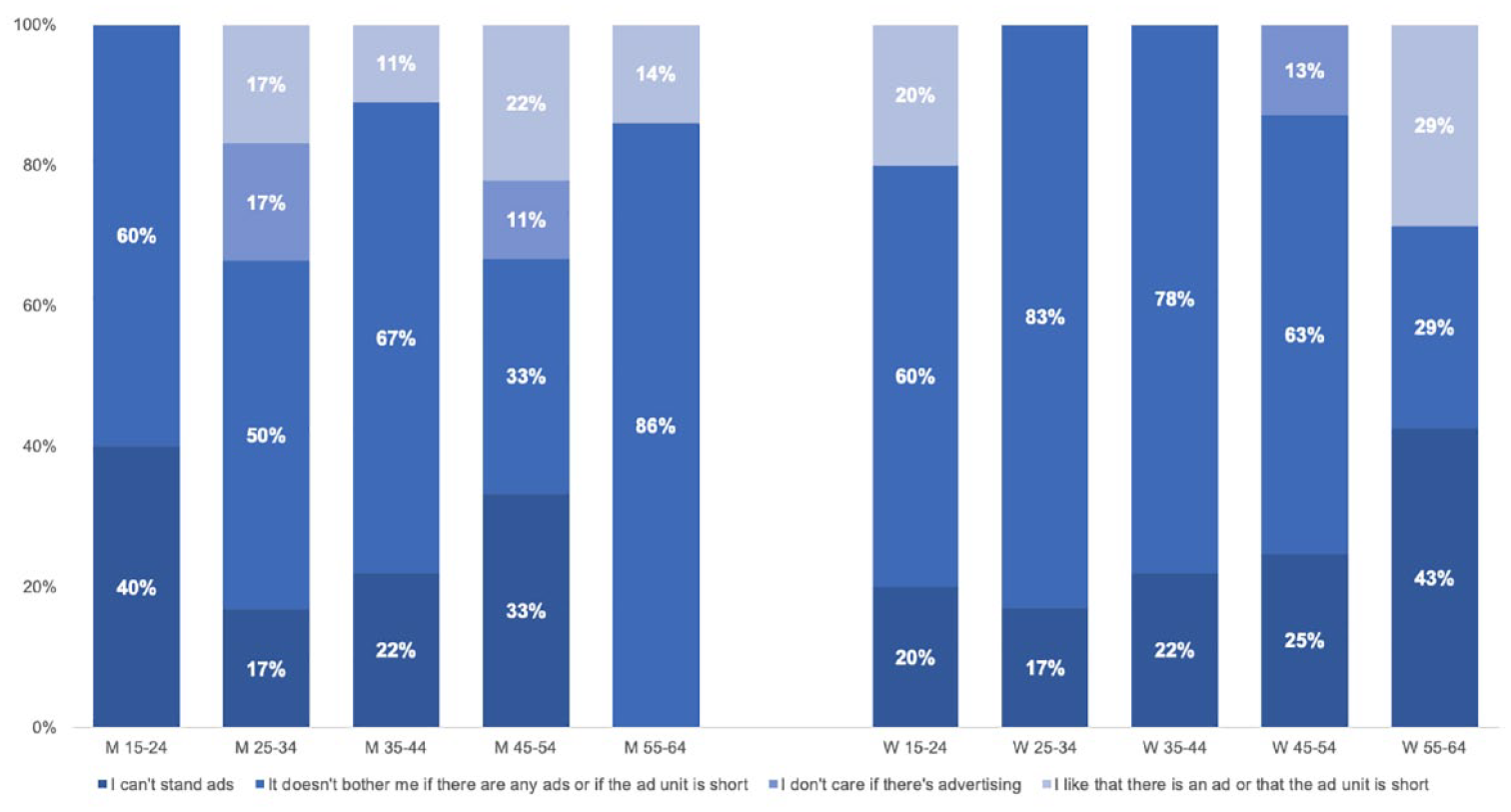
Reaction to advertising by age and gender.
If we go deeper into the analysis of the advertisements that the audience likes (Figure 4), it is observed that there are variables such as emotionality in the advertisements that are prominently used as the first reason (76%), followed by the informative capacity of the same (14%), an element such as the song in the advertisement (7%), or that celebrities appear or present a promotion offer with 1% each element. If the analysis is carried out in a transversal way in the age and gender segments, the emotionality in the four female gender segments stands out with more than 80% of the response (W 15–24, W 25–34, W 35–44, and W 45–54) without significant differentiation; whereas in the male gender segments, there is only one segment that validates this response (M 25–34). Contrastingly, those who seek to inform them have a greater presence in the male segment.
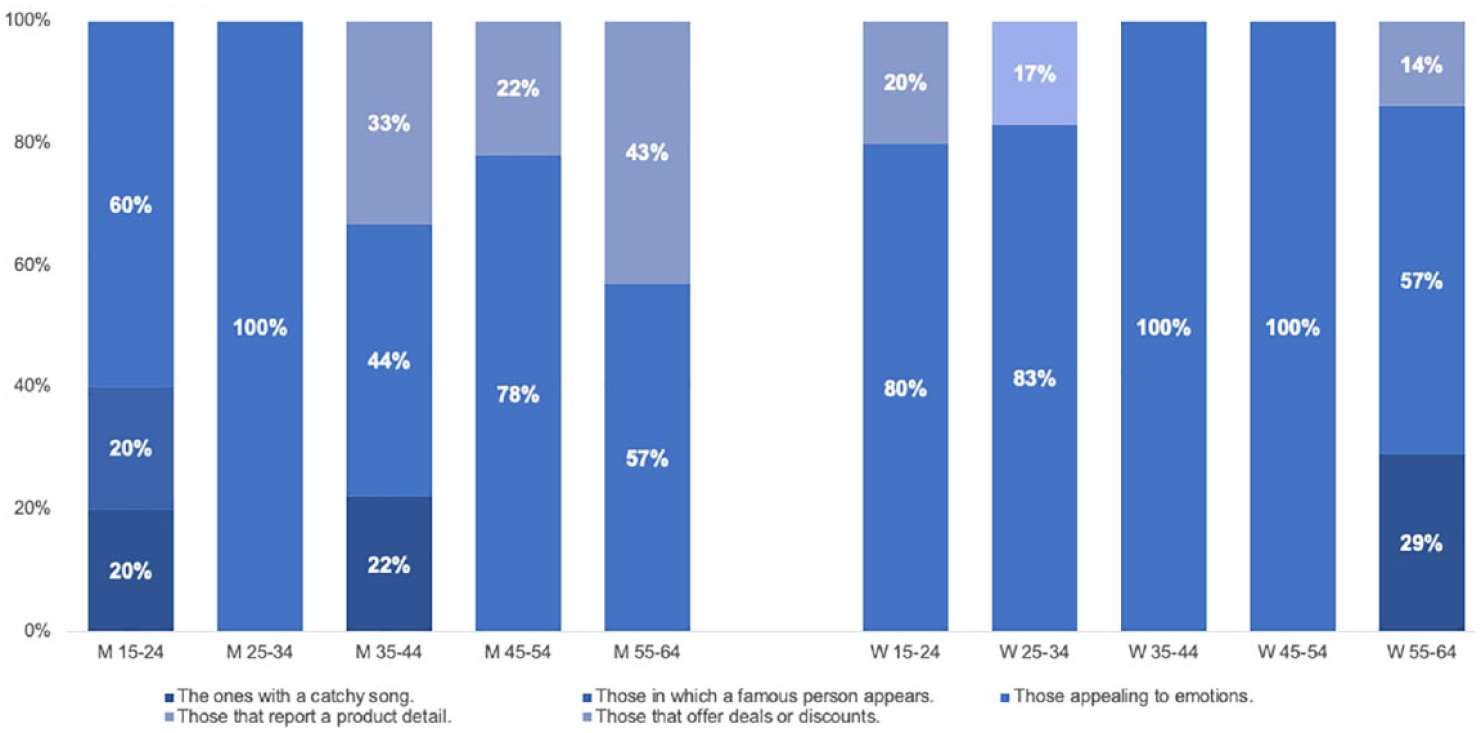
Key elements that favor the “likeability” of the advertisement.
Seeing that consumers give emotionality a prominent role, it is time to focus on analyzing the results of the audiovisual experiments obtained after the treatment of the images on the viewing of the advertisements; the result is cumulative during the viewing of the advertisements, where various emotions are combined.
The facial interpretation of the sample with the FaceReader 8™ reflects a predominance of the feeling of anger (36%), ahead of sadness (27%), happiness and disgust (12%), surprise (11%), and scare (2%) (Figure 5).
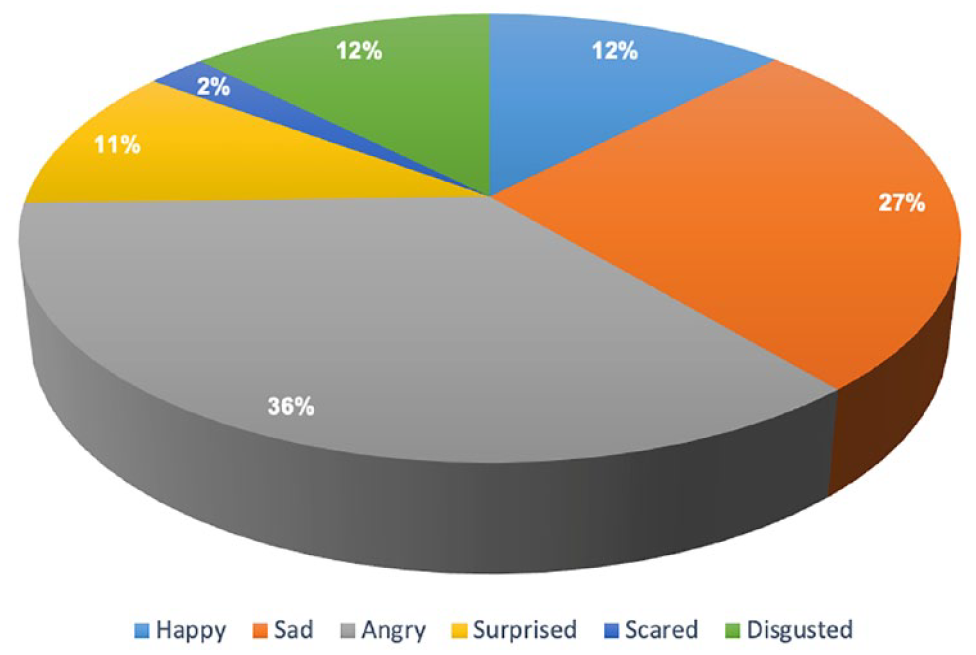
Total emotions about interactive advertisements.
These reactions are spontaneous, motivated by the content of the advertisements. When the sample members viewed the advertising block in the ABC order, in the interactive advertisement in L format (Figure 6), anger prevailed, especially in the female genre, ahead of sadness and disgust. It is worth highlighting that the fourth emotion that appeared was surprise, which can be associated with humor. In the male gender sadness predominated, slightly above anger or rage. In the third and fourth places, the feeling of happiness and surprise was placed, probably as a result of the storytelling of the Conforama advertisements, where two well-known comedians in Spain appear, who arouse ambivalent emotions curiously in women. In the skirt format (Figure 7) anger is triggered, and in the button on the right, happiness is clearly imposed, both in women and in men. As the subsequent qualitative survey found, this is due to the type of content in the advertisement, which generates one emotion or another.
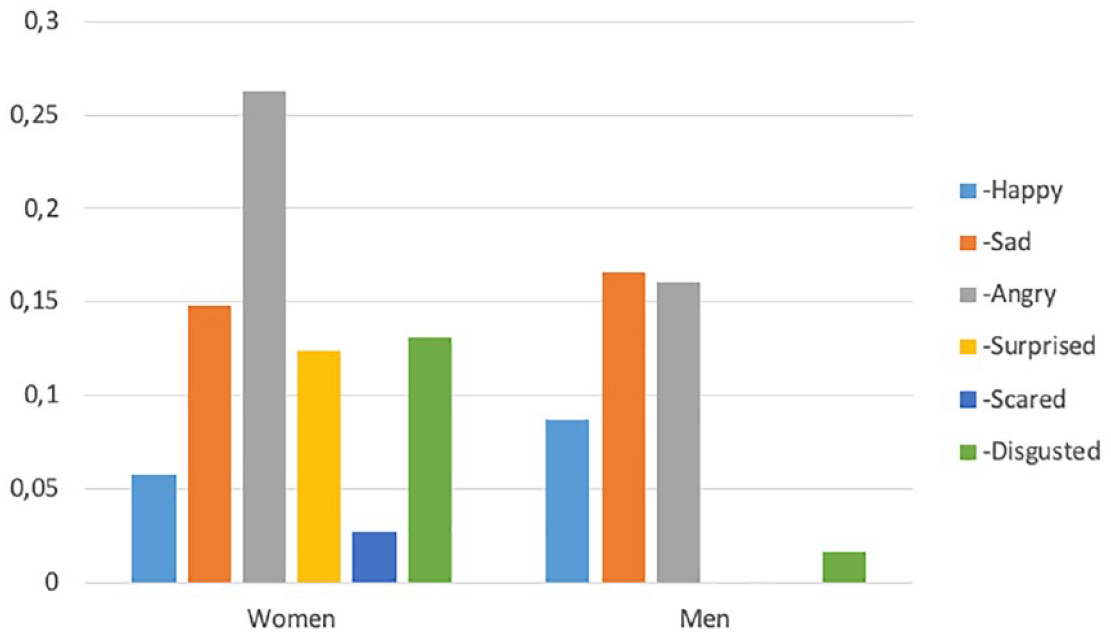
Emotions generated in the ABC order of the interactive advertisement in L format.
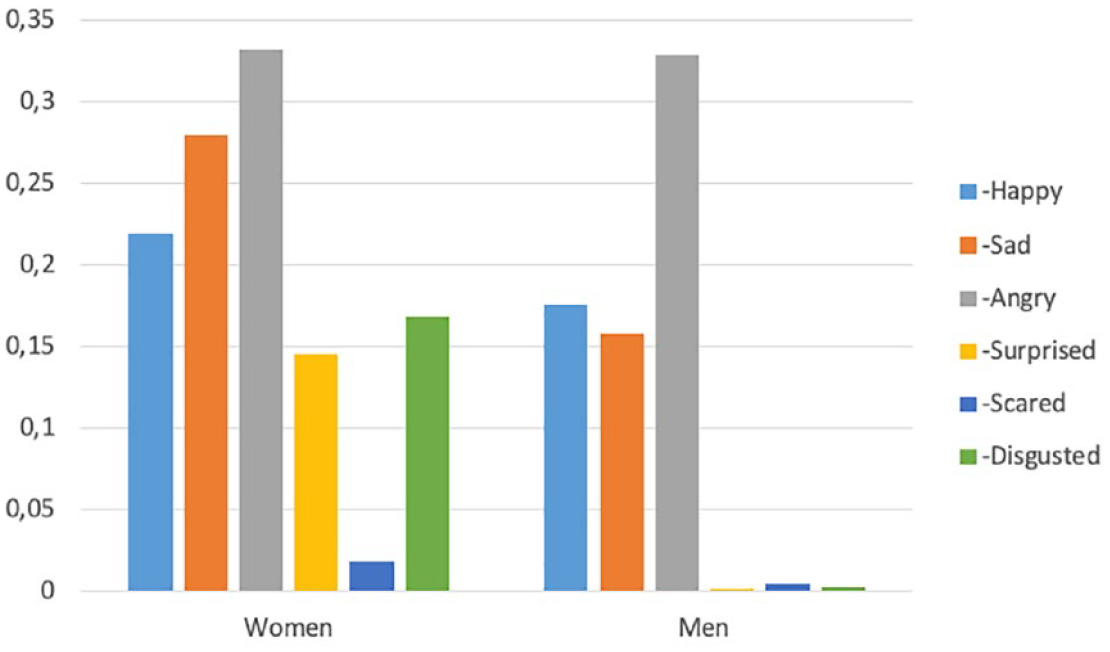
Emotions generated in the ABC order of the interactive advertisement in flap format.
Curiously, in the ACB order, the emotion of anger is maintained (also extended to the male gender) in the L format and causes sadness in men.
In the BAC order, anger monopolizes the sentiment of women and men. The growth of the feeling of sadness is noticeable in the BCA order in all three formats and in the male gender. In the CAB order in women, happiness governs in all three formats, and in men anger also in all three. In the order CBA, in women, the leading feeling is disgust (in the button on the right and L) and anger (skirt), while in men sadness (button on the right and L) and disgust (skirt) governs.
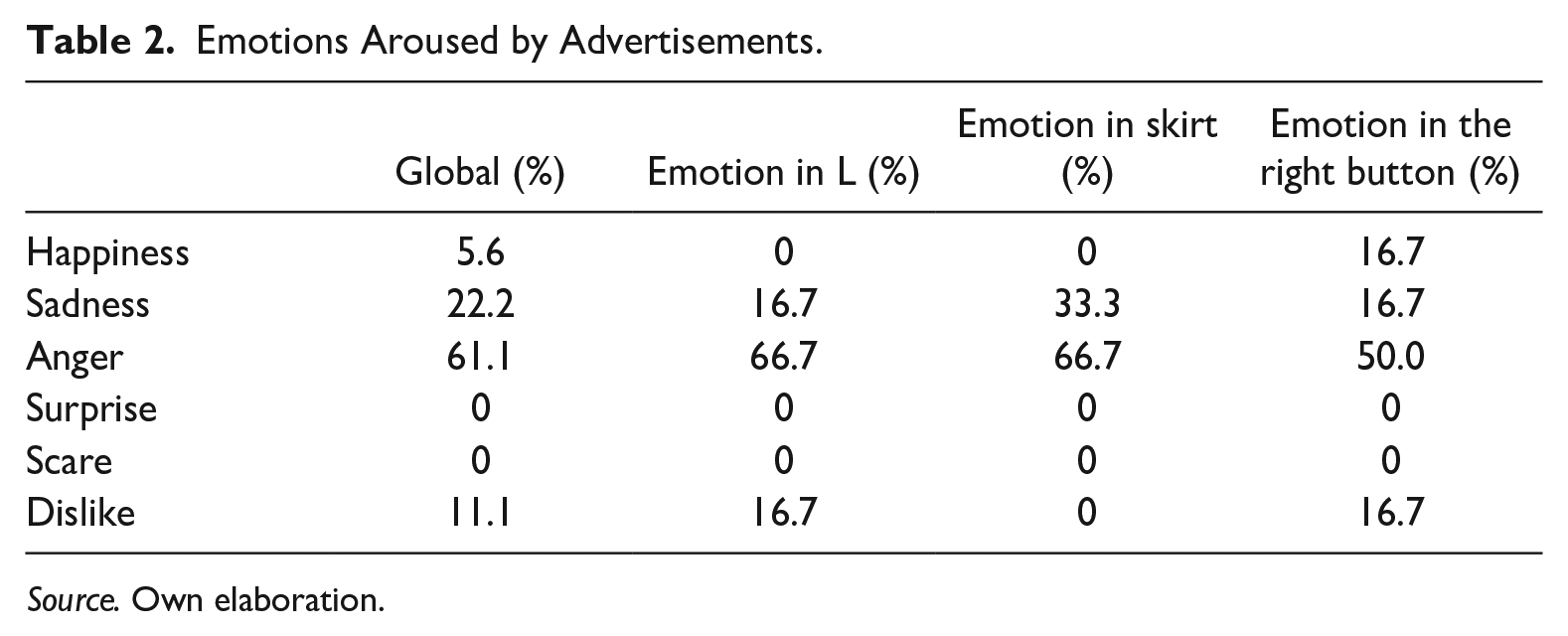
Overall, in the sum of both sexes (Table 2), anger dominates (61.11%), followed by sadness (22.22%), disgust (11.11%), and happiness (5.55%). In L format, anger governs (66.66%), ahead of sadness and disgust (both with 16.66%). In the skirt format, anger also shows 66.66%, and sadness, 33.33%. In the right button, anger accumulates 50% of emotions, and happiness, sadness, and disgust, 16.66%.
Emotions Aroused by Advertisements.
Source. Own elaboration.
After creating an advertising impact that arouses negative emotions in the majority of the users in the sample, it has not facilitated the identification of the interactive Conforama advertisements, although they followed the most common HbbTV formats. Only 44% have detected the nature of the advertisement, while 56% do not remember that this was the most relevant feature of the advertisement. Nevertheless, it is worth noting that if only 16% had detected it, they would have interacted to have more information, to exit the channel or out of curiosity with a similar percentage.
In this way, H1 would not be validated (surprise emotion via humor facilitates attracting attention) and H2 would be partially validated (humor increases interest in interactive advertisements).
Conclusions
As a global interpretation of the results, one of the hypotheses is not validated, as it appears that it has not served to distinguish this brand from the rest of the advertisements. It may be that the negativity of the emotions comes from the content format, a “basic” joke of little value and centered on Los Morancos, that can polarize the feelings of the communication piece. Possible prior knowledge of the comedians starring in the advertisement is a double-edged sword, as it can harm or benefit audience perception.
The effectiveness in capturing canned humor is shown to depend on the product, the history of the advertisement, the quality of the joke, and the comedian/celebrity, in the line of joy and surprise (Fondevila-Gascón et al., 2021; Griskevicius et al., 2010; Texeira et al., 2012).
That is why a product with a relative hook (furniture sector), a simple story, a debatable joke quality, and bipolarized comedians can condition the results, so it is suggested to carry out more experiments of this type, with diversified profiles, to finish validating the hypotheses raised.
This is one of the main
A disturbing aspect of the research is that the most common emotions have been negative, led by anger. This can be attributed to the advertisement’s content, starring characters who generate conflicting feelings, in line with what was stated by Contreras et al. (2013). This, added to a certain negative predisposition toward advertising, may explain this result. In any case, and this is positive, emotion is generated, and it has been proven that this and attention go hand in hand (Fondevila-Gascón et al., 2020), so that audiovisual companies find a clue for their advertising creations.
To generate interaction, the sample comments that advertisements should provide more information about the product or service (22%), grant a direct prize (22%), be a discount coupon or a gift, or allow access to a raffle (7%). In addition, as a premise, the product must be of interest (18%), facilitate the purchase process (6%) and have a good story (4%), among others.
The innovation that interactivity represents is an incentive for the advertising industry and political communication to investigate possible ways to improve results. Incorporating feelings and emotions can provoke more limbic, reptilian, or cortex (rational) reactions, so it seems relevant to carry out new experiments in this line.
Footnotes
Declaration of Conflicting Interests
The author declared no potential conflicts of interest with respect to the research, authorship, and/or publication of this article.
Funding
The author disclosed receipt of the following financial support for the research, authorship, and/or publication of this article: This research is part of the project “New Forms of Interactive Advertising on Television, Internet and Digital Media. Real Applications in HbbTV,” financed by the Ministry of Economy, Industry and Competitiveness, reference CSO2017-88895-R (MINECO/FEDER).