



Abstract
Message fatigue is the aversive motivational state that results from excessive exposure to campaign messages or similar information over an extended period of time. When fatigued, individuals become less attentive, less responsive, and more resistant to campaign messages and related information. Thus, understanding the bases and functioning of fatigue in persuasive health campaigns has obvious value. Despite considerable interest in this important topic, major questions remain under-studied. One such question hinges on the observation that campaigns are implemented in social systems, not laboratories. Apart from any direct effects that a campaign might produce, there is the potential for secondary exposure via individuals or other media that can yield distinct influences. How do these multiple sources work together to influence fatigue? Second, as explicated, message fatigue is the consequence of repeated exposure to campaign messages over time. With few exceptions, however, fatigue research has employed only cross-sectional designs, which preclude conclusions about the dynamic behavior of fatigue. How does fatigue change over the course of a campaign? Finally, the bases of fatigue are not entirely clear. Whereas fatigue is defined as a subjective judgment of excessive exposure, little is known about the affective processes underlying that judgment. How do emotional responses to a campaign amplify or attenuate fatigue? We examined these questions in the context of a campus COVID-19 safety behaviors campaign.
Message fatigue is the aversive motivational state that results from excessive exposure to campaign messages or similar information over an extended period of time. When fatigued, individuals become less attentive, less responsive, and more resistant to campaign messages and related information (Kim & So, 2020; Koh et al., 2020; Reynolds-Tylus et al., 2020; So et al., 2017). Thus, understanding the bases and functioning of fatigue in persuasive health campaigns has obvious value. Despite considerable interest in this important topic, major questions remain under-studied.
One such question hinges on the observation that campaigns are implemented in social systems, not laboratories. Apart from any direct effects that a campaign might produce, there is the potential for secondary exposure via individuals or other media that can yield distinct influences (e.g., Binder et al., 2015). How do these multiple sources work together to influence fatigue? Second, as explicated, message fatigue is the consequence of repeated exposure to campaign messages over time (e.g., So et al., 2017). With few exceptions, however, fatigue research has employed only cross-sectional designs, which preclude conclusions about the dynamic behavior of fatigue (e.g., Ball & Wozniak, 2021). How does fatigue change over the course of a campaign? Finally, the bases of fatigue are not entirely clear. Whereas fatigue is defined as a subjective judgment of excessive exposure, little is known about the affective processes underlying that judgment. How do emotional responses to a campaign amplify or attenuate fatigue? We examined these questions in the context of a campus COVID-19 safety behaviors campaign.
The Mask Up or Pack Up Campaign
The World Health Organization declared COVID-19 to be a Public Health Emergency of International Concern on January 30, 2020, and a pandemic on March 11. Due to high rates of congregate living and frequent travel among students, members of university and college communities were at elevated risk of acquiring and transmitting the virus (Leidner et al., 2021). Consequently, many such institutions implemented health campaigns intended to encourage COVID-relevant safety behaviors. At Penn State, the Mask Up or Pack Up (MUPU) campaign was rolled out at the beginning of the fall semester of 2020 (prior to the dissemination of a vaccine). An outside public relations firm was hired to generate campaign messages including multiple static images and video public service announcements, which were disseminated to the students and the campus community through the university’s official social media accounts.
As the name of the campaign suggests, a prominent theme was the promise to send home those students who did not comply with safety protocols (see Figure 1). To the best of our knowledge, this threat was never acted upon. References to community and responsibility to community were frequent in the set of messages as well. Both played the university slogan: “We Are . . . Penn State,” a mainstay expression of campus ambassadors and attendees at university sporting events. The campaign recommended three specific behaviors: social distancing, masking, and personal hygiene such as handwashing.
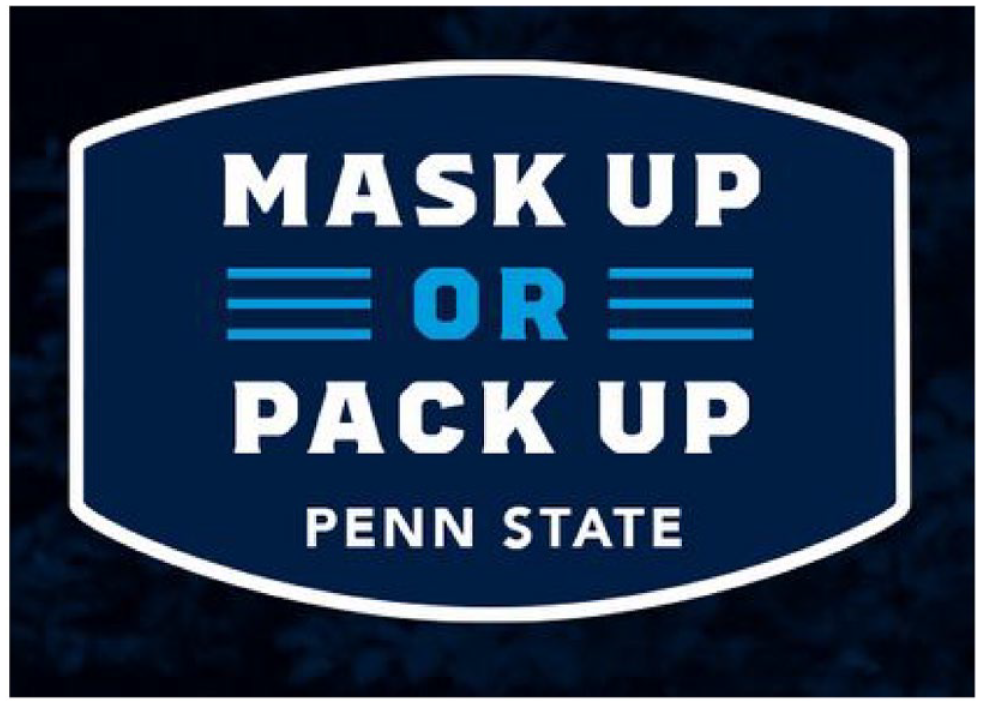
The campaign logo.
The Effects of Fatigue
To the extent that it is viable to view the fatigue literature as a theory, its logic is embodied in just two propositions: (a) at some point, exposure causes fatigue and (b) fatigue produces one or more forms of resistance to the campaign. Regarding the second proposition, the literature has linked increased fatigue empirically with perceived overload as well as decreases in issue involvement and increases in perceived tedium (Gurr & Metag, 2021; So et al., 2017). Fatigued individuals become less attentive, less responsive, and more resistant to campaign messages and related information (Koh et al., 2020; So et al., 2017). In line with this general position, we hypothesized that:
Whereas it is typical for research to ask about the relationship between fatigue and the intended campaign effects, COVID-19 safety campaigns sought to introduce three distinct types of behaviors: masking, social distancing, and hygiene. Because the three vary along multiple dimensions, there was the potential for differential impact of fatigue. Consider, first, that hygiene behavior (e.g., handwashing) was the familiar behavioral target of many previous health campaigns having to deal with influenza and the common cold while masking and social distancing (e.g., 6 ft of personal space) were novel actions. Fatigue might have a greater impact on hygiene due to the cumulative exposure to other campaigns directed toward this particular behavior.
Second, hygiene was a relatively private behavior (with the exception of handwashing in public restrooms), whereas masking and social distancing are distinctly social behaviors that are performed in public. This means that masking and distancing are subject to social influences that are unlikely to impact hygiene (cf., Webb & Sheeran, 2006). Social factors have the potential to reduce the fatigue–hygiene association if they run counter to it or to amplify it if they are congruent. Given so many potentially conflicting processes, we a posed a simple empirical question:
Causes of Fatigue
As noted above, fatigue theory implies a two-step process in which exposure causes fatigue, which in turn causes disengagement with the issue or advocacy. This simple model (X → Y → Z) might provide a complete account of the variables under study. But, there is also a possibility that fatigue does not fully mediate the effects of exposure or other independent variables. One or more X variables could influence COVID-19 behaviors both directly and indirectly (mediated via fatigue) with no requirement that the sign and/or magnitude of those effects are the same. Indeed, if only some people become fatigued, it would not be strange for exposure to manifest a positive direct effect on safety behaviors, but a negative effect via fatigue. Given these possibilities, we asked:
Communication campaigns attempt to influence large audiences within a specified time period using an organized set of communication activities including multiple mediated messages delivered through multiple media or channels (Atkin & Salmon, 2013). It might be said the campaigns exert primary effects when simple exposure to a campaign message brings about change in the target audience. That is, the message moves directly from the campaign to the recipient. Still, theories of campaigns recognize the potential for secondary effects as well (Hornik & Yanovitzky, 2003). For example, a campaign may itself be considered newsworthy and, therefore, become the topic of media coverage. Indeed, this was the case for the MUPU campaign, which was covered in the student newspapers and the local town paper. Secondary campaign exposure can also occur through channels more commonly thought of as interpersonal (Kasperson et al., 1988; Southwell & Yzer, 2009). One individual may simply mention the campaign to another, or they may engage in a full-blown evaluation of its content or its advocacy. In either case, it should be considered secondary exposure.
Although the extant theory is clear that different message sources may produce different effects, it has little to say regarding the specific conditions under which exposure might influence fatigue positively, negatively, or not at all. And empirical evidence is sparse. One recent study observed a positive association between issue fatigue and avoidance of direct media exposure, but no observable association with avoidance of interpersonal communication (Gurr & Meta, 2021). In line with the first proposition of fatigue theory (i.e., X → Y), we expected to see effects for secondary exposure that paralleled primary exposure.
Given the clear expectation the effects of different sources on fatigue could vary, but absent any theoretical mechanism to explain those variations we posed this question:
Temporal Aspects of Fatigue
Fatigue time-varying process in which that which was once novel loses its sheen, becoming dull and uninteresting. Because fatigue is defined in such temporal terms (e.g., So et al., 2017), it is surprising that more research has not examined this aspect of the construct. We sought to do so in the simplest way possible, that is, by monitoring changes in fatigue during our 8-week study period. We assessed time using week of data collection as the metric. This measure can be understood in two ways.
First, time (as a variable) served as a proxy for all the biological, social, psychological, and historical processes that took place over the course of the investigation. Thus, it included and conflated time-dependent events or milestones and time-correlated effects, such as growth and development. From this perspective, time represents the cumulative effect of all time-varying processes measured on a weekly basis.
Second, time can be conceived of as a control variable. To the extent that fatigue manifests an empirical relationship with time that association can be controlled for when estimating the effects of specific causal predictors of fatigue, such as exposure to mass and interpersonal communication. This has the desirable effect of producing more accurate estimates of the impact of those communication variables. Assuming a sustained and uniform level of campaign messages over the duration of the study period leads to the expectation that fatigue would increase as a function of time. But, recognition that there are other forces at work beyond those of the campaign allows for the possibility that time would manifest in some different pattern of association. Consequently, we asked:
Emotional Responses Underlying Campaign Fatigue
Fatigue is often described as more or less synonymous with boredom and exhaustion (e.g., Gurr & Metag, 2021). Both concepts imply the existence of repetitive emotional responses as foundational to fatigue as a chronic concept. Fatigue may be thought of as the summation of emotional responses to the entire series of campaign exposures.
Two issues are relevant here. First, health campaigns are invariably problem-oriented. By design, they seek to generate goal-incongruent appraisals, that is, perceptions of a discrepancy between circumstances and individual well-being. Such judgments yield negative emotions (Lazarus, 1991). Specifically, a COVID-19 campaign might remind individuals of the existing threat to their own well-being and that of others. There is also the matter of the threat embodied in the campaign slogan, that is, mask up or be sent home. These appraisals are likely to generate fear. Similarly, exposure to the campaign is synonymous with exposure to the topic of COVID-19, including the knowledge that millions died, while an even larger number suffered. These appraisals provide the cognitive basis for sadness. Due to their negative valence and avoidance orientation, the experience of either or both emotions could plausibly contribute to message fatigue.
It is not, however, inconceivable that a COVID-19 campaign could also yield positive emotions. Indeed, one study of emotional responses to the pandemic reported higher levels of hope than were seen in studies of everyday, pre-pandemic emotions (self-citation). Given that positive emotions are known to buffer the deleterious health effects of negative emotions (Kubzansky & Winning, 2016), these subjectively pleasant responses to the campaign should mitigate fatigue. In the context of the MUPU COVID-19 safety campaign, two positive emotions seemed likely to occur. First is pride, an emotion that might arise from both solidarity with the campus community and identification with the university that delivered the campaign (i.e., We Are!). Second, a safety campaign might also evoke hope based on the belief that the threat to well-being will pass, either through natural means or the development of a vaccine (Lazarus, 1999). Hence:
Method
Participants 1
In the Fall semester of 2020, Penn State University Park campus was open, but the majority of classes were in the virtual mode. Students had returned to campus and lived either in student dorms or off-campus housing.
The initial sample consisted of 1208 students enrolled in a general education course required of all undergraduates. Although participation was voluntary, all of these students received a small amount of course credit in return for their time. The campaign was rolled out on August 12, 2020, although we were unable to access research participants until September 17, 2020. On that day, we initiated a rolling cross-sectional survey, which took place over a period of 8 weeks, ending on November 11, 2020. Invitations to participate were issued every Thursday at about noon to a subset (n = 151) of the total available subjects, selected from the entire subject pool with simple random sampling without replacement.
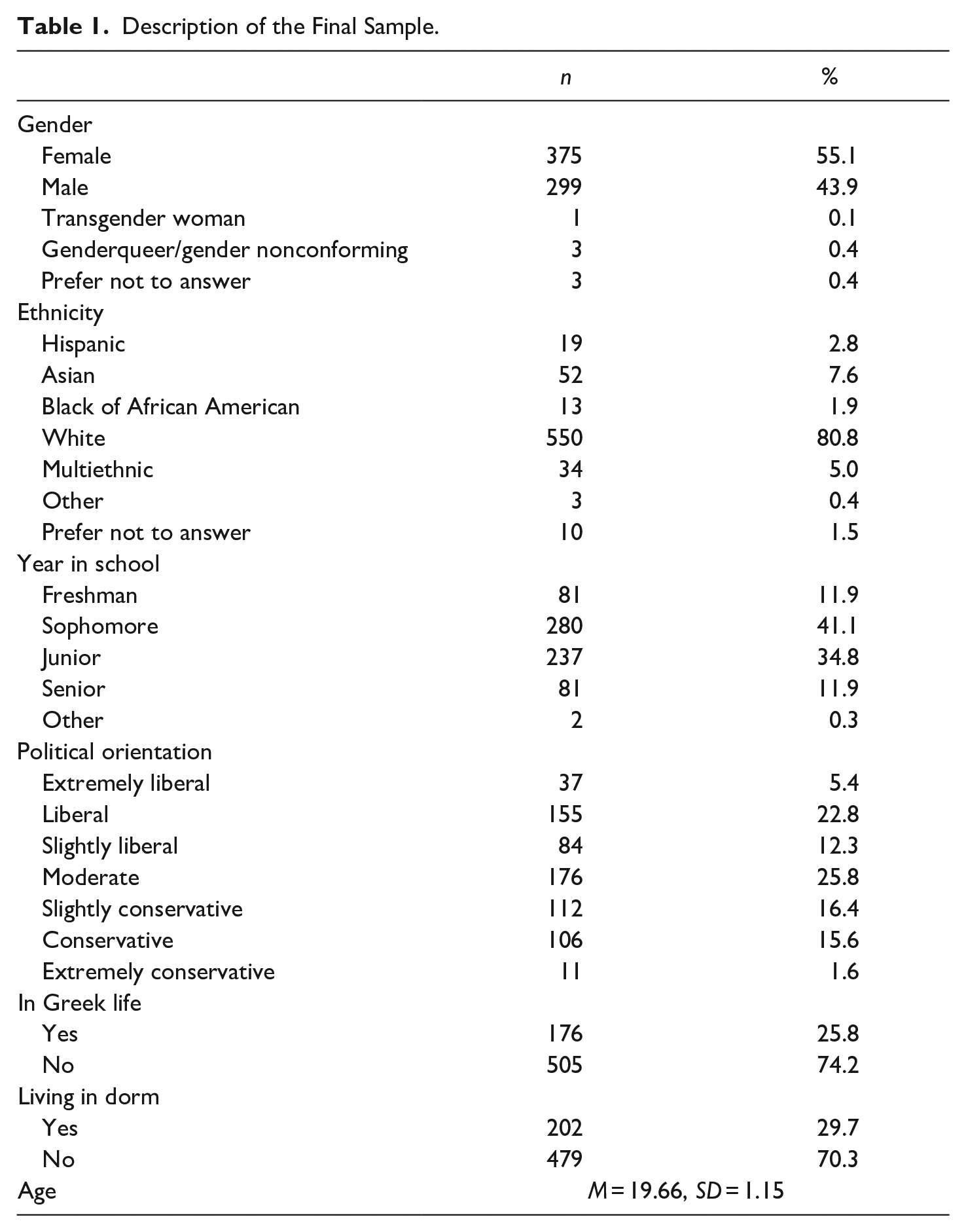
Respondents were filtered out if they (a) were less than 18 years of age, (b) took longer than 1.5 hours to complete the survey, or (c) were residing outside of Pennsylvania State University County, where the university is located. In conjunction with nonresponse, these screens yielded a total of 706 subjects. After eliminating those individuals who reported no exposure to the campaign, the final N was 681 (Table 1 for demographics), an average of 85 valid responses per week.
Description of the Final Sample.
Procedure
Upon providing informed consent, participants completed an online survey that consisted of three blocks. The first block gathered sociodemographic data and information about their experience with the pandemic. The second block focused on their knowledge of and reactions to the campaign. Participants indicated whether they had seen or heard about the [university name] health campaign and whether they were able to recall its theme or slogan. Next, participants were randomly assigned to view 1 of 10 static images or 1 of 3 30-second public service announcements from the campaign, and then they were asked to respond to the exposure measures. Data were also gathered on participants’ reactions to the campaign, including campaign-related emotions and message fatigue. The third block of questions focused on COVID-19-related safety behaviors. The average time to complete the survey was 12.82 minutes.
Measures
Time
This variable, which reflected week of data collection, could assume values that ranged from 1 to 8.
Campaign Exposure
Participants reported their campaign exposure to three different sources. First, participants indicated how many times they had ever seen (a) a particular campaign message (randomly drawn from a pool of 10) and (b) similar campaign messages from the official university and social media accounts. Second, campaign exposure from other media sources was measured by a single item: “Have you seen and talked about the XXX campaign from other media or Internet sources (e.g., a student newspaper)?” Third, campaign exposure from interpersonal channels was measured by two items: “Have you talked in person with someone about the XXX campaign (e.g., a roommate)?” and “Have you seen or talked about the XXX campaign on social media (e.g., Twitter and Snapchat)?”
All items were originally measured on 7-point response scales (1 = never, 2 = 1–5 times, 3 = 6–10 times, 4 = 11–15 times, 5 = 16–20 times, 6 = 21–25 times, 7 = 26 or more times). We converted the 1–7-point scale to real numbers (1 was redefined as 0 [= never], 2–6 points were redefined as their range midpoints, and 7 was set to 26). We then created the campaign exposure from the official sources and interpersonal channels variables by averaging the respective 2 items. The sum of exposure from all three sources constituted total campaign exposure. Because the items were considered formative indicators, alpha reliability was not relevant (Bollen, 2011). Participants who reported never to all of the exposure questions (n = 25) were dropped from the analysis (on the grounds that fatigue with a particular campaign cannot exist in the absence of exposure).
Message Fatigue
Four items on 5-point Likert-type scales (1 = strongly disagree, 5 = strongly agree) adopted from So et al. (2017) were used to measure message fatigue, 1 item for each first-order factor: “I have heard enough about how important it is to Mask Up or Pack Up,” “The Mask Up or Pack Up messages are all beginning to sound the same to me,” “I am tired of hearing about the importance of Mask Up or Pack Up,” and “I find the Mask Up or Pack Up messages to be dull and monotonous.” The 4 items were averaged into a composite score (α = .79).
Campaign-Related Emotions
Participants reported how the campaign made them feel on a 5-point scale (0 = none of this feeling, 4 = a great deal of this feeling). Fear was measured by 2 items: scared and fearful. The items (r = .78, p < .001) were averaged into a composite score. Sadness was measured by 2 items: sad and dismal. The items (r = .59, p < .001) were averaged to a composite score. Hope and pride were measured by a single item each: hopeful and proud, respectively. For all four emotions, a considerable proportion of participants reported none of this feeling: 66.4% for fear, 56.2% for sadness, 26.3% for hope, and 34.5% for pride.
COVID-19 Safety Behaviors
Participants’ COVID-19 safety behaviors, including social distancing, masking, and hygiene practices, were measured on 5-point scales (1 = never, 5 = always). Participants were presented with the stem “In the past week, how often did you perform each of these behaviors?” Three items were used to assess social distancing (“stayed at least 6 ft from other people when outside of my home,” “stayed out of crowded places,” “avoided gatherings of more than 10 people”), and they were averaged into a composite score (M = 3.89, SD = 1.01). Masking behavior was measured by a single item: “wore a facemask when out in public” (M = 4.73, SD = 0.63). Three items were used to index hygiene practices (“regularly washed my hands often with soap and water for at least 20 seconds,” “tried to avoid touching my eyes, nose, and mouth with unwashed hands,” “covered my mouth and nose with a tissue or the inside of my elbow when I coughed or sneezed”), and they were averaged into a composite score (M = 4.35, SD = 0.63). Because the behavioral categories were considered formative indicators of safety behaviors, alpha reliabilities were not relevant (Bollen, 2011).
Results
Preliminary Analyses
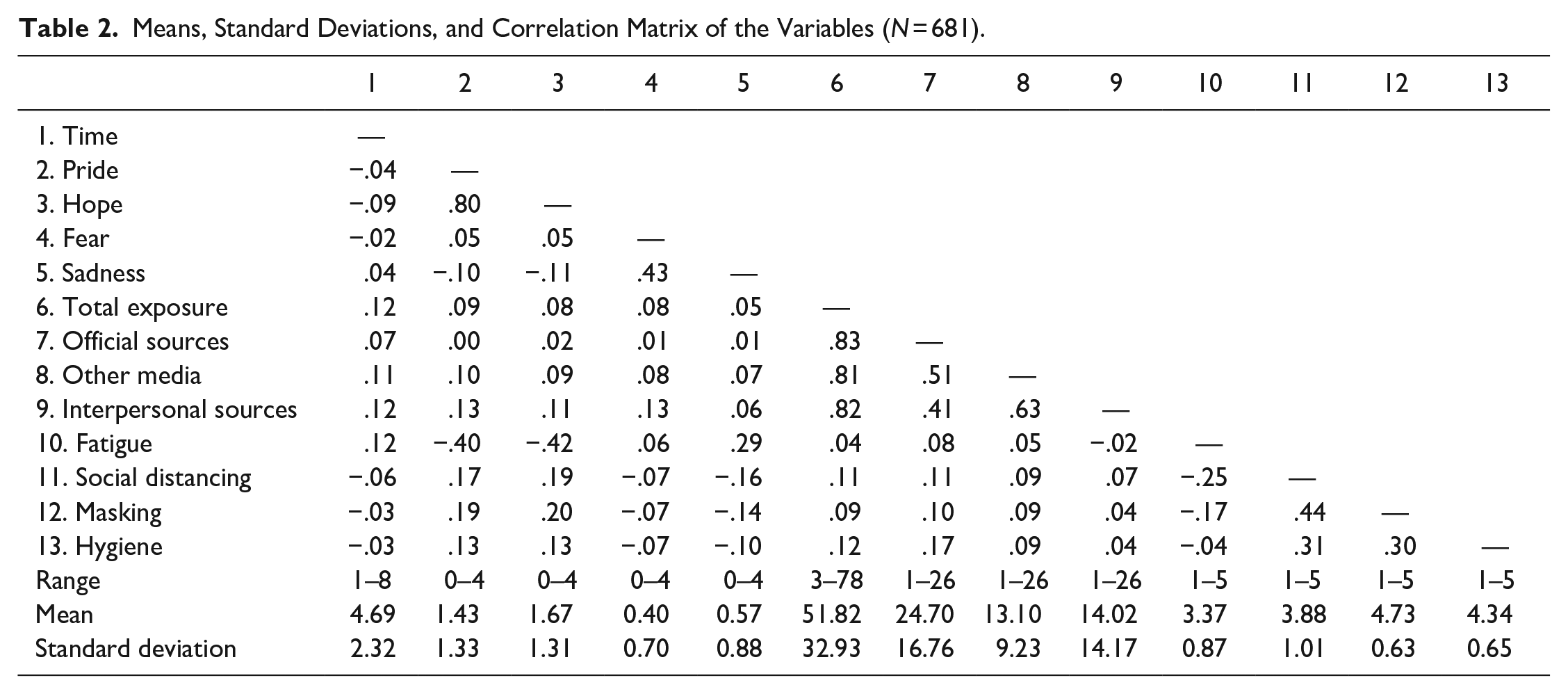
To inspect overall patterns in the data, we examined Table 2, which includes the means and standard deviations of all variables and the correlations among them. One notable feature of the data was the very low mean values for fear and sadness and their correspondingly low SDs. We also note the relatively high levels of distancing and hygiene and the very high level of masking.
Means, Standard Deviations, and Correlation Matrix of the Variables (N = 681).
Fatigue Over Time
Because we planned to enter time as a covariate in subsequent analyses, it was useful to consider RQ4 before proceeding. Figure 2 shows a plot of fatigue as a function of time. One notable feature of that plot is the mean at week 1 (3.28 on a 1–5 scale). This was an indication of a fairly high level of fatigue at the beginning of our study period, which was just 1 month after the onset of the campaign.
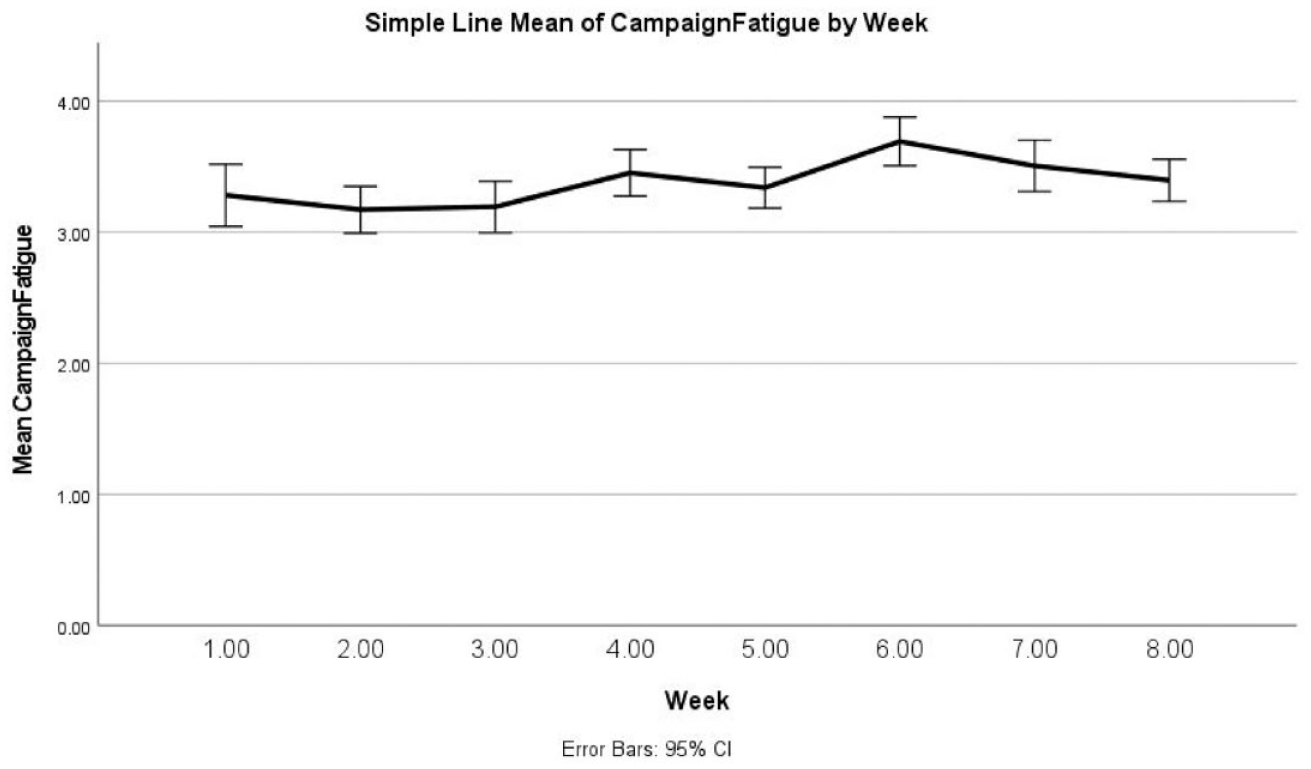
Message fatigue over time.
Visual inspection of the plot also suggests the possibility of linear and curvilinear effects. A regression analysis was conducted to evaluate both possibilities. Fatigue was predicted by time, in the first block, and time squared in the second block. The significant coefficient for time (β = .12, t = 3.04, p = .002) confirmed the presence of a linear effect such that fatigue was higher in the later weeks of the study. Although the sign of the coefficient for the curvilinear term suggested an inverted-U relationship, the term was nonsignificant: β = −.23, t = 1.25, p = .211). Given these results, we used only the linear form of week as a predictor in subsequent analyses. This pattern is consistent with the general notion that fatigue increases over time (assuming regular campaign exposure).
Structural Equation Analyses
Table 2 presents the data matrix. The raw data were submitted to Mplus 8.6 for model testing and estimation. Time; self-reported campaign exposure from the official sources, other media, and interpersonal channels; and emotions (fear, sadness, hope, and pride) were specified as exogenous variables with direct paths to message fatigue, which was specified as a single-indicator latent variable with its error term fixed at σ2 (1−α) (Bollen, 1989). A direct path was specified from message fatigue to each of the three COVID-19 safety behaviors, which were themselves allowed to correlate. Direct paths were also specified from the exposure variables to each of the three COVID-19 safety behaviors. The model was a good fit to the data: χ2 (15) = 24.93, p = .05, Root Mean Square Error of Approximation (RMSEA) = .03, 90% confidence interval (CI) [.00, .05], close fit p = .93, Comparative Fit Index (CFI) = .98, Standardized Root Mean Squared Residual (SRMR) = .03.
The obtained model was achieved by trimming paths with p-values greater than .05, one at a time. Three variables—fear, exposure from other media, and exposure from interpersonal channels—were removed from the model because their coefficients were nonsignificant. The fit indices for the trimmed model indicated good fit: χ2 (12) = 23.19, p = .03, RMSEA = .04, 90% CI [.01, .06], close fit p = .81, CFI = .98, SRMR = .04. Figure 3 presents the standardized path coefficients in the final model.
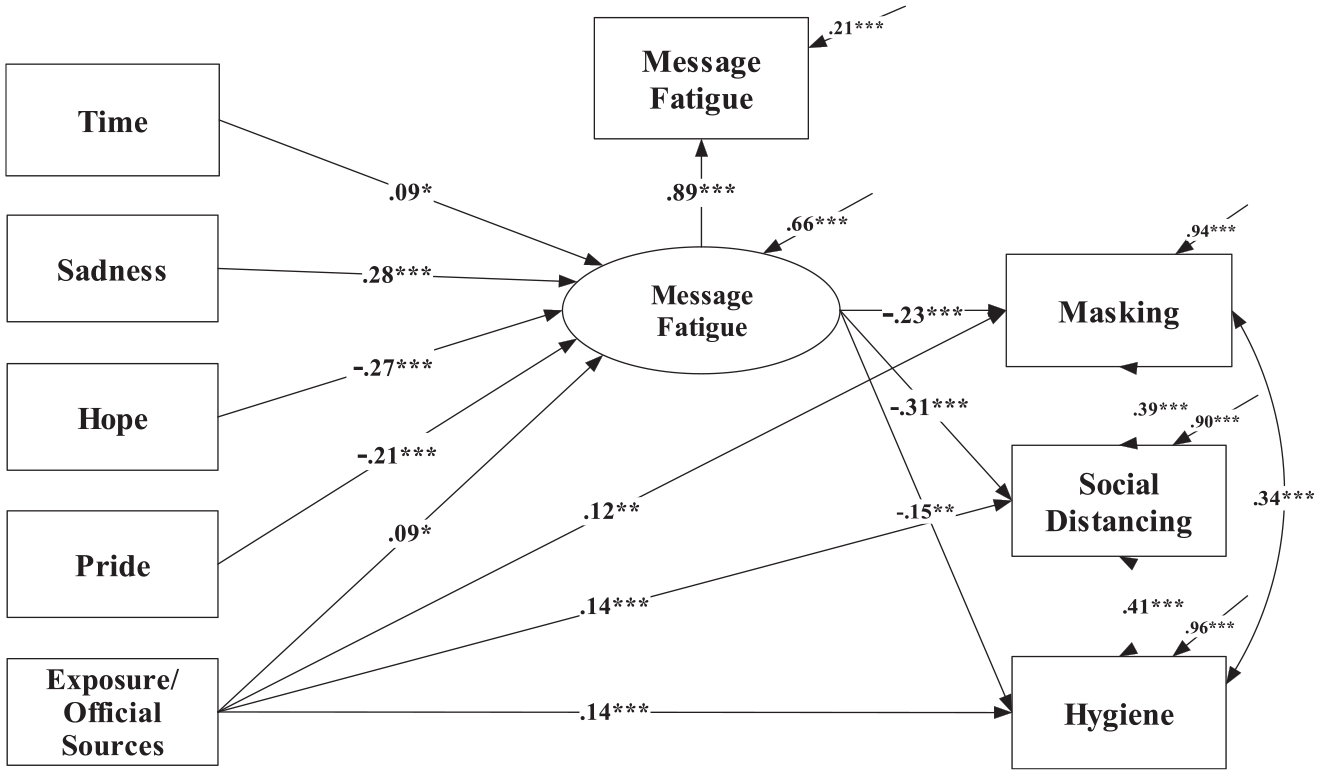
Standardized path coefficients in the trimmed model.
Hypotheses and RQs
In line with H1, there were negative paths from message fatigue to the three behaviors: β = −.23, p < .001 for masking, β = −.31, p < .001 for social distancing, and β = −.15, p = .001 for hygiene.
RQ1 asked whether the effect of fatigue varied across different types of safety behaviors. Pairwise comparisons with z-tests suggested that it did. Each of the three paths was significantly different from each of the other two (p < .05) (RQ1).
RQ2 queried whether message exposure might manifest a direct effect on campaign outcomes in addition to the hypothesized indirect effects via fatigue. The data showed evidence of just such effects of exposure to official sources: β = .12, p < .01 for masking, β = .14, p < .001 for social distancing, and β = .14, p < .001 for hygiene (RQ2).
Exposure from the official campaign had a positive path to fatigue (β = .09, p = .02), but neither exposure from other media nor interpersonal channels had a significant path to fatigue (RQ3).
H2 concerns campaign exposure in general, regardless of the source of information. To test H2, the SEM model was re-estimated with the three exposure variables replaced by total campaign exposure. The impact of total campaign exposure on fatigue was significant at the α < .10 level: β = .07, p = .07 (not shown in Figure 3). Thus, there was qualified evidence in favor of H2.
H3 predicted positive associations between two negative emotions and fatigue, whereas H4 anticipated negative associations between two positive emotions and fatigue. Although fear did not have a detectable effect on fatigue, sadness showed the expected significant positive path to fatigue (β = .28, p < .001). H3 was partially supported. Both hope (β = −.27, p < .001) and pride (β = −.21, p < .001) had negative paths to fatigue, findings that were consistent with H4.
Total Effects of Exposure on Campaign Outcomes
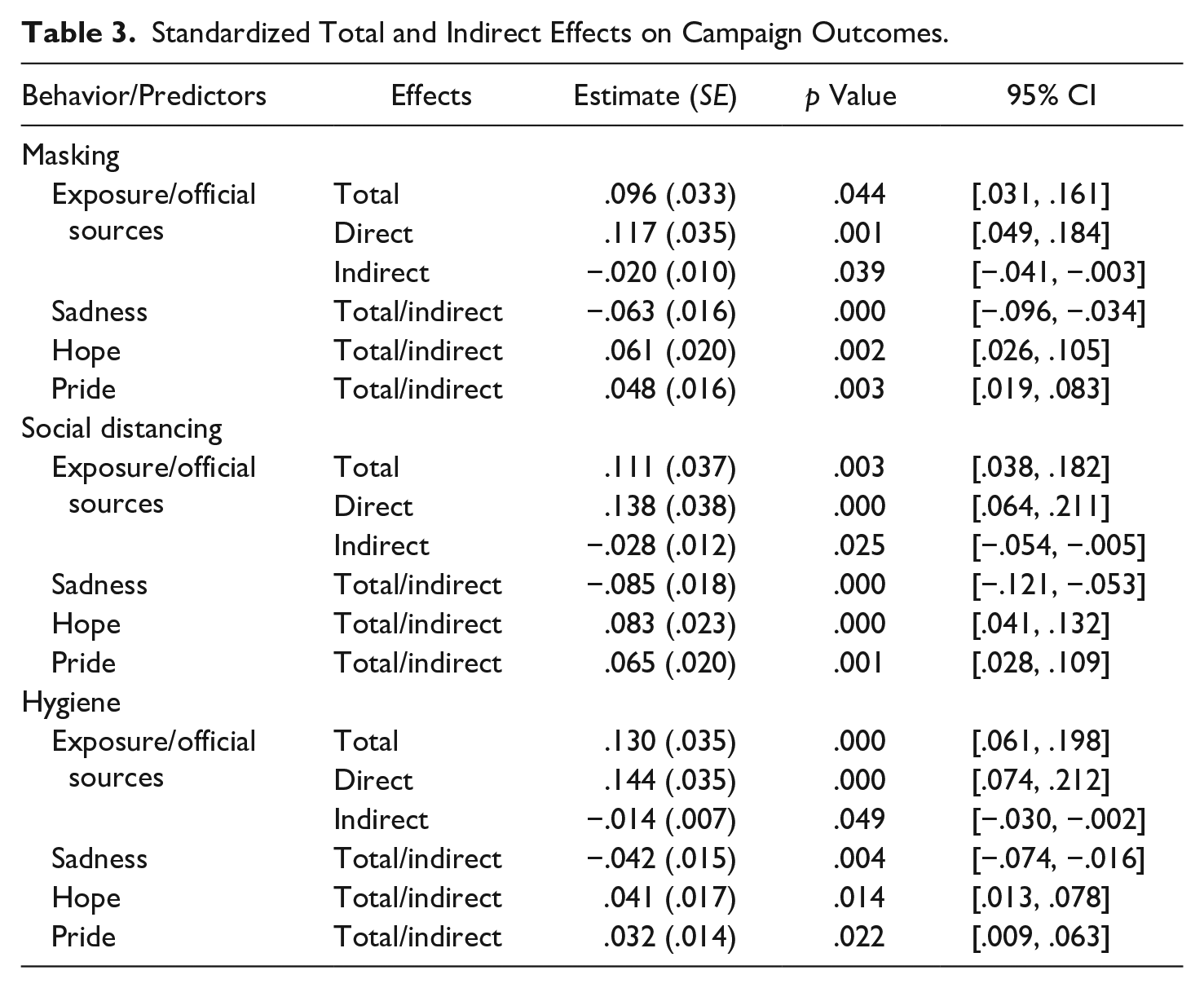
The indirect and total effects from the exogenous variables (except time) on safety behaviors were analyzed with the bootstrapping procedure (resample N = 5,000). Table 3 presents the standardized effect sizes. Across the three types of safety behaviors, exposure from official sources had positive direct effects, but the total effects were reduced in magnitude because of the negative indirect effects via fatigue.
Standardized Total and Indirect Effects on Campaign Outcomes.
Discussion
Impact of Fatigue on Intended Campaign Outcomes
Consistent with the fatigue hypothesis, our study found negative effects of campaign fatigue on all three COVID-19 safety behaviors. This general finding is in keeping with prior research (e.g., Koh et al., 2020; So et al., 2017). However, the results also showed that fatigue did not influence each of the safety behaviors to the same degree. Distancing showed the strongest negative association, followed by masking, followed by hygiene. We see this empirical result as an important step toward theorizing the differential effects of fatigue. Identifying the causes of this non-uniformity will require a design that (a) orthogonally manipulates different aspects of the three behaviors (e.g., novelty vs. familiarity, public vs. private) and (b) offers a convincing theoretical account for differential effects. Both tasks await future research.
Effects of Message Exposure and Time on Fatigue
Although message exposure is central to the logic of message fatigue, we attempted to broaden that premise by suggesting that exposure effects may not be limited to the campaign (cf., Kasperson et al., 1988; Southwell & Yzer, 2009). But, neither bivariate nor multivariate analyses bore out this supposition. The only observable communication effects on fatigue derived from exposure to official campaign sources. However, the broader point—that campaign fatigue may be partially determined by sources other than direct exposure—may still hold. Some indication of this comes from the effect of time on fatigue. Over the 8-week period of study, time of data collection showed a positive relationship with fatigue that was independent of direct exposure. Whereas the contribution of this project was to provide empirical evidence of variation in fatigue as a function of time, our crude measure did not allow us to sort out the many possible underlying processes. Unpacking the multiple meanings of time in the production of fatigue is, in our judgment, a crucial area for future inquiry.
It is also important to recognize the presence of message exposure effects that were not mediated by fatigue. Indeed, the sign and strength of the direct paths from official sources to all three safety behaviors and the positive total effects suggest that message exposure did more good than harm overall, despite its causal impact on fatigue. To wit, the more exposure, the stronger the campaign effects. The negative indirect effect of time via fatigue, however, suggests that given enough time, longer campaigns might not lead to better outcomes. Intensifying campaign exposure would be more effective if that is achieved over a short rather than prolonged period of time. Although our data drew on the single topic of COVID, the findings in this study should have implications for campaigns on other health behaviors/issues and public campaigns in general.
Effects of Emotions on Fatigue
Fatigue is conceptualized as the product of multiple message exposures, each of which involves a series of fleeting reactions that eventually cumulate into boredom and exhaustion. We focused attention on possible emotional responses to the MUPU campaign and found effects on fatigue for three of them. Hope and pride seemed to mitigate fatigue, whereas sadness showed a positive association that was consistent with the notion that fleeting negative emotional experiences might undergird judgments of tedium and overload. Fear did not yield a significant coefficient. A plausible explanation for this result might be that the students were fearful about something other than the implied threat in the campaign theme (i.e., noncompliance means they might be sent home). With this one exception, the data were consistent with the broader proposition that campaign fatigue follows from a series of unpleasant momentary experiences and is buffered by positive affective responses to the messages. It is the accumulation of competing reactions over time that is likely to determine when any given individual concludes that message exposure is excessive. We acknowledge, however, that simultaneous collection of emotion and fatigue is a less than perfect test of our reasoning. Longitudinal data are needed to provide a more compelling test. Nevertheless, our results are consistent with dynamic theorizing regarding the basis of fatigue and they underscore the need for future research to consider emotional forces that amplify and attenuate fatigue.
Campaign Effectiveness
Across the three types of safety behaviors, exposure from official sources had positive direct effects, but the total effects were reduced in magnitude because of the negative indirect effects via fatigue (Table 3). Emotions (sadness, hope, and pride) had indirect, valence-consistent effects on the safety behaviors. These findings suggest that more messages and longer duration of campaigns might have decreased marginal effects (i.e., increase in campaign effects per unit in increased duration) on desired outcomes because excessive exposure causes message fatigue, which in turn reduces campaign effects. On the other hand, an alternative means lies in increasing campaign exposure without inducing fatigue, for example, communication through interpersonal channels or information dissemination on media channels. In other words, our null findings regarding the effect of secondary sources on fatigue suggest an opportunity for practitioners to increase exposure without the unwanted effects of fatigue.
Strengths and Limitations
The findings from this study should be interpreted with its strengths and limitations in mind. First, there is the use of a college student sample. Although frequently cast as a limitation, students were the main target audience of the campaign and college-age individuals, are disproportionately responsible for disease transmission (e.g., Monod et al., 2021). One recent study found that COVID-19 case rates were 50% higher in U.S. counties with universities or colleges that allowed in-person instruction compared with counties in which institutions of higher education used remote-only instruction (Leidner et al., 2021). The downside of a student sample lies in the limited generalizability of the findings.
Second, the nature of our data. The data were cross-sectional although the impact of time was analyzed, which limited our ability to draw causal inferences. Some of the key constructs were measured in a short form (e.g., fatigue) or with single items (e.g., hope and pride). This was primarily to reduce the length of the survey such that it would not induce the undesirable confound of participation fatigue.
The study also had notable strengths. First, to the best of our knowledge, this was the first study that investigated message fatigue as a response to a real-world health campaign and its impact on actual behaviors. Second, our data moved beyond the single-point-in-time cross-sectional designs used in previous research. Fatigue was studied as a chronic and dynamic construct over time, instead of a static and acute response to individual messages. Third, multiple sources of overexposure and affective antecedents of fatigue were examined. This provided a more rigorous test of the hypotheses and research questions and contributed favorably to the generalizability of the findings.
Conclusion
This study investigated the role of message fatigue in a real-world COVID-19 safety campaign that took place on a university campus. It was found that receivers’ fatigue continued to rise as the campaign unfolded over an 8-week period. Exposure from the official sources had direct positive effects on safety behaviors, but such effects were diminished by the negative indirect effects of message fatigue. Exposure from other media and interpersonal channels had no detectable effects on fatigue or safety behaviors but are positively associated with positive emotions that might mitigate fatigue. Encouraging campaign-related interpersonal communication and information dissemination in other media might be important avenues for increasing campaign exposure without incurring a penalty for fatigue. However, predicting the viability of this approach as a campaign strategy will require the development of a more precise campaign theory than currently exists.
Footnotes
Declaration of Conflicting Interests
The author(s) declared no potential conflicts of interest with respect to the research, authorship, and/or publication of this article.
Funding
The author(s) received no financial support for the research, authorship, and/or publication of this article.
