



Abstract
Undocumented immigration status is a structural barrier to socioeconomic mobility. The regularization of legal status may therefore promote the socioeconomic mobility of formerly undocumented immigrants. The 2012 Deferred Action for Childhood Arrivals (DACA) program provided protection against deportation and access to work authorization for eligible undocumented immigrants who came to the United States as children. While studies using cross-sectional data find that DACA led to improved socioeconomic status, no studies have examined the socioeconomic status of DACA recipients over time and few have disaggregated among groups of DACA recipients. Drawing from one of the only longitudinal studies of DACA recipients, we use growth curve models to estimate individuals’ wage trajectories from the year prior to DACA receipt up to 77 months post-DACA receipt among Latino/a DACA participants in California. In this sample, DACA is associated with improved earnings trajectories for recipients, compared with nonrecipients. Among DACA recipients, there is variation in earnings growth by stage of the life course, as measured by age and educational attainment. Notably, DACA tenure appears to be particularly beneficial for individuals who attain DACA at earlier ages and who earn college degrees. This study contributes to our understanding of the role of immigration laws and policies in structuring immigrant integration and socioeconomic mobility in the United States.
Keywords
Immigration status is a central axis of stratification in the United States and other nations, with legal status—and in particular undocumented status—linked to inequality across a range of outcomes, including in the workplace (for a review, see Waters & Gerstein Pineau, 2015). Undocumented immigrants earn less, on average, than their documented counterparts, due in part to exclusion from jobs in the formal labor market (Hall et al., 2010).
Immigrant integration theories posit that gaining legal status will improve immigrants’ socioeconomic status through reduced social and formal exclusion, including increased access to jobs in the formal economy and/or jobs that are more commensurate with experience and/or qualifications (Bean et al., 2015). In 2012, the Obama administration initiated the Deferred Action for Childhood Arrivals (DACA) program, the first major expansion of rights for undocumented immigrants since 1986. Targeted at undocumented young adults who arrived in the United States as children, DACA grants recipients a “deferred action” status (i.e., reprieve from deportation) that comes with eligibility for work authorization and other related benefits under existing laws.
For undocumented youth who were previously unable to work lawfully in the United States, DACA provided an opportunity for formal employment and access to better jobs via work authorization. Existing studies report positive labor market impacts of participation in DACA, including greater likelihood of employment, increased wages for some, and more positive reports of job quality and satisfaction (Gonzales et al., 2014; Hamilton et al., 2020; Pope, 2016). However, due to data limitations, we have an incomplete picture of DACA recipients’ socioeconomic trajectories over time.
Drawing from one of the only longitudinal studies of DACA recipients, the DACA Longitudinal Study (DLS), we use growth curve models to estimate recipients’ wage trajectories from the year prior to attaining DACA up to 77 months post-DACA receipt. This innovative data set allows us to make three contributions to literature on economic integration among Latino DACA recipients. First, many studies rely on cross-sectional or repeat cross-sectional data, which limits the ability to interpret changes as related to DACA status versus other, unobserved differences between samples. Our data allow us to measure between- and within-person changes in earnings over DACA tenure, reducing problems with selection bias.
Second, prior studies rely on data from early in the program and do not capture long-term wage trajectories over an individual’s tenure as a DACA recipient. Although the Trump administration attempted to rescind the program in September 2017, as of July 2019, there were more than 700,000 DACA recipients (U.S. Citizenship and Immigration Services, 2019). Our study allows us to analyze data from California spanning nearly 7 years following DACA’s initiation.
Finally, while there is some indication that DACA’s benefits may vary by age and educational level (Hamilton et al., 2020; Hsin & Ortega, 2018; Kuka et al., 2020), studies have not examined heterogeneity in DACA recipients’ experiences over time. Our analyses reveal that DACA is associated with higher wages and faster wage growth, but there is variation in DACA’s impacts depending on one’s stage in the life course. Our findings suggest that older recipients initially benefit more from DACA, but younger recipients catch up over time, suggesting a benefit to earlier age-at-receipt of legal status. Similarly, those with college degrees benefitted more initially from DACA, but recipients who completed college after DACA caught up, suggesting greater benefits to legal status for immigrants who complete higher education.
This study contributes to our understanding of the role of immigration laws and policies in structuring immigrant integration and mobility among Latino immigrants in the United States. It demonstrates the importance of programs like DACA that provide immigrants opportunities for further structural integration, especially access to the formal labor market. Yet it also suggests that the life course timing of opportunities for inclusion matters (Elder et al., 2003) and that programs aimed at mobility do not always mitigate existing patterns of inequality, such as those based on achieved level of education.
Theoretical Background
Immigrant legal status is a key determinant of immigrant integration; being undocumented means facing exclusion from many aspects of social, economic, and political life. This exclusion is oppressive for all undocumented immigrants but has unique ramifications for 1.5-generation immigrants, who grow up in the United States (Abrego, 2011; Gleeson & Gonzales, 2012; Vaquera et al., 2017). 1.5-generation immigrants are deeply embedded in U.S. culture and institutions such as schools and peer networks prior to reaching adulthood; formal exclusion from the institutions that govern adult life, such as the labor market, can represent a major setback (Gonzales, 2011; Gonzales & Chavez 2012; Kreisberg & Hsin 2020; Nakano, 2011; Silver, 2012). For instance, undocumented students who hope to achieve higher education and access well-paying jobs must come to terms with structural barriers to postsecondary education and the formal labor market.
One of the major barriers to economic mobility for undocumented immigrants is the legal restriction on employment. The 1986 Immigration Reform and Control Act created penalties for employers who hire undocumented workers, and subsequent programs like E-Verify made employment without a social security number virtually impossible at participating workplaces. Nevertheless, U.S. employers have continued to recruit undocumented workers (Massey et al., 2014). Such conditions create “an unstable and potentially hostile social environment,” that leads undocumented immigrants to “take the first job they are offered, continue to work in jobs even if the pay is low, or accept exploitative or illegal work conditions out of fear that they will be exposed” (Hall et al., 2010, p. 508). Latino undocumented workers receive lower wages, experience greater wage and hour violations, and are less likely to engage in claims-making, compared with their documented counterparts (Hall et al., 2010; Milkman et al., 2012; Patler et al., 2020). The 1.5-generation immigrants face a particular mismatch between their achieved credentials and access to jobs outside low-wage work, given their generally higher levels of education, compared with their parents (Bean et al., 2011).
Building on research on the hardships of undocumented status, membership exclusion theory predicts that legalization is a “life-course turning point, the attainment of which may mark the weakening, if not the end, of the inhibiting mechanisms of unauthorized status” (Bean et al., 2015, p. 14). Regularization can enable socioeconomic mobility by removing social barriers and providing increased access to jobs in the formal economy and/or to jobs that are more commensurate with experience or qualifications, thereby improving socioeconomic outcomes in the first and subsequent generations (Bean et al., 2011; Kreisberg, 2019).
Although DACA does not grant full legal inclusion, existing research shows that the program has been beneficial to recipients’ socioeconomic status, health, and well-being (Abrego, 2018; Gonzales et al., 2014; Hamilton et al., 2020; Patler, Hamilton, et al., 2019; Patler & Pirtle 2018; Patler et al. 2020; Pope, 2016). The story with regard to wages, however, is more mixed. National analyses find that while DACA is linked to increased employment, wages did not significantly change for most groups of likely DACA-eligible immigrants during the first 3 years of the program (Amuedo-Dorantes & Antman, 2017; Pope, 2016). However, existing studies have neither examined wages beyond the first 3 years of the program nor examined within-person changes or growth in wages over time. In the present analysis, we investigate how wages have changed over an individual’s tenure with DACA.
We also consider how wage growth varies by age and level of education at receipt of DACA and educational attainment after receipt of DACA. Previous research suggests that undocumented 1.5-generation immigrants’ experiences vary by stage in the life course (Gonzales, 2011) and that DACA recipients’ experiences may also vary (Kuka et al., 2020). Younger recipients and recipients who have not yet completed their schooling may be in a better position to take advantage of the labor market opportunities provided by work authorization because their choices will be less affected by earlier schooling and labor market opportunities and decisions made without legal status (Hamilton et al., 2020).
Method
We draw from the DLS, an original, mixed-methods, longitudinal study conducted in California. The DLS recruited 1.5-generation immigrant respondents who attended at least one DACA informational session in Los Angeles County between 2012 and 2014. 1 The present analyses rely on two waves of data collection, which also includes retrospective data for the year prior to DACA receipt, resulting in three waves of data. Wave 1 was fielded in 2014-2015 and included 502 telephone surveys (Latino n = 493). Wave 2 was conducted in 2018-2019 and included 300 of the original Latino respondents. In each survey, respondents answered approximately 50 questions about their education and employment trajectories, community involvement, and health and well-being. 2 Respondents also answered questions about their experiences in the 1-year period prior to DACA receipt, allowing us to establish a baseline, or Wave 0, for wages and education pre-DACA. 3
The DLS was not designed to represent the population of DACA recipients, but rather allows us to observe over-time changes across recipients, as well as how these may vary between groups of recipients. The DLS is also unique in that it does not primarily sample activists or university students. Only 27% of DLS respondents were affiliated with immigrants’ rights organizations, and only 13% had a college degree at Wave 1 (for excellent work drawn from samples of activists or college students, see Gonzales et al., 2014; Hsin & Ortega, 2018; Teranishi et al., 2015; Wong et al., 2017).
We use multilevel longitudinal models, whereby repeated observations (Level 1) are nested within respondents (Level 2). Growth curve models generate individual trajectories based on estimating individual-specific intercepts (initial value) and slopes (rate of change). We begin by analyzing growth in wages across age and a quadratic function for age for subsets of the sample: those who have DACA status in Wave 1 and Wave 2 and those who do not have DACA status during our observation period. We then turn our attention to the timescale of interest: time since first DACA approval (“DACA tenure”). We analyze change in wages as a function of DACA tenure, first categorized, then as a quadratic (Raudenbush & Bryk, 2002). In addition to a random intercept and slope for each individual, we allow the slope to vary by DACA tenure. We include a set of covariates as defined below.
In Waves 1 and 2, participants reported their hourly earnings over the past 12 months, and in Wave 2, they also reported their earnings in the year prior to DACA receipt (Wave 0). DACA tenure is measured as months since first DACA approval. Age (16-21, 22-25, 26-30, 31-37) and gender (woman, man) are self-reported at Wave 1. Age at Wave 0 is calculated as DACA receipt date minus 1 year. We also create a measure for age at first DACA approval (16-21, 22-25, 26-37). Educational attainment (less than high school/high school/general equivalency diploma [GED], associate/trade/vocational, bachelor’s+ [BA+]) is measured both as time-invariant for attainment prior to DACA approval and time-varying across the period.
In the first analysis, which estimates wage trajectories for DACA recipients versus nonrecipients, the sample includes 743 responses for hourly wages for 434 individuals. All subsequent models focus on DACA tenure, and the analytical sample then includes 599 responses for 361 individuals after excluding those who did not receive DACA, those for whom we do not have valid DACA approval dates, and those missing on covariates (<1%).
Results
Table 1 shows the composition of the sample. Average wages were approximately $11.70 prior to DACA, $11.40 at Wave 1, and $16.80 at Wave 2. Similar mean wages prior to DACA approval and at Wave 1 could reflect a lag as DACA recipients adjusted to their new work permits or could be a result of individuals at Wave 1 returning to education, thus temporarily earning lower wages (Hamilton et al., 2020). Across the survey waves, 89.7% had DACA status; the others were undocumented. Women make up over half of the sample across all three waves. The average respondent was 23 to 24 years old at the time of DACA receipt. Of the respondents, 73.6% did not have more than a high school degree/GED prior to applying for DACA status. However, the time-variant measure of educational attainment demonstrates that the percentage with a BA degree or higher more than doubles from Wave 1 to Wave 2.
Statistics Describing Our Analytical Sample Across the Three Time Points From the DACA Longitudinal Study.
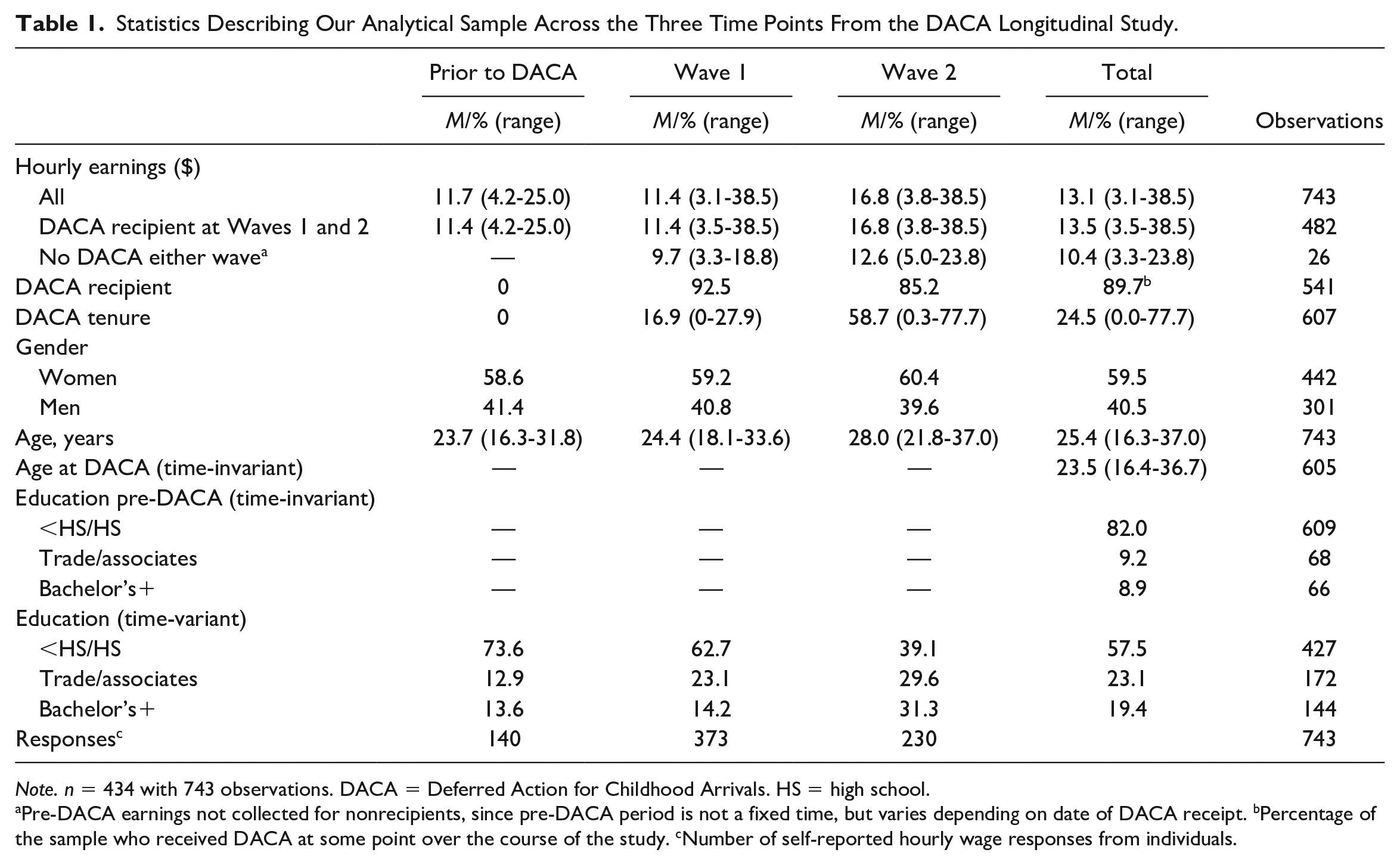
Note. n = 434 with 743 observations. DACA = Deferred Action for Childhood Arrivals. HS = high school.
Pre-DACA earnings not collected for nonrecipients, since pre-DACA period is not a fixed time, but varies depending on date of DACA receipt. bPercentage of the sample who received DACA at some point over the course of the study. cNumber of self-reported hourly wage responses from individuals.
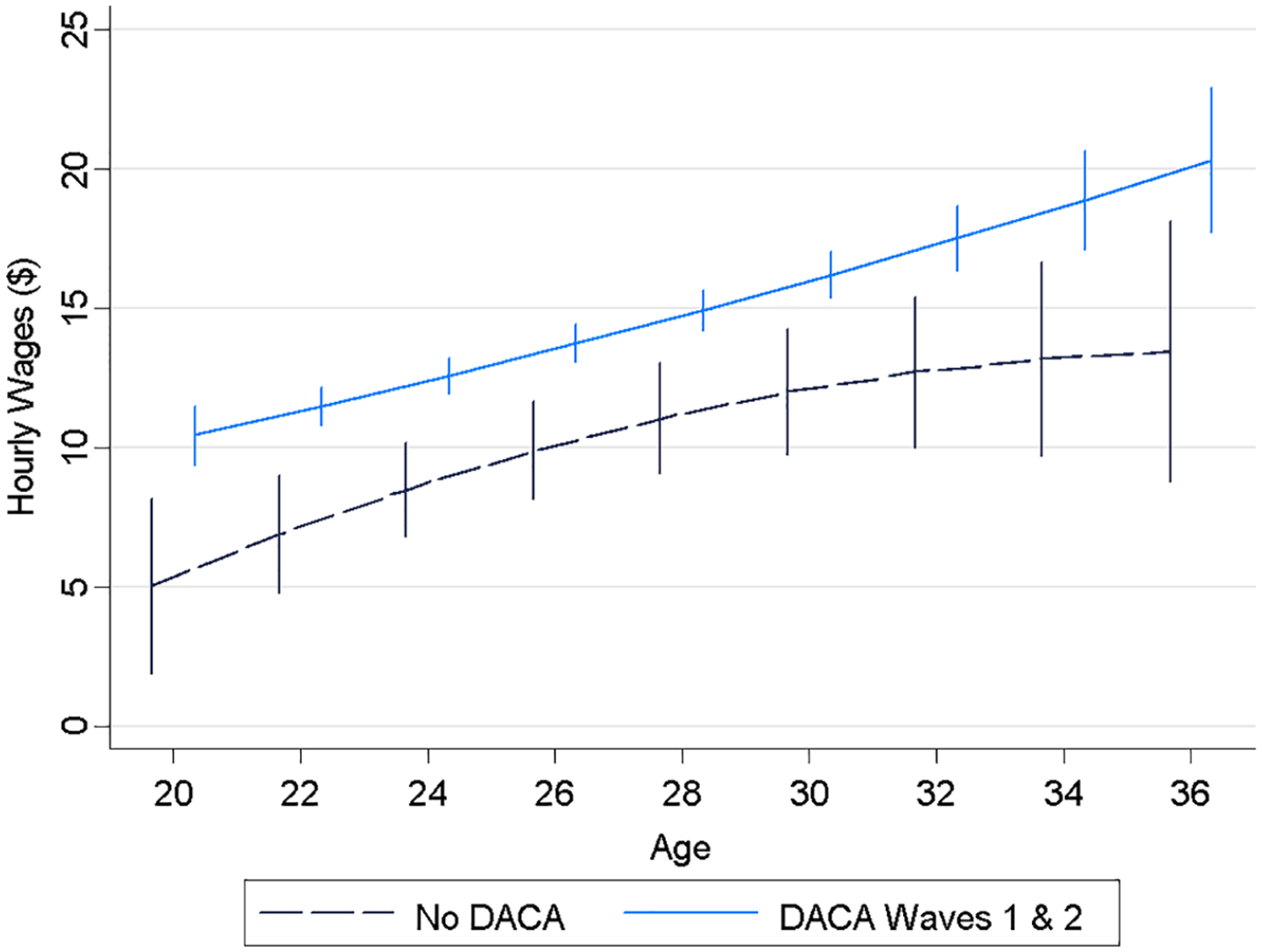
To establish DACA’s overall impacts, we begin by exploring whether the trends in wage growth for DACA recipients are different from those for nonrecipients. Figure 1 compares hourly wage trajectories for two models (Appendix Table A1). Averaged across all ages, DACA recipients’ mean hourly wages were $3.10 higher than those of nonrecipients.
We now turn to results from our multivariable growth curve models. We begin by capitalizing on the almost 7-year observation window to examine the long-term wage benefit of gaining DACA status. Figure 2 (Appendix Table A2) shows the average marginal effect of longer DACA tenure on wages compared with 0-5 months, net of age and gender. As others have found (e.g., Amuedo-Dorantes & Antman, 2017; Pope, 2016), we find no immediate wage benefit of DACA status; however, after 3.5 years, there is a significant and substantial wage premium—about $4.00 per hour. It is possible that this lag is at least partially driven by DACA recipients’ pursuit of further education. Therefore, we now examine whether and to what extent the stage of the life course at which individuals gain DACA status is associated with wage trajectories, both in terms of age and educational attainment at DACA receipt.
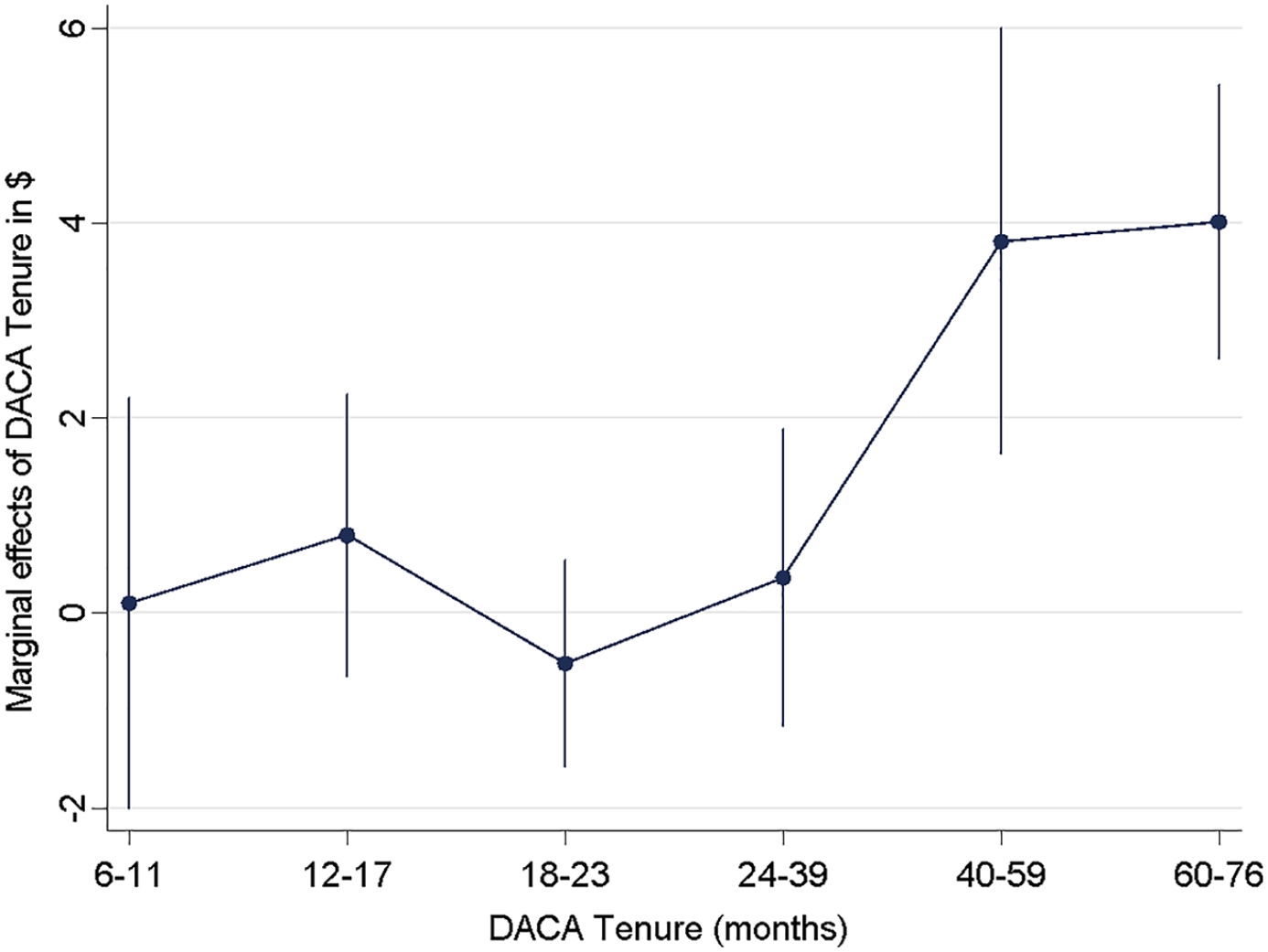
Figure 3 (Appendix Table A3) shows predicted hourly wages across DACA tenure for individuals who received their first DACA approval at age 16-21, 22-25, or 26-37 years, controlling for current age and gender. Unsurprisingly, those in the highest age category start at higher wages. However, over the course of DACA tenure, individuals who were younger at the time of DACA receipt catch up to older recipients as a result of faster wage growth.
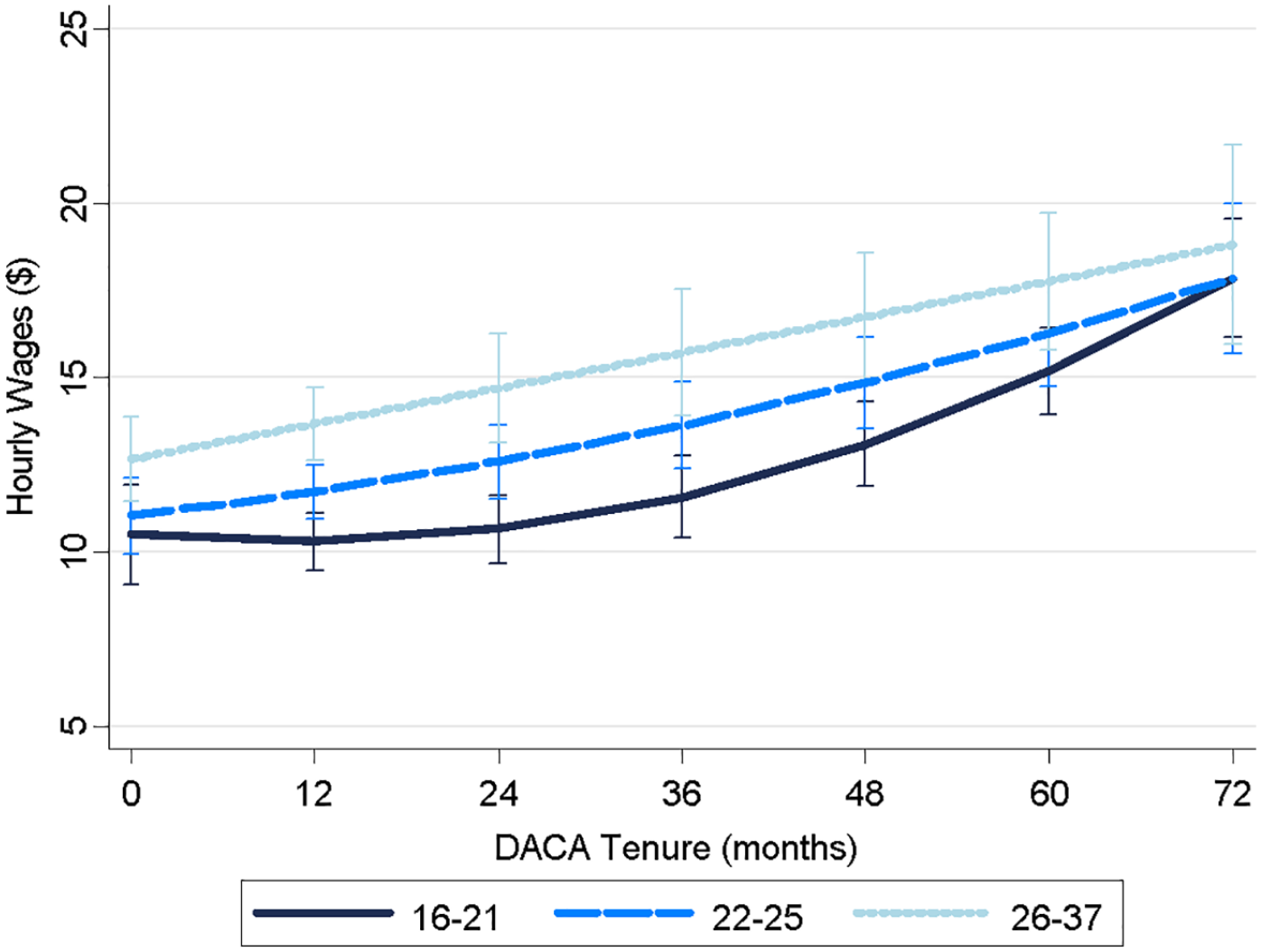
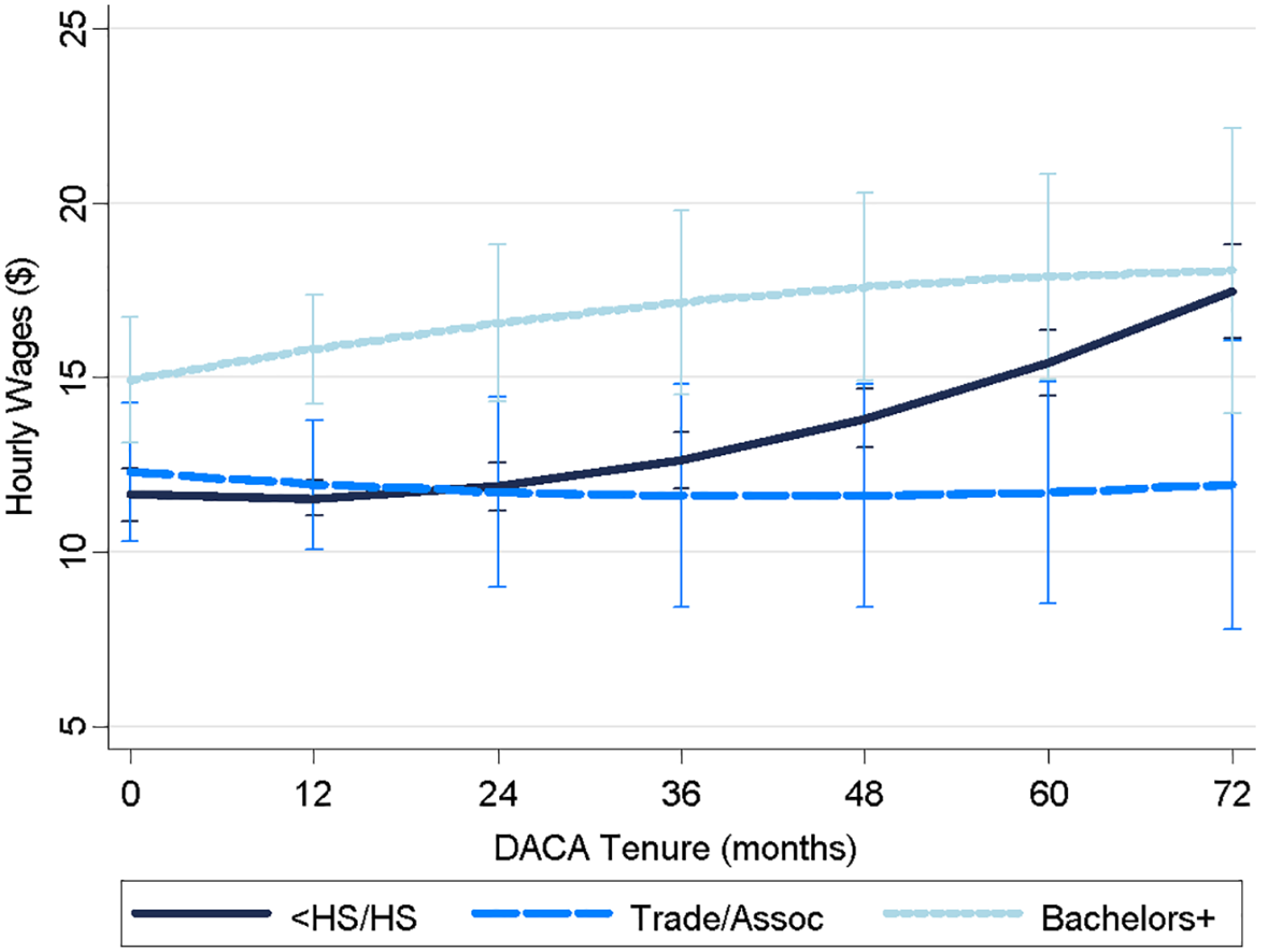
Figure 4 (Appendix Table A4) shows predicted hourly wages across DACA tenure for individuals with different educational levels at the time of DACA receipt (high school diploma/GED or less, trade/vocational/associate degree, or BA+), controlling for current age and gender. The trends suggest that individuals with a BA or higher at the time of DACA approval had higher wages than their low-educated counterparts through 36 to 48 months following DACA approval. However, 4 to 5 years after DACA receipt, those who started off with a high school degree or less at the time of DACA receipt catch up to their peers who had a BA+ degree at time of receipt.
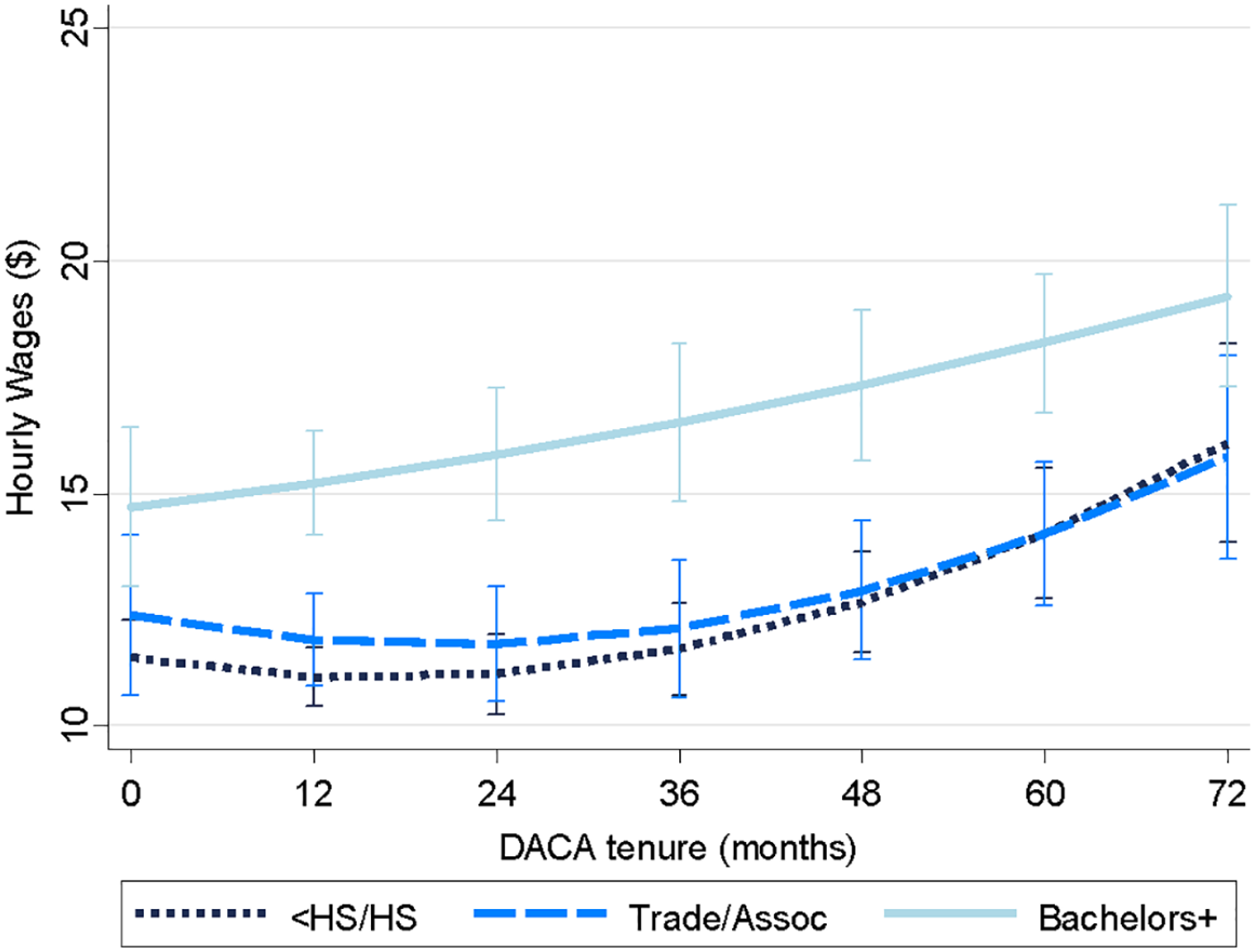
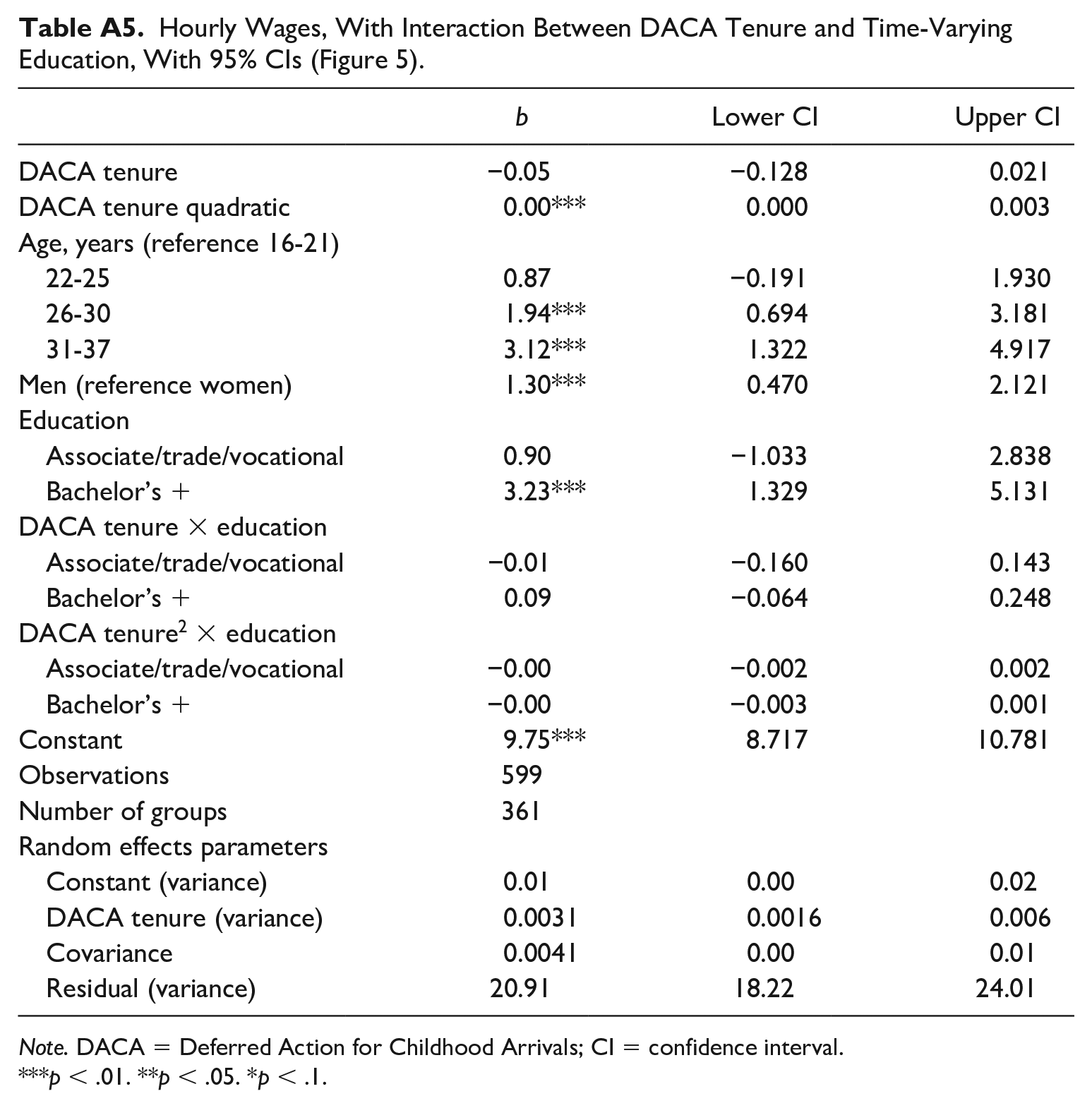
Some DACA recipients completed a Trade/Associates or BA+ degree after receiving DACA. In Figure 5 (Appendix Table A5), we allow education to vary over the study period, accounting for returning or continuing education. The figure shows that attaining a BA or higher is associated with higher wages across the entire DACA tenure. However, the faster wage growth for those who earned a BA degree at any time (in Figure 5), compared with those who earned a BA degree before DACA receipt (in Figure 4), suggests that individuals who earned their BA after DACA experienced faster wage growth than individuals who had earned their BA prior to DACA.
Conclusion
Our results underscore the importance of legalization programs—even temporary ones like DACA—in providing opportunities for further structural integration and mobility. Drawing on longitudinal data spanning 7 years, we provide the first analysis of wage growth among DACA recipients over DACA tenure, focusing on Latinos in California. By measuring between- and within-person changes in earnings over DACA tenure, we see stronger wage effects associated with the program than in other research (e.g., Amuedo-Dorantes & Antman, 2017; Pope 2016). Indeed, we find evidence that DACA receipt is associated with higher wages when compared with nonrecipients, though larger sample sizes are needed to confirm our results.
Our results also suggest that the life course timing of opportunities for inclusion matters. We find that older DACA recipients initially benefit more from the program, but younger recipients catch up over time, suggesting a benefit to earlier age-at-receipt of legal status. It is possible that younger respondents have less or no experience with the disadvantages of living as an undocumented adult, including exclusion from the formal labor market, severe barriers to accessing higher education, and other obstacles. Younger recipients may spend less time in jobs they don’t consider to be commensurate with their experience or goals (Hamilton et al., 2020), thus potentially building work experience trajectories that can lead to greater wage mobility.
We also find that DACA’s wage benefits are associated with educational credentials and the timing of those credentials. We show that those who earned a BA after receiving DACA earn more over time than those who achieved their degree prior to DACA. This suggests that the BA may have greater returns for individuals who earn it after receiving DACA. It is likely that individuals who earned a BA prior to DACA would have experienced difficulty using their degrees in the formal labor market (Gonzales, 2011). Some may have had to take jobs that may not be commensurate with their credentials and skills (Hamilton et al., 2020). There may be a long-term effect on wages and wage growth as a result of that period of mismatch. Future research should aim to further isolate the mechanisms explaining these differences.
Furthermore, although our analyses suggest significant wage improvements with DACA and DACA tenure, we note that, overall, wages are only slightly higher than the living wage in California. For example, assuming full-time work (2,080 hours per year), the average Wave 2 wages of $16.80 is equivalent to 112% of the living wage for an individual without children in California ($14.99 per hour), but far less than the living wage for individuals with one child ($31.25 per hour) or more. 4 As DACA recipients age further into adulthood and form families of their own, their wages may not cover all household expenses. Still, DACA appears to have enabled substantial mobility, especially compared with Latino youth in California who did not receive DACA status, demonstrating DACA’s importance as a driver of mobility.
Although this study is the first of its kind, it has several limitations. First, small sample sizes and geographic specificity limits its generalizability. Additional research that can examine DACA’s impacts longitudinally in other geographic areas would be a useful addition to the literature. Second, given the intersectional identities of undocumented immigrants (Cho, 2017; Enriquez, 2017; Patler, 2018; Valdez & Golash-Boza, 2020), additional research should explore variation across sociodemographic background characteristics, such as race, ethnicity, and gender.
Programs like DACA are effective in reducing inequality and advancing mobility among 1.5-generation immigrants, but the program remains temporary and revocable and does not currently offer a path to permanent inclusion via U.S. citizenship (Roth 2018). While in June 2020, the U.S. Supreme Court found the Trump administration’s efforts to rescind the program arbitrary and capricious, the program still faces legal barriers as of this writing in early 2021. The U.S. Congress and the Biden Administration must consider the resounding success of this program and fight to preserve it, while simultaneously acknowledging its limitations. Policies that provide full access to structural integration via a pathway to citizenship would enable greater, lifelong opportunities for mobility for undocumented immigrants and their families.
Footnotes
Appendix
Hourly Wages, With Interaction Between DACA Tenure and Time-Varying Education, With 95% CIs (Figure 5).
| b | Lower CI | Upper CI | |
|---|---|---|---|
| DACA tenure | −0.05 | −0.128 | 0.021 |
| DACA tenure quadratic | 0.00*** | 0.000 | 0.003 |
| Age, years (reference 16-21) | |||
| 22-25 | 0.87 | −0.191 | 1.930 |
| 26-30 | 1.94*** | 0.694 | 3.181 |
| 31-37 | 3.12*** | 1.322 | 4.917 |
| Men (reference women) | 1.30*** | 0.470 | 2.121 |
| Education | |||
| Associate/trade/vocational | 0.90 | −1.033 | 2.838 |
| Bachelor’s + | 3.23*** | 1.329 | 5.131 |
| DACA tenure × education | |||
| Associate/trade/vocational | −0.01 | −0.160 | 0.143 |
| Bachelor’s + | 0.09 | −0.064 | 0.248 |
| DACA tenure2 × education | |||
| Associate/trade/vocational | −0.00 | −0.002 | 0.002 |
| Bachelor’s + | −0.00 | −0.003 | 0.001 |
| Constant | 9.75*** | 8.717 | 10.781 |
| Observations | 599 | ||
| Number of groups | 361 | ||
| Random effects parameters | |||
| Constant (variance) | 0.01 | 0.00 | 0.02 |
| DACA tenure (variance) | 0.0031 | 0.0016 | 0.006 |
| Covariance | 0.0041 | 0.00 | 0.01 |
| Residual (variance) | 20.91 | 18.22 | 24.01 |
Note. DACA = Deferred Action for Childhood Arrivals; CI = confidence interval.
p < .01. **p < .05. *p < .1.
Declaration of Conflicting Interests
The author(s) declared no potential conflicts of interest with respect to the research, authorship, and/or publication of this article.
Funding
The author(s) disclosed receipt of the following financial support for the research, authorship, and/or publication of this article: This work was supported by the National Science Foundation (Award #1822787); American Sociological Association Spivack Community Action Research Award; National Academy of Education/Spencer Foundation; Sociological Initiatives Foundation; Hellman Foundation; University of California Center for New Racial Studies; University of California Institute for Mexico and the United States; UCLA Institute of American Cultures and the Chicano Studies Research Center; UCLA Institute for Research on Labor and Employment; UC Davis Academic Senate Faculty Research Grant; UC Davis Institute for Social Sciences; and UC Davis Center for Regional Change. We thank Dream Team Los Angeles and the UC Davis DACA Research Team for their contributions to the DACA Longitudinal Study. This article and its open access publication is based upon work funded by COST Action 16111 EthmigSurveyData ( ), supported by COST (European Cooperation in Science and Technology) and funded by the Horizon 2020 Framework Programme of the European Union; the University of Oxford; the Universidad Autónoma de Madrid, and the Casa de Velázquez in Madrid.