



Abstract
I examine how single motherhood affects income in different quantiles of the distribution in twelve rich countries. Using harmonized data from the Luxembourg Income Study, I show how the distribution of income for households headed by single mothers differs from households with children that are headed by couples. I show that there is a striking variation by country in the influence of single motherhood on income at different points of the distribution. In some countries, such as the United Kingdom, single motherhood has a greater effect on income at the top of the distribution than at the bottom. In others, such as the United States, effects are largest at the bottom of the distribution. I discuss the role of employment and social policies in driving differences between countries in the income penalties associated with single motherhood across the distribution.
Keywords
Previous research has shown single mothers to be less well off and at higher risk of poverty than mothers in couples. While single mothers face a high risk of poverty across rich countries (Gornick and Jantii 2012), those in the United States are thought to be at greater risk than their peers in other advanced economies, given that in the United States there is a relative paucity of public transfers that are available to them(Brady, Finnigan, and Hübgen 2017; Rothwell and McEwen 2017). In contrast, the same studies show that the United Kingdom (UK) stands out for its success in reducing single mother poverty, with the generosity of state benefits playing a critical role in its success.
While cross-national differences in the overall risk of poverty for single mothers have been widely studied, much less is known about how single mothers wider economic circumstances differ. Indeed, single motherhood is likely to affect household income across the income distribution; and while public transfers may help alleviate poverty in broad terms, their influence further up the distribution may be limited, particularly if the transfers are means tested. As a result, countries with low poverty “penalties” to single motherhood, achieved via redistribution through the tax-benefit system, may at the same time have large income penalties. In other words, cross-country differences in poverty may tell us little about differences in single mothers’ relative economic position.
One reason low rates of single-mother poverty may be accompanied by high income penalties is because generous state benefits, which protect single mothers from poverty, may come at the cost of reduced financial incentives for paid work. Evidence from the late 1980s and 1990s shows a link between high rates of means testing and the relatively low economic status of single mothers because they were discouraged from working (Wong, Garfinkel, and McLanahan 1993; Dickens and Ellwood 2003). Since then, tax credits, paid to those in employment on low-incomes, have become an increasingly prominent feature of the tax-benefit system in Anglo-European countries (Kenworthy 2015). While earning subsidies improve the incentives of those with low earnings potential to enter employment, they are frequently accompanied by high marginal tax rates, reducing incentives to work longer hours or for greater pay (OECD 2018; Brewer and Hoynes 2019). Moreover, if more generous benefits are offered, a greater number of people are drawn into means testing. For example, in the UK, while generous government transfers have been crucial for reducing single-parent poverty, few single parents escape means testing; in 2019–2020, 84 percent of single parents were estimated to be entitled to the main means-tested benefit supporting low-income working-age families: Universal Credit (Waters and Wernham 2021).
These tensions in the tax-benefit system means that high benefit levels, which protect single parents from poverty, reduce the financial incentives of single mothers further up the income distribution to go into paid work. Consequently, in countries such as the UK, where the benefit system has been effective at reducing single-parent poverty, low levels of poverty may not translate into single mothers having higher relative economic status. Instead, generous means-tested benefits may have the effect of compressing the distribution of single mothers’ income so that while single mothers may avoid poverty, their incomes may still fall far below those of couples with children. In comparison, in countries where non-means-tested benefits are generous, there will be fewer distortionary effects on employment, and single mothers may have higher earnings and income (Wong, Garfinkel, and McLanahan 1993; Brady and Burroway 2012), although inequality among single mothers may be greater.
While national policies towards employment and taxes and benefits influence single mothers’ employment, they are far from the only factors shaping patterns of paid work and care. Wider social processes play an important role in enabling mothers to combine paid work and family life, with countries differing greatly in the extent to which mothers participate in the labor force (Misra et al. 2012; Gonzalez 2004). Studies show that, net of characteristics such as education and age, single mothers’ rates of employment resemble those of partnered mothers (Destro and Brady 2011; Harkness 2016). However, earnings penalties to motherhood, which are a consequence of lower employment rates, paid work hours, and wages, remain substantial across countries. Examining data for six rich countries, Kleven et al. (2019) found annual earnings penalties to motherhood ranging from 21 percent in Denmark to 61 percent in Germany. These penalties, and cross-country differences between them, will have a substantial influence on single mothers’ incomes (Harkness 2022) and the extent to which they are disadvantaged.
Mothers’ position in the labor market and their treatment by the tax-benefit system are, moreover, interrelated. National welfare state policies are based on gendered assumptions about men and women’s role in society. In countries where male breadwinning is the norm, fewer expectations of paid work have typically been placed on single mothers (Lewis 1997). Past studies show single mothers to be particularly disadvantaged, and more reliant on social security benefits, in countries where caregiving is encouraged. Conversely, where single mothers are employed, their own earnings allow them to achieve incomes closer to the average (Misra et al. 2012). While the expectation that single mothers should be in paid work has grown as more mothers have entered the labor market (Millar 2019), in many Anglo-European countries part-time employment is common, limiting single mothers’ capacity to provide for their families and avoid poverty (Misra et al. 2012; Horemans, Marx, and Nolan 2016; Lewis and Giullari 2005). The norm of part-time paid work also draws more single mothers into means testing, with high marginal tax rates constraining their incomes further (Dickens and Ellwood 2003; OECD 2018).
The Research Presented Here
I investigate the extent to which single motherhood, which is now common across countries, remains associated with socioeconomic disadvantage. Using data from the Luxembourg Income Study (LIS), I compare the relative economic status of households headed by single mothers with those headed by couples with children in opposite-sex households in the late 2010s. The countries I study cover a range of gendered labor-market institutions and welfare-state policies and include five English speaking countries (the United States, Canada, Australia, UK, Ireland), three from Western Europe (France, Germany, Netherlands), two Nordic countries (Finland, Denmark), and two from Southern Europe (Italy and Spain). Unconditional quantile treatment effect (UQTE) models are used to estimate how single motherhood influences income at different points of the distribution. The patterns of disadvantage that emerge allow me to assess whether single motherhood acts an equalizer in some countries, because reductions in income associated with single motherhood are greatest at the top of the distribution, reducing inequality between single mothers but increasing their concentration at low levels of income; while in other countries, single motherhood has a smaller influence on income at the top of the distribution meaning single mothers are more likely to be found among the middle class. I conclude by discussing how cross-country policy differences, which influence the sources of income on which single mothers draw, may affect their relative economic standing.
Data and Methods
Sample
I use the most recently available data, from Wave X (2016–2017) or XI (2018–2019), of the LIS for twelve rich countries. The surveys are all large, nationally representative household surveys. LIS provides harmonized information on income, employment, earnings, and other socioeconomic and demographic characteristics, including age, education, and partnership status, allowing cross-country comparative research. I restrict my sample to women who are household heads or spouses with dependent children 18 or under. To avoid including those still in full-time education or who have retired from the labor force, I exclude those under 22 or over 59 years. Weights are used to ensure results are representative of the population. Table 1 shows the resulting sample sizes.
Descriptive Statistics, Single-Mother- and Two-Parent-Headed Households
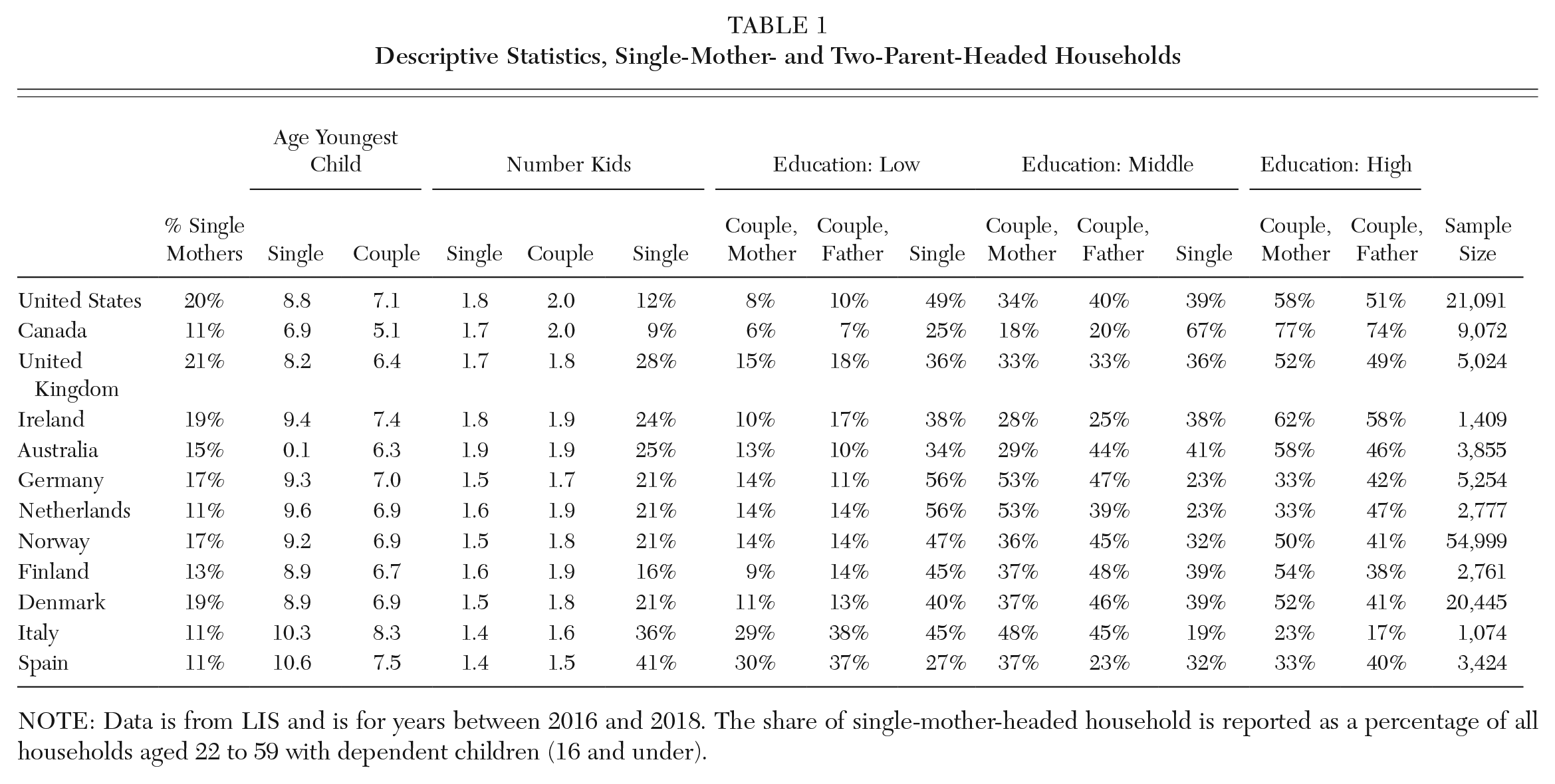
NOTE: Data is from LIS and is for years between 2016 and 2018. The share of single-mother-headed household is reported as a percentage of all households aged 22 to 59 with dependent children (16 and under).
Dependent and explanatory variables
My outcome variable is equivalized annual disposable (post-tax-post-transfer) household income. Income is equivalized by dividing by the square root of household size. Because income is recorded at the household level, the earnings of other adults who are not household heads or their partners is included. One limitation is that, except for Denmark, Finland, and Norway, income data comes from household surveys and tends to be underreported or missing for households below the 5th percentile and above the 95th percentile of the distribution. 1 Estimates at these points will therefore be imprecise. Single parents are defined as unpartnered household heads with dependent children under 18. A limitation of this measure is that it excludes single mothers who are not household heads, such as those living with their own parents, who may be particularly economically vulnerable (Moullin and Harkness 2021). However, it is not possibly to identify single mothers who are not household heads in all countries studied. Moreover, as we are only able to measure income at the level of the household, including nonheads would tend to overstate the economic position of single mothers.
The models described below include two sets of explanatory variables. First, I account for differences in single and partnered mothers’ individual and family characteristics by conditioning on the age of mother (cubic), education (low, middle, or higher attainment), region of residence, number of children (dummy variables for two or three or more children), and age of youngest child (dummy variables for children under 5 and 5–11). The second set of controls adds controls for employment, with dummy variables for full- and part-time employment. Full-time employment is defined as working full time, full year or, for the UK, over 30 hours a week. Part-time employment is defined as working part time or part year, or under 30 hours a week. Information on full-time employment is available for all countries except Norway. For Norway, a single dummy variable for employment is included. To account for heterogeneity in maternal employment by education, interactions between full-time employment and education are included.
Methods
UQTE models are used to illustrate how single motherhood affects the distribution of income vis-à-vis the distribution for couples with children. UQTE models compare the estimated potential income distribution of single mothers (the treated) and couples with children (the untreated). Inverse probability weights (IPW) are used to reshape the observed distributions so they resemble those that would be observed if the full sample were either treated or untreated. The weights are based on (1) demographic characteristics and (2) demographic and employment characteristics, described above. Comparing the resulting “potential outcome” distributions for the treated (single-mother households) and untreated (two-parent households) gives the UQTE, or distributional treatment effects. To compare distributions, I estimate reweighted recentered-influence functions (RIF) and conduct RIF regression (Firpo, Fortin, and Lemieux 2018) using the rifhdreg command in Stata (Rios-Avila 2020). The variables used to reweight the distributions are included as controls in the RIF regressions. Reweighted estimates without controls give very similar results. Average treatment effects (ATE) are reported. The resulting “distributional treatment effects” show how the distribution shifts in response to treatment (single motherhood). The online appendix provides further details on the methods.
Results
Descriptive results
Descriptive statistics for single mothers and mothers in two-parent households are reported in Table 1. In all countries, single mothers have lower levels of education and fewer and older children than mothers in couples. Table 2 shows overall employment and full-time employment rates for single and partnered mothers and partnered fathers. Among couples, maternal employment rates range from 56 percent in Italy to 84 percent in Denmark. Comparing single and partnered mothers, in Ireland, Australia, the Netherlands, and Denmark, employment rates are 10 to 15 percentage points lower for single mothers than mothers in couples; while in the United States and Italy, single mothers are more likely to be employed than partnered mothers. Gaps in full-time employment between mothers and fathers are larger, although some of this disparity reflects differences in the characteristics of single and married mothers which affect their propensity for paid work.
Employment of Fathers and Mothers by Partnership Status
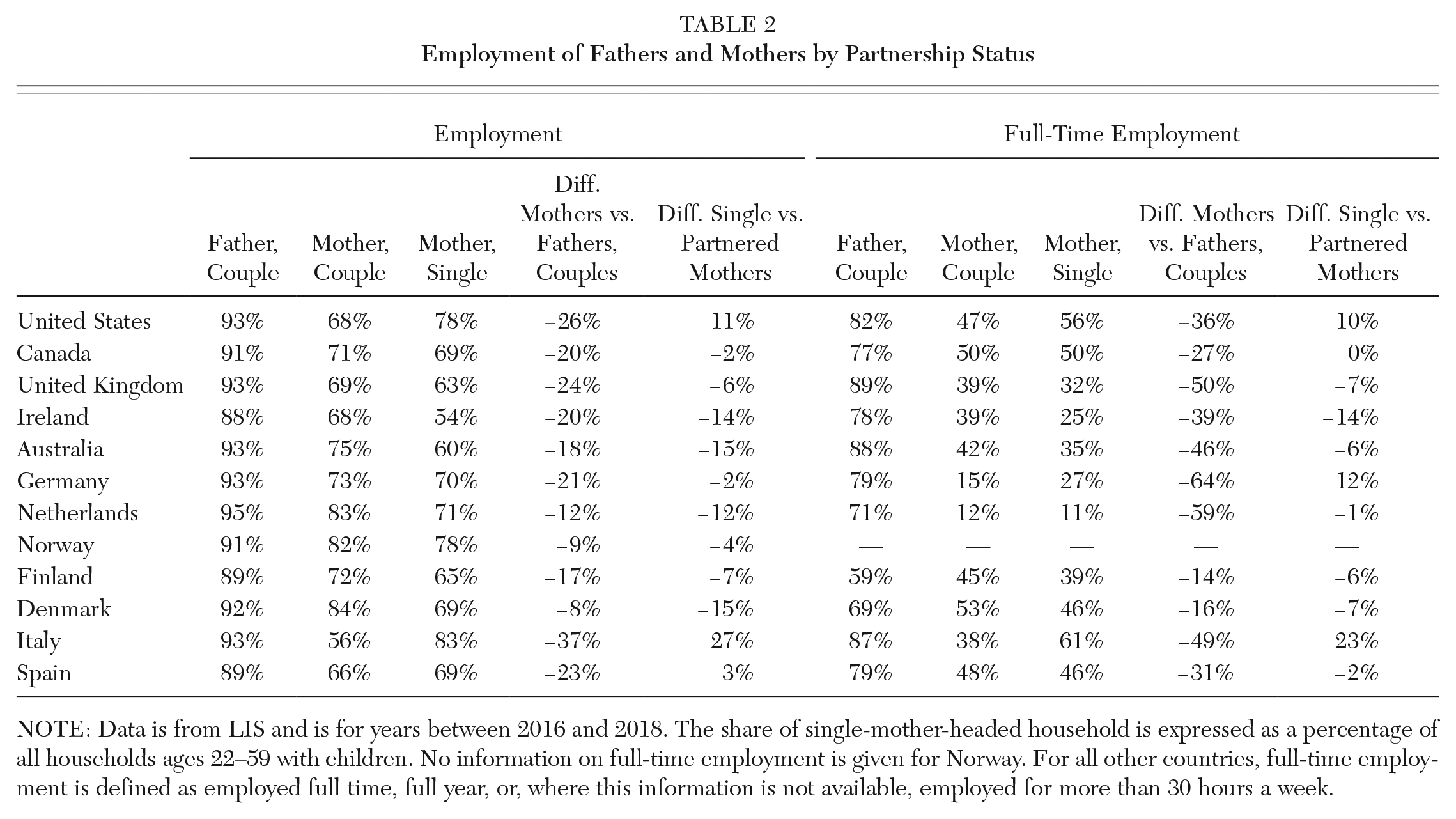
NOTE: Data is from LIS and is for years between 2016 and 2018. The share of single-mother-headed household is expressed as a percentage of all households ages 22–59 with children. No information on full-time employment is given for Norway. For all other countries, full-time employment is defined as employed full time, full year, or, where this information is not available, employed for more than 30 hours a week.
Mean single-mother income penalties
Mean differences in the incomes of single mother and two-parent headed households are shown in Figure 1. Differences are shown without controls and after adjusting for characteristics. Adjusted gaps condition on (i) mothers’ age and education, the number and age of children in the family, and region of residence; (ii) adds controls for mothers’ full and part-time employment. Model (iii) includes the same controls as (ii) but this time contrasts the characteristics of single-mother household heads with those of fathers in couples, who are typically the household head. After accounting for differences in the demographic characteristics of single and partnered mothers, average single-mother income penalties range from 31 percent in the UK to 46 percent in the United States, with penalties of 34 percent in Denmark and Finland, 41 percent in Spain, and other countries lying somewhere between. Accounting for differences in single and partnered mothers’ employment has little influence on the size of these penalties (except in Italy, where accounting for differences in employment increases the size of the estimated penalties); although if single mothers’ employment resembled that of partnered fathers, the mean gap would fall. However, in all countries income gaps remain for two main reasons: first, penalties to motherhood mean that the earnings of single mothers are typically lower than those of fathers; and second, the absence of a (potential) second earner.
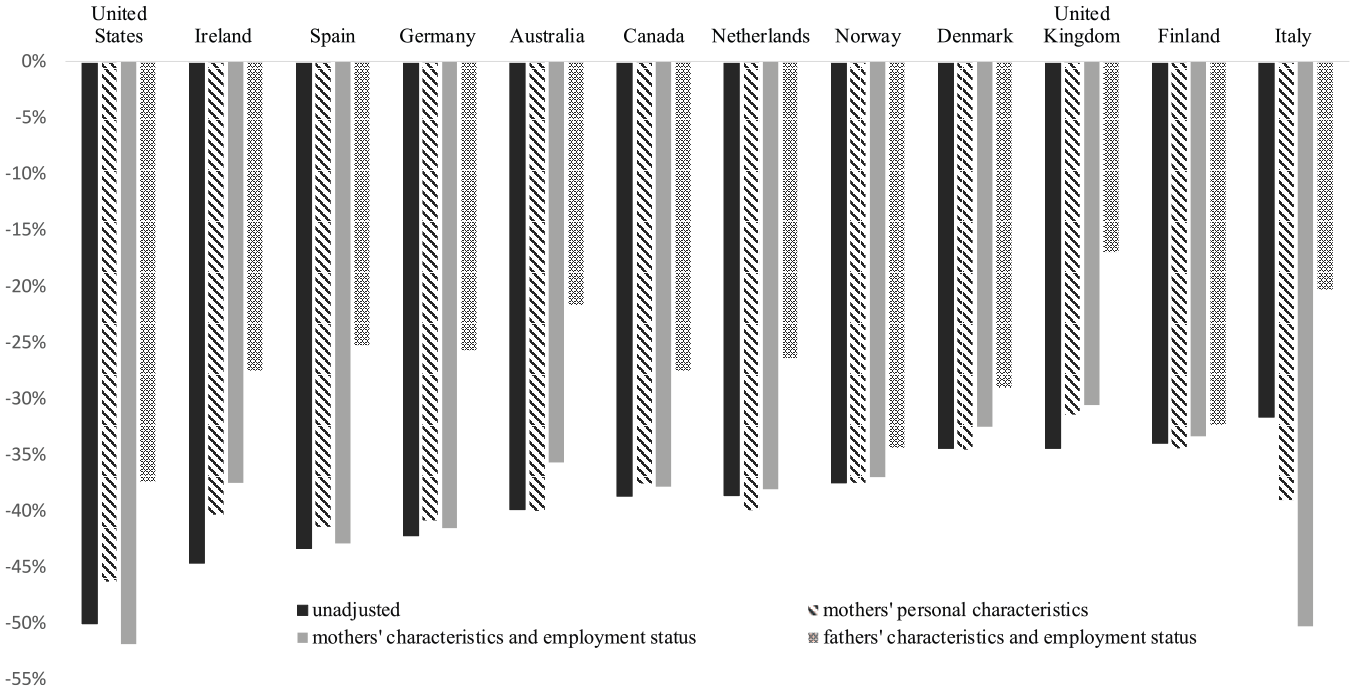
Mean Single-Mother Income Gaps across Countries
Differences in income across the distribution
Figure 2 shows kernel density estimates of the distribution of income for single-mother and two-parent-headed households. The distributions are weighted by their population share, with the sum of the distributions giving the overall distribution of income for couple and single mother headed families. The poverty lines, defined as 50 percent of median equivalized income, are also plotted. Everywhere the distribution of single mothers’ income lies to the left of couples with children, but their incomes are particularly concentrated in the left tail of the couples’ distribution in the UK, Ireland, the Netherlands, Germany, and the Nordic countries (Denmark, Norway, and Finland). Relatively low levels of income dispersion in the Nordic countries means that although their incomes are notably lower than for couples, most single mothers are not in relative income poverty but are, nonetheless, concentrated at the bottom of the income distribution. In comparison, in the United States, Canada, Australia, Italy, and Spain, single mothers’ incomes are more unequally distributed, with more single mothers having incomes similar to those of middle-income couples. Differences in the incomes of single-mother-headed households and those headed by couples may reflect differences in characteristics; for example, older single mothers, those with better education, or with fewer or older children may be expected to have a higher standard of living. Cross-country variations in employment, which may reflect differences in support for single parents in the tax-benefit system, and differences in selection into single motherhood may also explain why income differences vary across the distribution in some countries but not in others. In the subsequent analysis, I examine the extent to which differences in observable characteristics and employment influence the relative income of single mothers at different points of the distribution.
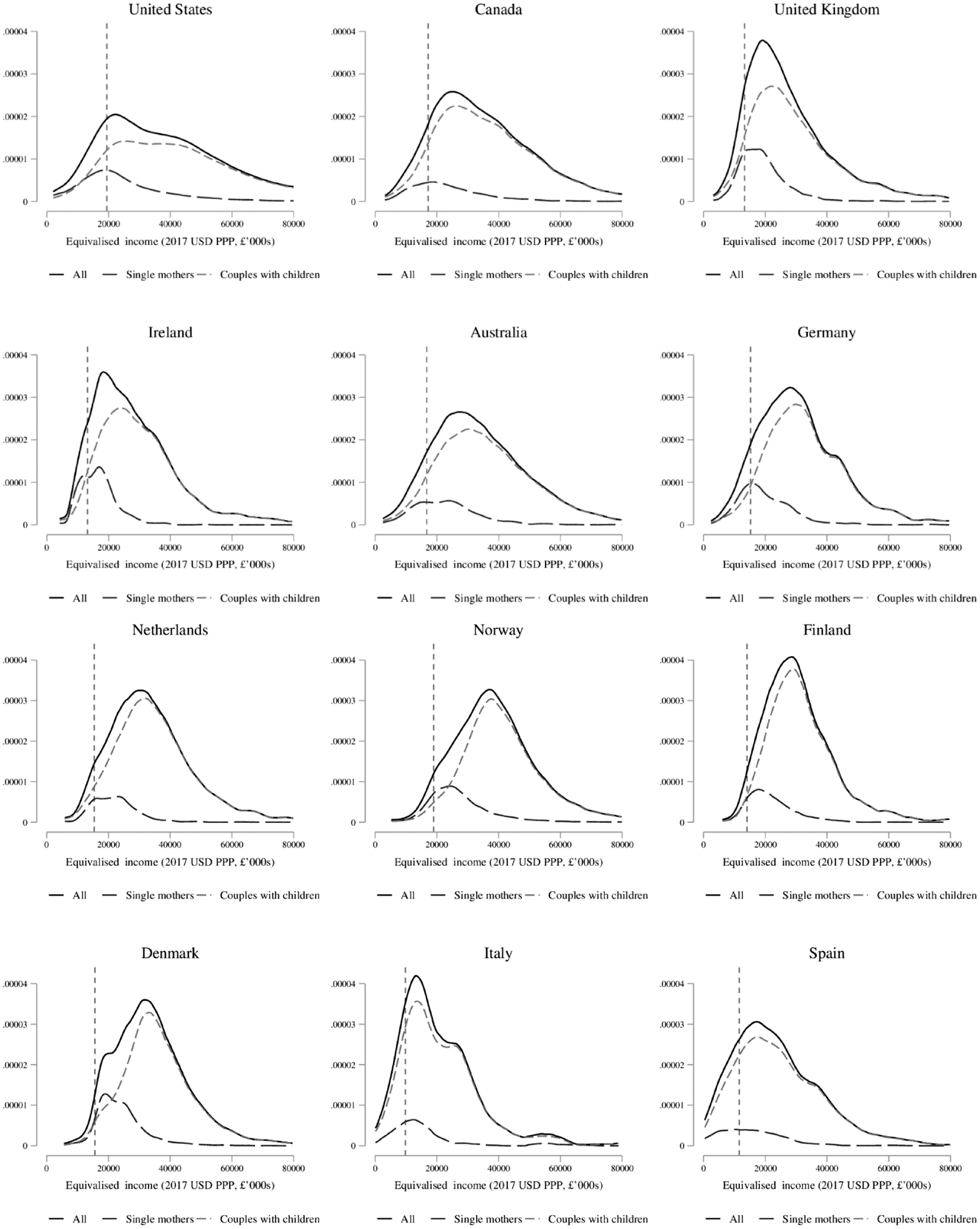
Kernel Density Estimates of Equivalized Household Income: All, Single, and Partnered Mothers
Results from the quantile treatment effect models
Results from the unconditional quantile treatment effect models without controls and with the three sets of controls described before are shown in Figure 3. Looking across the distribution, I find single motherhood has a heterogenous effect on income at different points of the distribution, the shape of which varies across countries. In the United States, Italy, and Spain, income differences are largest at the bottom of the distribution and widest at the top; while in the UK, Ireland, the Netherlands, and Denmark, differences are smallest at the bottom of the distribution and greater at the top. In Canada, Australia, Germany, Norway, and Finland, income differences are constant across the distribution. These patterns are observed in the raw data, after controlling for mother and family characteristics, and when further controls for mothers’ full- or part-time employment are added. Although accounting for differences in mothers’ personal, family, and employment characteristics typically reduces the income gaps associated with single motherhood, changes in the estimates are small, suggesting these differences play little part in explaining single mothers’ disadvantage in any of the countries studied.
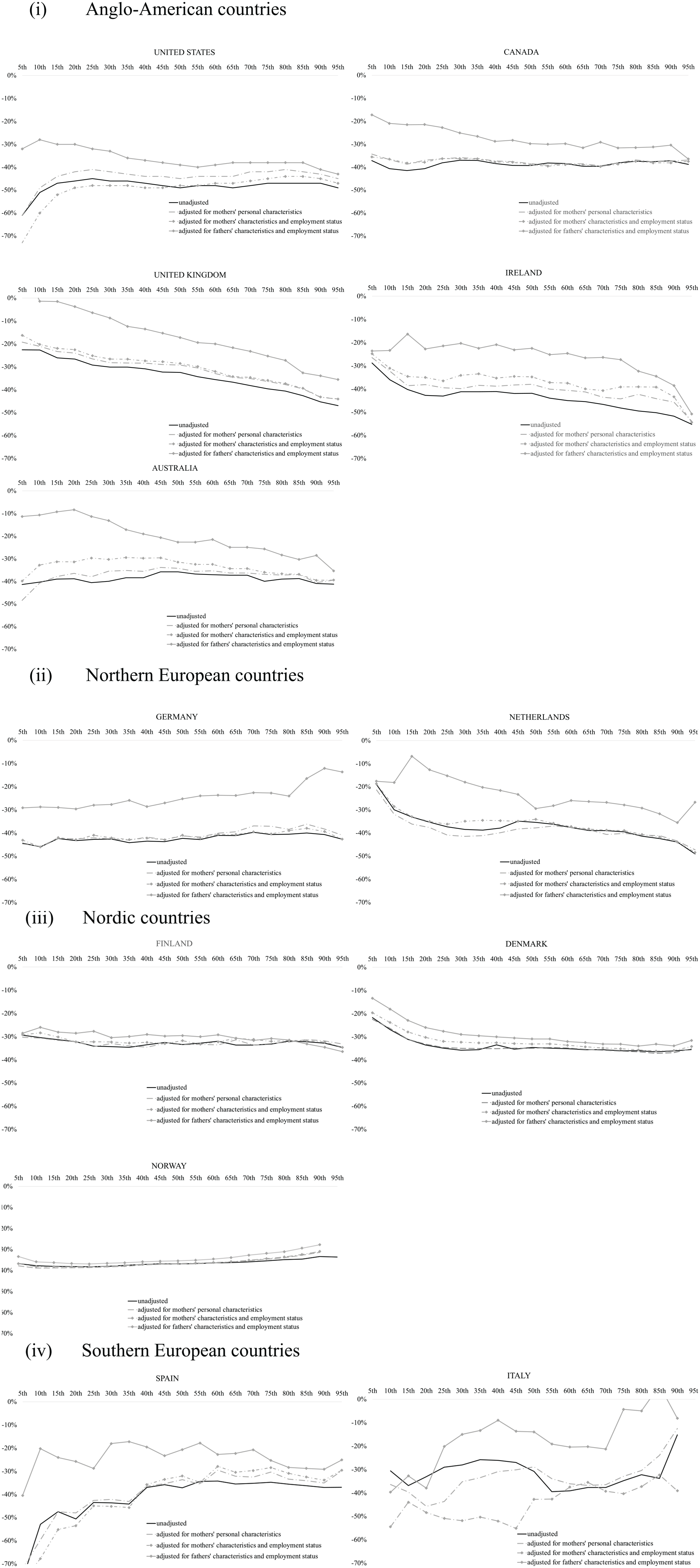
Single Mother Inequality Treatment Effects in Twelve Countries (percentage change in income, equivalized income)
Conditioning on the characteristics of single mothers who are household heads and the characteristics (including full and part-time employment) of fathers in couples (who are frequently defined as the household head; see Moullin and Harkness 2021) has a more substantial effect, leading to a fall in the estimated income gaps across the income distribution in all countries. However, there are notable differences in magnitude. In the United States, UK, Australia, and Germany, single-mother penalties would be considerably reduced, particularly at the bottom of the distribution because fathers are more likely to work, and to work full-time, than mothers (differences in other characteristics have little effect on the estimates). In the Nordic countries, the estimated treatment effects would be only slightly reduced if single mothers worked as much as fathers in couples, reflecting the relatively high levels of gender equality in employment between mothers and fathers in these countries. Nonetheless, even if single mothers worked as much as fathers in couples, earnings penalties associated with motherhood and the absence of a potential second earner mean that, in all countries, income differences would remain.
The overall treatment effect of single motherhood on the distribution of income, measured by the Gini coefficient, is reported in Table 3. The table shows the coefficients without controls for characteristics (i), after adjusting for individual and family characteristics (ii), and employment (iii). The results show single-mother-headed households’ incomes are significantly more equally distributed than those of couples headed households in the UK, Ireland, the Netherlands, and Denmark. In contrast, in Norway, single mothers’ incomes are significantly more unequally distributed. In Italy and Spain, the coefficients on single motherhood also suggest single mothers’ incomes are more unequally distributed than those for couples; but although the coefficients are large, they are not statistically significant, which may reflect relatively small sample sizes for these countries.
Estimation of Overall Treatment Effect of Single Motherhood on Inequality (Gini Coefficient × 100)
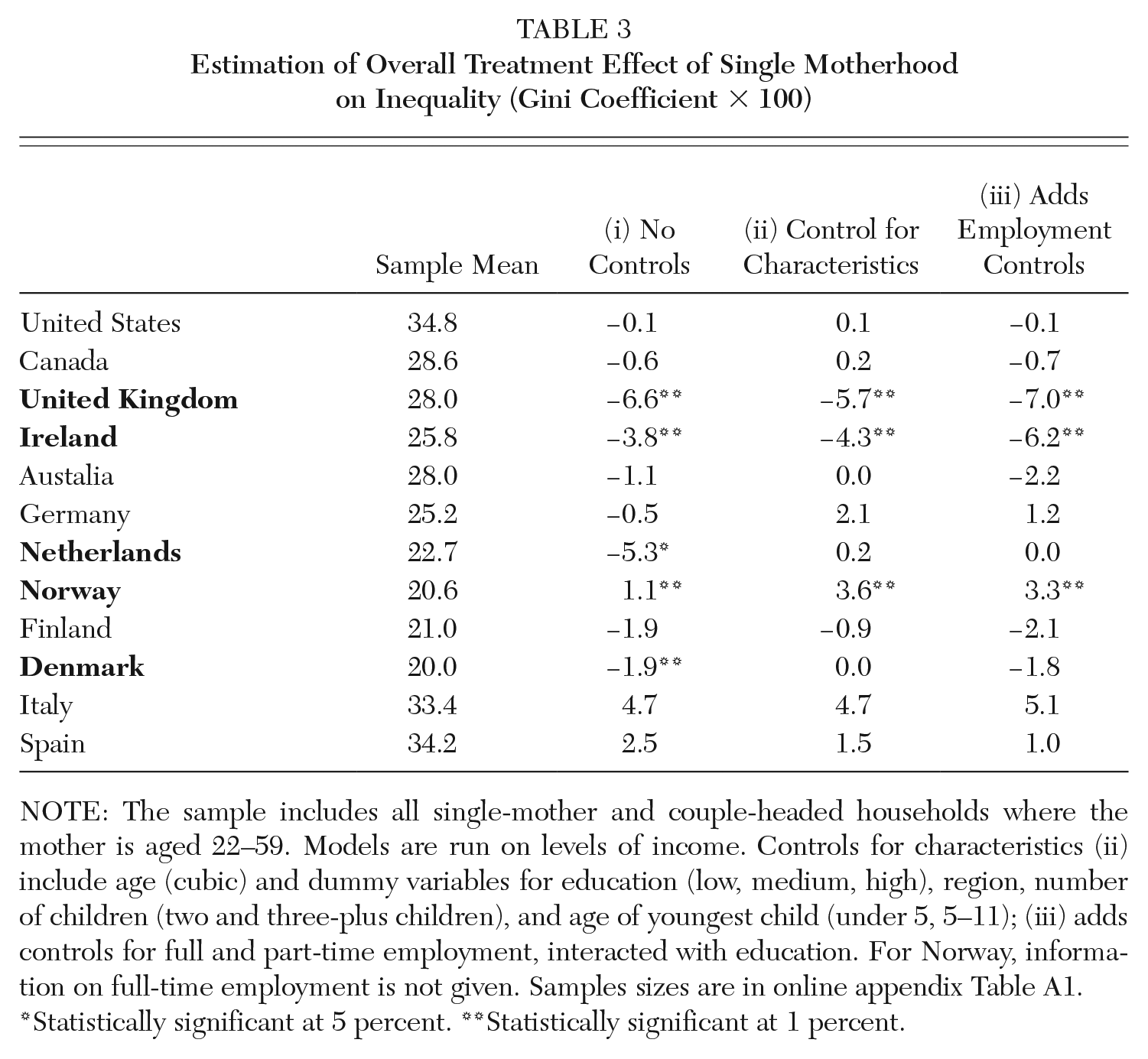
NOTE: The sample includes all single-mother and couple-headed households where the mother is aged 22–59. Models are run on levels of income. Controls for characteristics (ii) include age (cubic) and dummy variables for education (low, medium, high), region, number of children (two and three-plus children), and age of youngest child (under 5, 5–11); (iii) adds controls for full and part-time employment, interacted with education. For Norway, information on full-time employment is not given. Samples sizes are in online appendix Table A1.
Statistically significant at 5 percent. **Statistically significant at 1 percent.
Assessing Policies, Income Sources, and Single Mothers’ Income
Since 2000, strategies towards supplementing the incomes of low-income families, including single-parent families, have shifted considerably with an increasing number of Anglo-European countries introducing earnings supplements for low-wage workers, aiming to increase employment and income and to reduce poverty (Kenworthy 2015). However, there are substantial differences in how earnings supplements operate with differences in generosity, phase-out rates (and, hence, marginal effective tax rates), conditions of receipt, and targeting.
In the United States, there is support for those on low-middle income but little for those with the lowest incomes (McCabe and Berman 2016; Moffitt and Garlow 2018). In contrast, in the UK, awards are generous for those with the lowest incomes but withdrawn rapidly as income rises (Brewer and Hoynes 2019). Canada, Ireland, the Netherlands, and Denmark also offer in-work supplements to single parents on low incomes that are more generous than in the United States, particularly for those with the lowest incomes, but less substantial than in the UK. In Australia, the Netherlands, the UK, and Ireland, eligibility for in-work credits is conditional on single mothers being in part-time employment. In Australia, family tax benefits are paid to families with children who have only a single earner, and single parents receive an additional supplement that is phased out at relatively high levels of income (OECD 2019). In addition to in-work support, most countries have child benefits, with supplements paid to single parents in Norway, Denmark, Finland, and Germany. In Australia, additional “parenting payments” are made to parents with children under six, or to single parents with children under eight. In Italy and Spain, income supplements are more restricted, with low levels of child benefit and few additional payments to single parents or low earners (OECD 2019; Van Lancker, Ghysels, and Cantillon 2012).
Policy differences affect the sources of income on which single-mother households depend. Figure 4 shows the average share of disposable income received by single-mother-headed households from earnings (posttax), public benefits (means-tested assistance benefits, insurance benefits, and universal benefits), maintenance payments, and other sources (pensions and investments) in each country. In the United States, Italy, and Spain, single-mother households are particularly dependent on earnings, which account for around three-quarters of disposable income. In contrast, earnings make up less than half of single-mother households’ disposable income in the UK, where almost 40 percent of income is from means-tested benefits. In Ireland, the pattern resembles that in the UK. The same analysis of gross income is similar, reflecting the fact that, because single-mother households typically have low income levels, they frequently face an average effective tax rate close to zero (OECD 2019). These country differences are not just driven by differences in employment; among those in employment, there are also substantial variations in single mothers’ income sources, shown in Figure 5. For employed single mothers, means-tested benefits substantially supplement earnings in the United States, Canada, the UK, Ireland, and the Netherlands, accounting for 14 percent of income in the United States and up to a quarter of income in the UK. In contrast, in Australia, Germany, Finland, and Denmark, universal benefits are an important source of income, with few in employment receiving income from means-tested benefits. Public insurance benefits provide an important income supplement for employed single-mother households in Norway. In Italy and Spain, single mothers in paid work receive minimal additional financial support from public benefits of any kind.
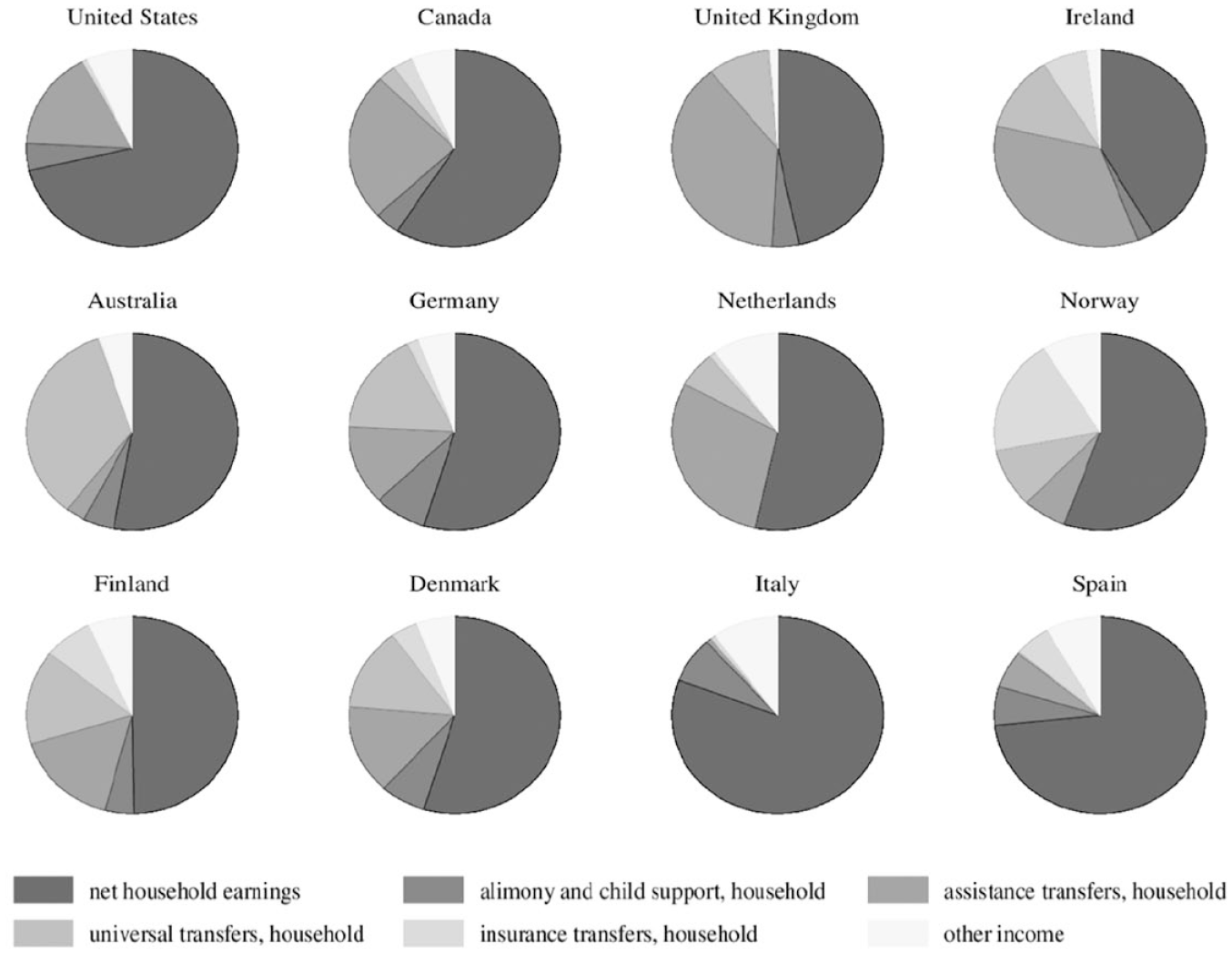
Single-Mother-Headed Households’ Income Sources in Twelve Countries
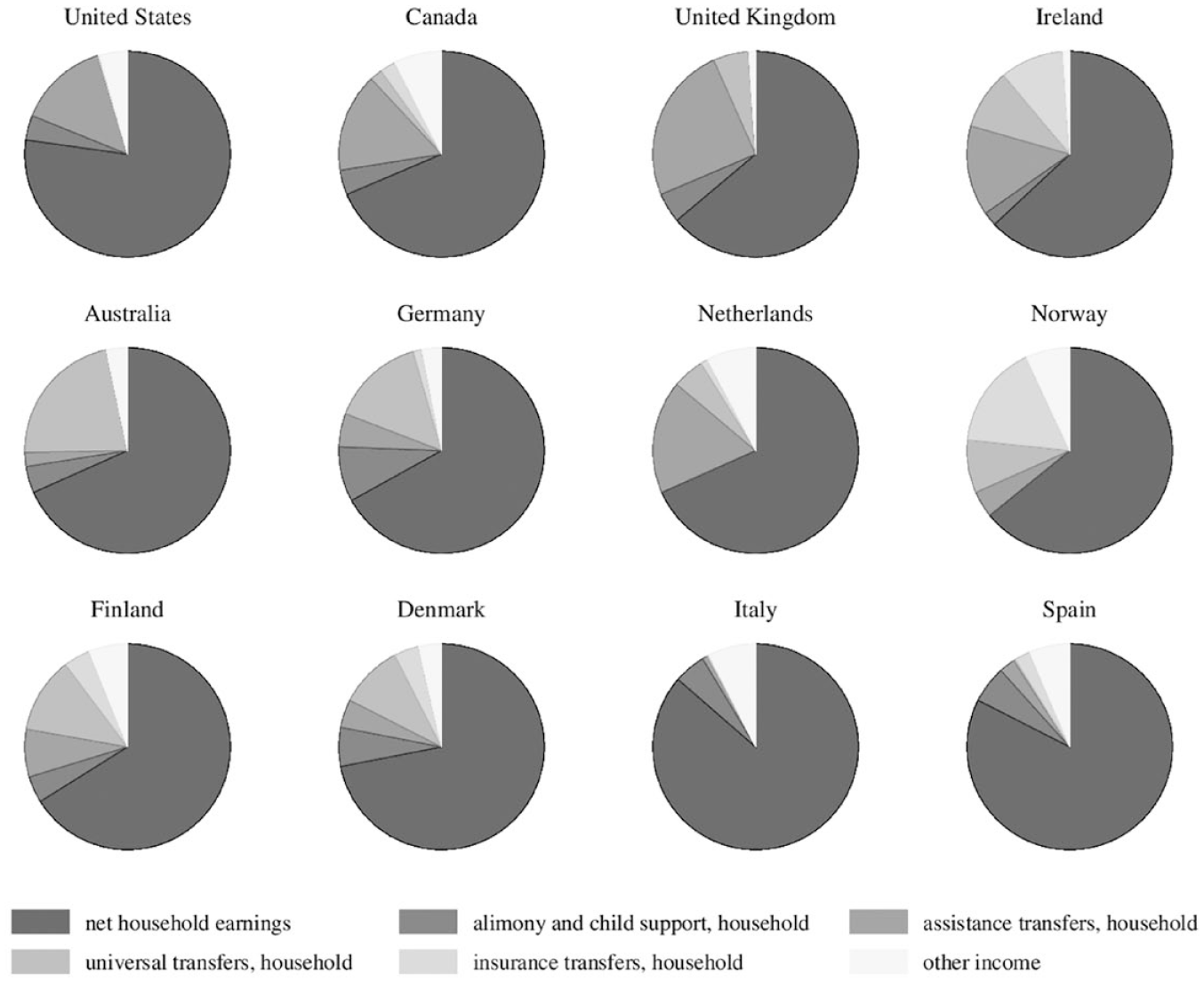
Employed Single-Mother-Headed Households’ Income Sources in Twelve Countries
Differences in the income packages of single mothers are consistent with the gradients in income penalties associated with single motherhood previously found. On the one hand, greater reliance on earnings in the United States, Italy, and Spain allows some single-mother households to achieve higher income levels but leaves others at risk of very low income. In the UK, Ireland, and the Netherlands, means-tested benefits comprise an important part of single-mother households’ incomes and are effective at lifting the incomes of those at the bottom of the distribution. In these countries, single mothers’ incomes are more equally distributed than for couples, but single mothers are concentrated in the lower end of the income distribution. In Australia and Germany, universal transfers provide important supplements to earnings, accounting for 22 and 15 percent of income, respectively. However, because in Germany single mothers are concentrated in low-paid sectors (Zagel and Van Lancker 2022), differences in relative income remain large. In Nordic countries, single mothers’ earnings are supplemented by a package of public universal, assistance, and insurance transfers, which, in Denmark and Finland, tend to reduce income gaps more at the bottom of the distribution than the top.
Discussion
Numerous recent studies have examined the link between single motherhood and poverty, but few have looked at the wider economic circumstances of single mothers as part of the analysis that might be illuminating for public policy. Here, I assessed the relationship between single motherhood and income in twelve rich countries and the extent to which the relationship varies across the income distribution. I found single motherhood to be associated with reduced income everywhere. In line with studies on single-parent poverty and after taking account of demographic characteristics, the United States once again stood out as having a particularly large average income penalty for single mothers: 46 percent, which compares to a relatively small UK penalty of 31 percent. In other countries, penalties sat between 35 and 40 percent. Single mothers’ characteristics made little contribution towards explaining differences in the incomes of single and partnered mothers: even if single mothers were of the same age, had the same level of education, number and age of children, and lived in the same region as partnered mothers, their income, and its’ distribution, would be little changed. These findings echo those of previous research showing single mothers’ characteristics, and in particular education, play little part in explaining cross-country differences in poverty (Härkönen 2018).
Going one step further and adjusting single mothers’ employment patterns so they resemble those of partnered mothers would similarly lead to little change in their income in most countries. However, in the United States, Italy, and to a lesser extent Spain, single mothers’ income would be lower at all points of the distribution if their employment patterns resembled those of partnered mothers, because single mothers are more likely to be employed. To raise their incomes, single mothers would instead need to adopt the same pattern of employment (and in particular, full-time employment) as fathers in couples. The potential income gains from single mothers acting more like fathers in couples would be greatest in the UK, Germany, and the Netherlands, countries where gender differences in parental employment are largest. Yet even matching the full- and part-time employment rates of fathers’ patterns would be insufficient to eliminate single mother income penalties in countries where full-time maternal and paternal employment is the norm, as data for the Nordic countries shows. Although higher rates of employment raise income, single mothers’ incomes would still fall behind those of dual, full-time-earner couple households (Alm, Nelson, and Nieuwenhuis 2019). This is in part because of mechanistic adjustments to income, which assume couples benefit from economies of scale. 2 Moreover, motherhood earnings penalties, which are substantial across countries, are a further, important reason for single mothers’ disadvantage (Harkness 2022).
Also striking were cross-country variations in how single motherhood affected income at different points of the distribution. In both the United States and the UK, income gaps were strongly graded by income, but in opposite directions. In the United States, single motherhood has the most negatively effect on income at the bottom of the distribution and a more moderate effect at higher levels of income. In the UK, the opposite is true, with single motherhood having a smaller influence at the bottom of the income distribution and a greater effect at the top. In line with past studies, this suggests that social policies may be particularly successful at protecting single mothers most at risk of poverty in the UK but much less effective in the United States (Rothwell and McEwen 2017; Brady, Finnigan, and Hübgen 2017; Zagel and Van Lancker 2022). Looking across countries, Ireland, the Netherlands, and Denmark exhibit a close resemblance to the UK, with income gaps being smaller at the bottom of the income distribution than the top. In each of these countries, single mothers’ incomes are more equally distributed than for couples with children, and their incomes are concentrated at the bottom of the distribution. This is consistent with Kenworthy’s study (2015) showing work-conditional benefits to be no more effective for raising incomes than other institutional configurations. Italy and Spain bear closer resemblance to the United States, with income differences larger at the bottom of the distribution than the top. In Canada, Australia, Germany, Finland, and Norway, differences in the incomes of single-mother headed and two-parent families are large but vary less with income.
What can we conclude from these findings? Past research, using data from the 1980s and 1990s, found that in countries where caregiving was encouraged and means testing was common, single mothers’ incomes were relatively low (Wong, Garfinkel, and McLanahan 1993; Misra et al. 2012). Since then, the policy landscape has changed considerably, with more mothers, including single mothers, entering the labor force. While many single mothers are now in paid work, part-time employment remains common, placing single mothers at heightened risk of poverty (Horemans, Marx, and Nolan 2016; Lewis and Giullari 2005). While generous means-tested earnings supplements raise income at the bottom of the distribution, their impact further up is more limited (Dickens and Ellwood 2003; Brewer and Hoynes 2019).
These disincentives in the tax-benefit system, alongside large earnings penalties to motherhood, means that in countries including the UK, Ireland, and the Netherlands, single motherhood acts as an equalizer, compressing single mothers’ incomes so that most single mothers have relatively low income, regardless of their characteristics or employment. While means-tested benefits play an important role in lifting the income of single mothers with the lowest earnings potential in these countries, in others, such as the United States, low levels of support are associated with a high risk of poverty (Brady, Finnigan, and Hübgen 2017). Limited state support leaves single mothers particularly dependent on their own earnings, and their incomes unequally distributed, with some at risk of having very low incomes but more reaching the middle of the distribution. In Nordic countries, despite relatively high rates of employment and generous single-parent benefits, single mothers’ incomes are lower than for those with partners. In these countries, the norm of dual-earner households (Alm, Nelson, and Nieuwenhuis 2019) and the persistence of motherhood pay gaps (Kleven et al 2019) means single mothers remain disadvantaged across the income distribution.
While this study is descriptive and has not directly tested how specific policies influence the economic opportunities of single mothers, the results nonetheless shed light on how the experience of single mothers varies across countries and policy contexts. One limitation is that, because only includes single mothers who are household heads are included, it does not capture the situation of single mothers who coreside with other adults, including their parents, if those other adults are defined as the household head. While in some countries, generous welfare provision and housing support enable single mothers to live independently, in countries where welfare support is limited, including the United States, Spain, and Italy, coresidence is likely to be more common and a response to adverse economic circumstances (Pilkauskas and Cross 2018). Because I look only at single mothers who live independently, the disadvantages associated with single motherhood are likely to be underestimated where coresidence is common. Further, while I have discussed the influence that public transfers may have on single mothers’ relative economic position, I have not explored the role income tax plays in influencing their relative standing despite its importance in shaping the distribution of income.
While single motherhood has become increasingly common across rich countries, it remains strongly associated with disadvantage. Recent research has paid a great deal of attention to the link between single motherhood and poverty. Far less has been written about single mothers’ wider economic circumstances. Yet as the experience of single motherhood continues to grow, it is important to understand to what extent single mothers, even if not poor, remain disadvantaged. I show that antipoverty strategies may still result in wide gulfs in equality between single-mother and two-parent households. For example, although the UK has been lauded for its success in reducing single-mother poverty, low hours of paid work and earnings, encouraged by the design of the system of in-work financial support, continues to hold back their incomes, with few single mothers reaching the middle of the income distribution. In the UK, then, while the state has provided single mothers with financial security, this has not been accompanied by economic opportunity. In contrast, in the United States, single mothers are more likely to be represented among those on middle incomes, even as those with the lowest income potential remain highly disadvantaged. In the case of the United States, opportunities for some single mothers have not been accompanied by economic security for all. Future research should focus on understanding how policy can achieve both.
Supplemental Material
sj-docx-1-ann-10.1177_00027162221120758 – Supplemental material for Single Mothers’ Income in Twelve Rich Countries: Differences in Disadvantage across the Distribution
Supplemental material, sj-docx-1-ann-10.1177_00027162221120758 for Single Mothers’ Income in Twelve Rich Countries: Differences in Disadvantage across the Distribution by Janet C. Gornick, Laurie C. Maldonado, Amanda Sheely and Susan Harkness in The ANNALS of the American Academy of Political and Social Science
Footnotes
Notes
Supplemental Material
Supplemental material for this article is available online.
Susan Harkness is Professor of social policy at the University of Bristol, co-investigator at the ESRC Research Centre for Micro-Social Change at the University of Essex, and visiting professor at the Centre for the Analysis of Social Exclusion, London School of Economics. Her research examines how gender and family structure affect labor market and income inequalites.
References
Supplementary Material
Please find the following supplemental material available below.
For Open Access articles published under a Creative Commons License, all supplemental material carries the same license as the article it is associated with.
For non-Open Access articles published, all supplemental material carries a non-exclusive license, and permission requests for re-use of supplemental material or any part of supplemental material shall be sent directly to the copyright owner as specified in the copyright notice associated with the article.
