



Abstract
Anxiety is driven by cognitive uncertainty, and large political events can change levels of uncertainty in a nation’s population, including among individuals in migrant groups. This article explores the association between the Brexit vote and the relative anxiety levels of various sectors of the UK population: the UK born, EU migrants, and non-EU migrants. Self-reported high anxiety levels among these population groups six months before and after the referendum suggest differences in social and economic uncertainty. After the Brexit vote, EU migrants reported high levels of anxiety at a rate that was 1.8 percentage points lower than the UK born; this suggests economic rather than social anxiety, given that the UK born were losing access to EU opportunities. The reduction in anxiety for EU migrants was marked in regions with greater support to remain in the EU, suggesting its importance in reducing their social uncertainty and therefore anxiety.
Massively shared societal events—such as terrorist attacks (Huddy et al. 2005), natural disasters (Beaglehole et al. 2018), and pandemics (Fetzer et al. 2020)—can have widespread cognitive and affective effects. This article examines the massively shared psychological experience after pivotal political events. Some disruptive political events, such as the 2016 election of Donald Trump, have been followed by widely shared negative psychological experiences (Hoyt et al. 2018). For example, after the Trump election, premature births increased among Latina women, a factor linked with increased anxiety among the U.S. Latino population (Gemmill et al. 2020). However, the evidence linking political events to psychological factors, particularly to uncertainty and anxiety, remains small.
Anxiety is an emotion driven by cognitive uncertainty, and political events can increase that uncertainty in multiple ways that range from insecurity about future social status to economic prospects. Several implications exist for society because of this increase in anxiety. First, anxiety may affect many life outcomes by impairing cognitive performance (Raghunathan and Pham 1999; Wetherell et al. 2002; Linder et al. 2020). Second, substantial evidence exists that anxiety can have negative implications for labor market outcomes and productivity (Chatterji et al. 2007; Frijters, Johnston, and Shields 2014; Banerjee, Chatterji, and Lahiri 2017). Knowledge of the implications of these political events for mental health can be useful while prioritizing health services for different sectors of the population.
To provide insights into the association of political events and anxiety, this article explores the changes in anxiety levels before and after the Brexit vote for different groups of the UK resident population. We compare the changes in reported anxiety levels of EU migrants, non-EU migrants, and the UK-born.
EU membership, and the associated freedom of movement within the bloc, has been a major political issue in the UK at least since the mid-2000s when the EU expanded to include ten new countries (Vargas-Silva 2011). Faced with increased pressure from EU sceptics, within his and other political parties, Prime Minister David Cameron promised a referendum on EU membership. The EU membership referendum took place on June 23, 2016. It was largely expected for the Remain option to win, and this option received support from several of the main political leaders at the time, including Cameron himself; Nicola Sturgeon, the First Minister of Scotland; and Sadiq Khan, the Mayor of London. However, the Leave option won by a margin of 52 percent to 48 percent.
Antidepressant prescriptions increased after the referendum (Vandoros, Avendano, and Kawachi 2019; Liew, Goodwin, and Walasek 2020), although only small effects appeared on average life satisfaction of UK residents (Powdthavee et al. 2019). However, we have less understanding about how the changes in anxiety levels differed across groups of the population. This is an important differentiation to understand the wider mental health implications of the referendum and political events more broadly.
Anxiety levels of EU migrants as a group are particularly likely to have been affected by the Brexit vote. The concerns of this group might well emphasize social uncertainty. The vote was seen by many as a repudiation of high levels of EU migration in the previous decade, and it created substantial uncertainty about the rights of EU migrants in the UK (Vargas-Silva 2016). However, right after the vote, multiple campaigns directed positive messages to EU migrants (see below for examples of these campaigns). These positive messages could have helped to attenuate social anxiety levels among EU migrants.
Another source of uncertainty and anxiety is related to economics. The Brexit vote was accompanied by several doom predictions about the future of the UK economy (Van Reenen 2016). Economic uncertainty was a factor of concern for all groups, including the UK born. Moreover, while EU migrants would still have unrestricted access to the EU labor market (i.e., could more easily move to another EU country, following a potential economic downturn in the UK), this was less likely to be the case for the UK born and for non-EU migrants, suggesting that economic anxiety could have been greater among the latter groups. The Brexit vote also created uncertainty about the rights of British nationals to take advantage of EU-funded opportunities (e.g., Erasmus programme, Horizon research schemes).
Our analysis relies on the UK Annual Population Survey (APS) and compares reports of high anxiety levels among the different population groups during the six months before and six months after the referendum. Our analysis suggests that, after the Brexit vote, EU migrants reported high levels of anxiety at a rate that was 1.8 percentage points lower than the UK born. This is likely the result of higher levels of economic anxiety among the UK born. The relative reduction in anxiety for EU migrants was marked in regions with greater support to remain in the EU. This finding supports the idea that regional solidarity helped to reduce their social uncertainty and, therefore, anxiety.
Conceptual Background
The link between the result of the EU referendum and anxiety levels is complex. To make sense of this link, we follow a conceptual framework, which we present in Figure 1. We start by defining two sources of anxiety: economic and social. Economic anxiety refers to concerns related to the personal financial situation of the individuals, which is affected by aggregate economic dynamics. Social anxiety refers to individual perceptions of societal acceptance. Given the large literature on social anxiety disorders or social phobia (e.g., Stein and Stein 2008), in this framework we use the term in a general way, not in reference to the condition.
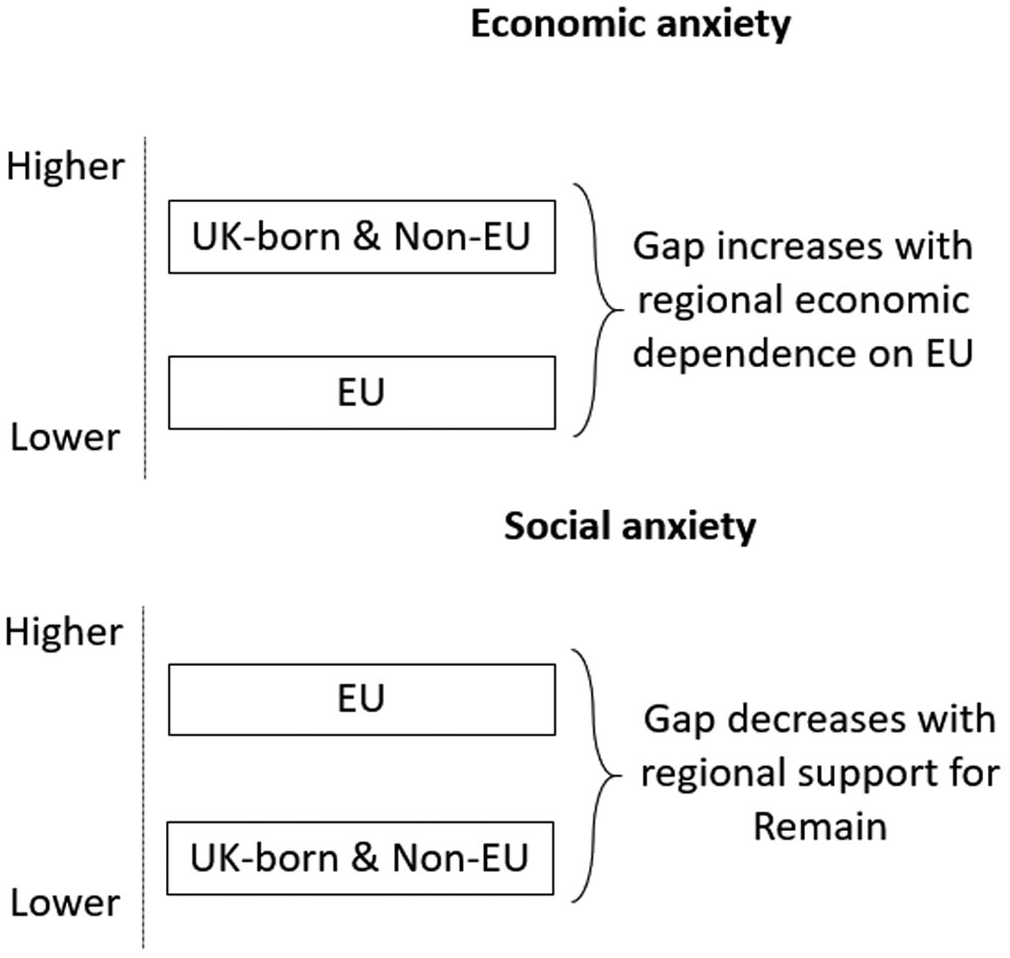
Conceptual Framework
Economic anxiety
Economic anxiety related to the referendum result was high in general with the overall negative outlook for the UK economy after the vote (Belke and Gros 2017). In fact, financial markets worldwide had an immediate negative reaction to the electoral result, with the UK pound depreciating to a 31-year low against the U.S. dollar (Ramiah, Pham, and Moosa 2016), and the economic downturn was forecasted to be stronger in the UK than in other EU countries. In the case of the UK born and non-EU migrants, their bond to the UK economy is likely to be more enduring in general compared to EU migrants who still enjoy access to the European labor market and can more easily move to other high-income countries in case of a major UK economic downturn. Major uncertainty occurred at the time about the post-Brexit access of UK nationals to the European labor market. In the case of non-EU migrants, this access has always been strongly restricted. Therefore, we start with the idea that the economic anxiety related to the referendum result was higher for the UK born and non-EU migrants than for EU migrants based on their additional flexibility in relation to labor mobility. This leads to our first hypothesis:
Social anxiety
The referendum result was surprising and should have affected social anxiety among all groups. However, the UK-born population was divided on the issue of Brexit, with only a 4-percentage-point gap between the vote for Leave and Remain. 1 Hence, the average social anxiety changes in this group are likely to have been smaller than those for economic anxiety. In the case of EU migrants, the implications for social anxiety are likely to have been high.
Abundant evidence exists that freedom of movement was one of the main topics driving the Brexit vote (Vasilopoulou 2016), and it was a constant topic of discussion throughout the campaign. As such, many EU migrants could have interpreted the Brexit vote as a rejection of their presence in the UK. Moreover, the referendum result was accompanied by uncertainty about the future social rights of EU migrants in the UK (Hall et al. 2020; McGhee, Moreh, and Vlachantoni 2017). 2 Some evidence indicated that the referendum increased social anxiety among EU migrants (Frost 2020; Guma and Dafydd Jones 2019). Therefore, we expect that the social anxiety related to the referendum result is higher among EU migrants relative to other groups. This leads to our second hypothesis:
Other postreferendum dynamics
Those politicians and other public figures who favored the option of remaining in the EU during the referendum campaign increased their warnings about a deterioration of the UK economy following the Brexit vote. Meanwhile, many of those who favored Brexit pushed openly for a clean break with the EU, even at the expense of a short-term economic cost. Hence, this type of anxiety (i.e., economic anxiety) is likely to have increased immediately following the referendum. This anxiety is likely to be higher in those regions with a stronger economic connection to the EU and with more to lose by the imposition of trade restrictions in the future.
At the same time, numerous messages were directed at EU migrants during this period to express appreciation for their presence in, and contributions to, the UK. For instance, the day after the referendum, the Mayor of London, Sadiq Khan, stated on his social media accounts, “I want to send a clear message to every European resident living in London—you are very welcome here. As a city, we are grateful for the enormous contribution you make, and that will not change as a result of this referendum” (Abbey-Lambertz 2016).
In addition, a few weeks after the referendum, Nicola Sturgeon, the Scottish First Minister, stated, “My message today—to EU citizens and to their representatives in Scotland—remains simple. Scotland is your home, you are welcome and your contribution to our economy, our society and our culture is valued” (Brooks and Carrell 2016).
Qualitative evidence suggests that these types of messages from politicians played a key role in making EU migrants feel more welcome and reassured after the Brexit vote. For instance, Sigona and Godin (2019) report that in Glasgow, a Danish man in their project stated that “I was feeling really depressed but then I remember how Nicola Sturgeon went on telly the next morning and spoke directly to EU citizens in Scotland and it’s your home and so on, and that was really reassuring.”
These messages are just one example of the strong movement to make EU migrants welcomed in the UK during that period. The same dynamics occurred at workplaces and educational institutions. Sigona and Godin (2019) report that a Romanian couple in Scotland stated, The Scottish people were very willing to make their opinion on Brexit clear to us. They said, “Oh I am so sorry about what happened” and they were really wanting to try to convince us of the fact that they want us here and they don’t want us feel unwanted just because of how the vote went. That was on a personal level, on a political level we did get letters from the Scottish government with our names on them, so I thought that was quite good.
These messages of support, via politicians’ social media accounts, official letters, or casual conversations, have the potential to decrease anxiety levels among EU migrants and are more likely to have occurred in more pro-Remain areas. The idea that positive messages can reduce anxiety is not new. For instance, evidence exists that positive messages from doctors and teachers can reduce anxiety among patients and students, respectively (Furner and Duffy 2002; Stortenbeker et al. 2018). However, less evidence exists of these dynamics in relation to political events.
Importantly, no messaging campaigns were directed at reducing social anxiety levels among the UK-born or non-EU migrants. Any possible increase in social anxiety among these groups was largely ignored.
This leads to our third and fourth hypotheses:
Data
Our main dataset is the secured access version of the UK Annual Population Survey (APS). The APS is a continuous household survey with an approximate sample of 320,000 respondents each 12 months (Office for National Statistics 2020). For the main analysis, we combine two APS datasets covering the period July 2015 to June 2016 and July 2016 to June 2017. We then limit the sample to the cross-section of individuals aged 16 to 65 who were interviewed 180 days before and after the Brexit referendum (June 23, 2016). In addition, in the case of migrants, we limit the analysis to those who arrived in the UK before 2015 (i.e., before the 2015 UK General Election and the main discussion of a possible EU referendum).
The main dependent variable is an indicator of a high level of anxiety. This variable is derived from a question in the APS, which is reported on a scale of 0 to 10. In particular, the question asks, “How anxious did you feel yesterday? (where 0 is not anxious at all and 10 is completely anxious).” Figure 2 shows the distribution of responses to this question across groups. Note that the distribution is similar across groups and that most people report low levels of anxiety (close to 30 percent report no anxiety at all). In the analysis, we are interested in reports of high levels of anxiety and, therefore, we use a dummy variable equal to 1 if the respondent indicates a value of 7 or more as the dependent variable. However, in the robustness checks, we also show that the results are similar if we use other cutoff points to indicate high levels of anxiety.
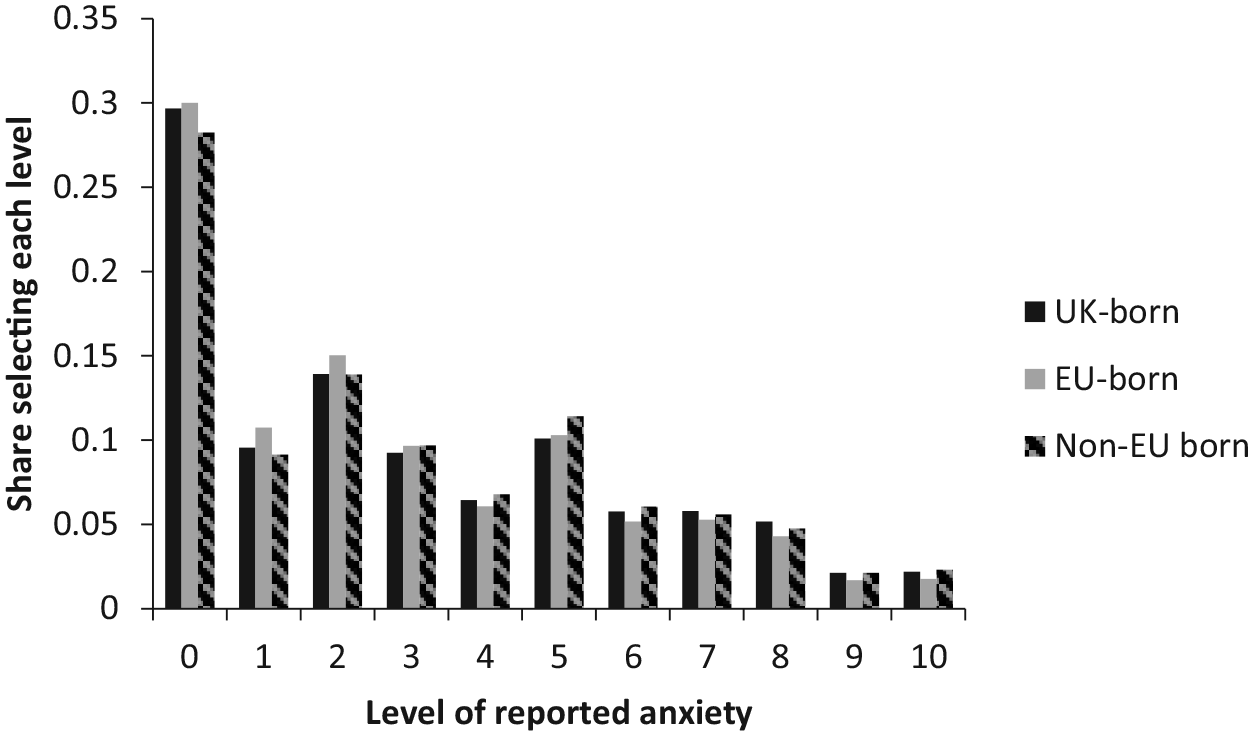
Level of Anxiety Reported
Table 1 provides the mean values for the dependent variable across the main groups. In the prereferendum period, both EU and non-EU migrants reported lower values of anxiety than the UK born. This corresponds well with a large literature indicating that migrants tend to have a health advantage over natives across countries (Giuntella et al. 2018, 2019). After the referendum, an average decrease occurred in the reporting of high levels of anxiety by EU migrants, but an increase for non-EU migrants and the UK-born.
Means and Observations
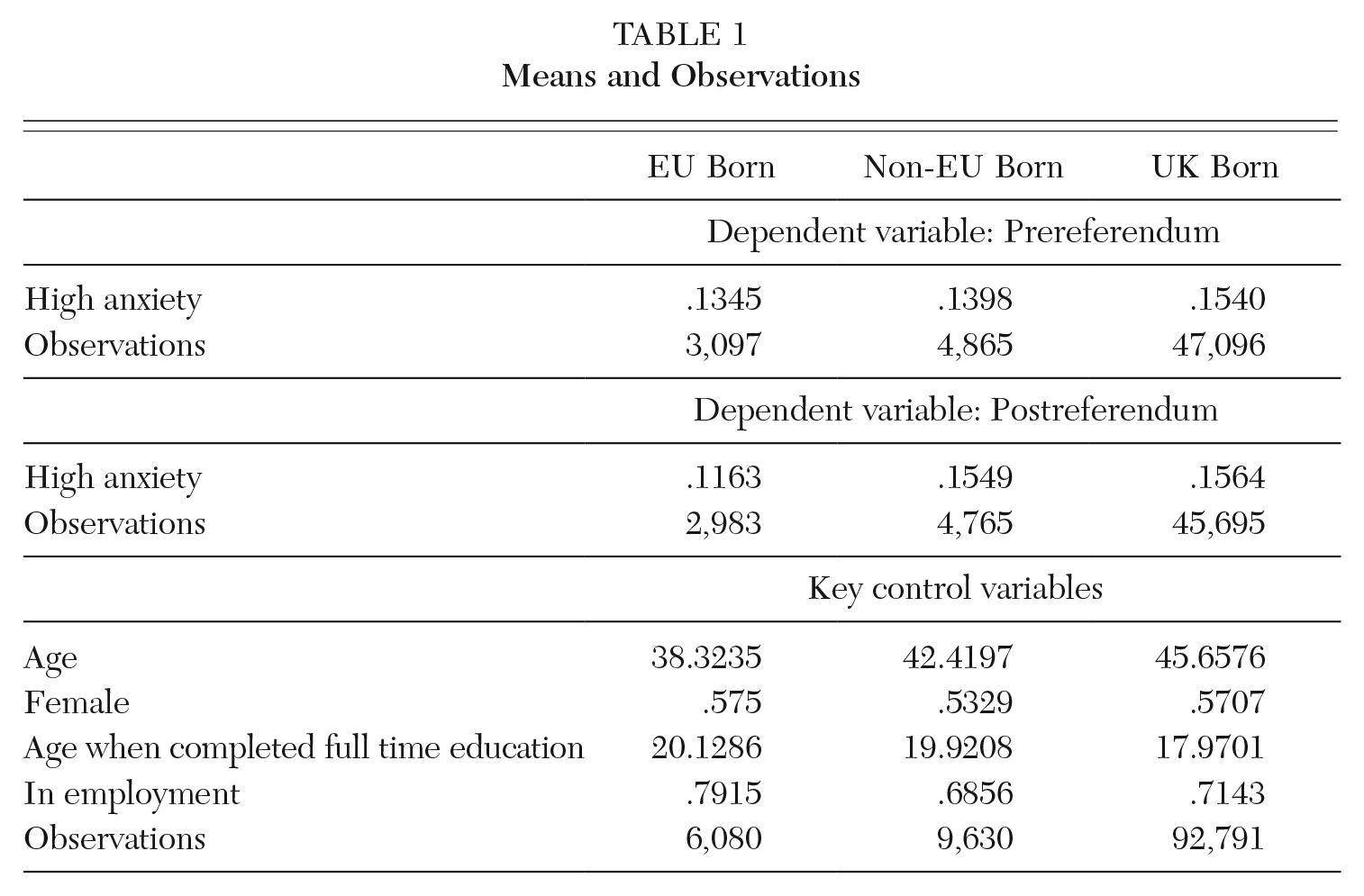
Figure 3 illustrates the postreferendum decrease in high levels of anxiety among EU migrants more clearly. While the reported values increased slightly for other groups, a constant decrease occurred in the case of EU migrants after the referendum.
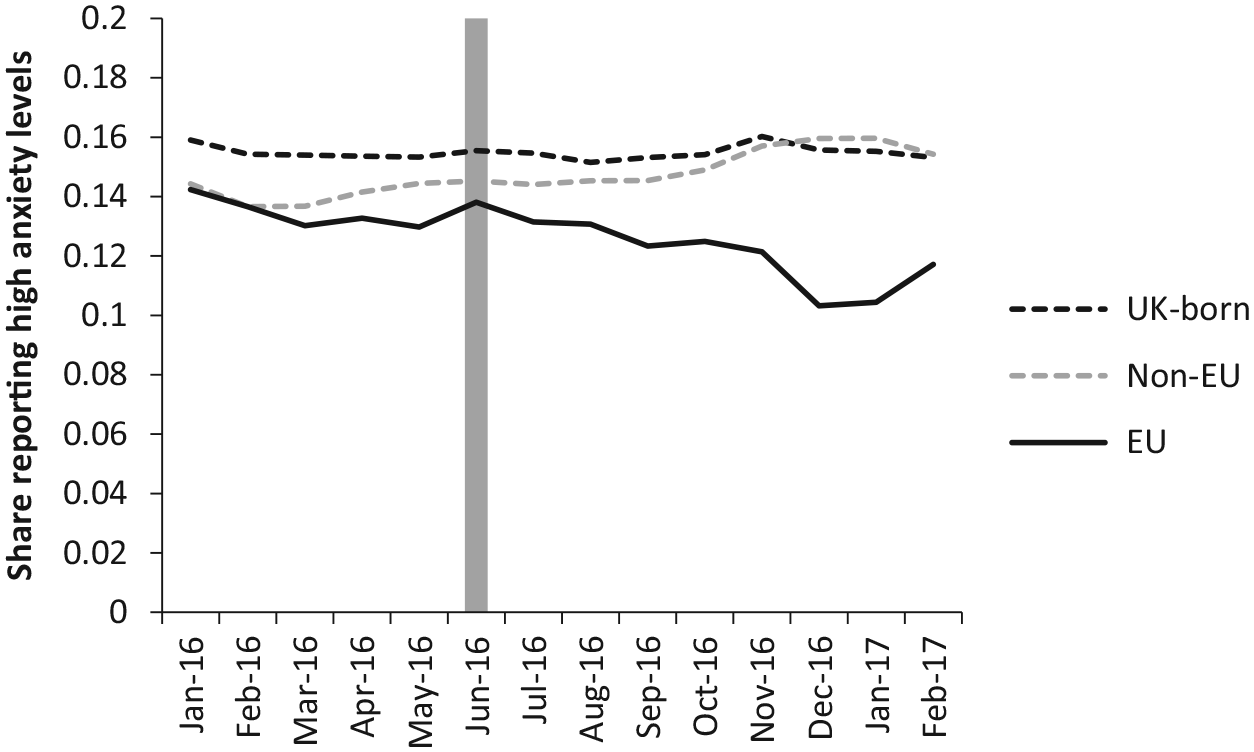
Share Reporting High Anxiety Levels (7 or More)
Methods
To explore the association of the Brexit vote and anxiety levels in more detail, we conducted a series of regressions in which the dependent variable is our indicator of high levels of anxiety. As independent variables, we have a variable that indicates if the interview took place before or after the referendum, a dummy variable that indicates if the respondent is an EU migrant, and a dummy variable that indicates if the respondent is a non-EU migrant. Therefore, the results for EU and non-EU migrants are relative to the UK-born. The analysis controls for local authority fixed effects as well as sociodemographic variables, including age, gender, education, and employment status. 3 Table 1 provides the means for all control variables. The online appendix includes the definition of all the variables used in the analysis.
In the analysis, our main focus is on the interaction of the indicator for EU and non-EU migrants and the indicator of the before/after referendum period. Based on hypothesis 1, that interaction should be negative and statistically significant for EU migrants and nonsignificant for non-EU migrants. Based on the alternative hypothesis 2, that interaction should be positive and statistically significant for EU migrants and nonsignificant for non-EU migrants.
In a second step, we explore hypotheses 3 and 4 by estimating the regressions with different subsamples based on economic connectedness to the EU, which is proxied by the share of regional exports going to the EU and regional support for the option of remaining in the EU. Across regions, an estimated 48.3 percent of exports go to the EU (Ward 2020). We conduct the analysis separately for regions in which the share of exports to the EU is above and below that threshold. Based on hypothesis 3, we would expect the interaction coefficient for EU migrants to be more negative in areas in which the share of exports to the EU is above average.
The overall result of the referendum was 51.89 percent for the Leave option and 48.11 percent for the Remain option. In the analysis, we separate regions in which the Leave vote was above and below 51.89 percent. Based on hypothesis 4, we would expect the interaction coefficient for EU migrants to be more negative in areas that had greater support for remaining in the EU.
Finally, we explored whether the Brexit vote is associated with other issues that could affect anxiety levels and conducted a series of robustness checks to validate our results.
The Brexit Referendum and Anxiety Levels
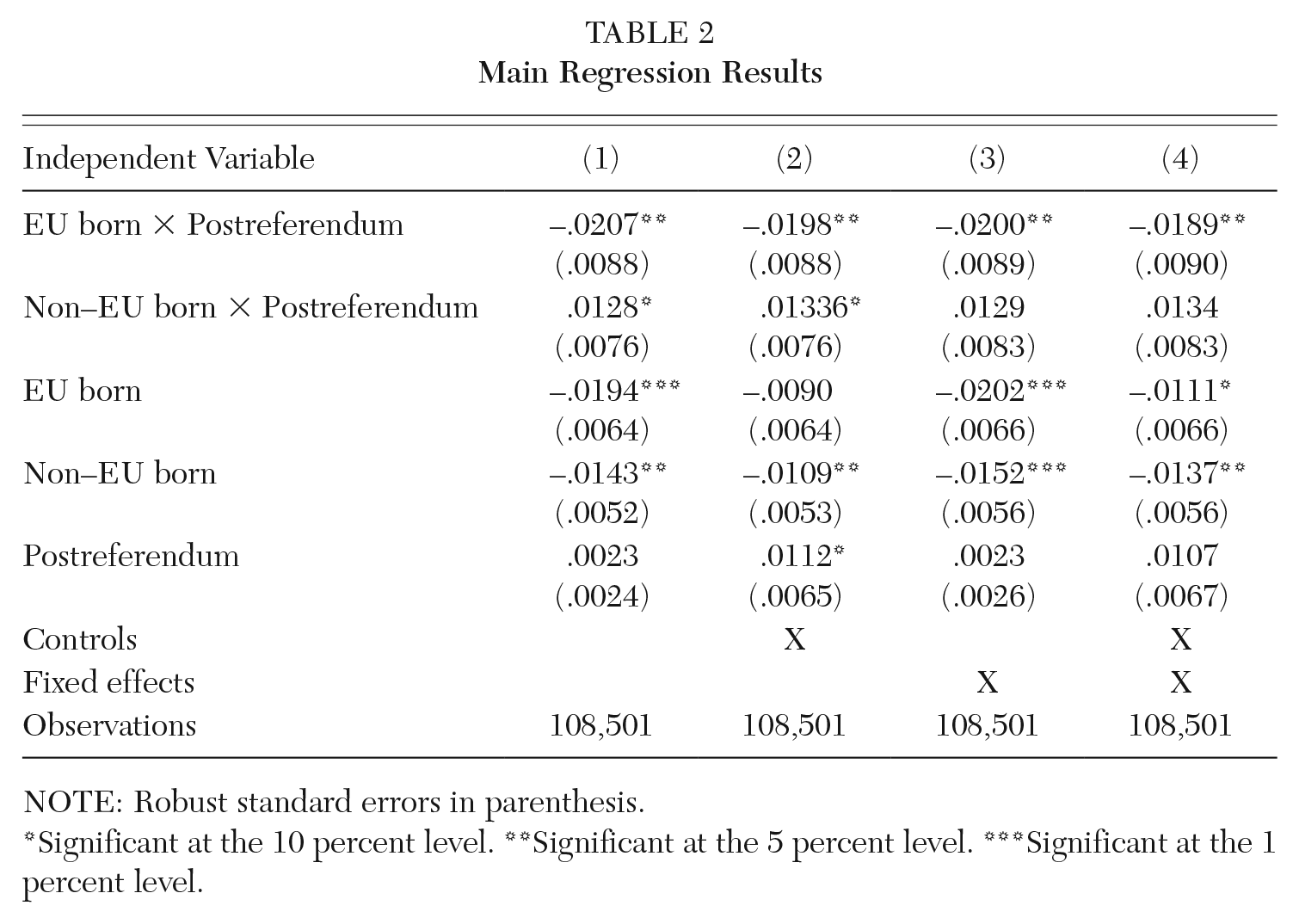
Table 2 reports the main results regarding the likelihood of reporting high levels of anxiety before and after the referendum. As the results in column 4 of Table 2 suggest, migrants are less likely to report high levels of anxiety in general by about 1 percentage point. In addition, the coefficient for the postreferendum period, while positive, is not statistically significant.
Main Regression Results
NOTE: Robust standard errors in parenthesis.
Significant at the 10 percent level. **Significant at the 5 percent level. ***Significant at the 1 percent level.
Our main interest is the interaction of the EU and non-EU born dummies with the postreferendum indicator. In this case, the coefficient is negative and statistically significant for those individuals born in the EU. This finding supports the idea presented in hypothesis 1. In practice, economic anxiety is playing an important role in these changes to relative anxiety levels. The estimate suggests that there is a 1.8-percentage-point reduction in the likelihood of reporting high levels of anxiety postreferendum for this group (relative to the UK born). On the other hand, the interaction coefficient for the non-EU born is positive, although not statistically significant, which is line with expectations based on hypotheses 1 and 2.
The Role of Regional Economic Factors and Solidarity
Regional factors, such as the economic connection to the EU and the share of the Remain vote, could play a role in the analysis, as explained by hypotheses 3 and 4.
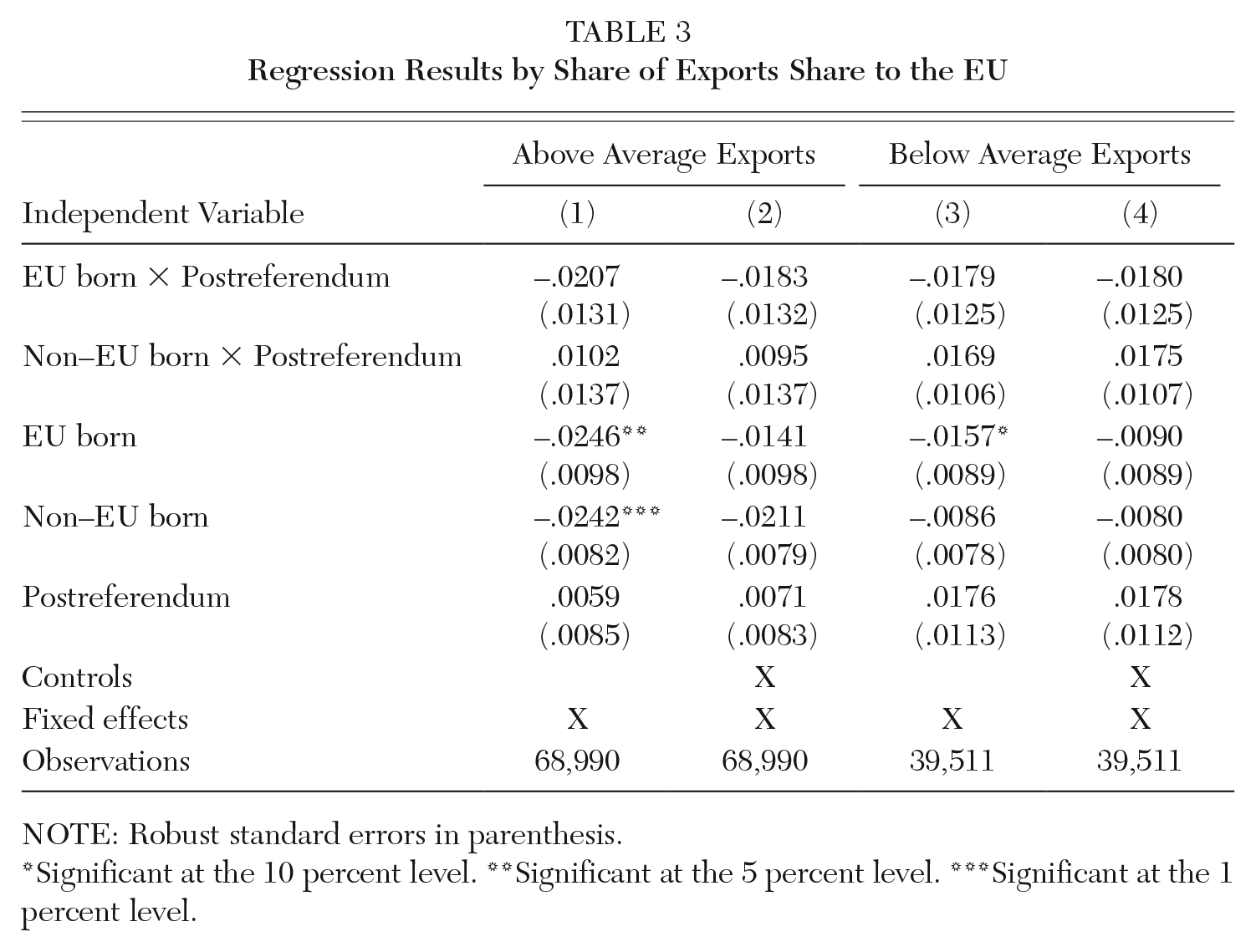
In Table 3, we show the results by share of exports of the region going to the EU. In terms of the interaction coefficients, the results are similar across regions. In both cases, the interaction coefficient is negative for EU migrants and positive for non-EU migrants. However, none of the interaction coefficients is statistically significant. Therefore, we do not find strong support for hypothesis 3.
Regression Results by Share of Exports Share to the EU
NOTE: Robust standard errors in parenthesis.
Significant at the 10 percent level. **Significant at the 5 percent level. ***Significant at the 1 percent level.
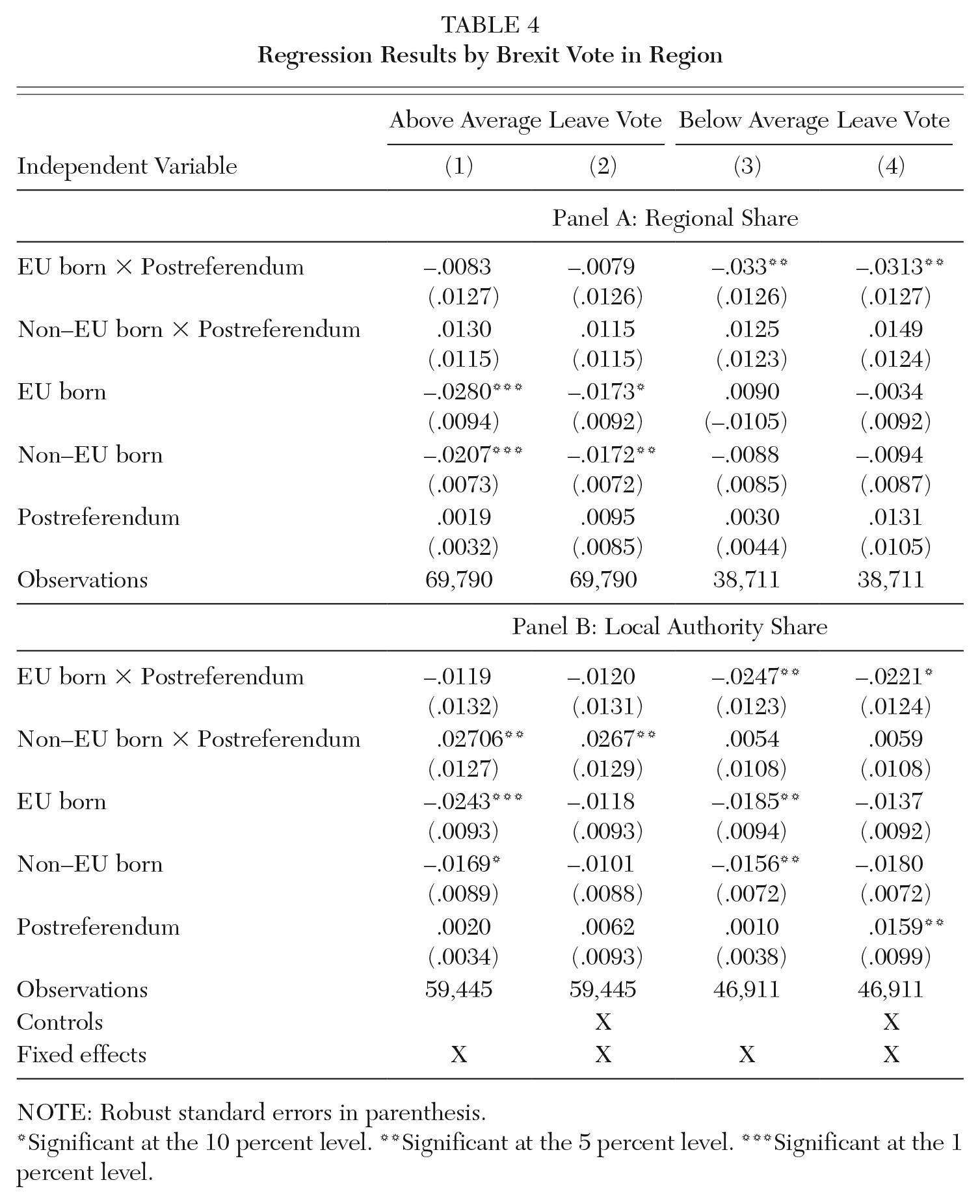
In panel A of Table 4, we show the results for above and below average Leave vote regions. 4 The results suggest that the interaction coefficient is negative in both samples, but the coefficient is much larger and statistically significant in regions with a below average Leave vote (i.e., more support for the Remain option). In these areas, EU migrants experienced a 3.1-percentage-point postreferendum reduction in the likelihood of reporting high levels of anxiety. This result provides support for hypothesis 4.
Regression Results by Brexit Vote in Region
NOTE: Robust standard errors in parenthesis.
Significant at the 10 percent level. **Significant at the 5 percent level. ***Significant at the 1 percent level.
In panel B of Table 4, we use data on the Leave vote share at the local authority level. These data are perhaps a better approximation for the level of solidarity experienced by EU migrants in their local environment. The results in panel B confirm that the estimated coefficients are larger, in absolute value, in those areas with greater support for remaining in the EU.
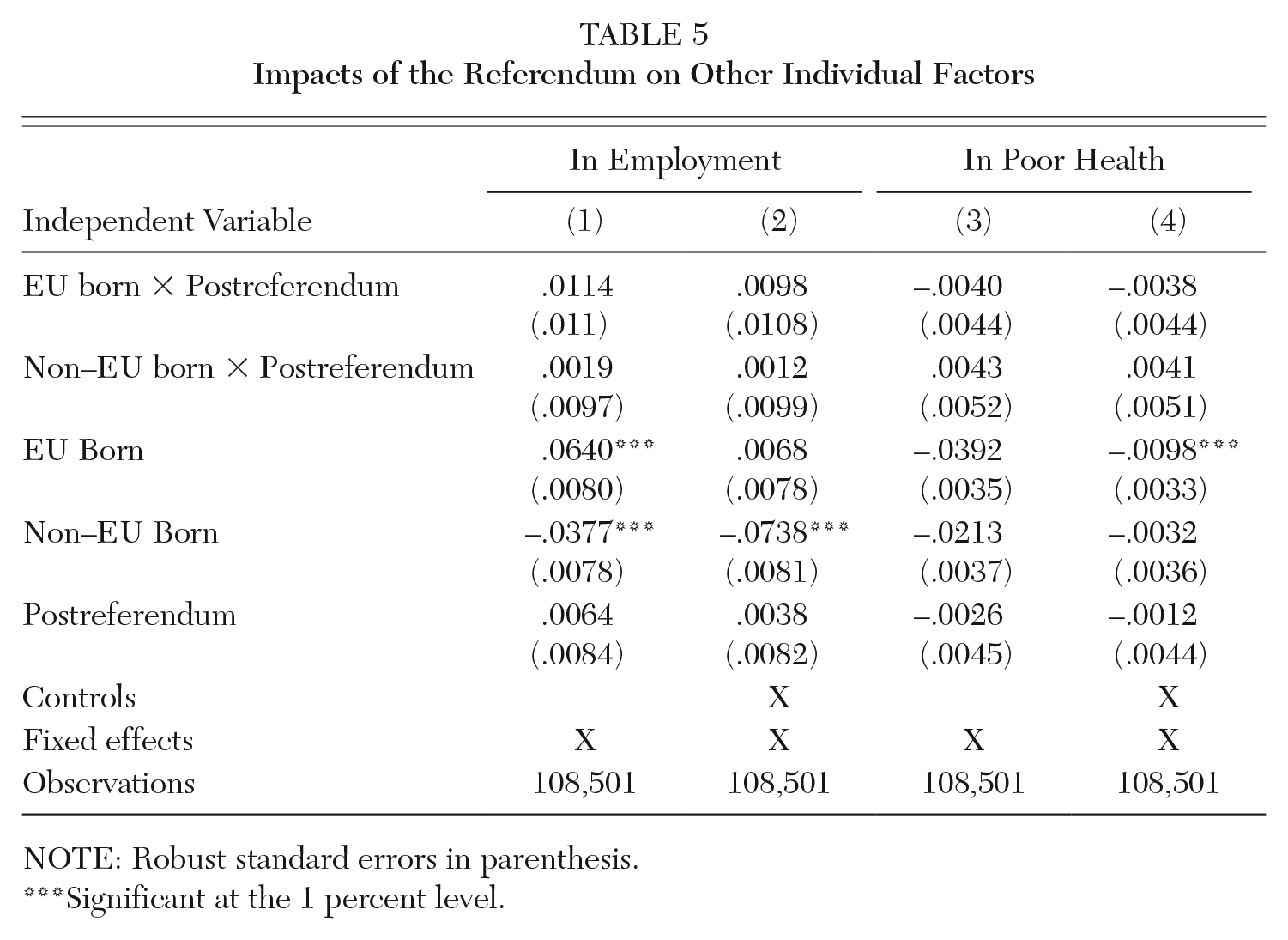
Another possibility is that the association of the referendum and anxiety levels is driven by some parallel individual-level factors, such as losing employment or health complications. In Table 5, we conduct a similar analysis to Table 2 but replace the dependent variable by an employment dummy and a dummy indicating that the person has overall poor health status (self-reported). Table 5 suggests that the referendum did not result in short-term differences in this regard for EU and non-EU migrants relative to the UK born. Hence, while statistical differences about anxiety levels exist, which could incorporate concerns about future employments conditions, no evidence exists that actual employment changes have materialized in the short term.
Impacts of the Referendum on Other Individual Factors
NOTE: Robust standard errors in parenthesis.
Significant at the 1 percent level.
Robustness Checks
In this section, we conduct a series of robustness checks, including testing previous trends, expanding the time threshold before/after the referendum for the analysis, and changing the construction of the main dependent variable.
Testing previous trends
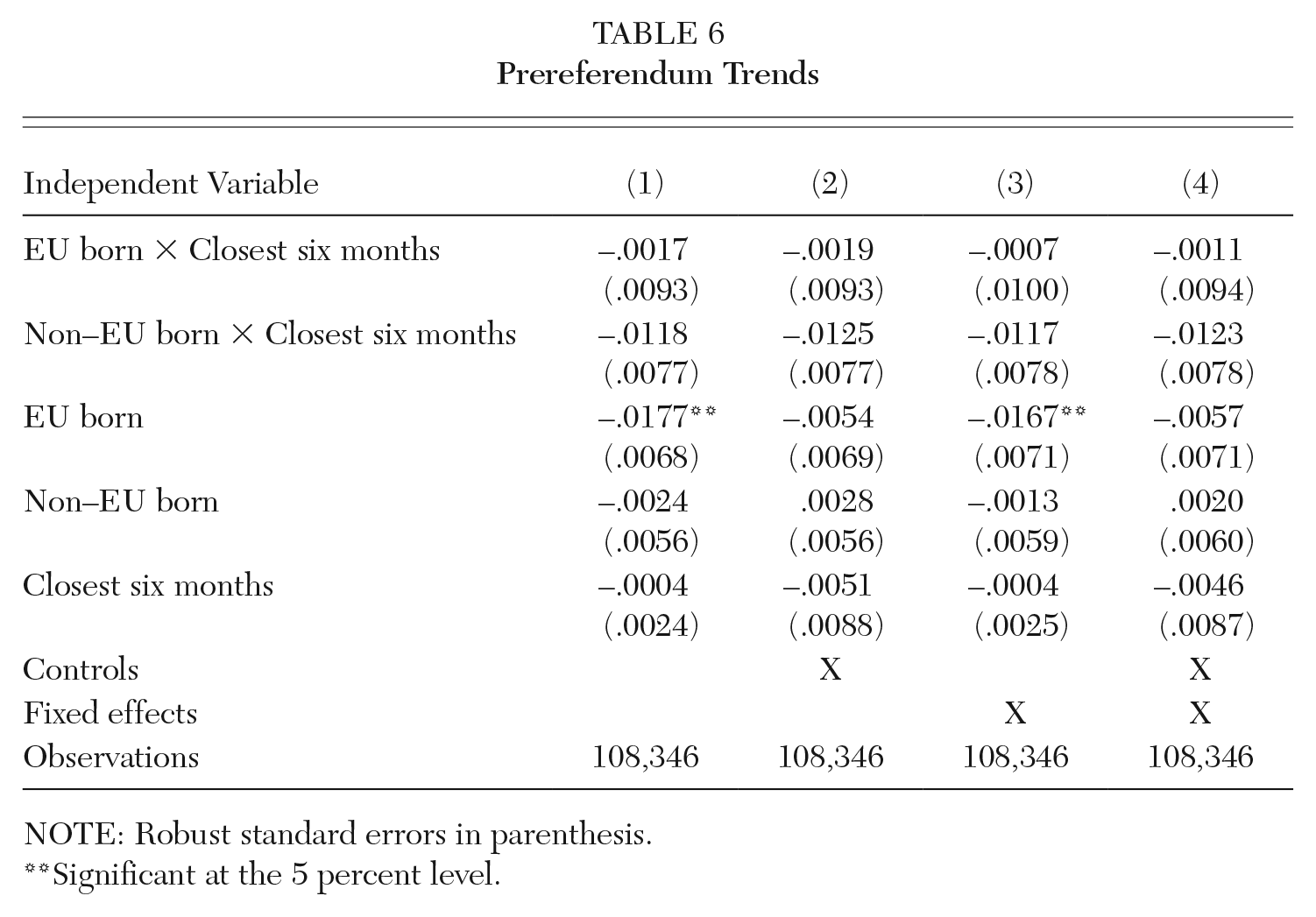
One concern is that the referendum campaign could have increased the anxiety levels of EU migrants, or others, and that we are just estimating a return to normal levels. That is, that the estimated associations are largely driven by prereferendum trends. In Table 6, we present results from a similar estimation to Table 2 but use data one year before the referendum. In this case, we create a dummy variable equal to 1 for the closest six months to the referendum. If no prereferendum trend exists, this dummy should not be statistically significant, including the interaction term. As Table 6 shows, this is indeed the case, and the coefficient for the dummy variable indicating the closest six months to the referendum is small for EU migrants.
Prereferendum Trends
NOTE: Robust standard errors in parenthesis.
Significant at the 5 percent level.
Expanding the time threshold before/after the referendum
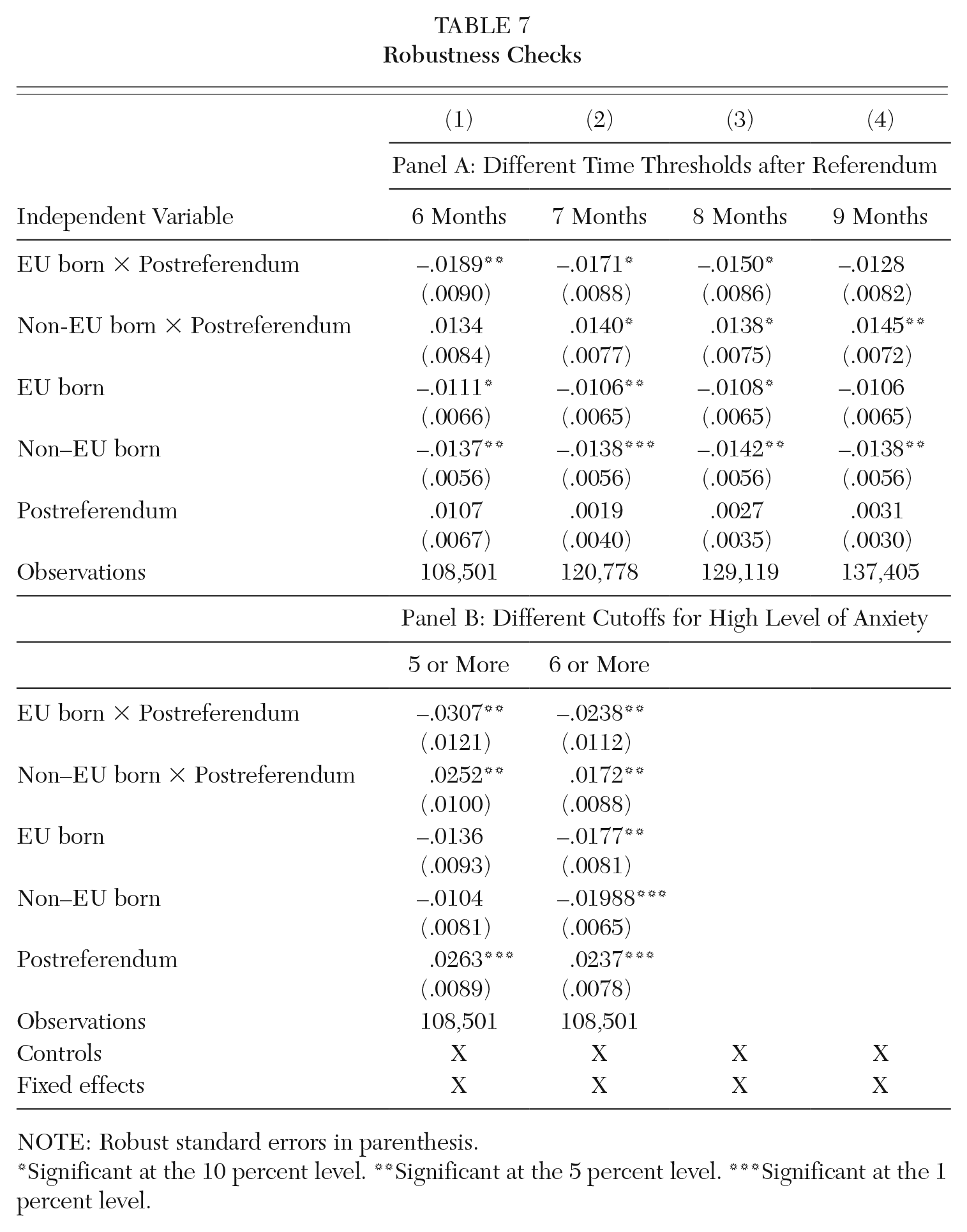
Another concern is that the window of 180 days before/after the referendum is arbitrary. In panel A of Table 7, we show the results as we expand the window around the referendum to more than six months. In the case of EU migrants, the interaction coefficient becomes smaller and turns insignificant after nine months. In the case of the non–EU born, the size of the coefficient does not change much, but it turns statistically significant as we increase the window to more than six months. Hence, we cannot fully discard that the referendum had a positive association with anxiety levels for this group (relative to the UK born). Non-EU migrants in the UK already faced strong legal restrictions but could have been particularly affected with the anxiety related to the economic impacts of Brexit. However, one important caveat is that as we increased the window of analysis, more alternative events occurred that could affect the anxiety levels of the different groups.
Robustness Checks
NOTE: Robust standard errors in parenthesis.
Significant at the 10 percent level. **Significant at the 5 percent level. ***Significant at the 1 percent level.
Changing the dependent variable
In the main analysis, we use a cutoff of seven or more to indicate that a person is experiencing a high level of anxiety. This cutoff is arbitrary. An obvious alternative would be to use a cutoff of five or more. Panel B of Table 7 shows the results if we construct the dependent variable in that way. It is still the case that there is a postreferendum reduction in the likelihood of indicating high anxiety for the EU migrants compared to the UK born. In this case, the coefficient is larger than in Table 2 and suggests a 3.1-percentage-point reduction in the likelihood of reporting high levels on anxiety (column 1). However, in this case, the coefficient for non-EU migrants is positive and statistically significant. The results suggest that the likelihood of reporting high levels of anxiety for this group increased by 2.5 percentage points after the referendum relative to the UK born.
In column 2 of Table 7 (panel B), we repeat the estimations but use a cutoff for high levels of anxiety of six or more. The results are broadly like the previous results, with the size of the coefficient falling between the analysis using a 5 or more cutoff and the one using a 7 or more cutoff.
Conclusion
Large political events, such as Brexit, can generate uncertainty in multiple ways, including uncertainty regarding the prospects for economic success or about one’s social standing in society. Also, although the economic and social anxiety and concerns generated by the Brexit vote affected the entire population of the UK, the referendum result was accompanied by continual messages of support from key figures to resident EU migrants. This positive messaging could have moderated cognitive uncertainty and social anxiety.
Our initial hypotheses suggest that if economic anxiety dominated social anxiety, then we should observe a decrease in the anxiety levels of EU migrants relative to the UK born following the referendum; EU migrants would retain links to opportunities in both the EU and the UK, whereas the UK born would be restricted from EU opportunities. The opposite pattern (EU migrants with more anxiety) would hold if social anxiety dominates economic anxiety; the vote could seem to reject the presence of EU migrants. After the referendum, EU migrants relative to the UK born reported a 1.8-percentage-point statistically significant reduction in high levels of anxiety, supporting the role of economic anxiety. The increase in postreferendum relative anxiety levels among non-EU migrants is positive, but the coefficient is only significant if we increase the window of analysis or adjust the cutoff values for the dependent variable.
Our two other hypotheses relate to the characteristics of the regions. First, we hypothesized that in those regions with stronger economic connection to the EU, a greater gap should occur in anxiety levels between EU migrants and the UK born. The results do not support this hypothesis.
We also hypothesized that regions with above-average support for remaining in the EU should have lower postreferendum anxiety levels for EU migrants (relative to the UK born). The results provide support for this hypothesis and provide evidence that positive messages from politicians, public figures, and others at the local level after a political event can go a long way to reduce anxiety levels among those groups more directly affected by the event. This finding, in turn, has relevant implications for strategies that aim to maintain social cohesion after divisive political events. Moreover, these interventions can also have benefits for other factors related to migrants, such as cognitive performance and decision-making, which research has shown are affected by anxiety levels.
Supplemental Material
sj-docx-1-ann-10.1177_00027162211058389 – Supplemental material for The Anxiety of Political Uncertainty: Insights from the Brexit Vote
Supplemental material, sj-docx-1-ann-10.1177_00027162211058389 for The Anxiety of Political Uncertainty: Insights from the Brexit Vote by Isabel Ruiz and Carlos Vargas-Silva in The ANNALS of the American Academy of Political and Social Science
Footnotes
NOTE:
The data used come from the secured access version of the UK Annual Population Survey produced by the Office for National Statistics (ONS) and supplied by the UK Data Service (UKDS), but the views expressed are those of the authors and not necessarily those of the ONS or UKDS.
Notes
Isabel Ruiz is a fellow in economics at Harris Manchester College and adjunct faculty at the Blavatnik School of Government, University of Oxford. She is also the principal investigator for the project Understanding Attitudes and Policy Preferences in Response to South-South Migration and an associate editor for the Oxford Review of Economic Policy.
Carlos Vargas-Silva is a professor in migration studies and the director of the Centre on Migration, Policy and Society (COMPAS) at the University of Oxford. He is also the director of the doctoral program in migration studies at the University of Oxford and editor-in-chief of the journal Migration Studies.
References
Supplementary Material
Please find the following supplemental material available below.
For Open Access articles published under a Creative Commons License, all supplemental material carries the same license as the article it is associated with.
For non-Open Access articles published, all supplemental material carries a non-exclusive license, and permission requests for re-use of supplemental material or any part of supplemental material shall be sent directly to the copyright owner as specified in the copyright notice associated with the article.
