




Abstract
Restrictive immigration policies, financial concerns and/or cultural preferences often lead families to separate across borders in the migration process. This transnational family separation, which often lasts years, can potentially have long lasting negative consequences on migrant parents’ mental health. Qualitative research has documented that transnational parents often report feelings of guilt, sadness and loneliness due to the separation, and that financial or legal precarity can exacerbate these feelings. On the other hand, quantitative research on this topic is scarce, mostly based on relatively small samples and on cases studies of single origin groups in single destination countries, has measured transnational parents’ mental health disadvantage using less than ideal control groups, and has not investigated potential long-lasting consequences of separation after reunification. In this article, I contribute to this literature using data from the French survey Trajectoires et Origines 2 to investigate differences in propensity to have experienced depression symptoms between transnational immigrant parents, parents who migrated with their children, and immigrant parents who reunited with their children after a period of transnational separation. I additionally look at heterogeneities by gender, age of the children, legal status, employment, and partnership dissolution. I find that transnational parents have significantly worse mental health than immigrants who migrated with their children, especially when the separation involves young children. The mental health of formerly transnational parents does not differ significantly from that of parents who migrated with their children, suggesting the absence of lasting effects of separation after reunification.
Introduction
Many immigrants were no single and unattached when they decided to migrate. On the contrary, the desire to improve the living conditions of one's children is an important driver of migration decisions (Parreñas 2005). While nuclear families do sometimes migrate together, it is common for families to spend months or years apart across borders (González-Ferrer, Baizán and Beauchemin 2012; Zentgraf and Chinchilla 2012). Transnational family separation is sometimes a choice driven by cultural and logistical preferences, but it can also be the outcome of legal and financial barriers to family migration and reunification (Zentgraf and Chinchilla 2012).
Research on transnational family separation has generally shown that this is an emotionally straining experience for both the non-migrant family members (ref. literature on “left-behind” children (e.g., Graham and Jordan 2011) and partners (e.g., Graham, Jordan and Yeoh 2015)) and for the first movers (e.g., Arenas et al. 2021; Dito, Mazzucato and Schans 2017; Poeze 2019), and there is some evidence, especially from the richer qualitative literature on the topic, that circumstances such as divorce (see e.g., (Cebotari, Mazzucato and Siegel 2017) relative to non-migrant children) and financial insecurity (e.g., (Haagsman, Mazzucato and Dito 2015; Poeze 2019) can exacerbate the mental health burden of separation.
The aim of this article is to use quantitative methods to study the association between past and present experiences of Transnational Separation from a Child (TSC) and mental health among immigrant parents living in France, additionally looking into heterogeneities in this association by factors such as gender, children's age, culture, and other concomitant circumstances. This is a relatively under-researched topic in the quantitative literature on transnational families, which has more often focused on the outcomes of transnational separation for non-migrant children. Previous quantitative research on TSC and mental health has generally supported expectations from qualitative literature, in that it has generally found transnational parents to have worse mental health than other immigrants (Dito, Mazzucato and Schans 2017; Mazzucato et al. 2017; White et al. 2019), although some found this to only be the case for women (Arenas et al. 2021; Haagsman, Mazzucato and Dito 2015).
However, this literature almost exclusively aimed at studying the outcomes of TSC within specific origin groups (Mexicans in the US (Arenas et al. 2021); Angolans, Ghanaians and Nigerians in different European destinations (Dito, Mazzucato and Schans 2017; Haagsman, Mazzucato and Dito 2015; Mazzucato et al. 2017; White et al. 2019); Sub-Saharan Africans in Paris (Pannetier et al. 2017)) so that further research is needed to assess whether these results can be generalised beyond these groups. In addition, previous studies compared transnational immigrant parents to all other immigrants (Afulani et al. 2016; Arenas et al. 2021; Pannetier et al. 2017) or to all non-transnational immigrant parents (Dito, Mazzucato and Schans 2017; Haagsman, Mazzucato and Dito 2015; Mazzucato et al. 2017; White et al. 2019) and were not able to identify individuals who experienced TSC but then reunited with their children, or to differentiate between those who migrated with their children and those who migrated before the transition to parenthood. Finally, some studies investigated heterogeneities in the association between TSC and mental health by gender (Arenas et al. 2021; Haagsman, Mazzucato and Dito 2015), and economic and legal status (Haagsman, Mazzucato and Dito 2015), but other likely drivers of variation, such as partnership dissolution and children's age, are still mostly unexplored.
In this article, I tackle these limitations using data from the French survey Trajectoires et Origines 2 (TeO2), which contains a large sample of immigrants and uniquely rich information on their and their children's migration trajectories and life conditions. This article contributes to the literature in multiple ways. First, using a representative sample of immigrants in a destination country, France, allows me to estimate how common TSC is among immigrants in this country and to produce results that extend beyond a specific origin group. Second, I distinguish three categories of non-transnational immigrant parents: those who migrated with their children and thus never experienced TSC, those who experienced TSC but then reunited with their children in France, and those who never experienced TSC because they did not have children before migrating. I argue that the first group is closer to the counterfactual scenario for most transnational immigrant parents compared to control groups used in previous literature, and I exploit the second group to investigate the potential lasting consequences of TSC on mental health. Third, I explore heterogeneities in the association between TSC and mental health by gender, origin, employment, legal status, partnership dissolution, and children's age to test whether these act as exacerbating factors, as is suggested by qualitative literature on TSC and by research on other forms of transnational family separation (e.g., from a parent).
Background
Transnational Separation from a Child and Mental Health: Previous Research Findings and Hypotheses
Family migration processes often involve periods of transnational separation between parents and children, partly due to structural constraints, partly to individual or family preferences. There are several structural barriers to migrating as a family unit. First, immigration policies often do not allow short-term visa holders or recently arrived migrants to move with their partners and children, and access to family reunification is often tied to the fulfilment of minimum residence length, income, and housing criteria (ref. section “Family Immigration and Reunification in France” for an overview of the French context). Legal barriers to migrating with children are often even higher for divorced parents and for parents of children above a certain age. Second, the financial costs of migration (including visa applications, travel, and life in the destination country) can be too high for the whole family to face them at the same time; especially when migration is intended as temporary, it is more financially efficient for children to stay in the country of origin. Besides legal and financial barriers, families might prefer to separate during the migration process: parents might want to avoid disrupting children's schooling, or might prefer for them to be brought up in their origin culture (González-Ferrer, Baizán and Beauchemin 2012).
Geographical separation does not necessarily entail emotional distance or loss of familyhood. Across borders, transnational families can maintain a sense of closeness through calls, messages, remittances and visits (Baldassar and Merla 2013; Bryceson and Vuorela 2020), a task that has been made easier by the developments in and increased accessibility of communication technologies worldwide (Baldassar et al. 2016). Nevertheless, transnational parents often report feelings of sadness, loneliness and guilt over the separation from their children in qualitative interviews (Dávalos 2020; Parreñas 2005; Poeze 2019; Suárez-Orozco, Kim and Bang 2011), and quantitative studies have found that transnational parents tend to present worse mental health and/or lower happiness levels than other immigrants in general (Arenas et al. 2021) and than non-transnational immigrant parents specifically (Haagsman, Mazzucato and Dito 2015; Mazzucato et al. 2017; White et al. 2019).
As mentioned in the previous paragraph, quantitative studies have consistently supported qualitative expectations about an association between TSC and poor mental health. However, only few studies have attempted to test this association with quantitative data, and they have done so in the context of specific origin groups (such as Mexicans in the US (Arenas et al. 2021), Ghanaians, Nigerians and/or Angolans in Ireland (White et al. 2019), the Netherlands (Dito, Mazzucato and Schans 2017; Haagsman, Mazzucato and Dito 2015; Mazzucato et al. 2017; White et al. 2019) and Portugal (Mazzucato et al. 2017), Sub-Saharan Africans in Paris (Pannetier et al. 2017)), using non-random samples of the target populations (Arenas et al. 2021; Dito, Mazzucato and Schans 2017; Haagsman, Mazzucato and Dito 2015; Mazzucato et al. 2017; Pannetier et al. 2017; White et al. 2019), and testing TSC parents’ mental health disadvantage against suboptimal control groups (Haagsman, Mazzucato and Dito 2015; Pannetier et al. 2017) that might lead to biased results, as I discuss in the next paragraph. Therefore, the first aim of this article is to build more evidence on the association between TSC and mental health while expanding the scope of this literature to a new case study (immigrants of any origin living in France), using a large, representative sample of the target population, and addressing some of the methodological limitations affecting previous quantitative studies.
The above-mentioned quantitative studies on TSC and mental health have contributed to the larger literature on transnational families by comparing the mental health of transnational immigrant parents to that of a control group, namely other immigrants independently of parenthood (Arenas et al. 2021; Pannetier et al. 2017) or non-transnational immigrant parents (Dito, Mazzucato and Schans 2017; Haagsman, Mazzucato and Dito 2015; Mazzucato et al. 2017; White et al. 2019). Both of these options are sub-optimal, as they include individuals who migrated before the transition to parenthood, and who therefore could not have experienced TSC as an outcome of migration.
1
Differences in mental health between transnational immigrant parents and immigrants who were childless at the time of migration might be biased by unobserved confounding, for example if factors such as age at migration and pre-migration family structure are associated with mental health independently of experience of TSC. To reduce the risk of unobserved confounding bias, I only consider immigrants who had children before migration and who migrated with them as the control group against which to compare transnational immigrant parents’ mental health. This group is a better approximation of the counterfactual scenario for most transnational immigrant parents. H1 Transnational immigrant parents have worse mental health than parents who migrated with all their born-abroad children.
H2 Former transnational immigrant parents have worse mental health than parents who migrated with all their born-abroad children.
The third aim of this article is to investigate what characteristics and concomitant circumstances exacerbate or mitigate the association between experiences of TSC and mental health among immigrant parents. In the next paragraphs, I draw from the qualitative and theoretical literature on TSC and from literature on other forms of transnational family separation to identify factors potentially moderating the association between TSC and mental health.
The first potential moderating factor is the age of the children. Previous studies – including qualitative ones – have almost exclusively focused on transnational separation from minor children: Pannetier et al. (2017) only consider separation from children younger than 18, Haagsman, Mazzucato and Dito (2015) from children younger than 21.
2
This may reflect the implicit assumption that separation from young children is more emotionally burdensome due to the importance (culturally) attributed to early childhood for attachment and bonding, because small children require more physical care and nurturing, and because transnational communications can be more difficult with them (Haagsman and Mazzucato 2014). In line with this, Haagsman and Mazzucato (2014) found that among Angolan transnational parents in the Netherlands, the younger the children at separation, the more likely were parents to report a poor relationship with them, which in turn might negatively affect mental health. However, transnational separation from adult children can also be taxing on mental health, as is generally found in relation to non-migrant parents following their adult children's migration (Thapa et al. 2018; Yahirun and Arenas 2018). I therefore expect that: H3 The association between TSC and mental health is stronger when it concerns younger children.
Transnational fathers tend to face lower pressure to maintain strong emotional bonds with their children through frequent direct communication (Dávalos 2020; Parreñas 2005), and often rely more than women on remittances and gifts as forms of communication (Poeze 2019). Nevertheless, transnational fathers often report sadness over the lack of emotional bonds with their non-migrant children, and distress over the resulting inability to discipline them (Poeze 2019). In addition, as gendered parenting roles tend to prescribe men as breadwinners, transnational fathers often experience strong pressures to provide a consistent or increasing flow of remittances and gifts to their non-migrant children and family members. Therefore, they often have time-intensive jobs and sacrifice their own living standards to provide for their family back home (Dávalos 2020; Poeze 2019). They also sometimes withdraw from communications with non-migrant children, partners and extended family members during periods of unemployment, to avoid being blamed for the interruption of remittances (Dreby 2006; Poeze 2019). Some quantitative studies that have investigated differences by gender have found the association between TSC and worse mental health
3
to be only statistically significant for women (Arenas et al. 2021; Haagsman, Mazzucato and Dito 2015). This contrasts with the finding from qualitative studies that transnational fathers too report feelings of guilt and sadness over the separation and emotional distance from their non-migrant children (Dávalos 2020; Poeze 2019). H4 The association between TSC and mental health is stronger among women than among men.
H5 Among men, the association between TSC and mental health is weaker when combined with a stable financial situation than when combined with unemployment or financial insecurity.
H6 Among women, the association between TSC and mental health does not vary depending on employment status.
Fourth, cultural norms concerning family structure are generally considered an important determinant of mental health strain in transnational parents (Mazzucato et al. 2017; Parreñas 2005; White et al. 2019). In countries where nuclear family forms are prevalent, transnational parenthood is a strong deviation from culturally mandated roles (Parreñas 2005), as transnational families are likely to be considered “broken” and children in such families as having been “abandoned”. Conversely, in cultures where extended family forms and child fostering are common, such as in most Western African countries, transnational parents do not necessarily incur stigma for separating from their children (González-Ferrer, Baizán and Beauchemin 2012), and the separation can be happy, as long as children are properly taken care of by surrogate carers (Poeze and Mazzucato 2013).
While there are theoretical reasons to expect the association between TSC and mental health to be weaker for migrant parents from countries where extended family forms are common, previous quantitative research has not been able to empirically test this hypothesis, as it has used single-origin samples or samples with immigrants from different countries but with similar family norms. Studies using samples of Western African migrants – who tend to come from countries where child fostering is common – have generally found that even among these groups TSC is associated with worse mental health or lower levels of happiness (Haagsman, Mazzucato and Dito 2015; Mazzucato et al. 2017; White et al. 2019), although no statistically significant association between mental health and transnational parenthood was found, net of control variables, among Sub-Saharan Africans living in the Paris metropolitan area (Pannetier et al. 2017), and among Ghanaian immigrant parents in the Netherlands (Dito, Mazzucato and Schans 2017). H7 The association between TSC and mental health is weaker among immigrants from Sub-Saharan African countries than among immigrants from other origin countries.
H8 The association between TSC and mental health is stronger among immigrants with an instable legal status.
Finally, partnership dissolution might affect the association between TSC and mental health in immigrant parents. A previous study on non-migrant children's mental health in Ghana has found them only affected by transnational separation from a parent when combined with parental divorce or separation (Mazzucato and Cebotari 2017). The parents’ point of view has not been investigated. On the one side, building a new family in the residence country might compensate for negative feelings stemming from transnational separation from children of previous partnerships. On the other, divorced transnational parents with non-migrant children from previous unions cannot easily achieve reunification with them under French family reunification law (see section “Family Immigration and Reunification in France”), which might lead to stronger mental health burden. Given the lack of research on the experience of partnership dissolution among transnational parents, I do not formulate a specific hypothesis on how partnership dissolution moderates the association between TSC and mental health.
Definitions and Measures of Mental Health in TSC Research
There are several ways to define and operationalise mental health (see OECD, 2023 for a full review). At one extreme, it can be defined as the absence of mental illnesses – such as depression or anxiety –, measured according to diagnostic criteria. However, the absence of severe diagnosable mental illnesses is not a sufficient condition for good mental health: symptoms of psychological distress below diagnostic thresholds can still significantly impact an individual's quality of life and are a risk factor for future onset of severe conditions. Therefore, many studies use continuous measures of mental health, often computed from multiple-item instruments tapping into different dimensions of positive and negative mental health such as mood, social functioning, vitality, worrying, and self-confidence.
The symptoms of emotional distress commonly reported in qualitative studies on transnational parents include feelings of sadness, loss, and guilt, and behaviours such as avoiding communication with non-migrant family members. These symptoms are in line – depending on intensity and frequency – with diagnostic criteria for depression. Most quantitative studies on TSC have measured mental health using continuous measures of emotional wellbeing (Arenas et al. 2021; Haagsman, Mazzucato and Dito 2015; Mazzucato et al. 2017; White et al. 2019), in some cases in combination with measures of happiness, life satisfaction and subjective overall health (Haagsman, Mazzucato and Dito 2015; Mazzucato et al. 2017; White et al. 2019) to tap into other dimensions of subjective wellbeing.
In line with most previous qualitative and quantitative literature, I aim to capture differences in psychological distress between immigrant parents with and without experience of transnational separation from children. This is ideally achieved by using a continuous measure of mental health, which is not available in the TeO2 data. Therefore, I use a dichotomous measure of mental health indicating experience in the last 12 months of at least one symptom of major depression according to diagnostic criteria. The measure is described in detail in section “Dependent Variable”.
Family Immigration and Reunification in France
As mentioned in section “Transnational Separation from a Child and Mental Health: Previous Research Findings and Hypotheses”, an important factor affecting experience and length of TSC are destination countries’ policies concerning family migration and reunification. Since the 1990s, family migration and reunification policies in France have followed an increasingly restrictive trend (Eremenko and González-Ferrer 2018). However, different categories of immigrants are subject to different rules, depending on their nationality, legal status, and skill level. In the next paragraphs, I briefly present the current legal framework for family migration and reunification in France. 4
At the one end of the spectrum are French (incl. naturalised) and European Union citizens. Their family members (defined to include registered partners, children under 21 or other dependent children of the migrant/citizen or of the partner, and parents of the migrant/citizen or of the partner) can freely settle in France, and are only required to obtain an “accompanying family member” residence permit (a simplified and free of charge procedure) if they are not themselves EU citizens. At the other end are undocumented immigrants and asylum applicants waiting for a decision, who have no right to reunification. Refugees, beneficiaries of a Humanitarian Protection status and stateless individuals can apply for reunification for children younger than 19 (for refugees and humanitarian protection status, at the time of the asylum application) and for spouses older than 18, only if the relationship predates the asylum request.
Other immigrants – mainly those with a residence permit for work or study reasons – can apply for family reunification if they have been legally residing in France for at least 18 months (12 for Algerians) and have a valid residence permit for at least another year. They must also fulfil a minimum income requirement and have “appropriate” housing. Family members eligible for reunification are legal spouses and children aged up to 18 – if these children are from a previous union of the immigrant or of their spouse, the other parent must be deceased or deprived of parental rights. Only one spouse in a polygamous marriage can obtain family reunification. Finally, spouses and minor children of special visa holders have access to a simplified procedure to obtain the status of accompanying family members. Special visa holders are typically highly educated individuals, entrepreneurs, or ICT workers.
Given this framework, most third-country nationals migrating to France are bound by law to be transnationally separated from their nuclear family members for at least some months, 5 and in most cases one year, before applying for family reunification. The only individuals for whom this requirement does not apply are (by definition) individuals migrating for family reunification – who are about 30% of new third-country national immigrants every year (Ministère de l’Intérieur, 2020) – and the relatively small group of special visa holders. In addition, literature has documented that the administrative procedures to obtain family reunification visas can cause significant delays and sometimes lead to rejection due to backlogs and discrimination by street-level bureaucrats (Descamps and Beauchemin 2022). Partly because of this, reunification in many cases occurs outside of the standard legal procedure, with (adult) children migrating to France on independent visas as students or workers, or as undocumented migrants (Descamps and Beauchemin 2022).
Data, Variables, and Methods
Data and Sample Selection
I use data from Trajectoires and Origines 2 (Beauchemin et al. 2023). This is a cross-sectional survey conducted between 2019 and 2020 in France specifically designed to study immigrants’ and their descendants’ outcomes in a variety of life domains. Interviews were conducted in person and at the respondents’ homes, and cards with translations of complex concepts from the questionnaire were provided in several languages. For respondents with insufficient French language proficiency, interviewers were instructed to resort to third party translators (family members, neighbours, friends), or to schedule a catch-up survey in respondent's native language. The overall response rate was 67%, with even better outcomes for immigrants (ref. Beauchemin et al. 2023 for the full technical report). The data contain retrospective information on the full migration trajectory of respondents and information on date and place of birth, year of migration to France and current country of residence of each child born to respondents.
I selected the analytical sample to include individuals aged between 18 and 60, born abroad, who are parents to at least one living child, and who were 18 years old or older at their first arrival in France. 5826 cases in TeO2 fulfil these criteria. In addition, I dropped cases with missing or inconsistent information in the variables used to compute the experience of TSC (N = 12), in mental health (N = 57), or in any of the control variables and covariates (N = 1). Finally, I dropped 150 respondents who were interviewed after March 17th 2020, the starting date of the first Covid-19 lockdown in France. 6 The final analytical sample includes 5606 cases, of which 4145 with at least one child younger than 16 and 2880 with at least one child aged 16 or older.
Variables
Dependent Variable
The dependent variable measures the experience of any symptom of an episode of major depression in the last 12 months (“experience of depression symptoms” in the text, tables and figures). The TeO2 questionnaire includes the section of the French version of the Mini International Neuropsychiatric Interview (MINI) (Lecrubier et al. 1997) aimed at diagnosing episodes of major depression. The section consists of two filter questions, asking whether the respondent has felt for most of the day, practically every day, for a period of a least two weeks over the last 12 months: “especially sad, low or depressed” or if they had “lost interest in everything, or no longer felt pleasure in things that [they] normally enjoy”. Respondents who answered “yes” to at least one of the filter questions were asked eight follow-up yes/no questions. If respondents were hesitant, embarrassed or if a third person was present during the interview, interviewers were instructed to show a card instead of asking the question aloud.
The intended use of the MINI section in TeO2 is to compute a dichotomous variable with value 1 for respondents who answered positively to at least five between the filter and follow-up questions, and therefore qualify for the diagnostic criteria of having had an episode of major depression in the last 12 months. This is the case for about 12% of respondents in my analytical sample, 8.5% of men and 14.3% of women.
As discussed in section “Definitions and Measures of Mental Health in TSC Research”, in this article I aim to study whether present or past experiences of TSC are associated with differences in (sub-diagnostic) levels of psychological distress, rather than with the onset of diagnosable mental disorders such as major depression. This is in line with previous research on the topic, which has typically used continuous measures of happiness, emotional wellbeing and/or psychological distress as dependent variables. Given that creating a continuous variable is not possible with the data at hand, 7 I compute a dichotomous variable with value 0 indicating a negative answer to both filter questions (and consequently no answer to the follow-up questions), and value 1 a positive answer to either of the two.
Experience of TSC
The main independent variable is experience of TSC, with four categories: joint migration (referred to in the text as “joint migration parents” for brevity), current TSC (“transnational parents”), past TSC (“formerly transnational parents”), all children born and living in France (“post-migration parents”). I compute this in two main steps. In the first step, I code each child of each respondent as joint migration, current TSC, past TSC, or born and living in France. Children are coded as joint migration if they migrated in the same calendar year at the respondent, as current TSC if they lived abroad at the time of the survey, as past TSC if they lived in France at the time of survey but migrated in a different calendar year than the respondent or where born in France before the respondent's last migration, and as born and living in France if they were born in France after the respondent's last migration and living there at the time of the interview.
The variable of experience of TSC at the respondent level is coded in the second step. Respondents are coded in the current TSC category if they have at least one child currently living abroad; in the past TSC category if they have no child living abroad but experienced TSC from at least one child in the past; in the joint migration category if they have no child coded as current or past TSC and at least a child coded as joint migration; finally, parents whose children were all born in France after the respondent's last migration and lived in France at the time of the interview are coded as having all children born and living in France.
To assess differences in the association between TSC and mental health by age of the (transnationally separated) children, I construct two alternative versions of the experience of TSC variable: experience of TSC from children younger than 16 8 and experience of TSC from children aged 16 or older. These variables are constructed using the same strategy and categories as described above, but only considering children who were in the relevant age group at the time of the interview, so that respondents who do not have children in the relevant age category are excluded from the relevant analyses.
Control Variables
I include two sets of control variables. The first set aims at capturing respondents’ characteristics around the time of their last migration to France, which might have affected their selection into migrating with or without their children or before having any children at all. This set includes respondents’ demographic characteristics: sex, age (22 to 39, 40 to 49, 50 or older), age at last migration (18 to 25, 26 to 35, 36 to 60) and region of origin, coded from the country of birth and distinguishing individuals born in Sub-Saharan Africa (henceforth, SSA), Northern Africa, the European Union (including the United Kingdom) or European Economic Area (EU/EEA), or from other countries. This first set of controls also includes variables capturing respondents’ pre-migration socioeconomic status and legal status at arrival: highest educational attainment is coded as low (primary or secondary), high (higher than secondary), or no diploma or no answer; subjective social status in the country of origin reports respondents’ assessment of their pre-migration social status in the country of origin, on a scale ranging from 0 (bottom of the social scale) to 10 (top of the social scale); responses are coded into three categories (0 to 4, 5, 6 to 10), plus one for no answers (N = 504). Legal status upon arrival is measured by having experienced periods of undocumentedness since arrival (yes, no, NA).
The second set of control variables aims at capturing respondents’ characteristics at the time of the interview that might affect both their choice and/or ability to be reunited or to reunite with their children in France and their mental health. This set includes six variables. Four refer to the respondent's family and household structure at the time of the interview: cohabitation status (living with a partner or not), number of children under 16 years old (0, 1, 2+), number of children aged 16 or older (0, 1, 2+), and partnership dissolution from co-parents. The latter is constructed based on the information on each child of the respondent (living in France or abroad) and indicates whether these are all children of the current partner or whether the respondent has at least one child outside of the current union. Employment identifies non-working individuals (unemployed or inactive), workers earning less than 1500 euros per month, workers earning 1500 euros or more per month, and workers with missing information on salary. Finally, having a stable legal status at the time of the interview distinguishes between having a residence permit valid for less than 10 years, having a residence permit valid for 10 or more years or French/other EU citizenship, or other/NA. 9
Some of the above mentioned variables are also used to investigate heterogeneities in the association between TSC and psychological distress. These are gender, region of origin, partnership dissolution from co-parents, and legal status at the time of the interview. Due to the limited group sizes, region of origin is coded to only distinguish between SSA and any other origin. This is because most cases of current TSC, especially from young children, are found among SSA immigrants and because the latter are expected to be more culturally accepting of child fostering.
Finally, in the third part of the analyses (see “Methods” section below) I use an alternative variable to measure women's employment status. This variable distinguishes between employed (without distinction by salary), unemployed and inactive.
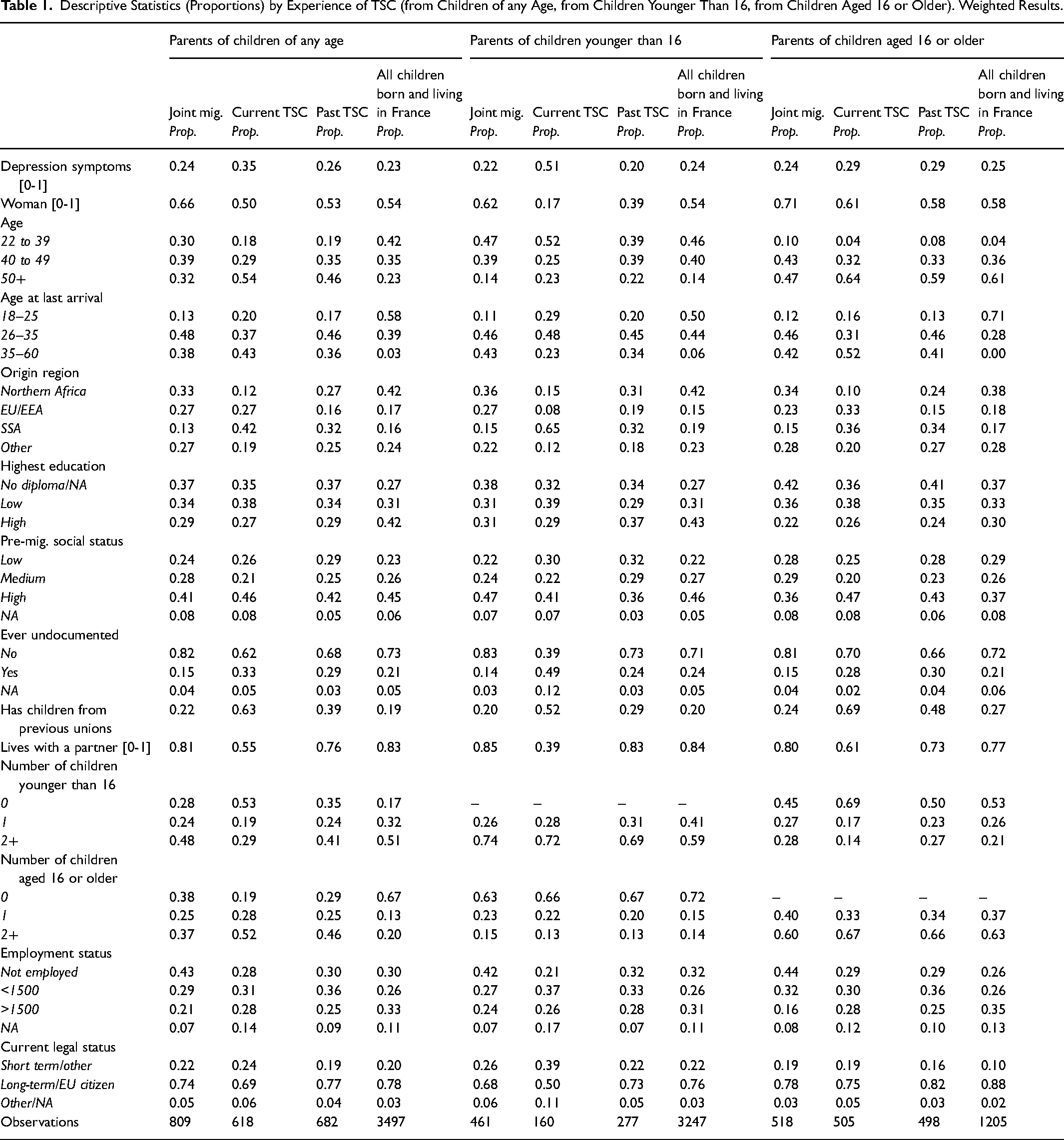
Weighted summary statistics for all variables by experience of TSC are reported in Table 1.
Descriptive Statistics (Proportions) by Experience of TSC (from Children of any Age, from Children Younger Than 16, from Children Aged 16 or Older). Weighted Results.
Methods
I use linear probability models for the multivariate analyses. The analyses are structured as follows. First, I regress experience of depression symptoms on experience of TSC (from children of any age; from children younger than 16; and from children aged 16 or older), adding the two sets of control variables stepwise in order to assess the extent to which the association between TSC and depressive symptoms is confounded by respondents’ characteristics before migration or around arrival (demographic characteristics, pre-migration socioeconomic status and experience of undocumentedness) and by their characteristics at the time of the survey (employment and legal status, household and family structure). I distinguish between these two sets of control variables to reflect the fact that the experience of TSC at the time of the interview is the consequence of two separate processes: first, demographic characteristics and pre-migration conditions (including eligibility to a “regular” legal status on arrival) affect individuals’ selection into migrating with or without their children or before transition to parenthood. Second, after migration individuals experience developments in their family, socioeconomic and legal conditions that may lead initially transnational families to reunite or to remain separated, and families who initially migrated together to separate. Because such developments are likely to be partially affected by TSC at arrival, it is less clear whether the second set of control variables should be considered as confounders or as mediators in the association between experience of TSC at the time of the survey and mental health, and further analyses with longitudinal data would be required to disentangle the two.
In the second step of the analyses I test whether the association between TSC (from children of any age; from children younger than 16; and from children aged 16 or older) and the experience of depression symptoms is moderated by characteristics such as gender, current legal status, partnership dissolution from co-parents, or if it differs between migrants from SSA and other migrants.
Finally, I test the association between employment, experience of TSC and experience of depressive symptoms separately by gender. To reflect the different roles and distribution of men and women regarding employment, I use different measures of employment status depending on gender: for men, who are rarely observed out of paid employment, I distinguish between any form of non-employment (unemployment or inactivity) and employment with a monthly salary below or above 1500 euros. For women, who are often inactive and when employed rarely earn more than 1500 euros per month, I distinguish between employment (without distinction by monthly salary), unemployment, and inactivity.
TeO2 uses a complex sampling strategy aimed at over-representing certain origin groups (see Beauchemin et al. 2023 for details). Therefore, all the analyses in the article are weighted using the provided population weights.
Results
Experiences of TSC Among Immigrants in France: An Overview
In Table 2, I report the distribution of experiences of TSC among immigrant parents by gender, both overall and separately by children's age at the time of the interview (younger than 16 or older) and by the timing of children's birth (before or after the respondent's last migration to France). It is important to keep in mind that each column in the table represents a different variable, and that each respondent might have children in multiple age groups and timing of birth categories.
Distribution of Experience of TSC (Joint Migration, Current TSC, Past TSC, all Children Were Born and Live in France) from Children with Different Ages at Interview (Younger Than 16, 16 or Older, all) and Timing of Birth (Before or After Respondents’ Last Migration to France, all), by Respondents’ Gender. Weighted Results.
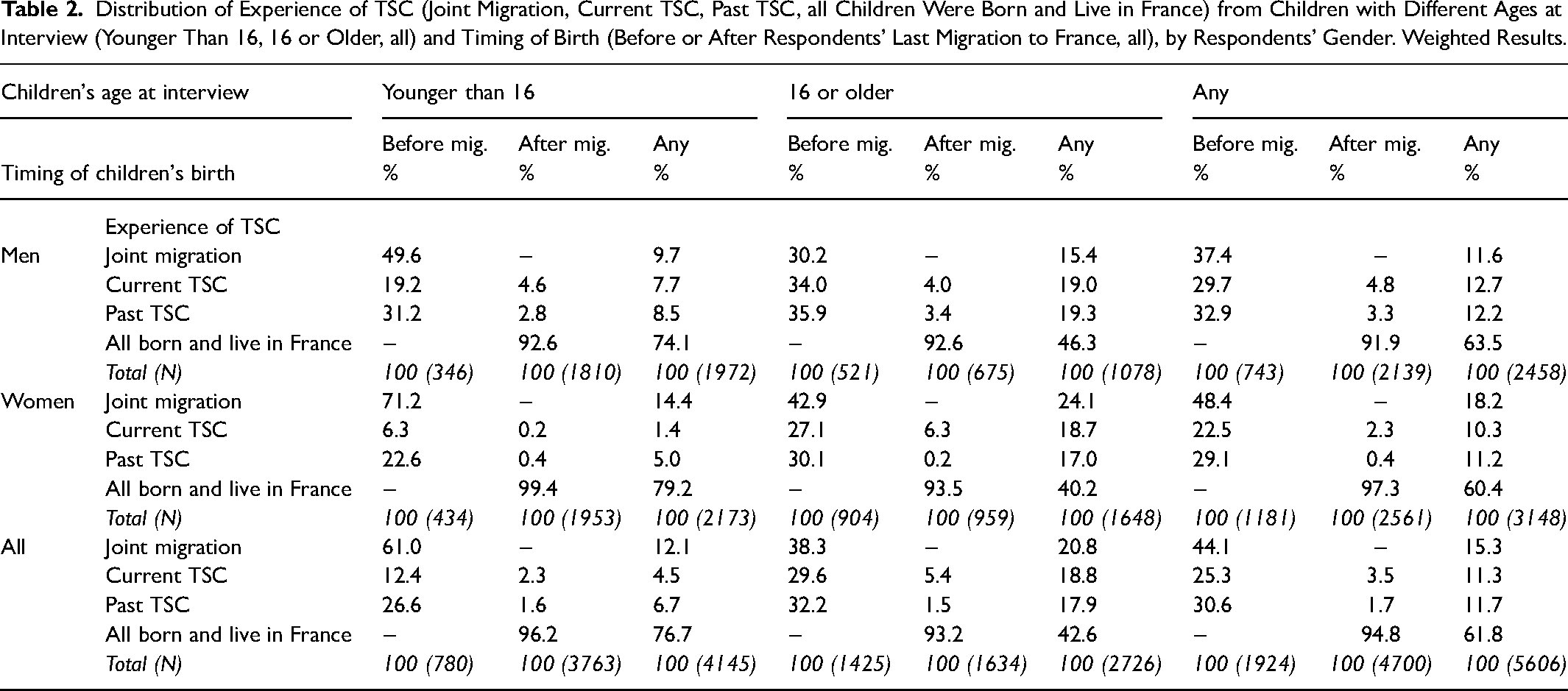
Around 30% of all immigrant parents in the sample had at least one child before their last migration to France. 63% of men and 51% of women in this group experienced TSC from at least one of the children born before their last migration (cf. seventh column in Table 2), and 30% (men) and 22% (women) were still transnationally separated from at least one of them at the time of the interview. As expected, experiences of TSC from children born after migration are a rarer occurrence, as only 8% of men and 3% of women who had children after migrating to France ever experienced TSC from one of them (cf. eighth column in Table 2).
Among immigrants with children younger than 16, only 8% of men and 1% of women were TSC from at least one young child at the time of the survey (cf. third column in Table 2). These figures reach 19% (men) and 6% (women) when only considering individuals with young children born before their last migration to France (cf. first column in Table 2). TSC is more common among parents who have children aged 16 or older, as 19% of respondents in this category were transnationally separated from a grown child at the time of the survey. It should be noted however that some of the current and past TSC in this group started or happened when the children were still younger than 16.
In sum, while post-migration parents are also at risk of TSC, most of the observed TSC involve children born before respondents’ last migration to France. In addition, descriptive analyses reported in Table 1 show that immigrants who only have children born and living in France tend to have migrated in earlier life stages, to be younger and more highly educated compared to both joint migration parents and (formerly) transnational parents. These demographic differences might proxy unobserved differences in reasons to migrate and expectations towards migration that could confound the association between experience of TSC and mental health.
Experience of TSC and Mental Health
Coefficients from the linear probability regressions of having experienced depressive symptoms on experience of TSC (from children of any age, children younger than 16 and children aged 16 or older) are reported in Figure 1 (full models in Table A1 in the Supplemental Appendix). I find that transnational parents are significantly (by 11 percentage points before controls, and 8 in the fully controlled model) more likely to have experienced depressive symptoms in the past 12 months compared to joint migration parents. This is mostly driven by parents of children younger than 16. Within this group and only considering young children, transnational parents’ chance of having experienced depressive symptoms is 20 percentage points higher, in the model with full controls, than for joint migration parents. On the contrary, when looking at experience of TSC from children aged 16 or older at the time of the interview, the difference in risk of depressive symptoms between transnational parents and joint migration parents is not statistically significant at the 90% threshold in any of the models. Therefore, H1 is partially supported and H3 is supported: transnational parents were more likely to have experienced depression symptoms compared to joint migration parents (H1). This association holds concerning TSC from children of any age and is strongest considering children younger than 16, but is weaker and not statistically significant when considering children aged 16 or older (H3).
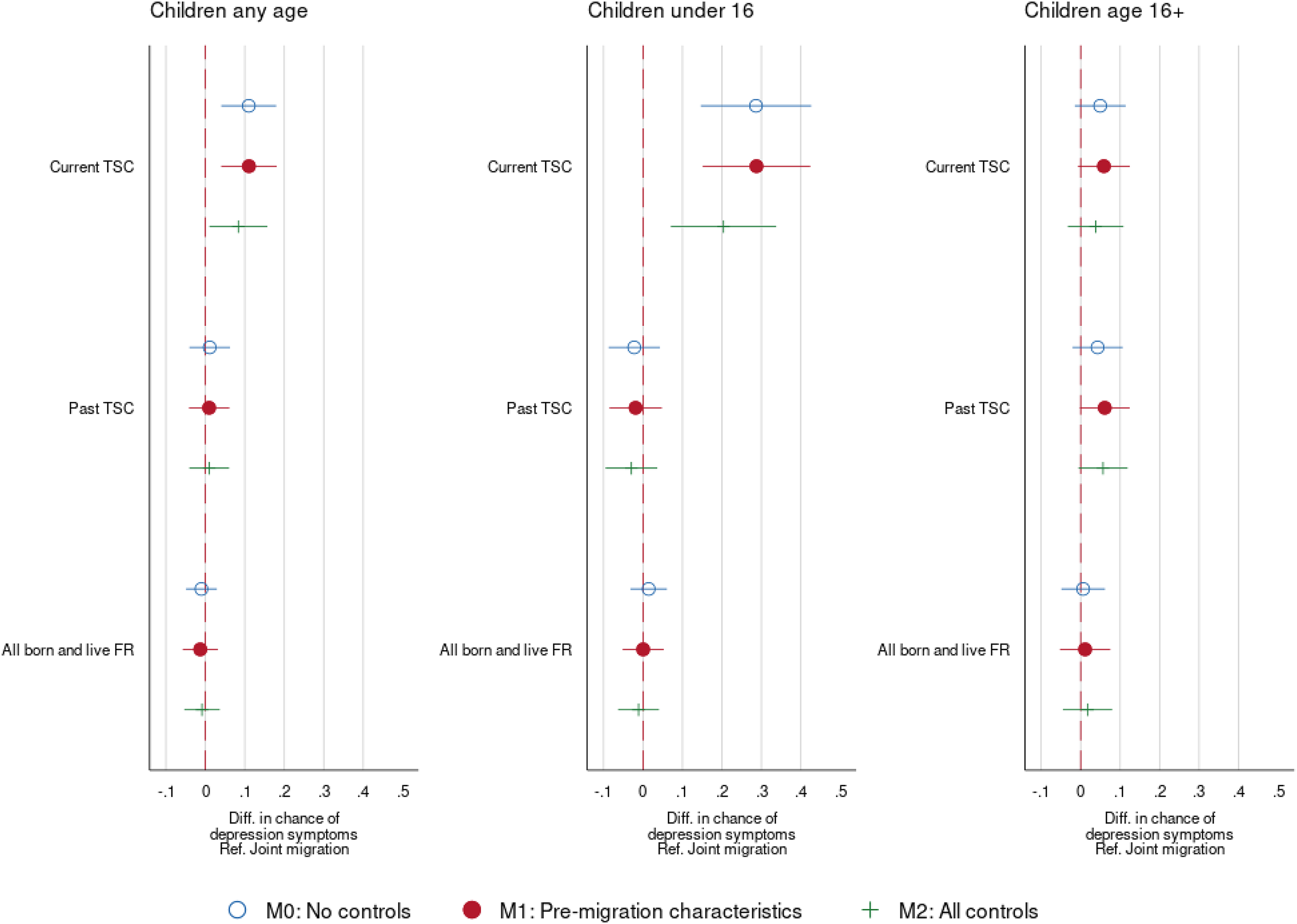
Plots of the regression coefficients with 90% confidence intervals of experience on TSC (from any child, from children under 16, from children aged 16 or older) on having experienced any symptom of major depression in the last 12 months in the models with no controls (hollow markers), controlling only for pre-migration characteristics (solid markers) and with all controls ("+" markers). The reference category (dashed line) are parents who migrated jointly to all their children born before their last migration to France and who never experienced TSC. Full models in Table A1 in Supplemental Appendix.
Importantly, the differences in the risk of having experienced depressive symptoms between transnational parents and joint migration parents are not explained, even in part, by compositional differences in pre-migration sociodemographic characteristics (introduced in Model 1). Instead, the predicted difference in risk of depressive symptoms between transnational and joint migration parents is reduced by around 30% (from 11 to 8 percentage points considering all children, from 29 to 20 considering children younger than 16) once the sociodemographic conditions at the time of the interview are controlled for. Further analyses (available upon request) suggest that most of this reduction in the coefficient is driven by the introduction of the variables related to family (partnership dissolution and number of children younger and older than 16) and household (living with a partner) composition. These variables can be considered as confounders in the association between TSC at the time of the interview and mental health, but also as mediators in the association between TSC at migration and mental health, so that it is unclear whether the model 1 or model 2 coefficients should be considered as the “full”, unmediated association between experience of TSC and experience of depression symptoms.
There are no substantial or statistically significant differences in chance of having experienced depression symptoms between joint migration parents and formerly transnational parents, so that H2 is not supported. In addition, I do not find any statistically significant difference between the two groups of immigrant parents who never experienced TSC: those in the “joint migration” category and those who only had children born and living in France.
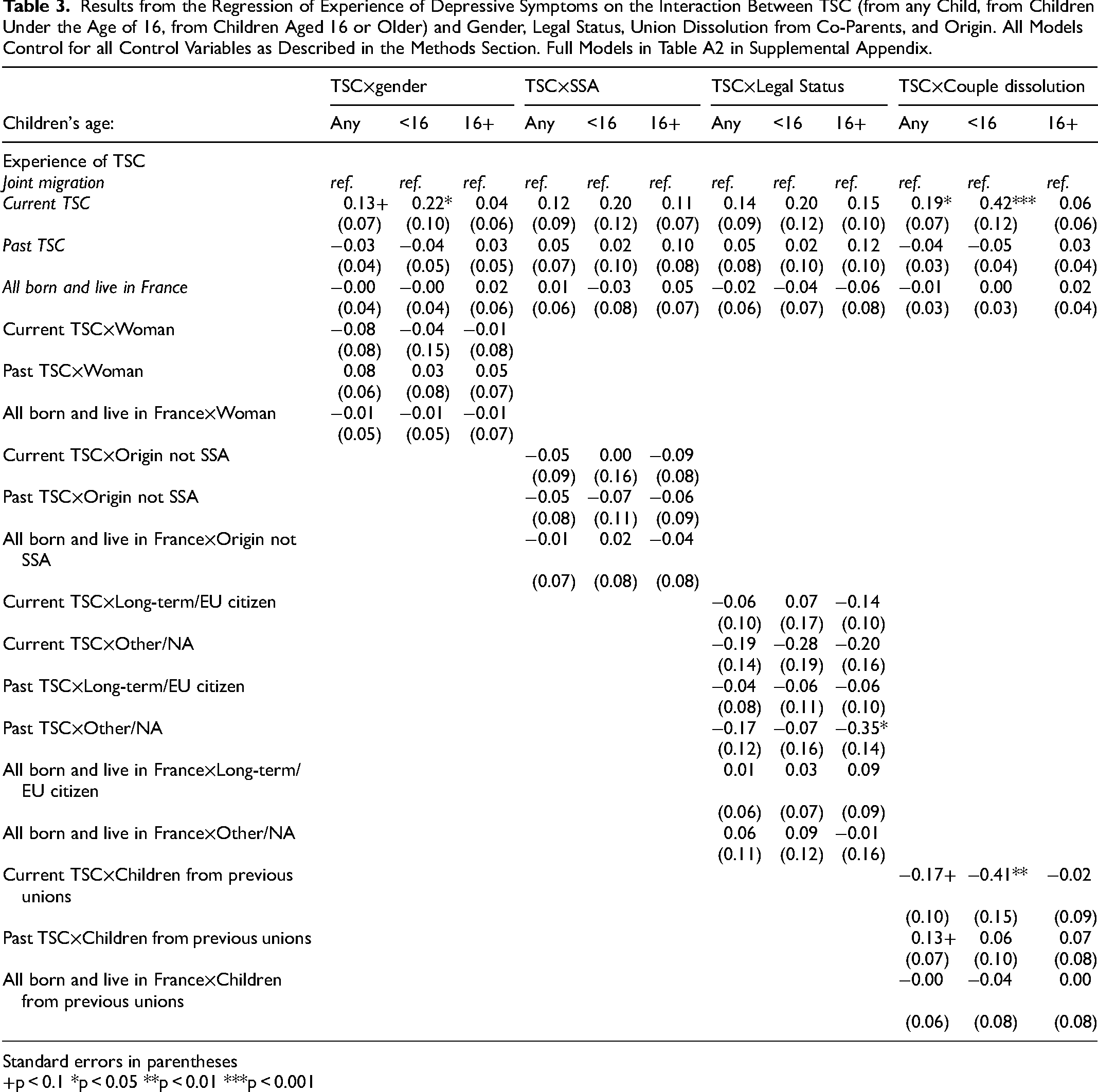
Results from the analyses of heterogeneities in the association between TSC and experience of depressive symptoms by gender, legal status, partnership dissolution and region of origin are reported in Table 3 (full models in Table A2 in Supplemental Appendix).
Results from the Regression of Experience of Depressive Symptoms on the Interaction Between TSC (from any Child, from Children Under the Age of 16, from Children Aged 16 or Older) and Gender, Legal Status, Union Dissolution from Co-Parents, and Origin. All Models Control for all Control Variables as Described in the Methods Section. Full Models in Table A2 in Supplemental Appendix.
Standard errors in parentheses
+p < 0.1 *p < 0.05 **p < 0.01 ***p < 0.001
Heterogeneity by gender. I do not find statistically significant differences by gender in the association between TSC and experience of depressive symptoms (ref. first three models in Table 3) net of control variables. When looking at TSC with no distinction by children's age or at TSC from children younger than 16, transnational fathers are statistically significantly disadvantaged in mental health compared to joint migration fathers, and contrary to literature's expectations, the association between TSC and mental health results to be even slightly (but not statistically significantly) stronger for men than for women. H4 is then not supported by the data.
Heterogeneities by region of origin and legal status. I do not find a statistically significant interaction between experience of TSC and current legal status, and coefficients go in the expected direction (parents with more stable legal status being less affected by TSC) concerning children older than 15 and when not distinguishing by children's age, but in the opposite direction for children younger than 16. The interaction between experience of TSC and being a migrant from SSA is also not statistically significant. The interaction term is null considering children younger than 16, whereas immigrant parents from SSA are predicted to be more affected by TSC from grown children and from children of any age, compared to immigrants from other origins, although the association between TSC and depression symptoms is not statistically significant at the 90% threshold for either origin group. Thus, I find no support for H7 and H8.
Heterogeneity by partnership dissolution from co-parents. The most striking result in this part of the analyses concerns the interaction between experience of TSC with children under 16 and partnership dissolution from co-parents. While current TSC is associated with much higher risk of having experienced depressive symptoms among individuals who only have children within the current partnership (+19 percentage point considering children of any age, and + 42 percentage points considering children younger than 16), the association is null among individuals who have children from previous partnerships. 10 This result contradicts previous literature's finding regarding the association between transnational separation from a parent, parental divorce, and mental health among non-migrant children in Ghana (Mazzucato and Cebotari 2017).
Finally, in Figure 2 I report the results from the interaction between experience of TSC and employment stratified by gender (full models in Table A3 in Supplemental Appendix). The sample size only allows me to run this analysis with experience of TSC from children of any age.
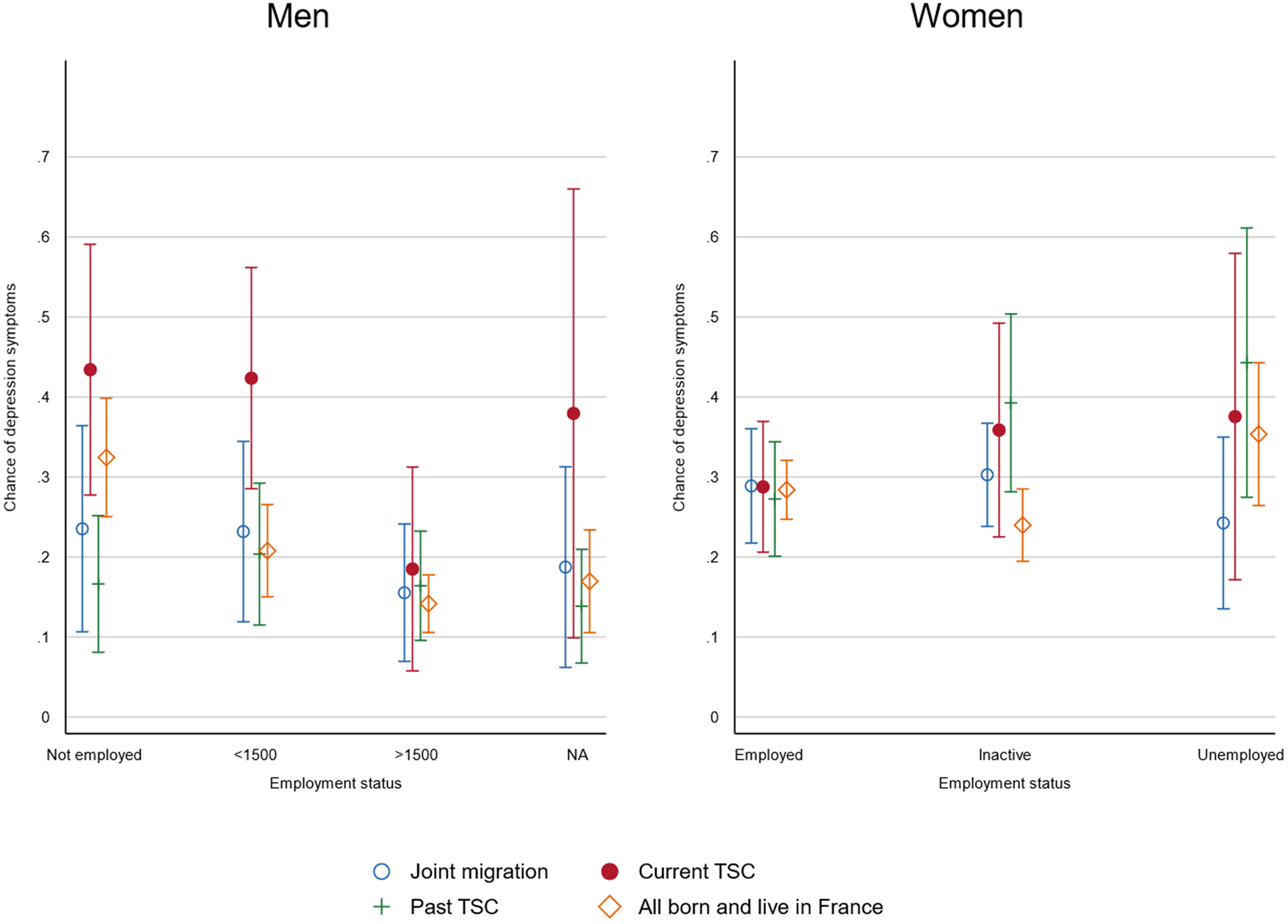
Predicted probabilities of experience of depressive symptoms by gender and employment status/salary (men, left-hand panel) or employment status (women, right-hand panel). Models control for all control variables as described in the methods section. Full models in Table A3 in Supplemental Appendix.
Both among men and among women, the predicted difference in risk of depressive symptoms between transnational and joint migration parents does not differ statistically significantly depending on the employment status category (ref. the interaction coefficients in Table A3 in the Supplemental Appendix). However, it is worth noticing that the difference in chance of depression symptoms between transnational and joint migration parents is only statistically significant among men earning less than 1500 euros per month and among those who are inactive or unemployed, whereas there is no substantial nor statistically significant difference by experience of TSC among men earning 1500 euros of more per month. H5 and H6 are therefore both partially supported, although these results should be taken with caution given the limited group sizes and the impossibility to look at experience of TSC from young children, which based on the previous analyses (ref. Figure 1) is the one driving the association observed when considering children of any age.
Discussion and Conclusions
In this article, I have investigated the association between current and past transnational separation from children and mental health among immigrant parents living in France. While this topic has been widely studied in qualitative literature, quantitative literature is still scarce and consists mostly of relatively small-N studies focusing on specific origin groups. Consequently, there is no account of the size of the phenomenon among the immigrant population living in destination countries, and it is not clear how results from specific origin countries or areas can be generalised to the larger immigrant population. In addition, previous studies have not distinguished between different groups of non-transnational immigrant parents in their control groups, which might lead to biased results and conceal potential lasting effects of TSC after reunification. Finally, only few studies have looked into heterogeneities in the association between TSC and mental health by gender (Arenas et al. 2021; Haagsman, Mazzucato and Dito 2015), economic conditions, or legal status (Haagsman, Mazzucato and Dito 2015). In this article, I have addressed these limitations using data from Trajectoires et Origines 2, a survey conducted between 2019 and 2020 on a large representative sample of the immigrant population living in France.
I have found that more than one in five immigrant parents in France are or have been transnationally separated from (some of) their children since their last arrival to France, and that TSC was experienced by 56 percent of individuals who had children before migration. TSC is especially common for parents of children aged 16 or older: 30% of women and 34% of men in this group are or have been transnationally separated from one of their grown children, including separations which might have started when the children were still younger. Among mothers with young children, TSC is relatively rare, as 6% of them are or have been separated from a child younger than 16; among immigrant fathers, this figure reaches 17%, and 50% among immigrant fathers whose young children were born before migration.
Confirming results from previous quantitative and qualitative literature, I find that transnational immigrant parents have significantly worse mental health than immigrant parents who migrated with their children, especially if the separation concerns at least one young child. Transnational separation from a child aged 16 or older is also associated with worse mental health, but the association is not statistically significant at the 90% threshold. Former transnational parents have similar mental health as migrants who moved to France with their children, suggesting that the negative impact of TSC on mental health does not persist after reunification.
I found a null difference in chance of having experienced depressive symptoms between the two groups of immigrant parents who never experienced TSC, that is, joint migration and post-migration parents. While this suggests that it might not be problematic to cluster the two groups, it is worth for future research to test if this result holds using different measures of mental health.
Previous quantitative literature found that only women present worse mental health when transnationally separated from a child (Arenas et al. 2021; Haagsman, Mazzucato and Dito 2015). In contrast, I do not find a statistically significant gender difference in the association between experience of TSC and depressive symptoms. This is consistent with findings from qualitative research, that has often highlighted feelings of sadness and guilt among transnational fathers (Dávalos 2020; Poeze 2019). However, this result might be driven by the differences in measure of mental health between previous studies (that relied on continuous scales of emotional distress and/or happiness) and the binary measure of having experienced depressive symptoms used in this article.
I also did not find any statistically significant difference in the association between experience of TSC and mental health by current legal status or between SSA immigrants and immigrants from other origin regions. In both cases, this could be due to the relatively small sample sizes, which did not allow me to use more detailed measures of legal status and geographic origins.
A striking result is that the higher incidence of depressive symptoms among immigrant parents with young children living abroad only concerns children had within the current partnership; the association between TSC and depressive symptoms is null among immigrant parents who had children from previous unions. This contrasts with a previous finding that transnational separation from a parent leads to worse mental health outcomes among children if combined with parental divorce (Mazzucato and Cebotari 2017). One explanation might be that divorced parents tend to be less involved in keeping contact with their children living abroad, leading to both their lack of depressive symptoms and their children's higher mental health strain. Further research is needed to investigate whether this finding holds in different samples and with more complete measures of mental health, as well as to understand the mechanisms behind it.
Based on qualitative research, I hypothesised that immigrant fathers’ mental health would be more strongly affected by TSC the worse their economic condition. In reverse, I expected the association between TSC and mental health not to be affected by employment conditions for women. This is because for immigrant men, sending remittances and gifts is a way to fulfil their culturally mandated roles as breadwinners, thus potentially buffering separation guilt. Conversely, transnational mothers deviate from their roles as careers regardless of their employment status and ability to provide financially for their children. In line with these expectations, I have found that there is no substantial difference in mental health among immigrant fathers who are employed and earn above 1500 euros per month, whereas among unemployed or low-earning fathers, transnational fathers have substantially worse mental health. My expectations are partially met concerning women: the difference in mental health between mothers who migrated with their children and transnational mothers varies moderately and not statistically significantly depending on employment status.
While this article contributes to filling important gaps in the literature on transnational parenthood and mental health, it has some limitations, the biggest being that it relies on a dichotomous measure of experience of depressive symptoms as a proxy for mental health. This deviates from the prevalent approach in studies on immigrants’ mental health, including those investigating differences by TSC, which tend to see mental health as a continuum between positive health and severe illness. Further research is needed to test whether the main findings of this article hold using more complete measures of mental health. A second limitation is that, while I distinguished experiences of TSC depending on the age of the children at the time of the interview, I could not look into other important dimensions of the timing of TSC, such as children's age at parental migration (or at transnational separation), length of TSC and time since reunification. This was due partly to the relatively limited information available on children's migration trajectories, partly to the cross-sectional nature of the data. A necessary limitation following the cross-sectionally nature of the data is that I can only observe the association between experience of TSC and mental health among immigrant parents who still lived in France at the time of the interview. This means that my analyses are likely to underestimate the association between TSC and mental health, as it is possible that individuals experiencing strong mental health deterioration due to TSC are more likely to return to their origin country to reunite with their children. Finally, the relatively small group sizes did not allow me to satisfyingly investigate differences in the association between mental health and experiences of TSC between origin groups or by more detailed legal status categories.
To allow for these limitations to be addressed, it is important for surveys focusing on immigrants to collect detailed information on migration trajectories and on children living both in and outside of destination countries and on different dimensions of mental health, and ideally to follow individuals over time and across borders. This is particularly important to strengthen efforts to develop this field of research in a comparative direction, which is necessary as immigration policies, regimes and migration patterns differ significantly between countries of destination.
Supplemental Material
sj-docx-1-mrx-10.1177_01979183251329038 - Supplemental material for Parenting from Abroad: Transnational Separation from a Child and Mental Health Among Immigrants in France
Supplemental material, sj-docx-1-mrx-10.1177_01979183251329038 for Parenting from Abroad: Transnational Separation from a Child and Mental Health Among Immigrants in France by Claudia Brunori in International Migration Review
Footnotes
Acknowledgements
I wish to thank Juho Härkönen, Renee Luthra, Cris Beauchemin, Herman van de Werfhorst, Lukas Schmid, Roberta Rutigliano, Fernanda Torres De Lena, the anonymous reviewers and the editor for their useful comments. I am especially grateful to Cris Beauchemin, Louise Caron, Mathieu Ichou and the TeO2 team for hosting me at INED, for giving me access to the data, and for the feedback and support.
Declaration of Conflicting Interests
The author declared no potential conflicts of interest with respect to the research, authorship, and/or publication of this article.
Funding
The author disclosed receipt of the following financial support for the research, authorship, and/or publication of this article: This work was supported by the HORIZON EUROPE European Research Council, (grant number LIFELONGMOVE (Grant Agreement No. 101043981)).

Supplemental Material
Supplemental material for this article is available online.
Notes
References
Supplementary Material
Please find the following supplemental material available below.
For Open Access articles published under a Creative Commons License, all supplemental material carries the same license as the article it is associated with.
For non-Open Access articles published, all supplemental material carries a non-exclusive license, and permission requests for re-use of supplemental material or any part of supplemental material shall be sent directly to the copyright owner as specified in the copyright notice associated with the article.
