




Abstract
Using novel large-N survey data collected from the state of Edo – Nigeria's migration epicentre – this study examines how family support relates to people's migration aspirations and their perception of the risks associated with migrating to Europe. The regression results reveal that family support positively correlates with migration aspirations and raises people's confidence in their chances of reaching Europe should they decide to migrate, effectively decreasing their perception of migration risks. Women are less optimistic about reaching Europe than men.
Introduction
The state of Edo in Nigeria's Southern Region is often referred to as Nigeria's migration epicentre because it is the place of origin for most irregular migrants from Nigeria who intend to reach Europe (Beber and Scacco, 2022; Vermeuelen, 2019). Data collected in 2021 as part of the Transnational Perspectives on Migration and Integration (TRANSMIT) research project reveal that, among individuals aged 15 and older in Edo, 71 per cent express a desire to migrate. 1 Among individuals aged 15 to 35, 82 per cent express a desire to migrate. When respondents are asked where they would like to emigrate if there were no restrictions on their movement, the United States is the top choice, followed by Canada. The United Kingdom and Germany are the third and fourth most preferred destinations, respectively, while Italy ranks sixth after the United Arab Emirates. 2 Beber and Scacco (2022: 2) analysed survey data from Benin City, the capital of Edo State, and found that “nearly one in four households […] had one of its members attempt irregular migration to Europe in 2017.”
International migration, particularly when irregular, can be very risky. Data from the Missing Migrants Project database show that 9,013 migrants either died or went missing along the Mediterranean route between 2020 and 2023. In 2023 alone, there were 3,105 reported cases of dead or missing migrants. 3 Sub-Saharan African migrants travelling the Mediterranean route often face challenges such as hostility from governments, security forces, and local populations in Maghreb countries like Libya, Tunisia, Algeria, and Morocco (BBC, 2018; El Atti, 2023; Malik, 2023; United Nations, 2023). These countries are popular transit points due to their proximity to Europe and the Mediterranean Sea.
Domestic migration also occurs within African countries. Abeje (2021) conducted a study in Ethiopia and found that rural–urban migration was driven by rural households’ desire to earn income to supplement poor agricultural harvests and diversify their livelihoods. In a study conducted in Tanzania, Duda and Grote (2018) discovered that households experiencing food insecurity were more likely to have a strong desire to migrate in search of employment. However, their results indicated that the migration of a household member did not improve the food security status of the household, as remittances sent by migrants were insufficient to offset the loss of labour due to their migration. A study conducted by Mulcahy and Kollamparambil (2016) in South Africa revealed that rural–urban migration caused a decline in migrants’ subjective well-being. They attributed this decline to the disparity between migrants’ expectations and the actual conditions at their destination, along with the emotional toll of being separated from their families.
Some studies on domestic migration have focused specifically on the Nigerian case. The search for better employment opportunities and higher wages has been identified as a pull factor, prompting individuals to leave rural areas for urban centres (Alarima, 2018; Nwankwo et al., 2022). This movement has negatively impacted rural areas by reducing labour supply, agricultural output, and farmers’ incomes (Alarima, 2018; Ovharhe et al., 2022). Pittin (1984, 1991) conducted a study in the northern Nigerian state of Katsina, where she found that even though there was a high level of rural–urban migration among members of the Hausa ethnic group, the migration process was highly gendered. While men migrated freely to urban centres in search of better job opportunities, women were not afforded such liberty due to societal gender norms that confined them to the home. Women were only allowed to migrate in association with their husbands or with the permission of their families – a permission that was often difficult to obtain. A recent study by Tuki (2024a) reveals that these gender norms, which disadvantage women, remain deeply rooted in Northern Nigerian society. Studies on members of the Igbo ethnic group show that, despite frequently migrating to urban centres across Nigeria in search of business opportunities, they continue to maintain strong ties with their home communities and express a desire to be buried there upon their death (Chukwuezi, 2001; Smith, 2011, 2004).
Socio-economic conditions in Nigeria are generally poor, with significant challenges such as youth unemployment, poverty, and violent conflicts (Ajufo, 2013; Nigerian National Bureau of Statistics, 2020; Tuki, 2022, 2024b). However, the socio-economic circumstances in Edo State are better than the national average. A recent report by the Nigerian National Bureau of Statistics (2022: 99–101) indicates that Edo had the sixth-lowest level of multi-dimensional poverty among Nigeria's thirty-six states. Edo's multi-dimensional poverty index (MPI) score was 0.126, significantly below the national average of 0.257. 4 Another report by the Nigerian National Bureau of Statistics and UNICEF (2018: 25) reveals that 57.2 per cent of Edo's population belongs to Nigeria's richest wealth index quintile, making it second only to Lagos State. Edo also has a high literacy rate of 96.6 per cent among individuals aged 15 to 24, which is 31.5 percentage points higher than the national average (Nigerian National Bureau of Statistics and UNICEF, 2018: 194–196). 5
Yet, migration aspirations remain very high among Edo's population. Bisong (2022: 215) highlights the culture of migration in the state: “In regions like Edo State, migration in search of ‘greener pastures’ is rooted in the society and the daily discourse of young people and their families.” While several studies have explored the factors influencing migration in Edo (e.g. Obi et al., 2021; Plambech, 2023), with some specifically examining how potential migrants perceive the risks associated with migration (e.g. Obi et al., 2019; Beber and Scacco, 2022), none has, to the best of my knowledge, examined the association between family support and individuals’ migration aspirations as well as their perception of migration risk. Using novel survey data collected from the Southern Nigerian state of Edo in 2021 as part of the TRANSMIT project, this study aims to address that gap. Specifically, it investigates whether individuals who believe their families want them to migrate are more likely to have high migration aspirations and to be more optimistic about successfully reaching Europe.
An important point to note is that the measure of migration aspirations used in this study does not clearly distinguish between domestic and international migration. This is because respondents were simply asked whether they were considering moving away from the state of Edo for a period of at least three months – whether such movement was within or outside Nigeria. Moreover, this operationalisation does not explicitly refer to irregular migration. However, given the culture of international migration in Edo, coupled with the fact that most households have family members who have attempted irregular migration to Europe (Bisong, 2022; Beber and Scacco, 2022), it is likely that most respondents had interpreted the question in terms of their desire to emigrate to another country. In contrast, the second dependent variable measuring perception of migration risk focuses specifically on international migration because it explicitly asks respondents to assess the likelihood of successfully reaching Europe if they decide to migrate.
I estimated regression models that reveal family support is positively associated with migration aspirations and increase people's optimism about successfully reaching Europe if they choose to migrate. This underscores the importance of considering not only the individual motivations of potential migrants, but also the influence of family members on the migration decision, as migration decisions are often a collective family matter. Furthermore, the results show that, compared to men, women are less optimistic about reaching Europe. The gender disparity in risk perception may be due to the different migration experiences for men and women, as women tend to face greater risks of trafficking and sexual violence (Adeyinka et al., 2023; Pertek, 2022).
This study contributes to the broader literature on the New Economics of Labor Migration (NELM) theory, which posits that migration decisions are best understood at the household or family level rather than at the individual level. According to NELM theory, migration is a collective strategy employed by households to improve their economic situation. This theory highlights two critical factors influencing migration decisions: relative deprivation and risk diversification. Relative deprivation refers to a household's socio-economic standing compared to other households, driving the desire to migrate in order to achieve parity or superiority. Additionally, households may encourage migration as a way to diversify their sources of income and reduce financial risks associated with reliance on local economies. By considering these household-level dynamics, NELM theory offers a comprehensive framework for understanding the complex motivations behind migration (Massey et al., 1993; Paul, 2015; Stark, 1984, 1978).
The remainder of this study is organised as follows: the section “Data and Methodology” introduces the data, discusses the variables that will be used to estimate the regression model, and briefly outlines the analytical technique. The section “Results and Discussion” reports and discusses the regression results, while the section “Conclusion” summarises the study and concludes.
Data and Methodology
This study uses novel survey data collected in 2021 from the southern Nigerian state of Edo as part of the Transnational Perspectives on Migration and Integration (TRANSMIT) research project. 6 A total of 1,638 respondents from all 18 local government areas (LGAs) (i.e. municipalities) in the state were interviewed (see Figure 1). Respondents were aged 15 and older. Participants were selected using clustered random sampling, with a male-to-female ratio of 45:55. Section B in the Appendix provides a detailed discussion of the sampling strategy. The section “Operationalisation of the Variables” defines the variables used to estimate the regression models.
Before the survey was conducted, ethical approval was obtained from the WZB Berlin Social Science Center Ethics Review Committee (application no.: 2020/3/101) and the National Health Research Ethics Committee of Nigeria (NHREC). Respondents were clearly informed about the nature of the survey, its purpose, and how the data collected would be processed prior to the interviews. Only after they granted consent did enumerators begin the interviews. In the case of respondents who were minors (i.e. under 18 years old), consent was first sought from the household head, after which consent was also sought from the minor. Only when both parties granted consent did enumerators proceed with the interviews. Respondents were informed that they could opt out of the interview at any time if they did not wish to continue.
Operationalisation of the Variables
Dependent Variables
Migration Aspirations
This measures the respondents’ desire to migrate to another location outside the state of Edo for a period of at least three months. This movement could be either domestic (i.e. to another state within Nigeria) or international (to another country). The measure was derived from the question, “How much are you considering moving to another location to live outside of Edo (‘live’ meaning staying there for more than for 3 months), answered on a scale from 1 to 5, where 1 stands for ‘I don’t want to move at all’ and 5 means ‘I really want to move’?” Of the respondents, 44 per cent chose a score of 5, while only 29 per cent of them chose a score of 1.
Reach Europe
This variable measures the respondents’ expectation of successfully reaching Europe if they decide to migrate. It was derived from the question, “And should you decide to migrate to Europe, how likely is it that you will make it there? Please answer on a scale from 1 to 5, where 1 means ‘I will not make it at all’ and 5 means ‘I will certainly make it.’” A higher level of optimism about reaching Europe is associated with a lower perception of migration risk, while less optimism is linked with higher risk perception. Of the respondents, 62 per cent rated their optimism about reaching Europe at 5 out of 5, while only 9 per cent rated it at 1, suggesting a low perception of migration risk among the population in Edo.
Explanatory Variable
Family Support
This is a dummy variable that takes the value of 1 if respondents believe their families want them to migrate and 0 if they do not. It was derived from the question, “Do you think your family would want you to migrate?” with a value of 1 indicating “yes” and 0 indicating “no.” Of the respondents, 73 per cent said yes to the question, while the remaining 27 per cent said no. A limitation of this variable is that it does not allow respondents to choose “don’t know” responses or to indicate whether their families are indifferent to them migrating. Additionally, the variable does not provide any information about the degree of family support; it is based on perception and does not reflect what the family says directly.
Control Variables
Some control variables for the respondents’ demographic attributes, level of education, household size, household income, expectations regarding the economy's future performance, and contact with return migrants were considered. Each of these is discussed below.
Demographic Covariates
This includes variables such as the respondents’ gender, marital status, and age. Gender takes a value of 1 if the respondent is female and 0 if male. Marital status takes a value of 1 if a respondent is married or has previously been married and 0 otherwise. Age is measured in years.
Educational Level
This measures the highest level of education that respondents have attained on a scale with ten ordinal categories ranging from 0 = “no formal schooling” to 9 = “master's degree and above.” 7
Household Size
This measures the total number of individuals living in the same house alongside the respondents. Household members are individuals who sleep under the same roof and who share meals regularly.
Household Income
This measures the socio-economic condition of the household to which respondents belong. It was derived from the question, “Which of the following statements best describes the current economic situation of your household?” The responses were measured on a scale with five ordinal categories ranging from 0 = “money is not enough for food” to 4 = “we can afford to buy almost anything.”
Expected Growth
This assesses respondents’ outlook on the future performance of the Nigerian economy. It was derived from the question, “What do you think will be the economic situation in Nigeria during the next five years compared to the current situation?” The responses were measured on a scale with five ordinal categories ranging from 0 = “much worse” to 4 = “much better.” Pessimism about the economy's future performance might make people more desperate to migrate, thus lowering their perception of migration risks.
Know Return Migrant
This measures whether respondents are familiar with individuals in their community who have spent time abroad. It was derived from the question, “Do you personally know someone in your community (town or village) who has lived abroad and returned? By ‘personally’, I mean had at least a conversation with them.” The responses were recorded as a binary measure, with “1” indicating “yes” and “0” indicating “no.”
Table 1 presents the summary statistics of the variables used to estimate the regression models.
Descriptive Statistics.
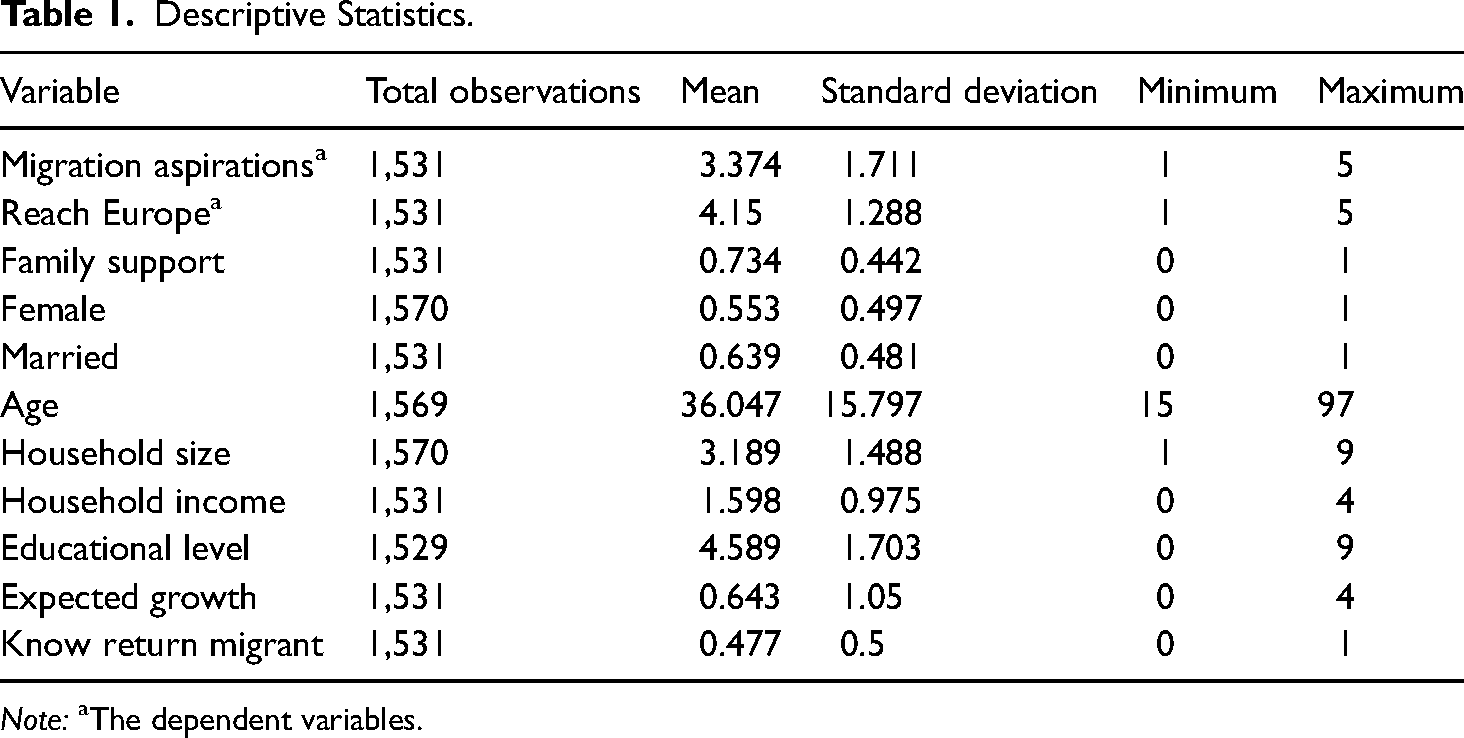
Note: aThe dependent variables.
Analytical Technique
To examine the association between family support, migration aspirations, and perception of migration risk, I consider a model of the following general form:
An ordered logit regression was used to estimate the model because the dependent variables are measured on an ordinal scale. A benefit of this approach is that it allows me to determine the relationship between the explanatory variable and each category of the dependent variable. Standard errors were clustered at the LGA (i.e. municipality) level to account for potential correlation between observations within the same LGA. Fixed effects for the respondents’ ethnicities were included in the regression models to account for cultural factors unique to particular ethnic groups, such as customs and superstitious beliefs, that could influence risk perception and migration aspirations.
Results and Discussion
Table 2 reports the regression results. Models 1 – 3 examine the association between family support and migration aspirations, while models 4 – 6 examine the association between family support and risk perception – that is expectations of reaching Europe. Model 1 is a baseline model regressing migration aspirations on family support. Family support had a positive coefficient and was statistically significant at the 1 per cent level, suggesting that individuals whose families want them to migrate are more likely to have high migration aspirations. This implies that the decision to migrate involves consultation with family members rather than being made solely by the migrants themselves. Migration can be a costly undertaking, necessitating the pooling of family resources to finance the journey. Families might also view migration as a way to spread financial risk, particularly in Nigeria, where social safety nets are largely absent. In addition to financial assistance, family members might provide emotional support (e.g. by encouraging and reassuring the potential migrants) and offer a safety net in case the migration does not go as planned.
Ordered Logit Models Regressing Migration Aspirations and Perceived Migration Risk on Family Support.
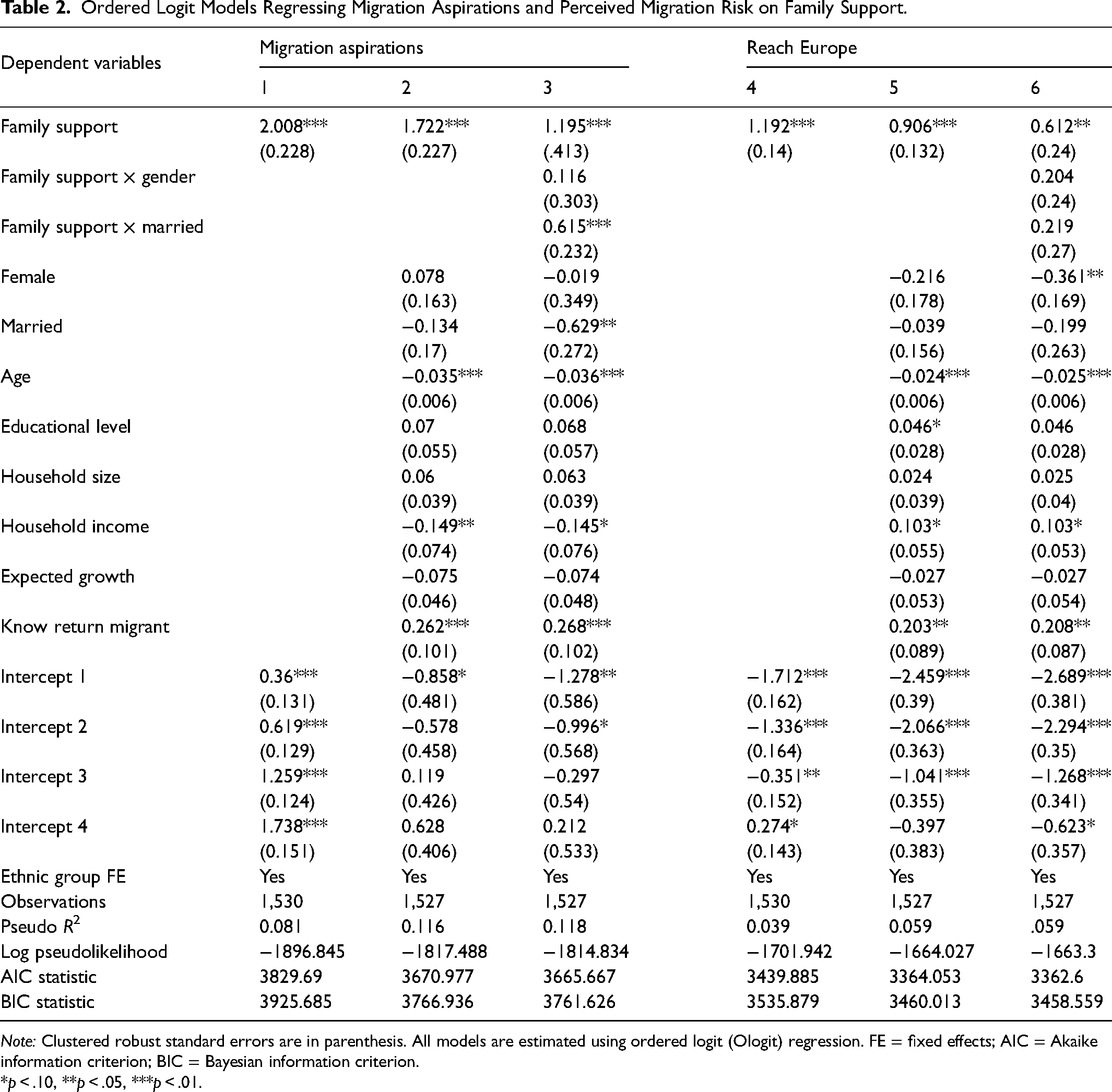
Note: Clustered robust standard errors are in parenthesis. All models are estimated using ordered logit (Ologit) regression. FE = fixed effects; AIC = Akaike information criterion; BIC = Bayesian information criterion.
*p < .10, **p < .05, ***p < .01.
Model 2 shows that the positive correlation between family support and migration aspirations is robust to the inclusion of control variables. Among the control variables, age, household income, and knowing a return migrant were significant. The negative sign accompanying age suggests that people's migration aspirations decline as they get older. This might be because life priorities shift with age. The desire to migrate might have been high in youth and declined as people got older and had more responsibilities. It could also be that older people have built stronger social networks and community ties over time; this makes them hesitant to leave these relationships and support systems behind for a new location. The negative sign accompanying household income suggests that being in a good socio-economic position lowers migration aspirations. This might be because higher income affords individuals a comfortable lifestyle, reducing the urgency to move for economic reasons. The positive sign associated with the variable measuring knowledge of a return migrant indicates that respondents who know someone who has been abroad are more likely to have high migration aspirations. This might be because returnees, especially those who have achieved success abroad, can serve as role models demonstrating that migration can lead to improved economic opportunities and better living conditions.
To determine whether the association between family support and migration aspirations is moderated by respondents’ demographic attributes such as gender and marital status, two interaction terms were created: the first term multiplies family support by gender, while the second is the product of family support and marital status. As shown in model 3, which includes the interaction terms, only the second term was statistically significant. Its positive sign suggests that people who are married and whose families want them to migrate are likely to have high migration aspirations. This might be due to the need to acquire resources to meet the family's needs. Moreover, spouses could provide emotional and financial support, especially when the move aligns with the couple's shared goals. It is important to note that marital status alone does not independently influence migration aspirations. In fact, it appears to lower migration aspirations, as evidenced by its negative sign and statistical significance at the 5 per cent level.
Model 4 is a baseline model regressing the expectation of reaching Europe (i.e. perceived migration risk) on family support. Family support carried a positive sign and was significant at the 1 per cent level, indicating that individuals who believe their families want them to migrate are more likely to be optimistic about reaching Europe. In other words, family support decreases the perceived risks associated with migration. This might be because the financial support provided by family members can cover costs related to travel, settlement, and emergencies, making the move less daunting. Moreover, family members in the destination country can provide valuable social networks that reduce the risks associated with migration, hence making migrants feel more confident about their migration decisions. However, in cases where families want a member to migrate but do not have the financial means to support the journey, this could put pressure on potential migrants, making them feel like failures. This might be the case in the relationship between parents and children in Nigeria, where social norms dictate that it is the responsibility of children to make their parents proud by acquiring wealth and looking after them in old age. In fact, data obtained from Wave 7 of the World Values Survey (WVS) (Haerpfer et al., 2022), conducted in 2018, show that 98.2 per cent of Nigerians agree that one of their main goals in life is to make their parents proud. The same survey also shows that 94 per cent agree that it is a child's duty to take care of ill parents. 9 Such pressure might make potential migrants more eager to emigrate to Europe in search of better opportunities, leading them to underestimate the risks associated with the journey.
In model 5, where the control variables were included, family support maintained its positive sign and remained significant. Among the control variables, only age, educational level, household income, and the indicator for knowing a return migrant were significant. Age carried a negative sign, suggesting that individuals become less optimistic about successfully reaching Europe as they get older. This might be because older individuals become more risk-averse and less inclined to pursue uncertain ventures, such as migration, especially if they perceive it as a risk to their current quality of life. The positive sign accompanying educational level indicates that educated individuals are more likely to be optimistic about reaching Europe. This might be because their ability to read enables them to access relevant information about migration options, legal processes, and potential destinations, which in turn lowers the perceived risks associated with migration. Moreover, educated individuals are likely to be of higher socio-economic status, enabling them to afford migration-related expenses. Household income carried a positive sign, suggesting that belonging to a wealthy household increases the likelihood of individuals feeling confident about reaching Europe. This may be because wealthier households are better able to cover migration-related costs, effectively reducing the risks associated with the move. The positive sign accompanying knowledge of a return migrant indicates that respondents who know someone who has been abroad are more optimistic about reaching Europe. This might be because returnees can provide valuable insights into the migration process, reducing uncertainties and fears about moving abroad.
In model 6, where the two interaction terms were included, they were both statistically insignificant. However, in this same model, the indicator for gender (i.e. female) became statistically significant for the first time. Its negative sign indicates that, compared to men, women are less optimistic about reaching Europe. This may be because women's experiences of migration differ from men's, with women being particularly vulnerable to trafficking and sexual violence (Adeyinka et al., 2023; Keygnaert et al., 2014; Pertek, 2022).
To illustrate the strength of the associations, I plotted the predicted probabilities for the baseline models in Figure 2 (i.e. models 1 and 4 in Table 2). Figure 2(A) shows that compared to individuals whose families do not support their migration, those whose families do are 42.3 percentage points more likely to choose a score of 5 when asked about their desire to migrate and 33.7 percentage points less likely to choose a score of 1. A quick examination of the panel reveals that the association between family support and migration aspirations is largest on the extreme response categories denoting the highest and lowest levels of migration aspirations. Figure 2(B) shows that compared to individuals without family support, those whose families support their migration are 9.2 percentage points less likely to choose a score of 1 (indicating the lowest likelihood of reaching Europe) and 25.9 percentage points more likely to choose a score of 5 (indicating the highest likelihood of reaching Europe). A cursory look at Figure 2(B) shows that the association between family support and respondents’ expectations of reaching Europe is largest in the fifth response category.
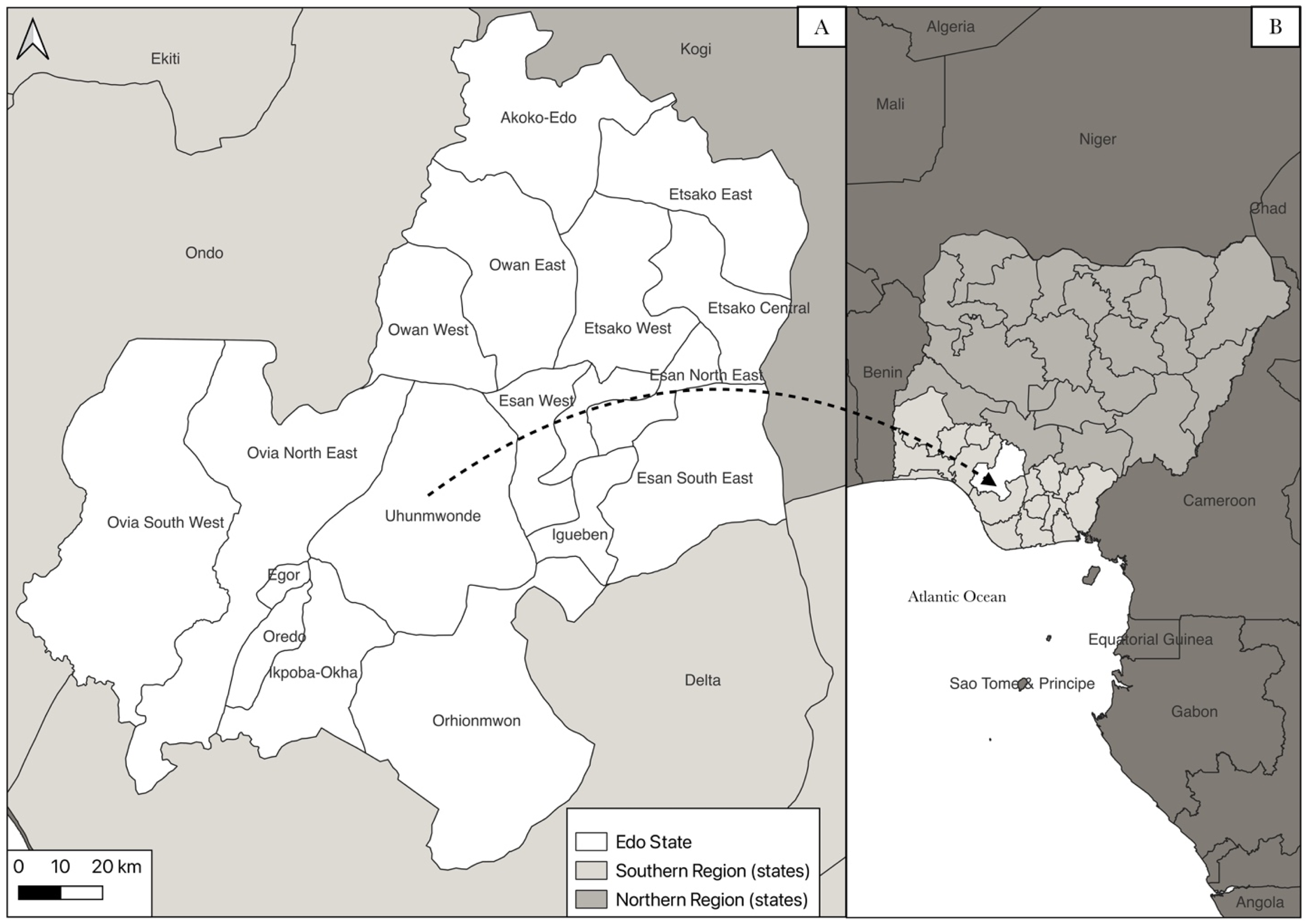
Study Area.
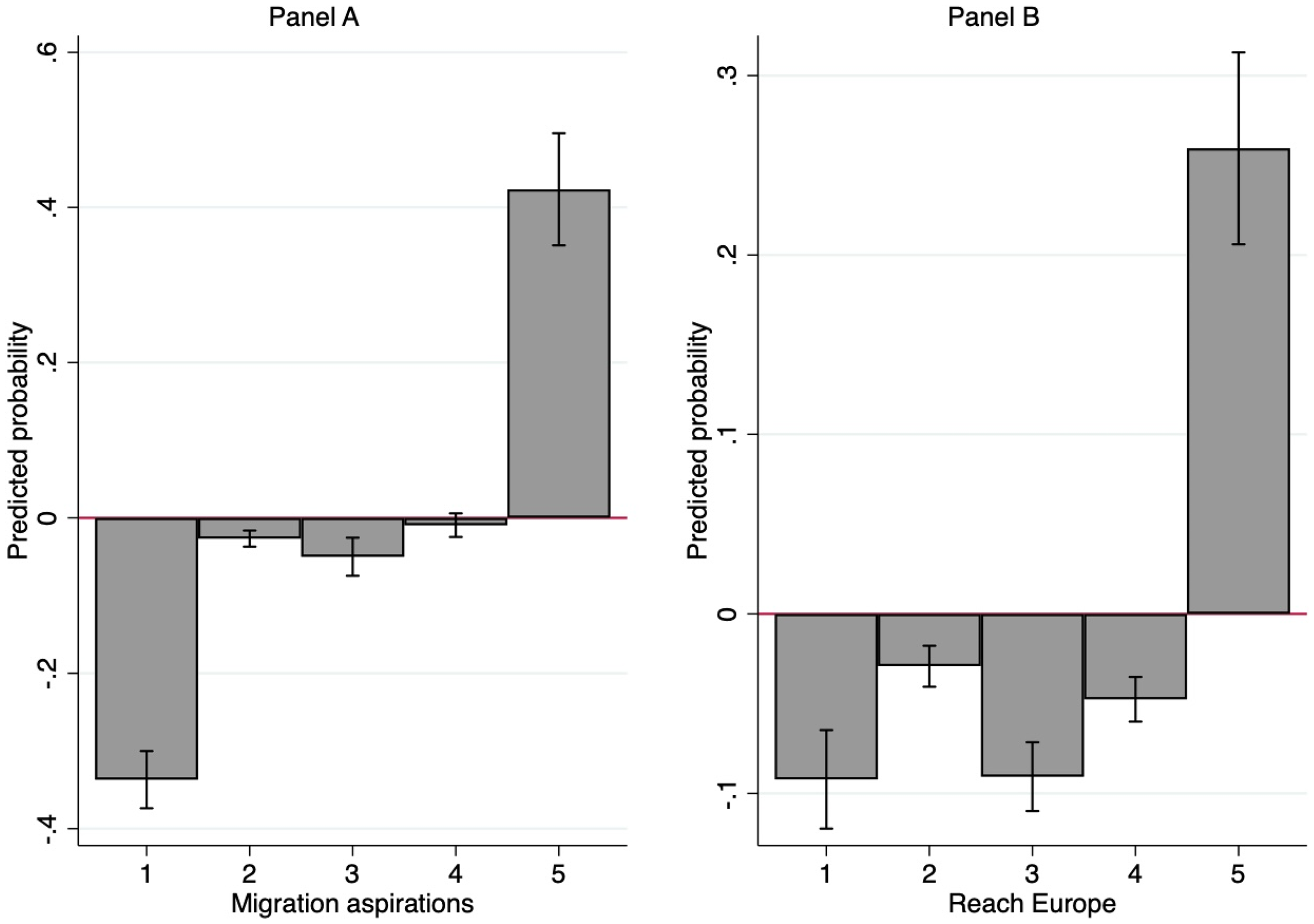
Predicted Probabilities Showing the Magnitude of the Associations between Family Support, Migration Aspirations, and Perceived Migration Risk.
Conclusion
This study investigated the relationship between family support, migration aspirations, and the perception of migration risk among the population in the Southern Nigerian state of Edo. Edo is often regarded as Nigeria's migration epicentre because most irregular migrants from Nigeria who aspire to reach Europe originate from there. Regression analysis revealed that family support increased the likelihood of individuals having high migration aspirations. Family support was also found to increase people's optimism about successfully reaching Europe. In essence, individuals whose families endorsed their migration perceive lower risks associated with the endeavour compared to those whose families did not. Additionally, women exhibited less optimism about reaching Europe than men, potentially reflecting distinct experiences of migration, including greater vulnerability to trafficking and sexual violence. These findings underscore the collective nature of migration decisions, emphasising the pivotal role of the family unit.
Footnotes
Acknowledgements
The author would like to thank the editors and two anonymous reviewers for their helpful comments. The author would also like to thank Roisin Cronin for the editorial assistance.
Data Availability Statement
The data and do-files underlying this study are available in the Harvard Dataverse: https://doi.org/10.7910/DVN/UGTPLM.
Declaration of Conflicting Interests
The author declared no potential conflicts of interest with respect to the research, authorship, and/or publication of this article.
Funding
The authors disclosed receipt of the following financial support for the research, authorship, and/or publication of this article: Financial support from the German Federal Ministry for Family Affairs, Senior Citizens, Women and Youth (BMFSFJ) is gratefully acknowledged.
