




Abstract
Cultural racism – the racialisation of groups with culturalist arguments – is a somewhat universal phenomenon that exists in virtually all multi-cultural societies in the world. However, the concept has been predominantly defined as the racialisation of hitherto racialised non-whites by whites in Western societies. It is typically argued that cultural racism has supplanted biological racism as appeals are now made not so much to real or imputed biological characteristics but to insurmountable cultural differences. In this research article, I contend that the theorisation of cultural racism as the racialisation of non-white ethnic minorities by white racists is Eurocentric, focuses on Euro-American histories, and cannot capture lived experiences of the phenomenon in many multi-cultural African societies where Euro-American racial dynamics are less salient. With the case of the racialisation of ethnicity in Nigeria – the most populous state in contemporary Africa – I show how cultural racism manifests in ethnic conflicts in ways not captured by extant understanding. I contribute to the broader literature in ethnic studies by uncovering the logics, mentalities, and rationalities of cultural racism in a manner that transcends the black–white racialisation imaginary dominant in Eurocentric theoretical explanations of the phenomenon. I also make a case for rethinking racism in the postcolony beyond the prisms of xenophobia, autochthony, genocide, and tribalism that characterise scholarship on ethnic discrimination in the continent.
Among Whites, Blacks, Asians, Arabs, Jews, Indians, members of African clans, Asiatic tribes, and other diverse communities, there are forms of racism. (Albert Memmi, Racism)
Introduction
The logic of cultural racism from the Eurocentric lens is that white racism has not declined in the West but instead has mutated in form from appeals to biology to appeals to culture (Balibar, 1991). To transcend this Eurocentric formulation, I define cultural racism as a form of racism – that is, descent-based discrimination – that employs cultural markers and anxieties to demonise groups without necessarily involving the discrimination of non-white peoples by white racists. Cultural racism can draw on phenotypic differences but goes beyond that to weaponise cultural anxieties regarding the incompatibility of customs and values that justifies discrimination against certain groups (Modood and Sealy, 2022: 435). So defined, it seems to me that cultural racism is a universal phenomenon that manifests in virtually all multi-cultural contexts but varies in form across societies. Despite the universality of cultural racism and its prevalence in many parts of postcolonial Africa, the concept and its empirical application is problematically Eurocentric with its emphasis on the afterlives or “remainders” of white supremacy owing to the demise of scientific racism (Amin, 2010). In discussing racism in comparative terms, then, scholars tend to underline that biological racism is prevalent in the United States whereas cultural racism is predominant in Europe (Essed, 1991; Kastoryano, 2010; Lamont, 2000: 45; Morning and Maneri, 2022). Africa is conspicuously overlooked in these conversations.
While scholars focus on disagreements regarding the relative prominence of cultural racisms in Europe or North America, I contend that they have neglected postcolonial African societies where cultural racism is an everyday social reality yet on which little scholarly research has focused. When, in very rare cases, cultural racism is cursorily noted in Africa, it is often in reference to post-apartheid South Africa which – because of its history of white racism directed against black people – bears a striking resemblance to Western experiences of racial discrimination against non-white people (Mangcu, 2017; Verwey and Quayle, 2012). The focus on white perpetrators and non-white victims as the foundation of cultural racism seems – perhaps unbeknownst to some proponents of the theory – to portend a single and, by extension, simplistic, narrative that portrays it as inseparable from racial discrimination along the colour lines of whiteness and non-whiteness. I argue, by contrast, that cultural racism – like any form of racism (vide Memmi, 2000: 31) – can be a universal phenomenon that manifests in various contexts in myriad ways beyond Eurocentric experiences.
Scholars have underlined that the distinction between race as phenotype and ethnicity as culture is incoherent. They are intricately intertwined, such that a demarcation between the two concepts is inaccurate. They argue that both race and ethnicity are based on “metaphors of common descent” – that is, narratives/myths of shared ancestry – and that racism can occur with or without phenotypic characteristics (Brubaker, 2009; Garner, 2017; Glassman, 2021: 74; Horowitz, 1985; Sollors, 2001; Wacquant, 2024). Because of the ambiguousness of the race–ethnicity distinction – which, to borrow the logician's phrase, is a distinction without a difference – some scholars employ ethnicity as a catch-all concept to describe ascriptive identities and deploy the phrase “racialised ethnicity” (Grosfoguel, 2004) to assess racism globally. In this article, I follow this consensus sapientium regarding the race–ethnicity distinction and utilise ethnicity in a broader sense to mean ascriptive identity that includes not only a myth of collective ancestry or common descent but also “embraces groups differentiated by colour, language, and religion; it covers ‘tribes,’ ‘races,’ ‘nationalities,’ and castes” (Horowitz, 1985: 53). With this umbrella term of ethnicity, I understand racialisation to mean “the process by which a population who is regarded as having an ethnic commonality becomes imbued with a fixed character” (Anthias, 1992: 434) and racism – regardless of its variations – as “the use of ethnic categorisations (which might be constructed around biological, cultural, religious, linguistic or territorially based boundaries) as signifiers of a fixed, deterministic genealogical difference of ‘the Other’” (Yuval-Davis, 2015: 193). Put differently, racism is “prejudice concerning ethnic descent coupled with discriminatory action” (Bethencourt, 2013: 1). It is the process of ascribing negative traits to ethnic collectives and using such negative ascriptions as a basis to exclude or discriminate against them. Construing the term “racism” in this specific manner as prejudice and discrimination that targets ethnic descent – where ethnicity can be comprehended in myriad ways across varied contexts in terms of pigmentation, language, religion, tribe, caste, kinship, nationality, and so on – allows us to ruminate on the nature of racial discrimination via a comparative lens. It avoids the problematic binary that juxtaposes race with ethnicity (or tribe) and, in so doing, invents novel terminologies to explain the same phenomenon. Moreover, scholars have underscored that racism varies from one context to another so that “racist discourses need to be rigorously contextualised. This means that racisms need to be situated within specific moments” (Back and Solomos, 2000: 23; Bonnett, 2022).
This article is a critical intervention on the contours and expressions of cultural racism beyond the West. In particular, I decentre the Eurocentric interpretation of cultural racism that tendentiously concentrates on the racialisation of non-whites in Euro-America with scarcely any attention given to variant manifestations of the phenomenon in African postcolonies and non-Western societies that do not share the racial dynamics of Western societies. The idea of decentring Eurocentric knowledges is not tantamount to rejecting the concept of cultural racism simply because it is centred on Euro-America; rather, it is to recalibrate the concept in ways that make it apposite for application globally. Getachew and Mantena (2021: 372) call this decolonial process of epistemic decentring “conceptual reanimation” by which they mean that “existing concepts are reformulated and retheorised as a result of their circulation and instantiation in postcolonial contexts.” This article thus makes threefold contributions to the literature. First, conceptually, I retheorise cultural racism from the perspective of African postcolonies that do not share the racial dynamics of Euro-American societies. This approach helps fill the theoretical gap by opening up the concept to global perspectives. Second, empirically, I examine a case of cultural racism in Nigeria – one of Africa's most ethnically and culturally diverse states – where cultural racism manifests in ethnoreligious and ethnoregional divisions. In doing so, I aim to fill the empirical gap by contributing an African case that has received little attention. Finally, I contribute to the broader literature on racism in ethnic studies by underscoring manifestations of cultural racism in African postcolonies that do not fit the presuppositions of extant interpretations of the phenomenon. To be sure, my redefinition of cultural racism as a form of racism that uses cultural markers to discriminate against groups even in the absence of black–white racial imaginaries characteristic of the concept's Eurocentric formulation is not meant to replace Euro-American ethnocentrism with African ethnocentrism; rather, my intention is to formulate an alternative conceptual framework that explains the racial experiences of peoples in parts of Africa as well as in non-Western societies where the black–white binary is not a salient category.
Following this introduction, my article unfolds in four sections. In the first section, I clarify the methodology employed in this study. In the second section, I highlight the Eurocentrism of extant cultural racism theory by explicating how the concept has been posited as the double racialisation of non-white people – mostly immigrants – in the West with hardly any regard for the historical specificities of African postcolonies and other non-Western contexts where Euro-American linear black–white racial imaginaries are not the most relevant divides. In the third section, I use the case of cultural racism in Nigeria that is evident in the racialisation of the Fulani – a culturally nomadic and predominantly Muslim group that is one of the most vilified in West Africa and the Sahel – as terrorists, jihadists, and land-grabbers who harbour a clandestine Islamisation agenda. And, last but not least, I discuss the contribution of my case to the global discourse of cultural racism in ethnic studies by advancing a new interpretation of cultural racism which considers the experiences of peoples outside Euro-America. The conclusion will summarise my arguments and recommend further exploration of cases of cultural racism in Africa and beyond.
Methodology
The method for this research is qualitative. I employ secondary sources to underscore the cultural racism directed against the Fulani ethnic group, one of the most racialised groups in West Africa and the Sahel. In particular, I rely on historical sources, books, journal articles, and textual analysis of news culled from leading local Nigerian newspapers with wider readership amongst the Nigerian populace such as Daily Trust, The Sun, Daily Post, Premium Times, Sahara Reporters, Punch, Guardian, and Vanguard. These newspapers were purposively selected because of their coverage of anti-Fulani sentiments and interpreted in light of the historical, political, social, and cultural context. Additionally, I examine the discourses of the proscribed Indigenous People of Biafra (IPOB) – a Biafran separatist movement campaigning for Igbo self-determination – whose members vilify the Fulani as an existential threat to Igbo identity and Igboland. I scrutinise IPOB's press releases, op-eds, magazines, and radio broadcasts. For radio broadcasts, I rely on transcriptions of anti-Fulani speeches of Biafran separatists including Nnamdi Kanu – IPOB's founder and leader – available online on IPOB Community Radio, Radio Biafra, and Biafra Times. These separatists’ anti-Fulani racial discourses – like virtually all discourses (Fairclough, 2010: 3) – are themselves inherently dialectical in that they reveal social relations in the Nigerian state. These various textual sources provide a glimpse of media representations of the Fulani and lived experiences of the Fulani as they encounter everyday racial abuse. The timeframe for analysis is 2015–2023. I have selected this timeframe in large part because it is the period that Muhammadu Buhari – a Nigerian politician of Fulani descent – was president of Nigeria but also because his tenure coincided with an upsurge in anti-Fulani sentiments: he was accused of using the levers of government not only to entrench Fulani and Muslim hegemony but to dominate non-Fulanis and non-Muslims. My choice of the case of racial discourses directed against the Fulani ethnic group to deconstruct the Eurocentric framing of cultural racism is not arbitrary. Although the Fulani are found in various parts of the world, my focus is on Nigeria because the state has the largest number of ethnic Fulanis in Africa with over 16 million but also because it is the context in which anti-Fulani racism has been virulently articulated given the Nigerian state's complex history of ethnic, religious, and regional tensions (Table 1).
The Distribution of the Fulani Across Africa.
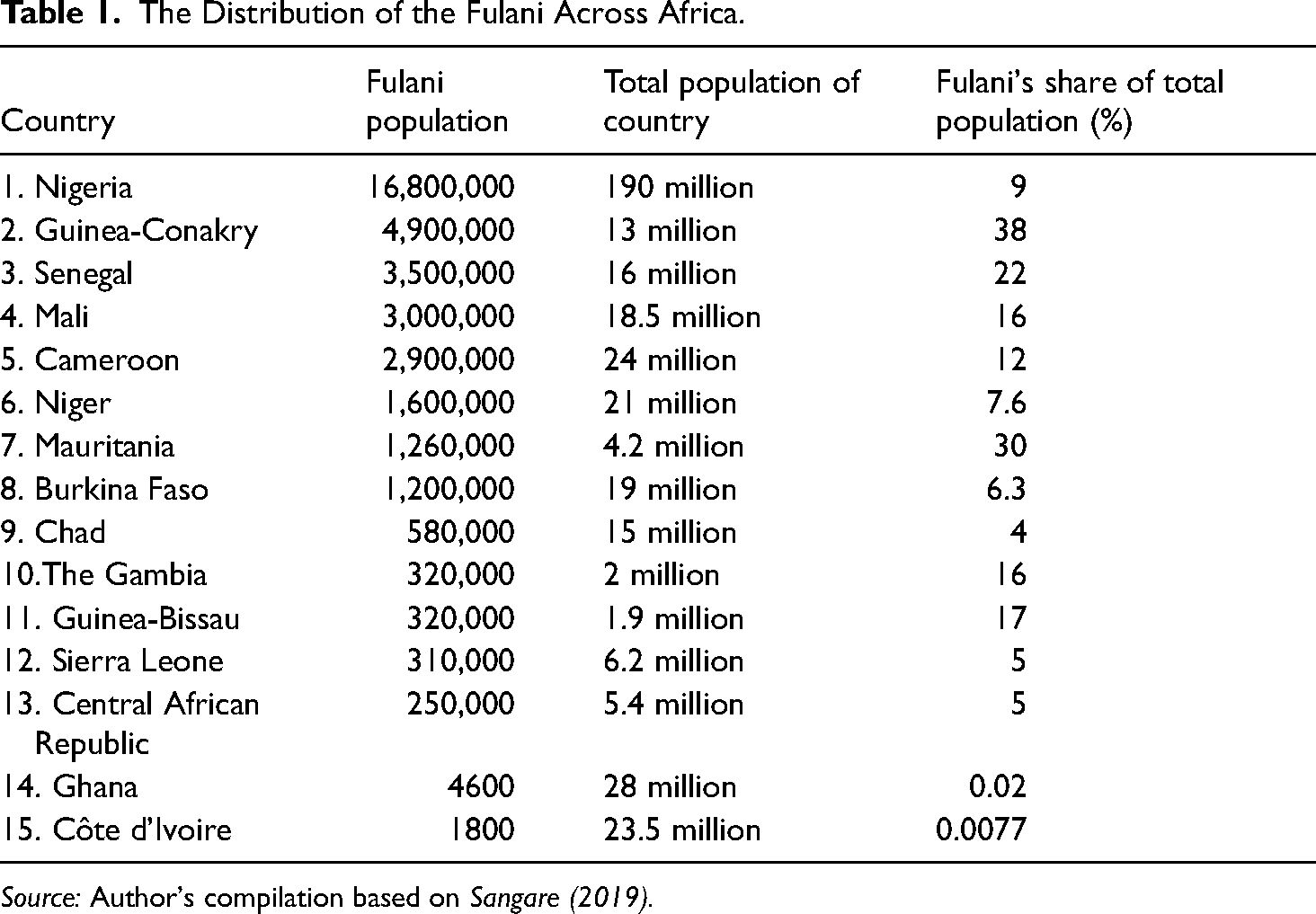
Source: Author's compilation based on Sangare (2019).
Indeed, the Fulani are one of the most vilified ethnic groups spread across various parts of Central and West Africa where they are racialised with a myriad of racist epithets that exclude them (Bukari and Schareika, 2015; Ejiofor, 2022; Moritz and Mbacke, 2022). A further reason for focusing on Nigeria is that it is one of the most culturally diverse polities not only in the African continent but in the world with more than 300 ethnic groups and over 500 languages (Morin, 2013). I utilise the case of the racialisation of the Fulani in this study to explore how cultural racism can occur in non-Western contexts in ways that are simultaneously similar to, and different, from Western narratives of the phenomenon. In the next section, I discuss the Eurocentrism of cultural racism as it pertains to Africa.
The Eurocentrism of Cultural Racism Theory
The concept of cultural racism was coined by the French Afro-Caribbean psychiatrist Frantz Fanon whose thoughts on racism were profoundly shaped by his lived experiences as a black man in Europe. In his magisterial oeuvre titled Toward the African Revolution, Fanon (1964: 32) contends that racism has mutated from biological to cultural racism so that the “object of racism is no longer the individual man but a certain form of existing. At the extreme, such terms as ‘message’ and ‘cultural style’ are resorted to.” What Fanon means by these statements is that racism has mutated from biological to cultural racism – and his formulation shaped by his racial experiences in Europe has equally shaped thinking about cultural racism in ethnic studies in the West. The Eurocentrism of existing conceptualisation of cultural racism can be gleaned, I think, from how many scholars have traced the emergence of the phenomenon in a unidirectional, manner that captures only the Euro-American experience. Blaut (1992) contends that, before the nineteenth century, racism began in white Christian Europe as religious racism where European Christians employed theological arguments to posit themselves as superior to non-Christians within and beyond Europe. In the late nineteenth century, Blaut (1992) argues, religious racism was supplanted by biological – scientific – racism where pseudoscience was employed to advance the idea of the genetic superiority of white Europeans and inferiority of non-whites. And, finally, from the 1950s and 1960s after the Second World War, Blaut (1992) contends that scientific racism declined and was supplanted by cultural racism as the dominant mode of racism whereby white people draw on culturalist arguments to discriminate against non-white people. The rhetorics of cultural racism in Euro-America have been rephrased in myriad ways as “new racism” (Barker, 1981), “postmodern racism” (Flecha, 1999), “differential racism” (Taguieff, 2001), “symbolic racism” (Sears and Henry, 2003), “laissez-faire racism” (Bobo and Smith, 1998), “colour-blind racism” (Bonilla-Silva, 2014), “modern racism” (McConahay, 1986), “aversive racism” (Gaertner et al., 2005), “raceless racism” (Goldberg, 2008), “phenotypical racism” (Amin, 2010), “epidermal racism” (Mbembe, 2024), “new xenologies” (Bhatt, 2012), and “two-step racism” (Modood, 2019). In all its variants, cultural racism is wedded to non-white peoples’ experiences of white racism.
Such evolutionism is hardly unique to Blaut's account of cultural racism. Indeed, from its first construal in Frantz Fanon’s (1964) oeuvre as the sediment of biological racism, cultural racism has been consistently analysed from a Eurocentric standpoint as a form of racism that has replaced the “old” scientific racism with white people using cultural differences to vilify non-white people: this particular interpretation peppers virtually all scholarly works where the phenomenon is explored (Alcoff, 2023; Anthias, 1995; Blum, 2023; Bratt, 2022; Chua, 2017; Grosfoguel, 1999; Rattansi, 2020; Stolcke, 1995). What these cultural racism theorists share in common is that “cultural racism substitutes the cultural category ‘European’ for the racial category ‘white.’ We no longer have a superior race; we have, instead, a superior culture. It is ‘European culture,’ or ‘Western culture,’ ‘the West’” (Blaut, 1992: 290). It is unsurprising that cultural racism is characteristically defined as the “systematic manner in which the white majority has established its primary cultural institutions (e.g. education, mass media and religion) to elevate and glorify European physical characteristics, character and achievement and to denigrate the physical characteristics, character and achievement of non-white people” (Oliver, 2001: 4–5). Additionally, with the immigration of non-white people into post-war Europe, cultural racism theorists hold that the notion of “race” has been substituted with the “category of immigration” (Balibar, 1991: 21, emphasis in original) so that whites vilify non-white immigrants racially and religiously through draconian immigration policies (El-Tayeb, 2008). Thus, in its Eurocentric formulation, culture does the work of phenotype in maintaining the status quo with regard to the oppression of hitherto racialised non-white ethnic minorities in the West (Solomos and Back, 1994: 156). In the next section, I assess cultural racism in a non-Western context such as Nigeria.
The Racialisation of Ethnicity in Nigeria
Nigeria is an ethnically and religiously diverse postcolonial African state that has a population of over 200 million people, approximately 371 ethnicities, and over 500 languages – making it Africa's most populous state (Vanguard, 2017). The major ethnic groups in Nigeria include: (1) the Igbo in the southeast; (2) the Hausa and Fulani in the north; and (3) the Yoruba in the southwest. Agbiboa (2013: 10) underlines that “[t]he northern Hausa-Fulani consist of 30% of the country's total population, the western Yoruba make up 20% of the total, and the eastern Igbo constitute 17%, with the rest being the so-called ‘minorities.’” With regard to religious inclination, the Hausa and Fulani are mostly Muslim; the Igbo are predominantly Christian; and the Yoruba are religiously mixed. Regionally, the southern region is predominantly Christian; the northern region is largely Muslim; and the Middle Belt region is religiously mixed with a significant Christian majority. In the Middle Belt and southern regions where Christianity is prevalent amongst various ethnic groups, cultural racism – including Islamophobia – directed against the Fulani in general and Fulani pastoralists in particular is not uncommon. In Nigeria, ethnicity, religion, and region intertwine. For instance, in an Afrobarometer survey where Nigerians were questioned as to how they would describe themselves besides “being Nigerian” it is unsurprising that a “solid plurality of Nigerians identify in ethnic or regional terms, while nearly two-thirds (64%) choose communal identities of ethnicity, region, or religion” (Lewis, 2007: 5).
One form cultural racism assumes in Nigeria is anti-Fulani racism – the racialisation of Fulani Muslims by non-Muslim ethnoreligious groups in the Middle Belt and southern regions of Nigeria. Although anti-Fulani sentiments in the Sahel have been well-documented in the literature, scholars have not conceptualised these negative sentiments as cultural racism but as a by-product of resource conflicts such as the farmer–herder conflicts (Chiluwa et al., 2022; Ejiofor, 2023). My focus on anti-Fulani cultural racism does not negate the existence of mutual expressions of cultural racism between the Fulani and other ethnoreligious groups. However, I focus on anti-Fulani racism to illustrate how cultural racism works in many African postcolonies that do not share Western racial dynamics. Like most, if not all, ethnic groups, Fulani ethnicity is internally heterogeneous: there are numerous clans and subgroups within the ethnic group (Brackenbury, 1924; Ibrahim, 1966; Reed, 1932). The Fulani are the “largest migratory population in the world” (Agbese, 2012: 31), as well as the largest nomadic group in West Africa and the Sahel, though some have abandoned nomadism to inhabit urban centres (Higazi, 2016: 368). Agbese (2012: 31) posits that even though large numbers of Fulani inhabit Nigeria, Senegal, Mali, and Guinea, they are usually a minority in West Africa and the Sahel. Moreover, like various ethnicities in parts of West Africa – the Haratin, Tuareg, and Toubou – the “Fulani may either be dark or light skinned, and they often have pointed noses, thin lips, and a slender physique” (Agbese, 2012: 31; MacEachern, 2007). Cattle – and, by extension, nomadism – are the most important feature of traditional Fulani culture. Indeed, the “popular image of the Fulani is that they are the cattle keepers of West Africa” (Adebayo, 1991: 2; Oppong, 2010). The Fulani – whether nomadic or sedentary – are predominantly Muslim, and Islam is a significant component of Fulani identity and is considered by members of the group as inseparable from Fulani ethnicity (Agbese, 2012; Ibrahim, 1966; Salamone, 1995: 103) (Figure 1).
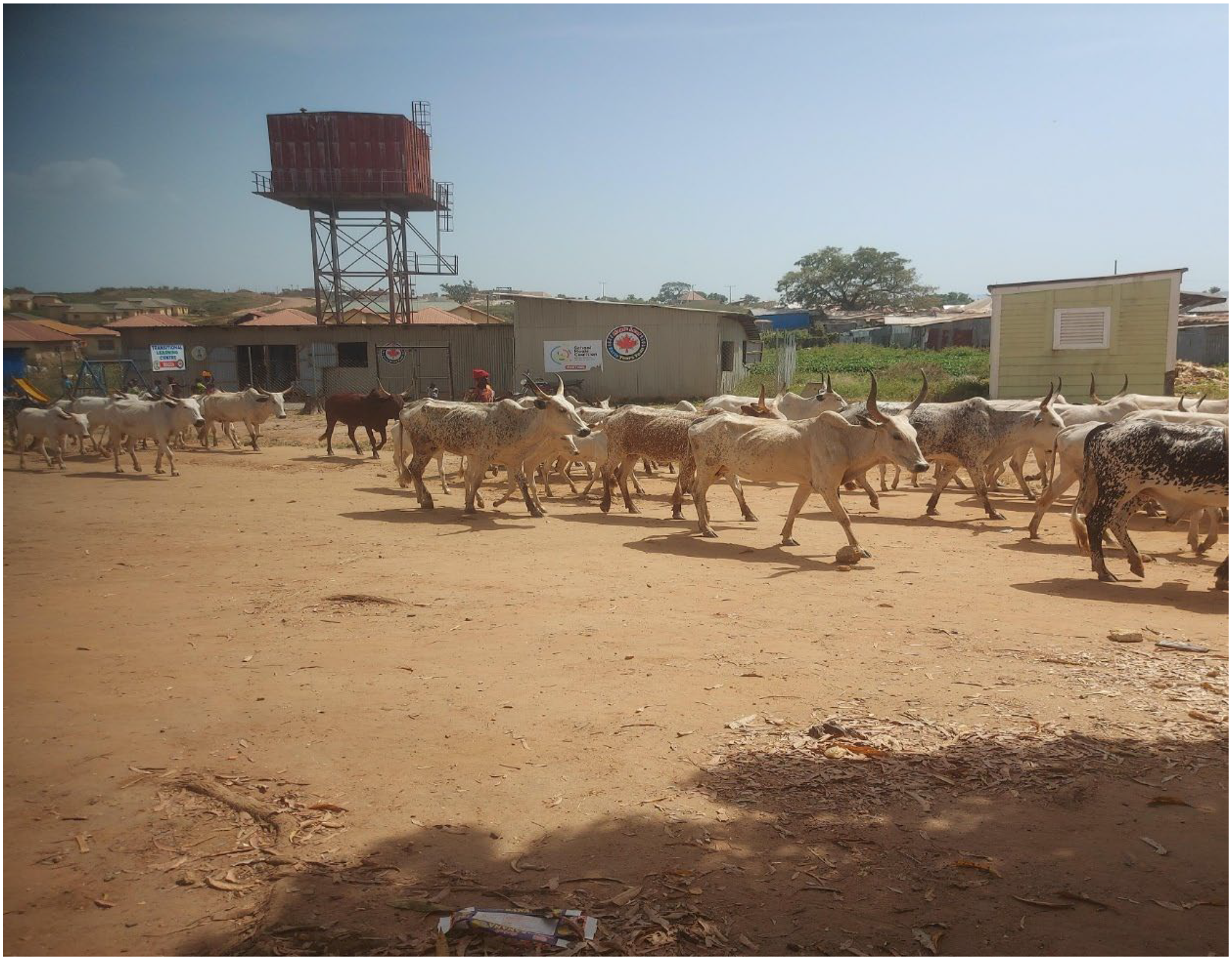
Fulani Pastoralists Herding Cattle in Wassa Settlement, Abuja.
Discourses of cultural racism directed against the ethnic group typically target not so much their relatively distinct phenotypic features but instead the Fulani's traditional culture (nomadism) and religion (Islam) that are simultaneously racialised as existential threats to the survival of the cultures and religions of various indigenous groups in Nigeria. Despite the internal heterogeneity that is constitutive of Fulani ethnicity, racial discourses directed tend to essentialise the Fulani as a single, homogeneous, group with a fixed character. The cultural racism embedded in anti-Fulani sentiments is based on three main negative stereotypes about the Fulani in Nigeria – viz. that the Fulani as a predominantly nomadic and Muslim ethnic group (1) exude a natural inclination for terrorism and savagery, (2) are Islamist fundamentalists with a veiled agenda to Islamise non-Muslim ethnoreligious groups, and (3) are land-grabbers with a penchant for ethnocultural domination through nomadic migrations. These three stereotypes are reflected in the generalised accusation of a “Fulanisation and Islamisation agenda” (Nwankpa, 2021). Whereas “Fulanisation” is a racialised presupposition that the Fulani purportedly nurture an ulterior motive to supplant other ethnicities’ cultures and to impose Fulani cultural institutions on non-Fulanis, the racialised assumption of “Islamisation” portends the Fulani as violent Islamist extremists with a grand plan to wage holy wars – jihads – on non-Muslim territories, to forcibly convert non-Muslims to Islam, and to impose sharia law on non-Muslims. With natural resource conflicts between Fulani nomads and sedentary Christian farmers in the Middle Belt and southern regions, the concatenation of these three negative stereotypes of an imminent “Fulanisation and Islamisation agenda” has depicted the Fulani as “imperialistic, expansionistic, ethnocentric, religious fundamentalists, and cunning” (Pine, 2019). Urban or sedentary Fulani in influential political positions are seen as in cahoots with Fulani pastoralists to “Fulanise” and “Islamise” non-Fulanis and non-Muslims. The sedentary Fulani experience cultural racism through racial discourses accusing them of dominating the political system and using their political power to institute policies that favour both Fulani pastoralists and Muslims. By contrast, Fulani pastoralists are racialised as footsoldiers of the sedentary Fulani. In the paragraphs that follow, I trace the origin of the cultural racism directed against the sedentary and pastoralist Fulani from the precolonial and colonial through to postcolonial eras.
I shall commence my analysis of the cultural racism embedded in anti-Fulani sentiments from the eighteenth and nineteenth centuries when the Sokoto Caliphate was founded in northern Nigeria because it is the period germane to my contention. For this reason, I divide the history of cultural racism into three phases in the political history of Nigeria that correspond to three anti-Fulani narratives. The first phase is the precolonial phase (1804–1884). This phase generated narratives of the Fulani as Islamic jihadists with the agenda of conquering and Islamising non-Muslim groups in Nigeria. The second is the colonial phase (1885–1959). This phase produced narratives of the Fulani as allies of the British imperialists, purportedly employing the political power they wield to Islamise other ethnoreligious and ethnoregional groups. The third is the postcolonial phase (1960–present) that is characterised by narratives of the Fulani as a culturally and politically hegemonic group allegedly utilising their political power to ethnically dominate and Islamise non-Muslim ethnic, religious, and regional groups. These three phases are intertwined with contestations over political power in the Nigerian state (Adogame, 2010: 486). In these political contestations, the Fulani are vilified by various ethnoreligious and ethnoregional groups.
Prior to British colonial rule in Nigeria in the 1880s, the Fulani had already inhabited what is now called “northern Nigeria”: some lived as cattle nomads whilst others who were literate intellectuals assumed significant roles in the capitals of Hausa royals as advisors, tax collectors, and secretaries (Harnischfeger, 2006: 40–41). Perhaps the greatest transformation in the early 1800s was the conquest of Hausaland orchestrated by the Fulani scholar and revolutionary, Usman dan Fodio. Critiquing what he perceived as the corruption, tyranny, and paganism of Hausa aristocrats in Hausaland, Usman dan Fodio waged jihads that birthed the Sokoto Caliphate and ultimate integration of Fulani political elites in alliance with Hausa political elites in northern Nigeria so much so that the Fulani and Hausa were – and still are – considered together as Hausa-Fulani even though they are distinct ethnic groups with different cultures and languages. The Sokoto Caliphate expanded beyond the northern region because “the Sokoto Jihad of 1804–1808 transformed not only the Hausa city-states but also shaped the geopolitics of their neighbours to the south, especially the diverse communities in contemporary central and northeastern Nigeria (modern Nigeria's Middle Belt region) as well as the Yoruba region in the southwest” (Vaughan, 2016: 1). Meanwhile, Christian missionaries penetrated large parts of the Middle Belt and southern regions and converted indigenous groups to Christianity – and this explains why ethnic groups in those regions are predominantly Christian.
Islam was imposed on non-Muslim ethnicities in the territories of the Sokoto Caliphate and most communities that rejected or resisted Islamic governance were either plundered by jihadi troops or sold off as slaves (Harnischfeger, 2006: 43). Being Muslim and of Hausa-Fulani ethnicity entitled one to high positions and social amenities as these identities were considered superior to other ethnic and religious identities in precolonial Middle Belt (Nwabara, 1963: 237; Ochonu, 2008). This was the situation the British colonialists met in the colonial era. To counteract this, ethnic groups such as the Tiv “kept Hausa-Fulani Caliphate agents in check by carefully monitoring their activities on the frontiers of Tivland, by attacking their isolated outposts and trade caravans, by strategically interacting with them, and by building a feared warring infrastructure founded on the infamous Tiv poisoned arrow” (Ochonu, 2008: 101). Because of the harsh living conditions of non-Muslims and non-Fulanis in the Sokoto Caliphate coupled with the inequalities that reigned based on ethnicity and religion, Fulani ethnicity became associated with jihadism and Islamic imperialism so much so that, to this day, communities in the Middle Belt characteristically interpret resource conflicts with Muslim Fulani pastoralists as the continuation of a longstanding struggle against jihad supposedly perpetrated by Fulani jihadists under the guise of pastoralism (Higazi, 2016: 370). The racialisation of the Fulani as jihadists is, as I will demonstrate, shaped in large measure by Middle Belt peoples’ precolonial experiences of being subjugated on ethnic and religious grounds.
Despite its enormous influence on the geopolitics of West Africa, the Sokoto Caliphate did not halt British colonisation of the region. In the colonial phase (1885–1959), the Fulani were disparaged as allies – and (sub)imperialists – of the British Empire. The colonial phase that commenced after the Berlin Conference (1884–1885), where African territories were “scrambled for” by European powers, was characterised by resistance to European colonialism. The emirs and sultans of the Sokoto Caliphate resisted but were ultimately defeated by the British colonialists in 1903. Despite abolishing the Sokoto Caliphate, the British colonialists did not extirpate the religious-cum-political positions and institutions of the Fulani sultans and emirs but instead retained them, entrusting the Fulani aristocracy as favourites to administer colonial northern Nigeria (Harnischfeger, 2006: 43; Reynolds, 2001: 602–605). The fundamental reason for this “marriage of convenience” between the Fulani aristocracy and the British colonialists is that the latter “saw the Fulani as a superior race to the rest of the inhabitants of the Northern Protectorates who were the pagans” (Ugbem et al., 2019: 89). The British colonialists’ veneration of the Fulani elites “was consistent with a British colonial fixation on the administrative utility of so-called martial races and their assumed ability to act on behalf of the British as agents of socio-cultural tutelage and as proxy colonial administrators” (Ochonu, 2008: 102). Additionally, “other groups who did not practice Islam were regarded as barbarous tribes and pagans. The pagan way of life was barbaric in comparison to Islam, which was a civilising religion …. The designation ‘pagan’ inherently had a connotation of cultural inferiority to the Hausa-Fulani dominant identity” (Ugbem et al., 2019: 90). Although Islamophobes, the British colonialists were opportunistic toward Islam in colonial northern Nigeria. Islamic institutions were retained by the British colonialists to the extent that they did not challenge the colonial project (Reynolds, 2001: 602–605). Fulani emirs and sultans made a pact with the British colonialists to be subject to colonial authority whilst simultaneously allowing Islam to be practiced in the colony.
At Lord Lugard's behest, the territories of the Sokoto Caliphate were transformed into the Northern Nigeria Protectorate, whilst territories in the southern region that had been under the administration of the Royal Niger Company became the Southern Nigeria Protectorate. Both protectorates were amalgamated in 1914 to form the Colony and Protectorate of Nigeria. This was primarily for economic reasons: the British colonial administration thought it best to utilise the budget surplus of the Southern Nigeria Protectorate to make up for the budget deficit of the Northern Nigeria Protectorate (Falola and Heaton, 2008). Despite the amalgamation of these two protectorates, they were governed differently, with the Fulani aristocracy collaborating with the British colonialists to levy taxes whilst simultaneously restricting Christian missionary activities in the northern region (Akande, 2020; Barnes, 1995; Reynolds, 2001). In the colonial phase, the Islamophobic narrative of the Fulani as Islamisers became the norm with accusations of “Muslim sub-imperialism” (Akande, 2020: 461). Such perceived “Muslim sub-imperialism” compelled Christians in the northern region to campaign for a new administrative region to be established outside Muslim control called the “Middle Belt.” Thus, the Middle Belt region was founded as a “regional home for northern Christians” (Barnes, 2007: 594). This is why Barnes regards the Middle Belt Movement – a regional group created by the predominantly Christian Middle Belt peoples to represent their interests during the colonial period – as a political and cultural movement that sought a novel administrative region for northern Christians outside Muslim political control (Barnes, 2007: 594). In contemporary Middle Belt region, then, the racialisation of the Fulani draws on the historical experiences of non-Fulani ethnicities and non-Muslims in the colonial period.
In the postcolonial phase (1960–present), the dominant racial narrative is that the Fulani are a culturally and politically hegemonic ethnic group using their political positions to impose their culture (nomadic pastoralism) and religion (Islam) on non-Fulanis and non-Muslims. The discourses of cultural racism directed against the Fulani in the postcolonial period draw on the precolonial and colonial phases. The postcolonial period is characterised by resistance to perceived Fulani cultural and political hegemony. Undoubtedly, “[b]ecause Muslims (of the Hausa-Fulani tribe) were in possession of power at the federal level for a long period, the Christian community nurtured the idea that there was a certain conspiracy by the Muslims to continue to dominate Nigeria and ultimately Islamise the country” (Falola, 1998; Onapajo and Usman, 2015: 110). For example, as I earlier mentioned, Christians from the Middle Belt region formed the Middle Belt Movement to contest the ostensible Muslim hegemony. The consequence was the creation – after Nigerian independence in 1960 – of new states in the Middle Belt – Benue and Plateau states, for example – for predominantly Christian groups outside the northern region and the concomitant invention of “indigeneity” (Fourchard, 2021) as a legal category to exclude “non-indigenes” – the Fulani – who are not considered “indigenous” to the Middle Belt region, a practice that now exists in most parts of Nigeria. Much like the resistance to perceived ethnocultural domination of the state by the Fulani in the Middle Belt region, several ethnoreligious and ethnoregional conflicts in contemporary Nigeria that involve the Fulani have durable connections to precolonial and colonial experiences.
The racialisation of the Fulani must necessarily be understood in the context of the longstanding local ethnoreligious and ethnoregional tensions in the precolonial, colonial, and postcolonial eras and it is typically connected to contestations over economic and political resources. Given the nature of interethnic interactions in different historical phases, various non-Fulani and non-Muslim groups in the Middle Belt and southern regions interpret natural resource conflicts that involve the Fulani – and, in particular, Fulani nomads – as a form of resistance not only to cultural imperialism but also to religious fundamentalism and political-economic domination that the Fulani symbolise. Likewise, in the postcolonial period, claims of “indigeneity” or “indigeneship” (Arowosegbe, 2016) have further stoked anti-Fulani – and Islamophobic – sentiments with the widespread assumption that, as nomadic pastoralists and Muslims, the Fulani ostensibly epitomise ethnic domination and Islamist terrorism. The racialisation of the Fulani as cultural imperialists and Islamists is axiomatic from the assertions of Femi Fani-Kayode – a Nigerian politician of Yoruba descent who was, at different times, Nigeria's Minister of Culture and Tourism and Minister of Aviation – published in a local Nigerian newspaper where he claims that the Fulani are not fully African but a separate race – in his words, “Fulani race” (Daily Post, 2019) – produced from racial miscegenation: “The Fulani are only partially African and only partly negroid. They are the product of cross-breeding between the Tuaregs, Berbers and Arabs of north Africa on the one hand and the local black African women of Futa Jalon, Guinea in west Africa, on the other” (Daily Post, 2019).
Fani-Kayode appeals to the perceived phenotype of the Fulani as evidence of their distinctive race: “If you doubt this assertion I challenge you to look at the texture of their hair, their thin lips, their slim and pointed noses, their tall and slight build and their, more often than not, light complexion and you will know that they are only partially African and only partly negroid”(Daily Post, 2019). Likening the Fulani to the Tutsi ethnic group of the African Great Lakes region – specifically, Rwanda and Burundi – Fani-Kayode claims that the Fulani “overwhelm and conquer very slowly and incrementally and they do so primarily by infiltration, assimilation and guile” so that “[i]t is only when they are fully entrenched and empowered and when they have totally won the confidence of their host community and infiltrated them that the sword is brought out and the most extreme forms of barbarity and violence are employed to achieve their objective” (Daily Post, 2019). Drawing on the history of dan Fodio's Sokoto Jihad, Fani-Kayode claims that the Fulani have – in ethnic and religious terms – subjugated other ethnoreligious groups within Nigeria: “This is a powerful and dangerous mix of religion and ethnicity and it is one that the Fulas have used very effectively in their quest to dominate, conquer, and subjugate the whole of Nigeria and impose their will on the local indigenous tribes and populations that have been there for thousands of years before they came” (Daily Post, 2019). It is on this basis that he concludes that Fulani pastoralists are “symbols of bloodshed, terror, mass murder, ethnic cleansing, genocide, carnage, torment, trauma, and evil. They represent nothing other than cruelty, suffering, land-grabbing, church-burning, homestealing, molesting, and pillaging and they are instruments of occupation, domination, and conquest” (Fani-Kayode, 2019).
Fani-Kayode's perception of the Fulani as “savages” and “instruments of occupation, domination, and conquest” is hardly an individual racism; it is systemic and prevalent in the public imagination (Chiluwa et al., 2022; Ejiofor, 2022). Scholarly articles racialise the Fulani with culturalist arguments, too. Akingbe (2022: 4) claims that “[t]he warlike nomadic ethnic group Fulani is ethnocentric, pursues self-interest and dominance of other ethnic groups in Nigeria, dehumanises, and terrorises its victims.” Convinced that the Fulani are imperial – hegemonic – minorities and “alien elites” who dominate all levers of state and society, the Yoruba nationalist Oluwasanmi (2021) contends that Nigeria is not a democracy particularly because the postcolonial African state practices – in his view – minoritarianism emblematic of supposed Fulani minority rule: “The Fulani dominant minority or elite dominance, as a minority group, has overwhelming political and economic dominance in Nigeria. Because the Fulanis are nomadic migrants from nowhere, they can best be described as alien elites.” He further argues that “[t]he domination is total. The Fulanis control anything controllable in Nigeria. I mean everything you can think of. In the Senate, the House, executive, judiciary, NNPC and other federal agencies and corporations, name it. Yoruba now suffers from an excess of minority rule” (Oluwasanmi, 2021). On the basis of this perceived “minoritarianism” that the Fulani symbolise coupled with vast ethnocultural differences in Nigeria, Oluwasanmi (2021) surmises that “there's no basis for our unity and oneness as a country …. [The] Yorubas, Igbos, and Hausa-Fulanis are not the same people. We have nothing in common. The three major tribes are unique, distinct, and totally different in everything. This is why we cannot get along after 61 years of independence. And we will never get along.” Such appeals to cultural imperialism, on the one hand, and insurmountable cultural differences, on the other, as the fundamental reason for the impossibility of peaceful ethnic coexistence archetypally racialise the Fulani. It is little wonder that the Fulani are racialised as cattle nomads with stranglehold on all parts of postcolonial Nigeria (see Premium Times, 2016).
In extreme cases of perceived Fulani hegemony, there are racialised assertions that the Fulani minority have dominated and supplanted the Hausa – the ethnic majority in northern Nigeria. For instance, Sola Ebiseni – the Secretary General of Afenifere, a Yoruba sociopolitical organisation in Nigeria – avers that the Hausa and Fulani are phenotypically different: “With clear black Negroid physique, Hausa is distinguished from the Semitic Arabic appearance of the Fulani” (Ebiseni, 2018). He proceeds from this assumption of a phenotypic difference between the Hausa and Fulani to underline the apparent political hegemony of the Fulani: “The population of Hausa, according to Google, is about 25 [m]illion in Nigeria, while that of Fulani is put at seven million. Yet all you see in Nigeria[n] leadership is Fulani” (Ebiseni, 2018). Ebiseni further contends that the Fulani surreptitiously strategically exploit the Hausa to dominate various ethnicities in the federation: “In the academia, politics, military, and other top security institutions, even in Islam not to mention the monarchy as the most influential institution in their land, the Hausa merely exist while the Fulani [call] the shots in the name of Hausa-Fulani” (Ebiseni, 2018). Consequently, he asserts that the only way to ensure peace in the Nigerian state is for the Hausa to nurture an ethnic consciousness that subverts the status quo of Fulani hegemony.
Cultural racism directed at the Fulani, as I say, is not only in the sphere of perceived political domination. Anti-Fulani narratives are almost invariably carried on to the economic sphere – the sphere of natural resource conflicts between Fulani pastoralists and Christian farmers of various ethnicities in the Middle Belt and southern regions. For many Nigerians, land is not just an economic resource but a cultural good that mirrors the identity of an ethnic group (Ejiofor, 2022: 346). As a consequence, indigenous groups in almost all parts of Nigeria have implemented indigenisation policies to prevent “non-indigenes” from accessing lands. In the Nigerian context, the “indigenes” of a place are “those who can trace their ethnic and genealogical roots back to the community of people who originally settled there. Everyone else, no matter how long they or their families have lived in the place they call home, is and always will be a non-indigene” (Fourchard, 2015; HRW, 2006). Racist indigenisation policies have nurtured prejudicial narratives that portend Fulani nomads as “settlers” and “non-indigenes” whose nomadic migrations are existentially threatening to the lands – and, by extension, cultural institutions – of indigenous ethnic groups in the Middle Belt and southern regions. Additionally, as complex factors including political corruption, weak governance, agrarian capitalism, environmental degradation, and desertification have jointly exacerbated competition for lands between pastoralists and farmers (ICG, 2018), Fulani pastoralists are racialised narratively and visually as land-grabbers, terrorists, and jihadists whose intentions are not so much to find pastures for grazing animals but to usurp the lands of – and eventually impose Islam on – non-Fulani and non-Muslim indigenous groups in the Middle Belt and southern regions and throughout Nigeria.
The role of economic factors in the racialisation of Fulani nomads is axiomatic from indigenous groups’ rejection of the Nigerian state's proposed policies for the sedentarisation of pastoralists to curb farmer–pastoralist conflicts through the establishment of grazing reserves for Fulani nomads in the Middle Belt and southern regions since the 1960s (Obi and Iwuoha, 2023: 1408). For instance, the National Grazing Routes and Reserve (Establishment) Bill in 2015 that attempted to create grazing reserves for Fulani pastoralists throughout Nigeria was fiercely rejected by indigenous groups in the Middle Belt and southern regions because of public suspicions that the Fulani are jihadists, terrorists, and invaders. In rejecting the Bill, one respondent from the southern region underscored that “[t]he impression the rest of us have about allowing these Fulanis to carry guns, points to the fact that there is a clandestine plot to eliminate particular tribes in Nigeria. I think this is another glaring case of Boko Haram infiltrating the Southern States and unleashing mayhem on innocent citizens. Secondly, this is also a ploy to Islamise the country” (Ebiri, 2018; Ejeh, 2019; Odumakin, 2019; Vanguard, 2016). Fulani pastoralists are described as terrorists and jihadists whose “veiled aim is to carry on the unfinished task of the jihadists of 1804–1830” (Adesua, 2018).
Condemning the farmer–herder conflicts whose recurrence in Nigeria some natural scientists blame – alas, with pseudoscientific evidence – on the supposed “aggressive culture and personality of Fulani nomads” (Lott and Hart, 2009), the Catholic Bishops of Kaduna State that “[t]he Fulani want to subjugate Christians, disintegrate the country, weaken the gospel and destroy the social and economic life of the people. There is a hidden agenda targeted at the Christian majority of southern Kaduna. This jihad is well-funded, well-planned, and executed by agents of destabilisation” (Lowry, 2018). These racist discourses directed at the Fulani are not espoused only by local actors. Indeed, even international actors such as the creators of the Global Terrorism Index 2019 have racialised the Fulani as terrorists and extremists. Open Doors – an American Christian organisation – holds the following view about the Fulani: “According to the expansionist principle of Dar al-Islam (house of Islam), everything belongs to Allah directly and to his followers indirectly, including the land where the Fulani want to let their cattle graze. They believe it is right for them to take those resources by force from infidels and apostates” (Lowry, 2018). This lopsided religious hermeneutic of the farmer–herder conflicts that racialise the Fulani as jihadists is equally clearly axiomatic from the assertions of foreign writers (see Cooper and Moore, 2020).
Apart from Yoruba ultranationalists in the southwest region, some Igbo nationalists racialise the Fulani with cultural arguments, too. This is particularly the case of the Indigenous IPOB – a Biafran separatist group campaigning to “restore” the short-lived secessionist Biafran state in the southeast region, the Igbo homeland – whose rhetorics constantly racialise the Fulani. Indeed, IPOB separatists perceive their secessionist struggle for the “restoration” of the Biafran state as resistance against a “Fulanisation and Islamisation” agenda purportedly orchestrated by both Fulani political elites and pastoralists. Nnamdi Kanu – IPOB's founder and leader – “attacks what he perceives as Fulani (Muslim) domination of Nigeria. He often conflates former generals, oil rig owners, political bosses, and nomadic herders all as the same Fulani” (Mayer, 2021). In IPOB separatists’ rhetoric, Fulani pastoralists are depicted as murderers enabled by a political regime dominated by Fulani politicians (Biafra Times, 2016).
After the federal government proposed Rural Grazing Area policy in 2019 to sedentarise pastoralists, IPOB separatists insisted that they would not accept the federal government's proposal because of suspicions that the administration led by a Muslim Fulani president – Muhammadu Buhari – nurtures a clandestine agenda to Islamise Igbos most of whom are Christian. As IPOB put it: “We are not in support of this their evil agenda, are totally against Islamisation of Igboland. We are Biafrans, we are not Fulanis …. No matter what they call this their evil plan, we reject every Islamic agenda” (Aliuna, 2019). In IPOB's news broadcasts, the Fulani are excoriated as jihadists disguised as Igbo Christians waiting to unleash terror on indigenous peoples in the southeast region (Nnachi, 2022). For IPOB separatists, the Fulani are “fifth columns” (Mylonas and Radnitz, 2022) to be eliminated in order to resuscitate the Biafran state. This is precisely why, in early 2022, IPOB banned nomadism and beef consumption in Igboland as a means of preserving Igbo culture from destruction that the Fulani purportedly symbolise (Opejobi 2022). It is equally on this basis that IPOB separatist established a community policing paramilitary organisation known as the Eastern Security Network in December 2020 to flush out purported “criminal” and “terrorist” Fulani pastoralists who ply their trade in the southeast region (Opejobi, 2020). The main presupposition upon which IPOB's anti-Fulani racism is based is that the Fulani are the problem to be removed from Nigeria in order to ensure the restoration of the Biafran state for Igbo emancipation. Take, for instance, the assertions of Chinazu (2021) – an IPOB separatist writer – who posited the Fulani as a “race of conquest” so that Nigeria without the Fulani is equivalent to “a Nigeria devoid of terrorism, extra-judicial killings, trampling on the laws, massive looting and above all, a Nigeria where intelligent people will be at the helm of affairs and laws respected.”
After convening a meeting on 11 May 2021 regarding the supposed “Fulani-cum-Muslim threat” to the southern region, governors of seventeen states in southern Nigeria interdicted nomadism and open grazing in the southern region with what is now dubbed the “Asaba Declaration” (Daily Trust, 2021). This ban was supported by several southern Nigerians for whom the Fulani symbolise Islamist fundamentalism and Muslim expansionism (Nnanna, 2021). Cultural racism directed against the Fulani has engendered community policing which, in turn, further racialise the Fulani. Indeed, “Southerners have reacted to perceived Islamisation and ‘Fulanisation’ by forming regional vigilante outfits such as Operation Amotekun, which is supported by governors in the Yoruba-majority southwest, and IPOB's Eastern Security Network in the southeast” (Nwankpa, 2021). The anti-Fulani derision that tends to portray Fulani pastoralists as murderers who back a political regime supposedly governed by Fulani political elites has produced what Appadurai calls predatory identities – that is, “identities that claim to require the extinction of another collectivity for their own survival” (Appadurai, 2006: 51) – amongst various ethnoreligious and ethnoregional groups that seem united on the basis of hostility toward the Fulani. Anti-Fulani racism is just one form of cultural racism amongst many others in contemporary Nigeria. Such cultural racism – like any form of racism – dehumanises the Fulani. These racial discourses and the community policing they produce have not only fanned hostilities against the Fulani throughout Nigeria but also threatened their culture (Chiedozie, 2021; Ejiofor, 2022; Erunke, 2021; Ibrahim, 2023; Kperogi, 2021; Nwankpa, 2021). Although these anti-Fulani ethnic profiling constitutes cultural racism in the strictest sense, they cannot be reduced to historical transitions from biological to cultural racism as is the case in the West. In the next section, I shall underscore what the case of the racialisation of the Fulani in Nigeria contributes to the broader literature on cultural racism in ethnic studies.
Rethinking Cultural Racism in Global Perspective
In the previous section, I highlighted how the Fulani are racialised as land-grabbers, jihadists, and terrorists with a “partially” African physical appearance whose principal aim is to ethnically and religiously dominate other ethnoreligious and ethnoregional groups in Nigeria. What does this case contribute to the broader literature on racism in ethnic studies? I should like to underscore two main contributions. First, cultural racism directed against the Fulani has its unique local history that cannot be explained away with Euro-American evolutionism that posits a linear/unidirectional transition from religious and biological to cultural racism. When the Fulani are racialised, there is hardly any appeal to Western history; rather, appeals are made to local histories of contestations amongst diverse ethnic, regional, and religious groups. This means that expressions of cultural racism in Africa are complex, diverse, and context-dependent. To eschew Eurocentrism, cultural racism in Africa must be comprehended on its own terms. Second, cultural racism is not invariably about the racialisation of non-white people by white people. The Fulani are not non-white people who are discriminated against by white racists. There is no lockstep connection between whiteness or non-whiteness and cultural racism not least because cultural racism is an omnipresent issue that rears its ugly head in almost all postcolonial multi-ethnic, multi-cultural, and multi-religious contexts where Euro-American racial dynamics are absent. These two abovementioned contributions mean, I think, that we ought to reformulate the concept of cultural racism in a manner that strips it of its Eurocentric bias. We can accept some assumptions of cultural racism as articulated by scholars based in Euro-American academia without taking those assumptions as the normative starting point for analysis of cultural racism in Africa. To accomplish this, I comprehend cultural racism as a form of discrimination that targets the real or imputed cultures of ethnic collectives. Cultural racism manifests whenever persons of a certain ethnic descent are racialised with rhetorics of cultural difference that portend the culture of the targeted group as an existential threat to “our way of life.” The aspects of culture that can be targeted include material and immaterial elements. In the case I have explored, persons of Fulani descent are racialised with appeals to the supposed atavism of their nomadic culture and Islamic religion that propels their “natural” aggression or propensity toward ethnoreligious domination. Conceptualising cultural racism by provincialising white supremacy opens up the concept to global perspectives beyond Eurocentric assumptions.
Beyond the manifestation of cultural racism in anti-Fulani racism, there are other examples of cultural racism in parts of Africa and the non-Western world. In the Sudan, for example, Sudanese Arabs who are of Muslim background racialise the black or “African” Sudanese of Christian background as slaves who are culturally inferior to Arabs and “Arab culture is posited as immutable and as the core culture into which members of other ethnic groups are expected to assimilate” (Madibbo, 2012: 307; Prunier, 2005). This racialisation rooted in the belief in the cultural superiority of Sudanese Arab Muslims as well as the monocultural ideology of ta’rib (Arabisation) is often resisted by black Sudanese who “appear to look upon Northern riverine Arab elites as outsiders, enemies, colonisers, and usurpers—certainly not as compatriots” (Sharkey, 2008: 42). In the same vein, in pre-genocide Rwanda, Hutu ethnonationalists regarded themselves as ethnically and culturally superior to the Tutsi, racialised the Tutsi as invaders and cockroaches, and redefined Rwanda in ethnic terms as a Hutu nation (Mamdani, 2001). In Ethiopia, the Amhara are racialised as settlers and non-natives who should not be granted rights and privileges in the federal polity, engendering Amhara nationalism to ensure the survival of Amhara culture and identity (Demerew, 2024). Accordingly, in Rwanda, Ethiopia, and Sudan, as in many parts of the non-Western world where white and non-white features are not the grounds of racial discrimination, cultural racism directed against certain ethnic groups nurtures violent conflicts.
The danger of analysing cultural racism from the Eurocentric lens is threefold. In the first place, it leads to denial of the occurrence of racism in non-Western contexts and concomitant refusals to encourage discussions and policies to address a conundrum that is apparent in everyday life in the postcolony. The underlying conjecture that orientates this misperception of racial discrimination in the postcolony is that Africans experience racism or become race conscious only when they sojourn outside the continent to live in white-majority Western societies and ostensibly do not encounter racial tensions inside the continent (see Ochonu, 2019: 5). The consequence is that much of Africa is posited as a non-racial continent where ethnic discrimination amongst Africans based on cultural or religious differences is comprehended as tribalism in contrast to racism. Arguably, this denial of racism in the postcolony is intrinsically limiting and ignores the fact that racism in Africa can manifest in cultural terms with or without phenotype. It seems that employing the cultural racism paradigm to think through racialisation and racism in the postcolony is an antidote to prevailing tendencies to dismiss Africa as a non-racial continent and to reduce racism to racialisation of black people from a white gaze.
Secondly, a related danger – and this follows from my first caveat about the denial of racism in the postcolony – is to contrast tribalism from racism and to ascribe tribalism to African societies and racism to Western societies or societies with dynamics similar to Western societies. In this peculiar account, tribalism best explains discrimination in much of Africa not least because it is rooted in ethnic, tribal, or cultural distinctions whilst racism pertains to ethnic discrimination based on phenotype. Central to the tribalism model of ethnic discrimination in Africa is the argument that “[r]acism is a system of stratification based on physical characteristics, which are assumed to explain differences of civilisations, cultures, moral inclinations and intellectual abilities of the different races of man” whilst “tribalism as we know it in Africa is essentially an ethno-cultural phenomenon. It is scarcely, if anywhere, based simply on the difference in physical characteristics of groups” (Essien-Udom, 1975: 251; Mbembe, 2024: 118–119).
Although tribalism as a concept is useful to explain discrimination in Africa, it tends to foreclose our imagination from seeing discriminatory discourses or practices in the postcolony as racism. The contrast between racism and tribalism is misguided because it fails to comprehend how racism could rear its ugly head through the racialisation of a people's culture with or without pigmentation as a central theme and why a persistent refusal to acknowledge the paroxysms of racism in the continent bars us from combatting it. If we comprehend racism in its cultural form as cultural racism devoid of over-emphasis on the afterlives of white supremacy – and this is what I have proposed here – then what Africanists call tribalism is really no different from racism: it is cultural racism given the centrality of ethnic differences in discrimination. Rather than contrast tribalism with racism, I argue that cultural racism is the most appropriate concept that reconciles the porous distinctions between both phenomena.
Third, there is the danger of discussing discrimination in Africa from the purview of autochthony, ethnic conflict, xenophobia, or genocide which, although not necessarily misguided, undermines the real threat of racism – especially cultural racism – in the non-Western world including Africa. Take, for instance, in his exploration of ethnic discrimination in Africa with particular emphasis on Cameroon and South Africa, Nyamnjoh (2010) resorts to meticulous analysis of xenophobia as the dominant paradigm of discrimination in Africa that owes its origins to exclusionary claims of indigeneity and autochthony since the colonial period. He contends that “Africa offers fascinating examples of how the terms indigenous and native were employed in the service of colonising forces, of how colonially created or deformed ethnicities have had recourse to indigeneity in their struggles against colonialism, and of how groups vying for resources and power among themselves have deployed competing claims to indigeneity in relation to one another” (Nyamnjoh, 2010: 59, emphasis in original).
Whilst there is merit to thinking about discrimination and exclusion in terms of bounded notions of ethnicity and culture tied to territory, the cultural racism paradigm provides an apposite lens to meditate on the various ways cultural markers are used to discriminate against, and exclude, persons and groups in the postcolony. The focus on autochthony in issues of discrimination runs the risk of depicting Africa as a continent saturated with primordial territorial attachments with little or no attempt to rethink how racism premised on cultural differences occurs even in the absence of territorial contestations.
Conclusion
I have problematised the concept of cultural racism in ethnic studies that is hardly examined in Africa beyond postapartheid South Africa. I highlighted that the extant/predominant interpretation of cultural racism as white peoples’ deployment of cultural differences rather than the hitherto biological assumptions to racialise non-white ethnic minorities is Eurocentric and does not capture the lived experiences of cultural racism in African postcolonies. To overcome the limitations of existing conceptualisations of cultural racism, I explored the Nigerian context where the Fulani – both sedentary and pastoralist – are racialised as outsiders, savages, land-grabbers, and jihadists who harbour an ulterior motive to “Fulanise” and “Islamise” various ethnoreligious and ethnoregional groups in the federation. In the racialisation of the Fulani, it is generally the culture (nomadic pastoralism) and religion (Islam) of the Fulani that are objects of racist abuses. This has engendered an atmosphere of suspicion that threatens the culture and wellbeing of persons of Fulani descent in Nigeria. Cultural racism directed at the Fulani do not draw on Western historical evolutionism that posits a linear transition from religious and scientific racism to cultural racism; rather, it has its unique local history that began with the Sokoto Jihad orchestrated by the Fulani revolutionary Usman dan Fodio. Indeed, the racialisation of the Fulani is embedded in the local assumption that establishing grazing reserves for Fulani nomads to rear cattle throughout Nigeria is a veiled attempt by Fulani politicians to extend the dominance of the Fulani throughout the federation.
Furthermore, I retheorised cultural racism as a form of racism that employs cultural markers to vilify persons of certain ethnic descent – in many cases, these are minorities – who are constructed as threats to cultural life in specific socio-historical contexts. I argued that cultural racism is a better concept to understand ethnic discrimination in Africa beyond the tribalism model. If anything, Africa is not a non-racial continent but rather a space where cultural racism manifests in multi-farious forms and should not be dismissed as mere expressions of primordial tribal sentiments or territorial attachments. My analysis of cultural racism in Nigeria is limited by the fact that I relied on historical and textual sources to examine anti-Fulani racism and did not draw on ethnographic fieldwork which could further strengthen the findings. This limitation, however, does not vitiate my contribution to our understanding of cultural racism as it pertains to Africa. Future research on cultural racism – including, as I have examined in this research article, anti-Fulani cultural racism – could take up the task of exploring ethnographically the manifestations of cultural racism in other African contexts. This research is, therefore, not only a first step in rethinking racism in Africa but also an invitation to Africanist scholars of ethnic studies to rethink racism in Africa through the paradigm of cultural racism beyond the conventional prisms of tribalism, autochthony, genocide and xenophobia that seem resistant to innovative archaeologies of knowledge.
Footnotes
Acknowledgements
The draft of this article was presented in the Anti-Politics in the Western World panel at the 74th Political Studies Association Annual International Conference on the theme “After (Neo-)Liberalism: Towards an Alternative Paradigm?” which took place on 25–27 March 2024 at the University of Strathclyde, Glasgow, United Kingdom. I am grateful to the Institute for Humane Studies at George Mason University for awarding me the Humane Studies Fellowship (IHS017602) which enabled me to prepare this article, to the Political Studies Association for awarding me the PSA Support Fund and to the Gates Cambridge Trust for the academic development grant that enabled me to attend the conference in Glasgow. I am equally grateful to the conference participants whose feedback and suggestions on my presentation improved the article. Finally, I am profoundly grateful to Professor Graham Denyer Willis at the University of Cambridge for his mentorship and support.
Declaration of Conflicting Interests
The author declared no potential conflicts of interest with respect to the research, authorship, and/or publication of this article.
Funding
The author disclosed receipt of the following financial support for the research, authorship, and/or publication of this article: This work is supported by the Institute for Humane Studies at George Mason University (Grant No. IHS017602) and the Bill and Melinda Gates Foundation (Grant No. OPP1144).
