




Abstract
For decades, as evidenced in programming and research, the humanitarian community has recognised gender equality and equity as integral to effective programming and response. Drawing upon ninety-nine publications indexed on the Web of Science and Google Scholar, this paper explores available evidence on gender and crisis settings in Africa to synthesise and critically analyse what is being learned. We found that limited research and programming have explicitly aimed to have gender transformative impacts, and those that do fail to adequately declare or reflect on the biases and intricacies of aiming to transform social norms in complex sociocultural contexts. Additionally, this review examines the trend of the body of research, highlighting the affiliation of authors and the geographical areas of focus. Evidence shows that research in this area is dominated by scholars affiliated with institutions in the Global North, raising questions relating to knowledge production and epistemic injustice in Africa.
Introduction
Tens of billions of dollars are spent annually on humanitarian assistance, aimed to support hundreds of millions impacted by humanitarian crises (DI, 2020). Due to the nature of the humanitarian crises, requiring immediate response, activities are often not informed by significant gendered analyses. However, interventions are increasingly moving from being gender blind to being gender sensitive or responsive within humanitarian contexts. Limited research and programming in humanitarian contexts have explicitly aimed to have gender transformative impacts that are identifying and addressing the root causes of gender-based inequalities and injustices by working to transform harmful societal gender roles and norms. Even so, those who adopt gender transformative mechanisms do not adequately declare or reflect on the biases and complexities of aiming to transform social norms often rooted in sociocultural systems. The realities of North-South power imbalances – where donors and other actors from the Global North determine the terms of transformation – often elude humanitarian programming and research. One reason why this has taken place is the assumption that humanitarian response is short, or is hampered by short-term funding cycles, and therefore does not have the required time to engage in gendered norms, roles, expectations, and global power dynamics. However, many crises have resulted in protracted settings.
This paper explores the available evidence on gender and humanitarian settings in Africa to synthesise and critically analyse what is being learned. The objective of bringing this literature together is to make it more accessible, which is why we have intentionally published it in an open-access journal, as well as to advance the research by identifying potential areas for future directions. We do this not only in the specific findings, but also in the aggregate. Furthermore, we analyse the overall trends of the body of research. We examine the sectors that are most researched, finding gender-based violence and health as accounting for more than half of the available literature. Analysing author affiliation, we find that this research is dominated by voices from the Global North, which we critically analyse with respect to whose voice counts as well as the politics of knowledge production. Additionally, we explore the methods utilised and the geographies of study, identifying countries that are made visible and others that are invisible via the body of research. Following that contextualisation of the literature, we present a synthesis and critical analysis of the literature by sector before concluding.
Methodology
The initial motivation for this research significantly influenced the thematic focus and methodology we employed. The idea for this study was borne out of a collaborative project by Carleton University and Save the Children Canada which seeks to investigate the inclusion of gender transformative action in intervention programming in humanitarian emergencies. It may be worthwhile to declare the positionalities and affiliations of the authors at this point. The first author has a Nigerian background and is a postgraduate student at a Canadian university. The second author has a Canadian background and is teaching at universities in Ethiopia and Qatar. Each author has studied, lived in, and worked across diverse themes and geographical locations in Africa for over a decade. Both authors identify as male. This declaration is particularly important as we problematise the issue of knowledge production in Africa later in this paper.
The focus of that partnership is on the response occurring in Northeast Nigeria, and as a result, we sought literature that illuminates how the notion of gender has been understood and applied by scholars and experts working in humanitarian contexts in Nigeria. Our search revealed that there is a paucity of data on the above topic in the country, and in fact, in West Africa. Thereafter, we extended our research to include works done on the intersection between gender and humanitarian contexts inclusive of the whole continent. In what follows, we discuss the search strategy and criteria, the organisation of the dataset, how the data was analysed, as well as the limitations of this study.
For the purpose of this study, we carried out a systematic review of literature retrieved from two search engines, the Web of Science and Google Scholar. To gather peer-reviewed publications on our subject of interest, we began our search on the Web of Science. This platform selectively indexes peer-reviewed publications, which it suggests are the most rigorous. Using a combination of the keywords “gender,” “humanitarian,” and “Africa,” and without any adjustment to the timespan on the platform (1900–2020), we retrieved eighty-seven publications (valid as of 12 December 2020), which made up the first dataset. However, not all of the resulting publications were on the sought-after topic area, so a process was developed to identify false positives. The research team agreed that for a paper to be included in the review set, it had to meet certain inclusion criteria. First, a paper had to address gender as a primary theme or subtheme; secondly, the paper had to focus on humanitarian or crisis settings or situations; and thirdly, the paper had to be set in an African country or be focused on African people in another continent affected by disasters (assuming that it met other criteria). Papers that did not clearly meet all three of the above-stated criteria were excluded. After a qualitative review of the abstracts of the eighty-seven publications from Web of Science, sixteen publications turned out to be false positives and thus were excluded as they did not meet the eligibility criteria. We, therefore, proceeded with seventy-one publications cutting across various countries and different humanitarian sectors (as constituting the first dataset).
The Web of Science excludes a significant amount of literature, such as reports, theses, and non-indexed journals. Available evidence suggests that scholars based in the Global South are under-represented in journals indexed in platforms owned and hosted in the Global North, including Web of Science (e.g. Cochrane and Nigussie, 2018; Medie and Kang, 2018). To address these biases and exclusions, we expanded the search by conducting a parallel search of the same search terms using Google Scholar. One challenge with Google Scholar, related to its more inclusive search, is the extensive results. For these search terms, over 197,000 publications appeared from the search. Since these could not all be reviewed, we analysed the results of the first fifteen pages (150 publications presented in order of relevance), from which a second dataset was created of unique results (those that met the criteria and did not appear in the Web of Science results). While books were excluded, peer-reviewed publications, policy documents, and theses/dissertations were included in the publications that we considered. Following a qualitative review of abstracts and/or summaries, twenty-eight articles – twenty-four peer-reviewed journal publications and four other materials categorised as grey literature – were selected to be included in the systematic review from the Google Scholar search, resulting in a combined dataset of ninety-nine publications (see Figure 1). We found eleven literature reviews in our search, which we included because we believe that these analyses can strengthen the understanding of gender in crisis settings across Africa – our main objective in this study. Several materials appeared in both repositories. Given that we collected publications from Web of Science first, we made sure not to duplicate them from Google Scholar. Most articles in both platforms were accessible to us due to our affiliated University's subscription. Whether found via searching WS or GS, many researchers based in the Global South often do not have access to paid journals. This is due to a number of reasons including being affiliated with institutions that cannot afford (or are unwilling) to subscribe to some expensive journals/publishers, paucity of research funding, and low income, among other barriers.
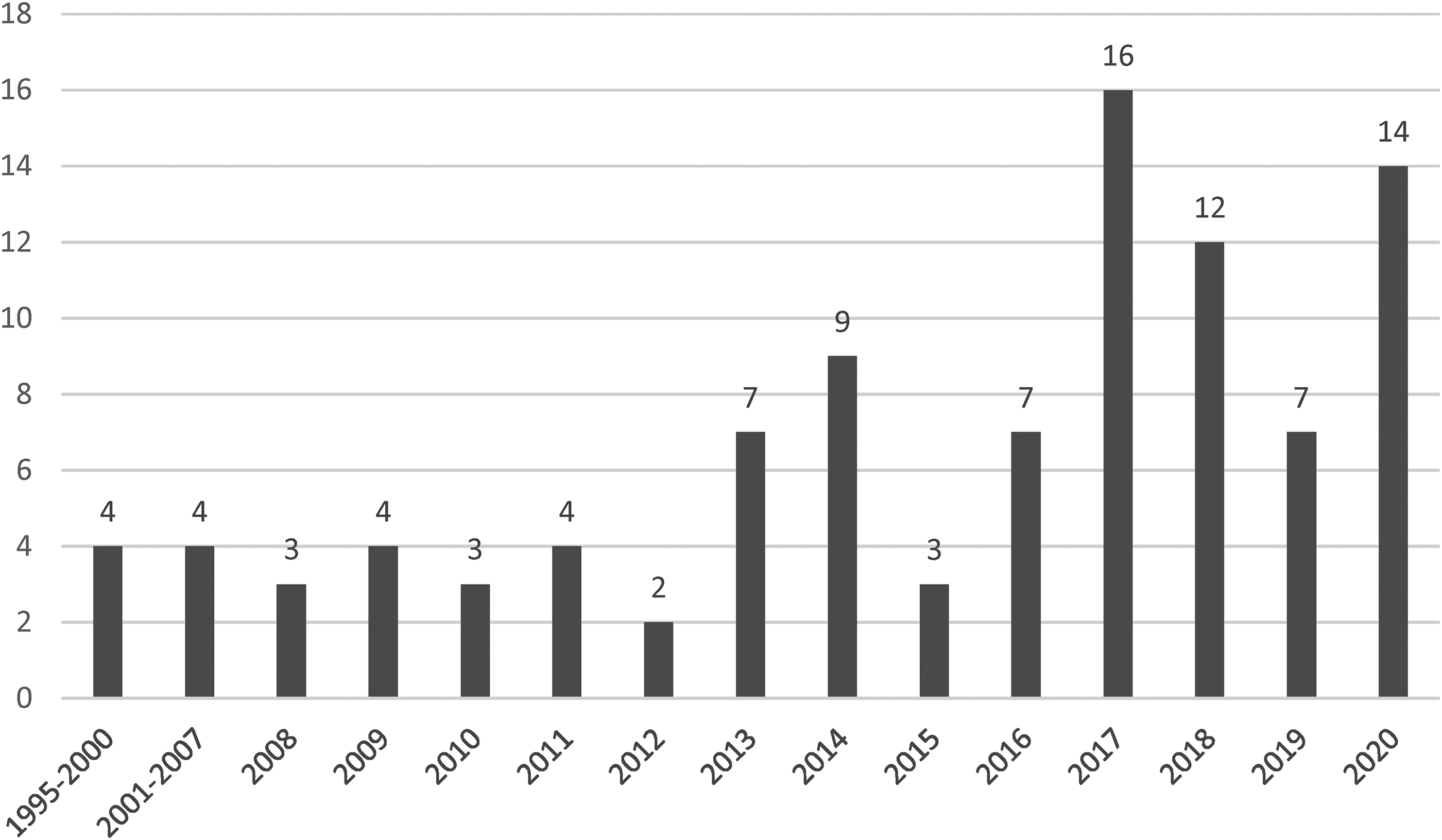
The number of publications on “gender” + “humanitarian” in Africa, by year.
In order to conduct a quantitative analysis of the publications, we created an excel sheet where we systematically organised the details of the articles, outlining the title of the papers, author(s), year of publication, source title, country of study, author(s) affiliation, sector of focus, and methods. This information enabled us to understand who is writing about what, which institutions or organisations are involved, when these studies were conducted, the various contexts in that gender is being discussed or theorised, and the methods of inquiry and analysis being employed in these studies. We then proceeded to conduct a qualitative analysis of the dataset, by reading all the articles to ascertain their focus, argument, and conclusion. In a separate document, we categorised the articles, inspired by UN OCHA's list of humanitarian response sectors, but meaningfully adapted to suit our broad scope of crisis situations (these categories were used to guide the thematic categorisation, however, given that these are implementation classifications we used them as a guide for this research, as UN OCHA sectors are a key reference for the sector). With the articles organised and their findings summarised and thematically categorised, we conducted a critical analysis of the data, reflecting on trends, emerging evidence, and findings, what is being studied, where, and what is being left out.
We should recognise, at this juncture, that even though we set out to collate and synthesise some of the literature on gender and humanitarian settings in Africa, as shown in the topic of this paper, not all publications that appeared in our search involved cases where humanitarian aid agencies were present. We retrieved studies on disasters including droughts (Ndenyele and Badurdeen, 2012; Quandt, 2019), health crises (Davies and Bennett, 2016; Peacock et al., 2008), post-conflict situations and displacements (Ajayi, 2020; Borer, 2009; Stark et al., 2010), and war and armed conflict (Jacobson, 1999; Miller and Moskos, 1995; Sideris, 2003). Some of the papers involve crisis situations with no clearly identified intervention or external humanitarian actor (Hollander, 2014; Touré et al., 2020). Our dataset also includes theoretical engagements by scholars on the concepts of gender and humanitarian aid with regards to Africa. Our aim was to be more inclusive of literature than exclusive. Given that all our search results did not primarily focus on humanitarian response, we decided to accommodate varieties of crisis settings to allow more literature that deals with gender and humanitarian/crisis situations to be analysed. Hence, we use humanitarian situation in this paper to mean an event or circumstance that presents a critical risk to the health, wellbeing, security, or survival of a community or large group, regardless of whether humanitarian agencies are present or not (Humanitarian Coalition, 2021).
This review is not bereft of limitations. For one, we searched and retrieved only articles written in English. This presents a serious limitation, considering for example that twenty-one countries in Africa have French as their official language. We believe that incorporating other languages may have added to the richness of our data. Indeed, we view this as an important area of study, which would allow for insightful comparative analyses. However, a good number of the research papers we reviewed were focused on non-English-speaking countries, indicating the ubiquity of English among the humanitarian and academic communities, even in regions that do not have English as their official language (Lillis and Curry, 2010). Secondly, our use of Google Scholar was limited as we relied on the algorithm of the platform and only reviewed articles that were categorised as the most relevant, up to the first fifteen pages. The implication of this is that some important publications may have been excluded based on these opaque algorithms. Thirdly, had we broadened the keywords used, we could have identified additional relevant results. We did explore related terms such as crisis and emergency, but these terms proved to be much broader and have multiple meanings. “Humanitarian,” on the other hand, is narrower, and while this poses a limitation, which we recognise, the alternatives pose even more challenges, hence the choice. Fourthly, our loose adaptation of the UN OCHA categories also presents some limitations, as some research cuts across issues and categories. For the purposes of this categorisation, we relied on the primary focus area of the paper. For instance, a paper focusing on gender politics in UNHCR operations in Africa was grouped under “other considerations” as it significantly touches on the issue of relief distribution in refugee camps, even though it also briefly reflected on the way gender affects education, health, and livelihood in camps. Similar to implementation within humanitarian contexts, activities often overlap across several sectors, but are based on their primary or dominant focus. Given the recognition that siloed programming (like research) creates significant blind spots, and can even be a reason for causing harm, there seems to be a need to re-envision how these classifications are done (UN OCHA, 2021). Our use of these categories was to draw upon international/widely used categories and terms in the humanitarian sector, but not as a limiting categorisation. For instance, we also cover issues beyond these categories, such as papers on alcohol and drug use, as well as policy in crisis settings. Finally, we recognise that an inclusion of a greater amount of grey literature in our analysis would have added a valuable perspective to our work, such as seeking out evaluations and other NGO reports. We view this as another fruitful area for future research to complement and compare the results presented here.
Gender in Humanitarian/Crisis Situations
After about two decades of gender mainstreaming in humanitarian aid and crisis approaches, there is hardly any reputable humanitarian-focused research or intervention programming that does not include some gender considerations. Yet, theoretical formulations and practices in humanitarianism are informed by different, sometimes contradictory, understandings of gender, often depending on actors or context (Olivius, 2016). Although the term gender includes males, females, and other identities that do not conform to these two, in the field of humanitarian aid, the word gender is often used as being synonymous with women and girls (Van Dijkhorst and Vanhof, 2005). For instance, in our review, most studies conceptualised gender as being inclined towards women, with a large number focusing on young women who have been marginalised in some way. Relatedly, in a systematic review that examined the potentiality of gender bias in humanitarian research, especially in the area of refugee trauma, Affleck et al. (2018) found that out of 373 surveyed literature published since 1988, 95 per cent focused on the experiences of women. Perhaps the reason for the disproportionate focus on women is that despite their large population in these settings, gender norms intertwined in sociocultural institutions subordinate and discriminate against them (Van Dijkhorst and Vanhof, 2005: 7). Additionally, the realisation of the injurious effects of these injustices towards women and girls calls for the immediate prioritisation of strategies and initiatives that redress deep-seated inequalities. According to Olivius (2016), when men do appear in gender discourse in humanitarian settings, they are portrayed as oppressors, powerful gatekeepers, or as emasculated troublemakers. However, there have been calls to increase research on the gendered experiences of men in crisis and humanitarian situations (Carpenter, 2006; Fry et al., 2019; Peacock et al., 2008), and to increase the visibility of sexual and gender minorities in humanitarian research in Africa (Alessi et al., 2018; Dolan, 2016).
All genders experience crises and interventions differently, therefore there is a need to devise systems and strategies that inform the operationalisation of gender in the humanitarian sector. To aid this, development and humanitarian organisations such as the Interagency Gender Working Group (IGWG) and UNICEF have designed gender equality/equity continuum tools to inform practitioners and scholars on how best to assess and/or integrate gender in their projects. Such tools are useful analytical typologies that provide insights into how gender figures in a wide array of projects. The UNICEF gender continuum tool presents gender integration approaches ranging across: (1) gender unequal, (2) gender blind, (3) gender aware, (4) gender responsive, and (5) gender transformative. The first two on the list are exploitative, given that they ignore and reproduce the barriers and challenges associated with being male or female in a society. While three and four are accommodating as they engage with gender dynamics, only five – a gender transformative approach aims to address the causes of gender-based inequalities, strengthen equitable gender norms, and challenge/change inequitable ones.
“Gender transformation” is itself a loaded concept, given that it is often rooted in historical, sociocultural practices and viewpoints. Humanitarian interventions often involve short-term engagement and organisations and researchers typically lack profound local cultural understanding. Without a critical analysis of the positioning of humanitarian aid actors in the venture of social norms transformation, scholars and practitioners in the field risk wading into the swamp of coloniality. According to Maldonado-Torres (2007: 243), “Coloniality … refers to long-standing patterns of power that emerged as a result of colonialism, but that define culture, labour, intersubjective relations, and knowledge production well beyond the strict limits of colonial administrations.” Given the asymmetrical power relationship between the Global North and South in the areas of culture and knowledge production, as discussed below, as well as in global geopolitics (Ndlovu-Gatsheni, 2013), Euro-American based organisations and intellectuals are hardly well placed to determine or influence social (gender) transformation without thoroughly examining potential biases.
In defining what transformation looks like and in deciding on how to pursue it, these organisations exert control over the constitution and sociopolitics of gender in Africa, thereby disregarding African subjectivities (Ndlovu-Gatsheni, 2012). A few self-reflective questions may help to flesh out this discussion: To what extent do gender policies and agendas formulated and operationalised by development and humanitarian agencies reflect western-centric ideals, and how do these ideals contradict or coalesce with indigenous ones? Should development thinkers incline towards universal parameters of “common good,” or should they adopt a more relativist orientation based primarily on understanding and respecting existing social practices, particularly gender relations obtainable in their area of focus? Our interest here is not to provide answers to these questions, but to problematise the idea of gender interventionism in the sphere of international development aid. Ergo, there should be increased critical engagement with the realities of hierarchical imbalances and geographical inequalities that inform the political-economic polarity of the North (the supposed helpers) and South (supposed beneficiaries) (see Schech, 1998). As shown later in this paper, we find this kind of engagement lacking in most reviewed publications.
Publication Analysis: Methods, Countries
In this section, we examine the publications quantitatively and qualitatively in a bid to answer the following questions: (1) Geographically speaking, where do these professionals come from; and what does their affiliation say about North-South collaborations in humanitarian assistance and knowledge production? (2) What research methods are being utilised by scholars interested in gender dynamics in humanitarian settings? (3) Which countries or regions are getting the most attention?
Despite all the research included in this study focusing on Africa and Africans, voices based on the continent contributing to the publications were limited. A large majority (76%) of the articles reviewed were authored by scholars based in institutions in the Global North (see Figure 2). Where collaborations occurred between authors based in Africa and elsewhere, the first listed author was usually based in a Euro-American institution. Lamentably, less than 10 per cent of the publications had African-based scholars or practitioners listed as lead author. Indeed, 42 per cent of all publications had a US-based individual listed as author/co-author; sixteen articles had a UK-based scholar/professional as the lead author (16%); while another sixteen were produced by authors based in European institutions (16%), with Germany, France, and Switzerland being the leading countries. Only one publication had a Canada-based first-listed author. Beyond hinting at the power associated with funding for humanitarian research, the foregoing statistics brings other factors to bear.
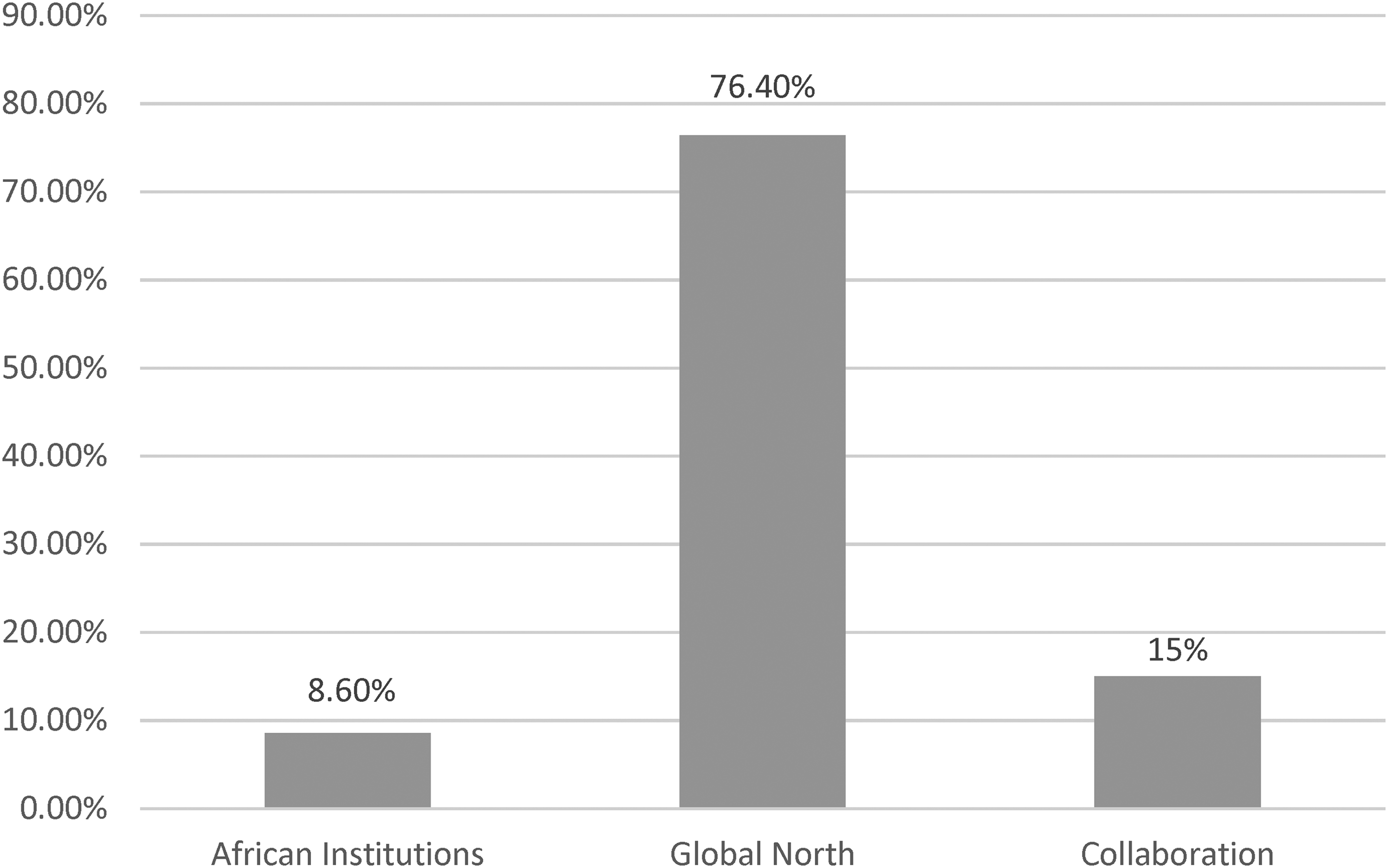
Author affiliation of the humanitarian-gender publications in Africa.
This finding calls for urgent reflection on the dynamics of interest and authority in knowledge production within the African continent. Scholars who have identified similar trends have questioned the politics and power of knowledge production, often an extractive process reflective of colonial relationships whereby data is taken back to the Global North for benefit therein (Cochrane and Legault, 2020; Zegeye and Vambe, 2006). The continued disparity of whose voice matters in the production of knowledge suggests that the power and politics of global knowledge production present many barriers for scholars who are based in Africa to participate and contribute as equal members in global knowledge production processes, thereby contributing to their exclusion and the disproportionate dominance of voices from Europe and America on African issues. This includes the ability to access research funding, but also includes the ability to attend international conferences (and visa restrictions), publication barriers within editorial boards and within opaque peer review systems, as well as recognition of scholarship (as scholars across Africa are writing and publishing, but often in journals that are excluded from platforms like that of Web of Science).
Furthermore, the affiliation location data prompts a closer look at the forms of collaboration that exist in the humanitarian community and among scholars across borders. Collaboration, which motions towards knowledge co-production, is prevalent in the international development community. A significant number of the articles reviewed here involved collaborations between scholars in different universities or institutions; between academics and development practitioners or government agents; between experts across diverse disciplines. However, it is crucial to critically consider the different forms of collaboration utilised by experts studying Africa or working in Africa. It is worth asking: In these collaborative research works, how much decision-making power and credit is given to African partners? Are certain knowledges privileged over others, such as in-depth local knowledge/contributions? To what extent does the source of research funding determine the value ascribed to the efforts or expertise of collaborators? Might these “collaborations” be replicating power imbalances, whereby experts who are Africa-based are reduced to data collectors? Detailed study of each project would be required to answer these questions with empirical data, however these findings based on author affiliations suggest that the power imbalances continue and that knowledge based in the Global North is valued much more than that produced in the Global South. In addition to North-South collaboration, Onyancha and Maluleka (2011) reveal that collaborations between scholars across sub-Saharan African countries are scarce. When these continental collaborations do happen, they make a minimal scientific impact (judging by citations and impact factors). Hence, as much as the forms of collaborations between African scholars and their counterparts in the Global North need to be radically reimagined, there is equally a need to re-value and re-orient continental collaborations.
The above discussion and findings might imply that African scholars across the continent are not publishing. However, we suggest that the findings are more reflective of the algorithms and platforms than the reality of knowledge production. In other words, are these findings the result of production or of visibility and value? In the past decades, a number of archives and databases for cataloguing African publications have emerged, with the mandate of amplifying African voices. Among the most prominent is Sabinet, an archive of African journals. We performed the same search on that platform to check if African scholars are publishing on the topic of gender in humanitarian emergencies. A total of 935 publications showed up with related titles. We conducted this additional search after our data analysis was concluded. Even though we did not go further to review these articles, this demonstrates the existence of alternative platforms for African publications and highlights the need not only for future reviews to examine such platforms and websites for the inclusion of diverse perspectives but also for researchers to critically assess the platforms and available options of alternatives that are utilised when conducting systematic review studies.
From a methodological perspective, 57 per cent of the reviewed articles employed qualitative methods, including interviews, focus group discussions (FGD), and theoretical/conceptual analysis (Figure 3). This figure is commendable since the intricacies of gender are subjective and may not be easily captured with quantitative methods. The identification of systematic literature reviews (15% of publications) is equally a welcome development, as these reviews provide an overview of what is being studied, and what is potentially left out. Given that our search sought after publications with a focus on gender we did not find that any research was gender unequal or blind, or not considering gender as a factor impacting humanitarian response in different contexts. There are few clear parameters that help to differentiate gender aware, gender sensitive, and gender transformative research approaches, however our qualitative assessment suggests that this set of literature has been at least gender aware or sensitive. This is in line with the call for gender-based analysis of situations and strategies in development, and equity-based approaches to addressing economic and sociocultural inequities in society (Nwoye, 2007; Watts and Seeley, 2014). Only a few of the publications can be said to have taken a gender transformative approach, going beyond barriers to address social norms that foster or inhibit men and women in society, as well as issues of social justice (Cardoso et al., 2016; Casey et al., 2020; Glass et al., 2019; Hyndman, 1998; Perrin et al., 2019). Cardoso et al. (2016), for instance, conducted a critical analysis of the structures that espouse gender relations and outcomes in post-conflict Abidjan. The authors go beyond the simplistic bifurcation of gender as comprising men and women, to treating gender as constitutive of interactions, power dynamics, and as operating within an ever-shifting sociocultural cum ideological apparatus. In recommending approaches to intimate partner violence – the subject of their study – they suggest the strengthening of formal and informal systems of help-seeking, in addition to casting attention on the economic conditions and social norms that enable gender inequalities and violence in the first place. Such approaches can be categorised as gender transformative.
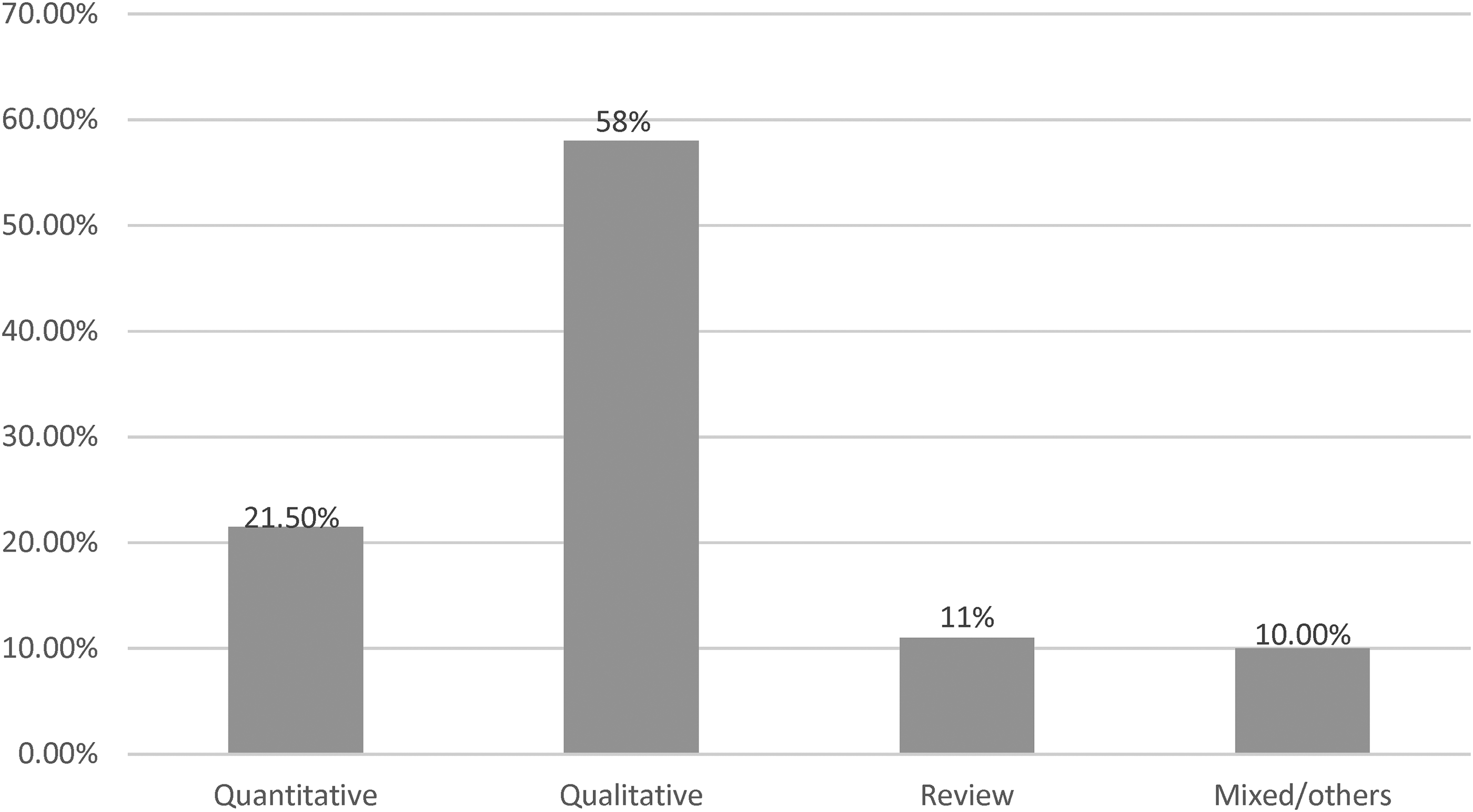
Methodological approaches utilised in the humanitarian-gender publications in Africa.
With regard to the geography of research, the countries studied in this dataset are representative of various forms of the humanitarian crisis in Africa (Figure 4), including armed conflicts such as civil wars (Uganda, Sudan, and DRC), epidemics such as Ebola and HIV/AIDS (Sierra Leone, Guinea, and South Africa), and environmental-stressor related disasters, such as drought (Mali, Ethiopia). A number of recent studies have focused on the uneven geographical distribution of research on development in Africa (Cochrane and Thornton, 2017; Hendrix, 2017; Porteous, 2020), and in this case, we ought to expect unevenness due to the experience of crisis (within country) and humanitarian responses (within countries as well as beyond them, as in refugee camps). Some countries are notably absent from this dataset: Central African Republic, Chad, and South Sudan are three such examples (undoubtedly others as well) that exemplify the unevenness of research and the need for the research community to critically reflect on how individual choices (informed by language, security, access, history, etc.) are contributing to knowledge inequalities, which then compound the problems of evidence-based decision making in such locations.
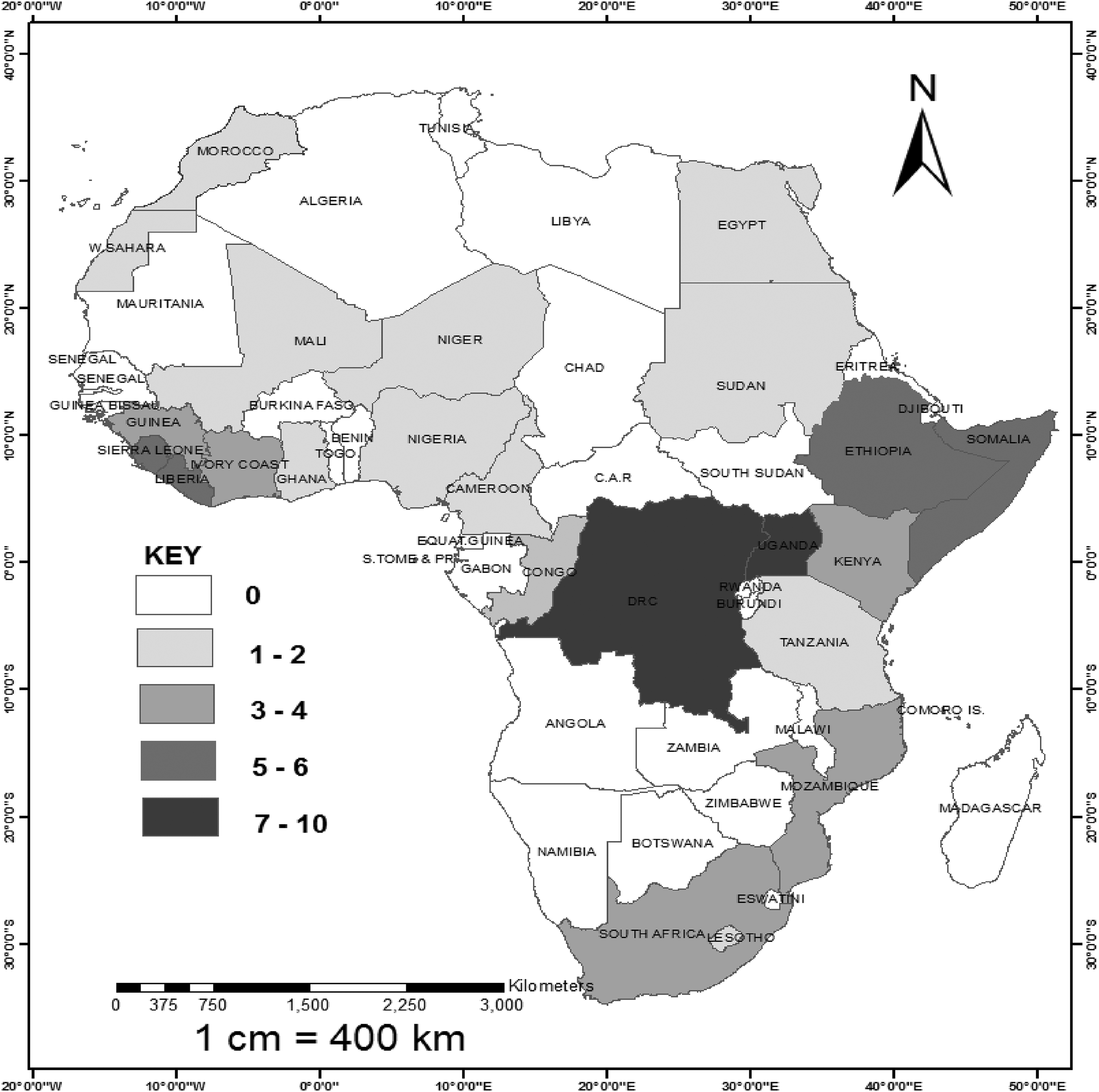
The country focus of the humanitarian-gender publications in Africa.
Synthesis of the Evidence by Sector
This section is an exploration, synthesis, and critical appraisal of the key findings of the reviewed publications, drawing out their areas of interest/focus, theoretical and methodological leanings, and also identifying research gaps. Up until this point in this paper, we have focused more on the literature, reflecting on the methods, terms, and other constituents of their conceptualisation and production. In what follows, we analyse the literature to thematically examine not only how scholars have approached gender in humanitarian situations but what lesson to be learned from these publications in regards to our primary subject (gender + humanitarian + Africa). While some papers offer programming details, others are new research projects external to programming. As we covered a variety of literature in our review – including scholarly analysis of programs, theory papers, methods papers, and review papers – our assessment in this section is inevitably inclusive and diverse, pointing to what the reviewed works broadly reveal about gender in humanitarian situations in Africa. For the purpose of clarity, we are presenting the key finding of this review under three subheadings, with an additional category, “other considerations,” which covers articles that do not fall into the main areas. The thematic areas are as follows: GBV, health, agriculture/livelihood, and other considerations. Each of these thematic areas is presented in the sub-sections that follow.
Gender-Based Violence
A significant number of the articles reviewed (31%) focused on gender-based violence (GBV) and its dynamics in humanitarian situations. GBV was often categorised or designated differently depending on the victim or survivor, perpetrator, and/or conditions surrounding the abuse or violence. These include Sex and GBV (SGBV), Intimate Partner Violence (IPV), Non-Intimate Partner Violence (NIPV), Non-Partner Sexual Violence (NPSV), and Violence Against Women and Girls (VAWG). Tol et al. (2013: 2) note that GBV has numerous negative effects on its survivors including trauma, physical harm, unwanted pregnancies, spread of communicable diseases, social exclusion, amongst others. Violence perpetrated by intimate partners (IPV) was of major concern; for example, in a systematic literature review of ten studies on gender-based violence in complex emergencies, Stark and Ager (2011) found that IPV was the most measured category of GBV. The study also revealed that in communities where IPV was investigated, the prevalence was usually high. For instance, in a cross-continental study about GBV carried out by the World Health Organization, and featuring Namibia, Ethiopia, and Tanzania, up to 71 per cent of the surveyed women reported having experienced physical or sexual violence from intimate partners (Ellsberg et al., 2008 in Stark and Ager, 2011). Other IPV-themed studies show the relationship between IPV and post-traumatic stress disorder (Gupta et al., 2014); the need for developing intervention programs targeted at fostering progressive attitudes towards GBV (Odwe et al., 2018); or the link between male socialisation, urban pressure and the use of hard drugs by mostly men, to IPV (Cardoso et al., 2016; Fry et al., 2019; Sharma et al., 2020). Some studies also highlighted the dangers of non-partner violence in humanitarian contexts, demonstrating that women may suffer violence or abuse from in-laws, neighbours or kin, leading to negative impacts on their psychosocial wellbeing, among other implications (Falb et al., 2013; Izumi, 2007; Murphy et al., 2020).
In analysing a program aimed at tackling GBV in the Democratic Republic of Congo (Ushindi), Bennett et al. (2017) reveal that individuals are affected differently by GBV or are at different recovery stages, therefore each survivor requires interventions suited to their experiences or current realities. Stark et al. (2020) suggest that secondary reporting, albeit fraught with challenges, can complement the standard survey methodology often utilised in collecting GBV data. Contreras-Urbina et al. (2019), were concerned with the ethical challenges involved in conducting research on GBV, especially VAWG. Their research makes two major recommendations: (1) since applying internationally accepted ethical guidelines to specific contexts usually proves difficult, complex humanitarian settings require strong adaptable research methodology; (2) local collaborations are crucial, as well as gathering input from both local and international stakeholders to ensure a sound, relevant methodology. A number of scholars argued for the prioritisation of context-specific approaches for researching GBV, highlighting its benefit for effective aid and development programming (Al Gasseer et al., 2004; Hossain and McAlpine, 2017; Noble et al., 2019; Wirtz et al., 2016).
While looking explicitly at gendered issues, few of the articles adequately problematised gender or explored its intricacies beyond its characteristics as an identity marker or as a mere determiner of social affordances (Borer, 2009; Contreras-Urbina et al., 2019; Hilhorst et al., 2018; Scanlon and Muddell, 2009; Veit, 2019). Adopting a less than common approach to gender in the context of GBV, Carpenter (2006) argued that GBV against men is a potential risk that is often neglected in humanitarian response; Al Gasseer et al. (2004) assert that infants, as much as women are a crucial part of the gender and violence equation; and Dolan (2016) advocates the mainstreaming of research on GBV perpetrated against men, boys and members of the LGBTI community. These studies position social norms at the centre of GBV, some arguing that developing programs that aim to confront or challenge these norms is a veritable way of addressing GBV, and thus taking a more transformative approach to research (Glass et al., 2019; Perrin et al., 2019).
Health
The importance and attention given to health in crisis settings are evidenced in the fact that 29 per cent of the articles we reviewed were primarily concerned with healthcare systems and wellbeing. Delivering health programmes in humanitarian situations is complicated by issues of access, security, capacity, and supplies of necessary health commodities; similar challenges exist with health research. Health inequalities are expressed in diverse ways, with access, experience, and burdens often being gendered, which are compounded by other forms of social differentiation, such as socio-economic factors. There has generally been an awareness within the human rights and humanitarian circles to institute mechanisms that are at least gender responsive in health intervention programming and research that take these factors into account (Birks et al., 2016; Munyuzangabo et al., 2020). There is concern about the logistics and quality of primary and secondary healthcare delivery around the continent, but especially in conflict and post-conflict settings. Factors such as unfavourable local health policy and legislation, and lack of health facilities and/or staffing can pose a challenge to quick and quality health delivery (Henttonen et al., 2008). To promote literacy and increase awareness among twelve to eighteen-year-olds of teenage pregnancy, HIV, and other communicable diseases in a humanitarian setting in Sierra Leone, a radio programme known as Pikin to pikin tok was developed. This programme sought to address health inequities in the community by adapting a gender-sensitive staffing and gender-responsive programming of activities (Barnett et al., 2018). Similarly, following a systematic literature review of 110 articles related to sexual reproductive health (SRH), with a focus on sub-Saharan Africa, Munyuzangabo et al. (2020) suggest that the engagement of community-based personnel and alternative local sites for intervention delivery could complement the scarcity of health professionals such as doctors and nurses, as well as hospitals. To strengthen the services of decentralised services, there is a need for greater collaboration between stakeholders as well as the infusion of resources in order to increase the effectiveness, coverage, and access to health facilities and programmes (Henttonen et al., 2008; Landegger et al., 2011).
The effectiveness of awareness programmes for men and women in preventing sexually transmitted diseases and other health challenges is still a matter of debate. Woodward et al. (2014) reveal that people do not necessarily adopt safer sexual practices, such as the use of contraceptives, following their awareness of the workings and dangers of STIs. Other factors such as the desire for children also account for the failure to use condoms and other forms of protection. Relatedly, traditional notions of masculinity and femininity, limited livelihood options for both men and women, and patriarchy also explain people's decision to use protection during sex as well as their involvement in family planning, which could affect health equity (Hollander, 2014; Hopwood et al., 2018; O’Neill Berry et al., 2013). Going beyond awareness programmes that promote safe sex, to addressing issues such as the stigma associated with contraceptive use, together with creating environments that foster gender parity will enable individuals, especially adolescents make informed decisions about their sexual reproductive health. (Casey et al., 2020). Nonetheless, despite decades of humanitarian intervention, HIV/AIDS remains a potent health challenge across regions in Africa, and HIV intervention delivery and success are contingent on dominant social norms, gender relations, religion, and the providers of these programs (Burchardt, 2010; DiCarlo et al., 2014; Mindry, 2010; Peacock et al., 2008; Woodward et al., 2014).
According to Ager et al. (2014), prior to the last two decades, the delivery of mental health and psychosocial support in humanitarian emergencies was sparse. As a result of being perceived as a relatively short-term endeavour, material needs such as shelter, food, and medical supplies, were prioritised over non-material needs such as mental health support in humanitarian settings (72). There has been increased awareness not just of the prevalence of mental and psychological issues in these settings, but also of its sociocultural dimensions. Thus, following a systematic review of seven studies on the effectiveness of mental health and psychosocial support interventions in GBV-related issues in humanitarian contexts, Tol et al. (2013) highlight the importance of assessing the potential engagement of traditional healers in matters concerning mental wellbeing (7). Trauma and mental illness are often gendered. While most men usually suffer trauma following their engagement in combat and violence, or due to pressure from societal expectations, women may suffer trauma as a result of sexual abuse, anxiety related to insecurity, and the stress of acquiring basic needs (Ager et al., 2014; Alessi et al., 2018; Rasmussen and Annan, 2010). However, it has proved difficult to measure the effectiveness of mental health and psychosocial support interventions in such complex contexts (Tol et al., 2013).
Finally, it is crucial to make a brief note on the positioning and construction of women as sufferers, receivers of health packages and programs, or partakers in a healthcare system by researchers and practitioners in the humanitarian sector. Often believed to be victims of unfavourable cultural cum social systems that exacerbate inequalities, women were constructed as marginalised, disempowered, and voiceless in most of the articles, minimising their agency in determining their own health outcomes. Challenging this narrative, D’Errico et al. (2013) show the numerous ways that women confront and cope with the barriers to health, and design informal mechanisms to address their own vulnerabilities. In their study, they spotlight women who form security networks to minimise exposure to rape and abuse; women who gather to discuss and sensitise themselves on women's health; as well as networks to support the sick, pregnant, or needy.
Agriculture, Food, and Livelihood
Approximately 7 per cent of the articles focus on this broad category. Armed conflicts and environmental crises have created humanitarian emergencies in many parts of Africa. Short-term responses are increasingly being combined with longer-term developmental programming, often under the umbrella of nexus approaches seeking to bridge humanitarian and development activity, the triple nexus integrates peace. The need to devise poverty reduction strategies has featured significantly in development discourse in the last few decades (Haile, 2005; Obwona and Guloba, 2009) and one area where this is intersecting with humanitarian activity is in livelihood approaches, which draw upon geography and sociology to reflect on the internal and external dynamics that shape livelihood strategies in a given context (Carr, 2013, 2014). Increasingly, this has shifted to a focus on resilience and adaptive capacities, such as the resilience/adaptability and vulnerability model (RVM) (Quandt, 2019; Yotebieng et al., 2019). This approach focuses on the factors that influence resilience/adaptability and vulnerability on individual and community levels, proposing intervention approaches built around relevant and context-specific factors. On a similar note, by measuring the perceptions of livelihood resilience among family units using the Household Livelihood Resilience Approach (HLRA), Quandt (2019) found that results varied not only by gender but also by ethnicity. This attests to the importance of adopting an intersectional approach (that is going beyond to examine how different aspects of an individual’s identity such as their gender, age, and ethnicity intersect and affect outcomes) while studying livelihood-resilience perception and its intricacies in humanitarian situations. As local livelihoods change in response to internal and external factors across communities including the vagaries of climate, political stability, sociocultural institutions, among others, so do gender relations and cultural systems. Researchers and practitioners must put these changes into consideration in order to identify relevant areas of focus, and design inclusive programs.
Hartmann (2014) suggests that the Malthusian Anticipatory Regime in Africa – the notion that population growth is the primary cause of poverty, scarcity, and war – constructs African men as enemies of the environment, thereby justifying the dispossession of the subaltern through land grabs for commercial purposes which consequently heightens food insecurity. On the household level, other domestic factors equally affect food security and nutrition, especially for children. Some of these factors include the social and economic status of women, access to nutritional and health resources, tensions in polygamous households, and the presence or absence of males in the family (Hampshire et al., 2009).
Other Considerations
In this section, we reflect on a range of issues featured in the articles we reviewed but not captured by the three themes explored above. This includes subjects such as marginalisation, inclusion and resilience; the role of faith-based organisations in gender politics; social justice and legal considerations; and alcohol abuse all within humanitarian contexts. Each paragraph below contains a brief exploration of some of the foregoing themes.
It is acknowledged within the literature that in humanitarian situations, women, men, and sexual and gender minorities may be exposed to marginalisation by people in power, aid workers, and social norms, based on overlapping identities (Alessi et al., 2018; Dolan, 2016; Palmer and Zwi, 1998). Conversely, marginalised subgroups show resilience and exploit opportunities to creatively deal with the challenges they face (Ajayi, 2020; D’Errico et al., 2013). For effective programming that considers the needs, vulnerabilities, and strengths of different groups, there is a need to collect and examine sex-and-age-disaggregated data (SADD) as well as employ gender and generational analyses (Landegger et al., 2011; Mazurana et al., 2013). To understand the nuances of the issues affecting different subgroups in a population, especially vulnerable women, there is a need to examine their lived experiences through ethnographic interviews (Glover, 2016). For instance, in health delivery, common biomedical approaches are insufficient in identifying and addressing the social determinants of health in complex humanitarian emergencies (Samuels et al., 2017). Thus, for maximum impact and inclusiveness, priority should be given to mechanisms that boost coping strategies and mitigate against coping responses (Samuels et al., 2017).
Among several factors that influence aid and development programming, and implementation are the structure and mission of the organisations involved. These involvements are affected by gender, race, and the vagaries that are characteristic of humanitarianism. The positioning and activities of faith-based organisations (FBOs) are often complicated by intent and doctrine in relation to gender perception and balancing (Ager et al., 2014; Burchardt, 2010; Fiddian-Qasmiyeh, 2015). But Fiddian-Qasmiyeh (2015) argues that if FBOs reproduce gender stereotypes by expecting individuals and groups to align with the norm of their organisations, then secular organisations and bodies can be accused of the same. Studying interventions by FBOs in South Africa, Burchardt (2010) assert that existing gender relations in a given social context shape religious AIDS interventions just as these interventions influence social perceptions and expectations of sexuality. On a similar note, international military forces such as the US Army perform unclear roles in humanitarian settings. Operation Restore Hope in Somalia which commenced in 1992 saw US military personnel performing ambivalent roles that blurred the lines between humanitarianism and combat. While their roles were contingent on the operational structures and mission of the body, the activities of soldiers on the ground were affected by issues of identity (race, gender, and economic status) and contextual dynamics (Miller and Moskos, 1995). In other words, to rethink gender, and identify its intricate dimensions in specific contexts, an intersectionality approach is encouraged (Gupta et al., 2014; Lokot and Avakyan, 2020; Quandt, 2019).
Scholars are beginning to take gender and justice in refugee camps seriously. Some of the questions being asked are: How do disadvantaged people experience legal alienation and mobilisation (Holzer, 2013)? What social and systemic barriers hinder victims of gender-based violence from getting justice (Liebling et al., 2020)? In what ways have western and traditional judicial mechanisms tackled gender-based human right violations, especially following humanitarian emergencies (Scanlon and Muddell, 2009)? Survivors of violence and torture in refugee camps require interventions that integrate their health and justice needs. To achieve this, a culturally sensitive gendered approach that involves and engages survivors in finding solutions is needed (Liebling et al., 2020). Evidence from DR Congo shows the complex relationships between survivors of sexual violence, especially women, and legal systems. The popularisation of legal interventions to GBV has led to a reduction in the societal tolerance for sexual violence. Nonetheless, survivors do not only explore state-run legal systems due to their strong desire for punitive justice, but also for the need to access socio-material incentives, including free healthcare, child services, and other social services, in the face of societal disempowerment (Lake et al., 2016). Working with the experiences of fifty victims of GBV, Lake et al. (2016) show the mediative role of human rights NGOs in persuading and assisting victims of violence to get legal remedy. However, within humanitarian work in Africa, the interrelations between culture, social norms, and global human rights discourse are at best ambivalent (Dolan, 2016). For example, Abramowitz and Moran (2012) opine that preconceived notions of culture, development, and the state in Africa, held by humanitarian organisations inhibit the ability of NGOs to engage meaningfully and effectively with local populations on issues of violence in post-conflict settings.
Another area of interest gaining increased scholarly attention is the use/abuse of alcohol and drugs in humanitarian settings. Evidence shows that men and women may resort to substance abuse due to exposure to traumatic situations such as war or armed attack (Hanna, 2017). Other factors such as the pressures of displacement and dispossession, loss of livelihoods, precarious living conditions, gender expectations, and altered social relationships also cause people living in humanitarian settings to abuse alcohol and drugs. These could potentially lead to violence, non-cooperation, social exclusion, and heightened insecurity within camps (Ezard et al., 2011; Mootz et al., 2018; Sharma et al., 2020). It is a concern that there is little attention to women’s leadership, representation, organisation, and advocacy. This could be an important area of future research in the context of gender in humanitarian situations.
Conclusion
Our review has revealed that while the gender dimension of sectors such as health, GBV, and livelihood in conflict and post-conflict settings has been given reasonable attention, research employing gender as an analytical frame in other humanitarian sectors including water, sanitation, and education is limited. Few programmes and studies pursued a robust analysis of gender which involves identifying local power relations, discursive constructions, and cultural contexts that shape how gender is experienced (Borer, 2009; Contreras-Urbina et al., 2019; Hilhorst et al., 2018; Jacobson, 1999; Scanlon and Muddell, 2009; Veit, 2019). Even fewer engagements with gender chart transformative mechanisms that will address the social norms that cultivate and strengthen gender inequities (Cardoso et al., 2016; Casey et al., 2020; Glass et al., 2019; Hyndman, 1998; Perrin et al., 2019). When they do, a nuanced consideration of global power dynamics, where the Global North wields greater discursive power that inadvertently affects the conceptualisation of development in the South, is often missing.
While researchers are generally careful in dealing with stereotypes, some of the works still reproduced negative tropes and colonial discourses, such as simplistically depicting African men as perpetrators of violence, and women as victims, without exploring the complexities that determine gender roles and behavioural differences. A few studies went beyond identifying the issues affecting women and offering solutions, to showing how the women are confronting obstacles on their own (Ajayi, 2020; D’Errico et al., 2013). There has equally been some discussion around designing and implementing a policy that takes into account the unique experiences of vulnerable persons to address the barriers that limit equality and social justice across diverse spaces (Harman, 2016; Kpessa and Béland, 2013; Mootz et al., 2018). Summarily, evidence from our review reaffirms the need for more nuanced analysis and understanding of gender both in aid programming, and research. Ethical guidelines, adaptable to diverse scenarios and contexts should be developed for practitioners and scholars dealing with gender-related questions in Africa. For donors, recognizing the reality of hierarchical relationships is focal; considerations should be given to funding modalities that stipulate Global South leadership as well as accessibly of knowledge (via open access requirements). These shifts will enable African perspectives and voices to be better included and amplified within the international development community.
Footnotes
Declaration of Conflicting Interests
The author(s) declared no potential conflicts of interest with respect to the research, authorship, and/or publication of this article.
Funding
The author(s) disclosed receipt of the following financial support for the research, authorship, and/or publication of this article: This work was supported by the Social Sciences and Humanities Research Council of Canada.