



Abstract
Negotiations over professional boundaries are often contests about controlling technical expertise and authority. Less is known about the role of moral judgments in such contests because well-trained professionals often silence their moral commitments or engage moral debates outside the boundaries of their profession. Drawing on an ethnographic study of a science laboratory at the forefront of moral controversy, this article shows how professionals manage moral challenges by reconfiguring their conventional domain of expert authority to include moral as well as technical expertise. Scientists drew on their plural moral views to develop, apply, and mobilize abstract knowledge about morals as resources to claim authority in debates over the moral definition of their work. Collective learning and collaboration ensured the cohesion of the professional community throughout the process of developing authority despite continued moral pluralism. By unpacking one mechanism for the pursuit of moral authority, the study elaborates our understanding of the moral foundations of professionalism and of the emergence of morally complex work activities.
The construction of jurisdictional boundaries—the legal, social, and symbolic boundaries that enable professionals to claim authority over a work domain—is a core dynamic of professions (Abbott, 1988; Freidson, 1988; Gieryn, 1999; Lamont and Molnar, 2002; Larson, 2013). Jurisdictions enable professionals to sustain control over their work, to organize and advance their discipline, and to translate knowledge and skills into social and economic rewards. Professionals construct, maintain, and expand jurisdictions primarily through claims to apply distinct bodies of knowledge to address central social needs and values (Abbott, 1988; Gieryn, 1999; Freidson, 2001; Larson, 2013). Thus jurisdictional boundary work involves both technical and normative dimensions. While scholars have developed a detailed understanding of boundary work through contests for the control of abstract technical knowledge (e.g., Barley, 1986; Vallas, 2001; Bechky 2003; Huising, 2014), they more rarely consider how boundaries of expert authority may be challenged, maintained, or renegotiated through contests concerning the morality of professional endeavors.
This is unfortunate because professions are often described as either inherently moral or, conversely, as opaque and silent about their moral commitments, eschewing more detailed examination of the process by which collective understandings about the morality of professions are maintained or shifted. Professions have been described as moral institutions characterized by “an ideology serving some transcendent value asserting greater devotion to doing good work than to economic reward” (Freidson, 2001). Zelizer (1983: 136) wrote that “professions institutionalize altruism while business institutionalizes self-interest.” Professionalism itself, as an orientation to work, is considered a means to moralize organized practices (Khurana, 2010). Ethical problems in professional work are often explained by institutional failures such as governance failures (Freidson and Rhea, 1963; Hughes, 1971; Silbey and Ewick, 2003; Huising and Silbey, 2011) and not by variations in a profession’s normative commitments. Yet not all problems derive from fraud or malpractice. For example, issues such as health, environmental, or financial problems and crises emerge when professional experts restrict themselves to questions of technique and exclude the consideration of, or compliance with, societal goals (Freidson, 2001; Silbey, 2009; Briscoe and Murphy, 2012; Pernell, Jung, and Dobbin, 2017).
So how do professionals construct authority over the morality of their work? We know that aspiring professionals craft narratives aimed at fostering moral legitimacy—the social perception that their activities are right or at least in conformity with social norms of propriety (Suchman, 1995)—for their occupation (Zelizer, 1983; Chan, 2009; Anteby, 2010; Fayard, Stigliani, and Bechky, 2017). However, narratives adopted for legitimacy purposes tend to be shaped by external sources of authority such as states, churches, or long-established tradition (Zelizer, 1983) rather than driven by internal goals and practices (Meyer and Rowan, 1977; Turco, 2012). Thus moral legitimacy does not imply moral authority—the legitimate control (Weber, 1965) over the definition of what is right for a community. 1 We need a fuller account of whether and how professionals in their everyday performance of occupational roles might craft and claim such authority in the definition of what is right—a form of moral authority.
Professionals do challenge established assumptions about what is considered right for their profession. For example, physicians have defended shorter workweeks for hospital interns as desirable for patients and employees, against the traditional professional values of continuity of care and full dedication of physicians to their patients (Kellogg, 2009). Other professionals have debated whether to include moral values in their practice. For instance, nanoscientists and chemists have debated whether including environmental considerations in scientific processes and materials should be their responsibility (McCarthy and Kelty, 2010; Howard-Grenville et al., 2017). These instances highlight that professionals do not always automatically conform to the moral rules of their profession but may autonomously negotiate those rules (Strauss et al., 1963; Gouldner, 1973). Yet we lack an account of how professionals maintain, defend, or develop their capacity to control debates about the morality of their work.
Although prior studies have linked micro accounts of morality to macro dynamics of professions and occupations claiming legitimacy for their jurisdictions (e.g., Chan, 2009; Anteby, 2010; Turco, 2012; Fayard, Stigliani, and Bechky, 2017), scholars have rarely considered whether and how these micro-level accounts may be mobilized for the pursuit of expanded professional authority. This paper draws on an instance of a debate over professional practices to analyze how jurisdictional boundaries may be reconfigured to include authority over moral matters. The context for this study is the debate over the use of human embryos and the human embryonic stem cells (hESCs) derived from these embryos for scientific research. Drawing on the micro ground-level analysis of one prominent laboratory at the center of the debate, I show how its members mobilized their accounts about the morality of their work to integrate the moral definition of their work within their boundaries of expert authority. The outcome of their actions was the development of a form of moral authority.
Professional Authority, Expertise, and Morals
While professional occupations emerged with an avowed moral commitment to serving societal needs, professionals have since then largely restricted their authoritative claims to abstract technical expertise and excluded moral questions from their area of authority. In doing so, they have relinquished the capacity to control the moral debates related to their professional activities.
Early professional occupations emerged based on the model of the clergy, with the commitment to addressing specific social needs, such as health or justice, and with that commitment sometimes formalized in codes of ethics (Parsons, 1939; Greenwood, 1957). The expansion of professional authority has rested on members’ ability to enact strong social and symbolic boundaries through the development and monopoly of abstract knowledge rather than on their claims to superior morality (Freidson, 1988, 2001; Larson, 2013). Professions achieve the highest level of authority over a work domain through boundary disputes in which occupational groups compete for the control of a work area—or jurisdiction—by convincing audiences of the validity of their claim to expertise (Abbott, 1988). The social, symbolic, and legal boundaries of professions have emerged through this rhetorical, symbolic, and discursive work of claiming authority over a set of activities both in the public spheres (Wolpe, 1985; Abbott, 1988; Gieryn, 1999) and in the workplace (Vallas, 2001; Bechky, 2003). The development, use, and monopolization of abstract knowledge is central to boundary work (Freidson, 1988; Larson, 2013). Command of abstract knowledge provides resources for displays of expertise, which become independent sources of authority (Wrong, 1979). For instance, the first experimentalists used public demonstrations of their scientific instruments to assert the superiority of empirical knowledge over philosophical knowledge and thereby claim authority over the production of what counted as knowledge (Shapin and Schaffer, 1985).
These displays of expertise involve both the demarcation of a human or social problem (such as disease, crime, or ignorance) and a claim to solve or treat the problem through distinctly appropriate knowledge and skills (Abbott, 1988; Larson, 2013). The construction of the human or social problem underlies the profession’s ability to claim expertise in solving it. As Abbott (1988: 57) noted, “The profession reshapes [its] core as it pulls the task apart into constituent problems, identifies them for clients, reasons about them, and then generates solutions shaped to client and case. Throughout this reshaping of objective facts by subjective means there emerges a fully defined task, irreducibly mixing the real and the constructed.” The outcome of these constructions is the internalization of specific task areas within a sphere of authority.
This process of demarcation of a problem amenable to expert authority has left moral problems beyond those boundaries of authority. When challenged on the morality of their practices, professionals have generally refused to seek or develop any form of authority in moral debates. Instead, they appear to either silence their commitments and “hive off” (Hughes, 1971) control over moral questions to external parties or pursue legitimacy by adopting predetermined moral templates.
Several professional groups have thus remained or become silent about their values (Jackall, 1988; Anteby, 2013). For example, while professionals in management education made moral claims about their mission to educate in the founding days of management schools, they later restricted their claims and prescriptions to the development and diffusion of abstract administrative knowledge (Khurana, 2010). Other professionals engage with or debate moral questions among themselves (Heimer, 1999; Binder, 2007; Howard-Grenville et al., 2017) but hive off engagement in public debates to peripheral occupations such as policymakers, lawyers, or ethicists. For example, scientists have debated among themselves plural moral perspectives about their work, such as whether to integrate safety features in genetic engineering (Fredrickson, 2001) and nanotechnology (McCarthy and Kelty, 2010) or whether to include environmental considerations in chemistry (Howard-Grenville et al., 2017). But such professionals generally remain silent in public moral, ethical, and policy debates. For example, when biologists agreed that genetic engineering was to be regulated to ensure its responsible practice, they outsourced the definition and implementation of biosafety regulation and governance to external institutions such as the National Institutes of Health (Fredrickson, 2001).
Similarly, while many American physicists were profoundly ambivalent toward the use of physics for warfare, those who wished to be publicly vocal about their dissent left physics and joined separate public interest organizations (Moore, 1996). In this case, internal dissent was resolved by dissenters moving outside the boundaries of science—e.g., outside of laboratories or the American Physics Society—into external public interest organizations such as the Union of Concerned Scientists and the Bulletin of Atomic Scientists. Because the expression of moral pluralism is seen as degrading and a threat to professional claims to integrity and objectivity (Douglas, 1970; Abbott, 1988), professionals may seek to maintain claims to integrity and objectivity over the open, public debate of their values. As Moore (1996: 1594) noted about physicists who left their discipline, “Activist scientists had to be politically critical of science without suggesting that the content of scientific knowledge might be tainted by non-scientific values.”
Yet silence on moral matters threatens professional control. When professionals silence their moral values, they can lose central and competent members who desire to engage with the morality of their practices (Moore, 1996; Anteby, 2013). In addition, professionals relinquish their capacity to engage in and influence the broader debates concerning the morality and responsibility of their work (Freidson, 2001).
Moreover, silence is not always possible, especially when the fundamental activity is itself contested. Professional work often expands into domestic, intimate, and communal activities that are imbued with moral meaning, such as healthcare, childcare, human reproduction, organ procurement, and end-of-life care. This situation requires ongoing definition of how personal and intimate matters should be managed, e.g., traded or handled through paid experts (Hochschild, 2003; Healy, 2004; Almeling, 2007), and ongoing discussion of the legitimacy of professionals to participate in and define these activities (Radin, 1996).
In these cases, key stakeholders’ resistance to the third-party handling of intimate and personal matters can threaten professionals’ capacity to control their work. Consumers resisted engaging in the contracting of life insurance when they considered the practice to be immoral (Zelizer, 1983), donors and suppliers can resist participating in the provision of goods such as blood or organs if they view the practice as morally ambiguous (Healy, 2004), and governments regularly create legal barriers to the third-party handling of personal matters (Radin, 1996).
To overcome this resistance, professionals have sought to develop moral legitimacy for their practices: the perceived conformity to external and institutionalized expectations of what is right or appropriate (Suchman, 1995). They have done so by adopting justifications, discourses, and symbols from external sources of moral authority such as the church, the state, or long tradition (Zelizer, 1983; Elsbach, 1994; Healy, 2004; Chan, 2009; Anteby, 2010; Turco, 2012). For example, early life-insurance professionals overcame resistance to the monetization of death by enlisting authoritative actors such as religious leaders to present life insurance as morally superior to extant practices, which often left families destitute (Zelizer, 1983). When removing cadavers, funeral workers have long mobilized symbols associated with home and religion (Barley, 1983) to distance bereaved families from association with impersonal third-party work.
These accounts are generally configured to fit existing moralities (Elsbach, 1994; Chan, 2009) by presenting one set of practices as morally desirable and by devaluing alternatives (Weber, Heinze, and DeSoucey, 2008; Anteby, 2010). This univocal framing of one set of activities as moral in opposition to other practices provides effective resources for establishing the superiority of an activity for external stakeholders (Weber, Heinze and DeSoucey, 2008; Anteby, 2010). For example, Weber, Heinze, and DeSoucey (2008) explored how grass-fed beef producers presented their production as authentic, sustainable, and natural while presenting conventional production as manipulated, exploitative, and artificial. This enabled the emergence of an alternative producer identity and connected grass-fed beef producers to consumers, facilitating the creation of a stable market and occupation for dedicated producers. Similarly, in their pursuit of legitimacy, full-body procurement professionals developed practices emphasizing ethical and respectful handling of human bodies, thus differentiating themselves from operators using less socially acceptable approaches (Anteby, 2010).
But relying on univocal and externally defined accounts of morality can threaten professional control. Univocal and externally defined accounts are generally decoupled from the complex, multiple, and often shifting internal goals, practices, and values of a profession (Meyer and Rowan, 1977; Turco, 2012). The ongoing tensions arising from this decoupling can threaten a profession’s mission. For example, as insurance providers successfully redefined life insurance as altruistic, insurance professionals became enduringly stigmatized for their morally ambivalent position as “salaried missionaries,” profiting from the altruistic practice of providing for widows and orphans (Zelizer, 1983). Similarly, studying a company that mobilized claims of altruism to legitimize the commercialization of motherhood services and products, Turco (2012) showed how employees who taught birthing and new parent classes found it difficult to distance themselves from the organization’s altruistic discourse. Placing the altruistic relationship with their clients above their commercial relationship, these professionals refused to act as salespersons for the organization’s expensive products, ultimately undermining its commercial mission (Turco, 2012). Thus anchoring moral justifications to external and generally univocal sources of authority can threaten professionals’ control of their multiple and complex goals and their means for achieving these goals.
Taken together, these works highlight that whether eschewing statements about the morality of their work or adopting externally defined and univocal moral accounts, professionals rely on external sources of authority and thereby relinquish their capacity to control the moral definition of their work. Exercising such control would require developing some form of authoritative control over the debates related to the morality of professional endeavors—some form of moral authority.
Expanding Expert Authority to Moral Matters
If moral legitimacy is the capacity to conform to institutionalized expectations of what is right, moral authority is the capacity to define what is right. As with any form of power, the exercise of moral authority is grounded in specific resources. For professionals, these resources may be abstract knowledge about morals, since the extended control of knowledge is central to the establishment of claims to expert authority (Abbott, 1988; Larson, 2013).
While early professions such as the clergy, medicine, or law commanded some amount of moral authority among their constituents, such authority was grounded in the character of their practitioners—in their professed, apparent, and generally socially enforced altruism and personal dedication to serving the community (Brint, 1996). Imber (2008: xviii) described how the moral authority of U.S. physicians between the 1860s and 1970s was shaped by the clergy’s insistence that “the physician was and would be a person of integrity and high moral character.” The character of the early medical professional was central to the patient–physician relationship and to patients’ ability to place their trust in the individual practitioners. The need for trust in practitioners’ benevolence was shaped by their possession of “guilty knowledge” (Hughes, 1971): knowledge of their clients’ sins, diseases, or illegalities. A personal service ideal may have also enabled clients’ trust despite a dearth of technical expertise. For instance, Imber (2008) detailed how in the early years of the medical profession, the trustworthy doctor’s ability to alleviate anxiety about illness and death may have been as important to patients as the therapeutic efficacy of medical practice. To cite one pastor’s sermon: “a few kind words of spiritual counsel [on the part of the physician] kindly offered, have in some instances of this sort, done much to tranquilize the system, where the best pharmaceutical agents have failed” (Imber, 2008: 16).
With the increasing employment of professionals in organizations and the emergence of professions grounded in rational knowledge, the emphasis on the direct, unmediated relationship between client and benevolent professional decreased. “Social trustee” professionalism decreased as “expert professionalism” expanded (Brint, 1996), with engineers, scientists, accountants, and business consultants embodying the turn toward expertise. These trends, along with the development of professional service firms, led to a model of professionalism grounded in expertise and routines, as increased exposure to market and efficiency logics raised questions about professionals’ capacity and willingness to adhere to traditional altruistic orientations (Freidson, 2001; Leicht and Fennell, 2008). Professionals appear to have moved from a “legitimacy of character to a legitimacy of technique” (Abbott, 1988: 190). Even when claims to technical expertise entail an implicit moral claim to superior service, they reinforce the legitimacy of technique over altruism (Nelsen and Barley, 1997). Scientists are certainly closer to a model of expert professionalism than to that of social trustee professionalism. Indeed, in their pursuit of professional authority, scientists have generally defined themselves as technical experts and mobilized logics of rational efficiency (Shapin and Schaffer, 1985; Biagioli, 1993). They would thus appear less likely than professionals such as doctors to ground their authority in altruism and more likely to ground their authority in their expertise.
It is possible to ground authority about moral matters in expert knowledge about morals. For professionals, whose authoritative claims rely on the control of expert knowledge, to ground moral authority in expertise entails including knowledge about morals within their jurisdictional boundaries. As moral debates occur at a social level, knowledge about moral issues related to a professional activity is generally well developed by adjacent occupations such as policymakers, lawyers, or ethicists. Thus developing expert knowledge about morals entails claiming knowledge from these adjacent occupations as well as applying this knowledge to professional problems. Historians, philosophers, sociologists of science, bioethicists, lawyers, and policymakers have provided ample sources of knowledge for scientists about moral and ethical perspectives on their work (e.g., Merton, 1973; Shapin and Shaffer, 1985). In turn, scientists have variously embraced or criticized these ethical perspectives depending on their specific interests (Mitroff, 1974; Gieryn, 1999; Slayton, 2007; Dunn and Jones, 2010; Shapin, 2010) but without necessarily trying to control this knowledge.
One challenge to the extended control of knowledge in morally contested work involves claiming knowledge about both sides of a moral debate. Claiming knowledge about plural moral positions challenges occupations’ tendency to develop (Durkheim, 1976; Van Maanen and Barley, 1984) and display (Abbott, 1988) shared norms and values. Displays of unity are central to professional authority, as they contribute to the outside recognition of a claim to control a work domain (Abbott, 1988). Professional jurisdictions, as clear public demarcations between archetypes (Lamont and Molnar, 2002), are linked to public perceptions of homogeneity (Abbott, 1988). As Abbott (1988: 81) noted, “In the public arena, the nature of discourse about jurisdiction is sharply constrained. Public discourse must concern homogeneous groups. All doctors are equivalent, all nurses are equivalent. . . . Public jurisdiction concerns an abstract space of work, in which there exist clear boundaries between homogeneous groups. Differences of public jurisdiction are differences between archetypes.”
Such displays of homogeneity are themselves representations of internally negotiated settlements around shared norms and values about work (Van Maanen and Barley, 1984), and moral pluralism challenges this internal cohesion (Moore, 1996; Howard-Grenville et al., 2017). Voicing diverse moral positions may be viewed as moralizing and dismissive of an occupation’s more pragmatic goals (Anteby, 2013; Howard-Grenville et al., 2017). While moral pluralism is likely to be present in all organizational and occupational groups that reflect plural societies, normative silence may often be preferable for dissenters wishing to retain group membership (Jackall, 1988; Anteby, 2013). Thus the expression of moral pluralism may be possible only if professionals can reduce the gaps or tensions between the different moral frames (Howard-Grenville et al., 2017) or develop a shared orientation toward work beyond the plurality of moral values. The shared orientation toward work would allow for the maintenance of cohesion beyond moral dissent. Professionals may have incentives to develop this shared orientation to work if this means that they can maintain membership in their desired occupational group or if cohesion can be leveraged as a resource for strengthening professional boundaries by displaying homogeneity in public jurisdictional claims.
In this article, I examine a case in which professionals engaging in morally complex work, stem cell research, articulated and mobilized their moral pluralism to develop expert control over the moral definition of their work. After detailing the methods, I unpack empirically how these professionals translated the plurality of their moral values into expert knowledge about morals and then mobilized this knowledge to craft claims to expert authority in public debates. The analysis highlights how cohesion across plural moral values was maintained in practice, thereby allowing professionals to present a unified front as experts in public debates. I discuss the implications of these findings for our understanding of professions’ moral foundations and of the role of moral pluralism for the management of complex work activities.
Methods
The Moral Debate Related to Stem Cell Research
In 1998, Jamie A. Thomson first announced the successful derivation of hESCs, creating excitement among scientists. Stem cells, also known as pluripotent cells, were viewed from the beginning as a crucial new tool for medicine and science. These cells can develop into any type of cell in the body, which means they hold the potential to create any type of human tissue. This potency generated hope for regenerative medicine and for applications in cures for diseases involving cell disorders such as Parkinson’s disease, Alzheimer’s disease, and various types of cancer. The purely scientific promise was equally high. By starting with a common cell model, scientists could achieve variations through experimental methods that could then provide information about how human cells transform into diseased cells. Finally, under specific conditions, stem cells can be grown indefinitely, forming cell lines that can be shared among different scientific teams, making them a uniquely convenient tool to study cell and human evolution.
However, the news revived debates about whether, when, and how personhood should be attributed to embryos as well as whether, and under what conditions, human embryos could be used for research purposes. U.S. federal funding for research on fetal tissues, including embryos, had been banned since 1995 through the Dickey–Wicker amendment, although privately funded research was allowed in many states. The amendment did not cover human embryonic stem cells as they had not been discovered at the time. In 2001, amidst renewed public concern and activism, the federal government enacted a stronger federal funding ban covering research deriving or using hESC lines, except for a small number of lines created prior to 2001.
In response to the controversy and federal ban, several scientists—either pioneers in their field, such as Thomson, or directors of prominent laboratories, such as Douglas Melton—engaged with the public disputes. In the media and in public policy settings, these scientists developed moral justifications for their activities. Their early interventions generally presented stem cell research as a moral imperative for the advancement of medicine. In an interview with The New York Times (NYT) on January 24, 2006, Melton said, “Fertilized eggs have the potential, under certain circumstances, to become a living person. There are many who believe that there is a moral imperative to use that potential to try to help living sick people. I hold with them.” Efforts to define stem cell science as moral also included the definition of culturally acceptable practices. Scientists created the International Society for Stem Cell Research (ISSCR), a nonprofit organization “established to promote and foster the exchange and dissemination of information and ideas relating to stem cells.” The society defined and promulgated guidelines for ethical research. The National Academy of Sciences (NAS), a society of scientists with the goal to provide advice on matters related to science and technology, also defined several criteria for ethical practice and recommended the constitution of independent institutional Embryonic Stem Cell Oversight Committees to oversee the respect of these criteria by all research centers.
In 2007, four laboratories announced the discovery of a method for reprogramming adult cells into a pluripotent stage. The cells resulting from the reprogramming process were named induced pluripotent stem cells (iPSCs). The following year, Science Magazine named reprogramming “the breakthrough of the year.” As scientists developed alternative cell models bypassing the use of embryos, they also expressed alternative moral views about stem cell research, defining the use of embryos for research as morally complex. Shinya Yamanaka, the first scientist to claim successful reprogramming and later winner of the Nobel Prize in Medicine and Physiology for the discovery, publicly expressed a personal reluctance to use human embryos for research: “When I saw the embryo, I suddenly realized there was such a small difference between it and my daughters. . . . I thought, we can’t keep destroying embryos for our research. There must be another way” (NYT, December 11, 2007). Several pioneers in hESC research followed suit in expressing the moral difficulty of stem cell research. 2 Thomson himself noted the moral complexity of hESC research in a November 22, 2007 NYT article: “If human embryonic stem cell research does not make you at least a little bit uncomfortable, you have not thought about it enough.”
This public debate provides the context for investigating the links between moral pluralism and professional authority. How did scientists come to articulate publicly their moral differences? How did this shape their capacity to control and advance their work?
In situ observations of workplaces can provide explanations for how macro-level contests are shaped by local interactions and meanings. Although authoritative claims—such as those of stem cell scientists—are rhetorical, the resources for establishing such claims are negotiated on the ground through everyday activities and interactions. While the analysis of public representations by a profession allows us to capture its rhetorical claims, the study of the everyday interpretations and activities of members of a profession allows us to explore the construction of these claims. As the place where the work of science is performed (Barley and Bechky, 1994; Owen-Smith, 2001), the laboratory is a privileged space to study such situated interpretations, actions, and interactions (Latour, 1979; Knorr-Cetina, 1999). To study the construction of stem cell scientists’ claims about the morality of their work, I chose a major laboratory at the center of the stem cell community: Med Lab (a pseudonym).
Med Lab
Med Lab is a large laboratory that gathers pioneering researchers in hESCs and iPSCs. In addition, several Med Lab scientists have been actively engaged in the public debates related to stem cell research. It thus constitutes a microcosm of stem cell scientists and an ideal setting to examine how professionals might address the moral complexity of their work.
Med Lab was founded when Eastern University’s medical school offered to help the principal investigator (PI), Gary, develop a privately funded facility for researching and deriving stem cells from human embryos. 3 Med Lab became one of the early laboratories to obtain, create, study, and experiment with hESCs in the early 2000s. It also became one of the four laboratories to pioneer the invention of reprogramming in 2007.
Gary and several lab members actively participated in public and policy debates. Gary participated in the founding of the ISSCR and the creation of the guidelines for ethical practices. One senior scientist, Walter, organized several courses and workshops on ethics in collaboration with other stem cell laboratories and a university bioethics department. Several lab members spoke in the media and at university conferences about the ethics of their work. In addition, Gary set up a technical facility (hereafter named TechCore) for banking and distributing stem cell lines and for providing technical training to all requesting laboratories at Eastern University and beyond. 4
In terms of biological research, Med Lab specializes in developmental biology and genetic blood disorders. The lab is affiliated with a research hospital and focuses on basic research and translational research—research that is developed with a view to medical applications. The medical environment provides direct access to human tissues such as surplus embryos from in vitro fertilization (IVF) or tissues necessary for the study of disease-specific cells. At the time of this fieldwork in 2009 and 2010, Med Lab had five distinct teams: Embryology, TechCore, Blood, Cancer, and Reprogramming. Embryology specialized in experimental research on embryos and hESCs. TechCore was a technical facility for banking stem cell lines, specifying and diffusing experimental protocols, organizing training, and performing technical tasks related to hESCs for requesting laboratories. Blood and Cancer were dedicated to the study of disease-related biological processes using human or animal stem cell models. Reprogramming emerged as a new team in 2007.
At that time, the experimental work with human embryos and with some hESC lines was not approved for federal funding. (Some of the work still remains closed to such funding.) As this work was commonly designated by scientists as “non-presidentially approved,” it is generally labeled as “non-presidential” or “NP” work. NP work is supported by a mix of private donations and university funding and is generally conducted by Embryology and TechCore team members. The two teams work in clearly demarcated laboratory spaces with dedicated equipment and workers. Most of the equipment—fridges, microscopes, centrifuges, incubators, biosafety hoods, and analysis machines—is duplicated in the demarcated spaces to comply with federal funding requirements. Experimental supplies such as pipettes, pipette tips, petri dishes, gloves, containers, analysis kits, and reagents are also purchased through separate grants and stored in separate areas. The laboratory manager keeps a detailed accounting of the purchases, submitting to yearly compliance audits by the university and the hospital. To ensure proper segregation, all materials dedicated to NP work are clearly identified with bright NP labels. The work performed by Reprogramming, Blood, and Cancer is generally eligible for and largely funded by federal grants. Although some federal restrictions on research funding were lifted in 2009, the laboratory has nonetheless maintained its NP facilities as significant amounts of hESC work remain closed to federal funding. For example, the banking and use of many hESC lines remain unauthorized for funding, and the creation of new lines from human embryos remains similarly unauthorized.
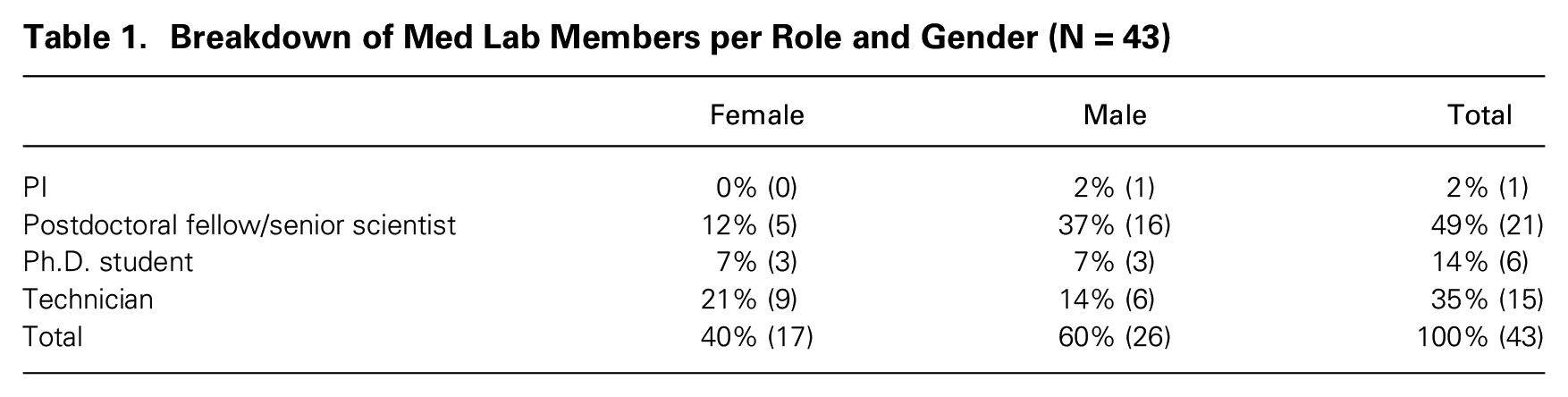
At the time of the study, the laboratory was home to 43 scientists including senior research scientists, postdoctoral fellows, Ph.D. students, and technicians. The daily supervision of the laboratory was done by Walter, the most senior scientist beneath the PI, Gary. Table 1 shows a breakdown of laboratory members by gender and role.
Breakdown of Med Lab Members per Role and Gender (N = 43)
Data Collection
I adopted a grounded-theory approach to data collection. I began a long-term immersion in the laboratory as I tried to understand how members of the same occupation worked and collaborated using tools that embodied diverse values (in this case, stem cells). As scientists indicated that they used their understanding of the moral issues about their work to engage in more public debates outside the lab boundaries, I collected data about their efforts in public arenas and, later, archival data about scientists’ public pronouncements at the field level.
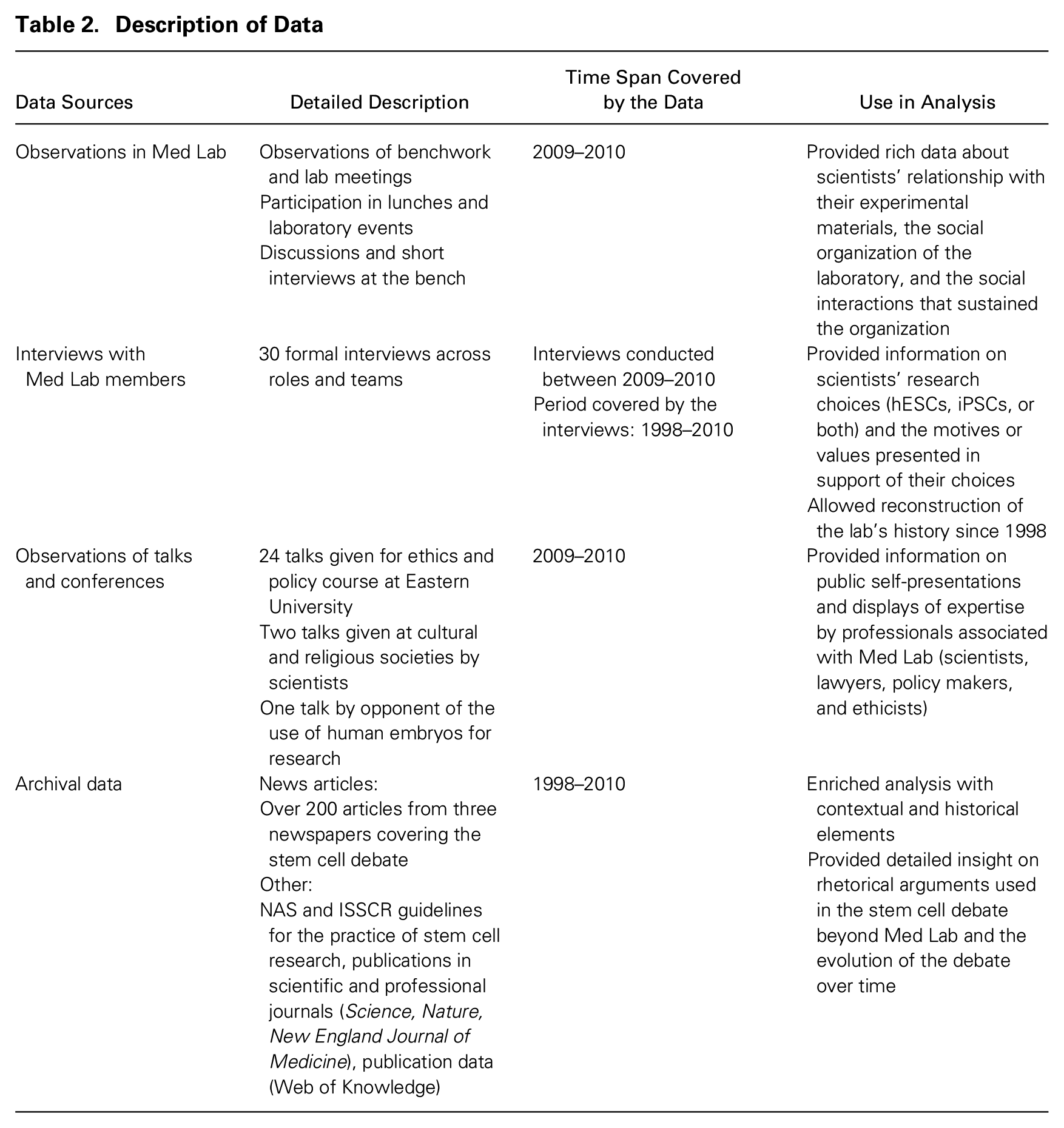
Data for this paper are thus drawn from observations and interviews issuing from ethnographic immersion in Med Lab and supplemented with observations of talks and conferences and archival data at the field level. This mixed archival and field methods approach is useful to understand in depth the dynamics of scientific communities (e.g., Grodal, 2018). Table 2 provides a summary of the data collected.
Description of Data
Ethnographic observations in Med Lab
I conducted observations for two periods over 17 months between March 2009 and July 2010 with a three-month break. The study began a few weeks before the federal ban on stem cell research was lifted and six months before the first additional hESC lines would be approved for federal funding. Stem cell research remained subject to funding restrictions, regulatory uncertainty, judicial challenges, and public debate; see the timeline in the Online Appendix (http://journals.sagepub.com/doi/suppl/10.1177/00018392211011441).
To gain access, I presented the project to all laboratory members during two lab meetings. The project was presented as an inquiry into their interpretations of, and practices related to, their research models. Once granted access, I spent about half of the weekdays in the lab observing bench work, attending weekly meetings, and participating in informal events such as lunches, breaks, and celebratory events. I shadowed scientists across all roles and teams, from one to seven days each. I took extended field notes of all observations: the experimental tasks performed; the technical, ethical, and legal explanations volunteered by scientists at the bench about their tasks; and the interactions among lab members. Whenever possible, I took verbatim notes. Observations and hundreds of informal discussions at the bench generated information about how moral perspectives were embedded in everyday work—why and how scientists decided to work with research models, how they perceived the technical and moral benefits and difficulties of these objects, how they overcame these difficulties, and how they justified their experimental decisions. Overall, observations yielded about 1,000 pages of detailed field notes.
Trust is notably difficult to establish with elite professionals (Ho, 2009; Harrington, 2015), particularly when those elites engage in contested practices. Laboratory immersion enabled the development of trust with several members and facilitated observations, informal discussions, and the formal interviews. Secondary access, the acceptance of an observer by members of an observed community, was renegotiated individually beyond the initial laboratory meetings: I asked each scientist if they would agree to be observed before shadowing them. Formal interviews were conducted after several months of observations and set up with individual scientists after I had shadowed them for several days and could understand their work.
Interviews
I conducted 30 open-ended interviews with scientists across all levels. To facilitate discussion of moral preferences and commitments, I relied on scientists’ prior experiences, decision points, and perspectives on their current experimental practices. I inquired about their career decisions before and during their tenure in Med Lab, about their decisions to work with a variety of research models, and about how their personal views of these research models shaped decisions to work with a particular model or not. The interviews were partly retrospective and covered the period from 1998 to 2010. Although I was not present at the time of the lab’s first creation of hESCs and iPSCs, the accounts of the inventors, the laboratory director, and other members present at the time provided ample data about the context of the inventions and the decisions made at the time (see the Online Appendix for a timeline of the events and the data collection).
The interview questions were meant to elicit open conversation about how the scientists’ values shaped their micro-level decisions at work—how these values infused their everyday work. Interview questions included the following: How did scientists decide to apply to and work for a stem cell laboratory? Which experimental models did they use for their research? How had they decided to work with the research models they were currently using? Had they refused to develop or use research models or techniques? How would they describe their current position in the stem cell debate? How did their views evolve over time? Formal interviews lasted between 40 minutes (for junior laboratory members) and two hours (generally with more senior scientists), with an average of one hour. All interviews were recorded and transcribed.
Observations of talks and conferences
In addition, I attended 26 presentations and courses on stem cell science and bioethics involving Med Lab members as co-organizers, presenters, or participants. Other presenters included scientists, bioethicists, policymakers, lobbyists, and physicians. I also attended one talk by an opponent of stem cell research. I took extensive fieldnotes, mostly verbatim, of the talks and ensuing discussions. These presentations allowed me to gather data on scientists’ self-presentations outside the laboratory as well as the arguments and rhetoric of their allies.
Archival data
Press articles provided additional sources to locate situated actions in their macro-level context. I gathered over 2,000 press articles from three newspapers that provided extensive coverage of the research and the debate and presented a diversity of views over the 1998–2010 period: The New York Times, The Christian Science Monitor, and a local newspaper in Eastern City. I read over 200 articles from this selection, focusing on the quotes and interviews of scientists, policymakers, bioethicists, and clergy members. The 2005, 2007, 2008, and 2010 Research Advisory Committee guidelines for stem cell practice at the NAS provided information about scientists’ self-regulatory efforts. I also read several op-eds from opponents to stem cell research and reconstructed the policy decisions of the 1990s and early 2000s that led to policy restrictions.
Data Analysis
The data analysis was ongoing alongside data collection. I followed a grounded-theory approach of theorizing from data through analytic induction (Glaser and Strauss, 1967; Katz, 2001; Charmaz, 2014), observing openly at first, then navigating iteratively between the field, collected data, and emerging categories of interest. First, I inductively coded the interviews and observations, identifying accounts and justifications expressed by scientists. I isolated when scientists provided moral accounts about their work. Some scientists emphasized that work decisions were driven by the pursuit of science. For instance, Sam, a postdoctoral fellow, explained his decision to move to the Reprogramming group: “I had some things on my mind that I was interested in, then I just decided to throw that technology at those things and see what came out.” In contrast, other accounts highlighted how decisions were shaped by moral preferences. For example, Roni, another postdoctoral fellow, narrated his decision to conduct research in reprogramming through his preference not to work with human embryos: “If reprogramming [was not possible], I would have focused on adaptation of some germ cell or gone to stem cells to make more pluripotent cells, rather than deriving human embryonic stem cells. . . . Because I don’t want to destroy eggs.”
I then coded these moral accounts more specifically. Most of the moral values cited by scientists were values that commonly circulate as markers of professional science, such as universalism (Merton, 1973), rationality (Merton, 1973; Bagioli, 1993), or medical care (Dunn and Jones, 2010). Several scientists said that their role was to promote rational knowledge and understanding. Others emphasized that they conceived their professional role and decisions as driven by the search for medical knowledge and progress. I organized the different accounts around these main categories cited by scientists. Collectively, these accounts also showed that scientists translated their personal choices and preferences in the language of professional knowledge.
In addition, scientists discussed a plurality of moral perspectives, which generally fell into one of two broad camps, and located themselves in one or the other. For example, one scientist explained that Med Lab members either valued pure science—the pursuit of new knowledge regardless of its potential applications—or valued science applied to medicine. He said that Med Lab scientists located themselves in one of the two perspectives and concluded, “I’m definitely in the ‘basic science’ camp within the lab.” I organized the accounts along the different oppositions provided by the scientists.
Several lab members noted that their effort to understand and articulate the moral issues about their work related to their public commitments. For this reason, I followed their involvement outside the laboratory, in public talks and courses, and examined how statements made outside the laboratory related to those made within it. This allowed me to analyze scientists’ moral accounts from their elaboration at the micro level to their mobilization as publicly authoritative statements.
Following principles of analytic induction (Katz, 2001), I analyzed how these data fit the models relating to morals and professions. The data were consistent with the literature showing how moral values are integrated in the everyday interpretations, actions, and interactions of professionals (e.g., Nelsen and Barley, 1997; Anteby 2010; Turco, 2012). The data deviated from these models in that lab members voiced plural moral values, although no scientist left the laboratory based on their values, and lab members continued collaborating across values and research projects.
I thus explored whether and how scientists’ pluralism related to their relatively autonomous status and to their pursuit of jurisdictional control. The data fit the model of jurisdictional boundary negotiation: lab members developed abstract knowledge about morals, applied it to their tasks, and mobilized it to develop authority over a task area—that of defining the morality of their work. The plural nature of the knowledge mobilized was consistent with the model of professional expansion through knowledge control (e.g., Larson, 2013). The data departed from this model in that the knowledge related to the moral aspects rather than the technical aspects of professional work. Moral pluralism is notably difficult to maintain within one professional space, so the final analysis focused on how moral pluralism was maintained within the space of science.
Crafting Moral Authority
The empirical analysis presented in the following sections elaborates one mechanism for developing professional authority in moral debates, identifying three main steps through which professionals can secure moral authority over their work. The model depicted in Figure 1 begins with the need to provide a coherent moral account for a contested practice in the presence of plural moral values among professionals. To secure space in their profession for a plurality of values, these professionals (1) collectively translated their moral values into knowledge about these values, (2) applied this knowledge to their work while maintaining cohesion beyond their moral pluralism, and (3) mobilized this applied knowledge and demonstrable cohesion to develop authoritative claims in public moral debates. The outcome of these claims was the development of moral authority.
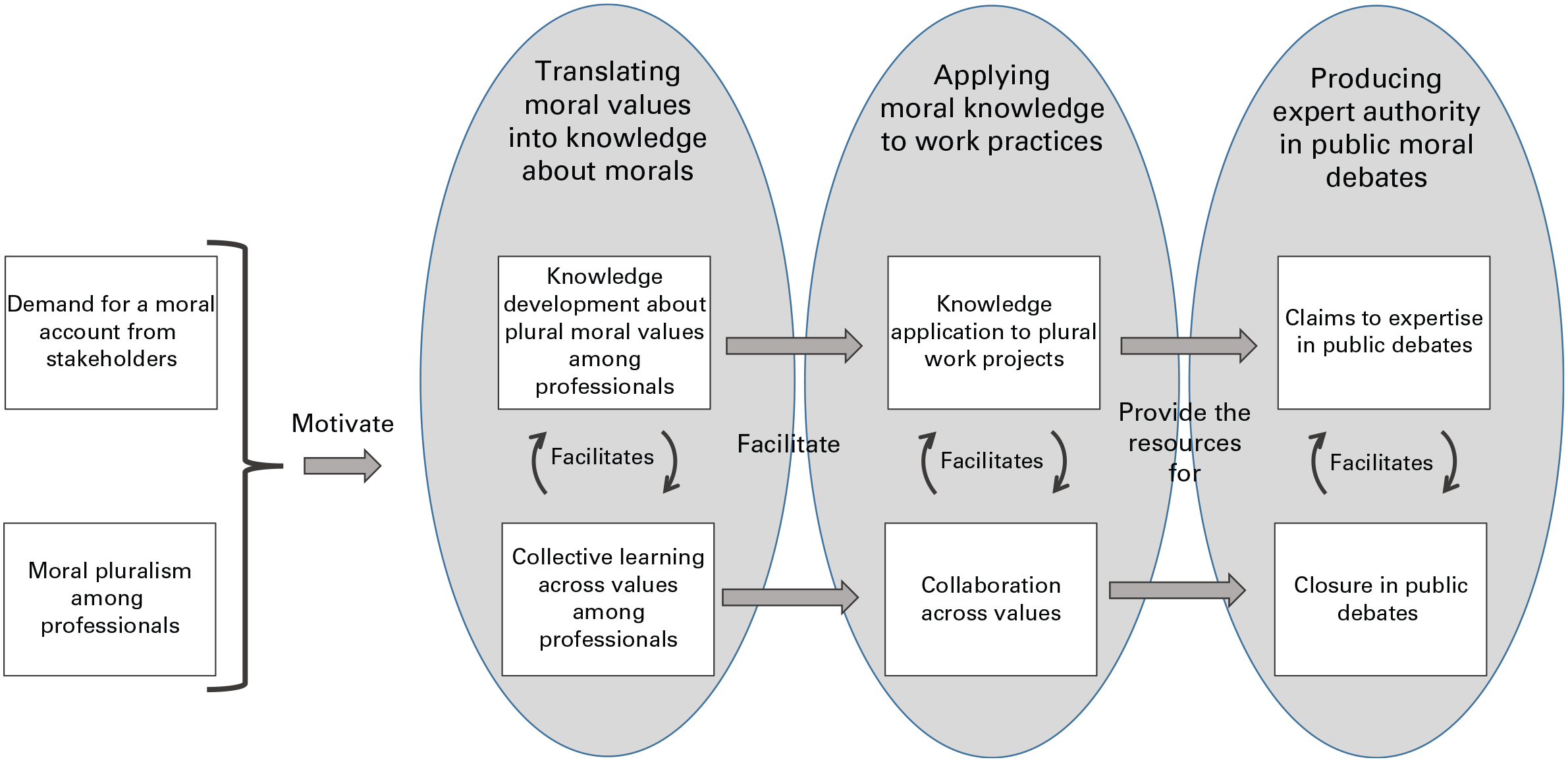
Crafting Moral Authority by Including Morals within Jurisdictional Boundaries
Demand for a Coherent Moral Account in the Presence of Moral Pluralism
Med Lab scientists reported that they began to articulate moral values about their work first as a response to outside stakeholders (such as policymakers, the media, and members of the public) seeking a moral account for their practices and second as lab members became aware that they held a plurality of moral views about their work.
Demand for a moral account from stakeholders
From the beginning of his position at Med Lab in early 2000, as an early scientist in the nascent field, Gary received requests from legislators and the media seeking perspectives on the moral debate. He agreed to respond, considering that he could mobilize his scientific knowledge and background as a physician: I was drawn into [the policy debate] because I had the knowledge base and the expertise, and because I was a physician scientist, and I think that had a lot to do with it. And so I can speak about the scientific realities around 1998 of nuclear transfer, and cloning, and Dolly, and human embryos, and stem cells, and try to weave together a story of why that basic science was going to, one day, be important for human medicine. And after all, that’s really what compels public policy, the fundamental drive that one of the great noble callings of humanity is to release suffering through medicine.
Gary also noted how early training in ethics helped him articulate a moral perspective: I have a very good foundation in the basics of the major ethical frameworks, classical utilitarian, classical deontological, all the different sorts of tensions. And so that has served me very, very well in the discussions with a lot of bioethicists in thinking about the various views on the fundamental concepts of the early embryo. . . . I’m pretty fluent with the fundamental tenets of the arguments. And so that, coupled to my scientific understanding, has made me more comfortable than maybe some of my colleagues are in going out and getting involved.
Consequently, he joined policy discussions at the state senate, gave interviews in the media, and co-wrote articles and op-eds defending the ethicality of the use of human embryos for research. He also participated in the development of the International Society for Stem Cell Research (ISSCR), whose goals included the promotion of stem cell research, the definition of guidelines for ethical research, and advocacy for the adoption of these guidelines by the NAS and the federal government. As the preceding quotes illustrate, Gary’s early justifications for using human embryos for research were grounded in secular philosophy and in the importance of science and medicine for humanity.
While Med Lab scientists already had some knowledge about ethics, the demand for further justification of their practices led them to develop further knowledge. Walter, the most senior scientist of the laboratory, detailed how the demands for providing public moral accounts pushed him to study the ethics of his work: I had to. I was asked. I was asked to go to [the state government]. If I was asked to go to Institut Pasteur and give a talk, I’m going to study before I go to the talk. That would be ridiculous, to just show up, right? This is why I say that the part of my brain that thinks about these things is no different than the part of my brain that thinks about science. How could I go unprepared to something that I knew was going to be mainly about theology, philosophy, and not understanding the framework or policy in the state and in the country, and where I thought it could go? Or where I thought it should go? And so it’s just all been part of the same thing. And so you study because you want to know, and because it might help you to understand where you are going.
Moral pluralism among professionals
At the same time, the laboratory had recruited scientists holding a variety of moral views about stem cell research. Some scientists had honed their views through personal experience or research. For instance, Nadia, a Ph.D. student working with hESCs, explained that she had considered these issues while writing her master’s thesis on the ethics of stem cell research. Other scientists had developed their views through their religious or cultural affiliations. Many scientists joined the laboratory with a view that the pursuit of embryonic stem cell research was morally right. For instance, Walter considered it a moral duty to seek cures through the research of human embryonic stem cells. But several other scientists considered that stem cell research should aim to bypass the use of human embryos. Although they had decided to join the lab, they considered that they would not work with human embryos or eggs.
Thus several members diverged from the early perspectives offered by Gary and other scientists involved in the public debate. Walter recalled the first time the divergence was openly voiced and acknowledged in the lab, during a 2003 policy meeting called by the state senate: Because it was a public, open testimony day, the whole lab came. . . . And it was assumed that everybody was personally okay with hES cell research. People joked around, made comments about some of the testimony. Well, it turned out that there were a couple of people in the lab who were offended by the tone of the commentary, and that they actually were personally opposed to human embryonic stem cell research on moral grounds, and we just didn’t have any idea. It was just something we took for granted. . . . And so, they had made a clear decision in their mind that they were interested in research, but they weren’t going to be involved in the human part. And we just didn’t know about that. And of course, people are free to believe in whatever they want, but coming to that realization was an important one, because it was taking things for granted that we shouldn’t take for granted in terms of our interpersonal relations.
The tension between expectations for a coherent moral account on the part of the laboratory and the presence of plural values among the lab members motivated them to further articulate and debate their views. Walter explained that the surfacing of plural values at the policy meeting led him and other senior scientists to create brown-bag ethics lunches as venues for accepting differences among themselves: “[Following the policy meeting] we had our first sort of ethics discussion in the laboratory, not to dissuade people from feeling one way or another, but to recognize that we have differences.”
Translating Moral Values into Knowledge about Morals
Through research, debates, and discussions, scientists translated their moral values about their work into knowledge about morals. This process resulted in the development of knowledge about a plurality of moral positions. Overall, three sets of plural moral values about science emerged: science as secular versus science as accommodating religion, science as a basis of medicine versus science as a basic endeavor, and science as distinctly rational versus science as universal.
Knowledge development about plural values: Science as secular versus science as accommodating religion
Several scientists defended science as a secular endeavor: a project aimed at creating progress in this world. Some scientists invoked philosophical arguments such as utilitarianism, the philosophical perspective that focuses on maximizing the resulting good that is done in the world. From this perspective, ethical decisions are those that maximize the resulting good for society. Peter, the head of Embryology, detailed such a view about stem cell research: I regard those embryos as something very special. I don’t regard them as immediate human beings because they’re still there in liquid nitrogen. Unless someone is going to step forward with a uterus that’s ready to go and make them into human beings, then they’re not. They might as well be used into something more useful.
This view was resolutely secular, locating the morality of stem cell science in the realm of societal consensus, as opposed to religious or metaphysical norms. These scientists favored the word “ethics” over “morals,” with one postdoctoral fellow emphasizing that “ethics is a secular word.” Gary similarly located stem cell ethics in the realm of society: I think that there’s been a tension in our society about the sort of scientific world view and the so-called religious world view. So it’s kind of secular and non-secular. But I fundamentally think that they don’t have to be inconsistent. . . . And I think it really does come down to whether or not we as a society have a strong stated interest in protecting blastocysts.
Some members recalled the grounding of science in the Enlightenment, mobilizing the image of the 18th-century material progress that followed religious rule. A bioethicist associated with Med Lab presented the stem cell debate as opposing “enlightened” and “pre-enlightened’ positions: “Many of the con arguments are a reflection of the pre-enlightenment ethics. In the pre-enlightenment period, nobody cared about consent or about who was harmed. All that mattered was the natural order, God’s given order.” Another bioethicist emphasized the primacy of secular reasoning: “One has to be aware of the religious beliefs that need to be accounted for. But I don’t believe that they add to the discussion, to the secular argumentation.”
Walter also developed research about societal views of stem cell research and its materials. Using the archives of the medical school, he developed work on the symbolism of central tools and objects of stem cell research. Because some experiments required injecting human stem cells into animals to test their behavior in living biological organisms, he read about historical taboos around crossing human–animal boundaries and the creation of chimeras: human–animal hybrids. He searched historical medical studies of teratoma—small tumors formed by stem cells that contain different body tissues, including bone or tooth materials. He published several papers based on this work, developed case studies, and added this stream to the laboratory’s research programs.
At the same time, other lab members emphasized a view of stem cell science grounded in traditional and religious perspectives. For these scientists, some actions could not be taken even in the name of scientific or medical progress. For some, this meant that they would be part of stem cell science but would refuse to work with embryos. For others, this meant that they opposed some uses of human embryos. Roni, a postdoctoral fellow, straightforwardly stated, “I just don’t think we should use embryos for research. We should let them grow into fetuses and babies.” He noted his unchanging opposition to using human reproductive cells: “I won’t destroy an egg, and I won’t destroy human embryos. . . . I didn’t change my perspective on the ethical issues on human embryonic stem cells. So, I think, my postdoc education didn’t change my perspective much.” These scientists generally stated that their views were informed by their religious affiliation or values. Sally, a postdoctoral fellow from the Reprogramming group, noted her Catholic background and explained how it shaped her personal view on research: “It does not bother me as long as the embryos are surplus and would have been destroyed anyway, but I would be opposed to creating embryos for research purposes.”
Nine scientists noted their religious affiliation and used this to locate their position regarding the use of human embryos for research. Six scientists noted that their religious affiliation was a source of personal opposition to all or some uses of human embryos.
Knowledge development about plural moral values: Science as basis for medicine versus pure science
Several scientists justified stem cell science through its potential contribution to medicine. Gary explicitly employed this justification and regularly emphasized the importance of translational work—the translation of scientific findings into medical progress: “I’m in a community where I’m thinking much more about translational work. I’m planning my career in a much more translational way. I’ve taken on an administrative role at [the hospital], which is fundamentally translational.” He acknowledged mobilizing patient stories, and sometimes patients themselves, in public debates, courses, and the laboratory as a motivation for audiences to engage in stem cell research: In this course, we brought patients into every session. I have to tell you it was powerful, unbelievably powerful. [Name], the kid that 11 seconds into his first game gets crushed up against the boards and becomes a quadriplegic. . . . He goes in, he goes, “I don’t want to walk. I just want to be able to control my bladder. This amount of getting my bicep from here to here, which took me nine months of physical therapy, allows me to run a wheelchair, and that’s liberating.” I’m telling you, you tell this to a bunch of young scientists, it has an impact. It has a real impact.
Several scientists discussed the potential for contribution to medicine as a motive to work with human embryonic stem cells. One Ph.D. student explicitly considered care to be a direct justification for using hESCs: “They are just cells; if this really benefits how we are going to cure millions of people, it’s totally justifiable.” Four scientists discussed illnesses in close family members as personal motives for engaging in hESC research. For example, Walter explained his early research focus on human blood stem cells as consequent to his father’s death from blood cancer: It turned just this horrible story, that still pains me, into a very motivating sort of will. And so I studied blood stem cells. I tried to understand the basis of bone marrow failure in children, and comparing it to the type of bone marrow failure that these old men dying in the veterans’ hospital would get, and to understand the genetic differences. And so that was all about the blood stem cell. And the more I studied the blood stem cell, the more I saw we didn’t know very much about it, especially the human blood stem cell. Almost everything we know is from the mouse.
Max, a technician in the Blood group, explained his interest in stem cell science through his experience of his brother having a brain tumor removed as a teenager: “I just remember hearing the doctors say one cell had to go wrong for a tumor to start, and that just blew my mind. . . . so I always used to think about cancer, how that could happen. And stem cells provided the rationale for why cancer even exists in the first place.” Two other scientists with dual MD/Ph.D. degrees also discussed their exposure to patients as motives to pursue research with the aim of finding cures.
At the same time, other members considered that the morality of research primarily resided in the quality of its contribution to science. Hao, a postdoctoral fellow in the Cancer group, noted that his concerns about ethics rested on the nature of knowledge production: “There are the less obvious things like, when are things reportable, or when are results solid enough to report them in a paper? The rigorousness of science has an ethics to it. Because once you put it out there, you’re putting it out there as a truth, which people often take at face value.” Peter similarly refused to ethically justify research through its medical promise: “I view research [as] to just further our understanding. I don’t think that you necessarily need to have a very, very tight link between ‘I did this research with this embryo and now I’m going to cure this kid with this disorder.’ I think it’s very disingenuous to regard the scientific process in that way.”
Some scientists considered that the use of medicine as a justification for research raised complexities in their responsibilities toward donors and their families. Sam, a postdoctoral fellow in Reprogramming, drew on his work of collecting cells from a hospitalized child with a degenerative disease to explain that when patients gave cells to science, researchers had to emphasize that medical progress might not come out of it, or else they would raise false hope among patients and their families. To Sam, because the connection between scientific progress and medical progress could not be quantified, it was problematic to use medical progress as a justification for any scientific practice: “Basically, you need to just do research, and you will never know where those answers are going to be coming from.”
Knowledge development about plural moral values: Science as rational versus science as universal
Many scientists defined science as uniquely rational, in opposition to a public that they characterized as uninformed or biased. Scientists referred to the public using such phrases as “misinformed public,”“mass hysteria,”“public irrationality,” and “enormous amount of misinformation.” Ph.D. student Nadia noted, “I feel people are either uninformed because they choose not to be informed, they are uninformed because they are getting their information from biased sources who don’t tell them everything, or they are informed, and they still have biases.” Another Ph.D. student, Mel, deplored perceived shortcuts in stem cell debates: “I have been working with embryonic stem cells for a while, and I have heard all the debates when this came up. . . . A lot of debates go with, ‘Oh, stem cell, abortion, destroying embryos.’ But they are just five-day cell balls; it doesn’t feel like life to me, compared to a running mouse.”
5
Walter considered that scientists could provide a rational perspective to counteract widespread irrationality: [I became] more and more alarmed, especially early on in the debate, that a lot of people with some very strange ideas were on television, but I really didn’t see any scientists making the case, “Oh, I don’t want to make Frankenstein, actually, I just want to study the liver.” And so this big, this mass hysteria erupted.
Scientists favored technical terms such as “transtemic mice” or “blastocyst” rather than terms considered more evocative such as “chimera” or “embryo.” They explained this choice as a way to avoid irrational reactions. Gary explained his preference to use the term “blastocyst” over “embryo”: “I try not to use ‘embryo’ because in the public’s lexicon, embryo means something very different than what it does to me. It doesn’t mean a preimplantation cluster of cells that has no recognizability as human. It means a little baby; that’s not what we’re talking about.”
At the same time, other members invoked an ideal of universalism, holding that science should be inclusive of the ideas of all people and groups, regardless of their beliefs or sociopolitical attributes. Some scientists considered that science did not operate separately from other institutions. Sally, a postdoctoral fellow in Reprogramming, saw the absence of political consensus over the issue as a marker of the uncertainties surrounding the ethics of stem cell science: “It is hard to have an opinion anyway because so many different countries have different policies, like Israel, you don’t know where to put the boundary.” Anne, a Ph.D. student in Reprogramming, considered that research should include everyone regardless of beliefs: I personally think it is ethical to work on embryonic stem cells to find cures, but I recognize that a lot of people don’t, so that would be part of my reluctance to work on that. I am looking at iPS cells to find a treatment—then, this treatment, I can see a farsighted future where if we cure cancer and if you don’t believe in stem cell research, you’re not invited. Clearly, it’s more complicated than that. I would much rather work on a treatment that everyone would be able to partake in, regardless of their moral views.
Roni noted that research also benefited from including ideas from all people: “I talk with people in church who don’t do any research, but I also talk with stem cell scientists and non-stem-cell scientists . . . in a lot of cases, I get many new ideas from the non-stem-cells field.” These scientists foregrounded the norm of science as universal, open to diverse people and perspectives (Merton, 1973), to make the case that stem cell science should consider ideas from everyone.
These accounts defined two moral perspectives on stem cell science. The first perspective defined science as a secular, rational contribution to worldly good in the form of medicine. The second perspective defined a scientific ideal purely focused on knowledge, universal, and inclusive of religious values. While there were some small individual variations and nuances, human embryonic stem cell (hESC) scientists generally carried the first perspective, while induced pluripotent stem cell (iPSC) scientists—those who worked with cells resulting from the reprogramming process—generally carried the main elements of the second perspective.
Collective learning across values among professionals
The dedicated forums for debates and discussions facilitated not only the translation of moral values into accounts about moral values but also the acceptance of the differences among scientists. Scientists modeled the brown-bag ethics meetings after lab meetings dedicated to discussing scientific matters. They invited a lecturer in ethics from the medical school to manage the first seminars. Other specialists in bioethics, philosophy, or policy were brought in as guest speakers. Each meeting focused on a specific topic and was advertised as a regular research seminar. Topics included “Where does human life begin?,”“Human/non-human chimeras,”“International perspectives on hESCs,” and “Altered nuclear transfer: An ethically valid alternative to cloning?” When no specialist was invited, Med Lab scientists selected bioethics or philosophy papers to be discussed.
Tim, the head of TechCore, explained that the meetings allowed him to know more about the philosophy behind his scientific decisions: The more I read about it—the bioethics, the morality, and the philosophical papers—it made me think about it much more deeply. And I tried to really challenge myself. I find it interesting that a lot of people who argue in favor [of the use of embryos for research] don’t actually argue about the fundamental philosophical questions behind it. They argue more about the needs to help and to develop new improved treatments. And I was never really satisfied with those arguments. I find it important to really think about, in an objective and scientific way, why I find it acceptable to do this type of research.
Tim also explained how these meetings taught him about opposing perspectives: An important experience of dealing with this was the realization we are not objective scientists who can prove that it’s okay to work with these cells, versus religious fanatics who are just off the chart. I share a lot with secular philosophers who are very opposed to it [the use of human embryos] and who have [valid] arguments. I found that important to not just ignore that aspect of the work—and not just do it because everybody around me does it without hesitation.
Similarly, Walter highlighted how they approached their differences in moral values through informed professional debates, just as they approached their scientific differences: Just as we should feel comfortable to discuss our scientific differences, we should feel comfortable to discuss our personal differences, and that is our view of utopia: the open exchange of thoughts and ideas without recrimination.
The discussions thus helped scientists to develop knowledge about the ethical justifications for their moral perspectives and the justifications of opposing perspectives—to translate their personal moral values into knowledge about the moral approaches to their work.
Applying Moral Knowledge to Work Practices
To ensure their position in the laboratory, scientists had to align their moral accounts and their work. For most scientists carrying a secular, applied, and rational view of science and focused on hESC research, the challenge was to ensure the social acceptance of hESC research. Scientists who defended a perspective on science as open to religion, pure, and universal had to develop alternative research programs to those based on human embryos. In both cases, scientists applied their knowledge of the moral issues and debates to their scientific production.
Knowledge application to plural work projects
In their research, hESC practitioners applied their approach to science as secular, rational, and dedicated to medicine. When they first created hESC lines from embryos, they decided to follow the criteria for ethical practice defined by scientific and medical societies, which they considered more rational than the federal criteria. The federal criteria for funding adopted in 2001 were based on the principle of “harm already done”: hESC lines created prior to 2001 could be used with federal funding regardless of the process for obtaining human embryos, but lines created after 2001 could not be used with federal funds. HESC practitioners did not consider these criteria to be rational, as Walter noted: “If you compare the Bush approval and the Obama approval, Bush didn’t care about the provenance, or the consent, or the origin. He just said, ‘Well, if they exist, you can use them for federal money.’ . . . I don’t really see any political basis for that, even much less, you know, a moralistic one.”
In contrast, scientific and medical societies defined different criteria: embryos had to be less than 14 days old, they had to be obtained through detailed and documented consent by donors, and the anonymity of donors had to be guaranteed. Following these guidelines, hESC scientists developed a detailed and documented embryo donation process based on informed consent and donor anonymity. Peter, the head of Embryology, explained, “One big [principle] that was ignored by Bush’s rules was the consent process used to obtain the embryos. So [we went] through a rigorous approval process: two institutions, two IRBs [institutional review boards], two consent forms. Our consent forms were modeled on the ISSCR guidelines and the Institute of Medicine guidelines.” The adoption of informed consent as an ethical criterion also mobilized expertise with patients and thus the value of care. Peter emphasized that obtaining donor consent involved “a specific skill set” linked to his hospital work as a practicing pediatrician: getting access to patients willing to donate, providing information about the implications of donating embryos, ensuring that the terms of the consent were understood, managing the emotional aspects of the relationship, and finally documenting the process and outcome.
When the federal funding ban was partially lifted in 2009, Peter and Walter immediately requested approval for funding of the stem cell lines created by Med Lab. As the new criteria were based on individual donor consent, they were able to push for approval. Peter explained their approach: When the new guidelines came out, the committee that would oversee the approval process of these lines hadn’t even formed—let alone the process by which these lines were going to be approved . . . we knew that [donor consent] was going to be a main issue, but we also knew that our lines would pass muster. So rather than wait to have the committee be formed and hear the details about how to do it, we just basically inundated them with all our paperwork, so for every line we wanted to prove we sent all the documentations, which I had all ready to go. . . . We had very well-documented proof of the rigorous approval process, and I think that got our foot in the door. I think it also showed that we were eager to get it done, that we had done it very above board, in a good way.
Most of the laboratory’s lines were approved for federal funding by December 2009; they were among 15 lines initially approved under the new regulation. Walter noted with some satisfaction that their lines were now considered to be ethically produced, in contrast to other lines from various provenances approved under the 2001 guidelines. The old lines would no longer be approved because the origin of the embryos and the ethicality of the practices used to create the stem cell lines from these embryos could not be documented.
Knowledge about ethics was also mobilized in other ways. When deciding to create new hESC lines, Peter decided to use “poor quality” embryos: those issued through the IVF process but discarded as they were considered of insufficient quality to result in a viable birth. The strategy emphasized the connection to medicine by mobilizing Peter’s medical background, his connection to hospitals, and his knowledge of the IVF processes. In another example, Ph.D. student Nadia used her knowledge of ethics and policy to decide on which hESC lines to ground her research: When I first started this project, I limited myself to lines that were approved at the time, which were the old lines, and had a good potential of being approved [under the new criteria] because this was probably going to happen, right? So I limited myself to those lines, and luckily, those lines were the ones that had been used a lot in the papers and the protocols that I am trying to replicate.
Thus, in ways both large and small, hESC scientists developed research materials and practices coherent with their view of stem cell science morality as grounded in secularism, medicine, and rationality.
At the same time, other members applied their approach to stem cell science morality as grounded in religion, basic knowledge, and universalism. The main outcomes were the creation of a technique for obtaining stem cells that bypassed the use of human embryos (reprogramming), the definition of research tools with this technique (induced pluripotent stem cells or iPSCs), and the development of research programs based on these new tools. The larger part of this initial work was done by Roni, who dedicated his postdoctoral fellowship to finding a technique to reprogram human adult cells into pluripotent cells, akin to embryonic stem cells. He described his decision to dedicate his fellowship to the risky (although promising) search for an alternative to hESCs as morally motivated: “I preferred to focus on [alternatives] rather than deriving hESCs, and rather than destroying eggs and then doing [nuclear] transfer. Because I didn’t want to destroy eggs.”
Other laboratories were already searching for alternatives to hESCs, but because they did not work with hESCs, they conducted research with animal embryonic cells. Drawing on Med Lab’s expertise, Roni was able to work directly with human cells and thus bypass several steps in the process. Although Med Lab scientists began the search for alternatives later than several other labs, they announced the discovery of a reprogramming process in 2007 at the same time as three other labs. The announcement placed Med Lab scientists among the pioneers in the new technique and ensured high visibility for the lab.
The success motivated many members to join the emerging Reprogramming group, which grew from one postdoctoral fellow in 2007 to 20 scientists by 2011. Although some members expressed a purely strategic interest, many cited the program’s alignment with their personal values as motive for joining the group. Andie, a new Ph.D. student, clearly expressed a moral preference for working with iPSCs: There are some fatal flaws with hESCs that would have prevented me to jump in as wholeheartedly as I did with iPSC technology, which is that you require human embryos to generate them. . . . I think that iPSCs bypass the moral issues that most people have, which is if you believe that the soul is born at conception, then no one has that issue with that because the patient survives the generation of iPSCs whereas the embryo does not survive the generation of ES [embryonic stem] cells. So, I would rather work on iPS cells because anyone would benefit from the therapeutics that would come out of it, as opposed to half the population.
Sameer, a newly recruited postdoc, said he would not have joined the lab if it had not done research with iPSCs.
Experimental models such as cell lines constitute the basic infrastructure of scientific production. When used by communities of researchers, they shape these researchers’ moral practices, such as their collaborative habits of working, knowledge exchanging, and publishing (Kohler, 1994). Although only a handful of lab members defined the different techniques for obtaining stem cells, their actions had larger implications because they led to the emergence of two experimental platforms in the form of tools, procedures, and trained scientists grounded in specific values. As lab members sorted themselves into the two research groups following their technical and moral preferences, they participated in the emergence of two coexisting regimes of scientific production. As Roni noted, “I don’t have any problem with deriving hESCs. It is like drinking beer. Some people drink beer, some people drink wine. I don’t drink beer. In our lab [there is space for] your preferences.”
Yet the partially competing research programs did prompt tensions in the lab. Some hESC practitioners considered iPSC research to be a loss to their own research. Walter voiced this concern: If you want to quantitate the people that probably would have worked with embryonic stem cells if it had been easier, it’s probably all of the people working with iPSCs now, or at least a lot of them. And it’s a huge differential in number. And, you know, that could relate to moral questions. I know that there are some institutions that just said, “We will not go into this work because it exposes us to too much risk.” But now those people are doing iPSC work like crazy.
Such tensions highlighted the need for unity across the research groups. Ongoing collaboration across the hESC and iPSC research groups facilitated cohesion across values.
Collaboration across values
As hESC scientists were the first lab members to develop techniques in stem cell derivation, characterization, culture, and banking, they held knowledge and infrastructure essential to the lab. Their knowledge was crucial for the first move into reprogramming and continued to be central to new scientists. HESC scientists shared their knowledge with newer lab members, including those wishing to work on reprogramming. Pam, a postdoctoral fellow from the Blood group, described how she benefited from such knowledge for her setup: Iris has helped me a little bit. Jason’s been pretty helpful in terms of giving me some feedback on what limitations there might be and some concerns about translating from mouse ES [embryonic stem] cells to human. There’s also someone in TechCore that has great expertise with differentiation of human embryo stem cells. She’s been working with human ES cells and doing a little bit of blood differentiation with Jerry and me from the mouse cells. Nadia also has been helpful in terms of information about how to treat the cells nicely and the proper way to keep your medium fresh, that kind of thing. So I think there’s a pretty good support system.
Sam from Reprogramming acknowledged that such knowledge transfer had been central to Med Lab’s ability to develop its reprogramming work faster than other labs: We happened to have some infrastructure to actually take that observation [that cells can be reprogrammed] and just run. Because a lot of us are doctors, we have protocols to get patient materials. We had a core facility that knew how to grow embryonic stem cells and do their proper characterization. Those things were all in place. And we had technology, we had pretty well-established technology for generating virus and [reprogramming] things with virus. People were already doing that in this lab, knocking things down in human ES cells and stuff.
Exchanges between hESC and iPSC scientists also covered equipment and supplies. Between 2007 and 2010, the work that was closed to federal funding (the “non-presidential” or NP work) declined as scientists began to use iPSCs and then as several hESC lines became open to public funding. Embryology and TechCore had surplus capacity on their NP equipment at a time when the growth of Reprogramming led to the overcrowding of equipment provided by public grants. While laboratory members doing NP work could legally use only NP equipment, all other lab members could legally use all types of equipment. Many times, hESC scientists selectively allowed access to NP equipment to members of other research groups. The NP thermocycler, a machine used to perform DNA analysis, was one such important resource. The other thermocycler was in high demand, with three or more people regularly waiting in line to use it, and it would often break down, interrupting time-sensitive experiments. Peter, head of Embryology, allowed some scientists to use the NP thermocycler when needed. He once highlighted the privilege by pointing at a postdoctoral fellow from Reprogramming using the NP machine while three other scientists were waiting for the other machine and noting, “She’s pretty glad now that I let her use our machine.”
TechCore members similarly allowed access to their NP tissue culture room to a couple of scientists from other groups. Ph.D. student Mel transferred from TechCore to the Cancer group but informally retained access to TechCore’s tissue culture room. She explained that this access was crucial as she performed many experiments with hESCs that had to be cultivated in a more highly sterile environment than adult cells. TechCore had standardized processes for keeping all workstations, supplies, and experimental agents clean and free from bacterial contamination to ensure the survival and integrity of the fragile hESCs, while the other research groups lacked such organization.
IPSC scientists who received help from hESC scientists reciprocated by performing tasks for hESC researchers, providing supplies, and expressing gratitude. Several scientists gave Peter small supplies such as Pasteur pipettes or culture plates when he ran out so that he would avoid interrupting his experiments. Sam added cell culture tasks from hESC scientists to his own cell culture work, a lengthy process involving removing waste from the culture dishes and adding feed and various agents to the cells. Mel expressed her gratitude to TechCore scientists; she walked me to their tissue culture room, introduced me to the technicians, highlighted their practices for keeping the environment sterile, and concluded by noting how grateful she was to TechCore.
Scientists also maintained a shared orientation toward their work by foregrounding shared values. The main value that scientists shared was the centrality of patients and patient care to the laboratory’s mission. Although some scientists disagreed with citing medicine as a justification for stem cell research, they agreed that the connection to patients was a central value of Med Lab. Gary and three postdoctoral fellows were practicing pediatricians; three other fellows were pediatric instructors. Regular tasks such as cell and tissue collection involved interactions with patients, their families, and hospital personnel. As part of their training, newcomer technicians and Ph.D. students shadowed the lab’s pediatricians through their hospital rounds to familiarize themselves with patient interactions. Scientists also circulated narratives about patient interactions. For example, Sam explained that the cells he experimented on came from a young girl from Eastern Hospital and discussed the difficulties of managing this donor relationship, such as the need to manage the hopes of the patient’s family. He also recounted a dispute with a hospital nurse that had occurred while he was working with other cells: the nurse refused to let him take the tissue from which these cells were derived without donor consent, even though he was within his rights as the tissue was considered medical waste. After the publication of a book about the story of HeLa cells—widely used cancer cells named after Henrietta Lacks, a woman who had not given consent or received compensation for giving these cells—Sherry, a postdoctoral fellow, sent a collective e-mail publicizing the book and noting that lab members should know the origins of these cells that were widely used in Med Lab.
Gary regularly enforced the connection with patients. During one lab meeting, as a Ph.D. student described her project requiring cells from a patient with a genetic disease, she waved her hand toward the surrounding hospital, noting casually that this was “very convenient because the patient was so close.” Gary interrupted and, referring to the patient, said, “She is the most adorable little girl.” He paused and looked across the room and then added forcefully, “And she is so, so sick!” After another pause, he went on to discuss matter-of-factly the potential and flaws of the student’s research. Later, during an interview, he acknowledged his mobilization of patient stories to personalize an abstract argument. He considered awareness of patients as important to his work: “We’re not pining away long hours in the lab to save some cute little 2-year-old, but when I’m in the hospital and I’m seeing those 2-year-olds, it really has a profound effect.” Through these shared practices and narratives, scientists continually emphasized collective values such as patient respect and connection.
Discussions and debates about values that generated dissent were circumscribed to spaces outside of the laboratory, such as the brown-bag ethics meetings; general laboratory meetings; and outside meetings, courses, and workshops dedicated to ethics or public policy. Although the focus of the biweekly lab meetings was the presentation of ongoing experimental work, a few minutes were typically dedicated to ethics and policy. Walter or Gary gave updates on current debates or policy changes and allowed for questions on these issues. Discussions of moral dilemmas and debates never arose at the lab bench, although scientists welcomed a variety of talks during the generally routine and repetitive tasks performed there. In the lab, senior scientists taught experimental techniques and biology at length to newcomers but rarely discussed ethical questions. When newcomers brought up dissenting topics, senior scientists did not respond or changed the topic of discussion. In one instance of bench work, Sherry, the postdoctoral fellow, silenced Max, the technician working with her, by interrupting his discussion of ethical debates and refocusing him on his current task of dissecting mouse embryos:
[discussing a bioethics seminar he had recently attended]: There was a [Eastern Hospital] person that was anti stem cells research and believed that conception began at birth. This led to a discussion on stem cell research.
I do not agree with everything; the idea of creating non-viable embryos is a slippery slope.
We discussed the fireman’s argument: should you save 20 embryos or a 5-year-old girl? The criticism of this argument is that if you had asked Jefferson about slaves and the 5-year-old girl, he would have chosen the girl. If life begins at conception . . .
[interrupting]: How many [mouse] embryos have you done?
Ten.
Seventeen.
In this case, Sherry initially went along with a discussion about ethics. Yet as Max started to discuss the ethics more extensively and brought up a moral dilemma with potential for disagreement—whether one could ethically justify using embryos to save a living person—she reminded him to focus on their task.
Producing Expert Authority in Public Moral Debates
Scientists’ applied expertise about morals and cross-value collaboration provided the resources for Med Lab scientists to claim distinctive expertise in public debates.
Claims to expertise in public debates
Med Lab scientists mobilized and displayed their expertise in moral matters in various public and semi-public arenas such as newspaper articles, academic articles, research seminars, dedicated pages on the lab’s website, university courses, public talks, and conferences. 6 Walter authored several papers on ethics and public policy in scientific and medical journals, and he added a section on ethics as a research topic on Med Lab’s official website, alongside the biological topics. This section included a summary of research on ethics and the list of laboratory publications. The ethics brown-bag meetings were also advertised on the website in the form of seminars, with a poster giving the seminar title and the speaker details. Gary gave talks related to the ethics of stem cell research at many venues, including a conference on the responsibility of scientists organized by a neighboring university’s religious society, lectures on bioethics in other departments of Eastern University, and a talk organized by a local cultural society.
A yearly course series of 24 talks at Eastern University on stem cell science and ethics constituted one important avenue for Med Lab scientists’ deployment of authoritative claims. The series was organized by Med Lab; a second stem cells laboratory at Eastern University, hereafter Cell Lab; and the bioethics department of another university. The course series was advertised outside the university and gathered an audience of legislators from several states, scientists, bioethicists, philosophers, physicians, and students of law and policy. Speakers included scientists, policymakers, ethicists, physicians, lawyers, one lobbyist, one gender scholar, and one member of the National Academy of Sciences.
In these talks, scientists emphasized their combined knowledge of ethics and biology. Although they gave talks centered on biology, such as genetic engineering, nuclear transfer, reprogramming, disease modeling, and experimental protocols involving human–animal cell combinations, they consistently presented these talks as a way to understand ethics. For example, Gary motivated his talk on techniques for obtaining hESCs and iPSCs by noting that the ethical debates related to these cells could be understood only if one understood the specific techniques used for creating them. Similarly, a Cell Lab scientist introduced his talk by noting, “It seems difficult to talk about the ethics of stem cells if you don’t really understand what it [stem cell research] is.”
One Cell Lab scientist displayed command of bioethics to a bioethicist by blending knowledge of biology and ethics in his discussion of a cure involving genetic engineering of stem cells:
There is the issue of germ-line risk. Are we willing to take this sort of risk to cure such conditions as leukemia?
What is the argument against going to the germ line?
Concerns about violating the natural order.
Walter showcased his expertise in ethics as he designed and conducted a workshop on the approval of experimental protocols. He gave the workshop participants teaching cases involving several experimental protocols calling for the blending of human and animal cells. One protocol involved injecting hESCs into the leg of a mouse, another involved injecting iPSCs into a monkey’s brain, and a third involved injecting iPSCs into an animal egg. Participants acted as a university’s institutional stem cell research oversight committee and decided whether to authorize these protocols. He invited participants to consider their own moral boundaries, the types of biological organisms created, and the extent to which science required animal models for its in-vivo experiments with human stem cells—and thus the creation of what could be considered human–animal hybrids.
Boundary closure in public debates
Jurisdictional boundary closure relates to professionals’ capacity to demarcate themselves as a recognizable group of experts (Abbott, 1988). As Med Lab scientists had maintained their collective membership and collaboration with the lab, they were able to present themselves as a community of experts regardless of their values. In public forums, they repeatedly emphasized their communalism and their distinctiveness from non-experts about moral matters. Scientists emphasized how hESC and iPSC research mutually contributed to each other. For instance, Gary introduced a talk by Shinya Yamanaka, a scientist outspoken for eschewing research with human embryos for moral reasons who was awarded the Nobel Prize for his work on reprogramming. In his introduction, Gary praised Yamanaka’s contribution to both science and ethics. In return, Yamanaka praised Gary for “keeping me and the field competitive.”
Scientists highlighted that the coexistence of the plural research programs allowed science to address the moral issues. In one talk Gary emphasized that reprogramming constituted a breakthrough in the moral debate: “There is no doubt that the work has changed the nature of the ethics.” One bioethicist noted that “Despite an inability to get political consensus, the science has presented opportunities for a variety of moral views to have an outlet.”
Scientists also emphasized their membership in a community of expertise that included expertise in ethics. For example, when a scientist discussed the use of human embryos discarded from the IVF process after a preimplantation genetic diagnostic, he emphasized consensus within the community versus lay understandings “outside the community”: I would say that they should be used primarily by research because it is the intent of the couple to discard them because they are not viable. I would say that they are the least ethically controversial of the embryos. I take issue with using the notion of “ethically controversial” for this pool. . . . In the research community, there is an agreement about the fact that it is not controversial. But this is a small community. Outside the community, there is still debate; it is still blurry in the public discourse. We need to keep this in mind when asking consent.
Gary similarly located expertise about ethics within the stem cell community. For example, he discussed the compensation for egg donation by emphasizing collective discussion among scientists within the International Society for Stem Cell Research (ISSCR): “After reviewing the compensation of $8,000 for egg donation at [university], we at the ISSCR felt that this represented undue inducement.” Later in the talk, he located disagreements over the nature of embryos as an expert debate within the stem cell community: “Embryologists do not agree about what is an embryo, a totipotent cell, a pluripotent cell.”
Concurrently, scientists highlighted the moral dangers of decisions and actions taken beyond their community. In one talk, Gary expressed concern that policy threatened scientific relevance: “Moving toward iPSC may be politically expedient, but it is not a scientific judgment. I gave you a lot of biology, but I want to argue that there is a lot of scientific rationale for continuing [the derivation of hESCs]. I hope that this will not come back to haunt us, but I think we ignore these issues at our own risks.”
Scientists also warned about the dangers of putting faith in fake physicians profiting from stem cell hype and patient despair. Stories of fraudulent practices ranged from warnings that fake cures would have no effect and could prevent a sick person from undergoing proven treatment, to more gruesome accounts of patients dying following the injection of stem cells in loosely supervised settings. In a talk on stem cell cures, a physician told the story of a child who died after flying to Russia with his parents to undergo an injection of stem cells into his brain. In a talk on the responsibility of the scientist, Gary used the same story to demarcate the “responsible scientist” from the “vendors of snake oil” who promised fake stem cell cures. In these narratives, illegitimacy was attributed not to a specific moral perspective but to the lack of professional standards.
Thus authority over moral questions was claimed based on a combination of demonstrable expertise located within the stem cell community. Equipped with detailed and demonstrable expertise about the plurality of moral perspectives on their work, Med Lab scientists located morals within their boundaries of expert authority. Rather than enacting divisions along values, they established distinctions between experts and non-experts about moral matters, and they grounded moral authority not in a particular set of values but in their shared expertise about moral values. Gary illustrated this confidence in scientists’ authority based on their combined moral and scientific expertise: I feel science should be a leading voice in defining issues of truth and knowledge and, to some extent, the distinctions between sorts of morality. . . . As a scientist, I fundamentally think that we’re trying to discover closer and closer approximations of the truth. And to a great extent, the other ways of looking at answering questions, faith-based ways of looking at answering questions, all escape a lot of the realities of physics, chemistry, and biology. When I look at the contentious ethical issues that we’ve dealt with, which fundamentally are on the rights and definition of the human blastocyst, we raise questions about the nature of personhood—what we should, as a community, be protecting in the notion of personhood.
Epilogue: The Moral Authority of Stem Cell Scientists
While this analysis detailed how moral authority is forged at the micro level in one prominent laboratory, field-level evidence shows that other prominent stem cell scientists in the field made similar claims to expert moral authority. Field-level evidence also suggests that the scientists’ claim to moral authority were successful as resistance to their work appeared to decrease after 2007.
Claims to moral authority at the field level
Scientists beyond Med Lab also claimed applied knowledge about plural moral values and affirmed their cohesion as stem cell scientists beyond their specific values. A content analysis of statements from stem cell scientists in The New York Times between 2004 and 2010 yielded 12 articles with direct statements from scientists, totaling 78 statements by 15 different scientists. A search of The New England Journal of Medicine, The Christian Science Monitor, and The Wall Street Journal for the same period produced 30 more statements from stem cell scientists. In these statements, scientists voiced various moral values, either defending human embryonic research as moral or as morally complicated. In 15 statements, scientists discussed their inclusion of ethics in science. Scientists mentioned or evidenced communality or unity among themselves in 17 statements, generally stressing the contribution of hESC research to iPSC research. Table 3 presents an illustrative sample of these statements.
Rhetorical Arguments about the Morality of Stem Cell Research from Scientists in the Press
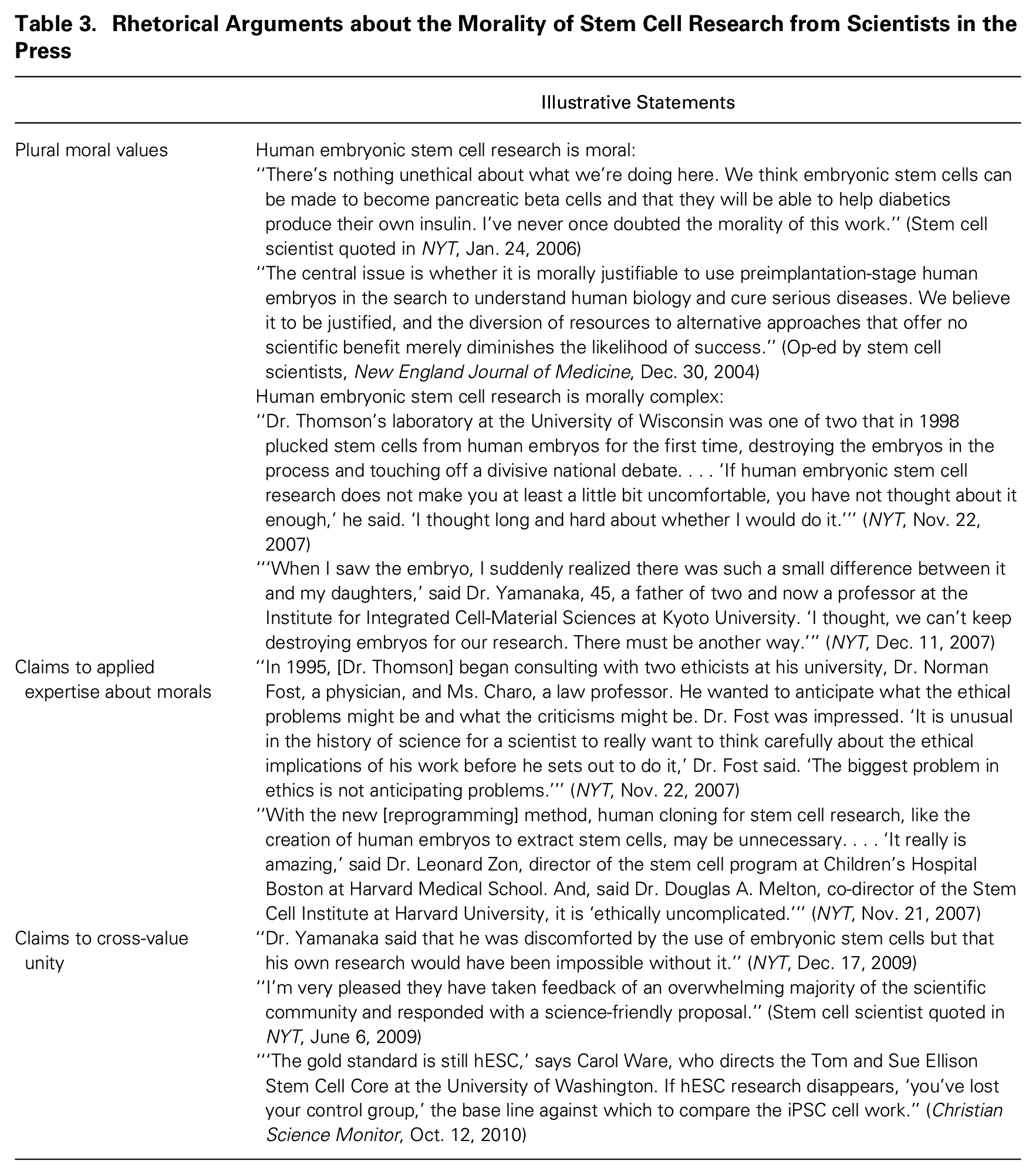
In addition, scientists developed shared resources, including professional associations (e.g., ISSCR), dedicated journals (e.g., Stem Cell Reports, Cell Stem Cell), conferences, foundations, cell banks and repositories, and several large university-based research centers and institutes. Overall, whether working with embryonic stem cells or induced pluripotent cells, scientists have retained the common label “stem cells” and have continued working in joint centers and laboratories.
Decreasing resistance from stakeholders and expansion of stem cell research
For claims to authority to be deemed successful, they must be accepted by the main audiences of these claims—in this case, members of the public, the media, and policymakers. The ultimate expansion of an activity after a period of restricted growth can be taken as a proxy for the general acceptance of a previously contested practice (Zelizer, 1983). Stem cell research appears to have been largely successful after 2007. Policy restrictions had a moderating influence on stem cell research in its early years by restricting the number of stem cell lines available (Scott, McCormick, and Owen-Smith, 2009) and the number of research centers and laboratories where stem cell research could take place (McCormick, Owen-Smith, and Scott, 2009). But research with iPSCs expanded markedly and the level of hESC research was maintained after 2007, with overall output of stem cell research rising markedly. Illustrating this growth, Figure 2 summarizes the number of publications citing hESCs and iPSCs from U.S. laboratories between 1998 and 2013.
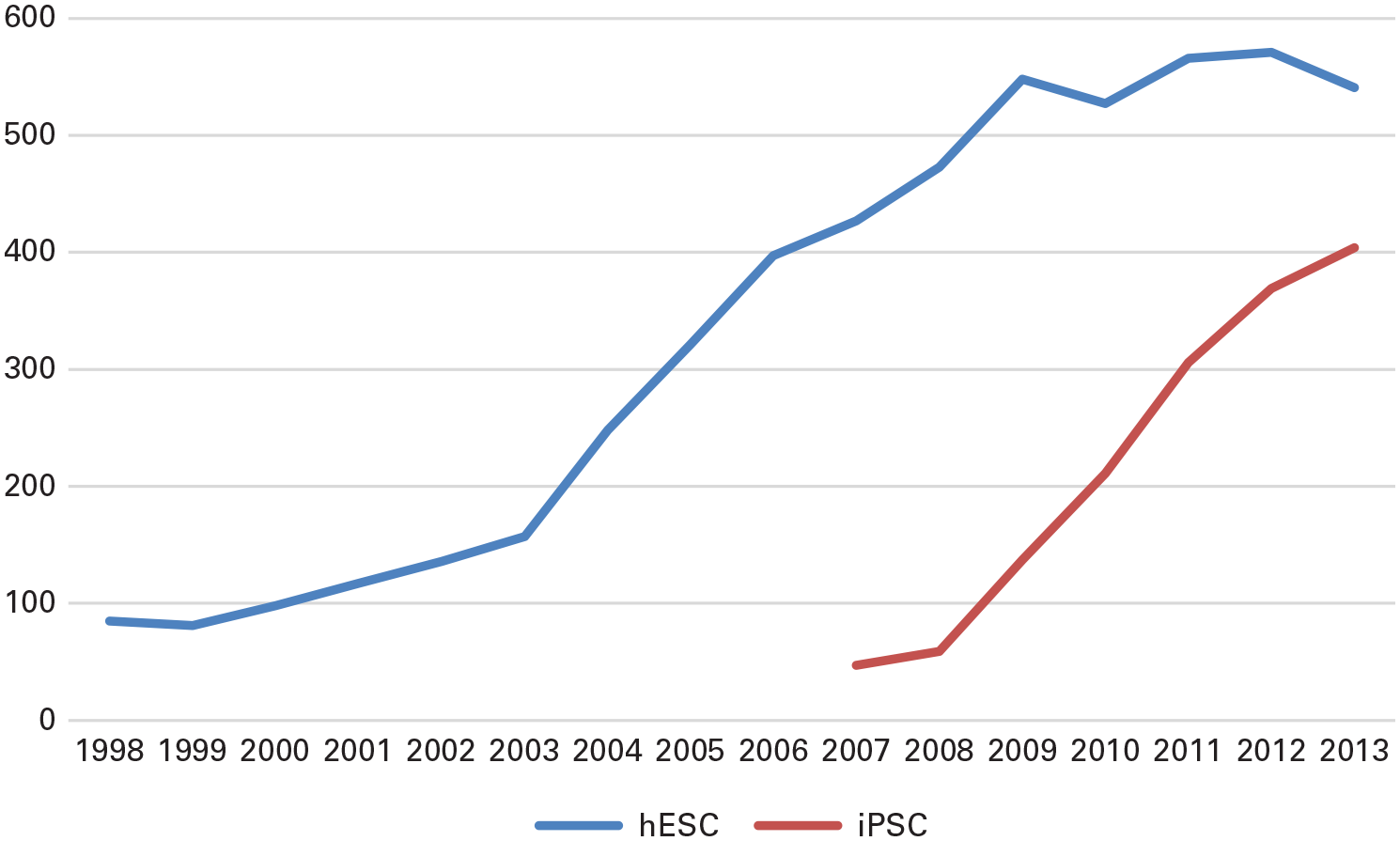
Publications Citing hESCs and iPSCs Based on Research Conducted in the United States, 1998–2013*
Decreasing resistance from the public and the media after 2007 is also more directly evidenced by the media’s decreasing interest in the stem cell debate. The yearly number of articles published in The New York Times citing stem cell research reached an apex between 2001 and 2007 but declined rapidly after 2007; see Figure 3. Finally, resistance from policymakers also eased over time. Legal restrictions were gradually lifted after 2009 without any return of restrictive policies as had been the case in the previous two decades. In 2009, President Obama overturned the federal funding ban and formed a panel to implement funding guidelines aligned with National Academy of Sciences guidelines, already defined by a scientific panel. A growing number of hESC lines were approved for federal funding in the subsequent years. One of the last reported challenges to stem cell research was raised in 2010 when a judge sought to reinstate the ban on federal funding for hESC lines. The ruling was overturned a year later on appeal. No significant legal challenge was raised since this ruling. Overall, these field-level data highlight that the main stakeholders not only decreased their resistance to stem cell research but also accepted some of the scientists’ claims by adopting and maintaining some of their ethical guidelines as federal policy.
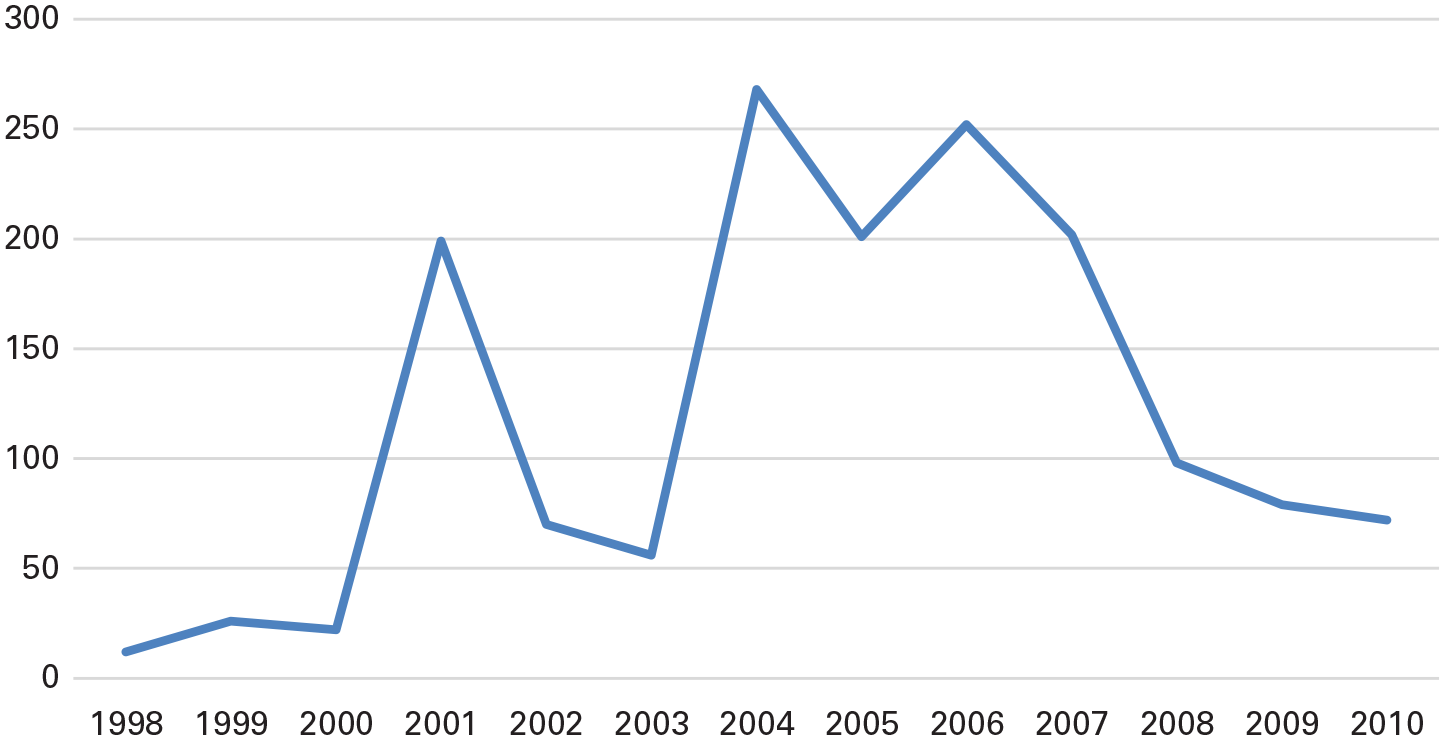
Number of Articles on the Topic of Stem Cells Published in The New York Times, 1998–2010*
Discussion
The analysis presented in this paper unpacked one mechanism by which professionals expanded their expert authority over the moral definition of their work, thereby developing a form of moral authority. In doing so, they expanded their jurisdictional boundaries to encompass a larger field of professional activity (a larger research area) and initially peripheral activities (participation in moral debates).
As professionals pursue more widespread expertise and address more complex questions related to financial, health, and environmental issues and risks, the morality of their activities has come under increased scrutiny. In response, scholars of professions have explored the multiple tensions between morals and professional authority. Prior work has shown that while the control of abstract knowledge is central to the establishment of authority over a work domain (Abbott, 1988; Freidson, 1988; Larson, 2013), involvement in moral issues is considered detrimental to professional control (Abbott, 1988; Moore, 1996). This study highlights that the development and control of expert knowledge about morals is not necessarily incompatible with professional authority. Indeed, knowledge about morals may be mobilized in the pursuit of expert control in the same way that abstract technical knowledge may be. Both bodies of knowledge may together expand professional boundaries of authority by creating an assemblage of multifaceted expertise and concrete achievements in practice.
In the case examined here, professional authority was reinforced by the development of detailed knowledge of plural interpretations of the morality of science—as secular and as open to religious beliefs, as the basis for medicine and as pure science, and as a distinctly rational institution and as an institution open to all constituencies regardless of their beliefs. This knowledge was eventually embedded in the profession’s core when it was applied to research programs. Although the purposes of developing hES and iPS cells—both of which could be used for research and medicine—can be considered equivalent, the incorporation of diverse values in research programs led to different regimes of scientific production, resulting in diverse scientific processes and innovations. Moral and technical knowledge, assembled in practice, formed new knowledge bases on which scientists could both expand their work and ground their authority in public moral debates. Developing knowledge about plural moral values enabled scientists to maintain their inclusion of central members of their profession and develop multiple research programs aligned with their values. These professionals thus expanded their jurisdiction to exercise control over a larger and more productive area of scientific work.
The Moral Foundations of Professional Authority
By unpacking how expertise about morals provides resources for professional authority, this study contributes to growing research on the moral foundations of professional authority, even where morality has been eluded until now (e.g., Freidson, 2001; Khurana, 2010; Briscoe and Murphy, 2012; Anteby, 2013). Scholars have largely focused on crafting moral legitimacy—perceived conformity to social expectations of what is right—as the criterion for success in morally contested work. This study complicates our understanding by showing that professional actors engaging in morally complex activities may pursue not just moral legitimacy but also moral authority—control over the definition of social expectations of what is right. In addition, this work suggests that the turn toward expertise in professional work identified by several scholars (e.g., Abbott, 1988; Brint, 1996) entails not necessarily a retreat to a technical core but also the codification of morals into new bases of expert authority.
Prior literature has shown that the pursuit of moral legitimacy has allowed some professionals to secure a stable and sometimes productive space for their activities (Zelizer, 1983; Chan, 2009; Anteby, 2010). But the pursuit of legitimacy is dependent on the adoption of external sources of moral authority, which leaves professional members subject to control by audiences whose acceptance they rely on (e.g., Meyer and Rowan, 1977; Turco, 2012). In contrast, the pursuit of moral authority allows professionals to strengthen their control over their work areas.
Indeed, the pursuit of expertise-based moral authority is inseparable from struggles over the control of work. Professionals maintain control through various means including directly ignoring managerial commands (Kellogg, 2009), relying on abstract knowledge controlled by the profession (Freidson, 1988), rhetorically delegitimizing competing groups (Gieryn, 1999), and making work indecipherable to non-experts (Evans and Silbey, 2017). In this case, professionals developed control over knowledge about the morality of their work. In doing so they extended their control over the moral definition of their work and strengthened their jurisdiction more generally.
The claim to moral authority unpacked in this study is not grounded in a particular moral perspective but in the mastery and articulation of the different moral perspectives about a work area. Thus, while the pursuit of moral authority may no longer be grounded in the cultivation of specific virtues, it may persist in the expert articulation of moral valuations of complex activities. Several professions demonstrate this rise of expertise-based articulation of moral questions. Ethicists are increasingly solicited as consultants by biotechnological firms, pharmaceutical firms, pension funds, and sovereign wealth funds seeking expert advice on the ethical and social implications of their activities and seeking guidelines for business or investment decisions (Eaton, 2004; Council on Ethics for the Norwegian Government Pension Fund Global, 2018). Socially responsible investment analysts have emerged as professionals focused on finding and defining responsible investment possibilities for the finance industry (Arjalies, Kodeih, and Raynard, 2015). Some service designers distinguish themselves from traditional designers based on espoused values in lieu of technical expertise (Fayard, Stigliani, and Bechky, 2017).
As the stem cell debate occurred at the nexus of several institutions—science, religion, civil society, academia, and government—multiple experts and bodies of knowledge were involved. By developing their knowledge of plural moral views on stem cell science, scientists were able to articulate and control detailed knowledge of both sides of the debate about the use of human embryos for science and medicine. In addition, by combining knowledge of morals with their biological knowledge, scientists developed a unique assemblage of expertise. This complex and multifaceted knowledge allowed scientists to claim superior knowledge in the multiparty deliberations. Scientists are adept at establishing themselves as experts on matters related to science. In this case, they established themselves as experts on two bodies of knowledge involved in the public debates—scientific and moral knowledge—and thereby established themselves as central experts in the moral definition of their work.
Of course, few professionals can achieve control over the moral definition of their work. The development and application of additional knowledge is costly, and most occupational and professional groups are faced with efficiency and profitability pressures. This study thus suggests one important condition for the development of moral authority: a high degree of autonomy. Occupational groups with different levels of autonomy from organizational demands respond differently to efficiency or profitability pressures (Freidson, 2001; Gray and Silbey, 2014; Bechky and Chung, 2018). Professionals partially sheltered from efficiency and profitability pressures can develop and deploy additional resources such as expertise for their continued defense of such shelters (Freidson, 2001). Some organizations allow for some level of professional autonomy in the completion of complex tasks (e.g., Bechky and Chung, 2018). It may also be in some organizations’ interest to allow sufficient autonomy for their members to develop complex and unscripted responses to societal expectations. While Med Lab is subject to efficiency, financial, and reputational pressures from its hosting university and hospital, Med Lab scientists nonetheless have high levels of autonomy. They were able to dedicate resources to initially peripheral activities such as the elaboration of ethics research, seminars, and courses, and they autonomously chose to apply this knowledge of ethics to a plurality of research programs and technologies. In sum, they had the discretion to enact plural moral values in their work—although maintaining these plural values was likely conditional upon the success of the resulting research programs. While the promotion of moral claims by organizations is rife with tensions, this research shows that some professional groups within organizations can nonetheless maintain the latitude to pursue a variety of moral claims.
Not all members of a profession are likely to have the autonomy and resources to deploy and defend complex moral claims about their work. Elaborating and mobilizing expert knowledge in public and policy debates will likely remain the province of a few elite members who can establish themselves as spokespersons for their profession and thus reinforce their centrality within that profession. Professionals’ capacity to engage in public debates about the means and ends of their work thus may depend on the ability and willingness of the more central members to devote the resources to become independent moral voices in public debates. Further research could examine how the characteristics of various occupational and professional groups, including resources, levels of autonomy, and within-organization and within-occupation relations, may condition professionals’ ability to address the morality of their work.
One limitation of this study may be that scientists are more adept than most professionals at mobilizing and debating diverse, competing, and sometimes apparently incommensurable forms of knowledge (Kuhn, 2012). Future research should explore how professionals with more routinized and less exploratory tasks and goals may develop the capacity for integrating and mobilizing moral pluralism. Certainly, general managers have often eschewed the open discussion of plural moral valuations of their work (e.g., Anteby, 2013). Yet the emerging debate among finance professionals over the inclusion of environmental and social criteria in financial tools—and the recruitment of specialists focused on the definition of socially responsible investment vehicles (Arjalies, Kodeih, and Raynard, 2015)—may constitute a parallel context to study how professionals other than scientists might develop expertise related to plural moral values within their ranks and whether these actions might solidify or threaten their jurisdictional authority.
Another limitation pertains to the high status of the scientific profession. Science already enjoys considerable authority in contemporary societies, and the scientists who became involved in the stem cell debates belonged to some of the more central and highly endowed research centers and laboratories. It remains to be seen whether less elite professionals might be able to achieve such levels of authority in moral debates. Further research could examine whether and how occupational groups with fewer cultural resources may be able to influence the moral assumptions about their work.
The Generativity of Moral Pluralism
This paper also contributes to research on morals and organized activities (e.g., Healy, 2004; Almeling, 2007; Anteby, 2010; Turco, 2012; Howard-Grenville et al., 2017) by highlighting the generative role of moral pluralism for complex work activities. Past scholarship has shown that when faced with morally complex activities, occupational actors have either adopted univocal moral justifications and frameworks (e.g., Zelizer, 1983) or remained silent and delegated moral deliberation to external parties (Moore, 1996; Anteby, 2013). Yet univocal justification and silence entail specific problems. Because univocal frames hinge on the mobilization of external sources of morality such as religion or tradition (Zelizer, 1983; Chan, 2009) or simply fail to capture the complexity and fluidity of moral dilemmas (Anteby, 2013), they are often in tension with competing organizational values including efficiency (Healy, 2004) and profitability (Turco, 2012). While silence can enable discretionary personal examination and decision making (Anteby, 2013), it may also enable existing structures of power—whether legal, professional, or organizational—to remain taken for granted (Jackall, 1988; Ewick and Silbey, 2003).
In open and plural societies, workplaces are characterized by the coexistence of multiple and often conflicting institutionalized assumptions, such as those of states, religion, or science and education (Friedland and Alford, 1991), whose tensions and contradictions suffuse local interpretations, interactions, and actions (Hallett and Ventresca, 2006). Occupations that engage in morally complex work are thus most likely “inhabited” (Hallett and Ventresca, 2006) by members holding multiple perspectives and values. When moral pluralism is not silenced but articulated and given force and meaning through local interactions, it may allow for more flexible alignment with both internal and external constituencies. In the case of stem cell science, the articulation of plural moral accounts allowed professionals to forge flexible justifications that connected with external constituencies concerned with the practices of stem cell science such as policymakers, religious groups, patient groups, donors, and the public. Internally, maintaining pluralism allowed for the recruitment and maintenance of productive members holding a variety of moral perspectives.
Consequently, pluralism can enable higher productivity and dynamism. Prior works have shown that pluralism can induce change (Howard-Grenville et al., 2017) and, when sustained, lead to coexisting regimes of production (Almeling, 2007). The emergence of green chemistry was led by chemists who sought to develop more sustainable alternatives to traditional chemistry practices and production (Howard-Grenville et al., 2017). Similarly, differing moral valuations of male and female reproductive materials have led to parallel production and commercialization of these materials, with different modes of donor recruitment, construction of donor profiles for clients, matchmaking processes, and fees (Almeling, 2007).
Pluralism in stem cell science enabled the expansion of two highly productive research programs: one grounded in the pursuit of stem cell science and medicine using embryos and their derived cells and another grounded in the pursuit of similar aims but bypassing the use of human embryos and their cells. Although iPSCs emerged through the search for a technical equivalent to hESCs, their creation led to distinct research programs, funding, publications, and researchers. Pluralism allowed not only the emergence of reprogramming but also the maintenance of research with hESCs (refer to Figure 2). Productivity was sustained not only by the legitimation of hESC research and related policy changes but also by the capacity for stem cell science to attract diverse scientists and allow for knowledge sharing among them. These efforts also facilitated the productivity of the larger field since the research models resulting from Med Lab’s scientists’ efforts—the newly created iPSCs and the newly authorized hESCs—were distributed to all requesting laboratories.
Sustaining pluralism, especially within a shared workplace, remains a challenge. Pluralism creates tensions across groups with differing moral views about what constitutes good work (Howard-Grenville et al., 2017) and can conflict with professionals’ efforts to present their knowledge as objective and unbiased by moral considerations. Yet this study shows that members of a same group can collaborate even when holding different views on a potentially very divisive issue. This suggests some ways for sustaining pluralism in the workplace.
First, the capacity for open debate within the laboratory sustained pluralism over time, and that capacity was carefully orchestrated. The translation of personal values in professional language allowed for discussion on rational rather than moralizing or personal grounds. Rather than potentially calling each other out on their personal morals, scientists collectively engaged in professional debates and knowledge building. The use of dedicated space, time, and language for ethical debate framed the modalities of dissent and allowed for productive collaboration and knowledge exchange unhindered by potential dissent over the means and ends of a collective endeavor. In addition, the capacity to display their unity as professional experts in the moral debates undoubtedly motivated the scientists to continue building consensus and collaboration across values.
Second, maintaining pluralism is likely linked to the elaboration of productive coexisting regimes of production, particularly in scientific and technical professions. In the case of stem cell science, successful innovations allowed scientists with diverse values to craft a productive space within their profession. Material objects, such as scientific tools and research models, inscribe the assumptions of their creators, including moral assumptions (Rheinberger, 1997), and they order the constitution of communities into coherent systems of knowledge, practices, and moral understandings (Kohler, 1994; Rheinberger, 1997; Knorr-Cetina, 1999). The contribution of hESC research to medicine and to the emergence of iPSCs sustained the moral claims of hESC researchers. Similarly, the scientific success of iPSCs made it possible for scientists opposed to the use of human embryos to claim that they could also contribute to stem cell science albeit with different values. As scientists productively worked, debated, collaborated, and exchanged knowledge in the same workspace, their distinct research models allowed them to develop coexisting productive research areas that supported their avowed values.
These elements thus suggest that the maintenance of pluralism is intimately linked to the pursuit of expanded professional authority: the pursuit of authoritative control over an expanded work domain. Given the generativity of open debate and pluralism at work, further studies could explore whether and how pluralism may be sustained absent the pursuit of professional expansion. We know that change efforts can motivate the expression of pluralism (e.g., Meyerson and Scully, 1995; Howard-Grenville et al., 2017), but many change processes are temporary. Professional jurisdictions in our societies are constantly pursued and renegotiated and thus may be more constant drivers for the inclusion of pluralism at work. Further research could unpack more conditions for the sustained inclusion of pluralism.
This study has presented detailed observations of ground-level interactions whereby professionals strengthened their authority by voicing and mobilizing diverse moral preferences. In doing so, it has highlighted how professionals’ capacity to become or remain authoritative moral voices in social debates is negotiated on the ground through everyday interactions and actions. It has also provided further evidence of the micro-ground interactions and actions that sustain the authority of central institutions, such as science, through extensions of professional jurisdictions.
Supplemental Material
sj-pdf-1-asq-10.1177_00018392211011441 – Supplemental material for How Professionals Construct Moral Authority: Expanding Boundaries of Expert Authority in Stem Cell Science
Supplemental material, sj-pdf-1-asq-10.1177_00018392211011441 for How Professionals Construct Moral Authority: Expanding Boundaries of Expert Authority in Stem Cell Science by Joelle Evans in Administrative Science Quarterly
Footnotes
Acknowledgements
I gratefully acknowledge help from advisors Susan Silbey, Fiona Murray, Wanda Orlikowski, and John Van Maanen. I thank Michel Anteby, Diane-Laure Arjalies, Lotte Bailyn, Daisy Chung, Katharina Dittrich, Ruthanne Huising, Jason Jay, Elie Matta, and Melissa Mazmanian for helpful comments and suggestions on earlier drafts. This paper greatly benefited from the thoughtful guidance of Christine Beckman and three anonymous reviewers. This paper also benefited from the constructive feedback of the participants to the Harvard Business School QUIET group, the Davis Conference on Qualitative Research, and the 2nd European Theory Development Workshop. The author is profoundly grateful to all the members of Med Lab for their openness and generosity throughout the field work.
Supplemental Material

1
Morals are defined as what is considered right or appropriate by a community (Durkheim, 1976). This definition of what is moral does not imply a hierarchy of what is moral but allows the moralities and moral accounts of groups to be examined as “facts” (Durkheim, 1976; Boltanski and Thevenaut, 2006; Hitlin and Vaisey, 2013).
2
Stem cells obtained from different methods, such as derivation from embryos and reprogramming, are not perfect substitutes and thus represent different experimental and medical potentials. For instance, the process to obtain iPSCs involves injecting viruses that create more risks for patients for direct transplantation than hESCs. At the same time, cells used to create iPSCs can be sourced directly from diseased patients, potentially addressing compatibility issues. Characterizations of the cells have also highlighted several differences. Scientific research and debate over the characteristics, scientific merits, and medical promises of both cell types are ongoing (e.g., Pera, 2011).
3
All names are pseudonyms.
4
Stem cell scientists facilitated work with stem cell lines after the 2001 funding ban by organizing free banking and distribution of stem cell lines for requesting laboratories.
5
Scientists and bioethicists use a 14-day-after-fertilization boundary as a rule for using human blastocysts for research. Under 14 days there is no evidence of a distinct streak of cells, and the blastocyst can split into twins or triplets.
6
To protect the lab’s anonymity, the claims made in the press by Med Lab scientists are not presented in the paper.
Author’s Biography
References
Supplementary Material
Please find the following supplemental material available below.
For Open Access articles published under a Creative Commons License, all supplemental material carries the same license as the article it is associated with.
For non-Open Access articles published, all supplemental material carries a non-exclusive license, and permission requests for re-use of supplemental material or any part of supplemental material shall be sent directly to the copyright owner as specified in the copyright notice associated with the article.
