






Abstract
The aim of this study was to review the life of Mary E. O'Sullivan and to summarize her important contributions to the study of migraine. Mary E. O'Sullivan underwent extensive training to become a neurologist at a time when only 5% of women in America were physicians. She published five papers on migraine. In a 1936 Journal of the American Medical Association article, she described a patient with ergotamine overuse headache and recommended that daily doses of oral ergotamine should be avoided. Three years later she described migraine as a ‘complex’ syndrome with multiple causes and multiple cures. Mary E. O'Sullivan, an ambitious female headache specialist of the 1930s, was an early advocate of the use of ergotamine to treat migraine, yet she was one of the first to report ergotamine overuse headache. Although her life was short, her research, knowledge and ambition at a time when women had limited opportunities in medicine have left a mark.
Mary Elizabeth O'Sullivan's education and private life
Mary Kenney, a prominent trade union figure and advocate for working class women, imbued her daughter, Mary Elizabeth (hereafter Mary; Fig. 1), with a conviction that women should strive to succeed and become leaders. Mary was born on 18 February 1902 in Beachmont (MA, USA). Mary and her mother developed a very close relationship (Fig. 2).
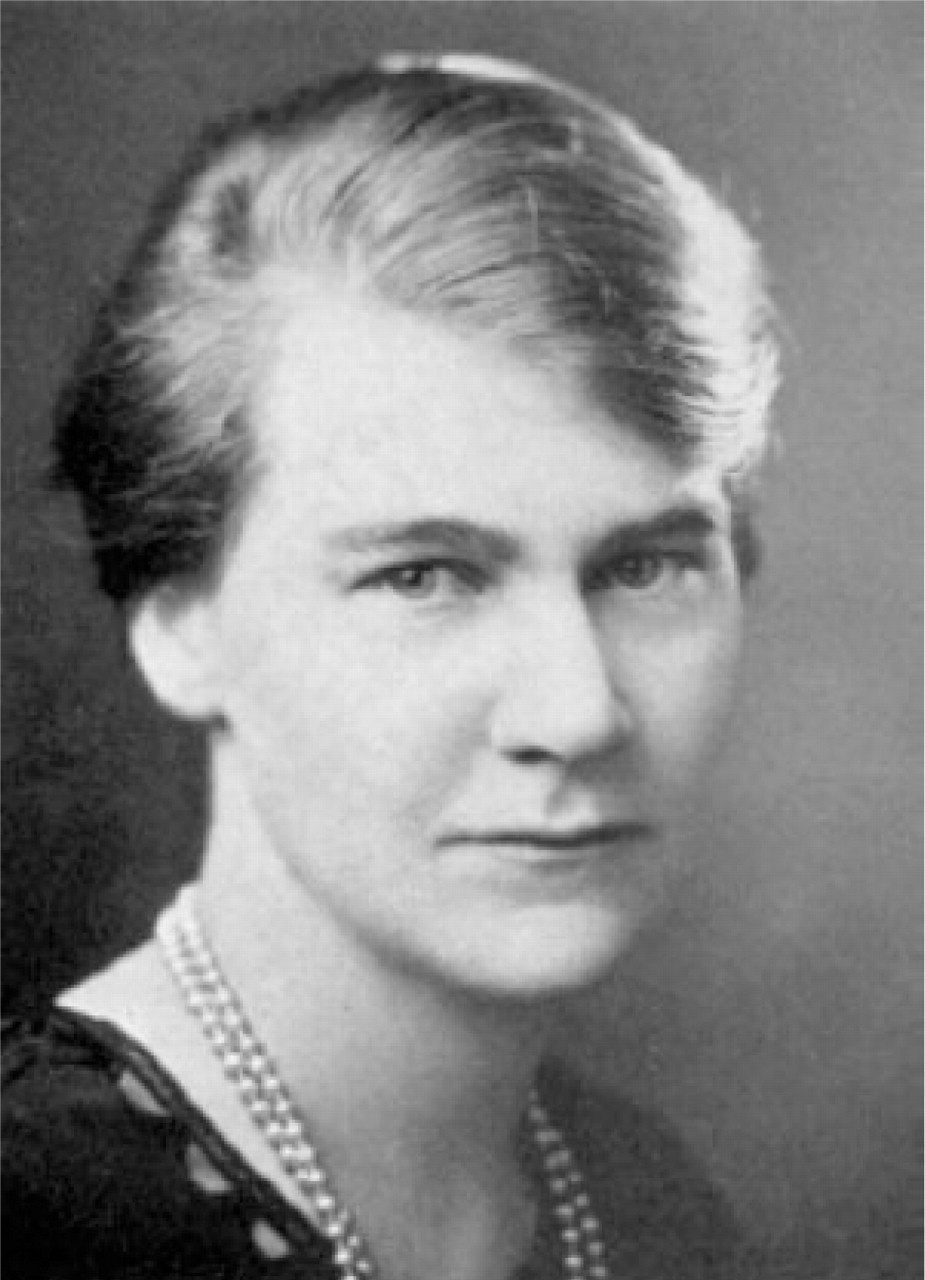
Mary E. O'Sullivan. Reproduced with permission from Boston University School of Medicine (14).

Portrait of Mary Kenney O'Sullivan and her daughter, Mary Elizabeth, 1915. Reproduced with permission from Schlesinger Library, Radcliffe Institute, Harvard University.
Mary was inspired by her ambitious mother to succeed and to lead. She seized opportunities not afforded her mother: most importantly, an extensive education leading to advanced degrees and a profession. This was unusual for women at the time. Specific discrimination appeared and the American Medical Association, founded in 1846, barred women from membership (1). In 1880, only a few medical schools accepted women regularly; thus dissatisfied ‘female pioneers founded five “regular” and sectarian women's medical colleges’(2). After Elizabeth Blackwell, who was the first woman to receive an MD from an American Medical School, graduated from Geneva Medical College in upstate New York, ‘hundreds of women sought medical training’(2). In 1915 the American Medical Association began to admit women. ‘By the end of the nineteenth century, female physicians numbered between four and five per cent of the profession’ (2). Currently, the Journal for the American Women's Association (JAMWA) predicts that by 2010, nearly 33% of US physicians will be female. Mary was part of a movement that would change the trend of women's careers.
Raised in Massachusetts, Mary attended Medford High School and the Colby Academy before entering the Massachusetts College of Pharmacy in 1919 or 1920, where she graduated in 1923 with a PhG degree, an old term for a Graduate degree in Pharmacy. She was a junior class officer and served as the ‘historian’ for the class (3). She was also president of the Mu Chi Phi society, which organized social events every year (3). In her senior year, she became president of the Mu Chi Phi (Fig. 3)

Mary Elizabeth O'Sullivan as president of the Mu Chi Phi Society, 1923. Reproduced from the archives of Massachusetts College of Pharmacy and Health Sciences (4).
As a senior, Mary Elizabeth O'Sullivan served as the Associate Senior Editor of the Crucible, her school yearbook. Two poems were written about her, emphasizing her pensive disposition (Fig. 4) and her hard working nature (4):

Mary E O'Sullivan in her 1923 yearbook photo. Reproduced from the archives of Massachusetts College of Pharmacy and Health Sciences (4).
When dignity she doth assume
And a frown doth her brow adorn,
All eyes are turned on Mary;
She'll have a thought anon.
To ‘Mary O’
It was a weary Editor who sat with feelings blue,
As she gloomily drew from statistics piled high,
And she said to herself with a heart-rending sigh,
While she tightened the towel just over her eye,
‘Here's another man to do!’
After Mary received her pharmacy degree in 1923, she entered Tufts College, where she majored in premedical sciences. She was a member of the Liberal Club, a group that celebrated the ideas of new liberalism. Midway through 1926, in her junior year at Tufts, she enrolled in the Woman's Medical College of Pennsylvania (now Drexel University College of Medicine). She spent a year at Drexel, but continued to seek training elsewhere. Because women were not admitted to Harvard Medical School, she was granted as a ‘special student’ through enrolment in Radcliffe (5). The only access for women to medical school was via Radcliffe, and women were allowed only to study for the PhD in medical sciences, but not admitted to the MD programme. Rosalind Huidekoper Greene was a member of the Greene family, whose papers were donated to the Schlesinger library. The papers ‘cover the years from 1835–1974, and provide an insight into the lives of a Cambridge family interested in various social causes and acquainted with many members of the Harvard faculty’ (6). Mrs Greene wrote a letter of recommendation to the dean of Radcliffe College in September 1927, in which she explained that Mary's goal in applying to the institution as a special student was to take courses to improve her chances of being accepted by Yale Medical School. ‘I have known her since babyhood and I think she will go far.’ Greene described Mary as ‘a young woman of poise and courage’ who also ‘has the sort of long time will that many clever girls lack’. She closed by applauding Mary's ‘very courageous work toward her career’ and declared, ‘it is a pleasure to do anything that can possibly help her’ (5). Mary was accepted at Radcliffe and studied at Harvard Medical School for one semester. Her performance was underwhelming; she received Cs in two bacteriology courses and a D in pharmacology (7). After a long and circuitous journey towards her goal of becoming a physician, Mary matriculated at Boston University Medical College (BUMC) in 1928 and graduated 3 years later.
Notes from BUMC report that Mary Elizabeth had the characteristics of ‘genuineness, dependability, loyalty, and a buoyant sense of humor’. She had an ‘arresting personality’ and drove a ‘little Ford’ that was always available to serve the class. From her previous studies at the Massachusetts College of Pharmacy, Woman's Medical College of Pennsylvania and Harvard Medical School, Mary was familiar with ‘new methods of animal experimentation, diagnoses, and Latin prescription writing’ (8). She never crammed her studying last minute, and she was courageous to pioneer into the ‘unknown field’ of Neurology and Psychiatry (8). Mary, however, was not the only courageous women of her time to pursue Neurology and Psychiatry: Josephine Bicknell Neal, born in 1880, served as a Clinical Professor of Neurology and pioneered the treatment of meningitis with sulphanilamide.
From 1931 to 1935 she was an intern, neurology resident, and neurology research fellow at Bellevue Hospital in New York, studying under leading neurologist Robert Foster Kennedy. She was certified by the American Board of Psychiatry and Neurology in 1940. Mary subsequently worked at St Vincent's Hospital, the New York Infirmary and Bellevue Hospital, where she was chief of the migraine clinic (9). In 1943 she was appointed assistant clinical professor in the Department of Neurology, New York University College of Medicine (10). She married Milton A. Stephens, a construction engineer. There was no evidence that Mary bore children. Mary's promising career was cut short when she died from cancer at age 50 on 8 August 1950 (11).
Research contributions
At BUMC she was predicted to be a leader and, like her mother, she did not disappoint. She received grants from the Josiah Macy Foundation to fund part of her research. She published six papers during her career, five of which concerned headache (Table 1).
Publications by Mary E. O'Sullivan

She published an article in 1934 on the effects of non-sedative drugs and other measures in a group of migraineurs. This article explored migraine-triggering mechanisms as well as response to non-sedating substances in 18 subjects. Hyperventilation, which induced seizures, did not seem to trigger migraines. Follutein, (HCG or human chorionic gonadotropin), triggered migraines in four out of eight women, and zero out of two men. Antidiuretic hormone and insulin were not found to trigger migraines significantly. Of importance, the paper talked about ergotamine tartrate, an alkaloid, which ‘paralyzes the sympathetic augmentor functions stimulated by adrenalin’. The paper discussed its benefit in migraines and ‘at no time was a headache made worse’. Ergotamine completely stopped 34 headaches in 14 patients, and failed to alleviate only five headaches in four patients. ‘In one of [their] cases in which benefit occurred, the discontinuance of the drug precipitated a very severe headache’ (12).
A subsequent article in 1936 increased the number of subjects to 97. ‘All but eight of the ninety-seven patients were benefited’ by ergotamine tartrate. She discussed that the earlier the medication was given during an attack, the better the results. O'Sullivan recognized that daily oral ergotamine was to be avoided. She also reviewed the side-effects of the drug, which included nausea, vomiting, weakness of the legs, joint stiffness, throat constriction, chest heaviness, and paraesthesias of the toes and fingers. Atropine relieved the nausea and vomiting, and calcium gluconate IV could reduce the muscle pains. Generalized weakness after the drug was treated by a routine protocol of lying down for an hour (13). O'Sullivan was one of the first to describe a patient with ergotamine overuse headache (14). Peters and Horton, however, clearly identified ergotamine overuse headache in their classic paper of 1951, and they recommended a withdrawal treatment programme in 1963 (15).
In a 1937 German language article, O'Sullivan clarified the role of ergotamine, and outlined a modern-sounding acute and preventive migraine treatment plan (16). She discussed that ‘treatment during the symptom free periods should be directed to the underlying etiological and pathological process. Medications proven successful for interval treatment of migraines combined with ergotamine (for the eradication of the attacks) are daily oral doses of calcium gluconate and vitamin D, which [also] improve unpleasant side effects such as nausea, vomiting, and muscular pain’ (16).
In a 1939 paper that was read before The American College of Physicians in New York, Mary Elizabeth grappled with the concept of migraine as a syndrome, not as a ‘clinical entity with one cause and one specific cure’. She discussed how ophthalmologists think they cure migraines with the ‘proper fitting of glasses’ and how rhinologists think they can cure it by ‘shrinking membranes and removing septi’.
She described that there was not just one treatment. ‘Emmenin’, a placental extract, helped women with headaches during menstrual periods, ‘especially if there is a history of scanty or delayed menstruation’. ‘Progynon-B’ relieved headaches and menopausal symptoms in women who suffered from ovarian hypofunction. Migraine patients with allergies and hives responded better with the daily use of calcium gluconate and viosterol, especially if they had attacks that were ‘accompanied by severe nausea and vomiting’. Mary Elizabeth discussed that migraine patients should have their basal metabolic rate determined, especially if the migraines were related to fatigue, strain and intense exhaustion. She felt that those who had basal rates from 20 to 30 would be relieved by thyroid medication. If they had associated dysmenorrhoea or oligomenorrhoea, the thyroid hormone could be given with emmenin. She further talked about pituitary extract being helpful for those with ‘large bones, thick noses and thick grimy skins’; ‘these pituitary headaches were also associated with menstrual periods and at times gave allergic stigmata as well’ (17). To overcome the trial and error method of prescribing medications, she created a coded headache history chart. The chart colour coded a patient's initials, symptoms, and successful treatment plans, thus allowing similar treatment plans to be used on new patients who presented with similar symptoms (17).
The distinguished headache specialist, John Graham, used an analogous concept in his 1955 book The Treatment of Migraine, as he compared the complexity of the migraine to the fable of The Blind Men and the Elephant: ‘The fable of the blind men of Indostan [India] and its illustration epitomized the attempts of the medical profession through the ages to grasp the true nature of the migraine. The “migraine elephant” presents many interesting appendages, each of which has its individual characteristics and behavior, but nevertheless is integrally related to the animal as a whole’ (18).
In a 1947 paper published in the Journal of Clinical Medicine, Mary illustrated a headache record that would assist in evaluating a headache (Fig. 5). The article argued that patients who cooperated and visited a physician regularly achieved better results. Gynergen, she wrote, ‘infallibly relieves migraine headaches if given in adequate doses. The dose varies with the severity of the attack and time of taking drug’. Other factors in curing migraine included an emotional factor; ‘involving psychotherapy, new treatment, new physician, [and] new job’ have cured migraines. Low-fat, low-salt diets could also treat migraines (19).

A sample of Mary's ‘Headache Record’ from her 1947 paper, ‘Migraine is Curable’ (19).
Conclusion
At a time when only 5% of American women were physicians, Mary Elizabeth worked hard and was dedicated to pursuing her dreams of becoming a neurologist. She underwent a lengthy college and graduate training that was not only uncommon for women at her time, but is also uncommon for career-oriented women now. She spent 3–4 years at the Massachusetts College of Pharmacy, 2–3 years at Tufts and 4.5 years in medical school training (1 year at Woman's Medical College of Pennsylvania, half a year at Harvard, and finally 3 years at Boston University Medical Center). Women were not accepted into Harvard Medical School at that time, so she enrolled at Radcliffe and was allowed to take courses in the medical school as part of a PhD in medical sciences programme. She completed 4 years of residency and fellowship, being trained at Bellevue Hospital by the famous New York neurologist Robert Foster Kennedy. She subsequently worked as a neurologist and headache specialist at Bellevue Hospital, the NYU Clinic, the New York Infirmary and St Vincent's Hospital. She was an early advocate of the use of ergotamine to treat migraine, and was one of the first to describe a patient with ergotamine overuse headache. She created a headache record (see Fig. 5) and individualized migraine treatment. During her short lifespan, she wrote six papers in neurology, five of them concerning headaches. Her research, knowledge and ambition have left a mark that will last forever. She was one of the few female Neurologists; in 1942 there were aproximately 25 female physicians who were board certified in neurology and psychiatry (20). Mary O'Sullivan was a pioneering female neurologist who made important contributions to the understanding of migraine headaches.
Footnotes
Acknowledgements
The authors thank Dr W. Bruce Fye for his thoughtful review of the manuscript.