






Abstract
There have been some studies on the relationship between tension-type headache (TTH) and physical activity. However, most previous studies were not prospective and assessed physical activity by questionnaire. Therefore, this study was aimed to investigate the relationship between TTH intensity and physical activity prospectively utilizing computerized ecological momentary assessment and actigraphy Thirty-one TTH patients wore watch-type computers equipped with actigraphy inside for 1 week to record momentary headache intensity and physical activity. Multilevel modelling was used to investigate the effect of headache intensity on the simultaneous and subsequent activity level. There were significant negative associations between headache intensity and the simultaneous and subsequent activity level, and activity level was significantly reduced at headache exacerbations. These results provide objective and quantitative evidence suggesting that TTH negatively affects physical activity.
Introduction
The relationship between tension-type headache (TTH) and physical activity has been discussed in several studies. Especially regarding the effect of TTH on physical activity, cross-sectional studies have suggested that TTH does not restrict activities significantly (1–4), in accordance with the diagnostic criterion that the headache intensity is mild to moderate (5).
However, because most studies have been cross-sectional, problems such as recall bias were inevitable. Ecological momentary assessment (EMA) has been proposed as a reliable method to assess and record events and symptoms in natural settings (6). EMA is a sampling method developed to assess phenomena at the moment of their occurrence without retrospective recall, achieving high ecological validity at the same time (6). EMA using paper-and-pencil diaries has been used as a ‘headache diary’ and one prospective study using paper-and-pencil diaries of headache intensity and subjective rating of physical activity in TTH patients showed no significant cross-correlations between headache intensity and physical activity (7). However, it has been suggested that EMA using paper-and-pencil diaries has the disadvantage of ‘faked compliance’, i.e. disguise of compliance by recording data at times other than those designated (8). Computerized EMA, i.e. EMA using computers as electronic diaries, avoids faked compliance by recording the time at which data are input (8). Additionally, subjective rating of physical activity is also susceptible to inaccuracy. Objective measurement by actigraphy, which is a validated measurement method of physical activity (9), would make it possible to assess physical activity more accurately.
Therefore, the aim of this study was to investigate the within-individual relationship between momentary headache intensity and objectively measured physical activity prospectively in TTH patients, utilizing computerized EMA and wrist actigraphy.
Methods
All the procedures and materials were approved by the institutional review board of the University of Tokyo.
Subjects
The subjects in the present study were part of those enrolled in a trial of relaxation therapy for TTH and partly overlapped with the subjects in the previously reported study (10). Recruitment was conducted from March 2003 to August 2004 by an advertisement on our department website, as well as on the websites of the clinic of neurology and the self-help group of chronic headache patients. Patients who applied for participation were interviewed and screened by well-trained physicians.
Inclusion criteria were as follows: diagnosis of any type of TTH according to the criteria of the International Headache Society (IHS) (11); at least one headache episode per week on average; and age ≥20 but <60 years. Exclusion criteria were: diagnosis of headache other than TTH according to the criteria of the IHS (11); current psychiatric disease; history of paranoia or schizophrenia; history of panic disorder, personality disorder and severe physical illness; current or prior participation in relaxation therapy; and employment as a shift worker.
Eighty-four subjects applied to participate and 59 met the eligibility criteria. Five declined participation due to scheduling conflicts, and therefore 54 were finally enrolled in the trial of relaxation therapy. Nineteen subjects with migraine and one subject who worked as a shift worker were excluded and 34 remained as subjects. All subjects gave their written informed consent.
Measurements
Momentary headache intensity
To record momentary headache intensity, watch-type computers (Ruputer ECOLOG; 42 g, Seiko Instruments Inc., Tokyo, Japan) were used as electronic diaries (10). The computer was equipped with a screen measuring 20 × 30 mm, and a joystick and button as input devices. Subjects were fully instructed how to use the device and given manuals before the beginning of the study period. They also practised manipulating the device with one of the authors (H.K.) until they became accustomed to its use.
Subjects wore the watch-type computers for seven consecutive days. Signal-contingent recordings were defined as recordings that were prompted with a beep as a signal (6) and they were programmed to occur randomly within an interval of 36 min around 06.00, 12.00, 18.00 and 24.00 h. If the subjects did not enter a recording when the computer beeped, they were allowed to postpone input for 30 min. Recordings not made within 30 min were cancelled. Subjects were also asked to record their headache intensities when they woke up and went to bed by choosing ‘waking up’ or ‘going to bed’ from the menu. After selecting a ‘going to bed’ recording, computers suspended the signal-contingent recordings until a ‘waking up’ recording was selected, to avoid disturbance of sleep. Signal-contingent recordings and recordings when waking up and going to bed were treated as scheduled recordings.
Event-contingent recordings were defined as recordings that were initiated by the subjects themselves when a particular event occurred (6). In this study, subjects were asked to make a recording every time their headache was exacerbated or they took analgesics as an event-contingent recording. In event-contingent recordings, it was recorded whether analgesics were taken or not, and the name and dose of the analgesics were also recorded when they were taken.
In both scheduled and event-contingent recordings, headache intensity was rated according to a visual analogue scale (VAS) from 0 to 100 displayed on the screen. The words ‘headache intensity’ were displayed with the VAS as a question and the anchor words ‘none’ and ‘most intense’ were displayed at the respective ends of the scale. By manipulating the joystick, the subjects adjusted the length of the bar so that it corresponded to their headache intensity at that moment.
Physical activity
Wrist activity monitors were built into the watch-type computers used for recording headache intensity and worked synchronously with the computers. They were worn all day and night on non-dominant hands for seven consecutive days. The instrument was removed for bathing, showering or any other activity likely to cause water damage. The time the instrument was taken off and put back on was recorded when the ‘taking off’ or ‘putting on’ item was selected from the menu. The activity monitors are uni-axial piezo-electronic accelerometers with a sensitivity of 0.01 g, and are analogous in performance to the Actigraph Mini-Motionlogger (Ambulatory Monitors Inc., Ardsley, NY, USA), which has frequently been used in studies of physical activity. Zero-crossing mode was used and acceleration counts were accumulated for every epoch of 1 min.
Data analysis
Mean activity levels were calculated as averaged acceleration counts per minute for the time frame of 1 h around each momentary recording, and for the time frames of 1 h, 2 h and 3 h after each momentary recording. Mean activity levels for any time frame in which there was analgesic use (according to the recordings of analgesic use as an event-contingent recording), any period of sleep, or removal of the activity sensor were excluded from analysis. Mean activity levels after event-contingent recordings with analgesic use were also excluded.
Statistical analysis
Multilevel modelling was employed to investigate the within-individual relationship between mean activity levels and momentary headache intensity using SAS Proc Mixed (SAS 9.1; SAS Institute Inc., Cary, NC, USA). Multilevel modelling is an extension of traditional regression models and has been recommended for the analysis of data with a hierarchical structure, including EMA data (12). The dataset in the present study has a hierarchical structure in which mean physical activity levels corresponding to EMA recordings were nested within patients. Multilevel modelling can handle unbalanced data such as the dataset in the present study in which the numbers of the EMA recordings are different for each patient. Multilevel modelling has another advantage, in that it allows one to model the intercepts and the slopes (the effect of momentary headache intensity or acute headache exacerbation on the mean physical activity in this study) as random effects, which means that these can vary across patients.
First, in order to investigate the effect of headache intensity on physical activity, the mean activity levels around and after momentary recordings were used as dependent variables in separate models and momentary headache intensity was used as the predictor. The effect of momentary headache intensity was modelled as either a fixed or a random effect. In order to control for time, time of day was divided into four blocks (03.00–09.00, 09.00–15.00, 15.00–21.00 and 21.00–03.00 h, with centres corresponding to the times of signal-contingent recordings) and entered as covariates when necessary. The following models were analysed for each time frame: model 1, an unconditional model (no predictor); model 2, an unconditional model with control for time; model 3, a model with the effect of momentary headache intensity as a fixed effect; model 4, a model with the effect of momentary headache intensity as a random effect; model 5, a model with the effect of momentary headache intensity as a fixed effect and with control for time; and model 6, a model with the effect of momentary headache intensity as a random effect and with control for time. The level 1 intercept (individual true value of the mean activity level when the momentary headache intensity was zero) was modelled as a random effect.
Second, in order to investigate the effect of headache exacerbations on physical activity, the mean activity levels around event-contingent recordings (i.e. headache exacerbations) were compared with those around signal-contingent recordings, which were used as controls; this analysis was performed only for patients who made event-contingent recordings. Mean activity levels over the 1 h around momentary recordings were used as the dependent variable and the type of recording (event- vs. signal-contingent) was the predictor. The effect of a type of recording, which was the effect of headache exacerbations, was modelled either as a fixed or random effect and time of day was controlled as described above. The following models were analysed: model 1, an unconditional model (no predictor); model 2, an unconditional model with control for time; model 3, a model with the effect of headache exacerbations as a fixed effect; model 4, a model with the effect of headache exacerbations as a random effect; model 5, a model with the effect of headache exacerbations as a fixed effect and with control for time; and model 6, a model with the effect of headache exacerbations as a random effect and with control for time. The level 1 intercept (individual true value of the mean activity level around signal-contingent recordings) was modelled as a random effect.
In all analyses, the variance–covariance matrix (G matrix) was modelled as unstructured. Goodness of fit was compared by calculating the difference in the −2 log likelihood statistics when one model was nested in the other; otherwise, Akaike's Information Criterion was used.
Results
Patient characteristics
Thirty-four subjects were enrolled and three were excluded from further analysis because they were unable to complete their recordings for 7 days due to problems with the computers. Finally, 31 subjects (nine men and 22 women) were analysed; their profiles are shown in Table 1.
Demographic and medical characteristics of the subjects

SD, Standard deviation.
Recording profiles
For all subjects, there were 998 scheduled recordings. The mean compliance rate for signal-contingent recordings was 96%. Twenty-three subjects made 105 event-contingent recordings and analgesics were taken in 49 recordings of them. The other eight subjects made no event-contingent recordings.
Examples of data for momentary headache intensity and physical activity are shown in Fig. 1.

Example of data for momentary headache intensity and physical activity in a patient with tension-type headache: (a) for 5 days and (b) for 9 h, which are part of the data shown in (a). Line graph shows physical activity counts per minute. Open diamond shows momentary headache intensity and open triangle shows time of taking off and putting on the computers. (b) Headache was exacerbated and the patient added an event-contingent recording around 19.30 h (open diamond). It seems that physical activity was decreased after the headache exacerbation. —, Physical activity.
Effect of headache intensity on physical activity
For the mean activity level during the 1-h period around momentary recordings, the model with the effect of momentary headache intensity as a fixed effect and with control for time (model 5) fitted better than the other models and the effect of momentary headache intensity was significant in model 5 (F(1,374) = 5.03, P = 0.026; Table 2). For the mean activity level over the 1-h period after momentary recordings, no models including the effect of momentary headache intensity fitted better than the unconditional models. The model giving the best fit that included the effect of momentary headache intensity was model 5 and the effect of headache intensity approached significance in model 5 (P = 0.052). For the mean activity levels during the periods of 2 and 3 h after momentary recordings, the model with the effect of momentary headache intensity as a fixed effect and with control for time (model 5) fitted better than the other models and the effect of momentary headache intensity was significant in model 5 (F(1,409) = 5.45, P = 0.020 for the period of 2 h after recordings; F(1,341) = 5.21, P = 0.023 for the period of 3 h after recordings; Table 2). Model 5 was expressed as follows:
Momentary headache intensity and mean activity level around and after momentary recordings

SE, Standard error.
Intercept was estimated mean activity level when momentary headache intensity was zero and time was in 15.00–21.00 h. Time of day was controlled.
Level 1 equation:

Level 2 equations:
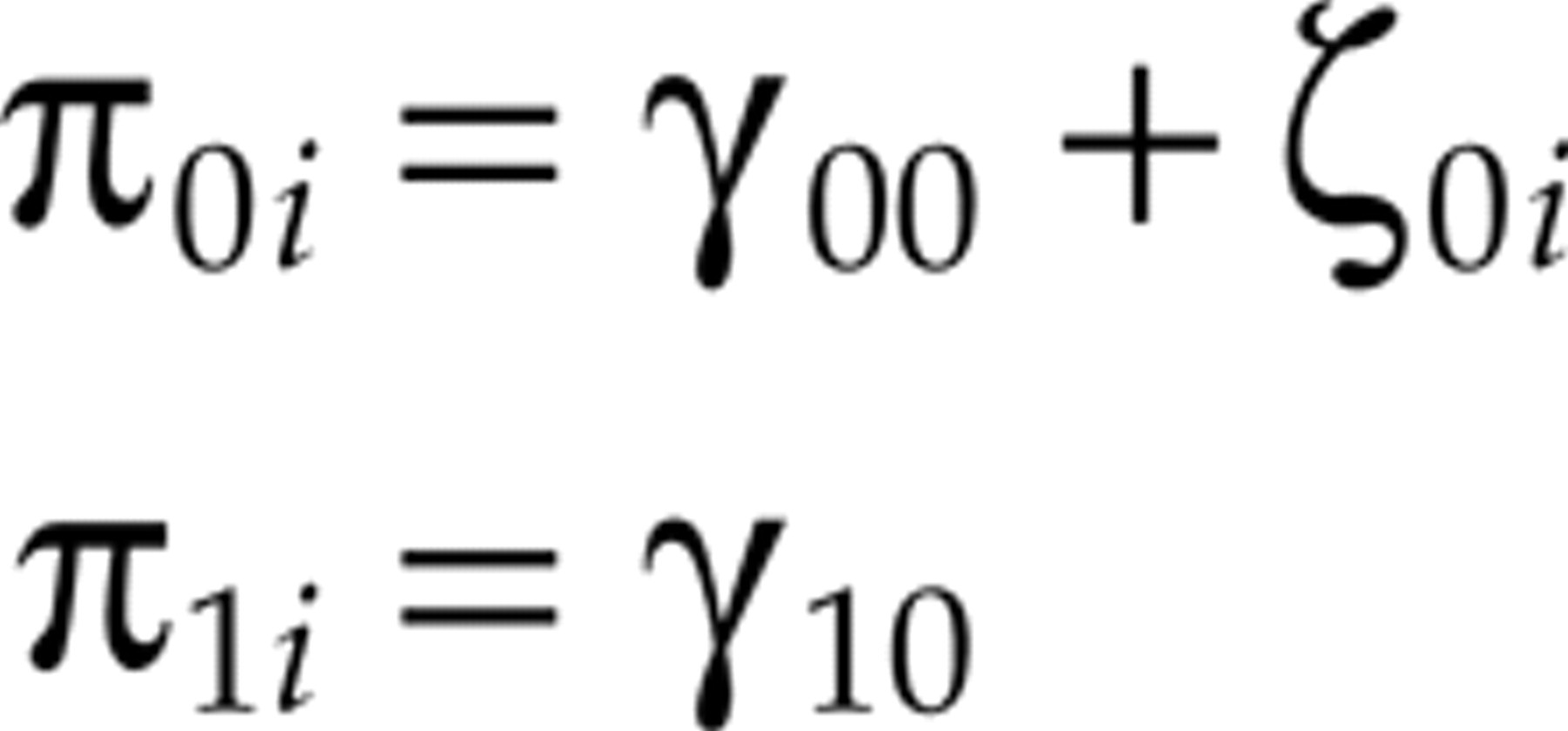

where Y ij is each mean activity level for the ith patient; Headache ij is the corresponding momentary headache intensity; and TIME0 ij , TIME6 ij and TIME12 ij are dummy variables indicating that the time of day was in 21.00–03.00, 03.00–09.00 and 09.00–15.00 h, respectively (e.g. TIME0 ij = 1 if the time of day was in 21.00–03.00 h, TIME0 ij = 0 otherwise). π0i is the individual i's true value of mean activity level when all predictors are zero (intercept). γ00 is the average true value of mean activity level when all predictors are zero. π1i is the individual i's slope representing the effect of momentary headache intensity on mean activity level and γ10 is the average slope. ε ij and ζ0i are residuals at each level. Including ζ0i in the equation means that the intercept was modelled as random, which suggested that intercept could vary across patients. The second level 2 equation includes no residual, which means that the effect of momentary headache intensity on mean activity level was modelled as a fixed effect in model 5. π2i , π3i and π4i are individual i's true differences in mean activity level between corresponding time blocks and the reference time block. Those are equal to γ20, γ30 and γ40, which are the average differences in mean activity level between corresponding time blocks and the reference time block, because the effect of time was modelled as a fixed effect.
Effect of headache exacerbations on physical activity
For the mean activity levels during the 1-h period around momentary recordings, the model including the effect of headache exacerbations as a fixed effect and with control for time (model 5) fitted better than the other models, and the effect of headache exacerbations was significant in model 5 (F(1,20) = 5.30, P = 0.032; Table 3). Model 5 was expressed as follows:
Mean activity levels around headache exacerbations and around signal-contingent recordings

SE, Standard error.
Intercept was estimated mean activity level around signal-contingent recordings when time was in 15.00–21.00 h. Effect of headache exacerbations was the difference in mean activity levels around headache exacerbations (event-contingent recordings) compared with signal-contingent recordings. Time of day was controlled.
Level 1 equation:

Level 2 equations:
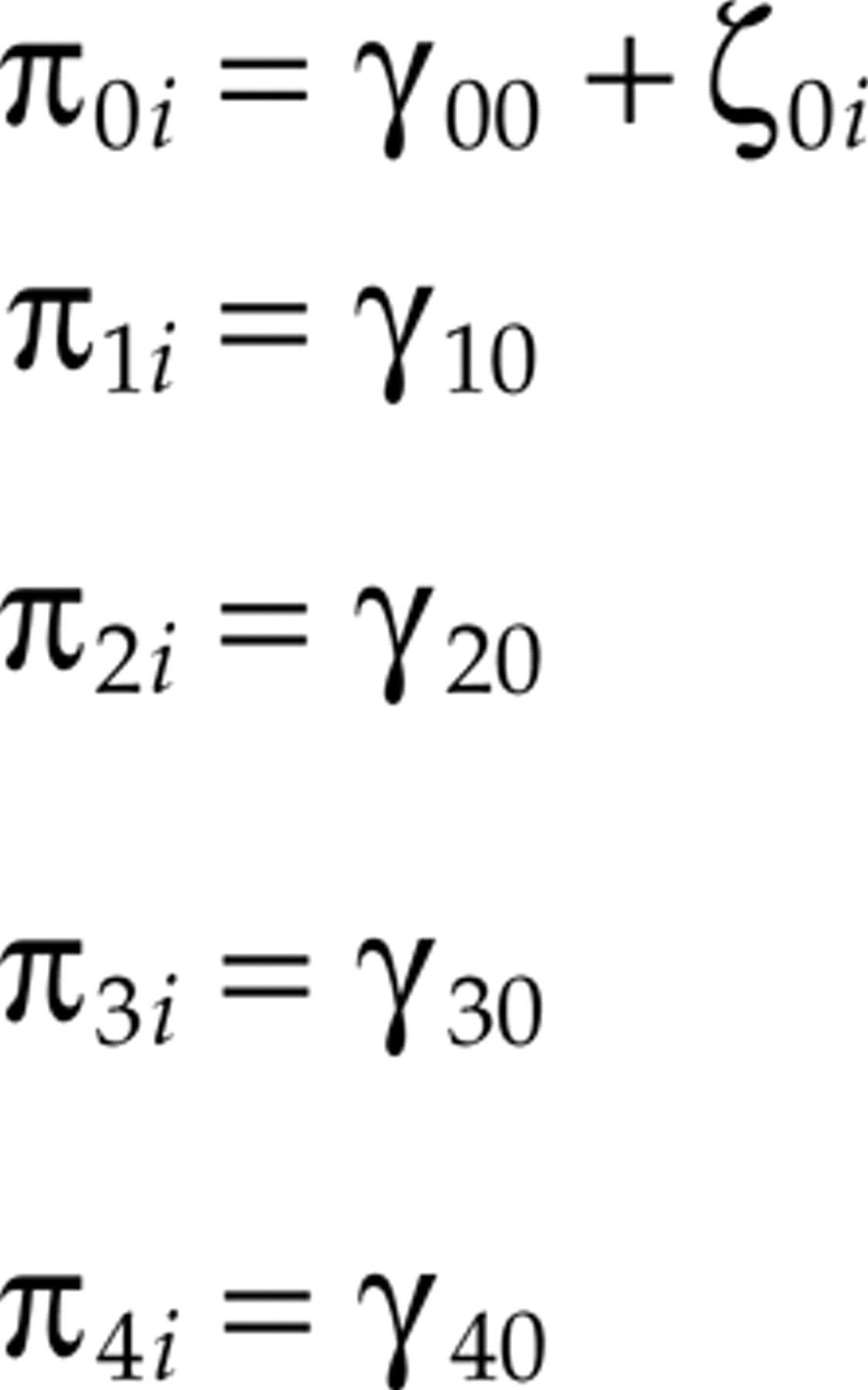
where Type ij was the type of recording (0 for signal-contingent and 1 for event-contingent), and the other variables were as described above. π0i is the individual i's true value of mean activity level when the type of recording was signal-contingent and the other predictors are zero (intercept). γ00 is the average true value of mean activity level when the type of recordings was signal-contingent and the other predictors are zero. π1i is the individual i's true value of the difference in mean activity level between signal-contingent and event-contingent recordings. γ10 is the average true value of that difference. ε ij and ζ0i are residuals at each level. The other coefficients were the same as described above.
Discussion
The present study used computerized EMA and actigraphy in a prospective way and showed that an objective and quantitative relationship between TTH intensity and physical activity, suggesting that greater headache intensity may cause less physical activity. Although previous cross-sectional studies have suggested that TTH does not restrict activities significantly (1–4), they did not measure any objective or quantitative physical activity, but examined the relationship itself between headache intensity and physical activity by a questionnaire relying on recall. On the other hand, the present study was conducted in a prospective way and the temporal relationship between headache intensity and physical activity was analysed from the time-series data colleted in natural settings. Therefore, the present study may have shown a more accurate, detailed and quantitative relationship.
One previous study on the relationship between headache intensity and physical activity in TTH patients was conducted in a prospective way, but used paper-and-pencil diaries and rated physical activity subjectively using a questionnaire (7); no cross-correlations between headache intensity and physical activity were shown, contrary to the results of the present study. This inconsistency may be due to the difference between subjectively rated physical activity in the previous study and objectively measured physical activity in the present study.
Physical activity not only has an aspect with physiological significance but is also a measure reflecting behaviour resulting from psychological processes. Especially, watch-type actigraphs as used in the present study have high sensitivity and can detect not only large body movements but also minute movements associated with behaviour such as desk work (13). Therefore, the results of the present study can be interpreted as a reflection of behavioural responses to headache or interference with daily activities by headache. Patients with headache usually perform some manoeuvres to relieve the headache, and in a previous study (14) TTH patients reported that they performed manoeuvres such as ‘lies down’ and ‘does not move’ during headache attacks, without necessarily relieving the headache. The results of the present study might reflect those behavioural responses especially in chronic tension-type headache (CTTH), because frequent episodes of headache in CTTH could make those behavioural responses more habitual. The results might also show objective and quantitative evidence of interference with daily activities by headache, which might be associated with decreased work effectiveness. Recently, TTH has gained more attention as a cause of decreased work effectiveness, an issue which has been discussed mainly in surveys based on self-report (15–17). The results of the present study might objectively support these previous studies in the importance of TTH as a cause of decreased work effectiveness.
In migraine patients, a study using accelerometers has shown that migraine influences physical activity after migraine attacks (18). The present study, similarly, found that physical activity was reduced on exacerbation of headache in TTH patients. In addition, our results have shown the quantitative relationship between headache intensity (not limited to only acute exacerbations) and physical activity through simultaneous recording of momentary headache intensity and physical activity. A study applying the same method to patients with migraine would be able to compare the quantitative relationship between migraine intensity and physical activity with that between TTH intensity and physical activity.
On comparison of models by multilevel analysis of the present study, the models fitted better when the effect of headache intensity was included as fixed than as random. In addition, estimated variances in the effect of headache intensity did not differ significantly from zero in models with the effect of headache intensity as a random effect (data not shown). These results suggest that the effect of headache intensity on physical activity might not differ significantly among patients.
The limitation of the present study is that momentary headache recordings were sparse, whereas physical activity monitoring was continuous. Especially when mean activity levels over a long time frame were considered without detailed information on the course of headache intensity, which may vary over time, the relationship between momentary headache intensity and mean physical activity level may be weakened.
In conclusion, using computerized EMA and actigraphy simultaneously, objective and quantitative evidence suggesting a negative effect of TTH on physical activity has been shown.
Acknowledgements
The authors thank Dr Nahoko Miyasaka and Dr Shinya Manaka for their cooperation in recruiting participants. This study was partly funded by a grant from the Department of the Ministry of Health, Labor, and Welfare of Japan (K.Y.).