






Abstract
Introduction:
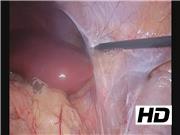
Opsoclonus myoclonus syndrome (OMS) is an extremely rare autoimmune neurologic condition with an incidence of ∼0.18 cases per 1 million. 1 About 50% of pediatric patients with OMS have an association with underlying neuroblastoma, ganglioneuroblastoma, or glangioneuroma. 1 Laparoscopic adrenalectomy through the transperitoneal approach has the benefits of less pain, quicker recovery, shorter hospital stay, and better cosmetic outcomes, but it can be technically challenging in a small sized child. 2 This video demonstrates a laparoscopic left adrenalectomy in a child in a stepwise manner. The patient was placed in a left lateral position with a pillow roll underneath the right flank. Open 5 mm infraumbilical approach was used for 5 mm laparoscopy and pneumoperitoneum was established with the pressure of 12 mm Hg. Two further 3 mm stab incisions were made in the left iliac fossa and epigastric region for working ports. The splenic flexure and descending colon were reflected medially by incising along the white line of Toldt laterally. An additional 3 mm stab incision was made in the right upper quadrant for a grasper to retract the spleen medially. With the spleen retracted medially, the phrenicocolic and lienorenal ligaments were divided. The space between the kidney and the pancreas was opened up to reveal underlying adrenal gland, which was then dissected superiorly off the pancreas and inferiorly from the Gerota's fascia. The superior suprarenal vessels were dissected using a harmonic scalpel (Ethicon Endosurgery, Cincinnati, OH). After the adrenal was freed up laterally, inferiorly, and superiorly, the left adrenal vein was identified. The left adrenal vein was skeletonized and two Ligaclips were placed proximally before dividing. The medial dissection of the adrenal gland was completed using the harmonic scalpel. The left adrenal gland was retrieved in a 10 mm Endocatch bag through the left iliac fossa port site. The spleen was repositioned into the anatomical position to avoid torsion. Hemostasis was checked before closure.
Materials and Methods:
A 16-month old boy (weighed 10 kg) presented with 2-week history of irritability, unsteady gait, vomiting, and lethargy. There were no other associated symptoms. On clinical examination, there was broad-based gait with past pointing and truncal ataxia in keeping with OMS. Blood and urine investigation were negative for catecholamines. CT chest, abdomen, and pelvis showed a left enlarged adrenal gland as compared with the right (thrice the size), however, with no discrete mass. MIBG revealed non-MIBG avid adrenal, but ganglioneuroma or ganglioneuroblastoma could not be excluded. He was managed medically for his opsoclonus and myoclonus symptoms with intravenous dexamethasone and immunoglobulin. After multidisciplinary team meeting with neurologist, oncologist, and radiologist, given the possibility of underlying neuroblastoma, it was decided to proceed with left adrenalectomy even though there were no discrete mass, but it was an enlarged adrenal gland.
Results and Conclusions:
The patient was admitted overnight in the intensive care unit for observation. The patient resumed diet on day 1 and was discharged on day 2 without any postoperative complications. Laparoscopic adrenalectomy can be safely performed in a small sized child <10 kg with 3 mm instruments.
No competing financial interests exist.
Consent was obtained from the patient's guardian (parent).
Runtime of video: 5 mins 13 secs


Get full access to this article
View all access options for this article.