






Abstract
Introduction:
Endoscopic management of upper tract urothelial carcinoma (UTUC) can be offered to patients with solitary kidney, bilateral disease, or renal insufficiency. 1 Performing percutaneous resection in a patient with a complete ureteral replacement can be challenging because of the inability to retain irrigation fluid within the collecting system, which prohibits renal distention for working space and observation. This video depicts a step-by-step approach for occlusion of an ileal segment and percutaneous treatment of a right renal pelvis tumor.
Materials and Methods:
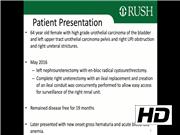
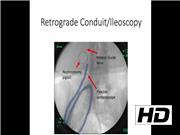
A 64-year-old woman with a history of high-grade recurrent bladder cancer, left UTUC and right ureteropelvic junction obstruction and ureteral stricture status post a left nephroureterectomy, radical cystourethrectomy, right total ureterectomy, ileal-pelvic interposition, and creation of an ileal conduit developed UTUC recurrence 19 months later in the right renal pelvis. A retrograde conduitoscopy was performed to allow retrograde placement of a Councill tip catheter over a wire into the renal pelvis. The balloon of the Councill tip catheter was inflated and withdrawn distally to occlude the interposed ileal segment. A lower percutaneous access was obtained and the percutaneous tract was dilated and a 30F sheath was advanced. A solitary large renal pelvis tumor was resected with a 27F Gyrus bipolar resectoscope and loop electrocautery.
Results:
The nephrostomy tube was removed, and the patient was discharged on postoperative day 1. Pathology showed a high-grade T1 UTUC. Although nephrectomy for complete excision of her urinary tract was recommended, she opted for active surveillance and has remained disease free for 6 months. She ultimately underwent a nephrectomy at 6 months, which showed a T0 lesion.
Conclusion:
Percutaneous management of UTUC is an alternative nephron-sparing approach to nephroureterectomy but can be challenging in patients with ureteral replacement. A retrograde placement of an occlusion catheter is an effective and feasible technique to allow appropriate distention of the renal pelvis for percutaneous resection.
No competing financial interests exist.
Runtime of video: 6 mins 9 secs

Get full access to this article
View all access options for this article.