





Abstract
Introduction:
Pancreatic neuroendocrine tumors (PNETs) comprise a diverse group of neoplasms including functional and nonfunctional tumors and constitute 1% to 2% of pancreatic neoplasms. Surgical resection with complete tumor extirpation is the mainstay of therapy for patients with localized disease. 1 Controversy exists as to whether enucleation is sufficient resection for nonfunctional PNETs because of the oncologic as well as technical concerns from proximity to the pancreatic duct. Therefore, formal resection is usually preferred over enucleation. 2 When enucleation is not technically feasible for small neuroendocrine tumors with low rates of lymph nodal metastasis, a central pancreatectomy may be an option as a parenchymal-sparing procedure. Indications include benign or low-grade lesions and tumors between 2 and 5 cm with proximity or involvement of the pancreatic duct. Minimally invasive techniques, including robot-assisted techniques, have been developed in the recent years. 3 –5 Although pancreaticojejunostomy (PJ) and pancreaticogastrostomy (PG) after pancreaticoduodenectomy are the pancreticodigestive anastomosis performed most frequently, there is still controversy between these two techniques despite multiple randomized controlled trials and metaanalysis. 6 –10 Some studies demonstrated lower rates and severity of pancreatic fistula after PG; therefore, PG should be considered a valuable alternative to PJ in select cases. 10 Run time: 6:30.
Materials and Methods:
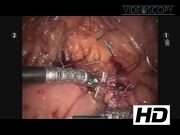
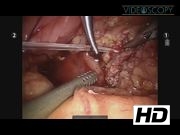
The patient is a 53-year-old male with a body mass index (BMI) of 36.2 and found to have an incidental pancreatic mass located in the pancreatic body on abdominal CT. He underwent endoscopic ultrasound with fine needle aspiration with findings consistent with PNETs. MRI revealed a 2 cm cystic mass in proximity to the pancreatic duct without enlarged peripancreatic lymph nodes. Owing to the small size, central location, and proximity to the pancreatic duct, a laparoscopic central pancreatectomy with robot-assisted Roux-en-Y PJ was preferred.
Results:
The procedure took 243 minutes, and estimated blood loss was 50 mL. A frozen section showed negative proximal and distal margins. The patient was discharged home on postoperative day 4 after uneventful postoperative course. Final pathology analysis showed a 2.2 × 1.7 cm, well-differentiated PNET (WHO grade I).
Discussion:
This video highlights that robot-assisted laparoscopic central pancreatectomy with Roux-en-Y reconstruction is a feasible surgical option with a low mortality rate and an acceptable morbidity rate on selected patients with benign/low-grade small lesions of the pancreatic neck. Abood and colleagues reported no mortality rate, 22% grade B/C pancreatic fistula rate, and 11% severe morbidity rates in their largest case series. 3 Also, Begar and colleagues reported 0.76% mortality rate and 16% severe morbidity rate in their systemic review, although this review included open approach. 11 Robotic assistance may assist in more challenging patient populations (i.e., high BMI) and with fine movements such as anastomotic suturing.
Conclusion:
Robot-assisted laparoscopic central pancreatectomy with Roux-en-Y reconstruction for neuroendocrine tumor can be safely performed following oncologic principles equivalent to open procedures.
No competing financial interests exist.
Runtime of video: 6 mins 30 secs
This video was originally presented at the 2014 Society for Surgery of the Alimentary Tract Annual Meeting, in Chicago, Illinois, held during Digestive Disease Week.®

Keywords
Get full access to this article
View all access options for this article.
References
Supplementary Material
Please find the following supplemental material available below.
For Open Access articles published under a Creative Commons License, all supplemental material carries the same license as the article it is associated with.
For non-Open Access articles published, all supplemental material carries a non-exclusive license, and permission requests for re-use of supplemental material or any part of supplemental material shall be sent directly to the copyright owner as specified in the copyright notice associated with the article.
