





Abstract
Backgound:
Giant pancreatic masses in the pediatric population are managed with resection when feasible. When located in the distal pancreas, a distal pancreatectomy with splenic preservation is typically the ideal approach. Multiport laparoscopic surgery has been effective in small- to moderate-sized lesions.
Objective:
We report a reduced port approach to a giant neoplasm at the tail of the pancreas treated with distal pancreatectomy and splenic preservation.
Materials and Methods:
A 15-year-old otherwise healthy male with left upper quadrant fullness, nausea, and vomiting. A CT scan and MRI showed a 10 cm mass at the tip of the pancreas. Tumor markers were negative. The patient had already undergone an open appendectomy previously and was concerned about cosmesis. A single-incision approach was therefore employed for the resection. Straight stick laparoscopic instruments and a vessel sealing device were used.
Results:
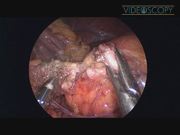
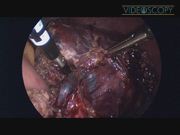
Intraoperatively, the mass was densely adherent to the surrounding structures. The dissection of the distal splenic vein and artery proved to be extremely challenging using this approach. An additional 5 mm port was placed in the left lower quadrant, which improved triangulation and facilitated completion of the procedure. The site was subsequently used for a flat suction drain. A distal pancreatectomy was effectively performed along with complete preservation of the splenic artery and vein. The specimen was removed through the umbilicus and the resulting cosmesis excellent.
Conclusion:
Single-incision distal pancreatectomy with splenic preservation for large tumors is technically demanding with straight instruments. Early addition of a port at a proposed drain site can facilitate the dissection significantly. Reduced port surgery, however, may still have a role in select cases.
The authors have nothing to disclose.
Runtime of video: 4 mins 33 secs

Keywords
Get full access to this article
View all access options for this article.
Supplementary Material
Please find the following supplemental material available below.
For Open Access articles published under a Creative Commons License, all supplemental material carries the same license as the article it is associated with.
For non-Open Access articles published, all supplemental material carries a non-exclusive license, and permission requests for re-use of supplemental material or any part of supplemental material shall be sent directly to the copyright owner as specified in the copyright notice associated with the article.
