





Abstract
Introduction:
Bariatric and metabolic surgery is still an evolving concept. Ileal interposition with duodenal diversion has been shown to be effective for the treatment of type 2 diabetes even in nonmorbidly obese patients. 1 –3 To demonstrate this, we present you the operation video with the run time of 10 minutes and 3 seconds of a 55-year-old female patient with severe type 2 diabetes (HbA1c: 9.02%, despite combination treatment) treated by laparoscopic diverted sleeve gastrectomy with ileal transposition (DSIT). She had a body mass index (BMI) of 35 kg/m2 and also suffered from dyslipidemia.
Materials and Methods:
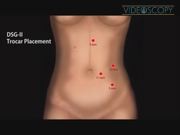
The operation is performed under general anesthesia on a female patient with severe type 2 diabetes. The patient is placed in French position and six ports are used. The operation starts with a sleeve gastrectomy and progresses with duodenal transection 2 to 3 cm distal to the pylorus. The sleeved stomach is transferred to the lower abdomen through a transverse mesocolic opening. A single stay suture is placed 50 cm from the ligament of Treitz and the cecum is identified. The last 30 cm of ileum is preserved and a 170 cm segment of distal ileal segment is prepared for the anastomosis. The first anastomosis is ileoileostomy, the second is duodenoileostomy, and the third is jejunoileostomy. The first and the last anastomoses are done in functional side-to-side manner, and the second anastomosis is done hand sewn with single layer continuous 3/0 PDS. All the mesenteric defects are closed one by one using 3/0 polypropylene.
Results and Conclusion:
The operation has been completed laparoscopically within 3 hours without any complication and with minimal blood loss. DSIT can be considered as a safe surgical alternative for the treatment of type 2 diabetes mellitus patients with a wide range of BMI.
No competing financial interests exist.
Runtime of video: 9 mins 49 secs


Get full access to this article
View all access options for this article.
References
Supplementary Material
Please find the following supplemental material available below.
For Open Access articles published under a Creative Commons License, all supplemental material carries the same license as the article it is associated with.
For non-Open Access articles published, all supplemental material carries a non-exclusive license, and permission requests for re-use of supplemental material or any part of supplemental material shall be sent directly to the copyright owner as specified in the copyright notice associated with the article.
