





Abstract
Introduction:
With advances in technology, laparoscopic surgery has replaced open surgery in many surgical procedures. 1,2 Many patients nowadays expect a minimally invasive approach to their surgical operations, given the public notoriety the technique has gained. To keep practices financially viable and to keep abreast with a rapidly changing surgical atmosphere, an abundance of practicing surgeons have made training for advanced laparoscopic procedures a priority. 3,4 For these reasons, the training of surgical residents in laparoscopic surgery is an important item. To support the importance of early training in laparoscopic surgery, we report a case of laparoscopic treatment of Meckel's diverticulum performed, under supervision, by a young resident during his first year of residency in general surgery.
Case Report:
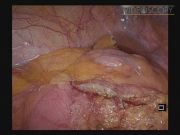
A 25-year-old man presented for a lower tract digestive bleeding. Colonoscopy and upper GI endoscopy did not show any source of bleeding. A Tc99scintigraphy showed a radionuclide uptake in the ileum suggesting a Meckel's diverticulum, and the patient underwent surgery. A young resident performed the operation under the direct supervision of an expert surgeon. The previous training consisted in helping surgeons approximately during 20 laparoscopic colorectal operations. The operation took 65 minutes. The postoperative course was uneventful, and the patient was discharged the second postoperative day.
Results and Conclusion:
There has been an increasing concern about the ability of surgical residents to practice laparoscopy independently, following completion of their training. 5,6 In low-volume laparoscopic centers, senior surgeons perform the laparoscopic operations and, until they are fully trained, the training of younger surgeons is delayed. On the contrary, residents who train in a high-volume laparoscopic center, gain experience in an environment leading to confidence with this approach. In particular, from their very first day, they are introduced to instruments and basic principles of the technique. They can watch videos and experienced surgeons performing different procedures. Moreover, they are involved in the laparoscopic operations as camera holder and as first assistant. The younger generation of surgeons seem to be facilitated in the acquisition of laparoscopic technique compared with surgeons of the previous generations. In fact, a positive effect between computer games and laparoscopic skills has been described, and because today's residents are from the “Nintendo generation,” this might be an explanation. 7 Simulators are another useful tool to gain experience in laparoscopic surgery. In the past years, teaching courses in laparoscopic surgery have been developed in Italy. These courses consist of theoretical learning and practicing with laparoscopic training devices in the presence of tutors. Tutorial teaching seems to be a valid model for basic training in laparoscopic surgery. 8 Unfortunately, training centers for laparoscopic surgery, equipped with simulators, are still not very common in our country. In conclusion, early and active experience in the operating room during laparoscopic procedures is the main way to learn the technique. Previous experience with video games, watching surgical videos, and the use of simulators can facilitate this learning. A “laparoscopic learning environment” is crucial to allow residents to become proficient in laparoscopic techniques quickly and safely.
Run time of video: 3 mins 30 secs


Get full access to this article
View all access options for this article.
References
Supplementary Material
Please find the following supplemental material available below.
For Open Access articles published under a Creative Commons License, all supplemental material carries the same license as the article it is associated with.
For non-Open Access articles published, all supplemental material carries a non-exclusive license, and permission requests for re-use of supplemental material or any part of supplemental material shall be sent directly to the copyright owner as specified in the copyright notice associated with the article.
