





Abstract
Introduction:
In laparoscopic surgery with CO2 pneumoperitoneum, serious complications often occur for elderly patients and those who undergo long operations. 1 These complications mainly include respiratory and circulatory system changes. 2 –4 In patients with tumors, release of free tumor cells into the abdominal cavity is believed to be possible. 5 Gasless laparoscopic techniques can avoid these complications of CO2 pneumoperitoneum. Currently, the main shortcoming of gasless laparoscopic techniques is the inadequate operative space. Because of this shortcoming, gasless techniques have not been widely applied in clinical practice.
Case Report:
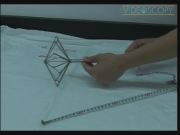
In the video, we describe a new technique of gasless laparoscopic cholecystectomy in a pig using a self-designed umbrella-like abdominal wall-lifting device. The umbrella was constructed from stainless steel and was 150 mm in diameter. Ten spokes formed an umbrella through a folding movement. This device lifted up the anterior abdominal wall by opening the umbrella leaf in the abdominal cavity. The male Bama miniature pig weighed 29 kg. The operation time was 28 minutes. Because of mechanical irritation of the abdomen, long operations over 2 hours seemed not the right indication for the umbrella device.
Conclusion:
This work suggests that the umbrella-like abdominal wall-lifting technique is safe and feasible in gasless laparoscopic surgery for not long operations and can provide sufficient exposure of the operative field.
This work was supported by National Natural Science Fund Projects (No. 581160187).
No competing financial interests exist.
Runtime of video: 2 mins 57 secs.


Keywords
Get full access to this article
View all access options for this article.
References
Supplementary Material
Please find the following supplemental material available below.
For Open Access articles published under a Creative Commons License, all supplemental material carries the same license as the article it is associated with.
For non-Open Access articles published, all supplemental material carries a non-exclusive license, and permission requests for re-use of supplemental material or any part of supplemental material shall be sent directly to the copyright owner as specified in the copyright notice associated with the article.
