





Abstract
Introduction:
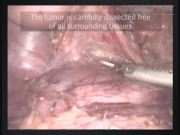
The desmoplastic small round cell tumor (DSRCT) is a rare, highly aggressive malignant tumor that occurs more often in adult men with a ratio of 4:1. 1 It has been reported to arise from the serosal lining of the cells mainly involving the peritoneal cavity, and less frequently the retroperitoneum, the thoracic cavity, and the paratesticular area. 2 The clinical course of a DSRCT is subtle, with few and difficult to recognize early signs and symptoms. 3 Masses may be associated with ascites and even hepatic metastases. 4 Schwarz et al. reviewed 32 cases of DSRCT treated with aggressive surgical debulking, chemotherapy, and radiotherapy, and reported the overall disease-free 5-year survival rate to be 18%. 5 Other novel approaches such as bone marrow transplantation and intraperitoneal hyperthermic chemoperfusion remain under research. 6 The prognosis for DSRCT remains dismal even when treated aggressively. The overall progression-free 5-year survival rate is reported to be ∼18%, and median disease-free survival about 2.6 years. 7 In this video, we present the case of young woman who underwent a totally laparoscopic excision of a retroperitoneal DSRCT.
Case Report:
A 35-year-old female patient underwent abdominal ultrasound following persistent complains of dysuria and repeated courses of antibiotics for assumed lower urinary tract infections, which revealed an 8×8 cm pelvic mass occupying the space of the right ovary. The patient underwent laparotomy by a team of gynecologists who failed to produce any pathology. The operative report stated that there was “no intra-abdominal pathology of any kind.” A year later and after worsening of the aforementioned symptoms, she was referred for evaluation. MRI revealed a 12×11 cm mass in the right iliac fossa. The patient was scheduled for laparoscopic resection of the tumor.
Results:
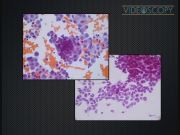
Pathology set the diagnosis of a DSRCT. The patient was followed up with physical examination, pelvic MRIs, abdominal and chest computed tomography scans, and blood tests (carcinoembryonic antigen [CEA], Ca125) in 6-month intervals. She remains free of disease after 38 months.
The authors state that they have no financial or other ties, or any conflicts of interest to disclose.
Runtime of video: 7 mins 18 secs

Keywords
Get full access to this article
View all access options for this article.
References
Supplementary Material
Please find the following supplemental material available below.
For Open Access articles published under a Creative Commons License, all supplemental material carries the same license as the article it is associated with.
For non-Open Access articles published, all supplemental material carries a non-exclusive license, and permission requests for re-use of supplemental material or any part of supplemental material shall be sent directly to the copyright owner as specified in the copyright notice associated with the article.
