





Abstract
Introduction:
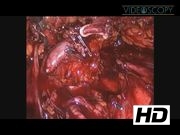
Retroperitoneal paragangliomas are rare neuroendocrine tumors that originate from neural crest. They are mostly benign tumors, but malignant tumors can be aggressive and can lead to metastasis. The main treatment option of paragangliomas is complete resection of the retroperitoneal mass. Retroperitoneal paragangliomas usually locate between abdominal aorta and vena cava inferior. They usually do not invade these two vessels. With careful and thoughtful dissection, excision may be possible from these structures. After surgery, follow-up is important in terms of potential malignancy. In this presentation, we aimed to present our experience in the laparoscopic retroperitoneal mass excision of a 67-year-old female patient who had ∼8 × 7 cm mass, which is located inferior to the left renal pedicle and anterior to the aorta.
Materials and Methods:
On November 2011, in our clinic, incomplete transurethral resection-bladder was performed to ∼5 × 7 cm mass, which was located on the apex of the bladder of the patient who had been suffering from particularly post-voiding hypertension episodes. On detection of paraganglioma and deep muscle invasion in the pathology analysis, partial cystectomy was performed to the apex of her bladder in April 2012. The second pathology analysis of the specimen also resulted in paraganglionoma. In May 2015, the asymptomatic patient was admitted for routine control and left retroperitoneal mass was detected. On preoperative evaluation with MRI, vascular and anatomical structures were evaluated in more detail. About 46 × 65 × 52 mm (AP × CC × TR) sized nodular mass lesion was drawing attention in the para-aortic field at the level of the middle part of the left kidney. This lesion was partially displacing up the left renal artery. The patient was consulted to the endocrinology department for perioperative recommendations. When 24-hour urine vanillylmandelic acid, dopamine, normetanefrine, and methanephrine resulted as normal, the mass was considered as nonfunctional paraganglioma and laparoscopic retroperitoneal mass excision was planned.
Results:
Operation time was 85 minutes and blood loss was measured as ∼300 mL. Intraoperatively no complications were observed. One unit of erythrocyte suspension was administered during the postoperative period. The patient was discharged on the fourth day of surgery and histopathologic diagnosis reported as paraganglionoma.
Conclusions:
With less length of stay and morbidity and good cosmetic benefits, laparoscopic total excision is a surgical method that may be preferred for retroperitoneal para-aortic paraganglionomas in experienced centers.
No competing financial interests exist.
Runtime of video: 7 mins 44 secs


Get full access to this article
View all access options for this article.
Supplementary Material
Please find the following supplemental material available below.
For Open Access articles published under a Creative Commons License, all supplemental material carries the same license as the article it is associated with.
For non-Open Access articles published, all supplemental material carries a non-exclusive license, and permission requests for re-use of supplemental material or any part of supplemental material shall be sent directly to the copyright owner as specified in the copyright notice associated with the article.
