





Abstract
Introduction:
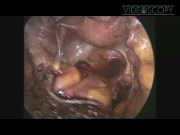
Natural orifice translumenal endoscopic surgery (NOTES) is moving into the clinical arena with multiple feasibility trials taking place around the world. Early results appear encouraging, and the transvaginal access route appears most favoured due to its established safety parameters in gynecological surgery. Following extensive simulator, ex vivo, in vivo, and clinical research and following a successful trial of hybrid NOTES cholecystectomy, ethical approval was granted to evaluate the feasibility and clinical outcomes of transvaginal NOTES-assisted sigmoid colectomy at Imperial College.
Methods:
A 63-year-old woman who had been admitted to hospital on three occasions with radiologically confirmed diverticulitis was counseled for inclusion in the trial. The patient had previously undergone laparoscopic sterilization, but had no major cardiopulmonary comorbidities.
Results:
On the 24th of February 2012, the patient underwent the first UK transvaginal NOTES-assisted sigmoid colectomy. The operation was performed by a multidisciplinary team in minimally invasive surgery and gynecology. There were no perioperative complications or morbidity. The patient received oral analgesia only and was discharged on postoperative day 5. At 1- and 3-month follow-up, there were no abdominal symptoms or gynecological complaints.
Conclusion:
NOTES-assisted sigmoid colectomy appears feasible and was performed safely in this first case with satisfactory outcomes. Further evaluation of this feasibility study will involve recruitment of up to 15 patients.
No competing financial interests exist.
Runtime of video: 6 mins


Keywords
Get full access to this article
View all access options for this article.
Supplementary Material
Please find the following supplemental material available below.
For Open Access articles published under a Creative Commons License, all supplemental material carries the same license as the article it is associated with.
For non-Open Access articles published, all supplemental material carries a non-exclusive license, and permission requests for re-use of supplemental material or any part of supplemental material shall be sent directly to the copyright owner as specified in the copyright notice associated with the article.
